Hubbry Logo
Doc BlanchardDoc BlanchardMain
Open search
Doc Blanchard
Community hub
Doc Blanchard
logo
8 pages, 0 posts
0 subscribers
Be the first to start a discussion here.
Doc Blanchard
Doc Blanchard
from Wikipedia

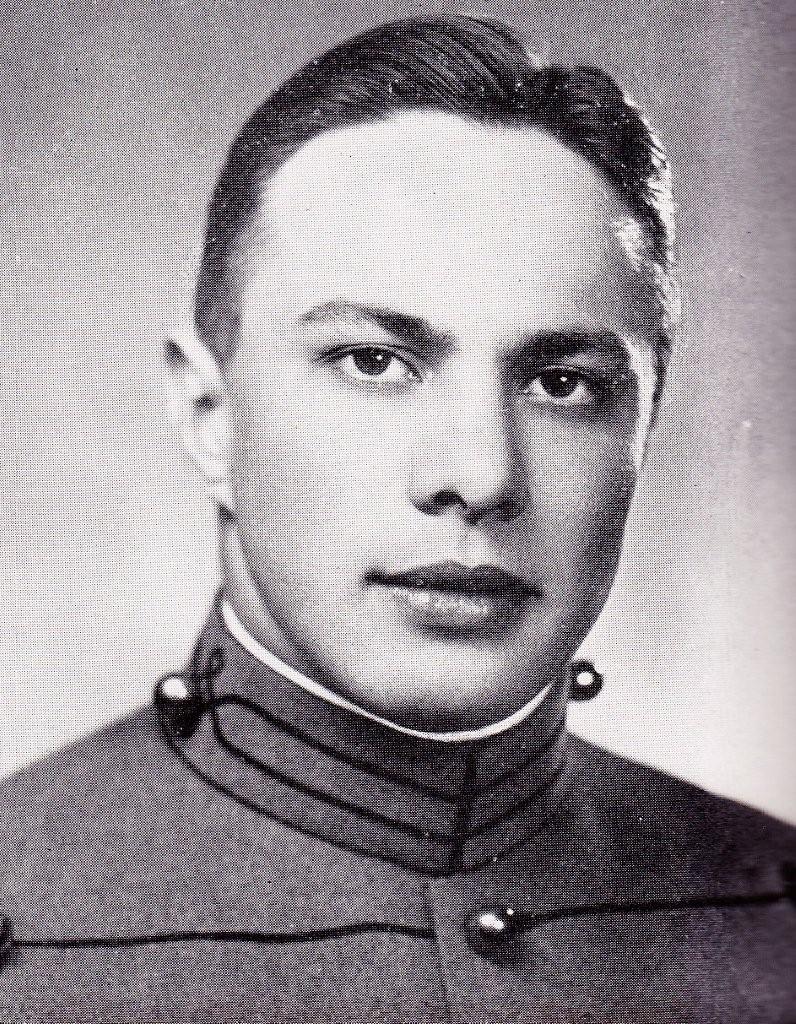
Felix Anthony "Doc" Blanchard (December 11, 1924 – April 19, 2009) was an American football player and serviceman who became the first junior to win the Heisman Trophy and Maxwell Award, and was the first football player to win the James E. Sullivan Award, all in 1945. He played football for the Army Cadets, where he was known as "Mr. Inside".

Key Information

Because his father was a physician, Felix Blanchard was nicknamed "Little Doc" as a boy.[2] After football, he was a fighter pilot in the U.S. Air Force,[3] and served from 1947 until 1971, when he retired with the rank of colonel.

Early life

[edit]

Blanchard was born on December 11, 1924, in McColl, South Carolina.[4] His father was a doctor and had played college football at Tulane University and Wake Forest University.[2] The Blanchards moved from McColl, South Carolina, to Dexter, Iowa, in 1929. Two years later, they settled in Bishopville, South Carolina.[4]

Blanchard, nicknamed "Little Doc", attended high school at Saint Stanislaus College in Bay St. Louis, Mississippi. He led the school's football team, the Rockachaws, to an undefeated season during his senior year in 1941. Blanchard was recruited to play college football by Army, Fordham University and the University of Notre Dame, among others.[5] Blanchard said in 1985 that he had been contacted about going to West Point when he was in high school.[5] He said, "At that point in time, I really wasn't interested. Academically, I never was too hot, so I never had any idea I would pass the entrance examination and go to West Point."[5]

Instead, Blanchard chose to play for the University of North Carolina Tar Heels, in part because its coach, Jim Tatum, was his mother's cousin.[6] Because NCAA rules at the time did not allow freshmen to play varsity, Blanchard played with the freshman team.[6]

In 1943 after the United States became one of the Allies in World War II, Blanchard enlisted in the U.S. Army. He was stationed in New Mexico with a chemical-warfare unit until enrolling at West Point in July 1944 in an appointment his father secured.[5][7]

West Point years

[edit]
Doc Blanchard
"Mr. Inside"

During his three years of playing football at West Point, his team under coach Earl "Red" Blaik compiled an undefeated 27–0–1 record – the tie being a famous 0–0 game[6] against Notre Dame in 1946.[5]

Notre Dame coach Edward McKeever was amazed by Blanchard. After his 1944 team lost to Army by a score of 59–0, McKeever said, "I've just seen Superman in the flesh. He wears number 35 and goes by the name of Blanchard."[8]

An all-around athlete, Blanchard served as the placekicker and punter in addition to his primary roles as an offensive fullback and a linebacker on defense. He soon teamed with Glenn Davis on the 1944–45–46 teams (Davis won the Heisman in 1946, the year after Blanchard won it). They formed one of the most lethal rushing combinations in football history. In his three seasons at West Point Blanchard scored 38 touchdowns, gained 1,908 yards and earned the nickname "Mr. Inside." Teammate Davis earned the nickname "Mr. Outside"[9] and in November 1945, they both shared the cover of Time magazine.[5]

In 1984, at the awards ceremony marking the 50th Heisman Trophy presentation, Blanchard took the occasion to recall, in comparison to the big glitzy shows for the ceremony today, how he learned of his Heisman selection in 1945. He said, "I got a telegram. It said, 'You've been selected to win the Heisman Trophy. Please wire collect.'"[7]

Blanchard (right) on the cover of Time, November 1945

In 1946, Blanchard missed the first two games of the season due to an injury to his knee.[10] In June 1946 his class was divided into two classes (1947 and 1948) to transition back to a peacetime four-year curriculum from the wartime three-year curriculum instituted in October 1942. Both Blanchard and Davis were placed in the final three-year group, the Class of 1947 (Davis had entered West Point in July 1943 but was turned back a year in 1944 for a deficiency in mathematics).

In 1947, Blanchard played himself in the movie The Spirit of West Point. His West Point teammate Glenn Davis also played himself in the film. Other cast members include Robert Shayne as Coach Colonel Earl "Red" Blaik, Anne Nagel as Mrs. Blaik, George O'Hanlon as Joe Wilson, Michael Browne as Roger "Mileaway" McCarty, Tanis Chandler as Mildred, Mary Newton as Mrs. Mary Blanchard and William Forrest as Doc Blanchard's father, Dr. Felix Blanchard. Also appearing as themselves are 1940 Heisman Trophy winner Tom Harmon and sportscasters Bill Stern and Harry Wismer. The screenplay was written by Tom Reed based on a story by Mary Howard. Ralph Murphy directed.[11][12][13]

In addition to football, Blanchard was also a member of the Army track and field team, with a shot put championship and a ten-second 100-yard dash in 1945.[10]

In 1947, Blanchard graduated from West Point, 296th in order of merit among 310 graduates, and was commissioned as a second lieutenant in the U.S. Air Force.[7] He coached Army's freshman team in the 1950s, but he never played professional football, choosing a military career instead.[7]

The 1941 Saint Stanislaus College prep school Gulf Coast championship Team. Doc Blanchard is No. 61.

Military career

[edit]

Blanchard had the opportunity to play professional football after being selected third overall in the 1946 NFL draft by the Pittsburgh Steelers.[14] After he was turned down in 1947 for a furlough to play in the NFL,[7] Blanchard then chose to embark upon a career in the U.S. Air Force, earned his pilot wings in autumn 1948,[15] became a fighter pilot, and flew the F-80 Shooting Star.[3]

In 1959, while with the 77th Tactical Fighter Squadron and flying back to his base at RAF Wethersfield near London, England, a fuel leak in Major Blanchard's F-100 Super Sabre broke and caught his plane on fire. Rather than escaping and parachuting out safely, he decided to stay with the plane and land it safely, because of a village on the ground that would have been damaged. This garnered him an Air Force commendation for bravery.[7]

In the Vietnam War, Blanchard flew 113 missions from Thailand, 84 of them over North Vietnam, in the F-105 Thunderchief fighter-bomber during a one-year tour of duty that ended in January 1969.[3][7] He retired from the Air Force in 1971 as a colonel,[7][9] then spent several more years as the commandant of cadets at the New Mexico Military Institute, a junior college that prepares students to enter the service academies.

Death

[edit]

Blanchard died of pneumonia at age 84 on April 19, 2009, in Bulverde, Texas.[7] He lived with his daughter Mary and her husband Aaron for the last fifteen years of his life.[5] At the time of his death, he was the oldest living Heisman Trophy winner,[10] and is interred at Fort Sam Houston National Cemetery in San Antonio, Texas.

Honors and memorials

[edit]

Blanchard was inducted into the College Football Hall of Fame in 1959.[5]

At a 1990 ceremony, he presented his Heisman Trophy, Maxwell Award, James E. Sullivan Award, and jersey to his—and his father's[16]—high school alma mater, Saint Stanislaus College prep school in Bay St. Louis, Mississippi.[17] The trophy, awards and jersey were enshrined in the Brother Alexis Memorial Resource Center on the Saint Stanislaus campus until they were briefly lost to flooding during Hurricane Katrina. The items have since been recovered.[9][17]

In Blanchard's honor, the Interstate 20 / U.S. Route 15 interchange near his hometown of Bishopville, South Carolina, has been named the Felix "Doc" Blanchard Interchange.[18]

Beginning in 2004 the Rotary presents the Doc Blanchard Award as well as the Glenn Davis Award to the two high school football players participating in the U.S. Army All American Bowl who best exemplify the U.S. Army's high standard of excellence in community service, education and athletic distinction. The Doc Blanchard Award is given to a player from the Bowl's East team, while the Davis Award is given to a player from the Bowl's West team. The first recipient of the Doc Blanchard Award was Ryan Baker.[19]

West Point announced in April 2009, before Blanchard's death, that Blanchard's number 35 would be retired, and it was on October 10 during a home game against Vanderbilt.[7]

See also

[edit]

References

[edit]
[edit]
Revisions and contributorsEdit on WikipediaRead on Wikipedia
from Grokipedia
Felix Anthony "Doc" Blanchard Jr. (December 11, 1924 – April 19, 2009) was an American player and U.S. officer renowned for his role as a fullback on the undefeated Cadets teams of the mid-1940s. Nicknamed "Mr. Inside" for his powerful interior running, Blanchard teamed with halfback Glenn Davis ("Mr. Outside") to lead to a 27–0–1 record and national championships in 1944 and 1945, while earning the as the first junior recipient in 1945. Over his three-year career at the , he scored 38 touchdowns, rushed for 1,908 yards, and also excelled as a linebacker and kicker, leading the nation in scoring during his Heisman season with 19 total touchdowns. After football, Blanchard pursued a distinguished 24-year military career as a , flying 113 combat missions in the and retiring as a in 1971. Born in , Blanchard moved with his family to Dexter, , in 1929 and then to Bishopville, , two years later. He attended St. Stanislaus College in , where he starred on the undefeated 1941 football team and also competed in track events, including winning the shot put. Blanchard enlisted in the U.S. Army in 1943 before enrolling at West Point in July 1944, where his athletic prowess quickly made him a standout on Coach Red Blaik's powerhouse squads. In 1945, Blanchard's junior year, Army went 9–0, and he amassed 718 rushing yards, 13 rushing touchdowns, 166 receiving yards, three receiving touchdowns, and three interception returns for touchdowns, earning consensus All-American honors, the , and the as the nation's top amateur athlete. The duo of Blanchard and Davis became legendary, drawing comparisons to superheroes and inspiring the 1947 film The Spirit of West Point, in which Blanchard starred as himself. Despite a 0–0 tie with Notre Dame in 1946 marring Army's perfect streak, Blanchard's contributions helped secure national championships in 1944 and 1945 and cemented his induction into the in 1959. Commissioned as a in the U.S. in 1947, Blanchard flew , including serving as of the 77th Tactical in from 1960 to 1961. During the , he completed 113 missions, earning an in 1960 for safely landing a burning F-100 Super and averting a crash into a populated area. Blanchard retired from the as a in 1971 and later settled in , where he passed away from at age 84.

Early Life and Education

Childhood and Family Background

Felix Anthony Blanchard Jr., known as "Doc," was born on December 11, 1924, in . He was the son of Dr. Felix Anthony Blanchard Sr., a physician, and Mary Gilchrist Tatum Blanchard, making him one of two children in the family; his sister was Mary Elizabeth Blanchard. The family relocated from McColl to Dexter, Iowa, in 1929, where his father practiced for two years before they returned to and settled in Bishopville in 1931. Blanchard earned his lifelong "Doc" or "Little Doc" from an early age, a reference to his father's profession as a doctor.

High School and Early College Career

Blanchard attended Saint Stanislaus College, a Catholic prep school in , from 1938 to 1941, where he excelled in football and track. As a fullback, he led the school's varsity team to an undefeated regular season in 1941, securing the Gulf Coast Championship and an invitation to the Toy Bowl in New Orleans. His performance that year drew attention from major college programs, including , Fordham, and Notre Dame. Following his graduation in 1941, Blanchard enrolled at the , playing fullback for the freshman team in 1942 under head coach Jim Tatum, a relative on his mother's side. With escalating, he enlisted in the U.S. Army in 1943 and was assigned to a chemical-warfare unit in . After sitting out the 1943 football season, Blanchard secured an appointment to the at West Point through his father's advocacy, transferring there in July 1944 to begin his cadet career.

West Point Years

Football Accomplishments

Blanchard arrived at the at West Point in 1944, following a standout high school career at St. Stanislaus College in , where he led his team to an undefeated season and the Gulf Coast Championship. Under head coach Earl "Red" Blaik, he played fullback for the Army Cadets from 1944 to 1946, contributing to an extraordinary team record of 27–0–1 that included three national championships. The Cadets' dominance during this period featured a 25-game winning streak, with Blanchard serving as a key offensive force and defensive linebacker. Over his three seasons, Blanchard rushed for 1,908 yards and scored 38 touchdowns, establishing himself as one of college football's premier power runners. In 1945, his junior year, he led the nation in scoring with 114 points from 19 total touchdowns, averaging 7.1 yards per carry on 718 rushing yards. His bruising inside running style earned him the nickname "Mr. Inside," complementing the speed and elusiveness of halfback Glenn Davis, dubbed "Mr. Outside." Together, the duo formed one of the most lethal backfields in football history, sharing the cover of Time magazine in November 1945 and finishing first and second in Heisman voting that year. Blanchard's individual excellence culminated in major national recognition, including the 1945 Heisman Trophy as the first junior winner, with 792 points in the voting. He also captured the Maxwell Award as the nation's top college player in 1945 and was selected as a first-team All-American in each of his three seasons. Key performances included his contributions to Army's 23–7 victory over Navy in the 1944 Army–Navy Game, a matchup that helped secure the Cadets' undefeated season and national title claim. In 1945, Army again claimed a national championship, going 9–0 with Blanchard's scoring prowess central to their unbeaten campaign.

Track Participation and Graduation

In addition to his football prowess, Blanchard competed on the Army team, demonstrating versatility as a thrower and sprinter. In 1945, he captured the Intercollegiate Association of Amateur Athletes of America (IC4A) championships in both indoor and outdoor events, achieving a throw of 54 feet in one competition. He also recorded a 10-second flat time in the that year. Throughout his cadet tenure, Blanchard maintained a demanding schedule that integrated intensive athletic training with the United States Military Academy's rigorous academic curriculum and military discipline, exemplifying the well-rounded development expected of West Point cadets. Blanchard graduated from West Point in June 1947, finishing 296th in academic standing out of 310 cadets in his class, and received a regular commission as a in the United States . This milestone concluded his academy years and launched his professional military career.

Military Career

Service in Major Conflicts

Following his graduation from the at West Point in 1947, Felix "Doc" Blanchard was commissioned as a in the U.S. Air Force and pursued a career as a . He completed and earned his pilot wings in 1948 at in , where he qualified on the F-80 Shooting Star jet fighter. Over the course of his 24-year service, Blanchard transitioned to advanced aircraft, including the F-100 Super Sabre in 1958 and the F-105 Thunderchief during his later combat tours. Blanchard saw his first combat during the , flying fighter missions as a pilot with the . Stationed in the theater of operations, he conducted sorties in support of ground forces and air operations against North Korean and Chinese positions, contributing to the Allied effort amid intense aerial engagements. His service in Korea honed his skills as a jet during a period of rapid technological advancement in . A notable act of heroism occurred in 1959 while Blanchard was serving with the 77th Tactical Fighter Squadron in Europe. During a training flight over in his F-100 Super Sabre, an oil line rupture caused the aircraft to catch fire, endangering a nearby village. Blanchard steered the flaming jet away from populated areas, safely landed the burning aircraft, and escaped the flames, preventing potential civilian casualties. For this display of courage and airmanship, he was awarded the . Blanchard's most extensive combat experience came during the , where he flew 113 missions from in between 1968 and 1969. Operating the F-105 Thunderchief as a squadron commander with the call sign "Gambler One," he completed 84 missions over , targeting strategic sites amid heavy anti-aircraft defenses and threats. His in these high-risk operations earned him the Distinguished Flying Cross for valor in combat. After 24 years of active duty, Blanchard retired from the U.S. in 1971 with the rank of .

Post-War Roles and Retirement

Following the , Felix "Doc" Blanchard assumed several command positions within the U.S. , leveraging his piloting expertise in fighter operations. In 1960, he took command of the 77th Tactical based at RAF Wethersfield in the , leading the unit through July 1961. Shortly before assuming command of the squadron, Blanchard demonstrated exceptional leadership by safely landing a burning F-100 Super Sabre aircraft in 1959, preventing it from crashing into a nearby village and earning him an Air Force Commendation Medal. His earlier combat service provided a strong foundation for these administrative and operational command responsibilities. As the Vietnam War escalated, Blanchard served in non-combat leadership and training roles that supported readiness, including an assignment in 1967 as an F-105 pilot with the 388th Tactical Fighter Wing at Korat Royal Thai Air Base in , where he contributed to squadron training and mission preparation. These positions emphasized his role in developing fighter tactics and ensuring unit preparedness amid heightened regional tensions. Blanchard retired from the in 1971 after approximately 24 years of service, having risen to the rank of . He then transitioned to civilian life, settling in following a brief period in . In a post-military capacity that underscored his enduring commitment to military education and discipline, Blanchard served as commandant of cadets at the New Mexico Military Institute in Roswell from 1971 to 1973, overseeing the junior college's cadet corps and fostering leadership development among students. Public records provide limited details on his exact tenure or subsequent civilian employment beyond this role.

Personal Life

Marriage and Family

Blanchard married Josephine "Jody" King on October 12, 1948, in San Antonio, Texas. The couple remained devoted for 45 years until her death on September 1, 1993. Jody provided steadfast support throughout Blanchard's military career, accompanying him and their family during frequent relocations across various postings. The Blanchards had three children: a son, Felix Anthony Blanchard III, and two daughters, Jo Mills and Mary (also known as Resa). A private individual, Blanchard prioritized family life over his public fame as a winner, rarely discussing his football achievements and fostering a close-knit household that emphasized humility and mutual support. Following Jody's death, he relocated to , in 1993 to live with his youngest daughter Mary (Resa) and her husband.

Later Years and Death

Following his wife's death in 1993, Blanchard relocated from to , where he lived with his youngest daughter Mary (Resa) and her husband for the remainder of his life. In retirement, he maintained a low profile, prioritizing family privacy over his past fame as a winner and military figure, rarely discussing his football achievements even with close relatives. Blanchard, the oldest living Heisman winner at the time, died of on April 19, 2009, at his home in Bulverde at the age of 84. He was buried at in , .

Legacy and Honors

Awards and Inductions

In 1945, Blanchard received the Heisman Memorial Trophy as the outstanding player in the United States, becoming the first junior to win the award. That same year, he was honored with the , recognizing him as the top player nationally. Additionally, in 1945, Blanchard became the first football player to receive the , presented annually to the nation's top amateur athlete. Blanchard was inducted into the in 1959, acknowledging his contributions as a three-time All-American fullback who helped lead to national championships in 1944 and 1945. During his military service, Blanchard earned the Distinguished Flying Cross for his actions in the . He received additional commendations for his overall service in the , including flying 113 combat missions, 84 over , as a . In 1989, Blanchard donated his , , , and Army jersey to Saint Stanislaus College, his high school alma mater in , where they are displayed to inspire students. The items were removed from the campus for safekeeping ahead of in 2005, which severely damaged the school, and were returned afterward. Since 2004, the Rotary Club of has presented the Doc Blanchard Award annually to an outstanding player from the East team at the U.S. Army All-American Bowl, honoring Blanchard's legacy of excellence on and off the field.

Memorials and Enduring Impact

One of the most prominent memorials to Felix "Doc" Blanchard is the Felix "Doc" Blanchard Interchange, located at the intersection of and U.S. Highway 15 near Bishopville, , his childhood hometown. This designation was established by the in 2002 to honor his contributions as a native son and winner. The interchange serves as a lasting tribute to Blanchard's roots in Lee County and his impact on sports history. In recognition of his legendary status at the , West Point retired Blanchard's jersey number 35 on October 10, 2009, during a ceremony at . This honor, the first such retirement for a fullback in football history, underscores his role as "Mr. Inside" alongside Glenn Davis's "Mr. Outside," forming one of college football's most celebrated backfield duos. Blanchard's legacy endures as a symbol of football's golden era in the mid-1940s, when the Cadets achieved three consecutive undefeated seasons and national championships, blending athletic prowess with . His career exemplified the ideal of balancing elite competition with service to country, inspiring generations of service academy athletes to pursue excellence in both arenas. At the time of his death in 2009 at age 84, Blanchard held the distinction of being the oldest living winner.

References

Add your contribution
Related Hubs
User Avatar
No comments yet.