Hubbry Logo
Rod WoodsonRod WoodsonMain
Open search
Rod Woodson
Community hub
Rod Woodson
logo
8 pages, 0 posts
0 subscribers
Be the first to start a discussion here.
Contribute something
Rod Woodson
Rod Woodson
from Wikipedia

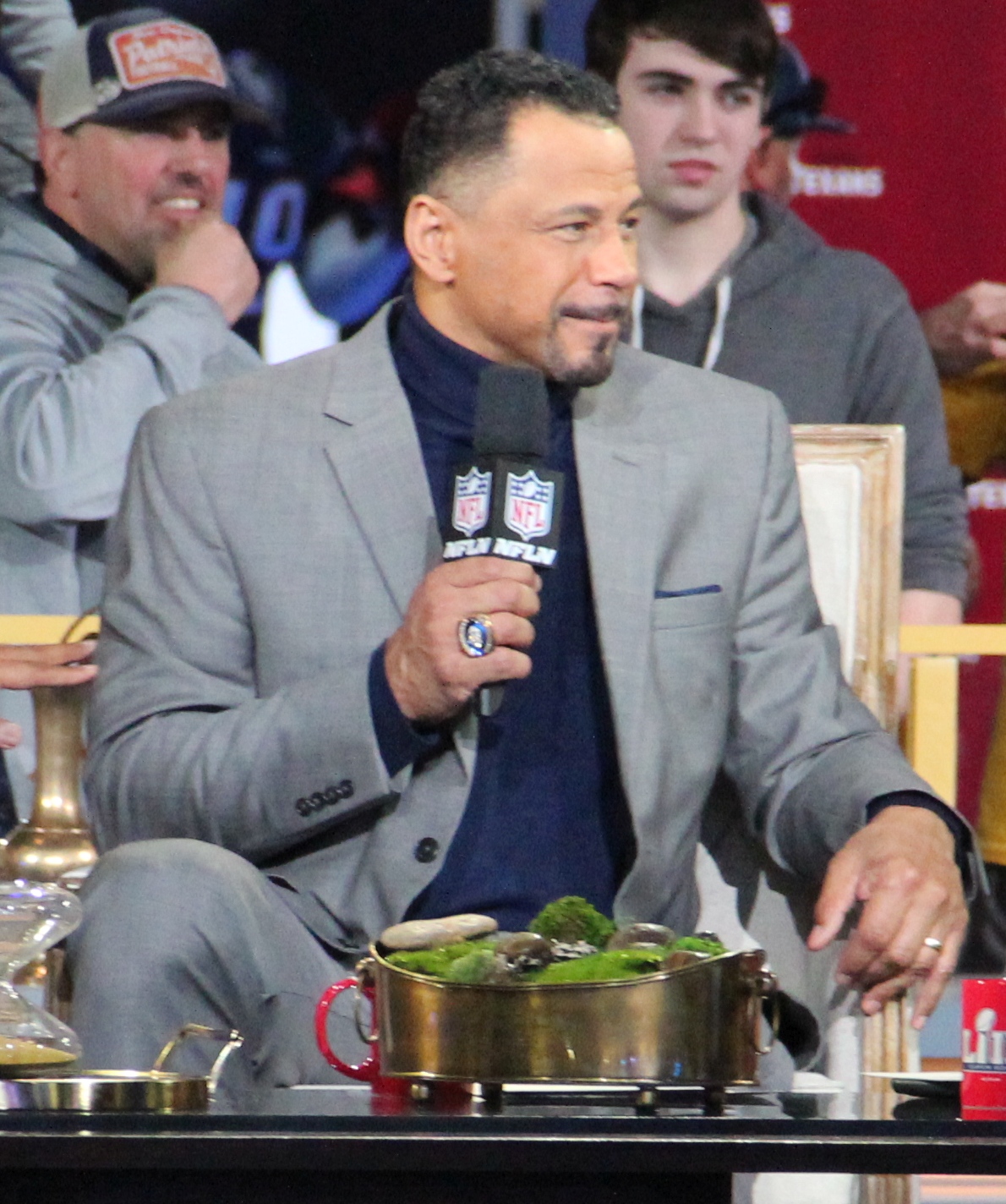
Roderick Kevin Woodson (born March 10, 1965) is an American former professional football player for 17 seasons in the National Football League (NFL). Widely considered one of the greatest cornerbacks of all time, Woodson holds the NFL record for fumble recoveries (32) by a defensive player, and interceptions returned for a touchdown (12). He was named the NFL Defensive Player of the Year in 1993.

Key Information

Woodson played college football for the Purdue Boilermakers, earning consensus All-American honors in 1986. He was selected by the Pittsburgh Steelers in the first round of the 1987 NFL draft and played his first 10 years there. He was also a key member of the Baltimore Ravens' Super Bowl XXXV championship team. He had two shorter stints for the San Francisco 49ers and two seasons with the Oakland Raiders. His 71 career interceptions are the third-most in NFL history. He was an inductee of the Class of 2009 of the Pro Football Hall of Fame in Canton, Ohio on August 8, 2009. Woodson was inducted into the College Football Hall of Fame in 2016. He played most of his career as a cornerback then switched to safety during the later part of his career. Woodson was most recently the head coach of the XFL's Vegas Vipers.

From his retirement in 2003 to February 2011, Woodson worked as an analyst for the NFL Network (on NFL Total Access and Thursday Night Football) and for the Big Ten Network. He spent the 2011 season as the Raiders' cornerbacks coach. He then returned to broadcasting, working for Westwood One as an analyst on college football (2012) and the NFL (2013) before resuming his coaching career in 2014. He was announced in July 2022 as the Ravens' new radio color commentator beginning with the upcoming season.[3]

College career

[edit]

Woodson accepted a full scholarship to play football at Purdue University, in part because of a desire to pursue a degree in electrical engineering.[4] He played primarily as a cornerback and kick returner, but also saw time on offense as a running back and wide receiver. He was named an All-American cornerback in 1985 and 1986; he was named an All-American returner in 1986 and was a three-time All-Big Ten first team selection.

In his final collegiate game, Woodson gained over 150 combined rushing and receiving yards, in addition to making ten tackles and forcing a fumble, leading Purdue to a victory over arch-rival Indiana.

Woodson left Purdue with 13 individual records, tying the school record with 11 career interceptions, which he returned for 276 yards and three touchdowns. He currently is ranked in the top ten in career interceptions, solo tackles, total tackles, passes deflected, and kickoff return yardage (1,535 yards) as a Boilermaker.[5]

Woodson was inducted into the Purdue Intercollegiate Athletics Hall of Fame in 2003.[5]

On December 11, 2014, the Big Ten Network included Woodson on "The Mount Rushmore of Purdue Football", as chosen by online fan voting. Woodson was joined in the honor by Drew Brees, Bob Griese, and Leroy Keyes.

On January 8, 2016, Woodson was selected for induction in the College Football Hall of Fame.[6][7][8]

Track and field

[edit]

Woodson was also an accomplished track and field athlete for the Purdue Boilermakers track and field team, and was twice awarded All-America honors. He finished second at the 1985 NCAA Division I Indoor Track and Field Championships in the 55 meter hurdles and third at the 1987 NCAA Division I Indoor Track and Field Championships in the 55 meter hurdles. Woodson held the NCAA 60 meter hurdles record for 10 years.[5] As of January 2009, he still holds the school records in both the 60 and 110 meter hurdles.[5] He earned five Big Ten championships while at Purdue.[9] In 1984, he qualified for the Olympic Trials in the 110 meter hurdles, but elected to continue his football career in the NFL after graduating from Purdue with a degree in criminal justice.[9]

Personal bests

[edit]
Event Time (seconds) Venue Date
60 meter hurdles 7.61 Indianapolis, Indiana March 7, 1987
60 meters 6.70 Ypsilanti, Michigan February 14, 1987
100 meters 10.26 Champaign, Illinois May 29, 1987
110 meter hurdles 13.29 Irvine, California June 14, 1987

Professional career

[edit]
Pre-draft measurables
Height Weight Arm length Hand span 40-yard dash 10-yard split 20-yard split 20-yard shuttle Vertical jump Broad jump Bench press
6 ft 0 in
(1.83 m)
202 lb
(92 kg)
31 in
(0.79 m)
10+12 in
(0.27 m)
4.29 s 1.51 s 2.51 s 3.98 s 36.0 in
(0.91 m)
10 ft 5 in
(3.18 m)
10 reps
All values from NFL Combine[10][11][12]

Pittsburgh Steelers

[edit]

The Pittsburgh Steelers selected Woodson in the first round (10th overall) of the 1987 NFL draft.[13] Although the Steelers wanted to draft Woodson to help rebuild their secondary, the team expected Woodson to be drafted before their turn at tenth overall. Head coach Chuck Noll instructed defensive coordinator Tony Dungy not to bother with a scouting report on Woodson due to his expected unavailability. However, the Pittsburgh Steelers were able to draft Woodson after the Cleveland Browns traded for the San Diego Chargers' fifth overall pick and subsequently used selection to draft linebacker Mike Junkin.[14] The St. Louis Cardinals drafted Kelly Stouffer (sixth overall) who ultimately never played for the Cardinals due to a contract dispute. The Buffalo Bills were the last likely team to draft Woodson, but instead used the eighth overall pick to draft linebacker Shane Conlan.[15][16]

1987

[edit]

Woodson missed training camp due to a contract holdout that lasted 95 days after he was unable to come to terms on a contract with the Steelers. Woodson was a World-Class 110-meter hurdler and ran track on the European track circuit during his contract holdout. Woodson had the fourth fastest 110-meter hurdle time in the world. He won the bronze medal at the 1987 USA Olympic festival, and won medals in several IAAF Grand Prix meetings in Europe. Woodson is one of only two athletes in history to be inducted into the Pro Football Hall of Fame and also earn a world ranking in the high hurdles.[17]

On October 28, 1987, the Pittsburgh Steelers signed Woodson to a four-year, $1.80 million contract that includes a signing bonus of $700,000.[18][19] Woodson's contract holdout was the longest in the Pittsburgh Steelers' franchise history, until Le'Veon Bell withheld the entire 2018 NFL season.

On November 8, 1987, Woodson made his professional regular season debut in the Pittsburgh Steelers' 17–16 victory at the Kansas City Chiefs in week 8. He finished his debut with two kick returns for 48-yards and two punt returns for 12-yards. On November 22, 1987, Woodson made his first career interception off a pass from Bengals' quarterback Boomer Esiason and returned it for a 45-yard touchdown during the Steelers' 30–16 win in week 11. It was his first career touchdown.[20] He finished his rookie season in 1987 with 20 combined tackles in eight games and no starts. Woodson also returned 13 kicks for 290-yards (22.3 YPR) and made 16 punt returns for 135-yards (8.4 YPR).[21]

1988

[edit]

Woodson entered training camp in 1988 slated as the starting cornerback. Head coach Chuck Noll named Woodson a starting cornerback to begin the regular season, opposite fellow cornerback Dwayne Woodruff.[22] Woodson also retained kick and punt return duties in 1988. On October 9, 1988, Woodson returned a kick for a 92-yard touchdown during a 31–14 loss to the Phoenix Cardinals in week 6. The touchdown was the first kick return touchdown of his career.[23] In week 12, Woodson made his first career sack on Browns' quarterback Bernie Kosar in the Steelers' 27–7 loss to the Cleveland Browns.[24] Woodson started in all 16 games in 1988 and recorded 88 combined tackles, four interceptions, and was credited with half a sack.[25] He also returned 37 kicks for 850-yards and a touchdown (22.9 YPR) and 33 punts for 281-yards (8.5 YPR).

1989

[edit]

On January 3, 1989, Pittsburgh Steelers' defensive coordinator Tony Dungy announced his resignation after they finished with a 5–11 record the previous season. The Steelers also fired four assistant coaches.[26]

Woodson and Dwayne Woodruff returned as the Steelers' starting cornerback tandem in 1989.[27] On November 19, 1989, Woodson returned a kickoff for an 84-yard touchdown during a 20–17 win against the San Diego Chargers.[28] Woodson started 15 games in 1989 and recorded 80 combined tackles and three interceptions.[25] He also returned 36 kickoffs for 982-yards (27.2 YPR) and one touchdown and had 29 punt returns for 207-yards (7.1 YPR).[29] The Pittsburgh Steelers finished the season third in the AFC Central with a 9–7 record and earned a wildcard berth. On December 31, 1989, Woodson started in his first career playoff game and had four kick returns for 74-yards during a 26–23 victory at the Houston Oilers in the AFC Wildcard Game. The following week, the Steelers were eliminated from the playoffs after losing 24–23 to the Denver Broncos in the AFC Divisional Round.

1990

[edit]

The Pittsburgh Steelers promoted linebackers coach Dave Brazil to defensive coordinator after Rod Rust accepted the head coaching position with the New England Patriots. Head coach Chuck Noll retained Woodson as a starting cornerback in 1990, opposite D.J. Johnson.

On September 16, 1990, Woodson returned a punt from Oilers' punter Greg Montgomery for a 52-yard touchdown during a 20–9 victory against the Houston Oilers, marking the first punt return for a touchdown in his career.[30] On December 6, 1990, the Pittsburgh Steelers reportedly offered Woodson a three-year, $3 million contract extension. That contract would make Woodson the highest paid player in team history.[31] On December 20, 1990, it was announced that Woodson was selected to play in the 1991 Pro Bowl.[32] Woodson started in all 16 games in 1990 and recorded 66 combined tackles and five interceptions. He was voted first-team All-Pro in 1990.[25] Woodson had 35 kick returns for 764 return yards (21.8 YPR) and 38 punt returns for 398 return yards and a touchdown (10.4 YPR).

1991

[edit]

Woodson and D.J. Johnson returned as the starting cornerback tandem in 1991.[33] Woodson was inactive for the Steelers' week 13 victory against the Houston Oilers due to an injury. On November 28, 1991, Woodson recorded his first career solo sack on Cowboys' quarterback Steve Beuerlein in the Steelers' 20–10 loss to the Dallas Cowboys.[34] On December 27, 1991, Pittsburgh Steelers' head coach Chuck Noll announced his decision to retire after the Steelers finished with a 7–9 record in 1991.[35] He started in 15 games in 1991 and recorded 73 combined tackles, 3 interceptions, and a sack. He also returned 44 kicks for 880 return yards (22.0 YPR) and had 28 punt returns for 320-yards (11.4 YPR).[25]

1992

[edit]

On January 21, 1992, the Pittsburgh Steelers announced the hiring of former Kansas City Chiefs' defensive coordinator Bill Cowher as their new head coach.[36] On January 31, 1992, Cowher announced the hiring of former New Orleans Saints' secondary coach Dom Capers as their new defensive coordinator.[37]

On May 19, 1992, it was reported that Woodson was one of nine NFL players to sue the National Football League for unrestricted free agency. Other players included Steve Beuerlein (Cowboys), Bobby Hebert (Saints), D. J. Dozier (Lions), Scott Mitchell (Dolphins), Jeff Dellenbach (Dolphins), Seth Joyner (Eagles), Clyde Simmons (Eagles), and Kevin Ross (Chiefs).[38] Head coach Bill Cowher retained Woodson and D.J. Johnson as the starting cornerback tandem in 1992.[39]

He started in the Pittsburgh Steelers' season-opener against the Houston Oilers and made two interceptions off pass attempts by Oilers' quarterback Warren Moon in their 29–24 victory.[40] On October 25, 1992, Woodson returned a punt for an 80-yard touchdown as the Steelers defeated the Kansas City Chiefs 27–3.[41] On November 1, 1992, Woodson delivered a hit to Oilers' quarterback Warren Moon on a cornerback blitz during a 21–20 win against the Houston Oilers in week 8. The hit gave Moon a concussion and forced him to leave the game.[42] In week 14, he made a career-high two sacks on Bears' quarterback Jim Harbaugh during a 30–6 loss to the Chicago Bears.[43] On December 24, 1992, it was announced that Woodson was selected to play in the 1993 Pro Bowl.[44] He started in all 16 games in 1992 and recorded 100 combined tackles, a career-high six sacks, and four interceptions.[25]

1993

[edit]

On March 1, 1993, the NFL implemented unrestricted free agency. Woodson received an $1.11 million settlement from the league after being one of 15 plaintiffs to sue the league in a class action antitrust lawsuit.[45]

Woodson and D.J. Johnson returned as the starting cornerback tandem for the fourth consecutive season and started alongside safeties Darren Perry and Carnell Lake.[46] He started in the Pittsburgh Steelers' season-opener at the San Francisco 49ers and intercepted two passes by quarterback Steve Young in their 24–13 victory.[47]

On September 18, 1993, the Pittsburgh Steelers signed Woodson to a four-year, $12 million contract. The contract made Woodson the NFL's highest paid defensive back.[48] In week 4, he made two interceptions off passes by Falcons' quarterbacks Bobby Hebert and Billy Joe Tolliver during a 45–17 victory against the Atlanta Falcons. On October 17, 1993, Woodson intercepted two passes by Saints' quarterback Wade Wilson and returned one for a 63-yard touchdown in the Steelers' 37–14 win against the New Orleans Saints.[49] Woodson started in all 16 games in 1993 and recorded 95 combined tackles, a career-high eight interceptions, two sacks, and a touchdown.[25] He also made 15 kick returns for 294 return yards (19.6 YPR) and 42 punt returns for 338 return yards (8.0 YPR). He was also named NFL Defensive Player of the Year.

1994

[edit]

Woodson returned as the No. 1 starting cornerback in 1994, opposite Deon Figures. He played under defensive coordinator Dom Capers and assistant coaches Dick LeBeau and Marvin Lewis.[50] On November 14, 1994, Woodson intercepted pass by Bills' quarterback Jim Kelly and returned it for a 37-yard touchdown in the first quarter of the Steelers' 23–10 win against the Buffalo Bills in week 11.[51] Woodson started in 15 games in 1994 and recorded 67 tackles, four interceptions, three sacks, and a touchdown.[25] He also made 15 kick returns for a total of 365 return yards (24.3 YPR) and 39 punt returns for 319 return yards (8.1 YPR).[52]

1995

[edit]

On January 26, 1995, the Pittsburgh Steelers promoted defensive backs coach Dick LeBeau to defensive coordinator after Dom Capers accepted the head coaching position with the Carolina Panthers.[53]

Woodson started as the No.1 cornerback to begin the 1995 regular season, alongside Willie Williams. On September 3, 1995, Woodson sustained a torn ACL when his foot got caught in the artificial turf at Three Rivers Stadium when he attempted to change direction and arm tackle Detroit Lions' running back Barry Sanders in the first quarter of the Pittsburgh Steelers' season-opening 23–20 victory against the Detroit Lions.[54] Steelers' safety Carnell Lake replaced Woodson at cornerback during his injury hiatus.[55] On September 11, 1995, Woodson underwent reconstructive surgery and had his ACL in his left knee replaced with a patella tendon from his right knee.[56]

The Pittsburgh Steelers finished first in the AFC Central with an 11–5 record and earned a first round bye. They defeated the Buffalo Bills 40–21 in the AFC Divisional Round and defeated the Indianapolis Colts 20–16 in the AFC Championship Game. On January 28, 1996, Woodson made his return from injury and played in Super Bowl XXX as the Steelers lost 27–17 to the Dallas Cowboys. Woodson became the first player to return from reconstructive knee surgery in the same season and returned after only 19 weeks. Woodson was limited to 12 snaps in Super Bowl XXX and was primarily used on third down. During the game, he broke up a pass intended for Michael Irvin and immediately hopped up and pointed at his reconstructed knee.[57]

1996

[edit]

On August 12, 1996, Woodson declined the Pittsburgh Steelers' three-year, $9 million contract extension offer and requested a long-term contract for four or five-years. They went on to offer Woodson a five-year, $10 million contract extension and a five-year, $13.5 million incentive-laden contract with a signing bonus of $500,000 included.[58] Woodson returned as the starting cornerback alongside Willie Williams, but was relieved of kick and punt return duties.[59]

He started in the Pittsburgh Steelers' season-opener at the Jacksonville Jaguars and collected a season-high eight combined tackles and made an interception in their 24–9 loss. On September 8, 1996, Woodson recorded five combined tackles and returned an interception by Ravens' quarterback Vinny Testaverde 43 yards for a touchdown during a 31–17 win against the Baltimore Ravens in week 2.[60] In week 11, Woodson recorded five combined tackles and made a season-high two interceptions off pass attempts by Bengals' quarterback Jeff Blake during a 34–24 loss to the Cincinnati Bengals.[61] He started in all 16 games in 1996 and recorded 71 combined tackles, six interceptions, a touchdown, and a sack.[62]

The Pittsburgh Steelers finished atop the AFC Central with a 10–6 record. On January 5, 1997, Woodson recorded seven combined tackles in his last appearance as a member of the Pittsburgh Steelers. They went on to lose 28–3 to the New England Patriots in the AFC Divisional Round.

Free agency

[edit]

After the 1996 NFL season, the Pittsburgh Steelers offered Woodson a four-year, $7.2 million contract with a signing bonus of $1 million. Woodson became an unrestricted free agent in 1997 after he was unable to agree to a contract with the Pittsburgh Steelers. Woodson was plagued by injuries in 1996, including a strained Achilles tendon, a sprained knee, and an injury to his back that substantially hurt his value on the free agent market. On April 19, 1997, Woodson declined a four-year, $7 million contract offer from the Pittsburgh Steelers hours before the 1997 NFL Draft. The Steelers subsequently drafted Maryland cornerback Chad Scott in the first round (24th overall) of the 1997 NFL draft and ended negotiations with Woodson.[63]

During the offseason, Woodson held a workout at Purdue that was attended by ten teams interested in signing him, including the San Francisco 49ers, Chicago Bears, Cincinnati Bengals, and Jacksonville Jaguars. The Cincinnati Bengals offered Woodson a three-year contract reportedly worth between $1.5 million and $2 million per season.[64]

San Francisco 49ers

[edit]

1997

[edit]

On July 17, 1997, the San Francisco 49ers signed Woodson to a three-year contract.[65][64] Head coach Steve Mariucci named Woodson a starting cornerback on the 49ers' depth chart to begin the regular season, opposite Darnell Walker.[66] On September 14, 1997, Woodson recorded two combined tackles, forced a fumble, and made a career-high three interceptions off passes by Saints' quarterback Danny Wuerffel during a 33–7 victory against the New Orleans Saints in week 2.[67] In week 10, he collected a season-high eight combined tackles in the 49ers' 17–10 victory against the Dallas Cowboys. He started in all 16 games in 1997 and recorded 46 combined tackles, three interceptions, and a forced fumble.[68]

The San Francisco 49ers finished first in the NFC West with a 13–3 record and earned a first round bye. They defeated the Minnesota Vikings 38–22 in the NFC Divisional Round. The following week, Woodson made four combined tackles as the 49ers were defeated by the Green Bay Packers 23–10. On February 9, 1998, the San Francisco 49ers cut Woodson and former Steelers' teammate Kevin Greene in an effort to free up salary cap space.[69]

Baltimore Ravens

[edit]

1998

[edit]

On February 21, 1998, the Baltimore Ravens signed Woodson to a three-year, $5.70 million contract that includes a signing bonus of $3 million.[70][71] Woodson was reunited with Ravens' defensive coordinator Marvin Lewis who was a linebacker coach for the Pittsburgh Steelers.

Head coach Ted Marchibroda named Woodson a starting cornerback to begin the regular season, alongside Duane Starks.[72] On September 4, 1998, it was reported that Woodson entered stage 1 of the league's substance abuse program after refusing to take a drug test the previous month. It was reported that Woodson became infuriated after he was randomly selected to take a drug test on two consecutive days. His refusal automatically counted as a failed test although he subsequently relented and passed the test the next day.[73]

On September 13, 1998, Woodson recorded a season-high 11 combined tackles, made two interceptions, and returned one for a touchdown during a 24–10 win at the New York Jets in week 2. Woodson intercepted a pass by Jets'quarterback Glenn Foley, that was intended for wide receiver Dedric Ward, and returned it for a 60-yard touchdown in the fourth quarter.[74] On November 8, 1998, Woodson made five combined tackles and returned an interception for a touchdown during the Ravens' 13–10 win against the Oakland Raiders. Woodson intercepted a pass by Raiders' quarterback Donald Hollas, that was intended for wide receiver Tim Brown, and returned it for an 18-yard touchdown in the first quarter.[75] He started in all 16 games in 1998 and recorded 88 combined tackles, six interceptions, and two touchdowns.[76] On December 28, 1998, the Baltimore Ravens fired head coach Ted Marchibroda after the Ravens finished the season with a 6–10 record.[77]

1999

[edit]

On January 19, 1999, the Baltimore Ravens hired former Minnesota Vikings' offensive coordinator Brian Billick as their new head coach.[78] Billick retained Marvin Lewis as the Baltimore Ravens' defensive coordinator and hired Mike Smith, Jack Del Rio, and Rex Ryan as defensive position coaches. Defensive coordinator Marvin Lewis opted to move Woodson to free safety after the Baltimore Ravens drafted cornerback Chris McAlister in the first round (10th overall) of the 1999 NFL draft. Woodson was named the starting free safety and was used to make checks in coverage and help stabilize a young secondary that also included cornerbacks Duane Starks and strong safety Kim Herring.[79][80]

On November 7, 1999, Woodson recorded two combined tackles and returned an interception for a touchdown during a 41–9 win at the Cleveland Browns. Woodson intercepted a pass by Browns' backup quarterback Ty Detmer and returned it for a 66-yard touchdown in the fourth quarter.[81] In week 11, he made four combined tackles and made his 50th career interception off a pass by Bengals' quarterback Jeff Blake during a 34–31 victory at the Cincinnati Bengals.[82] On December 5, 1999, Woodson made eight combined tackles and returned an interception for a touchdown in the Ravens' 41–14 win against the Tennessee Titans. Woodson intercepted a pass by Titans' quarterback Steve McNair, that was intended for wide receiver Kevin Dyson, and returned it for a 47-yard touchdown in the fourth quarter.[83] In week 14, he collected a season-high nine combined tackles during a 31–24 win at the Pittsburgh Steelers. He started in all 16 games in 1999 and recorded 66 combined tackles, seven interceptions, and two touchdowns.[25]

2000

[edit]

Woodson and Kim Herring returned as the starting safety tandem in 2000. Woodson became the veteran presence and a mentor to a young secondary. In week 6, he made three tackles and an interception during a 15–10 win at the Jacksonville Jaguars. It became his third consecutive game with an interception. In week 17, he collected a season-high 11 combined tackles and forced a fumble in the Ravens' 34–20 win against the New York Jets.[84] On December 14, 2000, Woodson was selected to the 2001 Pro Bowl, marking the 10th Pro Bowl selection of his career.[85] Woodson started in all 16 games in 2000 and recorded 74 combined tackles, four interceptions, and two forced fumbles.

The Baltimore Ravens finished second in the AFC Central with a 12–4 record and defeated the Denver Broncos 21–3 in the AFC Wild Card Round. On January 7, 2001, Woodson recorded 11 combined tackles in the Ravens' 24–10 win at the Tennessee Titans in the AFC Divisional Round. The following week, the Ravens went on to defeat the Oakland Raiders 16–3 in the AFC Championship Game. On January 28, 2001, Woodson recorded six combined tackles as the Ravens defeated the New York Giants 34–7 in Super Bowl XXXV.[86]

2001

[edit]

On March 1, 2001, Woodson was one of seven players released by the Baltimore Ravens.[87] He became an unrestricted free agent after the Baltimore Ravens declined an option to retain him.[88] On May 7, 2001, the Baltimore Ravens signed Woodson to a five-year contract.[89] Head coach Brian Billick retained Woodson as the starting free safety. Woodson started alongside strong safety Corey Harris in 2001.

In week 4, he collected a season-high ten combined tackles and made an interception during a 26–7 win against the Tennessee Titans. On December 2, 2001, Woodson made two combined tackles and returned an interception for a touchdown in the Ravens' 39–27 win against the Indianapolis Colts in week 12. Woodson intercepted a pass by Colts' quarterback Peyton Manning, that was intended for wide receiver Marvin Harrison, and returned it for a 47-yard touchdown in the fourth quarter.[90] He started in all 16 games in 2001 and recorded 74 combined tackles, three interceptions, forced a fumble, and scored a touchdown.[25] The Baltimore Ravens finished second in their division with a 10–6 record, but were eliminated from the playoffs after a 27–10 loss at the Pittsburgh Steelers in the AFC Divisional Round. Woodson finished the game with ten combined tackles (eight solo) and a pass deflection against his former team.[91]

On February 29, 2002, the Baltimore Ravens released Woodson in a salary cap related maneuver.

Oakland Raiders

[edit]

On May 1, 2002, the Oakland Raiders signed Woodson to a six-year contract.[92] Head coach Bill Callahan named Woodson the starting free safety to begin the regular season, alongside strong safety Derrick Gibson.[93]

On September 28, 2002, Woodson recorded four combined tackles, made a career-high three interceptions, and returned one for a touchdown in the Raiders' 52–25 win against the Tennessee Titans. He intercepted a pass by Titans' quarterback Steve McNair, that was intended for tight end Frank Wycheck, and returned it for an 82-yard touchdown in the third quarter.[94] On November 11, 2002, Woodson recorded four combined tackles, deflected a pass, and returned an interception for the final touchdown of his career in the Raiders' 34–10 win at the Denver Broncos in week 9. Woodson intercepted a pass by Broncos' quarterback Brian Griese, that was originally intended for running back Clinton Portis, and returned it for a 98-yard touchdown in the second quarter.[95] He started in all 16 games in 2002 and recorded 82 combined tackles (70 solo), a career-high eight interceptions, seven pass deflections, and two touchdowns.[96] On January 2, 2002, it was announced that Woodson was selected to play in the 2002 Pro Bowl.[97]

The Oakland Raiders finished first in the AFC West with an 11–5 record and earned a first round bye. They reached Super Bowl XXXVII after defeating the New York Jets 30–10 in the AFC Divisional Round and defeating the Tennessee Titans 41–24 in the AFC Championship Game. On January 26, 2003, Woodson recorded eight combined tackles and deflected a pass as the Raiders lost Super Bowl XXXVII 48–21 to the Tampa Bay Buccaneers.

2003

[edit]

Woodson and Derrick Gibson returned as the starting safety duo in 2003. In week 3, he collected a season-high nine combined tackles during a 31–10 loss at the Denver Broncos. On November 16, 2003, Woodson made five combined tackles, deflected two passes, and made the last interception of his career during a 28–18 win against the Minnesota Vikings. His final interception came off a pass by Vikings' quarterback Daunte Culpepper. On November 26, 2003, the Oakland Raiders placed Woodson on injured reserve due to a chronic injury to his left knee. He underwent surgery the following month. Woodson finished the season with 51 combined tackles (40 solo), two interceptions, and a pass deflection in ten games and ten starts.[98]

2004

[edit]

On July 28, 2004, the Oakland Raiders released Woodson after he failed a physical after undergoing knee surgery.[99]

NFL records and accomplishments

[edit]

Woodson is among the NFL's all-time leaders in games played as a defensive back. In his 17 NFL seasons, Woodson recorded 71 interceptions, 1,483 interception return yards, 32 fumble recoveries (15 offensive and 17 defensive), 137 fumble return yards, 4,894 kickoff return yards, 2,362 punt return yards, and 17 touchdowns (12 interception returns, 1 fumble return, 2 kickoff returns, 2 punt returns). He holds the league record for interceptions returned for touchdown with 12, and is tied with 11 other players for the record for most fumble recoveries in a single game (3). His 1,483 interception return yards is the second most in NFL history (Ed Reed has 1,590 yards). His 32 fumble recoveries are a record among defensive players. His 71 interceptions rank third all time.

Woodson was named to the Pro Bowl 11 times, a record for his position. He was also the first player to earn trips to the Pro Bowl at cornerback, safety and kick returner.[100] He was named 1993's NFL Defensive Player of the Year by the Associated Press. He was also a 7-time All-Pro selection. Woodson finished second to Darrell Green in the 1988 NFL Fastest Man Contest.[101]

In 1994, he was named to the NFL's 75th Anniversary Team, one of only five active players to be named to the team. The others were Jerry Rice, Joe Montana, Reggie White and Ronnie Lott. In 1999, he was ranked number 87 on The Sporting News' list of the 100 Greatest Football Players. The College Football News also honored him as one of the 100 greatest players of the 20th century.

In 2007, he was ranked number 22 on USA Today list of the 25 best NFL players of the past 25 years.[100]

On January 31, 2009, Woodson was elected to the Pro Football Hall of Fame in his first year of eligibility.[102] Woodson named his friend and business associate Tracy Foster as his presenter. Foster runs Woodson's car dealership in Pittsburgh.[103]

Coaching career

[edit]

Woodson coached the defense at Valley Christian Senior High in Dublin, California along with former Raider John Parrella. He was also the head coach of the women's Varsity Basketball team.

The Raiders hired Woodson as their cornerbacks coach on February 14, 2011. He (along with most of Hue Jackson's Raiders staff) was not retained following the 2011 season. On June 12, 2013, the Pittsburgh Steelers announced that Woodson would be serving as an intern coach. On February 9, 2015, it was announced that Woodson would be returning to the Raiders as an assistant defensive backs coach under head coach Jack Del Rio, defensive coordinator Ken Norton Jr. and defensive backs coach Marcus Robertson. On March 9, 2017, following Robertson's firing earlier that offseason, Woodson was promoted back to cornerbacks coach alongside new safeties coach Brent Vieselmeyer. Woodson was fired following the 2017 season, after Jon Gruden was hired as head coach.

On April 13, 2022, Woodson was announced as one of the eight head coaches for the 2023 season of the XFL. Later on, it was revealed that he would coach the relocated Vegas Vipers. After a 2–8 season in 2023, the Vipers and Woodson agreed to part ways on June 11, 2023.[104]

Head coaching record

[edit]

XFL

[edit]
Team Year Regular season Postseason
Won Lost Win % Finish Won Lost Win % Result
LV 2023 2 8 .200 4th XFL North
Total 2 8 .200

NFL career statistics

[edit]
Legend
NFL Defensive Player of the Year
Won the Super Bowl
NFL record
Led the league
Bold Career high

Regular season

[edit]
Year Team GP Tackles Interceptions Fumbles Punt Returns Kickoff Returns
Comb Solo Ast Sack Int Yds TD PD FF FR Yds TD Ret Yds Avg Lng TD Ret Yds Avg Lng TD
1987 PIT 8 20 0.0 1 45 1 0 2 0 0 16 135 8.4 20 0 13 290 22.3 36 0
1988 PIT 16 88 0.5 4 98 0 1 3 2 0 33 281 8.5 28 0 37 850 23.0 92 1
1989 PIT 15 80 0.0 3 39 0 4 4 1 0 29 207 7.1 20 0 36 982 27.3 84 1
1990 PIT 16 66 0.0 5 67 0 4 1 0 0 38 398 10.5 52 1 35 764 21.8 49 0
1991 PIT 15 71 1.0 3 72 0 1 3 15 0 28 320 11.4 40 0 44 880 20.0 47 0
1992 PIT 16 100 6.0 4 90 0 4 1 9 0 32 364 11.4 80 1 25 469 18.8 32 0
1993 PIT 16 95 2.0 8 138 1 2 1 0 0 42 338 8.0 39 0 15 294 19.6 44 0
1994 PIT 15 83 67 16 3.0 4 109 2 3 1 0 0 39 319 8.2 42 0 15 365 24.3 54 0
1995 PIT 1 1 0 1 0.0
1996 PIT 16 67 57 10 1.0 6 121 1 0 3 42 1
1997 SF 14 48 43 5 0.0 3 81 0 1 1 0 0 1 0 0.0 0 0
1998 BAL 16 88 76 12 0.0 6 108 2
1999 BAL 16 65 53 12 0.0 7 195 2 18 0 2 0 0 2 0 0.0 7 0
2000 BAL 16 77 67 10 0.0 4 20 0 10 2 3 4 0
2001 BAL 16 76 56 20 0.0 3 57 1 12 1 1 0 0
2002 OAK 16 82 70 12 0.0 8 225 2 16 0 3 64 0
2003 OAK 10 51 41 10 0.0 2 18 0 3 0 1 0 0
Career 238 1,158 530 108 13.5 71 1,483 12 59 20 32 137 1 260 2,362 9.1 80 2 220 4,894 22.2 92 2

Personal life

[edit]

Woodson was born in Fort Wayne, Indiana and was the youngest of three siblings, with whom he had close relationships. His father, the late James Woodson, was African American, and his mother, Linda Jo Doerflein, was of German descent.[105] His father was a laborer from Tennessee and his mother worked with the handicapped in Fort Wayne. Woodson attended R. Nelson Snider High School in Fort Wayne, Indiana. His parents married in 1960 and had three sons, Joe, Jamie, and Rod. Woodson was raised in a two-story home in a predominantly black neighborhood. His family experienced harassment through his youth due to their mixed-race.[106]

From 1994 until 2008 Woodson held an annual youth football camp and activities, the Rod Woodson Youth Week, on the grounds of his former high school. This week-long camp featured current and former NFL players mentoring kids on football skills and the importance of education. There was a cheer camp, basketball game, and concert. Woodson funded the majority of the week that also provided academic awards for camp goers and saw hundreds of kids throughout its existence. Woodson was also an outspoken Christian.

Woodson used to split his time between NFL Network studios in Los Angeles, his home in Pleasanton, and a cottage in Coldwater, Michigan. He was also part of the studio team for BBC Sport's NFL coverage in 2007, including Super Bowl XLII and Super Bowl XLIII. In February 2011, he accepted the role as the defensive backs coach of the NFL's Oakland Raiders (his former team).[107]

He played defensive back and a variety of offensive skill positions and was named Parade and USA Today All-American, all-state his junior and senior seasons. Woodson was named Indiana "Mr. Football" in 1982. In addition to football, he won both the high and low hurdles state championships in both his junior and senior seasons; and played varsity basketball his junior and senior seasons, making all-conference his senior year.

Woodson resides in Pleasanton, California with his wife, Nikki, whom he married in 1992. The couple have five children; two sons and three daughters.[108]

Incidents

[edit]

On April 25, 1988, it was reported that Woodson was one of three men arrested for stealing $70 in a tip jar from McCaw's restaurant-bar in West Lafayette, Indiana. Charges were not filed.[109]

On September 23, 1988, Woodson and teammate Delton Hall were involved in a bar fight with another man in Moon Township, Pennsylvania. Police were called to Sessions Bar at 2:34AM due to a fight involving Woodson, Hall, and a man identified as Derrick Wilson. Hall stated the fight began over criticism about football. The rear window of Wilson's vehicle was broken during the altercation, but Woodson agreed to pay for damages. On September 29, 1988, the Pittsburgh Steelers stated both players had been privately reprimanded for their involvement.[110][111]

On June 13, 1989, Woodson was charged with misdemeanor battery on a police officer after an altercation outside of a bar in Fort Wayne, Indiana.[112]

On May 19, 1992, Woodson was arrested in his hometown of Fort Wayne, Indiana for battery due to an altercation with his brother, Jamie Woodson. On March 24, 1993, Woodson was found not guilty of battery by a jury.[113]

References

[edit]
[edit]
Revisions and contributorsEdit on WikipediaRead on Wikipedia
from Grokipedia
Rod Woodson (born March 10, 1965) is a former American football defensive back who played 17 seasons in the National Football League (NFL), renowned for his versatility as both a cornerback and safety, and for setting the then-NFL record in interception return yards (1,483) and holding the NFL record in touchdowns from interceptions (12). Drafted tenth overall by the Pittsburgh Steelers in the 1987 NFL Draft out of Purdue University, Woodson spent his first decade with the Steelers (1987–1996), establishing himself as one of the league's premier defensive players with 38 interceptions during that span. He later played for the San Francisco 49ers in 1997, the Baltimore Ravens from 1998 to 2001—where he contributed to their Super Bowl XXXV victory—and the Oakland Raiders from 2002 to 2003, appearing in Super Bowls XXX, XXXV, and XXXVII across his career. Throughout his career, Woodson amassed 71 interceptions (third all-time in NFL history), 1,158 combined tackles, and 32 fumble recoveries over 238 games, earning 11 selections, six First-Team honors, and the 1993 NFL Defensive Player of the Year award. Named to the NFL's 1990s All-Decade Team and the 75th Anniversary All-Time Team, Woodson was inducted into the in 2009, cementing his legacy as one of the greatest defensive backs in professional football history.

Early life

Family background

Rod Woodson was born on March 10, 1965, in , a small industrial city in the Midwest. As the youngest of three boys in a biracial family, he grew up with older brothers Joe, the eldest, and Jamie (James Allen Woodson II, nicknamed "Jaws"), with whom he maintained close relationships throughout his life. His father, James Allen Woodson, an African American laborer originally from the South who had migrated north for work, held multiple jobs to support the family, instilling in his sons values of hard work, humility, and resilience amid economic challenges. Woodson's mother, Linda Jo Woodson (née Doerflein), of German descent and Caucasian, provided a nurturing presence, often supporting family activities like Boy Scouts and swim practices, which complemented her husband's emphasis on discipline. The family navigated a working-class environment marked by racial tensions in 1960s and 1970s , where Woodson, as a biracial child, frequently confronted that tested his but also forged his unyielding character. These dynamics, including his parents' interracial union and the blend of their influences, shaped a household that valued perseverance over adversity. From an early age, Woodson was exposed to sports through his brothers' involvement in football, sparking his initial passion for the game in Fort Wayne's community leagues, where his first coach made practices enjoyable and fostered a love for competition. In this modest, blue-collar setting, he also dabbled in and track, activities that honed his natural athleticism and provided outlets for physical expression amid limited resources. This foundational exposure laid the groundwork for his later pursuits in high school athletics.

High school athletics

Rod Woodson attended R. Nelson Snider High School in , where he emerged as a multisport athlete excelling in football and . In football, Woodson showcased versatility as both a and , earning All-State honors in during his junior year as a after leading Snider to a state Class 3A runner-up finish. As a senior in 1982, he repeated as an All-State selection at both and , while also being named to the inaugural All-USA High School Football Team and earning All-American recognition for his dual-threat capabilities. Woodson's track and field prowess complemented his football skills, particularly in sprint and hurdle events, where he won four individual state titles at Snider. He claimed championships in the 110-meter high hurdles in 1982 and 1983, along with victories in the 300-meter intermediate hurdles in both years, demonstrating his speed and agility that would later define his career. Additionally, Woodson shared a record in the 100-meter at the North Side Relays meet, underscoring his sprinting talent. His high school achievements drew recruitment interest from multiple colleges, with particularly attracted to his versatility across football and track, offering him a full to compete in both sports. Although programs like Ohio State pursued him aggressively, Woodson chose Purdue, citing its balance of athletic opportunities and academic programs in .

College career

Football at Purdue

Rod Woodson enrolled at in 1983 and played for the team through the 1986 season, starting all 45 games of his career. He demonstrated versatility by contributing on both sides of the ball and in special teams, primarily as a (cornerback and ) while also seeing action on offense as a and , as well as a punt and kick returner. This two-way capability allowed him to impact games comprehensively, blending speed and athleticism derived from his track background into football play. Over his four seasons, Woodson recorded 445 tackles and 29 pass breakups on defense, establishing himself as a key contributor to Purdue's secondary. His interception totals highlighted his ball-hawking skills, with 11 career picks returned for 276 yards and three touchdowns, tying the school record for interceptions. As a sophomore in 1984, he led the team with three interceptions, and his production peaked as a junior in 1985 with five picks for 110 yards and one touchdown. On offense and special teams, particularly in his senior year of 1986, he added 15 rushes for 93 yards, seven receptions for 129 yards, 30 kickoff returns for 735 yards and one touchdown, and 19 punt returns for 167 yards, showcasing his all-purpose threat. Woodson's impact extended to notable performances that influenced team success, including helping Purdue reach the . In a standout game against on November 22, 1986—a 17-15 victory that retained the trophy—he played approximately 90% of the snaps across positions, logging 10 tackles (seven solo), one pass breakup, one forced fumble, 93 rushing yards on 15 carries, 67 receiving yards on three catches, and 76 return yards for 236 all-purpose yards total. His efforts earned praise from coach Leon Burtnett as the greatest individual performance he had witnessed. For his excellence, Woodson was a three-time first-team All-Big Ten selection (–1986) and earned consensus All-American honors in 1986, finishing as runner-up for the as the nation's top .

Track and field achievements

During his time at from 1983 to 1986, Rod Woodson excelled in , competing primarily in hurdles and sprints while balancing the demands of the football season. He specialized in the 55-meter and 60-meter hurdles indoors, the 110-meter hurdles outdoors, the 100-meter and 200-meter dashes, and events, showcasing his versatility and explosive speed. Woodson's personal bests underscored his elite athleticism, including 7.61 seconds in the 60-meter hurdles—a mark that set an NCAA record he held for 10 years—and 13.29 seconds in the 110-meter hurdles, both of which remain Purdue school records. He also recorded 10.26 seconds in the 100-meter dash and 6.70 seconds in the 60-meter dash. These performances earned him five championships, including three consecutive indoor titles in the 55-meter hurdles from 1984 to 1986, with a Big Ten record of 7.11 seconds in the 60-meter hurdles in 1985. On the national stage, Woodson qualified for the 1984 U.S. Olympic Trials in the 110-meter hurdles, though he prioritized his football commitments. He earned two NCAA honors in the hurdles, highlighted by a second-place finish in the 55-meter event at the 1985 championships. His track success, particularly the demonstrated speed and agility, significantly elevated his profile among scouts, contributing to his selection as the 10th overall pick in the 1987 draft.

Professional career

Pittsburgh Steelers tenure

Rod Woodson was selected by the Pittsburgh Steelers in the first round, tenth overall, of the 1987 NFL Draft out of Purdue University. Initially positioned as a cornerback, Woodson quickly established himself as a shutdown defender in the Steelers' secondary, leveraging his speed and athleticism derived from his track background to disrupt passing attacks. Over his decade with the team from 1987 to 1996, he demonstrated remarkable ball skills, accumulating 38 interceptions, which underscored his role as a key component of Pittsburgh's aggressive defensive scheme under coordinators like Dick LeBeau. Although primarily a cornerback during this period, Woodson's versatility allowed occasional contributions at safety, foreshadowing his full positional shift in later years. In his rookie season of 1987, Woodson recorded 1 interception, setting the tone for a dominant stretch that included six consecutive selections from 1989 to 1994, plus another in 1996. His peak performances came in seasons like , where he earned Defensive Player of the Year accolades with eight picks, two sacks, and a blocked , helping anchor a Steelers defense that ranked among the league's best. These highlights contributed to Pittsburgh's postseason successes, culminating in a berth in following the 1995 season, where the Steelers faced the . Woodson's tenure was not without setbacks, particularly a torn anterior cruciate ligament (ACL) suffered in Week 1 of the 1995 season against the , which sidelined him for most of the year. Remarkably, he rehabilitated in time to return for the , playing limited snaps in and providing leadership to a secondary that reached the franchise's first Super Bowl since 1979. The injury affected his explosiveness upon return, contributing to a shift in his role and eventual departure from Pittsburgh after the 1996 season, but it highlighted his resilience and commitment to the team.

San Francisco 49ers stint

After a with the , Rod Woodson entered free agency following the 1996 season, seeking greater salary opportunities and a fresh start on a contending team. On July 17, 1997, he signed a three-year contract with the , reportedly worth around $1.5 million for the first year plus incentives, drawn by the franchise's championship pedigree and his personal ambition to win a . Woodson joined the 49ers' secondary as a starting , adapting to a defense that prioritized run support amid a balanced offensive scheme led by . In 14 games during the regular season—all starts—he recorded 48 combined tackles (43 solo), 3 interceptions for 81 yards, 1 forced fumble, and 1 fumble recovery. His standout performance came in Week 3 against NFC West rival , where he intercepted three times, returning them 81 yards total and helping secure a 27-14 victory. The season proved challenging due to lingering effects from prior knee issues and new injuries, limiting his availability. Woodson sat out Week 4 against the with a leg injury and missed the regular-season finale in Week 17 versus the after suffering a in the prior game against . Despite these setbacks, he contributed in the with 6 tackles across two games, including 5 in the NFC Championship loss to Green Bay, bolstering the secondary's veteran presence during San Francisco's 13-5 campaign.

Baltimore Ravens period

Woodson signed with the as a on February 20, 1998, agreeing to a four-year contract worth $11.5 million that included a $3 million . At age 33, he transitioned to a full-time free safety role, leveraging his speed from a background to maintain elite coverage abilities against receivers. Over his four seasons with the team, Woodson started all 64 games he played, amassing 306 combined tackles and 20 , including a league-leading seven in 1999 that he returned for two touchdowns. His interception total underscored the Ravens' pass defense, which ranked among the NFL's best during that period. Woodson earned selections in 1999 to 2001, recognizing his consistent impact on the secondary. As a veteran presence on the Ray Lewis-led defense, he provided leadership and mentorship, helping instill a culture of intensity and preparation that defined the unit's dominance. In 2000, Woodson's guidance contributed to ' historically stout defense, which allowed just 165 points during the and propelled the team through the . During the 2000 postseason run to , Woodson recorded 25 combined tackles across four games, delivering a standout performance that earned widespread recognition for his veteran poise and playmaking in critical moments. defeated the 34-7 in the championship game on January 28, 2001, with Woodson contributing five solo tackles as part of the shutdown secondary that held the Giants to 152 total yards. His efforts were integral to the victory, capping a defensive that remains one of the NFL's all-time greats. Facing constraints, released Woodson in February 2002 before re-signing him two months later to a five-year contract, affirming his value despite turning 36. Age-related adjustments saw him focus more on positioning and instincts over raw athleticism, yet he continued to start all 16 games in 2001 with three interceptions and 76 tackles. Woodson's tenure with solidified his legacy as a cornerstone of the franchise's first era.

Oakland Raiders years

After being released by the Baltimore Ravens in February 2002, Rod Woodson signed a six-year contract with the Oakland Raiders on May 1, 2002, reuniting him with former Ravens defensive coordinator Marvin Lewis, now in Oakland. At age 37, Woodson quickly reestablished himself as a starting free safety, contributing to a Raiders defense that propelled the team to the AFC West title and a 13-3 regular-season record. His performance that year included a league-leading 8 interceptions for 225 yards and 2 touchdowns, highlighted by a career-high three picks—including a 98-yard return for a score—in a Week 4 win over the Denver Broncos. These efforts earned him his 11th Pro Bowl selection and First-Team All-Pro honors, underscoring his return to elite form despite his advancing age. Woodson's impact extended into the playoffs, where he started all three games, including against the on January 26, 2003. In the 48-21 loss, he recorded 5 tackles and 1 pass deflection but could not prevent Oakland's defensive collapse against their former coordinator Jon Gruden's squad. The 2003 season proved more challenging, as injuries limited him to 11 starts, during which he added 2 interceptions for 18 yards, 41 solo tackles, and 1 fumble recovery. Over his two seasons with the Raiders, Woodson amassed 10 interceptions for 243 yards and 2 touchdowns across 26 starts, providing veteran leadership to a secondary that ranked among the league's better units in 2002. Following the 2003 campaign, Woodson underwent surgery during and attempted a comeback by re-signing with Oakland. However, he failed the team's physical on July 28, 2004, leading to his release at age 39. Citing the cumulative toll of injuries from his 17-year career, including multiple issues and a prior Achilles tear, Woodson announced his retirement shortly thereafter, concluding a tenure that capped his Hall of Fame playing legacy with the Raiders.

Career records and honors

Throughout his 17-year career, Rod Woodson earned widespread recognition for his exceptional play as a , highlighted by 11 selections. These appearances spanned from 1989–1994 and 1996 with the , 1999–2001 with the , and 2002 with the . Additionally, he received six First-Team honors from the , in 1989 as a kick returner, 1990, 1992, 1993, and 1994 as a , and 2002 as a . Woodson holds several NFL records that underscore his impact on the game, including the most career interceptions returned for touchdowns with 12, all scored off defensive plays. This mark also ties him for the most total defensive touchdowns by a , demonstrating his ability to convert turnovers into scoring opportunities. His 71 career interceptions rank third all-time, further cementing his status as one of the league's premier ball hawks. In 2009, Woodson was inducted into the as part of the Class of 2009, honoring his versatility and longevity across four teams. He was also enshrined in the in 2016 for his standout collegiate career at . Among his other accolades, Woodson was named to the NFL's All-Decade Team for the 1990s and selected to the league's 75th Anniversary All-Time Team in 1994.

Post-playing career

Coaching roles

After retiring from the NFL in 2003, Woodson began transitioning into coaching through advisory and internship roles, including a stint as a training camp intern with the Pittsburgh Steelers in 2013 and participation in the NFL's Bill Walsh Diversity Coaching Fellowship program with the Denver Broncos during the 2014 offseason, where he focused on defensive back development. These experiences allowed him to draw on his Hall of Fame playing career, particularly his expertise as a defensive back, to mentor young players on technique and mental preparation. Woodson entered formal NFL coaching in 2011 when the hired him as their cornerbacks coach, a position he held for one season under Hue Jackson, emphasizing coverage skills and physicality based on his own 17-year career at the position. He returned to the in 2015 as assistant defensive backs coach under , continuing in that role through 2016, where he worked closely with the secondary on fundamentals like route recognition and tackling—skills honed from his own injury recoveries, such as multiple ACL tears that taught him resilience and adaptive play. In 2017, Woodson was promoted to cornerbacks coach again, contributing to the development of players like Sean Smith and before being let go following the season amid staff changes with the arrival of . In 2022, Woodson was named of the for the XFL's 2023 relaunch season, marking his first head coaching role and an opportunity to implement a defensive-minded philosophy rooted in his playing days. The finished the 10-game season with a 2–8 record, placing last in the North Division and missing the playoffs, after which Woodson and the team mutually parted ways in June 2023.

Broadcasting and media work

Following his retirement from the NFL in 2003, Rod Woodson transitioned into broadcasting, beginning as an analyst for the on programs such as and , a role he held through at least 2011. His Hall of Fame status as a versatile lent immediate credibility to his analytical insights on coverage schemes and player transitions. In 2012, Woodson resumed broadcasting with , serving as a analyst that season and extending to game analysis in 2013. He has continued contributing to the into the 2020s, appearing on NFL GameDay Kickoff to discuss international expansion and team strategies as recently as September 2025. Woodson also provided analysis for , including segments on Inside the NFL where he evaluated former teams like the in 2013. Since 2022, Woodson has been the color commentator for the ' radio broadcasts, partnering with play-by-play announcer for all regular-season and postseason games, a position he maintained through the 2025 season. In this role, he offers in-depth breakdowns of defensive matchups and player performances, drawing from his Ravens tenure that culminated in a victory. In 2025, Woodson launched The Rod Pod , co-hosted with JT The Brick, focusing on trades, player career shifts, and broader football perspectives, with the debut addressing offseason chaos and blockbuster deals. The weekly series emphasizes his experiences in position versatility, resonating with contemporary discussions in the league. For instance, in August 2025, Woodson praised Jalen Ramsey's adaptability after his trade to the , noting how Ramsey's skills could thrive in varied roles similar to Woodson's own late-career move to safety. By November 2025, he further commented on Ramsey's transition to safety as a potential blueprint for extending elite careers, highlighting the strategic benefits of such shifts.

NFL statistics

Regular season performance

Rod Woodson played 238 regular-season games over 17 seasons from 1987 to 2003, amassing 1,158 combined tackles, 71 , 32 recoveries, and 12 defensive touchdowns, all from returns. These figures highlight his versatility and longevity as a , with interceptions ranking third all-time at the time of his retirement. The following table summarizes his regular-season defensive statistics by year and team, focusing on tackles (combined solo and assisted, with pre-1994 figures estimated), interceptions, fumble recoveries, and interception-return touchdowns.
YearTeamGamesTacklesInterceptionsFumbles RecInt TDs
1987PIT820101
1988PIT1688410
1989PIT1580310
1990PIT1666500
1991PIT1571310
1992PIT16100410
1993PIT1695811
1994PIT1583412
1995PIT11000
1996PIT1667621
1997SFO1448310
1998BAL1688632
1999BAL1665722
2000BAL1677430
2001BAL1676351
2002OAK1682852
2003OAK1051240
Career4TM2381,158713212
Woodson's statistical peaks included eight interceptions in 1993 with the , tying for the lead that year, and again in 2002 with the . His tackle totals increased notably after transitioning from to in the mid-1990s, reflecting the position's greater involvement in run support; for instance, he averaged over 80 tackles per season from 1997 onward compared to around 70 in his early Pittsburgh years. A 1995 knee injury limited him to one game, but he rebounded strongly, maintaining elite interception rates into his late 30s.

Postseason contributions

Rod Woodson appeared in 20 postseason games during his NFL career, compiling 85 combined tackles and 1 interception while starting 19 contests. His defensive versatility as a cornerback and safety proved valuable in high-pressure situations, often providing coverage against top receivers and contributing to run support. Woodson played a supporting role on three Super Bowl-contending teams across different franchises. With the Pittsburgh Steelers in Super Bowl XXX following the 1995 season, he participated despite a season-ending ACL injury in Week 1, logging limited snaps primarily on third downs but recording 0 tackles in the 27-17 loss to the Dallas Cowboys. In Super Bowl XXXV after the 2000 season, Woodson started at safety for the Baltimore Ravens and tallied 6 tackles (5 solo) as part of a stifling defense that limited the New York Giants to 7 points in a 34-7 victory, securing his only championship ring. He reached his third Super Bowl in XXXVII following the 2002 season with the Oakland Raiders, starting and registering 8 tackles in the 48-21 defeat to the Tampa Bay Buccaneers. One of Woodson's standout postseason moments came in the 1994 AFC Divisional Round against the , where he intercepted a pass from for 6 yards, helping the Steelers secure a 17-13 upset win en route to their berth. In the 2002 with the Raiders, Woodson anchored the secondary during their AFC Championship run, notching 7 tackles each in the divisional victory over the and the conference championship win against the , both blowout performances that showcased his veteran leadership at age 37. These efforts underscored his enduring impact in the , even as his role evolved from shutdown corner to reliable .

Personal life

Family and relationships

Rod Woodson has been married to his , Nickie, since 1992, forming the foundation of his life amid the demands of his career. The couple navigated challenges together, including an that strengthened their bond over three decades. Woodson's devotion to his was evident in his Hall of Fame induction speech, where he credited his for grounding him through professional highs and lows. The Woodsons have five children—daughters Marika, Mariah, and Nevaeh, and sons Jarius and Nemiah—who have been central to his personal fulfillment post-retirement. In his 2009 Pro Football Hall of Fame speech, Woodson highlighted their individual traits, describing Marika as stubborn like himself, Jarius as aspiring rock star, Nemiah as a , and his younger daughters as joys in his life, underscoring the close-knit dynamic that sustained him. His children, particularly Jarius who pursued football at the high school level, have mirrored aspects of their father's athletic passion. Throughout his career transitions and injury recoveries, such as the 1995 ACL tear that threatened his playing days, Nickie provided unwavering emotional support, helping Woodson maintain focus and resilience during rehabilitation and his remarkable return to the . Post-retirement, the family has remained involved in Woodson's public endeavors, including his annual HOPE Through Football camps in , where he imparts life lessons drawn from family values like perseverance and compassion. This involvement extends to broader philanthropic efforts on issues like the fentanyl crisis, inspired by one son's struggles and emphasizing family-driven advocacy.

Philanthropic efforts

Rod Woodson founded the nonprofit organization Hope Through Football in 2021 to provide youth athletes with opportunities to develop football skills alongside essential life lessons such as discipline, teamwork, and resilience. The initiative revives his earlier efforts through Rod Woodson Charities, which organized annual football camps in Fort Wayne, Indiana, from 1994 to 2007 aimed at benefiting local youth. These camps, held at venues like Snider High School and Northrop High School, have continued annually since the relaunch, with the 2025 edition taking place on July 8–9 at Northrop High School's Spuller Stadium, accommodating participants aged 5–13 in age-specific sessions focused on skill-building and character development. Woodson's philanthropic work extends through partnerships with NFL-affiliated programs that support youth athletics and education. As an ambassador for NFL Alumni Health, he promotes wellness and community initiatives, including vaccination awareness and for young athletes. He has also collaborated with the NFL's youth development efforts, serving as a spokesperson for USA Football Month in to encourage family involvement in the sport, and participating in the league's Heart of a Hall of Famer program to deliver motivational talks at high schools nationwide. Additionally, Hope Through Football integrates resources from NFL Play Football to offer events and clinics that emphasize safe play and educational outreach. His commitment stems from deep ties to his , roots, where he grew up and attended Snider High School, motivating him to return annually and invest in the community's underprivileged youth. Woodson leverages his induction in 2009 as a platform to inspire participants, emphasizing that football serves as a vehicle for broader personal growth and opportunity beyond the field. In 1988, shortly after being drafted by the , Woodson was arrested in , on charges of for allegedly stealing a tip jar containing $70 from a local restaurant-bar along with two other men. He pleaded guilty to two counts of the charge and received a , avoiding further incarceration. On May 19, 1992, during his tenure with the Steelers, Woodson was arrested in , following a physical altercation with his brother at their parents' home amid a heated disagreement over whether to remove from their terminally ill father. Woodson faced misdemeanor charges of battery on a and resisting arrest after the brothers allegedly struck officers attempting to intervene; he was released on $1,500 bond. In March 1993, after a two-day trial, an Allen jury acquitted Woodson of both charges, determining the incident stemmed from a family crisis rather than intentional . These early legal matters drew media attention but did not significantly derail Woodson's career, as he earned honors in 1992 and maintained his status as one of the NFL's elite cornerbacks without reported violations of league conduct policies at the time. Later in life, Woodson channeled personal challenges into , supporting youth programs and community initiatives as a means of positive redemption.

References

Add your contribution
Related Hubs
Contribute something
User Avatar
No comments yet.