Hubbry Logo
Merlin OlsenMerlin OlsenMain
Open search
Merlin Olsen
Community hub
Merlin Olsen
logo
8 pages, 0 posts
0 subscribers
Be the first to start a discussion here.
Merlin Olsen
Merlin Olsen
from Wikipedia

Merlin Jay Olsen (/ˈlsən/; September 15, 1940 – March 11, 2010)[1] was an American professional football player, announcer, and actor. For his entire 15-year professional football career, he was a defensive tackle with the Los Angeles Rams in the National Football League (NFL). He was selected to play in the Pro Bowl 14 times — every year but his last. The only other football players to have matched or exceeded that number are Bruce Matthews, Tony Gonzalez, Peyton Manning, and Tom Brady, who is the only NFL player to have played more times in the Pro Bowl, with 15 selections.

Key Information

In 1961, Olsen received the Outland Trophy, awarded to as the best lineman of the year in college football. He is a member of the Pro Football Hall of Fame and the College Football Hall of Fame. As an actor, he portrayed farmer Jonathan Garvey on Little House on the Prairie. After leaving that series, he starred in his own NBC drama, Father Murphy.

Early life

[edit]

Merlin Olsen was born in Logan, Utah, where his parents, Merle Barrus and Lynn Jay Olsen, graduated from Utah State University (USU) and began their careers. His father was a professor at the university while his mother had graduated in elementary education. Merlin was the second of nine siblings and the first-born son. The family opened their home to host, feed, sleep, or tutor anyone in the neighborhood.

Merlin pursued athletics in high school but was cut from the basketball team while in grade 9, told by the coach that athletics wasn't for him and that he should take up the arts. Later, Olsen turned down a football scholarship to Stanford University to play for USU. Classmate Ross Peterson described him as a "natural, big, strong leader ... he could have been successful at anything".[2] His brothers Phil and Orrin also played football in the NFL; Merlin and Phil playing together for the Los Angeles Rams from 1971 to 1974.

College career

[edit]

Olsen attended Utah State University, where he became a member of the Sigma Chi fraternity, and was a three-year letterman in football as a defensive tackle. He graduated from the College of Business and Social Sciences at USU with a bachelor's degree in finance in 1962 and a master's degree in economics in 1971.[3] He later received an honorary doctorate degree in business from the Huntsman School.[3]

In football, as a senior, he was a consensus All-America selection and was the winner of the Outland Trophy. After Olsen's junior year in 1960, he was also named All-American by the Football Writers Association of America and Newspaper Enterprise Association. He was also All-Conference in both 1960 and 1961. Olsen and Utah State were in the 1960 Sun Bowl, losing to New Mexico State, 20–13. Led by Olsen, the Aggie defense held the New Mexico State Aggies to just 44 rushing yards on 32 carries.[4]

The Aggie defense Olsen anchored as a senior gave up an average of 50.8 rushing yards (which led the nation), 88.6 passing yards, and 139.4 total yards which all still stand as school records for defense. The 1961 Aggie defense gave up an average 7.8 points a game, which is second in team history behind Olsen's 1960 team, which allowed 6.5 points per game.[5] Additionally, the Aggie defense held four opponents to less than 100 total yards. One, the Idaho Vandals, was held to a school-record 23 total yards, with the Aggies winning 69–0.

The Aggies, not known as a national power football program, finished 10th in both the AP and UPI post-season polls, the only time that has occurred in school history. The Aggies had a combined 18–3–1 record during Olsen's junior and senior seasons under coach John Ralston and were conference champions those two seasons as well.[6]

The Sigma Chi fraternity, has an annual Merlin Olsen Day of Service named in his honor, where brothers are encouraged to give back to their communities.

Awards and honors

[edit]

Olsen played in the East-West Shrine Game in 1961 and in 2003 was voted to the game's Hall of Fame.[7] He also played in the Hula Bowl after his senior season and was voted MVP of the game.[8]

Olsen is a member of the State of Utah's Sports Hall of Fame, the Utah State University Sports Hall of Fame and USU's All-Century Football Team. In 2000, he was selected by Sports Illustrated as one of the State of Utah's Top 50 Athletes of the Century. He was voted to the All-Academic All-America Hall of Fame in 1988. In 1969, he was voted to the Newspaper Enterprise Association All-Time All-America team with collegiate greats such as Bronko Nagurski, Red Grange, Jim Thorpe, and O. J. Simpson, among others.[9]

In 2008, Olsen was named to the 75th Anniversary All-Sun Bowl Team to commemorate the Sun Bowl Association's Diamond Anniversary.[10]

Utah State University announced the intention to name its football field after Olsen during a ceremony in Logan during halftime of the USU-St. Mary's basketball game on December 5, 2009.[11]

Olsen was also a three-time academic All-American at Utah State and graduated summa cum laude in 1962 with a degree in finance.[5]

Professional football career

[edit]

After college, Olsen had offers from both the Los Angeles Rams of the National Football League (NFL) and the Denver Broncos of the rival American Football League (AFL). He chose the security of the NFL and signed with the Rams. Olsen's first contract was for around $50,000 for two years, plus a signing bonus. It was 1962, and the average football player salary at the time was around $12,000 a year. He was the first USU Aggie to be drafted in the 1st round of the NFL draft.[5]

Olsen played professionally for the Rams from 1962 to 1976. A leading defensive star of his era, he missed only two games in his 15-season NFL career. He was named the NFL's Rookie of the Year in 1962 and was First-team All-Pro in 1964, and 1966 through 1970. He was voted Second-team All-Pro in 1965, 1973 and 1974.[12]

Olsen almost ended up on offense, but was later moved to the defensive line after a few experiments in practice. Soon he became part of one of the best front fours in NFL history. Deacon Jones, Rosey Grier, and Lamar Lundy joined Olsen on the defensive line in 1963 that was nicknamed "The Fearsome Foursome".[12] He was named the AP NFL Defensive Player of the Week for week 12 in 1965. Olsen scored his first touchdown in that game. Though Jones was the face of the Fearsome Foursome, it was Olsen who did much of the heavy lifting. Jones would often be double or tripled teamed by offensive linemen, thus leaving Olsen one on one or with a clear path to the ball carrier.

Throughout the 1960s, this quartet terrorized opposing offenses. Olsen's play helped the Rams to the playoffs in 1967 and 1969. He was voted the club's Outstanding Defensive Lineman from 1967 to 1970 by the Los Angeles Rams Alumni. In week 14 of the 1967 season, Olsen and the rest of the Fearsome Foursome were named the AP NFL Defensive Players of the Week for their performance against the Baltimore Colts. In the 1970s, Olsen continued his dominant play at defensive tackle and his 11 sacks in 1972 were second on the team. After week 8 in 1972, Olsen was named the Associated Press NFL Defensive Player of the Week for the third time in his career.[12]

The Rams won the NFC West crown in 1973 through 1976 thanks in part to the play of Olsen. They ranked first in the NFL in run defense in 1973 and 1974 and finished second in sacking opposing passers both years. In 1973, Olsen was voted the NFLPA NFC Defensive Lineman of the Year and the next season, 1974, he was the recipient of Bert Bell Award as the NFL MVP as voted by the Maxwell Football Club. Olsen accepted the award "on behalf of all who toil in the NFL trenches". In 1975 and 1976, the Rams defense finished second in the NFL against the run while ranking in the top five in sacking opposing quarterbacks and compiling a 22-5-1 record over those two seasons.

Olsen's last game was the NFC Championship game in 1976 at Bloomington, Minnesota. The Vikings took advantage on a freak play early in the game. A blocked field goal returned 90 yards for a touchdown shocked the Rams in the first quarter. The defense was later victimized by a couple of big plays by the Vikings. The Rams came up short, losing 24–13, bringing the storied career of the Rams' finest defensive tackle to an end.

Olsen made the Pro Bowl a then-record 14 times, missing it only in his final year. He was inducted into the Pro Football Hall of Fame in 1982 in his first year of eligibility; he selected his college position coach Tony Knap as his presenter.[13] In 1999, Olsen was ranked 25th on The Sporting News' list of the 100 Greatest Football Players.[14]

Post-football career

[edit]

Olsen enjoyed continued success after the NFL as a broadcaster, actor, and businessman.[15]

Olsen served as a television color commentator, teaming mostly with Dick Enberg on NBC's coverage of the AFC during the late 1970s and almost all of the 1980s. He and Enberg also teamed for four Super Bowls (XV, XVII, XX and XXIII), as well as nine Rose Bowls from 1980 to 1988. Olsen also worked Super Bowl XIII in 1979 with Curt Gowdy and John Brodie (Enberg was then serving as pre-game/halftime/post-game host). In 1989, Olsen was replaced by[16] Bill Walsh as NBC's lead NFL color commentator. For the 1989 season, Olsen worked with Charlie Jones on NBC's broadcasts. In 1990 and 1991, he moved to CBS Sports doing NFL games with Dick Stockton.

Olsen developed a successful career as an actor. He appeared as the character Little George in the John Wayne movie, The Undefeated, with Rams teammate Roman Gabriel, in 1969.

In 1970, he appeared once on Petticoat Junction, playing mountaineer Merlin Fergus in the episode "With This Ring".

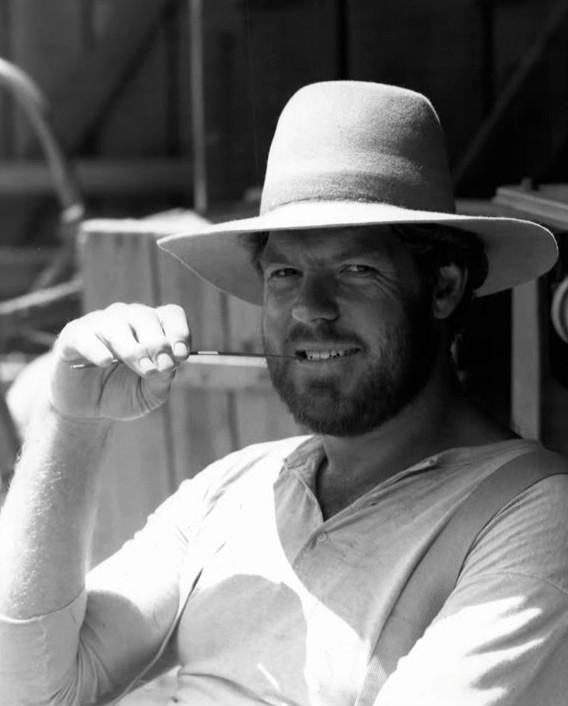
When Little House on the Prairie actor Victor French left to star in his own comedy Carter Country in 1977, Olsen was tapped to play Michael Landon's new sidekick Jonathan Garvey for several years. One memorable quote from his character's son Andy Garvey, "My pa doesn't know anything about football!" came when Andy's friends suggested that Jonathan coach their football team.

Olsen played the starring role of John Michael Murphy in the 1981–83 NBC television drama series Father Murphy.

In the Highway to Heaven episode 2.12 ("The Good Doctor"), the main character, Alex, tells Mark Gordon (Victor French) that "All I could see was the flowers and the beard. I thought you were Merlin Olsen." This is an inside joke since Olsen, Landon, and French were in the TV series Little House on the Prairie earlier in their careers.

Olsen's last acting work was in the short-lived 1988 TV series Aaron's Way.

Olsen was also the commercial spokesman for FTD Florists for many years. A part-time resident of the Coachella Valley, Olsen was the longtime radio and television spokesman for Palm Desert-based El Paseo Bank.[17]

Olsen also appeared in many Sigma Chi fraternity promotional campaigns; he and his brother Phil were Life Loyal Sigs, Significant Sigs (given to members for distinguishing acts outside the fraternity), and members of the Order of Constantine (given for service to the Fraternity). Olsen donated one of his cleats, which were bronzed, to be used during the annual football rivalry between two Las Vegas high schools, Eldorado High School and Chaparral High School, which both opened in 1973.[18] Each year, Olsen presented the "trophy" in the ceremony at the rivalry game.[citation needed]

Olsen often co-hosted the Children's Miracle Network telethons, a humanitarian organization founded in 1983 by Marie Osmond and John Schneider.

Awards

[edit]

He was named the Walter Camp Man of the Year in 1982 and Athlete of the Century for the state of Utah. During halftime of a basketball game between Utah State, Olsen's alma mater, and Saint Mary's on December 5, 2009, Utah State University announced that the playing surface inside Romney Stadium, home stadium for the university's football program, would be named Merlin Olsen Field in Olsen's honor. Because of Olsen's illness, Utah State decided not to wait until the 2010 football season to hold the ceremony; he was able to attend the game, but did not speak.[19] A sculpture of Olsen was unveiled in a plaza south of the stadium during an official dedication ceremony in Fall 2010.[20]

In 1979, Olsen was inducted into the Utah Sports Hall of Fame.[21] In 1980, Olsen was inducted into the National College Football Hall of Fame.[22] In 1998, Olsen was inducted into the Utah Tourism Hall of Fame.[23] Olsen was voted to the California Sports Hall of Fame Class of 2010, along with Bill Walton, Dwight Stones, and Jim Otto, among others.[24]

In 1983, Olsen served as Grand Marshal of the Rose Parade.

Personal life

[edit]

On March 30, 1962, Olsen married Susan Wakley, a fellow USU student. They had three children: Kelly, Jill, and Nathan. Olsen was a member of the Church of Jesus Christ of Latter-day Saints and a resident of San Marino, California.[25] His nephew Hans, son of his brother Clark, also played in the NFL with the Indianapolis Colts.[26]

Olsen was diagnosed with peritoneal mesothelioma in 2009,[27] and underwent three courses of chemotherapy. In December 2009, he filed a lawsuit against 25 defendants including NBC Studios, NBC Universal, 20th Century Fox, Georgia Pacific, Sherwin-Williams, and Lennox Corp. for allegedly exposing him to the asbestos which he claimed had caused his cancer.[28][29]

Olsen died on March 11, 2010, at City of Hope National Medical Center in Duarte, California, at age 69.[30][19][31] Olsen is buried at San Gabriel Cemetery in San Gabriel, California.

Filmography

[edit]

Film

[edit]
Year Title Role Notes
1969 The Undefeated Little George
1971 One More Train to Rob Eli Jones
Something Big Sgt. Fitzsimmons
1975 Mitchell Benton

Television

[edit]
Year Title Role Notes
1970 Petticoat Junction Merlin Fergus Episode: "With This Ring"
1973 Kung Fu Perlee Skowrin Episode: "Nine Lives"
1974 Dr. Simon Locke The Cat Episode: "The Killer"
1977–1981 Little House on the Prairie Jonathan Garvey 51 episodes
1978 A Fire in the Sky Stan Webster Television film
1980 The Golden Moment: An Olympic Love Story Todd Simms Television film
1981 Walking Tall Webb McClain Episode: "Hitman"
1981–1983 Father Murphy John Michael Murphy 34 episodes
1982 The Juggler of Notre Dame Jonas Television film
1984 Time Bomb Jake Calahan Television film
1986 Fathers and Sons Buddy Landau 4 episodes
1988 Aaron's Way Aaron Miller 14 episodes, (final appearance)

References

[edit]
[edit]
Revisions and contributorsEdit on WikipediaRead on Wikipedia
from Grokipedia
Merlin Olsen (September 15, 1940 – March 11, 2010) was an American professional football player, actor, television sportscaster, and philanthropist, renowned for his 15-season tenure as a for the in the () and his subsequent career in . Born in , one of nine children to parents Lynn and Merle Olsen, he excelled in athletics from a young age and attended , where he played as a two-time All-American , earning the in 1962 as the nation's top lineman. He graduated summa cum laude with a in in 1962 and later obtained a in the same field in 1970 while playing professionally. Selected third overall in the 1962 NFL Draft by the , Olsen anchored the team's legendary "Fearsome Foursome" defensive line alongside , , and , contributing to one of the league's most dominant units during the and . Over 208 games, he recorded numerous tackles and sacks (unofficial in his era), earned six first-team honors, and was selected to 14 Pro Bowls, tying the record at the time; he was named to the All-Decade Teams for both the and and inducted into the in 1982. After retiring from football following the 1976 season, Olsen transitioned to as an analyst for and then pursued , appearing in films such as The Undefeated (1969) and Mitchell (1975) before gaining prominence on television. His most notable role was as Jonathan Garvey, a kind-hearted farmer and friend to the Ingalls family, on the NBC series from 1977 to 1983, which showcased his gentle demeanor contrasting his on-field ferocity. He later starred as the title character in the spin-off series (1981–1983), while also voicing characters in commercials and appearing in the short-lived series Fathers and Sons (1986). Olsen retired from in 1988 to focus on family and . Throughout his life, Olsen was deeply involved in charitable work, serving as vice president of the board of trustees for the National Society and receiving recognition as its outstanding volunteer in 1981; he also advocated for education and youth programs in his native . Married to Susan Wakely from 1962 until his death, he was the father of three children: Kelly, Jill, and Nathan. Olsen passed away at age 69 from , a rare form of cancer linked to exposure, leaving a legacy as both a gridiron pioneer and a beloved figure in American popular culture.

Early years

Childhood and family

Merlin Jay Olsen was born on September 15, 1940, in , as the second of nine children born to Lynn Jay Olsen, a professor of at , and Merle Barrus Olsen, an elementary school teacher who had graduated from the university in 1936 with a teaching degree. The family, which included five daughters—Colleen, Lorraine, Gwen, Winona, and Ramona—and three other sons—Clark, Phil, and Orrin—settled in Logan by the time Merlin was six years old after moving frequently in their early years. Raised in a strict Mormon household as faithful members of The Church of Jesus Christ of Latter-day Saints, the Olsens emphasized values such as hard work, education, and community involvement, with both parents modeling these principles through their professional lives and service in the Logan LDS Temple. The large family lived modestly in a three-bedroom, one-bathroom home, where collaborative chores like over 1,600 quarts of peaches annually, processing chickens, and and deer in the rural area instilled a strong and from a young age. Lynn Olsen often brought university students home for meals and holidays, fostering a sense of hospitality and community that extended beyond the immediate family. In this rural Utah environment, Olsen's early exposure to physical activities came through family outings and sibling play, including hunting trips where he assisted in packing deer by age seven, which helped build his and interest in athletics. These experiences in the close-knit, faith-centered home laid the groundwork for his personal values and later pursuits. His brother Phil Olsen would go on to have a career in the , mirroring the family's athletic inclinations to some extent. This foundation of perseverance and family support transitioned into his developing interest in organized during high school.

High school and college career

Merlin Olsen attended Logan High School in his hometown, where he distinguished himself as a multi-sport , participating in football and among other activities. In football, he earned recognition as a standout lineman, being named to the sixth team of the 1957 Wigwam Wiseman All-America squad as an offensive lineman, marking him as the only player from to receive such honors that year. Despite an early setback when he was cut from the high school team in , Olsen later contributed to his Logan LDS Sixth Ward team's victory in the All-Church , showcasing his versatility and determination in athletics. Olsen enrolled at (USU) in 1959, where he majored in finance and played for the Aggies football team from 1959 to 1961 under head coach John Ralston. During his junior and senior seasons in 1960 and 1961, the Aggies compiled an impressive 18–3–1 record, co-winning the championship both years and advancing to the 1961 Gotham Bowl, where they faced Baylor in a nationally televised matchup. Olsen's contributions were pivotal in establishing USU's defensive prowess during this era, which Ralston later described as one of the program's most successful periods, highlighted by strong performances in key conference games that solidified the team's dominance. On the field, Olsen earned consensus All-American honors in 1960 and 1961, and in 1961, he received the as the nation's outstanding interior lineman. Academically, he excelled as a scholar-athlete, becoming a three-time Academic All-American and earning recognition from the National Football Foundation as one of the top scholar-athletes in 1961. Olsen graduated summa cum laude with a in in 1962 and later returned to complete a in in 1971.

Professional football career

Los Angeles Rams tenure

Merlin Olsen was selected by the with the third overall pick in the first round of the 1962 NFL Draft, marking the beginning of his entire 15-season professional career with the franchise. Standing at 6 feet 5 inches and weighing 270 pounds, Olsen quickly established himself as a cornerstone of the Rams' defense, leveraging his All-American pedigree for a seamless transition to the professional level. In his season, he earned the NFL of the Year honors after contributing significantly to a defense that, despite the team's 1-12-1 record, showcased his individual prowess with one interception returned for a and two fumble recoveries. Olsen's most iconic contribution came as a key member of the ' "Fearsome Foursome" defensive line, alongside ends and and tackle , a unit renowned for its dominance in the . This group revolutionized defensive strategies by emphasizing athleticism and aggressive techniques, including the head slap and coordinated pass rushes that pressured quarterbacks while effectively stopping the run; they frequently led the league in sacks and rushing yards allowed during their peak years. Positioned primarily at left , Olsen's strength and quickness allowed him to disrupt plays in the backfield, amassing an estimated 91 sacks over his career, though official records were not kept until later. Throughout his tenure, Olsen demonstrated remarkable durability, appearing in 208 games and starting 198 of them, while recording nine fumble recoveries and that single career from his year. He served as a team captain from 1962 to 1966, providing leadership during the ' rebuilding phase under coaches like Harland Svare. The marked a period of defensive dominance for the , culminating in the 1967 season when Olsen anchored the line for an 11-1-2 record that clinched the Coastal Division title and earned a berth in the NFL Championship Game, where they fell 28-7 to the . As the Rams transitioned into the 1970s under coach , Olsen remained a consistent starter and leader, though the physical toll of the position began to mount. Persistent back injuries hampered his performance in his final seasons, limiting his explosiveness despite continued participation in all 14 games each year. These ailments ultimately prompted his retirement following the 1976 season, concluding a career that solidified his status as one of the NFL's premier defensive tackles and a foundational figure in Rams history.

Key achievements and playing style

Merlin Olsen's NFL career was marked by exceptional individual recognition, including 14 Pro Bowl selections from 1962 to 1967 and 1968 to 1975, a record for a defensive lineman at the time. He also earned six First-Team All-Pro honors in 1966, 1967, 1968, 1969, 1970, and 1973, underscoring his dominance as a defensive tackle. These accolades highlighted his consistent excellence over 15 seasons with the Los Angeles Rams, where he started 198 of 208 games. Olsen's playing style was characterized by a rare blend of bruising physicality and technical precision, leveraging his 6-foot-5, 270-pound frame for exceptional strength and pursuit speed. Known for his intelligence on the field, he emphasized meticulous film study to anticipate plays, allowing him to excel in positioning and disrupting both runs and passes without relying on raw athleticism alone. As the anchor of the Rams' famed Fearsome Foursome defensive line, his cerebral approach made him a quiet but inspirational leader who glamorized defensive play. Among his career milestones, Olsen contributed significantly to the ' 1969 playoff run, recording 11 sacks that season while earning First-Team honors and helping the defense limit opponents effectively in the , where they lost in the Divisional round to the Minnesota Vikings. Unofficial pre-1982 sack statistics credit him with 91 career sacks, placing him among the ' all-time leaders and reflecting his impact as a pass rusher. In 1982, Olsen was inducted into the on his first ballot, delivering an enshrinement speech that emphasized the emotional intensity of the game, stating, "You can take the best team and the worst team and line them up and you would find very little physical difference. You would find an emotional difference," and expressing his deep love for football. Off the field, Olsen's reputation as a "" starkly contrasted his on-field ferocity, earning him widespread respect for his reserved demeanor and character amid his intimidating presence.

Post-playing career

Broadcasting

After retiring from the in 1976, Merlin Olsen entered broadcasting the following year, joining as a for games. He quickly established himself as an adept analyst, primarily partnering with play-by-play announcer on NBC's AFC coverage from the late through the . Their acclaimed team called four Super Bowls—XV in 1981, XVII in 1983, XX in 1986, and XXIII in 1989—as well as nine Rose Bowls, blending Enberg's enthusiasm with Olsen's measured insights. Olsen's commentary was noted for its , , and player-centric focus, leveraging his experience to provide balanced analysis that connected on-field strategies with the human elements of the game, earning praise for demystifying professional football for viewers. Beyond NFL telecasts, Olsen contributed to broadcasts, including his Rose Bowl assignments, and handled pre-game analysis for games on local outlets, emphasizing and the values he embodied as a player. In 1990, after 13 seasons at , he switched networks to , teaming with for NFC NFL coverage over the next two years. Olsen concluded his broadcasting tenure in December 1991 after a Dallas Cowboys game, at age 51, opting to reduce the rigors of constant travel and relocate his priorities toward family time and acting pursuits.

Acting roles

Merlin Olsen made his acting debut in the 1969 Western film The Undefeated, portraying Cpl. Little George, a Confederate soldier, alongside John Wayne and Rock Hudson. He followed with supporting roles in films such as One More Train to Rob (1971), where he played the henchman Eli Jones, and Mitchell (1975), as the character Benton. These early appearances marked Olsen's transition from professional football to entertainment, leveraging his physical presence and on-camera poise honed through broadcasting. Olsen achieved his television breakthrough as Jonathan Garvey on from 1977 to 1981, appearing in 51 episodes as the steadfast, family-oriented farmer who embodied moral integrity and community support. His portrayal contributed to the series' emphasis on wholesome values, drawing on his own background to deliver authentic, grounded performances. From 1981 to 1983, Olsen starred as the title character in , a Western drama series that aired for 34 episodes on , playing John Michael Murphy, a frontiersman who poses as a to protect and educate orphaned children in a mining town. The role highlighted his ability to convey quiet authority and , aligning with the show's themes of resilience and redemption. Throughout the 1970s and 1980s, Olsen made guest appearances on shows including (1970) as mountaineer Merlin Fergus and Kung Fu (1973), while also serving as the longtime spokesman for FTD Florists in national commercials, promoting floral arrangements with his warm, reassuring demeanor. Olsen's later acting work was more limited, with his final major role as Aaron Miller, an Amish patriarch relocating his family to California, in the 1988 NBC series Aaron's Way, which ran for 15 episodes before cancellation. Overall, his filmography spans over two dozen credits across film and television from 1969 to 1988, focusing on character-driven roles that emphasized strength, , and familial bonds.

Personal life

Marriage and family

Merlin Olsen married Susan Jane Wakley on March 30, 1962, while both were students at ; their union lasted nearly 48 years until his death in 2010. The couple, who met during their college years, built a stable family life centered on mutual support and shared values rooted in their Mormon faith, which emphasized traditional family priorities and community involvement. The Olsens had three children: daughters Kelly Lynn and Jill Catherine, and son Nathan Merlin. As a devoted , Olsen prioritized despite the demands of his professional life, though his children often saw less of him during his seasons due to frequent travels and commitments. Susan played a key role in maintaining stability, supporting Olsen through his transitions from football to broadcasting and acting, including long periods away for filming in locations like and . Their Mormon beliefs further shaped their , fostering a home environment focused on ethical values, education, and close-knit relationships. Olsen's extended family included his younger brother Phil Olsen, who also played defensive tackle for the Los Angeles Rams from 1971 to 1975, overlapping with Merlin's final seasons and strengthening their familial bond through shared professional experiences. The family maintained strong ties to , where Olsen was raised as the eldest son among nine siblings in a large Mormon household—a background that influenced his own emphasis on large, supportive family units. During his career, the family resided primarily in to accommodate his tenure, but later settled in a home in , near Resort, allowing closer connections to their roots and outdoor pursuits like .

Health issues and death

In 2009, Olsen was diagnosed with , a rare cancer linked to his exposure to during jobs he held as a youth starting at age 10 and continuing through college. He also alleged exposure on television sets during his acting career, where he encountered asbestos-containing materials like patching compounds without adequate warnings or protection. Olsen underwent three courses of at the City of Hope National Medical Center in , where he sought treatment following his diagnosis. In December 2009, he publicly disclosed his illness while filing a in against more than 25 companies, including Studios and 20th Century Fox, accusing them of negligence in causing his condition. Following Olsen's death, his family continued the legal action; in September 2011, they reached confidential settlements with 11 defendants related to the exposure claims. Olsen died on March 11, 2010, at the age of 69 from complications of at the City of Hope in Duarte. A memorial service was held on March 16, 2010, at All Saints Episcopal Church in , attended by over 500 family members, friends, former teammates, and NFL Commissioner . His wife, Susan, and their three children—Kelly, Jill, and Nathan—provided steadfast support throughout his illness, with family members expressing gratitude for the outpouring of tributes during the service.

Awards and honors

Football accolades

Merlin Olsen's career at culminated in several prestigious accolades that highlighted his dominance as a defensive lineman. In 1961, he won the , recognizing him as the nation's outstanding interior lineman. He earned first-team All-American honors in 1960 and consensus All-American honors in 1961, establishing himself as one of the top players in the country. These achievements led to his induction into the in 1980. Transitioning to the NFL with the Los Angeles Rams, Olsen quickly made an impact, earning the Defensive Rookie of the Year award in 1962 despite the team's struggles. Over his 15-season career, he was selected to 14 Pro Bowls, a record for a defensive lineman at the time, spanning from 1962 to 1975. He received first-team recognition six times (1966, 1967, 1968, 1969, 1970, and 1973), with additional second-team honors bringing his total selections to 10. He was also named to the All-Decade Teams for both the and . The retired his number 74 in 1982. These consistent performances earned him induction into the in 1982 on his first ballot. He was also enshrined in the Los Angeles Ring of in 1999, honoring his foundational role on the team's "Fearsome Foursome" defensive line. Beyond these core honors, Olsen received lifetime sports recognitions that underscored his contributions to the game. In 1982, he was awarded the Man of the Year, celebrating his sportsmanship and overall impact on football. At the state level, he was inducted into the Utah Sports Hall of Fame in 1979. In 1996, Olsen was named Utah's Athlete of the Century in a statewide recognition. State University has also dubbed him the greatest athlete in school history, reflecting his enduring legacy there.

Posthumous recognitions

Following Olsen's death on March 11, 2010, the established the annual Merlin Olsen Luncheon, held in the host city of the to honor his legacy of supporting fellow inductees and the organization. The event, which began in 2011 and has grown to attract over 700 attendees including more than 100 Hall of Famers, features a meet-and-greet, dinner, and entertainment, with proceeds benefiting Hall of Fame programs. In 2025, the luncheon for in New Orleans celebrated the Hall of Fame Class of 2025 and included a group photo of 37 Hall of Famers, continuing the tradition as a key pre-Super Bowl highlight. At , where Olsen starred in college, the playing field at Maverik Stadium—named Merlin Olsen Field in December 2009—saw expanded posthumous tributes, including the unveiling of a larger-than-life bronze of him on , 2010, at the stadium's south plaza during a dedication ceremony attended by family and alumni. This , sculpted to commemorate his contributions as a two-time All-American and the program's greatest athlete, has become a focal point for ongoing campus remembrances. In , Olsen's hometown, Merlin Olsen Central Park—originally renamed in his honor in 1984—received additional tributes after 2010, including family-involved events and enhancements like a 2024 wildlife art tunnel featuring local species. A related posthumous dedication occurred on June 21, 2010, for the nearby Lynn and Merle Olsen Park (named for his parents), which joined broader community efforts to celebrate the Olsen family's legacy through ribbon-cutting ceremonies with relatives present. The Sigma Chi Fraternity, where Olsen was an Order of Constantine sig, instituted the annual Merlin Olsen Day of Service on September 15—his birthday—starting in 2010 to honor his lifelong philanthropy. Chapters across the U.S. participate in volunteer projects emphasizing service, with the 16th observance in 2025 encouraging brothers to "give back" in his name through community initiatives. In the 2020s, the have incorporated Olsen into legacy events, such as annual birthday tributes on highlighting his role in the "Fearsome " and family-attended ceremonies, including a 2017 honor at Logan High School where his brother Phil Olsen spoke. Additionally, NCAA and retrospectives in the , such as his No. 27 ranking in ' 2010 "Top 100 Players" series and No. 30 spot in the 2019 NFL 100 anniversary list, have revisited his impact on and football.

Legacy

Cultural and community impact

As a native of , Merlin Olsen became an enduring icon in his home state, symbolizing pride and perseverance for generations of residents. Born and raised in a modest family home on Canyon Road, which was later renamed Lynn and Merle Olsen Park in honor of his parents, Olsen's roots deeply tied him to Cache Valley's community fabric. His achievements at (USU), where he earned degrees in finance and economics while becoming a consensus All-American , significantly elevated the institution's national profile and fostered statewide Aggie spirit. This legacy manifested in tangible tributes, such as the 2010 unveiling of a 12-foot bronze statue at Maverik Stadium depicting Olsen in his college uniform, which serves as a landmark drawing crowds during USU events and reinforcing 's connection to NFL excellence. Olsen actively engaged in community events, hosting the All-Sports Camp at USU for eight years, where 250-300 youths participated annually in football, wrestling, and other activities to promote discipline and teamwork. He also participated in speaking engagements, including motivational talks tied to USU athletics and broader Utah audiences, sharing insights from his career to inspire local youth. In the , Olsen's tenure with the from 1962 to 1976 redefined the position through his blend of size, agility, and tactical intelligence, anchoring the line and enabling disruptive plays by teammates. As a cornerstone of the Rams' "Fearsome Foursome" alongside , Roosevelt Grier, and , he helped popularize the 4-3 defense in the 1960s and 1970s, setting club records for games played (208) and consecutive starts (198) while earning 14 selections and 10 honors. This archetype influenced subsequent generations of linemen, who emulated his stabilizing presence and leadership; for instance, his ability to control the middle of the line inspired players like those in later Rams defenses to prioritize run-stopping fundamentals over pure pass-rushing. Olsen's on-field relentlessness, described by opponents as akin to "wrestling a ," contrasted sharply with his off-field demeanor, yet it established a blueprint for athletic, intellectually driven in professional football. Olsen's media career bridged athletics and entertainment, portraying him as a wholesome figure who promoted during the and . After retiring from football, he transitioned seamlessly into broadcasting as an NBC color commentator alongside , covering AFC games, Rose , and Super with a calm, articulate style that emphasized . In television acting, roles like Jonathan Garvey on (1977–1983) and the title character in (1981–1984) reinforced moral themes of integrity and community, making him a staple in family-oriented programming that encouraged positive societal values over . His gentle on-screen presence, often as a bearded, , resonated with audiences seeking uplifting content amid the era's cultural shifts. Olsen's philanthropy, rooted in his fraternity ties at USU where he was initiated in 1962, extended to youth development and in Logan long before and after his 2010 death. He supported the Children's Miracle Network Hospitals through personal involvement, aiding children with medical needs, and donated to USU's athletic programs, , and student scholarships to foster educational access. Posthumously, honors his legacy with the annual Merlin Olsen Day of Service on September 15—his birthday—encouraging chapters nationwide, including Utah's, to organize community cleanups at sites like and sessions for local youth, perpetuating his commitment to service and initiatives; the event marked its 16th annual observance in 2025. Additionally, the Merlin Olsen Summer Classic golf tournament, benefiting Bear Lake Watch, held its 13th annual event on July 12, 2025. By 2025, Olsen's "gentle giant" image continues to shape modern discussions, highlighting the of the physically imposing yet compassionate player who transcends the . Fans and analysts often reference his duality—fierce competitor on the field, kind-hearted mentor off it—as a model for today's athletes navigating media scrutiny and social roles, with his USU statue and field naming serving as ongoing symbols of balanced excellence in Utah's sports culture.

Mesothelioma awareness efforts

In late 2009, shortly after his diagnosis with , Merlin Olsen filed a against multiple companies, publicly attributing the disease to exposure from his youthful jobs and later work on television sets, thereby raising awareness about the hidden dangers of in everyday occupations. In the complaint, Olsen detailed decades of exposure without warnings from manufacturers, emphasizing the need for testing and vigilance among those with similar histories in labor-intensive fields like and . Following Olsen's death in March 2010, his family pursued the case, reaching a confidential settlement in September 2011 with 10 asbestos-related companies that had supplied products used in his past work environments. This resolution not only provided financial support but also amplified discussions on corporate accountability for hazards, with proceeds reportedly aiding family-led efforts to educate on prevention. The family's involvement extended to supporting events by organizations such as the Asbestos Disease Awareness Organization (ADAO), where Olsen's story was highlighted to underscore that affects diverse individuals, including former athletes. Posthumous tributes in the , including coverage of Olsen's battle and settlement, drew attention to risks in facilities and sites frequented by athletes during off-seasons. These features, alongside documentaries and articles, portrayed Olsen's experience as a for occupational safety in high-physical-demand careers. In the , his lawsuit has been referenced in educational resources on workplace hazards, reinforcing the importance of regulatory protections against in industries like and manual labor. Olsen's advocacy through litigation and his family's continued engagement have positioned him as a pivotal figure in awareness, spurring greater scrutiny of athlete health legacies and long-term exposure effects across professions.

References

Add your contribution
Related Hubs
User Avatar
No comments yet.