Hubbry Logo
search
logo
2230353

Emily Greene Balch

logo
Community Hub0 Subscribers
Read side by side
from Wikipedia

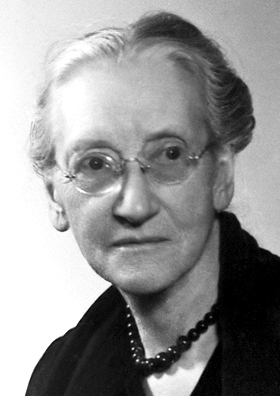
Emily Greene Balch (January 8, 1867 – January 9, 1961) was an American economist, sociologist and pacifist. Balch combined an academic career at Wellesley College with a long-standing interest in social issues such as poverty, child labor, and immigration, as well as settlement work to uplift poor immigrants and reduce juvenile delinquency.

Key Information

She moved into the peace movement at the start of World War I in 1914, and began collaborating with Jane Addams of Chicago. She became a central leader of the Women's International League for Peace and Freedom (WILPF) based in Switzerland,[2] for which she won the Nobel Peace Prize in 1946,[3] sharing the win with John Mott.[1]

Early life and education

[edit]

Balch was born to a prominent Yankee family in Jamaica Plain, Massachusetts (later a neighborhood of Boston),[3] the daughter of Francis V. and Ellen (née Noyes) Balch. Her father was a successful lawyer and one time secretary to United States Senator Charles Sumner.[4] She graduated from Bryn Mawr College in 1889 after reading widely in the classics and languages and focusing on economics. She did graduate work in Paris and published her research as Public Assistance of the Poor in France (1893). She did settlement housework in Boston before deciding on an academic career.[5]

She then studied at Harvard University, the University of Chicago, and the University of Berlin.

Career

[edit]

Balch began teaching at Wellesley College in 1896. She focused on immigration, consumption, and the economic roles of women. In 1913, she was appointed to serve as Professor of Economics at Wellesley, following the resignation of political economist Katharine Coman, who had founded the department.[6] That same year, Balch was promoted from Associate Professor to Professor of Political Economy and of Political and Social Science.[7]

Balch served on numerous state commissions, such as the first commission on minimum wages for women. She was a leader of the Women's Trade Union League, which supported women who belonged to labor unions. She published a major sociological study of Our Slavic Fellow Citizens in 1910.[8]

She was a longtime pacifist, and was a participant in Henry Ford's International Committee on Mediation, the follow-up organization to the Neutral Conference for Continuous Mediation. When the United States entered the war, she became a political activist opposing conscription in espionage legislation, and supporting the civil liberties of conscientious objectors. She collaborated with Jane Addams in the Woman's Peace Party and numerous other groups.[9]

In a letter to the president of Wellesley, she wrote we should follow "the ways of Jesus." Her spiritual thoughts were that American economy was "far from being in harmony with the principles of Jesus which we profess."[10] Wellesley College terminated her contract in 1919. Balch served as an editor of The Nation, a well-known magazine of political commentary.[8]

Balch converted from Unitarianism to Quakerism in 1921. She stated, "Religion seems to me one of the most interesting things in life, one of the most puzzling, richest and thrilling fields of human thought and speculation... religious experience and thought need also a light a day and sunshine and a companionable sharing with others of which it seems to me there is generally too little... The Quaker worship at its best seems to me give opportunities for this sort of sharing without profanation."[11]

Her major achievements were just beginning, as she became an American leader of the international peace movement. In 1919, Balch played a central role in the International Congress of Women. It changed its name to the Women's International League for Peace and Freedom and was based in Geneva.

She was hired by the League as its first international Secretary-Treasurer, administering the organization's activities. She helped set up summer schools on peace education and created new branches in over 50 countries. She cooperated with the newly established League of Nations regarding drug control, aviation, refugees, and disarmament. In World War II, she supported the Allied powers and did not criticize the war effort, but she did support the rights of conscientious objectors.[12]

Nobel Prize

[edit]

John Randall, professor of philosophy at Columbia University, and his wife, Mercedes Randall, one of the leaders of the US section of the Women's International League for Peace and Freedom, initiated a campaign to nominate Balch for the peace prize. The campaign was supported by five US organizations that established a committee called the "Committee to sponsor Emily Greene Balch for the Nobel Peace Prize". The organizations were the Women's International League for Peace and Freedom, the National Federation of Settlements, the Women's Trade Union League of America, the National Council of Women of the US, and the NAACP.[13]

Balch won the 1946 Nobel Peace Prize for her work with the Women's International League for Peace and Freedom (WILPF). She shared the win with John Mott.[1] She donated her share of the prize money to the WILPF. Her acceptance speech highlighted the issues of nationalism and efforts for international peace.[8][13]

Personal life

[edit]

Balch never married. She died the day after her 94th birthday.[citation needed]

See also

[edit]

References

[edit]

Bibliography

[edit]

Further reading

[edit]
[edit]
Revisions and contributorsEdit on WikipediaRead on Wikipedia
from Grokipedia
Emily Greene Balch (January 8, 1867 – January 9, 1961) was an American economist, sociologist, and pacifist known for her academic contributions and lifelong advocacy for international peace and disarmament.[1]
She earned a bachelor's degree from Bryn Mawr College in 1889 and pursued advanced studies in sociology and economics in Europe and the United States before joining the faculty at Wellesley College in 1896, where she rose to professor of economics and sociology by 1913.[2] Her research focused on immigration and social reform, exemplified by her 1910 book Our Slavic Fellow Citizens, which examined the conditions of Eastern European immigrants in the U.S.[2]
Balch's pacifist convictions intensified during World War I; she opposed U.S. entry into the conflict and participated in efforts like the Neutral Conference for Continuous Mediation, leading to the non-renewal of her Wellesley contract in 1918.[2] In 1915, she co-founded the Women's International League for Peace and Freedom (WILPF) at the International Congress of Women in The Hague, serving as its international secretary from 1919 to 1922 and later in honorary roles.[2] She contributed to League of Nations initiatives, refugee aid, and investigations into issues like U.S. occupation in Haiti, while warning against fascism in the 1930s.[1] During World War II, Balch adapted her views to support defensive measures against Nazism, prioritizing human rights.[2] For these sustained efforts, she shared the 1946 Nobel Peace Prize, though the U.S. government withheld congratulations, regarding her socialist-leaning anti-war positions as radical.[1]

Early Life and Family Background

Childhood and Upbringing

Emily Greene Balch was born on January 8, 1867, in Boston, Massachusetts, to Francis V. Balch, a lawyer, and Ellen Noyes Balch.[3][4] As the second of six children, she spent her early years in the family's comfortable home at 130 Prince Street in the affluent Jamaica Plain neighborhood of Boston.[5][6] Balch grew up in a prosperous, well-established New England family of Unitarian faith and English descent, amid the social and intellectual ferment of post-Civil War Boston.[7][8] Her parents emphasized public service and ethical action, reflecting the liberal Unitarian ethos of dynamic good works as a moral imperative, which shaped her early worldview.[9] The family's active involvement in the First Church in Jamaica Plain, Unitarian Universalist, further embedded these values through community-oriented religious life.[6] Surrounded by Boston's progressive circles in the late 19th century, Balch encountered discussions on social ethics and reform that sparked her nascent interest in addressing societal inequities, though her personal development remained rooted in the privileges of her upbringing until her later exposures.[7][9]

Familial Influences and Values

Emily Greene Balch's father, Francis Vergnies Balch (1839–1898), a Harvard College graduate who earned his law degree from Harvard Law School in 1860, built a successful practice focused on estates and corporate law while advocating for institutional reforms, including authoring an early civil service reform bill that influenced subsequent legislation.[10][11] This emphasis on ethical public service and structural improvements over personal gain modeled for Balch a causal link between individual moral responsibility and broader societal efficacy, prioritizing practical reforms grounded in observed institutional failures rather than ideological abstractions.[12] Her mother, Ellen Maria Noyes Balch (d. circa 1880), came from a lineage of medical professionals and managed a household of six children, including Balch and her four sisters and one brother, fostering a closely knit environment that valued intellectual discourse and familial solidarity.[13][14] Ellen's own background in a large, affectionate family contributed to an instilled sense of noblesse oblige, evident in the Balch household's orientation toward charitable endeavors that addressed immediate human needs through direct action, reinforcing Balch's early conviction that privilege entailed obligations for tangible social betterment.[5] The Unitarian faith of her educated parents promoted rational inquiry, humanism, and high moral standards, encouraging Balch to approach ethical questions through empirical observation and evidence rather than unquestioned dogma.[14] Extended family ties, including her father's Harvard connections and associations with ethical societies, further cultivated this disposition toward data-driven social analysis, as seen in the family's preference for verifiable progress in areas like public administration over speculative philosophical systems.[10] These influences causally oriented Balch toward viewing human affairs through a lens of moral realism, where values like duty derived from familial modeling of reformist action amid real-world constraints, rather than detached idealism.[12]

Education and Intellectual Formation

Undergraduate Education at Bryn Mawr

Emily Greene Balch entered Bryn Mawr College, one of the first institutions of higher education for women in the United States, in 1886 and graduated in 1889 as a member of its inaugural graduating class.[2][15] She earned an A.B. degree, with primary studies in Greek and Latin, reflecting the classical curriculum emphasis of the era's elite women's colleges.[16][9] During her undergraduate years, Balch encountered emerging social sciences through faculty such as Woodrow Wilson, who served as associate professor of history and political economy at Bryn Mawr from 1885 to 1888 and influenced her thinking on governance and economic structures rooted in classical liberal traditions rather than collectivist ideologies.[17] This exposure to political economy coursework laid the groundwork for her later pursuits in sociology and reform, though her immediate academic focus remained on philological disciplines.[15] Balch's scholarly aptitude was recognized when she became the first recipient of the college's European Fellowship in 1889, enabling postgraduate study abroad.[18] In the college's extracurricular environment, which fostered intellectual discourse among women in a Quaker-influenced setting, Balch engaged with nascent discussions on social conditions, foreshadowing her eventual involvement in settlement movements without yet manifesting in organized activism.[19] These experiences at Bryn Mawr, distinct from the specialized graduate training that followed, provided her initial framework for analyzing urban poverty and labor issues through empirical observation over ideological prescription.[17]

Graduate Studies and Early Research

Following her graduation from Bryn Mawr College in 1889, Balch pursued advanced studies in economics and sociology at the University of Chicago, where she engaged with emerging empirical approaches to social problems.[2] She supplemented this with fieldwork abroad, spending time in Paris during the early 1890s to examine France's systems of public assistance for the poor, drawing on primary data from administrative records and on-site observations of welfare institutions.[15] This research emphasized inefficiencies in centralized aid distribution, such as bureaucratic delays and uneven local implementation, advocating for reforms grounded in factual analysis rather than theoretical ideals.[20] Balch's Paris investigations directly informed her monograph Public Assistance of the Poor in France, published in 1893 as part of the American Economic Association's series.[21] The work, spanning 179 pages, traced the evolution of French poor relief from medieval alms to 19th-century state programs, critiquing their fiscal burdens—estimated at significant portions of departmental budgets—and highlighting empirical shortcomings like dependency incentives without corresponding productivity gains.[22] Her methodology prioritized verifiable data over speculative policy, earning acclaim for its rigorous fieldwork amid a field dominated by less systematic surveys.[15] This early scholarship established Balch as a proponent of objective, evidence-based inquiry into welfare economics, distinct from contemporaneous reformist advocacy that often blended moral imperatives with untested assumptions.[23] The publication's selection by the American Economic Association underscored its scholarly merit, positioning her contributions as a bridge between descriptive analysis and practical critique prior to her later engagements in broader social movements.[20]

Academic Career

Professorship at Wellesley College

Balch joined the faculty of Wellesley College in 1896 as an instructor in economics, advancing to full professor of economics and sociology by 1913.[2][15] She chaired the department during her later years there, contributing to its development through rigorous academic instruction.[15] Her courses covered economics, sociology, economic history, immigration, and social pathology, with a focus on practical analysis of labor conditions and urban social issues.[15][24] Balch integrated field trips to immigrant neighborhoods, sweatshops, and union halls into the curriculum, providing students direct exposure to socioeconomic realities alongside library-based study.[15] This approach emphasized on-the-spot investigations to verify theoretical claims, promoting independent judgment grounded in observable evidence rather than abstract speculation.[2][24] As an instructor, Balch mentored students in empirical methods, instilling a commitment to firsthand data collection and compassionate yet clear-eyed analysis of social problems, influencing a cohort oriented toward evidence-based inquiry over ideological prescriptions.[2] Her teaching style, marked by intellectual rigor and broad experiential insight, earned recognition for fostering strong-minded critical thinking among undergraduates.[2]

Key Publications and Scholarly Work

Balch's initial major scholarly contribution was Public Assistance of the Poor in France (1893), a monograph published as part of the American Economic Association's series. Drawing from her studies in Paris under economist Émile Levasseur during 1890–1891, the work examined France's public relief systems for the indigent, integrating statistical analyses of aid distribution, eligibility criteria, and outcomes with early sociological insights into poverty's structural causes. Balch utilized French government data on expenditure rates and pauperism incidence to assess the system's efficiency in preventing destitution, arguing for refined administrative mechanisms to enhance targeted support rather than wholesale restructuring, thereby underscoring the value of empirical evaluation in social policy design.[2][17] Her subsequent key work, Our Slavic Fellow Citizens (1910), emerged from extensive fieldwork residing in Slavic immigrant enclaves across U.S. cities like New York and Chicago, complemented by travels to Austria-Hungary to observe source communities. Spanning 536 pages and issued by the Charities Publication Committee, the book compiled quantitative data—including wage levels averaging $1.50–$2.00 daily for unskilled Slavic laborers in industries like steel and textiles, population influx figures exceeding 2 million from 1890–1910, and tax contributions relative to employment rates—alongside qualitative accounts of cultural practices, such as Bohemian folklore and family structures, to depict economic integration dynamics. Balch highlighted immigrants' roles in bolstering industrial labor markets through diligence and adaptability, while noting assimilation barriers like language proficiency and employer prejudices, positing that individual initiative within existing economic frameworks facilitated upward mobility more effectively than imposed collectivist interventions.[2][25][26] Complementing these monographs, Balch authored articles in economic journals during the 1890s–1900s, such as contributions to the Publications of the American Economic Association, applying comparative U.S.–French statistics on labor conditions and indigence to advocate pragmatic reforms like vocational training and localized welfare, prioritizing evidence-based enhancements to personal agency over broad redistributive schemes. These writings reflected her commitment to data-driven analysis of poverty's material roots, drawing on metrics like unemployment durations and relief recipiency rates to demonstrate how market-oriented opportunities, aided by selective public measures, could mitigate hardship without undermining self-reliance.[2][27]

Social Reform Efforts

Involvement in Settlement Houses

In 1892, shortly after graduating from Bryn Mawr College, Emily Greene Balch co-founded Denison House in Boston's South End, a densely populated immigrant neighborhood characterized by overcrowding and poverty. Along with activists Vida Scudder, Helena Dudley, and Katherine Coman, Balch established the settlement as Boston's first such initiative, explicitly modeled on Jane Addams' Hull House in Chicago to bridge class divides through resident volunteers living among the urban poor.[15][28][7] As head resident for several months, Balch resided on-site, immersing herself in the daily realities of slum life to empirically assess conditions affecting low-income families, including inadequate housing and limited access to education. This hands-on approach allowed her to observe causal factors in urban deprivation firsthand, such as the interplay of immigration, low wages, and community isolation, informing her later reformist priorities. Denison House offered practical services like educational programs and recreational activities tailored to neighborhood needs, aiming to empower residents through skill-building and mutual support rather than dependency.[9][8] Balch's tenure emphasized voluntary, community-driven solutions, reflecting the settlement movement's core principle of fostering self-help among the working classes via non-governmental associations. By 1895, after stepping back from daily operations, her experiences at Denison House solidified a pragmatic commitment to addressing poverty through localized, evidence-based interventions, distinct from broader policy advocacy.[15][25]

Advocacy for Labor and Immigrants

Balch co-founded the Boston branch of the Women's Trade Union League in 1903, serving as its president and advocating for the unionization of female laborers to improve wages and working conditions amid rapid industrialization.[18] Through this organization, she supported striking immigrant workers, including those in textile mills, by organizing relief efforts and publicizing exploitative practices such as piece-rate pay systems that reduced earnings during slowdowns, drawing on firsthand observations from settlement house work at Denison House in Boston.[7] Her involvement emphasized empirical documentation of labor grievances, such as overcrowded housing and child labor in factories employing over 80% women and children in some sectors, to press for reforms without endorsing unchecked militancy that could disrupt industry stability.[15] In her 1910 study Our Slavic Fellow Citizens, Balch conducted immersive fieldwork in immigrant enclaves across New York, Chicago, and Pennsylvania, living with Czech and other Slavic families to gather data on assimilation patterns, revealing that second-generation Slavs shifted from unskilled manual labor—where 70-80% worked in factories or mines—to skilled trades and farming at rates comparable to earlier European groups, countering claims of inherent unassimilability.[25] This evidence-based approach opposed restrictive policies promoted by groups like the Immigration Restriction League, arguing that targeted education and community integration fostered national cohesion more effectively than quotas, as Slavic immigrants demonstrated literacy rates improving from 50% among arrivals to over 75% in subsequent generations.[17] Balch prioritized verifiable outcomes like occupational mobility and cultural adaptation over unrestricted inflows, noting risks to social unity from rapid influxes exceeding assimilation capacity, based on census data showing clustered ethnic neighborhoods persisting for decades.[26] Balch's labor advocacy highlighted mixed empirical results from reforms, citing state-level data where minimum wage laws in early adopting jurisdictions like Massachusetts yielded 10-15% wage increases for women but correlated with 5-10% rises in unemployment among low-skilled workers, underscoring the need for balanced policies integrating training to mitigate productivity losses from union disruptions.[15] Her fact-finding missions during strikes documented worker hardships—such as 12-hour shifts yielding under $7 weekly—while cautioning against over-reliance on confrontation, as evidenced by productivity dips in unionized shops averaging 20% during disputes, per industry reports she referenced.[29]

Pacifist Activism

Pre-World War I Peace Initiatives

Balch's early engagement with peace concepts emerged through her social reform activities, where she emphasized cooperative solutions to ethnic and class tensions as alternatives to coercive or militaristic approaches. In 1892, she co-founded Denison House, a Boston settlement house modeled after Hull House, focusing on immigrant assimilation and labor education to foster mutual understanding among diverse groups.[30] This work reflected her view that rational dialogue and ethical persuasion could resolve conflicts rooted in economic disparity, predating formalized peace organizations. By promoting cross-cultural interactions, Balch advocated for voluntary cooperation over power-based resolutions, laying empirical groundwork for her later pacifism.[30] In her academic role at Wellesley College from 1896, Balch integrated critiques of militarism into teachings on economics and socialism, arguing that aggressive nationalism diverted resources from social welfare. She highlighted how militaristic policies exacerbated poverty and hindered international trade, drawing on data from European arms buildups—such as Britain's naval expenditures rising from £10 million in 1880 to over £30 million by 1910—to contrast with potential investments in education and poverty alleviation.[15] These analyses, informed by her graduate studies in Berlin and Paris, underscored a first-principles approach: conflicts arose from misallocated incentives, resolvable through arbitration and economic interdependence rather than force balances. Balch's 1910 publication Our Slavic Fellow Citizens extended this by examining immigration as a pathway to peaceful multiculturalism, using census data to demonstrate reduced ethnic strife via integrated labor markets.[31] Balch collaborated with women's reform networks, including the Women's Trade Union League established around 1903, to advance arbitration in labor disputes as a model for international relations. Through these groups, she supported mediated settlements over strikes or suppression, participating in events like the 1896 International Socialist Congress in London, where she engaged with global reformers on curbing militarism's economic drag.[31] Such efforts embodied her belief in women's ethical influence for rational conflict resolution, though pre-war initiatives remained localized and tied to domestic reform rather than interstate diplomacy.[30]

World War I Opposition and Professional Repercussions

Balch publicly opposed United States entry into World War I following Germany's resumption of unrestricted submarine warfare in February 1917 and the Zimmermann Telegram, which revealed German overtures to Mexico for alliance against the U.S.[2] In January 1917, she sent a telegram to President Woodrow Wilson urging mediation for peace, emphasizing the war's underlying economic and imperial motives over ideological justifications. Her arguments highlighted the futility of escalation, drawing on reports of mounting European casualties—exceeding 8 million dead by mid-1917—and the risk of similar devastation for American forces, framing intervention as prolonging a conflict driven by colonial rivalries rather than defensive necessity.[32] Despite U.S. declaration of war on April 6, 1917, Balch persisted in advocacy through the Emergency Peace Federation, opposing conscription and defending civil liberties for dissenters.[33] She supported conscientious objectors by arguing their stance aligned with empirical evidence of war's moral and human toll, citing Quaker testimonies and data on desertions and psychological breakdowns among troops, while critiquing compulsory service as eroding individual agency without curbing aggression's root causes.[34] This position, however, overlooked incentives for aggressors; Germany's U-boat campaign had sunk over 5,000 Allied ships and killed 15,000 civilians by 1917, actions that realists contended demanded collective deterrence to prevent further territorial conquests in Europe and beyond, rather than unilateral pacifism.[35] Her uncompromising stance led to professional repercussions at Wellesley College, where she held a professorship in economics and sociology. On leave for peace work from 1916 to 1918 amid rising patriotic fervor—fueled by government propaganda via the Committee on Public Information—Balch requested an extension in 1918, but the board of trustees terminated her contract, citing incompatibility with institutional loyalty during wartime.[15] This decision reflected broader pressures on academia, where over 100 faculty nationwide faced dismissal for anti-war views, as colleges aligned with mobilization efforts that enrolled 4 million U.S. troops.[36] Balch later reflected on the loss as a sacrifice for principle, though it severed her academic career at age 51, redirecting her energies fully to independent reform.[14]

Role in the Women's International League for Peace and Freedom

Founding and Organizational Leadership

Emily Greene Balch co-founded the Women's International League for Peace and Freedom (WILPF) through her leadership at the International Congress of Women held in The Hague from April 28 to May 1, 1915, where over 1,100 delegates from twelve neutral and belligerent countries gathered to advocate for negotiated peace amid World War I.[2] [37] The congress, co-organized by Balch alongside Jane Addams, produced resolutions calling for continuous mediation by neutral parties to secure an armistice and established the International Committee of Women for Permanent Peace as its executive body, with headquarters initially in Amsterdam; this committee evolved into WILPF at the 1919 Zurich congress, adopting its current name and relocating to Geneva.[2] [38] Balch contributed to drafting mediation proposals, including the dispatch of envoys to European governments and the Pope to press for ceasefire talks based on women's purported ethical insights into conflict resolution.[2] In 1919, Balch assumed the role of international chairman of WILPF, guiding its transition to a permanent structure focused on postwar reconstruction and disarmament advocacy.[2] She then served as international secretary-treasurer from 1920 to 1932, managing operations from Geneva after establishing the organization's offices there in 1920.[2] [39] Under her administrative direction, WILPF expanded to include sections in approximately 19 countries by the early 1920s, fostering a transnational network through correspondence, summer schools on peace education, and branch development in Europe and beyond.[40] [39] Balch's organizational efforts emphasized practical administration, including fundraising to sustain international staff and activities, as well as coordinating petitions and reports submitted to governments and the League of Nations on behalf of member sections.[2] [18] She prioritized women's collective moral influence in diplomacy, arguing that female-led initiatives could transcend national rivalries, though this approach relied on voluntary networks rather than enforceable mechanisms.[2] Her tenure as secretary involved meticulous tracking of section memberships and finances, enabling WILPF to maintain operations despite financial constraints and political opposition to pacifist groups.[18]

Interwar and World War II Engagements

During the interwar period, Balch, as a key figure in the Women's International League for Peace and Freedom (WILPF), directed efforts to scrutinize U.S. foreign interventions. In 1926, she led a WILPF delegation to Haiti amid the U.S. Marine occupation since 1915, conducting on-site assessments of governance, economic exploitation, and racial dynamics under American administration. The resulting report, Occupied Haiti (1927), which Balch edited, documented forced labor practices akin to corvée systems, financial control by U.S. interests, and suppression of Haitian autonomy, framing these as imperial overreach that exacerbated local instability rather than fostering stability.[2][15] WILPF under Balch's influence also critiqued the post-World War I settlement, prominently denouncing the 1919 Treaty of Versailles at its Zurich Congress. The organization warned that the treaty's reparations demands on Germany—totaling 132 billion gold marks—and territorial dismemberments would engender economic hardship and nationalist backlash, empirically linking punitive measures to heightened risks of renewed conflict, as evidenced by subsequent hyperinflation and political extremism in the 1920s. Balch endorsed this stance, viewing the terms as shortsighted vengeance over constructive reconciliation.[41][42] As World War II approached, WILPF adhered to its pacifist principles by advocating refugee assistance and neutrality, yet encountered fractures over responding to fascist aggression. Balch facilitated WILPF's support for European refugees fleeing Nazi persecution, lobbying U.S. authorities for expanded admissions quotas amid the 1939-1945 displacement of over 11 million civilians, while opposing pre-war alliances that risked escalation. Internal divisions intensified after 1939, with some members favoring absolute non-intervention against Axis powers and others, including Balch, pragmatically endorsing military resistance to Nazism as a limited exception to pacifism, citing the regime's documented genocidal policies and territorial conquests as causal threats demanding confrontation to avert greater catastrophe.[15][43] Post-1945, Balch guided WILPF's engagement with nascent international bodies, securing consultative status with the United Nations Economic and Social Council in 1948 to monitor disarmament processes. The organization tracked empirical shortfalls in arms reduction treaties, such as the stalled Baruch Plan for atomic controls in 1946, highlighting persistent stockpiling—U.S. nuclear arsenal growing to over 300 warheads by 1949—and veto dynamics in the Security Council that undermined verification mechanisms, advocating instead for verifiable multilateral inspections to address proliferation risks.[44]

Economic and Political Thought

Economic Theories and Critiques of Socialism

Balch advocated progressive taxation as a means to address income disparities, incorporating it into her economics curriculum at Wellesley College alongside discussions of direct and indirect taxes.[27] She also endorsed minimum welfare provisions as part of social reform, viewing them as compatible with market economies rather than wholesale state control.[30] These positions reflected her commitment to alleviating poverty through targeted interventions, distinct from her reservations about broader socialist doctrines. In her economic teachings and writings, Balch critiqued Marxist theory of exploitation, deeming the labor theory of value economically untenable as it overlooked capital's role in enhancing productivity.[23] [27] She rejected the socialist portrayal of interest as mere "exploitation" of labor, instead aligning with classical economists who regarded it as compensation for abstinence and deferred consumption, enabling investment and growth rather than embodying a zero-sum conflict.[27] Balch's empirical examination of public assistance in her 1893 monograph on French poor relief traced systems from medieval ecclesiastical charity to nineteenth-century state bureaus, revealing how institutionalized aid often fostered dependency and reduced incentives for private initiative and labor participation.[45] [46] She favored augmenting charitable efforts with market-driven solutions, such as employment opportunities and voluntary associations, over expansive government programs that risked pauperization, drawing on historical data from French departmental records to underscore these causal effects.[45] This analysis prioritized evidence-based reform, cautioning against socialism's tendency to undervalue individual agency and productive incentives.

Views on Nationalism, Race, and Internationalism

Balch's empirical study of Slavic immigrants, detailed in her 1910 book Our Slavic Fellow Citizens, emphasized the value of preserving ethnic cultural identities as a pathway to successful economic integration in the United States, rather than enforcing rapid assimilation that could disrupt social cohesion and productivity. Drawing from firsthand observations in immigrant neighborhoods, she argued that mutual cultural exchange between newcomers and established communities fostered adaptation and mutual benefit, countering nativist pressures for homogenization that ignored the adaptive strengths of Slavic traditions in labor and family structures.[26][47] On race, Balch critiqued prevailing hierarchies and stereotypes, particularly those underpinning immigration restrictions and imperial policies, viewing racism as a divisive force that perpetuated conflict and undermined democratic ideals; her analyses of Slavic groups and investigations in Haiti challenged pseudoscientific claims of inherent inferiority by highlighting environmental and social factors in group outcomes. Yet she acknowledged that inevitable cultural and, to a lesser extent, biological differences among groups contributed to tensions, though she prioritized their manageability through reasoned cooperation over irreconcilable determinism—a stance that later drew criticism from realists who argued it underemphasized innate divergences in conflict causation. In her Nobel lecture, she noted "differences as well as likenesses are inevitable, essential, and desirable," but warned against the "self-adulation of national and racial groups" that amplified divisions into violence.[35][47] Balch's internationalism, advanced through leadership in the Women's International League for Peace and Freedom, sought human unity transcending nationalism, as articulated in her 1946 Nobel address "Toward Human Unity or Beyond Nationalism," where she praised emerging global institutions like the United Nations for enabling collective security amid sovereign states' competing interests. However, she tempered borderless idealism by recognizing the primacy of national power dynamics and sovereignty claims—evident in disparities like the ascendance of the United States and Soviet Union post-World War II—which necessitated pragmatic functional cooperation rather than naive abolition of state interests, though critics contended this overlooked the causal persistence of national self-preservation in thwarting universalist peace efforts.[35][26]

Controversies and Criticisms

Pacifism's Empirical Failures and Realist Critiques

Realist scholars in international relations have long contended that absolute pacifism empirically falters by neglecting the structural anarchy of the global system, where states prioritize survival and power maximization over moral appeals, often leading to unchecked aggression when deterrence is absent.[48] This perspective posits that pacifist strategies, reliant on ethical persuasion and disarmament, ignore the incentives for revisionist powers to exploit perceived weakness, as evidenced by the interwar era's failure to contain expansionist regimes through non-violent means.[49] The Women's International League for Peace and Freedom (WILPF), under influences aligned with Balch's views, issued public appeals against Nazi Germany's rising militarism, including a 1932 petition with six million signatures urging global disarmament and a 1936 "Appeal to the Non-Jews of Europe" denouncing pogroms and totalitarian threats. [50] Yet these initiatives proved ineffective, as Germany proceeded with the remilitarization of the Rhineland on March 7, 1936, the Anschluss with Austria on March 12, 1938, and the Munich Agreement's dismemberment of Czechoslovakia in September 1938, followed by the invasion of Poland on September 1, 1939—actions enabled by the lack of balancing coalitions and military resolve among democratic powers.[50] From a balance-of-power standpoint, such pacifist non-responsiveness to aggressor signals exacerbated conquests, as revisionist states like Nazi Germany tested and expanded frontiers without facing proportionate countermeasures, contrasting with realist prescriptions for alliance-building and armaments to restore equilibrium.[51] Empirical analyses of interwar diplomacy parallel appeasement policies, where concessions to totalitarian ideologies—mirroring pacifist aversion to force—failed to avert escalation, ultimately necessitating Allied military intervention in 1939-1941 to halt further domination.[52] Critics from militarist and realist traditions, including theologian Reinhold Niebuhr, argued that World Wars I and II underscored pacifism's utopian detachment from human nature's inherent aggressions, which Balch had noted in her sociological work but insufficiently prioritized in advocating unqualified non-violence against ideologically driven foes unresponsive to reason or ethics.[53] Niebuhr, who abandoned pacifism by the late 1930s, contended that passive restraint permitted threats to metastasize, rendering defensive force not merely pragmatic but morally imperative to curb systemic violence, a view substantiated by the wars' outcomes in defeating Axis expansion at a cost of approximately 70-85 million lives.[53] [52]

Associations with Radical Causes and Government Scrutiny

Balch's sociological investigations into the conditions of workers, immigrants, minorities, and women led her to declare herself a socialist as early as 1905.[1] Her associations with progressive reformers, labor advocates, and settlement house movements further aligned her with left-leaning causes emphasizing economic justice and social experimentation.[1] As international secretary of the Women's International League for Peace and Freedom (WILPF), Balch helped shape the organization's 1919 Zurich Congress resolutions protesting military and economic interventions against Soviet Russia, including demands to end the Allied blockade to enable food relief and allow the Russian people a "fair trial" for their new social and economic order.[54] These positions, rooted in humanitarian anti-imperialism, drew accusations of undue sympathy toward Bolshevism from U.S. officials and anti-radical groups amid the post-World War I Red Scare.[55] The U.S. government long classified Balch as a "dangerous radical," subjecting her and WILPF to surveillance for perceived radical influences, including socialist doctrines, with no official congratulations extended by President Truman upon her 1946 Nobel Prize award.[1] Anti-communist critiques have since portrayed such early advocacy for Soviet engagement as naively overlooking the regime's coercive foundations, including forced labor systems that predated the full-scale gulags but foreshadowed Stalinist terror, evidenced by contemporaneous reports of Cheka executions and peasant resistances suppressed by 1921.[56] While Balch's defenders highlight her consistent opposition to authoritarianism, including fascism, historical assessments from realist perspectives contend that WILPF's selective emphasis on Western interventions permitted a blind spot toward leftist aggressions, such as Soviet interventions in neighboring states during the 1920s.[57] This pattern of associations sustained suspicions of radicalism throughout her career, despite her focus on empirical social reform over ideological extremism.[55]

Nobel Peace Prize and Recognition

Path to the Award in 1946

Balch's selection for the 1946 Nobel Peace Prize reflected the Norwegian Nobel Committee's emphasis on sustained, multilateral peace efforts in the wake of World War II's devastation, which had underscored the limitations of isolationism and the need for persistent international mediation. Nominated multiple times prior, she received formal nominations in 1946 supported by letters highlighting her WILPF leadership in refugee relief, including advocacy for U.S. admission of those fleeing Nazi persecution and direct assistance in relocations, as documented in her 1939 publication Refugees as Assets. These nominations, archived by the Nobel Institute, drew from her decades of empirical focus on disarmament and cross-national cooperation, distinguishing her from more transient activists.[58] [41] [34] Internal tensions within WILPF and broader pacifist networks during the war—stemming from Balch's pragmatic shift from absolute opposition to violence toward conditional support for Allied resistance against fascism—did not derail her recognition, as the Committee prioritized her organizational continuity and aid initiatives over ideological purity. Her role in positioning WILPF for consultative status with nascent bodies like the United Nations, building on prior League of Nations engagements, aligned with post-war optimism for structured global governance to avert recurrence of total war. This context framed her as a exemplar of resilient, evidence-based internationalism.[59] [37] [60] On November 14, 1946, the Nobel Committee announced the award, dividing it equally with John Raleigh Mott for their complementary lifelong pursuits: Balch's grassroots and institutional peace advocacy complementing Mott's ecumenical youth mobilization. The decision cited her "unbroken and constructive work for the cause of peace," emphasizing empirical persistence through organizational mediation despite wartime adversities.[61] [62][63]

Contemporary and Retrospective Assessments

Balch's receipt of the 1946 Nobel Peace Prize was contemporaneously viewed as a validation of women's expanded influence in international diplomacy, particularly through her foundational role in the 1915 International Congress of Women at The Hague and subsequent leadership of the Women's International League for Peace and Freedom (WILPF), which provided consultative input to the League of Nations on disarmament and minority protections.[1] [60] This recognition amplified advocacy for gender-inclusive approaches to conflict mediation, drawing on arguments that women, as primary bearers of war's human costs, merited formal roles in peace processes—a perspective echoed in post-war human rights initiatives.[64] However, the award's timing, immediately following World War II's resolution via Allied military campaigns rather than negotiation, highlighted tensions between idealist pacifism and pragmatic force; Balch herself had critiqued Western democracies' pre-war inaction against fascist aggression and, during the conflict, pragmatically endorsed military opposition to Nazism as a necessary measure, diverging from absolute non-violence at potential cost to her principled stance.[1] [15] [24] Retrospective evaluations credit Balch's interwar efforts with foreshadowing elements of modern human rights frameworks, such as protections for refugees and opposition to racialized nationalism, which informed United Nations consultations via WILPF's ongoing advocacy.[23] [47] Yet, analyses underscore pacifism's empirical limitations in the face of totalitarian regimes, as interwar diplomatic overtures failed to deter expansionism, necessitating total war—a dynamic Balch navigated by prioritizing humanitarian aid and anti-fascist warnings over unqualified non-intervention.[1] Scholars note this evolution as evidence that persistent idealist campaigning can complement but not supplant deterrence and force against existential threats, with the Nobel's conferral post-victory interpreted as honoring resilience amid such concessions rather than unalloyed preventive success.[30] [15] Modern reassessments, often in feminist peace studies, debate the prize's implications for signaling vulnerability to aggressors through emphasized non-violence, though Balch's adaptive critiques of appeasement mitigate portrayals of unyielding naivety.[60]

Later Years and Legacy

Post-Nobel Activities and Writings

Balch sustained her leadership role within the Women's International League for Peace and Freedom (WILPF) after receiving the Nobel Peace Prize in 1946, addressing the organization's first postwar conference that year to outline strategies for resuming international peace advocacy amid the onset of Cold War divisions.[65] Her involvement included ongoing correspondence with WILPF affiliates, focusing on coordination of anti-militarism efforts and promotion of transnational ethical frameworks to mitigate global conflicts.[66] In her formal Nobel lecture on April 7, 1948, titled "Toward Human Unity or Beyond Nationalism," Balch examined causal drivers of warfare, such as unchecked nationalism and competitive armaments buildups, which she argued empirically heightened risks of catastrophic escalation toward mutual societal destruction.[35] While emphasizing supranational institutions to enforce disarmament and resource sharing, her analysis treated armaments proliferation as a bilateral peril without differentiating ideological drivers, such as the expansionist imperatives of communist regimes versus defensive postures in Western democracies.[35] This reflected continuity in her prewar internationalist writings, extending calls for ethical globalism rooted in shared human interdependence over state sovereignty.[2] Into the early 1950s, Balch critiqued U.S. engagements in the Cold War context, highlighting cultural imperialism in foreign policy as a barrier to genuine international cooperation, based on observations of American influence abroad.[30] She participated in lectures and written exchanges engaging empirical data on decolonization processes, urging peaceful transitions through multilateral oversight rather than power vacuums that could invite renewed authoritarianism.[15] These efforts, conducted amid her advancing age, prioritized data-driven warnings against arms races—citing proliferation statistics and historical precedents—while advocating nonviolent resolutions to ideological standoffs.[35]

Death and Long-Term Influence

Emily Greene Balch died on January 9, 1961, in Cambridge, Massachusetts, at the age of 94, following a lifetime dedicated to social reform and peace advocacy.[1][67] Balch's enduring influence is evident in her foundational contributions to feminist pacifism and international women's organizations, particularly as a co-founder of the Women's International League for Peace and Freedom (WILPF) in 1915, which persists as a global network promoting disarmament, human rights, and gender-inclusive diplomacy.[30] Her sociological analyses of immigration, race, and empire informed early critiques of nationalism, shaping discourse in international thought by linking domestic social injustices to global conflict drivers.[26] This legacy has resonated in feminist international relations scholarship, which draws on her emphasis of women's agency in multilateral processes and critiques of militarized imperialism.[68] Assessments of her impact remain debated, with proponents crediting her humanitarian efforts—such as refugee aid and anti-racist internationalism—for advancing empirical gains in global civil society networks and post-war reconstruction dialogues.[47] Critics from realist traditions, however, contend that her prioritization of idealistic multilateralism overlooked causal dynamics of power competition, as historical outcomes like the League of Nations' collapse amid rising aggressions in the 1930s underscore the limits of pacifist frameworks absent robust deterrence.[3] Balch herself evolved toward conditional acceptance of defensive force by the 1940s, reflecting awareness of these tensions, yet empirical records of 20th-century conflicts favor realist strategies of balanced power over unqualified internationalism in constraining expansionist threats.[3]

References

User Avatar
No comments yet.