Hubbry Logo
Field recordingField recordingMain
Open search
Field recording
Community hub
Field recording
logo
8 pages, 0 posts
0 subscribers
Be the first to start a discussion here.
Field recording
Field recording
from Wikipedia
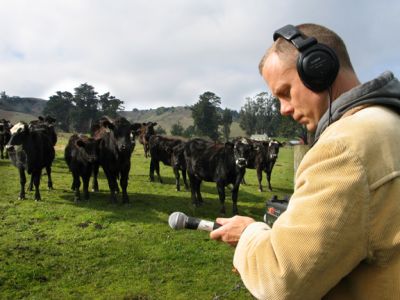
Martin Schmidt of the American electronic duo Matmos, recording cows in 2006
A recording being made of a colliery whistle

Field recording is the production of audio recordings outside recording studios, and the term applies to recordings of both natural and human-produced sounds. It can also include the recording of electromagnetic fields or vibrations using different microphones like a passive magnetic antenna for electromagnetic recordings or contact microphones, or underwater field recordings made with hydrophones to capture the sounds and/or movements of whales, or other sealife. These recordings are often regarded as being very useful for sound designers and foley artists.

Field recording of natural sounds, also called phonography (a term chosen because of the similarity of the practice to photography), was originally developed as a documentary adjunct to research work in the field, and Foley work for film. With the introduction of high-quality, portable recording equipment, it has subsequently become an evocative artform in itself. In the 1970s, both processed and natural phonographic recordings, (pioneered by Irv Teibel's Environments series), became popular.

"Field recordings" may also refer to simple monaural or stereo recordings taken of musicians in familiar and casual surroundings, such as the ethnomusicology recordings pioneered by John Lomax, Nonesuch Records, and Vanguard Records.

Techniques

[edit]
Two individuals recording ecoacoustics in the field.

General

[edit]

Field recording often involves the capture of ambient noises that are low level and complex, and, in response, the requirements from the field recordist have often pushed the technical limits of recording equipment, that is, demanding low noise and extended frequency response in a portable, battery-powered unit. For this reason, field recordists have favoured high-quality (usually professional) recorders, microphones, and microphone pre-amplifiers. The history of the equipment used in this area closely tracks the development of professional portable audio recording technology. Modern accessories used in the field include, but are not limited to: windscreens (foam, fur, hair, parabolic reflector), shock mounts, microphone cables, digital audio recorders and so on.[1]

Field recording is typically recorded in the same channel format as the desired result, for instance, stereo recording equipment will yield a stereo product. In contrast, a multitrack remote recording captures many microphones on multiple channels, later to be creatively modified, augmented, and mixed down to a specific consumer format.

Field recording experienced a rapid increase in popularity during the early 1960s, with the introduction of high-quality, portable recording equipment, (e.g., the Uher, and Nagra portable reel-to-reel decks). The arrival of the DAT (Digital Audio Tape) in the 1980s introduced a new level of audio recording fidelity with extended frequency response and low self-noise. In addition to these technologies, other popular means for field recording have included the analog cassette (CAC), the DCC (Digital Compact Cassette), and the MiniDisc. The latest generation of recorders are completely digital-based (hard disk/Flash). It is also possible to use personal electronic devices, (e.g., a smartphone or tablet), with software, to do field recording and editing.

In addition to recording and editing, the process of field recording also involves these skills. Ability to monitor (observe the relevant signals to ensure recording and settings are correct), control levels (correct decibel range and headroom), create neat documentation (handling, annotating, and tagging the recorded material), clean up (cutting out unwanted noises, processing, etc.), and file management.[2]

Basic Techniques

[edit]

There are three basic techniques that involve the placement of field recording microphones which result in varying directionality. The three techniques are known as A/B, X/Y, and M/S.[3]

A/B

[edit]

A/B is known as a spaced pair. A/B, or the spaced pair is formed by setting two separate microphones (omnidirectional) in parallel with one another. There is intentional space left between the two microphones in order to capture a wide stereo image of a desired sound. This technique is often utilized in an indoor recording of multi-string instrumental settings, music ensembles, and so on.[2]

X/Y

[edit]

X/Y is the most frequently used stereo recording technique. It typically involves setting a complement pair of microphones in a coincident (XY) pattern. This technique uses two cardiod microphones - the capsules are usually placed very close one above the other usually at an angle of between 90 and 120 degrees. It is quite a common configuration for handheld portable field recorders. It relies on the variation in level of sound arriving at each microphone. It produces a very acceptable stereo image for playback over speakers. However, there is a downside to this technique, as it is fixed in the way that widening or shrinking to control the ambiance is not a possibility.[2]

M/S

[edit]

Unlike X/Y, the M/S technique was created to allow for control over the level of ambiance. The logic behind it is that the Mid microphone functions as a center channel, and the Side microphone adds additional ambiance that can either be intensified or subtracted. This can take place either live during the recording or afterwards during editing.

Physically the layout involves a directional microphone as the centre, with a figure-of-eight microphone placed 90-degrees horizontally off-axis to the mid microphone. The figure-of-eight microphone can be used after the recording to provide information to widen the stereo image by combining the + and - phases of this microphone with the mid microphone. Basically the 180˚ signals can be added or subtracted from the centre signal to provide a wide stereo image - if no signal is supplied from the side microphone the recording will simply be a mono recording from the mid microphone.

New techniques

[edit]

Newly developed techniques include the creative placement of microphones, (including contact microphones and hydrophones, for example), the diffusion of captured sounds, and individual approaches.

Career

[edit]

A field recordist is an individual that works to produce field recordings. Typically the work involves recording sound outside of a controlled environment like a studio (field recording is an analog of studio recording), to be used or repurposed as sound effects that get inserted into all sorts of media, such as plays, video games, sound art, soundwalks, films, and television shows. A career as a professional field recordist is a tough, but potentially rewarding one. A field recordist must often face ever-changing weather, be patient, and willing to capture sounds in potentially dangerous locations. A typical day could range from recording ambient noise in a library to recording the thundering sounds of a grand waterfall. Just as the recordings can vary, the amount of work can as well. Most typically work as freelancers with other side jobs to support the slow periods of recording.[4]

Brief early history of field recordings

[edit]

The earliest known field recording is of a Shama bird. It was recorded in 1889 by Ludwig Koch using a wax cylinder recording. This was the first documented recording of a non-human subject.[5] The distinction between whether field recordings are art or music is still ambiguous, as they still serve both purposes.[6] Some early proponents of this important, yet unknown field consist of examples like Walter Ruttman's Weekend (which was a radio piece put together from recording of daily life in Berlin), and Ludwig Koch's 'sound-books' (which educated listeners in species identification using gramophone records of birdsong). These field recordings and many others ended up being stored in vinyl to be sold to enthusiasts, hobbyists, and tourists alike a few decades later in the 1950s, 60s, and 70s.

Research

[edit]

Ethnomusicology

[edit]
Béla Bartók using a phonograph to record Slovak folk songs sung by peasants

Field recording was originally a way to document oral presentations and ethnomusicology projects (pioneered by Béla Bartók, Charles Seeger, and John Lomax). In the case of Bartók, his own studies helped alter the generally unfavorable view of Eastern European folk music at that time. He grew to admire numerous regional styles from both firsthand experience and recordings, eventually incorporating these styles into his own compositional works.[7]

Bioacoustics

[edit]

Field recording is an important tool in bioacoustics and biomusicology, most commonly in research on bird song. Animals in the wild can display very different vocalizations from those in captivity. Ambient noise in urban environments have also shown to alter the vocalizations of local bird populations.[8]

In addition to birds, whales have also been frequently observed using field recordings. In recent years, COVID-19 has had largely negative effects on the world as a whole, but through recent field recordings, it has been shown that whales have been less stressed and generally more healthy. This is due to a large decline in international commerce and naval shipping during the pandemic, and by extension much less noise and disturbance in the ocean's soundscape.[9]

Art

[edit]

Music

[edit]

The use of field recordings in avant-garde, musique concrète, experimental, and, more recently, ambient music was evident almost from the birth of recording technology. Most noteworthy for pioneering the conceptual and theoretical framework with art music that most openly embraced the use of raw sound material and field recordings was Pierre Schaeffer, who was developing musique concrète as early as 1940. Further impetus was provided by the World Soundscape Project, initiated by Canadian composer R. Murray Schafer in the 1970s; this work involved studying the acoustic ecology of a particular location by the use of field recordings.

Field recordings are now a common source material for a range of musical results, from contemporary musique concrète compositions to film soundtracks, video game soundtracks, and effects. Chris Watson, formerly of Cabaret Voltaire, is now perhaps the world's leading exponent of this art, with his recordings used for David Attenborough's series for the BBC, programmes for BBC Radio, and many other outlets. Another notable application of field recordings as of contemporary music is its inclusion in some vaporwave tracks, commonly recordings of public areas such as malls or grocery stores to add atmosphere.[citation needed]

Another example of the use of field recordings is by the American musician Stuart Hyatt who combines his field recordings with the experimental music of himself and other musicians.[10]

The sounds recorded by any device, and then transferred to digital format, are used by some musicians through their performance with MIDI-interfaced instruments. A contemporary artist with great success for his compositions is Christian Fennesz.

Earlier innovators who are noted for the importance and boldness of their projects are Luigi Russolo, who, in 1913, with his manifesto, L'arte dei rumori (The Art of Noises), gave musical value to environmental noise. He also designed and built the Intonarumori—the first instruments for making noise. Francesco Balilla Pratella utilized the Intonarumori in his opera, L'aviatore Dro, which was written in close collaboration with Filippo Tommaso Marinetti, (the founder of the Futurist movement).

Radio documentary

[edit]

Radio documentaries often use recordings from the field, e.g., a locomotive engine running, for evocative effect. This type of sound functions as the non-fictional counterpart to the sound effect.

Politics

[edit]

During the early years of commercial recordings, the speeches of politicians sold well, since few people had radios. The His Master's Voice catalogue for 1914–1918[11] lists over a dozen such records. Probably the last time such records sold well was in 1965, when the LP, The Voice of Churchill, reached number 7 in the UK album charts. This was immediately after Churchill's death.

See also

[edit]

References

[edit]
[edit]
Revisions and contributorsEdit on WikipediaRead on Wikipedia
from Grokipedia
Field recording is the practice of capturing audio sounds in uncontrolled, real-world environments—such as natural landscapes, urban settings, or everyday acoustic events—using portable equipment like microphones and recorders, in contrast to the isolated conditions of . This approach emphasizes attentive listening to document sounds in their original spatial and temporal contexts, often revealing unique, unrepeatable sonic phenomena that highlight environmental acoustics. The roots of field recording extend to the late , with pioneering efforts like eight-year-old Ludwig Koch's 1889 wax cylinder recording of a common shama's song in , marking one of the earliest known attempts to preserve non-human sounds. It evolved significantly in the through , where in Britain, producer Lawrence Gilliam introduced "actuality" recordings in 1934 using mobile vans to capture live environmental sounds for programs such as Opping 'Oliday. In , the practice advanced in the 1940s with Jean Thévenot launching a on in 1948 and establishing a sound-hunting association in 1949, along with co-founding the International Amateur Recording Contest in 1952. These developments distinguished field recordings from —by retaining sounds' contextual integrity—or mere sound effects, fostering an aesthetic of authenticity despite technical imperfections like noise. Key techniques in field recording include selecting specialized , such as cardioids for directional capture or hydrophones for sounds, and stereo configurations like XY (coincident pair) for spatial imaging or M/S (mid-side) for adjustable width. Monitoring via ensures optimal levels within a -60 dB to 0 dB range, while ethical considerations, such as minimizing intrusion on fragile ecosystems, guide practitioners. Applications span , where recordings analyze soundscapes to assess and environmental health; experimental music and , integrating captured elements into compositions; and , providing immersive atmospheres or foley alternatives. In , figures like and the World Soundscape Project have used field recordings since the 1970s to map human-nature sonic interactions, influencing bioacoustics and conservation efforts.

History

Origins and Early Pioneers

The origins of field recording trace back to the late , when early technology enabled the capture of sounds outside controlled studio environments. The first known field recording is credited to eight-year-old Ludwig Koch, who in 1889 used his father's Edison and a wax cylinder to document the song of a (Copsychus malabaricus), a native to but kept in captivity in , . This pioneering effort, preserved in the Sound Archives, marked the initial foray into recording in non-studio settings, laying the groundwork for bioacoustics and environmental audio documentation. In the early , Koch emerged as a central figure in advancing field recordings, particularly during the and . Reviving interest in vocalizations after , he employed gramophone equipment to capture wild songs for educational records, such as the 1927–1935 series Gefiederte Meistersänger in collaboration with ornithologist Oscar Heinroth. By the late , after relocating to in , Koch utilized portable disc-cutting technology mounted in a mobile studio van—equipped with three recorders and five microphones—to record over 25 species and other , contributing to that popularized nature sounds for public audiences. These efforts, including releases like Songs of Wild Birds (1936), demonstrated the feasibility of on-location audio capture despite the cumbersome analog gear. Parallel developments in highlighted field recording's role in preserving . Composer conducted extensive expeditions from the 1910s to the 1930s across , using Edison phonographs and wax cylinders to collect thousands of folk songs from rural communities in , , , and beyond. His methodical approach, beginning with his first cylinder recordings in 1910 near Szék in , emphasized authentic vocal performances in natural settings, influencing later anthropological audio practices and resulting in archives like the Complete Collection of Hungarian Folk Songs. A pivotal technological shift in the facilitated broader adoption of field recording by transitioning from acoustic to electric methods. Acoustic recording, reliant on mechanical horns to amplify sound vibrations onto wax cylinders or discs, limited and portability until Western Electric's 1925 introduction of electrical systems using , amplifiers, and electromagnetic cutters. This innovation, commercialized by labels like Victor and Columbia, enhanced audio quality and enabled more remote captures, setting the stage for mid-20th-century experiments. In the 1940s, expanded field recording into artistic realms through , manipulating urban found sounds as raw material for composition. Working at Radiodiffusion Française in , Schaeffer recorded everyday noises—such as train rumbles and street ambiences—on disc in 1948, creating pieces like Étude aux chemins de fer by splicing and looping the tapes to explore sound objects independent of their sources. This approach, formalized in his Traité des objets musicaux (1966), treated environmental audio as compositional elements, influencing and .

20th-Century Developments

The mid-20th century marked a pivotal era for field recording, driven by technological innovations that enabled high-fidelity audio capture in remote and challenging environments. The introduction of the Nagra III in 1957 by Polish-Swiss engineer Stefan Kudelski revolutionized professional sound recording, as it was the first battery-powered, portable capable of producing studio-quality audio on quarter-inch . This device, weighing about 13 pounds (6 kg) and featuring pilot-tone synchronization for precise film audio alignment, became indispensable for documentary filmmakers and broadcasters, allowing synchronized sound recording directly on location without the limitations of bulky studio equipment. Its adoption in the 1950s and 1960s facilitated more immersive fieldwork, transforming how natural and cultural sounds were documented for cinema and radio. Institutional growth in broadcasting further propelled field recording's expansion, particularly through organizations like the Natural History Unit, established in in 1957 to produce wildlife programming. The unit's efforts, including a 1964 competition to identify and encourage sound recordists, built a foundational library of field audio that supported shows like Animal Magic, which debuted in 1962 and relied on on-site recordings of animal behaviors and habitats. This period saw field recording integrate into public media as a tool for education and storytelling, with the amassing thousands of hours of ambient and wildlife sounds by the late . Concurrently, bioacoustics emerged as a specialized application, exemplified by the Woods Hole Oceanographic Institution's underwater recordings of marine mammals in the ; researchers like William E. Schevill captured the first audio of killer whale vocalizations in 1964, including flute-like sounds and roars, advancing studies of cetacean communication. These efforts laid groundwork for analyzing underwater soundscapes, using hydrophones to document species such as sperm and humpback whales in their natural oceanic contexts. By the 1970s, individual practitioners bridged experimental music and field recording, highlighting its artistic and scientific versatility. Chris Watson, a founding member of the Sheffield-based industrial band Cabaret Voltaire in the late 1970s, initially incorporated field-recorded sounds into electronic compositions before transitioning to professional wildlife audio in the 1980s. His early experiments with tape loops and ambient captures evolved into acclaimed nature soundscapes for BBC documentaries, influencing a generation of recordists who valued unprocessed environmental audio. This decade also saw field recording gain momentum from the burgeoning environmental movement, spurred by events like Earth Day in 1970, which heightened awareness of ecological threats and prompted systematic archiving of natural soundscapes. Pioneers such as Bernie Krause began curating extensive libraries in the early 1970s, recording over 5,000 hours of biophonies from forests and wetlands to preserve sonic biodiversity amid habitat loss, fostering sound ecology as a discipline intertwined with conservation. These archives not only supported research but also underscored the urgency of documenting vanishing acoustic environments.

Modern and Digital Era

The transition to digital formats in field recording began in the late 1980s with the introduction of (DAT), which provided superior fidelity, extended , and minimal self-noise compared to analog tapes, enabling higher-quality captures in remote environments. This shift marked a departure from reel-to-reel systems, allowing recordists to achieve studio-like precision without the degradation inherent in analog duplication. By the , DAT machines became standard for professional field work, facilitating the documentation of natural and cultural sounds with unprecedented clarity. The 2000s saw the advent of solid-state recorders, which replaced tape with for greater portability, durability, and storage capacity, eliminating mechanical vulnerabilities in harsh field conditions. Devices like the Sound Devices SD722, introduced in the early , offered options for both hard disk and solid-state recording, supporting extended sessions essential for bioacoustic monitoring. Later models, such as the Zoom H5 released in 2014, further democratized access with interchangeable capsules and multitrack capabilities, making high-resolution field capture feasible for independent researchers and artists. These innovations reduced equipment weight and power demands, enabling longer deployments in diverse terrains. Post-2010, the proliferation of smartphones integrated field recording into everyday devices through dedicated apps, leveraging built-in for on-the-go captures comparable in quality to professional setups for many applications. Apps like Google's Recorder, launched in 2019 for devices, exemplify this trend by offering real-time transcription alongside audio logging, enhancing usability for interviews and environmental sound collection. Since the , integration of GPS metadata has allowed location-tagging of audio files, embedding coordinates directly into recordings to contextualize data for ecological studies, while syncing via platforms like enables seamless backup and collaboration. In the 2020s, has transformed field data processing, with tools like BirdNET employing deep neural networks to identify bird species from audio clips, aiding bioacoustics by automating analysis of vast datasets. BirdNET, developed by Cornell Lab of , supports over 3,000 species and runs on mobile devices, reducing manual identification time and improving accuracy in noise-reduced environments. Concurrently, open-access sound libraries have proliferated, fostering collaborative archives; Freesound.org, founded in 2005 by the Music Technology Group at Universitat Pompeu Fabra and celebrating its 20th anniversary in 2025, hosts over 700,000 user-uploaded sounds under licenses (as of November 2025), serving as a vital resource for and . Similarly, Xeno-canto, launched in 2005 and marking its 20th anniversary in 2025, specializes in bird vocalizations, amassing over 1,000,000 recordings (as of November 2025) to support global ornithological studies.

Techniques

Microphone Configurations

In field recording, microphone configurations refer to the geometric arrangements of used to capture or spatial audio, enabling immersive representations of natural soundscapes. These setups balance factors such as width, phase coherence, and environmental capture, tailored to the dynamic conditions of outdoor or remote locations. Common techniques employ pairs of with specific polar patterns and positions to simulate human binaural hearing or create artistic spatial effects. The technique, also known as the spaced pair method, uses two omnidirectional microphones positioned several feet apart with their capsules parallel to each other. This configuration produces a natural image with spaciousness, capturing wide soundscapes by leveraging time-of-arrival differences between the microphones, making it ideal for expansive field environments like forests or urban ambiences. However, the spacing can introduce phase issues, such as comb filtering, particularly when collapsing to mono. The X/Y configuration involves two cardioid microphones placed coincidentally, with their capsules angled at 90 degrees to each other and touching or nearly touching. This setup delivers phase-accurate with minimal interference from room reflections, as both microphones capture the sound source simultaneously, which is advantageous for focused field recordings of discrete events like calls. It excels in mono compatibility due to the lack of time delays but may result in a narrower field compared to spaced methods. The M/S (Mid-Side) method employs a cardioid facing forward as the "mid" channel and a figure-8 oriented sideways as the "side" channel, with the two capsules coincident. Post-recording, the signal is matrix-decoded to by summing the mid and side for the left channel (M + S) and subtracting for the right (M - S), allowing adjustable width without phase artifacts. This flexibility is particularly useful in field recording for adapting to varying acoustic spaces, though it requires decoding and can pick up unwanted off-axis noise from the sides. The ORTF setup positions two cardioid microphones 17 cm apart, with a 110-degree angle between their capsules, approximating the distance and angular separation of human ears. Developed by the French broadcasting Radiodiffusion-Télévision Française, it provides a balanced image that combines directional accuracy with natural spaciousness, suitable for field captures of ensembles or environmental layers like orchestral outdoor performances. The near-coincident placement helps mitigate low-frequency losses at distance but demands precise alignment to avoid inconsistencies. Each configuration offers distinct advantages and trade-offs in field recording contexts. A/B excels in conveying ambient spaciousness but risks phase cancellation, while prioritizes compatibility and precision at the expense of width; M/S provides post-production control for versatility, and ORTF strikes a compromise for realistic , though all may require protection in outdoor use to maintain audio . Selection depends on the desired immersion level and site acoustics, often paired with portable recorders for mobility.

Field Capture Methods

Contact microphones, also known as piezoelectric transducers, are specialized devices that capture directly from solid surfaces rather than airborne waves, making them ideal for field recording of substrate-borne acoustics in natural or mechanical environments. These microphones are attached to objects such as trunks to record internal resonances caused by wind, growth, or activity, or to machinery to isolate operational hums and sounds without ambient interference. In biotremological studies, low-cost DIY piezoelectric contact microphones have proven effective for detecting subtle on plant stems and . Hydrophones are deployed in aquatic environments to capture underwater soundscapes, with deployment techniques involving suspension from buoys or anchoring to seabeds to minimize self-noise and ensure stable positioning. Calibration of hydrophones is essential to account for water's acoustic properties, such as higher speed and compared to air, typically involving reciprocity methods or comparison to standards in controlled tanks to establish sensitivity and across bands like 20 Hz to 1 kHz. International standards emphasize pre-deployment over the intended frequency range to maintain , particularly for autonomous systems monitoring marine biodiversity. For instance, the Good Practice Guide for Noise Measurement recommends verifying the system's to ensure accurate capture of low-frequency cetacean calls or anthropogenic . Binaural recording employs in-ear microphones positioned within or near the ear canals of a dummy head or worn by a recordist to replicate interaural time and level differences, producing immersive audio that simulates natural hearing for and spatial applications. This technique captures field environments with (HRTF) cues, enabling listeners to perceive directionality and distance in playback via . Scholarly reviews highlight binaural methods as a foundational approach for immersive audio since the late , with modern in-ear setups facilitating portable field captures of urban or natural soundscapes for VR content creation. Long-duration unattended recording relies on autonomous setups that operate without intervention, often powered by solar panels and batteries to enable continuous monitoring in remote areas for weeks or months. These systems, such as Multichannel Acoustic Autonomous Recording Units (MAARUs), deploy multiple microphones in arrays to localize vocalizations, supporting passive acoustic monitoring (PAM) for assessment. In studies, solar-powered autonomous recording units (ARUs) have been used to collect extensive datasets on and calls, with designs like the MAARU incorporating GPS and weatherproofing for reliable operation in forested or oceanic sites. Noise mitigation in field recording includes strategic time-of-day selection to minimize anthropogenic interference, such as scheduling sessions during early morning or late evening when aircraft, traffic, and industrial activities are reduced. This approach preserves signal-to-noise ratios for , as anthropogenic noise peaks during daytime can mask bioacoustic signals like frog choruses or insect stridulations. Research on underscores selecting quieter periods to avoid masking effects, where urban noise elevates vigilance in and degrades recording quality.

Equipment

Portable Recorders

Portable recorders have been essential tools in field recording since the mid-20th century, enabling audio capture in remote or uncontrolled environments without reliance on studio power sources. Early analog models, such as the Uher 4000 introduced in the , were battery-powered reel-to-reel tape machines designed for portability and durability in fieldwork. These devices typically offered 5-10 hours of runtime on standard batteries, making them suitable for extended expeditions in and documentation. The transition to in the 1990s marked a significant advancement in audio fidelity and convenience for field recordists. recorders, popularized by around 1992, provided compressed audio storage on magneto-optical discs, while (DAT) machines, such as the PCM-2700A from 1991 onward, delivered uncompressed 16-bit/48kHz audio quality, reducing noise and allowing for higher-resolution captures compared to analog tape. These formats revolutionized field recording by minimizing bulk and enabling easier playback and editing, though DAT's fragility in harsh conditions limited its long-term adoption. Contemporary portable recorders emphasize compactness, high-resolution audio, and advanced features tailored to professional field use. Handheld units like the Zoom F3, launched in 2022, incorporate 32-bit float recording technology, which dynamically adjusts gain to prevent clipping without manual intervention, ensuring capture of wide dynamic ranges in unpredictable environments. Similarly, multi-track devices such as the Sound Devices MixPre series support timecode with video cameras, facilitating integrated audio-video workflows for and . These modern recorders often integrate seamlessly with various configurations to optimize or multi-channel setups. As of 2025, newer models increasingly feature wireless connectivity and AI-based for enhanced field efficiency. Power and storage capabilities in current portable recorders have evolved to support prolonged field sessions. Lithium-ion batteries in models like the Zoom F-series and Devices MixPre provide over 10 hours of continuous operation, far exceeding earlier limitations. Storage relies on removable SD cards, with capacities up to 1TB accommodating extended recordings in 24-bit format at sampling rates up to 192kHz, allowing hours of high-fidelity audio without compression artifacts.

Specialized Microphones and Accessories

Field recording often demands equipment beyond standard to capture sounds in harsh or unconventional environments, such as , on solid surfaces, or amid high winds and vibrations. Specialized and accessories are engineered to overcome these challenges, providing durability, sensitivity, and isolation tailored to natural settings. These tools enable precise audio capture for applications like monitoring, where conventional gear would fail due to environmental interference. Hydrophones are essential for field recording, converting acoustic in into electrical signals for analysis of vocalizations. Models like the Aquarian Audio H2a offer a frequency response from below 20 Hz to over 100 kHz, allowing detection of low-frequency calls and high-pitched echolocation clicks. Similarly, Cetacean Research Technology's C55 provides a broad bandwidth up to 200 kHz with low self-noise, making it suitable for passive acoustic monitoring of marine mammals in deep-sea deployments. These devices are typically constructed with waterproof piezoelectric elements encased in durable housings to withstand pressures up to several hundred meters. Contact microphones, also known as contact mics, utilize piezoelectric sensors to pick up directly from surfaces, ideal for recording or subtle mechanical noises in field conditions. Typical designs using piezo discs achieve a frequency range extending to 20 kHz, capturing everything from seismic rumbles to insect stridulations on material. These sensors are compact and rugged, often embedded in protective mounts to interface with irregular terrains without ambient air noise interference. To mitigate wind-induced noise, which can overwhelm recordings in outdoor environments, windshields and blimps provide acoustic barriers using porous materials like synthetic or . Rycote's kits, for instance, reduce wind noise by 20-30 dB across frequencies from 50 Hz to 10 kHz, preserving the integrity of natural soundscapes during windy field sessions. These accessories are lightweight and modular, fitting various sizes while maintaining minimal high-frequency . Parabolic reflectors enhance for distant sound sources, such as elusive calls, by focusing audio waves onto a element. These dishes concentrate frequencies above 500 Hz effectively, with models like the Telinga Universal Parabola achieving up to 20 dB gain for songs or noises in dense . Constructed from lightweight composites, they allow portable deployment without mechanical complexity. Shock mounts and booms isolate s from handling vibrations and extend reach into challenging areas like thick foliage. Pistol-grip shock mounts, such as those from Rycote's suspension system, attenuate low-frequency rumble by up to 25 dB, ensuring clean captures during handheld field use. Telescoping booms, often carbon-fiber reinforced, provide 2-4 meter extensions for positioning in hard-to-access spots without introducing cable noise. These accessories are critical for maintaining audio fidelity in dynamic outdoor scenarios.

Applications in Research

Ethnomusicology

In ethnomusicology, field recording has played a pivotal role in documenting and preserving human cultural music and oral traditions, particularly through historical collections that capture folk practices in their natural contexts. One seminal example is the work of Alan Lomax, who conducted extensive field recordings of U.S. folk music from the 1930s to the early 1940s as part of the Library of Congress's Archive of American Folk-Song, using portable disc recording equipment to capture songs, stories, and performances from diverse communities across the American South, Midwest, and beyond. These efforts, which continued into the 1950s through independent projects, amassed thousands of tracks that provided invaluable insights into regional musical idioms and cultural expressions, forming the foundation for later ethnomusicological analysis. Techniques in ethnomusicological field recording emphasize to ensure ethical engagement with communities, especially in remote villages where traditions are deeply intertwined with daily life and . Researchers prioritize obtaining from participants, often through verbal agreements that respect local customs rather than formal written forms, to foster trust and avoid power imbalances. This is complemented by the use of lightweight, portable recording gear—such as battery-powered digital recorders and directional —that allows unobtrusive capture in challenging environments without disrupting rituals or performances. Such approaches, guided by professional standards, enable ethnomusicologists to document living traditions while honoring community autonomy and rights. Digital archiving has revolutionized the preservation of these recordings, with projects like —acquired by the in 1987—leading post-1980s efforts to digitize vast collections of field recordings and enrich them with metadata detailing cultural contexts, performer backgrounds, and performance settings. This initiative has made over 60,000 tracks accessible online, supporting scholarly research and community repatriation by linking audio to ethnographic notes on traditions from around the world. Case studies illustrate this impact: in the , ethnomusicologist Ted Levin's fieldwork among Tuvan communities in southern documented (khoomei), a technique akin to Tibetan Buddhist multiphonic chants, using portable digital setups to record ritual performances and analyze their acoustic properties in cultural contexts. Similarly, recordings of Amazonian rituals, such as the icaros (curative songs) of the people in , captured through collaborative ethnomusicological projects in the early , have preserved shamanic healing practices amid environmental threats. The preservation value of field recordings extends to reviving endangered languages and music forms, as archived audio serves as a linguistic and cultural repository that communities can access for revitalization efforts. For instance, recordings of oral traditions in Indigenous Australian languages have informed song-based language programs, enabling younger generations to reconstruct pronunciations and narratives lost to colonization. In the Americas, digitized field recordings of chants from the Peruvian Amazon have facilitated community-led workshops, where elders use the audio to teach youth about ritual songs tied to endangered dialects, thereby sustaining musical heritage and linguistic diversity. These efforts demonstrate how field recordings not only document but actively contribute to cultural resilience, bridging past practices with future generations.

Bioacoustics and Ecoacoustics

Field recording has played a pivotal role in bioacoustics since the 1960s, when biologist began analyzing underwater recordings of songs captured off , revealing structured patterns and themes in their vocalizations that advanced understanding of cetacean communication. These early efforts, initiated in 1967 with recordings provided by a U.S. Navy engineer, marked a foundational shift toward systematic acoustic study of marine mammals, influencing conservation efforts through public dissemination of the findings in the 1970s. In ecoacoustics, field recordings from long-term deployments enable the computation of acoustic diversity indices, such as the Normalized Difference Soundscape Index (NDSI), which quantifies the balance between biophony (biological sounds) and anthropophony (human-generated noise) to assess . Developed by Kasten et al. in 2012, NDSI has become a standard metric in ecoacoustic research, applied in extended monitoring setups to track temporal and spatial variations in across diverse habitats. Analysis of these recordings often relies on specialized software like Raven Pro, developed by the Cornell Lab of Ornithology, which facilitates spectrogram visualization and measurement of ultrasonic signals, such as bat echolocation calls, allowing researchers to identify frequency modulations and pulse intervals critical for species identification. In bat studies, Raven Pro's tools enable precise annotation of spectrograms from field-captured audio, supporting behavioral and ecological analyses without invasive methods. Field recordings contribute to climate monitoring by detecting biodiversity loss through changes in soundscapes, as demonstrated in 2020s studies in tropical rainforests where reduced biophonic diversity signals habitat degradation from deforestation and warming. For instance, research in Borneo's rainforests using passive acoustic arrays revealed that selective logging correlates with diminished dawn choruses, providing acoustic indicators of ecosystem decline that complement visual surveys. Similarly, Amazonian studies integrating soundscape data with satellite imagery have quantified how fragmentation leads to quieter, less diverse acoustic environments, highlighting the role of field recording in tracking climate-induced shifts. Autonomous recording units (ARUs), such as Song Meter devices from Acoustics, facilitate 24/7 monitoring by capturing continuous audio in remote areas, with models like the Song Meter SM4 supporting extended deployments up to several months on battery power. These units, equipped with weatherproof enclosures and programmable schedules, have been in bioacoustic surveys, enabling large-scale data collection for indices like NDSI and spectrogram-based analyses across terrestrial and aquatic environments. In marine applications, hydrophones integrated with ARUs extend this capability underwater, as seen in ongoing monitoring programs.

Artistic and Media Applications

Sound Art and Music

Field recordings have profoundly influenced the development of , where captured environmental sounds serve as the primary material for composition. Pierre Schaeffer's 1948 piece Étude aux chemins de fer exemplifies this approach, utilizing on-site recordings of train engines at Paris's Batignolles station, including jangling tracks, whistles, and exhaust noises, which were then manipulated through slowing, looping, and editing to create abstract musical forms. This work marked a shift toward treating field-captured audio as autonomous "sound objects," detached from their origins to emphasize timbral and rhythmic qualities. In the ambient genre, field recordings provide immersive, environmental textures that blur the boundaries between music and surroundings. Brian Eno's 1970s ambient works, such as Ambient 4: On Land (1979), incorporate field recordings of wind and rain from locations like Honduras and Ghana, layered with electronic elements to evoke landscapes rather than traditional melodies. Contemporary artists continue this tradition; for instance, Jana Winderen employs hydrophone field recordings from underwater ecosystems, such as the Atlantic Ocean and Arctic marginal ice zones, to compose pieces that reveal inaudible marine soundscapes, often pitched into the human hearing range for installations and performances. These approaches transform raw field audio into atmospheric compositions that prioritize spatial depth and ecological awareness. Field recordings also integrate into electronic music, particularly drone and experimental forms, where urban or natural noises are sampled and processed to form hypnotic structures. Geir Jenssen, under the moniker , exemplifies this in his 1997 album Substrata, which weaves field recordings of airplane hums, street sounds, and bird calls with ambient synths to craft arctic-inspired drones that evoke isolation and vastness. Similarly, soundscape composition draws directly from field practices, as theorized by through the World Soundscape Project in the 1970s, which documented sonic environments across and to analyze and compose works that recontextualize everyday sounds as musical narratives. In sound art exhibitions, field recordings enable layered, immersive installations that explore perceptual and spatial dynamics. Venues like in have hosted works such as those by Thomas Köner, where low-frequency field recordings are synthesized into spatial soundscapes, demonstrating how captured audio can be multidimensionally arranged to engage listeners in acousmatic experiences.

Film, Radio, and Documentary

Field recordings play a crucial role in film sound design and Foley artistry, capturing authentic environmental ambiences to enhance narrative realism and immersion. In Werner Herzog's documentary (2005), extensive field audio recorded by subject during his 13 summers living among Alaskan grizzly bears forms the sonic backbone of the film, providing unfiltered glimpses into the wilderness that underscore themes of human-nature interaction. Herzog and editor Joe Bini sifted through over 90 hours of Treadwell's amateur footage, prioritizing clips with high-quality audio to maintain the raw, on-location authenticity that distinguishes the production. In radio documentaries, field recordings have been pivotal since the mid-20th century for evoking distant ecosystems and behaviors. The , established in 1957 in , built on earlier efforts like Ludwig Koch's pioneering bird sound archives from the 1930s and 1940s, which were integrated into programs such as The Naturalist (launched 1946) to broadcast live-like animal calls and habitats. By the 1950s, producers like Desmond Hawkins advanced this tradition in radio, using portable equipment to record species-specific sounds for series like Birds in Britain, immersing listeners in unscripted environmental narratives. , joining the in 1952, further expanded this practice during expeditions for programs like (1954), capturing field audio of wildlife and indigenous performances with L2 reel-to-reel recorders to blend scientific observation with auditory storytelling. Synchronizing field audio with video footage is essential in wildlife documentaries to align natural soundscapes with visual action, often employing timecode systems for precision. In the BBC's series (2016), sound teams use timecode matching to integrate on-location recordings—such as animal vocalizations and ambient wilderness noises—with high-definition visuals, ensuring seamless playback that heightens the sense of presence during sequences like predator pursuits. Renowned field recordist , who contributed to the series, describes deploying directional microphones in remote settings to capture these elements, which are then precisely synced in post to amplify ecological drama without artificial enhancement. Field recordings of protests and socio-political environments add visceral texture to documentaries exploring human conflict and change. In Curtis's essayistic films, such as (2016), ambient audio from real-world events—including crowd noises from demonstrations and urban soundscapes—is woven into montages to critique power structures and societal disconnection, drawing viewers into the chaos of historical moments. This approach leverages unaltered field captures to evoke emotional immediacy, contrasting with scripted narration to question perceived realities. During , field recordings are meticulously edited and layered with to build dramatic tension and contextual depth in documentaries. Techniques involve isolating ambient clips, adjusting levels for clarity, and integrating them beneath to guide emotional pacing, as seen in and investigative formats where subtle sound cues reinforce storytelling without overpowering dialogue. This layering process, often using workstations, ensures field audio supports narrative arcs while maintaining ecological or atmospheric fidelity. In recent years, field recordings continue to evolve in media applications; for example, as of 2025, sound artists like those featured in Bandcamp's field recording releases use portable hydrophones and binaural mics to capture urban and natural soundscapes for immersive VR documentaries and interactive installations, highlighting climate change impacts.

Professional Practice

Careers and Training

Field recording as a profession requires a blend of formal and practical training to develop the necessary technical and artistic competencies. Aspiring field recordists often pursue degrees in , audio engineering, or related fields, such as the in Sound Recording Technology at , which includes hands-on training in recording techniques and audio production in state-of-the-art facilities. Similarly, programs like the in Recording Arts and Technologies at prepare students for advanced audio production roles in media. Complementing these degrees, workshops offered by professional organizations provide specialized instruction; for instance, the () hosts training events and webinars on acoustics and audio practices, fostering skills applicable to field environments. Essential skills for field recordists include foundational audio engineering principles, such as and microphone techniques, alongside environmental awareness to navigate diverse recording conditions like and interactions. Proficiency in editing software is crucial for post-capture refinement, with tools like Audacity for basic editing or for multitrack workstations enabling precise sound manipulation. Patience and acute listening are also vital, as capturing natural or ambient sounds demands meticulous attention to detail and adaptability in uncontrolled settings. Career opportunities in field recording span freelance and full-time roles, often intersecting with media, conservation, and research sectors. Freelance sound recordists, particularly those working on film crews, typically earn between $500 and $1,200 per day as of 2025, depending on project scale, location, and experience. Full-time positions include staff roles at nature reserves or conservation organizations, such as bioacoustics analysts at the Woods Hole Oceanographic Institution, where professionals monitor wildlife sounds through extended field deployments. Media companies like National Geographic employ staff for audio production in storytelling and expedition projects. Professional credibility can be enhanced through optional credentials from the , including membership and participation in its educational programs, which signal commitment to industry standards without mandatory certification exams. These pathways collectively equip individuals to enter a niche field that values both technical precision and creative documentation of the sonic world.

Workflow and Organization

Field recordists typically begin post-capture workflows by logging metadata to ensure recordings remain contextualized and searchable over time. This involves capturing details such as recording date, precise location (often via GPS coordinates), environmental conditions, and descriptive tags for species, events, or equipment used. Tools like or specialized metadata plugins in digital audio workstations facilitate this process by allowing real-time or post-session entry of such data directly into a digital log that can be exported or synced with recording files. Effective file organization is crucial for managing large volumes of field audio , preventing loss and enabling quick retrieval. Recordists often employ hierarchical folder structures, organizing files by date (e.g., YYYY-MM-DD), project name, or location to maintain chronological and thematic order. Backups are routinely made to cloud services like , which support automatic syncing and for raw audio files, reducing the risk of during fieldwork. Basic follows capture to prepare files for or use, focusing on minimal intervention to retain the natural quality of field sounds. In digital audio workstations (DAWs) such as Audacity or , practitioners trim extraneous noise from clips and normalize levels to standardize volume without introducing artifacts. Over-processing, such as excessive or equalization, is generally avoided to preserve the authenticity and ecological fidelity of the recordings. For long-term preservation, field recordings adhere to established archiving standards that embed essential metadata directly into files. The (BWF), an extension of the format, is widely used as it supports the inclusion of timecode, textual annotations, and information in a standardized header, facilitating across software and institutions. This format ensures that recordings can be accurately referenced and reproduced in research or creative contexts. In collaborative projects, sharing high-resolution field recordings requires efficient platforms to handle large file sizes without quality loss. Services like Aspera, leveraging high-speed transfer protocols, enable secure distribution of audio files among team members, supporting workflows in or bioacoustics where multiple contributors analyze shared datasets. Digital recorders with built-in metadata capabilities can streamline initial logging before these sharing steps.

Challenges and Ethics

Technical and Environmental Challenges

Field recording in uncontrolled outdoor environments presents significant technical hurdles, primarily from and handling , which compromise audio fidelity. generates turbulent pressure fluctuations on diaphragms, producing low-frequency rumble that dominates recordings in open areas, often reducing the (SNR) to levels below 15 dB and causing substantial quality degradation. Even with mitigation strategies like windshields, which attenuate both signal and without improving SNR, remains a persistent issue, particularly in breezes exceeding 5 mph. Handling , such as bumps or cable movements, introduces transient low-frequency artifacts that further degrade recordings, requiring careful equipment stabilization during setup and operation. Environmental factors exacerbate these challenges, with weather conditions directly impacting equipment performance. High humidity levels above 70% can corrode capsules by allowing to infiltrate metal components like diaphragms and coils, leading to hissing, popping sounds, reduced output, or even short-circuiting in condenser microphones. Rain poses additional risks, necessitating protective measures such as acoustically transparent covers or sealed cases to shield microphones without altering . Access to remote sites, such as national parks, often requires permits for audio recording activities involving six or more individuals, commercial purposes, or exclusive use of areas (as updated by the EXPLORE Act in 2025), imposing logistical barriers and potential fees to ensure minimal impact on protected resources. Data management during extended sessions is constrained by power and storage limitations, particularly in harsh climates. Cold temperatures below 0°C drastically reduce battery life in alkaline cells by up to 60% due to slowed ion mobility in water-based electrolytes, necessitating lithium alternatives or external power sources for prolonged operation. High-resolution formats, such as 32-bit audio at 96 kHz, generate substantial data volumes—approximately 2.6 GB per hour for stereo recordings—quickly filling SD cards and requiring advance planning for backups and transfers to avoid interruptions in long sessions. External interferences further disrupt captures, especially in non-isolated settings. Urban electromagnetic from power lines and electrical induces hum or buzzing artifacts in audio signals, complicating clean recordings of subtle ambient sounds. overflights, even in remote areas like national parks, elevate levels by about 8 dB above ambient, fragmenting quiet soundscapes and rendering segments unusable for high-fidelity purposes.

Ethical Considerations

Field recording, as a practice spanning , bioacoustics, , and media production, raises significant ethical concerns related to , , cultural and environmental sensitivity, and representation. Practitioners must prioritize "do no harm" by avoiding physical, psychological, or social damage to recorded subjects, whether human communities or wildlife populations. This principle guides decisions on access, recording methods, and , ensuring that the act of capture does not exploit or disrupt the source material. In ethnomusicological contexts, obtaining informed consent from participants is fundamental, involving clear communication about the purpose, methods, and potential uses of recordings, with ongoing opportunities for withdrawal. Researchers must respect privacy and confidentiality, particularly for sensitive cultural practices, by anonymizing individuals where requested and securing agreements on data sharing. Cultural sensitivity demands awareness of power imbalances, such as those arising from outsider status, and avoidance of misrepresentation that could perpetuate stereotypes or harm communities; for instance, recordings of sacred rituals require explicit permissions and restrictions on public access. Intellectual property rights must be addressed, informing participants of their ownership over recordings and documenting any transfers to prevent exploitation. For bioacoustics and ecoacoustics, ethical practice emphasizes minimal environmental disturbance, using passive recording techniques like autonomous units to avoid playback or direct interference that could alter animal behavior or populations. Deployment in protected areas requires permits to comply with conservation laws, and equipment should be weatherproof and tamper-resistant to prevent unintended impacts on habitats. Representation of demands contextual accuracy to support conservation without sensationalizing ecosystems, while archiving excess recordings raises issues due to digital storage's demands. In artistic and media applications, field recordists confront issues of authorship and agency, as selections and edits inherently shape the original context, potentially obscuring socio-political implications. Ethical composition involves transparency about the recordist's role and deference to source communities or environments, avoiding decontextualization that evades accountability for cultural appropriation. Archival , per standards for collections, require explicit agreements for preservation and access, safeguarding sacred or private materials with secure handling. Overall, practitioners should engage in reflexive practices, prioritizing reciprocity—such as sharing benefits with sources—and adhering to evolving guidelines from professional bodies to foster responsible .

References

Add your contribution
Related Hubs
User Avatar
No comments yet.