Hubbry Logo
Finger cotFinger cotMain
Open search
Finger cot
Community hub
Finger cot
logo
8 pages, 0 posts
0 subscribers
Be the first to start a discussion here.
Contribute something
Finger cot
Finger cot
from Wikipedia
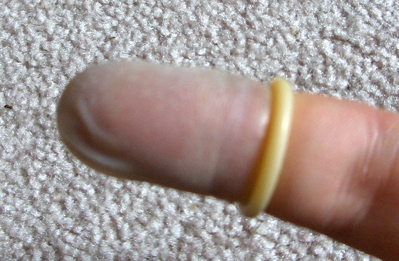
An example of a finger cot

A finger cot[1] (also finger frock, finger stall, or finger prophylactics[1] informally finger condom) is used to cover one or more fingers in situations where a full glove seems unnecessary. Like medical and rubber gloves, finger cots may be made from a variety of water-tight materials including latex, nitrile rubber, and vinyl.

A toe protector or toe cap is very similar, but shorter and of greater diameter. The function is not so much to prevent contamination—toes are normally contained within footwear that protects them—but to protect an injured toe against further damage from friction and pressure by continual rubbing against other toes and shoes. They are consequently made partly or wholly of a soft material such as a mineral oil gel, and the end may be either open or closed.

Medical use

[edit]

They are used in medicine to limit patient exposure to infection, and to protect health professionals from contact with bodily fluids that can transmit disease. Finger cots can be used in a wide scope of medical procedures and examinations, for example, when applying a topical medication or during digital rectal examination.[2] Finger cots may be used when bandaging a finger to secure the dressing and keep it dry. The term "fyngyr stalle" was recorded in 1483; "cot" has been used since 1617.[1] Early stalls were usually made of leather.[3]

Finger cots can also used as a protective barrier during sexual activities such as fingering to help reduce the risk of sexually transmitted infections; however, some sources recommend using a full glove instead for better protection. Finger cots are not intended to replace condoms for penetrative sex.[4][5]

In the workplace

[edit]

Finger cots have applications in many workplaces, mainly to protect objects which can be damaged by exposure to the skin's natural oils, skin particles, and dirt on hands. In electronics manufacturing, e.g., the manufacture of semiconductors, finger cots are used while handling such components.[6] In watchmaking they are used to protect delicate watch parts.[7] In art conservation and restoration they protect works of art from contamination which can have detrimental effects over time. In jobs that require labor with the hands, such as automobile repair or cooking, finger cots may be used to protect and isolate an injured finger.

Thimblettes (also known as rubber finger, banker's friend, rubber thimbles and finger cones) are soft thimbles, made predominantly of rubber, used primarily for leafing through or counting documents, bank notes, tickets, or forms. They also protect against paper cuts as a secondary function.

Other uses

[edit]

Finger cots have been used during the COVID-19 pandemic to limit contamination for voters using touch-screen voting systems in the 2020 U.S. elections.[8]

Finger cots can also be used as a picking barrier for people with dermatillomania.

See also

[edit]

References

[edit]
[edit]
Revisions and contributorsEdit on WikipediaRead on Wikipedia
from Grokipedia
A finger cot is a small, tubular protective covering designed to fit over a single finger, functioning as a partial alternative in scenarios where full hand protection is unnecessary or impractical. Primarily utilized in contexts to prevent cross-contamination between examiner and during digital examinations, such as rectal or vaginal procedures, it serves as a single-use barrier to maintain and reduce infection risk. In industrial and laboratory settings, finger cots protect delicate components from skin oils, dirt, and while allowing precise manipulation of small parts, such as in assembly or pharmaceutical handling. The U.S. (FDA) classifies finger cots as Class I medical devices under product code LZB, exempt from premarket notification requirements, with standards ensuring they meet performance criteria for barrier protection. They are typically manufactured from flexible, biocompatible materials like natural rubber latex, , vinyl, or thermoplastic elastomers, often in powder-free formulations to minimize allergic reactions and particulate contamination. Available in various sizes and thicknesses, these devices are disposable for use but may be reusable in non-sterile industrial applications with proper cleaning.

Overview

Definition and Purpose

A finger cot is a small, tubular sheath designed to fit snugly over a single finger, serving as a protective barrier akin to a partial or "finger condom." Typically constructed from flexible materials such as or , it provides targeted coverage without the bulk of a full . The primary purposes of finger cots include safeguarding against contaminants, minor injuries, and cross-contamination during handling tasks, while also preventing the transfer of bodily fluids, oils, or chemicals. In medical and examination contexts, they act as a barrier to maintain and reduce risk, and in precise work environments, they enable delicate manipulation without compromising safety. Finger cots feature a rolled or straight design with an open base for straightforward application and removal, typically extending 2 to 3 inches in length to cover from the fingertip to the first joint. This anatomy ensures a secure yet non-restrictive fit, accommodating various finger sizes. As a cost-effective and disposable option, finger cots offer superior dexterity and tactile sensitivity compared to full gloves, making them ideal for tasks requiring fine motor control while upholding hygiene standards. Their single-use nature further minimizes contamination risks in sensitive applications.

History

The origins of finger cots trace back to the mid-19th century, with early versions made from materials like or fabric for medical protection during patient examinations to prevent cross-contamination. By the and , rubber-based versions became common in surgical settings, offering improved flexibility over earlier alternatives. Following , finger cots saw expanded adoption in industrial sectors, particularly electronics and pharmaceuticals, driven by growing needs for precise handling of sensitive components and adherence to emerging hygiene standards in manufacturing. This period marked a shift toward , influenced by post-war economic growth and the proliferation of environments. In the 1970s, rising awareness of allergies—first clinically recognized in 1979—prompted a transition to synthetic alternatives like , which provided comparable protection without the risk of allergic reactions for healthcare and industrial workers. The 1990s brought further innovations with the introduction of powder-free versions, reducing contamination risks in sterile environments and aligning with stricter regulatory guidelines on particulate matter in medical and cleanroom applications. Into the , environmental regulations have spurred developments in biodegradable materials for finger cots, addressing the ecological concerns of disposable PPE waste accumulation and promoting sustainable alternatives in response to global policies on reduction. These advancements reflect broader influences from progress, heightened protocols post-HIV awareness in the , and labor mandates in manufacturing.

Materials and Design

Common Materials

Finger cots are primarily constructed from natural latex, a material derived from the sap of the rubber tree, which provides high elasticity and tear resistance suitable for precise handling tasks. This biocompatibility makes latex a common choice for medical-grade finger cots, though it can trigger allergic reactions in 1-6% of the general population due to proteins in the natural rubber. Synthetic alternatives have become prevalent to address latex sensitivities and enhance specific protections. , or acrylonitrile-butadiene rubber, offers superior chemical resistance and hypoallergenicity, making it ideal for industrial and applications where exposure to solvents or oils is a concern. Anti-static formulations of and , often with carbon or conductive additives, are used in handling to prevent . Vinyl, or (PVC), serves as a cost-effective option with good flexibility but lower tear resistance and elasticity compared to nitrile or , often used in low-risk settings. Other materials cater to niche requirements, such as silicone-based finger cots, which are employed in high-heat environments, offering thermal stability up to 200°C and non-stick properties for applications like assembly. In terms of properties, natural exhibits the highest elasticity, followed by and then vinyl, enabling better conformability to finger contours during use. Durability rankings place above due to its puncture resistance, while vinyl is the least robust but the lowest in cost, often 50-70% cheaper than equivalents. Environmentally, is biodegradable in natural settings, unlike persistent synthetics such as and vinyl, which contribute to microplastic in landfills.

Types and Variations

Finger cots are primarily available in standard rolled designs, which are pre-rolled at the base to facilitate easy unrolling and application onto the finger, making them the most common type for disposable use. These rolled cots typically come in small, medium, and large sizes to accommodate varying finger dimensions. Straight or ambidextrous finger cots, in contrast, feature a non-rolled, straight-walled structure that allows for a custom fit without predefined rolling, often preferred for precision tasks requiring a tailored application. These designs may include beaded edges for secure retention and ease of removal. Specialized variations enhance functionality for specific handling needs, such as textured surfaces that provide improved grip when managing slippery objects. Powder-free options eliminate residue risks, while colored variants, such as or , enable quick identification in environments. Sizing and fit for finger cots are determined by the internal , typically ranging from 15 mm for small to 25 mm for large, corresponding to finger circumferences of approximately 47 to 79 mm at the base. Most designs are ambidextrous, though some variations exist for left- or right-hand specificity or thumb-specific fits to ensure optimal coverage. Recent innovations in finger cot design include reinforced tips for increased durability during prolonged use and coatings to promote extended without compromising flexibility. For instance, nitrile-based types often incorporate chemical resistance that influences performance in hazardous environments.

Applications

Medical Uses

Finger cots serve a critical role in healthcare settings by providing a protective barrier during procedures involving direct contact with bodily fluids, thereby preventing cross-contamination between patients and providers. Classified by the U.S. (FDA) as non-powdered patient examination gloves, they are disposable devices intended to cover a single finger while maintaining tactile sensitivity. This design makes them particularly suitable for targeted applications where full-hand gloves might impede precision. In digital examinations, such as rectal, vaginal, or oral assessments, finger cots are routinely employed to minimize infection risks. During digital rectal examinations (DRE), healthcare providers wear a lubricated finger cot over the to palpate the , , or anorectal structures, protecting against exposure to bloodborne pathogens like and . Similarly, in vaginal examinations, they facilitate cervical assessments or amniotomy procedures, where a specialized finger cot with an integrated hook may be used to rupture amniotic membranes safely. For oral exams in , finger cots enhance infection control by covering sensors or instruments during intraoral procedures. Finger cots also support wound protection and hygiene protocols in nursing and patient care. Nurses use them to cover minor cuts or abrasions on their fingers, shielding from bodily fluids during tasks like medication administration or perineal care, while allowing continued dexterity. In and general , they align with standards by serving as single-use barriers for applying ointments, handling suppositories, or conducting minor dressings, thereby complying with (OSHA) requirements under the Bloodborne Pathogens Standard (29 CFR 1910.1030) for disposable PPE to prevent occupational exposure. Their advantages in include targeted single-finger coverage, which preserves dexterity in confined spaces like the oral cavity or genital tract, unlike bulkier full gloves. As disposable items, they meet OSHA's emphasis on single-use barriers to eliminate reprocessing risks and ensure compliance with infection control protocols. variants are preferred for patients or providers with latex allergies to avoid risks.

Industrial and Workplace Uses

Finger cots are extensively utilized in assembly, particularly in production, to prevent from skin oils, salts, and other particulates that could compromise sensitive circuits or screens. These protective covers, when made from dissipative or conductive materials, ensure proper grounding for personnel handling electrostatic discharge-sensitive (ESDS) items, thereby reducing the risk of both electrostatic and ionic . According to ESD control standards, finger cots must exhibit electrical resistance compliant with testing procedures outlined in ESD TR53 to maintain efficacy in environments. In chemical handling applications within laboratories and factories, finger cots serve as a targeted barrier against exposure to solvents, adhesives, and paints, minimizing direct contact with irritants. variants are particularly valued for their inherent chemical resistance, providing protection without the need for full gloves in scenarios requiring partial coverage. standards recommend clean, powder-free finger cots for such tasks, as they offer sufficient resistance to volatile solvents and paints while preserving dexterity. Within food processing facilities, finger cots enhance worker hygiene when handling unpackaged goods, ensuring compliance with FDA regulations that mandate single-use gloves be worn over any bandages, finger cots, or stalls on the hands to prevent physical contaminants from entering food supplies. This practice reduces the risk of foreign objects, such as detached protective materials, posing hazards like choking, and supports overall contamination prevention in regulated environments. The 2017 FDA Food Code explicitly addresses this requirement to uphold food safety standards during employee interactions with exposed products. Beyond sector-specific roles, finger cots offer general benefits by reducing the incidence of from chemical and mechanical exposures, as protective barriers like these contribute to preventive strategies in occupational settings. Unlike full gloves, they allow for fine motor tasks with minimal bulk, enabling precise handling of small components or tools without sacrificing tactile sensitivity or grip control. Industry analyses indicate significant adoption in operations, with the global ESD finger cots market valued at approximately USD 350 million in 2023.

Electoral Uses

Finger cots have been employed in electoral processes to facilitate hygienic interaction with voting equipment, particularly to minimize direct contact and reduce the spread of contaminants during polling. This application gained prominence during the amid the , where election officials distributed disposable finger cots as part of "vote safe" kits to voters for signing in or navigating touch-screen machines. In specific locales such as , voters received kits including hand wipes, a disposable marking tool, a finger cot, and an "I Voted" sticker, allowing them to use the cot for touching shared surfaces like screens without bare skin exposure. Similarly, in New Jersey's in-person , each voter was provided a disposable and finger cot to interact with electronic poll books, ensuring sanitary conditions while maintaining voting integrity. These non-latex, single-use variations were selected for mass distribution to accommodate diverse populations and prevent reuse, aligning with public health guidelines from bodies like the Centers for Disease Control and Prevention. The adoption of finger cots in electoral settings traces back to enhanced hygiene needs during the in the . Cultural adaptations include providing alternatives for voters with missing fingers or sensitivities, such as applying the to another digit while still offering cots for machine interaction.

Other Applications

Finger cots serve as protective sheaths in personal hygiene practices, particularly for intimate activities. Known as "finger condoms," they provide a barrier during digital stimulation to help prevent the transmission of sexually transmitted infections (STIs) by covering the finger and reducing direct skin-to-skin or fluid contact. authorities, including the Department of Health, recommend their use alongside other barrier methods like dental dams for safer in high-risk scenarios. Additionally, a standard condom can be unrolled over one or more fingers as a makeshift finger glove for safer manual stimulation or fingering to reduce STI transmission risk from cuts, abrasions, or fluids. However, for fisting (inserting the whole hand), condoms are not recommended; latex or nitrile gloves are preferred as they provide full hand coverage, better durability, and reduced risk of tearing or slippage. While not as comprehensive as full s, they offer targeted protection when dexterity is needed. In crafts and hobbies, finger cots safeguard fingertips from irritants and injuries without restricting hand movement, making them ideal for precision work. They prevent skin contact with adhesives, paints, resins, and tools in DIY projects, such as sculpting where they avoid unwanted fingerprints on surfaces. In jewelry making and watchmaking, these covers protect delicate materials from natural oils and scratches while allowing fine manipulation. Users also employ them in activities like to shield against hooks and line abrasion, or to block thorns and contaminants. For animal care, finger cots adapt medical-grade protection to veterinary contexts, especially with small pets. They facilitate safe rectal temperature checks, wound dressing, and medication application on cats and dogs, preventing cross-contamination between handler and animal while maintaining . Emerging applications include cosmetic procedures, where finger cots shield nails from chemicals during manicures and gel polish removal. Professionals use them to wrap soaked in acetone around , isolating the treatment and avoiding exposure to solvents. In forensics, they enable delicate evidence handling by covering injured fingers, minimizing risks during collection without full interference.

Production and Standards

Manufacturing Process

The manufacturing process for finger cots primarily employs a dipping method, where , metal, or formers shaped like fingers are repeatedly immersed in liquid baths to build thin, seamless coverings. This technique is used for both and variants, with relying on compounded into a stable and using synthetic acrylonitrile-butadiene rubber (NBR) dispersed in water-based solutions. The ensures uniform thickness typically ranging from 0.1 to 0.3 mm, controlled by coagulant concentration and dipping duration. Production begins with compounding, where raw polymers are mixed with additives such as stabilizers, accelerators (e.g., zinc dibutyl dithiocarbamate), curing agents (e.g., sulfur), and surfactants to form a viscous latex or NBR compound at 24–30°C. For latex, this includes blending natural rubber with water-soluble ingredients; for nitrile, calcium nitrate acts as a coagulant to facilitate adhesion. Formers are then cleaned—often with acid and alkali solutions—preheated in boiling water above 90°C for at least 10 seconds, and dipped into the coagulant bath (e.g., 7–10 Baume calcium nitrate or chloride solution mixed with an interleaving agent) for 10 seconds or more, followed by drying at around 130°C to create a tacky layer. Subsequent dipping stages involve immersing the coated formers into the bath for at least 30 seconds, often in multiple layers (e.g., a binary process alternating accelerator-rich and curing-rich formulations) to achieve desired thickness, with intermediate drying to prevent drips. follows in a heated at 90–120°C for 60–120 minutes, cross-linking the chains for elasticity and strength while cooling gradually to 30–40°C to avoid defects. Leaching occurs via hot water rinsing (80–90°C for 30–40 minutes) post-vulcanization to extract water-soluble impurities, proteins, and residues, enhancing purity and reducing allergenicity. After leaching, finger cots are stripped from formers using automated rolling with brushes, beaded at the open end for easier application, and treated for powder-free variants through chlorination to reduce surface tackiness without cornstarch. and final rolling into compact form precede in sterile, class 100 conditions. includes electrical testing for pinholes and physical checks for tensile strength and elongation in accordance with ASTM D3772. Modern automated production lines operate continuously, contrasting with traditional batch methods, and achieve rates of 18,000 to 32,000 units per hour through synchronized dipping, curing, and stripping stations. Environmental considerations include liquid latex waste from cleaning and dipping via and , treating to remove rubber particles with traps, and adopting water-based formulations to lower (VOC) emissions compared to solvent alternatives. Nitrile processes further reduce energy use in drying and sulfur in relative to .

Safety and Regulatory Standards

Finger cots intended for medical use are classified as Class I medical devices by the U.S. (FDA), subject to general controls but exempt from premarket notification requirements under 21 CFR 880.6250. This classification ensures basic safety and effectiveness through establishment registration, device listing, and good manufacturing practices, while allowing for over-the-counter distribution without prior FDA review. Key physical property standards for rubber finger cots are outlined in ASTM D3772, which specifies minimum tensile strength of 24 MPa and elongation at break of 750% for unaged samples, with reduced thresholds of 16 MPa and 550% after accelerated aging to simulate shelf life durability. These requirements promote consistent performance, tear resistance, and flexibility across manufacturing batches, verified through standardized testing methods like those in ASTM D412 for tensile properties. Testing protocols for finger cots emphasize leak detection via water fill or air inflation methods, as recommended in FDA guidance for barrier performance, ensuring no defects that could compromise protection against fluids or contaminants. Allergy risk assessment focuses on latex variants, with extractable protein levels limited to below 50 μg/dm² to minimize sensitization risks, measured per ASTM D5712 or equivalent immunochemical assays. Biocompatibility evaluations follow ISO 10993, including cytotoxicity, irritation, and sensitization tests to confirm safe skin contact without adverse reactions. In the , finger cots qualify as medical devices under the Medical Device Regulation (MDR) 2017/745, requiring for market access through conformity assessment, often self-certification for Class I non-sterile items, demonstrating compliance with general safety and performance requirements. Safety concerns have prompted recalls, including a 2012 FDA Class II recall of finger cots due to undeclared natural rubber , posing allergy risks. Regulatory bodies recommend single-use only to avoid cross-contamination from reuse, as repeated application can degrade material integrity and increase infection transmission risks. Many manufacturers provide powder-free finger cots to minimize airborne powder-related respiratory and inflammatory hazards, aligning with FDA's 2017 ban on powdered patient examination gloves. Manufacturers often pursue ISO 14001 certification for environmental management, ensuring sustainable production practices like reduced waste and eco-friendly material sourcing to meet global demands. As of , there is growing adoption of sustainable materials in finger cot production to address environmental concerns.

References

Add your contribution
Related Hubs
Contribute something
User Avatar
No comments yet.