Hubbry Logo
FittoniaFittoniaMain
Open search
Fittonia
Community hub
Fittonia
logo
8 pages, 0 posts
0 subscribers
Be the first to start a discussion here.
Fittonia
Fittonia
from Wikipedia

Fittonia
Fittonia albivenis
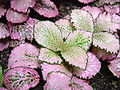
A variety of Fittonia hybrids.
Scientific classification Edit this classification
Kingdom: Plantae
Clade: Tracheophytes
Clade: Angiosperms
Clade: Eudicots
Clade: Asterids
Order: Lamiales
Family: Acanthaceae
Subfamily: Acanthoideae
Tribe: Justicieae
Genus: Fittonia
Coem.[1]
Synonyms

Adelaster Lindl. ex Veitch

Fittonia (or nerve plant or mosaic plant) is a genus of evergreen perennial flowering plants in the acanthus ('bear’s britches') family, Acanthaceae. The genus is native to tropical and subtropical forested areas in northern and western South America, mainly Perú.[2]

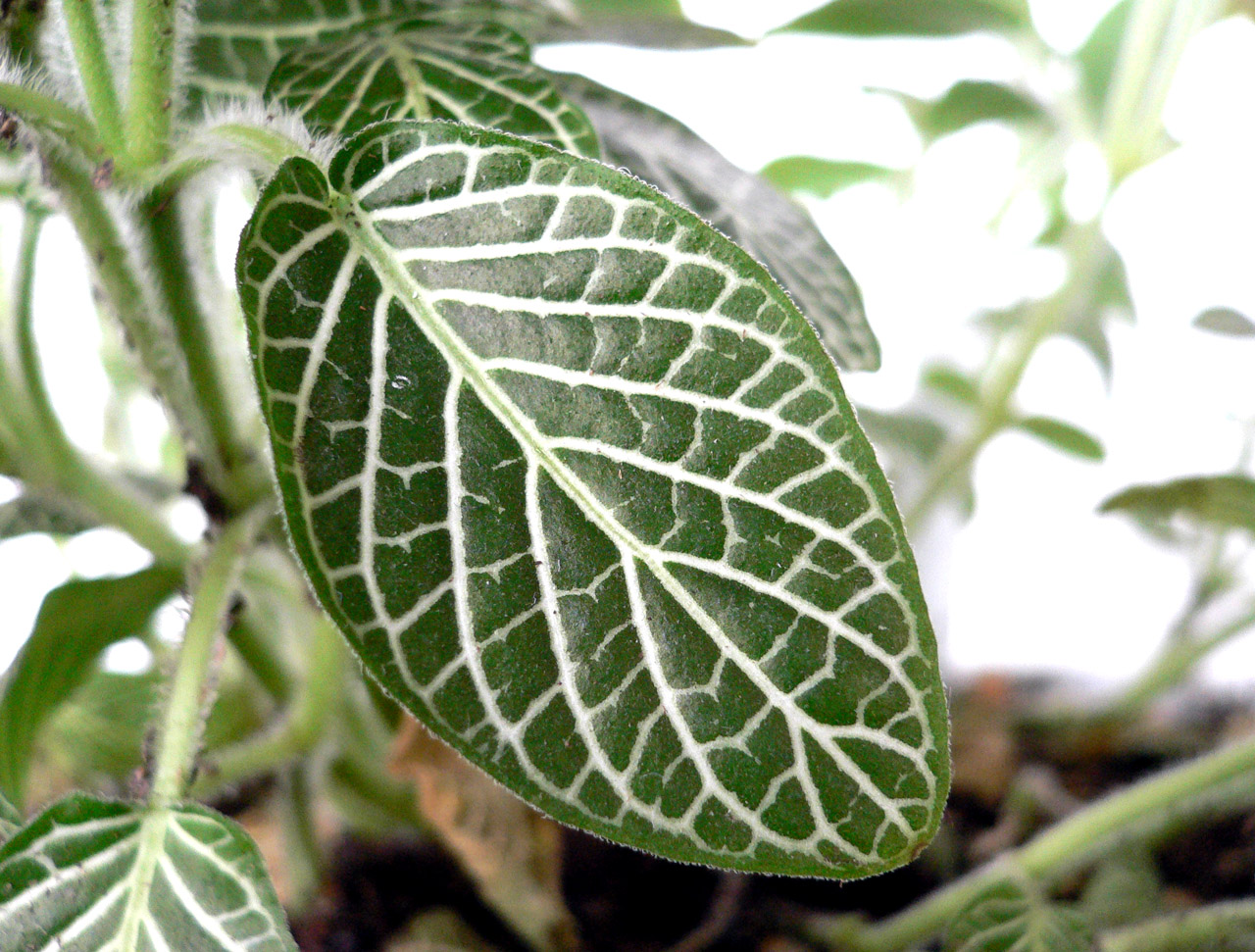
The most commonly cultivated species is F. albivenis and its range of cultivars. They are low-lying, forest floor plants, typically only growing between 10–15 cm (4–6 in) tall, without the 5-10 cm (1-4 in) tall flower stalks. The main feature of the species is its lush, green foliage, streaked with veins of white to deep pink, depending on cultivar; this veining earns the plant its common name of 'Nerve-Plant', as the "network" of vessels appears to resemble the layout of a nervous system. The plants also possess a short fuzz on their stems, like other acanthus family genera. Small buds may appear after a time where the stem splits into leaves.

With a spreading growth habit making it ideal as a shaded garden groundcover, Fittonia can easily be propagated by taking cuttings or by pruning the growing tips. These fresh clippings will regrow roots simply by placing the cut ends in a vessel of water in a bright, albeit indirectly-lit, location. Optionally, this method of "water-propagation" may be avoided altogether, as most cuttings may be placed directly into moist substrate, such as sphagnum moss, perlite, coconut (coco) fiber, well-aerated soil, or even LECA (hydroton clay balls). As most plant species will do after being pruned, the trimmed section(s) of the mother plant will be triggered to grow new leaves in a matter of weeks.[3]

The flowers are rather small, appearing on angular-sided bloom spikes, with a white to off-white colour. Fittonia inflorescences are quite reminiscent of those of the related genus Hypoestes (polka-dot plants); additionally, like the Hypoestes, Fittonia are best kept in a moist area with mild, indirect but bright sunlight, or under screening outdoors in appropriate climates. They thrive in ambient temperatures above 55 °F (13 °C), thus, in temperate areas, they must be grown as houseplants. Notoriously thirsty plants, Fittonia (and Hypoestes) are known to "faint" or wilt when the top layer of substrate begins to dry, but is quickly revived with watering. The plants respond especially well to "bottom watering", or by submerging a potted specimen in a tray of water instead of pouring water from above. This has the added benefit of keeping the leaves free of water droplets or splashed dirt, which could both lead to fungal infections, such as powdery mildew.

Species

[edit]

References

[edit]
[edit]
Revisions and contributorsEdit on WikipediaRead on Wikipedia
from Grokipedia
Fittonia is a of flowering plants in the family , consisting of low-growing, creeping evergreen perennials native to the of tropical rainforests in , including , northern , , , , and . The plants are distinguished by their small stature—typically reaching 6 to 12 inches in height—and ovate leaves featuring prominent, colorful veins in shades of white, silver, pink, or red against deep green foliage, which give rise to common names such as nerve plant, mosaic plant, or silver net plant. These inconspicuous, tubular white flowers are rarely produced in cultivation, as the focus remains on the ornamental foliage. The genus Fittonia, first described in 1865, honors Elizabeth and Sarah Mary Fitton, authors of the botanical text Conversations on Botany (1817), and currently includes two accepted : Fittonia albivenis and Fittonia gigantea. F. albivenis, the more widespread and cultivated species, originates from regions like and , where it thrives in humid, shaded forest floors, and has been introduced to areas such as , , , and Trinidad-Tobago. F. gigantea is restricted to and , sharing similar subshrub habits in wet tropical environments. Numerous cultivars of F. albivenis, such as those in the Argyroneura and Verschaffeltii groups, exhibit varied vein colors and leaf patterns, enhancing their appeal in . In cultivation, Fittonia species are prized as houseplants, subjects, or ground covers in tropical settings, requiring bright indirect , consistently moist but well-drained , high (ideally above 60%), and temperatures between 65°F and 85°F to prevent or scorching. Propagation is easily achieved through stem cuttings, and they are susceptible to pests like spider mites and mealybugs, as well as issues from overwatering or low . Beyond ornamentation, the genus has traditional medicinal uses in its native range and contributes to environmental stabilization in humid ecosystems.

Description

Morphology

Fittonia , the more widespread and commonly cultivated species in the genus, is an characterized by a low-growing, creeping , typically reaching heights of 8–15 cm (3–6 in) and spreading up to 30–45 cm (12–18 in) wide through rooting stems that form dense mats. In contrast, Fittonia gigantea is a larger , reaching up to 80 cm (31 in) in height with a greater spread and ovate leaves featuring prominent red veins. This growth form makes F. albivenis effective as groundcovers in its native tropical environments, with succulent, prostrate stems that are green to in color and covered in fine, short hairs (pubescent). The stems often root at the nodes upon contact with moist soil, contributing to their mat-forming tendency. The foliage is the most distinctive feature of F. albivenis, consisting of , simple leaves that are ovate to elliptical in , measuring 5–10 cm (2–4 in) long and 2–7 cm (1–3 in) wide, with a soft, velvety texture. blades are typically on the upper surface, displaying a prominent network of contrasting veins that create a mosaic-like ; these veins can be white, silver, pink, or red depending on the or species group. The undersides are lighter and may show subtle pubescence, while the margins are entire and the apex is usually obtuse. Vein patterns vary notably by , enhancing ornamental value. Flowers are small and generally insignificant compared to the foliage, appearing rarely in cultivation but more commonly in optimal conditions. They are tubular, two-lipped (bilabiate), and creamy white to pale yellow, and are borne in short, erect, terminal spikes up to 8 cm (3 in) tall on four-angled peduncles. The spikes feature overlapping green bracts that partially conceal the flowers, which bloom from to in native habitats.

Reproduction

Fittonia reproduces through both sexual and asexual mechanisms, though asexual dominates in its natural creeping habit, contributing to the formation of dense mats in the . involves small, tubular flowers that are typically pollinated by such as bees or flies, reflecting the entomophilous nature common in the family. In native habitats, these flowers emerge on upright, terminal spikes up to 3 inches (7.6 cm) long, densely packed with bracts that partially conceal the creamy white, bilabiate blooms. The inflorescences typically appear in summer, from to August, with flowers maturing sequentially along the spike. Following , small seeds develop within dehiscent capsules that split open to release them, though seed production remains limited due to the plant's emphasis on vegetative growth and the relative insignificance of its flowers compared to its ornate foliage. In cultivation, seeds are small and exhibit low viability, primarily because flower production is infrequent indoors without optimized conditions mimicking the humid, shaded native environment. Asexual reproduction serves as the primary mode of spread for Fittonia, occurring through the natural rooting of its creeping stems at the nodes where they contact the , enabling clonal expansion without specialized structures like bulbs or rhizomes. This vegetative strategy allows the plant to form low-growing mats up to 18 inches (46 cm) wide, thriving in the moist of its Peruvian . Flowering in Fittonia is triggered in its native during periods of adequate moisture and indirect light, but it remains rare in indoor settings unless provided with high humidity and consistent warmth around 70°F (21°C).

Taxonomy

Etymology and history

The genus Fittonia was named in honor of the Irish sisters Elizabeth Fitton (died 1834) and Sarah Mary Fitton (c. 1796–1874), authors of the influential educational text Conversations on Botany (), which popularized botanical knowledge for general audiences. The genus was formally described in 1865 by Belgian botanist Eugène Coemans in the Journal Général d'Horticulture, based on specimens from the Peruvian rainforests. Earlier, in 1861, the had been published under the name Adelaster albivenis Lindl. ex Veitch in the Gardeners' Chronicle. Adelaster was later recognized as a of Fittonia, with the latter conserved as the accepted generic name in modern taxonomy. Fittonia species were introduced to European cultivation in the mid-19th century, shortly after their description, initially as exotic plants prized for their striking foliage. By the , the genus had gained widespread popularity as an indoor , driven by of variegated cultivars featuring prominent white, pink, or red veining on the leaves, which enhanced their ornamental appeal in temperate climates.

Accepted species

The genus Fittonia comprises two accepted species, classified within the family and subfamily Acanthoideae. (Lindl. ex Veitch) Brummitt is the most commonly cultivated and widespread species, distinguished by its creeping habit and leaves featuring prominent, contrasting veins that are typically silver-white, though variations occur. It is native to the tropical rainforests of , , , , northern , and . Popular cultivars fall into two groups: the Argyroneura Group, characterized by white veins on a background, and the Verschaffeltii Group, noted for red or pinkish veins. Synonyms include Adelaster albivenis Lindl. ex Veitch, Fittonia argyroneura Coem., Fittonia verschaffeltii (Lem.) , and Gymnostachyum verschaffeltii Lem. Fittonia gigantea Linden is less common in cultivation and features larger leaves, reaching up to 15 cm in length, with less prominent veining compared to F. albivenis. It is native to and . No widespread cultivars are documented for this species. Taxonomically, many former species names have been reduced to synonyms of F. albivenis, resulting in the recognition of only these two in current classifications.

Distribution and habitat

Native range

Fittonia are native to the tropical regions of northern and western , with their primary range centered in , particularly in the Loreto and Ucayali regions of the . The genus extends to additional countries including , , , northern , and , typically occurring at elevations between 100 and 800 meters. Distribution is confined to humid, lowland rainforests, with no natural occurrences reported outside . The genus is not globally threatened, though local populations face risks from ongoing in Amazonian habitats.

Natural habitat and ecology

Fittonia species are understory perennials native to the shaded forest floors of tropical s in , where they thrive beneath the canopy of larger trees in humid, low-light environments. These plants prefer high levels typical of rainforest understories, around 80–90%, along with warm temperatures ranging from 20–30°C, which support their growth in consistently moist conditions. They inhabit acidic, well-drained soils rich in , often derived from decaying leaf litter on the , which provides essential nutrients while preventing waterlogging. The creeping habit of Fittonia allows it to spread horizontally and at stem nodes, enabling effective competition for limited light in the dense by forming mats that capture diffuse . Its prominent vein patterns, often silvery or pink, are characteristic of the foliage. The plant is shade-adapted with a red-shifted that efficiently utilizes far-red light. Fittonia is highly sensitive to , wilting rapidly in response to stress but recovering quickly upon rehydration, an adaptation suited to the fluctuating humidity of its humid habitat. In their native ecosystems, Fittonia serves as a groundcover that helps stabilize and prevent by retaining and binding the with its rooting stems. This role supports by providing shelter and organic material in the leaf litter layer, contributing to nutrient cycling in the . Limited observations indicate potential herbivory by , though data on specific pollinators or seed dispersers remains sparse due to the plant's inconspicuous flowers. Fittonia faces threats from habitat loss primarily due to and in South American rainforests, which fragment understory environments essential for its survival. Its low invasive potential outside native ranges stems from strict requirements for high and shade, limiting establishment in altered ecosystems.

Cultivation

Ornamental uses

Fittonia species, particularly F. albivenis, are popular as houseplants due to their colorful foliage featuring contrasting patterns in shades of white, pink, silver, or red against deep green leaves. These plants are commonly used in terrariums, dish gardens, and as underplanting for larger indoor specimens, where their low-growing, creeping habit adds texture and visual interest in humid, low-light environments. In tropical zones (USDA hardiness zones 11-12), they serve as edging plants or ground covers in shaded landscapes, mimicking their natural role. Numerous cultivars have been developed to highlight specific vein colors and growth habits, enhancing their appeal for indoor aesthetics. For example, 'Mini White' is prized for its compact size and delicate white veins, making it suitable for small displays, while 'Red Anne' features striking pinkish-red veins for added vibrancy in low-light areas. These varieties, primarily selections of F. albivenis, contribute to the plant's versatility in decorative arrangements. Introduced to cultivation in the mid-19th century during the , Fittonia was initially a curiosity in European greenhouses for its intricate foliage, named in honor of botanist sisters Elizabeth and Sarah Fitton. Today, it enjoys widespread modern popularity as a common in global horticultural trade, often featured in bonsai-style miniature landscapes or aquaterrariums for its adaptability to enclosed, humid setups. While primarily ornamental, Fittonia has limited non-decorative applications, with occasional unverified use in by indigenous South American communities for minor ailments such as headaches or muscle pain.

Growing conditions

Fittonia thrives in bright, indirect or partial shade, with an ideal intensity of 1,000–2,000 to promote vibrant leaf coloration without scorching. Direct should be avoided, as it can cause leaf burn, while insufficient leads to leggy growth and faded veins. Optimal temperatures range from 18–24°C (65–75°F) during the day and not below 15°C (59°F) at night, with tolerance up to the low 80s°F in humid conditions. Fittonia is suited for outdoor cultivation in USDA hardiness zones 11–12, where is absent. High levels of 60–80% are essential, mimicking the plant's origins; this can be achieved through regular misting, pebble trays with water, or placement in naturally humid areas like bathrooms, supplemented by a if needed. Low often causes , though the plant can recover quickly with increased moisture. The plant prefers a moist, well-draining mix based on or coco , with a slightly acidic of 6.0–6.5 to prevent lockout. Watering should maintain consistent , applying when the top inch feels dry to the touch, but allowing brief periods of slight for recovery; overwatering leads to , indicated by yellowing leaves. Use room-temperature water to avoid shocking the roots. During the active (spring and summer), apply a dilute, balanced liquid fertilizer (such as 10-10-10 at half strength) monthly to support foliage development. Reduce or withhold fertilization in fall and winter when growth slows. Common pests include , spider mites, and mealybugs, which can be managed with or applications, ensuring the is isolated to prevent spread. Regular inspection helps mitigate these issues early.

Propagation methods

Fittonia plants are most commonly propagated through stem cuttings, a vegetative method that leverages the species' tendency to root readily from nodes. To propagate, select healthy tip cuttings measuring 5–10 cm in length, each containing at least one or two nodes and a few leaves; remove lower leaves to expose the stem base. These cuttings can be rooted in or a moist medium such as , , or a peat-perlite mix, under conditions of high humidity (maintained via a cover or propagation dome), indirect light, and temperatures around 21–24°C (70–75°F). Rooting typically occurs within 2–4 weeks, after which the new plants can be potted up. Division is another straightforward technique, suitable for mature, clumping Fittonia specimens during repotting in spring. Gently tease apart the root ball by hand or with a clean knife to create sections, ensuring each division has several stems and a portion of the . Replant the divisions immediately into prepared, well-draining at the same depth as the parent plant, providing consistent moisture and to encourage establishment. This method is effective for maintaining varietal traits in cultivated forms. Seed propagation is rarely practiced due to the low viability of Fittonia and challenges in achieving uniform results, particularly with hybrid cultivars. When attempted, fresh should be surface-sown on a sterile, moist medium like fine or , without covering them, and placed in a warm environment (around 25°C) with bright, indirect light. may take 4–6 weeks, but success is inconsistent, and seedlings often vary from the parent plant; this approach is generally not recommended for home growers or commercial production of specific varieties. For large-scale commercial production, especially of ornamental cultivars, () is employed using explants cultured on nutrient media such as Murashige and Skoog (MS) basal salts supplemented with auxins and cytokinins. This aseptic technique allows for rapid multiplication of disease-free , though specific protocols for Fittonia emphasize shoot tip or nodal explants to preserve desirable traits. Studies have demonstrated successful establishment and biochemical analysis of propagated , supporting its use in the foliage plant industry.

References

Add your contribution
Related Hubs
User Avatar
No comments yet.