Hubbry Logo
logo
Flash freezing
Community hub

Flash freezing

logo
0 subscribers
Read side by side
from Wikipedia
Ice crystals in a frozen pond. When the water cools slowly, crystals are formed. Freezing quickly reduces crystal formation.

In physics and chemistry, flash freezing is a process by which an object is rapidly frozen by subjecting an object to cryogenic temperatures, or through direct contact with liquid nitrogen at −196 °C (−320.8 °F).[1]

This process is closely related to classical nucleation theory. When water freezes slowly, crystals grow from fewer nucleation sites, resulting in fewer and larger ice crystals. This damages cell walls and causes cell dehydration. When water freezes quickly, as in flash freezing, there are more nucleation sites, and more, smaller crystals. This results in much less damage to cell walls, proportional to the rate of freezing. This is why flash freezing is good for food and tissue preservation.[2]

Flash freezing is commonly applied in the food industry and is studied in atmospheric science.

Impact of freezing

[edit]

The surface environment does not play a decisive role in the formation of ice and snow.[3] Density fluctuations within water droplets result in the possible freezing regions covering both the interior and the surface[4]—that is, whether freezing from the surface or from within may be at random.[4]

There are phenomena like supercooling, in which the water is cooled below its freezing point but remains liquid if there are too few defects to seed crystallization. One can therefore observe a delay until the water adjusts to the new, below-freezing temperature.[5] Supercooled liquid water must become ice at −48 °C (−54 °F), not just because of the extreme cold, but because the molecular structure of water changes physically to form tetrahedron shapes, with each water molecule loosely bonded to four others.[6] This suggests the structural change from liquid to "intermediate ice".[6] The crystallization of ice from supercooled water is generally initiated by a process called nucleation. The speed and size of nucleation occurs within nanoseconds and nanometers.[7]

As water freezes, tiny amounts of liquid water are theoretically still present, even as temperatures go below −48 °C (−54 °F) and almost all the water has turned solid, either into crystalline ice or amorphous water. However, this remaining liquid water crystallizes too fast for its properties to be detected or measured.[6] The freezing speed directly influences the nucleation process and ice crystal size. A supercooled liquid will stay in a liquid state below the normal freezing point when it has little opportunity for nucleation—that is, if it is pure enough and is in a smooth-enough container. Once agitated it will rapidly become a solid.

During the final stage of freezing, an ice drop develops a pointy tip, which is not observed for most other liquids, and arises because water expands as it freezes.[3] Once the liquid is completely frozen, the sharp tip of the drop attracts water vapor in the air, much like a sharp metal lightning rod attracts electrical charges.[3] The water vapor collects on the tip and a tree of small ice crystals starts to grow.[3] An opposite effect has been shown to preferentially extract water molecules from the sharp edge of potato wedges in the oven.[3]

If a microscopic droplet of water is cooled very fast, it forms a glass—a low-density amorphous ice in which all the tetrahedral water molecules are not aligned but amorphous.[6] The change in the structure of water controls the rate at which ice forms.[6] Depending on its temperature and pressure, water ice has 16 different crystalline forms in which water molecules cling to each other with hydrogen bonds.[6]

Concepts

[edit]

Nucleation

[edit]

Crystal growth or nucleation is the formation of a new thermodynamic phase or a new structure via self-assembly. Nucleation is often found to be very sensitive to impurities in the system. For nucleation of a new thermodynamic phase, such as the formation of ice in water below 0 °C (32 °F), if the system is not evolving with time and nucleation occurs in one step, then the probability that nucleation has not occurred should undergo exponential decay. This can also be observed in the nucleation of ice in supercooled small water droplets.[8] The decay rate of the exponential gives the nucleation rate and is given by
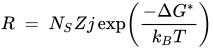
where

  • is the number of nucleation sites;
  • is the probability that a nucleus at the top of the barrier will go on to form the new phase, not dissolve (called the Zeldovich factor);
  • is the rate at which molecules attach to the nucleus, causing it to grow;
  • is the free energy cost of the nucleus at the top of the nucleation barrier;
  • is the thermal energy, where is the absolute temperature and is the Boltzmann constant.
Difference in energy barriers. Homogeneous nucleation (blue) has a higher nucleation barrier at rc than heterogeneous nucleation (red).

Classical nucleation theory is a widely used approximate theory for estimating these rates, and how they vary with variables such as temperature. It correctly predicts that the time needed for nucleation decreases extremely rapidly when supersaturated.[9][10]

Nucleation can be divided into homogeneous nucleation and heterogeneous nucleation. Homogeneous nucleation is the rarer, but simpler, case. In homogeneous nucleation, classical nucleation theory assumes that for a microscopic, spherical nucleus of a new phase, the free energy change of a droplet is a function of the size of the nucleus, and can be written as the sum of terms proportional to the nucleus' volume and surface area:

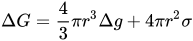
The first term represents volume, and (assuming a spherical nucleus) this is the volume of a sphere of radius . Here, is the difference in free energy per unit volume between the thermodynamic phase in which nucleation is occurring, and the phase that is nucleating. The second term represents the surface area, again assuming a sphere, where is the surface tension.

At some intermediate value of , the free energy goes through a maximum, and so the probability of formation of a nucleus goes through a minimum. This occurs when . This point, , is called the critical nucleus and represents the nucleation barrier; it occurs at the critical radius

The addition of new molecules to nuclei larger than this critical radius decreases the free energy, so these nuclei are more probable.

Heterogeneous nucleation occurs at a surface or impurity. In this case, part of the nucleus boundary is accommodated by the surface or impurity onto which it is nucleating. This reduces the surface area term in , and thus lowers the nucleation barrier . This lowered barrier is what makes heterogeneous nucleation much more common and faster than homogeneous nucleation.[11]

Laplace pressure

[edit]

The Laplace pressure is the pressure difference between the inside and the outside of a curved surface between a gas region and a liquid region. The Laplace pressure is determined from the Young–Laplace equation given as

where and are the principal radii of curvature and (also denoted as ) is the surface tension.

The surface tension can be defined in terms of force or energy. The surface tension of a liquid is the ratio of the change in the liquid's energy and the change in the liquid's surface area (which led to the change in energy). It can be defined as . This work is interpreted as the potential energy.

Applications and techniques

[edit]
Flash freezing being used for cryopreservation

Flash freezing is used in the food industry to quickly freeze perishable food items (see frozen food). In this case, food items are subjected to temperatures well below[clarification needed] the freezing point of water. Thus, smaller ice crystals are formed, causing less damage to cell membranes.[12] American inventor Clarence Birdseye developed the "quick-freezing" process of food preservation in the 20th century using a cryogenic process.[13] In practice, a mechanical freezing process is usually used instead due to cost. There has been continuous optimization of the freezing rate in mechanical freezing to minimize ice crystal size.[2]

Flash freezing techniques are also used to freeze biological samples quickly so that large ice crystals cannot form and damage the sample.[14] This is done by submerging the sample in liquid nitrogen or a mixture of dry ice and ethanol.[15]

Flash freezing is of great importance in atmospheric science, as its study is necessary for a proper climate model for the formation of ice clouds in the upper troposphere, which effectively scatter incoming solar radiation and prevent Earth from becoming overheated by the Sun.[7] The results have important implications in climate control research. One of the current debates is whether the formation of ice occurs near the surface or within the micrometre-sized droplets suspended in clouds. If it is the former, effective engineering approaches may exist to tune the surface tension of water so that the ice crystallization rate can be controlled.[7]

See also

[edit]
  • Frozen food – Food stored at temperatures below the freezing point of water, for extending its shelf life

References

[edit]
Revisions and contributorsEdit on WikipediaRead on Wikipedia
from Grokipedia
Flash freezing is a rapid preservation technique that subjects food products to extremely low temperatures, typically below -30°F (-34°C), within minutes to hours, forming small ice crystals that minimize cellular damage and lock in freshness, flavor, nutrients, and texture.[1] Developed primarily for perishable items like seafood, fruits, vegetables, and meats, it contrasts with slow freezing by reducing drip loss upon thawing and preventing quality degradation.[2][3] The concept of flash freezing was pioneered by Clarence Birdseye in the 1920s, inspired by his observations of quick-frozen fish in the Arctic that retained their fresh qualities after thawing.[4] Birdseye patented a double-belt freezer system in 1927 and later a multiplate quick-freeze machine, enabling commercial production by rapidly freezing foods under pressure in small packages.[1] His innovations founded the modern frozen food industry, with the first retail frozen foods sold in 1930, revolutionizing food distribution and consumer access to year-round fresh-tasting produce.[4] In the process, foods are typically pre-chilled immediately after harvest or processing, then exposed to cryogenic air blasts, liquid nitrogen, or mechanical refrigeration systems that achieve freezing rates far exceeding standard home freezers.[1] For instance, seafood is often flash-frozen to -42°F within six hours of catch to preserve firm texture and prevent oxidation of fatty acids.[3] This method not only extends shelf life—often up to 12 months at 0°F or below—but also retains higher levels of vitamins, such as vitamin C in frozen peas compared to some fresh counterparts.[2][1] Beyond food, flash freezing finds applications in biomedical fields, such as cryosectioning tissues for pathology or vitrifying embryos for fertility preservation, where rapid cooling prevents ice crystal formation that could damage delicate structures.[5] Overall, the technique enhances food safety by halting bacterial growth instantly and supports sustainability by reducing waste in global supply chains.[3]

Definition and History

Definition and Process

Flash freezing is a preservation technique that rapidly solidifies materials, such as food items or biological samples, by exposing them to extremely low temperatures, typically below -40°C (-40°F), within seconds to minutes.[6] This method employs cryogenic fluids like liquid nitrogen at -196°C (-321°F) or high-velocity cold air blasts to achieve a steep temperature gradient, resulting in the formation of numerous small ice crystals rather than larger ones that could damage cellular structures.[7] The basic process begins with pre-cooling the material to near its freezing point, often around 0°C (32°F), to prepare it for rapid solidification. Heat is then removed swiftly to traverse the zone of maximum ice crystal formation—approximately -4°C to -1°C (25°F to 31°F)—in a matter of seconds, minimizing crystal growth and promoting either vitrification in biological samples or fine ice crystal distribution in foods.[6] This quick passage through the critical zone limits the time available for nucleation, the initiation of ice formation, and subsequent crystal enlargement. Following this, the material is cooled further to a storage temperature of -18°C (0°F) or lower to maintain the frozen state.[7] In contrast to slow freezing, which occurs over hours at gradual temperatures around 0°C to -10°C (32°F to 14°F), flash freezing employs a much shorter timescale and steeper thermal gradient, preventing the development of large extracellular ice crystals that puncture cell walls and cause texture degradation or nutrient loss upon thawing.[6] For instance, in freezing shrimp using liquid nitrogen immersion, the surface solidifies almost instantly due to direct contact with the cryogen, followed by rapid propagation to the core, completing the process in under five minutes while preserving the shrimp's firm texture.[7]

Historical Development

The development of flash freezing traces its roots to late 19th-century advancements in cryogenics, where scientists explored low-temperature effects on materials. James Dewar, a Scottish physicist, conducted pioneering experiments with liquid air in the 1890s, achieving temperatures as low as -190°C and producing solid air by 1894, which demonstrated the potential for rapid cooling and freezing compared to slower traditional methods.[8] These efforts highlighted how ultra-low temperatures could minimize structural damage in frozen substances, setting the stage for practical applications in preservation.[9] A pivotal breakthrough occurred in the 1920s with Clarence Birdseye's invention of quick-freezing technology, inspired by observing Inuit communities in Labrador instantly freeze fresh fish in subzero conditions, preserving texture and flavor far better than slow-freezing techniques. Birdseye patented his double-belt freezer system in 1927, which used chilled brine and air blasts to freeze foods at rates up to 1,800 times faster than conventional methods, and by 1930, his Birds Eye company introduced the first commercially available quick-frozen vegetables and seafood in the United States.[10][4] This innovation addressed key limitations in food quality, motivating widespread adoption as a means to retain nutritional value and taste.[11] Following World War II, the food industry expanded flash freezing capabilities in the 1940s and 1950s through patents for continuous belt freezers, which automated the process for large-scale production of items like peas and corn by passing products through tunnels of high-velocity cold air.[12] By the 1960s, cryogenic techniques emerged, with the introduction of liquid nitrogen-based systems achieving freezing rates exceeding 100°C per minute; the first commercial plant using liquid nitrogen opened in San Francisco in 1965, enabling finer ice crystal formation and superior product integrity.[13][14] In the early 2000s, researchers integrated CO2 into flash freezing processes, leveraging its unique properties for pressure-assisted rapid cooling without excessive dryness, as demonstrated in studies on ice cream production where it produced smaller ice crystals and improved texture compared to air-blast methods.[15] By 2025, sustainability imperatives have driven innovations like energy-efficient hybrid systems combining mechanical and cryogenic elements, alongside AI-optimized freezers that use machine learning to adjust freezing parameters in real-time for minimal energy use and maximal quality.[16] These advancements have fueled the frozen food market's expansion, projected to reach approximately $325 billion globally in 2025.[17]

Scientific Principles

Nucleation

Nucleation is the initial stage of ice formation in which water molecules in a supercooled liquid aggregate into a small cluster, termed an ice embryo or nucleus, that must overcome a thermodynamic free energy barrier to grow irreversibly into a stable ice crystal. This process is governed by classical nucleation theory, which describes the competition between the volume free energy gain from phase transformation and the surface free energy penalty of creating an interface. In supercooled water, the embryo must reach a critical size beyond which further growth is favored; smaller clusters dissolve due to the positive curvature effect described by the Gibbs-Thomson relation.[18] There are two primary types of nucleation: homogeneous and heterogeneous. Homogeneous nucleation occurs spontaneously within the bulk of pure, impurity-free supercooled water without external catalysts, requiring significant supercooling to -40°C for the process to become probable, as this is where the nucleation rate becomes appreciable in laboratory conditions. This type is rare in practical scenarios due to the high energy barrier, typically manifesting only in highly purified systems like distilled water droplets. In contrast, heterogeneous nucleation, which dominates in real-world aqueous solutions, is induced by impurities or surfaces such as dust particles, bacterial cells, or container walls, lowering the energy barrier and allowing initiation at warmer temperatures, typically between -10°C and -20°C depending on the nucleant's properties. For instance, biological nucleants like ice-nucleating proteins from Pseudomonas bacteria can trigger heterogeneous nucleation as high as -2°C.[18][19] In flash freezing, rapid cooling rates enable deeper supercooling—up to approximately 40°C below the equilibrium freezing point in pure water—before nucleation occurs, resulting in a sudden, explosive initiation at numerous sites and the formation of many small ice crystals. This contrasts with slow freezing, where nucleation proceeds gradually from fewer heterogeneous sites, yielding larger crystals. The heightened supercooling in flash freezing exponentially boosts the nucleation rate, promoting uniform distribution of nuclei and minimizing crystal growth time.[20] The nucleation rate $ J $ is described by the classical expression $ J = J_0 \exp\left(-\frac{\Delta G^}{kT}\right) $, where $ J_0 $ is a pre-exponential factor incorporating attachment kinetics and molecular density, $ \Delta G^ $ is the free energy barrier for forming the critical nucleus, $ k $ is the Boltzmann constant, and $ T $ is the absolute temperature. To derive this, consider the free energy change for forming a spherical embryo of radius $ r $: $ \Delta G(r) = \frac{4}{3}\pi r^3 \Delta \mu + 4\pi r^2 \gamma $, where $ \Delta \mu $ is the chemical potential difference driving crystallization (approximately $ \Delta \mu = -\frac{L \Delta T}{T_m} $ for small supercooling $ \Delta T = T_m - T $, with $ L $ the latent heat and $ T_m $ the melting temperature) and $ \gamma $ is the ice-water interfacial energy. The barrier $ \Delta G^* $ occurs at the critical radius $ r^* = -\frac{2\gamma}{\Delta \mu} $, yielding $ \Delta G^* = \frac{16\pi \gamma^3}{3 (\Delta \mu)^2} $. For heterogeneous nucleation, $ \Delta G^* $ is reduced by a factor $ f(\theta) = \frac{(2-3\cos\theta + \cos^3\theta)}{4} $, where $ \theta $ is the contact angle. Influencing factors include temperature (via $ \Delta T $, which inversely scales $ \Delta G^* $), pressure (altering $ \Delta \mu $), and the presence of nucleants, which provide catalytic sites to further decrease the barrier through favorable wetting.[18] Experimental studies confirm that the nucleation rate increases exponentially with the degree of supercooling, with approximately a 10-fold rise per Kelvin in food systems, leading to prolific nucleation under rapid cooling conditions. For example, measurements in supercooled water droplets show the rate peaking around -40°C for homogeneous cases, while heterogeneous rates in impure solutions activate orders of magnitude faster at milder supercooling. These findings underscore nucleation's sensitivity to cooling dynamics in flash freezing processes.[20]

Ice Crystal Formation and Laplace Pressure

Following nucleation, ice crystals in supercooled aqueous systems exhibit dendritic growth, characterized by rapid extension of thin branches that release latent heat during solidification, which diffuses into the surrounding supercooled liquid to maintain the growth interface near the equilibrium freezing temperature.[21] This heat release sustains the dendritic morphology under moderate supercooling, enabling efficient propagation despite the undercooled conditions.[22] In flash freezing, however, the extremely short exposure time—often seconds or less—severely restricts this growth process, confining crystals to small, uniform sizes typically on the order of microns, as opposed to the millimeters-scale crystals formed during slow freezing where extended time allows sustained diffusion and expansion.[2] The Laplace pressure arising from surface curvature in nascent ice crystals or supercooled droplets plays a critical role in their stability and evolution, quantified by the Young-Laplace equation:
ΔP=2γr \Delta P = \frac{2\gamma}{r}
where γ\gamma is the ice-liquid surface tension (approximately 30 mN/m at 0°C) and rr is the radius of curvature.[23] For small crystals or droplets (r < 1 μm), this induces significant positive pressure inside the curved interface, which—combined with the negative Clapeyron slope for the ice-water equilibrium (dT/dp ≈ -0.0074 K/MPa)—effectively raises the local melting point relative to bulk ice, stabilizing the small structures against immediate dissolution or excessive growth.[23] This stabilization is particularly pronounced in flash freezing, where high Laplace pressures in micron-scale crystals inhibit coalescence via the Gibbs-Thomson effect, elevating the chemical potential of smaller particles and favoring a distribution of uniform, isolated crystals over agglomeration.[24] In flash freezing contexts, these elevated pressures in nascent small crystals further promote vitrification by limiting crystallization kinetics in highly supercooled aqueous solutions, where the glass transition temperature (around -135°C for pure water) becomes accessible before full ice development, resulting in amorphous glassy states interspersed with minimal crystalline phases.[25] This interplay with supercooling enhances the transition to non-crystalline solids, as the curvature-driven pressure suppresses the mobility required for extensive ice propagation in solute-laden systems like biological fluids or food matrices.[23] The growth dynamics of these crystals can be modeled using diffusion-limited theory for low to moderate supercooling, where the interface velocity vv is given by
v=DΔTλ v = \frac{D \Delta T}{\lambda}
with DD the thermal diffusivity of water (≈1.3 × 10^{-7} m²/s near 0°C), ΔT\Delta T the supercooling degree, and λ\lambda the capillary length (incorporating surface energy effects, ≈1.7 nm for ice-water).[22] This linear dependence highlights how increasing ΔT\Delta T accelerates growth via enhanced heat diffusion, but in flash freezing's kinetic regime, the brief duration truncates this process, yielding compact crystals before dendritic branching fully develops.[26] In food applications, flash freezing generates predominantly small extracellular ice crystals that preserve matrix integrity, whereas slow freezing promotes larger crystals that induce intracellular ice formation and associated structural damage through osmotic dehydration and mechanical rupture.[27]

Impacts of Freezing Rate

Effects on Biological Materials

Flash freezing, by promoting the rapid formation of numerous small ice crystals primarily in the extracellular space, minimizes intracellular ice buildup in biological cells when combined with appropriate cryoprotective agents (CPAs) to facilitate vitrification or controlled dehydration. This process induces quick dehydration of cells as water migrates outward to form extracellular ice, concentrating intracellular solutes without causing the large-scale rupture typically seen in slower freezing methods where extended exposure allows bigger crystals to pierce cell membranes.[28] In contrast, slow freezing typically results in primarily extracellular ice formation due to sufficient time for water efflux, avoiding intracellular ice but potentially causing dehydration stress and mechanical damage from larger extracellular crystals. However, if freezing rates are too slow, solute concentration can lead to damaging solution effects.[29] At the tissue level, the small ice crystals generated during flash freezing exert reduced mechanical stress on surrounding structures compared to the expansive forces from larger crystals in conventional freezing, thereby preserving overall tissue architecture. This approach also helps avoid eutectic freezing, where solute solutions solidify at lower temperatures and cause damaging phase separations; rapid cooling instead favors a more uniform solidification that limits such separations. Nucleation primarily initiates ice formation outside cells, further directing the process away from intracellular damage.[30] For example, in mouse oocytes, rapid cooling at 20°C/min can achieve an ice fraction of approximately 92-96% with unfrozen intracellular fractions of 4-8%, helping prevent lethal crystal growth.[31] Examples from cryobiology highlight these benefits in the preservation of various cell types, where controlled flash freezing maintains high structural integrity by limiting ice crystal sizes. However, if the freezing rate is excessively rapid, thermal shock can induce micro-cracks in delicate tissues due to uneven thermal gradients, potentially compromising viability in larger samples.[32] Recent studies demonstrate advances in flash freezing protocols, achieving post-thaw cell viabilities of 70-90% in tissues like stem cells and brain slices, compared to 50-70% with standard slow freezing, through optimized rapid cooling that enhances extracellular ice control and reduces solute damage.[28] These improvements underscore flash freezing's role in minimizing dehydration-induced stress while preserving cellular function in non-food biological materials.[33]

Preservation of Food Quality

Flash freezing enhances the preservation of food quality by rapidly lowering temperatures to form small ice crystals, which cause minimal disruption to cellular structures compared to slower freezing methods that produce larger crystals and greater damage. This process is particularly beneficial for texture retention in perishable items like fruits and vegetables, where small ice crystals prevent the breakdown of cell walls that leads to mushiness upon thawing. For instance, in potatoes, fast freezing methods such as liquid nitrogen immersion result in smaller, uniform ice crystals that preserve hardness and structural integrity more effectively than slower air-blast freezing. Studies on meat further demonstrate that rapid freezing can reduce drip loss post-thaw, minimizing moisture expulsion and maintaining juiciness in products like pork loin. Nutritionally, flash freezing limits the duration of exposure to temperatures where enzymatic degradation and oxidative reactions occur, thereby preserving essential vitamins and minerals better than slower alternatives. Vitamin C, which is highly sensitive to such processes, experiences significantly lower losses in flash-frozen produce—often retaining levels comparable to or better than freshly harvested items—due to the quick inactivation of degradative enzymes. In contrast, slow freezing allows more time for these reactions, leading to greater nutrient depletion during the process and storage. The method also safeguards flavor and color by encapsulating volatile compounds and pigments within intact cells, reducing their escape or breakdown. In berries such as blueberries and strawberries, flash freezing helps maintain anthocyanin content, which contributes to vibrant coloration and antioxidant properties, with some studies showing retention rates that exceed those in slow-frozen or even fresh-stored counterparts due to reduced oxidation. This preservation of sensory attributes ensures that thawed products closely resemble their fresh state in taste and appearance. By swiftly inhibiting microbial proliferation and enzymatic activity, flash freezing extends the shelf life of food products, allowing for longer storage while upholding quality. Research on frozen meat indicates that this rapid process can maintain organoleptic properties for periods up to 12 months or more at appropriate temperatures, far outlasting unfrozen equivalents by preventing spoilage mechanisms that degrade texture and flavor over time. Recent advancements in cryogenic flash freezing as of 2025 have further improved flavor retention through techniques that enable controlled nucleation, resulting in even smaller ice crystals and enhanced overall product quality in items like seafood and produce.

Techniques and Methods

Cryogenic Techniques

Cryogenic techniques in flash freezing utilize ultra-low temperature fluids, primarily liquid nitrogen (LN₂) and liquid carbon dioxide (CO₂), to achieve rapid solidification of materials through direct contact or vapor expansion. These methods operate at temperatures below -100°C, enabling freezing rates far exceeding those of conventional mechanical systems by promoting instantaneous heat transfer and minimizing ice crystal growth. The processes rely on the cryogenic fluids' high heat absorption capacity during phase changes, ensuring uniform cooling across product surfaces.[34] Liquid nitrogen immersion involves submerging products directly into LN₂ at -196°C, typically freezing items in 10-30 seconds depending on size and composition. This batch-oriented approach is ideal for small-scale operations, such as laboratory samples or artisanal food portions, where ultra-rapid freezing preserves structural integrity by forming minute ice crystals. Advantages include exceptional speed and quality retention, though drawbacks encompass high operational costs, estimated at $0.50-1.00 per kg of product frozen due to LN₂ consumption, and the need for specialized containment to manage boil-off vapors.[34][35] In contrast, liquid CO₂ spray systems deliver the fluid at approximately -78°C through nozzles, where it expands into a cooling vapor and dry ice particles that envelop products on conveyor lines. This method supports continuous processing, making it suitable for industrial food production lines handling fruits, seafood, or prepared meals, with freezing times often under 20 seconds for thin layers. Recent variants employing supercritical CO₂ (SC-CO₂) under elevated pressures have enhanced rates by optimizing fluid dynamics.[36] Key equipment includes cryogenic tunnel freezers, which enclose conveyor belts within insulated chambers for inline treatment, and helical screw systems that rotate products through a spiraling path for even exposure. These setups typically feature residence times of 5-20 seconds and throughputs ranging from 1-10 tons per hour, adjustable via belt speed and cryogen flow rates to match production demands. Automated controls monitor vapor levels to optimize efficiency and prevent overcooling.[37][38][39] Innovations from 2020 to 2025 have introduced hybrid cryogenic-IQF (Individual Quick Freezing) systems integrating mechanical pre-chilling with cryogenic phases, augmented by AI-driven temperature controls that predict and adjust parameters in real-time. These advancements achieve energy savings of up to 30% by minimizing cryogen usage through predictive algorithms, particularly in variable-load scenarios, while enhancing scalability for diverse product shapes. Emerging techniques as of 2025 include isochoric freezing, which controls nucleation and crystallization under constant volume to improve texture in products like berries, and UFrost technology, a patented system reaching -100°C in under 10 seconds for ultra-rapid preservation.[40][41][42][43] Safety protocols emphasize personal protective equipment, such as insulated gloves and face shields, to guard against cryogenic burns, alongside ventilation systems to disperse asphyxiant vapors from LN₂ or CO₂ displacement of oxygen. Efficiency comparisons reveal cryogenic methods cost 2-3 times more than mechanical alternatives in operating expenses due to cryogen procurement, yet they deliver superior product quality with reduced dehydration and extended shelf life, justifying the premium in high-value applications.[44][45][35]

Mechanical Techniques

Mechanical techniques for flash freezing rely on convective heat transfer via high-velocity air or direct conductive contact with cooled surfaces, offering scalable and cost-effective alternatives to cryogenic methods for achieving rapid freezing rates suitable for industrial applications. These approaches prioritize passing products through the critical freezing zone (-1°C to -5°C) quickly to minimize ice crystal formation, typically without the use of liquefied gases.[46] Air blast freezing employs forced convection with cold air circulated at high speeds over the product, commonly used for bulk or individually quick frozen (IQF) items. Systems operate with air temperatures ranging from -30°C to -40°C and velocities of 1.5 to 8 m/s, enabling freezing times of 15 to 60 minutes for products like fish or fruits, depending on size and shape.[47] Common configurations include tunnel freezers, where products move continuously on belts through a chilled chamber, and fluidized bed freezers, which suspend small pieces in upward air flow for uniform IQF processing without clumping. Contact plate freezing utilizes direct conduction by sandwiching slab-shaped products, such as fish fillets or meat blocks, between refrigerated metal plates maintained at -35°C to -40°C. This method achieves core temperatures of -18°C in 30 to 120 minutes for blocks up to 6 cm thick, with thinner fillets freezing faster due to enhanced surface contact.[48] Horizontal or vertical plate systems are prevalent in seafood processing, allowing efficient stacking for high throughput.[49] Key operational parameters include air temperature and velocity in blast systems, which directly influence heat transfer rates, alongside product load density that affects airflow uniformity. Energy consumption for mechanical techniques typically ranges from 0.1 to 0.15 kWh/kg, lower than cryogenic methods at approximately 0.2 to 0.5 kWh/kg equivalent due to reduced reliance on high-purity refrigerants.[46][35] Recent advances from 2020 to 2025 have integrated Internet of Things (IoT) sensors into blast freezers for real-time monitoring and zoning control, optimizing temperature and airflow to reduce over-freezing and energy use by up to 20% in controlled trials.[50] These enhancements improve precision in variable load scenarios, enhancing overall efficiency.[51] Compared to cryogenic techniques, mechanical methods offer lower initial capital costs—often 30-50% less for equivalent capacity—and greater scalability for high-volume production, though they achieve slightly slower freezing rates suitable for non-ultra-sensitive applications.[52] This makes them ideal for large-scale food processing where cost-effectiveness outweighs the need for sub-zero nucleation speeds.[53]

Applications

Food Processing

Flash freezing plays a pivotal role in the food industry by enabling the rapid preservation of perishable items, allowing for extended shelf life while maintaining sensory attributes. Common products include seafood such as shrimp processed via individual quick freezing (IQF), fruits and vegetables like berries and peas, and ready-to-eat meals.[54][55][56] These applications leverage the technology to lock in freshness at peak harvest or catch, supporting a global frozen food market that reached approximately USD 280 billion as of 2025.[57] The process typically begins with pre-treatment, such as blanching vegetables to inactivate enzymes and preserve color and nutrients, followed by the flash freezing stage and subsequent packaging to prevent freezer burn.[58][59] This sequence facilitates year-round availability of seasonal produce and proteins, reducing dependency on imports and enabling consistent supply chains.[60] Additionally, it minimizes spoilage during transportation and storage, contributing to lower overall food waste in the supply chain.[59][60] Industry standards emphasize safe handling post-freezing, with the FDA and USDA recommending storage at 0°F (-18°C) or below to maintain quality and prevent microbial growth.[61][62] A landmark example is Clarence Birdseye's introduction of flash-frozen peas in 1930 through Birds Eye, which marked the commercial debut of quick-frozen vegetables and revolutionized consumer access to preserved produce.[63][64] From 2020 to 2025, trends have shifted toward incorporating flash freezing in plant-based meats, where cryogenic methods help mimic the texture and juiciness of animal products by forming small ice crystals that protect cellular structure.[65][66] This aligns with sustainable sourcing practices, as rapid freezing at peak ripeness reduces the need for chemical preservatives and supports efficient use of resources from responsibly farmed ingredients.[67][68] Despite these advantages, challenges persist, including high energy consumption for cryogenic systems and cold chain maintenance, which elevate production costs compared to traditional methods.[69][70] These are often offset by premium pricing for flash-frozen products due to perceived superior quality over conventional frozen options.[71]

Biomedical and Other Uses

In biomedical applications, flash freezing, often implemented through vitrification techniques involving ultra-rapid cooling rates exceeding 10,000°C/min, enables the cryopreservation of cells and small tissues by forming a glass-like state that minimizes ice crystal formation and associated damage.[28] For instance, human embryonic stem cells preserved via vitrification with cryoprotectants like DMSO-free media achieve post-thaw viabilities of up to 84-90%, supporting their use in regenerative therapies while preserving gene expression and functionality.[72] This rapid process reduces tissue damage compared to slower freezing methods, allowing high recovery rates for stem cell lines essential in tissue engineering.[28] Flash freezing also plays a critical role in vaccine storage, particularly for mRNA-based formulations like those developed for COVID-19, where ultra-rapid cooling to -70°C or lower in lipid nanoparticles maintains structural integrity and potency for extended periods.[73] Post-2020 advancements in self-replicating RNA vaccines have relied on such freezing to prevent degradation during transport, with formulations stable at -20°C for up to 30 days when flash-frozen in sucrose buffers, ensuring immunogenicity in preclinical models.[73] However, challenges persist in scaling to whole organs, where uneven cooling leads to viability losses below 50% due to cryoprotectant toxicity and ice permeation issues in larger volumes.[74] In scientific research, flash freezing facilitates atmospheric modeling by simulating ice nucleation in cloud chambers, where rapid introduction of dry ice or supercooled conditions triggers homogeneous freezing of water droplets below -35°C, mimicking cirrus cloud formation processes.[75] This technique, used in laboratory setups to study aerosol-induced nucleation, provides insights into climate-impacting phenomena like precipitation efficiency. In materials science, rapid quenching akin to flash freezing—achieving cooling rates of ~10^5 K/s—produces high-entropy alloy nanoparticles from molten precursors, enabling uniform solid solutions for advanced catalysts with near-100% selectivity in reactions like ammonia oxidation.[76] Beyond core biomedical fields, flash freezing prepares pharmaceutical formulations for lyophilization by instantly solidifying lipid nanoparticles at -40°C under vacuum, enhancing mRNA stability for room-temperature storage up to a month without loss of bioactivity.[77] In cosmetics, it preserves tissue samples for testing, such as 3D skin models, by vitrifying cellular structures to maintain viability during storage and analysis. Cryogenic flash freezing has been incorporated into 3D bioprinting techniques, where liquid nitrogen immersion followed by lyophilization yields protein-loaded particles with intact activity, improving construct precision for tissue scaffolds.[78] Notable examples include NASA's use of flash freezing in space missions to simulate and preserve Martian regolith samples; in the DUSTIE chamber, rapid CO2 ice formation in soil simulants replicates surface cracking, aiding analysis of extraterrestrial geology without degradation.[79] For environmental research, flash freezing preserves soil samples by vitrifying microbial communities and organic matter, enabling accurate climate studies of carbon sequestration over millennia.[28] Despite these applications, scalability remains limited for large organs due to the inability to uniformly penetrate cryoprotectants, resulting in fracturing and low revival potential. Cryonics, which employs flash freezing for whole-body preservation, raises ethical concerns including unproven revival feasibility, potential psychological harm to revived individuals, and resource allocation inequities in a finite global context.[80][74]

References

User Avatar
No comments yet.