


Community hub
Recent from talks
Contribute something
Nothing was collected or created yet.
Shelf life
View on Wikipedia
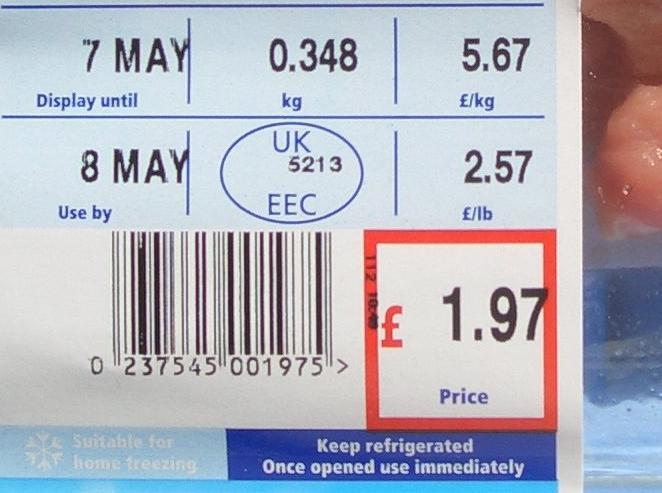
Shelf life is the length of time that a commodity may be stored without becoming unfit for use, consumption, or sale.[1] In other words, it might refer to whether a commodity should no longer be on a pantry shelf (unfit for use), or no longer on a supermarket shelf (unfit for sale, but not yet unfit for use). It applies to cosmetics, foods and beverages, medical devices, medicines, explosives, pharmaceutical drugs,[2] chemicals, tyres, batteries, and many other perishable items. In some regions, an advisory best before, mandatory use by or freshness date is required on packaged perishable foods. The concept of expiration date is related but legally distinct in some jurisdictions.[3]
Background
[edit]Shelf life is the recommended maximum time for which products or fresh (harvested) produce can be stored, during which the defined quality of a specified proportion of the goods remains acceptable under expected (or specified) conditions of distribution, storage and display.[4]
According to the United States Department of Agriculture (USDA), most "canned foods are safe indefinitely as long as they are not exposed to freezing temperatures, or temperatures above 90 °F (32.2 °C)".[5] Not all canned goods are shelf-stable and those labeled "keep refrigerated" are not safe to store at room temperature. Rusted, swollen and dented cans may not be safe for consumption. Over time, most notably for high acid foods such as tomatoes, food stored in cans will change in taste and texture and will eventually have lowered nutritional value.[6]
"Sell by date" is a less ambiguous term for what is often referred to as an "expiration date". Most food is still edible after the expiration date.[7] A product that has passed its shelf life might still be safe, but quality is no longer guaranteed. In most food stores, waste is minimized by using stock rotation, which involves moving products with the earliest sell by date from the warehouse to the sales area, and then to the front of the shelf, so that most shoppers will pick them up first and thus they are likely to be sold before the end of their shelf life. Some stores can be fined for selling out of date products; most if not all would have to mark such products down as wasted, resulting in a financial loss.
Shelf life depends on the degradation mechanism of the specific product. Most can be influenced by several factors: exposure to light, heat, moisture, transmission of gases, mechanical stresses, and contamination by things such as micro-organisms. Product quality is often mathematically modelled around a parameter (concentration of a chemical compound, a microbiological index, or moisture content).[8]
For some foods, health issues are important in determining shelf life. Bacterial contaminants are ubiquitous, and foods left unused too long will often be contaminated by substantial amounts of bacterial colonies and become dangerous to eat, leading to food poisoning. However, shelf life alone is not an accurate indicator of how long the food can safely be stored. For example, pasteurized milk can remain fresh for five days after its sell-by date if it is refrigerated properly. However, improper storage of milk may result in bacterial contamination or spoilage before the expiration date.[9]
Pharmaceuticals
[edit]The expiration date of pharmaceuticals specifies the date the manufacturer guarantees the full potency and safety of a drug. Most medications continue to be effective and safe for a time after the expiration date. A rare exception is a case of renal tubular acidosis purportedly caused by expired tetracycline.[10] A study conducted by the U.S. Food and Drug Administration covered over 100 drugs, prescription and over-the-counter. The study showed that about 90% of them were safe and effective as long as 15 years past their expiration dates. Joel Davis, a former FDA expiration-date compliance chief, said that with a handful of exceptions - notably nitroglycerin, insulin and some liquid antibiotics - most expired drugs are probably effective.[11]
Shelf life is not significantly studied during drug development[dubious – discuss], and drug manufacturers have economic and liability incentives to specify shorter shelf lives so that consumers are encouraged to discard and repurchase products. One major exception is the Shelf Life Extension Program (SLEP) of the U.S. Department of Defense (DoD), which commissioned a major study of drug efficacy from the FDA starting in the mid-1980s. One criticism is that the U.S. Food and Drug Administration (FDA) refused to issue guidelines based on SLEP research for normal marketing of pharmaceuticals even though the FDA performed the study. The SLEP and FDA signed a memorandum that scientific data could not be shared with the public, public health departments, other government agencies, and drug manufacturers.[12] State and local programs are not permitted to participate.[13] The failure to share data has caused foreign governments to refuse donations of expired medications.[14] One exception occurred during the 2010 Swine Flu Epidemic when the FDA authorized expired Tamiflu based on SLEP Data.[15] The SLEP discovered that drugs such as Cipro remained effective nine years after their shelf life, and, as a cost-saving measure, the US military routinely uses a wide range of SLEP tested products past their official shelf life if drugs have been stored properly.[16]

Packaging factors
[edit]Preservatives and antioxidants may be incorporated into some food and drug products to extend their shelf life. Some companies use induction sealing and vacuum/oxygen-barrier pouches to assist in the extension of the shelf life of their products where oxygen causes the loss.
The DoD Shelf-Life Program defines shelf-life as
The total period of time beginning with the date of manufacture, date of cure (for elastomeric and rubber products only), date of assembly, or date of pack (subsistence only), and terminated by the date by which an item must be used (expiration date) or subjected to inspection, test, restoration, or disposal action; or after inspection/laboratory test/restorative action that an item may remain in the combined wholesale (including manufacture's) and retail storage systems and still be suitable for issue or use by the end user. Shelf-life is not to be confused with service-life (defined as, A general term used to quantify the average or standard life expectancy of an item or equipment while in use. When a shelf-life item is unpacked and introduced to mission requirements, installed into intended application, or merely left in storage, placed in pre-expended bins, or held as bench stock, shelf-life management stops and service life begins.)[17]
Shelf life is often specified in conjunction with a specific product, package, and distribution system. For example, an MRE field ration is designed to have a shelf life of three years at 80 °F (27 °C) and six months at 100 °F (38 °C).[18]
Temperature control
[edit]Nearly all chemical reactions can occur at normal temperatures (although different reactions proceed at different rates). However most reactions are accelerated by high temperatures, and the degradation of foods and pharmaceuticals is no exception. The same applies to the breakdown of many chemical explosives into more unstable compounds. Nitroglycerine is notorious. Old explosives are thus more dangerous (i.e. liable to be triggered to explode by very small disturbances, even trivial jiggling) than more recently manufactured explosives. Rubber products also degrade as sulphur bonds induced during vulcanization revert; this is why old rubber bands and other rubber products soften and get crispy, and lose their elasticity as they age.
The often quoted rule of thumb is that chemical reactions double their rate for each temperature increase of 10 °C (18 °F) because activation energy barriers are more easily surmounted at higher temperatures. However, as with many rules of thumb, there are many caveats and exceptions. The rule works best for reactions with activation energy values around 50 kJ/mole; many of these are important at the usual temperatures we encounter. It is often applied in shelf life estimation, sometimes wrongly. There is a widespread impression, for instance in industry, that "triple time" can be simulated in practice by increasing the temperature by 15 °C (27 °F), e.g., storing a product for one month at 35 °C (95 °F) simulates three months at 20 °C (68 °F). This is mathematically incorrect (if the rule was precisely accurate the required temperature increase would be about 15.8 °C (28.4 °F)), and in any case the rule is only a rough approximation and cannot always be relied on. Chemists often use the more comprehensive Arrhenius equation for better estimations.
The same is true, up to a point, of the chemical reactions of living things. They are usually catalyzed by enzymes which change reaction rates, but with no variation in catalytic action, the rule of thumb is still mostly applicable. In the case of bacteria and fungi, the reactions needed to feed and reproduce speed up at higher temperatures, up to the point that the proteins and other compounds in their cells themselves begin to break down, or denature, so quickly that they cannot be replaced. This is why high temperatures kill bacteria and other micro-organisms: 'tissue' breakdown reactions reach such rates that they cannot be compensated for and the cell dies. On the other hand, 'elevated' temperatures short of these result in increased growth and reproduction; if the organism is harmful, perhaps to dangerous levels.
Just as temperature increases speed up reactions, temperature decreases reduce them. Therefore, to make explosives stable for longer periods, or to keep rubber bands springy, or to force bacteria to slow down their growth, they can be cooled. That is why shelf life is generally extended by temperature control: (refrigeration, insulated shipping containers, controlled cold chain, etc.) and why some medicines and foods must be refrigerated. Since such storing of such goods is temporal in nature and shelf life is dependent on the temperature controlled environment, they are also referred to as cargo even when in special storage to emphasize the inherent time-temperature sensitivity matrix.
Temperature data loggers and time temperature indicators can record the temperature history of a shipment to help estimate their remaining shelf life.[19]
According to the USDA, "Frozen foods remain safe indefinitely".[20]
Packaging
[edit]Passive barrier packaging can often help control or extend shelf life by blocking the transmission of deleterious substances, like moisture or oxygen, across the barrier.[2] Active packaging, on the other hand, employs the use of substances that scavenge, capture, or otherwise render harmless deleterious substances.[2] When moisture content is a mechanism for product degradation, packaging with a low moisture vapor transmission rate and the use of desiccants help keep the moisture in the package within acceptable limits. When oxidation is the primary concern, packaging with a low oxygen transmission rate and the use of oxygen absorbers can help extend the shelf life. Produce and other products with respiration often require packaging with controlled barrier properties. The use of a modified atmosphere in the package can extend the shelf life for some products.
Related concepts
[edit]The concept of shelf life applies to other products besides food and drugs. Gasoline has a shelf life, although it is not normally necessary to display a sell-by date. Exceeding this time-frame will introduce harmful varnishes[clarification needed], etc. into equipment designed to operate with these products, i.e. a gasoline lawn mower that has not been properly winterized[clarification needed] could incur damage that will prevent use in the spring, and require expensive servicing to the carburetor.
Some glues and adhesives also have a limited storage life, and will stop working in a reliable and usable manner if their safe shelf life is exceeded.
Rather different is the use of a time limit for the use of items like vouchers, gift certificates and pre-paid phone cards, so that after the displayed date the voucher etc. will no longer be valid. Bell Mobility and its parent company, BCE Inc. have been served with notice of a $100-million class-action lawsuit alleging that expiry dates on its pre-paid wireless services are illegal.[21]
See also
[edit]References
[edit]- ^ Oxford English Dictionary, 2nd ed.
- ^ a b c Forcinio, Hallie (2 October 2018). "Protecting Solid-Dose Shelf Life". Pharmaceutical Technology. Vol. 42, no. 10. UBM. Retrieved 8 November 2018.
- ^ "Date Labelling on Pre-packaged Foods". inspection.gc.ca. Canadian Food Inspection Agency. 21 March 2012. Retrieved 1 September 2017.
- ^ Gyesley, S. W. (January 1991). "Total System Approach to Predict Shelf Life of Packaged Food Products". In Henyon, DK (ed.). Total Systems Approach to Predict Shelf Life of Packaged Foods. ASTM International.: Food Packaging Technology. pp. 46–50. doi:10.1520/STP14842S. ISBN 978-0-8031-1417-3. ASTM STP 1113-EB.
- ^ "Dry Goods" (PDF). USDA. United States Department of Agriculture. Retrieved 12 June 2025.
- ^ "Shelf-Stable Food Safety". USDA. United States Department of Agriculture. Retrieved 12 June 2025.
- ^ See "Expiration dates". Consumer Affairs. Retrieved 11 November 2011.
- ^ Azanha, A.B.; Faria (July 2005). "Use of mathematical models for estimating the shelf-life of cornflakes in flexible packaging". Packaging Technology and Science. 18 (4): 161–222. doi:10.1002/pts.686. S2CID 136702424.
- ^ "Can You Drink Milk Past Its Sell-by Date?". Dairy Council of California. Retrieved 30 May 2017.
- ^ Pomerantz, JM (2004). "Recycling expensive medication: why not?". MedGenMed. 6 (2): 4. PMC 1395800. PMID 15266231.
- ^ Cohen, Laurie P. (2000-03-28). "Many Medicines Prove Potent for Years Past Their Expiration Dates". Wall Street Journal. Vol. 235, no. 62. pp. A1 (cover story).
- ^ "US Army Medical Materiel Agency (USAMMA)". Usamma.army.mil. 2013-11-20. Archived from the original on 2015-03-18. Retrieved 2014-02-08.
- ^ "Maximizing State and Local Medical Countermeasure Stockpile Investments Through the Shelf-Life Extension Program". Upmc-biosecurity.org. Archived from the original on 2013-01-18. Retrieved 2014-02-08.
- ^ "Essentialdrugs.org". Essentialdrugs.org. Archived from the original on 2013-12-11. Retrieved 2014-02-08.
- ^ "Stockpiled Antivirals at or Nearing Expiration". Fda.gov. Archived from the original on June 6, 2009. Retrieved 2014-02-08.
- ^ "Materiel quality control storage standards regulation" (PDF). Archived from the original (PDF) on 2017-12-09.
- ^ "The DoD Shelf-Life Program - Shelf-Life Management Manual - Definitions". Archived from the original on 2007-01-01.
- ^ Public Affairs Office (June 4, 2004). "Nanotechnology applied to ration packaging" (Press release). Natick, MA: United States Army Soldier Systems Center. Archived from the original on October 26, 2018. Retrieved September 28, 2010.
- ^ Meyers, T (June 2007). "RFID Shelf-life Monitoring Helps Resolve Disputes". RFID Journal. Archived from the original on May 11, 2008.
- ^ "Freezing and Food Safety". USDA. U.S. Department of Agriculture. 9 August 2024. Retrieved 12 June 2025.
- ^ "News & Analysis | Yahoo News Canada". Yahoo News - Latest News & Headlines. Archived from the original on May 16, 2012.
Further reading
[edit]- "New Guidelines Seek to Provide Clarity on Food Expiration Dates". All Things Considered. U.S.: NPR. 17 February 2017. Includes a list of the many terms used in the United States food industry.
- Anonymous, "Cold Chain Management", 2003, 2006
- Anonymous, Protecting Perishable Foods During Transport by Truck Archived 2014-05-16 at the Wayback Machine, USDA Handbook 669, 1995
- Kilcast, D., Subramamiam, P., Food and Beverage Stability and Shelf Life, Woodhead Publishing, 2011, ISBN 978-1-84569-701-3
- Labuza, T. P., Szybist, L., Open dating of Foods, Food and Nutrition Press, 2001; other edition: Wiley-Blackwell, 2004, ISBN 0-917678-53-2
- Man, C. M., Jones. A. A., Shelf-Life Evaluation of Foods, ISBN 0-8342-1782-1
- Robertson, G.L., Food Packaging and Shelf Life: A Practical Guide, CRC Press, 2010, ISBN 978-1-4200-7844-2
- Steele, R., Understanding and Measuring the Shelf-Life of Food, Woodhead Publishing, 2004, ISBN 1-85573-732-9
- Weenen, H., Cadwallader, K., Freshness and Shelf Life of Foods, ACS, 2002, ISBN 0-8412-3801-4
External links
[edit]
- USDA - Food Product Dating and storage guidelines
- FDA - Food freshness and smart packaging
- How to store your food

| International | |
|---|---|
| Other | |

Shelf life
View on GrokipediaDefinition and Overview
Definition
Shelf life is defined as the length of time during which a product, under specified storage conditions, remains safe, effective, and suitable for its intended use or consumption while maintaining acceptable quality levels. This duration varies significantly by product type; perishable items, such as fresh produce or dairy, typically have shorter shelf lives due to rapid degradation, whereas non-perishable goods, like canned or dried products, can endure for extended periods. In pharmaceuticals, shelf life specifically refers to the period in which a drug retains its strength, quality, purity, and efficacy.[9][10] The core principles of shelf life revolve around the progressive deterioration of a product, which occurs through biological, chemical, and physical mechanisms. Microbial growth, such as bacteria or molds, can compromise safety; chemical reactions like oxidation and hydrolysis alter composition and stability; and physical changes, including shifts in texture, color, or structure, affect sensory and functional attributes. Shelf life ends when these processes cause the product to fall below predefined thresholds for safety, sensory acceptability, or efficacy, as determined by regulatory or industry standards.[11][2][12] Shelf life is commonly measured in units of days, weeks, months, or years, reflecting the product's stability from production onward and influenced by its initial quality at manufacture. For example, highly perishable foods may have shelf lives of mere days under refrigeration, while stable pharmaceuticals often span years at room temperature.[13][14][15] The term "shelf life" originated in the 1920s, initially in contexts like confectionery manufacturing, and gained widespread use in the mid-20th century with the post-World War II boom in packaged consumer goods.[16]Importance and Applications
Understanding the shelf life of products is crucial for minimizing economic losses associated with waste and spoilage. In 2022, the world generated approximately 1.05 billion tonnes of food waste, representing about 19% of all food available at consumer level, which underscores the role of effective shelf life management in reducing this figure. In the United States, the value of food waste was approximately $338 billion in 2023, much of which stems from products exceeding their shelf life, highlighting how optimized shelf life practices can streamline supply chains and cut financial burdens for producers and retailers.[17][18][19] Beyond economics, shelf life directly impacts public health and safety by preventing the consumption of hazardous items where microbial growth or chemical degradation could occur. For instance, adhering to established shelf life guidelines helps avert foodborne illnesses such as salmonellosis, caused by Salmonella bacteria that proliferate in improperly stored perishables, thereby protecting consumers from severe gastrointestinal symptoms and potential hospitalization.[20] Regulatory frameworks enforce shelf life labeling to mitigate these risks, as seen in European Union recalls in 2024 involving products with undeclared allergens.[21] Shelf life considerations are integral to operations across manufacturing, retail, and logistics sectors, enabling efficient inventory management and quality assurance. In supermarkets, for example, tracking shelf life facilitates just-in-time stocking to minimize overstock and spoilage, while in export logistics, it ensures compliance with international standards for product viability during transit.[22] Clear shelf life information on packaging also fosters consumer trust, influencing purchase decisions by assuring product freshness and safety, which in turn supports brand loyalty and reduces return rates.[23]Factors Influencing Shelf Life
Intrinsic Product Factors
Intrinsic product factors encompass the inherent characteristics of a food or product that establish its baseline stability and resistance to deterioration, primarily through its composition and structure at the point of production. These elements determine how susceptible the product is to chemical, biological, and physical changes over time, independent of post-production exposures. Key among them are the chemical properties that govern microbial inhibition and reactivity, biological components that influence enzymatic and microbial dynamics, physical attributes affecting structural integrity, and formulation strategies that enhance durability. The chemical composition forms the foundation of shelf life by controlling environmental conditions within the product itself. Water activity (a_w), defined as the ratio of the vapor pressure of water in the food to that of pure water, is paramount; values below 0.85 limit bacterial proliferation, and a_w under 0.6 effectively inhibits most bacteria, yeasts, and molds, thereby extending shelf life in dry or intermediate-moisture foods like crackers or dried fruits.[24][25] Similarly, pH levels modulate microbial growth and enzymatic reactions; acidic conditions with pH below 4.6 create hostile environments for pathogens like Clostridium botulinum, enabling safe preservation in canned goods without additional thermal processing beyond boiling.[26] Nutrient availability, such as readily accessible sugars or proteins, can accelerate degradation by fueling microbial or oxidative processes, whereas low-nutrient formulations resist such breakdown more effectively.[27] Biological elements within the product further shape its longevity by dictating initial contamination risks and inherent degradation pathways. The starting microbial load, established during processing, directly impacts shelf life; elevated counts of spoilage organisms like Pseudomonas species hasten quality loss through metabolite production, while low initial loads in pasteurized products delay onset of visible spoilage.[28] Enzyme activities, particularly lipases in lipid-rich foods such as oils or nuts, promote hydrolytic rancidity by breaking down fats into free fatty acids, leading to off-flavors and reduced palatability within weeks if unchecked.[29] To counter these, preservatives are incorporated as intrinsic components: antioxidants like butylated hydroxyanisole (BHA) and butylated hydroxytoluene (BHT) scavenge free radicals to prevent lipid oxidation in fatty products, while antimicrobials such as potassium sorbate disrupt fungal cell membranes to inhibit mold growth in acidic formulations like jams.[30][31] Physical properties of the product's matrix influence its resistance to separation and exposure of vulnerable components. Emulsions, where immiscible phases like oil and water are stabilized by emulsifiers, exhibit greater stability than suspensions, as the uniform dispersion reduces creaming or sedimentation that could expose surfaces to degradative agents, thus maintaining integrity for months longer in products like mayonnaise.[32] Integration of inherent barriers, such as natural oxygen-scavenging compounds in the formulation, minimizes internal oxidation in oxygen-sensitive items like beverages, enhancing overall durability without relying on external packaging.[33] Formulation decisions amplify these intrinsic traits by tailoring the product's resilience to specific degradation modes. In baked goods, incorporation of stabilizers like guar gum binds moisture and reinforces gluten networks, retarding staling and microbial ingress to extend shelf life from mere days to several weeks in breads and cakes.[34] Conversely, in probiotic-enriched products, bacterial viability naturally declines over time due to matrix stresses like acidity and oxygen diffusion, which underscores the need for protective encapsulants in the base formulation to sustain therapeutic levels throughout storage.[35] These targeted adjustments highlight how intrinsic modifications can optimize shelf life while preserving product quality.Extrinsic Environmental Factors
Extrinsic environmental factors encompass external conditions encountered after production that can significantly influence the degradation rate of products, distinct from inherent compositional traits. These factors are often controllable through storage and logistics practices, allowing for targeted interventions to extend usability. Temperature profoundly affects shelf life by accelerating chemical reactions, microbial growth, and enzymatic activities. The relationship is commonly modeled using the Arrhenius equation, which describes the temperature dependence of the reaction rate constant : where is the pre-exponential factor, is the activation energy, is the gas constant, and is the absolute temperature in Kelvin.[36] This equation predicts that higher temperatures exponentially increase degradation rates; for many products, a 10°C rise roughly doubles the reaction rate, as indicated by a Q10 value of approximately 2.[37] For perishable items like fresh produce or dairy, maintaining temperatures around 4°C minimizes spoilage and preserves quality over extended periods. For example, the shelf life of milk drops from approximately 12 days at 40°F to approximately 8 days at 45–47°F.[38][39] Humidity and light exposure further compromise product integrity by promoting physical and chemical changes. Elevated humidity facilitates moisture absorption, leading to clumping in powders such as instant coffee or protein blends, and fosters mold growth in susceptible items like baked goods when water activity exceeds 0.70.[40] Light, particularly ultraviolet (UV) radiation, induces photodegradation, as seen in the loss of vitamin C in fruit juices.[41] These effects are exacerbated in products with light-sensitive components, such as oils or beverages, highlighting the need for opaque or shaded storage to mitigate nutrient and sensory deterioration.[42] Oxygen availability drives oxidative processes that shorten shelf life, especially in lipid-rich products. Exposure to atmospheric oxygen triggers rancidity in oils through autoxidation of unsaturated fatty acids, resulting in off-flavors, odors, and reduced nutritional value; for instance, vegetable oils can exhibit peroxide formation within weeks under normal air conditions.[43] Minimizing oxygen levels to below 1% has been shown to substantially delay such degradation, preserving product quality.[44] This factor interacts with temperature and light to amplify overall instability. Handling and distribution introduce risks of physical and biological damage that curtail effective shelf life. Mechanical stress during transport can cause bruising or structural failure in fragile goods, while contamination from improper hygiene may introduce microbes, accelerating spoilage.[40] In 2025, climate-induced events such as heatwaves and floods have disrupted global supply chains, leading to prolonged transit times for perishables; extreme weather in key agricultural regions has increased spoilage in unrefrigerated shipments due to delayed delivery.[45] These disruptions underscore how external logistical challenges can compound environmental stresses, effectively reducing usable shelf life even for stable products.Methods for Determining Shelf Life
Experimental Approaches
Experimental approaches to determining shelf life involve direct observation and testing of products under controlled or simulated conditions to empirically measure stability and quality degradation over time. These methods prioritize real-world applicability, collecting data on physical, chemical, microbiological, and sensory changes to establish endpoints where the product no longer meets safety or quality standards. Unlike predictive techniques, experimental methods rely on hands-on monitoring without mathematical extrapolation, though they can be complemented by modeling for validation. Real-time shelf life testing (RTSLT), also known as direct or real-time stability testing, entails storing product samples under anticipated normal distribution and storage conditions—such as ambient temperature (e.g., 25°C) and relative humidity (e.g., 60%)—for the full expected duration until degradation occurs. For dry goods like cereals or packaged snacks, this period often spans 6 to 24 months, during which parameters like moisture content, microbial load, and sensory attributes are periodically assessed to identify the point of quality failure. Sensory panels play a key role in RTSLT, evaluating attributes such as flavor, texture, and appearance against predefined acceptability thresholds, often using trained assessors to quantify changes via descriptive analysis or hedonic scales. This approach provides the most accurate representation of actual shelf life but requires extended timelines and resources for monitoring. Challenge testing focuses on microbial safety by deliberately inoculating product samples with target pathogens or spoilage organisms under worst-case conditions to simulate potential contamination risks and measure survival or growth. For low-acid foods (pH > 4.6), such as certain canned vegetables or sauces, this method assesses the ability of the product formulation, processing, or packaging to achieve at least a 12-log reduction in Clostridium botulinum spores, aligning with FDA guidelines for low-acid canned foods under 21 CFR Part 113.[46] Samples are incubated at elevated temperatures or abuse conditions (e.g., 30–37°C) to accelerate microbial dynamics, with enumeration via plating or molecular methods to determine the time until unsafe levels are reached. This testing is essential for validating hazard analysis and critical control points (HACCP) plans in products prone to microbial hazards. Sensory and analytical methods are integral to experimental shelf life determination, providing both subjective and objective data on quality deterioration. Sensory evaluation involves panels detecting off-flavors, odors, or textural changes, often defining endpoints as the point where acceptability drops below a certain level, such as 75% consumer preference. Complementing this, analytical techniques like gas chromatography-mass spectrometry (GC-MS) quantify volatile compounds responsible for rancidity or spoilage odors, tracking their increase over storage to correlate with sensory decline. Texture analyzers measure physical properties such as firmness or crispness in products like baked goods, using force-deformation curves to detect staling or softening, which helps establish mechanical endpoints for shelf life. Despite their reliability, experimental approaches like RTSLT and challenge testing are inherently time-intensive and resource-heavy, often requiring months or years of storage and analysis, which delays product launches and increases costs. Recent advancements as of 2024 incorporate AI-assisted monitoring to expedite data collection, such as hyperspectral imaging systems that non-destructively scan samples for spectral signatures of spoilage microbes or chemical changes, enabling earlier detection and reducing overall testing duration. These methods can be accelerated using modeling techniques detailed elsewhere to estimate outcomes under varied conditions.Predictive and Modeling Techniques
Predictive and modeling techniques for shelf life estimation involve mathematical and computational approaches that forecast product degradation under normal storage conditions by analyzing data from stressed environments or historical patterns, allowing for more efficient assessments than real-time testing alone. These methods rely on fundamental principles of chemical kinetics and statistical distributions to extrapolate shelf life, often integrating environmental variables like temperature and humidity. Accelerated shelf life testing (ASLT) simulates aging by subjecting products to elevated stress factors, such as higher temperatures, to hasten deterioration processes while preserving their underlying mechanisms. For instance, the Q10 rule posits that for many food products, a 10°C temperature increase roughly doubles the degradation rate, thereby halving the shelf life, with typical Q10 values ranging from 2 to 3 depending on the product matrix. Extrapolation to ambient conditions is commonly achieved using the Arrhenius model, which relates the rate constant of degradation to temperature via the equation , where is the pre-exponential factor, is the activation energy, and is the gas constant; this enables prediction of shelf life at lower temperatures from high-temperature data. ASLT has been applied effectively to predict the shelf life of minimally processed foods, such as fresh-cut vegetables, by monitoring quality indicators like microbial growth or color changes under controlled stress. Kinetic modeling describes the time-dependent degradation of quality attributes using reaction order equations tailored to the product's chemistry. In zero-order kinetics, degradation proceeds at a constant rate independent of concentration, modeled as , where is the concentration at time , is the initial concentration, and is the rate constant; this is suitable for attributes like vitamin loss in fortified products. First-order kinetics, more common for microbial or enzymatic degradation, follows , assuming the rate is proportional to remaining concentration, as observed in the breakdown of antioxidants in oils. These models are often implemented in specialized software, such as ASAPprime, which fits experimental data to Arrhenius kinetics for rapid shelf life predictions across pharmaceuticals and foods. Probabilistic models account for variability in failure times under heterogeneous conditions, providing a distribution-based estimate of when a product reaches unacceptability. The Weibull distribution is widely used for this purpose, with its probability density function , where is the shape parameter indicating failure pattern (e.g., for wear-out failures) and is the scale parameter; it has been employed to analyze sensory rejection data in ready-to-eat cereals, defining shelf life at 50% consumer rejection. Recent integrations with machine learning, such as neural networks trained on compositional data like pH, water activity, and nutrient profiles, enhance these models by predicting shelf life for perishable foods with accuracies exceeding 90% in dynamic storage scenarios. Validation of predictive models involves comparing forecasted shelf lives against real-time stability data to ensure reliability, with discrepancies minimized through structured protocols. According to ICH Q1E guidelines, extrapolation for shelf life assignment requires statistical evaluation of long-term trends, confirming that model predictions align with observed degradation within confidence limits, such as 95% for pharmaceuticals. This approach, often outlined in stability master plans, supports ongoing monitoring and adjustment of predictions based on batch-specific data.Shelf Life in Key Industries
Food and Beverages
Shelf life in the food and beverages sector is critically influenced by the inherent perishability of products, where microbial activity, enzymatic reactions, and sensory degradation determine usability and safety. Perishable foods, such as dairy and meats, face rapid spoilage under ambient conditions but can be extended through refrigeration and packaging. For instance, pasteurized milk typically maintains a shelf life of 7 to 14 days when refrigerated at 4°C (39°F), primarily limited by the growth of lactic acid bacteria that produce off-flavors and curdling through acid production; however, even small temperature increases can significantly shorten this period, with shelf life dropping from ~12 days at 40°F to ~8 days at ~45–47°F due to accelerated microbial growth.[47][38][48] Similarly, fresh meats like beef have a short refrigerated shelf life of 3 to 5 days in standard packaging due to bacterial proliferation and oxidation, but vacuum packaging can extend this to up to 12 weeks by reducing oxygen exposure and inhibiting aerobic microbes, thereby preserving color, texture, and safety.[49] Packaged ready-to-eat salads, such as bagged lettuce, should not be consumed after their "use-by" date, even if they appear and smell normal. These products can harbor harmful bacteria like Listeria monocytogenes (which can grow at refrigeration temperatures) or Salmonella without visible or olfactory signs of spoilage, increasing the risk of foodborne illness. Official guidance from the UK Food Standards Agency (FSA) stresses strict adherence to the "use-by" date for safety on such perishable ready-to-eat items, with similar recommendations in EU guidelines.[50][51] Non-perishable foods, including canned goods and dry cereals, rely on low moisture and barrier packaging to achieve longer stability, focusing on chemical rather than microbial deterioration. Commercially canned foods, if undamaged and properly sealed, remain safe indefinitely at room temperature, as the canning process eliminates pathogens and enzymes, though quality (flavor, color, nutrient retention) may decline after 2 to 5 years for low-acid products like vegetables or meats. Dry cereals, with their low water activity, typically last 6 to 12 months in sealed packaging, constrained by the oxidation of inherent fats that leads to rancid off-odors and reduced crispness.[29] Beverages present unique challenges related to gas retention and microbial stability, often requiring pasteurization or freezing for extension. Carbonated soft drinks, stored unopened at cool temperatures, maintain acceptable fizz and flavor for 6 to 9 months (shorter for diet varieties, often around 3 months in some guidelines), after which carbon dioxide loss through packaging permeation results in flatness and diminished sensory appeal.[52] Pasteurized fruit juices, when frozen immediately after processing, can achieve a shelf life of up to 6 months, as freezing halts enzymatic browning and microbial growth, though thawed product should be consumed within 10 days to avoid quality loss.[53] The shelf life of unopened bottled beverages varies by type, packaging, and proper storage in a cool, dark place away from heat, light, and chemicals. These are approximate best-quality periods; many remain safe longer if containers are undamaged. Once opened, beverages spoil faster, typically within days to weeks when refrigerated. Examples include:- Bottled water: Indefinite (FDA considers no expiration limit if properly packaged; quality may decline over years).[54]
- Carbonated soft drinks (soda): 6-9 months (shorter for diet varieties).
- Shelf-stable fruit juices: 6-12 months.
- Energy drinks, iced tea, sparkling water: 12-36 months.
- Shelf-stable/UHT milk: 6-18 months.[55]
- Beer: 6-12 months for peak flavor.
- Wine: Varies widely (months to 10-20+ years depending on type and storage).
- Spirits (e.g., vodka, whiskey): Indefinite if unopened.[56]