Hubbry Logo
search
logo
2101211

Florida cracker

logo
Community Hub0 Subscribers
Read side by side
from Wikipedia

Florida crackers are the descendants of colonial-era British American pioneer settlers in what is now the U.S. state of Florida, and a subculture of White Southerners. The first crackers arrived in 1763 after Spain traded Florida to Great Britain following Britain's victory over France in the Seven Years' War,[1] though much of traditional Florida cracker folk culture dates to the 19th century.

Key Information

Historical usage

[edit]

The term cracker was in use during the Elizabethan era to describe braggarts and blowhards. The original root of this is the Middle English word crack, meaning "entertaining conversation" (which survives as a verb, as in "to crack a joke"); the noun in the Gaelicized spelling craic also retains currency in Ireland and to some extent in Scotland and Northern England, in a sense of 'fun' or 'entertainment' especially in a group setting. Cracker is documented in William Shakespeare's King John, Act II, Scene I (1595): "What cracker is this same that deafs our ears / With this abundance of superfluous breath?"

By the 1760s, the ruling classes in Britain and the American colonies applied the term cracker to Scots-Irish, Scottish, and English American settlers of the remote southern back country, as noted in a letter to the Earl of Dartmouth: "I should explain to your Lordship what is meant by Crackers; a name they have got from being great boasters; they are a lawless set of rascalls on the frontiers of Virginia, Maryland, the Carolinas, and Georgia, who often change their places of abode."[2]

The word was later associated with the cattlemen of Georgia and Florida,[3] many of them descendants of those early colonists who had migrated south. A folk etymology suggests that the name instead derives from the cracking of cattle-drovers' whips.[4]

Florida cowmen

[edit]
A Cracker Cowboy (1895) by Frederic Remington, illustrating cracker Bone Mizell (1863–1921)

In Florida, those who own or work cattle traditionally have been called cowmen. In the late 19th century they were often called cowhunters, a reference to seeking out cattle scattered over the wooded rangelands during roundups. At times, the terms cowman and cracker have been used interchangeably because of similarities in their folk culture. However, the western term cowboy which is often used for those who work cattle is not the common Florida vernacular as is cowman or cowhunter.[5]

The Florida "cowhunter" or "cracker cowman" of the 19th and early 20th centuries was distinct from the Spanish vaquero and the cowboy. Florida cattlemen's primary tools were dogs and cow whips to herd or capture cattle while also utilizing lassos. Florida cattle and horses were smaller than the western breeds. The Florida Cracker cattle, also known as the "native" or "scrub" cow, averaged about 600 pounds (270 kg) and had large horns and large feet.[6]

Modern usage

[edit]

Among some Floridians, the term is used as a proud or jocular self-description. Since the huge influx of new residents into Florida in the late 20th and early 21st centuries from the northern United States and from Latin America, the term Florida cracker is used informally by some Floridians to indicate that their families have lived in the state for many generations. It is considered a source of pride to be descended from "frontier people who did not just live but flourished in a time before air conditioning, mosquito repellent, and screens" according to Florida history writer Dana Ste. Claire.[7]

Since the late 20th century, the Cracker Storytelling Festival has been held annually in the fall at Homeland Heritage Park in Homeland, Florida. 2013 marked the 25th anniversary of the festival, which includes storytellers from around Florida who come to share their stories with visitors. The majority of visitors who attend this event are students,[8] because storytelling is part of the Florida educational curriculum. The festival also incorporates local crafts and artwork, food vendors, a whip-cracking contest,[9] and living-history re-enactment of 19th-century homestead life.[8]

Notable persons

[edit]

See also

[edit]

References

[edit]

Further reading

[edit]
[edit]
Revisions and contributorsEdit on WikipediaRead on Wikipedia
from Grokipedia
The Florida cracker, also known as a cracker cowboy or cow hunter, refers to the descendants of early white pioneer settlers in Florida during the 18th and 19th centuries, who were primarily small-scale farmers and cattle herders adapted to the state's rugged frontier environment.[1][2] These settlers, often of Celtic or British American origin, emerged after the Spanish abandoned Florida in the early 1700s, inheriting and expanding upon feral cattle populations introduced by Spanish explorers as early as 1521.[2][3] The term "cracker" is commonly believed to derive from the sharp cracking sound of bullwhips used by these herders to control free-ranging cattle across open ranges, though its etymology is debated, a practice that distinguished them from lasso-using cowboys in other regions.[1][2] By the mid-19th century, Florida crackers played a vital economic role, driving herds along the approximately 120-mile Florida Cracker Trail across central Florida for market, and supplying beef to the Confederate Army during the Civil War.[2] Culturally, Florida crackers embodied a self-reliant ethos shaped by the challenges of subtropical wilderness, including encounters with wildlife, heat, and indigenous peoples; they relied on sturdy "cracker ponies"—small, agile horses—and trained cattle dogs rather than horses alone for herding.[2][3] Their architecture featured practical "cracker-style" homes: elevated, wood-framed structures with wide porches and metal roofs designed for ventilation and hurricane resistance, reflecting resourcefulness with local pine and cypress.[3] Traditions extended to storytelling, fiddle-based music, and communal events like cattle branding, with the whip-cracking skill even evolving into a performative folk art documented in mid-20th-century recordings.[1][2] Today, the Florida cracker identity endures as a symbol of regional pride among descendants, preserved through historical reenactments such as the Great Florida Cattle Drive and sites like Cracker Country Museum, highlighting their contributions to Florida's ranching heritage and cultural landscape.[2][3]

Etymology and Origins

Etymology

The term "Florida cracker" derives from the broader English word "cracker," which emerged in the mid-15th century as a noun meaning "one who or that which cracks or breaks," often applied derogatorily to boastful or noisy individuals.[4] One primary theory links it to the Scottish and Irish verb "crack," meaning to boast, chat animatedly, or tell entertaining stories, reflecting the perceived loquacious nature of Celtic immigrants; this usage appears as early as the 1590s in William Shakespeare's King John, where "craker" denotes an obnoxious boaster.[5] Another proposed etymology is "corn-cracker," a pejorative for impoverished Southern whites who subsisted on cracked corn as a dietary staple, evoking their rural poverty and reliance on simple agriculture.[4] A third, particularly relevant to Florida, suggests "whip-cracker," referring to the sharp cracking sound of whips used by cattle herders to manage livestock, a practice central to early frontier life.[5] The earliest documented American uses of "cracker" date to the 1760s in British colonial records, where it described unruly frontiersmen and backwoods settlers in regions from Maryland to Georgia and Florida, often portraying them as lawless or nomadic poor whites of Scots-Irish descent.[6] By the 1770s and 1780s, the term appeared frequently in official documents, including Spanish colonial accounts in East Florida, such as those by Governor Vicente Manuel de Zéspedes, who noted "crackers" as intrusive squatters along the Georgia-Florida border.[6] These early references framed "crackers" as a lower-class ethnic group distinct from elite planters, with the label carrying connotations of defiance and self-reliance.[7] By the mid-19th century, "Florida cracker" had evolved into a regionally specific term, distinguishing Florida's cattle-focused frontiersmen from broader Southern or Georgia "crackers," who were more associated with general rural poverty.[5] While Georgia crackers shared Scots-Irish roots and similar derogatory origins, the Florida variant emphasized the whip-cracking heritage tied to open-range herding, leading to its adoption as a point of cultural pride among descendants by the late 1800s.[8] This shift marked a transition from insult to identity, though the term retained pejorative undertones in some contexts.[4]

Early Settlement

The ancestors of the Florida crackers were primarily Scots-Irish, English, and Scottish settlers originating from the backcountry regions of Pennsylvania, Virginia, South Carolina, North Carolina, Georgia, and adjacent areas. These migrants, often seeking fertile lands and economic opportunities, formed the core demographic of early Florida pioneers during the colonial and early American eras. The term "cracker" emerged as a descriptor for these rugged, self-reliant backwoods folk, reflecting their independent spirit.[9][10] Major waves of settlement began after Britain's acquisition of Florida from Spain in 1763, which encouraged British and American colonists to establish outposts amid the sparsely populated territory. A second surge followed the U.S. annexation of Florida in 1821, drawing families from Georgia and the Carolinas southward in search of affordable land grants and untapped resources. These arrivals concentrated in North and Central Florida, particularly in counties like Alachua and Marion, where they navigated challenging landscapes including dense pine forests, swamps, and ongoing conflicts with Seminole populations.[10][11] Early cracker life was marked by self-sufficiency, with pioneers engaging in subsistence farming of crops like corn and vegetables, alongside hunting in the wilderness and raising livestock to sustain their families. Cattle herds, introduced earlier by Spanish missionaries through missions in North and North-Central Florida dating back to the 16th century, became integral to this economy, providing meat, hides, and draft animals for these isolated homesteads. The Second Seminole War (1835–1842), a protracted conflict involving U.S. forces against Seminole resistance, ultimately displaced most native inhabitants to Indian Territory, thereby opening vast tracts of land for white settlement and enabling crackers to expand their plantations and ranches in previously contested areas.[10][11][12][13]

Historical Development

Cattle Industry and Cowmen

The cattle industry formed the cornerstone of Florida cracker identity, originating with the introduction of Andalusian cattle by Spanish explorer Juan Ponce de León during his 1521 expedition to the region.[12] These hardy animals, brought from Spain, adapted to Florida's subtropical climate and scrub landscapes, interbreeding with later imports to form the resilient "Cracker cattle" or "Florida scrub" breed, known for its heat tolerance, disease resistance, and ability to thrive on poor forage.[14] By the early 1600s, Spanish ranchos had expanded production, with herds managed by missionaries and settlers along the St. Johns River and in the Panhandle.[15] Following the U.S. acquisition of Florida in 1821, wild herds proliferated on open ranges, enabling Anglo-American settlers to establish ranching operations without extensive fencing.[16] By the 1830s, open-range herding dominated, with cowmen—often called "crackers" for the sound of their whips—conducting seasonal roundups across vast, unfenced prairies and swamps.[17] These cowmen relied on a combination of horses, dogs, and braided buckskin whips rather than lassos, a technique influenced by Seminole cattle practices that emphasized mobility in dense terrain.[18] The whip, typically 8 to 20 feet long and made from rawhide or buckskin, produced a sharp crack audible over long distances to signal and corral cattle without physical contact, serving both practical and cultural roles in herding the agile, horned Cracker cattle.[19] Cowmen equipped themselves with rawhide gear, including quirts and saddles, and broad-brimmed hats for sun protection, often riding compact "Cracker ponies" suited to the muddy, thorny landscape.[17] Seminole methods, such as using trained herding dogs like the Florida Cracker Cur, further shaped these practices, allowing crews to navigate wetlands and control semi-wild herds efficiently.[20] Economically, the industry supplied beef, hides, and tallow to Cuba and other Caribbean markets from the early 1800s, driving exports through ports like Punta Rassa and bolstering Florida's finances before railroads transformed transportation.[21] During the Civil War (1861–1865), Florida's herds became a vital resource, providing beef and salt to both Confederate and Union forces amid blockades that starved other Southern states.[22] Socially, cowmen operated as independent ranchers or in small hunt crews of 6 to 10 men, roaming for weeks to gather and brand cattle during annual drives, a lifestyle marked by self-reliance amid threats from predators, rustlers, and environmental hazards.[17] Land disputes were rampant in the 1840s1860s, as overlapping claims between settlers, Native Americans, and speculators fueled cattle theft and vigilante justice.[2] The period marked the industry's peak, with Cracker cattle herds expanding to meet demand, though challenges like Texas fever affected imported northern breeds, as Cracker cattle had developed immunity to the tick-borne disease through centuries of exposure.[23] These adaptations solidified the cowmen's rugged ethos, central to cracker culture.[14]

19th-Century Expansion

The 19th century marked a period of significant territorial and economic expansion for Florida Cracker communities, spurred by federal policies aimed at populating the frontier following the Second Seminole War (1835–1842). The Armed Occupation Act of 1842 was a pivotal measure, offering 160 acres of land to heads of households or single men over 18 who were willing to bear arms against remaining Seminole populations, provided they resided on the land for five years, built a habitable dwelling, and cultivated at least five acres.[24] This act targeted unsettled areas south of Gainesville, excluding coastal islands and regions near forts or reservations, and resulted in the issuance of 1,312 permits, attracting approximately 6,000 settlers who established pioneer homesteads from the Indian River to Tampa Bay.[24] Many of these early participants were Crackers or aligned with their self-reliant ethos, drawn from Florida's existing population or neighboring states like Georgia and the Carolinas, thereby extending Cracker ranching and farming practices into central and southern Florida.[24] Demographic growth accelerated dramatically during this era, reflecting the influx of settlers and the appeal of available land. Florida's population surged from 34,730 in 1830 to 140,424 by 1860, more than quadrupling in three decades due to migration encouraged by acts like the 1842 legislation and the state's open-range cattle economy.[25] This expansion diluted the homogeneity of pure Cracker lineages as new arrivals from the North and Midwest intermingled with established families, though Crackers retained strong rural identities in interior strongholds.[26] The Civil War (1861–1865) further shaped these communities, with Florida's central and southern regions emerging as a key beef supplier to the Confederacy, relying on long cattle drives north to railheads like Baldwin in Duval County.[27] Cracker cowmen, skilled in herding practices, drove herds of up to 650,000 cattle by 1862, but faced disruptions from Union raids that captured thousands of animals and targeted saltworks essential for meat preservation.[27] Post-Civil War Reconstruction (1865–1877) catalyzed further transformation through infrastructure development and economic diversification. Railroad expansion, funded by state land grants and private investors like Henry Flagler, connected remote areas to northern markets, enabling the shipment of perishable goods and spurring a citrus boom in central Florida.[28] This period saw ranch lands push southward as Crackers adapted to enlarged grazing territories, even as waves of new settlers—drawn by cheap land and promotional campaigns—altered community demographics by introducing diverse agricultural influences.[28] Urbanization in emerging hubs like Tampa and Ocala challenged Cracker isolation, with some families shifting toward town-based trades while others held firm to rural lifeways in Marion and Polk Counties.[29] By the late 19th century, emerging extractive industries provided additional employment opportunities for Crackers in Florida's piney woods and central ridges. The turpentine sector, centered in northern and central counties, boomed after 1880, employing local workers—including Crackers—as laborers for resin collection and still operations, often under harsh conditions supplemented by convict leasing systems.[30] Similarly, the phosphate mining rush in the 1880s around Mulberry and Dunnellon hired Crackers for manual digging and processing, fueling economic growth but exposing them to seasonal instability and environmental shifts.[29] These industries reinforced Cracker resilience amid broader modernization, as communities balanced traditional ranching with wage labor in Florida's evolving resource economy.

Culture and Lifestyle

Architecture and Housing

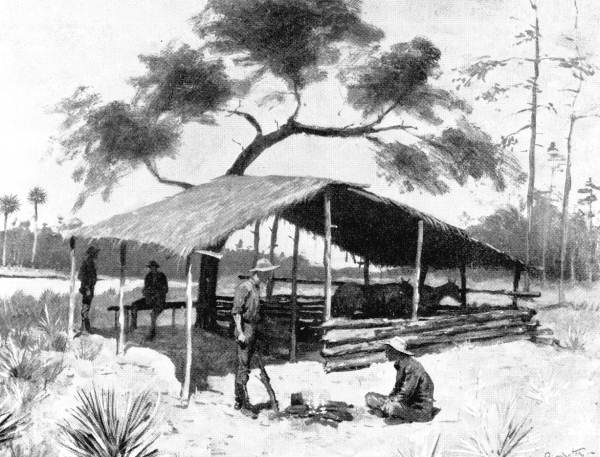
The Florida Cracker architectural style originated in the early 19th century, evolving from British colonial building traditions introduced during the short British period (1763–1783) and lingering Spanish influences from prior centuries, as Anglo-American settlers adapted to Florida's subtropical environment following U.S. acquisition in 1821.[31][32] By the 1820s, pioneers constructed simple dwellings using locally abundant materials such as cypress and pine woods for framing, and palm thatch for early roofs before the adoption of more durable options.[33] These choices reflected the settlers' resourcefulness amid limited imports and harsh conditions, blending European techniques with practical responses to flooding, humidity, and heat.[34] Key features of Cracker houses emphasized climate adaptation, including raised floors on piers or blocks—often 2 to 9 feet high—to protect against floods and promote airflow beneath the structure, wide verandas or porches for shading and outdoor living, and board-and-batten siding made from vertical wooden planks overlapped for weather resistance.[35][36] Roofs were steeply pitched with wide overhangs, initially thatched or shingled but increasingly covered in corrugated metal by the mid-19th century for better durability against heavy rains; interior layouts often featured dog-trot designs, with two main rooms separated by a central breezeway to enhance cross-ventilation, high ceilings to allow hot air to rise, and multiple windows or clerestory openings for natural cooling.[34][35] These elements created passive cooling systems suited to temperatures exceeding 90°F and high humidity, minimizing the need for artificial climate control.[36] During the 19th century, the style refined in response to frequent hurricanes, incorporating stronger framing and metal roofs to withstand winds, while expanding from single-pen log cabins to more complex double-pen or saddlebag configurations.[35] Surviving examples include the structures at Cracker Country, a living history museum in Tampa featuring 13 relocated original buildings from 1870 to 1912, showcasing board-and-batten homes and outbuildings typical of rural Cracker life.[37] In Micanopy, historic homes like the Herlong Mansion, originally built around 1845 as a simple pine-frame Cracker house with raised foundations and verandas, illustrate the style's early vernacular form before later expansions.[38]

Daily Practices and Traditions

Florida Cracker social structures emphasized large kinship networks that fostered community cohesion and mutual support, with extended families often living in close proximity and relying on one another for labor and protection during hardships.[11] These networks reinforced hospitality codes, where travelers and kin were welcomed with shared resources, reflecting a cultural value of self-reliance tempered by communal interdependence.[39] Oral storytelling served as a vital tradition for preserving history and imparting practical knowledge, with elders recounting tales around evening fires to educate younger generations on survival skills and family lore.[39] Gender roles were distinctly divided, with men typically handling outdoor tasks such as herding and hunting while women managed household duties, including child-rearing and food preservation, though both contributed to the family's overall subsistence.[11][39] Folklore among Florida Crackers included legends and ballads influenced by interactions with Seminole communities, such as tales of outlaws like Morgan Mizell that blended adventure with moral lessons on resilience.[39] Superstitions drew from environmental observations, incorporating Seminole-derived weather lore to predict storms or planting times based on animal behaviors and celestial signs.[39] Music formed a core custom, featuring fiddle tunes and ballads like "Deep in the Piney Wood" that celebrated rural life and were performed at social gatherings such as weddings, where dancing and rough humor provided entertainment.[39][11] These practices underscored a cultural emphasis on oral traditions over written records, with storytelling festivals tracing roots to 19th-century communal events.[40] Subsistence practices revolved around hunting and fishing as primary protein sources, with Crackers pursuing deer, raccoons, alligators, and fish using methods like cast-netting and noodling to supplement family meals.[39] Herbal medicine relied on native plants for remedies, such as aloe vera for burns and spider webs to staunch bleeding, passed down through women's knowledge of local flora.[39] The Cracker dialect featured drawling speech patterns, idiomatic expressions tied to rural life like "he-coon" for a clever man, and widespread use of "y'all" for plural address, distinguishing it from broader Southern English.[11][39][41]

Modern Usage and Legacy

Contemporary Identity

Since the mid-20th century, the term "Florida Cracker" has evolved into a proud ethnic label embraced by many white, native-born Southerners in Florida, symbolizing authenticity and deep-rooted ties to the state's pioneer heritage in contrast to "outsiders" from other regions.[42] Politicians such as former Governor Lawton Chiles have self-identified as Crackers, using the label to evoke rural resilience and local legitimacy during campaigns and public addresses in the 1990s.[43] Similarly, figures like Adam Putnam have invoked Cracker identity in modern political rhetoric to highlight generational Floridian roots.[44] Demographic shifts have contributed to a decline in the prominence of Cracker identity, primarily due to rapid urbanization and influxes of migrants since the post-World War II era, which have transformed rural landscapes into suburban developments and diluted traditional communities.[39] Today, self-identified Crackers are concentrated in rural areas of North and Central Florida, such as parts of St. Johns County and the Panhandle, where populations have grown dramatically—from around 9,000 in 1900 to over 190,000 by 2010—yet native lineages persist amid broader migration patterns.[39] In the 21st century, reclamation efforts have surged through genealogy initiatives, including the Florida State Genealogical Society's Pioneer Descendant Certificate Program, which verifies ancestry for descendants of pre-1900 settlers and fosters a renewed sense of heritage among 7th- and 8th-generation Floridians.[45] Cultural markers of Cracker identity continue to endure, including the distinctive dialect featuring terms like "herkin" for hurricane and "lighter knot floater" for heavy rain, which rural residents still employ in everyday speech.[46] Family gatherings, often centered on sharing pioneer stories and recipes, reinforce communal bonds, while resistance to unchecked development manifests in preferences for relocating to more isolated rural areas to preserve self-sufficient lifestyles amid sprawl.[39] Tourism further amplifies this identity by portraying Crackers as folk heroes through sites like Cracker Country, a living history museum that romanticizes their rugged independence and cattle-herding traditions for visitors seeking authentic Old Florida experiences.[47]

Preservation and Cultural Impact

Efforts to preserve Florida Cracker heritage include living history museums and experiential programs that recreate pioneer life. Cracker Country, a rural Florida museum founded in 1978 on the Florida State Fairgrounds in Tampa, features 13 relocated original structures from 1870 to 1912, where costumed interpreters demonstrate farming, household chores, and trades central to Cracker culture, educating over 20,000 school children annually.[37] The Florida Cracker Trail Association organizes annual cross-state cattle drives, such as the 140-mile ride from February 15-22, reenacting 19th-century cow hunts to maintain traditions of open-range herding.[48] Additionally, the state-funded Florida Folklife Program, established in 1979, documents and presents Cracker music, crafts, and oral histories through apprenticeships and festivals, supporting community transmission of these traditions.[49] The cultural impact of Florida Crackers extends to state symbols and artistic representations that embed their legacy in Florida's identity. In 1989, the Florida Cracker Horse Association was formed to preserve the breed, leading to its official recognition as a Florida heritage animal, highlighting its role in colonial-era ranching.[50] Literature by Marjorie Kinnan Rawlings, including her Pulitzer Prize-winning novel The Yearling (1938), portrays Cracker lifestyles in north-central Florida, influencing perceptions of rural self-sufficiency and drawing from her interactions with local pioneers.[51] Festivals like the annual Cracker Day, hosted by the St. Johns County Cattlemen's Association since the mid-20th century, celebrate this heritage with cattle demonstrations, music, and crafts, attracting thousands to the St. Johns County Fairgrounds.[52] Preservation faces challenges from urbanization and development, which encroach on traditional ranchlands and open ranges essential to Cracker practices, contributing to the decline of heritage breeds like Cracker cattle, now classified as threatened.[53] In 2025, local ranchers such as Jack Gillen in Micanopy continue active efforts to breed and preserve Florida Cracker cattle and horses, countering the breed's endangered status.[54] In response, 21st-century initiatives include digital archives such as Florida Memory, which provides free access to audio recordings of Cracker whip-cracking demonstrations and hunting narratives from 1956 to 1987, alongside education programs in state parks and museums to sustain traditions against globalization.[1] Events like the Great Florida Cattle Drive, a week-long reenactment covering 80 miles of ranchlands, further promote awareness and participation in these cultural practices, with the next event scheduled for January 26-31, 2026.[55] Recent developments include the approval of a new dude ranch in Marion County in 2024 to teach Florida Cracker history and horsemanship, and the 21st Annual Cracker Fair in Englewood on February 8, 2025, featuring pioneer demonstrations and crafts.[56][57]

Notable Figures

Historical Figures

James McKay (1808–1876) was a Scottish-born cattleman, mariner, and civic leader who played a pivotal role in Tampa's early development as a hub for the Florida cattle trade. Arriving in Florida in the 1840s after a career at sea, McKay transitioned to ranching and established one of the region's largest cattle operations, fencing the Gadsden Point peninsula in 1859 for grazing thousands of head. He innovated in beef shipping by constructing a twin wharf at Washington Street in Tampa, enabling efficient exports to Key West and northern markets, where he chartered steamers like the Magnolia for $1,500 per trip starting in 1858. McKay also served as Tampa's sixth mayor from 1859 to 1860, the only non-U.S. citizen to hold the office, during which he regulated city procedures and oversaw infrastructure like the first sawmill and courthouse.[58][59] Jacob Summerlin (1820–1893), often called the "Cattle King of Florida" or "King of the Crackers," built a vast cattle empire in central Florida that epitomized the Cracker cowman's self-reliant ethos. Born in what is now Lake City, Summerlin began herding at age 16 and by 1860 owned over 21,000 cattle valued at $90,000, driving herds across the state to ports like Punta Rassa for export to Cuba. During the Civil War, he supplied the Confederate army with 25,000 head of cattle between 1861 and 1863, delivering 600 weekly at $8 per head while navigating Union blockades in partnership with figures like James McKay. His operations extended to blockade running and provisioning pioneer families, amassing wealth that funded land acquisitions and civic contributions, including donations for schools and railroads in Polk and Orange Counties.[60] The Mizell family exemplified early Cracker pioneers through their ranching enterprises and militia service in Orange County settlements during the mid-19th century. David W. Mizell (1833–1870), a key family member, fought in the U.S. Army during the Third Seminole War (1855–1858) before moving to Orange County in 1858, where he built the area's first log cabin near Lake Mizell and established a cattle-herding operation on extensive lands. As a cattleman, Mizell drove herds amid ongoing frontier threats, embodying the Cracker tradition of open-range ranching and defense against Seminole incursions. His relatives, including sons who enlisted in local militias during the Indian Wars, contributed to regional security and settlement expansion, later influencing Orange County's political landscape through roles in governance and railroads.[61][62][63]

Modern Figures

In the contemporary era, Florida Cracker culture is preserved and embodied by individuals who continue traditional ranching practices, craftsmanship, and advocacy for heritage preservation, often amidst pressures from urbanization and land development. These modern figures, typically multi-generational descendants of early settlers, participate in events like the Great Florida Cattle Drive and maintain living history demonstrations at sites such as Cracker Country in Tampa. Their efforts ensure the survival of Cracker cowboy skills, including whip-making, horse breeding, and cattle herding with native breeds.[64][65] Calvin "Buddy" Mills, a fourth-generation Cracker cowboy, is renowned for his mastery of traditional buckskin cow-whip making, a skill passed down from his father, George "Junior" Mills, a noted Florida cowboy. Raised on working ranches, Mills has dedicated his career to demonstrating Cracker techniques at Cracker Country, where he also prepares traditional dishes like swamp cabbage and participates in cattle drives. In 2015, he received the Florida Folk Heritage Award from the Florida Department of State for his contributions to preserving Cracker material culture and folklore.[65][66] Billy Davis, an eighth-generation Cracker and lifelong rancher, serves as president of the Florida Cracker Horse Association, promoting the breeding and use of the rare Cracker horse breed in traditional herding. Featured in radio programs and documentaries, Davis has worked cattle across Florida for decades, mentoring younger cowboys and emphasizing the use of cur dogs for rounding up herds without modern machinery. At age 70 in 2023, he has participated in every Great Florida Cattle Drive since its inception in 1995, advocating for open lands to sustain the cowboy lifestyle.[67][64][66] Lynn Yarborough, a fourth-generation Cracker rancher operating north of Orlando, holds leadership roles as treasurer and vice president of the Florida Cow Culture Preservation Committee, which organizes the quadrennial Great Florida Cattle Drive to reenact 19th-century herding practices with over 500 head of cattle. Yarborough actively shares family lore, including stories of relatives' Cracker whips and ranching hardships, while expressing concerns over development encroaching on ranchlands. Her work highlights the integration of Cracker identity into modern conservation efforts.[64] Ronald "Alligator Ron" Bergeron represents the intersection of Cracker heritage with contemporary entrepreneurship, as an eighth-generation descendant raised in South Florida's wilds, where his family embodied Gladesman and Cracker traditions like alligator wrestling. Featured in the 2011 documentary Florida Crackers: The Cattlemen and Cowboys of Florida, Bergeron has preserved cultural practices through his involvement in rodeos and wildlife education, while developing land responsibly to honor his roots. He describes these traditions as integral to old Florida culture, passed down across generations.[68][69][70] Alto "Bud" Adams Jr. (1926–2017), a prominent cattleman from the Adams Ranch in Fort Pierce, exemplified modern Cracker ranching by expanding a family operation started in 1937 into one of Florida's largest, focusing on native scrub cattle and environmental stewardship. Inducted into the Florida Cracker Trail Association Hall of Fame in 1993, Adams preserved Cracker methods like open-range herding while adapting to 20th-century regulations, earning recognition as a "Florida icon" for bridging historical and contemporary cattle culture.[71][72][73]

References

User Avatar
No comments yet.