Hubbry Logo
Force-feedingForce-feedingMain
Open search
Force-feeding
Community hub
Force-feeding
logo
8 pages, 0 posts
0 subscribers
Be the first to start a discussion here.
Force-feeding
Force-feeding
from Wikipedia
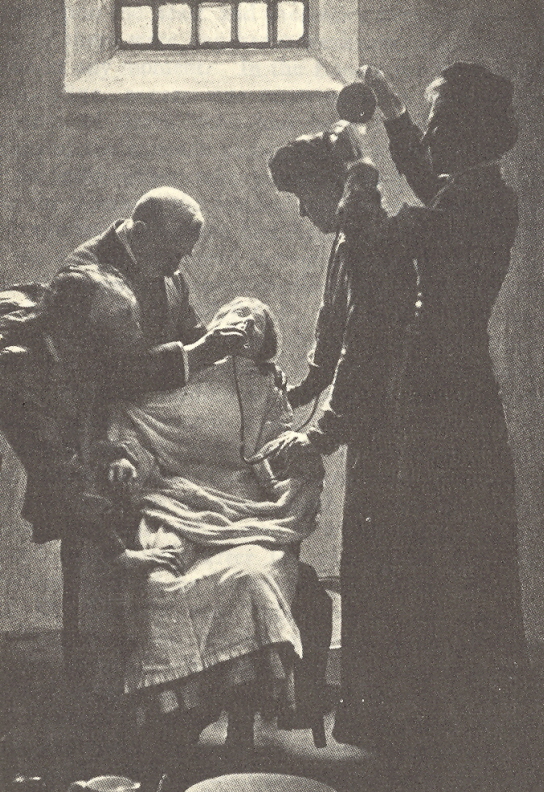
A suffragette is force-fed in HM Prison Holloway in the UK during hunger strikes for women's suffrage, approximately 1911.[1]

Force-feeding is the practice of feeding a human or animal against their will. The term gavage (UK: /ˈɡævɑːʒ, ɡæˈvɑːʒ/,[2][3] US: /ɡəˈvɑːʒ/,[3][4] French: [ɡavaʒ] ) refers to supplying a substance by means of a small plastic feeding tube passed through the nose (nasogastric) or mouth (orogastric) into the stomach.

Of humans

[edit]

In psychiatric settings

[edit]

Within some countries,[which?] in extreme cases, patients with anorexia nervosa who continually refuse significant dietary intake and weight restoration interventions may be involuntarily fed by force via nasogastric tube under restraint within specialist psychiatric hospitals.[5] Such a practice may be highly distressing for both anorexia patients and healthcare staff.[5]

In prisons

[edit]

Some countries force-feed prisoners when they go on hunger strike. It has been prohibited since 1975 by the Declaration of Tokyo of the World Medical Association, provided that the prisoner is "capable of forming an unimpaired and rational judgment." The violation of this prohibition may be carried out in a manner that can be categorised as torture, as it may be extremely painful and result in severe bleeding and spreading of various diseases via the exchanged blood and mucus, especially when conducted with dirty equipment on a prison population.[6]

Canada

[edit]

The Canadian government accepts the Declaration of Tokyo as made by the World Medical Association, and does not carry out the force-feeding of inmates against their will who reject any nourishment, however the Correction Service of Canada has stated that they reserve the right to do so since they have a legal obligation to maintain the health of individuals in their care. The Corrections and Conditional Release Act of 1992 directly prohibits the force feeding of inmates in Canada.[7][8][9]

United Kingdom

[edit]
Clipping from World Magazine, September 6, 1914

Suffragettes who had been imprisoned while campaigning for votes for women went on hunger strike and were force fed. This lasted until the Prisoners Act of 1913, also known as the Cat and Mouse Act, whereby debilitated prisoners would be released, allowed to recover, and then re-arrested. Rubber tubes were inserted through the mouth (only occasionally through the nose) and into the stomach, and food poured down; the suffragettes were held down by force while the instruments were inserted into their bodies, which has been likened to rape.[10] In a smuggled letter, Sylvia Pankhurst described how the warders held her down and forced her mouth open with a steel gag. Her gums bled, and she vomited most of the liquid.[11]

Emmeline Pankhurst, founder of the Women's Social and Political Union, was horrified by the screams of women being force-fed in HM Prison Holloway. She wrote: "Holloway became a place of horror and torment. Sickening scenes of violence took place almost every hour of the day, as the doctors went from cell to cell performing their hideous office. ... I shall never while I live forget the suffering I experienced during the days when those cries were ringing in my ears." When prison officials tried to enter her cell, Pankhurst, in order to avoid being force-fed, raised a clay jug over her head and announced: "If any of you dares so much as to take one step inside this cell, I shall defend myself."[12]

In 1911, Wiliam Ball, a male working class supporter who had broken two windows and consequently been sentenced to two months, was given this treatment and then separated from contact with his family, leading to his clandestine transfer to a mental hospital. This case was taken up by groups such as WSPU and the Men's League for Women's Suffrage, whose pamphlet on the case had the subtitle Official Brutality on the increase.[13]

1911 Votes for Women poster about William Ball (suffragist)

The first woman in Scotland to be force fed was Ethel Moorhead, in Calton Jail, who despite being under medical supervision became seriously ill.[14] The governor, Major William Stewart, argued that her illness was not caused by the feeding regime, but also said:

We must face the fact that artificial feeding is attended with risk and we must teach [suffragette prisoners] that, while we appreciate the risks, we are quite prepared to go on and will not be deterred from detaining people like [Moorhead] because there is a risk to their health, if we take the necessary steps to make sure their detention is effective... They have the idea that they can frighten us by pointing out the risk to health.[15]

But the governor also recognised that there was a risk of the public deciding that prison authorities were "going too far".[15] After Moorhead's release, the WPSU published a handbill, Scotland Disgraced and Dishonoured, with Moorhead describing her experience being fed by force:

The tube filled up all my breathing space, I couldn't breathe. The young man began pouring in the liquid food.

I heard the noises I was making of choking and suffocation – uncouth noises human beings are not intended to make and which might be made by a vivisected dog. Still he kept on pouring.[16]

In 1914, Frances Parker, another Scottish suffragette, was being force-fed by the rectum (a nutrient enema, a standard procedure before the invention of intravenous therapy) and once by the vagina[15] in the Perth prison:

Thursday morning, 16th July ... the three wardresses appeared again. One of them said that if I did not resist, she would send the others away and do what she had come to do as gently and as decently as possible. I consented. This was another attempt to feed me by the rectum, and was done in a cruel way, causing me great pain. She returned some time later and said she had "something else" to do. I took it to be another attempt to feed me in the same way, but it proved to be a grosser and more indecent outrage, which could have been done for no other purpose than torture. It was followed by soreness, which lasted for several days.[17]

Djuna Barnes, an American journalist, agreed to submit to force-feeding for a 1914 New York World magazine article. Barnes wrote, "If I, play acting, felt my being burning with revolt at this brutal usurpation of my own functions, how they who actually suffered the ordeal in its acutest horror must have flamed at the violation of the sanctuaries of their spirits." She concluded, "I had shared the greatest experience of the bravest of my sex."[18]

British prison authorities force-fed Irish republican prisoners during the Irish revolutionary period and the Troubles. In 1917, Irish Republican Brotherhood leader Thomas Ashe died as a result of complications from force-feeding while incarcerated at Dublin's Mountjoy Jail. In 1973 four Irish Republican prisoners were force fed over a 200-day period. Gerry Kelly, Hugh Feeney, Dolours Price and Marian Price were force-fed while on hunger strike in separate British prisons.[19] In 1974, Provisional Irish Republican Army members Michael Gaughan and Frank Stagg were force-fed while on hunger strike. Gaughan was subjected to 17 force-feedings during a hunger strike in HM Prison Wakefield. The force-feeding procedure was described: "Six to eight guards would restrain the prisoner and drag him or her by the hair to the top of the bed, where they would stretch the prisoner’s neck over the metal rail, force a block between his or her teeth and then pass a feeding tube, which extended down the throat, through a hole in the block." In 1974, Stagg was force-fed for 68 days and survived but died on another hunger strike in 1976.[20]

United States

[edit]

Ethel Byrne was the first female political prisoner in the United States to be subjected to force feeding[21] after she was jailed at Blackwell Island workhouse on January 22, 1917, for her activism in advocating for the legalization of birth control. She subsequently went on a hunger strike and refused to drink water for 185 hours.[22]

Guantanamo captives who will not comply with force-feeding have their arms, legs and head restrained in a feeding chair. They remain strapped in the chair until the nutrient is digested, to prevent induced vomiting.

Under United States jurisdiction, force-feeding is frequently used in the U.S. military prison in Guantanamo Bay, prompting in March 2006 an open letter by 250 doctors in The Lancet, warning that the participation of any doctor is contrary to the rules of the World Medical Association.[23][24][25]

In the 2009 case Lantz v. Coleman,[26] the Connecticut Superior Court authorized the state Department of Correction to force-feed a competent prisoner who had refused to eat voluntarily.[27] In 2009, terrorist Richard Reid, known as the "shoe bomber," was force-fed while on a hunger strike at the United States Penitentiary, Florence ADX, the federal supermax prison in Colorado.[28] Hundreds of force-feedings have been reported at ADX Florence.[29]

Forced feeding has also been used by the U.S. Immigration and Customs Enforcement against detained asylum seekers on hunger strike.[30] In February 2019, the Office of the United Nations High Commissioner for Human Rights expressed that such treatment of detainees could constitute a breach of the United Nations Convention against Torture.[30] The Associated Press quoted one 22-year old asylum seeker who alleged that "he was dragged from his cell three times a day and strapped down on a bed as a group of people poured liquid into tubes inserted into his nose."[30]

Soviet Union

[edit]

Soviet dissident Vladimir Bukovsky described how he was force-fed:

The feeding pipe was thick, thicker than my nostril, and would not go in. Blood came gushing out of my nose and tears down my cheeks, but they kept pushing until the cartilages cracked. I guess I would have screamed if I could, but I could not with the pipe in my throat. I could breathe neither in nor out at first; I wheezed like a drowning man — my lungs felt ready to burst. The doctor also seemed ready to burst into tears, but she kept shoving the pipe farther and farther down. Only when it reached my stomach could I resume breathing, carefully. Then she poured some slop through a funnel into the pipe that would choke me if it came back up. They held me down for another half-hour so that the liquid was absorbed by my stomach and could not be vomited back, and then began to pull the pipe out bit by bit.[31]

"The unfortunate patients had their mouth clamped shut, had a rubber tube inserted into their mouth or nostril. They keep on pressing it down until it reaches your esophagus. A funnel is attached to the other end of the tube and a cabbage-like mixture poured down the tube and through to the stomach. This was an unhealthy practice, as the food might have gone into their lungs and caused pneumonia."[32]

United Nations War Crimes Tribunal

[edit]

On December 6, 2006, the United Nations War Crimes Tribunal at The Hague approved the use of force-feeding of Serbian politician Vojislav Šešelj. They decided it was not "torture, inhuman or degrading treatment if there is a medical necessity to do so... and if the manner in which the detainee is force-fed is not inhuman or degrading."[33]

Israel

[edit]

In 2015, the Knesset passed a law allowing the force-feeding of prisoners in response to a hunger strike by a Palestinian detainee who had been held for months in administrative detention. Israeli doctors refused to feed Mohammad Allan against his will, and he resumed eating after the Supreme Court temporarily released him.[34]

Greece

[edit]

Forced feeding has been ordered by Greek courts against hunger strikes at different times including in 2021 when a Greek prosecutor proposed the force-feeding of Dimitris Koufontinas in the effort of stopping Koufontinas's 65 day hunger and water strike which started in February 2021. The doctors of the hospital of Lamia, where Koufodinas was hospitalised refused to administer force feeding procedures,[35][36] a Greek doctors' union has called the practice torture.[37] A similar situation played out in 2014 when 21 year old convicted anarchist bank robber and childhood friend of Alexandros Grigoropoulos, Nikos Romanos who engaged in a hunger-strike for access to education which lead to a force-feeding being ordered.[38] Romanos successfully resisted the force-feeding order with the help of his doctors.[39] Romanos terminated his hunger-thirst strike after 30 days having won access to a university education.[40][41]

Other forms

[edit]

Force-feeding of pernicious substances may be used as a form of torture and/or physical punishment. While in prison in northern Bosnia in 1996, some Serbian prisoners have described being forced to eat paper and soap.[42]

Sometimes it has been alleged that prisoners are forced to eat foods forbidden by their religion. The Washington Post has reported that Muslim prisoners in Abu Ghraib prison under the U.S.-led coalition described in sworn statements having been forced to eat pork and drink alcohol, both of which are strictly forbidden in Islam (see Abu Ghraib torture and prisoner abuse).[43]

Of babies

[edit]
"Gavage" method of infant feeding used in France, late 19th century

According to Infant feeding by artificial means: a scientific and practical treatise on the dietetics of infancy[44], a French system of feeding newborn or premature babies who could not suckle was known as gavage. Sadler dates its origin to 1874 and quotes Étienne Stéphane Tarnier, a pioneer perinatologist, describing the procedure. [45] Nowadays, infants in a neonatal intensive care unit are likely to be fed by nasogastric or sometimes orogastric tubes.[46]

For girls before marriage

[edit]

Force-feeding used to be practiced in North Africa and still is in Mauritania. Fatness was considered a marriage asset in women; culturally, voluptuous figures were perceived as indicators of wealth. In this tradition, some girls are forced by their mothers or grandmothers to overeat, often accompanied by physical punishment (e.g., pressing a finger between two pieces of wood) should the girl not eat. The intended result is a rapid onset of obesity, and the practice may start at a young age and continue for years. This is still the tradition in the rather undernourished Sahel country Mauritania (where it is called leblouh), where it induces major health risks in the female population; some younger men no longer insist on voluptuous brides, but traditional beauty norms remain part of the culture.[47]

In slavery

[edit]

Some Africans on the Middle Passage journey to slavery in the United States tried to take their own lives by starving themselves, and were force fed with a contraption called the speculum orum. This device forced the slave's mouth open in order to be fed.[48]

Of domestic animals

[edit]

Force-feeding has been used to prepare animals for slaughter. In some cases, such as is the case with ducks and geese raised for foie gras and peking duck, it is still practiced today.

In farming

[edit]
Animal welfare groups object to force-feeding of birds. Here a Mulard duck is being force fed corn in order to fatten its liver for foie gras production.

Force-feeding is also known as gavage, from the verbal noun form of the French verb gaver meaning "to gorge". This term specifically refers to force-feeding of ducks or geese in order to fatten their livers in the production of foie gras.

Force-feeding of birds is practiced mostly on geese or male Moulard ducks, a Muscovy/Pekin hybrid. Preparation for gavage usually begins four to five months before slaughter. For geese, after an initial free-range period and treatment to assist in esophagus dilation (eating grass, for example), the force-feeding commences. Gavage is performed two to four times a day for two to five weeks, depending on the size of the fowl, using a funnel attached to a slim metal or plastic feeding tube inserted into the bird's throat to deposit the food into the bird's crop (the storage area in the esophagus). A grain mash, usually maize mixed with fats and vitamin supplements, is the feed of choice. Waterfowl are suited to the tube method due to a non-existent gag reflex and an extremely flexible esophagus, unlike other fowl such as chickens. These migratory waterfowl are also said to be ideal for gavage because of their natural ability to gain large amounts of weight in short periods of time before cold seasons.

In modern Egypt, the practice of fattening geese and male Muscovy ducks by force-feeding them various grains is present, unrelated to foie gras production, but for general consumption. This is done by hand rather than by tube, as is European force-feeding. However, this practice is not widespread on commercial farms, and is done mostly by individuals. The term used for this is tazġīṭ (تزغيط), from the verb zaġġaṭ(a) (زغّط).

Shen Dzu is a similar practice of force-feeding pigs.

In scientific research

[edit]

Gavage is used in some scientific studies such as those involving the rate of metabolism. It is practiced upon various laboratory animals, such as mice. Liquids such as medicines may be administered to the animals via a tube or syringe.[49]

See also

[edit]

References

[edit]
[edit]
Revisions and contributorsEdit on WikipediaRead on Wikipedia
from Grokipedia

Force-feeding is the practice of delivering nutrition to individuals or animals that refuse voluntary intake, typically through invasive techniques such as nasogastric tubes or oral , distinguishing it from consensual artificial feeding by its coercive nature.
Employed primarily in correctional settings to avert fatalities among hunger-striking detainees, it compels medical intervention against self-imposed , often involving and risking complications like esophageal perforation or .
In agriculture, force-feeding ducks and geese via repeated esophageal tubing induces hepatic for production over 12-15 days, yielding enlarged livers but prompting welfare critiques over documented injuries including trauma and .
Historically prominent in the early 20th-century British suffragette campaigns, where imprisoned protesters rejecting food were tube-fed, the method fueled public outrage and depicting it as state-sanctioned violence, amplifying demands for political status.
Ethically contentious, force-feeding pits preservation of life against bodily autonomy, with organizations like the condemning physician participation in penal contexts as unethical, while some legal frameworks permit it to counter absent consent revocation capacity.

Definition and Techniques

Methods and Procedures

Force-feeding methods generally rely on mechanical delivery of liquefied or mashed nutrients directly into the or , bypassing voluntary oral intake, and often necessitate physical or to prevent expulsion or injury. Common techniques include enteral feeding via nasogastric (NG) or orogastric tubes, syringe administration, or funnel-based gavage, with variations depending on the subject's size, resistance level, and context. Placement confirmation typically involves measuring tube depth (e.g., nose-ear-xiphoid distance for humans), aspiration of gastric contents, or pH testing to ensure stomach positioning, reducing risks like . In medical and psychiatric settings for humans, NG tube insertion begins with patient positioning (head elevated 30-45 degrees), lubrication of a 12-16 French tube, and gentle advancement through the while the subject swallows water to facilitate passage, followed by secure taping and initial flushing with water. , blended , or medications—is then administered intermittently via bolus (e.g., 200-500 mL over 10-20 minutes) or continuous at rates like 50-100 mL/hour, monitored for tolerance via residual volumes checked every 4-6 hours. For resistant patients, such as those with severe , or physical holds may precede insertion, though procedural guidelines emphasize minimal force to avoid trauma. In penal or detention environments, procedures mirror medical enteral feeding but incorporate enhanced restraints, such as five-point chair immobilization or multiple guards holding limbs and head, to counter active resistance during tube insertion, which can involve larger-bore tubes (e.g., 14-18 French) for efficiency. Feeding sessions, often conducted 2-3 times daily, deliver 1000-2000 calories via commercial formulas, with post-procedure monitoring for complications like nasal bleeding or esophageal perforation, as documented in hunger strike responses at facilities like where up to 106 detainees underwent such interventions simultaneously in 2006. Military protocols, per declassified reports, have included rectal feeding in extreme cases, infusing nutrient enemas (e.g., 500-1000 mL of liquid ) to bypass oral routes, though this deviates from standard enteral norms. For animals, particularly in poultry production like , gavage entails restraining ducks or geese upright, inserting a rigid metal or plastic tube (10-15 mm diameter) 20-30 cm down the , and delivering 250-500 grams of corn-soy mash slurry per session via or pneumatic , repeated 2-3 times daily for 12-15 days to achieve liver weights of 500-1000 grams. In or veterinary contexts, smaller syringes or flexible gavage needles (e.g., 18-20 gauge for ) are used after scruffing or , with volumes scaled to body weight (e.g., 10 mL/kg), emphasizing rapid administration to minimize stress-induced regurgitation.

Historical Origins

The practice of force-feeding originated in , where it was applied to animals for fattening and ritual purposes, with evidence dating back to at least 2500 BCE. Artistic depictions on walls illustrate the force-feeding of birds such as geese and cranes, as well as mammals including pigs, , and oryx, using funnels or tubes to administer food. Mummified remains, including a that died from overfeeding-induced choking, provide direct archaeological confirmation of the technique's use on bred in captivity for votive offerings to deities like . This method exploited natural fattening behaviors observed in migratory birds, adapting them for human-controlled enlargement of organs such as livers, precursors to later production. In human contexts, the earliest documented medical applications of force-feeding emerged in the , primarily for nourishing premature or debilitated infants incapable of suckling. French obstetrician Étienne Stéphane Tarnier pioneered gavage feeding around 1874, employing flexible tubes to deliver milk directly into the , inspired by rearing techniques. This innovation, integrated with early incubators at Paris's Maternité hospital, significantly reduced neonatal mortality rates by enabling sustained nutrition in vulnerable newborns. The term "gavage," derived from the French verb gaver meaning "to cram" or "to stuff," underscores its roots in practices transferred to . Force-feeding gained prominence in penal settings during the early as a response to organized hunger strikes by political prisoners. In Britain, it was first authorized against suffragettes protesting for , beginning with cases like that of Mary Leigh in September 1909 at Winson Green Gaol, where nasal and oral tubes were used to prevent death from . Techniques borrowed from asylum medicine involved restraints and mechanical feeding devices, often causing injury to teeth, throats, and nasal passages. This application sparked ethical debates over medical complicity and prisoner rights, extending later to Irish nationalists and conscientious objectors during wartime.

Human Applications

Medical and Psychiatric Contexts

In medical contexts, force-feeding primarily involves enteral nutrition delivered via nasogastric tube (NGT) to patients incapable of or refusing adequate oral intake, such as those with severe , , or critical . This method ensures caloric delivery to prevent organ failure, with formulas calibrated to body weight and monitored for risks, including electrolyte shifts that can cause if unmanaged. Empirical data indicate NGT feeding achieves rapid short-term weight restoration, averting mortality in cases where BMI falls below 13 kg/m², though insertion often requires lubrication and patient cooperation or restraint to avoid trauma. Psychiatric applications center on disorders like (AN), where patients exhibit profound refusal of due to distorted and fear of , impairing rational capacity assessment under legal standards. In acute settings, involuntary NGT feeding under restraint is initiated when self-starvation threatens life, as evidenced by vital sign instability or below 40 bpm. Studies report usage in 20-50% of hospitalized AN adolescents, correlating with immediate physiological stabilization but variable long-term outcomes, including potential exacerbation of resistance if perceived as coercive. Guidelines from bodies like the endorse supplemental NGT in severe cases within multidisciplinary protocols emphasizing behavioral incentives over sole reliance on tubes. Ethical tensions arise from balancing beneficence—saving lives from AN's 5-10% —against , with courts often overriding refusal when incapacity is demonstrated via cognitive testing showing starvation-induced . Nurses describe the process as morally burdensome, citing distress from restraining patients during insertion, yet view it as essential for survival when BMI nears lethal thresholds. Systematic reviews confirm compulsory interventions reduce acute deaths but highlight insufficient evidence on psychological sequelae, urging integration with to mitigate trauma and foster voluntary compliance post-stabilization. In non-AN , such as catatonic states or delusional refusals, force-feeding follows similar capacity evaluations but occurs less frequently due to alternative pharmacotherapies.

Penal and Detention Settings

Force-feeding in penal and detention settings has historically been implemented to sustain prisoners engaging in hunger strikes as a tactic to demand political status, better conditions, or release. In the , between 1913 and 1940, nearly 800 prisoners, including refusing food to protest their treatment as common criminals rather than political prisoners, undertook hunger strikes, prompting authorities to resort to force-feeding via stomach tubes to avert fatalities and uphold prison discipline. Procedures often involved and insertion of tubes through the nose or mouth, leading to documented injuries such as esophageal damage and , though intended to preserve life. During in , prisoners in the Maze Prison employed prolonged hunger strikes in the to secure recognition as political rather than criminal detainees. Authorities force-fed participants, with some enduring the procedure for over 200 days using similar tube methods, until policy shifts in the late prohibited non-consensual feeding, culminating in the 1981 strike where ten prisoners died after authorities refrained from intervention. Force-feeding was defended as a means to prevent self-inflicted death amid security threats posed by martyrdom, but critics highlighted its coercive nature and physical toll, including choking and aspiration risks. In modern detention facilities like the U.S. Guantanamo Bay camp, force-feeding has been applied to counter mass hunger strikes by detainees protesting without trial. During the 2013 strike, peaking with 106 participants refusing food, military medical personnel conducted enteral feeding via nasogastric tubes on restrained individuals seated in specialized chairs, a practice occurring up to twice daily for dozens of detainees to maintain body weight above critical thresholds. U.S. courts have generally upheld such measures under the principle of preserving life in custody, absent evidence of incompetence, despite condemnations from bodies like the , which deem force-feeding of competent adults unethical due to its violation of and potential for harm. Legally, force-feeding remains permissible in many jurisdictions when deemed necessary to prevent or imminent , with U.S. precedents allowing it for both convicted prisoners and pretrial detainees if conducted humanely and proportionally. However, international frameworks, including UN statements, classify coercive feeding as potentially amounting to or cruel treatment, particularly when paired with restraints, though enforcement varies and military contexts often prioritize operational security over strict .

Cultural and Traditional Practices

In certain West African cultures, such as among the Moors in , the practice known as involves force-feeding adolescent girls, often starting as young as five years old, with high-calorie foods like , , and camel fat to induce , which is traditionally viewed as a marker of , , and desirable for . This ritual, sometimes conducted in secluded "fattening farms" or homes during seasonal periods, employs physical coercion including tying hands or using verbal pressure, and has persisted despite government bans since 2003, with reports of its revival under certain regimes. Associated health consequences include elevated risks of , , and , as documented in ethnographic studies. Similar fattening traditions exist in , particularly among the Efik and Ibibio peoples in the Cross River region, where young women enter "fattening rooms" (nkpofok) for weeks or months prior to , enduring isolation, minimal , and force-feeding with starchy porridges, oils, and meats to achieve plumpness symbolizing prosperity and readiness for motherhood. In Yoruba communities, force-feeding extends to infants and children via implements like spoons or funnels to ensure nutritional intake amid cultural beliefs in robust body size as a sign of health, though this persists alongside modern pediatric concerns over aspiration risks. Among Saharawi women in Moroccan camps and communities, a traditional fattening phase called tablah requires at least 40 days of deliberate overfeeding with sweetened teas, oils, and breads while restricting movement, rooted in nomadic ideals of fat reserves for survival and attractiveness, though prevalence has declined with . Historically in , particularly during the late 19th century, gavage—a tube-based force-feeding technique—was applied to infants in foundling hospitals to promote rapid weight gain using milk or formulas, reflecting era-specific concerns over rates exceeding 200 per 1,000 live births in urban areas. These practices underscore culturally specific valuations of body size, often prioritizing over empirical health data indicating obesity-linked comorbidities.

Animal Applications

Agricultural and Farming Uses

Force-feeding, or gavage, serves as the core technique in agricultural production of , a from the fattened livers of and geese. In this practice, birds receive inflated volumes of feed—typically a corn-based mash—delivered through a tube inserted into the two to three times daily. This occurs over 12 to 15 days for ducks and up to 21 days for geese prior to slaughter, inducing rapid liver enlargement via hepatic lipidosis, where fat content exceeds 50% of liver weight. The method targets hybrid breeds like ducks (crosses of Muscovy and Pekin ducks) for their growth efficiency and geese varieties such as Landes or for traditional output. Global production relies heavily on gavage, with accounting for over 70% of output, centered in southwestern regions like and Landes where specialized farms integrate rearing and force-feeding phases. predominate in modern operations due to faster cycles and lower costs compared to geese, which require longer feeding periods starting from birds aged 9 to 25 weeks. The feed volume per session can reach 400-500 grams for ducks, far surpassing voluntary , to achieve livers weighing 500-800 grams at . Beyond , force-feeding finds limited application in other contexts, such as experimental or supplemental fattening in or , but lacks widespread commercial adoption due to alternatives like feeding or genetic selection for feed efficiency. Historical precedents exist in ancient Egyptian and Roman practices for bird fattening, evolving into codified techniques by the in , yet contemporary farming prioritizes gavage almost exclusively for liver in waterfowl.

Research and Veterinary Contexts

In laboratory animal research, oral gavage serves as a primary method for delivering precise volumes of test substances directly into the , commonly applied in , dogs, and other for pharmacokinetic, , and therapeutic efficacy studies. The technique entails restraining the , typically by scruffing in mice and rats, and advancing a flexible or gavage needle alongside the midline into the and , with volumes standardized to body weight—often 10 mL/kg in rats—to ensure dosing accuracy independent of voluntary consumption. Performed daily in chronic dosing protocols, it requires trained operators to monitor for resistance, regurgitation, or aspiration risks, which occur in approximately 1-5% of procedures depending on animal size and handler experience. Welfare assessments highlight potential acute stress from restraint and , prompting refinements such as for repeated procedures or alternatives like palatable masking in or voluntary where study designs permit, though gavage remains prevalent for its reproducibility in regulatory under guidelines from bodies like the . A 2012 evaluation in rats noted behavioral indicators of discomfort, including vocalization and struggling, but concluded that proper technique minimizes long-term harm when alternatives compromise data validity. In veterinary clinical practice, force-feeding via enteral routes supports in companion animals, particularly cats and dogs, unable or unwilling to consume adequate calories due to illness, , or anorexia, provided gastrointestinal function remains intact to avoid complications like . Techniques prioritize tube-based delivery—nasoesophageal for short-term (up to 7-10 days), esophagostomy or for prolonged use—over manual feeding, which delivers small volumes (1-5 mL per attempt) but induces significant stress and restraint needs. Protocols calculate resting requirements (e.g., 60-80 kcal/kg/day initially for critically ill patients) and titrate to 100% needs over 3-5 days using liquid diets or slurries, with feeding frequencies of 4-6 times daily to mimic natural patterns. Empirical data indicate enteral support improves outcomes in hyporexic patients, such as reducing hepatic lipidosis risk in cats, but syringe-based force-feeding correlates with higher stress and, in some observational studies, elevated mortality rates possibly due to aspiration or aversion-induced reduced intake post-procedure. Veterinary guidelines emphasize early intervention within 24-72 hours of anorexia onset and owner training for home administration, with monitoring for tube patency and tolerance via weight tracking and serum biochemistry.

Perspectives on Human Force-Feeding

Perspectives on human force-feeding center on the tension between respecting individual and the imperative to preserve life, with ethicists emphasizing that competent refusals should generally prevail over coercive interventions. The (WMA) maintains that force-feeding hunger strikers is unethical and unjustified, as it undermines patient dignity and may constitute inhuman treatment, a position reinforced by the WMA's 1991 Tokyo Declaration and subsequent declarations. Similarly, the (AMA) argues that force-feeding prisoners violates core ethical principles, even if motivated by beneficence, prioritizing the right to refuse treatment over state or institutional interests in preventing death. These views align with experts who classify force-feeding as cruel and potentially torturous under , urging prohibitions except in cases of clear incompetence. In penal and detention contexts, such as , proponents—including some and military authorities—defend force-feeding as a necessary measure to avert fatalities that could incite unrest or create martyrs, framing it as a rather than . For instance, during the 2013 hunger strike involving up to 106 detainees, U.S. military protocols mandated enteral feeding to sustain detainees, justified by officials as preventing and maintaining operational control, though this drew resignations from medical personnel citing ethical breaches. Critics, including physicians and advocates, counter that such practices erode and expose doctors to complicity in , as evidenced by a U.S. nurse's 2014 to participate in feedings on grounds. Historical precedents, like the force-feeding of British suffragettes from 1909 to 1914, elicited outrage from medical professionals and activists who deemed it a "prostitution of the profession," portraying it as gendered violence and fodder rather than legitimate care, despite claims of humanitarian intent. Medical and psychiatric applications, particularly for severe , introduce nuanced justifications where force-feeding is sometimes viewed as ethically permissible when patients lack capacity due to from . Ethicists contend that in such cases, beneficence—restoring nutritional stability to avert organ failure—overrides , supported by legal precedents allowing under acts when life is imminently threatened. However, even here, practitioners report moral distress, with nurses describing nasogastric tube feeding under restraint as life-saving yet ethically fraught, potentially exacerbating trauma and resistance without addressing underlying . Recent analyses highlight that while short-term survival rates improve, long-term outcomes remain poor, questioning whether aligns with holistic recovery or merely prolongs . Ongoing debates underscore source credibility issues, as institutional positions from bodies like the WMA carry weight from their focus on physician ethics, whereas governmental rationales may prioritize over impartiality, a pattern observed in Israeli permitting controlled force-feeding despite international condemnation. Empirical evidence of physical harms—such as esophageal tears, , and psychological sequelae—bolsters arguments against routine use, favoring dialogue and voluntary refeeding where feasible. Ultimately, perspectives diverge on whether force-feeding constitutes compassionate intervention or coercive overreach, with consensus emerging only against its application to politically motivated, competent strikers.

Animal Welfare and Regulatory Issues

Force-feeding of and geese for production has been associated with several risks, including physical injuries from tube insertion into the , pressure sores on the due to confinement in individual cages, and increased susceptibility to fractures during and slaughter. Studies indicate that force-fed birds exhibit signs of and immune suppression in the duodenal mucosa, alongside digestive dysfunction, which may contribute to overall health deterioration. Pathological changes in the liver, such as and , can lead to discomfort, impaired mobility, and conditions like hepatic lipidosis, though empirical on the subjective of pain remains limited and debated among researchers. While some observations suggest birds may habituate to the procedure without acute physiological stress responses, broader from veterinary assessments points to chronic welfare compromises, including behavioral indicators of during handling and capture. Regulatory responses to these welfare concerns vary globally, with outright bans on force-feeding for enacted in multiple jurisdictions on animal health grounds. In the , force-feeding is prohibited in 22 member states, while production persists in , , , , and Belgium's region, often under scrutiny for compliance with broader directives. The banned the practice effective March 31, 2005, classifying it as incompatible with welfare standards. Outside Europe, imposed a nationwide ban in 2005, followed by import prohibitions in countries like ; in the United States, California's law prohibiting production and sale of force-fed took effect in 2012, though enforcement has faced legal challenges. Canada permits domestic production without federal restrictions, highlighting inconsistencies in international standards driven by ethical and empirical welfare evaluations. Debates persist regarding the sufficiency of evidence for universal bans, as some industry-funded studies emphasize minimal acute distress under optimized conditions, contrasting with peer-reviewed findings of systemic health risks. Regulatory frameworks, such as those from the , underscore the need for more rigorous, independent empirical research to quantify welfare impacts, given the current paucity of high-quality longitudinal data. These issues extend beyond to occasional veterinary force-feeding in other species, but such applications are typically short-term and regulated under general animal health laws emphasizing necessity and minimal harm, with far less controversy than agricultural gavage.

Empirical Outcomes and Criticisms

In detention settings, force-feeding strikers via nasogastric tubes has demonstrated short-term efficacy in preventing fatalities from , as evidenced by the stabilization of body weights among detainees during 2013 hunger strikes, where up to 106 individuals received enteral nutrition without recorded deaths directly from . However, empirical data indicate significant acute complications, including esophageal , aspiration , and severe pain reported by 21 forcibly fed detainees, with procedural trauma exacerbating gastrointestinal distress and imbalances akin to . Long-term outcomes include persistent psychological harm, with strikers describing experiences as "much worse than " due to repeated restraint and , contributing to prolonged strikes rather than resolution. In medical contexts such as treatment, controlled enteral force-feeding protocols have shown low rates of severe complications in monitored settings; a study of 103 adolescents using accelerated refeeding reported no cases of and minimal when electrolytes were supplemented, achieving weight gain without mortality. Yet, rare but grave risks persist, including in adults with severe , which carries high mortality due to intestinal necrosis from rapid nutrient shifts. Criticisms center on coercion undermining patient autonomy and trust, with the World Medical Association's Tokyo Declaration prohibiting physician participation in force-feeding prisoners as a violation of non-maleficence, though some ethicists argue it averts imminent in competent adults. For animal applications, particularly foie gras production, peer-reviewed pathology studies on force-fed geese reveal consistent induction of hepatic lipidosis, characterized by massive fat vacuole accumulation, inflammation, and fibrosis, diverging from natural migratory fattening by causing pathological rather than adaptive enlargement. Behavioral indicators include elevated stress responses during gavage, with geese exhibiting avoidance, wing flapping, and vocal distress, alongside higher injury rates from esophageal trauma compared to non-force-fed controls. No population-level mortality data from feeding alone is quantified, but liver dysfunction impairs function, with critiques from veterinary panels highlighting welfare deficits under EU assessments, leading to bans in regions like since 2004 for inducing unnecessary suffering without nutritional justification. Criticisms across contexts emphasize causal harms outweighing benefits: in humans, force-feeding sustains life but perpetuates detention without addressing grievances, as seen in IRA prisoners' 1981 strikes where 10 deaths occurred despite interventions, attributed to procedural resistance rather than starvation alone; in animals, it contravenes welfare standards by enforcing for palatability, with on acute from tube insertion unsupported by efficacy claims of "natural" processes. Sources from medical bodies like the AMA uniformly decry complicity, prioritizing empirical harm documentation over institutional rationales for control.

References

Add your contribution
Related Hubs
User Avatar
No comments yet.