Hubbry Logo
Frances AllenFrances AllenMain
Open search
Frances Allen
Community hub
Frances Allen
logo
8 pages, 0 posts
0 subscribers
Be the first to start a discussion here.
Frances Allen
Frances Allen
from Wikipedia

Frances Elizabeth Allen (August 4, 1932 – August 4, 2020)[2][3] was an American computer scientist and pioneer in the field of optimizing compilers.[4][5][6] Allen was the first woman to become an IBM Fellow, and in 2006 became the first woman to win the Turing Award.[7] Her achievements include seminal work in compilers, program optimization, and parallelization.[8] She worked for IBM from 1957 to 2002 and subsequently was a Fellow Emerita.[9]

Key Information

Early life and education

[edit]

Allen grew up on a farm in Peru, New York, near Lake Champlain, as the oldest of six children. Her father was a farmer, and her mother an elementary school teacher.[9] Her early elementary education took place in a one-room school house a mile away from her home, and she later attended a local high school.[10]

She graduated from The New York State College for Teachers (now part of the University at Albany, SUNY) with a Bachelor of Science degree in mathematics in 1954 and began teaching school in Peru, New York.[10] Allen taught math from algebra to trigonometry.[11] She needed a Master's degree to earn a teaching certification, so after two years, she enrolled at the University of Michigan. She earned a Master of Science degree in mathematics in 1957.[12]

Career and research

[edit]

Teaching Fortran

[edit]

Deeply in debt with student loans, Allen joined IBM Research in Poughkeepsie, New York, as a programmer in 1957, where she taught incoming employees the basics of Fortran.[11] This was one of the first high-level programming languages, and had only been announced two months before Allen joined IBM.[13]

During this period, Allen often learned topics about Fortran only days before teaching researchers the same lessons.[11] She taught herself about Fortran's compiler by reading its source code, and this spawned a lifelong research interest in designing compilers.[13] At the time, researchers were hesitant to move to Fortran because they were used to writing in assembly, and it was common knowledge that compiled languages could not produce code that was performant enough to compare.[14] Allen planned to return to teaching in schools once her student loans had been paid, but ended up staying with IBM for her entire 45-year career.[11]

Compiler optimizations

[edit]

In 1959, Allen was assigned to the Harvest project for code breaking with the National Security Agency, and worked on a programming language called Alpha.[7] The project was confidential and designed for spying on the Soviet Union, but many on the team did not know the details until they were leaked to the press later. Allen managed the compiler-optimization team for both Harvest and the earlier Stretch project.[14]

In 1962, Allen was transferred to Thomas J. Watson Research Center, where she contributed to the ACS-1 project, and later in the 1970s, to PL/I. During these years, she worked with fellow researcher John Cocke to write a series of seminal papers on optimizing compilers, helping to improve the efficiency of machine code translated from high-level languages.[2] The pair also created an optimizing compiler for Fortran, and the compiler eventually handled Autocoder and Alpha as well.[13]

Allen began to publish papers on optimizing compilers in order to share her knowledge with other researchers. Her first publications included "Program Optimization" and "Control Flow Analysis".[13] Allen and Cocke published "A Catalogue of Optimizing Transformations" in 1972, which systematized the most important techniques for compiler optimizations. The work is considered one of her most important, and it covers key compiler techniques like procedure inlining, loop unrolling, common subexpression elimination, code motion, and peephole optimization.[14]

During her time at IBM, Allen actively pushed for the involvement of computer scientists from underrepresented groups, and found ways to attract and keep women in the field. She was a key reason that half of IBM's compiler research team was composed of women through the 1970s and 1980s.[2] Allen volunteered for many years through the IBM mentor program.[11] Barbara Simons worked with Allen and considered her a friend: she recalled Allen as a strong feminist.[13]

From 1970 to 1971 Allen spent a sabbatical at New York University and acted as adjunct professor for a few years afterward. Another sabbatical brought her to Stanford University in 1977.[12] Allen taught Anita Borg, and was the only woman professor of Borg's while she was in graduate school.[13] Allen was also named the Chancellor’s Distinguished Lecturer and Mackay Lecturer at the University of California, Berkeley and Regents Lecturer at the University of California, San Diego.[11]

Parallel computing

[edit]

From 1980 to 1995, Allen led IBM's work in the developing parallel computing area, and helped to develop software for the IBM Blue Gene project.[15] She worked on PTRAN, the Parallel Translator, which was designed to take advantage of automatic parallelism through noting a program's dependency graph and distributing work across a parallel architecture. The system's goal was to automatically transform programs written sequentially into efficiently parallelized programs.[14]

Allen became the first female IBM Fellow in 1989.[16] She became president of IBM's steering committee, IBM Academy, in 1995.[14] In 2000, IBM began an award in her honor, the Frances E. Allen Women in Technology Mentoring Award.[13]

Allen retired from IBM in 2002, but remained affiliated with the corporation as a Fellow Emerita. In 2007, the IBM Ph.D. Fellowship Award was created in her honor.[16] After retiring, she remained active in programs that encourage women and girls to seek careers in science and computing.[17]

Her A. M. Turing Award citation reads:

Fran Allen's work has had an enormous impact on compiler research and practice. Both alone and in joint work with John Cocke, she introduced many of the abstractions, algorithms, and implementations that laid the groundwork for automatic program optimization technology. Allen's 1966 paper, "Program Optimization," laid the conceptual basis for systematic analysis and transformation of computer programs. This paper introduced the use of graph-theoretic structures to encode program content in order to automatically and efficiently derive relationships and identify opportunities for optimization. Her 1970 papers, "Control Flow Analysis" and "A Basis for Program Optimization" established "intervals" as the context for efficient and effective data flow analysis and optimization. Her 1971 paper with Cocke, "A Catalog of Optimizing Transformations," provided the first description and systematization of optimizing transformations. Her 1973 and 1974 papers on interprocedural data flow analysis extended the analysis to whole programs. Her 1976 paper with Cocke describes one of the two main analysis strategies used in optimizing compilers today. Allen developed and implemented her methods as part of compilers for the IBM STRETCH-HARVEST and the experimental Advanced Computing System. This work established the feasibility and structure of modern machine- and language-independent optimizers. She went on to establish and lead the PTRAN project on the automatic parallel execution of FORTRAN programs. Her PTRAN team developed new parallelism detection schemes and created the concept of the program dependence graph, the primary structuring method used by most parallelizing compilers.

Awards and honors

[edit]
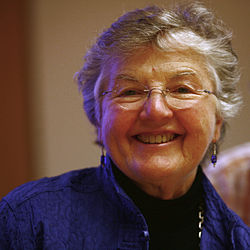
Portrait of Fran Allen receiving the Erna Hamburger Distinguished Lecture Award at EPFL, May 6, 2008

Allen was a Fellow of the Institute of Electrical and Electronics Engineers (IEEE) and the Association for Computing Machinery (ACM). In 2000, she was made a Fellow of the Computer History Museum "for her contributions to program optimization and compiling for parallel computers".[18] She was elected to the National Academy of Engineering in 1987,[19] to the American Philosophical Society in 2001,[20] and to the National Academy of Sciences in 2010.[1] She was nominated a Fellow of the American Academy of Arts and Sciences in 1994.[21]

She received the IEEE Computer Society Charles Babbage Award in 1997 and the Computer Pioneer Award of the IEEE Computer Society in 2004.[22] In 1997, Allen was inducted into the Witi Hall of Fame.[23] She won the 2002 Augusta Ada Lovelace Award from the Association for Women in Computing. In 2004, Allen was the winner of the ABIE Award for Technical Leadership from the Anita Borg Institute.[24][25]

Allen was recognized for her work in high-performance computing with the 2006 Turing Award.[9][26] She became the first woman recipient in the forty-year history of the award, which is considered the equivalent of the Nobel Prize for computing and is given by the Association for Computing Machinery.[27][17][28][29][30] In interviews following the award she hoped it would give more "opportunities for women in science, computing, and engineering".[31] Allen won the Turing award 19 years after her collaborator, John Cocke, won the same award.[13]

In 2009 she was awarded an honorary doctor of science degree from McGill University for "pioneering contributions to the theory and practice of optimizing compiler techniques that laid the foundation for modern optimizing compilers and automatic parallel execution".[32]

In 2020, after Allen's death, IEEE created the Allen Medal to honor "innovative work in computing leading to lasting impact on other fields of engineering, technology or science." This was only the second IEEE Medal to be named after a woman.[11] The first award would be granted in 2022.[13]

Publications

[edit]

A list of her select publications includes:[4][6]

  • Allen, Frances E.; Cocke, John (1971). Rustin, Randall (ed.). A Catalogue of Optimizing Transformations. Design and Optimization of Compilers. Thomas J. Watson IBM Research Center. Prentice Hall.
  • Allen, Frances E., "Interprocedural data flow analysis", Proceedings of Information Processing 74, IFIP, Elsevier / North-Holland (1974), 398–402.
  • Allen, Frances E. and J. Cocke, "A program data flow analysis procedure", Communications of the ACM, Vol. 19, No. 3 (March 1976), 137–147.
  • Allen, Frances E. et al., "The Experimental Compiling System", IBM Journal of Research and Development, Vol. 24, No. 6, (November 1980), 695–715.
  • Allen, Frances E., "The history of language processor technology at IBM", IBM Journal of Research and Development, Vol. 25, No. 5 (September 1981), 535–548.

Personal life

[edit]

In 1972, Allen married New York University computer science professor and collaborator Jacob T. Schwartz.[5] They divorced in 1982.[2]

Allen was a mountain climber and member of the American Alpine Club.[11] She established a new route across Ellesmere Island, the most Northern part of Canada.[13]

Allen died on August 4, 2020, her 88th birthday, from complications with Alzheimer's disease.[2][15][33]

See also

[edit]

References

[edit]
[edit]
Revisions and contributorsEdit on WikipediaRead on Wikipedia
from Grokipedia
Frances Elizabeth Allen (August 4, 1932 – August 4, 2020) was an American computer scientist renowned for her pioneering contributions to optimizing compilers and high-performance computing. Born in Peru, New York, as the eldest of six children on a farm near Lake Champlain, Allen developed an early interest in mathematics and physics. She earned a bachelor's degree in mathematics from the New York State College for Teachers in 1954 and a master's degree in mathematics from the University of Michigan in 1957. After briefly teaching high school mathematics, she joined IBM in 1957, where she spent over four decades advancing compiler technology until her retirement in 2002 as IBM Fellow Emerita. Allen's career at began with teaching programming and evolved into groundbreaking research on optimization. She contributed to major projects, including the Stretch/ supercomputer in the 1960s, where she designed a shared optimizing backend supporting multiple languages, and the Advanced Computing System (ACS) project, which emphasized parallel processing. In the and , her work on the PTRAN project introduced program dependence graphs—a technique now fundamental to in compilers—enabling more efficient code execution on parallel hardware for applications like and . Her innovations laid the groundwork for modern optimizing compilers, transforming how software is translated into machine-executable code to achieve higher performance. Allen's achievements earned her numerous accolades, marking her as a trailblazer for . In 1989, she became the first woman appointed as an Fellow, the company's highest technical honor. She received the A.M. in 2006—the highest distinction in —from the Association for Computing Machinery (ACM), cited "for pioneering contributions to the theory and practice of optimizing techniques that laid the foundation for modern optimizing compilers and automatic parallel execution." She was the first woman to receive the A.M. . Other honors include election to the in 1987, and the establishment of the IEEE Frances E. Allen Medal for innovative work in computing leading to lasting impact in her honor. An avid mountaineer and mentor to women in technology, Allen's legacy endures through her influence on design and her advocacy for diversity in STEM fields.

Early Life and Education

Childhood and Family Background

Frances Elizabeth Allen was born on August 4, 1932, in , New York, the eldest of six children born to John and Ruth (Downs) Allen, who owned a farm near and close to the Canadian border. She attended a one-room country school about a mile from home. The family endured the economic hardships of the on their rural farm, which lacked , running water, and , shaping a life centered on manual labor and resourcefulness. Her father, as the farmer managing the dairy operations, emphasized self-reliance through the demands of daily farm work, while her mother, an elementary schoolteacher, encouraged reading and the pursuit of education despite the era's challenges. As the oldest sibling, Allen assisted with household and farm responsibilities, helping care for her five younger brothers and sisters amid the family's tight-knit rural existence. This environment, combined with family encouragement, sparked her early exposure to through school lessons and home discussions, laying the foundation for her later academic interests.

Academic Training

After graduating with honors from Peru Central High School, Allen earned a degree in , with a minor in physics, from the New York State College for Teachers (now the University at Albany, part of the ) in 1954. She also took summer courses at . Inspired by her high school teacher, she chose to pursue a career in math education, a path that aligned with her early interest in the subject. Following her undergraduate studies, Allen taught mathematics at Peru Central High School in rural , New York, from 1954 to 1956. She instructed students in practical topics ranging from to , often adapting lessons for farm children with limited prior exposure to advanced concepts. This role marked her first significant experience in breaking down complex mathematical ideas for diverse learners, honing her ability to communicate abstract principles effectively. To obtain full teaching certification, Allen pursued graduate studies at the University of Michigan in Ann Arbor, where she earned a Master of Arts degree in mathematics in 1957. Her coursework encompassed advanced mathematical topics and introduced her to nascent computing instruction, including programming on the IBM 650 computer under the guidance of Bernard Galler, a key figure in early programming language development. The academic environment at Michigan fostered hands-on engagement with emerging technologies, reflecting the institution's growing emphasis on interdisciplinary applications of mathematics in the mid-1950s.

Professional Career

Initial Roles

Frances Allen joined IBM on July 15, 1957, as a programmer at the company's research division in Poughkeepsie, New York, initially intending the position to be temporary in order to repay her student loans from graduate school. Her hiring came shortly after the release of FORTRAN on April 15, 1957, and her first assignment was to teach the new programming language to IBM's research scientists and engineers, a role that leveraged her prior experience as a high school mathematics teacher. This teaching duty marked her transition from education to computing, facilitated by her strong mathematical background from an M.S. in mathematics, which enabled her rapid adaptation to programming concepts. To prepare for her classes, Allen immersed herself in by studying the source code of John Backus's , an experience that ignited her interest in compiler design and optimization. She also received hands-on training in computing through courses at the on the drum computer, where she learned programming and debugging under instructor Bernard Galler. Her early work extended to the computer, where she contributed to the development of the Monitored Automatic Debugging (MAD) operating system, a tool for aiding program execution and error detection. In the early 1960s, Allen's assignments shifted toward more advanced systems development, including her role as one of three key designers on the project from 1959 to 1963, where she led efforts on the for the Alpha language tailored for the Agency's code-breaking needs. She spent a year at the NSA installing and refining this system, effectively beta-testing its performance in a high-stakes environment to ensure reliable operation on the supercomputer. These initial roles at laid the groundwork for her lifelong contributions to programming languages and systems.

IBM Tenure and Leadership

Frances Allen joined IBM in July 1957 as a at the company's research division in , where she initially taught to applied mathematics researchers, marking the beginning of her 45-year tenure. Her early roles involved hands-on programming and development, evolving into leadership positions as she advanced through the organization. By the late 1950s, she served as a first-line manager on the , contributing to the design of compilers for the supercomputer and its associated Harvest coprocessor for the (NSA), a Department of Defense entity. This period solidified her expertise in optimization, leading to her role as language liaison for the NSA's Alpha project from 1959 to 1963, during which she spent a year embedded at the agency to facilitate secure code-breaking applications. Allen's career progression accelerated in the 1960s and 1970s, with key relocations and project leadership that highlighted her administrative capabilities. In 1963, she returned to IBM's in , and by 1965, she moved to the Advanced Computing Systems (ACS) project in , where she helped form a dedicated group following the project's 1968 cancellation. A at New York University's Courant Institute in 1970–1971 further broadened her perspective on programming systems. Upon returning, she took on increasing managerial responsibilities, including directing optimization efforts that influenced IBM's product lines. In the early 1980s, she founded and directed the Parallel TRANslation (PTRAN) project, leading a focused on challenges for over a decade, from approximately 1980 to 1995, while also serving as head of a developing software for multiprocessor systems. These roles underscored her contributions to government-funded initiatives, building on her NSA collaborations to support Department of Defense interests in . In 1989, Allen achieved a historic milestone as the first woman named an , recognizing her technical and leadership impact across the company's research divisions. She continued in this elevated capacity, mentoring junior staff and fostering 's innovative research culture through participation in the company's formal programs, where she guided emerging talent, particularly women, in and systems development. By 1995, she assumed the presidency of the Academy of Technology's steering committee, advising on strategic directions in computing research. Allen retired in 2002 but maintained an affiliation as Emerita, continuing to influence the organization through occasional consultations and her enduring legacy in leadership.

Research Contributions

Program Optimization Techniques

Frances Allen made pioneering contributions to program optimization during the 1960s and 1970s, developing foundational techniques in flow analysis and that enabled compilers to systematically improve code efficiency. Her 1966 paper, "," established the conceptual framework for analyzing and transforming computer programs to reduce execution time and resource usage without altering functionality. Building on this, her 1970 papers—"" and "A Basis for "—introduced the use of intervals in graphs to model program structure precisely, providing a basis for global optimizations such as , where redundant computations are identified and removed to avoid recalculating identical expressions. These techniques represented a shift from ad-hoc manual optimizations to automated, rigorous methods applicable across entire programs. In 1971, Allen co-authored "A Catalogue of Optimizing Transformations" with John Cocke, which systematically enumerated 22 key optimization techniques, categorized into interprocedural, loop, machine-independent, and machine-dependent transformations. This work highlighted methods like redundant subexpression elimination, code motion to minimize recomputation, and , many of which remain integral to modern s such as GCC and . provided a comprehensive that guided subsequent compiler design, emphasizing transformations that enhance performance while preserving program semantics. Allen's collaboration with John Cocke extended to interprocedural analysis, addressing optimizations across procedure boundaries to capture dependencies and eliminate redundancies at a program-wide level. Their 1976 paper, "A Program Procedure," formalized iterative data-flow algorithms for propagating information across call sites, enabling more accurate and efficient whole-s. Through these advancements, Allen played a central role in transitioning from limited local improvements to sophisticated automatic processes, significantly influencing the efficiency of compiled code in environments.

Parallel Computing Innovations

Frances Allen led the PTRAN (Parallel Translator) project at IBM from 1980 to 1995, aiming to develop techniques for the automatic parallelization of sequential programs targeted at vector processors and multiprocessor systems. The addressed the challenges of emerging parallel architectures by creating a system capable of code to detect and exploit concurrency without requiring manual programmer intervention. PTRAN's innovations included interprocedural to propagate dependencies across procedure calls, enabling broader opportunities for parallel execution on supercomputers like the VF. Experimental results from PTRAN demonstrated significant speedups on vector machines for benchmark programs, highlighting its practical impact on . Building on her foundational work in , Allen's PTRAN efforts integrated advanced data-flow and control-flow analyses to transform sequential code into efficient parallel forms. The system evolved from earlier uniprocessor optimizers, incorporating sophisticated resolution and pointer analysis to ensure safe parallelization. This integration allowed PTRAN to handle complex scientific applications, such as those in numerical simulations, by automatically generating vectorizable and parallelizable code paths. Allen's contributions extended to the theoretical underpinnings of parallelization, particularly through dependence analysis and loop transformations optimized for supercomputers. She co-developed interprocedural dependence analysis methods that accurately modeled data and control dependencies across entire programs, including the introduction of program dependence graphs—a representation now fundamental to in compilers—facilitating the identification of independent operations for concurrent execution. Key loop transformations, including fusion (merging adjacent loops to enhance data locality) and distribution (splitting loops to enable parallelism), were refined in PTRAN to minimize overhead and maximize processor utilization on multiprocessor environments. These techniques established benchmarks for modern compiler design, influencing tools like those in the XL compiler.

Awards and Honors

Major Computing Awards

Frances Allen received the A.M. Turing Award in 2006 from the Association for Computing Machinery (ACM), the highest distinction in computer science, for her pioneering contributions to the theory and practice of optimizing compiler techniques that laid the foundation for modern optimizing compilers and automatic parallel execution. This accolade, often called the "Nobel Prize of computing," marked the first time a woman was honored with the award, underscoring her transformative impact on high-performance computing and program optimization. The recognition highlighted how Allen's work enabled more efficient translation of high-level languages into machine code, influencing generations of compiler design and parallel processing systems. She received the in 2000 from the Institute of Electrical and Electronics Engineers () for outstanding achievements in computer-related science and technology. Allen was awarded the Augusta Award in 2002 by the Association for Women in Computing for her lifetime achievements in computing. Her Fellowship in 1989, the first awarded to a woman at the company, foreshadowed these honors by celebrating her innovative leadership in research and computing efficiency.

Professional Recognitions

She was elected a Fellow of the Institute of Electrical and Electronics Engineers (IEEE) in 1991 for advancing the theory and practice of techniques. In 1994, she was named a Fellow of the Association for Computing Machinery (ACM), honoring her foundational contributions to computing research. She was elected to the in 1987 for contributions to the design of optimizing and parallel-translating compilers. Allen received the IEEE Computer Society Charles Babbage Award in 1997 for exceptional contributions to parallel processing and computational theory. She was later awarded the IEEE Computer Society in 2004 for establishing key principles in compiler optimization that influenced modern . In 1989, Frances Allen became the first woman appointed as an Fellow, the company's highest technical honor, in recognition of her pioneering leadership in compiler optimization and . Following her death in 2020, the IEEE established the IEEE Frances E. Allen Medal that year to recognize innovative work with broad, lasting impact on engineering, science, and society; sponsored by , it was first conferred in 2022. These honors, including her fellowships and medals, underscore her enduring institutional legacy in , complementing the pinnacle achievement of the .

Legacy and Impact

Influence on Modern Computing

Frances Allen's seminal work, particularly her 1971 "A Catalogue of Optimizing Transformations" co-authored with John Cocke, established a foundational framework for compiler optimizations that continues to shape modern design. This catalog systematized key techniques such as procedure integration, , , and code motion, which form the backbone of optimization passes in contemporary compilers like GCC and . These methods enable compilers to transform high-level code into more efficient machine instructions, significantly reducing computational overhead and execution times across diverse applications. By improving code efficiency, Allen's optimization strategies contribute to energy-efficient in resource-constrained environments, such as mobile devices and data centers, where shorter runtimes directly lower power consumption. For instance, her emphasis on interprocedural analysis allows modern compilers to eliminate redundant computations at a program-wide level, yielding performance gains that align with goals in . This enduring impact is evident in how GCC's optimization flags (e.g., -O3) and LLVM's pass manager incorporate similar transformation sequences to balance speed and energy use. Allen's advancements in , including the development of the program dependence graph during the PTRAN project, provided critical tools for that underpin today's high-performance architectures. These innovations enable compilers to detect and exploit parallelism in sequential code, forming the basis for efficient execution on multi-core processors, GPUs, platforms like AWS and Azure, and AI accelerators such as those used in frameworks. Her techniques facilitate the mapping of computational tasks to parallel hardware, enhancing throughput in data-intensive workloads from scientific simulations to training. Her contributions to have continued to influence efforts, including those toward exascale systems, where advanced technologies are essential for scaling applications to exaflop levels on heterogeneous systems. By enabling the automatic detection of dependencies and loop-level parallelism, Allen's methods support the development of resilient, high-efficiency software stacks for next-generation supercomputers, addressing challenges in power scaling and .

Role in Advancing Women in STEM

Throughout her career at IBM, Frances Allen actively mentored women in computing, participating for many years in the company's formal mentor program and providing dedicated counseling to female colleagues. Her advocacy efforts during the 1970s and 1980s helped increase gender diversity, resulting in women comprising approximately half of IBM's experimental compiler group during that period. By the 1990s and into the 2000s, Allen continued emphasizing mentorship and networking as key strategies to support women in a male-dominated field, drawing on her own experiences as the first female IBM Fellow appointed in 1989. In recognition of these contributions, IBM established the Frances E. Allen Women in Technology Mentoring Award in 2000, with Allen as its inaugural recipient; the award honors individuals who exemplify excellence in mentoring women in technology. Allen's receipt of the A.M. in 2006 marked her as the first woman to win computing's highest honor, significantly elevating the visibility of female researchers in the field. This milestone served as a powerful symbol of women's potential in STEM, inspiring greater participation and recognition for underrepresented genders in , as highlighted in congressional resolutions honoring her achievements amid ongoing gender disparities. Following her death in 2020, several initiatives perpetuated Allen's legacy in advancing women in STEM, including the ACM Frances E. Allen Award for Outstanding Mentoring, launched in 2021 to biennially recognize innovative mentoring practices that support diversity in . The ongoing Women in Technology Mentoring Award, along with broader tributes like the IEEE Frances E. Allen Medal established in her name, continue to address underrepresentation by promoting mentorship and excellence in technical fields. For instance, in 2025, the IEEE medal was awarded to for innovative algorithms advancing human and health applications.

Personal Life

Relationships and Family

Frances Allen married Jacob T. Schwartz, a prominent mathematician and computer science professor at New York University, in 1972 during her sabbatical at NYU's Courant Institute, where they collaborated on compiler research and the SETL programming language. Their marriage, which included shared time living part-time on a houseboat, lasted a decade and was marked by a positive professional and personal partnership in academic circles. The couple divorced in 1982. Allen and Schwartz had no children.

Interests and Death

Frances Allen maintained a deep passion for mountain climbing throughout her life, viewing it as a parallel to the exploratory challenges of her career. She described hiking and mountain climbing as activities that allowed her to engage with unsolved problems and new terrains, much like tackling complex algorithms. As a member of the American Alpine Club, Allen participated in expeditions to remote areas, including the China-Tibet border and the , and in , four years after her retirement, she summited a 14,000-foot peak in the . She often turned to these pursuits in the Adirondacks region near her childhood home in Peru, New York, using them as a means to escape and relieve stress from her demanding work at . Following her retirement from IBM in 2002, Allen continued to contribute to the field as an IBM Fellow Emerita, engaging in mentoring programs to encourage women in computing. She remained active in public speaking, delivering talks on computing history and innovations, such as her experiences with early projects at the Computer History Museum. In her later years, Allen was diagnosed with and , conditions she battled courageously. She passed away on August 4, 2020—her 88th birthday—in a in , from complications related to Alzheimer's.

References

Add your contribution
Related Hubs
User Avatar
No comments yet.