Hubbry Logo
GSDMDGSDMDMain
Open search
GSDMD
Community hub
GSDMD
logo
8 pages, 0 posts
0 subscribers
Be the first to start a discussion here.
GSDMD
GSDMD
from Wikipedia
GSDMD
Identifiers
AliasesGSDMD, DF5L, DFNA5L, GSDMDC1, FKSG10, gasdermin D
External IDsOMIM: 617042; MGI: 1916396; HomoloGene: 12299; GeneCards: GSDMD; OMA:GSDMD - orthologs
Orthologs
SpeciesHumanMouse
Entrez
Ensembl
UniProt
RefSeq (mRNA)

NM_001166237
NM_024736

NM_026960

RefSeq (protein)

NP_001159709
NP_079012

NP_081236

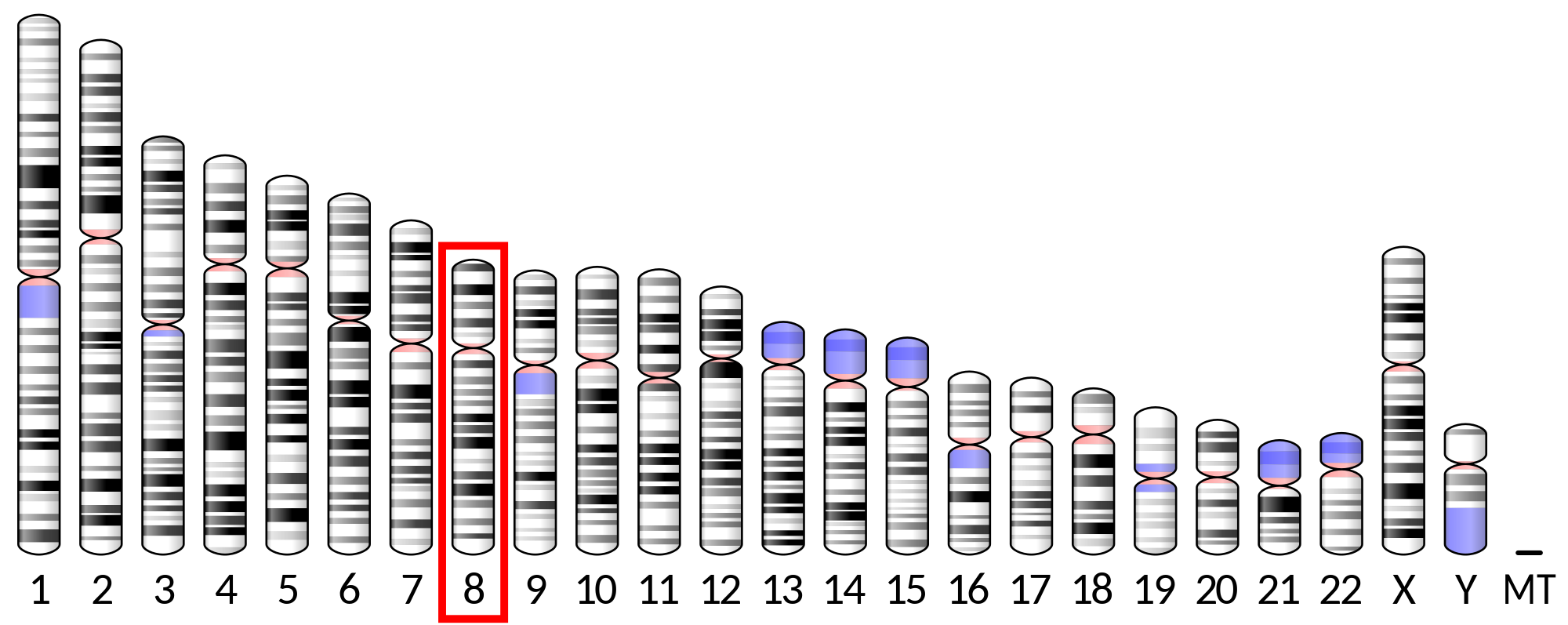
Location (UCSC)Chr 8: 143.55 – 143.56 MbChr 15: 75.73 – 75.74 Mb
PubMed search[3][4]
Wikidata
View/Edit HumanView/Edit Mouse

Gasdermin D (GSDMD, from combination of gastro and dermato, referencing the locations where its family of proteins were originally found to be primarily expressed[5]) is a protein that in humans is encoded by the GSDMD gene on chromosome 8.[6] It belongs to the gasdermin family which is conserved among vertebrates and comprises six members in humans, GSDMA, GSDMB, GSDMC, GSDMD, GSDME (DFNA5) and DFNB59 (Pejvakin). Members of the gasdermin family are expressed in a variety of cell types including epithelial cells and immune cells. GSDMA, GSDMB, GSDMC, GSDMD and GSDME have been suggested to act as tumour suppressors.[7]

Structure

[edit]
Structure of GSDMD C-terminal domain

The structure of full-length GSDMD consists of two domains, the 31 kDa N-terminal (GSDMD-N) and 22 kDa C-terminal (GSDMD-C) domains, separated by a linker region. GSDMD-C can be divided into four subdomains and is composed of 10 α-helices and two β-strands, forming a compact globular fold. The linker helix contacts the two helix-repeats which consist of four-helix bundles. The middle domain comprises an antiparallel β-strand and a short α-helix. The first flexible loop of GSDMD-C, which is located between GSDMD-N and the linker helix, stretches out and inserts into the GSDMD-N pocket, stabilizing the conformation of the full-length protein.[8] GSDMD-N forms large transmembrane pores composed of 31 to 34 subunits that allow the release of interleukin-1 (IL-1) family cytokines and drive pyroptosis.[9]

Function

[edit]

Several current studies have revealed that GSDMD serves as a specific substrate of inflammatory caspases (caspase-1, -4, -5 and -11) and as an effector molecule for the lytic and highly inflammatory form of programmed cell death known as pyroptosis.[10][11] Hence, GSDMD is an essential mediator of host defence against microbial infection and danger signals. The pore-forming activity of the N-terminal cleavage product causes cell swelling and lysis to prevent intracellular pathogens from replicating, and is required for the release of cytoplasmic content such as the inflammatory cytokine interleukin-1β (IL-1β) into the extracellular space to recruit and activate immune cells to the site of infection.[12] GSDMD has an additional potential role as an antimicrobial by binding to cardiolipin (CL) and form pores on bacterial membranes.

Autoinhibition

[edit]

Under normal conditions, the full-length GSDMD is inactive as the linker loop between the N-terminal and C-terminal domains stabilises the overall conformation of the full-length protein and allows GSDMD-C to fold back on and auto-inhibit GSDMD-N from inducing pyroptosis.[8] Upon interdomain cleavage by inflammatory caspases, the auto-inhibition is relieved and GSDMD-N cytotoxicity is triggered.

Activation

[edit]

GSDMD can be cleaved and activated by inflammatory caspases through both the canonical and non-canonical pyroptotic pathways.[13]

Canonical inflammasome pathway

[edit]

Caspase-1, conserved in vertebrates, is involved in the canonical pathway and is activated by canonical inflammasomes such as NLRP3 and NLRC4 inflammasomes, which are multi-protein complexes that are formed upon recognition of specific inflammatory ligands called pathogen-associated molecular patterns (PAMPs) and damage-associated molecular patterns (DAMPs) in the cytosol by NOD-like receptors (NLRs). Examples include bacterial type 3 secretion system (T3SS) rod protein and flagellin, which are potent activators of NLRC4 inflammasome, and bacterial toxin nigericin that activates NLRP3 inflammasome.[11]

Non-canonical inflammasome pathway

[edit]

Caspase-11 in mice and its human homolog caspase-4 and -5 are involved in the non-canonical pathway and are activated by directly binding cytosolic lipopolysaccharide (LPS) secreted by gram-negative bacteria.[10]

Upon activation of these caspases, GSDMD undergoes proteolytic cleavage at Asp-275, which is sufficient to drive pyroptosis.[11]

Mechanism

[edit]
Overview of GSDMD activation and pore-forming mechanism

After the proteolytic cleavage, GSDMD-C remains in the cytosol while the N-terminal cleavage product localises to the plasma membrane by anchoring to membrane lipids. GSDMD-N specifically interacts with phosphatidylinositol 4-phosphate [PI(4)P] and phosphatidylinositol 4,5-bisphosphate [PI(4,5)P] on the inner leaflet of mammalian cell membrane strongly, through charge-charge interactions between the negatively-charged head groups of PI and the positively-charged surface on GSDMD-N exposed after cleavage.[14] Hence, collateral damage to tissues during an infection is minimised as the extracellular outer leaflet lacks PI. Lipid binding allows GSDMD-N to insert into the lipid bilayer and induces high-order oligomerisation within the membrane, forming extensive pores with approximately 16 subunits and an inner diameter of 10–14 nm.[8] The osmotic potential is disrupted by pore formation, leading to cell swelling and lysis, the morphologic hallmarks of pyroptosis. The pores also serve as a protein secretion channel to facilitate the secretion of inflammatory cytokines for rapid innate immune response.[15] GSDMD-N can also undergo cytoplasmic distribution and selectively bind to CL on inner and outer leaflets of intracellular bacterial membranes, or be secreted from pyroptotic cells through the pores into the extracellular milieu to target and kill extracellular bacteria.[16]

Clinical significance

[edit]

Pyroptosis, which can be defined as gasdermin-mediated necrotic cell death, acts as an immune defence against infection. Hence, failure to express or cleave GSDMD can block pyroptosis and disrupt the secretion of IL-1β, and eventually unable to ablate the replicative niche of intracellular bacteria. Mutation of GSDMD is associated with various genetic diseases and human cancers, including brain, breast, lung, urinary bladder, cervical, skin, oral cavity, pharynx, colon, liver, cecum, stomach, pancreatic, prostate, oesophageal, head and neck, hematologic, thyroid and uterine cancers.[17] Recently, studies have revealed that downregulation of GSDMD promotes gastric cancer proliferation due to the failure to inactivate ERK 1/2, STAT3 and PI3K/AKT pathways, which are involved in cell survival and tumour progression.[18] However, sepsis and lethal septic shock can result from overactivation of pyroptosis.[19]

Gasdermin D also plays a pivotal role in inflammation related MDS development and progression, gasdermin D knockout significantly extends the survival in MDS mouse model.[20] The critical role of GSDMD in pore formation during pyroptosis provides a new avenue for future drug development for treating inflammatory caspase-associated auto-inflammatory conditions, sepsis and septic shock.[17]

Interactions

[edit]

See also

[edit]

References

[edit]

Further reading

[edit]
Revisions and contributorsEdit on WikipediaRead on Wikipedia
from Grokipedia
Gasdermin D (GSDMD) is a protein encoded by the GSDMD gene on 8q24.3, belonging to the gasdermin family of pore-forming proteins that play critical roles in innate immunity and inflammation. As the primary executor of —a lytic form of —GSDMD forms oligomeric pores in the plasma membrane, leading to cell , release of pro-inflammatory cytokines such as IL-1β and IL-18, and amplification of immune responses against pathogens. It is ubiquitously expressed across tissues, with highest levels in the and , and has been implicated as a potential tumor suppressor due to its regulation of epithelial proliferation and control of inflammatory signaling. Structurally, GSDMD comprises an N-terminal domain (GSDMD-N, approximately 31 kDa) responsible for pore formation and a C-terminal inhibitory domain (GSDMD-C, approximately 22 kDa), connected by a protease cleavage site (Asp275 in humans). Activation occurs primarily through cleavage by inflammatory caspases (caspase-1, -4, -5 in humans; caspase-1 and -11 in mice), which separates the domains and liberates GSDMD-N to oligomerize into 10–14 nm pores on the inner leaflet of the plasma membrane. This process disrupts cellular ion homeostasis, causes osmotic swelling, and triggers pyroptotic death, distinguishing it from other cell death pathways like apoptosis. Additional regulation involves post-translational modifications, including phosphorylation at Thr213 and palmitoylation at Cys191, which modulate its activity and localization. In biological contexts, GSDMD is essential for host defense against microbial infections by enabling rapid release and clearance of intracellular pathogens, such as in responses to bacterial toxins or viral invasions like SARS-CoV-2. It also contributes to non- functions, including regulation of assembly and epithelial barrier integrity, underscoring its broader impact on inflammatory . Dysregulation of GSDMD has been linked to various diseases, including , autoimmune disorders (e.g., systemic lupus erythematosus and ), cardiovascular conditions (e.g., ), neurodegenerative diseases (e.g., Alzheimer's and Parkinson's), metabolic disorders (e.g., non-alcoholic fatty liver disease), and cancers (e.g., non-small cell lung cancer and ), where excessive drives tissue damage or, conversely, its suppression promotes tumorigenesis. Therapeutically, GSDMD has emerged as a promising target for modulating excessive , with inhibitors such as disulfiram, , and necrosulfonamide demonstrating efficacy in preclinical models of , , and . Clinical trials, including those evaluating disulfiram for (e.g., NCT04485130), highlight its potential, though challenges remain in developing selective inhibitors to avoid off-target effects on host immunity.

Molecular Structure

Domain Organization

The GSDMD is located on human 8q24.3 and encodes a protein of 484 with an approximate molecular weight of 53 . GSDMD exhibits a bipartite domain architecture, consisting of an N-terminal domain (GSDMD-N, spanning residues 1–275 and weighing approximately 31 ) that functions as the pore-forming unit, and a C-terminal domain (GSDMD-C, residues 276–484, approximately 22 ) that exerts inhibitory control, with the two domains linked by a flexible region that includes the caspase-1 cleavage site between Asp275 and Leu276.01240-7) This domain organization is highly conserved across , reflecting evolutionary preservation of the gasdermin family's role in innate immunity, and GSDMD shares 20–30% sequence identity with other gasdermins such as GSDMA, GSDMB, GSDMC, and GSDME within their respective N- and C-terminal regions. Within the GSDMD-N domain, specific motifs including α-helical bundles facilitate protein oligomerization and binding to , essential for its .

Tertiary and Structure

The tertiary structure of full-length gasdermin D (GSDMD) reveals a monomeric protein in its autoinhibited state, comprising an N-terminal domain (GSDMD-N) and a C-terminal domain (GSDMD-C) connected by a flexible linker region. The GSDMD-C adopts a compact globular fold consisting of nine α-helices arranged in bundles and capped by an antiparallel three-stranded β-sheet (β12–β14–β13), which contributes to structural stability through intra-domain hydrophobic packing. In contrast, GSDMD-N forms a β-sheet-rich core with ten β-strands and three α-helices, including amphipathic elements in the β-hairpins and helices that facilitate interaction upon release. These domains interact intramolecularly via electrostatic and hydrophobic contacts, notably the β1–β2 loop of GSDMD-N inserting into a pocket on GSDMD-C formed by residues such as L292 and Y376 (in murine GSDMD), burying 1,700–2,200 Ų of solvent-accessible surface area to enforce autoinhibition. The atomic details of GSDMD-N in a membrane-embedded context were elucidated by cryo-electron (cryo-EM) at 3.9 Å resolution, as seen in the 33-fold symmetric pore structure (PDB: 6VFE). Each GSDMD-N subunit in this assembly features a globular "palm" domain connected to two extended amphipathic β-hairpins that perforate the , with the hairpins adopting a perpendicular orientation relative to the membrane plane for insertion. A prepore intermediate, resolved at 6.9 Å, shows subunits in a more compact conformation before a 38° rotation of the palm domain drives full pore maturation. In its form, full-length GSDMD remains a , as evidenced by structures of human and murine variants (PDB: 6N9O, 6N9N). Upon proteolytic cleavage, GSDMD-N oligomerizes into arc- or ring-shaped assemblies on membranes, forming pores with variable stoichiometries. comprising 16–27 subunits predominate in early stages, transitioning to complete rings of 27–33 subunits that yield pores with inner diameters of 17–21.6 nm and outer diameters up to 31 nm, enabling flux and protein release. Structural dynamics of GSDMD are governed by flexible elements, including the inter-domain linker and loops within GSDMD-C, such as the first loop (residues 276–287) that reinforces autoinhibitory contacts with GSDMD-N. These features allow conformational flexibility for , with recent cryo-EM on lipid-bound GSDMD-N (from 2023–2024 studies) capturing prepore arcs and deformations that precede ring closure, highlighting rotation and tilting motions essential for pore stability.

Biological Function

Execution of Pyroptosis

Pyroptosis represents an inflammatory form of lytic , distinct from the non-inflammatory and the unregulated , and is characterized by plasma membrane rupture and the release of pro-inflammatory cytokines such as IL-1β and IL-18. Unlike , which involves orderly cellular dismantling without , pyroptosis actively promotes immune responses through the explosive release of intracellular contents, amplifying danger signaling to recruit immune cells. This process is primarily executed by gasdermin D (GSDMD), where cleavage releases the N-terminal fragment (GSDMD-N) that drives the lytic events. Upon activation, GSDMD-N oligomerizes and inserts into the inner leaflet of the plasma membrane and subcellular membranes, forming pores approximately 10-20 nm in that disrupt homeostasis. This insertion leads to osmotic imbalance, permitting uncontrolled influx of water due to , which causes rapid cell swelling and eventual membrane rupture, typically occurring within 30-60 minutes in affected cells like macrophages. The resulting releases damage-associated molecular patterns (DAMPs) and cytokines, further propagating . In some scenarios, these pores contribute to fluxes that initiate the lytic cascade. Beyond full lysis, GSDMD pores can function in a sub-lytic manner, particularly in neutrophils, where they enable the passive diffusion of mature IL-1β and IL-18 without immediate cell rupture, allowing release from viable cells to modulate immune responses. This non-lytic role highlights GSDMD's versatility in fine-tuning without committing to in all contexts. GSDMD's role in is evolutionarily conserved, with orthologs in mice (Gsdmd) and humans mediating comparable lytic outcomes in immune cells such as macrophages upon activation. Studies in GSDMD-deficient models across species demonstrate that its absence abolishes pyroptotic while preserving other pathways, underscoring its specific executor function in this process.

Contribution to Inflammation

GSDMD significantly contributes to through its pore-forming activity, which enables the non-lytic release of proinflammatory cytokines from living cells and amplifies signaling. The N-terminal fragment of GSDMD (GSDMD-N) oligomerizes to form plasma membrane pores that serve as conduits for the secretion of mature interleukin-1β (IL-1β) and interleukin-18 (IL-18), cytokines processed by caspase-1 in response to or AIM2 activation. These pores allow IL-1β and IL-18 to propagate inflammatory cascades without immediate , sustaining immune responses during infection or tissue damage. Additionally, GSDMD-mediated leads to the release of (HMGB1) upon cell lysis, a (DAMP) that binds Toll-like receptors and further activates and AIM2 , creating a loop that intensifies innate immune signaling. In parallel, GSDMD exerts direct antimicrobial effects that bolster host defense and limit pathogen-driven inflammation. The GSDMD-N domain preferentially binds cardiolipin, a phospholipid enriched in bacterial inner membranes, leading to pore assembly that permeabilizes and disrupts bacterial integrity. This targeted action eliminates intracellular and extracellular bacteria, such as Staphylococcus aureus and Listeria monocytogenes, without inducing host cell lysis, thereby containing infection while minimizing excessive tissue inflammation. By neutralizing pathogens early, this mechanism reduces the antigenic load that could otherwise trigger prolonged cytokine storms. GSDMD-mediated pyroptosis also fosters crosstalk between innate and adaptive immunity by exposing intracellular antigens for professional antigen-presenting cells. The membrane rupture during releases cellular contents, including pathogen-derived or endogenous antigens, which are efficiently taken up by dendritic cells via receptors such as CLEC9A, promoting to + T cells. This process activates conventional type 1 dendritic cells, enhancing T cell priming and effector functions in contexts like antitumor immunity or viral clearance. Recent investigations as of 2025 have highlighted GSDMD's influence on sterile inflammation beyond infectious scenarios.

Regulation of Activity

Autoinhibition Mechanisms

The full-length gasdermin D (GSDMD) protein exists in an autoinhibited state, where its N-terminal domain (GSDMD-N) is bound by the C-terminal domain (GSDMD-C) through intramolecular interactions that prevent premature activation and pore formation. This autoinhibition is essential for maintaining cellular , as the unbound GSDMD-N would otherwise oligomerize on membranes and induce . The primary interface involves α5 of GSDMD-N engaging with β-strands in GSDMD-C, forming a stable complex that sequesters key functional regions of the N-domain. A critical element of this interaction is the insertion of residue F283 from a flexible loop in GSDMD-C into a hydrophobic pocket formed by α1, β3, and α5 helices of GSDMD-N, which reinforces the overall binding affinity. These interactions specifically mask the lipid-binding sites on GSDMD-N, particularly its positively charged surface that facilitates association with phospholipids like phosphates. By occluding this region, GSDMD-C prevents the N-domain from accessing and inserting into cellular membranes, thereby inhibiting spontaneous oligomerization and . Structural studies reveal two distinct binding sites contributing to this repression: Site I, involving α5 of GSDMD-N with α5, α8, and α12 of GSDMD-C alongside the β1-β2 loop of N; and Site II, where α9 and α11 of GSDMD-C contact α4 of GSDMD-N. The compact, globular fold of full-length GSDMD, with a (Rg) of approximately 29.4 Å as determined by (SAXS), further stabilizes this conformation and precludes aberrant assembly. Experimental evidence supporting these mechanisms includes high-resolution crystal structures of human and murine GSDMD-C (PDB IDs: 6AO4 and 6AO3, respectively), which exhibit low root-mean-square deviation (RMSD ~1.1 ) and highlight the domain's role in autoinhibition. SAXS analysis of full-length GSDMD confirms a 1:1 N-C in solution, with a maximum dimension (Dmax) of ~105 indicative of the restrained . Mutational disruptions at these interfaces validate the model's functionality; for instance, the F283A substitution in the interdomain loop destabilizes binding, resulting in elevated pyroptosis in transfected 293T cells without exogenous stimuli. Similarly, charge-reversal mutations at Site I, such as L292D or Y376D, abolish inhibition, leading to increased (LDH) release and propidium uptake as markers of permeabilization. Accessory factors, including endogenous chaperones like complexed with Cdc37, contribute to the stability of the autoinhibited full-length GSDMD in specific cellular environments, such as intestinal epithelial cells, by facilitating proper folding and preventing aggregation. These chaperones help maintain the repressed state until regulatory signals intervene, underscoring the multilayered control of GSDMD activity.

Activation Pathways

The canonical activation pathway of GSDMD is mediated through the complex, where pattern recognition receptors such as , NLRC4, and AIM2 sense pathogen-associated molecular patterns (PAMPs) or damage-associated molecular patterns (DAMPs), leading to the and oligomerization of the adaptor protein ASC into specks that activate caspase-1. Activated caspase-1 then proteolytically cleaves GSDMD at the specific Asp275 residue (in humans), liberating the N-terminal domain essential for its effector function. This pathway is commonly triggered by diverse stimuli, including the potassium nigericin for NLRP3 activation or double-stranded DNA for AIM2 recognition, highlighting its role in responding to bacterial infections and cellular stress. In contrast, the non-canonical activation pathway operates independently of inflammasome assembly and involves direct sensing of lipopolysaccharide (LPS), a component of Gram-negative bacterial outer membranes, by intracellular caspases. In mice, caspase-11 binds cytosolic LPS to undergo oligomerization and auto-activation, while in humans, the orthologous caspase-4 and caspase-5 perform this function, both leading to GSDMD cleavage without requiring ASC or caspase-1. This LPS-driven mechanism is highly specific to Gram-negative bacteria that evade endosomal detection and release LPS into the cytosol, enabling rapid pyroptotic responses in myeloid cells. Emerging research has uncovered alternative activation routes for GSDMD, particularly at the intersection of apoptosis and pyroptosis, where non-inflammatory caspases contribute to its processing in specific pathological contexts. For instance, caspase-8, traditionally associated with extrinsic apoptosis, can cleave GSDMD during infections like Yersinia, promoting pyroptosis in a manner that bridges apoptotic signaling with inflammatory cell death. Similarly, caspase-3 involvement in apoptosis-pyroptosis crossover has been reported to modulate GSDMD activity, although it more prominently activates related gasdermins like GSDME; these pathways are increasingly studied in tumor microenvironments where dysregulated cell death influences immune surveillance. Additionally, granzymes A and B released by natural killer cells have been implicated in cleaving GSDMD in antitumor contexts, enhancing pyroptotic killing of cancer cells, though the precise mechanisms remain under investigation as of 2025. Threshold regulation of GSDMD activation in the canonical pathway relies on upstream ionic and oxidative signals that fine-tune responsiveness to prevent aberrant . Potassium efflux, often induced by initial perturbations from pathogens or toxins, acts as a critical second signal for assembly and subsequent caspase-1 activation. Likewise, (ROS) generated by mitochondria or NADPH oxidases serve as amplifiers, promoting priming and oligomerization to reach the activation threshold for GSDMD cleavage. These signals ensure that GSDMD-mediated is elicited only upon sufficient danger detection, balancing host defense with tissue integrity.

Post-Translational Modifications

Phosphorylation represents a critical post-translational modification that dynamically regulates GSDMD activity by altering its interaction with cellular membranes and its propensity for oligomerization. The AMP-activated protein kinase (AMPK) phosphorylates the N-terminal fragment of GSDMD (GSDMD-NT) at Ser46, which disrupts its lipid-binding capability and inhibits pore formation, thereby suppressing pyroptosis in contexts like antitumor immunity. In opposition, protein phosphatase 1 (PP1) catalyzes the dephosphorylation of this site on GSDMD-NT, relieving the inhibitory effect and enhancing its membrane translocation and pyroptotic execution, as demonstrated in proteomic studies of inflammasome-activated macrophages. These opposing actions allow phosphorylation to serve as a checkpoint integrating metabolic signals with inflammatory responses. Ubiquitination further fine-tunes GSDMD levels and function through targeted degradation pathways. Members of the tripartite motif (TRIM) family, particularly TRIM21, interact with GSDMD-NT to promote its oligomerization and enhance independent of E3 ligase activity. The deubiquitinase USP18 facilitates selective autophagic clearance of ubiquitinated GSDMD, reinforcing this loop. Conversely, the E3 SYVN1 mediates K27-linked polyubiquitination of GSDMD at Lys203, Lys204, and Lys236 (in humans), stabilizing the protein and amplifying both canonical and non-canonical pathways in response to bacterial pathogens. Recent discoveries highlight additional redox-sensitive modifications that respond to . S-palmitoylation at Cys191 () or Cys192 () in GSDMD-NT, catalyzed by DHHC5 and DHHC9 acyltransferases and enhanced by (ROS), promotes membrane anchoring and oligomerization, thereby licensing pore assembly and . Oxidation of residues, including Cys191, by mitochondrial ROS further facilitates GSDMD-NT release from full-length precursors and boosts its pore-forming efficiency, linking environmental stressors like pathogen invasion to heightened inflammatory . Under high ROS conditions, however, potential dimerization via bonds at these cysteines may transiently stabilize an inactive conformation, though this requires further validation. As of 2025, studies continue to uncover novel PTMs that inhibit GSDMD hyperactivity, integrating its regulation with broader cellular and repair networks, offering potential therapeutic avenues for inflammatory disorders.

Mechanism of Action

Proteolytic Cleavage

The proteolytic cleavage of gasdermin D (GSDMD) is a critical step mediated primarily by inflammatory , which recognize a specific motif preceding Asp275 in the human protein linker region, facilitating and release of the N-terminal fragment (GSDMD-N). Caspases-1, -4, -5, and -11 exhibit specificity for this site, where the consensus-like sequence enables precise scission between the autoinhibitory C-terminal domain (GSDMD-C) and the pore-forming GSDMD-N domain. This cleavage occurs via the canonical mechanism. Alternative proteases can also process GSDMD at non-canonical sites, expanding its activation in specialized immune contexts such as neutrophils and cytotoxic T cells. Recent studies highlight neutrophil elastase cleaving GSDMD at sites like Cys268 in humans or Val251 in mice, generating a functional GSDMD-N variant that supports processes like NETosis without relying on caspase activity. These pathways allow context-dependent GSDMD engagement beyond canonical inflammasomes. Following cleavage, GSDMD-N rapidly translocates to target membranes, detectable within minutes of release as observed in live-cell imaging and studies of activated macrophages, driven by lipid-binding affinity and post-translational modifications like palmitoylation. This swift partitioning underscores the temporal precision of initiation. The efficiency of GSDMD cleavage is enhanced by within the cell, particularly the proximity of substrate to activated at specks. Localization of GSDMD near these multiprotein complexes increases local concentration, accelerating the rate by orders of magnitude compared to soluble conditions, thereby ensuring robust pyroptotic responses during or damage.

Pore Formation and Assembly

Upon proteolytic cleavage, the N-terminal fragment of gasdermin D (GSDMD-N) is released and rapidly recruits to the inner leaflet of the plasma membrane through electrostatic interactions with negatively charged phospholipids, particularly phosphatidylinositol 4,5-bisphosphate (PI(4,5)P2) and cardiolipin. This binding is mediated by conserved basic residues, such as Arg9, within an amphipathic α1 helix that inserts into the lipid bilayer, facilitating initial membrane anchoring and exposure of hydrophobic regions for further embedding. The preference for PI(4,5)P2, abundant on the plasma membrane, enhances recruitment efficiency compared to other lipids, while cardiolipin supports targeting to mitochondrial and bacterial membranes. Following membrane insertion, GSDMD-N undergoes sequential oligomerization, beginning with the formation of arc-shaped proto-pores that evolve into slit-like intermediates and culminate in stable ring-shaped structures. These oligomers assemble into β-barrel pores comprising 30-34 subunits, creating transmembrane channels with an inner diameter of approximately 20-22 nm. The process involves monomer-by-monomer addition, where each subunit's β-sheet domains interlock laterally, driven by hydrophobic and electrostatic interactions stabilized by the lipid environment. Recent cryo-electron microscopy (cryo-EM) structures from 2025 have elucidated asymmetric insertion dynamics during early oligomerization, revealing how initial subunits tilt unevenly into the bilayer before symmetrizing in mature pores. These studies also highlight 's role in modulating pore stability, as higher levels reduce GSDMD-N binding affinity and promote disassembly of nascent oligomers, potentially fine-tuning pore lifetime. In sub-lytic conditions, GSDMD pores exhibit reversibility, with dynamic opening and closing facilitated by modifications or pharmacological inhibitors. For instance, oxidation at Cys192 or covalent adduction by disulfiram disrupts stability, leading to pore disassembly without full cell . This sensitivity allows transient membrane permeabilization, enabling selective release of small molecules while preserving cellular integrity.

Clinical Relevance

Associated Diseases

Dysregulated GSDMD activity has been implicated in the pathogenesis of , particularly in Gram-negative bacterial infections where hyperactivation of GSDMD contributes to excessive and . In (LPS)-induced endotoxemia models, which mimic Gram-negative , GSDMD cleavage by non-canonical (e.g., caspase-11) drives rapid death and release of pro-inflammatory cytokines such as IL-1β and IL-18, exacerbating . Mouse studies demonstrate that GSDMD (GSDMD-/-) confers significant protection, with nearly 100% survival rates in lethal LPS challenge models compared to wild-type controls, highlighting GSDMD's role in amplifying the inflammatory response during infection. Recent work further shows that endothelial GSDMD activation in response to LPS promotes vascular injury and multi-organ dysfunction in , underscoring its contribution to endothelial barrier disruption and lethality. In autoimmune diseases, GSDMD elevation is associated with exacerbated inflammation through NLRP3 inflammasome pathways in conditions like systemic lupus erythematosus (SLE) and rheumatoid arthritis (RA). In SLE, particularly lupus nephritis, NLRP3 activation leads to increased cleaved GSDMD in renal tissues, promoting pyroptosis of glomerular cells and amplifying IL-1β-driven autoimmunity. Similarly, in RA synovial tissues, upregulated NLRP3/GSDMD signaling correlates with higher levels of N-terminal GSDMD fragments and enhanced pyroptosis in fibroblasts and macrophages, contributing to joint destruction and chronic inflammation. For inflammatory bowel disease (IBD), while direct GWAS links to GSDMD variants are emerging, studies indicate that GSDMD-mediated pyroptosis in intestinal epithelial cells disrupts barrier integrity and sustains colitis. GSDMD exhibits a dual role in cancer, acting as tumor-suppressive in some contexts while promoting metastasis in others. In gastric cancer, GSDMD activation induces pyroptosis in tumor cells, suppressing proliferation and invasion; downregulation of GSDMD expression is observed in advanced gastric tumors, and its restoration enhances anti-tumor immunity via IL-1β/IL-18 release that recruits cytotoxic T cells. Conversely, in other malignancies like lung cancer, myeloid cell-specific GSDMD drives IL-1β secretion that fosters a pro-tumorigenic microenvironment, enhancing metastasis without directly killing cancer cells. In myelodysplastic syndromes (MDS), upregulation and activation of GSDMD amplify inflammasome signaling in hematopoietic stem cells, leading to excessive pyroptosis, clonal expansion, and progression to acute myeloid leukemia. Emerging 2025 research links GSDMD to neurodegeneration, particularly in (AD), where GSDMD pores facilitate neuronal driven by amyloid-β and activation. In AD mouse models and human postmortem brains, cleaved GSDMD accumulates in and neurons, contributing to synaptic loss, tau hyperphosphorylation, and cognitive decline through inflammasome-mediated IL-1β release. Studies confirm that inhibiting GSDMD reduces pyroptotic neuronal death and , positioning it as a key effector in AD progression.

Therapeutic Targeting

Gasdermin D (GSDMD) has emerged as a promising therapeutic target for modulating in inflammatory and infectious diseases, with strategies focusing on inhibiting its , pore formation, or expression. Small-molecule inhibitors represent a key class of interventions, exemplified by disulfiram, an FDA-approved drug repurposed for its ability to covalently modify Cys191 in GSDMD (or the equivalent Cys192 in mice), thereby preventing N-terminal oligomerization and subsequent pore assembly on cell membranes. This modification disrupts the release of pro-inflammatory cytokines like IL-1β while preserving GSDMD cleavage by , offering a selective of pyroptotic . Recent analogs, such as Ac-FLTD-CMK, target the caspase-mediated cleavage site of GSDMD by potently inhibiting inflammatory (e.g., caspase-1 with an IC50 of 46.7 nM), thereby suppressing GSDMD processing into its active N-terminal fragment and in cellular models of . Pore blockers constitute another approach, utilizing peptides that mimic the GSDMD N-terminal domain to competitively bind sites and occlude pore formation. For instance, liposome-embedded peptides or AI-screened variants like SK56 have demonstrated efficacy in preclinical models by delaying , reducing release (e.g., IL-1β and IL-18), and improving survival outcomes in lipopolysaccharide-challenged mice without affecting upstream activity. These blockers exhibit high selectivity for GSDMD pores, potentially minimizing off-target effects on non-pyroptotic pathways. Gene-based therapies offer long-term suppression of GSDMD activity, with CRISPR-Cas9-mediated knockdown reducing in various inflammatory disease models by editing GSDMD loci to impair its expression and downstream inflammatory responses. Antisense () provide an alternative for isoform-specific silencing, targeting GSDMD mRNA to decrease protein levels and attenuate in inflammatory contexts, with advantages in delivery via lipid nanoparticles for tissue-specific effects. However, challenges persist, including achieving selectivity over related gasdermins (e.g., GSDME or GSDMB) to avoid unintended inhibition of or other modalities. As of 2025, specific GSDMD inhibitors for remain in due to concerns over dosing and long-term immune modulation.

Protein Interactions

Interactions with Caspases

Gasdermin D (GSDMD) serves as a key substrate for inflammatory , particularly in the canonical inflammasome pathway, where cleavage activates . recognizes and binds GSDMD through its catalytic , which engages the linker region cleavage motif centered on the aspartate residue at position 275 in human GSDMD (sequence FLTD), a site specific to inflammatory and distinct from apoptotic motifs like DEVD. This specificity is enhanced by an exosite on that interacts with the C-terminal domain of full-length GSDMD via hydrophobic contacts, burying approximately 2,300 Ų of surface area to stabilize the complex and promote efficient substrate recruitment. Co-localization within further boosts cleavage efficiency, as activated caspase-1 assembles on ASC specks—filamentous structures formed by adaptor protein ASC oligomerization—that concentrate the near GSDMD substrates. These specks act as signal amplification platforms, enabling proximity-induced caspase-1 dimerization and allosteric enhancement of its proteolytic activity, which ensures robust processing of GSDMD even at low concentrations. Regarding , structural analyses reveal that caspase-1 functions as a dimer, with each engaging one GSDMD molecule in a complex, allowing a single activated caspase-1 unit to sequentially process multiple GSDMD molecules over time due to the transient nature of the interaction post-cleavage. In the non-canonical pathway, murine caspase-11 (or human caspase-4/5) directly senses cytosolic (LPS) from , leading to its autoprocessing and subsequent cleavage of GSDMD at the same linker site. LPS binding induces a conformational change in caspase-11, promoting oligomerization into specks and catalytic activation independent of ASC, which then enables GSDMD processing. Recent structural studies from 2024 highlight how LPS engagement with the CARD domain of caspase-11 triggers enzymatic domain rearrangements essential for autoprocessing at Asp285 and subsequent GSDMD targeting, underscoring the pathway's autonomy from canonical . A loop emerges from cleaved GSDMD, as its N-terminal fragment oligomerizes into membrane pores that drive (K⁺) efflux, which in turn activates the inflammasome to recruit and amplify caspase-1 activity. This mechanism particularly sustains in non- activation, where initial caspase-11-mediated GSDMD pores indirectly boost caspase-1 processing of pro-IL-1β and additional GSDMD, creating a self-reinforcing cycle of and release.

Interactions with Lipids and Membranes

The N-terminal fragment of gasdermin D (GSDMD-N) exhibits specific affinity for phosphoinositides, enabling targeted localization to distinct cellular membranes. In particular, GSDMD-N binds phosphatidylinositol 4-phosphate (PI(4)P), which is enriched in the Golgi apparatus and endosomes, as well as phosphatidylinositol 4,5-bisphosphate (PI(4,5)P2), predominant in the plasma membrane inner leaflet. This binding is mediated by basic residues in the α1 helix of the N-terminal domain, such as K7, K10, and K14, which interact electrostatically with the negatively charged phosphate groups of these lipids. Such interactions facilitate initial membrane recruitment and subsequent pore assembly, ensuring precise execution of pyroptotic functions. GSDMD-N also displays high specificity for , a diphosphatidylglycerol uniquely abundant in the inner membranes of and mitochondria. This affinity allows GSDMD-N to preferentially target and permeabilize bacterial inner membranes during responses, contributing to clearance. In host cells, cardiolipin binding drives GSDMD insertion into mitochondrial cristae, disrupting their architecture and amplifying inflammatory signaling. Recent investigations have highlighted 's regulatory role in GSDMD-membrane interactions. Data from 2025 indicate that cholesterol-rich domains in bilayers can modulate pore stability, while depletion of enhances GSDMD insertion and overall membrane disruption efficiency. This modulation underscores how composition fine-tunes GSDMD activity, preventing indiscriminate permeabilization in cholesterol-abundant eukaryotic plasma membranes. Preferential insertion of GSDMD-N into the , facilitated by affinity, promotes the release of mitochondrial (mtROS). This process exacerbates and amplifies pyroptotic inflammation, linking membrane targeting to broader cellular damage.

References

Add your contribution
Related Hubs
User Avatar
No comments yet.