Hubbry Logo
Gun barrel sequenceGun barrel sequenceMain
Open search
Gun barrel sequence
Community hub
Gun barrel sequence
logo
8 pages, 0 posts
0 subscribers
Be the first to start a discussion here.
Gun barrel sequence
Gun barrel sequence
from Wikipedia
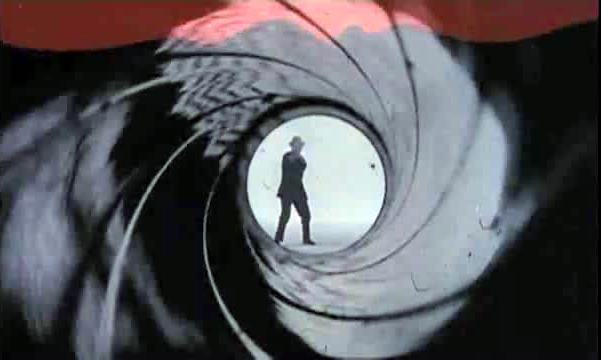
The gun barrel sequence as it appears in Dr. No (1962)

The gun barrel sequence is a signature device featured in nearly every James Bond film.[1] Shot from the point of view of a presumed assassin, it features James Bond walking in from the right side of the screen until he reaches the center, turning, and then shooting directly at the camera, causing blood to run down the screen. The visuals are usually accompanied by the "James Bond Theme", written by Monty Norman.

Originally designed by Maurice Binder, the sequence has been featured in every James Bond film produced by Eon Productions. While it has retained the same basic elements, it has noticeably evolved throughout the series.[2] It is one of the most immediately recognizable elements of the franchise and is featured heavily in marketing material for the films and their spin-offs.

The British media historian James Chapman suggests that the sequence is a significant part of the James Bond mythos because it "foregrounds the motif of looking, which is central to the spy genre".[3]

Description

[edit]

In virtually every Eon-produced Bond film, the sequence begins with a white dot blinking across the screen, from left to right. Upon reaching the right edge of the frame, the dot opens up to reveal a rifled gun barrel's interior. From the point of view of an off-screen assassin, the camera follows James Bond as he walks from right to left against a neutral background.[a][4] Suddenly he becomes aware of being observed and stops at the centre of the screen before he quickly turns to the camera and shoots his gun towards it. A red blood wash, representing the gunman bleeding, runs down the screen.[b]

With a few exceptions, the gun barrel either moves from side-to-side across the screen (towards the end of the blood washing) then dissolves to a white dot, which typically settles in the corner,[c] or simply fades to black.[d] If the gun barrel dissolves to the white dot, it either segues to the title sequence,[e] shrinks and disappears,[f] or fades from white to a circular cutout of the first scene, expanding to reveal the full view of the scene shortly thereafter.[g]

Origins

[edit]
A .38 calibre gun barrel with its six-sided rifling, similar to the gun barrel shown in the movies
The 1903 film The Great Train Robbery, acted out by Justus D. Barnes, may have influenced the James Bond gun barrel sequence.[3]

Maurice Binder created the opening titles of the first Bond film, Dr. No, in 1962. Binder originally planned to employ a camera sighted down the barrel of a .38 calibre gun, but this caused some problems. Unable to stop down the lens of a standard camera enough to bring the entire gun barrel into focus, Binder created a pinhole camera to solve the problem, and the barrel became crystal clear.[1]

Binder described the genesis of the gun barrel sequence in the last interview he recorded before his death in 1991:

That was something I did in a hurry, because I had to get to a meeting with the producers in twenty minutes. I just happened to have little white, price tag stickers and I thought I'd use them as gun shots across the screen. We'd have James Bond walk through and fire, at which point blood comes down onscreen. That was about a twenty-minute storyboard I did, and they said, "This looks great!"[4]

The media historian James Chapman observed that the sequence recalls the gun fired at the audience at the end of The Great Train Robbery (1903).[3]

Evolution of the sequence

[edit]

Bob Simmons

[edit]

1962–1964

[edit]
The gun barrel sequence as it appears in the trailer for Dr. No (1962)

Because Binder had designed the gun barrel sequence to feature Bond only in silhouette, with a non-widescreen aspect ratio, he used stunt man Bob Simmons, rather than Sean Connery, to film the scene.[4]

Simmons hops slightly as he pivots to assume the firing position and, following the blood wash, the dot becomes smaller and jumps to the lower right-hand corner of the frame before simply vanishing.

In Dr. No, the white dot stops mid-screen and the credit line "Harry Saltzman & Albert R. Broccoli present" appears across the dot. The text is wiped and the dot continues the sequence. The sequence is accompanied by a soundtrack of electronic noises and then numerous notes that sound like they are being plinked from a wind-up jack in the box; the latter is cut short by the gunshot. The "James Bond Theme" then plays very loudly, albeit with the first portion, featuring the theme's plucked electric guitar riff, truncated. The gun barrel sequence in Dr. No segues directly into the credits, a grid matrix of large-scale, bright and rapidly changing coloured circular dots against a black background. This version, without the electronic noises or the Saltzman–Broccoli credit line, was also used in From Russia with Love with more red-coloured blood and Goldfinger which fades into the pre-credit sequence.

Sean Connery

[edit]

1965–1967

[edit]

For Thunderball, the aspect ratio of the films was changed to a Panavision anamorphic format and so the gun barrel sequence had to be reshot, this time with Sean Connery in the role.[5] It is also the first gun barrel sequence in which the white dot segues to the film's pre-credit sequence, opening up to reveal the entirety of the scene. This is also the gun barrel which moves the least amount of seconds, for the point of Bond's final stance and the opening shot (the fake coffin of SPECTRE's Colonel Jacques Bouvar) almost completely overlap each other.

Connery wobbles slightly while firing his gun as he adjusts his balance from an unstable position and he bends over to fire. Although the sequence was shot in colour for Thunderball, it is rendered in black and white for You Only Live Twice.

1969 (George Lazenby)

[edit]

With a new actor, George Lazenby, in the role of James Bond for On Her Majesty's Secret Service (1969), a third sequence had to be filmed. As with Thunderball, the sequence was once again shot in colour.

In this rendering, the white dot stops mid-screen and the credit line "Harry Saltzman and Albert R. Broccoli Present" appears, much as it did in Dr. No (albeit spelling out "and" instead of using the ampersand). The "James Bond Theme" keeps playing though. As the barrel begins to move and when it stops centre-screen, Bond is walking to position for around a second before turning and shooting as the camera tracks with him, resulting in a "treadmill" effect. Lazenby is the only Bond who kneels down to fire; this is also the only version where the descending blood completely erases Bond's image, leaving only the red circle. In this version, the gun barrel is awash with prismatic splashes of light.

1971 (Sean Connery)

[edit]

When Sean Connery returned to the role of Bond for Diamonds Are Forever (1971), the gun barrel sequence filmed for Thunderball was used. As with You Only Live Twice, the sequence was rendered in black and white, but was given a bluish tint. As in On Her Majesty's Secret Service, the barrel is awash with prismatic splashes of light, which this time ripple through it. Unlike On Her Majesty's Secret Service, the splashes of light are erased by the descending blood. This was the last time the sequence was rendered in black and white until Casino Royale (2006). It is also the last gun barrel sequence in which Bond wears a hat.

Roger Moore

[edit]

1973–1974

[edit]

With the introduction of Roger Moore, and the use of a 1.85:1 matted aspect ratio, a fourth sequence was shot. It was used for just two films: Live and Let Die and The Man with the Golden Gun. Moore wears a business suit and, unlike Simmons, Connery, and Lazenby, uses both hands instead of one hand to fire his gun, his left hand bracing his gun arm. The gun barrel only moves side-to-side to the left of Bond, without alternating to the right. This is the first gun barrel sequence in which Bond is not wearing a hat. Additional footage of this sequence was shot of Bond shooting with both hands, then walking straight towards the camera with his gun drawn, putting his face into view, as seen in theatrical trailers from Live and Let Die through The Spy Who Loved Me. The dots that start the gun barrel in The Man with the Golden Gun are blue but in subsequent releases the dots are white. It is the last gun barrel sequence until Quantum of Solace where Bond wears a business suit.

1977–1985

[edit]

The anamorphic format was reinstated for The Spy Who Loved Me, necessitating a fifth version of the sequence. Moore's Bond wears a dinner suit (tuxedo) rather than a business suit and again uses both hands to fire his gun.[6] This rendering would feature in all Moore's subsequent films in the series, for a total of five appearances, the most uses of the same footage to date. In this version of the sequence, unlike previous and later incarnations, the prop gun held by the actor is never actually fired until Octopussy, as can be determined by the lack of gunsmoke in the freeze-frame. It is also noticeable that the background of this version of the sequence is tinted, rather than the usual white. The tint changes with every Moore film. The Spy Who Loved Me, for example, features an eggshell tinted background whereas the background in Moonraker has a strong shade of buff. In For Your Eyes Only, once the white dot moves in the middle of the screen, it does not open up to reveal the pre-credits scene, but cuts abruptly. The gun barrel sequence for Moore's final film, A View to a Kill, featured an error in the 2006 Ultimate Edition and subsequent DVD releases of the film. The error was a scanning issue which caused the gun barrel to be cropped off largely along with the opening dots going off of the screen, just like the Brosnan gun barrels. The issue was rectified in one of the latest iTunes releases.

Timothy Dalton

[edit]

1987–1989

[edit]

A new gun barrel sequence was shot due to the change in actor from Roger Moore to Timothy Dalton and was used for both of Dalton's films. Dalton walks swiftly with a slight bounce before sharply spinning and firing. Dalton crouches down slightly when he fires. Unlike Moore, Dalton shoots one-handed. John Barry orchestrates the music for the gun barrel in The Living Daylights (1987) but Michael Kamen composes a different orchestration for Licence to Kill (1989). This was the last gun barrel sequence to be designed by Maurice Binder before his death in 1991. The Licence to Kill gun barrel alters the gun barrel of the previous film slightly, showing Dalton's walk and pose as more zoomed in.

An alternate gun barrel sequence appears in The Living Daylights trailer, showing Dalton hopping as he fires, similar to Bob Simmons.

Pierce Brosnan

[edit]

1995–2002

[edit]

Following Maurice Binder's death in 1991, Daniel Kleinman became the designer of the Bond opening graphics. Beginning with GoldenEye (1995), the barrel was computer-generated (but still resembles the original images of the barrel itself) emphasising light and shade variations in the rifling spiral as the reflected light shifts with the gun's movement. Like Dalton, Pierce Brosnan shoots one-handed. Unlike the previous Bonds, he remains bolt upright as he fires, with his gun arm extended straight at the camera. The blood in this sequence is noticeably darker and falls faster than in previous incarnations; in keeping with this new pace, the main melody line of the "James Bond Theme" is omitted in two of Brosnan's gun barrel sequences, Tomorrow Never Dies and The World Is Not Enough.[citation needed] In prior versions of the sequence, the white dot would open up to reveal the gun barrel before it reaches the right edge of the screen; in all four of Brosnan's films, however, the dot continues moving right until it disappears off screen. Then the gun barrel scrolls in leftward from off screen. The World Is Not Enough is the first Bond movie where the white dot opens up to reveal Bond, this gun barrel also shows Bond's final pose as uncentered, possibly due to a scanning error.

The teaser trailer for GoldenEye featured its own gun barrel sequence in which Bond, appearing in shadow, quickly shoots away six times the onscreen text "ON ONE MAN", before shooting his seventh shot on the letter "M" into a "7" to only leave "007". Bond walks into the foreground, revealing Brosnan's face and proclaiming "You were expecting someone else?", introducing him as the first actor to play Bond since 1989.

The theatrical trailer for Tomorrow Never Dies featured its own gun barrel sequence in which Bond, in a dinner suit, fires with both hands à la Roger Moore at the six-grooved gun barrel.

In Die Another Day (2002), Lee Tamahori, the film's director requested a CG bullet be added into the sequence,[7][8][9] which is seen zooming from Bond's gun at the screen and disappearing, suggesting that Bond has fired straight into his opponent's weapon. This was the last gun barrel sequence until No Time to Die where Bond wears a dinner suit and the last one until Spectre where the sequence opens the film.

Daniel Craig

[edit]
Daniel Craig in Casino Royale

2006

[edit]

The gun barrel sequence was revised again for Daniel Craig's first portrayal of Agent 007 in Casino Royale. Unlike previous instalments, the gun barrel sequence does not open the film as a standalone segment; it is part of the plot. Having seemingly committed the first kill on his way to becoming a Double-O agent, Bond stops to pick up his gun from the floor but his victim, Fisher, who is a henchman of rogue MI6 section chief Dryden, recovers and seizes his own weapon. As Fisher brings his pistol up to shoot Bond in the back, the frame shifts instantly to the gun barrel perspective; Bond spins around to outshoot his opponent.

This sequence differs considerably from previous versions: it is incorporated into the film's narrative; it begins with Bond standing stationary (although he was walking toward the door before stopping and turning); it is not filmed against a blank white void and it includes the person whom Bond shoots. In keeping with the black-and-white theme of the pre-title sequence of the film, it is also the first to be presented in monochrome since Diamonds Are Forever (1971) and the first in which Bond is wearing neither a business suit nor a dinner suit, but is dressed casually. Like Dalton and Brosnan, Craig shoots one-handed.

Furthermore, the computer-generated rifling is microgroove rather than the traditional eight rifling grooves, and the blood comes down the screen quickly, not in a wave, but in rivulets. As the blood falls, the frames zooms back out, leading to the opening titles. This is also the first gun barrel sequence without some variation of the "James Bond Theme" as, instead, it is accompanied by the opening bars of the film's theme song, "You Know My Name".

2008

[edit]

The gun barrel was refilmed and edited for 2008's Quantum of Solace. It reverts to a more traditional style, although the sequence was placed at the end of the film to start the closing credits, due to a final cliffhanger scene being cut by Marc Forster. The sequence represents Bond as a blunt and cold-blooded assassin due to the pace of the scene. For example, the white dot travels across the screen much faster than in previous gun barrel sequences, Daniel Craig moves swiftly into position, noticeably faster than its predecessors, and the blood comes down in a large quick wash. Like Dalton and Brosnan, Craig shoots one-handed. The design of the gun barrel is also more simplistic, with a grey colour to it as well as fewer and more widely spaced grooves. The white circle also spins into the centre of the Q in the title graphic for Quantum of Solace, and in the Q, Bond is shown walking away after firing for the first time in the sequence. The closing credits of the film follow.

2012

[edit]

Yet another redesigned gun barrel is used for the film Skyfall (2012). Although director Sam Mendes had originally intended to place the gun barrel at the start of the film, he felt that it would be better placed at the end, as in Quantum of Solace. The film's opening shot instead harks back to the gun barrel, with Bond emerging into a corridor, pointing his gun directly at the camera, accompanied by the first two notes of the "James Bond Theme". Mendes recalled, "I tried very hard to put the gun barrel at the beginning and my intention was always to do that. If you see the film, the film starts with Bond walking down a corridor towards camera and lifting a gun. And of course the gun barrel is him walking, stopping and lifting a gun. When I put the two together, it looked ridiculous!"[10]

Like with Quantum of Solace, the blood is dark red and runs down the frame in rivulets. However, Bond moves across the screen substantially slower (at a similar speed to the pre-Casino Royale sequences). Unlike all previous gun barrel openings, Craig swings both his arms as he walks, resulting in a partial glimpse of his gun before he turns to fire. After the blood runs down the frame, the screen fades to black, before being replaced by a title card with a small gun barrel logo celebrating fifty years of Bond films and the text "James Bond Will Return" underneath.[11] Craig shoots one-handed from the chest.

2015

[edit]

The gun barrel is placed at the immediate opening of Spectre, the first time since Die Another Day that a Bond film has opened with the gun barrel. The gun barrel design is reminiscent of the 2D-style gun barrels designed by Maurice Binder pre-1995, although slightly blurrier, it also resembles the Pierce Brosnan era gun barrels. Daniel Craig moves at an average speed (again swinging both of his arms as he walks, but this time resulting in his gun being made much more prominently visible), before spinning, facing the camera and firing, to which the lighting grows darker: it silhouettes Bond's figure and the blood runs down the screen, looking similar but noticeably slower than in Quantum of Solace and Skyfall. Craig shoots one-handed again from the chest.

2021

[edit]
Daniel Craig in No Time to Die

The gun barrel appears at the opening of No Time to Die, the final Bond film to feature Daniel Craig. In the International release, the gun barrel begins from the center screen after its transition from the Universal Pictures logo where it moves offscreen to the left before reverting to its traditional dot blinking sequence from left to right. This is omitted from the US release as it starts with the traditional dot blinking sequence. The gun barrel uses the glimmer effect for the first time since 1971, with the design being simpler, similar to that of Quantum of Solace. Craig this time swings his left arm instead of both, with a partial glimpse of his gun, while also walking near the same pace as in Quantum of Solace. After spinning around to the camera, he shoots the gun from his right breastbone, arching slightly to his right. The sequence omits the running blood for the very first time fading to white (possibly foreshadowing Bond's death),[12] and instead zooms into the first scene through the middle. This is also the first gun barrel sequence since Die Another Day where Bond is wearing a dinner suit.

A scene during the climax of the film pays homage to the sequence when Bond enters a cylindrical corridor from the side and quickly spins 90° anti-clockwise in response to a henchman shooting at him, firing towards the camera.

Costume

[edit]

From Dr. No to Diamonds Are Forever, the gun barrel sequences by Bob Simmons, Sean Connery, and George Lazenby feature James Bond in a business suit and trilby. For his first two films, Roger Moore's Bond continues this tradition but without the hat. The following films, from The Spy Who Loved Me (1977) through Die Another Day (2002), feature Bond in black tie, wearing a dinner suit (tuxedo). In Casino Royale, Daniel Craig's James Bond is the first shown wearing a more casual ensemble and an open-necked shirt; his attire reverts to a business suit in Quantum of Solace, which is retained for Skyfall and Spectre. The 007 Legends video game tie-in reverts to the dinner suit. No Time To Die has Bond in a dinner suit.

Music

[edit]

The gun barrel sequence is traditionally accompanied by an arrangement of the "James Bond Theme", a trademark established in Dr. No.

A slightly different version of the theme has been used in each film, often reflecting the styles and locations featured. Some composers have not used the familiar opening bars that punctuate the appearance of the white dots. Others, while retaining them, have felt free to noticeably alter the usual rendition, e.g. Michael Kamen and Éric Serra, who scored Licence to Kill and GoldenEye respectively. Kamen's orchestration was a symphonic fanfare, while Serra's arrangement is played by synthesiser.

Casino Royale has the only gun barrel sequence which omits the "James Bond Theme" completely, instead featuring the opening bars of "You Know My Name" by Chris Cornell. The "James Bond Theme" returns to accompany the gun barrel sequence in Quantum of Solace, where it continues into the credits. The same goes with Skyfall's gun barrel, though the theme starts before the sequence in the last scene of the film when the new M gives 007 the dossier for his next mission.

Other uses

[edit]

The gun barrel sequence is widely used in advertisements and merchandise. References to its circular motif regularly appear in the films' trailers. A version of the sequence is used at the start of the 2012 documentary Everything or Nothing: The Untold Story of 007 which showed each Bond composited together, turning and shooting.[13]

The music videos to the James Bond title themes "A View to a Kill", "The Living Daylights", "Licence to Kill", "GoldenEye", "Tomorrow Never Dies", "Die Another Day" and "Another Way to Die" each feature their own variation of the gun barrel sequence.

The 007 sequence in Never Say Never Again

Because the gun barrel sequence is copyrighted by Eon, the non-Eon Bond film Never Say Never Again, released by rival Warner Bros., instead employed a frame filled with 007's, with the camera zooming into the one in the middle of the screen. There is, however, a scene in which James Bond and Maximilian Largo play a video game together. The nuclear missile defense shield used in the game resembles a gun barrel.

Video games

[edit]

The sequence is commonly used in James Bond video games and their marketing. GoldenEye 007 for the Nintendo 64 uses the gun barrel sequence in the opening titles. A commercial for The World Is Not Enough parodied the gun barrel by replacing Bond with a man who resembled Valentin Zukovsky; he was shot at with a machine-gun before diving off-screen. It was used in a commercial for the video game Agent Under Fire asking, "Do you have what it takes to be Bond?", and showing people trying to repeat the shot, but spoiling the try. Nightfire and Everything or Nothing each use a version similar to the Pierce Brosnan films. From Russia with Love uses the Bob Simmons gun barrel from the film of the same name. In the video game adaptation of Quantum of Solace, the gun barrel resembles the one used for Casino Royale, as the game adapts elements from both films. The 2010 video game Blood Stone does not feature the gun barrel sequence in-game, but an unused animation of it (strongly resembling the Quantum of Solace film version) is viewable in the PC port's game files. Instead, the game has gun barrel motifs in its "focus aim" system and briefly in early trailers. Both versions of the GoldenEye remakes, GoldenEye 007 (2010) for the Wii and its PS3/Xbox counterpart GoldenEye: Reloaded (2011), have no gun barrel featured at all save for the box art and a brief reference in the opening titles. 2012's 007 Legends opens with the gun barrel as the start screen, with a design somewhat akin to that of Skyfall. I.O Interactive's new title 007 First Light uses an original gun barrel design in its marketing, both the teaser image and trailer.[14]

Parodies

[edit]

The gun barrel sequence has inspired numerous parodies and takeoffs since its first appearance in 1962. The sequence has been spoofed in films, sitcoms, cartoons and in advertisements, including: Bons Baisers de Hong Kong, Dave Allen at Large, Teen Titans Go!, The Simpsons, SpongeBob SquarePants, Family Guy, American Dad!, Monty Python's Flying Circus, Logorama, Garfield and Friends, Yogi's Treasure Hunt, Ozzy & Drix and My Little Pony: Friendship Is Magic. WWE wrestler Cesaro's entrance was also similar at one point to that of the James Bond gun barrel sequence.

In the 1986 horror/comedy film Friday the 13th Part VI: Jason Lives, the opening credits show Jason Voorhees, the main antagonist in the series, emulating the gun barrel sequence by walking across the screen in a Bond-like fashion and then turning to face the camera whilst swinging his signature machete, drenching the screen with blood in a similar manner to the original Bond sequences.

In 2021, MI6, which has historically distanced itself from the Bond franchise, released the image of its annual Christmas Card, which that year featured Father Christmas posing with a candy cane against a backdrop reminiscent of the Bond movies' gun barrel sequence.[15][16]

See also

[edit]

Notes

[edit]

References

[edit]
[edit]
Revisions and contributorsEdit on WikipediaRead on Wikipedia
from Grokipedia
The gun barrel sequence is a signature visual motif that opens nearly every official film, depicting a first-person view down the barrel of a as the agent enters from the side, turns to face the camera, fires a shot, and causes blood to drip down the screen, symbolizing 007 as a hunted figure. Created by title designer Maurice Binder for the series' debut film, Dr. No (1962), the sequence was conceived hastily—reportedly inspired by white price tag stickers and filmed in just a couple of hours at Pinewood Studios using a pinhole camera technique against a white backdrop, with stuntman Bob Simmons standing in for star Sean Connery. Binder's design, which he refined across 14 Bond films until Licence to Kill (1989), became a modernist hallmark of cinematic title sequences, blending simplicity with tension and setting the franchise's sophisticated, high-stakes tone through its accompaniment by the "James Bond Theme" composed by Monty Norman and orchestrated by John Barry. Over the series' 60-year history spanning 25 films, the sequence has evolved in format, placement, and style to reflect technological advances and narrative choices, including transitions from black-and-white to color in Thunderball (1965), the introduction of prismatic effects in On Her Majesty's Secret Service (1969), CGI enhancements by Daniel Kleinman starting with GoldenEye (1995), and experimental repositioning during Daniel Craig's tenure—such as moving it to the end of Casino Royale (2006), Quantum of Solace (2008), and Skyfall (2012) to build suspense, before returning it to the opening in Spectre (2015) and No Time to Die (2021), where a bloodless, ice-blue variant underscored thematic closure. Each iteration features the respective Bond actor—Connery, Lazenby, Moore, Dalton, Brosnan, or Craig—walking and shooting, though early versions reused footage for efficiency, and variations like added bullet trails or altered color palettes have kept the motif fresh while preserving its core symbolism of peril and precision. This enduring element not only identifies the franchise instantly but also encapsulates Bond's dual role as hunter and hunted, influencing title design across cinema.

Overview

Description

The gun barrel sequence is a signature visual motif in the James Bond film franchise, depicting the titular agent in a stylized confrontation viewed through the circular sight of a pistol barrel. It begins with a small white dot traversing the screen from left to right, expanding into the gun barrel's viewfinder against a stark white background. James Bond then enters from the right, striding purposefully across the frame in silhouette, unaware at first of being targeted, before abruptly turning to face the off-screen assassin (representing the audience's perspective), drawing his Walther PPK pistol, and firing directly at the viewer. Upon Bond's shot, blood appears to seep from the barrel, dripping down the screen in red rivulets as the white dot descends to the bottom left corner and fades, seamlessly transitioning into the film's main . This brief interlude, typically lasting 15-20 seconds, serves as a dramatic bridge from any pre-title action teaser to the , encapsulating the high-stakes theme in a compact, recurring . Symbolically, the sequence positions the audience as the would-be assassin, only for Bond to invert the power dynamic by "shooting" the viewer, underscoring his vigilance and lethality while evoking the constant peril of his hunted existence. It debuted in the first official Bond film, Dr. No (1962), where title designer Maurice Binder conceived it as a simple yet evocative opener filmed against a plain backdrop at Pinewood Studios.

Significance

The gun barrel sequence functions as a quintessential branding icon for the James Bond franchise, instantly conveying 007's cool, unflappable persona and immersing audiences in the spy thriller genre right from the outset. By presenting Bond as a shadowy silhouette who calmly turns and fires at the viewer, the sequence encapsulates his signature blend of elegance, wit, and lethal efficiency, reinforcing the character's enduring appeal as a suave secret agent. This visual motif has become synonymous with the series, serving as an immediate identifier that distinguishes Bond films from other action cinema. Thematically, the sequence embodies a core tension in the Bond narrative: Bond's momentary vulnerability as the target of an assassin's aim, swiftly transformed into dominance as he counters and eliminates the threat. This duality mirrors the franchise's recurring exploration of the hunter-versus-hunted dynamic, where Bond navigates peril with unyielding control. Its cultural persistence underscores the sequence's status as one of cinema's longest-running tropes, appearing in all 25 Eon Productions James Bond films from Dr. No (1962) through No Time to Die (2021), with only minor stylistic evolutions to maintain relevance. This unwavering inclusion ritualizes the viewing experience, fostering a sense of continuity and expectation that binds generations of fans to the franchise's mythic structure. By consistently framing Bond's world through this lens, the sequence not only honors the series' heritage but also amplifies its thematic depth, ensuring the spy's iconic resilience remains at the forefront of each installment.

Historical development

Origins

The gun barrel sequence was created by , a and title sequence specialist hired for the first film, Dr. No (1962). Binder conceived the idea approximately 20 minutes before his initial meeting with producers and , envisioning it as a symbolic representation of as a perpetually hunted secret agent amid tensions. Originally planned as a straightforward animated overlay, the sequence drew from Binder's prior experience in film title design, such as his work on (1960), to innovate beyond conventional credits and evoke the point-of-view tension of thrillers and standoff dynamics reminiscent of Western gun duels, while conceptually echoing the deadly confrontations in Ian Fleming's novels—though no literal gun barrel motif appears in the source material. The sequence debuted at the opening of Dr. No, featuring a live-action black silhouette of Bond (doubled by stuntman Bob Simmons due to Sean Connery's scheduling conflicts) walking into frame from the side and turning toward the viewer to fire, implying a view down the from the shooter's perspective. Upon the "shot" being fired, an animated red blood effect, created separately via optical printing techniques, spreads across the screen to dramatic effect. Produced on a constrained budget of around $1 million by , Dr. No necessitated cost-effective visual innovations, with Binder filming core elements in just a few hours at against a plain white backdrop before adding composites in . This economical approach not only fit the film's modest resources but also elevated title sequences into standalone artistic spectacles, a hallmark Binder would refine across 14 Bond films and that became foundational to the franchise's identity.

Evolution by Bond actor

The gun barrel sequence debuted in the Sean Connery era, marking the initial transition from animated white dots to live-action elements. In Dr. No (1962), the sequence featured only a silhouette of Bond, portrayed by stuntman Bob Simmons, walking across a white background before turning to fire, with no full live-action reveal due to production constraints. This evolved in From Russia with Love (1963) to the first complete live-action version, still using Simmons as Connery's double, establishing the core format of Bond's confident stride and shot. Subsequent Connery films introduced refinements: Goldfinger (1964) added a dramatic pause in Bond's walk for heightened tension, while Thunderball (1965) adopted a slower pace and color footage to match the film's widescreen format. You Only Live Twice (1967) incorporated a circular wipe transition for seamless integration into the pre-title sequence, and upon Connery's return in Diamonds Are Forever (1971), the sequence reused earlier footage after a four-year hiatus, maintaining the classic silhouette and blood wipe effect. George Lazenby's sole portrayal in On Her Majesty's Secret Service () brought a distinctive to the sequence, emphasizing his athletic build with a faster walk and a stark white background that highlighted physicality over subtlety. Unlike prior entries, Lazenby's version included a unique kneeling shot mid-stride, achieved via a treadmill-like tracking effect, and was the only instance where blood visibly erased Bond from the frame, underscoring the film's emotional stakes. This one-off variation, accompanied by a underscore, deviated from the established rhythm to suit Lazenby's more dynamic interpretation of the character. The era shifted toward a lighter, more playful tone in the sequence, aligning with his suave, humorous Bond. In Live and Let Die (1973), Moore introduced a quicker draw with a two-handed grip and no , infusing a sense of urgency and whimsy absent in Connery's versions. The Man with the Golden Gun (1974) featured a golden gun variant to match the film's thematic motif, while later entries like The Spy Who Loved Me (1977) eliminated visible smoke, relying solely on sound effects for the shot, and showed an aging stunt double in (1985), reflecting the era's consistent but evolving production reuse. Across Moore's seven films, the sequence maintained a relaxed gait, prioritizing entertainment value over grit. Timothy Dalton's tenure emphasized a grittier realism, mirroring his darker take on Bond. In (1987), the sequence adopted a more realistic draw with visible smoke and a one-handed swing in a dinner suit, signaling a departure from Moore's levity toward psychological depth. (1989) amplified this with a bloodier effect on the wipe, aligning with the film's vengeful narrative and heightened violence, while reusing footage to underscore continuity in Dalton's austere reinvention. These changes marked a brief but influential pivot to a more grounded style. Pierce Brosnan's films modernized the sequence through digital enhancements, blending tradition with high-tech polish. (1995) introduced the first full CGI version by designer Daniel Kleinman, featuring Brosnan in a tuxedo with added and darker blood for visual intensity, departing from the analog simplicity of prior eras. This high-tech approach carried through (1997), (1999), and (2002), where faster pacing and integrated CGI created barrel distortion effects, culminating in a zooming bullet addition that heightened drama without altering the core walk. Brosnan's consistent performance across four films solidified the sequence as a sleek, contemporary staple. Daniel Craig's era radically reimagined the sequence, tying it to narrative innovation and thematic subversion. Casino Royale (2006) omitted it from the opening, instead placing a black-and-white version at the end after Bond's first kill, with Craig walking backward to reflect his raw, unpolished introduction. (2008) restored it but fragmented the placement at the film's conclusion, reviving the white dot for continuity. (2012) applied a vintage filter for a nostalgic yet weathered feel, while Spectre (2015) achieved modern sleekness with refined CGI echoing the original design. Culminating in (2021), the sequence delivered a tradition-breaking twist: Bond is shot and falls forward, with no blood wipe, symbolizing his mortality and the era's closure. These variations underscored Craig's grounded, introspective Bond across five films.

Production elements

Visual and technical aspects

The gun barrel sequence was initially devised by title designer for Dr. No (1962), who filmed it using a improvised from black paper placed over the lens to achieve sharp focus through an actual gun barrel, as standard lenses failed to capture the entire in depth. The sequence featured stunt performer Bob Simmons walking into frame as a against a plain white background on a soundstage, turning to fire at the camera, with the footage captured in sepia tone on 35mm film for optical compositing with the barrel view. This live-action approach marked the foundational method, though the preceding dot transitioning into the barrel relied on stop-frame techniques to simulate the pattern. By Thunderball (1965), Binder shifted to filming the lead actor, , directly for the walk and shot, adapting the setup to widescreen (2.35:1) while maintaining the soundstage environment and optical overlay of the , which required precise matting to align the live elements with the static barrel shot. Subsequent films through the and continued using 35mm for practical live-action captures of the actor's performance, often on a controlled set to ensure consistent lighting and movement, with the barrel integrated via traditional matte techniques during . Binder's oversight ensured uniformity across his 14 Bond title sequences, emphasizing seamless blending of foreground action with the barrel's perspective. The blood effect, simulating the viewer being shot, originated as an optical composite in Dr. No, where crimson red was flooded across the screen post-gunshot using layered printing techniques to create a dripping illusion without physical props on set. This practical optical method persisted through the 1960s and 1970s, evolving to include prismatic light splashes in On Her Majesty's Secret Service (1969) for added visual depth, though it remained analog until the 1990s. From GoldenEye (1995) onward, title designer Daniel Kleinman introduced CGI enhancements, such as dynamic light and shadow mapping on the barrel and animated blood flows, transitioning from pure opticals to digital compositing for greater control over the drip's texture and speed. Technical challenges centered on synchronizing the actor's precise turn, pistol draw, and with the blood overlay and swelling orchestral sting from the , often requiring multiple takes and frame-by-frame adjustments in editing to avoid visible mismatches in timing or scale. Aspect ratio shifts, from the original 1.66:1 in Dr. No to formats, necessitated re-filming or re-matting to prevent of the circular frame, while maintaining the of a first-person barrel view demanded careful depth-of-field control to keep the actor's silhouette sharp against the blurred background. The move to digital workflows in the and eras, starting prominently in the late 1990s, alleviated some analog limitations by enabling non-destructive compositing of the barrel as a digital matte over high-definition live-action plates, with title design VFX firms like contributing to seamless integrations in films such as Spectre (2015) and (2021). Binder's innovations laid the groundwork for the sequence's enduring visual identity, influencing later contributions from special effects experts like , whose model and optical work on 1970s Bond films informed practical element refinements, though the core relied more on title design teams. By the , VFX pipelines, led by Kleinman and outsourced to studios like , allowed for enhanced realism in blood simulation and barrel texturing without altering the practical filming of the actor's performance.

Costumes

In the early Sean Connery era from 1962 to 1967, the gun barrel sequence featured a silhouette of James Bond in formal attire, emphasizing the character's sophisticated image. For Dr. No (1962), stuntman Bob Simmons portrayed Bond in a dark business suit with a trilby hat, filmed as a high-contrast silhouette that evoked the elegance of a tuxedo without revealing details. This footage was reused for From Russia with Love (1963) and Goldfinger (1964), maintaining the shadowy outline to symbolize Bond's poised authority. Starting with Thunderball (1965), Connery himself appeared in a navy blazer paired with grey flannel trousers, shifting to a more visible business ensemble that highlighted tailored Savile Row styling under costume designer Julie Harris. By You Only Live Twice (1967), the sequence incorporated Connery in a white dinner jacket, reinforcing Bond's black-tie formality as a staple of his persona. During Roger Moore's tenure from 1973 to 1985 and extending to later actors through 2002, costumes evolved to balance formality with occasional thematic variations while prioritizing black tie for ritualistic elegance. In Live and Let Die (1973) and The Man with the Golden Gun (1974), Moore wore a navy worsted flannel suit in the sequence, tailored by Cyril Castle to suggest readiness for action beneath a chesterfield overcoat in promotional contexts, though the sequence itself focused on the suit's clean lines. From The Spy Who Loved Me (1977) onward, under Harris's design influence transitioning to other collaborators, Moore donned a double-breasted black dinner suit with a white dress shirt and black bow tie, reused across his subsequent films including Moonraker (1979), For Your Eyes Only (1981), Octopussy (1983), and A View to a Kill (1985) to underscore Bond's unchanging sophistication. This black-tie standard persisted for Timothy Dalton in The Living Daylights (1987) and Licence to Kill (1989) with a notch-lapel dinner suit, and for Pierce Brosnan starting with GoldenEye (1995) in a three-piece black dinner suit by Brioni, evolving to Tom Ford designs by Tomorrow Never Dies (1997) while maintaining the formal motif. In Daniel Craig's era from 2006 to 2021, costumes in the gun barrel sequence reflected a grittier, mission-oriented Bond, often placed at film ends for narrative impact and featuring tailored suits or distressed elements. For Casino Royale (2006), the sequence—relocated to the conclusion—showed Craig in a light blue linen shirt without a jacket, paired with dark , marking a departure to casual attire amid the film's chase, though subsequent Craig entries reverted to suiting. In (2012), the end-placed sequence featured Craig in a midnight blue O'Connor dinner suit with a white pique-front shirt and black , drawn from the Macau casino scene to blend elegance with tension. (2021) culminated with Craig in a bloodied white cotton shirt—sans jacket or tie—from the finale's combat, its red stains evoking vulnerability and dramatic closure without the traditional blood drip, aligning with the film's themes of sacrifice. Costume choices across eras were shaped by influential designers who prioritized Bond's blend of sophistication and practicality. , who dressed Connery's early films and Moore's Live and Let Die, favored British tailoring like Anthony Sinclair suits to convey timeless elegance. Lindy Hemming, overseeing Craig's tenure from (1995) through , collaborated with for slim, modern silhouettes that supported action while preserving formal poise, as seen in the structured dinner suits and distressed shirts that mirrored Bond's evolving resilience. These designs consistently reinforced Bond's iconic readiness, adapting subtly to each actor's interpretation without compromising the sequence's visual ritual.

Music and sound

The gun barrel sequence is accompanied by Monty Norman's "," which debuted in the 1962 film Dr. No as a brass-heavy that builds tension during Bond's approach and culminates in a powerful swell at the moment of the shot. The theme's distinctive guitar and brass elements, arranged by John Barry, create an immediate sense of intrigue and action, setting the auditory tone for the franchise from its inception. Sound effects in the sequence enhance the visual drama, with early entries featuring custom foley recordings such as the metallic click of a being cocked, the sharp report of the gunshot, and a subtle wet simulating blood dripping down the barrel. In Dr. No, a or music box-like effect precedes the theme, while From Russia with Love (1963) incorporates screaming, bullet-like orchestral clusters to mimic incoming fire. These elements, integrated with the music, were largely overseen by John Barry in the initial films, blending practical audio with orchestral cues for immersive effect. Variations in the sequence's audio have evolved across films, adapting tempo and instrumentation to match directorial styles and technological advances. In Thunderball (1965), the theme plays at a deliberate, slower pace synchronized precisely with Sean Connery's deliberate walk and shot, heightening suspense. Later entries introduced stylistic twists, such as the shrill synthesizer and percussion-driven electronic rendition in (1995) by , departing from traditional for a modern edge. Daniel Craig-era sequences, from Casino Royale (2006) onward, incorporate contemporary mixes with added reverb and echo effects, as heard in (2012) and (2021), where the theme layers ambient distortions to evoke a more introspective tone. Composers have played pivotal roles in shaping the sequence's sound, building on Norman's original composition. John Barry provided iconic arrangements from Dr. No through the 1980s, emphasizing orchestral brass and dramatic builds in films like Goldfinger (1964) and On Her Majesty's Secret Service (1969), where he incorporated Moog synthesizer elements. Subsequent contributors include David Arnold, who infused Brosnan films like Tomorrow Never Dies (1997) with smooth, ascending brass clusters, and Hans Zimmer, whose work on No Time to Die added layered electronic textures to the classic riff for a hybrid orchestral-electronic feel. These evolutions maintain the theme's recognizability while reflecting broader shifts in film scoring.

Variations and placements

Omissions and relocations

The gun barrel sequence was notably absent from the main title sequence in the inaugural James Bond film, Dr. No (1962), where it instead preceded the titles and was performed by stuntman Bob Simmons standing in for Sean Connery; Connery himself did not film his own version until Thunderball (1965), marking the first time the lead actor personally executed the shot. A complete omission from the film's opening occurred in Casino Royale (2006), the first entry in Daniel Craig's tenure as Bond, where the sequence was withheld to heighten narrative suspense around Bond earning his 00 status through his initial kill; it was relocated to the conclusion of the black-and-white pre-title sequence, transitioning into the main title sequence, as Bond introduces himself with "The name's Bond, James Bond." In On Her Majesty's Secret Service (1969), George Lazenby's sole Bond outing, the sequence opens the film in the traditional position before the pre-title ski chase, while Bond assumes a unique kneeling stance before firing. In Die Another Day (2002), the sequence incorporated a brief cutaway visual of a computer-generated bullet zooming toward the viewer from Bond's Walther PPK, adding a dynamic flourish to the traditional format. The era featured further twists on placement for thematic effect, with (2008) positioning the sequence at the end of the film, before the end credits, signifying the completion of Bond's arc from the prior installment. The sequence returned to its traditional opening placement in (2012) and Spectre (2015). (2021) subverted the convention by placing it at the opening but inverting the outcome: Bond is depicted turning to fire, yet no blood flows down the screen, foreshadowing his on-screen later in the story as the victim rather than the victor. These omissions and relocations often stemmed from deliberate choices, such as rebooting Bond's origin in the Craig films to emphasize his raw, unpolished beginnings, or subverting audience expectations for dramatic irony; occasional runtime constraints or directorial visions also influenced deviations, prioritizing story flow over tradition.

Aspect ratio and format changes

The gun barrel sequence originated in a non-widescreen format for Dr. No (1962), composed for an aspect ratio of 1.85:1 in the United States and 1.66:1 in the UK and Europe, allowing the circular mask to fill the frame without distortion. This design carried over to From Russia with Love (1963) and Goldfinger (1964), maintaining the silhouette-focused composition within the flatter frame. Beginning with Thunderball (1965), the series shifted to Panavision anamorphic widescreen at 2.35:1, necessitating a reshoot of the sequence to accommodate the expanded horizontal field while adjusting the gun barrel overlay for proper letterboxing and circular masking. The format reverted to 1.85:1 for Live and Let Die (1973) and The Man with the Golden Gun (1974), prompting another dedicated shoot to restore the tighter framing. Digital remastering in the introduced high-definition clarity to the sequence via Blu-ray releases, faithfully reproducing original aspect ratios and enhancing visual details like the white dot's path across the barrel without altering the composition. By the , 4K UHD editions further amplified resolution, preserving theatrical ratios such as 1.75:1 for early entries and 2.39:1 for later ones, which allowed for sharper delineation of the blood drip effect and edges. Prior to widespread adoption on television and in the 2000s, sequences from widescreen Bond films were frequently cropped or panned-and-scanned to fit 4:3 broadcasts, compressing the gun barrel's circular mask and potentially truncating peripheral elements of the frame. Blu-ray and subsequent formats restored full letterboxed presentations, reinstating the intended proportions for home viewing. In modern theatrical releases, (2012) adapted the sequence for screenings with an expanded 1.90:1 —compared to the standard 2.35:1—enlarging the by approximately 26% to leverage the format's immersive scale. Post-2020 streaming on platforms like optimizes the sequence in native 4K with original aspect ratios, ensuring letterboxed playback on devices for consistent high-fidelity delivery.

Cultural impact

Adaptations in other media

The gun barrel sequence is absent from Ian Fleming's original James Bond novels, as the device is a visual element created specifically for the film adaptations beginning with Dr. No (1962). In comic book adaptations, modern Bond comics published by Dynamite Entertainment, starting with the 2015 James Bond 007 series by Warren Ellis, frequently mimic the sequence on covers and in narrative panels to homage the film's iconic style. In non-Eon Bond productions, (1983) includes a direct homage to the gun barrel sequence through a modified opening featuring the number 007 forming in the crosshairs, avoiding Eon's copyrighted visual due to legal restrictions. The film series (1997–2002) parodies the sequence in its openings, with () walking into frame and firing at the camera, followed by a comedic white liquid drip instead of blood, satirizing the Bond trope while nodding to the franchise's style. Other spy franchises have incorporated similar point-of-view shots inspired by the gun barrel perspective. The films (1996 onward) use recurring POV gun sight views during action openings, establishing tension in a manner reminiscent of Bond's device. In animated media, the 1991 series incorporates the gun barrel sequence into its opening titles, showing the young Bond character entering the frame and firing, maintaining the franchise's visual signature for younger audiences.

Video games

The gun barrel sequence has been integrated into numerous James Bond video games, often as an opening cinematic or interactive element that pays homage to the films while adapting to gaming conventions such as player control and technical constraints. In early titles, GoldenEye 007 (1997, ) featured an interactive version of the sequence, allowing players to control Bond's walk across the screen and the firing of the shot, making it one of the first instances of player agency in this iconic motif. 007: Nightfire (2002) employed a more traditional cinematic intro, using to recreate the Pierce Brosnan-era sequence with the standard blood drip effect upon the shot. Mid-2000s games continued this tradition with variations tied to their source material. From Russia with Love (2005) remade the Connery-era sequence, featuring Sean Connery's likeness in a faithful recreation of the 1963 film's Bob Simmons version, complete with the classic walk and turn. (2008) placed the sequence at the end of the game, mirroring its unusual positioning in the film, with Daniel Craig's Bond delivering the shot after the final mission to emphasize narrative closure. Modern titles updated the sequence for contemporary hardware. GoldenEye 007: Reloaded (2011, multi-platform) provided an HD remaster of the original interactive version, incorporating support and enhanced graphics for smoother and higher resolution visuals. In 2025, announced 007 First Light, a narrative featuring a young recruit, which includes a effect integrated into gameplay sequences such as tunnel traversals leading to the first kill. Technical features in these adaptations include first-person point-of-view implementations that make the sequence playable, as seen in 007: Legends (2012), where players assume Bond's perspective to aim and fire during the opening, enhancing immersion in the first-person shooter format.

Parodies and homages

The gun barrel sequence has been frequently parodied in film to satirize the James Bond franchise's spy thriller conventions. In Austin Powers: International Man of Mystery (1997), the opening mimics the sequence with Mike Myers' character strutting with exaggerated swagger across the frame before firing, but the traditional blood drip is humorously replaced by white milk pouring down the screen, emphasizing the film's comedic take on 1960s Bond aesthetics. Similarly, Deadpool 2 (2018) incorporates a meta twist on the sequence during its opening credits, where Ryan Reynolds' Deadpool enters the frame and is unexpectedly shot himself, subverting the viewer's expectation of the hero prevailing and poking fun at the trope's predictability within a self-aware superhero narrative. Television sketches have also lampooned the sequence, often using it to highlight Bond's suave persona in absurd contexts. Saturday Night Live featured multiple Bond spoofs from the 1970s through the 2000s, including guest-hosted segments where the gun barrel appeared with comedic alterations, such as Daniel Craig's 2020 portrayal of a disheveled 007 stumbling into the frame during a casino-set sketch, blending the iconic shot with satirical commentary on the character's sophistication. In The Simpsons episode "You Only Move Twice" (1996), Homer Simpson assumes a Bond-like role in a spy parody, with the sequence reimagined to feature him turning and firing at the camera amid a villainous plot, underscoring the show's tradition of riffing on pop culture icons for humorous effect. Beyond film and traditional TV, the sequence inspires homages in animated series and online content. The animated spy comedy Archer (2009–2023) opens several episodes with a stylized mimicry of the , placing protagonist in the frame as he confidently faces the viewer before the shot, integrating it into the series' overt Bond pastiches while adding irreverent twists like Archer's or incompetence. Web videos, such as CollegeHumor's "Bond Intro " sketches from the 2010s, exaggerate the sequence by inserting modern or ridiculous elements, like tech gadgets malfunctioning or the agent tripping, amassing millions of views for their lighthearted deconstructions of the original's tension. The sequence's cultural footprint extends to merchandise and memes, reinforcing its status as a recognizable symbol. T-shirts featuring the dripping blood logo stylized with the 007 emblem have become popular fan items, sold through official retailers and capturing the visual motif for without the full narrative context. Following the release of (2021), memes proliferated online joking about Bond's on-screen death aligning with the sequence's implication of peril, often editing the final to include tombstones or ironic captions like "Bond finally gets shot for real," reflecting fan with the franchise's evolution.

References

Add your contribution
Related Hubs
User Avatar
No comments yet.