


Community hub
Recent from talks
Contribute something
Nothing was collected or created yet.
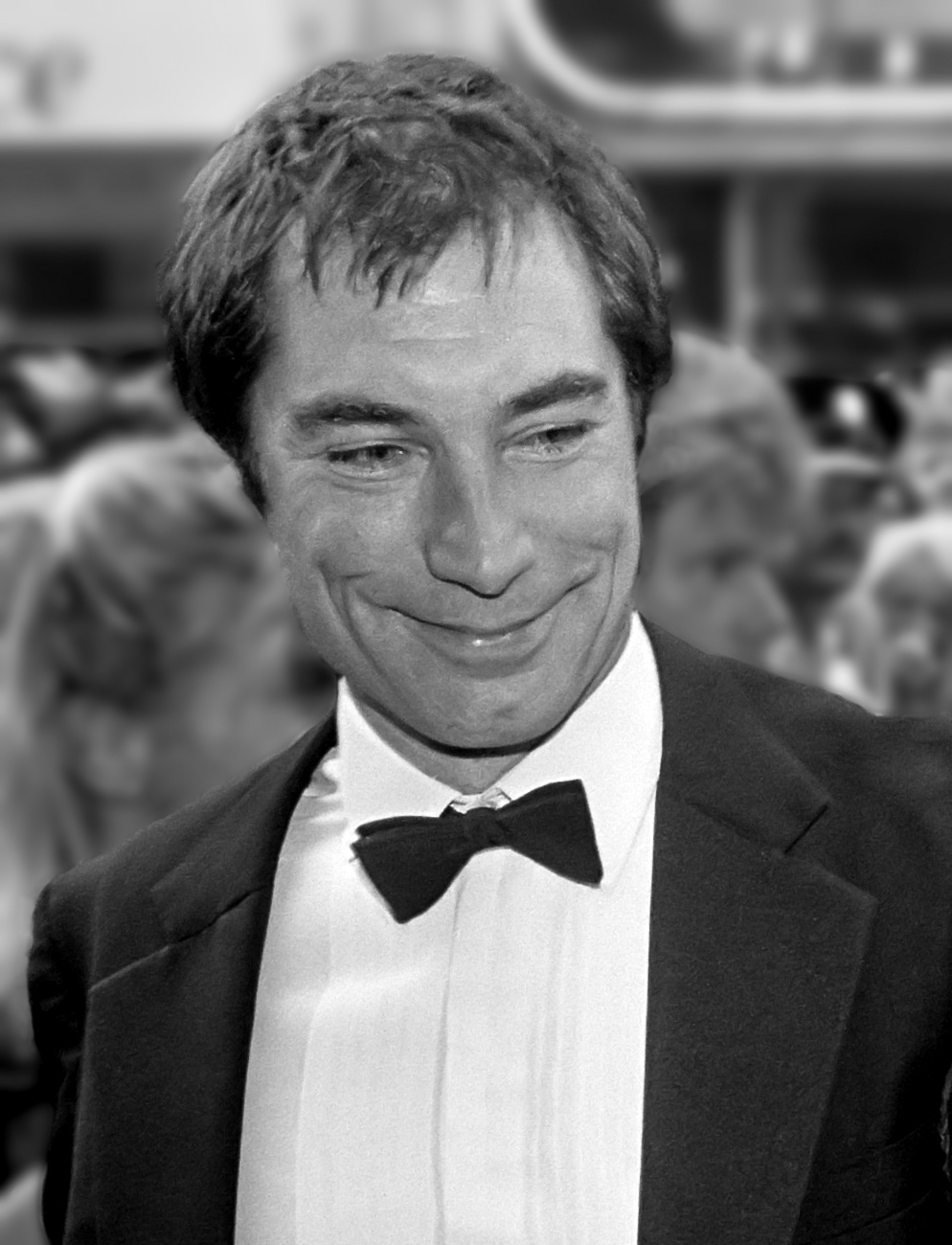
Timothy Dalton
View on Wikipedia
Timothy Leonard Dalton Leggett[1] (/ˈdɔːltən/; born 21 March 1946)[2] is a British actor.[3] He gained international prominence as the fourth actor to portray fictional secret agent James Bond in the Eon Productions film series, starring in The Living Daylights (1987) and Licence to Kill (1989).
Key Information


Beginning his career on stage, he made his film debut as Philip II of France in the 1968 historical drama The Lion in Winter. He took roles in the period films Wuthering Heights (1970), Cromwell (1970), and Mary, Queen of Scots (1971). Dalton also appeared in the films Flash Gordon (1980), The Rocketeer (1991), Looney Tunes: Back in Action (2003), Hot Fuzz (2007) and The Tourist (2010).
On television, Dalton's role as Oliver Secombe made him one of the stars of Centennial (1978–1979). He later played Mr. Rochester in the BBC serial Jane Eyre (1983), Rhett Butler in the CBS miniseries Scarlett (1994), Rassilon in the BBC One sci-fi series Doctor Who (2009–2010), Sir Malcolm Murray on the Showtime horror drama Penny Dreadful (2014–2016), the Chief on the DC Universe/Max superhero series Doom Patrol (2019–2023), and Donald Whitfield on the Paramount+ western series 1923 (2023–). He portrayed Peter Townsend in the fifth season of The Crown (2022).
Early life
[edit]Timothy Leonard Dalton Leggett was born on 21 March 1946 in Colwyn Bay, Wales, to an English father, Peter Dalton Leggett, who was a captain in the Special Operations Executive (SOE) during the Second World War and was an advertising executive at the time of his son's birth; and an American mother, Dorothy Scholes, of Italian and Irish descent.[4][5][6][7]
Before Dalton's fourth birthday, the family moved back to England to Belper in Derbyshire, where he attended Herbert Strutt Grammar School. As a teenager, he was a member of the Air Training Corps at LXX (Croft & Culcheth) Squadron.
He decided to become an actor at 16 after seeing a production of Macbeth and got a role in a production of the play at The Old Vic.[8] He left school in 1962 at 16 to enroll in the Royal Academy of Dramatic Art and tour with the National Youth Theatre. Dalton did not complete his RADA studies, leaving the academy in 1966 to join the ensemble of the Birmingham Repertory Theatre.[9] He had ambitions of being an actor, which pleased his father; "It pleased everybody on my father's side of the family. My mother and her side, however, were worried. None of them felt acting was a secure profession for a young man."[10]
Career
[edit]Dalton quickly moved to television, working mainly with the BBC, and in 1968 made his film debut as Philip II of France in The Lion in Winter. This was the first of several period dramas, which included a remake of Wuthering Heights in 1970 in which he portrayed Heathcliff, and the English Civil War drama Cromwell as Cavalier commander Prince Rupert of the Rhine. After a few more films, Dalton took a break in 1971 to concentrate on the theatre, performing with the Royal Shakespeare Company and other troupes throughout the world. In 1975, Dalton and Vivien Merchant headed the cast of a revival of Noël Coward's The Vortex.[11]
With two exceptions, the films Mary, Queen of Scots (1971) and Permission to Kill (1975), he remained a theatre actor until 1978. That year he starred in Sextette as the husband of 85-year-old Mae West, hailing his return to cinema and the beginning of his American career. While in the United States, Dalton worked mainly in television, although he starred in several films. During this time, he played Prince Barin in the science fiction film Flash Gordon (1980) and played Mr. Rochester in a BBC serial of Jane Eyre (1983). Dalton starred alongside Jonathan Pryce in the film The Doctor and the Devils (1985).
Dalton co-starred with Joan Collins in the miniseries, Sins (1986). He was also replaced in two films in which he'd been signed to appear. He was offered the role of real-life British Prime Minister William Lamb in the film Lady Caroline Lamb. The filmmakers replaced him with Jon Finch at the last moment; Dalton sued for breach of contract and won an out-of-court settlement.[12]
In 1985, Dalton was set to play Don Alfonso de la Torré in Roman Polanski's film Pirates. The two men did not get along, so Polanski replaced Dalton with Damien Thomas.[13] Dalton co-starred with Anthony Edwards in the 1988 British comedy film Hawks about two terminally ill patients who set off on a road-trip together.
James Bond (1986–1994)
[edit]Initial offers
[edit]Dalton had been considered for the role of James Bond several times. According to the documentary Inside The Living Daylights, the producers first approached Dalton in 1968 for On Her Majesty's Secret Service although Dalton himself in this same documentary claims the approach occurred when he was either 24 or 25 and had already done the film Mary, Queen of Scots (1971), so it has been speculated that it was more likely for Live and Let Die, the film in which Roger Moore made his debut as Bond after Sean Connery in Diamonds Are Forever. Dalton declined the offer and told the producers that he was too young for the role. In a 1987 interview, Dalton said, "Originally I did not want to take over from Sean Connery. He was far too good, he was wonderful. I was about 24 or 25, which is too young. But when you've seen Bond from the beginning, you don't take over from Sean Connery."[14] In either 1979 or 1980, during pre-production of For Your Eyes Only[15] he was approached again, but did not favour the direction the films were taking, nor did he think the producers were seriously looking for a new 007.[15] As he explained, his idea of Bond was different.[16] In a 1979 episode of the television series Charlie's Angels, Dalton played the role of Damien Roth, a millionaire playboy described by David Doyle's character as "almost James Bond-ian".
In August 1986, Dalton was approached to play Bond after Roger Moore had retired, but as Dalton would soon begin filming Brenda Starr he could do The Living Daylights only if the Bond producers waited six weeks. The producers were not willing to wait and offered the role to Pierce Brosnan. However, when news of Brosnan's hiring was leaked, the makers of television series Remington Steele, in which Brosnan starred, exercised their right to renew the series, and the offer to Brosnan was withdrawn. Having now completed the filming of Brenda Starr, Dalton was now available and he accepted the part of Bond for The Living Daylights.[17]
Films
[edit]
Dalton's first appearance as 007, The Living Daylights (1987), was critically successful, grossing more than either of the previous two Bond films with Moore (Octopussy (1983) and A View to a Kill (1985)) as well as contemporary box-office rivals such as Die Hard and Lethal Weapon. His second film, Licence to Kill (1989), although almost as successful as its predecessor in most markets, did not perform as well at the U.S. box office, in large part due to a lacklustre marketing campaign, whereby the title of the film was abruptly changed from Licence Revoked. The main factor for the lack of success in the U.S. was that it was released at the same time as the hugely successful Indiana Jones and the Last Crusade, Tim Burton's Batman, and Lethal Weapon 2, during the summer blockbuster season. In the United Kingdom, one of its critical markets, the film was also hampered by receiving a 15 certificate from the British Board of Film Classification, which severely affected its commercial success. Future Bond films, following the resolution of legal and other issues, were all released between 31 October and mid-December, in order to avoid the risk of a summer failure, as had happened to Licence to Kill.
With a worldwide gross of US$191 million, The Living Daylights became the fourth-most-successful Bond film at the time of its release. In 1998, the second Deluxe Edition of Bond's soundtracks was released. The Living Daylights was one of the first soundtracks to receive Deluxe treatment. The booklet/poster of this CD contains MGM's quote about The Living Daylights being the fourth-most-successful Bond film.
Since Dalton was contracted for three Bond films,[18] the pre-production of his third film began in 1990, in order to be released in 1991. What was confirmed is that the story would deal with the destruction of a chemical weapons laboratory in Scotland, and the events would take place in London, Tokyo and Hong Kong. The film was cancelled due to legal issues between UA/MGM and Eon Productions, which lasted for four years.[19]
The legal battle ended in 1993, and Dalton was expected to return as James Bond in the next Bond film, which later became GoldenEye. Since his contract had expired, negotiations with him to renew it took place.[20] Dalton surprised everyone on 12 April 1994 with the announcement that he would not return as James Bond. At this time, he was shooting the miniseries Scarlett. Two months later, Brosnan, who had been hired to succeed Moore when Dalton had turned down the role in 1986, was announced as the new Bond. Dalton reflected in 2007, "I was supposed to make one more, but it was cancelled because MGM and the film's producers got into a lawsuit which lasted for five years. After that, I didn't want to do it anymore."[21]
Dalton as Bond
[edit]Dalton portrayed Bond in The Living Daylights (1987) and Licence to Kill (1989), the fifteenth and sixteenth entries in the franchise. Unlike Moore, who had played Bond as more of a light-hearted playboy, Dalton's portrayal of Bond was darker and more serious. Dalton pushed for renewed emphasis on the gritty realism of Ian Fleming's novels instead of fantasy plots and humour.[22]
I think Roger was fine as Bond, but the films had become too much techno-pop and had lost track of their sense of story. I mean, every film seemed to have a villain who had to rule or destroy the world. If you want to believe in the fantasy on screen, then you have to believe in the characters and use them as a stepping-stone to lead you into this fantasy world. That's a demand I made, and Albert Broccoli agreed with me.[22]
— Dalton stated in a 1989 interview.
A fan of the literary character, often seen re-reading and referring to the novels on set, Dalton determined to approach the role and play truer to the original character described by Fleming. His 007, therefore, came across as a reluctant agent who did not always enjoy the assignments he was given, something seen on screen before, albeit obliquely, only in George Lazenby's On Her Majesty's Secret Service. In The Living Daylights, for example, Bond tells a critical colleague, Saunders, "Stuff my orders! ... Tell M what you want. If he fires me, I'll thank him for it." This was an element that appealed to Dalton when he read the script.[23] In Licence to Kill, he resigns from the Secret Intelligence Service in order to pursue his own agenda of revenge.
Unlike Moore, who always seems to be in command, Dalton's Bond sometimes looks like a candidate for the psychiatrist's couch – a burned-out killer who may have just enough energy left for one final mission. That was Fleming's Bond – a man who drank to diminish the poison in his system, the poison of a violent world with impossible demands ... his is the suffering Bond.[22]
— Steven Jay Rubin writes in The Complete James Bond Movie Encyclopaedia (1995).
This approach proved to be a double-edged sword. Film critics and fans of Fleming's original novels welcomed a more serious interpretation after more than a decade of Moore's approach.[24] However, Dalton's films were criticised for their comparative lack of humour.[22] Dalton's serious interpretation was not only in portraying the character, but also in performing most of the stunts of the action scenes himself.[25] His director, John Glen, commented "Tim is a very convincing James Bond. When he has a gun in his hand, you believe he really could kill someone. I don't think that was ever the case with Roger Moore."[26]
Some modern critics have compared Dalton to Daniel Craig. In 2006, Gwladys Fouché of The Guardian wrote "while Connery was cool, and Brosnan brilliant, only Dalton could show the dark side of Fleming's fearless agent [...Bond producers] want Bond to be closer to the original Ian Fleming character. They want him to be grittier, darker and less jokey. What they really want, it seems, is to have Dalton back."[27] Dalton himself has claimed that the Bond films starring Daniel Craig are "believable" in the way he wanted his own Bond films to be:
I came in under certain circumstances. The prevailing wisdom at the time – which I would say I shared – was that the series, whilst very entertaining, had become rather spoof-like. It was one-liners and raised eyebrows and it had become, let's say, too lighthearted. And the producer, Mr. Broccoli, felt that, and he wanted to try and bring it back to something more like its original roots with those Sean Connery films. I had loved them all, and I had loved the books. ... So that was the loose framework that we sort of embarked on, but then you find that nobody else wants to change it all! The studio doesn't want to change it, the people that work on it don't want to change it ... Everyone's happy with what they know. And everyone intellectually says, "Well, yes, we should, it was getting a bit stale, it was getting a bit this, that, and the other," but nobody actually wants to. So it wasn't as easy as one would hope. I mean, now they have. I think now, with Daniel [Craig], they have. But that was, what, almost 20 years later that they actually embarked on something more believable?[28]
Of his time as Bond, Dalton recalled:
I should be careful what I say, because, of course, everyone is interested in Bond. It's almost like a bracket or a bubble in one's life. Everybody treats the idea of a Bond film different to anything else. I mean, journalists come knowing the story they want to write, whereas on a normal piece of work we're all discovering what to write about. We're discovering what we're acting. It's part of the creative process. But in a Bond movie? No. People know what they want to write about. And they know, really, what they want. Everyone's got an opinion, from the top of the studio down to the guy in the street. But you're sort of ... outside. No one, no matter how well someone can communicate, can tell you – and I certainly can't really communicate accurately – what it is like to be the actor playing James Bond. The only actors who can are the other actors who've played the part. It's kind of astonishing, really. You are in kind of a bubble. It's real, it's valuable, it's exciting, and it can give great pleasure. And yet it's somehow unreal. No, forget the "unreal" bit. But it's somehow outside the normal course of what we all share in ... A fantastic experience.[28]
His time as Bond allowed him to work on projects that were of interest to him; "Hawks deals with the subject of extraordinary relevance: Why does it take a crisis to make you realize how bloody precious life is? Unfortunately, it's about cancer, which is a not a word the film business thinks of as being particularly commercial. Still, doing the first Bond film enabled me to get Hawks made. Doing the Bond film helped the O'Neill play find an audience. This is a commercial business. If you have a commercial success, you have enhanced viability."[29]
Post-Bond career
[edit]After his Bond films, Dalton divided his work between stage, television and films, and diversified the characters he played. This helped him eliminate the 007 typecasting that followed him during the previous period. Dalton was nevertheless for a certain period considered for a part in the Bond film GoldenEye. Instead, he played Nazi spy Neville Sinclair in The Rocketeer (1991), and Rhett Butler in Scarlett, the television miniseries sequel to Gone with the Wind. He also appeared as criminal informant Eddie Myers in the acclaimed British television film Framed (1992). He had a major part in an episode of the television series Tales from the Crypt.
During the second half of the 1990s he starred in several cable films, most notably the Irish Republican Army drama The Informant and the action thriller Made Men. In the television film Cleopatra (1999) he played Julius Caesar. He played a parody of James Bond named Damian Drake in the film Looney Tunes: Back in Action (2003). At the end of that year and the beginning of 2004, he returned to theatre to play Lord Asriel in the stage version of His Dark Materials. Dalton played Simon Skinner, who ran the local supermarket, in the action comedy film Hot Fuzz, which was released in 2007.
Dalton returned once again to British television in a guest role for the Doctor Who 2009–10 two-part special "The End of Time", playing Rassilon.[30][31] He was first heard in the role narrating a preview clip shown at the 2009 Comic Convention. In 2010 and 2011, he starred in several episodes of the fourth season of the American spy comedy Chuck as Alexei Volkoff.[32]
Dalton voiced the character Mr. Pricklepants in Toy Story 3 (2010) and again in the television specials Toy Story of Terror! (2013) and Toy Story That Time Forgot (2014), and the sequel Toy Story 4 (2019). In 2012, Dalton voiced Lord Milori in Secret of the Wings, as part of the Disney Fairies franchise and the fourth film direct-to-DVD instalment of the Tinker Bell film series.
From 2014 to 2016, Dalton portrayed the character Sir Malcolm Murray for three seasons on the Showtime original television series Penny Dreadful.[33]
From 2019 to 2021, Dalton portrayed the Chief in the DC Universe / HBO Max superhero series Doom Patrol.[34]
Personal life
[edit]Dalton was in a relationship with reporter Kate Adie as a youth,[35] and actress Vanessa Redgrave (with whom he appeared in the 1971 film Mary, Queen of Scots and the 1979 film Agatha) between 1971 and 1986.[36] He briefly dated actresses Stefanie Powers[37] and Whoopi Goldberg.[38]
He was in a relationship with musician Oksana Grigorieva in the 1990s;[39] they met in 1995 while she was employed as a translator for filmmaker Nikita Mikhalkov.[40] Dalton and Grigorieva had a son together, born in 1997.[41][better source needed]. They broke up around 2003.[39][42]
Dalton has residences in Chiswick in London, West Hollywood, California[43] and St. John's, Antigua and Barbuda.[44]
Dalton is a Manchester City F.C. supporter, and is often seen at the City of Manchester Stadium to watch the team play.[45]
Filmography
[edit]References
[edit]- ^ "Timothy L D Leggett" in the England & Wales Civil Registration Birth Index, 1916–2007, Apr–May–Jun quarter 1946, Aled, Denbighshire, mother's maiden name: Scholes
- ^ Sources disagree about his birth date, with some giving his year of birth as 1944:
- LuKanic, Steven A. (1991). Film Actors Guide. Los Angeles: Lone Eagle. p. 123. ISBN 978-0-943728-38-4.
- Halliwell, Leslie (1988). Halliwell's Filmgoer's Companion (9th ed.). London: Grafton. p. 185.
- Gareffa, Peter M.; Evory, Ann (1988). Newsmakers. Detroit: Gale Research. pp. v, 93. ISBN 978-0-8103-2203-5.
- Rubin, Steven Jay (2003). The Complete James Bond Movie Encyclopedia (3rd ed.). Contemporary Books. p. 97. ISBN 978-0-07-141246-9.
- Barnes, Alan; Hearn, Marcus (2001). Kiss Kiss Bang! Bang!: the Unofficial James Bond Film Companion. Batsford Books. ISBN 978-0-7134-8182-2.
- Araya, Margarida (2016). Timothy Dalton: A Complete Guide To his Cinema, Television, Stage and Voice Work. CreateSpace Independent Publishing Platform. p. 5. ISBN 978-1539171386.
- ^ Brady, James (13 November 1994). "In step with Timothy Dalton". The Post and Courier (Charleston, South Carolina), Parade Magazine. p. 24.
- ^ "Timothy Dalton Biography (1946–)". filmreference.com. Retrieved 12 September 2015.
- ^ Muir, Frank (1 October 1998). A Kentish Lad. Corgi. pp. 113–114. ISBN 0-552-14137-2.
- ^ Williams, Martin (11 January 2010). "The Bond of Colwyn Bay". Daily Post. p. 17.
- ^ "Timothy Dalton". TV Guide.
- ^ Blackwell, Earl (1990). Earl Blackwell's Celebrity Register. Gale Research Incorporated. p. 107. ISBN 978-0-8103-6875-0.
- ^ Lloyd, Ann; Fuller, Graham; Desser, Arnold (1 January 1983). The Illustrated Who's Who of the Cinema. Orbis Publishing. p. 108. ISBN 978-0-85613-521-7.
- ^ Celebrity Magazine, March 1987.
- ^ "Timothy Dalton – Shakespearean James Bond". Archived from the original on 10 June 2013. Retrieved 28 June 2012.
- ^ Current Biography Yearbook. Vol. 49. H. W. Wilson Company. 1989. p. 137.
- ^ Sandford, Christopher (2007). Polanski: A Biography. Palgrave Macmillan. p. 285. ISBN 978-0-230-60778-1.
- ^ Good Morning America – interview with Timothy Dalton – 1987. YouTube. Retrieved 5 April 2016.
- ^ a b Broccoli & Zec 1998, p. 281.
- ^ Lee Pfeiffer and Philip Lisa (1992). The Incredible World of 007: An Authorised Celebration of James Bond. Boxtree. ISBN 1-85283-141-3.
- ^ Broccoli & Zec 1998, pp. 280–281.
- ^ "60 Seconds: Timothy Dalton". An interview in Metro Newspaper by Andrew Williams. 15 February 2007.
- ^ "MI6 :: The Home of James Bond". Archived from the original on 28 March 2022. Retrieved 11 December 2006.
- ^ "James Bond 007 :: MI6 – the Home of James Bond". Archived from the original on 4 March 2006. Retrieved 18 February 2007.
- ^ "Timothy Dalton Reflects on 007". MI6 – The Home of James Bond. 19 February 2007. Retrieved 21 February 2007.[permanent dead link]
- ^ a b c d Rubin, Steven Jay (1995). The Complete James Bond Movie Encyclopedia (Revised ed.). McGraw-Hill/Contemporary Books. ISBN 0-8092-3268-5.
- ^ Q&A Interview With Timothy Dalton by Raymond Benson OO7 Issue #21 1989
- ^ Glyn, Peredur. "The Bond of Colwyn Bay". Her Majesty's Secret Servant. Archived from the original on 16 June 2011. Retrieved 28 June 2022.
- ^ "Several Interviews with Timothy Dalton on his 007 portrayal". Archived from the original on 23 October 2009.
- ^ Marshall Fine. "LICENCE TO ACT – TIMOTHY DALTON USES BOND TO GET WHAT HE WANTS". 1989 interview
- ^ Fouché, Gwladys (3 November 2006). "Why Timothy's Bond was best". The Guardian. Retrieved 30 October 2021.
- ^ a b ""Timothy Dalton on Penny Dreadful, serenading Mae West, and being James Bond." May 9, 2014". The A.V. Club. Retrieved 6 March 2018.
- ^ Marshall Fine Interview. 1989
- ^ "BBC – Doctor Who – Special, David Tennant, finale, Timothy Dalton, Alexandra Moen, Lucy Saxon, Catherine Tate, Donna Noble, Bernard Cribbins, Wilf, Comic-Con". Archived from the original on 27 August 2009. Retrieved 1 August 2009.
- ^ "BBC – Doctor Who – Special, David Tennant, finale, Timothy Dalton, Alexandra Moen, Lucy Saxon, Catherine Tate, Donna Noble, Bernard Cribbins, Wilf, Comic-Con". Archived from the original on 15 January 2010. Retrieved 5 April 2016.
- ^ Abrams, Natalie (26 August 2010). "Timothy Dalton to Bond with Chuck". TV Guide. Retrieved 26 August 2010.
- ^ "Timothy Dalton as Sir Malcolm in Penny Dreadful". SHO.com. Retrieved 12 September 2015.
- ^ "Timothy Dalton as Niles Caulder – Doom Patrol". IMDb. 15 February 2019. Retrieved 18 July 2020.
- ^ Kate Adie, The Kindness of Strangers (London, 2002), p. 81.
- ^ "Excerpts from Vanessa Redgrave's Autobiography". Oocities.org. Retrieved 29 October 2012.
- ^ Smith, Liz (23 July 1984). "Stefanie Powers: an Item with Tim". New York Daily News.
- ^ Companions for Timothy Dalton tcm.com
- ^ a b Riggs 2007.
- ^ Serpe 2010.
- ^ "Timothy Dalton warns Mel Gibson to stay away from his son in Oksana Grigorieva battle". Daily Mirror. 17 July 2010.
- ^ Machell 2009.
- ^ "Licence to go to the shops". Evening Standard. 11 April 2012.
- ^ Brass, Kevin (4 May 2006). "Antigua recaptures its reputation for chic – Properties – International Herald Tribune". The New York Times.
- ^ "Timothy Dalton talks about his beloved Manchester City FC". MI6-HQ.COM.
Bibliography
[edit]- Broccoli, Albert R.; Zec, Donald (1998). When the Snow Melts:The Autobiography of Cubby Broccoli. London, UK: Boxtree. ISBN 978-0-7522-1162-6.
- Machell, Ben (24 October 2009). "There is more to Oksana Grigorieva than Mel Gibson". The Times. London, England: Times Newspapers Limited. pp. 6, 7. Archived from the original on 15 June 2011. Retrieved 17 July 2010.
- Riggs, Thomas (2007). Contemporary Theatre, Film and Television, Volume 72. Detroit, Michigan: Thomson Gale. p. 187. OCLC 137315280.
- Serpe, Gina (15 July 2010). "Five Things You Need to Know About Oksana Grigorieva". www.eonline.com. Retrieved 17 July 2010.
External links
[edit] Media from Commons
 Quotations from Wikiquote


- Timothy Dalton at IMDb
- Timothy Dalton at the BFI's Screenonline
- Dalton bio, pelicanpromotions.com.au; accessed 21 March 2015.
- Dalton biography https://web.archive.org/web/20130123011716/http://www.bbc.co.uk/wales/northeast/guides/halloffame/showbiz/timothy_dalton.shtml, BBC North East Wales Showbiz; accessed 21 March 2015.
- Dalton biodata, bbc.co.uk; accessed 21 March 2015.

Timothy Dalton
View on GrokipediaEarly life and education
Childhood and family background
Timothy Leonard Dalton Leggett was born on 21 March 1946 in Colwyn Bay, North Wales, the eldest of five children to an English father, Peter Dalton-Leggett, a captain in the Special Operations Executive during World War II who later became an advertising executive, and an American mother, Dorothy Scholes, with the family having Italian, Irish, and English heritage.[7][8] His birth in Wales was due to his father's military posting there following World War II.[7][3] Around the age of four, in the late 1940s, the family relocated from Colwyn Bay to Milford near Belper in Derbyshire, England, where Peter Dalton-Leggett took up work in advertising based in nearby Manchester, providing a stable but modest post-war household for the growing family.[3][9] The Daltons' life reflected the transitional era of mid-20th-century Britain, with Timothy's paternal grandfather having been a vaudevillian performer who shared stages with figures like Charlie Chaplin and managed a chain of theaters, instilling an early cultural appreciation for entertainment within the family.[9] As the oldest child, Dalton later recalled a childhood marked by typical boyhood pursuits, including fishing from a young age and a sense of individualism shaped by his working environment in the English Midlands.[9] Dalton's formative interests in acting emerged during his adolescence in Belper, where he attended Herbert Strutt Grammar School and participated in school productions, including a performance in George Bernard Shaw's Arms and the Man.[10] At age 16, after witnessing a production of Shakespeare's Macbeth, he resolved to pursue acting professionally, an ambition that soon led him to join the National Youth Theatre and enroll at the Royal Academy of Dramatic Art in London.[3]Training and early influences
At the age of 16 in 1962, Dalton left Herbert Strutt Grammar School in Belper, Derbyshire, to pursue acting full-time, inspired by a school production of Shakespeare's Macbeth that ignited his passion for the stage.[3] He immediately joined Michael Croft's National Youth Theatre, where he toured as a leading member during summers, gaining early experience in ensemble performances and classical works.[7] In 1964, at age 18, Dalton was accepted into the Royal Academy of Dramatic Art (RADA) in London, beginning a rigorous two-year training program focused on classical techniques and voice work.[11] During his time there, he immersed himself in Shakespearean repertoire, developing a disciplined approach to character depth and textual interpretation that emphasized authenticity over mannerism.[3] However, he departed just before completing the course in 1966, later reflecting critically on the institution's methods: "It took a year to undo the psychological damage that was caused by the oppressive teachers at RADA."[7] Following his exit from RADA, Dalton joined the Birmingham Repertory Company, committing to stage work as a foundation for his career rather than seeking immediate film or television opportunities for quick recognition.[11] This period marked initial professional challenges, as he navigated the uncertainties of repertory theatre while honing his craft through demanding ensemble roles, prioritizing long-term artistic growth over commercial shortcuts.[3]Acting career
Theatre work
Timothy Dalton began his professional acting career on stage in 1966 with the Birmingham Repertory Theatre, where he appeared in productions including George Bernard Shaw's The Doctor's Dilemma and St. Joan, as well as Orlando in Shakespeare's As You Like It.[12][3] These early roles marked his entry into classical theatre, establishing a foundation in live performance that would define much of his early reputation.[13] In the late 1960s and 1970s, Dalton joined the Royal Shakespeare Company (RSC) and the Prospect Theatre Company, touring internationally with both ensembles and taking on leading Shakespearean roles.[13] With Prospect, he played Edgar in King Lear at the Aldwych Theatre in 1972.[13] His RSC tenure included the role of Romeo in Terry Hands's 1973 production of Romeo and Juliet at the Royal Shakespeare Theatre in Stratford-upon-Avon, opposite Estelle Kohler as Juliet.[14] Dalton's stage work extended into the 1980s, where he returned to the RSC for Trevor Nunn's history cycle, embodying the fiery Hotspur in Henry IV, Part 1 at the Barbican Theatre in 1982, alongside Patrick Stewart as King Henry IV and Joss Ackland as Falstaff.[15] He also portrayed Mark Antony opposite Vanessa Redgrave's Cleopatra in a 1986 production of Antony and Cleopatra directed by Toby Robertson at the Theatre Royal Haymarket in London.[16] This performance highlighted his versatility in classical roles, drawing parallels to the bold, virile figures he often interpreted on stage.[17] Throughout his career, Dalton has emphasized his dedication to theatre as a means of artistic depth, viewing live performance as essential to avoiding the constraints of screen typecasting and maintaining a connection to Shakespeare's demanding repertoire.[17][3]Pre-Bond film and television
Dalton made his film debut in the 1968 historical drama The Lion in Winter, directed by Anthony Harvey, where he portrayed the young King Philip II of France opposite Peter O'Toole as King Henry II and Katharine Hepburn as Eleanor of Aquitaine.[18][4] The role marked his entry into screen acting following his theatre training, showcasing his ability to hold his own among established stars in a period piece centered on royal intrigue.[17] In the 1970s, Dalton built his reputation through leading roles in period dramas and thrillers, emphasizing complex, brooding characters. He starred as the tormented Heathcliff in the 1970 adaptation of Emily Brontë's Wuthering Heights, directed by Robert Fuest, delivering a passionate performance in the gothic romance.[4] The following year, he played Henry, Lord Darnley—the ill-fated second husband of Mary Stuart—in Charles Jarrott's Mary, Queen of Scots, opposite Vanessa Redgrave, highlighting his skill in historical portrayals of ambition and tragedy. Later in the decade, he took the lead as Matt, a British intelligence operative, in the 1975 spy thriller Permission to Kill (also known as The Executioner), directed by Cyril Frankel and co-starring Dirk Bogarde and Ava Gardner, which explored Cold War espionage themes.[19][4] Dalton's television work during this period further demonstrated his range across genres and formats. He appeared in the 1969 BBC mystery series Judge Dee, guest-starring in an episode as part of the short-lived adaptation of Robert van Gulik's detective stories set in ancient China.[20] A significant breakthrough came with his role as the ambitious rancher Oliver Seccombe in the expansive 1978 NBC miniseries Centennial, directed by Virgil W. Vogel and based on James A. Michener's novel, which chronicled the settling of the American West over generations. By the early 1980s, Dalton's screen career reflected growing versatility, blending action, drama, and literary adaptations while navigating challenges in transitioning from stage to film. In the cult science fiction film Flash Gordon (1980), directed by Mike Hodges, he played the honorable Prince Barin, contributing to the film's campy yet visually striking portrayal of interplanetary adventure alongside Sam J. Jones and Max von Sydow.[21][4] He also earned acclaim for his portrayal of the intense Edward Rochester in the 1983 BBC television adaptation of Charlotte Brontë's Jane Eyre, directed by Julian Amyes, which highlighted his command of romantic intensity in a classic literary role.[17] Throughout these years, Dalton's selective approach to projects—prioritizing depth and authenticity over volume—stemmed from his strong theatre roots, though it occasionally resulted in a fragmented film trajectory amid concurrent stage commitments.[4][17]James Bond films (1987–1989)
Timothy Dalton was first offered the role of James Bond in 1968 by producer Albert "Cubby" Broccoli, around the time Sean Connery was considering leaving the series, but he declined at age 24, feeling too young for the part.[22] He was approached again in 1980, following the release of Moonraker, as Roger Moore's tenure appeared to be winding down, but Dalton rejected the offer once more, citing the role's intimidating nature.[22] Following Moore's retirement after A View to a Kill (1985), Dalton was cast as Bond in 1986 for Eon Productions' next film, The Living Daylights, with the announcement made on August 6, 1986.[23] Dalton's selection emphasized a return to Ian Fleming's original conception of the character, drawing on his prior dramatic roles to bring a more serious tone to the franchise.[22] The Living Daylights, directed by John Glen and released in 1987, marked Dalton's debut as Bond. In the film, MI6 agent 007 is assigned to provide cover for a KGB defector, Georgi Koskov (Jeroen Krabbé), during a performance in Bratislava, but he uncovers a scheme involving arms dealer Brad Whitaker (Joe Don Baker) and opium smuggling amid the Soviet-Afghan War, with Bond allying with Soviet cellist Kara Milovy (Maryam d'Abo).[24] Dalton portrayed Bond as a darker, more introspective figure faithful to Fleming's novels, emphasizing the agent's ruthlessness and emotional depth over comedic elements. The film grossed $191.2 million worldwide against a $40 million budget.[25] Dalton's second Bond outing, Licence to Kill (1989), also directed by Glen, shifted the series toward a revenge thriller narrative. Bond resigns from MI6 to pursue drug lord Franz Sanchez (Robert Davi) after Sanchez's men attack Bond's CIA ally Felix Leiter (David Hedison) and murder Leiter's wife during their honeymoon, leading Bond to infiltrate Sanchez's cocaine empire in a fictional Latin American setting, aided by former CIA pilot Pam Bouvier (Carey Lowell) and Sanchez's betrayed lover Lupe Lamora (Talisa Soto).[26] The film's intensified violence and drug-trade focus drew controversy, earning the first PG-13 rating in the series from the MPAA due to its graphic content.[27] It grossed $156 million worldwide on a $32–36 million budget, underperforming relative to expectations amid competition from summer blockbusters like Batman.[28] Production of Dalton's Bond films faced significant challenges, including legal disputes between Eon Productions (via Danjaq) and distributor MGM/UA over rights and finances, which delayed a third film and created a six-year gap between Licence to Kill and the next entry, GoldenEye (1995); the lawsuit was settled in December 1992.[29]Post-Bond film roles
Following his tenure as James Bond, Timothy Dalton sought to diversify his roles, moving away from leading man archetypes to avoid typecasting associated with the spy franchise.[30] His immediate post-Bond projects included the romantic adventure Brenda Starr (filmed in 1989 but released in 1992), where he played the enigmatic Basil St. John opposite Brooke Shields as the titular comic book reporter.[31] This was followed by the period action film The Rocketeer (1991), in which Dalton delivered a charismatic performance as Neville Sinclair, a suave Hollywood star secretly collaborating with Nazis to seize a revolutionary rocket pack.[32] In 1993, he appeared in the ensemble romantic comedy Naked in New York, portraying Elliot Price, an art gallery owner entangled in the personal dramas of young New Yorkers.[33] Throughout the 1990s, Dalton continued exploring varied genres, often in supporting or antagonistic parts that showcased his commanding presence. Notable among these was his lead role as the dictatorial Eastern European leader Boris Pochenko in the romantic comedy The Beautician and the Beast (1997), where he sparred with Fran Drescher's character in a lighthearted culture-clash story set in a fictional nation.[34] He also took on the intense role of the morally ambiguous British intelligence officer DCI Rennie in the thriller The Informant (1997), highlighting his skill in portraying complex authority figures.[35] Entering the 2000s, Dalton embraced more eclectic opportunities, including voice work and comedic villainy. In the live-action/animated hybrid Looney Tunes: Back in Action (2003), he voiced Damien Drake, a suave spy actor and the father of the protagonist, playfully nodding to his own Bond legacy. He earned acclaim for his turn as Simon Skinner, the affable yet sinister supermarket manager revealed as the mastermind behind a series of murders, in the action-comedy Hot Fuzz (2007).[36] This role exemplified his dry wit and menace, contributing to the film's cult status. Later, in the thriller The Tourist (2010), Dalton played Chief Inspector Jones, a determined Scotland Yard official pursuing a criminal through Venice alongside stars Johnny Depp and Angelina Jolie.[37] In recent years, Dalton has leaned into character acting and voice roles in animated features, selecting projects that align with his classical training while maintaining a lower profile. He provided the voice of the pompous hedgehog toy Mr. Pricklepants in Pixar's Toy Story 3 (2010), reprising the part in Toy Story 4 (2019). His last major live-action film role came in the historical thriller The Last Witness (2018), where he portrayed Sir Alexander Cadogan, the British Permanent Under-Secretary for Foreign Affairs, amid a narrative uncovering a WWII cover-up in post-war Poland. This selective approach has allowed Dalton to evolve into a respected character actor, prioritizing depth over volume in an industry that once pigeonholed him as the quintessential action hero.[30]Television roles
Dalton's early television work included prominent roles in 1980s miniseries that showcased his dramatic range. In the 1984 CBS miniseries Mistral's Daughter, adapted from Judith Krantz's novel, he played Perry Kilkullen, a wealthy suitor entangled in a tale of art, romance, and family secrets.[38] He followed this with the lead role of Edmund Junot in the 1986 CBS miniseries Sins, portraying a Holocaust survivor and fashion magnate's brother opposite Joan Collins, in a story spanning post-World War II Europe to the 1980s fashion world.[39] During the 2000s, Dalton took on select guest roles that highlighted his versatility in ensemble formats. He appeared as a guest caller in the NBC sitcom Frasier in 2001, contributing to the series' tradition of celebrity-voiced phone-ins during its ninth season. In 2008, he recurred as Edward R. Albright, a high-ranking intelligence operative, in the short-lived NBC spy thriller My Own Worst Enemy, supporting Christian Slater's dual-personality protagonist across nine episodes. Dalton achieved significant recognition in prestige television with his portrayal of Sir Malcolm Murray, a guilt-ridden British explorer hunting supernatural threats, in the Showtime horror-drama Penny Dreadful from 2014 to 2016. Spanning three seasons, the series blended Victorian literature with gothic horror, and Dalton's performance as the authoritative yet haunted patriarch earned critical acclaim for its emotional depth and commanding presence amid the ensemble cast led by Eva Green.[40] From 2019 to 2023, Dalton starred as Niles Caulder, known as The Chief, the enigmatic scientist and leader of a dysfunctional superhero team, in the DC Universe and later HBO Max series Doom Patrol. His role across all four seasons involved intricate flashbacks revealing Caulder's morally ambiguous past, contributing to the show's eccentric, character-driven narrative inspired by the DC Comics.[41] In recent years, Dalton has featured in high-profile prestige series. He portrayed Group Captain Peter Townsend, the divorced royal equerry and former love of Princess Margaret, in season 5 of Netflix's The Crown (2022), delivering a nuanced depiction of restrained affection and historical regret that generated Emmy buzz and a nomination for Best Guest Actor in a Drama Series at the 2024 Astra TV Awards.[42][43] He has played Donald Whitfield, a ruthless mining tycoon scheming against the Dutton family, in the Paramount+ Yellowstone prequel 1923 since 2022. The series aired its second and final season from February to April 2025, with Dalton's chilling villainy—marked by cold calculation and predatory menace—praised for elevating the Western drama's stakes.[44][45][6] Dalton has also ventured into voice acting for animated projects, including multiple appearances in the Adult Swim sketch comedy series Robot Chicken starting in 2005, where he lent his distinctive baritone to various parody segments. In 2021, he provided voice work for the Marvel animated anthology What If...?, contributing to its multiverse explorations.Personal life
Relationships
Dalton began a long-term relationship with British actress Vanessa Redgrave in 1971, which lasted until 1986. The pair met on the set of the historical drama Mary, Queen of Scots, where they portrayed Mary, Queen of Scots and her husband Lord Darnley, respectively, marking the start of both their professional collaboration and romance. Their partnership was characterized as on-and-off over the years, with the couple maintaining an amicable separation upon parting.[46][47] After parting with Redgrave, Dalton was in relationships with broadcaster Kate Adie (c. 1987–1990) and actress Whoopi Goldberg (1990–1993), among others. In the mid-1990s, Dalton entered a relationship with Russian singer and pianist Oksana Grigorieva, which continued until around 2003. The couple kept their personal lives out of the public eye, with Dalton providing support to Grigorieva during later challenges while co-parenting their son.[48][49][50] Throughout his career, Dalton has prioritized privacy in his romantic partnerships, avoiding marriage and offering few public comments on the subject. In interviews, he has emphasized maintaining boundaries around his personal affairs, reflecting a deliberate choice to separate his professional and private spheres.[50]Family and residences
Dalton was born on 21 March 1946 in Colwyn Bay, Wales, to Peter Dalton-Leggett, an English advertising executive and former military captain, and Dorothy Scholes, of Italian and Irish descent.[7] He is the eldest of five children, including siblings such as sisters who have maintained low public profiles.[7] His father passed away in the Jul-Aug-Sep quarter of 2004 in Derbyshire, England, after a career that included service in the Special Operations Executive during World War II.[51] In 1995, Dalton began a relationship with Russian musician Oksana Grigorieva, with whom he shares a son, Alexander Dalton, born in August 1997.[52] The couple separated around 2003 but have maintained a cooperative co-parenting arrangement, with Grigorieva describing Dalton as a supportive and involved father who shares in raising their son.[49] Alexander was primarily raised in the United Kingdom, aligning with Dalton's long-term base there, though details of his upbringing remain private.[52] Dalton has consistently prioritized his family's privacy, shielding Alexander from extensive media exposure; while limited public photographs exist, such as one from 2014, neither parent has disclosed information about his career or personal life.[52][53] This discretion persisted even amid Grigorieva's later high-profile relationship with actor Mel Gibson from 2009 to 2010, during which Dalton provided quiet support without engaging publicly.[49] Dalton maintains a primary residence in Chiswick, an affluent West London neighborhood along the River Thames, where he has lived for decades in a historic property on Airedale Avenue.[54] He also keeps a part-time home in Los Angeles, particularly during American projects such as his role in the HBO Max series Doom Patrol (2019–2023), which required extended stays in California, and owns a property in St. John's, Antigua and Barbuda.[54]Filmography and awards
Film credits
Dalton's film debut came in 1968 with the historical drama The Lion in Winter, where he portrayed the young King Philip of France in a supporting role opposite Peter O'Toole and Katharine Hepburn. In 1970, he appeared in three films: Cromwell as Prince Rupert of the Rhine, a key military figure in the English Civil War epic; Wuthering Heights as the brooding lead Heathcliff in the romantic adaptation; and the lesser-known Italian film Giuochi particolari (also known as The Voyeur), providing a dubbed voice role. His 1971 role as Henry Darnley, the ill-fated husband of Mary, Queen of Scots, in the biographical drama Mary, Queen of Scots marked an early showcase of his ability to handle complex historical characters. After a period focused on theatre, Dalton returned to film in 1977 with Sextette, a musical comedy where he played Sir Michael Barrington alongside Mae West in her final screen appearance. The 1979 mystery Agatha featured him as Archie Christie, the husband of the famous author, in a story exploring her real-life disappearance. A breakthrough came in 1980 with Flash Gordon, in which Dalton played the heroic Prince Barin, a supporting ally in the cult sci-fi adventure directed by Mike Hodges. Dalton achieved international fame in 1987 as James Bond in The Living Daylights, portraying the suave British spy in a Cold War thriller noted for its blend of action and his more serious interpretation of the character.[55] He reprised the role in 1989's Licence to Kill, Bond's second and final Dalton outing, a revenge-driven story set in Latin America that emphasized gritty realism and earned praise for its intensity.[56] In 1990, Dalton starred as King Vittorio Amadeo in the period drama The King's Whore, a French-Italian production exploring power and intrigue at the royal court. His 1991 villainous turn as the charismatic but ruthless Neville Sinclair in the adventure film The Rocketeer highlighted his skill in antagonist roles, opposite Bill Campbell in the retro superhero tale. Lesser-known works include 1992's Framed, where he led as a British diplomat entangled in a murder plot; 1993's Salt on Our Skin as George in a romantic drama spanning decades; and 1999's direct-to-video action thriller Made Men, portraying the menacing Sheriff Dex Drier. Dalton appeared as Allan Pinkerton, the real-life detective, in the 2001 Western American Outlaws, supporting the James-Younger gang story led by Colin Farrell. In 2003's Looney Tunes: Back in Action, he made a cameo as the suave spy Damien Drake, a self-parody of his Bond persona in the live-action/animated hybrid. A standout supporting role came in 2007's Hot Fuzz as the unassuming yet villainous Simon Skinner, the local dairy owner in Edgar Wright's action-comedy homage to cop films.[36] Dalton provided the voice for the sophisticated hedgehog toy Mr. Pricklepants in Pixar's Toy Story 3 (2010), a key ensemble member in the animated sequel. That same year, he played Chief Inspector Jones in the thriller The Tourist, assisting in the pursuit of Angelina Jolie and Johnny Depp's characters amid international intrigue. He reprised Mr. Pricklepants in Toy Story 4 (2019), contributing to the franchise's exploration of toy adventures on the road. As of 2025, no new feature films for Dalton have been announced.[57]Television and theatre credits
Dalton's early theatre work in the 1960s and 1970s was deeply rooted in classical Shakespearean productions, primarily with the Royal Shakespeare Company (RSC) and the Prospect Theatre Company. He joined the RSC in 1966, debuting in supporting roles such as Fleance in Macbeth before taking leading parts. Notable among these was his portrayal of Romeo in Romeo and Juliet during an international tour with the Prospect Theatre Company in 1966–1967, which showcased his romantic intensity on global stages. By 1973, Dalton returned to the RSC for Terry Hands' production of Romeo and Juliet at the Royal Shakespeare Theatre in Stratford-upon-Avon, opposite Estelle Kohler as Juliet, emphasizing the tragedy's youthful passion in a critically praised run that transferred to London.[58] In the same period, Dalton explored a range of Shakespearean characters, including Costard in Love's Labour's Lost (1973, RSC, Stratford-upon-Avon) and Berowne in another mounting of the comedy. He also played Edgar in King Lear (1972, Prospect Theatre Company, Aldwych Theatre, London), delivering a nuanced performance of loyalty and madness amid the family tragedy. Later in the decade, he took on Henry Percy (Hotspur in Henry IV, Part 1 (1982, RSC, Barbican Theatre, London), opposite Joss Ackland's Falstaff, highlighting his command of fiery, rebellious energy in historical drama. These RSC engagements solidified Dalton's reputation as a versatile stage actor adept at Elizabethan verse.[15][59] Dalton's television appearances began in the late 1960s and spanned genres from period dramas to modern series. In 1971, he starred as Judge Dee in the BBC mystery series Judge Dee, investigating ancient Chinese crimes in a role that blended intellect and authority. The 1980s marked a peak with his iconic performance as Mr. Rochester in the BBC's 1983 adaptation of Jane Eyre, where his brooding, tormented portrayal of the Byronic hero opposite Zelah Clarke's Jane garnered widespread praise for its emotional depth.[60] The 1990s saw Dalton in high-profile miniseries, including Rhett Butler in the CBS production Scarlett (1994), a Gone with the Wind sequel where he channeled the character's charismatic cynicism alongside Joanne Whalley. He also narrated and appeared in nature documentaries like Wildlife Chronicles (1987), leveraging his resonant voice for educational content. In the 2010s, Dalton revived his career with the lead role of Sir Malcolm Murray, a haunted explorer, in Showtime's Penny Dreadful (2014–2016), a gothic horror series spanning three seasons that explored Victorian supernatural themes and earned him a Golden Globe nomination for his layered intensity.[61] More recently, Dalton has embraced genre television. From 2019 to 2023, he portrayed Niles Caulder, known as The Chief, in the DC Universe/HBO Max series Doom Patrol across four seasons, playing the enigmatic scientist who leads a team of misfit superheroes with a mix of compassion and moral ambiguity. In 2022, he appeared as Group Captain Peter Townsend in the fifth season of Netflix's The Crown, depicting the royal equerry in a poignant arc involving Queen Elizabeth II's early life. Dalton's ongoing role as the ruthless rancher Donald Whitfield in Paramount+'s 1923 (2022–present), a Yellowstone prequel, showcases his villainous gravitas in the American West setting, with season 2 premiering on February 23, 2025, and concluding on April 6, 2025. Additionally, he provided the voice of Demanitus in an episode of Disney's Rapunzel's Tangled Adventure (2019), adding to his animated credits.[62]Awards and nominations
Throughout his career, Timothy Dalton has received recognition primarily for his television performances, with fewer accolades for his film roles, including his tenure as James Bond, which was initially underappreciated by major awards bodies but later praised in fan polls and retrospective analyses. His honors span theatre, film, and television, highlighting a versatile body of work that gained momentum in later decades through acclaimed TV series. Dalton's early theatre career, rooted in classical roles with the Royal Shakespeare Company and Prospect Theatre Company, did not yield major individual awards, though his stage work laid the foundation for his international breakthrough in film. In film, his James Bond films earned modest notice; for instance, he was nominated for the Jupiter Award for Best International Actor for his role in The Living Daylights (1987).[43] Despite the darker, more faithful adaptation of Ian Fleming's character receiving mixed contemporary reviews and limited awards traction, a 2008 Radio Times poll ranked Dalton as the second-favorite Bond actor among British viewers, behind only Sean Connery, signaling growing fan appreciation.[63] Dalton's television roles have been more richly rewarded, particularly in the 1990s and 2010s. He won the Golden FIPA Award for Actor in a TV Series/Serial at the Biarritz International Festival of Audiovisual Programming for his lead performance in the British miniseries Framed (1992), a tense drama about an art heist gone wrong.[64] Later, his charismatic portrayal of arms dealer Alexei Volkoff in the NBC series Chuck (2010–2011) earned him the TV Guide Award for Favorite Villain in 2011, voted by fans for its blend of menace and humor.[65] In recent years, his guest role as Peter Townsend in The Crown (2022) brought a nomination for Best Guest Actor in a Drama Series at the 2023 Hollywood Critics Association (HCA) Astra TV Awards, underscoring renewed critical acclaim for his dramatic depth in prestige television.[66]| Year | Award | Category | Result | Work |
|---|---|---|---|---|
| 1988 | Jupiter Award | Best International Actor | Nominated | The Living Daylights |
| 1994 | Golden FIPA (Biarritz International Festival of Audiovisual Programming) | Actor in TV Series/Serial | Won | Framed |
| 2011 | TV Guide Award | Favorite Villain | Won | Chuck |
| 2023 | HCA Astra TV Awards | Best Guest Actor in a Drama Series | Nominated | The Crown |