Hubbry Logo
HLA-DRHLA-DRMain
Open search
HLA-DR
Community hub
HLA-DR
logo
8 pages, 0 posts
0 subscribers
Be the first to start a discussion here.
HLA-DR
HLA-DR
from Wikipedia
MHC class II, DR
(heterodimer)
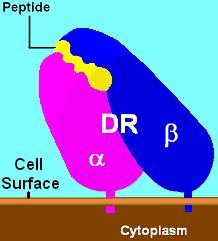
Illustration of DR with bound ligand (yellow)
Protein typecell surface receptor
FunctionImmune recognition and
antigen presentation
Subunit name Gene Chromosomal locus
α HLA-DRA Chromosome 6p21.31
β1 HLA-DRB1 " "
β3 HLA-DRB3 " "
β4 HLA-DRB4 " "
β5 HLA-DRB5 " "

HLA-DR is an MHC class II cell surface receptor encoded by the human leukocyte antigen complex on chromosome 6 region 6p21.31. The complex of HLA-DR (Human Leukocyte Antigen – DR isotype) and peptide, generally between 9 and 30 amino acids in length, constitutes a ligand for the T-cell receptor (TCR). HLA (human leukocyte antigens) were originally defined as cell surface antigens that mediate graft-versus-host disease. Identification of these antigens has led to greater success and longevity in organ transplant.

Antigens most responsible for graft loss are HLA-DR (first six months), HLA-B (first two years), and HLA-A (long-term survival).[1] Good matching of these antigens between host and donor is most critical for achieving graft survival.

HLA-DR is also involved in several autoimmune conditions, disease susceptibility and disease resistance. It is also closely linked to HLA-DQ and this linkage often makes it difficult to resolve the more causative factor in disease.

HLA-DR molecules are upregulated in response to signalling. In the instance of an infection, the peptide (such as the staphylococcal enterotoxin I peptide) is bound into a DR molecule and presented to a few of a great many T-cell receptors found on T-helper cells. These cells then bind to antigens on the surface of B-cells stimulating B-cell proliferation.

Function

[edit]
Illustration of DR receptor presenting antigen to TCR on T-helper cell

The primary function of HLA-DR is to present peptide antigens, potentially foreign in origin, to the immune system for the purpose of eliciting or suppressing T-(helper)-cell responses that eventually lead to the production of antibodies against the same peptide antigen. Antigen-presenting cells (macrophages, B-cells and dendritic cells) are the cells in which DR are typically found. Increased abundance of DR 'antigen' on the cell surface is often in response to stimulation, and, therefore, DR is also a marker for immune stimulation.

Structure

[edit]

HLA-DR is an αβ heterodimer, cell surface receptor, each subunit of which contains two extracellular domains, a membrane-spanning domain and a cytoplasmic tail. Both α and β chains are anchored in the membrane. The N-terminal domain of the mature protein forms an alpha-helix that constitutes the exposed part of the binding groove, the C-terminal cytoplasmic region interact with the other chain forming a beta-sheet under the binding groove spanning to the cell membrane. The majority of the peptide contact positions are in the first 80 residues of each chain.

Genetics

[edit]

The genetics of HLA-DR is complex. HLA-DR is encoded by several loci and several 'genes' of different function at each locus. The DR α-chain is encoded by the HLA-DRA locus. Unlike the other DR loci, functional variation in mature DRA gene products is absent. (Note: see table Number of Variant Alleles HLA-DR Loci) This reduces the potential functional combinations from ~1400 to ~400 ([table is not exact because new alleles are continually being added; not all new alleles are functional variants of the mature subunits]).

28 (of 75) Most common DR-DQ haplotypes in Americans of European descent
DR DR-DQ DR DQ Freq
Serotype haplotype B1 A1 B1 %[2]
DR1 DR1-DQ5 01:01 01:01 05:01 9. 1
01:02 01:01 05:01 1. 4
01:03 01:01 05:01 0. 5
DR3 DR3-DQ2 03:01 05:01 02:01 13. 1
DR4 DR4-DQ7 04:01 0300 03:01 5. 4
04:07 0300 03:01 0. 9
DR4-DQ8 04:01 0300 03:02 5. 0
04:02 0300 03:02 1. 0
04:03 0300 03:02 0. 4
04:04 0300 03:02 3. 9
04:05 0300 03:02 0. 3
DR7 DR7-DQ2 07:01 02:01 02:02 11. 1
DR7-DQ9 07:01 02:01 03:03 3. 7
DR8 DR8-DQ4 08:01 04:01 04:02 2. 2
DR8-DQ7 08:03 06:01 03:01 0. 1
DR9 DR9-DQ9 09:01 0300 03:03 0. 8
DR10 DR10-DQ5 10:01 01:04 05:01 0. 7
DR11 DR11-DQ7 11:01 05:05 03:01 5. 6
11:03 05:05 03:01 0. 3
11:04 05:05 03:01 2. 7
DR12 DR12-DQ7 12:01 05:05 03:01 1. 1
DR13 DR13-DQ6 13:01 01:03 06:03 5. 6
13:02 01:02 06:04 3. 4
13:02 01:02 06:09 0. 7
DR13-DQ7 13:03 05:05 03:01 0. 7
DR14 DR14-DQ5 14:01 01:04 05:03 2. 0
DR15 DR15-DQ6 15:01 01:02 06:02 14. 2
15:02 01:03 06:01 0. 7
DR16 DR16-DQ5 16:01 01:02 05:02 1. 0
ligand (Staphylococcal enterotoxin 1-C peptide:pkyvkqntlklat) within the binding pocket of DR αβ101

The DR β-chain[3] is encoded by 4 loci, however no more than 3 functional loci are present in a single individual, and no more than two on a single chromosome. Sometimes an individual may only possess 2 copies of the same locus, DRB1*. The HLA-DRB1 locus is ubiquitous and encodes a very large number of functionally variable gene products (HLA-DR1 to HLA-DR17). The HLA-DRB3 locus encodes the HLA-DR52 specificity, is moderately variable and is variably associated with certain HLA-DRB1 types. The HLA-DRB4 locus encodes the HLA-DR53 specificity, has some variation, and is associated with certain HLA-DRB1 types. The HLA-DRB5 locus encodes the HLA-DR51 specificity, which is typically invariable, and is linked to the HLA-DR2 types.

  • linkage (See Table)
    • DQA1 and DQB1
      • Linkage disequilibrium exists for many DR-DQ types.
    • Nomenclature issues. Some older studies may refer to DR15 or 16 as DR2 and DQ5 and DQ6 as DQ1 therefore a haplotype DR2-DQ1 is usually referring to DR15-DQ6 but could be referring to DR16-DQ5. DR5 is used to refer to DR11 and DR12, in which case DQ3 might be used. In these instances DQ3 almost always can be interpreted as DQ7, but DR5 is most often DR11 and less frequently DR12. Similar issues exist for DR6 versus DR13 and DR14. DR6-DQ1 can refer to either DR13-DQ6 or less frequently DR14-DQ5, but DR6-DQ3 or DR6-DQ7 generally refers to DR13-DQ7. Even older literature has more confusing designations. By looking at the change of disease association with improved testing we can see how HLA nomenclature has evolved over time.
Number of Variant Alleles HLA-DR Loci
HLA-DR
HLA -A1 -B1 -B3 to -B51 Potential
Locus # # # Combinations
Alleles[3][4] 3 463 74 1635
Unique Polypeptide 2 394 57 902
Contact Variant 1 ~300 ~30 ~330
1DRB3, DRB4, DRB5 have variable presence in humans

Evolution and allele frequencies

[edit]

There is a high level of allelic diversity at HLA DRB1, it is second only to HLA-B locus in number of allelic variants. These two loci are highest sequence variation rate within human genome. This means HLA-DRB1 is rapidly evolving, much more rapidly than almost all other protein encoding loci. Much of the variation at HLA DRB1 occurs at peptide contact positions in the binding groove, as a result many of the alleles alter the way the DR binds peptide ligands and changes the repertoire each receptor can bind. This means that most of the changes are functional in nature, and therefore are under selection. In the HLA region, genes are under heterozygous or balancing selection, although certain alleles appear to be under positive or negative selection, either in the past or present

HLA generally evolve through a process of gene conversion, which is a form of short distance or 'abortive' genetic recombination. Functional motifs in genes are exchanged to form new alleles, and frequently new, functionally different DR isoforms. HLA-DR represents an extreme example of this. A survey of X-linked loci reveals that most human loci have undergone fixation within the last 600,000 years, and diploid loci have undergone significant proportion of fixation in that period of time.

The level of deep branching at X-linked loci indicates loci were close to fixation or fixed at the end of the human population bottleneck 100,000 to 150,000 years ago. The HLA-DR locus represents a major exception to this observation.[5] Based on distribution of major groupings in the human population it is possible to assert that more than a dozen major variants survived the population bottleneck. This observation is supported by the concept of a heterozygous selection coefficient operating on the HLA-DR, and at the HLA-DRB1 locus to a greater degree relative to HLA-DQB1 and HLA-DPB1. Most of the HLA alleles currently present in the human population can be explained by gene conversion between these ancient ancestral types,[6] some that persist into the extant population.

Serogroups

[edit]
Subpages for DR serotypes
Serotypes of HLA-DRB1 gene products
Split antigens
HLA-DR1
HLA-DR2 HLA-DR15 HLA-DR16
HLA-DR3 HLA-DR17 HLA-DR18
HLA-DR4
HLA-DR5 HLA-DR11 HLA-DR12
HLA-DR6 HLA-DR13 HLA-DR14
HLA-DR7
HLA-DR8
HLA-DR9
HLA-DR10

The table below provides links to subpages with information about distribution, genetic linkage and disease association for the HLA-DR serogroups.

Interlocus DRB linkage

[edit]

DRB1 is linked with other DRB loci in four ways.

DR1 to DR18 genetic linkage to DR51, DR52, and DR53
non-DRB1 linked DRB1 antigens
antigens antigens
None DR1 DR8 DR10
DR51 DR2 DR15 DR16
DR52 DR3 DR17 DR18
DR5 DR11 DR12
DR6 DR13 DR14
DR53 DR4 DR7 DR8 DR9


Diseases associated with HLA-DR and links to DR subpages(V - T)
Class Disease Associated DR 2 3 4
alopecia areata DR5
anemia pernicious DR15
antiphospholipid syndrome, primary DR5 DR12
aneurysm coronary artery DR16
arteritis Takayasu's DR16
arthritis, rheumatoid juvenile DR4 DR5 DR14 DR15
pauciarticular, juv. DR8
Still's disease DR12
iritis w/juv. arthritis DR12
seropositive DR1 DR4 DR10
w/systemic sclerosis DR1
lyme disease induced DR4
tiopronin intolerance DR5 DR11 DR12
cardiomyopathy hypertrophic DR4 DR17
T. cruzi induced DR4 DR7 DR15
colitis Crohn's DR1
ulcerative DR1
diabetes juvenile (type 1) DR3 DR4 DR17 DR18
fatty liver (type 2) DR8
encephalomyelitis rabies vaccine-induced DR17
encephalopathy acute necrotizing DR52
epilepsy childhood DR5
infantile/spasm DR17
heart disease rheumatic DR16
hepatitis autoimmune DR2 DR4 DR17
primary biliary cirrhosis DR2 DR8
chronic type C DR11
lichen planus DR1 DR10
lupus, systemic DR3 DR4 DR52
hydralazine-induced DR4
with Sjögren syndrome DR15
lymphadenopathy generalized DR5
lymphoma, mycosis fungoides DR5
melioidosis DR16
myasthenia gravis DR3 DR6 DR13 DR14
penicillamine-induced DR1
myositis inflammatory inclusion body DR17 DR18 DR52
narcolepsy DR2 DR12
nephritis, tubulointerstitial DR1
nephropathy IgA-mediated DR4
polyglandular deficiency syndrome DR5
pemphigus foliaceous DR1
vulgaris DR4
psoriasis vulgaris DR1 DR7
papillomatosis, respiratory DR1
sarcoidosis non-chronic DR17 DR52
sclerosis, multiple DR2 DR15 DR53
"bout onset" multiple DR3
systemic DR4 DR11 DR16 DR52
vulval lichen DR12
schizophrenia DR1
susceptibility leprosy DR2
tuberculosis DR2
ragweed Ra6 allergy DR5
asthma, mite sensitive DR11
2ndary infection, AIDS DR3
aspergillosis DR15
Kaposi's sarcoma DR5
thyroid carcinomas DR8 DR11
ovarian/cervical cancer DR10 DR11 DR15
grape induced anaphylaxis DR11
Chlamydia pneumoniae DR52
thyroiditis Hashimoto's DR3 DR5
Graves' DR3 DR17 DR52
uveitis tubulointerstitial DR1
*references are provided on linked subpages

References

[edit]

Further reading

[edit]
[edit]
Revisions and contributorsEdit on WikipediaRead on Wikipedia
from Grokipedia
HLA-DR is a major histocompatibility complex (MHC) class II molecule encoded by the human leukocyte antigen (HLA) gene complex on chromosome 6, consisting of a heterodimer formed by an invariant alpha chain (HLA-DRA) and a highly polymorphic beta chain (primarily HLA-DRB1). This surface receptor is predominantly expressed on professional antigen-presenting cells, including dendritic cells, macrophages, and B lymphocytes, where it binds and displays peptide antigens derived from extracellular pathogens or proteins in a groove formed by its alpha-helical domains. By presenting these peptides to CD4+ T helper cells, HLA-DR is essential for activating adaptive immune responses, including T cell proliferation and differentiation into effector subsets that coordinate humoral and cellular immunity. The structure of HLA-DR features two transmembrane chains: the alpha chain, approximately 33-35 kDa, encoded by five exons that include leader , two extracellular domains (alpha1 and alpha2), and a transmembrane/cytoplasmic region; and the beta chain, around 26-28 kDa, encoded by six exons with similar organization but greater variability in the beta1 domain responsible for binding specificity. Unlike the alpha chain, which lacks polymorphisms in its -binding region, the beta chain exhibits extensive allelic diversity, with over 3,800 known alleles at the HLA-DRB1 locus alone (as of 2025), influencing the range of peptides it can present and contributing to individual immune repertoires. This polymorphism arises from evolutionary pressures to recognize diverse pathogens, but it also underlies susceptibility to autoimmune diseases, , and infectious disease outcomes. In addition to its core immunological function, HLA-DR expression can be upregulated by interferon-gamma on non-professional antigen-presenting cells during inflammation, broadening its role in immune surveillance. Clinically, specific HLA-DR alleles are strongly associated with autoimmune disorders such as (e.g., HLA-DRB1*04:01), , and , where they may promote self-peptide presentation leading to loss of . In transplantation, HLA-DR matching is critical to minimize and improve outcomes. Furthermore, HLA-DR's involvement in pathways, regulated by chaperones like , ensures efficient peptide loading in endosomal compartments, highlighting its integration into broader dynamics.

Overview

Definition

HLA-DR is a major complex ( encoded within the (HLA) gene complex on the short arm of at locus 6p21.3. It consists of an alpha chain, encoded by the HLA-DRA gene, and a beta chain, encoded by one of several HLA-DRB genes, both of which are type I transmembrane glycoproteins that non-covalently associate to form a heterodimeric structure. This heterodimer plays a key role in the by presenting antigenic peptides to CD4+ T cells, though its detailed function is elaborated elsewhere. The discovery of HLA-DR occurred in the 1970s through serological studies aimed at identifying antigens beyond the HLA class I molecules (HLA-A, -B, and -C), which were already known to influence . In 1973, researchers utilized techniques on B lymphocytes to detect these novel antigens, which correlated with mixed lymphocyte reaction (MLR) responses and were distinct from class I specificities. These findings, initially termed HLA-D related (DR) antigens due to their linkage to the HLA-D locus defined by cellular typing, marked HLA-DR as the first serologically identifiable molecule in humans. HLA-DR is distinguished from the other two primary MHC class II isotypes, HLA-DQ and HLA-DP, by its unique genetic organization and expression patterns within the HLA-D region. While all three form alpha-beta heterodimers involved in immune recognition, HLA-DR is encoded by a single invariant alpha chain gene (HLA-DRA) paired with multiple polymorphic beta chain genes (HLA-DRB1 through DRB9), leading to greater allelic diversity compared to the more balanced polymorphism in HLA-DQ and HLA-DP. This structural specificity underscores HLA-DR's prominent role among class II molecules.

Biological Role

HLA-DR, a major histocompatibility complex class II (MHC-II) molecule, plays a central role in adaptive immunity by presenting exogenous antigens to + T cells, thereby initiating and orchestrating helper T-cell responses essential for humoral and cellular immunity. This process involves professional antigen-presenting cells, such as dendritic cells and macrophages, capturing extracellular pathogens, processing them into peptides, and loading them onto HLA-DR for recognition by + T cells, which then differentiate into effector subsets to coordinate immune defense. Beyond pathogen clearance, HLA-DR is critically involved in autoimmune regulation, where certain alleles predispose individuals to diseases like and by influencing self-antigen presentation and T-cell tolerance breakdown. In transplantation, HLA-DR mismatches drive acute and chronic graft rejection through alloreactive + T-cell activation, making it a key target for immunosuppressive therapies and matching protocols. Conversely, in pathogen defense, HLA-DR facilitates robust + T-cell responses against viruses, bacteria, and parasites, with specific alleles linked to better outcomes in infections such as and hepatitis C by enhancing presentation. HLA-DR expression is dynamically regulated, with significant upregulation in response to inflammatory signals, particularly interferon-gamma (IFN-γ) produced by activated T cells and natural killer cells, which enhances during infection or tissue damage. This IFN-γ-mediated induction amplifies immune surveillance but can also contribute to in chronic .

Molecular Structure

Protein Composition

HLA-DR is a heterodimeric composed of an invariant alpha chain and a polymorphic beta chain, both anchored in the plasma membrane of antigen-presenting cells. The alpha chain, encoded by the HLA-DRA , has a molecular weight of approximately 34 and consists of two extracellular domains: the α1 domain (about 76 ) forming part of the peptide-binding region and the α2 domain (about 82 ) resembling an immunoglobulin-like fold. The beta chain, encoded by various HLA-DRB , exhibits a molecular weight ranging from 28 to 30 due to allelic variations and includes two extracellular domains: the β1 domain (about 94 ), which contributes to the peptide-binding site, and the β2 domain (about 79 ), also immunoglobulin-like. Both chains feature a of approximately 20-25 hydrophobic that embeds the complex in the , facilitating stable membrane association. Additionally, short cytoplasmic tails—around 10 for the alpha chain and 15-20 for the beta chain—extend into the , enabling interactions with intracellular signaling molecules and the for endocytic trafficking and immune formation. Crystal structures of HLA-DR, such as that of resolved at 2.3 resolution, reveal the extracellular domains forming a platform with a at the distal end. This groove is created by two parallel alpha-helices—one from the α1 domain and one from the β1 domain—positioned atop an antiparallel β-sheet floor composed of eight β-strands contributed by both α1 and β1 domains, providing a for antigenic typically 13-25 residues long. This architecture underscores the specificity of in adaptive immunity.

Peptide Binding

HLA-DR molecules feature an open-ended peptide-binding groove formed by the α1 and β1 domains of the αβ heterodimer, which accommodates peptides typically ranging from 13 to 25 in length. This extended conformation allows the peptide to project beyond the ends of the groove, enabling flexibility in peptide size compared to the closed groove of molecules. The binding is stabilized primarily through hydrogen bonds between conserved residues in the MHC and the peptide backbone, ensuring a universal mode of interaction while permitting allele-specific side-chain accommodations. Key specificity is conferred by four primary anchor positions—P1, P4, P6, and P9—where peptide side chains insert into corresponding pockets in the groove floor and walls. The P1 pocket, located near the N-terminus of the bound peptide, typically favors large hydrophobic or aromatic residues such as tyrosine or phenylalanine in many HLA-DR alleles, while P4, P6, and P9 exhibit preferences for a variety of hydrophobic, polar, or charged amino acids depending on the allotype. These anchors dictate the selection and orientation of peptides derived from endocytosed antigens, ensuring only those with compatible motifs bind stably. Polymorphisms predominantly in the β-chain residues lining pocket 1 profoundly influence specificity, altering the pocket's shape, hydrophobicity, or charge to favor distinct residue types. For instance, in HLA-DRB101:01, the pocket accommodates hydrophobic residues at P1 due to β-chain residues like those influencing pocket 1 geometry, whereas alleles like DRB104:01 introduce variations such as at β71, which can enhance binding to peptides with smaller or differently charged side chains at this position. Such allelic differences in pocket 1 contribute to the diverse repertoires presented by different HLA-DR variants, impacting immune recognition of pathogens and autoantigens. The stability of the HLA-DR-peptide complex is a critical of its surface presentation duration and is quantitatively assessed by the dissociation rate, often expressed as the of the complex. Stable complexes, with half-lives ranging from hours to days, are more likely to elicit effective T-cell responses, as measured in assays showing immunodominant peptides dissociating slowly compared to cryptic ones. Factors like residue compatibility and strength modulate these rates, with polymorphic variations in the binding pockets further tuning stability across alleles.

Genetics and Nomenclature

Gene Locus

The HLA-DR genes are situated within the () class II region on the short arm of at cytogenetic band 6p21.31. This region encompasses the genes responsible for encoding class II molecules involved in . The HLA-DR cluster itself, including the core structural genes, spans approximately 300 kb, with variations across haplotypes due to differences in gene content and intergenic distances. At the heart of the HLA-DR locus is the HLA-DRA gene, which is monomorphic and consists of a single functional copy encoding the invariant alpha chain shared among all HLA-DR heterodimers. This alpha chain pairs with beta chains encoded by multiple DRB genes clustered nearby. The HLA-DRB1 gene is invariably present and highly polymorphic, producing the primary beta chain for HLA-DR molecules. In addition to DRB1, haplotype-specific DRB loci contribute beta chains: HLA-DRB3 is expressed on DR52-associated haplotypes (e.g., DR3, DR11, DR12, DR13, DR14), HLA-DRB4 on DR53-associated haplotypes (e.g., DR4, DR7, DR9), and HLA-DRB5 on DR51-associated haplotypes (e.g., DR2, DR15, DR16). These additional DRB genes are mutually exclusive within a given haplotype, resulting in either one or two functional beta chain genes per chromosome. Pseudogenes such as DRB2, DRB6, DRB7, DRB8, and DRB9 may also be present but do not encode functional proteins. HLA-DR genes are inherited as linked s on , with no recombination typically occurring within the cluster due to its compact organization. Expression is codominant, meaning both maternal and paternal alleles are transcribed and translated in heterozygous individuals. Consequently, antigen-presenting cells can express up to four distinct HLA-DR molecules: two from each parental haplotype (DRA paired with DRB1, plus potentially a second DRB product if present). This multiplicity enhances the diversity of peptide antigens presented to + T cells, broadening immune surveillance.

Allele Naming

The nomenclature for HLA-DR alleles is standardized by the (WHO) Nomenclature Committee for Factors of the HLA System, with the official repository maintained by the IPD-IMGT/HLA Database. This system assigns unique identifiers to alleles based on their sequences, ensuring precise cataloging of in the HLA-DR region. For HLA-DR, the primary polymorphic locus is HLA-DRB1, and alleles are denoted in the format HLA-DRB1* followed by a two-digit code representing the serological specificity (e.g., 01 for ), a colon, and additional digits indicating protein-level differences (e.g., HLA-DRB101:01), with further digits for synonymous or intronic variants (e.g., HLA-DRB101:01:01). This convention, adopted in the 2010 revision, distinguishes between the gene locus, group, specific protein , and synonymous subtypes, facilitating compatibility in transplantation and research. Historically, HLA-DR originated from serological typing in the 1970s, which identified broad specificities labeled DR1 through DR18 based on reactivity with cell surface antigens. Advances in molecular techniques, such as and PCR in the 1980s, revealed finer distinctions, leading to the splitting of serological groups into more precise molecular designations; for instance, the DR2 specificity was subdivided into DR15 and DR16 based on sequence differences in the DRB1 gene. The "w" provisional prefix (e.g., DRw2) was dropped in 1991, and by the 1990s, the system fully transitioned to sequence-based naming under WHO oversight, accommodating the identification of multiple DRB loci (DRB1, DRB3, DRB4, DRB5) that contribute to serological DR types. As of November 2025, the IPD-IMGT/HLA Database lists 3,892 at the HLA-DRB1 locus, reflecting extensive polymorphism. Of these, 2,523 encode functional proteins capable of , while 140 are null alleles that result in non-expressed or truncated products due to mutations like frameshifts or stop codons. This distinction is critical for assessing immunological functionality, with the database regularly updating allele assignments through sequence submissions and WHO committee reviews.

Biosynthesis and Expression

Assembly Process

The biosynthesis of HLA-DR molecules begins with the transcription of the , which encodes the invariant α-chain, and the HLA-DRB genes (primarily DRB1), which encode polymorphic β-chains, followed by their translation on ribosomes associated with the rough (ER). These α and β chains fold co-translationally in the ER lumen, facilitated by chaperones such as , and rapidly associate with the invariant chain (Ii, also known as CD74), a type II transmembrane protein encoded by the CD74 gene. Ii exists as multiple isoforms (p33, p35, p41, p43) that trimerize and bind non-covalently to three αβ heterodimers, forming a stable nonameric complex (αβ)₃Ii₃; this association promotes proper folding, prevents premature peptide binding to the αβ groove, and retains the complex in the ER via Ii's ER retention signals until assembly is complete. Upon successful assembly, the (αβ)₃Ii₃ complexes exit the ER via COPII-coated vesicles and traffic through the Golgi apparatus, where Ii undergoes initial N-linked modifications, before being directed to the compartment (MIIC), a specialized late endosomal/lysosomal structure enriched in proteolytic enzymes. In the acidic environment of the MIIC, Ii is proteolytically degraded in a stepwise manner: initial cleavages by asparaginyl (AEP) and other proteases generate Ii fragments (e.g., p22, p10), followed by the specific action of cathepsin S, a , which removes the Ii segment anchored in the peptide-binding groove, leaving the class II-associated invariant chain (CLIP) bound to HLA-DR. This degradation is essential for exposing the groove for peptide loading and is tightly regulated to ensure efficient processing. Peptide loading onto HLA-DR occurs in the MIIC, catalyzed by the non-classical molecule , which acts as a peptide editor by facilitating the removal of CLIP and promoting the exchange for higher-affinity antigenic derived from endocytosed proteins. recognizes conformational changes in the αβ-CLIP complex, accelerating CLIP dissociation without itself binding stably to the groove, thereby optimizing the repertoire for immune surveillance. Quality control mechanisms ensure that only stable -HLA-DR complexes proceed: unstable or empty αβ dimers are retained in the MIIC or targeted for lysosomal degradation via ubiquitination by E3 ligases such as MARCH1, while properly loaded complexes are transported to the cell surface.

Cellular Expression

HLA-DR is constitutively expressed on professional antigen-presenting cells (APCs), including B lymphocytes, dendritic cells, and macrophages, enabling these cells to present antigens to CD4+ T cells as part of the . In B cells, HLA-DR expression is maintained throughout their lifecycle, supporting their role in , while macrophages exhibit stable surface levels that facilitate and in tissues. Dendritic cells, as potent APCs, display particularly high constitutive HLA-DR densities, which are essential for initiating in lymphoid organs. Expression of HLA-DR can be induced on various non-APC cell types under inflammatory conditions, particularly through stimulation by interferon-gamma (IFN-γ). Endothelial cells lining blood vessels upregulate HLA-DR in response to IFN-γ, allowing them to contribute to local immune surveillance and T-cell recruitment at sites of . Similarly, fibroblasts in connective tissues express HLA-DR following IFN-γ exposure, enhancing their participation in chronic immune reactions such as those in autoimmune diseases. This inducible expression broadens the scope of beyond specialized immune cells. The density of HLA-DR on cell surfaces varies depending on cell type and activation state, with notable modulation by . Immature dendritic cells exhibit high HLA-DR levels, which increase further upon maturation to optimize efficiency. Conversely, interleukin-10 (IL-10), an , downregulates HLA-DR expression on APCs like monocytes and dendritic cells, thereby dampening excessive immune activation and promoting tolerance. These variations in expression density fine-tune immune responses to prevent overactivation or inadequate protection.

Function in Immunity

Antigen Presentation

HLA-DR molecules, as (MHC) class II proteins, primarily present antigenic peptides derived from exogenous sources to + T cells, facilitating immune recognition of extracellular pathogens. Exogenous antigens, such as proteins from bacteria or viruses, are internalized by professional antigen-presenting cells (APCs) like dendritic cells, macrophages, and B cells through or , forming phagosomes that fuse with lysosomes to create phagolysosomes. Within these acidic endosomal compartments, antigens are proteolytically degraded by enzymes including cathepsins into peptides typically 12–24 in length, preparing them for binding to HLA-DR. The peptide loading process occurs predominantly in specialized late endosomal structures known as MHC class II-containing compartments (MIIC). Newly synthesized HLA-DR αβ heterodimers, initially associated with the invariant chain (Ii) to prevent premature binding in the , traffic to MIIC via the Golgi apparatus. In MIIC, Ii is sequentially degraded by proteases, leaving a CLIP fragment in the peptide-binding groove; then catalyzes CLIP removal and facilitates the exchange for antigenic peptides, ensuring stable HLA-DR-peptide complexes. The binding groove of HLA-DR accommodates peptides with specific anchor residues, contributing to the selectivity of loaded antigens. Once formed, the peptide-MHC (pMHC) complexes are transported from MIIC to the plasma membrane through vesicular trafficking pathways, including . At the cell surface, these HLA-DR-pMHC complexes are surveyed by circulating + T cells, whose T cell receptors recognize the peptide in the context of HLA-DR, initiating adaptive immune responses against the presented antigen. HLA-DR exhibits a strong preference for exogenous s, distinguishing it from pathways that handle endogenous antigens. This specificity targets peptides from extracellular bacteria (e.g., those derived from Mycobacterium tuberculosis cell wall proteins) and viruses (e.g., influenza fragments), enabling effective surveillance of infections. In autoimmunity, however, self-s like those from myelin basic protein (MBP) can be aberrantly presented by HLA-DR, as seen in where MBP 84–102 epitopes bind HLA-DR2 and activate autoreactive T cells.

T-Cell Activation

HLA-DR molecules on antigen-presenting cells (APCs) display antigens in the context of class II (MHC II), which are recognized by the (TCR) on CD4+ T cells. This recognition initiates T-cell activation through formation of an , where the TCR binds the -MHC II complex with high specificity. Concurrently, the co-receptor on the T cell engages invariant regions of HLA-DR, stabilizing the interaction and amplifying via recruitment of the Lck kinase to the TCR complex. Full T-cell activation requires a second signal via , where on the T cell binds (B7-1) or (B7-2) on the , delivering an essential costimulatory signal that prevents anergy and promotes survival. This dual signaling—antigenic from TCR-HLA-DR and costimulatory from -B7—triggers intracellular pathways, including and MAPK activation, culminating in the production of interleukin-2 (IL-2) by the T cell. IL-2 then acts in an autocrine manner to drive clonal proliferation and expansion of antigen-specific + T cells. The specific HLA-DR allele presenting the can influence the differentiation of activated + T cells into effector subsets such as Th1, Th2, or Th17. For instance, certain alleles, through their peptide-binding motifs, promote a bias toward Th17 differentiation by favoring presentation of arthritogenic peptides that elicit IL-17-producing responses. This allele-dependent skewing arises from variations in peptide selection and TCR affinity, directing profiles like IFN-γ for Th1 or IL-4 for Th2. Regulatory T cells (Tregs), a subset of + T cells expressing , suppress excessive T-cell responses through CTLA-4, which competes with for binding to / on HLA-DR-expressing s. This interaction depletes costimulatory ligands from the APC surface via trans-endocytosis and , reducing co-stimulation available to conventional T cells and thereby dampening activation and proliferation in the .

Population Genetics

Allele Distribution

HLA-DR alleles exhibit significant variation in frequency across global populations, reflecting historical migrations and . Data from large-scale genomic projects, such as the , reveal that certain DRB1 alleles predominate in specific ethnic groups. For instance, in East Asian populations, DRB115:01 is relatively common, with frequencies ranging from 5-7% in superpopulations like CHB ( in ) and JPT (Japanese in ), and it forms part of the haplotype strongly associated with type 1, where nearly all affected individuals carry this allele. In contrast, DRB115:02 shows elevated frequencies in some Southeast Asian groups, such as up to 13.7% in southern Japanese populations and over 48% in Philippine samples, though its direct link to is less established compared to *15:01. In European populations, DRB104:01 is notably prevalent, with allele frequencies of approximately 5-10% across EUR superpopulations in the , and up to 17.6% in Danish cohorts; this allele is particularly implicated in susceptibility, where it encodes shared epitope motifs that enhance disease risk. Ethnic variations are evident in alleles like DRB103:01, which reaches 10-15% in European ancestry groups (e.g., 17.2% in Dutch samples) but drops to 2-5% in African superpopulations like YRI (Yoruba in ), as documented in the and subsequent analyses from the 2020s. Recent studies compiling data from over 200 worldwide populations confirm these patterns, showing DRB1*03:01 clustering with Caucasian groups in principal component analyses of allele frequencies. Haplotype frequencies further highlight population-specific distributions, such as the , which occurs at around 7-10% in Northern European populations, including 7.7% in northern French cohorts and higher rates in Irish and groups, often extended as A1-B8-DR3-DQ2. These distributions are derived from high-resolution typing in diverse datasets, emphasizing the role of DRB1 in shaping variability across ethnicities.

Evolutionary History

The HLA-DR genes belong to the ( family, which originated in the common ancestor of jawed over 450 million years ago through a primordial duplication event that established the linked organization of class I and class II loci. This ancient synteny has been largely conserved across lineages, including in mammals, where the DR subregion arose via successive gene duplications of ancestral DRB genes. In , at least four ancestral DRB lineages predated the divergence of monkeys and hominoids around 25 million years ago, with one lineage tracing back further to the split from approximately 36 million years ago. The human-specific DRB1 locus diversified following the human-chimpanzee split about 6-7 million years ago, generating functional alleles through ongoing duplication and recombination, though most contemporary DRB1 variants emerged within the last 1 million years. Balancing selection has been the dominant evolutionary force shaping HLA-DR polymorphism, primarily via that enhances pathogen resistance by enabling broader to T cells. This selection pressure, driven by with diverse pathogens, maintains high allelic diversity at key peptide-binding sites while purging less advantageous variants. Gene conversion, involving non-reciprocal transfers of sequence motifs between closely related DRB paralogs, serves as the primary mutational mechanism, facilitating the rapid exchange of functional elements like hypervariable regions without disrupting overall . Such events, often spanning short DNA segments of 100-200 base pairs, have propagated ancient motifs across species boundaries and contributed to the mosaic-like architecture of modern alleles. Population bottlenecks, notably the Out-of-Africa migration around 70,000 years ago, profoundly influenced HLA-DR evolution by drastically reducing and retaining only a subset of ancestral African alleles. This event, estimated to involve fewer than individuals, led to decreased heterozygosity outside while preserving functionally critical DRB1 variants that conferred survival advantages against local pathogens. Consequently, non-African populations exhibit a narrowed allelic repertoire compared to African groups, underscoring how demographic history amplified the signatures of prior selection.

Serological Classification

Serogroups

The HLA-DR serogroups represent serological classifications of the HLA-DR antigens, defined by the reactivity of specific to polymorphic on the αβ heterodimers expressed on antigen-presenting cells. These serogroups were established through historical typing methods that relied on alloantisera or monoclonal to distinguish distinct serological specificities. Traditionally, there are 18 major HLA-DR serogroups, designated through DR18, each corresponding to clusters of alleles at the HLA-DRB1 locus that share common serological . As of 2025, the WHO Nomenclature Committee has refined this to 24 serological specificities for DRB1 based on distinct patterns, enhancing precision in compatibility and assessments. For example, the DR1 serogroup is defined by reactivity to alleles in the DRB101 group, while DR4 corresponds to the DRB104 allelic group. Some serogroups were initially defined as broad categories and later subdivided based on finer serological distinctions; notably, DR2 was split into DR15 (associated with DRB115 alleles) and DR16 (DRB116), and DR5 into DR11 (DRB111) and DR12 (DRB112). These subdivisions arose from improved serological resolution using panels of lymphocytes and specific antisera. Historically, serological typing of HLA-DR serogroups was performed via (CDC) assays, in which target lymphocytes are incubated with typing sera, followed by complement addition to induce cell if antigen-antibody binding occurs; this method allowed identification of serogroups through microlymphocytotoxicity trays. With the advent of molecular techniques, such as sequence-specific probing (SSOP) and next-generation sequencing, HLA-DR typing has transitioned from serological to DNA-based methods, providing higher resolution at the allele level. In this modern , maintained by the WHO and the IMGT/HLA Database, each serogroup maps directly to defined allelic groups (e.g., DRB1*01 for ), enabling precise correlation between serological and molecular classifications while preserving the serogroup framework for compatibility assessments in transplantation. The 2025 update further assigns full names to common DR alleles covering >99.5% of populations, with implications for organ allocation and humoral evaluation.

Interlocus Linkage

The HLA-DR region features the ubiquitously expressed DRB1 gene alongside one of three paralogous genes—DRB3, DRB4, or DRB5—each in strong (LD) with specific DRB1 alleles, forming haplotype-specific combinations that are inherited together. For instance, the DRB3 gene, which encodes the DR52 specificity, is tightly linked to DRB1 alleles defining the DR3, DR11, DR12, DR13, and DR14 haplotypes, ensuring that DR52 expression accompanies these DRB1 variants in most individuals. Similarly, DRB4 (associated with DR53) links to DRB1*04, *07, and 09 alleles, while DRB5 (DR51) pairs with DRB115 and *16 alleles, reflecting evolutionary conservation within the DR subregion. These interlocus associations within the DR cluster minimize allelic diversity and facilitate coordinated . Beyond the DR loci, strong LD extends to the neighboring HLA-DQ and HLA-DP regions, promoting the co-inheritance of extended blocks across the class II MHC. Classic examples include the (DRB103:01-DQB102:01) and the (DRB104:01-DQB103:02), where recombination between DRB1 and DQB1 is exceptionally rare, preserving these combinations in populations and contributing to disease susceptibility patterns. LD with DP loci, though somewhat weaker, similarly results in haplotype blocks like those involving DPB1 alleles linked to DR-DQ pairs, underscoring the modular structure of class II genetics. These tight linkages have significant implications for HLA typing in clinical and research settings, as recombination events are infrequent within DR-DQ-DP blocks—occurring at rates of approximately 0.7-1% per meiosis overall in the class II region—allowing prediction of associated alleles from a single locus. However, known recombination hotspots, such as those between the DQ and DP subregions, can occasionally disrupt these patterns, leading to novel haplotypes. Recombination between DR and DQ remains extremely rare (<0.5%). Studies from the 2020s, leveraging high-resolution sequencing, have mapped LD decay in the MHC class II region, revealing gradual erosion over genetic distances and improving imputation accuracy for untyped paralogous genes like DRB3/4/5 based on DRB1 data. This enhances the precision of typing methods, particularly in diverse populations where haplotype conservation varies.

Clinical Relevance

Disease Associations

HLA-DR alleles play a critical role in disease susceptibility through their influence on and immune regulation, with specific variants linked to increased or decreased risk in autoimmune and infectious conditions. In (RA), the shared epitope hypothesis proposes that HLA-DRB104 alleles, particularly DRB104:01, confer susceptibility by sharing a conserved sequence ( or at position 70, or at 71, at 72, at 73, and at 74) in the beta-chain that enhances binding and presentation of arthritogenic self-peptides, such as citrullinated antigens, to + T cells. This motif is present in multiple DRB1 alleles (e.g., *04:01, *04:04, *04:05, *01:01, *01:02, *10:01), and meta-analyses confirm an of approximately 2-4 for RA in carriers, depending on ethnicity and homozygosity. HLA-DRB103:01 is strongly associated with susceptibility to (T1D) and (SLE), often in with HLA-DQA105:01-DQB102:01 (DQ2). In Latin American populations, DRB103:01 carriers exhibit an of 4.04 (95% CI: 1.41-11.53) for SLE, Sjögren's syndrome, and T1D, reflecting its role in presenting islet autoantigens or promoting autoreactive B-cell responses. Genome-wide association studies (GWAS) further support this, showing DRB103:01 as a key risk factor in European and multi-ethnic cohorts for both diseases, with effect sizes amplified in compound heterozygotes with DRB104. In infectious diseases, HLA-DRB115:01 provides protection against HIV-1 progression by enabling + T cells to recognize conserved viral epitopes through promiscuous binding across multiple class II , contributing to elite control in some individuals. This correlates with lower viral loads and delayed AIDS onset, with studies in diverse cohorts reporting reduced progression rates in carriers. In contrast, HLA-DRB115:01 increases risk for type 1 across populations, including in Asian populations where it forms the DRB115:01-DQA101:02-DQB106:02 ; this facilitates presentation of hypocretin () neuropeptides to autoreactive T cells, leading to selective loss of -producing neurons in the . The association is nearly absolute in Japanese and Korean patients ( >100), triggered often by environmental factors like H1N1 . The related DRB115:02-DQA101:03-DQB106:01 is common in Asians but protective against . Recent GWAS in the 2020s have refined HLA-DR associations in celiac disease, highlighting HLA-DRB109:01 as a susceptibility factor in non-European populations, linked to the DR9-DQ9 (DRB109:01-DQA103:02-DQB103:03). In Japanese cohorts, this allele shows an of 2.5-5 for disease development by restricting gluten-specific T cells, analogous to DQ2/DQ8 in Caucasians. Meta-analyses integrating multi-ethnic data confirm DRB1*09:01's role, with population-attributable risk up to 20% in East Asians, underscoring allele-specific peptide binding in immunopathology.

Transplantation Matching

HLA-DR compatibility plays a critical role in organ and tissue transplantation by minimizing the risk of immune-mediated graft rejection, as mismatches in HLA-DRB1 alleles can trigger donor-specific formation and T-cell responses leading to acute rejection episodes. In , for instance, a single HLA-DR mismatch is associated with a 15% increased of graft , while two mismatches elevate this risk by 26%, contributing to overall graft loss rates that can rise by 20-30% compared to fully matched transplants. Prioritizing HLA-DR matching in donor allocation algorithms has thus become standard practice to enhance long-term allograft survival, particularly in deceased-donor settings where wait times can extend due to constraints. Traditional serological methods, which relied on antibody-based detection of HLA-DR antigens, have largely been phased out in favor of molecular techniques due to their lower resolution and inability to distinguish allele-level polymorphisms. Next-generation sequencing (NGS) now predominates for HLA-DR in transplantation, offering high-throughput analysis of full gene sequences to identify precise DRB1 alleles and associated loci like DRB3/4/5, thereby improving matching accuracy and reducing ambiguous results. This shift enables the identification of permissible mismatches—those with low —such as between DRB101:01 and DRB101:02, which differ by a single substitution and pose minimal risk of rejection in . Post-2020 advancements have further refined HLA-DR matching through epitope-based approaches, which focus on immunogenic structural motifs (eplets) rather than whole alleles to predict alloimmune responses more precisely. Tools like HLAMatchmaker analyze eplet mismatches in HLA-DR and other class II loci, demonstrating improved outcomes by reducing de novo donor-specific antibodies and chronic rejection in and other solid organ transplants, with studies showing up to 50% lower rates of antibody-mediated rejection in eplet-optimized pairs. These methods integrate with NGS data to support personalized allocation, potentially expanding the donor pool while preserving graft longevity.

References

Add your contribution
Related Hubs
User Avatar
No comments yet.