



Community hub
Recent from talks
Knowledge base stats:
Talk channels stats:
Members stats:
History of music
Although definitions of music vary wildly throughout the world, every known culture partakes in it, and it is thus considered a cultural universal. The origins of music remain highly contentious; commentators often relate it to the origin of language, with much disagreement surrounding whether music arose before, after or simultaneously with language. Many theories have been proposed by scholars from a wide range of disciplines, though none has achieved broad approval. Most cultures have their own mythical origins concerning the invention of music, generally rooted in their respective mythological, religious or philosophical beliefs.
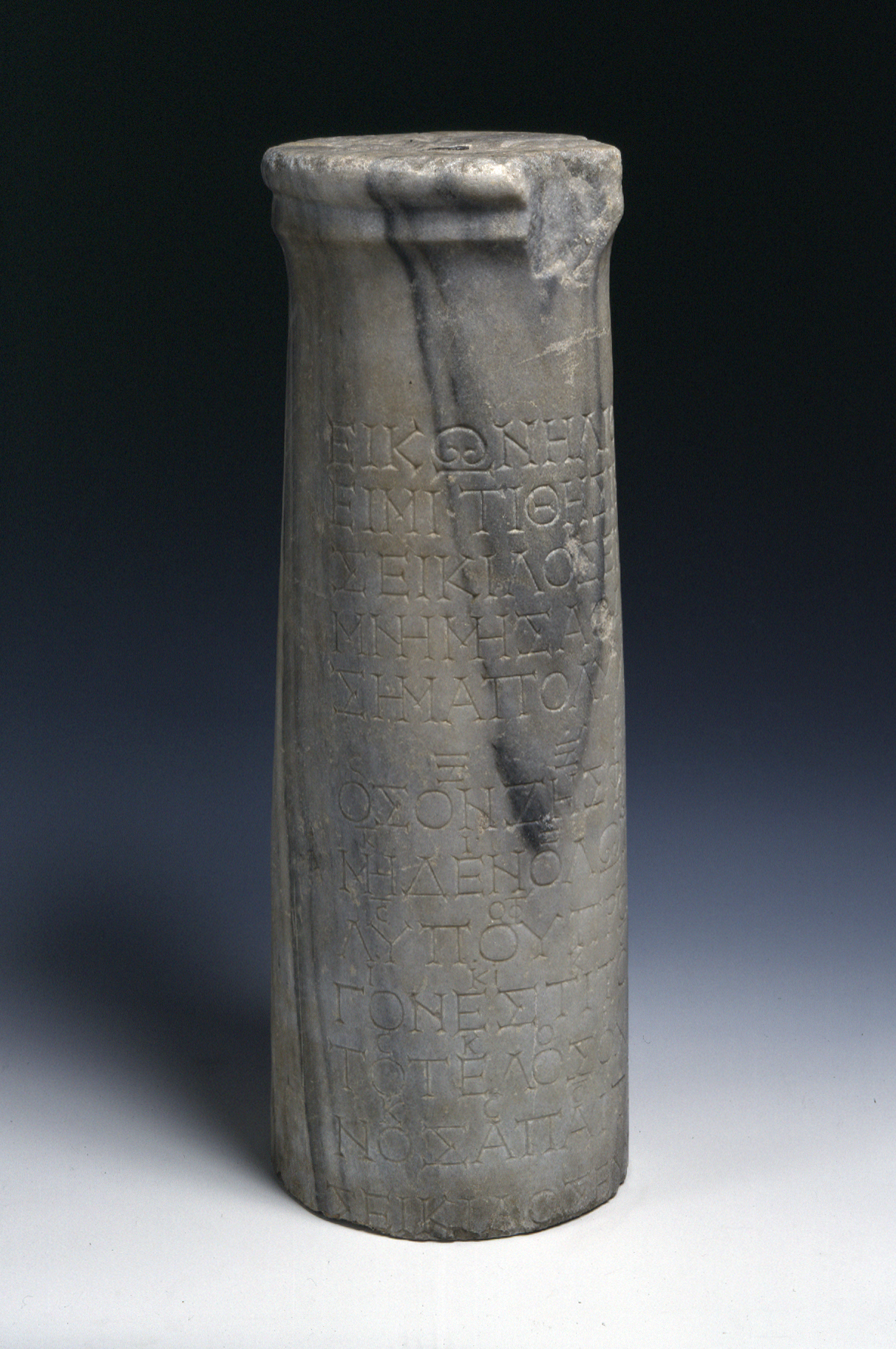
The music of prehistoric cultures is first firmly dated to c. 38,000 BC of the Upper Paleolithic by evidence of bone flutes, though it remains unclear whether or not the actual origins lie in the earlier Middle Paleolithic period (300,000 to 50,000 BP). There is little known about prehistoric music, with traces mainly limited to some simple flutes and percussion instruments. However, such evidence indicates that music existed to some extent in prehistoric societies such as the Xia dynasty and the Indus Valley civilisation. Upon the development of writing, the music of literate civilizations—ancient music—was present in the major Chinese, Egyptian, Greek, Indian, Persian, Mesopotamian, and Middle Eastern societies. It is difficult to make many generalizations about ancient music as a whole, but from what is known it was often characterized by monophony and improvisation. In ancient song forms, the texts were closely aligned with music, and though the oldest extant musical notation survives from this period, many texts survive without their accompanying music, such as the Rigveda and the Shijing Classic of Poetry. The eventual emergence of the Silk Road and increasing contact between cultures led to the transmission and exchange of musical ideas, practices, and instruments. Such interaction led to the Tang dynasty's music being heavily influenced by Central Asian traditions, while the Tang dynasty's music, the Japanese gagaku and Korean court music each influenced each other.
Historically, religions have often been catalysts for music. The Vedas of Hinduism immensely influenced Indian classical music, and the Five Classics of Confucianism laid the basis for subsequent Chinese music. Following the rapid spread of Islam in the 7th century, Islamic music dominated Persia and the Arab world, and the Islamic Golden Age saw the presence of numerous important music theorists. Music written for and by the early Christian Church properly inaugurates the Western classical music tradition, which continues into medieval music where polyphony, staff notation and nascent forms of many modern instruments developed. In addition to religion or the lack thereof, a society's music is influenced by all other aspects of its culture, including social and economic organization and experience, climate, and access to technology. Many cultures have coupled music with other art forms, such as the Chinese four arts and the medieval quadrivium. The emotions and ideas that music expresses, the situations in which music is played and listened to, and the attitudes toward musicians and composers all vary between regions and periods. Many cultures have or continue to distinguish between art music (or 'classical music'), folk music, and popular music.
"But that music is a language by whose means messages are elaborated, that such messages can be understood by the many but sent out only by the few, and that it alone among all language unites the contradictory character of being at once intelligible and untranslatable—these facts make the creator of music a being like the gods and make music itself the supreme mystery of human knowledge."
Music is regarded as a cultural universal, though definitions of it vary depending on culture and throughout history. As with many aspects of human cognition, it remains debated as to what extent the origins of music will ever be understood, with scholars often taking polarizing positions. The origin of music is often discussed alongside the origin of language, with the nature of their connection being the subject of much debate. However, before the mid-late 20th century, both topics were seldom given substantial attention by academics. Since the topic's resurgence, the principal source of contention is divided into three perspectives: whether music began as a kind of proto-language (a result of adaptation) that led to language; if music is a spandrel (a phenotypic by-product of evolution) that was the result of language; or if music and language both derived from a common antecedent.
There is little consensus on any particular theory for the origin of music, which have included contributions from archaeologists, cognitive scientists, ethnomusicologists, evolutionary biologists, linguists, neuroscientists, paleoanthropologists, philosophers, and psychologists (developmental and social). Some of the most prominent theories are as follows:
Many cultures have their own mythical origins on the creation of music. Specific figures are sometimes credited with inventing music, such as Jubal in Christian mythology, the legendary Shah Jamshid in Persian/Iranian mythology, the goddess Saraswati in Hinduism, and the muses in Ancient Greek mythology. Some cultures credit multiple originators of music; ancient Egyptian mythology associates it with numerous deities, including Amun, Hathor, Isis and Osiris, but especially Ihy. There are many stories relating to music's origins in Chinese mythology, but the most prominent is that of the musician Ling Lun, who—on the orders of the Yellow Emperor (Huangdi)—invented bamboo flute by imitating the song of the mythical fenghuang birds.
In the broadest sense, prehistoric music—more commonly termed primitive music in the past—encompasses all music produced in preliterate cultures (prehistory), beginning at least 6 million years ago when humans and chimpanzees last had a common ancestor. Music first arose in the Paleolithic period, though it remains unclear as to whether this was the Middle (300,000 to 50,000 BP) or Upper Paleolithic (50,000 to 12,000 BP). The vast majority of Paleolithic instruments have been found in Europe and date to the Upper Paleolithic. It is certainly possible that singing emerged far before this time, though this is essentially impossible to confirm. The potentially oldest instrument is the Divje Babe Flute from the Divje Babe cave in Slovenia, dated to 43,000 and 82,000 and made from a young cave bear femur. Purportedly used by Neanderthals, the Divje Babe Flute has received extensive scholarly attention, and whether it is truly a musical instrument or an object formed by animals is the subject of intense debate. If the former, it would be the oldest known musical instrument and evidence of a musical culture in the Middle Paleolithic. Other than the Divje Babe Flute and three other doubtful flutes, there is virtually no surviving Middle Paleolithic musical evidence of any certainty, similar to the situation in regards to visual art. The earliest objects whose designations as musical instruments are widely accepted are bone flutes from the Swabian Jura, Germany, namely from the Geissenklösterle, Hohle Fels and Vogelherd caves. Dated to the Aurignacian (of the Upper Paleolithic) and used by Early European modern humans, from all three caves there are eight examples, four made from the wing bones of birds and four from mammoth ivory; three of these are near complete. Three flutes from the Geissenklösterle are dated as the oldest, c. 43,150–39,370 BP.
Hub AI
History of music AI simulator
(@History of music_simulator)
History of music
Although definitions of music vary wildly throughout the world, every known culture partakes in it, and it is thus considered a cultural universal. The origins of music remain highly contentious; commentators often relate it to the origin of language, with much disagreement surrounding whether music arose before, after or simultaneously with language. Many theories have been proposed by scholars from a wide range of disciplines, though none has achieved broad approval. Most cultures have their own mythical origins concerning the invention of music, generally rooted in their respective mythological, religious or philosophical beliefs.
The music of prehistoric cultures is first firmly dated to c. 38,000 BC of the Upper Paleolithic by evidence of bone flutes, though it remains unclear whether or not the actual origins lie in the earlier Middle Paleolithic period (300,000 to 50,000 BP). There is little known about prehistoric music, with traces mainly limited to some simple flutes and percussion instruments. However, such evidence indicates that music existed to some extent in prehistoric societies such as the Xia dynasty and the Indus Valley civilisation. Upon the development of writing, the music of literate civilizations—ancient music—was present in the major Chinese, Egyptian, Greek, Indian, Persian, Mesopotamian, and Middle Eastern societies. It is difficult to make many generalizations about ancient music as a whole, but from what is known it was often characterized by monophony and improvisation. In ancient song forms, the texts were closely aligned with music, and though the oldest extant musical notation survives from this period, many texts survive without their accompanying music, such as the Rigveda and the Shijing Classic of Poetry. The eventual emergence of the Silk Road and increasing contact between cultures led to the transmission and exchange of musical ideas, practices, and instruments. Such interaction led to the Tang dynasty's music being heavily influenced by Central Asian traditions, while the Tang dynasty's music, the Japanese gagaku and Korean court music each influenced each other.
Historically, religions have often been catalysts for music. The Vedas of Hinduism immensely influenced Indian classical music, and the Five Classics of Confucianism laid the basis for subsequent Chinese music. Following the rapid spread of Islam in the 7th century, Islamic music dominated Persia and the Arab world, and the Islamic Golden Age saw the presence of numerous important music theorists. Music written for and by the early Christian Church properly inaugurates the Western classical music tradition, which continues into medieval music where polyphony, staff notation and nascent forms of many modern instruments developed. In addition to religion or the lack thereof, a society's music is influenced by all other aspects of its culture, including social and economic organization and experience, climate, and access to technology. Many cultures have coupled music with other art forms, such as the Chinese four arts and the medieval quadrivium. The emotions and ideas that music expresses, the situations in which music is played and listened to, and the attitudes toward musicians and composers all vary between regions and periods. Many cultures have or continue to distinguish between art music (or 'classical music'), folk music, and popular music.
"But that music is a language by whose means messages are elaborated, that such messages can be understood by the many but sent out only by the few, and that it alone among all language unites the contradictory character of being at once intelligible and untranslatable—these facts make the creator of music a being like the gods and make music itself the supreme mystery of human knowledge."
Music is regarded as a cultural universal, though definitions of it vary depending on culture and throughout history. As with many aspects of human cognition, it remains debated as to what extent the origins of music will ever be understood, with scholars often taking polarizing positions. The origin of music is often discussed alongside the origin of language, with the nature of their connection being the subject of much debate. However, before the mid-late 20th century, both topics were seldom given substantial attention by academics. Since the topic's resurgence, the principal source of contention is divided into three perspectives: whether music began as a kind of proto-language (a result of adaptation) that led to language; if music is a spandrel (a phenotypic by-product of evolution) that was the result of language; or if music and language both derived from a common antecedent.
There is little consensus on any particular theory for the origin of music, which have included contributions from archaeologists, cognitive scientists, ethnomusicologists, evolutionary biologists, linguists, neuroscientists, paleoanthropologists, philosophers, and psychologists (developmental and social). Some of the most prominent theories are as follows:
Many cultures have their own mythical origins on the creation of music. Specific figures are sometimes credited with inventing music, such as Jubal in Christian mythology, the legendary Shah Jamshid in Persian/Iranian mythology, the goddess Saraswati in Hinduism, and the muses in Ancient Greek mythology. Some cultures credit multiple originators of music; ancient Egyptian mythology associates it with numerous deities, including Amun, Hathor, Isis and Osiris, but especially Ihy. There are many stories relating to music's origins in Chinese mythology, but the most prominent is that of the musician Ling Lun, who—on the orders of the Yellow Emperor (Huangdi)—invented bamboo flute by imitating the song of the mythical fenghuang birds.
In the broadest sense, prehistoric music—more commonly termed primitive music in the past—encompasses all music produced in preliterate cultures (prehistory), beginning at least 6 million years ago when humans and chimpanzees last had a common ancestor. Music first arose in the Paleolithic period, though it remains unclear as to whether this was the Middle (300,000 to 50,000 BP) or Upper Paleolithic (50,000 to 12,000 BP). The vast majority of Paleolithic instruments have been found in Europe and date to the Upper Paleolithic. It is certainly possible that singing emerged far before this time, though this is essentially impossible to confirm. The potentially oldest instrument is the Divje Babe Flute from the Divje Babe cave in Slovenia, dated to 43,000 and 82,000 and made from a young cave bear femur. Purportedly used by Neanderthals, the Divje Babe Flute has received extensive scholarly attention, and whether it is truly a musical instrument or an object formed by animals is the subject of intense debate. If the former, it would be the oldest known musical instrument and evidence of a musical culture in the Middle Paleolithic. Other than the Divje Babe Flute and three other doubtful flutes, there is virtually no surviving Middle Paleolithic musical evidence of any certainty, similar to the situation in regards to visual art. The earliest objects whose designations as musical instruments are widely accepted are bone flutes from the Swabian Jura, Germany, namely from the Geissenklösterle, Hohle Fels and Vogelherd caves. Dated to the Aurignacian (of the Upper Paleolithic) and used by Early European modern humans, from all three caves there are eight examples, four made from the wing bones of birds and four from mammoth ivory; three of these are near complete. Three flutes from the Geissenklösterle are dated as the oldest, c. 43,150–39,370 BP.