Hubbry Logo
QuadriviumQuadriviumMain
Open search
Quadrivium
Community hub
Quadrivium
logo
8 pages, 0 posts
0 subscribers
Be the first to start a discussion here.
Quadrivium
Quadrivium
from Wikipedia

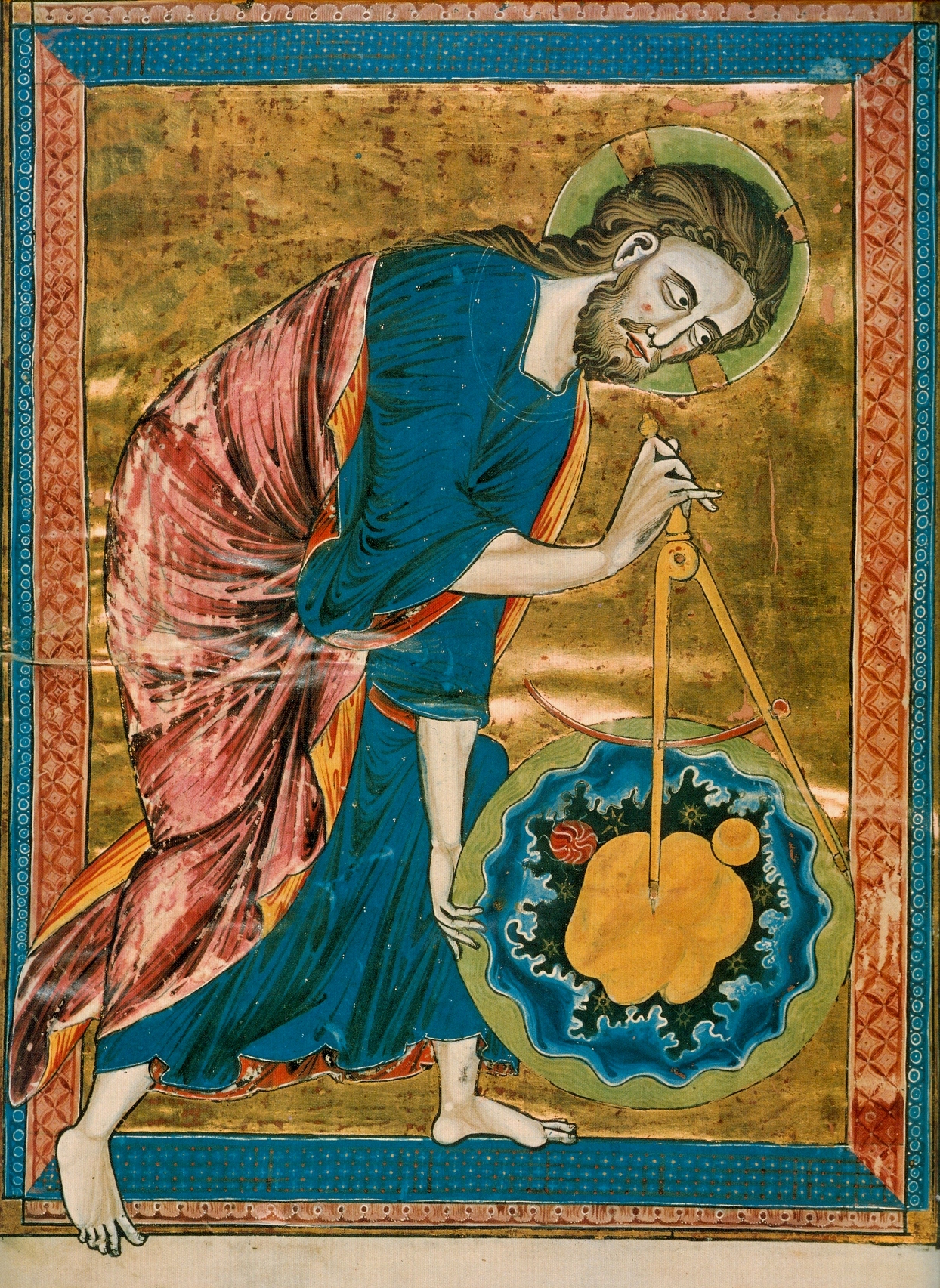
For most medieval scholars, who believed that God created the universe according to geometric and harmonic principles, science—particularly geometry and astronomy—was linked directly to the divine. To seek these principles, therefore, would be to seek God.[1]

From the time of Plato through the Middle Ages, the quadrivium (plural: quadrivia[2], Latin for "four ways"[3]) was a grouping of four subjects or arts—arithmetic, geometry, music, and astronomy—that formed a second curricular stage following preparatory work in the trivium, consisting of grammar, logic, and rhetoric. Together, the trivium and the quadrivium comprised the seven liberal arts,[4] and formed the basis of a liberal arts education in Western society until gradually displaced as a curricular structure by the studia humanitatis and its later offshoots, beginning with Petrarch in the 14th century. The seven classical arts were considered "thinking skills" and were distinguished from practical arts, such as medicine and architecture.

The four mathematical arts were recognized by Pythagoreans such as Nicomachus of Gerasa, but the use of quadrivium as a term for these four subjects has been attributed to Boethius,[5] when he affirmed that the height of philosophy can be attained only following "a sort of fourfold path" (quodam quasi quadruvio).[6]: 199  It was considered the foundation for the study of philosophy (sometimes called the "liberal art par excellence")[7] and theology. The quadrivium was the upper division of medieval educational provision in the liberal arts, which comprised arithmetic (number in the abstract), geometry (number in space), music (number in time), and astronomy (number in space and time).

Educationally, the trivium and the quadrivium imparted to the student the seven essential thinking skills of classical antiquity.[8] Altogether the Seven Liberal Arts belonged to the so-called 'lower faculty' (of Arts), whereas Medicine, Jurisprudence (Law), and Theology were established in the three so-called 'higher' faculties.[9] It was therefore quite common in the middle ages for lecturers in the lower trivium and/or quadrivium faculty to be students themselves in one of the higher faculties. Philosophy was typically neither a subject nor a faculty in its own right, but was rather present implicitly as an 'auxiliary tool' within the discourses of the higher faculties, especially theology;[10] the separation of philosophy from theology and its elevation to an autonomous academic discipline were post-medieval developments.[11]

Displacement of the quadrivium by other curricular approaches from the time of Petrarch gained momentum with the subsequent Renaissance emphasis on what became the modern humanities, one of four liberal arts of the modern era, alongside natural science (where much of the actual subject matter of the original quadrivium now resides), social science, and the arts; though it may appear that music in the quadrivium would be a modern branch of performing arts, it was then an abstract system of proportions that was carefully studied at a distance from actual musical practice, and effectively a branch of music theory more tightly bound to arithmetic than to musical expression.[citation needed]

Origins

[edit]
The Roman philosopher Boethius, author of The Consolation of Philosophy

These four studies compose the secondary part of the curriculum outlined by Plato in The Republic and are described in the seventh book of that work (in the order Arithmetic, Geometry, Astronomy, Music).[4] The quadrivium is implicit in early Pythagorean writings and in the De nuptiis of Martianus Capella, although the term quadrivium was not used until Boethius, early in the sixth century.[12] As Proclus wrote:

The Pythagoreans considered all mathematical science to be divided into four parts: one half they marked off as concerned with quantity, the other half with magnitude; and each of these they posited as twofold. A quantity can be considered in regard to its character by itself or in its relation to another quantity, magnitudes as either stationary or in motion. Arithmetic studies quantities as such, music the relations between quantities, geometry magnitude at rest, spherics [astronomy] magnitude inherently moving.[13]

Medieval usage

[edit]
Woman Teaching How to Construct Geometric Shapes. Illustration at the beginning of a medieval translation of Euclid's Elements (c. 1310)

At many medieval universities, this would have been the course leading to the degree of Master of Arts (after the BA).[citation needed] After the MA, the student could enter for bachelor's degrees of the higher faculties (Theology, Medicine or Law). To this day, some of the postgraduate degree courses lead to the degree of Bachelor (the B.Phil and B.Litt. degrees are examples in the field of philosophy).

The study was eclectic, approaching the philosophical objectives sought by considering it from each aspect of the quadrivium within the general structure demonstrated by Proclus (AD 412–485), namely arithmetic and music on the one hand[14] and geometry and cosmology on the other.[15]

The subject of music within the quadrivium was originally the classical subject of harmonics, in particular the study of the proportions between the musical intervals created by the division of a monochord. A relationship to music as actually practised was not part of this study, but the framework of classical harmonics would substantially influence the content and structure of music theory as practised in both European and Islamic cultures.

Modern usage

[edit]

In modern applications of the liberal arts as curriculum in colleges or universities, the quadrivium may be considered to be the study of number and its relationship to space or time: arithmetic was pure number, geometry was number in space, music was number in time, and astronomy was number in space and time. Morris Kline classified the four elements of the quadrivium as pure (arithmetic), stationary (geometry), moving (astronomy), and applied (music) number.[16]

This schema is sometimes referred to as "classical education", but it is more accurately a development of the 12th- and 13th-century Renaissance with recovered classical elements, rather than an organic growth from the educational systems of antiquity.[citation needed] The term continues to be used by the classical education movement and at the independent Oundle School, in the United Kingdom.[17]

See also

[edit]

References

[edit]
[edit]
Revisions and contributorsEdit on WikipediaRead on Wikipedia
from Grokipedia
The quadrivium (/kwɒˈdrɪviəm/; Latin: quattuor vīārum, "four ways" or "four roads") comprises the four classical liberal arts of arithmetic, , , and astronomy, representing the advanced stage of the medieval curriculum in the seven liberal arts, following the foundational of , logic, and . These disciplines focused on quantitative and mathematical principles to foster an understanding of the and natural order, serving as a pathway to , , and wisdom in the European educational tradition. The quadrivium's origins trace back to , with its conceptual framework first articulated in Martianus Capella's early fifth-century allegorical treatise De nuptiis Philologiae et Mercurii ("The Marriage of Philology and Mercury"), which personified the seven liberal arts as bridesmaids and grouped the four mathematical arts together for the first time. The term "quadrivium" itself was coined by the (c. 480–524 CE) in his work De institutione arithmetica, where he emphasized these subjects as essential for grasping eternal truths and divine order, drawing on Pythagorean and Platonic ideas about number and harmony. 's translations and commentaries on Greek mathematical texts, including works by , , and , preserved and systematized this knowledge during the transition from classical to medieval learning. By the of the ninth century, the quadrivium had become integral to monastic and curricula, as promoted by figures like of and supported by Charlemagne's educational reforms, which revived Boethius's texts as foundational resources. In the , particularly from the twelfth century onward, it formed the core of university studies in Europe, especially in the arts faculties of institutions like the and , where it prepared students for advanced pursuits in and . The quadrivium's emphasis on interconnected mathematical disciplines—arithmetic for number, for magnitude, for proportion in time, and astronomy for motion in the heavens—reflected a holistic view of knowledge, influencing scientific inquiry and the eventual development of modern and astronomy during the .

Foundations of the Liberal Arts

The Seven Liberal Arts Framework

The liberal arts, known in Latin as artes liberales, refer to studies deemed suitable for free individuals, distinguishing them from mechanical or servile occupations reserved for slaves. This concept traces its roots to ancient Greek paideia, a holistic educational system aimed at cultivating civic virtue and intellectual excellence among free citizens, which the Romans adapted into their own framework of humanitas emphasizing moral and rhetorical formation. Historically, the seven liberal arts served to foster intellectual autonomy, ethical development, and readiness for higher pursuits such as , , or , enabling individuals to engage critically with the world and contribute to society. By training the mind in structured disciplines, these arts promoted a balanced character capable of discerning truth and exercising judgment in public affairs. The seven arts are divided into the , logic, and —as the preparatory language-based skills essential for clear thought and expression, and the —arithmetic, , , and —as advanced mathematical disciplines focused on comprehending the harmonious order of the . This bifurcation positioned the as prerequisites for tackling the quadrivium's abstract quantitative inquiries. The framework was notably formalized in the 5th-century work De nuptiis Philologiae et Mercurii by , an allegorical narrative where the seven arts appear as handmaidens (or ) attending the union of and Mercury, symbolizing the integration of knowledge and eloquence. The term "," denoting the "fourfold way" or intersection of four paths to wisdom, was coined by around the early 6th century in his De institutione arithmetica, building on Capella's grouping to emphasize the interconnected .

Relationship to the Trivium

The , derived from the Latin for "three ways," forms the foundational stage of classical , emphasizing the arts of language and reasoning. It comprises , which instructs in the structure and mechanics of language; logic, which develops and the ability to discern valid arguments; and , which trains in the art of persuasive and effective expression. These disciplines collectively equip learners with the verbal tools essential for intellectual discourse. This sequence positions the as a prerequisite to the quadrivium, providing the communicative and analytical skills required to engage with the more abstract, mathematical subjects without misinterpretation or ambiguity. In curricula, students typically spent three to four years mastering the trivium to earn a , ensuring proficiency in Latin reading, writing, and before progressing. This mastery allowed them to interpret complex texts and participate in scholarly debates, forming the bedrock for the quadrivium's exploration of quantitative concepts. A key historical example illustrating this interdependence is the work of , whose translations of Aristotle's logical treatises in the early sixth century established as the groundwork for disciplines like arithmetic and . Boethius's De institutione arithmetica and De institutione musica, drawing on Greek sources, integrated Aristotelian logic to clarify numerical proportions and harmonic structures, underscoring how linguistic precision underpins mathematical clarity. In this progression model, the trivium cultivates verbal precision and analytical rigor, which the quadrivium then extends to numerical and spatial domains, enabling a holistic grasp of reality.

Core Subjects of the Quadrivium

Arithmetic

Arithmetic in the quadrivium is defined as the study of numbers as abstract entities, focusing on their theoretical and philosophical dimensions rather than practical computations such as those involved in computus for calendrical purposes. This discipline examines discrete quantity, distinguishing it from the continuous magnitudes addressed in geometry. Key concepts include the properties of numbers—such as odd and even, perfect and imperfect, prime and composite—as well as ratios and proportions, which reveal the structural harmony inherent in numerical relations. These elements underscore the philosophical significance of numbers, portraying them as embodiments of divine order and the foundational principles governing reality. The historical curriculum of arithmetic in the quadrivium was primarily based on Boethius's De institutione arithmetica, a work that translated and adapted of Gerasa's Introduction to Arithmetic, emphasizing speculative over algorithmic methods. structured his treatise around the classification and symbolic properties of numbers, drawing from neo-Pythagorean traditions to explore their metaphysical implications without delving into applied calculations. This approach positioned arithmetic as the gateway to the quadrivium, introducing students to discrete quantities before progressing to the continuous forms in subsequent subjects. Influenced by Pythagorean philosophy, arithmetic in the quadrivium viewed numbers as the underlying essence of the , with the —the triangular arrangement of the first four numbers summing to ten—serving as a sacred of cosmic and unity. This perspective reinforced the belief that numerical patterns reflect a divine , providing a bridge to the quadrivium's other arts, such as the application of ratios in music and astronomy.

Geometry

In the quadrivium, geometry is defined as the study of continuous , focusing on magnitudes, shapes, and spatial relationships that extend beyond discrete measurement to encompass the properties and proportions of forms in space. This discipline investigates how continuous extents—such as lengths, areas, and volumes—interact and form structures, distinguishing it from arithmetic's emphasis on discrete numbers. Key concepts in quadrivial geometry draw from Euclidean principles, which establish foundational elements including points as dimensionless locations, lines as one-dimensional extensions between points, planes as two-dimensional surfaces, and solids as three-dimensional volumes bounded by planes. These principles underpin the analysis of basic geometric figures, such as the congruence and similarity of triangles through side-angle relationships, the circumference and area derivations of circles based on radius, and the volume and surface area calculations of polyhedra like cubes and pyramids. The curriculum historically centered on Euclid's Elements, translated into Latin by Adelard of Bath around 1120, which organized knowledge through deductive proofs starting from axioms like "a straight line can be drawn between any two points" to demonstrate theorems on figure properties. Geometry's connection to cosmology is exemplified by the Platonic solids, where in the Timaeus assigned the to fire due to its sharp edges, the to earth for its stability, the to air, the to water, and the to the as a whole, illustrating how forms underpin elemental composition. Philosophically, geometry symbolized the visible order of the , cultivating mental discipline in logical certainty and aesthetic proportion by unveiling the rational harmony in natural forms, as articulated in Boethius's framework for the quadrivium's ascent to divine wisdom. This approach relied on arithmetic's numerical ratios to quantify geometric proportions, such as the in pentagons.

Music

In the quadrivium, music is defined as the theoretical science of sound, emphasizing the mathematical proportions that govern auditory rather than the practical arts of composition or performance. This approach distinguishes musica speculativa, the contemplative study of ratios and intervals through reason, from musica practica, which involves the sensory application of these principles in instruments or singing. , in his foundational text De institutione musica (c. 500 CE), positions music as the second discipline of the quadrivium, following arithmetic, as it examines the discipline of sensible motion through numerical relations that produce consonance. Central to this study are the key concepts of musical scales, modes, and consonances, derived from simple integer ratios that reflect harmonious proportions. For instance, the octave (diapason) corresponds to a 2:1 ratio, the perfect fifth (diapente) to 3:2, and the perfect fourth (diatessaron) to 4:3, forming the basis of the Pythagorean tuning system, which generates intervals by successive pure fifths. These ratios, building on numerical principles from arithmetic, underpin the construction of scales and modes, such as the diatonic scale, where tones (9:8) and semitones (e.g., 256:243) create structured auditory patterns. Boethius synthesizes these Greek theories, particularly from Pythagoras and Ptolemy, to emphasize music's role in discerning the rational order of sound. In the historical curriculum of the quadrivium, Boethius's De institutione musica served as the primary textbook, compiling and adapting doctrines into a Latin framework suitable for medieval . It highlights music as the "harmony of the spheres" (musica mundana), an inaudible cosmic symphony produced by the proportional motions of celestial bodies, which mirrors the audible harmonies studied in musica instrumentalis. This integration elevated music from mere acoustics to a philosophical pursuit, preparing students for deeper contemplation of universal order. Intervals in this system were practically derived from the lengths of vibrating strings or the diameters of pipes on instruments like the monochord, allowing precise division to produce sounds—such as halving a string for an or dividing it in the ratio 3:2 for a fifth. These measurements not only quantified but also linked to ethical , as argued that exposure to intervals could morally influence the , fostering temperance and rational between body and spirit, while dissonant modes risked corruption. Philosophically, music represents audible mathematics, embodying the cosmic order in human experience and serving as a microcosm of the universe's rational structure. Through musica humana, the harmony within the soul, it illustrates how numerical proportions govern both the macrocosm of the heavens and the microcosm of the individual, promoting ethical formation by aligning the listener with divine proportionality.

Astronomy

In the quadrivium, astronomy served as the capstone discipline, defined as the mathematical study of heavenly bodies, their positions, and movements, modeling the universe through geometric and arithmetic principles to reveal celestial order. This approach emphasized the geocentric model, where occupies the center of a series of concentric spheres carrying the , Sun, , and , as articulated in Ptolemy's , a foundational text translated into Latin in the twelfth century and integrated into university curricula. Key concepts included planetary orbits explained via deferents—large circles centered on —and epicycles, smaller circles on which planets moved to account for observed irregularities like retrograde motion; these mechanisms allowed precise predictions of celestial positions. The zodiac, a belt of twelve constellations dividing the , underpinned astrological and calendrical systems, while computations derived seasons, equinoxes, and solstices from solar and lunar cycles. The historical curriculum of quadrivium astronomy relied heavily on Ptolemy's for advanced planetary theory, supplemented by introductory works like Johannes de Sacrobosco's Tractatus de sphaera (c. 1220–1230), which became the standard textbook at the and across European universities from the thirteenth century onward. Sacrobosco's treatise simplified Ptolemaic ideas for beginners, describing the ' structure, the zodiac's role in timekeeping, and practical calculations for eclipses—using arithmetic and geometric projections—and seasonal variations, often tied to the ecclesiastical calendar for determining . These texts formed the core of astronomical instruction in medieval schools, with students progressing from qualitative descriptions of the to quantitative exercises in positioning and forecasting events, fostering skills essential for , , and . Astronomy synthesized the quadrivium's prior subjects: arithmetic provided computational tools for distances and periods, geometry mapped spherical coordinates and projections, and music informed the harmonic ratios governing planetary speeds and distances, evoking a "music of the spheres" in qualitative harmony with audible proportions. Philosophically, it represented divine immutability amid earthly transience, portraying the heavens as eternal, rational structures crafted by God the Geometer, whose geometric and harmonic laws reflected a orderly creation accessible to human reason. This view influenced medieval theology, as seen in scholars like Robert Grosseteste and Roger Bacon, who saw celestial study as a pathway to contemplating God's unchanging wisdom, bridging natural philosophy and faith without delving into empirical experimentation.

Historical Evolution

Ancient and Classical Origins

The Pythagorean school, established in the 6th century BCE by , provided foundational principles for what would later become the quadrivium by treating numbers, , , and astronomy as mystical elements revealing the underlying harmony of the universe. Pythagoreans regarded numbers as the essence of all things, with geometric forms embodying spatial order, musical intervals derived from simple ratios like 2:1 for the and 3:2 for the fifth, and astronomy depicting the as a "harmony of the spheres" where celestial motions produced inaudible but rationally apprehensible music. These ideas emphasized the interconnectedness of quantitative disciplines as pathways to cosmic understanding, influencing subsequent philosophical traditions. Plato, building on Pythagorean thought, integrated these subjects into a cohesive framework in works like the Timaeus and Republic. In the Timaeus, the demiurge constructs the world-soul from a mixture of the divisible and indivisible, divided into harmonic proportions—such as the ratios of the diatonic scale—to ensure cosmic order, while geometric solids form the elemental bodies, linking arithmetic, music, and geometry to creation itself. The Republic (Books VI–VII) further unifies arithmetic, plane and solid geometry, astronomy, and harmonics as propaedeutic studies essential for philosophers, training the soul to ascend from sensible particulars to intelligible forms through dialectical reasoning, though the formal term "quadrivium" emerged later. Aristotle contributed a logical structure to these pursuits via his natural philosophy, particularly in the Physics and Metaphysics, where he analyzed motion, causation, and the eternal circular orbits of celestial bodies as driven by unmoved movers, providing a systematic basis for astronomy and integrating mathematical principles into empirical inquiry. Roman thinkers adapted these Greek foundations into educational contexts, emphasizing practical and rhetorical applications. Marcus Terentius Varro's Disciplinae (1st century BCE) outlined nine disciplines, including grammar, rhetoric, dialectic, , arithmetic, music, astronomy, , and , with the mathematical subjects echoing Pythagorean and Platonic emphases on harmonious knowledge. , in works like and his partial translation of the Timaeus, advocated liberal arts encompassing , music, and astronomy to cultivate eloquent statesmen, viewing them as tools for moral and civic formation. Anicius Manlius Severinus (6th century CE) served as a crucial transmitter, producing Latin translations and commentaries on ' Introduction to Arithmetic, Ptolemy's harmonics, and Euclid's , thereby preserving and Romanizing these disciplines for the Latin West amid the transition from . first grouped the four mathematical arts together in his De nuptiis Philologiae et Mercurii (early CE), where they are personified as bridesmaids symbolizing integrated mathematical learning preparatory to higher wisdom; the term "quadrivium" was coined later by .

Medieval Integration and Usage

During the Carolingian Renaissance of the 8th and 9th centuries, the quadrivium emerged as a structured component of in monastic schools, largely through the efforts of , who served as Charlemagne's advisor and head of the Palace School at . Alcuin drew heavily on Boethius's works, such as De institutione arithmetica and De institutione musica, to incorporate arithmetic, , music, and astronomy into the curriculum of the seven liberal arts, aiming to revive classical learning for clerical training and imperial administration. This integration standardized teaching in monastic institutions across the Frankish Empire, where the quadrivium supported practical needs like liturgical calculations and emphasized moral and theological applications of . The 12th-century revival revitalized the quadrivium through translations of Arabic texts into Latin, notably Gerard of Cremona's rendition of Ptolemy's around 1175, which introduced advanced astronomical models to Western scholars. These translations facilitated the quadrivium's incorporation into cathedral schools and the emerging universities of and , where it formed the advanced stage of arts education following the . In these settings, the quadrivium progressed hierarchically from arithmetic (abstract numbers) to (fixed magnitudes), (numbers in motion), and astronomy (numbers in mobile magnitudes), using tools like quadrants for angular measurements and astrolabes for celestial observations to blend theory with practical demonstration. A pivotal text in this period was Hugh of Saint Victor's Didascalicon (c. 1127), which outlined the hierarchy of the liberal arts, positioning the quadrivium as essential for cultivating and preparing students for theological study by training the mind to perceive divine order in creation. Hugh emphasized the quadrivium's role in elevating the soul from sensory knowledge to contemplative understanding, integrating it with scriptural . Institutionally, mastery of the quadrivium was required for the degree in medieval universities, serving as a prerequisite for advanced faculties like or , and was closely linked to computus, the of calendrical computation essential for determining Easter's date. This practical linkage underscored the quadrivium's utility in duties, with arithmetic and astronomy directly applied to lunar-solar cycles in works like those of , influencing university statutes from the 13th century onward.

Renaissance and Early Modern Developments

During the , from the 14th to 16th centuries, humanists revived interest in classical texts, reemphasizing the quadrivium as a foundation for understanding the cosmos and divine order. This revival drew on ancient sources like and , positioning arithmetic, geometry, music, and astronomy as interconnected disciplines that revealed universal harmonies. , through his leadership of the in —founded in the 1460s under Cosimo de’ Medici's patronage—integrated music and astronomy into Neoplatonic philosophy, viewing them as pathways to the soul's ascent toward the divine. In works like his commentary on Plato's Timaeus and Three Books on Life (1489), Ficino explored celestial influences and harmonic proportions, blending astronomical observations with musical theory to interpret Neoplatonic hierarchies of being, where music symbolized the soul's attunement to cosmic rhythms. Scientific advancements disrupted traditional quadrivial astronomy, beginning with Nicolaus Copernicus's De revolutionibus orbium coelestium (1543), which proposed a heliocentric model with the Sun at the universe's center and in orbital motion. This challenged the Ptolemaic geocentric system—long embedded in quadrivium curricula as the authoritative framework for astronomy—by simplifying planetary explanations through Earth's axial rotation and annual revolution, though it retained epicycles for accuracy. Later, extended this integration of quadrivial subjects in Harmonices Mundi (1619), deriving his third law (the cube of a planet's proportional to the square of its semi-major axis) from musical harmonies, where planetary speeds formed consonant intervals like the (5:4 ratio). Kepler, educated in the quadrivium at , envisioned cosmic as an inaudible but soul-perceptible order, linking music's to astronomical geometry and arithmetic proportions. Educational reforms reflected these shifts while preserving quadrivial elements. The Jesuit Ratio Studiorum (1599), the order's definitive pedagogical plan, retained the quadrivium within the philosophy course (studia superiora), mandating studies in arithmetic via Boethius, geometry through Euclid's Elements, music, and Ptolemaic astronomy, with daily lessons and problem-solving sessions led by figures like Christopher Clavius. However, it introduced greater emphasis on experiential methods in natural philosophy, moving beyond pure text-based disputation toward empirical observation in physics and mathematics by the early 17th century, as Aristotelian orthodoxy yielded to new scientific inquiries. In England, John Dee's "Mathematical Preface" (1570) to his edition of Euclid promoted the quadrivium as essential for "imperial science," applying geometry and astronomy to navigation, architecture, and statecraft, influencing Elizabethan advancements in cartography and fortification. By the , the quadrivium fragmented into specialized modern disciplines amid rising scientific specialization in universities. Boethian unity dissolved as focused on Euclidean proofs detached from Platonic metaphysics, astronomy incorporated Copernican and physics, and music shifted to practical composition over theoretical proportions. Arithmetic evolved into applied for and , severing ties to or cosmic insight, while curricula prioritized vocational , leading to the quadrivium's decline as a cohesive framework by mid-century.

Contemporary Relevance and Legacy

Modern Educational Revivals

In the 20th century, the classical Christian education movement sought to revive the quadrivium as part of a structured curriculum emphasizing the and quadrivium sequence. Dorothy Sayers's influential 1947 , "The Lost Tools of Learning," advocated for recovering medieval educational tools, including the quadrivium's focus on arithmetic, , , and astronomy, to foster logical and creative thinking in students. This inspired the development of programs like Classical Conversations, founded in 1997, which integrates quadrivium elements into its community-based curriculum to build foundational skills in and the sciences through classical methods. Alternative educational philosophies, such as rooted in Rudolf Steiner's , have incorporated quadrivium subjects artistically, particularly and astronomy, to align with child development stages while maintaining a limited overall emphasis on the traditional quadrivium structure. Steiner's approach, outlined in his lectures on , treats these disciplines as tools for spiritual and perceptual growth rather than abstract analysis, influencing over 1,000 Waldorf schools worldwide by emphasizing hands-on, imaginative learning in arithmetic and cosmology. shows indirect influences from classical traditions, mirroring aspects of the in developmental stages but with minimal direct engagement of the quadrivium's mathematical arts. At the university level, programs like St. John's College's Great Books curriculum, established in 1937, revive quadrivium study through seminar-based discussions of primary texts, including Euclid's Elements for geometry, Ptolemy's Almagest for astronomy, and Boethius's works on arithmetic and music theory. In the 21st century, online platforms such as the CiRCE Institute have expanded access with courses on the quadrivium, highlighting arithmetic's role in logical reasoning and music's aesthetic connections to cosmology, as explored in seminars like "Singing the Quadrivium." Reviving the quadrivium in modern contexts faces challenges in adapting its philosophical depth to STEM demands, where emphasis on practical applications often overshadows integrated liberal arts study. Critics argue that in the digital age, the quadrivium's focus on timeless quantitative reasoning risks irrelevance amid rapid technological change, though proponents counter that it provides essential conceptual foundations for innovation without diluting its contemplative essence.

Influence on Science, Philosophy, and Culture

The arithmetic and components of the quadrivium established core principles for modern mathematics, serving as the bedrock for subsequent scientific developments. Isaac Newton's (1687) exemplifies this legacy, as Newton deliberately adopted classical geometric techniques—rooted in Euclidean traditions preserved within the quadrivium—to articulate his laws of motion and theory of universal gravitation, prioritizing over emerging algebraic methods for rigor and clarity. Similarly, the quadrivium's astronomy, which emphasized mathematical modeling of celestial bodies, contributed to the foundations of modern by framing the as a quantifiable system amenable to empirical and theoretical analysis. This approach influenced the transition from qualitative observations to predictive models in 19th- and 20th-century , where differential equations and continue to describe and cosmic structures. In , the quadrivium's structured progression from abstract number to cosmic order informed 20th-century thinkers' conceptions of . The quadrivium's cultural persists in artistic and musical traditions, where its principles of proportion and underpin interpretive methods. In music , Boethius's quadrivial treatment of musica as a of rational intervals—distinguishing cosmic, human, and instrumental —shaped medieval and understandings, with enduring echoes in modern analytical techniques that probe tonal structures for underlying proportional coherence. Geometrically, the quadrivium inspired symbolic depth in , as seen in the adoption of linear perspective by and , who harnessed Euclidean constructions to simulate spatial recession and divine order on flat surfaces, thereby elevating visual representation to a mathematical ideal. Revived curricula today transmit these influences, bridging classical insights with modern ethical and scientific discourse.

References

Add your contribution
Related Hubs
User Avatar
No comments yet.