


Community hub
Recent from talks
Contribute something
Nothing was collected or created yet.
MD Helicopters MD 500
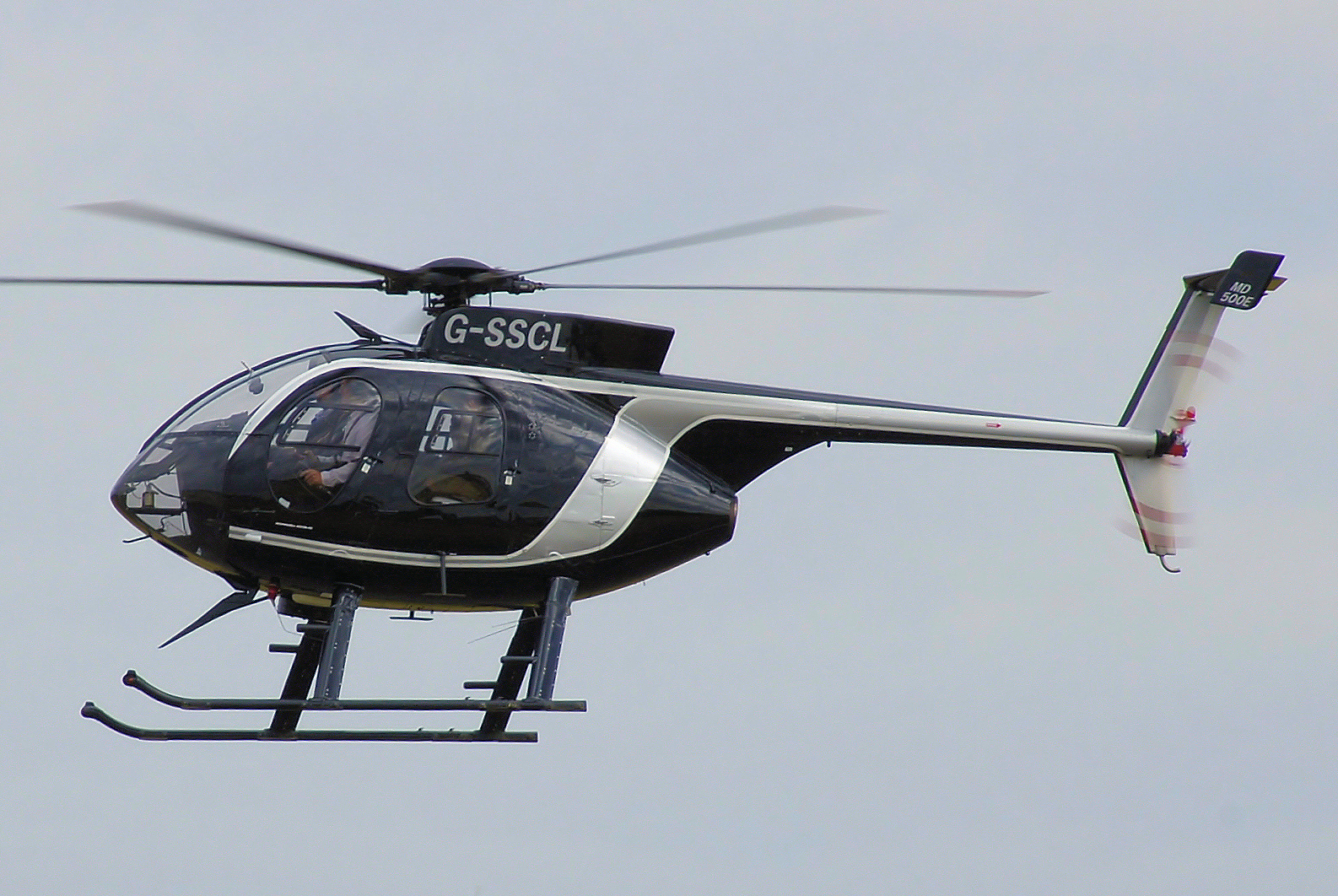
View on WikipediaThe MD Helicopters MD 500 series is an American family of light utility civilian and military helicopters. The MD 500 was developed from the Hughes 500, a civilian version of the US Army's OH-6A Cayuse/Loach. The series currently includes the MD 500E, MD 520N, MD 530F, and MD 530N.
Key Information


The MD 500 was initially produced by Hughes Helicopters as the Hughes 500. Since being introduced in 1967, numerous models have been produced, often featuring a more powerful engine or a five-bladed main rotor in place of the original four-blade counterpart. The MD 500 has been commonly used for utility work, particularly the MD 530F; it has also proven to be popular with law enforcement agencies. Production of the type was continued into the twenty-first century by Hughes' successor companies, McDonnell Douglas Helicopter Systems, and subsequently MD Helicopters. While the MD 500 series has been largely operated by civil customers, it has occasionally seen military use, even to the extent of performing front line combat operations. The Salvadoran Air Force deployed their examples during the Salvadoran Civil War, leading to several losses. North Korea also covertly obtained a fleet of MD500s for military purposes, some of which have been allegedly configured into gunships.
Design and development
[edit]Background
[edit]

The Hughes 500/MD 500 series can be traced back to the early 1960s and the issuing of a requirement for a Light Observation Helicopter (LOH) for the United States Army.[3] Following a competitive tendering process, Hughes' Model 369 was selected as the winning bid, triumphing over rival submission from the helicopter manufacturers Bell and Hiller. On 27 February 1963, under the service designation of OH-6 Cayuse, the maiden flight of the type was performed.[4][5]
The MD 500 series features shock-absorbing landing skid struts, a turboshaft engine mounted at a 45-degree angle toward the rear of the cabin pod, a fuel tank cell under the floor and the battery in the nose.[6] The engine exhaust port is located at the end of the cabin pod underneath the tailboom. It has a short-diameter main rotor system and a short tail, which gives it an agile control response and also makes it less susceptible to weather-cocking.[citation needed] It had a distinctive atypical teardrop-shaped fuselage, a feature that sometimes led to personnel referring to it as the "flying egg".[4][7]
Hughes had allegedly succeeded in the LOH contest with its OH-6 helicopter by submitting a very low and aggressive price per airframe (without an engine), to the point where the company allegedly lost money .[8][9] Due to price escalations for both the OH-6 and spare components, the U.S. Army opted to reopen bids for the programme in 1967.[10] Seeking to profitably produce the type, Hughes offered the machine at a more realistic unit price of $56,550, however, this bid was undercut by the redesigned Bell OH-58 Kiowa, a militarised version of the JetRanger series.[8][9] Despite this, some OH-6 helicopters were still ordered by the U.S. Army, though at a much reduced number.
Hughes/MD 500
[edit]Even prior to the first flight of the OH-6, Hughes had announced that it was working on a civilian version of the rotorcraft, which would be marketed as the Hughes 500.[5] It was available in basic five- and seven-seat configurations.[3] A utility version with a more powerful engine was offered as the 500U (later called the 500C).
During 1976, the improved Hughes 500D became the primary model. It was outfitted with a more powerful engine, a T-tail, and a new five-blade main rotor; furthermore, a four-blade tail rotor could be optionally installed.[3][11] The 500D was replaced by the 500E from 1982 with a pointed nose and various interior improvements, such as greater head- and legroom.[12] The 530F was a more powerful version of the 500E optimized for hot and high work, being furnished with an enlarged main rotor and more powerful Allison 250-C30 engine, capable of producing up to 425 hp.[13]
During January 1984, Hughes Helicopters, the original manufacturer of the 500 series, was acquired by the American aircraft manufacturer McDonnell Douglas. Accordingly, starting in August 1985, the 500E and 530F were rebranded as the MD 500E and MD 530F Lifter respectively.[3] Following the merger between Boeing and McDonnell Douglas, the division was briefly owned by the new entity; Boeing opted to quickly sell the former MD civil helicopter lines to the newly created MD Helicopters in early 1999.[14][15][16][17] Military variants are marketed under the MD 500 Defender name.
MD 520N
[edit]
The MD 520N introduced a revolutionary advance in helicopter design, dispensing with a conventional anti-torque tail rotor in favor of the Hughes/McDonnell-Douglas-developed NOTAR system.[3] Exhaust from a fan is directed through slots in the tailboom, using the Coandă effect to counteract the torque of the main rotor, and a controllable thruster at the end of the tailboom is used for yaw control. Because the fan is enclosed in the tailboom, tail rotor noise—the major source of noise from most conventional helicopters—was significantly reduced.[18] It also eliminated the vulnerable exposed tail rotor blades, eliminating the possibility of persons being injured or killed on the ground and the cause for many confined area manoeuvring accidents.[citation needed]
McDonnell Douglas originally intended to develop the standard MD 520N alongside the more powerful hot-and-high optimized MD 530N; both were launched in January 1989 and were based on the conventional MD 500E. The MD 530N was the first to fly, on December 29, 1989, and the MD 520N first flew on May 1, 1990. Development of the MD 530N was suspended when McDonnell Douglas decided that the MD 520N met most customer requirements for the 530N. Certification for the MD 520N was awarded on September 13, 1991, and the first was delivered on December 31 that year.[citation needed]
In 2000, MD Helicopters announced enhancements to the MD 520N, including an improved Rolls-Royce 250-C20R+ engine with 3% to 5% more power for better performance on warm days, and changes to the diffuser and fan rigging, also increased range.[citation needed]
Operational history
[edit]Civilian
[edit]The MD 500 series had proven to be popular with civilian operators, with which the type has seen use for a diverse range of purposes. According to Flying magazine, it has been particularly popular in circumstances where the primary passenger and pilot are both in the front seats, as can be typical in aerial observation, utility, and law enforcement work.[19] While a minority have been used for executive transportation (typically modified to provide rear seating), it is more common to see it used as a private/personal helicopter.[20]
While numerous operators have opted to procure MD 500s with the newer Rolls-Royce 250-C20 engine, which provides greater reliability and power output than older counterparts, some operators have reportedly chosen to remove these engines and substitute them with Vietnam-era surplus engines which are available even into the twenty-first century at a considerably lower purchase cost.[21]
El Salvador
[edit]At the start of the Salvadoran Civil War, the Salvadoran Air Force operated a total of six MD 500D helicopters purchased from civilian sources. Amid the conflict, these were supplemented by a further nine MD 500Es that were supplied by the United States in 1984. The type was typically operated in the gunship role, having been armed with both XM27 7.62 mm Minigun subsystems and unguided 70mm rocket pods; additional mission roles included aerial reconnaissance and liaison duties. By the end of the conflict, only two MD 500D and seven MD 500Es were reportedly in an operational condition. By 2012 Salvadoran Air Force received three brand new MD 500Es from MD Helicopters to be used for the United Nations mission in Mali, Africa. In 2022 the United States donated four MD 530Fs which were previously owned by the Department Of State Air Wing (DOSAW) which will also be used for United Nations missions. The Salvadoran Air Force as of 2023 currently operates six MD 500Es and four MD 530Fs.
North Korea
[edit]During the 1980s, North Korea managed to circumvent US export restrictions and covertly purchase a total of 87 civilian-type Hughes MD 500s through a legitimate West German export firm before the US government learned of the illegal action by North Korea and acted to prevent any further deliveries to the country.[22] Once they had arrived in North Korea, efforts continued to be made to conceal their existence, and are believed to have been flown only sparingly at least for a large portion of their service life.[22] There have been allegations that at least sixty of the helicopters delivered to North Korea have been modified to serve as helicopter gunships. As South Korea produces the MD 500 domestically (under license) for use by its own armed forces, the modified helicopters operated by North Korea were deemed useful in conducting covert or deceptive operations against South Korea (such as incursions past the border).[22]
The modified MD 500 helicopters were finally revealed by North Korea in an obviously visible manner, even to international observers, during the country’s annual Victory Parade held in Pyongyang on 27 July 2013, which commemorated the 60th anniversary of the end of the Korean War in 1953. According to analysts, it is visible that the North Korea's fleet of MD 500s have been modified significantly so that they can function as light attack helicopters. Amongst these changes was mounting points and interfacing apparatus to allow them to fire Soviet-designed AT-3 Sagger anti-tank wire-guided missiles.[23]
Variants
[edit]- 369
- Military prototype designated YOH-6A.
- 369A
- Military production designated OH-6.
- MD 500C (369H)
- Improved five-seat commercial variant powered by an Allison 250-C18B rated at 317 shp (236 kW); certified in 1966.
- Kawasaki-Hughes 369HS
- Built under license by Kawasaki Heavy Industries in Japan alongside OH-6J.
- MD 500M Defender (369HM)
- Military export version as the MD 500 Defender; certified in 1968.
- MD 500C (369HS)
- Improved four-seat commercial variant by an Allison 250-C20 rated at 400 shp (298 kW); certified in 1969.
- MD 500C (369HE)
- A 369HS with higher standard interior fittings, certified in 1969.
- MD 500D (369D)
- New commercial version from 1976 powered by an Allison 250-C20B rated at 420 shp (313 kW); certified in 1976.
- MD 500E (369E)
- Executive version of the 500D with recontoured nose; certified in 1982.
- NH-500E
- Italian-built version of the 500E. License-produced by Breda Nardi before merging with Agusta.[1]
- MD 520N
- NOTAR (NO TAil Rotor) version of the 500E, certified in 1991. Powered by Rolls-Royce (formerly Allison) 250-C20R/2 rated at 450 shp.
- MD 530F (369F)
- Hot and high version of the 500E powered by a Rolls-Royce (formerly Allison) 250-C30HU rated at 650 shp (485 kW), certified in 1984.
- MD 530N
- NOTAR (NO TAil Rotor) Version of the 530F. Employs the Rolls-Royce 250-C30HU from the 530F for Hot and High flight.
- Unmanned Little Bird Demonstrator and AH-6
- A civilian 530F modified by Boeing Rotorcraft Systems to develop UAV technologies for both civilian and military applications.[24]
Military
[edit]- For military variants, see McDonnell Douglas MD 500 Defender and Hughes OH-6 Cayuse.
Operators
[edit]

The MD 500 is widely operated by private individuals, companies and law enforcement agencies around the world.


- Pelita Air
- Indonesian Air Force - 12 ex-Pelita Air Hughes 500C were given to the Air Force in 1982. Retired from service.[33][34]


- Philippine Air Force - 1 unit MD-500E trainer, transferred from Department of Public Works and Highways.[37]


- Korean People's Air Force[39] - Total 87 were smuggled into North Korea in contravention of international sanctions.
 United States

- Academi[40]
- Cleetus McFarland[41]
- Columbus Division of Police[42]
- Fresno County Sheriff's Department[43]
- Glendale Police Department[44]
- Hawaii County Fire Department[45]
- Houston Police Department[46]
- Kansas City Police Department[47]
- Las Vegas Metropolitan Police Department[48]
- Metro Nashville Police Department[49]
- Pasadena Police Department[50]
- Prince George's County Police Department - Has operated the MD520N since at least June 2000,[51] equipped with FLIR, with a third one added in 2017 for a total of 4.[52]
- Riverside Police Department[53]
- San Diego County Sheriff's Office[54]
- St. Louis Metropolitan Police Department[55]
- St. Louis County Police Department[56]
- Oakland Police Department[57]
- Virginia Beach Police Department
Specifications
[edit]MD 530F
[edit]
Data from MD500E Performance Specifications,[58] The International Directory of Civil Aircraft[3]
General characteristics
- Crew: 2
- Capacity: 3 passengers
- Length: 32 ft 7 in (9.93 m)
- Height: 8 ft 9 in (2.67 m)
- Empty weight: 1,591 lb (722 kg)
- Max takeoff weight: 3,550 lb (1,610 kg)
- Powerplant: 1 × Allison 250-C30 turboshaft engine, 650 shp (480 kW)
- Main rotor diameter: 27 ft 4 in (8.33 m)
- Main rotor area: 587.5 sq ft (54.58 m2) * Blade section: - NACA 0012[59]
Performance
- Maximum speed: 152 kn (175 mph, 282 km/h)
- Cruise speed: 135 kn (155 mph, 250 km/h)
- Range: 223 nmi (257 mi, 413 km)
- Service ceiling: 18,700 ft (5,700 m)
- Rate of climb: 2,070 ft/min (10.5 m/s)
MD 500C
[edit]
Data from [60]
General characteristics
- Crew: 2
- Capacity: 2
- Length: 30 ft 3.75 in (9.2393 m)
- Height: 8 ft 1.5 in (2.477 m)
- Empty weight: 1,229 lb (557 kg)
- Max takeoff weight: 2,700 lb (1,225 kg)
- Fuel capacity: 61.5 US gal (51 imp gal; 233 L) in two 50% self-sealing bladder tanks under rear cabin floor
- Powerplant: 1 × Allison T63-A-5A turboshaft engine, 317 shp (236 kW)
- Main rotor diameter: 26 ft 4 in (8.03 m)
- Main rotor area: 544.63 sq ft (50.598 m2) * Blade section: - NACA 0012[59]
Performance
- Maximum speed: 130 kn (150 mph, 240 km/h)
- Cruise speed: 130 kn (150 mph, 240 km/h)
- Range: 330 nmi (380 mi, 610 km) at 5,000 ft (1,524 m)
- Ferry range: 1,354 nmi (1,558 mi, 2,508 km) with 1,300 lb (590 kg) of fuel
- Service ceiling: 15,800 ft (4,800 m) * Hover ceiling OGE: 7,300 ft (2,225 m)
- Hover ceiling IGE: 11,800 ft (3,597 m)
- Rate of climb: 2,070 ft/min (10.5 m/s)
See also
[edit]Related development
Aircraft of comparable role, configuration, and era
- Bell 206 – (United States, Canada)
- Bell 407 – (United States, Canada)
- Aérospatiale Gazelle – (France)
- Eurocopter EC120 Colibri – (France, China, Singapore)
- HAL Dhruv – (India)
- PZL SW-4 – (Poland)
- Robinson R66 – (United States)
Related lists
References
[edit]Citations
[edit]- ^ a b "The MD Helicopters MD-500/530". airliners.net. Retrieved 16 January 2008.
- ^ "Hughes 369 / 500 / OH-6". all-aero.com. Archived from the original on 23 October 2018. Retrieved 4 June 2018.
- ^ a b c d e f Frawley, Gerard (2003). The International Directory of Civil Aircraft, 2003-2004. Aerospace Publications Pty Ltd. p. 155. ISBN 1-875671-58-7.
- ^ a b McGowen 2005, p. 105.
- ^ a b McClellan 1989, p. 46.
- ^ "MD 500E". MD Helicopters. Retrieved 2 November 2022.
- ^ McClellan 1989, p. 44.
- ^ a b Cefaratt 2002, p. 77.
- ^ a b Real, Jack. "The Real Story." Vertiflite, Fall/Winter 1999, pp. 36–39.
- ^ McGowen 2005, p. 112.
- ^ McClellan 1989, pp. 46, 50.
- ^ McClellan 1989, pp. 46-47.
- ^ McClellan 1989, p. 47.
- ^ "Bell buys Boeing's MD Singles". Flying. Vol. 125, no. 5. May 1998. p. 32. ISSN 0015-4806.
- ^ Frawley 2003, p. 155.
- ^ "Boeing Completes Sale Of Light Helicopter Product Lines To RDM". Boeing. 19 February 1999. Archived from the original on 28 December 2007.
- ^ "Boeing Announces Sale of its Light Helicopter Product Lines". Boeing. Archived from the original on 13 February 2008. Retrieved 7 February 2008.
- ^ McClellan 1989, p. 52.
- ^ McClellan 1989, pp. 47-48.
- ^ McClellan 1989, p. 48.
- ^ Huber, Mark (1 November 2022). "Hansen Helicopters' 'Highway to Hell'". AIN Online.
- ^ a b c Cenciotti, David (31 July 2013). "North Korea's Illegal Helicopters Emerge". Businessinsider.com. Retrieved 3 December 2021.
- ^ "North Korea's (illegally supplied) armed Hughes 500E helicopters emerge after 30 years in the dark". The Aviationist. 30 July 2013.
- ^ "Boeing Manned/Unmanned Light Helicopter Makes First Flight" (Press release). Boeing. 9 October 2006. Archived from the original on 14 October 2012. Retrieved 29 April 2013.
- ^ "McDonnell Douglas MD520N". www.belgian-wings.be. Archived from the original on 2 February 2011.
- ^ Rivas 2015, p. 121.
- ^ "Overlook of the SVA". au.af.mil. Archived from the original on October 25, 2015. Retrieved 19 May 2017.
- ^ "El Tiempo: La Policía del Azuay recibe hoy helicóptero". eltiempo.com.ec (in Spanish). Archived from the original on 18 October 2016.
- ^ Hoyle, Craig (2023). World Air Forces 2024. FlightGlobal. pp. 17–18. Retrieved 4 April 2023.
- ^ "Finnish Defence Forces". maavoimat.fi (in Finnish).
- ^ Erich (5 October 2014). "Hughes 500 (369D) – Aeroflight". Aeroflight.co.uk. Retrieved 3 December 2021.
- ^ "Amerikai helikopterek Magyarországon ("American helicopters in Hungary")". iho.hu (in Hungarian).
- ^ "Hughes 500C TNI AU: Sempat Jadi Helikopter Latih Lanjut, Cikal Bakal Heli Serbu Ringan MD530G". indomiliter.com. 31 May 2016. Retrieved 11 December 2020.
- ^ "Skadron Udara 7". tni-au.mil.id. 16 January 2010. Archived from the original on 11 December 2020. Retrieved 11 December 2020.
- ^ "Kurdistan government orders 12 MD 530F helicopters". Helicopter Investor. Retrieved 2023-11-07.
- ^ Roelofs, Erik (April 2012). "Italy's Flying Foresters". Air International. Vol. 82, no. 4. pp. 78–81. ISSN 0306-5634.
- ^ "World Air Forces 2023". Flight Global. Flightglobal Insight. 2022. Retrieved 12 January 2023.
- ^ Kenyatte, Patrick (25 January 2020). "Kenya Defence Forces induct MD 530F helicopters". Military Africa. Retrieved 22 January 2024.
- ^ "World Air Forces 2013" (PDF). Flightglobal Insight. 2012. Archived (PDF) from the original on 16 December 2012. Retrieved 28 February 2013.
- ^ "ACADEMI -- ex-Blackwater -- Boosts State Dept Business, Eyes Acquisitions". defense.aol.com. Archived from the original on 12 April 2013. Retrieved 28 February 2013.
- ^ "I Bought An Abandoned Helicopter From South America..." YouTube. 11 March 2024.
- ^ "Columbus Police Helicopter Unit". columbuspolice.org. Archived from the original on 1 June 2016. Retrieved 31 May 2016.
- ^ "Fresno County Sheriff's Office receives new helicopter". kmph.com. Retrieved 26 February 2018.
- ^ "Glendale Police Newsletter" (PDF). ci.glendale.ca.us. Archived from the original (PDF) on 16 October 2013. Retrieved 16 October 2013.
- ^ "Hawaii County Fire Dept replaces 500D with new 500E". helihub.com. 29 July 2010. Retrieved 28 February 2013.
- ^ "Houston Police Dept celebrates 40 years of air support". helihub.com. 18 November 2010. Retrieved 28 February 2013.
- ^ "Kansas City Police orders three new MD500Es". HeliHub.com. 20 February 2012. Retrieved 3 December 2021.
- ^ "MD Helicopters Delivers New MD 530F to Las Vegas Metro Police Department". helis.com. Retrieved 28 February 2013.
- ^ "Police Department Aviation Unit | Nashville.gov". www.nashville.gov. Retrieved 2023-12-12.
- ^ "Pasadena Police hold public launch of new 500E". helihub.com. 22 March 2010. Retrieved 28 February 2013.
- ^ "MD 520 NOTAR msn: LN-091". Archived from the original on 29 January 2005. Retrieved 3 January 2025.
- ^ "Prince George's County Police Department to Expand Aviation Section with new MD 520N - MD Helicopters". www.mdhelicopters.com. Archived from the original on 9 July 2017. Retrieved 5 November 2019.
- ^ "Aviation Division". Archived from the original on 21 July 2011. Retrieved 28 February 2011.
- ^ "ASTREA - Aerial Support to Regional Enforcement Agencies". sdsheriff.net. Archived from the original on 18 October 2016. Retrieved 28 February 2013.
- ^ "Official Website of the Metropolitan Police Department, City of St. Louis". www.slmpd.org. Retrieved 6 July 2017.
- ^ "Police Department | Law & Public Safety". www.stlouisco.com. St. Louis County. Retrieved 7 July 2017.
- ^ "Oakland Police Helicopter ARGUS is assisting patrol officers on our city streets. This is one of many enforcement actions OPD is taking to deter and enforce illegal Sideshow activity". Twitter. Retrieved 15 May 2021.
- ^ "MD500E Performance Specifications" (PDF). Archived from the original (PDF) on 22 January 2012.
- ^ a b Lednicer, David. "The Incomplete Guide to Airfoil Usage". m-selig.ae.illinois.edu. Retrieved 16 April 2019.
- ^ Taylor, John W.R., ed. (1971). Jane's All the World's Aircraft 1971-72 (62nd ed.). London: Sampson Low, Marston & Company. pp. 322–323. ISBN 9780354000949.
Bibliography
[edit]- Cefaratt, Gil (2002). Lockheed: The People Behind the Story. Turner Publishing Company. ISBN 978-1-56311-847-0.
- Elliot, Bryn (March–April 1997). "Bears in the Air: The US Air Police Perspective". Air Enthusiast. No. 68. pp. 46–51. ISSN 0143-5450.
- Frawley, Gerard (2003). The International Directory of Civil Aircraft, 2003-2004. Aerospace Publications Pty Ltd. ISBN 1-875671-58-7.
- "MD 500: Peak Performance". Flying. Vol. 116, no. 6. June 1989. pp. 44–52. ISSN 0015-4806.}
- McGowen, Stanley S. (2005). Helicopters: An Illustrated History of Their Impact. ABC-CLIO. ISBN 978-1-85109-468-4.
- Rivas, Santiago (October 2015). "Fighting d Drug War". Air International. Vol. 89, no. 4. pp. 118–121. ISSN 0306-5634.
External links
[edit]
MD Helicopters MD 500
View on GrokipediaDevelopment History
Origins in Military Competition
In 1960, the United States Army initiated the Light Observation Helicopter (LOH) program through Technical Specification 153, seeking a successor to the Bell H-13 Sioux for scout and observation duties, with requirements emphasizing a maximum gross weight under 1,200 pounds, turbine propulsion, and speeds exceeding 120 knots to enhance survivability in contested environments.[9] The program prioritized empirical performance metrics like agility and low detectability over heavier designs, reflecting combat necessities for rapid reconnaissance amid escalating Vietnam War demands for helicopters capable of evading ground fire through superior power-to-weight ratios and minimal visual profiles.[10] Hughes Helicopters entered the competition with the Model 369, featuring a lightweight aluminum semi-monocoque fuselage, a four-bladed rigid rotor system for enhanced maneuverability, and an Allison T63-A-5A turboshaft engine rated at 252 shaft horsepower, which provided a high power-to-weight ratio enabling agile handling.[11] Competing against Bell's YOH-4 and Fairchild-Hiller's YOH-5, the Hughes prototype demonstrated superior speed reaching 150 knots and exceptional lightness at an empty weight of approximately 1,150 pounds during evaluation fly-offs conducted in 1963-1964.[12] These attributes—driven by first-principles aerodynamic optimizations such as a low-drag egg-shaped fuselage and shrouded tail rotor—outperformed rivals in key trials, leading to Hughes' selection over Fairchild-Hiller in the final bidding phase.[13] The first Model 369 prototype achieved its maiden flight on February 27, 1963, validating the design's turbine-powered agility for low-altitude scouting roles.[11] This outcome underscored causal engineering trade-offs favoring compact, high-performance configurations over more robust but slower alternatives, as Vietnam operational feedback highlighted the need for helicopters with reduced acoustic and visual signatures to minimize enemy detection during forward observation missions.[10] The Army's subsequent contract award in May 1965 for initial production of 714 units as the OH-6A Cayuse formalized these innovations as foundational to the lineage's military heritage.[12]Hughes Helicopters Era
The Hughes 500 emerged as the civilian counterpart to the military OH-6 Cayuse, achieving FAA type certification in 1966 for the Model 369 series and entering service in 1967 as a light, five-seat utility helicopter with a single Allison 250-C18 turboshaft engine derated to 270 shp.[14][15] This adaptation involved limited structural alterations to the OH-6's egg-shaped, low-drag fuselage and fully articulated four-bladed main rotor, preserving the original's aerodynamic efficiency and vibration-dampening "Flexbeam" hub for reliable civilian operations in transport and observation roles.[10][5] Engineering refinements continued into the 1970s, culminating in the Hughes 500D introduced in 1976, which incorporated a T-tail empennage for reduced interference drag, a five-bladed main rotor for smoother performance, and an uprated Allison 250-C20B engine producing 420 shp to support increased payloads up to approximately 1,000 pounds externally.[10][16] These changes, validated through Hughes flight testing, enhanced hover efficiency and forward speed while maintaining the series' compact footprint and low operating costs, broadening applicability in utility tasks without compromising the core light-weight design.[5] By the early 1980s, Hughes Helicopters had manufactured over 2,000 units of the 500 series, fueled by market needs for fuel-efficient, easy-maintenance platforms in civilian sectors such as agricultural spraying and offshore support, where the type's high power-to-weight ratio proved advantageous.[10][16] Production rates peaked at around 15 aircraft per month for the 500D, reflecting sustained demand prior to corporate restructuring.[16]Transition to McDonnell Douglas and MD Helicopters
In January 1984, McDonnell Douglas acquired Hughes Helicopters, integrating it as McDonnell Douglas Helicopter Systems and rebranding the Hughes 500 series as the MD 500 family to reflect the new corporate structure.[17][18] This transition ensured production continuity without fundamental redesigns, preserving the lightweight, low-drag airframe philosophy that minimized development costs and facilitated incremental enhancements.[10] From August 1985, models like the 500E entered production under the MD designation, maintaining compatibility with existing tooling and supply chains.[18] The MD 500D, certified in 1985, incorporated the Rolls-Royce (formerly Allison) 250-C20B turboshaft engine rated at 420 shp for takeoff, derated to 375 shp for continuous operation, yielding approximately a 10% power increase over the prior 250-C18-equipped variants.[16] This upgrade enhanced hot-and-high performance by improving power-to-weight ratios and climb rates without altering the core transmission or rotor systems, allowing operators to achieve higher altitudes and temperatures—up to 5,000 feet at 95°F ISA+—compared to earlier models.[19] Concurrent development led to the MD 520N, which first flew on May 1, 1990, introducing the NOTAR (NO TAil Rotor) anti-torque system that replaced the conventional tail rotor with a circulation control tailboom using engine bleed air for yaw control.[10] This innovation eliminated mechanical tail rotor components, reducing empty weight by approximately 100 pounds (about 7% relative to tail-rotor equivalents) and cutting external noise by 10 EPNdB during certification flight tests, as verified by FAA evaluations confirming suitability for noise-sensitive urban environments.[20][21] By retaining the Hughes-era aerodynamic efficiency and modular design, these MD-era modifications supported sustained production scalability, avoiding the expenses of full overhauls while adapting to civilian and light utility demands through the 1990s.[5]Modern Upgrades and Adaptations (Post-2000)
In response to demands for improved avionics in legacy light helicopters, MD Helicopters introduced glass cockpit integrations for the MD 500E and MD 520N models starting in the early 2010s, featuring the Garmin G500H as an optional certified package that provides all-glass flight displays for enhanced situational awareness and reduced pilot workload.[22] The system includes high-resolution touchscreen EFIS, synthetic vision capabilities, and interfaces with autopilots and navigation units like the Garmin GTN 650.[23] In July 2022, the FAA approved a slimline glass cockpit variant for the MD 500E, incorporating dual Garmin G500H TXi displays serving as primary flight displays and multi-function displays, alongside Howell EICAS for engine monitoring, which modernizes older analog instruments without requiring full airframe replacement.[24] To extend the service life of existing MD 500-series fleets, MD Helicopters launched the Fielded Fleet Upgrade program in 2024, emphasizing cost-effective modifications such as engine replacements and performance enhancements tailored to law enforcement and utility operators facing sustainment challenges with aging aircraft.[25] A key component is the MD 500E to MD 530F conversion, which upgrades the Rolls-Royce 250-C20B engine to the more powerful 250-C30, adds longer main and tail rotor blades, extends the tail boom, and modifies the gearbox and stabilizers, resulting in a 350-pound increase in maximum gross weight (to approximately 3,150 pounds) and a 200-pound gain in useful load while improving cruise speed and hot/high performance.[26] The first such conversion was delivered on October 29, 2024, by authorized service center Thoroughbred Aviation in Lexington, Kentucky, following FAA certification and positioning the upgraded aircraft as a lower-cost alternative to new builds for missions requiring greater payload and speed.[27] These adaptations align with MD Helicopters' post-bankruptcy recovery strategy under new ownership, which includes ramping up MD 500-series production to 50 aircraft annually by 2025 to support upgrade demand and fleet sustainment, driven by empirical needs in operational environments like aerial policing where reliability and parts availability are critical.[28] Additional aftermarket options, such as the Super E upgrade for increased power and gross weight, further enable modular enhancements without overhauling core airframes, reflecting a focus on verifiable performance gains over speculative redesigns.[29]Design Characteristics
Aerodynamic and Structural Features
The MD 500 series utilizes a fully articulated main rotor system, with four blades in initial configurations and five blades in advanced models like the MD 500E, enabling precise control inputs and reduced vibration through independent blade flapping, lead-lag, and feathering hinges.[30] [4] This rotor design, derived from the original Hughes OH-6, prioritizes agility by allowing each blade to respond dynamically to aerodynamic loads, minimizing dissymmetry of lift without reliance on a semi-rigid teetering hub.[31] The airframe features a semi-monocoque fuselage constructed primarily from aluminum alloy, measuring approximately 24.6 feet in length and achieving an empty weight around 1,500 pounds, which facilitates high power-to-weight ratios and cruise speeds up to 135 knots.[31] [32] [8] Streamlined contours, including a compact egg-shaped forward cowling, contribute to low drag coefficients inherent from 1960s wind-tunnel optimizations focused on exceeding contemporaries in speed and range.[33] Skid landing gear, rather than wheeled or retractable systems, reduces structural complexity and weight while enhancing survivability in uneven terrain through energy-absorbing deformation.[4] This all-metal construction emphasizes structural integrity with robust semi-monocoque panels, providing resistance to environmental stresses in remote operations where composite alternatives might demand specialized repairs.[31] The design's causal emphasis on minimal mass and drag directly translates to operational efficiency, as lighter loads permit sustained high-altitude performance without excessive power demands.[8]Powerplant, Performance, and Avionics Evolution
The MD 500 series originated with the Rolls-Royce (formerly Allison) 250-C20 series turboshaft engine, typically rated at 420 shp in variants like the 500E but derated in operation to prioritize reliability and extend time between overhauls (TBO), with basic TBO intervals of 3,500 hours extendable through maintenance programs.[6][34] Subsequent powerplant advancements focused on higher power density for demanding environments; the MD 530F, for instance, employs the 250-C30 engine rated at 650 shp, enabling superior performance in hot-and-high conditions without proportional increases in weight or fuel consumption.[35] These upgrades reflect iterative engineering to balance thrust output with thermal management, as the C30's advanced compressor stages sustain rated power at altitudes and temperatures where earlier C20 variants derate significantly.[10] Performance metrics improved correspondingly across the lineage, with baseline models achieving service ceilings of around 13,800–16,000 ft and maximum speeds of 152 knots, while later configurations like the 530F approach 18,700 ft ceilings under standard conditions.[36][8] Range typically spans 223 nautical miles on internal fuel, extending to approximately 300 nautical miles with auxiliary tanks, supporting extended utility missions without compromising the lightweight airframe's agility.[36] The MD 520N's NOTAR (NO TAil Rotor) system represents a key innovation in anti-torque control, employing modulated engine exhaust and circulation control slots along the tailboom rather than a mechanical tail rotor; this design mitigates risks associated with tail rotor strikes or driveshaft failures, which NTSB analyses identify as factors in roughly 10–15% of light helicopter accidents involving conventional tail rotors, particularly in low-altitude or confined-space operations.[37][38] However, NOTAR introduces dependencies on fan pitch mechanisms and exhaust integrity, as evidenced by isolated NTSB-reported failures linked to component wear rather than systemic flaws.[39] Avionics progressed from rudimentary 1970s-era analog instrumentation—featuring basic gyroscopic attitude indicators and engine gauges—to integrated electronic flight instrument systems (EFIS) in 21st-century retrofits and new production.[4] By 2020, MD Helicopters integrated Garmin G500H TXi suites as standard in models like the 500E and 520N, providing multifunction displays for primary flight, navigation, and engine monitoring, which facilitate single-pilot instrument flight rules (IFR) operations by consolidating data and reducing scan requirements.[23] Optional digital autopilots, compatible with these EFIS setups, further alleviate pilot workload during enroute and approach phases, with flight trials demonstrating measurable reductions in error rates and fatigue compared to analog systems, as corroborated by FAA certification data and operator evaluations in utility roles.[24] This evolution prioritizes redundancy and synthetic vision for enhanced situational awareness, directly tying avionics reliability to mission endurance in civilian and military applications.[40]Variants
Civilian and Utility Models
The civilian and utility models of the MD 500 series, evolved from the Hughes 500 light helicopter, emphasize versatility for commercial operations including passenger transport, aerial surveying, logging, and training. These variants feature a compact five-seat cabin, turbine power, and agile handling suited to utility tasks in diverse environments, such as "hot and high" conditions. The MD 500C and MD 500E represent core utility configurations, with the latter incorporating a five-blade main rotor for enhanced performance.[10] The MD 500E, powered by a Rolls-Royce 250-C20B (420 shp) or optional 250-C20R (450 shp) turbine engine, achieves a maximum gross weight of 3,000 pounds for internal loads and 3,550 pounds for external operations, enabling applications in cargo hauling, executive transport, and air ambulance services.[4][8] Its design supports single-pilot visual flight rules operations with low direct operating costs, contributing to its adoption in aerial work like surveying and patrol missions.[6] The earlier MD 500C variant, with a maximum internal gross weight of 2,550 pounds and Rolls-Royce 250-C20 engine, targeted similar utility roles but with optimized performance for challenging altitudes.[41] The MD 520N introduces the NOTAR (NO TAil Rotor) system, certified by the FAA in September 1991 under 14 CFR Part 27, replacing the conventional tail rotor with directed exhaust for anti-torque control.[42] This configuration, powered by a Rolls-Royce 250-C20R engine, maintains a 3,350-pound normal gross weight (3,850 pounds external) while reducing external noise by up to 50%, vibration, and hazards from exposed blades, making it preferable for noise-sensitive civilian uses such as emergency medical services, tourism, and urban aerial photography.[42][10] Advantages include improved safety in confined spaces and lower pilot workload, though the system's complexity elevates acquisition and maintenance costs compared to tail-rotor models.[42] Production of the MD 500 series exceeded 2,300 units overall, with civilian variants demonstrating sustained market adoption evidenced by over 1,200 active aircraft globally as of recent assessments, underscoring their durability against competitors like the Robinson R44 despite the series' age.[43][32] The models' longevity in utility roles reflects robust engineering, including crashworthiness inherited from military origins, supporting ongoing commercial viability.[8]Military and Armed Derivatives
The MD 500 series military derivatives, collectively known as the MD 500 Defender family, were developed from the OH-6 Cayuse light observation helicopter for scout, reconnaissance, and light attack roles, emphasizing agility and low observability over heavy armament. The Model 369HM (MD500M Defender), an export-oriented variant introduced in the late 1970s, featured provisions for rocket pods, machine guns, and anti-tank guided missiles such as the TOW system, enabling tactical flexibility in export markets transitioning from Hughes to McDonnell Douglas production.[14][16] This configuration prioritized rapid deployment and maneuverability suited to counterinsurgency and border patrol missions, with over 20 nations acquiring Defender variants for armed utility by the 1990s. The MD 530F LOH (Light Observation Helicopter), a militarized evolution of the 530 series, incorporates five-blade rotors for enhanced hot-and-high performance and can be armed with TOW wire-guided missiles, miniguns, and rocket pods for precision strikes in reconnaissance roles. An amended type certificate, designated 369FF and approved by the FAA in 2018, introduces an advanced all-glass cockpit for the MD 530F, enhancing pilot situational awareness and integration with modern avionics.[44][45] Exported widely, including to Central American forces, the MD 530F demonstrated operational reliability in counterinsurgency contexts, with U.S. donations of 12 units to the Salvadoran Air Force between 2021 and 2022 underscoring its ongoing tactical value despite earlier 1980s deployments of precursor MD 500 models achieving high availability rates in similar environments—though specific 90% figures remain anecdotal without declassified metrics.[46][47] The MD 530MG Defender extends the 530F with night-capable avionics and heavier weapon integrations, serving as a bridge to modern armed scout adaptations. Recent MD Helicopters offerings include modular upgrade kits for the 500/530 series, enabling reconfiguration from trainer to armed scout platforms with provisions for advanced sensors, though no verified 2024 announcements confirm drone mothership integration; instead, emphasis remains on payload enhancements like increased rocket and missile capacity for export light attack needs.[48][49] These derivatives maintain empirical advantages in low-speed handling and survivability over bulkier alternatives like the Mi-24, based on design physics favoring light weight for evasion rather than armor, as evidenced by historical combat logs prioritizing hit avoidance.[18]Operational Roles
Civilian and Commercial Applications
The MD 500 series has found extensive use in civilian aerial work, particularly in agriculture, where it supports precision spraying operations equipped with belly-mounted tanks holding up to 492 liters (130 gallons) of liquid for pesticides or herbicides.[50] These systems, often featuring booms up to 8 meters wide, enable the helicopter to treat vineyards, forests, and crops efficiently in challenging terrain, as demonstrated in operations across Europe, New Zealand, and the United States.[51] [52] In aerial filming and motion picture production, the MD 500's exceptional agility and compact size make it ideal for Hollywood stunts and dynamic camera shots, with operators like McKernan Motion Picture Aviation deploying it for location work in Los Angeles.[53] Its five-blade rotor system allows for precise maneuvering in tight spaces, supporting utility tasks such as power line inspections and logging, though its single-engine design limits it to non-critical passenger transport compared to larger twins like the Sikorsky S-76.[54] Operator feedback highlights the MD 500's role in flight training academies, valued for its responsive handling and stability, contributing to a post-2000 increase in its adoption for rotorcraft instruction.[8] However, practical limitations include a maximum of four passengers due to its light utility configuration and operating costs averaging $1,200 to $1,500 per hour, driven by maintenance and fuel demands that exceed those of comparable single-engine models like the Bell 206.[55] [56]Law Enforcement and Emergency Services
The MD 500 series helicopters have been extensively used by U.S. law enforcement agencies for aerial surveillance, suspect pursuits, and tactical support operations owing to their high speed, agility, and ability to operate in confined urban environments.[57] Agencies such as the Columbus Division of Police have integrated multiple MD 500E models into their fleets, with the department acquiring its ninth unit in 2007 to enhance rapid response capabilities.[58] Similarly, the South Carolina Law Enforcement Division expanded its aviation assets with an MD 500E in 2014, citing its superior speed and payload for airborne missions.[59] The MD 520N variant, equipped with NOTAR (NO TAil Rotor) technology, provides notable advantages in noise-sensitive urban settings by eliminating the traditional tail rotor, thereby reducing overall acoustic footprint and improving safety in populated areas.[60] This system directs exhaust through vectored thrust for yaw control, minimizing foreign object damage risks and enabling precise hovering for rooftop or alleyway observations critical to SWAT and patrol duties.[61] In emergency medical services, MD 500 configurations incorporate medevac kits for rapid patient transport, leveraging the aircraft's compact size to access remote or obstructed landing zones inaccessible to larger helicopters.[62] Structural features include crashworthy crew seats integrated into the A-frame truss, designed to absorb impact energies up to specified limits during hard landings.[63] As single-engine platforms, these helicopters predominate in visual flight rules (VFR) operations, where their responsiveness supports search and rescue (SAR) tasks, though engine-out scenarios necessitate careful mission planning.[3] Dozens of U.S. agencies continue to rely on MD 500 variants for such public safety roles, underscoring their cost-effective versatility in high-demand, low-altitude environments.[64]Military Deployments and Combat Use
The OH-6 Cayuse, the military antecedent to the MD 500 series, served extensively in visual reconnaissance roles during the Vietnam War, often paired with AH-1 Cobra gunships in hunter-killer teams to flush out enemy positions at low altitudes. These missions leveraged the aircraft's small size and agility for close-quarters detection, contributing to effective enemy engagements despite the inherent hazards of nap-of-the-earth flight exposing crews to ground fire.[65] [66] Subsequent 369/500 series variants, exported in the 1980s and 1990s, demonstrated utility in asymmetric warfare environments, where their cruising speeds exceeding 130 knots enabled evasion of certain man-portable air-defense systems through rapid maneuvering and low-profile operations. However, the platforms' lightweight construction provided minimal armor, rendering them highly susceptible to small-arms fire, as evidenced by general combat analyses of light helicopters operating in contested airspace.[67] [68] In recent years, the MD 500 lineage has seen proposals for sustained military training applications, with MD Helicopters pitching the MD 530F variant in June 2025 as a cost-effective trainer for the U.S. Army's Flight School Next initiative to replace aging UH-72A Lakotas. This emphasizes the series' mature airframe, honed through prior combat exposure, against more advanced but pricier alternatives like the Bell 360, prioritizing affordability and proven reliability in pilot development over cutting-edge combat features.[69] [70] [71]Notable Operators and Deployments
Domestic U.S. and Allied Operations
The MD 500 series helicopters are widely utilized by U.S. law enforcement agencies for airborne patrol, surveillance, and pursuit operations due to their agility, speed, and low operating costs. Departments such as the Houston Police Department maintain fleets of up to eight MD 500E models, which support drive train overhauls and component maintenance under a five-year exclusive agreement with MD Helicopters initiated in 2022.[72] Similarly, the Atlanta Police Department incorporated two MD 530F variants into its operations via a $10 million purchase agreement announced in recent years, enhancing capabilities for urban law enforcement missions.[64] Other agencies, including the Phoenix Police Department, have historically relied on MD 500 models like the C and D variants for air support, though some have transitioned to newer platforms amid fleet modernization efforts.[73] Sustainment of these domestic fleets involves compliance with Federal Aviation Administration (FAA) airworthiness directives, particularly for main rotor blade integrity. For example, AD 2020-09-15 mandates repetitive inspections of abrasion strips on MD 500-series blades to detect voids or delamination, prompted by reports of potential fatigue from operational wear.[74] Earlier directives, such as proposed rules in 2018, required checks for cracks in blade roots and leading edges across MD 500/600 models to prevent in-flight failures.[75] These measures ensure ongoing airworthiness for civilian and police operators, with MD Helicopters providing certified maintenance programs tailored to high-cycle law enforcement use.[57] Prior to MD Helicopters' Chapter 11 bankruptcy filing on March 30, 2022, operators experienced parts shortages and delays that hampered fleet readiness, exacerbating sustainment challenges for active U.S. users.[76] Following emergence from bankruptcy in 2023 under new ownership, the company increased same-day parts fulfillment from 45% to 77% by October 2023, with projections for 100% by late 2024 through expanded inventory and supply chain reforms.[77] This recovery has stabilized support for domestic fleets, reducing downtime for agencies reliant on the MD 500 for daily operations.[78] In allied Western nations, MD 500 variants support similar utility and law enforcement roles, though with varying integration. Canadian operators employ the series for general aviation and occasional police tasks, benefiting from shared FAA-equivalent certifications and MD Helicopters' global parts network post-recovery.[43] European and Australian civil users leverage the platform's versatility for patrol and training, aligned with U.S.-style sustainment protocols, without the border-specific deployments seen in larger platforms.[6]International Military Uses Including Controversial Cases
The Salvadoran Air Force utilized MD 500D and MD 500E variants as gunships during the Salvadoran Civil War from 1980 to 1992, arming them with 7.62 mm miniguns and 70 mm rocket pods for close air support and reconnaissance against Farabundo Martí National Liberation Front (FMLN) guerrillas.[79] By the late 1980s, the force included nine Hughes 500MD attack helicopters integrated into counterinsurgency operations, contributing to government efforts to disrupt rebel logistics and offensives.[79] Military assessments credit these platforms with enhancing mobility and firepower in rugged terrain, though human rights reports from organizations like Amnesty International have documented allegations of civilian casualties from aerial strikes, attributing them to imprecise targeting in populated areas amid the conflict's estimated 75,000 deaths. The helicopters' high operational tempo supported Salvadoran forces in key engagements, but their role remains debated in analyses balancing tactical efficacy against collateral impacts. North Korea's acquisition of approximately 87 MD 500 series helicopters in the mid-1980s represents a prominent case of export control circumvention, achieved through front companies in the United States and diplomatic facilitation via the North Korean embassy in East Germany, bypassing U.S. restrictions on sales to embargoed states.[80] Originally civilian models, these were reverse-engineered and modified into attack variants, including integration of Susong-Po anti-tank missiles derived from Soviet designs, forming a core of the Korean People's Army Air Force's light helicopter fleet for border patrols and limited strike roles.[81] Despite UN sanctions and isolation, the platforms' adaptability—sustained through domestic maintenance and spares scavenging—has enabled ongoing use, as evidenced by 2025 training exercises simulating anti-drone engagements.[82] U.S. intelligence and proliferation experts highlight this as a cautionary example of technology leakage to adversarial regimes, with the helicopters' endurance underscoring both proliferation risks and the challenges of enforcing export regimes against determined state actors.[83] Beyond these cases, MD 500 variants have been adopted by militaries in over 20 countries, including Italy (38 units for special forces reconnaissance), Kenya (45 for light attack), and the Philippines, prized for their low acquisition costs—often under $2 million per armed unit—and suitability for developing forces lacking heavy aviation infrastructure.[84] Such exports facilitated rapid deployment in asymmetric conflicts, offering advantages in speed (up to 240 km/h) and agility over legacy Soviet Mi-2 equivalents. However, U.S. investigations into 1980s-1990s diversions, including probes into unauthorized third-party transfers, revealed lapses in end-use verification, prompting tighter International Traffic in Arms Regulations (ITAR) oversight to mitigate risks of resale to non-approved recipients.[85] These incidents, while not systemic, illustrate tensions between commercial viability and nonproliferation imperatives in light helicopter sales.Production and Commercial Aspects
Manufacturing Milestones and Output
The Hughes Helicopters division initiated production of the OH-6 Cayuse, the military precursor to the MD 500 series, at its Culver City, California facility, delivering 1,434 units between 1966 and 1970 to meet U.S. Army Light Observation Helicopter contracts.[9] Civilian variants under the Hughes 500 designation followed, with manufacturing emphasizing lightweight construction and turboshaft powerplants to support diverse utility roles. In 1984, McDonnell Douglas acquired Hughes Helicopters and shifted primary assembly to a new plant in Mesa, Arizona, enhancing capacity for expanded series production including the MD 500D and subsequent models.[10] The MD 500D variant marked a key milestone, entering production in 1978 with improved Allison 250-C20B engines and five-seat capacity, bridging earlier Hughes 500C models to more advanced configurations.[16] Overall series output, encompassing OH-6, MD 500, and MD 530 derivatives, surpassed 4,000 units by the early 2000s, reflecting sustained demand despite varying annual rates tied to military procurements and civilian markets.[86] Peak production in the 1970s and 1980s at Culver City and Mesa facilities supported rates exceeding 100 units annually during high-demand phases, driven by exports and domestic orders.[9] Following Chapter 11 bankruptcy resolution in 2022, MD Helicopters' new ownership initiated a production resurgence in 2023 at the Mesa facility, prioritizing MD 500-series rebuilds and new builds with a goal of 50 units per year by 2025 to restore commercial viability.[87][28] This ramp-up leverages existing inventories and modular airframe efficiencies, though actual output remains constrained by supply chain integration and certification processes as of late 2023.[88]Economic Challenges: Bankruptcy, Recovery, and Future Outlook (2022-2025)
MD Helicopters filed for Chapter 11 bankruptcy protection on March 30, 2022, in the U.S. Bankruptcy Court for the District of Delaware, citing over $357 million in senior debt that had been in default since April 2019 and an additional $60 million owed to other creditors.[89] The filing stemmed primarily from prolonged ownership instability under prior private equity owners, including disputes among creditor funds that hampered operational liquidity and contributed to delayed payments to suppliers and service providers.[90] Although the company pursued the reorganization to secure approximately $60 million in fresh capital, pre-filing mismanagement exacerbated cash flow issues, leading to temporary halts in deliveries—only five MD 500-series helicopters were completed in 2022—and reported lapses in customer support, such as extended parts wait times.[78] These challenges did not arise from inherent design flaws in the MD 500 platform but rather from corporate-level financial distress that disrupted sustainment activities.[28] The company's assets were acquired out of bankruptcy by a new entity, MD Helicopters LLC, in September 2022, through an investment consortium led by MBIA Insurance Corp., Bardin Hill, and MB Global Partners, marking a shift to stabilized leadership under President and CEO Brad Pedersen. This transition enabled emergence from Chapter 11 by early October 2022, with the new owners prioritizing inventory replenishment and supplier relationships to address prior service shortcomings.[91] By October 2023, one year post-acquisition, MD Helicopters reported enhanced parts availability, expanding its stock to support faster shipping for a broader range of MD 500 components through new long-term supplier agreements and commitments to nearly 1,000 part numbers.[92] These improvements countered earlier criticisms of unreliable support, as evidenced by increased on-hand inventory enabling quicker fulfillment compared to pre-bankruptcy levels.[93] Recovery efforts accelerated into 2023-2024, with the company booking a record 25 orders for MD 500-series and related models in 2023—the highest since 2008—and certifying upgrades such as the MD 500E-to-MD 530F conversion, which includes engine enhancements and increased gross weight for better performance sustainment.[88] The firm introduced a Fielded Fleet Upgrade program in 2024 to modernize existing MD 500 fleets, focusing on power and utility enhancements without overhauling core airframes.[25] Looking toward 2025, MD Helicopters aims for an annual production rate of 50 MD 500-series aircraft, leveraging rebuilt manufacturing capacity and resolved supply chain bottlenecks under the new ownership structure, though achieving this rate remains contingent on sustained order inflow and operational scaling.[28] This outlook reflects a deliberate emphasis on verifiable internal reforms over external market pressures, positioning the MD 500 for continued viability in civilian, law enforcement, and military roles.[78]Specifications and Performance Data
MD 500E Baseline Model
The MD 500E serves as the baseline utility variant in the MD 500 series, designed for civilian and commercial operations with a focus on agility and performance in its light helicopter class. Certified by the FAA under Type Certificate Data Sheet H3WE, it incorporates a five-blade fully articulated main rotor system and a two-blade tail rotor.[4] The aircraft is powered by a single Rolls-Royce 250-C20B turboshaft engine derated to 420 shaft horsepower for optimal performance and reliability.[6] Standard configuration supports one pilot and up to three passengers in a tandem cockpit arrangement, with provisions for utility roles including cargo transport via internal or external loads.[8] Key performance metrics include a maximum speed of 152 knots and a normal cruise speed of 135 knots, enabling efficient short-range missions.[2] Endurance reaches approximately 3 hours on standard internal fuel loads, supporting operations with a range of up to 267 miles.[2] The helicopter demonstrates hover capabilities out of ground effect up to 6,500 feet and in ground effect to 8,400 feet at maximum gross weight.[8]| Specification | Value |
|---|---|
| Empty weight (standard) | 1,657 lb (752 kg) |
| Maximum takeoff weight (internal) | 3,000 lb (1,361 kg) |
| Maximum takeoff weight (external) | 3,550 lb (1,610 kg) |
| Fuel capacity (main tank) | 57.3 US gal (217 L) |
| Service ceiling | 18,700 ft (5,700 m) |