Hubbry Logo
Ida S. ScudderIda S. ScudderMain
Open search
Ida S. Scudder
Community hub
Ida S. Scudder
logo
8 pages, 0 posts
0 subscribers
Be the first to start a discussion here.
Ida S. Scudder
Ida S. Scudder
from Wikipedia
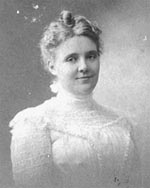
Scudder in 1899

Ida Sophia Scudder (December 9, 1870 – May 24, 1960) was a third-generation American medical missionary in India. She sought to improve the plight of Indian women by fighting against bubonic plague, cholera and leprosy.[1][2] In 1918, she started a teaching hospital, the Christian Medical College & Hospital, in Vellore, India.[3]

Early life

[edit]

Ida was born to John Scudder and Sophia (née Weld), in a line of medical missionaries that started with her grandfather, John Scudder Sr. They[clarification needed] were members of the Reformed Church in America. Growing up as a child in India, Ida witnessed famine, poverty and disease. She was invited by Dwight Moody to study at his Northfield Seminary in Massachusetts, where she earned a reputation for pranks.[1] In 1890, she returned to India to help her father when her mother was ailing at the mission bungalow at Tindivanam in the Madras Province. During her stay, she witnessed three women die in childbirth in one night and resolved to go into medicine.[4]

Scudder graduated from Cornell Medical College, New York City, in 1899, a member of the first class that accepted women as medical students. She then headed back to India and started a tiny medical dispensary and clinic for women at Vellore, 75 miles from Madras. Her father died in 1900, soon after she arrived in India. In two years, she treated 5,000 patients.[4]

Christian Medical College, Vellore

[edit]
Scudder with Mahatma Gandhi, 1928

Scudder opened the Mary Taber Schell Hospital in 1902.[5] She decided to open a girls-only medical school and received 151 applications the first year (1918) and had to turn many away subsequently.[4]

In 1928, ground was broken for the "Hillsite" medical school campus on 200 acres (0.8 km2) at Bagayam, Vellore. In 1928, Mahatma Gandhi visited the medical school. Scudder traveled a number of times to the United States to raise funds for the college and hospital. In 1945, the college was opened to men as well as women. In 2003 the Vellore Christian Medical Center was the largest Christian hospital in the world, with 2000 beds, and its medical school is now one of the premier medical colleges in India.[6] In 2023, the center was ranked the number three college by the National Institute Ranking Framework (NIRF).[7]

The Center was later headed by Scudder's niece, Ida Belle Scudder,[8][9] and fellow medical missionary Paul Brand worked there for a time.[8]

Last years

[edit]

In 1952, Scudder received the Elizabeth Blackwell Citation from the New York Eye and Ear Infirmary, as one of 1952's five outstanding women doctors.[10]

She died on May 24, 1960, at her bungalow.[11][12]

In 1960, Rajendra Prasad, then President of India, hailed Scudder as a “great lady, whose dedication and planned working are exemplary”.[13]

Legacy

[edit]

Biographies

[edit]
  • Graves Dan (2005) Glimpses, issue #113, Christian History Institute, retrieved 9/8/2007 Ida Scudder, A Woman Who Changed Her Mind
  • Legacy and Challenge: The Story of Dr. Ida B. Scudder, published by the Scudder Association [1]
  • Ida S. Scudder of Vellore: The Life Story of Ida Sophia Scudder by Dr. M. Pauline Jeffery, Wesley Press 1951
  • With: Ida S. Scudder and her gleam : memorial supplement, 1960–1961, by M. Pauline Jeffery. Vellore : Christian Medical College of Vellore, 1961
  • Dr. Ida by Dorothy Clarke Wilson 1959
  • The Doctor Who Never Gave Up by Carolyn Scott 1975
  • A Thousand Years In Thy Sight by Dorothy Jealous Scudder (1984) Chapters 25-27
  • Ida Scudder: Healing Bodies Touching Hearts by Janet Benge and Geoff Benge 2003
  • Dr. Ida Skudder by Veena Gavhankar, Raj Hans Prakashan, 1983 Marathi.


References

[edit]
[edit]

Other sources

[edit]
Revisions and contributorsEdit on WikipediaRead on Wikipedia
from Grokipedia
Ida Sophia Scudder (December 9, 1870 – May 24, 1960) was an American medical missionary of the third generation in her family to serve in , renowned for founding the Christian Medical College and Hospital in , , which became a leading institution for and healthcare focused on women and underserved populations. Born in , , to medical missionaries John Scudder and Sophia Weld, Scudder grew up in a lineage of Reformed Church missionaries dating back to her grandfather, the first American medical missionary to . Initially intending to return to the after her education, her path changed in 1894 when three Hindu men separately approached her home seeking treatment for their wives in ; cultural barriers prevented her assistance as an untrained woman, and all three wives died, prompting Scudder to pursue medical training at Cornell Medical College, from which she graduated in 1899. Returning to in 1900, Scudder established a one-room dispensary in that evolved into the Mary Taber Schell Hospital in 1906, dedicated to women's and children's health amid widespread neglect due to cultural practices confining women from male doctors. She pioneered nurse training in 1909, creating India's first graduate , and in 1918 founded the Christian Medical College, initially for women to address the acute shortage of female physicians, later expanding to co-educational programs that emphasized holistic Christian service alongside rigorous medical education. Scudder's achievements included raising substantial funds through extensive tours , overseeing initiatives like clean and campaigns, and mentoring generations of Indian healthcare professionals, leaving a legacy of institutional growth where the Vellore complex now serves millions annually while upholding her commitment to compassionate, faith-informed .

Early Life and Family Heritage

Birth and Childhood in India and the United States

Ida Sophia Scudder was born on December 9, 1870, in , a village in , to American medical missionaries Dr. Scudder Jr. and Sophia Weld Scudder. As the sixth child and only daughter among eight siblings—seven brothers—she was affectionately known as "" within her family. Her family belonged to a lineage of missionaries; her paternal grandfather, Dr. Scudder Sr., had arrived in in 1812 as the first American medical missionary, followed by all seven of his sons, including her father, who continued the tradition of combining with healthcare in the . Growing up in during her early years, Scudder was exposed to the harsh realities of colonial-era , including recurrent famines, epidemics of and plague, and pervasive that limited access to medical care, particularly for women confined by cultural norms. These conditions, observed amid her parents' itinerant work, initially fostered a strong aversion to the missionary lifestyle, as she associated it with unrelenting hardship and suffering rather than any vocational appeal. At age eight, Scudder relocated to the for formal education, seeking respite from India's challenges and immersion in American comforts. There, she attended schools that emphasized academic and moral preparation, culminating in her graduation from Northfield Seminary, a women's institution in focused on classical studies and . During this period in the U.S., surrounded by stability and social opportunities, she envisioned a domestic future of and life, distancing herself further from her family's Indian mission heritage and showing no initial interest in medicine or overseas service.

Influence of Missionary Family Legacy

Ida Sophia Scudder was born on December 9, 1870, in , , into the Scudder family, renowned for its multi-generational commitment to medical missionary work in . Her grandfather, Rev. Dr. John Scudder Sr. (1793–1855), pioneered American medical missions by departing in 1819 with his wife Harriet Waterbury Scudder to establish the first Western medical mission in Ceylon (modern ) and later , integrating with healthcare to address physical and spiritual needs amid widespread disease and poverty. This approach influenced his seven sons, all of whom became missionaries, extending the family's service across generations and embedding a model of sacrificial, faith-driven medical practice. Scudder's parents, Dr. John Scudder Jr. and Sophia Weld Scudder, exemplified second-generation dedication, serving in despite austere conditions, limited resources, and personal hardships that yielded no material rewards. From childhood, Ida witnessed her father's exhaustive rounds treating ailments in famine-stricken villages, confronting rampant illness, , and social barriers that restricted women's access to care, which initially repelled her from the missionary lifestyle she associated with unrelenting toil and deprivation. Yet this immersion cultivated an acute awareness of human suffering, instilling values of , resilience, and Christian service that permeated family discourse and practice, as evidenced by the Scudders' collective record of 42 members across four generations contributing over 1,100 years to missions in by the mid-20th century. The legacy's influence manifested in Scudder's eventual vocational pivot, overriding her early reluctance to emulate her forebears by pursuing as a tool for holistic ministry, thereby perpetuating the family's of addressing causal of —physical neglect intertwined with spiritual void—through empirical intervention and rather than detached . This heritage not only provided a framework for interpreting India's healthcare crises but also reinforced a causal realism in her approach, prioritizing verifiable over cultural accommodation, as modeled by predecessors who treated thousands despite opposition from local traditions favoring .

Vocational Calling and Preparation

The 1894 Turning Point and Decision to Pursue Medicine

In 1894, while visiting her missionary parents in , , Ida Scudder, then 23 years old and uninterested in following her family's medical , experienced a pivotal event that reshaped her life. She had returned from the , where she enjoyed a secular social life in , explicitly rejecting the call to service despite her heritage of seven generations of Scudder . That night, three men from different religious communities—a high-caste Hindu, a Muslim, and a Christian—arrived separately at her door, each urgently pleading for her assistance with their wives who were experiencing obstructed labors. Scudder declined each request, lacking any medical training and citing her unsuitability as a without qualifications to intervene. The following morning, she learned that all three women, along with their unborn children, had died from complications of , a common outcome in the region due to limited access to female physicians amid cultural prohibitions against male doctors treating women of certain castes and faiths. This tragedy, known retrospectively as the "three knocks at the door," confronted her with the acute unmet need for women-trained medical professionals in . Deeply shaken by the deaths and the recurring pattern of maternal mortality she observed during her stay, Scudder spent the night in prayer, emerging with a resolved commitment to study medicine specifically to address women's healthcare needs in . She returned to the later that year, enrolling in the Woman's Medical College of New York (later part of Medical College), one of the few institutions then admitting women, with the explicit aim of training as a medical missionary. This decision marked her shift from reluctance to purposeful vocation, driven by direct exposure to preventable suffering rather than abstract familial duty.

Medical Education and Early Training

Following her decision to pursue medicine in 1894, Ida Scudder enrolled in the in 1895 to begin her formal medical training. She completed three years of study there before transferring to Cornell Medical College in for her final year. At Cornell, Scudder joined the institution's inaugural class open to women, reflecting the era's gradual expansion of opportunities for female students. She earned her (MD) degree in 1899, equipping her with the clinical skills necessary for missionary work in . This training emphasized practical medical knowledge, including and , which aligned with the unmet needs she had witnessed among Indian women. Scudder's education occurred amid broader efforts to professionalize for , though opportunities remained limited and often segregated. Her completion of the program positioned her as one of the early female physicians prepared to address healthcare disparities in , where cultural barriers restricted women's access to male doctors.

Establishment of Medical Mission Work in India

Return to India and Initial Practice (1900-1909)

Ida Scudder arrived in , , on , 1900, following her medical and fundraising efforts in the United States, where she secured initial support including a $10,000 donation from New Yorker Robert Schell to memorialize his late wife Mary Taber Schell. She commenced her practice by assisting her father, Scudder, in the mission bungalow, utilizing a 10-by-12-foot room as a rudimentary with an unskilled assistant—initially the cook's wife—and a horse-drawn buggy for home visits to female patients, reflecting the cultural barriers limiting access to male physicians. Her focus remained on women and children, addressing acute shortages in obstetric and general care amid high maternal mortality rates. Her father's sudden death in April 1900 left Scudder to manage independently with scant resources, yet she persisted, treating patients primarily from her father's for the initial two years while dispensing medicines through a window in a one-bed setup. By 1902, leveraging the Schell , she established the 40-bed Mary Taber Schell Memorial Hospital in , enabling expanded and her first surgical procedures, including an inaugural operation assisted by her butler's wife due to the absence of trained aides. In 1903, the facility recorded over 6,000 patient visits and 40 surgeries, demonstrating rapid growth in demand for her services among local women. Scudder extended outreach through itinerant "roadside clinics" in surrounding villages, employing bullock carts stocked with nurses and supplies to deliver care beyond Vellore's confines, a pragmatic response to rural inaccessibility and entrenched customs restricting women's mobility. By 1906, her operations treated approximately 40,000 patients annually, underscoring the efficacy of her targeted, resource-constrained model in bridging healthcare gaps without reliance on large institutional backing. These efforts laid foundational practices for sustainable medical mission work, prioritizing empirical need over expansive infrastructure in the early phase.

Founding of Nursing School and Dispensaries

In 1909, Ida Scudder founded the nursing school at the Mary Taber Schell Hospital in , introducing India's first diploma course in nursing to train local women as healthcare providers. This program addressed the acute shortage of trained female nurses, enabling culturally sensitive care for women and children who often avoided male physicians due to customs and preferences for same-sex treatment. Initial training focused on basic skills such as patient care, hygiene, and assistance in surgical procedures, starting with a small cohort under Scudder's direct alongside trained aides like Lillian Hart. Concurrently, Scudder initiated a network of roadside dispensaries in 1909 to extend medical outreach to rural villages around , where access to healthcare was limited by distance and . These mobile clinics operated along key routes, offering free consultations, vaccinations, and treatments for common ailments like infections and , serving thousands of patients yearly and emphasizing preventive care through . The dispensaries complemented the hospital's inpatient services, allowing Scudder to cases and refer complex ones, while fostering community trust in Western medicine integrated with missionary ethics. The school and dispensaries marked a strategic expansion of Scudder's mission, prioritizing scalable and accessible care over isolated work; by the , the program had produced dozens of graduates who staffed both the Vellore facility and outreach efforts, laying groundwork for broader institutional growth. These efforts relied on donations from American supporters and Scudder's family networks, reflecting her pragmatic approach to building indigenous capacity amid resource constraints.

Development of Christian Medical College, Vellore

Inception and Early Years of the Medical School (1918-1930s)

In 1918, Ida Scudder established India's first for women in , , offering a Licentiate Medical Practitioner (LMP) course designed to train female physicians amid cultural restrictions that limited male doctors' access to female patients. The institution, initially known as the Union Mission Medical School for Women (UMMSW), began operations in rented buildings due to limited resources, reflecting Scudder's pragmatic approach to rapid deployment despite financial constraints. Despite prevailing skepticism from male medical professionals doubting women's aptitude for rigorous , the school attracted over 150 applications in its inaugural year, underscoring unmet demand for qualified women doctors in . The LMP curriculum emphasized practical clinical skills alongside basic sciences, preparing graduates for licensed practice under Madras University's oversight, as full MBBS degrees were then inaccessible to women in the region. Scudder personally oversaw instruction, drawing on her Cornell Medical College training to integrate missionary ethics with evidence-based medicine, though early classes were small—starting with around 14 students per batch—and faced logistical hurdles like inadequate facilities and faculty shortages. The first cohort graduated in 1922, with Scudder noting their success as evidence of women's capability, countering critics through tangible outcomes rather than advocacy alone. To sustain operations, Scudder undertook fundraising tours to the United States, securing donations that enabled modest expansions, including integration with her existing dispensary and nursing school networks. By the mid-1920s, the school benefited from a pivotal upgrade: in 1924, a new 267-bed hospital opened in central , enhancing hands-on training opportunities and patient volume for clinical education. This facility, funded partly through international contributions, marked a shift from ad-hoc rented spaces to a dedicated , allowing the program to scale enrollment while maintaining focus on underserved rural populations. Throughout the 1920s and into the , the institution prioritized women-only admissions to address gender-specific healthcare gaps, producing successive LMP graduates who staffed mission clinics across , though persistent funding needs and regulatory pressures from colonial authorities tested administrative resilience. By the late , evolving government licensing reforms signaled the need for curriculum upgrades, foreshadowing the transition to degree-level programs, but the school's early emphasis on practical, women-led care had already established its foundational role in Indian .

Expansion, Challenges, and Institutional Growth

In the , following the initial establishment of the , Scudder oversaw the construction of a new 267-bed hospital in central in 1924, replacing earlier facilities and enabling expanded patient care and training capacity. This development, funded through multi-denominational support, marked a significant step in institutional scaling, allowing the integration of clinical practice with education amid growing demand for services in underserved regions. By the 1930s, the institution continued to grow through incremental additions, including enhanced and allied programs, though constrained by rented buildings and limited faculty, which Scudder addressed by recruiting international and Indian staff committed to principles. Enrollment expanded beyond the initial cohorts of women students, with the hospital serving increasing numbers of patients, laying groundwork for specialized departments. A major challenge emerged in the late 1930s when Indian government policies mandated that degrees be granted only by universities, requiring affiliation and structural upgrades that threatened the school's standalone status. In 1941, facing potential closure, Scudder undertook an extensive fundraising tour across the , securing resources to renovate facilities, admit male students, and achieve affiliation with the , culminating in full college status by 1945. These regulatory hurdles, combined with financial pressures from rapid scaling, tested the institution's resilience but reinforced its commitment to self-sustaining growth through ethical training and service-oriented expansion. Under Scudder's leadership until her 1945 retirement, CMC Vellore evolved from a women-only into a comprehensive co-educational facility, with bed capacity surpassing early limits and programs fostering departments in areas like radiotherapy, reflecting adaptive institutional maturation driven by pragmatic responses to external demands. This period solidified its trajectory toward becoming Asia's largest Christian medical center, prioritizing empirical medical advancement alongside missionary outreach.

Later Leadership and Personal Life

Oversight of CMC During World War II and Post-Independence

During , Ida Scudder maintained oversight of the Christian Medical College (CMC) in as its principal, guiding the institution through wartime disruptions including supply shortages and staffing strains from 1939 to 1945. In 1942, under her leadership, CMC upgraded its medical program to the full MBBS degree, gaining affiliation with the and expanding training capacity despite the global conflict's impact on resources and personnel availability. This period also saw intensified efforts in education, with Scudder overseeing the preparation of hundreds of women as healthcare providers to address pressing needs in rural amid war-related pressures. Scudder retired from administrative duties in 1945, coinciding with the institution's formal renaming as . Post-independence in 1947, she transitioned to an advisory role, offering moral guidance and inspirational support to successors during the shift to co-educational admissions that year, which admitted the first male MBBS students and marked a pivotal expansion. In 1946, shortly before her retirement, the nursing school evolved into India's inaugural , reflecting her enduring emphasis on specialized training. Continuing involvement until her death in 1960, Scudder focused on fundraising from the , securing resources for ongoing growth and symbolizing institutional continuity, as evidenced by her ceremonial role at the 1948 thirtieth anniversary where she lit graduates' lamps.

Retirement, Death, and Personal Reflections

Scudder retired from the principalship of Christian Medical College and Hospital in in 1945, at age 75, after guiding the institution from its modest beginnings to a comprehensive medical center with expanded facilities, staff, and training programs for hundreds of students. She then relocated to her bungalow in , a in southern , where she resided for the remainder of her life. Although no longer in day-to-day administration, Scudder maintained active involvement by providing moral guidance, counsel to successors, and occasional efforts to support the college's ongoing growth. She died on May 24, 1960, at her bungalow, aged 89, following a life dedicated to medical missionary work in . Her passing marked the end of a career that had transformed healthcare access for women and underserved populations in the region, though the institution she founded continued to expand under new leadership. In , Scudder reflected on her achievements through a lens of faith-driven , advising that success required careful preparation over impulsive action: "First ponder then dare. Know your facts. Count the cost. Money is not the important thing. What you are building is not a ." This perspective, drawn from decades of overcoming resource shortages, cultural barriers, and institutional hurdles, underscored her view of the college as an extension of Christian service rather than a secular enterprise. She expressed satisfaction in incremental progress, crediting divine guidance for enabling her to establish enduring amid 's evolving post-colonial context.

Legacy and Historical Assessment

Enduring Impact on Indian Healthcare and Education

The Christian Medical College (CMC) Vellore, established under Scudder's leadership, has evolved into one of India's premier medical institutions, treating over two million outpatients and admitting approximately 100,000 inpatients annually while maintaining a focus on underserved rural and marginalized populations. This scale of service perpetuates Scudder's early innovations, such as roadside clinics introduced in the to extend care beyond urban centers, which addressed barriers like cultural taboos preventing women from seeking male physicians. By prioritizing compassionate, high-quality treatment for the poor, CMC has contributed to reductions in maternal and rates in and beyond, influencing national models through its emphasis on preventive care and community outreach. In , Scudder's founding of India's first school for women physicians in 1918—initially the Missionary Medical School for Women, later upgraded to grant MBBS degrees in 1942—pioneered female inclusion in a field dominated by colonial and male-centric structures, training generations of doctors who staffed rural hospitals and advanced women's healthcare advocacy. The institution's subsequent establishment of India's inaugural College of Nursing in 1946 further expanded allied health training, producing thousands of nurses equipped for holistic patient care integrating clinical skills with ethical service. Today, as a WHO collaborating center, CMC graduates over 1,000 medical professionals yearly, many committed to rural service obligations that echo Scudder's vision of indigenous, self-sustaining healthcare workforce development. Scudder's legacy endures through CMC's integration of research, education, and service, fostering innovations like specialized units for and that have informed India's broader healthcare policies, while upholding a model of excellence uncompromised by resource constraints. This approach has inspired similar faith-based institutions across , emphasizing empirical outcomes over ideological impositions, and continues to draw global trainees, amplifying her impact on equitable medical access.

Evaluation of Missionary Approach: Achievements Versus Critiques

Scudder's missionary approach emphasized medical evangelism, wherein healthcare provision served as a conduit for Christian witness, yet prioritized compassionate service over coercive conversion. This method yielded tangible achievements, including the establishment of dispensaries and the Christian Medical College (CMC) , which by trained over 100 female medical practitioners annually, addressing India's acute shortage of women physicians amid cultural barriers like that restricted female patients from male doctors. The institution's growth to a 2,000-bed by the mid-20th century facilitated millions of treatments, reducing maternal and in rural through interventions like training and campaigns, empirically demonstrating effectiveness where state systems lagged. Her focus on vernacular-language education and local staffing fostered self-sustaining operations, with CMC achieving by 1945 via patient fees and grants, outlasting many contemporaneous missions. The approach's integration of spiritual and physical healing promoted an ethic of holistic care, influencing graduates to serve in underserved areas; by 1960, CMC alumni staffed over 200 rural clinics across , correlating with localized declines in communicable diseases like through combined medical and preventive efforts. occurred voluntarily—patients exposed to Bible studies or chapel services opted in, yielding documented conversions among staff and patients who credited care quality over doctrinal pressure, aligning with Scudder's principle that "deeds speak louder than creeds." This yielded institutional resilience, as CMC retained its Christian charter post-independence, unlike secularized peers, while admitting non-Christians and achieving top national rankings by producing ethical professionals unbound by or creed. Critiques frame the approach within broader colonial dynamics, portraying missionary medicine as an instrument of Western cultural hegemony that marginalized indigenous systems like Ayurveda, potentially eroding local healing traditions under the guise of "civilizing" progress. Scholars link Scudder's emphasis on women's medical education to imperial feminism, which essentialized Indian society as backward and requiring Western intervention, as evidenced by her appeals to donors invoking stereotypes of purdah-induced suffering to secure funds exceeding $2 million by 1920. Operational tensions arose, such as the 1920s donor scandal when male students were admitted to bolster viability, diverging from initial female-only pledges and highlighting pragmatic shifts over ideological purity. Nationalist sentiments, amplified by figures like Gandhi, viewed such missions as soft imperialism, with sporadic protests against perceived proselytizing at CMC, though conversion rates remained low (under 5% of patients) and non-coercive. Empirically, achievements predominate: CMC's 21st-century status as India's private medical college, with over 3,000 students and affiliation to global standards, traces causally to Scudder's model of service-driven institution-building, which filled evidentiary gaps in pre-independence healthcare where facilities covered under 10% of needs. Critiques, often rooted in post-colonial , underweight this causal efficacy against ideological concerns, as local adoption—evidenced by Indian leadership at CMC since 1946—and sustained demand affirm the approach's pragmatic adaptation over cultural erasure.

References

Add your contribution
Related Hubs
User Avatar
No comments yet.