Hubbry Logo
Imaging phantomImaging phantomMain
Open search
Imaging phantom
Community hub
Imaging phantom
logo
8 pages, 0 posts
0 subscribers
Be the first to start a discussion here.
Imaging phantom
Imaging phantom
from Wikipedia
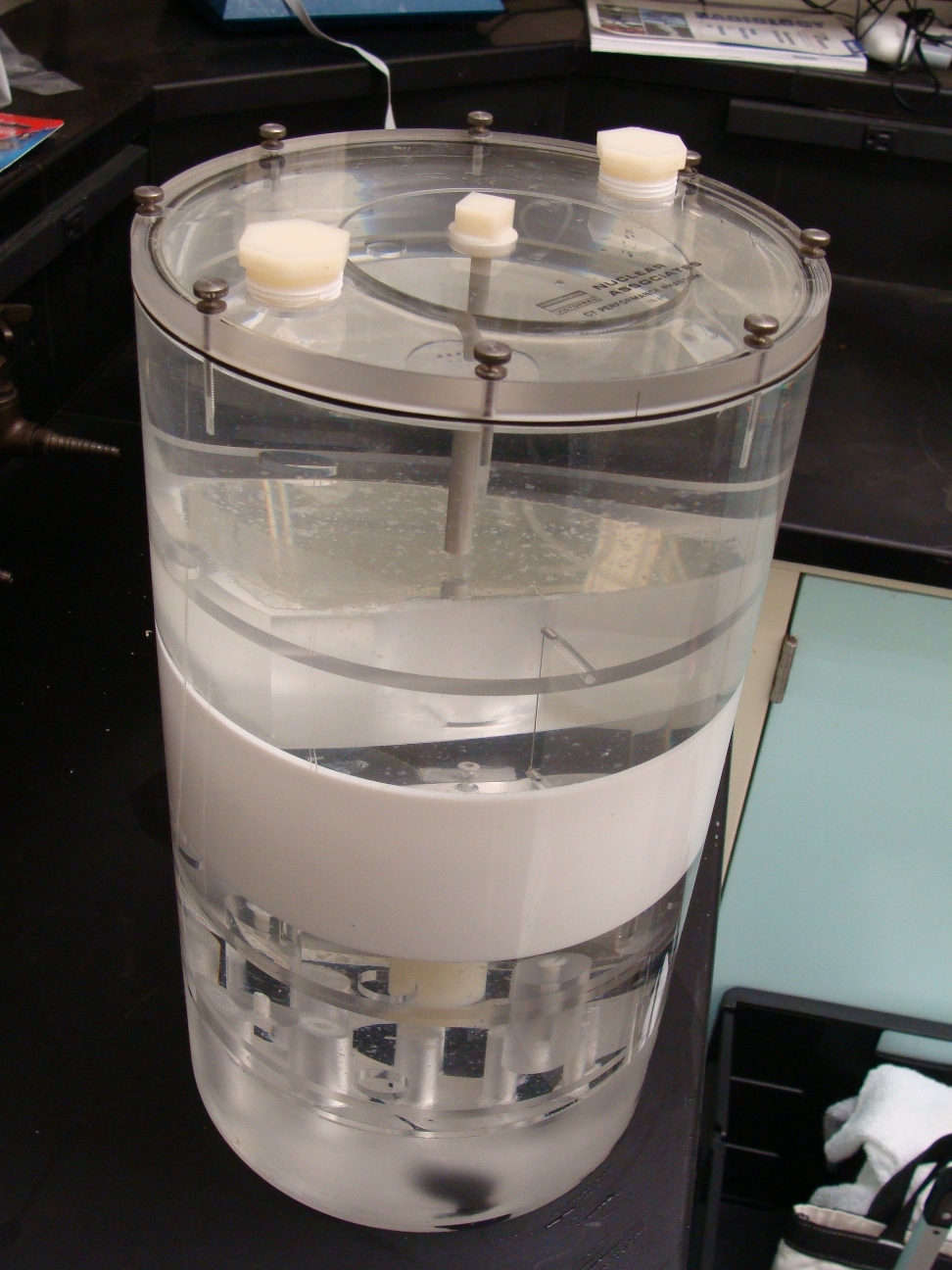
An imaging phantom for determining CT performance
Imaging phantom as seen on a medical ultrasound machine

An imaging phantom, or simply phantom (less commonly spelled fantom[1]), is a specially designed object that is scanned or imaged in the field of medical imaging to evaluate, analyze, and tune the performance of various imaging devices.[2] A phantom is more readily available and provides more consistent results than the use of a living subject or cadaver, while also avoiding direct risks to living subjects. Phantoms were originally employed in 2D x-ray–based imaging techniques such as radiography or fluoroscopy, but more recently phantoms with desired imaging characteristics have been developed for 3D techniques such as SPECT, MRI, CT, ultrasound, PET, and other imaging modalities.

Design

[edit]

A phantom used to evaluate an imaging device should respond in a similar manner to how human tissues and organs would act in that specific imaging modality. For instance, phantoms made for 2D radiography may hold various quantities of x-ray contrast agents with similar x-ray absorbing properties (such as the attenuation coefficient) to normal tissue to tune the contrast of the imaging device or modulate the patient's exposure to radiation. In such a case, the radiography phantom would not necessarily need to have similar textures and mechanical properties since these are not relevant in x-ray imaging modalities. However, in the case of ultrasonography, a phantom with similar rheological and ultrasound scattering properties to real tissue would be essential, but x-ray absorbing properties would not be relevant.[3]

The term "phantom" describes an object that is designed to resemble human tissue and can be evaluated, analyzed or manipulated to study the performance of a medical device. Phantoms are created using a digital file that is rendered through magnetic resonance imaging (MRI) or computer-aided design (CAD). The digital files allow for quick modifications that are read by the 3D printer. The 3D printer will create the product in successive layers using polymeric materials.[4] There are several types of phantoms including tissue-mimicking, radiological phantoms, dental phantoms, BOMABs (used to calibrate whole-body counters), and more.

See also

[edit]

References

[edit]
Revisions and contributorsEdit on WikipediaRead on Wikipedia
from Grokipedia
An imaging phantom, also known simply as a phantom, is a specially designed physical or computational object that simulates human tissues, organs, or anatomical structures to test, calibrate, and optimize systems. These devices replicate the acoustic, optical, electrical, magnetic, or radiation-attenuating properties of biological materials, allowing for controlled evaluation of imaging performance without involving patients. Developed primarily for modalities such as computed tomography (CT), (MRI), (PET), , and , phantoms ensure the accuracy, reproducibility, and safety of diagnostic procedures by providing standardized benchmarks for image quality, resolution, and artifact reduction. The primary purposes of imaging phantoms include (QA), equipment , assessment, and educational training in and related fields. For instance, they enable precise measurement of parameters like (SNR), contrast detectability, and , which are critical for protocol optimization and reducing patient —such as achieving up to 80% dose reduction in CT imaging. In research settings, phantoms facilitate the validation of new technologies, including (AI) algorithms for image analysis and multi-site clinical trials, where they help improve reproducibility across scanners. Additionally, they support traceability to international standards, ensuring consistent results across global healthcare systems. Imaging phantoms are categorized into physical and computational types. Recent advances, such as , enhance customization for specialized applications. Historically, their development traces back to the mid-20th century, with key milestones including NIST's traceable phantoms for MRI (2010) and PET (2015). Today, phantoms play a pivotal role in , with guidelines like the 25-item Phantom Studies in Medical Imaging (PSMI) checklist (published November 2025) promoting transparency and reproducibility in research.

Definition and Purpose

Definition

An imaging phantom is a specially designed object that serves as a for human tissues or organs in systems, enabling the evaluation, analysis, and optimization of imaging equipment performance. These devices are engineered with precisely known physical properties to mimic biological structures, providing a standardized for assessing imaging modalities such as , CT, MRI, and . The core purpose of imaging phantoms lies in their ability to simulate anatomical features under controlled conditions, facilitating the measurement of critical image quality parameters including spatial resolution, contrast sensitivity, uniformity, and the presence of artifacts. By incorporating materials and geometries that replicate tissue densities and acoustic properties, phantoms allow researchers and clinicians to quantify system accuracy and reproducibility without variability introduced by living subjects. In contrast to scans of actual patients, which involve ethical considerations, potential radiation risks, and inherent biological variability, imaging phantoms support repeatable, non-invasive testing that ensures equipment and in a risk-free environment. This controlled approach is essential for validating imaging protocols and detecting subtle performance degradations before they affect clinical outcomes. Examples of imaging phantoms range from simple geometric shapes, such as cylinders or grids, used for basic resolution and linearity tests, to more intricate models that replicate specific organs like the liver or for targeted evaluations.

Historical Development

The origins of imaging phantoms trace back to the early , when simple test objects were developed to evaluate 2D techniques such as and , primarily for assessing film sensitivity and equipment performance. These early phantoms, often basic geometric shapes or tissue-mimicking materials like wax or water-filled containers, addressed the need to standardize radiation exposure and image quality in diagnostic settings following the discovery of x-rays in 1895. By the mid-20th century, advancements in prompted more sophisticated designs, setting the stage for phantoms that simulated for purposes. In the , the development of the first stylized computational phantoms marked a significant milestone at (ORNL), where researchers created mathematical models to estimate internal radiation doses from procedures and environmental exposures. Pioneered by Fisher and Snyder, these phantoms represented the using simple geometric equations for organs, enabling simulations for accurate without physical prototypes. This approach revolutionized research, with fewer than a dozen initial models forming the foundation for subsequent generations. The 1970s and 1980s saw a shift toward physical anthropomorphic phantoms, driven by the emergence of computed tomography (CT) and , which required realistic human-like structures for and . A seminal example was the Alderson RANDO phantom, introduced in 1962 by but gaining widespread adoption in the 1970s for its segmented, life-sized design mimicking human tissue density and skeletal structure. These phantoms, constructed from materials equivalent to and bone, facilitated precise dose measurements and imaging optimization in emerging modalities like CT, where they helped validate slice thickness and contrast resolution. From the 1990s onward, the integration of digital modeling and transformed phantom design, allowing for patient-specific and anatomically precise simulations derived from CT and MRI datasets. Voxel-based computational phantoms, evolved from precursors, incorporated high-resolution data to create models, enhancing accuracy in radiation transport simulations. The rise of multimodal phantoms for hybrid systems like PET/MRI began in the early 2010s, coinciding with commercial PET/MRI scanners, to address challenges in simultaneous functional and anatomical . Post-2010 advancements have introduced "super phantoms" that incorporate dynamic and functional properties, replicating not only static anatomy but also physiological processes such as tissue motion and contrast uptake. Significant milestones include the U.S. National Institute of Standards and Technology (NIST) developing the first traceable MRI phantom, Phannie, in 2010, and PET calibration standards in 2015. These sophisticated models, as detailed in studies up to 2025, enable comprehensive testing of systems under realistic conditions, surpassing traditional phantoms in for applications in advanced diagnostics. In 2025, advancements include new phantoms for photon-counting CT by Modus Medical Devices (March) and patient-specific 3D-printed models by and (February).

Types of Imaging Phantoms

Physical Phantoms

Physical imaging phantoms are tangible objects constructed to simulate human tissues or anatomical structures, serving as stand-ins for direct evaluation of medical imaging systems in modalities such as computed tomography (CT), , and . These phantoms are typically solid or liquid-filled structures fabricated from tissue-equivalent materials like plastics, gels, silicones, or epoxies, chosen to replicate properties such as , , or coefficients relevant to the imaging technique. Unlike computational phantoms, which rely on software simulations without physical scanning, these models enable hardware-specific testing by interacting directly with the imaging equipment. Physical phantoms are categorized by complexity into simple, intermediate, and advanced subtypes, each tailored to assess different performance aspects. Simple phantoms consist of structures, such as cylindrical blocks or basic gels, used for fundamental tests like attenuation or uniformity in CT and . Intermediate phantoms incorporate targeted features, like embedded inserts or vessels, to evaluate contrast resolution or detectability in MRI and CT. Advanced or anthropomorphic phantoms mimic human anatomy more comprehensively, such as torso models replicating skeletal and distributions for realistic simulation in multi-modality . Representative examples illustrate their variety across modalities. The Jaszczak phantom, a cylindrical acrylic structure with fillable spheres and rod inserts, is widely used in (SPECT) and (PET) to measure uniformity, resolution, and lesion contrast. For , phantoms often feature embedded wires or targets in gel matrices like or (PVA) to test acoustic properties and spatial resolution. Anthropomorphic examples include the Rando phantom, a segmented human-like torso made from tissue-equivalent resins, which simulates anatomical geometry for and imaging in CT and . Similarly, the PIXY phantom provides a disassemblable model with realistic joint flexibility and organ inclusions for training and positioning evaluation in and . These phantoms offer key advantages, including direct compatibility with clinical hardware for reproducible quality assessments and the ability to mimic tissue interactions under real scanning conditions, which supports accurate across scanners. However, limitations include potential degradation over time due to , high manufacturing costs for complex designs, and their specificity to particular modalities, restricting broad applicability without customization.

Computational Phantoms

Computational phantoms are digital models of the , represented as voxel-based datasets or mathematical constructs such as (NURBS) surfaces, enabling computational simulations for analysis without requiring physical hardware. These models facilitate the testing of algorithms, dose calculations, and system performance evaluations by providing anatomically detailed representations that can be integrated into software environments like simulation codes. They are categorized into three main subtypes based on construction methods. Stylized phantoms, developed since the 1960s, use geometric approximations such as mathematical equations for organs and tissues, offering simplicity and flexibility for parametric adjustments; a prominent example is the Medical Internal Radiation Dose (MIRD) phantom series from Oak Ridge National Laboratory (ORNL), which employs ellipsoids and cylinders to model adult anatomy for internal dosimetry. Voxel-based phantoms derive from segmented computed tomography (CT) or magnetic resonance imaging (MRI) data, providing high anatomical realism through three-dimensional grids of uniform volume elements; the VIP-Man model derived from the segmented Visible Human Project dataset from cadaveric images serves as a foundational voxel-based phantom with over 3.7 billion elements for detailed organ delineation. Hybrid phantoms combine elements of both, using NURBS or polygonal meshes for deformable surfaces overlaid on voxel data to achieve both realism and adaptability; the University of Florida/National Cancer Institute (UF/NCI) series exemplifies this approach, incorporating patient-specific adjustments for pediatric and adult populations. Key examples illustrate their utility in imaging research. The Shepp-Logan phantom, introduced in 1974 as a of a composed of overlapping ellipses with varying densities, remains a standard for validating image reconstruction algorithms in computed tomography (CT) due to its analytical projections that mimic tissue contrasts. In modern applications, computational phantoms like the ICRP reference models support simulations for accurate in , estimating organ-specific radiation absorption without experimental radiation exposure. These phantoms offer advantages such as infinite repeatability for statistical analyses and straightforward modifications to simulate variations in anatomy or pathology, reducing costs compared to physical prototypes. However, they are limited by the absence of real-world hardware interactions, such as scanner-specific artifacts or scatter effects, and idealized material properties that may not capture biological variability; thus, they are often paired with physical phantoms for comprehensive validation.

Design Principles

Materials and Construction

Imaging phantoms are fabricated using materials carefully selected to replicate the acoustic, radiological, or magnetic properties of human tissues specific to the imaging modality. For ultrasound applications, gels or water-based formulations are widely used, offering an acoustic impedance of approximately 1.5–1.6 MRayl that closely matches values, facilitating realistic of wave and . These gels, often combined with or scatterers like fibers, provide a translucent medium for embedding structures while maintaining long-term acoustic stability under controlled conditions. In computed tomography (CT), polymethyl methacrylate (, commonly known as acrylic, serves as a primary due to its linear of about 0.2 cm⁻¹ at 60–80 keV, akin to , which supports precise and artifact evaluation. For magnetic resonance imaging (MRI), aqueous solutions doped with gadolinium-based contrast agents, such as Gd-DTPA, are employed to tune longitudinal (T1) and transverse (T2) relaxation times, typically achieving values like 500–2000 ms for T1 and 50–100 ms for T2 to mimic or muscle tissues. These dopants enable customizable contrast without altering viscosity significantly, though concentrations must be calibrated to avoid excessive shortening of relaxation times. Tissue-mimicking for mechanical properties often involves (PVA) cryogels, which undergo freeze-thaw cycles to produce elastic moduli ranging from 10–100 kPa, replicating the stiffness of organs like the liver or in studies. elastomers, with tunable moduli via curing agents, are favored for dynamic phantoms simulating variable stiffness in vascular or cardiac models, offering durability under repeated deformation. Since the 2010s, resins compatible with fused deposition modeling (FDM) or (SLA) have enabled intricate anthropomorphic designs, using photopolymers that balance optical clarity and mechanical integrity for multimodal use. Recent advancements as of 2024 include the development of "super phantoms" using to integrate , sensors, and actuators for enhanced functionality in testing systems such as CT and MRI. Additionally, as of 2025, progress in tissue-mimicking materials for anthropomorphic head MRI phantoms has improved simulation of relaxation times, properties, and electromagnetic characteristics. Construction techniques generally entail pouring or injecting liquid precursors into molds—such as or 3D-printed forms—to solidify into the desired shape, followed by embedding fiducials like beads or metal rods for alignment and tracking in scans. This process allows integration of heterogeneous layers, but presents challenges including degradation from microbial or , which can alter acoustic or relaxation properties over weeks, and issues when additives leach into simulated fluids. To address longevity, epoxy-based composites doped with for conductivity and aluminum oxide for have been formulated into stable head phantoms, maintaining properties for over a year in tests.

Key Design Features

Imaging phantoms are engineered with core features that replicate essential imaging challenges through standardized elements. Known geometries, such as spheres, rods, and polyhedral structures, are incorporated to assess spatial resolution by providing predictable patterns for evaluating system performance across modalities. Variable densities within phantom sections enable contrast testing by simulating tissue differences that challenge image differentiation. Inserts mimicking artifacts, like metal rods for beam hardening in computed tomography (CT), allow simulation of clinical distortions to test correction algorithms. Modality-specific designs ensure compatibility and accuracy tailored to each imaging technique. In ultrasound phantoms, acoustic matching layers are integrated to minimize impedance mismatches between the and phantom materials, optimizing signal transmission and image fidelity. (MRI) phantoms are constructed to be compatible with radiofrequency (RF) coils, incorporating non-magnetic components that maintain field homogeneity and support coil performance evaluation. For CT, phantoms feature materials with defined coefficients, such as Hounsfield units ranging from 0 to 100 to represent equivalents, facilitating precise of measurements. Advanced features extend phantom utility to complex scenarios. Dynamic elements, including moving parts like deformable sections or rotating rods, simulate motion artifacts from respiration or cardiac activity, enabling evaluation of compensation techniques. Multimodal phantoms, such as those for positron emission tomography/magnetic resonance imaging (PET/MRI), incorporate radioactive inserts alongside MR-compatible structures to assess combined functional and anatomical imaging without cross-modality interference. Evaluation metrics are embedded in phantom designs to quantify objectively. Uniformity zones provide large homogeneous regions for measuring signal consistency and identifying gradient non-linearities. Low-contrast detectability patterns, often consisting of subtle variations or line pairs per millimeter, test the ability to resolve faint structures, with metrics like modulation transfer function assessing resolution limits.

Applications in Medical Imaging

Quality Assurance and Calibration

Imaging phantoms play a crucial role in (QA) programs for systems by enabling routine scans to verify key performance metrics such as uniformity, noise levels, and geometric accuracy. Daily or weekly phantom scans help detect subtle drifts in scanner performance before they impact clinical images, ensuring reliable operation across modalities like computed tomography (CT), (MRI), and . For instance, in CT, the CATPHAN phantom is scanned to assess image quality parameters such as uniformity, resolution, and low-contrast detectability, helping maintain performance during routine operations. In calibration applications, phantoms facilitate precise adjustments to scanner parameters, compensating for variations that could degrade . For CT systems, phantoms with known geometric features, such as ramps or beads, are used to calibrate slice thickness by measuring the of the slice sensitivity profile, ensuring accurate reconstruction of axial . In MRI, dedicated phantoms enable B0 field mapping to correct inhomogeneities, which can cause distortions; this involves acquiring multi-echo sequences on uniform phantoms to quantify and shim the field for optimal homogeneity. For , phantoms with precisely controlled acoustic properties calibrate the , typically set to 1540 m/s, by embedded targets to adjust and depth measurements for tissue-like propagation. Physical phantoms are particularly suited for these QA tasks due to their stable, reproducible properties that mimic human tissues without biological variability. Standard protocols, such as those from the American College of Radiology (ACR), guide phantom-based testing to meet accreditation requirements, often conducted annually or more frequently for high-volume sites. The ACR MRI protocol, revised in October 2025, specifies scanning large and medium phantoms in the head coil to evaluate uniformity and noise using T1-weighted spin-echo and T2-weighted fast spin-echo sequences, with the phantom aligned sagittally via lights for accurate positioning. Geometric accuracy is verified by measuring phantom dimensions against known values in localizer scans, ensuring distortions remain below acceptable thresholds. Similar ACR guidelines for CT involve scanning the Gammex 464 phantom across multiple slice positions to calibrate CT numbers and slice thickness, supporting comprehensive annual QA. The primary benefits of phantom-based QA and calibration include maintaining consistent image quality across scans, which is essential for diagnostic reliability, and minimizing patient dose variability by optimizing protocol parameters like tube current in CT. By identifying performance drifts early—such as increased noise from coil degradation in MRI—these procedures reduce the risk of suboptimal imaging, enhance , and ensure compliance with clinical standards without exposing patients to unnecessary or repeated exams.

Research and Development

Imaging phantoms play a pivotal role in advancing imaging algorithms by providing standardized, controllable test environments. The Shepp–Logan phantom, a consisting of overlapping ellipses mimicking tissue contrasts, has been a cornerstone for evaluating computed tomography (CT) reconstruction techniques since its introduction in 1974. This phantom enables precise assessment of algorithm performance in handling noise, artifacts, and resolution limits, facilitating iterative improvements in Fourier-based and methods. Computational phantoms extend this utility to applications, where models like the XCAT phantom generate diverse synthetic datasets for training networks in organ segmentation tasks. For instance, the XCAT's incorporation of realistic anatomical variations and motion has supported convolutional neural networks, such as variants, in lung and cardiac segmentation tasks, thereby accelerating AI model validation without relying solely on limited clinical data. In the development of hybrid imaging modalities, multimodal phantoms enable the integration and testing of combined systems like positron emission tomography/magnetic resonance imaging (PET/MRI). These phantoms simulate tissue contrasts across modalities, allowing researchers to optimize algorithms and attenuation correction. A 2021 review highlighted gel-based phantoms doped with and radioactive tracers to replicate and tumor heterogeneity, demonstrating improved spatial alignment in PET/MRI scans. Such innovations have driven advancements in simultaneous acquisition protocols, enhancing diagnostic accuracy for applications. Phantoms are instrumental in refining techniques, particularly for verification in intensity-modulated (IMRT). Anthropomorphic head-and-neck phantoms, constructed with tissue-equivalent materials, allow comparison of proton and beam deliveries, revealing dosimetric discrepancies of up to 5% in critical structures like the . For treatments, dynamic phantoms incorporating respiratory motion simulation—such as motorized platforms replicating 1-2 cm tumor displacements—test adaptive radiotherapy strategies, ensuring dose conformity amid breathing artifacts. Emerging trends in phantom research emphasize multifunctional designs that bridge and functional assessment. Super phantoms, introduced in 2024, incorporate vascular networks with tunable blood flow using microfluidic channels, enabling evaluation of dynamic contrast-enhanced and metrics in real-time. Complementing this, 3D-printed phantoms tailored from patient-specific scans support precision medicine by customizing geometries for therapy planning, with studies showing enhanced fidelity for tumor procedures. These developments underscore phantoms' evolving role in translating research into personalized clinical workflows.

Standards and Accreditation

International Standards

International standards for imaging phantoms are primarily established by organizations such as the (IEC) and the National Institute of Standards and Technology (NIST) to ensure consistent evaluation and performance across systems. The IEC 61223 series provides guidelines for the evaluation and routine testing of medical imaging equipment, including specifications for phantoms used in assessing image quality and patient dose in modalities like and computed tomography (CT). For instance, IEC 61223-3-5 outlines phantom designs for measuring computed tomography dose index (CTDI), incorporating standardized bore holes for dosimeter placement. NIST contributes through traceable phantoms, such as the Phannie phantom introduced in 2010 for (MRI), which features compartments with standardized T1 relaxation times certified against national measurement standards to enable accurate quantitative MRI . Standards specific to imaging modalities further define phantom requirements, including those from the American Association of Physicists in Medicine (AAPM) and the (ISO). The AAPM Report No. 27 establishes protocols for MRI , recommending phantoms with uniform materials to test signal uniformity, ghosting, and geometric accuracy in clinical scanners. For material safety, addresses evaluation of components, ensuring that phantom materials used in contact with patients or simulations do not elicit adverse biological responses, such as or . These standards specify performance metrics to quantify phantom efficacy in tests, emphasizing tolerance limits for key parameters. Uniformity tolerances, for example, typically require less than 5% variation in signal intensity across phantom regions to verify scanner stability in protocols for (SPECT), while MRI protocols such as those from the ACR require integral uniformity above 87.5% at 1.5 T. Resolution standards ensure that systems can resolve clinically relevant structures without excessive noise, as in phantoms that test visibility of fine details such as 0.2 mm specks. Efforts toward global harmonization include the development of the 2021 ISMRM/NIST system phantom for MRI, designed to promote stability, comparability, and quantitative accuracy across vendors by providing a common reference with precisely characterized T1, T2, and proton density values. This phantom facilitates multi-site studies and inter-vendor comparisons, with T1 measurements showing biases around 5% in standardized tests across multiple platforms.

Accreditation Phantoms

Accreditation phantoms play a critical role in formal programs such as those administered by the American College of Radiology (ACR), where they are used to verify the performance of clinical imaging systems and ensure compliance with established quality and safety standards. In the ACR CT accreditation module, the Gammex 464 phantom is employed to evaluate both dose metrics and image quality parameters, including low-contrast resolution, uniformity, and noise, helping to confirm that facilities maintain acceptable levels while producing diagnostically useful images. Similarly, for accreditation, the ACR-approved phantom assesses contrast-detail detection, , and resolution, with tools like the CDMAM phantom integrated in some evaluations to simulate microcalcifications and masses for verifying system sensitivity. These phantoms are integral to modular accreditation processes that cover various imaging modalities, enabling peer-reviewed assessments of equipment performance. Specific phantoms tailored to accreditation needs include the ACR medium phantom for MRI, which underwent a 2025 revision to better accommodate modern phased-array head coils and facilitate comprehensive testing of image uniformity, high-contrast resolution, and artifact presence. This phantom is scanned in the head coil position to mimic patient head imaging conditions. For , breast phantoms designed for lesion detection are required, incorporating tissue-mimicking materials with embedded cysts and solid masses to evaluate , resolution, and detectability of low-contrast targets. Testing procedures for accreditation involve facilities acquiring images of these phantoms under standardized protocols and submitting them via the ACR's online system for expert review. Criteria for passing include quantitative metrics such as signal-to-noise ratios exceeding predefined thresholds (e.g., >40 for certain MRI sequences) and qualitative assessments of object visibility, with dosimetry checks ensuring doses remain within reference levels for CT. These submissions must represent current equipment status, and failures often stem from suboptimal positioning or protocol deviations, prompting corrective actions before retesting. The use of accreditation phantoms significantly impacts clinical practice by ensuring imaging facilities meet rigorous safety and quality benchmarks, thereby reducing patient risk from excessive radiation or suboptimal diagnostics. For instance, the 2025 updates to the large and medium MRI phantoms introduced enhanced guidance on image acquisition and evaluation criteria, improving standardization across diverse scanner types and contributing to higher accreditation success rates. These tools align with broader international standards, such as those from the , to promote global consistency in .

References

Add your contribution
Related Hubs
User Avatar
No comments yet.