Hubbry Logo
Ingvar KampradIngvar KampradMain
Open search
Ingvar Kamprad
Community hub
Ingvar Kamprad
logo
8 pages, 0 posts
0 subscribers
Be the first to start a discussion here.
Ingvar Kamprad
Ingvar Kamprad
from Wikipedia

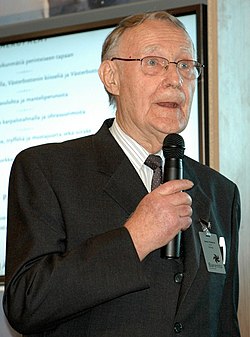
Feodor Ingvar Kamprad (Swedish: [ˈɪ̌ŋːvar ˈkǎmːprad] ; 30 March 1926 – 27 January 2018) was a Swedish billionaire businessman who founded IKEA in 1943 and grew it into a multinational retail company that became the world's largest furniture seller in 2008. He moved to Switzerland with his Swiss wife in 1976, moving back to Småland in 2014 after her death in 2011.

Key Information

Early life and family

[edit]

Kamprad was born in Pjätteryd (now part of Älmhult Municipality), Kronobergs län, in Småland, Sweden, to Feodor Kamprad (1893–1984) and Berta Linnea Matilda Nilsson (1901–1956). His mother was of Swedish origin, while his father was born in the German Empire and came to Sweden a year after his birth with his parents. Kamprad's paternal grandfather, Achim Erdmann Kamprad, was originally from an aristocratic German family in Altenburger Land in Thuringia, while his paternal grandmother, Franzisca ("Fanny") Glatz, was born in Radonitz (Radonice) in Bohemia in the Austro-Hungarian Empire to a lower-class family. Facing rejection from his family and economic hardship in post-industrial Germany are likely what spurred Achim and Franzisca to leave their homeland and, after seeing an ad in a hunting magazine, purchase a timber estate near Agunnaryd, Sweden, where they moved with their young children in the winter of 1896.[3][4]

The surname Kamprad is a variant of "Kamerade" ("Comrade") and dates back to the 14th century; in the 19th century the Kamprad family had become wealthy estate owners in Thuringia. Achim Kamprad's mother was a distant relative of Paul von Hindenburg.[5] Achim was the younger son of an estate owner and had bought the farm Elmtaryd (presently standardized Älmtaryd) near the small village of Agunnaryd (now part of Ljungby Municipality) in the province of Småland; with 449 hectares (1,110 acres) of land it was the largest farm in the area. He took his own life a few years after Frans Feodor was born, leaving the farm to Franzisca, and with time, to Franz Feodor. From the age of 6 onwards, Ingvar Kamprad lived on the farm with his parents, sister, and grandmother.[6]

Kamprad visited his family's ancestral town in Thuringia and kept in contact with relatives there.[7]

Career

[edit]

Kamprad began to develop a business as a young boy. He started selling matches at the age of five.[8] When he was seven he began travelling further afield on his bicycle to peddle to neighbours. He found he could buy matches in bulk very cheaply in Stockholm, sell them individually at a low price, and still make a good profit. From matches he expanded to selling fish, Christmas tree decorations, seeds, and later ballpoint pens and pencils.[8] When Kamprad was 17, his father gave him a cash reward for succeeding in his studies.[9]

Ingvar attended Gothenburg's Handelsinstitut, now part of Hvitfeldtska Gymnasiet, from 1943 to 1945. In 1943, when he was 17 Kamprad founded IKEA at his uncle Ernst's kitchen table.[10] In 1948, Kamprad diversified his portfolio, adding furniture. His business was mostly mail order.[10] The acronym IKEA is made up of the initials of his name (Ingvar Kamprad) plus those of Elmtaryd, the family farm where he was born, and the nearby village Agunnaryd where he was raised.[8][11]

In June 2013, Kamprad resigned from the board of Inter IKEA Holding SA and his youngest son Mathias Kamprad replaced Per Ludvigsson as the chairman of the holding company. Following his decision to step down the then-87-year-old founder explained, "I see this as a good time for me to leave the board of Inter IKEA Group. By that we are also taking another step in the generation shift that has been ongoing for some years." Mathias and his two older brothers, who also have leadership roles at IKEA, work on the corporation's overall vision and long-term strategy.[12]

Net worth and Stichting INGKA Foundation

[edit]

The Dutch-registered Stichting INGKA Foundation is named after Ingvar Kamprad (i.e., ING + KA) which owns INGKA Holding, the parent company for all IKEA stores. Kamprad was chairman of the foundation.[13]

According to an article in the Swedish business weekly Veckans Affärer in 2004, Kamprad was one of the world's wealthiest people.[14] However, the report was based on the assumption that he owned the entire company, an approach both IKEA and the Kamprad family rejected since Kamprad retained little direct ownership in the company, having transferred his interest to the foundation.[13]

In March 2010, Forbes magazine estimated Kamprad's fortune at US$23 billion, making him the eleventh richest person in the world. A year later, he fell to 162nd after his lawyers produced documents proving that the foundation he established and heads in Liechtenstein owns IKEA, and that its bylaws bar him and his family from benefiting from its funds.[15] In June 2015, Kamprad was listed as the eighth wealthiest person in the world in the Bloomberg Billionaires Index, with an estimated net worth of $58.7 billion. Forbes reported Kamprad's net worth as of March 2015 to be $3.5 billion.[15]

Works

[edit]

While generally a private person, Kamprad published a few notable works. He first detailed his philosophies of frugality and simplicity in a manifesto entitled A Testament of a Furniture Dealer in 1976.[16]

Kamprad also worked with Swedish journalist Bertil Torekull on Leading by Design: The IKEA Story. In the autobiographical book, Kamprad further describes his philosophies and the trials and triumphs of the founding of IKEA.[17]

Fascist involvement

[edit]

In 1994, the personal letters of the Swedish fascist Per Engdahl were made public, posthumously revealing that Kamprad had joined Engdahl's pro-fascist New Swedish Movement (Nysvenska Rörelsen) in 1942, at age 16.[13][18] Kamprad had been active till as late as September 1945.[13] When he quit the group is unknown, but he remained a friend of Engdahl until the early 1950s.[19]

Kamprad devoted two chapters to his time in Nysvenska Rörelsen in his book Leading by Design: The IKEA Story and, in a 1994 letter to IKEA employees, called his affiliation with the organization the "greatest mistake of my life".[9] Kamprad explained his teenage engagement in New Swedish Movement as being politically influenced by his father and grandmother in Sudet-Germany.[20]

According to sources from 2011, he had deeper ties to Nazi organizations than previously acknowledged. Author Elisabeth Åsbrink's book reveals that Kamprad actively recruited members for the Swedish Nazi group Svensk Socialistisk Samling (SSS) during his youth. Swedish security police took note of his activities in 1943, the same year he established IKEA. Despite earlier admissions of associating with fascist leader Per Engdahl and involvement with the New Swedish Movement from 1942 to 1945, Åsbrink's findings suggest Kamprad's engagement with Nazi sympathizers extended beyond World War II. In a 2010 interview, Kamprad reportedly referred to Engdahl as "a great man," indicating lasting admiration. Kamprad had previously described his involvement with these groups as the "greatest mistake" of his life.[21][22]

Personal life

[edit]

Kamprad and his first wife Kerstin Wadling adopted a daughter, Annika in 1958.[1] Wadling and Kamprad divorced in 1961 with Annika living with her mother.[23]

In the 1960s, Kamprad married his second wife, Margaretha Kamprad-Stennert (1938–2011), whom he met when she was twenty years old.[24] They had three sons: Peter, Jonas and Mathias.[25][26][27]

He lived in Épalinges, Switzerland, from 1976 to 2014. Kamprad moved back to Småland in Sweden in March 2014 after nearly forty years away.[28][29] While working with furniture manufacturers in Poland earlier in his career, Kamprad became an alcoholic. In 2004, he said that his drinking was under control,[30] and according to The New York Times, Kamprad "controlled it by drying out three times a year".[31]

According to a 2006 interview, Kamprad was then driving a 1993 Volvo 240, flew economy class, and encouraged IKEA employees to use both sides of a page when writing or printing.[32] He reportedly recycled tea bags and was known to keep the salt and pepper packets in restaurants.[10] Kamprad had also been known to visit IKEA for a "cheap meal", and was known for his frugal behaviour; purchasing wrapping paper and presents in post-Christmas sales. The company he created is still known for the attention it gives to cost control, operational details and continuous product development; allowing it to lower its prices by an average of 2–3% over the decade to 2010, while continuing its global expansion. Kamprad explains his social philosophy in his Testament of a Furniture Dealer: "It is not only for cost reasons that we avoid the luxury hotels. We don't need flashy cars, impressive titles, uniforms or other status symbols. We rely on our strength and our will!"[10] Kamprad owned a villa in Switzerland, a large country estate in Sweden and a vineyard in Provence, France. Kamprad drove a Porsche for several years.[33][34][35]

Death

[edit]

Kamprad died in his sleep of pneumonia at his home in Småland, Sweden, on 27 January 2018 at the age of 91.[31][36][37]

According to his will, half of Kamprad's estate would go to projects in Norrland, the sparsely populated northern half of Sweden.[38] Kamprad reportedly wanted to develop Norrland and make it possible for young people to live there.[38]

The other half of his estate went to his four children.[39] In 2015, it was reported that Kamprad had named his sons as the sole heirs of an entity called the Ikano Group, which is valued at US$1.5 billion, while his adopted daughter, Annika, who lived with him for three years as an infant, was planned to receive about $300,000.[23]

See also

[edit]

References

[edit]
[edit]
Revisions and contributorsEdit on WikipediaRead on Wikipedia
from Grokipedia
Ingvar Feodor Kamprad (30 March 1926 – 27 January 2018) was a Swedish businessman who founded IKEA in 1943 at the age of 17, developing it into the world's largest furniture retailer known for affordable, flat-pack designs and self-assembly models. Born in the rural Småland province to a German-Swedish family, Kamprad began his entrepreneurial ventures selling small items like matches and pencils before expanding into furniture in 1948, pioneering innovations such as catalog sales, showroom experiences, and cost-cutting production methods that democratized access to modern home furnishings. Kamprad's business philosophy emphasized frugality, efficiency, and relentless cost reduction, exemplified by his personal habits of driving an old and flying despite amassing significant wealth; estimates of his net worth peaked at around $58 billion in 2015, though IKEA's complex ownership structure via nonprofit foundations obscured precise figures and facilitated tax efficiencies. By the time of his death from at age 91, operated over 400 stores in more than 50 countries, employing hundreds of thousands and generating billions in annual revenue through a model that prioritized volume over margins. A notable controversy in Kamprad's life involved his teenage affiliations with pro-Nazi groups in neutral during and after , including membership in the Svensk Socialistisk Samling party and recruitment efforts for a Nazi youth organization, ties he attributed to misguided youthful enthusiasm influenced by his father's views and later publicly apologized for as a profound error in judgment. These revelations, detailed in his 1998 self-reflective book A Testament of a Furniture Dealer, drew scrutiny but did not derail IKEA's growth, as Kamprad maintained the episodes were aberrations from his otherwise apolitical focus on commerce.

Early Life

Birth and Family Background

Ingvar Feodor Kamprad was born on March 30, 1926, in Pjätteryd, a locality now part of Municipality in the province of southern , to Feodor Kamprad and Berta Linnea Matilda Nilsson. His father, born in 1893 in the (present-day ), immigrated to as a child with his parents and later worked as a after acquiring land in the region. Berta, of Swedish origin, managed the household on the family farm Elmtaryd near the village of Agunnaryd, where Ingvar grew up alongside his younger sister Kerstin amid the economic constraints of rural interwar . Småland's landscape of rocky soil, dense forests, and limited contributed to a culture of and among its inhabitants, as families adapted to subsistence farming and small-scale enterprises during periods of regional exacerbated by the . Kamprad's early environment on the Elmtaryd farm emphasized practical resource management, with his parents instilling values of thrift through daily farm labors and minimal material comforts. Kamprad exhibited symptoms of from a young age, struggling with reading and numerical codes, a condition he later acknowledged as influencing his preference for mnemonic naming systems over abstract identifiers. Without formal diagnosis or accommodations available in rural 1930s , he compensated through hands-on learning and , developing resilience that aligned with the pragmatic ethos of his upbringing.

Childhood and Early Entrepreneurial Activities

Ingvar Kamprad demonstrated entrepreneurial initiative from a young age, beginning at five years old by selling matches door-to-door to neighbors in rural Småland, . He soon expanded his offerings to include he himself from Lake Möckeln, as well as and cards, selling these items to members, classmates, and local residents. His mother, Berta, and paternal grandmother, Franziska, actively encouraged these early ventures, fostering his interest in trade through supportive involvement. By around age ten, Kamprad had begun to grasp basic principles of cost control and pricing, observing markups such as pencils bought wholesale at 0.5 and resold at 10 , which highlighted the role of distribution efficiency in profitability. To optimize his operations, he acquired a for transporting goods and deliveries, enabling wider reach, and used a to maintain a rudimentary register for tracking sales and preferences. In his early teens, he progressed to importing and selling more varied goods, including pens (such as becoming a general agent for French Evergood pens), wallets, belts, pencils, watches, and even , often negotiating directly with through personal visits, brochures, and sales letters. These formative experiences were shaped by the cultural ethos of , a region characterized by resource scarcity, thrift, ingenuity, and a strong preference for self-reliance over dependency, which instilled in Kamprad a drive for hard work and efficient resource use from childhood. His grandfather's playful setup of a mock store further nurtured this in a family environment that valued practical enterprise.

IKEA's Founding and Growth

Inception and Initial Products

Ingvar Kamprad registered as a on July 28, 1943, at the age of 17, while residing on the Elmtaryd near the village of Agunnaryd in , . The name combines Kamprad's initials with references to Elmtaryd and Agunnaryd. He financed the venture using profits from prior small-scale sales of matches, gathered from a nearby , which he resold door-to-door and to neighbors starting around age 10. From the outset, IKEA functioned as a mail-order operation based out of the family farm, distributing catalogs of assorted small goods to customers across . Initial products included everyday items such as pens, wallets, picture frames, pencils, postcards, watches, stockings, and decorations, selected for their low cost and ease of shipping. Kamprad sourced these through direct purchasing and imports, studying techniques like Taylorism for efficiency in procurement and sales. Local distribution began with Kamprad using a to deliver orders in the Agunnaryd area, minimizing overhead by avoiding a physical and relying on the farm's . This model capitalized on Sweden's rural postal network during , when fuel shortages limited road transport, allowing to scale sales of lightweight, high-margin goods without significant capital investment. By 1945, as volume increased, Kamprad arranged deliveries via borrowed milk trucks from local farmers, further optimizing logistics for the catalog-based system.

Shift to Furniture and Expansion Strategies

In 1948, Ingvar Kamprad introduced furniture to IKEA's mail-order catalog, starting with basic items such as tables produced by local craftsmen, which quickly gained traction amid demand for affordable home goods. This pivot from smaller goods like pens and wallets positioned furniture as the company's dominant category by the early , capitalizing on Sweden's rural consumers seeking practical, low-priced alternatives to urban retail offerings. Customer distrust of uninspected mail-order furniture prompted Kamprad to open IKEA's inaugural in Älmhult in 1953, a 180-square-meter space attached to the warehouse where buyers could view and test assembled pieces before purchase. This innovation addressed quality concerns directly, boosting sales confidence and laying groundwork for larger retail formats, as showroom visits demonstrated the viability of Kamprad's pricing model without intermediaries. By the mid-1950s, IKEA's undercutting of traditional prices incited boycotts from Swedish furniture cartels, including retailers in and who coerced suppliers into refusing IKEA orders, aiming to protect established margins. Kamprad countered through , acquiring factories and developing in-house manufacturing by 1955 to secure supply chains and maintain cost controls, which insulated the firm from external pressures and enabled sustained expansion in . International growth accelerated in the 1960s with the 1963 opening of IKEA's first overseas store near Oslo, Norway, a 3,000-square-meter facility targeting adjacent markets with comparable demographics and postwar housing booms favorable to budget furnishings. This was followed by stores in Denmark in 1969 and Switzerland in 1973, selections driven by geographic proximity, linguistic similarities, and receptivity to value-driven retail in regions recovering from economic constraints.

Key Innovations in Retail Model

One pivotal innovation was the introduction of flat-pack furniture in 1956, pioneered by draughtsman Gillis Lundgren after disassembling a LÖVET table to fit it into a vehicle for transport, which prevented damage and sparked the concept of customer . This approach slashed shipping volumes and costs by approximately 50% through more efficient packing and loading, while enabling customers to transport items themselves, thereby supporting a shift to retail that minimized delivery logistics. Complementing this, IKEA optimized showroom operations with a prescribed one-way navigation system featuring floor arrows and signage to guide customers through displays, promoting extended exposure to products without heavy reliance on staff. This design reduced labor expenses by limiting personnel to oversight roles and fostering self-selection, with the 1951-launched catalog serving as the core and tool, distributed in millions to familiarize buyers with inventory and layouts in advance. Kamprad further advanced the model through "democratic design," a framework prioritizing affordable, functional products for broad accessibility via high-volume production and material efficiencies, diverging from luxury furniture by balancing form, quality, and low pricing to serve the masses. This principle drove innovations in modular, scalable that sustained cost controls while delivering practical items, underpinning IKEA's scalability beyond elite markets.

Business Philosophy

Principles of Cost Efficiency and Frugality

Kamprad's operational philosophy emphasized relentless cost control as foundational to IKEA's competitiveness, rooted in the frugal ethos of his native region, where historical poverty necessitated resource optimization for survival. This heritage informed a corporate culture that rejected waste in all forms, with Kamprad articulating in his 1976 manifesto The Testament of a Furniture Dealer that "wasting resources is a " and demanding "stubbornness" in achieving efficiencies across production, , and administration. Practical implementations included enforcing paper reuse by reprimanding staff for printing on only one side and curtailing office amenities to bare essentials, ensuring overhead remained minimal and scalable. In supplier interactions, Kamprad prioritized securing the lowest input costs through high-volume commitments and extended contracts, which reduced per-unit expenses and sustained IKEA's ability to offer products at prices 30-50% below competitors by the 1970s. These measures stemmed from a first-principles view that any non-essential expenditure eroded value transfer to consumers, fostering a mindset where efficiency gains directly correlated with and volume-driven profitability. Kamprad positioned such as antithetical to consumer interests, arguing that managerial extravagance—such as lavish perks or bloated bureaucracies—created causal barriers to affordability and . By exemplifying these standards through personal restraint, including economy-class despite his wealth, he reinforced operational discipline among employees, linking individual thrift to collective long-term viability over short-term indulgences. This sustained focus enabled to achieve compound annual growth rates exceeding 10% from the 1980s onward, attributing to disciplined vigilance rather than .

Management Style and Corporate Culture

In 1976, Ingvar Kamprad authored The Testament of a Furniture Dealer, a foundational document articulating IKEA's , which emphasized flat organizational structures, aversion to , and direct, hands-on leadership to sustain agility during expansion. The text warned that "complicates and paralyses," advocating minimal administrative layers and encouraging managers to delegate authority widely while maintaining personal accountability through leading by example. This approach fostered an "IKEA way" of immersive involvement, where executives were expected to engage directly with operations rather than rely on detached planning. Kamprad promoted a culture of calculated risk-taking and learning from errors, viewing mistakes as essential for provided they yielded lessons, which aligned with promoting employees based on potential over formal experience to build internal capabilities amid rapid global scaling. To combat creeping , he instituted mandatory "anti-bureaucracy weeks" for managers, requiring them to perform frontline tasks and eliminate unnecessary processes, thereby reinforcing merit-based contributions and operational . This hands-on extended to cultivating an mindset among staff, where responsibility was decoupled from hierarchy or credentials, enabling broad delegation and high operational retention despite competitive wages. Under Kamprad's influence, IKEA's corporate culture prioritized unity and renewal through employee-led initiatives, with values like cost awareness and simplicity driving motivation without heavy reliance on external entitlements, contributing to sustained loyalty in a high-turnover industry. This merit-oriented framework implicitly favored individual initiative over excesses, as evidenced by the company's resistance to in key markets while maintaining internal cohesion via shared and purpose.

Wealth and Economic Strategies

Accumulation and Net Worth

Ingvar Kamprad's personal net worth grew substantially alongside IKEA's expansion in the late , reaching peaks in the mid-2000s. In 2004, estimated his fortune at $18.5 billion, placing him 13th on the global billionaires list. By 2006, he had risen to 4th place worldwide. Estimates continued to climb, with valuing his wealth at $23 billion in March 2010, ranking him 11th richest globally. These figures reflected his control over significant portions of IKEA's value through personal stakes and related entities, despite the company's complex foundation-based ownership structure that limited direct shareholdings. Kamprad's net worth experienced notable fluctuations thereafter, primarily from asset reallocations documented in legal filings. Following presentations by his lawyers in 2011 detailing irrevocable transfers of ownership to foundations, sharply reduced its estimate, contributing to a decline that saw his ranking drop to 162nd by some accounts. By 2015, his stood at $3.5 billion according to , though he remained a billionaire. In 2016, further asset transfers led him to fall off the billionaires list entirely. Despite these troughs, alternative valuations like Bloomberg's placed his effective control over -related assets higher, estimating up to $40 billion in 2012. Kamprad maintained personal frugality amid these wealth swings, reportedly driving an old and flying , even as IKEA's steady performance supported underlying value growth. At his death in 2018, did not list him among top billionaires due to the foundation structures, but other estimates ranged from $42.5 billion to $58.7 billion based on his family's influence over IKEA's empire. This trajectory underscored a pattern of high peaks in the driven by business success, followed by deliberate reductions in reported personal holdings, yet sustained billionaire status through enduring IKEA ties.

Tax Planning and Foundations

In response to Sweden's marginal rates exceeding 80% during the 1970s, including combined top rates approaching 102% when factoring in surtaxes, Ingvar Kamprad relocated from to in 1973 to reduce his personal tax burden. He moved again to in 1976, where lower tax rates—capped at around 40% for high earners—allowed him to retain more of his while continuing to oversee IKEA's expansion; this expatriation was explicitly motivated by avoiding Sweden's progressive taxation on income and potential levies, which Kamprad had publicly criticized as disincentivizing . He resided in until 2013, briefly returning to in 2009 amid family considerations before departing again, only permanently resettling after abolished its and taxes in 2007 and further reformed capital gains rules, reducing effective rates on entrepreneurial income. To further optimize tax efficiency and ensure IKEA's independence from short-term shareholder pressures or forced divestitures, Kamprad established the in , , in 1982 as a Dutch (a tax-exempt entity similar to a trust). This structure transferred ownership of B.V.—which controls the majority of retail operations—to the foundation, shielding assets from Swedish inheritance taxes (then up to 30% on estates over SEK 1.5 million) and enabling reinvestment of profits into the rather than dividend payouts subject to high personal or corporate levies. The foundation's formal purpose includes promoting in architectural and , but its primary function has been long-term stewardship of IKEA's assets, with governance provisions that prioritize operational continuity over profit distribution; this has facilitated over €1 billion in charitable outflows via affiliated entities while minimizing taxable events for the Kamprad family. These arrangements, while criticized in some European parliamentary reports for aggressive profit shifting, involved no proven illegal evasion and aligned with legal tax minimization strategies common among high-net-worth individuals facing confiscatory domestic rates; proponents, including business analysts, argue they preserved capital for IKEA's growth, countering policies that empirical evidence links to reduced investment and capital flight in high-tax jurisdictions like 1970s Sweden. By 2015, following his return, Kamprad paid Swedish taxes for the first time in over four decades, reflecting the impact of reformed policies that lowered top marginal rates to 57% and eliminated wealth taxes, thereby repatriating entrepreneurial talent and assets.

Political Views and Engagements

Nationalist Activities in Youth

In 1942, at the age of 16, Ingvar Kamprad joined Nysvenska Rörelsen (New Swedish Movement), a fascist-leaning founded and led by . The group focused on anti-communist and promoted authoritarian , operating within Sweden's neutral stance during , where domestic fears of Soviet influence and economic instability post-Depression fueled support for such movements among rural youth. Kamprad handled distribution of materials and engaged in efforts for the . Swedish security service (Säpo) records from 1943 list Kamprad as member number 4014 of Svensk Socialistisk Samling (SSS), the leading in at the time, successor to earlier Nationalsocialistiska Arbetarepartiet. He actively recruited new members for SSS, attending meetings and participating in its operations amid the wartime context of Sweden's neutrality, which allowed limited space for pro-German and anti-Bolshevik activities despite official non-alignment. Kamprad developed a personal friendship with Engdahl that extended beyond organizational ties, including financial support for Engdahl's 1948 political publication and requesting Engdahl to serve as best man at his sister's wedding in 1950. Correspondence between the two continued into the early 1950s, even as Kamprad severed formal affiliations with these groups by 1945.

Renunciations and Evolving Perspectives

In 1994, Kamprad published the pamphlet Aged 68—A Report to the Board, in which he described his youthful associations with pro-Nazi groups as "the greatest mistake in my life," attributing them primarily to the influence of his grandmother, who held pro-German views stemming from her origins in the German-speaking region of , rather than any personal anti-Semitism. He emphasized that these ties, formed during his teenage years in the fragmented political landscape of neutral , represented misguided enthusiasm without deeper ideological commitment or participation in wartime activities. Kamprad stated that he severed contact with figures like , a prominent Swedish fascist leader, by the early upon recognizing the ideology's dead-end nature, with no records indicating formal membership in Nazi parties or continued affiliation thereafter. files, later publicized, documented his early involvement but aligned with his account of it as a limited, adolescent phase in a country where pro-German sentiments were not uncommon amid neutrality and domestic divisions, lacking evidence of adult culpability or collaboration during . Over subsequent decades, Kamprad's perspectives shifted toward pragmatic capitalism, channeling his energies into IKEA's expansion while explicitly rejecting political extremism as incompatible with business innovation and efficiency. Later media reports and books amplifying his past as evidence of enduring sympathies have been critiqued as ahistorical, given the absence of post-1950s engagement, personal denials of anti-Semitic motives, and his focus on economic productivity over ideology.

Critiques of Bureaucracy and High Taxation

Ingvar Kamprad publicly criticized Sweden's high marginal tax rates, which reached up to 85% for high earners in the 1970s, as punitive and detrimental to business incentives, prompting his relocation to Denmark and later Switzerland in 1973 to minimize tax burdens. He described taxes as a standard business cost to be optimized for operational flexibility, arguing that excessive rates hindered capital reinvestment and entrepreneurial growth rather than fostering innovation. In his 1976 manifesto The Testament of a Furniture Dealer, Kamprad lambasted as a force that "complicates and paralyses," equating excessive and fear of errors—the "root of "—with stagnation and the foe of development, drawing from empirical observations of regulatory overreach stifling efficiency in Sweden's expanding welfare apparatus. He advocated thrift and cost discipline as antidotes, prioritizing voluntary efficiencies over state-mandated redistribution, which he implicitly critiqued through IKEA's relocation of operations abroad to evade regulatory drag on scalability. Kamprad's expatriation, alongside other Swedish entrepreneurs, empirically demonstrated the disincentivizing effects of wealth taxes, contributing to Sweden's 2007 repeal of its 1.5% net wealth tax amid capital flight and diminished domestic investment; this policy reversal aimed to repatriate talent and assets, as evidenced by subsequent returns like Kamprad's in 2013 following moderated fiscal pressures. His stance underscored high taxation and bureaucracy as barriers to entrepreneurship, favoring market-driven thrift to sustain long-term value creation over coerced fiscal transfers.

Personal Life

Family Dynamics

Ingvar Kamprad married Margaretha Kamprad-Stennert, a teacher, in 1963; the couple had three sons—Peter, Jonas, and Mathias—who later took on operational roles within the organization. The marriage lasted until Margaretha's death in 2011 at age 71. Kamprad integrated his sons into the family enterprise by assigning them responsibilities aligned with their strengths: Peter in supply chain , Jonas in , and Mathias in executive , culminating in Mathias's appointment as chairman of Inter Group in June 2013 following Kamprad's resignation from the board. This parental strategy emphasized grooming the next generation through practical contributions rather than unearned positions, reflecting Kamprad's roots in a farming family where self-reliance was paramount.

Lifestyle Habits and Personal Challenges

Kamprad exemplified personal frugality through habits such as driving a 1993 Volvo for over two decades, flying economy class, and purchasing clothing from flea markets and second-hand stalls. He also reused teabags and collected salt and pepper packets from restaurants to minimize household expenses. These practices reflected a deliberate choice for simplicity, independent of business cost-cutting strategies. A significant personal challenge was Kamprad's , which intensified following his from first wife Kerstin Wadling in the late 1950s or early 1960s. He openly acknowledged the issue, managing it through self-imposed periods of three weeks annually, a regimen he maintained into later years and described as effective control rather than complete cessation. In June 2013, at age 87, Kamprad relocated from his long-term residence in Epalinges, —where he had lived since 1976 primarily to optimize tax efficiency—to a farm near , , citing a desire to return to his roots before year-end. This move reconnected him with the southern Swedish region of his upbringing and IKEA's origins, though his family's business operations retained a Swiss base. Despite these challenges, including dyslexia from childhood and ongoing alcohol management, Kamprad attained longevity, reaching 91 years. His farm upbringing in Småland, involving manual labor like milking cows, likely contributed to a foundation of physical resilience.

Death and Legacy

Final Years

In June 2013, at the age of 87, Kamprad resigned from the board of Inter IKEA Holding SA, marking his full retirement from formal executive and advisory roles within the IKEA Group, which he handed over to his sons in a planned generational transition. His youngest son, Mathias, succeeded him as chairman, while the company emphasized continuity in its low-cost, efficiency-driven model under family stewardship. Kamprad then resided primarily in his native Småland region, including Älmhult, where he maintained informal oversight of the enterprise without day-to-day involvement. As Kamprad entered his late 80s and 90s during the , his health declined progressively due to advanced age, limiting his public appearances and active participation. In reflections shared in interviews and company communications toward the end of his life, he reaffirmed the viability of IKEA's core principles—such as relentless cost control, flat-pack design, and democratic pricing—asserting their resilience against emerging digital retail disruptions and pressures. Kamprad died on January 27, 2018, at his home in , , at the age of 91, after a short illness and surrounded by family. The IKEA Foundation confirmed the passing occurred peacefully, with no further details on the illness released publicly.

Long-Term Impact and Assessments

IKEA's , pioneered by Kamprad, democratized access to functional furniture for hundreds of millions worldwide through flat-pack design and cost efficiencies, enabling annual retail sales exceeding €44 billion as of 2024 while operating in over 60 countries. This approach sustained competitive advantages via from long-term supplier contracts and high-volume production, outpacing imitators despite widespread emulation of its self-assembly format. By 2024, the company employed 231,000 workers globally, generating substantial job creation in retail, , and sectors across diverse economies. Kamprad's legacy underscores the viability of self-funded enterprise growth, starting from a rural Swedish farm in 1943 without external capital infusions, challenging narratives favoring subsidized or elite-backed models by demonstrating scalable prosperity through relentless cost discipline and market responsiveness. Empirical outcomes include enhanced consumer welfare via prices 20-50% below traditional retailers, facilitating home furnishing for lower-income households and contributing to broader alleviation by prioritizing affordability over luxury. Criticisms of 's , including reports of excessive supplier working hours, hazardous conditions, and past labor incidents in the , have prompted audits and reforms, though ongoing scrutiny persists regarding wage adequacy in developing markets. Environmentally, as the world's largest wood consumer—one tree per second— faces accusations of indirect ties in sourcing regions like and , despite commitments to sustainable ; these concerns must be contextualized against net benefits like reduced waste from modular designs and lower overall consumption barriers that curb demand for higher-impact alternatives. Through foundations like the INGKA Foundation and IKEA Foundation, established in 1982, Kamprad channeled billions—including a 2019 €33 million endowment to for economic research—toward education, health, and initiatives in underprivileged areas, emphasizing individual initiative and market-driven solutions over dependency-creating welfare. At in 2018, structures he devised directed approximately $23 billion toward Swedish charitable and business entities, reinforcing a that private , not state intervention, causally drives enduring societal advancement.

References

Add your contribution
Related Hubs
User Avatar
No comments yet.