


Community hub
Recent from talks
Contribute something
Nothing was collected or created yet.
Inveniam viam
View on Wikipedia"Aut inveniam viam aut faciam" (or "Aut viam inveniam aut faciam") is Latin for "I shall either find a way or make one".[1][2][3] The first word "aut" may be omitted, corresponding to omitting the English word "either" from the translation.
The phrase has been attributed to Hannibal; when his generals told him it was impossible to cross the Alps by elephant, this was supposedly his response. The first part of the sentence, "inveniam viam", "I shall find a way", also appears in other contexts in the tragedies of Seneca, spoken by Hercules and by Oedipus, and in Seneca's Hercules Furens (Act II, Scene 1, line 276) the whole sentence appears, in third person: "inveniet viam, aut faciet."[4]

It has been used as a motto for instance by Francis Bacon[5] as well as Robert Peary. It still is popular in social, educational and military organisations.[6]
In first person plural, the quote is written on an iron arch over the class of 1893 memorial gate at the University of Pennsylvania.[7] A painting in the National Portrait Gallery, formerly attributed as Sir Philip Sidney and now thought to depict his brother Robert, is adorned with the phrase.[8] In The Dunciad, Alexander Pope writes of John Henley that he "turned his rhetoric to buffoonry" by handing out medallions engraved with this motto.[9]
-
 Robert Peary's signature 10 June 1907 with quote
 -
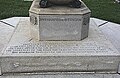 Peary's grave at Arlington National Cemetery
 -
 Emblem of the U.S. Army 440th Civil Affairs Battalion of Fort Carson, Colorado
 -
 Emblem of the USAF 628th Logistics Readiness Squadron of Joint Base Charleston
 -
 Emblem of the USAF 405th Expeditionary Operations Support Squadron (provisional)
 -
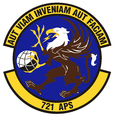 Emblem of the USAF 721st Aerial Port Squadron of Ramstein Air Base, Germany
 -


References
[edit]- ^ A New Dictionary of Quotations from the Greek, Latin, and Modern Languages, J.B. Lippincott & Co., 1869, p. 229
- ^ Belton, John Devoe (1890), A Literary Manual of Foreign Quotations, Ancient and Modern, G.P. Putnam's Sons, p. 18
- ^ Stone, Jon R. (2004), The Routledge Dictionary of Latin Quotations, Routledge, p. 140.
- ^ "Seneca, Hercules Furens, line 205".
- ^ Reid, Thomas; Walker, James; Hamilton, William (1850), Essays on the Intellectual Powers of Man, J. Bartlett, p. xii.
- ^ Cf. Chigwell School, Holton-Arms School, Capitol Technology University, South Ural State University, Combat Logistics Battalion 24, Rhodes Knights, Croxley Green#York House School, St. George's Girls' School, Center for Explosive Ordnance Disposal & Diving.
- ^ "Inveniemus viam aut faciemus" http://hdl.library.upenn.edu/1017/d/archives/20050203019
- ^ Gavin Alexander: Writing after Sidney. The Literary Response to Sir Philip Sidney 1586–1640. Oxford University Press, Oxford, New York 2006, ISBN 978-0-19-928547-1, p. 158, n. 40.
- ^ Pope, Alexander (1736), The Works of Alexander Pope, L. Gilliver and J. Clarke, pp. 206–208.
Inveniam viam
View on GrokipediaOverview
Phrase and Translation
The Latin phrase "Inveniam viam" serves as an abbreviated form of the fuller motto "Aut inveniam viam aut faciam" or the variant "Aut viam inveniam aut faciam." A literal word-by-word translation breaks down as follows: aut means "or" or "either," functioning as a disjunctive particle; inveniam is the first-person singular future indicative of invenio ("to find," "to discover," or "to come upon"), translating to "I shall find"; viam is the accusative singular of via ("way," "road," or "path"), serving as the direct object; the second aut again means "or"; and faciam is the first-person singular future indicative of facio ("to make," "to do," or "to cause"), translating to "I shall make."[6] The identical forms of inveniam and faciam reflect the overlap in third-conjugation verbs between future indicative and present subjunctive endings, but in this context, the future indicative mood conveys resolute intention rather than hypothetical possibility.[6] Standard English renderings include "I shall either find a way or make one" or the more colloquial "I'll find a way or make one," capturing the phrase's emphatic tone of perseverance.[7] The disjunctive structure aut...aut... reinforces an exclusive choice between alternatives, implying that obstacles will be overcome by ingenuity or creation, without compromise.[7]Variations and Etymology
The phrase Inveniam viam aut faciam draws from classical Latin roots embedded in Proto-Indo-European vocabulary, reflecting concepts of movement, discovery, and creation central to ancient expression. The noun viam, the accusative singular form of via ("way" or "road"), originates from the Proto-Indo-European root *wegh-, meaning "to go" or "to transport," which also underlies English terms like "vehicle" and "weigh".[8] Inveniam, the first-person singular future indicative of invenio ("to find" or "to come upon"), combines the prefix in- ("in" or "upon") with venio ("to come"), the latter deriving from the Proto-Indo-European *gʷem-, denoting "to go" or "to come" and cognate with Sanskrit gacchati ("goes").[9] Faciam, similarly the first-person singular future indicative of facio ("to make" or "to do"), stems from Proto-Italic *fakiō, tracing to the Proto-Indo-European *dʰeh₁-, signifying "to do," "to put," or "to place," and related to Greek tithēmi ("I place").[10] Common variations include the omission of the initial aut ("or"), yielding Inveniam viam aut faciam, a concise form often employed in inscriptions and mottos for rhythmic emphasis without altering the disjunctive meaning.[7] The plural adaptation Inveniemus viam aut faciemus ("we shall find a way or make one") extends the resolve to a group, appearing in collective contexts like military or philosophical texts to evoke shared determination.[11] Word order shifts, such as Aut viam inveniam aut faciam, occasionally front viam after the first aut for stylistic focus on the "way" itself. Grammatically, the phrase utilizes the future indicative mood (inveniam and faciam), which in Latin conveys not only anticipated events but also strong volition and emphatic resolve, distinguishing it from the subjunctive mood typically reserved for hypothetical, potential, or subordinate clauses in routine discourse.[12] This tense choice amplifies the speaker's unyielding intent, a feature common in motivational Latin rhetoric. In post-classical Latin, shortenings like the aut-omitted form emerge in inscriptions and marginalia.Origins
Literary Sources in Antiquity
The earliest confirmed literary appearance of a form of the phrase "inveniam viam" is in Seneca the Younger's tragedy Hercules Furens, composed in the mid-1st century AD. In Act II, Scene 1, line 276, the character Amphitryon speaks the full expression "inveniet viam aut faciet" ("he will find a way or make one") in reference to his son Hercules, expressing confidence in the hero's ability to return from the underworld and overthrow the tyrant Lycus who has seized Thebes. This occurs amid Amphitryon's lament over the city's oppression and Hercules' prolonged absence on his final labor, underscoring the father's faith in divine and heroic intervention to restore justice.[1] In the dramatic context of Hercules Furens, the phrase embodies heroic defiance against insurmountable obstacles and fate itself, a central Stoic motif in Seneca's tragedies where human will confronts cosmic adversity. Spoken during a choral ode and dialogue highlighting Hercules' superhuman labors, it portrays the demigod as an indomitable force capable of transcending natural and infernal barriers, even as the play later explores the fragility of such resolve through Hercules' descent into madness induced by Juno. This usage aligns with Seneca's broader portrayal of protagonists who assert agency amid tragedy, blending mythic heroism with philosophical resilience. Similar phrasings and thematic echoes of determination recur in Seneca's other tragedies, reinforcing the motif of forging paths through unyielding resolve. For example, in Hercules Furens line 1245, Hercules himself declares "mortis inveniam viam" ("I shall find a way to death") in a moment of suicidal despair, adapting the structure to signify self-imposed fate. In Medea, the titular character's vengeful declarations, such as her vows to exact retribution regardless of barriers (e.g., lines emphasizing "faciam" to enact impossible acts), mirror this defiant rhetoric, while Thyestes features Atreus' relentless pursuit of revenge through contrived horrors, evoking forced paths via willful destruction. These instances highlight Seneca's stylistic preference for concise, imperative expressions of autonomy in the face of doom.[13] The expression is notably absent from earlier Latin authors, including Livy and Polybius, whose histories detail Carthaginian campaigns but contain no comparable phrasing, establishing Seneca's 1st-century AD drama as the origin point in surviving classical literature. While the phrase later gained popular association with Hannibal's Alpine crossing, this link lacks ancient textual support and stems from post-classical interpretations.[14]Popular Attribution to Hannibal
The popular attribution of the phrase Inveniam viam to the Carthaginian general Hannibal Barca (247–183 BC) arises from a legend tied to his 218 BC crossing of the Alps at the outset of the Second Punic War. In this apocryphal tale, Hannibal's generals reportedly warned that the terrain made the endeavor impossible, prompting him to declare the phrase as a vow of ingenuity and resolve to surmount the barrier. This connection lacks historical basis, with no reference to the phrase appearing in ancient primary accounts of the event, including Livy's detailed narrative in Ab Urbe Condita (Book 21) or Polybius' contemporaneous Histories (Book 3), the most authoritative early source on Hannibal's campaigns. The attribution emerged later, first documented in 19th-century romanticized histories that embellished classical narratives for dramatic effect. The legend endures because it aligns seamlessly with Hannibal's established renown as a daring strategist who routinely defied logistical odds, as chronicled in ancient texts emphasizing his unyielding ambition. It gained further traction through 19th-century military biographies that romanticized his leadership to inspire contemporary readers. Despite its inaccuracy—the phrase actually originates from Seneca the Younger's Hercules Furens (ca. 1st century AD), where it is spoken by Amphitryon—the mythic link to Hannibal has cemented Inveniam viam as a symbol of tenacious perseverance in military tradition, influencing its adoption in motivational and strategic contexts ever since.Historical Context
Hannibal's Alpine Crossing
In 218 BC, during the Second Punic War, Carthaginian general Hannibal Barca led his army across the Alps in a bold maneuver to invade Roman Italy by land, circumventing Rome's naval dominance in the Mediterranean. Departing from the Rhône River with approximately 38,000 infantry, 8,000 cavalry, and 37 war elephants, the force faced a grueling ascent through uncharted terrain, navigating narrow, precipitous paths that grew increasingly treacherous with elevation. The chosen route, identified by modern scholarship as likely the Col de la Traversette in the western Alps, spanned about 15 days of continuous march amid early autumn snowfalls and hostile encounters with local Allobroges and Taurini tribes.[15] The expedition encountered severe challenges from the rugged alpine environment, including sheer cliffs, sudden rockfalls, and icy conditions that caused animals to slip and soldiers to perish from exhaustion or exposure. Supply shortages exacerbated the hardships, as foraging became impossible in the barren heights, leading to widespread hunger and desertions; ambushes by tribal warriors further decimated the ranks, with boulders and missiles raining down on the column. To overcome blockages, Hannibal's troops employed innovative tactics, such as igniting fires against rocky obstacles to crack them and weaving vine ropes into makeshift bridges over chasms. These efforts, however, resulted in heavy losses, with roughly 20,000 men and most of the elephants succumbing before reaching the Po Valley.[16][16] Ancient historians Polybius and Livy documented the crossing's near-impossibility in vivid detail, emphasizing the superhuman resolve required to traverse such formidable barriers without mentioning any specific Latin phrase like "Inveniam viam." Polybius, who retraced parts of the route decades later, recounts the army's descent into Italy with only about 20,000 infantry and 6,000 cavalry intact, underscoring the strategic audacity that caught Rome unprepared. Livy, drawing on similar sources, highlights the psychological toll and logistical ingenuity, portraying the Alps as a natural fortress breached through sheer determination. This feat of perseverance symbolically aligns with the later-attributed phrase's theme of forging a path through obstacles, though no contemporary evidence links it directly to Hannibal.[16]Broader Second Punic War Background
The Second Punic War (218–201 BC) arose from lingering tensions following Carthage's defeat in the First Punic War (264–241 BC), during which Rome seized Sicily and imposed heavy reparations of 3,200 talents on Carthage, severely weakening its position in the western Mediterranean.[17] Hamilcar Barca, a prominent Carthaginian general undefeated in Sicily, turned his attention to Iberia (modern Spain) to rebuild Carthage's power and wealth through conquest and mining, establishing a strong base there after suppressing the Mercenary War (241–237 BC).[17] As part of this anti-Roman agenda, Hamilcar compelled his nine-year-old son Hannibal to swear an oath of eternal enmity against Rome at a sacrificial altar, instilling a lifelong commitment to vengeance that shaped Hannibal's later actions.[18] This oath, recounted by ancient historians like Polybius, symbolized the Barcid family's deep-seated grudge and contributed to the provocative Carthaginian expansion that precipitated the conflict, particularly Hannibal's siege of the Roman-allied city of Saguntum in 219 BC, which Rome cited as a casus belli.[19] The war's early phases centered on Hannibal's audacious invasion of Italy, where he achieved stunning victories that nearly broke Roman resolve. After crossing the Alps in 218 BC with an army diminished by attrition, Hannibal decisively defeated Roman forces at the Trebia River (December 218 BC), Lake Trasimene (June 217 BC), and most catastrophically at Cannae (August 216 BC), where his double-envelopment tactic annihilated around 50,000–70,000 Roman soldiers in a single day, representing one of history's greatest tactical triumphs.[17] These successes, however, failed to fully capitalize on Roman disarray due to logistical constraints. In response, Rome adopted a strategy of attrition under Quintus Fabius Maximus Verrucosus, known as the "Delayer," who avoided direct confrontations and harassed Hannibal's supply lines from 217 BC onward, preventing decisive Carthaginian advances while preserving Roman manpower.[17] Meanwhile, Publius Cornelius Scipio (later Africanus) shifted focus to Iberia, capturing New Carthage (Cartagena) in 209 BC and systematically dismantling Carthaginian holdings there, which cut off Hannibal's reinforcements.[17] The conflict culminated in Roman victory at the Battle of Zama in October 202 BC near modern Tunisia, where Scipio's superior cavalry and tactical adaptations overwhelmed Hannibal's forces, resulting in approximately 20,000 Carthaginian casualties and the capture of 20 elephants.[20] This defeat ended Carthage's dominance in the Mediterranean and forced the Treaty of Zama in 201 BC, which imposed crippling terms: Carthage surrendered all overseas territories including Iberia, reduced its navy to ten warships, relinquished its war elephants, paid an indemnity of 10,000 talents over 50 years, and was prohibited from waging war without Roman approval.[21] Hannibal's role as Carthage's chief general had enabled his Italian campaign's initial triumphs through bold maneuvers like the Alpine crossing, but ultimate failure stemmed from inadequate siege equipment for assaulting fortified Roman cities, insufficient reinforcements from Carthage due to internal politics and Roman interdiction in Iberia, and Rome's resilient Fabian strategy that prolonged the war beyond Hannibal's resources.[18]Historical Usage
Renaissance and Enlightenment Adoption
The phrase "Inveniam viam aut faciam" experienced a notable revival during the Renaissance, appearing as a personal motto in visual art and emblematic traditions that emphasized determination and ingenuity. A prominent early example is its inscription on a circa 1588 portrait of Robert Sidney, 1st Earl of Leicester, housed in the National Portrait Gallery in London, where it is rendered at the top left as "Inveniam Viam Aut Faciam," underscoring themes of resolve in Elizabethan portraiture. This use aligns with the Renaissance practice of imprese, or personal emblems, as discussed in analyses of Sidney family iconography, where the motto accompanies symbolic imagery such as burning twigs to represent overcoming natural barriers through human will.[22] In the transition to the Enlightenment, the phrase gained literary traction, reflecting broader cultural interests in rhetoric, innovation, and satire. Alexander Pope satirically invoked it in his 1728 poem The Dunciad (Book III), describing the eccentric preacher John Henley, who distributed medallions bearing the motto "Inveniam viam aut Faciam" as part of his performative oratory style: "Still break the benches, Henley! with thy strain, / While Hampden reels, ingenious Vallombrosa sleeps, / And Beard in loud labation oft awakes. / Inveniam viam aut Faciam."[23] Pope's reference highlights the motto's adoption in 18th-century emblematic artifacts like Henley's medallions, which blended classical allusion with contemporary showmanship, as noted in period critiques of public discourse.[24] During the Enlightenment, the phrase's emblematic resonance extended to motifs of human mastery over adversity, appearing in artistic prints and devices that symbolized intellectual and exploratory perseverance. For instance, 17th-century Dutch emblem books and related visual traditions employed similar Latin mottos to depict ingenuity triumphing over natural obstacles, echoing the era's philosophical shift toward empiricism and progress, though specific instances often drew from classical revivals rather than direct Hannibal attributions.[25] This adoption prefigured later applications, aligning with the Age of Exploration's narratives of bold endeavor, where such sentiments implicitly underscored voyages into the unknown.19th- and 20th-Century Figures
American explorer Robert E. Peary (1856–1920) adopted "Inveniam viam aut faciam" as his personal motto, embodying the relentless determination required for his Arctic expeditions.[26] During a recovery from frostbite in 1898 while preparing for further polar ventures, Peary inscribed the phrase on the wall of his cabin aboard the ship Windward, marking it as a guiding principle for overcoming extreme environmental challenges.[27] This motto underscored his claimed achievement of reaching the North Pole on April 6, 1909, after multiple failed attempts, and it was later engraved on his monument at Arlington National Cemetery—a white granite globe topped with a bronze star indicating the pole's location.[28] The phrase's emphasis on perseverance directly mirrored Peary's approach to Arctic navigation, where innovation and adaptability were essential against ice, weather, and logistical barriers.[29] In the academic sphere, the University of Pennsylvania's Class of 1893 incorporated a plural variation, "Inveniemus viam aut faciemus" ("We shall find a way or make one"), on their memorial gate erected that year at the campus entrance.[30] Designed by architect Edgar M. Seeler with brick and terracotta bases supporting arched ironwork, the gate symbolized the collective resolve of graduates to pursue knowledge and success despite obstacles, aligning the phrase with the era's progressive educational ideals.[30] This adoption highlighted the motto's versatility in institutional contexts, transforming Hannibal's ancient resolve into a beacon for scholarly endeavor and institutional pride. The phrase also resonated in industrial and scientific circles during the 19th and early 20th centuries, where it aligned with the era's emphasis on innovation through trial and error. For instance, inventor Thomas Edison's laboratory pursuits, including over 1,000 iterations to develop a practical incandescent light bulb between 1878 and 1880, exemplified the spirit of "finding a way" amid repeated setbacks, though direct attribution of the Latin motto to his workspace remains anecdotal.Modern Applications
Educational and Institutional Mottos
The phrase "Inveniam viam," often extended to "Aut viam inveniam aut faciam" meaning "I shall either find a way or make one," serves as an official motto for various educational institutions, symbolizing perseverance and ingenuity in academic pursuits. These adoptions highlight the motto's role in fostering a mindset of resilience among students facing intellectual and practical challenges. Chigwell School in the United Kingdom, established in 1629, employs "Aut viam inveniam aut faciam" as its motto, underscoring the school's commitment to encouraging pupils to overcome obstacles through determination, aligning with its co-educational approach to holistic development.[31] In the United States, Capitol Technology University, founded in 1927, uses "Aut inveniam viam aut faciam" to motivate engineering and technology students in tackling complex technical problems. The motto reflects the institution's focus on innovation and practical problem-solving, as exemplified in student projects that demonstrate ingenuity under constraints.[32] Among other academic examples, Holton-Arms School, a college-preparatory high school in Bethesda, Maryland, incorporates "Inveniam viam aut faciam" into its crest and mission, promoting it within STEM programs to inspire girls to navigate challenges creatively. Similar uses appear on crests of various high schools in the US and Europe dedicated to STEM education, where the motto reinforces adaptive learning in science and engineering contexts.[33]Military and Organizational Uses
In the late 20th and 21st centuries, the Latin phrase aut viam inveniam aut faciam ("I shall either find a way or make one"), a fuller expression encompassing inveniam viam, has been adopted by various military units to embody resilience and innovative problem-solving in operational contexts. The 440th Civil Affairs Battalion of the U.S. Army Reserve, based at Fort Carson, Colorado, and activated in 2012, incorporates the motto on its coat of arms, highlighting the unit's adaptability in civil-military engagements and humanitarian missions during deployments.[34] This reflects the battalion's role within U.S. Army Civil Affairs and Psychological Operations Command, where flexibility is essential for supporting stability operations in diverse environments. Internationally, the phrase serves as a guiding principle for special operations forces. The 747th Special Engineer Battalion of the Norwegian Armed Forces employs aut viam inveniam aut faciam to underscore its expertise in military engineering tasks, including route clearance and infrastructure support in challenging terrains. Similarly, performance psychology programs for Norwegian Special Operation Forces (NORSOF) draw on the motto to foster mental toughness and adaptive strategies among elite personnel, emphasizing proactive overcoming of obstacles in high-stakes training and missions.[35] In organizational settings, the phrase inspires corporate cultures focused on innovation. Interhack Corporation, a U.S.-based digital forensics and security firm established in 1997, adopts aut viam inveniam aut faciam as its motto, symbolizing its approach to devising solutions for complex cybersecurity and investigative challenges.[36] Beyond formal mottos, the phrase functions as a motivational tool in military leadership development and veteran communities during the 21st century. It appears in training contexts to encourage perseverance, such as in special operations preparation, and is embraced as a personal mantra by veterans to represent post-service resilience.[35]Popular Culture and Media
In contemporary music, the phrase "Inveniam viam" inspired American composer Ryan Main's 2021 choral work of the same title, composed for SATB voices with piano accompaniment and available in arrangements for SSA, SAB, SSAB, and TTB ensembles.[37] The piece, translating to "I will find a way," features resolute rhythms and triumphant harmonies that evoke perseverance, making it a popular showpiece for choral festivals and performances, including district festivals in 2024.[38] In film and television, "Inveniam viam" serves as the title of a 2024 Italian short thriller directed by Ignazio Malenotti, centering on a man named Ettore who navigates love and mortal danger after falling for the daughter of a mafia boss.[39] The film, premiered at H-Farm in Treviso, Italy, in June 2024, uses the phrase to underscore themes of determination amid peril, available with English and Italian subtitles on platforms like YouTube.[40] Additionally, the Latin motto appears as a motivational quote in historical documentaries, such as the 2001 British production "Hannibal: The Man Who Hated Rome," which highlights the Carthaginian general's legendary resolve. The phrase features prominently in modern literature, particularly in Ryan Holiday's 2014 self-help book "The Obstacle Is the Way," where "Aut inveniam viam aut faciam" is invoked as a Stoic-inspired mantra for turning obstacles into opportunities, drawing from ancient examples of ingenuity. In digital media, "Inveniam viam" has permeated online culture through motivational content and personal expressions, including widespread adoption as tattoo designs symbolizing resilience and problem-solving.[41] In video gaming, the phrase appears as an Easter egg and campaign objective in "Total War: Rome II" (2013), where players encounter "Inveniam Viam" as a chapter title requiring control of multiple settlements, echoing strategic conquests from antiquity.[42] Corporate advertising has echoed its sentiment of perseverance in campaigns promoting endurance, though direct uses remain niche compared to its broader inspirational role.References
- https://en.wiktionary.org/wiki/venio#Latin
- https://en.wiktionary.org/wiki/facio#Latin
- https://en.wikisource.org/wiki/The_Dunciad/Book_3