Hubbry Logo
logo
Irish pub
Community hub

Irish pub

logo
0 subscribers
Read side by side
from Wikipedia

O'Donoghue's Pub, Dublin, Ireland
The Joymount Arms, Carrickfergus, County Antrim

In Ireland, a "pub" is an establishment licensed to serve alcoholic drinks for consumption on the premises. Irish pubs are characterised by a unique culture centred around a casual and friendly atmosphere, hearty food and drink, Irish sports, and traditional Irish music.[1] Their widespread appeal has led to the Irish pub theme spreading around the world.

History

[edit]
Keating's, a family-owned country pub
Maguire's Bar, Moville, County Donegal

Irish pubs have existed for roughly a millennium, with the title "oldest pub in Ireland" held by Seáns Bar in Athlone, County Westmeath which was established in the 10th century. The Brazen Head in Dublin City was established in 1198 and holds the title "oldest pub in Dublin". It was not until 1635 that the government required pubs to be licensed.[2] Grace Neill's in Donaghadee, County Down, Northern Ireland, which became licensed in 1611, holds the title of "oldest licensed pub in Ireland".[2] Irish pubs or public houses were the working man's alternative to the private drinking establishments frequented by those who could pay for entry.[3] In 1735 the Drink on Credit to Servants Act was enacted stating that any publican who sold a drink on credit to servants, labourers or other low-wage earners had no right to seek help from the law in recovering that debt. It is the oldest law related to pubs in Ireland that is still in effect. During the 18th century, it also became illegal to be married in a pub.[2]

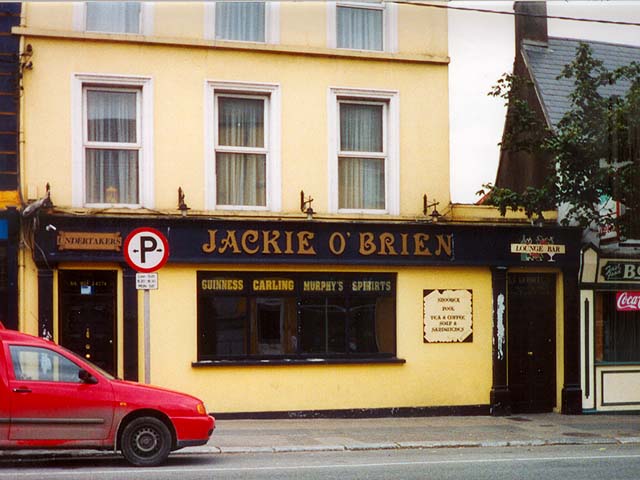
Irish pubs underwent a major transformation during the 19th century when a growing temperance movement in Ireland forced publicans to diversify their businesses to compensate for declining spirit sales. Thus, the 'Spirit grocery' was established. Pub owners combined the running of the pub with a grocery, hardware or other ancillary business on the same premises (in some cases, publicans also acted as undertakers, and this unusual combination is still common in Ireland).[4][5] Spirit groceries continued to operate through World War I when British law limited the number of hours that pubs could operate.[6] Some spirit groceries continued after the war, only closing in the 1960s when supermarkets and grocery chain stores arrived. With the arrival of increased competition in the retail sector, many pubs lost the retail end of their business and concentrated solely on the licensed trade. Many pubs in Ireland still resemble grocer's shops of the mid-nineteenth century, with the bar counter and rear shelving taking up the majority of the space in the main bar area, apparently leaving little room for customers. This seemingly counter-productive arrangement is a design artefact dating from earlier operation as a spirit grocery and also accounts for the differing external appearance of British and Irish pubs. Spirit grocers in Northern Ireland were forced to choose between either the retail or the licensed trades upon the partition of Ireland in 1922, so this pub type can no longer be found in the North.[3]

Unlike their British counterparts, Irish pubs are usually named after the current or previous owner or the street they are located on. Elaborate exterior decoration is rare, but was typified by The Irish House on Wood Quay in Dublin, which was surrounded in 1870 by coloured friezes of nationalist heroes, and with iconic traditional themes such as round towers.[7] Parts of Ulysses were filmed in this pub in 1967. Irish pubs traditionally did not sell food as dining out was not a major part of Irish culture. That changed in the 1970s and food is now a significant part of the Irish pub experience.[3] Over the years, individual Irish pubs have been associated with famous Irish writers and poets such as Patrick Kavanagh, Brendan Behan and James Joyce. In 2004, the Irish government passed a law outlawing smoking in pubs resulting in many pubs having outdoor smoking areas.[1]

Snug

[edit]

Irish pubs were often equipped with a snug, a more secluded or private room with seating, similar to that of a British pub's snug. A typical snug within an Irish pub, while within the pub's premises, is usually separated from the rest of the pub by walls or partitions, has or used to have a door and is equipped with a hatch for serving drinks. Often it also had a bell.[8] Traditionally, an Irish snug was meant for women who wanted to drink in secrecy, but then the use expanded to other patrons expecting some privacy.[9] As an example, Michael Collins was known to enjoy his drink in a snug.[10]

In Ireland

[edit]

The vast majority of pubs on the island of Ireland are independently owned and licensed, or owned by a chain that does not have any brewery involvement, generally meaning that nearly every pub sells a similar but extensive range of products. This is in contrast to pubs in Great Britain, which historically has a large share of tied houses owned or otherwise connected to a specific brewery and selling its products exclusively or almost exclusively.

Following the introduction of smoking bans in the Ireland (in 2004) and Northern Ireland (in 2007) many pubs offer enclosed and often heated outdoor smoking areas.

Northern Ireland

[edit]
The Gweedore Bar (beside Peadar O'Donnell's), Derry
Cassidy's Pub, Carran, Co. Clare
The Black Shop Bar, Castlecove, Kerry

Pubs in Northern Ireland are largely identical to their counterparts in the Republic except for the aforementioned lack of spirit grocers. Traditional pubs in Belfast include The Crown Liquor Saloon (owned by the National Trust) and the city's oldest bar, White's Tavern, which was established in 1630 as a wine shop. Outside Belfast, pubs such as the House of McDonnell in Ballycastle (a former spirit grocery retaining all the characteristics of the type) are representative of the traditional country pub. Peadar O'Donnell's is a famous traditional pub on Waterloo Street in Derry, while The Farmers Home is another fine traditional pub in Strabane, County Tyrone.

Culture and etiquette

[edit]

For centuries, the Irish public house has been an integral part of Irish social culture. In Ireland the local pub is a pillar of the community the same way the local church would be.[11] It functions as both a place to consume alcohol at leisure as well as a place in which to meet and greet the people of a locality. In many cases, Irish people will have one (or more) pubs which are referred to as 'the local' which is the pub which they frequent most often.[3] There is generally a very close and mutual understanding and informality between the customer and the staff and, in many cases, particularly in country pubs, virtually all of the regular customers will know each other very well.[3][1] That warm and friendly atmosphere extends to outsiders as well and it is not uncommon for strangers or tourists to be drawn into conversations with locals. In addition to the casual social atmosphere, hearty food and drink, sports, and traditional Irish music are hallmarks of pub culture. Food is usually simple and traditional featuring classic Irish dishes like Irish stew, boxty, and Irish soda bread.[1] Drinks include a variety of spirits and beers on tap but one can certainly expect Guinness and Irish whiskey such as Bushmills or Jameson. Irish pubs with televisions frequently show Gaelic games such as Gaelic football or hurling.[12] While not all Irish pubs will feature live Irish music, it is an important part of the culture. The atmosphere is cozy and the pub furniture is simple and built to last.

Pub stool from 1910, Cork, Ireland

The etiquette in Irish pubs varies from place to place. Generally speaking, however, it is never necessary to tip staff. The only exception to this rule might be in a pub which has waiters for serving food, or for staff at a hotel bar, or on special occasions or events when the bar staff show particular skill, hard-work or good-humour. But again, this is rare. In addition, unless there are waiters, patrons must order their drinks at the bar, pay the bartender and bring drinks to their seats.[11] It is traditional that, when with a group, patrons take turns buying rounds of drinks for the group as a whole. It is considered bad manners for patrons to leave before buying their round of drinks.[11] The traditional Irish toast is "Sláinte" (SLAWN-chuh) which is the Irish language equivalent of "cheers".[1]

Traditional Irish music

[edit]

Traditional Irish music may not be found in every Irish pub, but many feature live Irish music sessions on weekends.[1] Musicians will often play jigs, reels and other folk songs with Uilleann pipes, fiddles, bodhráns (traditional drums), and flutes. There can be singers as well. Musicians are not always paid but usually receive free drinks for their music.[12]

Around the world

[edit]

North America

[edit]
St.Patrick's pub in Quebec, Canada

Irish pubs are common in the United States and most cities have some representation of Irish pub culture. Many examples of these pubs date back to the early 20th century or mid to late 19th century and some of them came into being as a result of large-scale emigration from Ireland since the 1840s.

The most recent wave of Irish pubs started appearing during the 1990s with the arrival of venues modelled on the great Victorian pubs of Ireland. The new wave of Irish pubs can be attributed to the Guinness Irish Pub Concept and the Irish Pub Company founded by Mel McNally in 1990 and dedicated to exporting the Irish pub around the world.[13][14] The pubs the Irish Pub Company established were designed to be as authentic as possible and usually featured millwork and fittings made in Ireland and transported to North America.[15] As this style of pub became very popular and successful, many more began to open across the United States. However, as the cost of importing woodwork and fittings for an Irish pub became prohibitive, prospective owners looked more locally and nearly all of the required material is now more than adequately supplied from within the United States or Canada.[citation needed]

While many pubs are still owned by individuals of Irish origin, the vast majority of new Irish pubs being opened are owned by American or Canadian restaurant operators who recognise the very attractive business model and the potential return on investment. In an industry where profit margins can be low, margins[clarification needed] in Irish pubs are significantly higher than those achieved within the mainstream casual-dining sector, achieved by focusing on beverage sales over food. Irish pubs also have the ability to attract business during periods when their casual-dining counterparts are traditionally slow. Examples of the "Irish pub" concept translating to American casual dining include O'Charley's and Bennigan's.[citation needed]

Often, the Irish theme extends only to the name and the decor, while the menus are much like those in other North American bars or full of faux-Irish dishes like "Irish nachos" and Reuben egg rolls.[16] Irish pubs in North America that try to be authentic usually ensure that food is 'made from scratch', from fresh ingredients and using local produce where possible.

Worldwide

[edit]
Irish pub in Lanzarote, Canary Islands
Irish pub in Kraków, Poland

There are an estimated 7,000 Irish themed pubs worldwide. They have been criticised for a lack of authenticity. They are particularly prevalent wherever expatriate communities are found, arguably due to a sense of connection to the Irish diaspora.[17]

While pubs run by Irish emigrants have existed for centuries, the Irish theme pub is estimated to date from 1991, when the Irish Pub Company opened its first outlet in a scheme backed by the brewer Guinness. The Irish Pub Company opened 2,000 pubs across Europe between 1992 and 1999. They have establishments in over 53 countries around the world.[18]

Tourism

[edit]

Pubs in tourist-oriented areas are also more likely to serve food to their customers, a recent phenomenon dating from the 1970s. Prior to this time, food was not served in the vast majority of Irish pubs, as eating out was uncommon in Ireland (except in "eating-houses" set up on market days) and most towns and villages had at least one commercial hotel where food was available throughout the day.[3][19]

See also

[edit]

References

[edit]

Further reading

[edit]
Revisions and contributorsEdit on WikipediaRead on Wikipedia
from Grokipedia
An Irish pub, deriving from the term "public house," is a licensed establishment in Ireland dedicated to the sale and consumption of alcoholic beverages, particularly stout, ale, and whiskey, while serving as a primary venue for social interaction among locals.[1] These institutions trace their regulated origins to the 17th century, when liquor licensing laws formalized earlier informal alehouses and taverns into structured public houses, with significant evolution occurring in the 18th and 19th centuries amid urbanization and transport improvements.[1] Traditional Irish pubs are distinguished by their architecture, featuring dark timber paneling, low ceilings, partitioned "snug" areas for private conversations, open fireplaces, and minimalistic decor that fosters intimacy and continuity with historical precedents.[2][3] Family-owned and often named after proprietors or locales, they emphasize a working-class clientele, eschewing overt commercialization in favor of unpretentious hospitality and community cohesion.[3] Many host informal sessions of traditional Irish music, reinforcing cultural transmission through oral and performative means, though such practices have gained prominence only in recent decades.[4] As enduring social anchors, Irish pubs have mirrored broader societal dynamics, providing neutral ground for discourse across divides but also incurring risks, including over 650 documented violent deaths since the 18th century tied to sectarian conflicts and interpersonal disputes.[1] Their export as a branded experience—often via prefabricated designs—has proliferated globally, yet authenticity debates persist, with domestic pubs declining in number due to economic pressures and regulatory shifts.[1][5]

History

Early Origins

The roots of Irish pubs trace to ancient Gaelic customs codified in the Brehon laws, Ireland's indigenous legal system prevailing from approximately the 7th to 12th centuries, which mandated oigidecht—hospitality entailing food, shelter, and drink for any traveler, regardless of status, as a sacred obligation enforceable by fines or social penalties.[6][7] These laws reflected a tribal society where communal feasting and moderate alcohol consumption reinforced social bonds, with specific provisions limiting laymen to six pints of ale per meal to prevent excess, while monks were restricted to three, underscoring ale's integral role in daily and ritual life.[7] Such practices fostered informal gathering spots in households or clan halls, prioritizing empirical reciprocity over isolation, though formalized commercial venues remained absent until external influences. Viking incursions beginning in 795 AD, followed by settlement and urbanization in the 9th and 10th centuries, introduced structured communal drinking halls to Ireland, particularly in Norse-Gaelic towns like Dublin (founded circa 841 AD as a longphort or ship fort).[8] These halls, adapted from Scandinavian models, emphasized collective mead and ale consumption for alliance-building and storytelling, blending with indigenous hospitality to evolve proto-taverns as multi-purpose sites for trade negotiations and news dissemination amid Ireland's shift from rural tuatha (tribal kingdoms) to proto-urban economies.[9] Archaeological evidence from Viking-era sites confirms widespread brewing and feasting artifacts, indicating these spaces' causal role in acculturating Gaelic drinkers to more public, alcohol-centric assemblies, though romanticized narratives often overstate uniformity given hybrid Hiberno-Norse variations.[10] By the medieval period, from the 12th century, these evolved into alehouses and taverns predominantly managed by alewives—women brewing small batches of ale from malted barley or oats in domestic settings for sale, serving as early commercial hubs where locals converged for barter, legal disputes, and information exchange in the absence of centralized infrastructure.[9] Monastic traditions, dating to the 6th-century foundations like those of St. Columba, supplemented this by producing ale for pilgrims and laborers, with abbeys functioning as de facto social centers that institutionalized brewing techniques and regulated consumption, laying groundwork for the public house model's emphasis on verifiable quality and communal utility over mere inebriation.[11] These establishments, often unlicensed until Norman influences post-1169, prioritized empirical functions like facilitating rural trade fairs and oral news networks, distinct from continental inns by their integration into kin-based societies.[12]

19th- and 20th-Century Development

During the 19th century, licensed premises in Ireland proliferated amid urbanization and industrial growth in urban centers such as Dublin and Belfast, where pubs served as essential social and economic anchors for a burgeoning working class. This expansion occurred despite the countervailing influence of the temperance movement, which originated in Protestant-led societies in Belfast and Dublin in 1829 and gained mass appeal through Catholic priest Theobald Mathew's teetotal campaigns from 1838, reportedly securing pledges from millions and reducing spirits consumption, prompting publicans to pivot toward beer and stout sales for survival.[13][14] The shift to stout was accelerated by the ascendancy of Guinness, whose St. James's Gate Brewery, leased in 1759, expanded production through innovative techniques and vertical integration, outcompeting local rivals and establishing a near-monopoly in Dublin by the late 19th century as smaller breweries shuttered due to economic pressures and consolidation. Regulatory efforts culminated in the Licensing (Ireland) Act 1902, which barred the issuance of new licenses for on- or off-premises alcohol sales, thereby institutionalizing the existing stock of premises and curbing unchecked proliferation amid nationalist concerns over public order and moral reform.[15][16] In the 20th century, Irish pubs endured disruptions from global conflicts and domestic policy shifts, including supply scarcities during World War I and the Irish War of Independence (1919–1921), followed by neutrality in World War II, which insulated Ireland from direct combat but exacerbated import dependencies for barley and fuels critical to brewing. Post-independence, the Irish Free State's Intoxicating Liquor Act 1927 imposed stricter closing hours—weekdays until 11 p.m. with no general Sunday sales—and facilitated license reductions in oversaturated areas, reflecting ongoing temperance-influenced governance aimed at curbing excess while preserving pubs' communal functions.[17][18] Rural pubs, in particular, buttressed local economies through multifaceted operations, frequently integrating licensed bars with grocery provisioning, postal services, and funeral directing—a tradition rooted in publicans' community centrality and capital access, enabling resilience against emigration-driven depopulation and agricultural slumps from the 1920s onward. This adaptability underscored pubs' causal role in mitigating economic isolation, as multifunctional outlets sustained viability where pure drinking establishments might have faltered.[19][20]

Architectural and Social Innovations

The snug, a compact enclosed booth usually situated near the bar, originated in Irish pubs during the mid-19th century to afford privacy amid prevailing social conventions that discouraged women from drinking openly in public bar areas dominated by men.[21] These small rooms, often equipped with a service hatch and obscured glazing to limit visibility, enabled discreet imbibing and discussion for women, clergy, law enforcement, or affluent patrons avoiding the main bar's scrutiny.[22][23] This architectural feature stemmed from practical necessities tied to Victorian gender norms and class distinctions, fostering separation without excluding participation in pub culture.[24] Pub counters in traditional Irish establishments employed robust hardwoods like mahogany or oak, selected for their endurance against intensive daily handling and spills, thereby promoting long-term operational viability over decorative appeal.[25] Such material choices underscored a focus on utilitarian design, with polished surfaces and reinforced structures supporting heavy glassware and constant patron traffic for generations. Surviving historic pubs, such as Dublin's Brazen Head—whose site has hosted a tavern since at least 1198, with the extant building from 1754—demonstrate these innovations through functional elements like low-beamed ceilings and solid fixtures adapted for practicality, including space-efficient layouts that maximized utility in compact urban settings.[26][27] These adaptations prioritized resilience and seclusion, reflecting causal responses to regulatory, social, and economic pressures rather than aesthetic flourishes.

Physical and Operational Characteristics

Interior Design and Layout

Traditional Irish pubs typically incorporate functional layouts dividing the main public bar area from smaller, enclosed private compartments called snugs, which historically offered seclusion for select patrons including women barred from the open bar until the late 20th century.[21][24] These snugs, often positioned adjacent to the bar for efficient service, feature separate entrances or hatches to maintain privacy while allowing servers to deliver drinks without entering the public space.[28] Interior walls in preserved traditional pubs, especially rural examples, consist of simple tongue-and-groove timber paneling, providing durability against wear from daily use and contributing to acoustic intimacy in confined spaces.[29] Low ceilings supported by exposed wooden beams predominate, a practical adaptation in older buildings to minimize heating costs and foster a cozy enclosure suited to Ireland's damp climate.[30][31] Open hearths or fireplaces serve as central heating elements, with turf or coal fires historically positioned to warm the space efficiently without modern ventilation.[32] Older pubs, such as Sean's Bar in Athlone dating to 900 AD, retain sawdust or wood shavings on floors to absorb spilled liquids and manage moisture from nearby water sources or leaks.[33][32] Behind the bar, etched or carved mirrors enlarge the perceived space and display branding, with Guinness-themed signage common in venues from the early 20th century onward, as evidenced in preserved Dublin pubs.[34] Rural pub designs emphasize sparsity and robustness, often integrating into farmhouses with multipurpose flooring and walls accommodating informal gatherings or games, whereas urban pubs in cities like Dublin exhibit denser ornamentation and segmented layouts to handle higher footfall while preserving compartmentalization.[29][35] This durability-focused construction, using local hardwoods and stone elements, supports longevity, with many structures from the 19th century still operational.[36]

Drinks, Food, and Service

Irish pubs traditionally center on the serving of beer, particularly stout, with Guinness—first brewed by Arthur Guinness at St. James's Gate in Dublin in 1759—holding a dominant position due to its historical ties to local barley cultivation and malting processes that yield the beer's distinctive roasted flavor and creamy head.[37] Beer remains Ireland's preferred alcoholic beverage, accounting for the majority of on-trade sales in pubs, though per capita beer consumption fell by nearly 3% in 2024 amid broader declines in alcohol intake to 9.49 liters of pure alcohol per adult.[38] Irish whiskey, distilled from malted and unmalted barley since records dating to the 12th century, complements stout as a staple spirit, its triple-distillation method producing a smoother profile suited to neat pours or simple mixes, with production resurgence driven by export demand but steady pub service rooted in local grain agriculture.[39] Food offerings emphasize affordable, agriculture-derived staples reflecting Ireland's reliance on potatoes and grains; Irish stew—typically comprising lamb or mutton, potatoes, onions, and carrots simmered slowly—emerged as a practical one-pot meal from rural farming practices, often paired with soda bread made from bicarbonate of soda, flour, and buttermilk for quick rising without yeast, enabling hearty sustenance alongside drinks.[40] Potatoes, introduced in the 16th century and central to subsistence farming, feature prominently in pub fare like boxty pancakes or colcannon mash, providing caloric density from Ireland's suitable climate and soil for tuber cultivation.[40] Service follows norms emphasizing craftsmanship and social reciprocity: bar staff "pull" pints of stout using a methodical tilt-pour-settle technique to achieve optimal nitrogenation and a two-finger head, a process honed over generations to preserve the beer's texture without dilution.[41] The "round" system prevails, wherein one patron buys drinks for the group upon nearing the end of their own, enforcing mutual obligation tied to communal trust but occasionally exerting pressure to match consumption paces.[42] From 2020 to 2025, pubs have adapted to falling alcohol volumes—down 2.4% in 2024—by expanding craft beer selections from microbreweries leveraging local hops and malts, alongside non-alcoholic options, with zero-alcohol beer sales surging 25% that year to capture health-driven preferences without altering traditional pouring rituals.[43][38] This evolution reflects causal pressures from regulatory minimum pricing since 2018 and shifting demographics favoring moderated intake, prompting many venues to prioritize food-service hybrids over drink-only models.[44]

Cultural Role in Ireland

Social Functions and Etiquette

Irish pubs have historically functioned as central hubs for community cohesion, serving as informal gathering places where residents engage in social interactions that strengthen local ties and social capital, particularly in rural areas.[45] Ethnographic analyses describe these establishments as multi-purpose venues facilitating family gatherings, news exchange, and political discourse, with publicans often influencing community decisions akin to town hall roles.[46] In rural Ireland, such interactions have been documented to combat isolation and foster wellbeing through regular patron-staff engagements and group activities.[47] A key social role involves discussions of local news, politics, and matchmaking, where pubs enable matchmaking between families and provide forums for debating independence and governance, as observed in early 20th-century patterns.[46] Etiquette centers on "craic," emphasizing convivial fun through storytelling and oral traditions that preserve community narratives and encourage inclusive participation.[46] Gender dynamics evolved from male dominance in the early 1900s, when pubs were largely preserves for men and women's entry was restricted to snugs or frowned upon, to gradual inclusion post-1960s amid economic shifts and birth control access, enabling women to integrate into lounge areas and normalize pint consumption by the 1970s-1980s.[48] Contemporary pubs reflect family-oriented shifts, with increased female and familial presence challenging prior exclusions, though male norms in drinking culture persist.[48] The rounds-buying norm enforces reciprocity, where group members take turns purchasing drinks, a custom rooted in social expectation that binds participants but can intensify consumption via peer enforcement, as evidenced in studies of drinking practices.[49][50] This practice, while promoting inclusivity, aligns with patterns where social obligations correlate with elevated intake in pub settings.[51]

Entertainment and Traditions

Informal music sessions in Irish pubs feature spontaneous performances of traditional tunes on instruments such as the fiddle, tin whistle, and uilleann pipes, which originated in the 18th century. These gatherings emphasize communal participation over professional concerts, with musicians joining ad hoc to play dance music like jigs and reels passed down orally. While the roots of Irish traditional music trace to the 18th and 19th centuries, pub-based sessions as a distinct format proliferated during the folk revival of the mid-20th century, particularly from the 1950s onward, rather than as an 18th-century staple.[52][53][54] Sean-nós singing, an unaccompanied style characterized by ornamented melodies in Irish or English, often occurs in pub settings, preserving ancient vocal traditions from rural Gaeltacht regions. These solo performances, distinct from harmonized group singing, evoke pre-famine storytelling through laments and ballads. In rural areas, such sessions remain frequent, with many pubs hosting weekly gatherings that sustain oral transmission amid declining formal teaching.[4] Storytelling traditions in pubs, including tall tales and anecdotes, served as primary entertainment before widespread television access in the mid-20th century, fostering social bonds through exaggerated narratives and wit. Examples from County Clare pubs in the 1970s document locals reciting humorous yarns like those involving mythical figures or local lore, blending fact with fiction for communal amusement. Pubs also host viewings of Gaelic Athletic Association (GAA) matches, such as hurling fixtures dating to the 1884 founding of the organization, where crowds gather to cheer provincial rivalries, with rugby internationals similarly drawing fervent support since the sport's introduction in the 1870s.[55][56][57] Historically, Irish wakes involved alcohol and merriment to honor the deceased, with pub owners often doubling as undertakers until the mid-20th century, though primary vigils occurred in homes rather than pubs. This custom, rooted in pre-Christian practices to ward off spirits, evolved into multi-day events with toasts, evolving into more subdued modern observances.[19][58]

Regional Differences

In Northern Ireland, stricter liquor licensing regulations under UK law, characterized by archaic restrictions on hours and premises compared to the Republic of Ireland, have contributed to a sharper decline in pub numbers, with reforms proposed as recently as 2021 to extend serving times to 02:00 on weekends but not fully enacted, resulting in fewer but often larger establishments oriented toward off-trade shifts.[59][60] This contrasts with the Republic, where approximately 6,605 pubs and nightclubs operated as of 2025, supported by more flexible licensing that sustains higher on-trade density.[61] Historical Protestant temperance influences in Ulster, part of broader 19th-century movements promoting abstinence across denominations, have fostered cultural divergences, emphasizing sobriety in Protestant communities and leading to subdued pub patronage relative to Catholic-majority areas in the Republic, despite shared traditions like traditional music sessions.[62] Rural areas in the west of the Republic, such as County Mayo, exhibit the highest pub density at one per 323 residents, driven by tourism and historical shebeen traditions—illicit home-based distilleries and drinking dens that evaded 19th- and 20th-century taxes and regulations, fostering small-scale, community-focused venues with muted atmospheres suited to local clientele.[63][64] In contrast, urban centers like Dublin feature larger, literarily infused pubs, such as Davy Byrne's, frequented by James Joyce and referenced in Ulysses (1922), attracting intellectual and tourist crowds amid higher population concentrations and commercial scales.[65][66] Post-Troubles recovery in Northern Ireland has seen acute pub closures, exceeding trends elsewhere on the island, with licensing systems exacerbating a shift from on-site drinking amid economic disruptions from 1968–1998 violence, though exact density data remains limited; this has resulted in lower overall pub prevalence compared to the Republic's sustained regional variations.[67][68]

Global Spread and Adaptations

Export Through Diaspora

The mass emigration triggered by the Great Famine of 1845–1852, during which approximately 1 million Irish died and another 2 million emigrated, spurred the initial export of Irish pub culture abroad as immigrants sought to replicate familiar social institutions amid displacement.[69] These early establishments, often opened by immigrants in the mid- to late 19th century, functioned as cultural anchors, providing spaces for communal drinking, conversation, and preservation of traditions like music sessions in host nations receiving large influxes of Irish labor.[70] [71] This diaspora-driven proliferation extended through the 20th century, including post-World War II waves where annual Irish emigration to Britain alone reached 40,000 in the 1950s, with pubs serving as key venues for job networking, remittances discussions, and mitigating isolation for newcomers.[72] [73] By the late 20th century, the organic spread via emigration evolved into formalized export mechanisms, with companies packaging standardized pub kits—derisively termed "McPubs" for their assembly-line efficiency—to meet sustained diaspora demand for turnkey cultural venues. The Irish Pub Company, established in 1990 by Mel McNally, pioneered this model by shipping prefabricated elements like timber fittings, signage, and layouts derived from traditional designs, facilitating setups in as little as weeks and exporting over 2,000 pubs globally by the 2020s.[74] [75] These exports capitalized on historical migration patterns, supplying emigrants and their descendants with replicable symbols of heritage without requiring on-site craftsmanship from Ireland. Post-2020, Irish pubs abroad exhibited operational resilience amid COVID-19 restrictions, often adapting through outdoor service or virtual events to sustain diaspora ties, thereby reinforcing ethnic identity in over 50 countries where such venues number in the thousands.[76] This endurance underscores pubs' role as enduring causal conduits for cultural continuity, independent of economic fluctuations, as evidenced by their proliferation beyond initial immigrant enclaves.[77]

Authenticity Debates and Variations

Authenticity debates surrounding Irish pubs abroad revolve around whether these establishments represent organic cultural evolution or commodified stereotypes emphasizing superficial "Irishness" such as shamrock decorations, Guinness signage, and simulated accents. Critics contend that the global export of prefabricated pub kits—standardized elements shipped from Ireland to create uniform interiors—prioritizes marketable simulacra over genuine tradition, potentially eroding the nuanced social functions of original pubs.[78] [79] Proponents argue that such adaptations preserve core elements like communal drinking and live music for diaspora populations, enabling cultural continuity in foreign contexts.[80] [81] Variations manifest distinctly by region, with American Irish pubs frequently hybridizing traditional layouts with sports bar features, including multiple large screens for broadcasts and expanded menus blending pub fare with local dishes like chili-cheese elements. This configuration enhances appeal for events like St. Patrick's Day gatherings, drawing higher crowds than purely thematic venues, though cross-cultural studies reveal lower perceptions of intangible authenticity—such as spontaneous "craic"—compared to Irish originals, as patrons prioritize visual familiarity over experiential depth.[5] [82] In Australia, fusions incorporate bush-inspired ruggedness, such as open-air seating adapted to local climates, which qualitative analyses link to sustained popularity among multicultural demographics but invite scrutiny for diluting purist elements in favor of hybridized hospitality.[83] [84] Successful integrations, like the Ri Ra chain's disassembly and reassembly of century-old Irish structures for U.S. sites, demonstrate viability when rooted in material authenticity, sustaining operations through loyal expatriate patronage since the early 2000s.[85] Conversely, failures often stem from over-reliance on stereotypes without substantive ties, as seen in generic theme bars criticized for lacking communal vitality, leading to closures amid shifting consumer demands for experiential genuineness over novelty.[86] [87] These cases underscore a tension: while commodification risks cultural superficiality, adaptive variations can perpetuate traditions, albeit in evolved forms responsive to host environments.

Presence in Key Regions

In North America, Irish pubs maintain a strong presence particularly along the United States East Coast, where cities like New York host over 120 such establishments in Manhattan alone, reflecting dense concentrations in areas with historical Irish immigration.[88] Cities such as Boston, Philadelphia, and Rochester exhibit high densities per capita, with Rochester leading at 1.84 Irish pubs per 100,000 residents, often adapting traditional models by incorporating local craft beer selections alongside staples like Guinness to appeal to contemporary tastes.[89] In Canada, Irish pubs are prevalent in urban centers like Toronto and Vancouver, featuring venues such as P.J. O'Brien's, but operate in a relatively subdued manner compared to their U.S. counterparts, emphasizing authentic pours and live music within a multicultural framework.[90] The United Kingdom, due to geographic proximity and shared history, supports numerous Irish pubs that strive for authenticity, exemplified by London's Auld Shillelagh, recognized by The Irish Times as the most genuine Irish pub outside Ireland for its unadulterated atmosphere and traditional offerings.[91] These establishments sometimes blend with English pub customs, such as extended food menus, yet preserve core elements like Irish whiskeys and sports screenings. In Australia, Irish pubs trace roots to the convict era, when Irish transportees comprised a significant portion of early settlers—over 7,000 by 1868—fostering enduring venues like Fenians in Perth, which commemorate Fenian escapes and maintain hearty, community-oriented service adapted to local licensing laws.[92][93] Beyond these areas, Irish pubs appear in remote locales, such as Nepal's Irish Pub in Namche Bazaar at 3,450 meters elevation—the world's highest—catering to trekkers en route to Everest with adapted high-altitude hospitality while stocking imported Irish ales.[94] Globally, estimates place the number of Irish-themed pubs at around 6,500 to 7,000, spanning adaptations from Poland's urban interpretations to Canary Islands outposts, where they integrate local tourism without diluting foundational conviviality.[95][96]

Social and Economic Dimensions

Community Cohesion and Tourism

Irish pubs in rural areas act as essential third places that enhance community cohesion by promoting social capital and interpersonal relationships. These venues facilitate bonding and bridging ties among residents, yielding broader benefits such as sustained local engagement and resilience against depopulation.[45] [97] In counties like Clare, where pub numbers have declined by 30.6% since 2005 with 114 closures, remaining establishments host events including traditional music sessions and gatherings that foster intergenerational connections and counteract social isolation.[98] [99] Pubs also bolster rural viability by serving as multifunctional hubs during off-peak hours, supporting initiatives like community cinemas and digital access points that integrate economic and social functions.[100] Such adaptations help mitigate the erosion of social fabric from ongoing closures, which total over 2,100 nationwide since 2005 and threaten further declines without intervention.[101] In tourism, Irish pubs represent a cornerstone attraction, with 80% of visitors citing them as a primary experience per Fáilte Ireland surveys, driving cultural authenticity and repeat visits.[102] This integration positions pubs as gateways to local economies, amplifying tourism's impact through on-site spending and event tie-ins. As of 2025, the sector maintains stability with 6,605 pubs and nightclubs, reflecting a 1.8% rise from 2024 and underscoring their role in job support amid post-pandemic recovery.[103]

Health Risks and Criticisms

Irish pub culture has been linked to elevated rates of hazardous alcohol consumption, with empirical data indicating that approximately 70% of Irish men report hazardous drinking patterns, often characterized by binge episodes in social settings like pubs.[104] These patterns, defined by the World Health Organization as consuming more than 60 grams of pure alcohol on a single occasion for men, contribute to health risks including alcohol dependency, liver cirrhosis, and increased cancer incidence, with alcohol attributable to over 900 annual cancer diagnoses in Ireland.[105] Pub-centric drinking exacerbates these risks through normalized high-volume intake, as evidenced by studies showing binge drinkers are two to three times more likely to experience personal harms compared to non-binge consumers.[106] The "drunken Irish" stereotype, while partially grounded in these statistics—such as Ireland's historical per capita consumption exceeding European averages—has faced criticism for reducing complex social behaviors to pathology, ignoring variations in moderation and cultural context from the mid-20th century onward.[107] Critics argue that pub tolerance for heavy session drinking fosters dependency rather than casual enjoyment, with social norms enabling unchecked escalation; for instance, 20th-century policy debates highlighted how pub licensing and etiquette perpetuated abuse without sufficient intervention.[108] Economic repercussions include substantial absenteeism and lost productivity, estimated at €614 million annually from alcohol-related work impairments, alongside €793 million in healthcare expenditures for treatment and complications.[109][110] Counterarguments emphasize that not all pub drinking devolves into pathology, positing that traditional moderated rounds promote restraint, though data challenges this by linking frequent pub attendance to higher harm rates.[111] Recent trends show overall per capita consumption declining by over 30% since the early 2000s, with youth (15-24) last-year abstinence rising in some cohorts, potentially due to awareness campaigns and changing preferences.[112][113] Pubs have adapted post-2020 with expanded food offerings and non-alcoholic alternatives, mitigating some binge incentives, yet persistent violence associations and hazardous rates among adults underscore unresolved cultural embeddedness of risks.[114]

References

User Avatar
No comments yet.