Hubbry Logo
CordycepsCordycepsMain
Open search
Cordyceps
Community hub
Cordyceps
logo
8 pages, 0 posts
0 subscribers
Be the first to start a discussion here.
Cordyceps
Cordyceps
from Wikipedia

Cordyceps
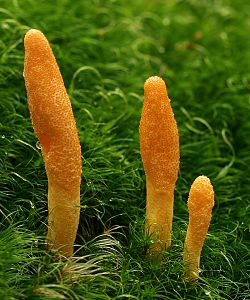
Cordyceps militaris
Scientific classification Edit this classification
Kingdom: Fungi
Division: Ascomycota
Class: Sordariomycetes
Order: Hypocreales
Family: Cordycipitaceae
Genus: Cordyceps
Fr. (1818)
Type species
Cordyceps militaris
(L.) Fr. (1818)
Synonyms
List
  • Akrophyton Lebert (1858)
  • Alphitomyces Reissek (1856)
  • Amphichorda Fr. (1825)
  • Campylothecium Ces. (1846)
  • Cordylia Fr. (1818)
  • Cordyliceps Fr. (1832)
  • Coremiopsis Sizova & Suprun (1957)
  • Corynesphaera Dumort.2 (1822)
  • Evlachovaea B.A. Borisov & Tarasov (1999)
  • Hypoxylum Juss. (1789)
  • Isaria Pers. (1794)
  • Phytocordyceps C.H. Su & H.H. Wang (1986)
  • Polistophthora Lebert (1858)
  • Racemella Ces. (1861)
  • Ramaria Holmsk. (1781)
  • Tettigorhyza G. Bertol. (1875)
  • Torrubia Lév. (1863)
  • Xylaria Hill ex Grev (1823)

Cordyceps /ˈkɔːrdɪsɛps/ is a genus of ascomycete fungi (sac fungi) that includes over 260 species worldwide, many of which are parasitic. Diverse variants of cordyceps have had more than 1,500 years of use in Chinese medicine.[1] Most Cordyceps species are endoparasitoids, parasitic mainly on insects and other arthropods (they are thus entomopathogenic fungi); a few are parasitic on other fungi.[2]

The generic name Cordyceps is derived from the ancient Greek κορδύλη kordýlē, meaning "club", and the Latin -ceps, derived from Latin caput, meaning "head".[3] The genus has a worldwide distribution, with most of the known species[4] being from Asia.

Taxonomy

[edit]

There are two recognized subgenera:[5]

  • Cordyceps subgen. Cordyceps Fr. 1818[6]
  • Cordyceps subgen. Cordylia Tul. & C. Tul. 1865[7]

Cordyceps sensu stricto are the teleomorphs of several genera of anamorphic, entomopathogenic fungi such as Beauveria (Cordyceps bassiana), Septofusidium, and Lecanicillium.[8]

Splits

[edit]

Cordyceps subgen. Epichloe was at one time a subgenus, but is now regarded as a separate genus, Epichloë.[5]

Cordyceps subgen. Ophiocordyceps was at one time a subgenus defined by morphology. Nuclear DNA sampling done in 2007 shows that members, including "C. sinensis" and "C. unilateralis", as well as some others not placed in the subgenus, were distantly related to most of the remainder of species then placed in Cordyceps (e.g. the type species C. militaris). As a result, it became its own genus, absorbing new members.[8][9]

The 2007 study also peeled off Metacordyceps (anamorph Metarhizium, Pochonia) and Elaphocordyceps. A number of species remain unclearly assigned and provisionally retained in Cordyceps sensu lato.[8]

Selected species

[edit]
A wasp parasitized by an entomopathogenic species of Cordyceps

There are over 260 species in the genus Cordyceps including the following species:[10]

Anamorphic genera

[edit]

Isaria is a genus name that has been applied to many anamorphs of Cordyceps species. This genus itself is treated as a synonym of Cordyceps in Species Fungorum following the "one fungus one name" change,[11] but many species names with Isaria are still preferred by Species Fungorum over the synonyms in other genera (e.g. Isaria sinclarii is preferred over Cordyceps sinclairii).[12] Though confusing, this does match the "equal footing for priority" approach of the "one fungus one name" concept. To add to the complexity, Isaria is a conserved name with a conserved type.[11] What remains under Isaria as of 2016 remains polyphyletic and can be divided into three main clades.[13]

Anamorphic genera closely allied to Cordyceps sensu stricto include Evlachovaea, Lecanicillium and Beauveria.[13]

Biology

[edit]

When Cordyceps attacks a host, the mycelium invades and eventually replaces the host tissue, while the elongated fruit body (ascocarp) may be cylindrical, branched, or of complex shape. The ascocarp bears many small, flask-shaped perithecia containing asci. These, in turn, contain thread-like ascospores, which usually break into fragments and are presumably infective.[14]

Research

[edit]
Cordycepin

Polysaccharide components and the nucleoside cordycepin isolated from C. militaris are under basic research, but more advanced clinical research has been limited and too low in quality to identify any therapeutic potential of cordyceps components.[15]

Uses

[edit]

Cordyceps sensu lato (which now includes Ophiocordyceps and many other genera holding species originally in this genus) has long been used in traditional Chinese medicine in the belief it can be used to treat diseases.[16][17] There is no strong scientific evidence for such uses.[15]

Cultural representations

[edit]

The video game series The Last of Us (2013– ) and its television adaptation present Cordyceps as a deadly threat to the human race, its parasitism powerful enough to result in global calamity.[18][19] The result is a zombie apocalypse and the collapse of human civilization. Scientific American notes that some species in the genus "are indeed body snatchers–they have been making real zombies for millions of years", though of ants or tarantulas, not of humans.[18]

The Last of Us proceeds from the premise that a new species of Cordyceps manages to jump the species barrier, from nonhuman to human, as diseases like influenza and viruses like Ebola and COVID-19 have done. Its human hosts initially become violent "infected" beings, before turning into blind zombie "clickers", complete with fungal "fruiting bodies sprouting from their faces".[18] In a detail that reflects Cordyceps biology, "clickers" then seek out a dark place in which to die and release the fungal spores, enabling the parasite to complete its life cycle.[18] Scientific American comments that by combining a plausible mechanism with effective artistic design, the series gains "both scientific rigor and beauty".[18]

In similar vein, Cordyceps causes a pandemic that wipes out most of humanity in Mike Carey's 2014 postapocalyptic novel The Girl with All the Gifts and its 2016 film adaptation.[20] In this case, an infected person becomes a "hungry", a zombie thirsting for blood. In the fiction, Dr. Caldwell explains that the human-infecting fungus is a mutated form of Ophiocordyceps unilateralis (a group of species now split off from Cordyceps) which alters the behaviour of infected insects. The children of infected mothers, however, become "hybrids" with antibodies protecting them against the fungus.[20]

[edit]

See also

[edit]

References

[edit]
Revisions and contributorsEdit on WikipediaRead on Wikipedia
from Grokipedia
Cordyceps is a of ascomycete fungi in the family , primarily known for its endoparasitic lifestyle on and other arthropods. In its strict taxonomic sense (Cordyceps sensu stricto), the genus encompasses approximately 70 , with as the , following phylogenetic reclassifications that redistributed over 400 former species to other genera such as and Elaphocordyceps. However, the term Cordyceps is often used more broadly (sensu lato) to refer to this larger group of entomopathogenic fungi within the order , totaling over 2,000 as of 2024. These fungi are distributed worldwide, particularly in humid tropical and subtropical regions, where they play a key role in regulating populations through . The life cycle of Cordyceps species typically begins with microscopic spores that adhere to and penetrate the of a suitable host, such as , caterpillars, or spiders, often during specific environmental conditions like high humidity. Once inside, the fungal hyphae grow as , evading the host's and gradually consuming its tissues over days to weeks, leading to the host's death. In many cases, the fungus manipulates the host's behavior prior to death—for instance, Ophiocordyceps unilateralis compels infected to climb vegetation and bite leaves at an optimal height for spore dispersal, a phenomenon known as "summit disease." After the host dies, a fruiting body (stroma) emerges from the body, often resembling a club-shaped or elongated structure, which matures and releases billions of new spores to infect additional hosts. Beyond their ecological significance, certain Cordyceps species have garnered attention for their applications in , particularly in . Ophiocordyceps sinensis, formerly classified as Cordyceps sinensis, is a highly valued parasitic that infects ghost moth larvae in high-altitude regions of the and , where it is harvested as "yarsagumba" or "winter worm, summer grass" for its purported tonic effects on vitality, immunity, and respiratory health. Similarly, Cordyceps militaris is cultivated commercially for its bioactive compounds, including , and has been studied for potential and immunomodulatory properties. These fungi's unique biology continues to inspire research in , , and , highlighting their dual role as natural regulators and medicinal resources.

Taxonomy and Classification

Historical Development

The earliest illustrations of Cordyceps-like fruiting bodies appeared in Pier Antonio Micheli's Nova plantarum genera in 1729, where he described clavate fungi emerging from insect hosts under the informal grouping Funguli clavati, marking the first visual documentation of these entomopathogenic structures. Twenty-four years later, Carl Linnaeus formalized the description of what would become a key species, Cordyceps militaris, as Clavaria militaris in Species Plantarum (1753), classifying it among club fungi without recognizing its parasitic nature or generic distinctiveness. The genus Cordyceps was established by Elias Magnus Fries in 1818 within his Observationes Mycologicae, elevating Linnaeus's species to as the type and placing the genus in the family Clavicipitaceae based on its club-shaped stroma and immersed perithecia. Fries's work synthesized earlier observations, emphasizing morphological traits like the elongated, antler-like fruiting bodies, and laid the foundation for distinguishing Cordyceps from other pyrenomycetous fungi. Throughout the 19th and early 20th centuries, classifications expanded to encompass over 400 , primarily grouped by morphological features such as stroma shape, ascospore septation, and host specificity, with a strong emphasis on their insect-parasitic lifestyles. Pioneering mycologists like George Massee (1895) and Elmer B. Mains (1958) contributed detailed s that highlighted entomopathogenic traits, while Y. Kobayasi's 1941 revision introduced subgenera (, Eucordyceps, Neocordyceps) based on ascospore characteristics and host affiliations, solidifying Cordyceps as a diverse genus within Clavicipitaceae. Roland Thaxter's 1924 on entomopathogenic fungi further advanced understanding by cataloging parasitic forms, including Cordyceps relatives, through extensive morphological and ecological studies. Early 20th-century research began recognizing the anamorphic (asexual) stages of Cordyceps, linking them to distinct genera like and Isaria based on conidiophore and spore morphology. For instance, Kobayasi (1941) and (1974) identified Isaria anamorphs in species with chain-forming conidia, such as C. takaomontana, while connections to —characterized by inflated conidiogenous cells—were noted in works like Shimazu et al. (1988) for C. brongniartii. These teleomorph-anamorph associations underscored the pleomorphic nature of the fungi, influencing pre-molecular taxonomic frameworks.

Modern Revisions and Splits

Molecular phylogenetic studies from 2007 onward revealed that Cordyceps sensu lato was polyphyletic, prompting a major taxonomic restructuring based on multi-gene analyses including SSU, LSU rDNA, RPB1, RPB2, TEF, and other loci. Early work by Sung et al. (2007) identified three major clades within the clavicipitaceous fungi, rejecting the of Cordyceps and leading to the proposal of new families and genera; subsequent refinements between 2012 and 2017, including Kepler et al. (2012, 2017), formalized the split of Cordyceps s.l. into over 40 monophyletic genera across families like , , and Polycephalomycetaceae. In the revised classification, the core genus Cordyceps sensu stricto is now restricted to approximately 65-70 species, primarily those featuring immersed perithecia in a tough, fibrous stroma and whole ascospores, with C. militaris as the type species. Major segregate genera include Ophiocordyceps, which encompasses the "zombie-ant" fungi with darkly pigmented, rigid stromata and hosts primarily ants and lepidopterans, and Elaphocordyceps, characterized by lighter stromata and elaphomycetaceous hosts. These splits were driven by phylogenetic evidence showing distinct evolutionary lineages, contrasting with earlier morphological classifications that grouped species based on stroma shape and host type alone. Ongoing taxonomic updates in 2024-2025 continue to expand the recognized diversity within Cordyceps s.l., now estimated at around 700 species across over 50 genera, with new descriptions such as Cordyceps biarmica from boreal forests in , featuring a asexual morph with bi-armed conidia. Similarly, Perennicordyceps zongqii, isolated from lepidopteran larvae in forests of , represents a stroma-forming segregate in Polycephalomycetaceae. These revisions have significant implications for , as tracked by databases like Index Fungorum, which in 2025 records over 300 accepted species in Ophiocordyceps alone, necessitating transfers and synonymies to align with phylogenetic . This dynamic framework supports ongoing discoveries and refines the understanding of fungal diversity in .

Key Species and Diversity

The genus Cordyceps sensu lato encompasses approximately 700 described as of 2025, predominantly entomopathogenic ascomycetes within the family Cordycipitaceae, though some are reclassified into related families like following phylogenetic revisions. These fungi are characterized by their parasitic lifestyles on arthropods, with asexual (anamorphic) stages often linked to genera such as in closely related clades. The diversity is highest in subtropical and tropical regions of East and , reflecting adaptations to varied hosts across multiple orders. Among the most prominent species is , commonly found parasitizing pupae, particularly those of , and distinguished by its bright orange, club-shaped fruiting bodies that measure 2–8 cm in length with a pimply upper surface. This species serves as a key model for cultivation due to its ability to produce fruiting bodies on artificial substrates like or silkworm pupae, facilitating controlled studies of its morphology and . Ophiocordyceps sinensis, formerly classified as Cordyceps sinensis, is a high-altitude endemic known as the caterpillar fungus, emerging from the mummified larvae of ghost moths (Hepialus spp.) in alpine meadows above 3,500 meters on the and surrounding Himalayan regions. Its stromata appear as elongated, dark-brown structures up to 7 cm long, tightly integrated with the host remains, making it a morphologically unique representative of the . Ophiocordyceps unilateralis exemplifies behavioral manipulation in the , recognized as the "zombie-ant" for its association with carpenter (Camponotus spp.), where it produces single-sided, yellowish stromata emerging from the ant's head after host death. This species highlights host specificity within Ophiocordyceps, primarily infecting formicine in tropical forest understories. Recent surveys in 2025 have expanded the known diversity, with reports of novel species from , including O. jilinensis, O. zongqii, and O. pseudobifertilis, identified through integrated morphological and phylogenetic analyses of specimens from northeastern provinces. These discoveries underscore ongoing taxonomic refinements, such as the split of former Cordyceps taxa into based on ascospore morphology and molecular .

Biology and Life Cycle

Parasitic Infection Process

The parasitic infection process of Cordyceps fungi, now largely reclassified under genera like Ophiocordyceps, begins when fungal spores come into contact with a suitable host, adhering to the outer exoskeleton or cuticle through mucilaginous secretions that facilitate attachment. Once adhered, the spores germinate under favorable conditions, producing germ tubes that develop into appressoria—specialized structures that generate mechanical pressure and secrete hydrolytic enzymes to breach the host's defenses. Key enzymes such as chitinases degrade the chitin-rich cuticle, while proteases break down proteins, enabling hyphal penetration into the underlying epidermis and eventually the hemocoel, the insect's circulatory system. This enzymatic action is critical, as the cuticle serves as the primary barrier, and studies on species like Cordyceps javanica demonstrate that enhanced protease activity can accelerate penetration and increase virulence. Following penetration, the fungal hyphae proliferate within the host, colonizing internal tissues such as muscles and organs while evading or suppressing the host's immune responses, including hemocyte encapsulation. In many cases, the fungus spares vital functions initially, allowing the host to remain mobile as mycelia spread systemically. A hallmark of this colonization is behavioral manipulation, particularly evident in Ophiocordyceps unilateralis, where the fungus induces behavioral changes through chemical signaling and hyphal infiltration of mandibular muscles, compelling the infected ant to climb vegetation and clamp its mandibles in a "death grip" shortly before death, optimizing the fungus's position for spore dispersal, without brain penetration until post-mortem. This manipulation is achieved through localized fungal growth in mandibular muscles and potential chemical signaling, though the exact molecular triggers remain under investigation. As the infection progresses, mycelia absorb nutrients from the host's hemolymph and tissues, often leading to mummification where the insect's body is hollowed out and filled with fungal biomass while external structures are preserved to protect the developing parasite. This nutrient acquisition sustains fungal growth without immediately killing the host, prolonging the period for behavioral alterations. Cordyceps species exhibit high host specificity, primarily targeting insects such as ants (Formicidae), lepidopteran larvae like moths, and occasionally spiders or tarantulas; for example, Ophiocordyceps sinensis infects ghost moth larvae (Hepialus spp.), while O. unilateralis is restricted to specific carpenter ant species.

Reproduction and Development

Cordyceps species exhibit both asexual and sexual reproduction, enabling rapid dissemination and genetic diversity within their parasitic life cycles. In the asexual (anamorphic) phase, conidia—mitotically produced spores—are formed on the surface of infected host cadavers or fruiting bodies and dispersed by air or water currents to initiate new infections. This mode facilitates quick spread in suitable environments. The sexual (teleomorphic) phase involves the formation of perithecia, flask-shaped structures embedded in the stroma, which house containing ascospores. These perithecia develop on the elongated, stalk-like stroma that emerges from the host, producing filiform or multipartite ascospores that disarticulate for further dissemination. Genetic compatibility is governed by loci, which can be heterothallic (requiring opposite ) or homothallic (self-fertile), controlling the transition to sexual development. Haploid mycelia from compatible strains fuse to form a dikaryotic phase, where nuclei remain unfused until occurs in development; subsequent yields eight haploid ascospores per , restoring . Post-infection development typically spans 2–4 weeks, during which mycelial growth colonizes the host, leading to its death and the subsequent emergence of the stroma from the . form around 13 days post-inoculation in some cultivated strains, maturing into full fruiting bodies by 22 days on pupae or about 3 weeks on grain media, progressing through stages of formation, primordium elongation, and perithecial maturation. Environmental cues, such as temperatures of 18–23°C and relative of 85–90%, trigger sporulation and fruiting body initiation, with high humidity gradients promoting ascospore release.

Ecology and Distribution

Natural Habitats

Cordyceps species are distributed globally across all continents except , with the highest diversity concentrated in humid temperate and subtropical forests of , , and . In , they predominantly inhabit regions such as the , , and southeastern provinces, where species like are endemic to alpine meadows at elevations of 3,000–5,000 meters. These fungi favor microhabitats in the humid , including soils, leaf litter, and decaying wood, which provide moist conditions essential for mycelial growth and spore dispersal. Optimal environmental conditions typically include temperatures between 15°C and 25°C and relative exceeding 80%, though alpine species endure cooler regimes with mean coldest-quarter temperatures of -10°C to 4°C. Endemic hotspots for Cordyceps include in , where diverse species thrive in the region's landscapes and high-altitude meadows, contributing to local . Distribution patterns show concentrations in isolated patches of ecosystems, influenced by cover and soil properties. Recent modeling studies from 2024 indicate range expansions due to , with suitable habitats shifting northwestward and upward in elevation across the Qinghai-Tibet Plateau, potentially offsetting some habitat losses from warming. Abiotic factors like altitude and seasonality play critical roles in Cordyceps , with higher elevations correlating to increased production in species such as O. sinensis. Sporulation and stroma emergence peak during early summer, aligning with seasons in Himalayan regions that deliver elevated of 200–600 mm in the warmest quarter, enhancing moisture availability for fungal development. These patterns underscore the fungi's adaptation to dynamic high-altitude climates, where seasonal fluctuations and drive life cycle progression.

Host Interactions and Biodiversity Impact

Cordyceps fungi exhibit a broad host range, primarily targeting across multiple orders, with over 200 described of alone infecting hosts from at least 10 insect orders, including , beetles, and moths. This parasitism plays a key role in regulating insect populations, particularly through epizootics in ecosystems, where outbreaks of like on can significantly reduce colony densities and maintain ecological balance. For instance, in Amazonian rainforests, these fungal infections limit ant population growth by inducing behavioral changes that position infected individuals for optimal dispersal, preventing unchecked proliferation of host . In their trophic role, Cordyceps species contribute to cycling by decomposing infected , facilitating the return of essential elements like to the . This process is enhanced by associated microbial communities within the fungal sclerotia, which accelerate metabolism in the remains of host , enriching soils. Additionally, certain species within Cordyceps sensu lato, such as (formerly classified under Cordyceps), exhibit symbiotic associations with ; the fungus has been detected in the roots of alpine herbaceous species, potentially aiding in transfer or against herbivores. The biodiversity impacts of Cordyceps are dual-edged: on one hand, species like show promise as biocontrol agents against agricultural pests, reducing reliance on chemical insecticides and preserving non-target diversity. On the other, overharvesting of valuable species such as for medicinal purposes has led to declines in fungal populations across Himalayan regions, disrupting parasite-host dynamics and indirectly threatening endemic hepialid populations through associated degradation and altered ecological interactions. Recent 2025 research on species diversity underscores their influence on forest dynamics, revealing new lineages that manipulate hymenopteran behavior and potentially stabilize or alter community structures in tropical and temperate woodlands.

Medicinal and Pharmacological Uses

Traditional Medicine Practices

Cordyceps, particularly , has been documented in (TCM) since ancient times, with its earliest reference appearing in the Bencao Jing, a foundational text compiled around 200 AD. In this classic, it is described as "dong chong xia cao" or "winter worm, summer grass," referring to its unique parasitic growth on larvae during winter, followed by the emergence of a grass-like fruiting body in summer. Traditionally regarded as a superior tonic herb, it was valued for enhancing vitality and longevity, serving as a nourishing remedy to restore energy and support overall well-being. In TCM practices, Cordyceps is primarily employed as a tonic to bolster kidney and lung functions, addressing conditions such as renal weakness, chronic cough, and respiratory debility. It is also utilized as an aphrodisiac to improve sexual vitality and as an anti-fatigue agent to alleviate exhaustion and promote stamina, often prescribed for individuals recovering from illness or experiencing diminished vigor. Specifically, O. sinensis is harvested in Tibetan medicine as "yarsagumba" (or "yartsa gunbu"), where it functions similarly as a revitalizing tonic to enhance energy, libido, and endurance, particularly in high-altitude environments prone to fatigue and respiratory challenges. Preparation methods in traditional contexts involve drying the fruiting bodies for use in teas, powders, or soups to facilitate absorption and preserve potency. In TCM, historical dosages typically range from 3 to 9 grams daily of the dried material, often decocted in water or combined with other herbs for synergistic effects. This practice has spread beyond to Tibetan, Nepali, and Bhutanese traditions, where yarsagumba is similarly prepared by soaking in hot water or milk for tonics targeting high-altitude ailments like bronchial issues and general debility.

Contemporary Research Findings

Recent research has identified several key bioactive compounds in Cordyceps species, particularly Cordyceps militaris and Ophiocordyceps sinensis, that contribute to their pharmacological potential. Cordycepin, a nucleoside analog structurally similar to adenosine, is one of the primary metabolites, known for inhibiting RNA synthesis and inducing apoptosis in cancer cells. Polysaccharides, often extracted via water and alcohol precipitation methods, exhibit immunomodulatory and antioxidant properties by enhancing macrophage activity and reducing oxidative stress. Adenosine, another abundant compound, modulates physiological responses through activation of adenosine receptors, influencing anti-inflammatory pathways and energy metabolism. These compounds often work synergistically, as seen in solid-state fermentation studies where optimized conditions increase their yields, amplifying overall bioactivity. In the realm of anti-cancer effects, a 2024 study published in Scientific Reports demonstrated that cordycepin and ethanolic extracts of C. militaris enhance immunotherapy by sensitizing cancer cells to immune-mediated destruction and modulating T-cell responses, reducing tumor growth in murine models. This mechanism involves upregulating immune cell infiltration, such as natural killer cells, into the tumor microenvironment, offering a promising adjunct to checkpoint inhibitors. For cardiovascular protection, research in the Journal of Ethnopharmacology (2024) reviewed Cordyceps extracts' role in alleviating ischemia-reperfusion injury, showing reduced neuronal excitotoxicity, improved blood-brain barrier integrity, and decreased infarct size in animal models of cerebral and myocardial ischemia. These protective effects are attributed to anti-inflammatory and vasodilatory actions, supporting Cordyceps as a preventive agent for ischemic conditions. Advancements in 2025 trials have further explored Cordyceps applications. A study in Frontiers in Pharmacology investigated C. militaris co-cultivated with Ginkgo biloba seeds, revealing enhanced anti-diabetic effects in a western diet-induced type 2 diabetes model, including improved insulin sensitivity, reduced hyperglycemia, and ameliorated diabetic nephropathy through metabolic regulation and renal protection. Additionally, the LiverTox database update (2025) highlights Cordyceps extracts' antioxidant and anti-inflammatory roles in hepatic contexts, noting their ability to mitigate oxidative damage and cytokine production without inducing liver enzyme elevations in preclinical assessments. Research has also examined the potential benefits of Cordyceps species, such as C. militaris and O. sinensis, for energy production and endurance. These effects are thought to stem from enhanced adenosine triphosphate (ATP) production and improved stamina, potentially mediated by bioactive compounds like cordycepin and polysaccharides that support mitochondrial function and oxygen utilization. Small-scale human studies have reported modest improvements in VO2 max and exercise performance after supplementation over several weeks, such as increased tolerance to high-intensity exercise in healthy adults and enhanced endurance in older individuals. However, evidence from human trials remains limited and mixed, with some studies showing no significant benefits, and there is a lack of definitive data on long-term effects. Most supporting research is derived from animal models or short-term interventions, necessitating further large-scale clinical trials to establish efficacy and safety for sustained use. Emerging research has also investigated the potential benefits of Cordyceps species, such as C. militaris and O. sinensis, for reproductive health and fertility. Animal studies have demonstrated improvements in male reproductive parameters, including increased sperm count, motility, and quality, as well as elevated testosterone levels and enhanced libido. For instance, supplementation with C. militaris in rats improved sperm production and quality, while C. sinensis and cordycepin enhanced luteinizing hormone and testosterone levels. In diabetic rat models, C. militaris has shown aphrodisiac effects, improving sexual performance, erectile function, and copulatory behavior, potentially through increasing testosterone production and reducing oxidative stress. Preliminary evidence from small or older human clinical trials suggests potential benefits for libido and sexual desire; for example, one study reported a 66% improvement in libido and desire among 189 participants (both men and women) with decreased libido, and another reported an 86% improvement in women. In females, preliminary evidence from bioinformatics and pharmacological studies on formulations containing C. sinensis, such as the Bailing capsule, suggests potential benefits for conditions like polycystic ovary syndrome (PCOS), including regulation of hormone levels and improvement in ovarian function, though human clinical trials remain limited. Overall, while these findings indicate potential fertility-supporting effects, including enhancements in libido, sexual performance, and erectile function potentially via increased testosterone levels, enhanced sperm parameters, and reduced oxidative stress, the evidence remains limited and preliminary. Most robust data come from rodent models, with human evidence primarily from small or older trials, and high-quality large-scale human clinical trials are lacking. Further human studies are needed to confirm efficacy and safety. Regarding safety, Cordyceps supplements are generally well-tolerated at doses up to 3 grams per day, with clinical reviews reporting no significant adverse effects on liver function or serum aminotransferases in therapeutic use. Rare reports of exist, primarily linked to high-dose or impure formulations in case studies, underscoring the need for standardized products to minimize risks.

Commercial and Cultural Aspects

Cultivation and Production

Cultivation of Cordyceps species, particularly C. militaris, primarily relies on artificial methods to meet commercial demand, as wild harvesting of species like Ophiocordyceps sinensis is limited and unsustainable. Solid-state fermentation (SSF) is a common technique for C. militaris, where mycelia and fruiting bodies are grown on solid substrates such as grains or rice, often in controlled environments like bottles or trays to simulate nutrient-rich conditions. This method allows for the production of bioactive metabolites, including cordycepin, which are key to its medicinal value. Alternatively, liquid or submerged fermentation is used to cultivate mycelia in nutrient broths, enabling scalable biomass production in bioreactors. Laboratory yields from optimized liquid cultures can reach up to 12.7 g/L of biomass under controlled pH and nutrient conditions, with recent advancements achieving up to 20 g/L. Key challenges in Cordyceps cultivation include replicating the parasitic lifecycle that occurs naturally in insect hosts, which requires precise control of , , and oxygenation to induce fruiting body formation. Pathogen and the complexity of host-mimicking substrates further complicate large-scale production, often leading to variable yields. Recent advancements, such as a 2025 study published by , have addressed these issues by optimizing media compositions in SSF to enhance metabolite production, including antioxidants, through the addition of agro-industrial byproducts and supplements. Global production of Cordyceps is dominated by , which accounts for approximately 80-90% of the market through both wild collection and cultivated sources, while the and emphasize supplement manufacturing from cultivated C. militaris. Annual wild harvests of O. sinensis are estimated at 80-150 tons for as of the early 2010s (with smaller contributions from , , and ), primarily from the and Himalayan regions, though production has declined significantly since due to overexploitation, , and habitat degradation, prompting regulated quotas in producing countries. The Cordyceps market, driven largely by demand for health supplements containing bioactive compounds like and , is valued at approximately $2.7 billion globally in 2025. Sustainability concerns from wild overharvesting have spurred investment in cultivated alternatives, reducing pressure on natural populations while supporting economic growth in producing regions.

Representations in Culture and Media

In Tibetan folklore, Cordyceps sinensis, known locally as yarsagumba or "summer grass, winter worm," is revered as a divine gift from the gods, reportedly discovered by herders who observed their yaks gaining unusual vitality after grazing on the in the high-altitude Himalayan pastures. This mythical perception portrays the as a transformative entity, shifting from an insect host in winter to a plant-like structure in summer, embodying a magical cycle of renewal central to local legends. Chinese legends similarly associate Cordyceps with , depicting it as a key ingredient in ancient elixirs of life documented in traditional medical texts dating back over 1,500 years, where it was believed to confer and vitality to emperors and sages. These narratives frame the fungus not merely as a natural curiosity but as a bridge between the mortal and divine realms, symbolizing harmony with nature's hidden powers. In modern media, Cordyceps has captured global imagination through fictional portrayals that amplify its parasitic nature. The series (premiered 2023, with season 2 in 2025) dramatizes a mutated strain of as a human-infecting , drawing from real entomopathogenic fungi to create a post-apocalyptic narrative that has heightened public fascination with ; season 2's release in April 2025 further amplified discussions on ethical portrayals of fungi and boosted interest in scientific education. This depiction, inspired by actual insect-manipulating Cordyceps species, sparked widespread interest, as noted in 2025 coverage highlighting its role in blending horror with scientific intrigue. Documentaries have further popularized Cordyceps' eerie biology, with the BBC's Planet Earth (2006) featuring a seminal sequence on infecting ants, narrated by as "attack of the killer fungi," which went viral and influenced subsequent media like . Video games beyond have echoed this theme, such as (2012), where developers predated the zombie fungus concept by incorporating Cordyceps-like infections into survival horror mechanics. From 2024 to 2025, influencers on platforms like and have trended educational content on Cordyceps, with creators like Om Mushroom Superfood sharing visuals of its life cycle to demystify its "" reputation amid rising interest in functional fungi, amassing millions of views on posts blending with modern science. Culturally, Cordyceps symbolizes both nature's horrifying predation and its exquisite beauty, as seen in artistic representations that juxtapose the fungus's delicate fruiting bodies against the control it exerts over hosts. This duality has fueled ethical debates on anthropomorphizing fungi in media, questioning whether such portrayals exaggerate threats to real ecosystems or foster undue fear of , while prompting discussions on respectful of indigenous knowledge.

References

Add your contribution
Related Hubs
User Avatar
No comments yet.