Hubbry Logo
Isla ContoyIsla ContoyMain
Open search
Isla Contoy
Community hub
Isla Contoy
logo
8 pages, 0 posts
0 subscribers
Be the first to start a discussion here.
Isla Contoy
Isla Contoy
from Wikipedia

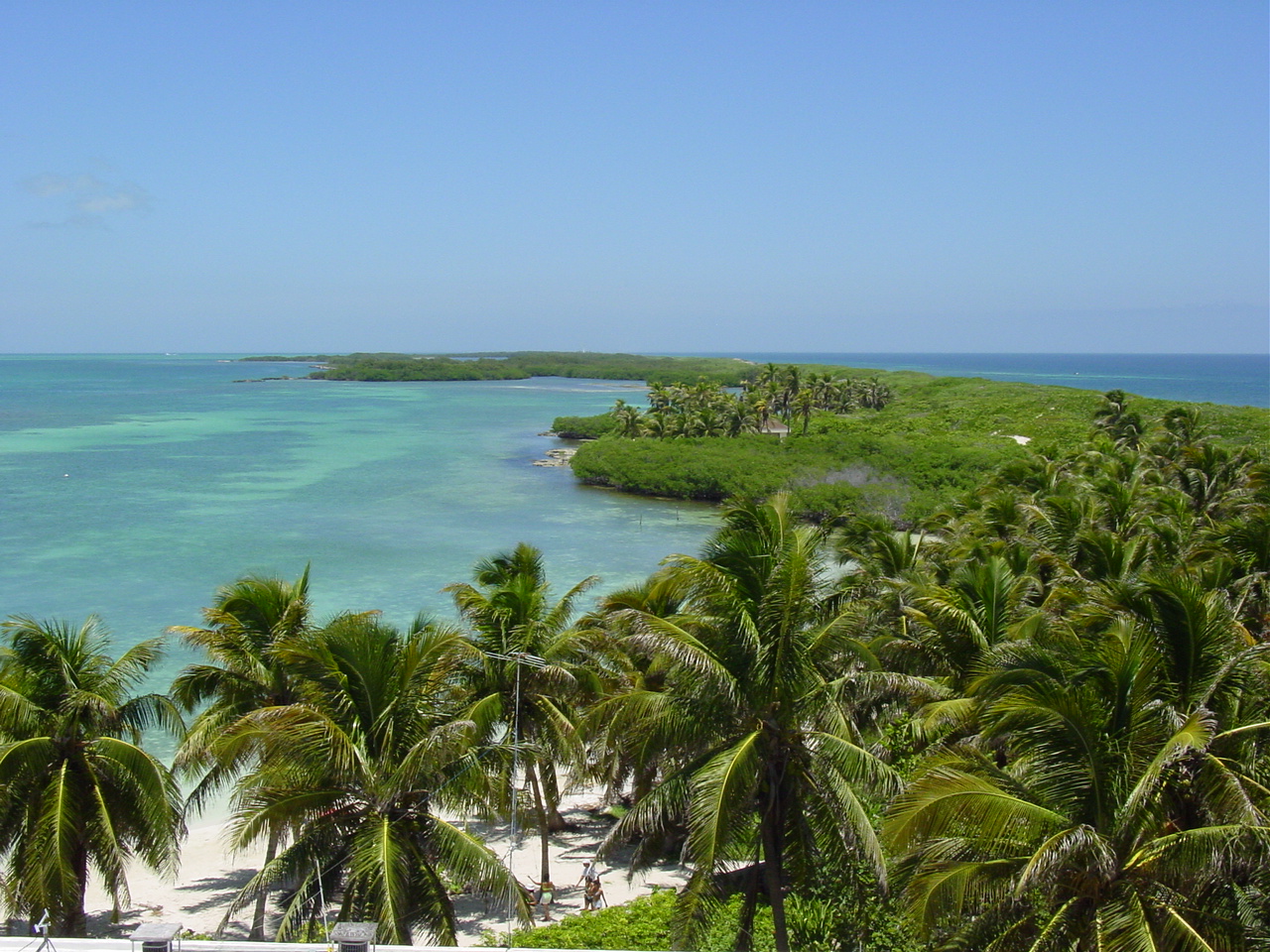
Isla Contoy is a small island in the Mexican state of Quintana Roo, approximately 30 kilometers north of Isla Mujeres.[2][3] The island is only 8.5 km (5.3 mi) in length and has an area of 3.17 square kilometres (1.22 sq mi).

Key Information

Since 1961, Isla Contoy is protected by the Mexican government and was declared a national park in February 1998. The island is jointly run by the Isla Mujeres-based non-governmental organization, Amigos de Isla Contoy A.C. and the Secretary of Environment, Natural Resources and Fishing (SEMARNAT).[citation needed]

Supervised eco-tourism and regulated commercial fishing is allowed on and near the island. Only a few tour companies have permission to bring the only at maximum 200 daily visitors to Isla Contoy. Visitors need to apply for permission to visit the island at the park offices in Isla Mujeres or Cancún.[citation needed]

Four species of turtle find a safe haven for nesting on the beaches of the island, namely the loggerhead turtle, green turtle, hawksbill turtle, and the leatherback turtle. The reserve is also a sanctuary to approximately 152 tropical marine birds, like the frigate bird, brown pelican, and the double-crested cormorant.[citation needed]

References

[edit]
[edit]
Revisions and contributorsEdit on WikipediaRead on Wikipedia
from Grokipedia
Isla Contoy is a small, located in the Mexican state of , approximately 30 kilometers north of at the confluence of the and the . Measuring 8.5 kilometers in length with a land area of 317 hectares, it features pristine coastal dunes, beaches, and ecosystems that remain largely intact. Designated as a in February 1998 after initial protection by the Mexican government in 1961, the island is jointly managed by the National Commission of Protected Natural Areas (CONANP) and the nonprofit Amigos de Isla Contoy A.C. to preserve its . Renowned as one of the most important nesting sites in the Mexican , Isla Contoy serves as a sanctuary for over 150 resident and migratory bird species, including the (Pelecanus occidentalis), American (Fregata magnificens), and (Phalacrocorax auritus). The surrounding waters host a diverse array of marine species, supporting coral reefs like Ixlache Reef, while the island's beaches record a significant number of sea turtle nests annually from species such as the loggerhead (Caretta caretta), green turtle (Chelonia mydas), and hawksbill turtle (Eretmochelys imbricata). Its unique habitats support diverse flora, contributing to its role as a critical model of conservation. Archaeological evidence indicates pre-Columbian human visits, though no permanent settlements occurred, and ongoing efforts include developing an underwater archaeological museum to highlight submerged cultural heritage. As a protected natural area, Isla Contoy emphasizes eco-tourism with strict regulations limiting daily visitors to 200, accessible only by guided boat tours from nearby ports like or . Activities focus on sustainable practices, including from observation towers, in designated zones without sunscreen to protect reefs, and educational visits to the island's museum and . Prohibitions on smoking, touching , and straying from marked trails ensure minimal environmental impact, with entrance fees supporting conservation efforts. This framework positions Isla Contoy as a vital refuge amid growing coastal development in the region, promoting awareness of marine and avian conservation challenges.

Geography

Location and extent

Isla Contoy is a small island located in the Mexican Caribbean Sea, positioned at the entrance to the Yucatán Channel, which connects the Gulf of Mexico to the Caribbean Sea off the northeastern coast of Mexico's Yucatán Peninsula in the state of Quintana Roo. The island's approximate central coordinates are 21°30′23″N 86°47′54″W, placing it within a dynamic marine environment influenced by ocean currents from both the Gulf and the Caribbean. Relative to nearby landmarks, Isla Contoy lies about 13 km offshore from the mainland coast of , providing a that contributes to its isolation and ecological integrity. It is situated approximately 30 km north of and 30 km north of , making it accessible primarily by boat from these points on the mainland or adjacent islands. The island itself extends 8.5 km in length and covers a total land area of 3.17 km² (317 hectares), forming a narrow, elongated shape that defines its boundaries within the larger protected marine zone of the national park, which totals 5,126 hectares. These dimensions highlight its compact extent, with the surrounding waters extending the protected area significantly beyond the terrestrial boundaries.

Physical features

Isla Contoy is a low-lying characterized by flat topography dominated by coastal dunes, sandy soils, and shallow interior lagoons. The terrain rises only modestly, with elevations generally remaining below 10 meters above , reflecting its formation as a limestone-based off the northeastern . The island's coastal features include pristine white-sand beaches that encircle much of its 8.5-kilometer length, fringed by coral reefs forming part of the and mangrove-lined shores along inlets. These elements are shaped by the convergence of currents and upwelling of cold submarine waters at the boundary between the and the . Interior structures consist primarily of a network of seven shallow saltwater s and associated zones, which cover a significant portion of the island's 3.17 square kilometers and connect intermittently to the sea via narrow channels influenced by tides. This central system, surrounded by red and black s, contributes to the island's overall hydrological dynamics as a coastal barrier feature.

History

Pre-Columbian era

Archaeological evidence indicates that Isla Contoy was utilized by the Maya during the pre-Columbian period, primarily as a temporary outpost for resource exploitation and navigation along the northeastern Yucatán Peninsula coast. Findings suggest initial occupation dating back to approximately 300–200 BC, during the Late Formative period, with continued use through the Classic period until the arrival of the Spanish in the early 16th century. This activity aligns with broader patterns of Maya coastal adaptation, where offshore islands served peripheral roles in maritime networks without supporting large-scale permanent habitation due to the absence of freshwater sources. Remnants of Maya presence include pottery shards in poor condition, worked shells and caracoles (snails), and concheros (shell middens) that attest to the processing of marine resources. These artifacts, primarily concentrated near the island's field station in the northern sector, reflect activities such as shellfish gathering and possible tool-making from marine materials like ray spines. The concheros, in particular, indicate exploitation of local ecosystems for food, with evidence of at least several mollusk species utilized similarly to those documented across Maya lowland sites. No stone tools or elaborate ceremonial structures have been definitively identified on the island, though the overall pattern suggests transient use rather than ritual centers. The island's cultural significance likely stemmed from its strategic position at the convergence of the and , functioning as a navigational aid and fishing station within the Maya coastal trade routes. Temporary settlements or camps, inferred from the artifact distributions, would have supported short-term stays for mariners and gatherers, integrating Isla Contoy into the Ekab province's maritime economy without developing major urban centers. This peripheral role underscores the island's limited scale in the wider Maya network, emphasizing resource extraction—such as fishing and potential seabird hunting—over sedentary occupation.

Modern development and protection

Following the Spanish conquest, historical records regarding Isla Contoy during the colonial period (16th to 19th centuries) are sparse, with the island remaining largely uninhabited and serving primarily as a resource for intermittent by Spanish and settlers in the surrounding waters. The region's seas were also sites of naval conflicts, including battles and shipwrecks involving Spanish galleons and pirates. In the early , interest in the island grew due to its abundant populations. By the mid-, ornithologists and ecologists had highlighted Isla Contoy's role as a critical nesting and migratory site for over 150 bird species, underscoring its ecological significance amid rising regional development. This awareness culminated in a pivotal government decree on February 8, 1961, issued by President , which designated the island as Mexico's first protected natural reserve and fauna refuge in , explicitly halting further exploitation to safeguard its habitats. A key milestone in advancing protection efforts occurred in the with the formation of the Amigos de Isla Contoy A.C. in 1994 by tour operators from and ; this group focused on , ecological monitoring, and community involvement, laying the groundwork for the island's elevation to status on February 2, 1998.

Conservation status

Establishment as protected area

In 1961, the Mexican federal government issued a decree designating Isla Contoy as a natural reserve and wildlife refuge to safeguard its ecosystems and avian populations from ongoing threats such as degradation. This protection was formalized through the "Decreto que declara Zona de Reserva Natural y Refugio de la Fauna a la Isla Contoy, ," published in the Diario Oficial de la Federación on February 8, 1961, marking it as the first in the state of . The status was elevated in 1998 when President Ernesto Zedillo signed a new establishing Isla Contoy as a under the federal environmental authority. Published in the Diario Oficial de la Federación on February 2, 1998, this expanded the protected zone to include surrounding marine areas, totaling approximately 5,126 hectares, and abrogated the 1961 measure to align with broader conservation frameworks. The Secretariat of Environment and Natural Resources (SEMARNAT), through its Comisión Nacional de Áreas Naturales Protegidas (CONANP), was designated as the primary governing body responsible for oversight and enforcement. Administration of the park involves collaboration between SEMARNAT/CONANP and the non-profit organization Amigos de Isla Contoy A.C., which provides operational support including , , and since its involvement began in 1994. On-site management is facilitated by ranger stations that monitor activities and ensure compliance with protective measures. The foundational regulations emphasize sustainable use, capping daily visitation at 200 individuals to minimize ecological impact, while prohibiting overnight stays for visitors and banning , shell collecting, or any extraction of natural resources by the public. These rules, outlined in the park's management program approved in 2015, prioritize habitat preservation and are enforced through permits issued via authorized tour operators.

International designations

In 2003, Isla Contoy was designated as a Ramsar of International Importance under the Convention on Wetlands, with site number 1323 covering 5,126 hectares in , . This recognition underscores the site's critical role as a principal nesting area for seabirds in the Mexican , while its forests, coastal lagoons, and surrounding marine environments provide essential habitats for , including endangered sea turtles such as the (Chelonia mydas), loggerhead (Caretta caretta), hawksbill (Eretmochelys imbricata), and leatherback (Dermochelys coriacea). The protected area's conservation efforts align with international commitments, notably the Convention on International Trade in Endangered Species of Wild Fauna and Flora (), to which is a party; this supports the safeguarding of Appendix I-listed species like the aforementioned sea turtles that nest and forage in the lagoons and coastal zones. Through these frameworks, Isla Contoy contributes to regional ecosystem connectivity within the , emphasizing cross-border habitat protection for migratory birds and . The Ramsar designation enhances international oversight, fostering research funding and collaborative partnerships, such as sister park initiatives with protected areas in to promote shared conservation strategies for Caribbean wetlands and species. This global recognition bolsters monitoring of ecological impacts from and , ensuring sustainable management beyond national boundaries.

Ecology

Terrestrial and coastal ecosystems

Isla Contoy's terrestrial and coastal ecosystems are characterized by a mosaic of interconnected habitats that reflect the island's position at the interface of the and the . The primary habitat zones include extensive forests, coastal dunes, interior lagoons, and surrounding fringing reefs. forests dominate the landscape, primarily along the western and leeward sides where they fringe the interior lagoons and protect against wave action. These forests consist of monospecific and mixed stands of species such as black (Avicennia germinans) and red (Rhizophora mangle), reaching heights of 3 to 10 meters and forming dense barriers that stabilize soils and facilitate nutrient cycling. Coastal dunes, composed of sandy , rise up to 12 meters in height, particularly near Punta Sur, and serve as dynamic buffers against erosion while transitioning into the zones inland. The interior lagoons, totaling approximately 8.18 hectares across seven bodies such as Laguna Norte, Laguna Pajarera Central, Laguna Muerta, Laguna de Puerto Viejo, and others, represent unique brackish environments shaped by their hydrological connections to the sea. These lagoons feature hypersaline waters in drier periods due to evaporation and limited freshwater input, with salinity levels fluctuating based on tidal exchanges through narrow channels that link them to the surrounding marine system. This connectivity supports a gradient of brackish conditions, where water transparency varies and nutrient enrichment occurs from natural inputs, fostering specialized ecological processes. The lagoons integrate with the mangroves, which encircle them and regulate water flow, creating a sheltered inland network that contrasts with the open coastal zones. Encircling the island, fringing coral reefs form a protective barrier that extends from shallow nearshore areas to deeper waters, contributing to the overall resilience. These reefs host a high diversity of corals, with at least 56 recorded, including scleractinians such as Montastraea annularis and Acropora palmata, though live coral coverage remains below 10% in surveyed areas. Functioning as natural breakwaters, the reefs mitigate by dissipating wave energy and serve as nurseries for marine organisms, while also trapping sediments that influence dune formation and lagoon sedimentation. Abundant gorgonians and sponges further enhance structural complexity, linking the reef systems to the island's terrestrial habitats through pathways. Seasonal variations profoundly shape these ecosystems, driven by regional oceanographic and climatic forces. The Yucatán Current, a major Caribbean inflow, influences water circulation around the island, promoting during certain periods that boosts productivity and alters gradients in the lagoons and . Hurricanes and tropical storms, with 14 events documented between 1960 and 1988, periodically redistribute sediments, leading to deposition in leeward areas that can smother reef substrates and temporarily increase lagoon . These disturbances, combined with seasonal rainfall patterns, cause shifts—ranging from hypersaline conditions in dry seasons to more diluted states during wet periods—thereby driving dynamic changes in interconnectivity and overall function.

Flora

The flora of Isla Contoy consists of approximately 85 distributed across 43 botanical families, predominantly featuring coastal and halophytic adapted to the island's challenging environment. These thrive in thin, sandy soils with low organic content, prolonged dry seasons from March to July, and exposure to saline conditions and high winds, exhibiting adaptations such as succulence, salt tolerance, and compact growth forms that enable survival in this arid coastal setting. Mangroves form a dominant component of the island's vegetation, with four species—Rhizophora mangle (red mangrove), Avicennia germinans (black mangrove), Laguncularia racemosa (white mangrove), and Conocarpus erectus (buttonwood)—covering extensive areas and comprising mixed, fringe, and basin types that stabilize the shoreline and interior lagoons. These mangroves, all classified as threatened under Mexico's NOM-059-SEMARNAT-2010, play a crucial ecological role by preventing erosion, filtering nutrients from saline waters, and naturally recovering after disturbances like hurricanes. Other key groups include abundant genera such as , Sideroxylon, Chamaesyce, and , which characterize the thorny coastal scrub in the island's interior, alongside salt-tolerant shrubs and succulents like Acanthocereus pentagonus (orange pitahaya) and (prickly pear). On the beaches, beach vines and pioneer species such as (sea grape), Sesuvium portulacastrum (sea purslane), and Canavalia rosea (beach bean) help fix coastal dunes, while introduced coconut palms (Cocos nucifera) and native Thrinax radiata (chit palm) form groves concentrated at the southern tip. This distribution reflects the island's zonal patterns, with mangroves encircling seven interior lagoons, scrub dominating upland areas, and dune vegetation lining the shores, all contributing to the overall of this protected ecosystem.

Fauna

Isla Contoy supports a diverse array of animal life, with high concentrations of seabirds and marine species contributing to its status as a critical habitat in the Mexican . The island's ecosystems, including beaches, mangroves, and surrounding reefs, foster and serve as vital refuges for migratory and resident , many of which are protected under international agreements like . As of 2025 surveys, remains stable, supported by ongoing monitoring including a migratory bird banding station. The avifauna of Isla Contoy is particularly prominent, with approximately 173 bird species recorded, including around 50 residents and 79 migrants, making it one of the most important nesting sites in the region. Resident species include the (Fregata magnificens), (Pelecanus occidentalis), and (Phalacrocorax auritus), which nest in large colonies on the island's cliffs and mangroves, while migrants such as the (Charadrius melodus) and (Sterna antillarum) utilize the area seasonally. Several of these birds, including the (Platalea ajaja) and (Falco peregrinus), are classified as threatened or subject to special protection under Mexico's NOM-059-SEMARNAT-2010, highlighting the island's role in conserving vulnerable populations. Reptiles on Isla Contoy include four species of sea turtles that use the island's beaches for nesting: the loggerhead (Caretta caretta), (Chelonia mydas), hawksbill (Eretmochelys imbricata), and leatherback (Dermochelys coriacea), all of which are listed as endangered under NOM-059-SEMARNAT-2010 and Appendix I of due to threats from and habitat loss. Terrestrial reptiles feature endemic lizards in the scrublands, such as Rodeck's whiptail (Aspidoscelis rodecki), which is endangered and adapted to the island's arid coastal environments, alongside the black spiny-tailed (Ctenosaura similis), classified as threatened. These species contribute to the island's moderate reptile diversity, totaling around 14 taxa, with conservation efforts focused on nest protection and anti- patrols. Marine life surrounding Isla Contoy is abundant, with over 257 species of , including (Scarus spp.), angelfish (Pomacanthus spp.), and snappers (Lutjanus spp.), supporting a vibrant along the Mesoamerican Barrier . Rays such as the (Urobatis jamaicensis) and (Hypanus americanus), along with sharks like the (Ginglymostoma cirratum) and (Rhincodon typus)—the latter threatened under NOM-059-SEMARNAT-2010—are commonly observed in the shallow waters. Dolphins, particularly the (Tursiops truncatus), frequent the surrounding seas, occasionally joined by manatees (Trichechus manatus) in the broader coastal area, underscoring the region's importance for marine mammal conservation. Invertebrates form the foundation of Isla Contoy's food webs, with diverse crustaceans such as the Caribbean spiny lobster (), blue land crab (), and Atlantic ghost crab () inhabiting mangroves, beaches, and reefs. Insects, including at least 18 butterfly species like the monarch (), which is subject to special protection, provide pollination and prey resources, while marine invertebrates such as the horseshoe crab ()—endangered and listed under Appendix II—face risks from habitat alteration. These groups, totaling over 34 marine invertebrate species, are integral to ecological balance and are monitored to prevent .

Tourism and access

Visitor regulations

Access to Isla Contoy is strictly regulated to protect its ecosystems, with a maximum of 200 visitors permitted per day. This limit is enforced primarily through authorized tour operators, though private vessels require prior CONANP approval. Visitors pay an entrance fee of 215 MXN per person per day, with exemptions for seniors, disabled individuals, and children under 12, and a 50% discount for students and teachers with valid credentials. Single-use plastics and are banned. The island is accessible only by boat from ports such as Puerto Juárez, Punta Sam, or , approximately 25 km away, with arrivals limited to between 9:00 a.m. and 6:00 p.m. daily, weather permitting. All visits require participation in mandatory guided tours provided by authorized operators, and private vessels are not allowed without prior CONANP approval to ensure controlled access and minimal disturbance. Key prohibitions include smoking, touching or collecting any natural elements such as plants, corals, shells, or feathers, and using or bug repellent, which could harm . Drones and pets are also banned to prevent wildlife harassment and disruption, while is restricted to guided sessions at designated nearby sites like Ixlache Reef, with mandatory life vests and no direct access to the island's sensitive reefs. A strict no-touch policy applies to all encounters. Compliance is monitored by on-site rangers who patrol trails and beaches, with violations subject to fines under Mexico's General Law on Ecological Equilibrium and Environmental Protection. During the sea turtle nesting season from May to October, additional restrictions apply, such as maintaining a minimum distance from nests and prohibiting flash photography or interference to safeguard endangered species like the loggerhead and green turtles.

Activities and facilities

Visitors primarily access Isla Contoy via organized boat excursions departing from (approximately 20 nautical miles away) or (15 nautical miles), with tours typically lasting 3-4 hours including travel and on-island time. These excursions are conducted by operators authorized by SEMARNAT and CONANP, who must adhere to eco-certification standards such as NOM-08-TUR-2002 and NOM-09-TUR-2002 to ensure sustainable practices and limit environmental impact. The island's facilities support low-impact eco-tourism with minimal infrastructure, including a small eco-museum at the Ixmapoit 1 featuring exhibits on local and conservation efforts. Interpretive signs line the short nature paths, providing educational insights into the ecosystems, while basic restrooms and shaded palapas offer essential amenities; no accommodations are available, preserving the uninhabited status of the reserve. Guided tours highlight key sites such as the viewpoint for panoramic ocean vistas, the eco-museum, and a 1.5 km loop nature trail that winds through coastal habitats. Activities focus on eco-friendly engagement, including from observation points amid the island's diverse avian population of over 150 , and guided walks during non-nesting periods to avoid disturbing . Certified guides deliver educational talks on conservation topics, fostering appreciation for the reserve's role as a protected sanctuary and nesting site.

References

Add your contribution
Related Hubs
User Avatar
No comments yet.