Hubbry Logo
JJ ValayaJJ ValayaMain
Open search
JJ Valaya
Community hub
JJ Valaya
logo
8 pages, 0 posts
0 subscribers
Be the first to start a discussion here.
JJ Valaya
JJ Valaya
from Wikipedia

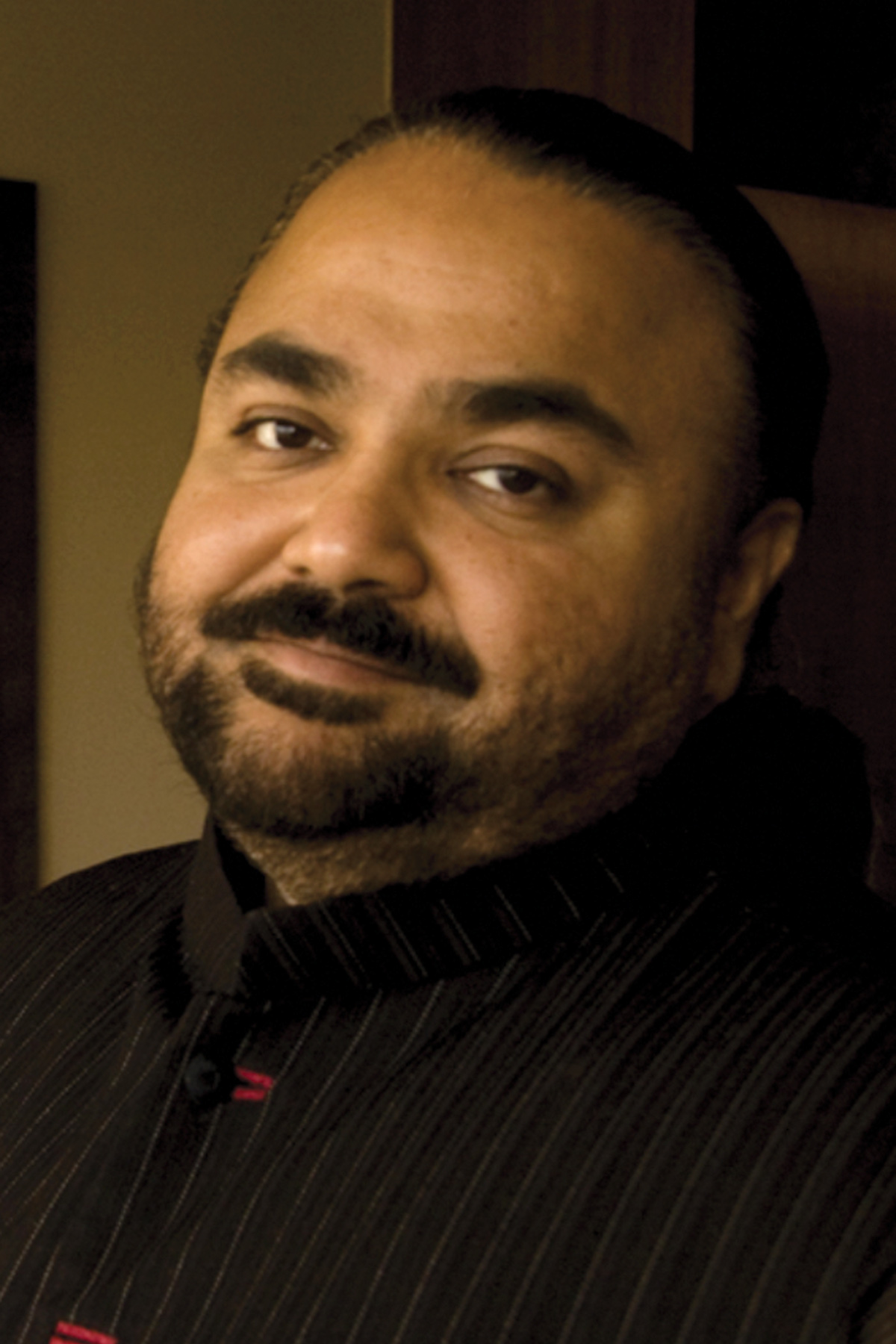
JJ Valaya (born 8 October 1967) is an Indian fashion designer and couturier from New Delhi, India. He founded the House of Valaya, a luxury fashion and lifestyle house in 1992, along with his brother TJ Singh. A founding member of Fashion Design Council of India (FDCI) and the first global brand ambassador of Crystal giant Swarovski. He has been designing for over 20 years. As a fine art photographer, he released his first book, Decoded Paradox in 2011. In the same year, he also closed the day one of the Lakme Fashion Week (LFW) winter/festive 2011 where he debuted a fashion collection inspired by photography.[1][2][3]

Key Information

Early life

[edit]

Born Jagsharanjit Singh Ahluwalia on 8 October 1967 in the state of Rajasthan in India, Valaya spent most of his childhood traveling to different parts of the country due to his father's various postings in the Indian Army. He has completed his early schooling from the Yadavindra Public School in Mohali.[4] Valaya studied commerce in college and initially planned to become a chartered accountant. However, he later studied fashion design at the National Institute of Fashion Technology, New Delhi (NIFT) where he graduated in 1991.[2][3]

Career

[edit]

Valaya trained under a pioneer in Indian fashion Rohit Khosla, before starting his own label.[5] With his elder brother Tribhavan Jit Singh, Valaya founded The House of Valaya in 1992 with the launch of its couture label. Valaya's creative vision together with his brother's organizational abilities have been the key factors for the success of Valaya as a luxury brand.[6] Around 2003, when he launched his pret line, he was already retailing fashion and lifestyle products under three brands: JJ Valaya, Studio Valaya and Valaya Home-Life, in which his first couture label, JJ Valaya, comprising his trousseau line, launched in 1993.[7] The brand today encompasses Couture, Ready-to-wear, Home and a CSR prerogative, The Free Spirit Foundation (FSF).

In 2010, Valaya's collection of ALIKA showcased at several events in Dubai and was highly acclaimed. In this collection, the storyteller in him found expression through which he narrated the story of the female musicians of India's royal courts and their romantic affairs with the princes of the land. Alika, his fall/winter range, consisted of finely worked jalabiyas, kaftan saris and anarkali-churidars.[8] Valaya has used his couture creations to tell stories that intrigue him. That's perhaps part of the reason for his fascination with India's royal history. This collection also saw the birth of his signature Alika Jacket.[9]

In 2011, Valaya's Winter/Festive collection at Lakme Fashion Week titled TASVEER received positive reviews. The collection combined Valaya's twin passions: photography and fashion. The collection was inspired by the evolution of photography from black and white to sepia to hand-stained, natural and digitised images. It was a journey of colours told through clothes. Valaya, in one of his interviews said “It’s almost like there are two personae in me: the photographer and the fashion designer. I intend to keep both alive.” There was also about 10 menswear outfits that included sherwanis, bandhgalas, breeches and Nehru jackets.[9]

In 2012, Wills India Fashion Week Valaya's collection AZRAK stayed true to its meaning: rare and common. The collection was inspired by West Asia and the Ottoman Empire of Turkey. His creations had juxtaposed elements of minimalism and grandeur, Western and Indian silhouettes, traditional motifs and modern drapes & feminine form. The range showcased saris, jackets, anarkalis, breeches, blouses and dresses. Bollywood actress Kangana Ranaut was dressed in a pristine white gown teamed with traditional Indian jewellery and a rich brocade Maharaja coat. Other elements on the ramp were faces such as Suneet Verma, Rohit Bal, Navtej Johar, Jamie Stewart, Sumant Jayakrishnan and Navin Ansal, who were among twelve that took to the runway for the designer.[10]

The year 2012 also marks 20 years of JJ Valaya's work in the fashion industry. The designer took a series of initiatives – launched a limited edition financial year calendar in Delhi. Shot by noted fashion photographer Tarun Khiwal, the April 2012 to March 2013 calendar has Valaya's close friends and "wonderfully inspired individuals".[11]

Valaya introduced the 'Diasun', a pattern comprising two inverted 'V' and the sun motif from the JJ Valaya crest, which now comes on every garment produced by the label in some way or the other to put a stop to plagiarism and imitations of the market.[12] In his fight for plagiarism, Valaya has also patented his signature Chevron pattern.[13].

JJ Valaya is a founder member of the Board of Governors of the Fashion Design Council of India.[14]

The designer currently has around 250 embroidered workers and craftsmen working exclusively for him out of 40,000 sq ft headquarters in Delhi.[15]

His clothes have been worn by various GCC royals and celebrities including Joseph Fiennes, Cate Blanchett, Hrithik Roshan and Kareena Kapoor.[8]

He remains one of the biggest names in the bridal trousseau market in India, and was one of the first Indian labels to invest in sampling, research and development at their "House of Valaya" establishment at Manesar on the outskirts of Delhi.[16]

Awards and recognitions

[edit]

Founder board member of the Governing Council/ board of directors of the Fashion Design Council of India (FDCI). (1998)[17]

References

[edit]
[edit]
Revisions and contributorsEdit on WikipediaRead on Wikipedia
from Grokipedia
JJ Valaya (born 8 October 1967) is an Indian fashion designer, couturier, and , widely recognized as a pioneer in luxury Indian couture for fusing traditional craftsmanship with contemporary aesthetics. He established the House of Valaya in 1992 alongside his brother TJ Singh, marking one of the earliest luxury labels in during the nascent stages of its industry. Born in , , to a family in the , Valaya spent his early years traveling across various cities, which influenced his nomadic design inspirations. After earning a in and briefly interning with a , he joined the (NIFT) in 1989, where he excelled and received accolades such as the Prix d'Incitation at a design competition, the Thapar-DuPont Medal for innovative fabric use, the Elyxa Award, and the KLM-NIFT Trophy. As a founding member of the Council of India (FDCI) Board of Governors, Valaya played a key role in shaping organized fashion in the country, and he became the first official brand ambassador for in . Dubbed the "Czar of Indian Couture," he has built a global reputation over three decades through brands like JJ Valaya Couture, JJV, and Valaya Home, while also pursuing , authoring three books, and contributing to art exhibitions. His work often draws from royal and nomadic themes, emphasizing opulent textiles and intricate for bridal, menswear, and lifestyle collections.

Early life and education

Childhood and family background

JJ Valaya was born on October 8, 1967, in , , . He grew up in a family deeply rooted in the Indian military tradition, with his father, Jagjit Singh Ahluwalia, serving in the alongside other male relatives, including uncles and two older brothers. This career led to a nomadic childhood marked by frequent relocations across numerous Indian cities, such as , , and , as the family followed military postings. The constant movement exposed Valaya to India's diverse regional cultures, landscapes, and communities from an early age, often via long train journeys that built his resilience and adaptability. This upbringing cultivated a profound appreciation for the country's varied crafts, traditions, and artisanal techniques, shaping his early and creative sensibilities. His mother, Raj Ahluwalia, a skilled designer of who specialized in and taught to personnel's wives, further reinforced this interest in textiles and handcrafted elements within the family dynamic. In his initial academic pursuits, Valaya earned an honors degree in and aspired to become a , even interning in the profession after . Despite this path, his growing passion for and design prompted a shift toward formal studies.

Formal education and early influences

JJ Valaya initially pursued undergraduate studies in , graduating with honors from a college in , where he developed a growing interest in and textiles that ultimately led him to pivot away from a planned career in chartered accountancy. This fascination with beautiful and Indian craftsmanship emerged during his commerce years, prompting him to intern briefly as an accountant before redirecting his path toward fashion. His nomadic childhood travels across , influenced by his father's military postings, further sparked an early appreciation for diverse regional textiles, which complemented his emerging design inclinations. In 1989, Valaya enrolled at the (NIFT) in , one of India's pioneering fashion institutes established just three years earlier to formalize design education in the country. The NIFT provided him with structured training in , emphasizing hands-on exploration of textiles and traditional Indian crafts, including techniques like block printing, weaving, and sourced from artisans across regions. This immersive exposure deepened his understanding of indigenous materials and methods, allowing him to experiment with integrating into contemporary garments during coursework projects. Valaya graduated from NIFT in 1991, distinguished by several accolades that highlighted his innovative approach to design. Notably, he received the Thapar-DuPont Medal at the NIFT graduation show for the most innovative use of fabric, recognizing his creative manipulation of materials in student collections. He also earned the Elyxa Award for the best overall collection and the KLM-NIFT Trophy, underscoring his early proficiency in blending technical skill with artistic vision. These honors, along with the Prix d'Incitation from , affirmed the foundational influences that would shape his future contributions to Indian fashion.

Career beginnings

Founding of House of Valaya

In 1992, shortly after graduating from the (NIFT) in 1991, JJ Valaya co-founded the House of Valaya in alongside his brother TJ Singh, an ex-army officer who managed the operational aspects of the burgeoning enterprise. This partnership marked the establishment of a dedicated couture label in an era when India's fashion industry was still emerging, positioning the house as a pioneer in luxury apparel. The initial focus of House of Valaya centered on couture that seamlessly blended the opulent aesthetics of Indian royalty—such as intricate embroideries and regal motifs—with contemporary silhouettes, creating garments that evoked timeless grandeur while appealing to modern tastes. The early emphasized designs tailored exclusively for an clientele, including high-profile individuals seeking personalized luxury pieces that highlighted exceptional craftsmanship and premium fabrics. This approach allowed the house to cultivate a for exclusivity and precision from its outset, relying on word-of-mouth endorsements within India's affluent circles rather than mass-market strategies. A pivotal moment came in 1993 when Valaya staged the first solo by an Indian designer in the country, an event that showcased the house's inaugural collection and set a benchmark for professional presentations in the nascent Indian scene. Held in , this pioneering showcase not only highlighted the fusion of heritage and innovation but also underscored the house's commitment to elevating couture as a performative art form, drawing immediate attention from industry insiders and tastemakers.

Initial collections and breakthroughs

JJ Valaya launched his debut collection in 1992, shortly after founding the House of Valaya, marking a pivotal moment in his career as one of India's early couture pioneers. This collection, showcased in his first solo couture show in in 1993, featured innovative designs that blended contemporary silhouettes with traditional elements, earning immediate acclaim. The same year , Valaya won the KLM-NIFT Alumni competition prize for Best Collection in , recognizing his fresh approach to Indian at a time when the industry was nascent. Prior to his professional debut, Valaya's graduation collection at the (NIFT) in 1991 secured the Elyxa Award for innovative design elements, alongside the Thapar-DuPont Medal for the most creative use of fabric. These early accolades highlighted his ability to infuse technical prowess with artistic vision, setting the stage for his breakthrough works. In his initial collections, Valaya introduced motifs deeply inspired by Indian heritage, prominently featuring royal techniques and block prints that evoked the opulence of historical dynasties while adapting them to modern wear. By the mid-1990s, Valaya achieved his first significant international exposure through group showcases alongside global designers, including his inaugural presentation in , which expanded his reach beyond and solidified his reputation on the world stage. These milestones not only validated his signature style but also paved the way for broader recognition in the global circuit.

Professional development

Label expansions and business growth

Following the establishment of his eponymous couture label in , JJ Valaya expanded the House of Valaya into multiple specialized brands to diversify his offerings across and segments. The core JJ Valaya line remained the flagship for , while Valaya Home was introduced in 1996 as a luxury brand focusing on furniture and décor. By the early , he launched pret-à-porter lines including Studio Valaya and Valaya Quantum for men's wear, alongside Valaya Base for essential basics, broadening accessibility beyond high-end couture. In the subsequent decade, Valaya further developed women's prêt under JJ Valaya Muse, emphasizing timeless, pieces with intricate embellishments like pearls and semi-precious stones, often customized for clients. The portfolio grew into lifestyle with the 2011 launch of The Home of the Traveler, a gifting and collectibles line curated from global artifacts, inspired by Valaya's travels and integrated into the Valaya Home ecosystem. By the , the brand had also ventured into accessories, jewelry collaborations, and expanded home décor lines, reflecting a holistic approach to luxury that extended craftsmanship from apparel to everyday opulence. Business scaling culminated in a 40,000 square foot headquarters in , employing approximately 250 dedicated craftsmen for embroidery and artisanal work. In 2022, Valaya introduced the vegan-friendly JJV label as a bridge-to-luxury occasion line, utilizing sustainable materials like Tencel Luxe vegan and drawing from historical motifs, marking a commitment to ethical innovation. In 2025, the JJV label expanded into fine fragrances with the launch of three original perfumes, and new stores were opened in Mumbai's World Plaza and .

Notable collections and fashion shows

One of JJ Valaya's early standout collections, ALIKA, launched in 2010 and was showcased at various events in , where it received acclaim for its opulent fusion of Indian heritage with narrative-driven couture elements like royal embroideries and architectural motifs. The collection emphasized heirloom-quality garments, blending art and textiles to create timeless pieces that highlighted Valaya's approach. In 2011, Valaya presented TASVEER at Winter/Festive, a collection inspired by the evolution of —from black-and-white to sepia and digital hues—translating into a vibrant journey of colors through dramatic couture silhouettes and cultural references. The show, presented for , earned praise from audiences and critics for its grandeur and innovative use of as a motif, closing the first day with a storyboard-like presentation. The following year, at Wills Lifestyle Fall/Winter 2012, Valaya closed the event with AZRAK, an ode to the titled after the Turkish word for "rare and uncommon," featuring intricate details like mother-of-pearl inlays, Iznik ceramics, and graphic calligraphy across jackets, sarees, and breeches. Showcased with showstoppers and , the collection drew from historic weaves and miniatures, blending contradictory fabrics in a palette of ivory to warm winter shades for a regal, exotic effect. Adapting to the digital era, Valaya debuted in 2020 at the first virtual FDCI Couture Week, narrating an Ottoman saga inspired by as the empire's early capital, with 48 pieces including lehengas, sherwanis, and the signature IKA jacket adorned in zardosi, silk threads, and crystals. The film-format presentation highlighted burnished metallics, nomadic kilims, and Tezhip art, evoking the grandeur of Topkapi palace jewels in a plush, larger-than-life aesthetic. Valaya's Maximalism series, exemplified by the 2022 Alma collection at FDCI India Couture Week, embraced bold, regal drama through Spanish-Indian fusions in embellished lehengas and intricate motifs, paired with maximalist beauty elements like glitter lips and rhinestone-encrusted eyes to amplify opulent bridal statements. This approach underscored his signature chevron patterns and ornate embroideries, creating immersive, heritage-rich experiences that balanced excess with refined luxury. In 2025, Valaya marked 33 years in fashion with the EAST collection as the grand finale at Hyundai India Couture Week, reimagining the Silk Route through Oriental influences from , , and Korea fused with Indian textiles like velvets and brocades, featuring dragon scales, waves, and in a palette of , imperial , and . Showcased with showstoppers Rasha Thadani and , the presentation highlighted reinvention via modern elements like capes and the Alika jacket, earning a for its timeless luxury and cultural homage.

Design philosophy and contributions

Signature style and influences

JJ Valaya's signature style is characterized by a masterful fusion of Indian royal heritage with Western tailoring techniques, creating luxury couture that exudes structured elegance and opulent grandeur. Drawing from his Jodhpur roots in , Valaya reinterprets traditional Indian silhouettes—such as sherwanis and lehengas—through precise cuts and contemporary forms, blending the lavishness of royal attire with the sharp lines of Western suiting to craft garments that appeal to a global audience. This approach, often described as artistry infused with heritage, allows his designs to transcend cultural boundaries while maintaining an air of timeless sophistication. Central to Valaya's aesthetic is an emphasis on , drama, and narrative storytelling, where each piece serves as a visual of cultural depth and theatrical flair. His collections prioritize bold, extravagant expressions through rich jewel tones, intricate layering, and voluminous forms that evoke a sense of regal , transforming wearers into protagonists of an unfolding story. This dramatic is not mere embellishment but a deliberate celebration of excess, rooted in the opulence of Indian princely states, yet refined for modern wardrobes. Valaya incorporates historical motifs inspired by and embroidery, weaving these elements into his fabrics to honor India's layered past. Patterns drawn from Mughal miniatures and the geometric intricacies of artistry—such as chevrons and floral arabesques—are digitally rendered or hand-stitched to add narrative layers, evoking the splendor of bygone empires without overwhelming the contemporary silhouette. These influences extend to broader historical tapestries, including Maratha and legacies, which introduce eclectic motifs like azulejo-inspired tiles blended with traditional Indian weaves. His A/W 2025 couture collection, "East," showcased at India Couture Week 2025, further exemplifies this by drawing from the Silk Route, , and Oriental opulence, blending motifs from the , , and Indian craftsmanship in a narrative. Shaping this monarchial fashion narrative is Valaya's as a "lost royal," profoundly influenced by his upbringing and the majestic aura of . He has articulated feeling like "a reborn," channeling this self-perception to infuse his work with a sense of rediscovered grandeur and nomadic exploration of royal legacies. Early exposure to textiles during his NIFT education further honed this vision, providing a foundational appreciation for heritage crafts that informs his enduring commitment to storytelling through couture.

Craftsmanship and innovation in materials

JJ Valaya's craftsmanship is deeply rooted in collaborations with skilled Indian artisans, who specialize in intricate hand-, traditional weaves, and block printing techniques to create his signature opulent designs. These partnerships emphasize meticulous detailing, such as mixed metal developed by his in the early 1990s, which combines beads, sequins, and threads for a regal texture. By working closely with these craftsmen, Valaya ensures that each piece reflects the precision of age-old methods adapted for contemporary couture. Central to Valaya's approach is his self-described "greedy for crafts" , which drives his relentless and promotion of India's diverse artisanal heritage to preserve techniques at risk of fading. This mindset leads him to rediscover and reinterpret hidden crafts, such as rare embroideries and passed down through generations, integrating them into modern silhouettes while fine-tuning designs for exceptional quality. Through this, Valaya not only safeguards endangered practices but also evolves them to appeal to younger generations, balancing tradition with innovation in workmanship and prints. In terms of material innovation, Valaya has pioneered the use of vegan alternatives in his JJV bridge-to-luxury line, employing TENCEL™ LUXE—a sustainable, wood-based filament yarn that mimics silk's drape and sheen without animal-derived components—earning recognition from PETA for advancing fashion. Collections such as the 2024 JJV showcase further demonstrate his forward-thinking by incorporating eco-friendly fusion textiles, such as R|Elan GreenGold recycled polyester blended with traditional elements, to merge with luxurious handcrafted aesthetics. In May 2025, Valaya received the ELLE Sustainability Leader of the Year (Male) award for his ongoing contributions to . These choices highlight a commitment to environmental consciousness while preserving the tactile richness of Indian weaves and prints.

Recognition and impact

Awards and honors

JJ Valaya received early recognition during his time at the (NIFT), where he won the Elyxa Award and the Thapar-DuPont Medal at the 1991 graduation show in for the most innovative use of fabric. In 1993, he was awarded the Cargo Prize for the best collection, marking a significant early accolade in his career. Valaya became a founding board member of the (FDCI) in 1998, serving on its Board of Governors and contributing to the promotion of Indian fashion on national and international stages. In 2001, Valaya was appointed as the first brand ambassador for Swarovski in India, a role that extended globally and highlighted his influence in integrating crystal embellishments into couture. Expanding beyond fashion design, Valaya published his debut photography book, Decoded Paradox, in 2011, an anthology of black-and-white images capturing Delhi's cultural personalities and architecture. In 2022, he received the PETA India Vegan Fashion Award for Best Vegan Fashion Moment for launching the JJV label's eco-friendly collection using TENCEL™ Lyocell fibers, underscoring his commitment to sustainable practices.

International collaborations and legacy

Valaya's international collaborations have extended his influence beyond Indian borders, most notably through his contributions to Hollywood productions. In 2021, he partnered with acclaimed costume designer to create 18 opulent outfits for the royal family in the film , incorporating Indian-sourced fabrics to evoke regal grandeur and cultural fusion. This collaboration marked a significant milestone, blending Valaya's couture expertise with global cinema and highlighting Indian craftsmanship on an international stage. He continued this partnership with Carter for the 2022 film , designing costumes for Queen Ramonda (portrayed by ) that integrated Indian textiles and embroidery with African motifs. The film's costumes won the Academy Award for Best in 2023, further elevating Valaya's global profile. In the , Valaya emerged as a pioneer among Indian designers by taking his collections to international audiences, becoming one of the first to showcase abroad following his domestic debut. He presented his work in key markets including , , , and , where his shows sold out and introduced maximalist Indian luxury to global buyers and peers. This early global outreach, building on his 1990 Paris award as a NIFT student, positioned him alongside emerging international talents and helped elevate Indian fashion's visibility overseas. With over 33 years in the industry as of 2025—since founding House of Valaya in 1992—Valaya has shifted focus toward preserving his legacy through reinvention and a deepened commitment to respect. In recent interviews, he emphasized returning to creative fundamentals, honoring the karigars (s) who embody Indian heritage, and evolving couture to remain timeless amid changing consumer dynamics. His enduring impact on Indian luxury fashion stems from being a founding member of the Board of Governors of the Fashion Design Council of India (FDCI) in 1998, where he has served on the board, institutionalizing professional standards and promoting ethical practices. Valaya has also championed sustainable couture by underscoring its inherent longevity—creating enduring pieces that reduce waste—thus influencing a shift toward responsible luxury in the sector.

References

Add your contribution
Related Hubs
User Avatar
No comments yet.