



Community hub
James Jesus Angleton
View on Wikipedia | This article includes a list of general references, but it lacks sufficient corresponding inline citations. (August 2025) |
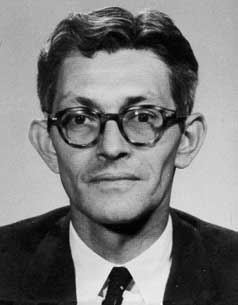
James Jesus Angleton (December 9, 1917 – May 11, 1987)[1] was an American Central Intelligence Agency (CIA) officer who served as chief of the counterintelligence department of the CIA from 1954 to 1975. According to director of central intelligence Richard Helms, Angleton was "recognized as the dominant counterintelligence figure in the non-communist world".[2]
Key Information


Angleton served in the Office of Strategic Services, a wartime predecessor to the CIA, in Italy and London during World War II. After the war, he returned to Washington, D.C. to become one of the founding officers of the CIA. He was initially responsible for the collection of foreign intelligence and liaison with counterpart organizations in allied countries. In 1954, Allen Dulles promoted Angleton to chief of the Counterintelligence Staff. As chief, Angleton was significantly involved in the defection of Soviet KGB agents Anatoliy Golitsyn and Yuri Nosenko. Through Golitsyn, Angleton became convinced the CIA harbored a high-ranking Soviet mole and engaged in an intensive search. Whether this was a highly destructive witch hunt or appropriate caution remains a subject of intense historical debate.[3]
Investigative journalist Edward Jay Epstein agrees with the high regard in which Angleton was held by his colleagues in the intelligence business, and adds that Angleton earned the "trust of six CIA directors—including Gen. Walter Bedell Smith, Allen W. Dulles and Richard Helms. They kept Angleton in key positions and valued his work."[4]
Early and personal life
[edit]James Jesus Angleton was born December 9, 1917, in Boise, Idaho, the eldest of four children of James Hugh Angleton (1888–1973) and Carmen Mercedes Moreno (1898–1985).[1][5] His parents met in Nogales, Arizona, while his father was a United States Army cavalry officer serving under General John Pershing. Carmen Moreno was born in Mexico, but was already a naturalized American citizen before she married James H. Angleton in December 1916.[6]
James Hugh Angleton joined the National Cash Register Corporation, rising through its ranks until in the early 1930s he purchased the NCR franchise in Italy. In Italy, he became head of the American Chamber of Commerce.[1]
Angleton's boyhood was spent in Milan, Italy. He studied as a boarder at Malvern College in England before attending Yale University. As a Yale undergraduate, Angleton edited the Yale literary magazine Furioso with Reed Whittemore. Furioso published many of the best-known poets of the interwar period, including William Carlos Williams, E. E. Cummings and Ezra Pound.[7] Angleton carried on an extensive correspondence with Pound, Cummings and T. S. Eliot, among others, and was particularly influenced by William Empson, author of Seven Types of Ambiguity.[8] Angleton was trained in the New Criticism at Yale by Maynard Mack and others, chiefly Norman Holmes Pearson, a founder of American Studies. He briefly studied law at Harvard, but did not graduate.[9]
World War II
[edit]In 1943, Angleton joined the U.S. Army. During World War II, Angleton served in the Office of Strategic Services (OSS) and led its Italian branch.[1] He also served in London under Norman Holmes Pearson in the X-2 Counter Espionage Branch of the OSS. By February 1944, he was chief of the Italy desk for X-2 in London. While in London, Angleton met the famous double agent Kim Philby.
By the end of the war, Angleton was head of X-2 for all of Italy. In this position, Angleton helped prevent the execution of Italian naval commander Junio Valerio Borghese, whose elite unit Decima MAS had collaborated with the Schutzstaffel during the war.[10] Angleton was interested in the defense of installations such as ports and bridges and offered Borghese a fair trial in return for his collaboration.[11] He dressed him up in an American uniform and drove him from Milan to Rome for interrogation by the Allies.
Angleton remained in Italy after the war, establishing connections with other intelligence services and playing a major role in the 1948 Italian general election. The election was won by the US-backed Christian Democratic Party over the Soviet-backed Italian Communist Party.[6] Angleton's tour in Italy as an intelligence officer is regarded by biographer Jefferson Morley as a critical turn not only in his professional life. His personal liaisons with Italian Mafia figures helped the CIA in the immediate postwar period.
Central Intelligence Agency
[edit] | This section needs additional citations for verification. (November 2013) |
Upon his return to Washington after World War II, Angleton was employed by the various successor organizations to the OSS and eventually became one of the founding officers of the Central Intelligence Agency in 1947.[1][12]
In May 1949, he was made head of Staff A of the Office of Special Operations, where he was responsible for the collection of foreign intelligence and liaising with counterpart intelligence organizations in foreign countries.[citation needed]
Beginning in 1951, Angleton was responsible for "the Israel desk" as liaison with Israel's Mossad and Shin Bet agencies.[6] Angleton retained an active interest in Israeli intelligence and maintained connections there throughout his career, believing that émigrés to Israel from the Soviet Union and Warsaw Pact nations could be a valuable source of information on their countries of origin. He also believed that Israeli foreign intelligence services could be used for proxy operations in third countries. For instance, Shin Bet was crucial in obtaining a transcript of Nikita Khrushchev's 1956 speech to the Communist Party of the Soviet Union Congress that denounced Joseph Stalin.[13][full citation needed] Author Samuel Katz has claimed that Angleton directed CIA assistance to the Israeli nuclear weapons program.[14][full citation needed]
.jpg)
As head of Staff A, Angleton worked particularly closely with Kim Philby, the apparent future head of MI6, who was also in Washington.[15] The Israeli intelligence officer Teddy Kollek claimed years later that in 1950 he warned Angleton that Philby had been a Soviet agent in the 30s.[16][17] In 1951, Philby's colleagues Guy Burgess and Donald Maclean defected to Moscow. Philby was expelled from Washington, suspected of having tipped them off based on decoded Soviet communications from the Venona project. Philby was confirmed to be a Soviet mole but eluded those sent to arrest him. He defected to Moscow in 1963. Philby called Angleton "a brilliant opponent" and a "fascinating" friend who seemed to be "catching on" before his defection. CIA employee William King Harvey, a former FBI agent, had voiced his suspicions regarding Philby and others Angleton suspected were Soviet agents.[18]
In 1953, Allen Dulles became Director of Central Intelligence. He soon named Angleton chief of the Counterintelligence Staff, in which position Angleton served for the remainder of his career.[1]
As chief of Counterintelligence, Angleton oversaw a ring of informants organized by Jay Lovestone, a trade union leader and former head of the Communist Party of the United States. It was informally called the "Lovestone Empire". Lovestone worked with foreign unions and used covert funds to establish a global system of anti-communist union organizers.[19][pages needed]
During the Vietnam War and Soviet-American détente, Angleton remained convinced of the necessity of the war. During this period, Angleton's counter-intelligence staff undertook a most comprehensive domestic covert surveillance project (called Operation CHAOS) under the direction of President Lyndon Johnson. The prevailing belief at the time was that the anti-war and civil rights movements of the 1960s and 1970s had foreign funding and support. None was found by them, although the Soviet Union did influence the movements.[20][additional citation(s) needed]
Angleton also believed that the strategic calculations underlying the resumption of relations with China were flawed based on a deceptive KGB staging of the Sino-Soviet split. He went so far as to speculate that Henry Kissinger might be under KGB influence.[21]
Suspicion of infiltration
[edit]Angleton's view was influenced by his direct experience with the manipulation of German intelligence during World War II, the Cambridge Five, and the success of American infiltration efforts in the Third World. In particular, Angleton's close association with Philby heightened Angleton's suspicions and led him to double-check "potential problems".[citation needed] Angleton's position in the CIA and his close relationship with Director Richard Helms in particular expanded his influence, and as it grew, the CIA split between Angletonians and anti-Angletonians.[citation needed] This conflict rose in particular regard to Anatoliy Golitsyn and Yuri Nosenko, who defected from the Soviet Union to the United States in 1961 and 1964, respectively.
Golitsyn defected via Helsinki on December 15, 1961. He and his family flew with a CIA escort to Sweden and then to the United States, where he was interviewed by Angleton personally.[22][23] Golitsyn limited his initial debriefing to a review of photographs to identify KGB officers and refused to discuss KGB strategy. After Golitsyn raised the possibility of serious infiltration with MI5 in a subsequent debriefing, MI5 shared the concern with Angleton. He responded by asking Helms to allow him to take responsibility for Golitsyn and his further debriefing. Golitsyn ultimately informed on many famous Soviet agents, including the Cambridge Five, which led to their apprehension.[23] Angleton identified Golitsyn as "the most valuable defector ever to reach the West".[24][25]
However, other allegations Golitsyn made, including that Prime Minister of the United Kingdom Harold Wilson was a Soviet agent and that the Sino-Soviet split was a "charade," were ultimately found to be false.[23] Golitsyn also claimed that a mole who had been stationed in West Germany, was of Slavic descent, had a last name that might end in "sky" and definitely began with a "K", and operated under the KGB codename "Sasha".[26] Angleton believed this claim, with the result that anyone who approximated this description fell under his suspicion.[27]
Angleton became increasingly convinced that the CIA was compromised by the KGB.[28] Golitsyn convinced Angleton that the KGB had reorganized in 1958 and 1959 to consist mostly of a shell, incorporating only those agents whom the CIA and the FBI were recruiting, directed by a small cabal of puppet masters who doubled those agents to manipulate their Western counterparts. Although Golitsyn was a questionable source, Angleton accepted significant information obtained from his debriefing by the CIA.[12]
In 1964, Yuri Nosenko, a KGB officer based in Geneva, insisted he needed to defect to the United States because his role as a double agent had been discovered, and he was being recalled to Moscow.[29][pages needed] Nosenko was allowed to defect, although the CIA was unable to verify a KGB recall order. Golitsyn had said from the beginning that the KGB would try to plant defectors in an effort to discredit him. Under great duress, Nosenko failed two highly questionable lie detector tests but passed a third test monitored by several Agency departments.[30] Judging his claim (as well as additional claims regarding Lee Harvey Oswald) to be improbable, Angleton permitted David Murphy, head of the Soviet Russia Division, to hold Nosenko in solitary confinement for over three years. This confinement included 16 months in a small attic with no windows, furniture, heat or air conditioning. Human contact was completely banned. Nosenko was given a shower once a week and had no television, reading material, radio, exercise, or toothbrush. Interrogations were frequent and intensive. Nosenko spent an additional four months in a ten-foot by ten-foot concrete bunker in Camp Peary.[25] He was told that this condition would continue for 25 years unless he confessed to being a Soviet spy.[31] Nosenko did not appear to have shaken Angleton's faith in Golitsyn, although Helms and J. Edgar Hoover thought otherwise. Hoover's objections are said to have been so vehement as to severely curtail counterintelligence cooperation between the FBI and CIA for the remainder of Hoover's service as FBI director. Nosenko was found to be a legitimate defector, a lieutenant colonel. He became a consultant to the CIA.[25] Golitsyn, who had defected years before, was unable to provide concrete support for his views of the KGB.
Angleton came into increasing conflict with the rest of the Agency, particularly the Directorate of Operations, over the efficacy of their intelligence-gathering efforts. He questioned this without explaining his broader views on KGB strategy and organization.[citation needed]
In his 2022 book, Uncovering Popov's Mole, researcher John M. Newman argues that Bruce Solie of the Office of Security was very probably the mole and that he misled Angleton, his protégé, into believing the traitor was in the Soviet Russia Division.[32]
Suspicion of foreign leaders
[edit]Throughout the 1960s and 1970s, Angleton privately accused various foreign leaders of being Soviet spies. He twice informed the Royal Canadian Mounted Police that he believed Prime Minister Lester Pearson and his successor Pierre Trudeau were agents of the Soviet Union. Angleton accused Swedish Prime Minister Olof Palme, West German Chancellor Willy Brandt, and British Prime Minister Harold Wilson of being assets for the Soviet Union.[29]
Australian journalist Brian Toohey claimed that Angleton considered Australian Prime Minister Gough Whitlam a "serious threat" to the US. Angleton was concerned after the Commonwealth police raided ASIO headquarters in Melbourne in 1973 at the direction of Attorney General Lionel Murphy. In 1974, Angleton sought to instigate the removal of Whitlam from office by having CIA station chief in Canberra, John Walker, ask Peter Barbour, then head of ASIO, to make a false declaration that Whitlam had lied about the raid in Parliament. Barbour refused to make the statement.[33]
Church Committee and resignation
[edit]In 1973, William Colby was named Director of Central Intelligence by Richard Nixon. Colby reorganized the CIA in an effort to curb Angleton's influence and weaken the Counterintelligence branch, beginning by stripping him of control over the Israel desk. Colby demanded Angleton's resignation.[34]
Angleton came to public attention when the Church Committee (formally the Senate Select Committee to Study Governmental Operations with Respect to Intelligence Activities) probed the CIA for information on domestic surveillance, specifically the operation known as HT Lingual, as well as assassination plots and the death of John F. Kennedy.[35][36]
In December 1974, Seymour Hersh published a story in The New York Times about domestic counter-intelligence activities against anti-war protesters and other domestic dissidents. Angleton's resignation was announced on Christmas Eve 1974, just as President Gerald Ford demanded Director Colby report on the allegations and various congressional committees announced that they would launch their own inquiries. Angleton told reporters from United Press International that he was resigning because "my usefulness has ended" and the CIA was getting involved in "police state activities".[37] Three of Angleton's senior aides retired within a week after it was made clear that they would be transferred elsewhere in the Agency rather than promoted. The counterintelligence staff was reduced from 300 to 80 people.
In 1975, Angleton was awarded the CIA's Distinguished Intelligence Medal.[38] By this time, Angleton had been quietly rehired by the CIA at his old salary through a secret contract. Until September 1975, "operational issues remained solely the preserve of Angleton".[39]
Aftermath
[edit]The late 1970s were generally a period of upheaval for the CIA. During George H. W. Bush's tenure as Director, President Ford authorized the creation of Team B, a project concluding that the Agency and the intelligence community had seriously underestimated Soviet strategic nuclear strength in Central Europe. Admiral Stansfield Turner, on his appointment as DCI by President Jimmy Carter in 1977, used Angleton as an example of the excesses in the Agency that he hoped to curb. He referred to this during his service and in his memoirs.[40]
Because of their suspicions, Angleton and his staff ultimately impeded the career advancement of numerous CIA employees. Forty employees are said to have been investigated and fourteen were considered serious suspects by Angleton's staff. The CIA paid compensation to three under what Agency employees termed the "Mole Relief Act".[41]
With Golitsyn, Angleton continued to seek out moles. They sought the assistance of William F. Buckley, Jr. (himself a former CIA asset) to write New Lies for Old, which argued that the Soviet Union planned to fake a collapse to lull its enemies into a false sense of victory, but Buckley refused. In his 1994 book Wedge: The Secret War between the FBI and CIA, author Mark Riebling claimed that of 194 predictions made in New Lies For Old, 139 had been fulfilled by 1993, nine seemed "clearly wrong", and the other 46 were "not soon falsifiable".[42]
Personal life and death
[edit]Angleton met Cicely Harriet d'Autremont, a Vassar alumna from Tucson, Arizona and granddaughter of Chester Adgate Congdon, at Harvard in 1941.[29] They married on 17 July 1943, shortly after he enlisted in the Army. Together, they had three children:
- James C. Angleton;[43]
- Guru Sangat Kaur Khalsa (formerly Truffy Angleton);[44] and
- Siri Hari Kaur Angleton-Khalsa (formerly Lucy d'Autremont Angleton)[45]
The Angletons lived in the Rock Spring neighborhood of Arlington, Virginia until Angleton's death.[46][43] The Angletons had a tumultuous marriage at times,[47] but developed a varied social set in Washington, including professional acquaintances in intelligence, poets, painters and journalists.[citation needed]
Angleton's wife and his daughters explored Sikhism,[43] and both of Angleton's daughters became followers of Harbhajan Singh Khalsa.[48]
Angleton died from cancer in Washington, D.C., on 11 May 1987.[1]
Legacy
[edit]Angleton's responsibilities as chief of Counterintelligence have given rise to a considerable literature focused on his efforts to identify Soviet or Eastern Bloc agents working in American secret intelligence agencies.
In time, Angleton's zeal and suspicions came to be regarded as counterproductive, if not destructive. In the wake of his departure, counterintelligence efforts were undertaken with far less enthusiasm. Some[who?] believe this overcompensation was responsible for oversights which allowed Aldrich Ames, Robert Hanssen and others to compromise American intelligence agencies after Angleton's resignation. Although the American intelligence community quickly recovered from the Church Committee, it found itself uncharacteristically incapable of policing itself after Angleton's departure. Edward Jay Epstein has argued that the positions of Ames and Hanssen—both well-placed Soviet counter-intelligence agents, in the CIA and FBI respectively—would enable the KGB to deceive the American intelligence community, in the manner that Angleton hypothesized.[49]
Despite misgivings over his uncompromising and often obsessive approach to his profession, Angleton is highly regarded by a number of his peers in the intelligence business. Former Shin Bet chief Amos Manor, in an interview in Ha'aretz, revealed his fascination with the man during Angleton's work to forge the U.S.–Israel liaison in the early 1950s. Manor described Angleton as "fanatic about everything", with a "tendency towards mystification". Manor discovered decades later that the real reason for Angleton's visit was to investigate Manor, being an Eastern European Jewish immigrant, for Angleton thought that it would be prudent to "sanitize" the U.S.–Israeli bridge before a more formal intelligence relationship was established.[50]
Three books dealing with Angleton take foreign intelligence activities, counterintelligence and domestic intelligence activities as their central theme: Tom Mangold's Cold Warrior, David C. Martin's Wilderness of Mirrors, and David Wise's Molehunt. Tim Weiner's Legacy of Ashes paints Angleton as an incompetent alcoholic.[51]
These views have been challenged by Tennent H. Bagley in his 2007 book, Spy Wars, and Mark Riebling in his 1994 book, Wedge. John M. Newman, in his 2022 book, Uncovering Popov's Mole, characterizes Angleton as a man lacking self-confidence and who required a father figure. Newman claims that Angleton was duped by at least two KGB moles: Kim Philby in MI6 and Bruce Solie in the Office of Security. Newman also suggests that Leonard V. McCoy in the Soviet Russia Division's Reports & Requirements section may have been a mole.[52]
CIA Family Jewels
[edit]A set of highly sensitive Agency documents, referred to as the "Family Jewels," was publicly released on June 25, 2007, after more than three decades of secrecy.[53][54] The release was prompted by an internal CIA investigation of the 1970s Church Committee which verified the far-ranging power and influence that Angleton wielded during his long tenure as counter-intelligence czar. The exposé revealed that Angleton-planned infiltration of law enforcement and military organizations in other countries was used to increase the influence of the United States. It also confirmed past rumors that it was Angleton who was in charge of the domestic spying activities of the CIA under Operation CHAOS.[55]
2025 JFK document release
[edit]Angleton's heavily-redacted testimony before the Senate Select Committee to Study Governmental Operations With Respect to Intelligence Activities in 1975 was finally released on March 18, 2025. The 50-year-old Top Secret report covers several topics, particularly clandestine, intelligence-sharing agreements with Israel, nuclear secrets, Yuri Nosenko, George Blake, signals intelligence, Anatoliy Golitsyn, the Warren Commission, and Lee Harvey Oswald. The 113-page fully unredacted document discloses several matters, including leaks to newsmen Seymour Hersh and Tad Szulc and their information about Watergate, Cuba, Project Azorian, and Sidney Gottlieb.[56]
In the previously-redacted sections, the document is full of NBR markings from the Assassination Records Review Board, meaning Not Believed Relevant.
In popular culture
[edit]- The 2006 film The Good Shepherd is loosely based on Angleton's life and his role in the formation of the CIA.[57]
- The Laundry Files by Charles Stross features a senior Laundry agent whose nom de guerre is James Angleton.[58]
- The 2002 novel The Company by Robert Littell—and the 2007 television mini-series The Company based on it, with Angleton portrayed by Michael Keaton—is focused on Angleton's efforts to find a Soviet mole.
- Angleton was portrayed by John Light in the 2003 BBC TV mini-series Cambridge Spies.
- The song "Angleton" by Russian indie rock band Biting Elbows is about Angleton's life and career.[59]
- In the television series Granite Flats the actor Cary Elwes plays Hugh Ashmead, the name "Ashmead" being the cover name for Angleton.
- William F. Buckley's 2000 novel Spytime: The Undoing of James Jesus Angleton is a fictionalized treatment of Angleton's career, a storyline being placed upon, between and within actual historic facts and events.[60]
- Mike Doughty released a song entitled "James Jesus Angleton" on Apple Music in December 2017.[61]
- The Fatima Mansions track "Brunceling's song" mentions Angleton by name, in a narrative involving spies adapting to regular life.
- In the 1991 Norman Mailer novel Harlot's Ghost, Tremont Montague (Harlot) is based on Angleton.[6]
- The fourth season of the television series Le Bureau des Légendes introduces a character from the French external security service (DGSE) with the nickname of "JJA" - James Jesus Angleton. There is a short discussion of Angleton's career and its connection to this character.
- Angleton was portrayed by Stephen Kunken in the 2022 ITVX mini-series A Spy Among Friends about the defection of Kim Philby.
- In 2016, he was portrayed by Anthony Brophy in The Crown.
- In the HBO Max miniseries White House Plumbers, Angleton is portrayed by David Pasquesi.
- In season 2, episode 5 of the Netflix series The Recruit, the CIA's general counsel states that a CIA lawyer should "run the Angleton playbook."[62]
- In 1976, Angleton was interviewed for the British television political programme, This Week, in which he gave a wide ranging opinion on his thoughts and conclusions of the ongoing Western fight against the Soviet Bloc.[63]
See also
[edit]Notes
[edit]- ^ a b c d e f g The Encyclopedia of the Cold War: A Political, Social, and Military History. Vol. 1. 2007. pp. 79–80.
- ^ Helms, Richard (2003). A Look over My Shoulder: A Life in the Central Intelligence Agency. New York: Random House. p. 275.
- ^ Newman, John M. (2022). Uncovering Popov's Mole. pp. 2–3. ISBN 9798355050771.[self-published source]
- ^ Epstein, Edward Jay (July 14, 2007). "Opening Up the CIA". The Wall Street Journal. Archived from the original on December 23, 2019. Retrieved March 28, 2014.
- ^ Morley, Jefferson (October 24, 2017). The Ghost: The Secret Life of CIA Spymaster James Jesus Angleton. St. Martin's Publishing Group. p. 4. ISBN 978-1-250-08061-5.
- ^ a b c d Morley, Jefferson (October 24, 2017). The Ghost: The Secret Life of CIA Spymaster James Jesus Angleton. St. Martin's Publishing Group. p. 267. ISBN 9781250080615.
- ^ "Furioso Papers". Archives at Yale.
- ^ Hawkes, Terence (June 12, 2009). "William Empson's influence on the CIA". Times Literary Supplement. pp. 3–5.
- ^ Holzman, Michael (2008). James Jesus Angleton, the CIA and the Craft of Counterintelligence. University of Massachusetts Press. pp. 7–30.
- ^ Tunander, Ola (2004). The Secret War Against Sweden: US and British Submarine Deception in the 1980s. Routledge. p. 275.
- ^ Greene, Jack; Massignani, Alessandro (2009). The Black Prince and the Sea Devils: The Story of Valerio Borghese and the Elite Units of the Decima Mas. Da Capo Press. pp. 183 ff.
- ^ a b "James J. Angleton, Anatoliy Golitsyn, and the "Monster Plot": Their Impact on CIA Personnel and Operations" (PDF). Studies in Intelligence (4): 39–55. Archived (PDF) from the original on December 28, 2021. Retrieved September 5, 2023.
- ^ Haaretz, 11/3/2006
- ^ See Samuel Katz, Soldier Spies, 1992.
- ^ Gladwell, Malcolm (July 20, 2014). "The Hazards of Mistrust". The New Yorker. ISSN 0028-792X. Archived from the original on July 23, 2014. Retrieved September 5, 2023.
- ^ Morley, Jefferson (October 24, 2017). The Ghost: The Secret Life of CIA Spymaster James Jesus Angleton. St. Martin's Publishing Group. ISBN 978-1-250-13910-8.
- ^ Martin, David C. (September 15, 2018). Wilderness of Mirrors: Intrigue, Deception, and the Secrets that Destroyed Two of the Cold War's Most Important Agents. Simon and Schuster. ISBN 978-1-5107-2219-4.
- ^ Vogel, Steve (November 10, 2019). "The Hick From Indiana Who Nailed Master Spy Kim Philby". The Daily Beast. Archived from the original on September 25, 2023. Retrieved September 13, 2023.
- ^ Morgan, Ted (1999). A Covert Life: Jay Lovestone, Communist, Anti-Communist, and Spymaster. New York: Random House.
- ^ U.S. Central Intelligence Agency (CIA) (November 15, 1967). International Connections of U.S. Peace Groups.
- ^ Heer, Jeet (July 9, 2010). "Espionage is sublime onscreen, but hardly ever changes history". The Globe and Mail. Archived from the original on March 3, 2016.
- ^ "NARA Record Number: 104-10169-10125". Mary Ferrell Foundation. Retrieved June 28, 2021.
- ^ a b c Andrew, Christopher; Mitrokhin, Vasili (2000). The Mitrokhin Archive: The KGB in Europe and the West. Gardners Books. ISBN 0-14-028487-7.
- ^ Herron, Caroline Rand; Wright, Michael (February 2, 1986). "THE NATION; A K.G.B. Defector Who May Not Be". New York Times.
- ^ a b c Pincus, Walter (August 27, 2008). "Yuri I. Nosenko, 81; KGB Agent Who Defected to the U.S." The Washington Post. Archived from the original on September 10, 2019. Retrieved July 19, 2023.
- ^ U.S. Central Intelligence Agency (2013). "James J. Angleton, Anatoliy Golitsyn, and the "Monster Plot": Their Impact on CIA Personnel and Operations" (PDF). Studies in Intelligence. 55 (4): 45. Archived (PDF) from the original on December 28, 2021. Retrieved September 5, 2023.
- ^ Ignatius, David (March 8, 1992). "Desperately Seeking Sasha". The Washington Post. Archived from the original on June 7, 2019. Retrieved September 17, 2023.
- ^ Bearden, Milton; Risen, James (2003). The Main Enemy: The Inside Story of the CIA's Final Showdown with the KGB. Random House Publishing Group. p. 38. ISBN 978-1588363060. Retrieved November 15, 2013.
- ^ a b c Mangold 1991
- ^ Posner 1993, pp. 40–42.
- ^ Posner 1993, p. 39.
- ^ Newman, John M. (2022). Uncovering Popov's Mole: The Assassination of President Kennedy. pp. 44–49. ISBN 979-8355050771.
- ^ Snow, Deborah (August 31, 2019). "Tantalising secrets of Australia's intelligence world revealed". The Age. Archived from the original on October 1, 2019. Retrieved October 1, 2019.
- ^ Johnson, Loch K. (2013). "James Angleton and the Church Committee". Journal of Cold War Studies. 15 (4): 132. doi:10.1162/JCWS_a_00397. JSTOR 26924366. S2CID 57571672.
- ^ Crewdson, John M. (September 25, 1975). "C.I.A. Men Opened 3 Senators' Mail and Note to Nixon". The New York Times. ISSN 0362-4331. Archived from the original on November 26, 2023. Retrieved September 17, 2023.
- ^ Green, Lloyd (May 7, 2023). "The Last Honest Man: Frank Church and the fight to restrain US power". The Guardian. ISSN 0261-3077. Retrieved September 17, 2023.
- ^ "President gets report on CIA spying". Deseret News. December 25, 1974. p. 1A.
- ^ Engelberg, Stephen (May 12, 1987). "James Angleton, Counterintelligence Figure, Dies". The New York Times. Archived from the original on September 4, 2017. Retrieved May 8, 2017.
- ^ "The mystery of disgraced CIA spymaster James Angleton's "retirement"". MuckRock. October 19, 2017.
- ^ "Secrecy and Democracy: The CIA in Transition". The SHAFR Guide Online. doi:10.1163/2468-1733_shafr_sim250050055. Retrieved September 17, 2023.
- ^ Mangold 1991, p. 246.
- ^ Riebling, Mark (October 18, 1994). Wedge: The Secret War between the FBI and CIA (1st ed.). Knopf. ISBN 978-0679414711.
- ^ a b c "Cicely Angleton, poet and CIA official's spouse". Washington Post. September 25, 2011. Archived from the original on July 7, 2015. Retrieved July 5, 2015.
- ^ "The Sikhs of Washington". The New York Times. June 4, 1979. Retrieved April 21, 2018.
- ^ Reck, Peter Haldeman, Robert (April 2009). "Outside Time and Place | Architectural Digest". Architectural Digest. Retrieved February 29, 2016.
{{cite web}}: CS1 maint: multiple names: authors list (link) - ^ Roberts, Kim; Vera, Dan. "Cicely Angleton". DC Writers' Homes. Archived from the original on April 25, 2012. Retrieved September 20, 2014.
- ^ Burleigh, Nina (1999). A Very Private Woman: The Life and Unsolved Murder of Presidential Mistress Mary Meyer. Penguin Random House. ISBN 978-0553380514.
- ^ "Look Inside an Earthy Paradise in New Mexico". Architectural Digest. March 31, 2009. Archived from the original on August 7, 2021. Retrieved August 7, 2021.
- ^ Epstein, Edward Jay (December 30, 2004). "Was Angleton Right?". Question of the Week. Retrieved December 2, 2010.
- ^ Melman, Yossi (March 11, 2006). "History of CIA-Israel collaboration". Ha'aretz. Archived from the original on September 9, 2006. Retrieved October 10, 2023. Alt URL Archived September 21, 2023, at the Wayback Machine
- ^ "Legacy of Ashes: The History of the CIA". The SHAFR Guide Online. doi:10.1163/2468-1733_shafr_sim010200093. Retrieved October 10, 2023.
- ^ Newman, John M. (2022). Uncovering Popov's Mole. Independently published. ISBN 979-8355050771.
- ^ DeYoung, Karen; Walter Pincus (June 27, 2007). "CIA Releases Files on Past Misdeeds". The Washington Post. Archived from the original on April 9, 2016. Retrieved October 26, 2017.
- ^ "C.I.A. Releases Files on Misdeeds From the Past". The New York Times. June 26, 2007. Retrieved June 26, 2007. [dead link].
- ^ Mazzetti, Mark. "Perspective on the Jewels From the C.I.A.'s Chief Historian". Washington — New York Times Blog. Archived from the original on October 16, 2007. Retrieved December 2, 2010.
- ^ "JFK Record Number 157-10014-10005" (PDF). Archived (PDF) from the original on March 19, 2025. Retrieved March 19, 2025.
- ^ "The Good Shepherd, Matt Damon". December 20, 2007. Archived from the original on December 11, 2010. Retrieved October 24, 2009.
- ^ Stross, Charles (July 20, 2008). "Down on the Farm". Archived from the original on March 18, 2015. Retrieved November 10, 2013.
- ^ "Angleton Lyrics". Release Lyrics. September 29, 2017. Archived from the original on July 24, 2014. Retrieved June 5, 2014.
- ^ Buckley, William F. (2000). Spytime: the undoing of James Jesus Angleton. Harcourt. ISBN 0-15-100513-3.
- ^ "Listen to "James Jesus Angleton"". Apple Music. Archived from the original on January 28, 2018. Retrieved August 14, 2019.
- ^ Dean, Grace (January 30, 2025). "The Recruit season 2 episode 5 recap: a new plan and an escape from Korea". Archived from the original on January 31, 2025. Retrieved January 30, 2025.
- ^ CIA | Intelligence service | Cold War | James Angelton interview | This Week | 1976. Thames TV – via YouTube.
References
[edit]Nonfiction
[edit]- Engelberg, Stephen (May 12, 1987). "James Angleton, Counterintelligence Figure, Dies". New York Times. p. D31.
- Epstein, Edward Jay (1989). Deception: The Invisible War between the CIA and the KGB. New York: Simon and Schuster. ISBN 0-671-41543-3.
- Hersh, Seymour (December 22, 1974). "Huge C.I.A. Operation Reported in US against Antiwar Forces, Other Dissidents During Nixon Years". New York Times. p. 1.
- Hersh, Seymour (December 24, 1974). "President Tells Colby to Speed Report on CIA". New York Times. p. 43.
- Hersh, Seymour (December 30, 1974). "3 More Aides Quit in CIA Shake-Up". New York Times. p. 51.
- Hersh, Seymour (June 25, 1978). "The Angleton Story" (PDF). New York Times Magazine. pp. SM4 ff.
- Holzman, Michael (2008). James Jesus Angleton, The CIA and the Craft of Counter Intelligence. Amherst: University of Massachusetts Press. ISBN 978-1-55849-650-7.
- Mangold, Tom (1991). Cold Warrior: James Jesus Angleton: The CIA's Master Spy Hunter. New York: Simon and Schuster. ISBN 0-671-66273-2.
- Martin, David C. (2003) [1980, Harper & Row]. Wilderness of Mirrors: Intrigue, Deception, and the Secrets that Destroyed Two of the Cold War's Most Important Agents. Boston: The Lyons Press. ISBN 1-58574-824-2.
- Posner, Gerald (1993). Case Closed. New York: Random House.
- Robarge, David (2003). "Moles, Defectors, and Deceptions: James Angleton and CIA Counterintelligence" (PDF). Journal of Intelligence History. 3 (2): 21–49. doi:10.1080/16161262.2003.10555085. S2CID 159176794. Archived from the original (PDF) on September 27, 2012. Retrieved February 27, 2018.
- Wise, David (1992). Molehunt: The Secret Search for Traitors that Shattered the CIA. New York: Random House. ISBN 0-394-58514-3.
Fiction
[edit]- Latham, Aaron (1985). Orchids for Mother: A Novel. New York: Bantam Books. ISBN 0-553-25407-3.
- Littell, Robert (2003). The Company: A Novel of the CIA. New York: Penguin Books. ISBN 0-14-200262-3. – fictional history of the CIA during the Cold War in which Angleton is a major supporting character
- Petit, Chris (2006). The Passenger. London: Simon & Schuster. ISBN 0-7432-0946-X. – a thriller/spy-novel which involves Angleton as a central character
Further reading
[edit]- Bagley, Tennent H. (2007). Spy Wars: Moles, Mysteries, and Deadly Games. Yale University Press. ISBN 978-0-300-12198-8.
- Johnson, Loch K. (2013). "James Angleton and the Church Committee". Journal of Cold War Studies. 15 (4): 128–147. doi:10.1162/JCWS_a_00397.
- Morley, Jefferson (2017). The Ghost: The Secret Life of CIA Spymaster James Jesus Angleton. New York: St. Martin's Press. ISBN 978-1250080615. – full biography
External links
[edit]
 Media related to James Jesus Angleton at Wikimedia Commons
- James Jesus Angleton at Find a Grave
- Frontline – "The Spy Hunter" May 14, 1991 Archived May 3, 2016, at the Wayback Machine by Tom Mangold for the PBS program
