Hubbry Logo
search
logo
604

Jean Tatlock

logo
Community Hub0 Subscribers
Read side by side
from Wikipedia

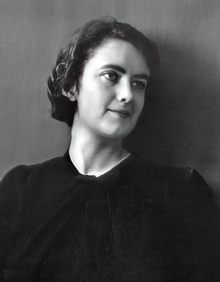
Jean Frances Tatlock (February 21, 1914 – January 4, 1944) was an American psychiatrist. She was a member of the Communist Party USA and was a reporter and writer for the party's publication Western Worker. She is also known for her romantic relationship with J. Robert Oppenheimer, the director of the Manhattan Project's Los Alamos Laboratory during World War II.

Key Information

The daughter of John Strong Perry Tatlock, a prominent Old English philologist and an expert on Geoffrey Chaucer, Tatlock was a graduate of Vassar College and the Stanford Medical School, where she studied to become a psychiatrist. Tatlock began seeing Oppenheimer in 1936, when she was a graduate student at Stanford and Oppenheimer was a professor of physics at the University of California, Berkeley. As a result of their relationship and her membership of the Communist Party, she was placed under surveillance by the FBI and her phone was tapped. Tatlock experienced clinical depression, and died by suicide on January 4, 1944.

Early life

[edit]

Jean Frances Tatlock was born in Ann Arbor, Michigan, on February 21, 1914,[1] the second child of John Strong Perry Tatlock and Marjorie née Fenton. She had an older brother, Hugh, who became a physician.[2] Her father, who had a PhD from Harvard University, was a noted and acclaimed professor of English at the University of Michigan; an Old English philologist; an expert on Geoffrey Chaucer and English plays, poems, and Elizabethan literature; and author of approximately 60 books on those subjects, including The Complete Poetical Works of Geoffrey Chaucer (1912) and The Mind and Art of Chaucer (1950).[2][3]

John Tatlock was a professor of English at Stanford from 1915 to 1925, and Harvard from 1925 to 1929,[1] before returning to the Bay Area as a professor of English at the University of California, Berkeley.[4][5][6] Jean Tatlock attended Cambridge Rindge and Latin School in Cambridge, Massachusetts,[7] and Williams College in Berkeley.[8] In 1930, she entered Vassar College.[9] After graduating in 1935, Tatlock returned to Berkeley and took courses to complete the prerequisites for Stanford Medical School, and was a reporter and writer for the Western Worker, the Communist Party of America's organ on the West Coast of the United States.[10]

She was accepted into Stanford Medical School, then located in San Francisco, where she studied to become a psychiatrist.[11] Tatlock graduated from Stanford with the class of 1941.[12] She completed her internship at St. Elizabeths Hospital in Washington, D.C.,[13] and residency at the Department of Psychiatry at Mount Zion Hospital, now a campus of the University of California, San Francisco Medical Center, in San Francisco.[14]

Romance with Oppenheimer

[edit]

Tatlock struggled with her sexuality,[15] at one point writing to a friend that "there was a period when I thought I was homosexual. I still am, in a way, forced to believe it, but really, logically, I am sure that I can't be because of my un-masculinity."[16] She began seeing Robert Oppenheimer in 1936, when she was a graduate student and Oppenheimer was a professor of physics at Berkeley.[17] They met through his landlady, Mary Ellen Washburn, who was a member of the Communist Party, when Washburn held a fundraiser for communist-backed Spanish Republicans.[18][19]

The couple started dating and reportedly had a passionate relationship. He proposed to her twice, but she refused.[20][19] Tatlock is credited with introducing Oppenheimer to radical politics during the late 1930s,[21] and to people involved with, or sympathetic to, the Communist Party or related groups, such as Rudy Lambert and Thomas Addis.[19] The couple continued seeing each other after Oppenheimer became involved with Kitty Harrison, whom he married on November 1, 1940. Oppenheimer and Tatlock spent the New Year together in 1941, and once met at the Mark Hopkins Hotel in San Francisco.[22]

Oppenheimer's association with Tatlock's friends was used as evidence against him during his 1954 security hearing.[23][24] In a letter to Major General Kenneth D. Nichols, General Manager, United States Atomic Energy Commission, dated March 4, 1954, Oppenheimer described their association as follows:

In the spring of 1936, I had been introduced by friends to Jean Tatlock, the daughter of a noted professor of English at the university; and in the autumn, I began to court her, and we grew close to each other. We were at least twice close enough to marriage to think of ourselves as engaged. Between 1939 and her death in 1944 I saw her very rarely. She told me about her Communist Party memberships; they were on again, off again affairs, and never seemed to provide for her what she was seeking. I do not believe that her interests were really political. She loved this country and its people and its life. She was, as it turned out, a friend of many fellow travelers and Communists, with a number of whom I was later to become acquainted. I should not give the impression that it was wholly because of Jean Tatlock that I made leftwing friends, or felt sympathy for causes which hitherto would have seemed so remote from me, like the Loyalist cause in Spain, and the organization of migratory workers. I have mentioned some of the other contributing causes. I liked the new sense of companionship, and at the time felt that I was coming to be part of the life of my time and country.[25]

While some historians believe that Oppenheimer had an extramarital affair with Tatlock while he was working on the Manhattan Project,[26] others assert that after he was picked to head the Los Alamos Laboratory, he met with Tatlock only once, in mid-June 1943.[27] On June 14, 1943,[28] Oppenheimer was in Berkeley to recruit David Hawkins as an administrative assistant.[29] Oppenheimer and Tatlock went to a Mexican restaurant and spent the night together at her San Francisco apartment. All the while, U.S. Army agents, waiting in the street outside, had them under surveillance.[28] At that meeting she told him that she still loved him and wanted to be with him.[30][31] He never saw her again.[32][33]

Edith Arnstein Jenkins recalled a conversation with Mason Robertson, a good friend of Tatlock's, in which he claimed Tatlock had told him she was a lesbian. It is plausible that Tatlock had a relationship with Mary Ellen Washburn. As a psychiatrist in training, she was required to undergo psychoanalysis, and therefore consulted Siegfried Bernfeld as part of her training. In the 1940s, homosexuality was seen as a pathological condition to be overcome, which may have led to her eventual suicide.[34][35]

Death

[edit]

Events prior

[edit]

Tatlock experienced clinical depression, and was being treated at Mount Zion.[27] At around 1 pm on January 5, 1944, her father arrived at her apartment at 1405 Montgomery Street. When there was no response to his ringing the doorbell, he climbed in through a window.[3][36] He found her dead, lying on a pile of cushions in the bathroom, with her head submerged in the partly filled bathtub.[37][38][39][40] There was an unsigned suicide note, which read:

I am disgusted with everything... To those who loved me and helped me, all love and courage. I wanted to live and to give and I got paralyzed somehow. I tried like hell to understand and couldn't... I think I would have been a liability all my life—at least I could take away the burden of a paralyzed soul from a fighting world.[29]

Her father found her correspondence and sifted through it, burning letters and photographs in the fireplace. At 5:10 pm he called the Halstead Funeral Home, who contacted the police. The police arrived at 5:30 pm, accompanied by the deputy coroner. At the time of her death she was under surveillance by the FBI, and her phone had been tapped, so one of the first people informed about it was FBI director J. Edgar Hoover, via a teletype link.[41] The news of her death was reported in Bay Area newspapers.[42]

Washburn cabled Charlotte Serber at Los Alamos.[42] As the librarian, Serber had access to the Technical Area and informed her husband, physicist Robert Serber, who then went to inform Oppenheimer. When he reached Oppenheimer's office, he found that Oppenheimer already knew.[43] The security chief at Los Alamos, Captain Peer de Silva, had received the news through the wiretap and Army Intelligence and had broken it to Oppenheimer.[44] Tatlock had introduced Oppenheimer to the poetry of John Donne, and it is widely believed he named the first test of a nuclear weapon "Trinity" in reference to one of Donne's poems, as a tribute to her.[45][46] In 1962, Leslie Groves wrote to Oppenheimer about the origin of the name, and elicited this reply:

I did suggest it... Why I chose the name is not clear, but I know what thoughts were in my mind. There is a poem of John Donne, written just before his death, which I know and love. From it a quotation:

As West and East
In all flatt Maps—and I am one—are one,
So death doth touch the Resurrection.

In another, better known devotional poem Donne opens,

Batter my heart, three person'd God.[47]

Inquest

[edit]

A formal inquest in February 1944 returned a verdict of "suicide, motive unknown".[48] In his report, the coroner found that Tatlock had eaten a full meal shortly before her death. She had taken some barbiturates, but not a fatal dose. Traces of chloral hydrate were found, a drug normally associated with a "Mickey Finn" when combined with alcohol, but there was no alcohol in her blood, despite damage to her pancreas that indicated she was a heavy drinker. As a psychiatrist working in a hospital, she had access to sedatives such as chloral hydrate.[49] The coroner found that she had died at around 4:30 pm on January 4. The cause of death was recorded as "acute edema of the lungs with pulmonary congestion"[50] — drowning in the bathtub. It seems likely that she knelt over the bathtub, took chloral hydrate, and plunged her head into the water.[51]

Assassination theory

[edit]

There has been speculation by journalists and historians, as well as Tatlock's brother Hugh, that her death was not a suicide, and the "curious circumstances"[51] surrounding it have subsequently aroused suspicion. The conspiracy theory that she was murdered by intelligence agents working for the Manhattan Project was bolstered by the 1975 Church Committee, which revealed details of assassinations carried out by American intelligence agencies.[51] One doctor quoted in Kai Bird and Martin J. Sherwin's biography of Oppenheimer, American Prometheus, observed that if one "were clever and wanted to kill someone", chloral hydrate would be "the way to do it."[52] However, according to Bird and Sherwin, Tatlock's "unsigned suicide note suggests that she died by her own hand—a 'paralyzed soul'—and this is certainly what Oppenheimer always believed."[53]

The assassination theory has been presented in the drama miniseries Manhattan,[29] and also the 2023 film Oppenheimer. In the latter, Oppenheimer imagines Tatlock's death in multiple ways: she lowers her head gradually into the bathtub, and in another scene a gloved hand can be seen shoving her head beneath the water.[52]

Cremation

[edit]

Tatlock's father had her remains cremated.[54]

Portrayals

[edit]

She was portrayed by Kate Harper in the 1980 TV miniseries Oppenheimer.[55] Natasha Richardson played Tatlock in 1989's Fat Man and Little Boy,[56] while Florence Pugh took on the role for Christopher Nolan's 2023 epic biographical thriller Oppenheimer.[57][58]

Notes

[edit]

References

[edit]
Revisions and contributorsEdit on WikipediaRead on Wikipedia
from Grokipedia
Jean Frances Tatlock (February 21, 1914 – January 4, 1944) was an American psychiatrist and active participant in the Communist Party USA's Bay Area network.[1][2] Born in San Francisco to English literature professor John S. P. Tatlock and Marjorie Tatlock, she earned her medical degree from the University of California, San Francisco, and pursued psychiatric training at Stanford Medical School, later interning at St. Elizabeths Hospital in Washington, D.C.[1][2] Tatlock met physicist J. Robert Oppenheimer in 1936 through mutual academic circles in Berkeley, initiating an intense romantic involvement that persisted intermittently until 1943, even after his 1940 marriage to Kitty Puening; she declined two marriage proposals from him due to ideological differences over his Jewish background and her commitment to communist principles.[3][1][2] Through her affiliations, Tatlock immersed Oppenheimer in radical politics, facilitating his contacts with party members and channeling his donations to pro-Soviet causes, which later drew scrutiny during his 1954 security clearance hearing.[2][1] Afflicted by recurrent depression, she ingested sedatives including chloral hydrate and luminal before drowning in her bathtub on January 4, 1944; the coroner's report cited suicide by drowning following a recent meal and alcohol consumption, though anomalies such as the full stomach and drug levels prompted contemporary suspicions of homicide by Manhattan Project counterintelligence agents amid concerns over Oppenheimer's loyalties.[4]

Early Life and Education

Family Background

Jean Tatlock was born Jean Frances Tatlock on February 21, 1914, in Ann Arbor, Michigan, as the second child of John Strong Perry Tatlock and Marjorie Fenton Tatlock.[5][6] Her father, born February 24, 1876, in Stamford, Connecticut, was a Harvard-educated literary scholar specializing in medieval English literature and Old English philology, particularly the works of Geoffrey Chaucer; he served as a professor of English at the University of California, Berkeley, influencing Tatlock's early interest in literature.[1][6][7] Tatlock's mother, Marjorie Fenton, born in 1882, died in 1937 after the family had relocated to the San Francisco Bay Area, where John Tatlock held his academic position; the family spent much of Tatlock's early childhood in San Francisco before further moves aligned with her father's career.[8][6] She had an older brother, Hugh Tatlock (1912–2005), and the family had previously lost an infant son, Percival, in 1911.[9] The Tatlocks' academic environment fostered an intellectual upbringing, with John Tatlock's scholarly pursuits providing a foundation in literature that Tatlock later drew upon in her personal and professional life.[1][2]

Academic Training

Tatlock attended Vassar College from 1930, graduating with a bachelor's degree in 1935.[5] [10] Following her undergraduate studies, she enrolled at Stanford University School of Medicine, commencing her medical education in 1936 with the aim of specializing in psychiatry.[2] [11] She completed the M.D. program in 1941, marking the culmination of her formal academic training.[1] [12] Her medical coursework at Stanford emphasized clinical preparation, though specific details of her curriculum, such as rotations or theses, remain sparsely documented in available records.[7]

Professional Career

Medical Studies and Psychiatry Practice

Jean Tatlock completed her undergraduate studies at Vassar College in 1935 before undertaking prerequisite coursework at the University of California, Berkeley, to prepare for medical school.[6] She then enrolled at Stanford University School of Medicine, graduating with an M.D. degree in 1941 while specializing in psychiatry.[12] Her choice of psychiatry reflected the era's growing interest in psychoanalytic approaches, though female physicians faced significant barriers in advanced training and practice.[11] Following graduation, Tatlock pursued her internship at St. Elizabeths Hospital in Washington, D.C., a federal institution known for psychiatric care and research.[12] She subsequently completed her psychiatry residency in the Department of Psychiatry at Mount Zion Hospital in San Francisco, where she focused on pediatric cases.[13] By 1943, she had established herself as a practicing psychiatrist at Mount Zion, treating children and contributing to the hospital's clinical efforts amid World War II-era demands on medical staff.[14] Her brief professional tenure highlighted her commitment to child mental health, though limited by gender norms and institutional constraints of the time.[11]

Positions at Hospitals and Clinics

Tatlock completed her medical internship at St. Elizabeths Hospital in Washington, D.C., following her graduation from Stanford University School of Medicine in 1941.[12][5] She then returned to San Francisco to undertake her psychiatry residency at the Department of Psychiatry at Mount Zion Hospital.[15][11] By 1943, Tatlock had advanced to the role of pediatric psychiatrist at Mount Zion Hospital, where she was engaged in clinical practice amid the early stages of what contemporaries described as a promising career in psychiatry.[5][2] Her work there intersected with her personal mental health challenges, as she received treatment for severe clinical depression at the same institution.[15] No records indicate formal positions at additional clinics or hospitals beyond these roles prior to her death in January 1944.[11]

Political Activities

Involvement in Leftist Circles

Jean Tatlock was a dues-paying member of the Communist Party USA (CPUSA) during the 1930s, with her involvement characterized as sporadic and intermittent by J. Robert Oppenheimer himself in his 1954 security clearance testimony, where he described her memberships as "on again, off again affairs" that did not fully satisfy her ideological pursuits.[4] [16] Her participation aligned with the broader leftist intellectual milieu of the era, particularly in the San Francisco Bay Area, where she engaged with party-affiliated networks amid the Great Depression's social upheavals and the CPUSA's "United Front" strategy of allying with non-communist progressives on humanitarian issues such as anti-fascism and labor rights.[3] As a medical student at Stanford University in the mid-1930s, Tatlock contributed to the CPUSA's West Coast organ, the Western Worker, serving as a reporter and writer to promote party positions on economic inequality and opposition to fascism.[17] This activity embedded her within radical student and professional circles at institutions like the University of California, Berkeley, where she connected with fellow communists and sympathizers, including mathematicians and activists who later intersected with Oppenheimer's orbit.[18] Her affiliations drew federal scrutiny, resulting in FBI surveillance of her communications and activities by the early 1940s, as documented in declassified records tied to Oppenheimer's associations.[19] Tatlock's leftist engagements reflected a pattern common among Depression-era intellectuals disillusioned with capitalism, though her commitment appeared more ideological than operational; Oppenheimer noted in testimony that she hosted discussions and social gatherings involving party members but did not hold formal leadership roles.[20] These circles emphasized anti-Nazi activism and support for the Spanish Republicans during the Civil War (1936–1939), aligning with CPUSA directives, yet her personal skepticism toward rigid dogma—evident in her rejection of organized religion as "claptrap"—tempered full immersion.[21] By the early 1940s, as U.S. entry into World War II shifted party priorities toward wartime alliance with the Soviet Union, her active participation waned, though residual ties persisted amid Oppenheimer's Manhattan Project involvement.[22]

Communist Party Connections and Influence

Jean Tatlock joined the Communist Party USA (CPUSA) in the 1930s, becoming a dues-paying member whose affiliation fluctuated over time, as later described by J. Robert Oppenheimer in his testimony.[4] [5] Her involvement intensified following exposure to radical causes, such as the Scottsboro Boys case, prompting her to attend political rallies and contribute as a reporter for the Western Worker, the CPUSA's West Coast publication.[17] In the Bay Area's leftist scene, Tatlock actively participated in CPUSA-affiliated events, including fundraising for humanitarian efforts aligned with the party's "United Front" strategy, which sought alliances with non-Communist progressives against fascism and economic injustice.[2] [3] Tatlock's connections within the CPUSA extended to prominent figures in academic and intellectual circles, facilitating networks that bridged radical politics with professional communities. Through her Berkeley affiliations, she introduced Oppenheimer to CPUSA members such as mathematician Kenneth May and writers John and Haakon Chevalier, embedding him in discussions of Marxist ideology and anti-fascist activism.[18] These ties were documented in Oppenheimer's 1954 security clearance hearing, where board findings noted that Tatlock's associations led him to encounter Communist functionaries and sympathizers, some later suspected of espionage-related activities.[22] Her role in these circles was not merely social; as a vocal advocate, Tatlock hosted gatherings and promoted party literature, amplifying CPUSA outreach among intellectuals skeptical of capitalism during the Great Depression.[23] The influence of Tatlock's CPUSA involvement rippled through her personal relationships, particularly shaping Oppenheimer's early political engagements without his formal membership. Oppenheimer credited her with drawing him into support for CPUSA-aligned causes, including donations to front organizations like the California Labor School and aid for Spanish Civil War Republicans, though he maintained these were humanitarian rather than ideological commitments.[19] Her persistent advocacy—despite her own intermittent lapses in party activity—fostered Oppenheimer's associations with individuals under FBI scrutiny, contributing to his later classification as a security risk amid Cold War concerns over Communist infiltration in scientific projects.[3] Tatlock's connections also drew federal surveillance; the FBI monitored her from at least 1941 due to her party ties and Oppenheimer link, tapping her phone and compiling dossiers on her radical past.[4] This influence underscored the CPUSA's strategy of leveraging cultural elites to normalize its agenda, though Tatlock's skepticism toward rigid dogma occasionally strained her adherence.[17]

Relationship with J. Robert Oppenheimer

Initial Meeting and Romance

In the spring of 1936, J. Robert Oppenheimer was introduced to Jean Tatlock by mutual friends in the San Francisco Bay Area, shortly after she had relocated to California as a 22-year-old graduate student in medicine at Stanford University; Oppenheimer, then 32, was a professor of physics at the University of California, Berkeley.[4] [5] The two had briefly known each other previously, but this encounter marked the beginning of a personal connection that quickly deepened into romance. Oppenheimer later recounted in his 1954 security clearance hearing that he "soon fell in love with her," frequently visiting her in San Francisco by motorcycle.[4] Their relationship was intense and passionate from the outset, characterized by intellectual compatibility and shared interests in literature and radical politics; Tatlock, an active member of the Communist Party, introduced Oppenheimer to leftist circles and the poetry of John Donne, influencing his emerging political views.[24] [1] The couple came close to marriage on at least two occasions, though Tatlock's insistence on Oppenheimer's alignment with her communist beliefs created tensions early on, as he declined to join the party despite his sympathies.[4] [15] Despite these strains, the affair persisted intermittently through the late 1930s, blending deep affection with ideological friction.[25]

Breakup and Continued Contact

Tatlock ended her romantic relationship with Oppenheimer in early 1939, reportedly due to her desire for greater independence and her deepening involvement in leftist political activities, which created tensions with Oppenheimer's more pragmatic approach to such commitments.[26][11] Despite the split, the two maintained intermittent contact, with Oppenheimer later describing their bond as one where "we had been very much in love and had very little to keep us apart."[21] Following the breakup, Oppenheimer began a relationship with Katherine "Kitty" Puening in late 1939 and married her on November 1, 1940.[26] Nevertheless, Oppenheimer and Tatlock continued to see each other periodically, approximately twice a year between 1939 and 1943, including social outings at parties in Berkeley and private visits.[11][21] Their interactions persisted even as Oppenheimer assumed leadership roles in the Manhattan Project, with documented evidence of him visiting Tatlock's San Francisco apartment as late as June 1943, during which they engaged in intimate relations.[1] This ongoing association, amid Tatlock's known affiliations with communist organizations, later drew scrutiny from federal authorities reviewing Oppenheimer's loyalty.[1][11]

Impact on Oppenheimer's Views and Security Clearance

Jean Tatlock's relationship with J. Robert Oppenheimer, beginning in 1936, significantly shaped his political outlook by immersing him in Communist Party USA circles in the San Francisco Bay Area. As an active member of the party and contributor to its publication Western Worker, Tatlock introduced Oppenheimer to fellow communists, including mathematician Kenneth May and physician David Bohm, fostering his engagement with radical left-wing ideas on social justice and anti-fascism.[1][18] This exposure prompted Oppenheimer to redirect his charitable donations from neutral relief organizations to Communist Party channels, reflecting a shift toward explicit support for party-affiliated causes amid the Great Depression and rising global tensions.[17] The couple's intermittent contact persisted after their 1939 breakup, including Oppenheimer's overnight visit to Tatlock's San Francisco apartment on June 14, 1943, en route to assuming leadership of the Manhattan Project, despite his awareness of her ongoing Communist affiliations and his own interim security clearance.[5] This episode underscored perceived lapses in judgment, as Oppenheimer later acknowledged in testimony that he had not fully disclosed the depth of these ties to military authorities, prioritizing personal loyalty over security protocols during wartime.[20] These associations became central to Oppenheimer's 1954 Atomic Energy Commission security clearance hearing, convened amid Cold War espionage fears following Soviet acquisition of atomic secrets. Prosecutors, led by AEC counsel Roger Robb, highlighted Tatlock's Communist Party membership and Oppenheimer's sustained relationship with her—even while married—as evidence of vulnerability to influence and inadequate candor, arguing it compounded broader patterns of leftist sympathies that risked national security.[5][20] On June 1, 1954, a 4-1 AEC vote revoked Oppenheimer's Q clearance, citing his associations, including with Tatlock, as demonstrating "fundamental defects of character" and poor compartmentalization of sensitive information, a decision upheld despite protests from figures like Enrico Fermi.[5][20]

Final Years and Mental Health

Post-Breakup Life

Following her graduation from Stanford University School of Medicine in 1941, Jean Tatlock completed a medical internship at St. Elizabeths Hospital in Washington, D.C.[12] She subsequently undertook her psychiatry residency at Mount Zion Hospital in San Francisco, now part of the University of California, San Francisco Medical Center.[12][27] By 1943, Tatlock was employed as a pediatric psychiatrist at Mount Zion Hospital, specializing in the treatment of children and appearing poised for professional advancement in the field.[5][14] Concurrently, she battled severe clinical depression, receiving active psychiatric treatment at the same hospital where she worked.[15][11]

Surveillance and Personal Struggles

Tatlock's association with Oppenheimer, combined with her prior involvement in Communist organizations, prompted the FBI to initiate surveillance on her in 1943, shortly after Oppenheimer's visit to her San Francisco apartment on June 14, 1943.[28] Federal agents suspected she could influence Oppenheimer toward radical views or serve as a conduit for Soviet intelligence, given her connections to leftist circles and her father's prominence as a scholar.[28] The FBI tapped her telephone lines and monitored her activities, yet Director J. Edgar Hoover's September 1, 1943, memo and subsequent reports yielded no evidence of espionage or threats to national security.[21] This oversight persisted until her death, reflecting broader scrutiny of individuals linked to Manhattan Project personnel amid Cold War-era security concerns.[15] Amid these external pressures, Tatlock contended with profound personal difficulties, including chronic clinical depression that plagued her from early adulthood and intensified following her breakup with Oppenheimer.[11] Colleagues and acquaintances noted her episodes of melancholy and emotional volatility, which strained relationships and hindered her psychiatric residency at Mount Zion Hospital, where she worked intermittently in 1943.[21] She also wrestled with uncertainties about her sexual orientation, experiencing attractions to women that contributed to inner turmoil, as evidenced by personal correspondence expressing confusion and distress over these feelings.[25] Despite her training in psychoanalysis, Tatlock's untreated condition—described by contemporaries as akin to manic depression—exacerbated her isolation, particularly after Oppenheimer's departure for Los Alamos, leaving her without the emotional anchor their intermittent affair provided.[29] These struggles culminated in deteriorating mental health by late 1943, underscoring the limits of her professional expertise in addressing her own vulnerabilities.[30]

Death

Events Immediately Prior

In the months leading up to January 1944, Jean Tatlock continued to battle severe clinical depression, a condition she had struggled with throughout her adult life, and was actively receiving psychiatric treatment at Mount Zion Hospital in San Francisco, where she also worked as a child psychiatrist.[15] [31] Her professional access to sedatives, including barbiturates and chloral hydrate, aligned with her ongoing mental health challenges, though no specific incidents of misuse were documented prior to her death.[4] Tatlock's last documented personal contact with J. Robert Oppenheimer occurred during his unapproved visit to her San Francisco apartment on June 14, 1943, after which their interactions ceased amid his Manhattan Project responsibilities and her deteriorating emotional state.[4] Following this, she maintained a low-profile existence, with her father, John S. P. Tatlock, noting increasing isolation; by late December 1943, she had stopped responding to phone calls, raising family alarm.[11] Concurrently, U.S. Army counterintelligence, led by Boris Pash, had initiated FBI-monitored phone surveillance on her residence due to her prior Communist Party affiliations and perceived security risks tied to Oppenheimer, though no evidence of active interference in her daily life emerged from these efforts before her death.[4] Autopsy evidence later revealed that Tatlock had eaten a substantial meal shortly before her demise, suggesting the events unfolded impulsively rather than as a premeditated plan spanning days.[32] This detail, drawn from the coroner's examination, underscores the acute nature of her final episode amid chronic depressive symptoms.[21]

Discovery of the Body and Scene Details

Jean Tatlock's body was discovered on January 5, 1944, by her father, John S. P. Tatlock, a professor of English at the University of California, Berkeley, who had become concerned after failing to reach her by telephone the previous day.[4][21] He entered her apartment at 617 Taylor Street in San Francisco, where he found her deceased in the bathroom.[11][4] The body was positioned lying on a pile of pillows alongside the end of the bathtub, with Tatlock's head submerged in the partially filled tub containing several inches of water.[4][21][33] There were no immediate indications of forced entry or struggle reported at the scene, though the apartment showed signs of recent occupancy, including remnants of a meal consumed shortly before death.[4] Following the discovery, John Tatlock moved the body to a sofa in the living room, gathered and burned personal correspondence—including letters potentially from J. Robert Oppenheimer—in the fireplace, and tidied the apartment before notifying authorities.[4][11] Police were summoned later that day, initiating the official investigation.[4]

Suicide Note and Toxicology

Upon discovering Tatlock's body on January 5, 1944, her father, Clifford A. Tatlock, found an unsigned note on a desk in her San Francisco apartment, indicating her intent to end her life.[4] The note expressed profound disillusionment, stating in part: "I am disgusted with everything... To those who loved me and helped me, all love and courage. I am going away forever."[6] [15] It made no reference to J. Robert Oppenheimer or their past relationship, instead reflecting general despair over personal and possibly ideological failures, consistent with her documented struggles with depression.[21] The San Francisco coroner's autopsy, conducted shortly after the body's discovery, revealed toxicology findings that included traces of barbiturates in Tatlock's system, though not in quantities deemed immediately lethal or sufficient to cause unconsciousness on their own.[34] No alcohol was detected in her blood, despite evidence of chronic pancreatic damage suggestive of prior heavy drinking.[4] Additional analysis identified chloral hydrate, a sedative, but again at levels unlikely to incapacitate without contributing factors.[35] These substances, combined with the drowning mechanism, supported the official suicide determination, as barbiturates could have induced drowsiness facilitating accidental or intentional submersion in the bathtub.[28] The stomach contents indicated she had eaten a full meal approximately two hours prior to death, ruling out prolonged fasting or starvation as factors.[36]

Inquest and Official Ruling

Autopsy Findings

The autopsy of Jean Tatlock, conducted following her discovery on January 5, 1944, determined the cause of death as asphyxiation by drowning, with her body found submerged in a bathtub but not fully immersed, her head positioned below the water line.[28] Incisions on her wrists were noted, consistent with self-inflicted cuts using a sharp instrument found nearby, though these were not deemed the primary cause of death.[4] Toxicology analysis revealed barbiturates in her stomach contents, along with a derivative of salicylic acid and a faint trace of chloral hydrate, but no such substances were detected in her liver or other vital organs, indicating limited absorption prior to death.[4] [6] No alcohol was present in her blood, though pancreatic damage suggested prior moderate alcohol consumption.[4] Stomach contents confirmed she had consumed a full meal shortly before death, inconsistent with typical premeditated suicide preparations but not precluding the act.[6] The levels of barbiturates were not fatal on their own, supporting the coroner's assessment that drowning, facilitated by sedation and wrist lacerations, was the terminal event.[4] No external signs of struggle or third-party involvement were reported in the physical examination.[6]

Coroner's Conclusion and Motive Assessment

The formal inquest convened in February 1944 determined that Jean Tatlock's death on January 4, 1944, resulted from suicide by drowning, with the motive officially deemed unknown.[21] The coroner's report specified that Tatlock had ingested chloral hydrate and barbiturates, alongside slashing her wrists, but emphasized that the drug levels were not sufficient to render her unconscious before entering the bathtub, where she subsequently drowned.[37] Autopsy evidence included partially healed wrist lacerations consistent with self-infliction, a suicide note expressing despair ("I think I would have no desire to go on"), and no signs of external trauma or struggle, supporting the intentional nature of the act.[21][6] Regarding motive, the coroner provided no definitive assessment, citing insufficient direct evidence to pinpoint a singular cause despite Tatlock's documented history of clinical depression and recent personal turmoil.[21] Contemporaneous accounts from associates, including her father Clifford Tatlock who discovered the body, noted her ongoing struggles with depressive episodes, exacerbated by the end of her relationship with J. Robert Oppenheimer in 1939 and professional dissatisfaction at the University of California San Francisco Medical Center, where she worked as a research assistant.[15] Toxicology confirmed recent consumption of a full meal prior to death, which medical experts later interpreted as inconsistent with premeditated overdose but compatible with impulsive self-harm amid emotional distress.[6] Historians, drawing on FBI surveillance files and personal correspondence, have attributed potential contributing factors to her leftist political engagements and isolation during World War II, though these remain inferential rather than causal per the inquest's empirical focus.[4] The absence of a specified motive underscores the limitations of forensic psychology at the time, prioritizing observable physical evidence over speculative psychological profiling.

Controversies Surrounding Death

Assassination Theories

Assassination theories regarding Jean Tatlock's death emerged primarily due to her romantic involvement with J. Robert Oppenheimer, the director of the Manhattan Project, and her documented communist sympathies, which drew FBI surveillance starting in 1942.[28] Proponents argue that U.S. military intelligence, concerned about potential security risks to the atomic bomb program, may have orchestrated her drowning on January 4, 1944, to eliminate her influence over Oppenheimer and mitigate risks of information leakage.[38] These claims gained traction amid broader suspicions of Soviet espionage within scientific circles during World War II, with Tatlock's associations viewed as a vulnerability despite no direct evidence of her spying.[17] A central figure in these theories is Colonel Boris T. Pash, head of counterintelligence for the Manhattan Project's Alsos Mission, who was authorized for covert operations including assassination attempts on perceived threats like Werner Heisenberg.[17] Speculation holds that Pash or agents under his command forcibly drowned Tatlock in her bathtub at her San Francisco apartment, citing anomalies such as the tub's water level overflowing onto the floor, unexplained bruises, and the improbability of self-submersion given her height and the fixture's dimensions.[4] Her brother, Hugh Tatlock, publicly maintained that her death was an assassination, rejecting the suicide narrative and pointing to her recent professional stability at the University of California Medical School.[28] These theories were amplified in biographical accounts and declassified FBI files revealing wiretaps on Tatlock's phone and apartment, ordered due to fears she could radicalize Oppenheimer or serve as a conduit for classified information.[38] However, such claims remain speculative, with no forensic or documentary proof linking intelligence operatives to the scene, and historians like Kai Bird and Martin Sherwin attribute the persistence of murder hypotheses to postwar anti-communist paranoia rather than substantive evidence.[4] The theories underscore tensions between national security imperatives and civil liberties during the Manhattan Project era but have been largely dismissed by mainstream scholarship in favor of the coroner's 1944 suicide determination.[1]

Evidence Supporting Murder Claims

Proponents of murder theories cite the toxicology report from the January 5, 1944, autopsy, which revealed a faint trace of chloral hydrate—a sedative often used in "Mickey Finn" knockout mixtures—in Tatlock's stomach, alongside evidence of a recent full meal, but no corresponding absorption into her bloodstream, liver, or other vital organs.[4] [6] This discrepancy implies the substance was ingested mere minutes before death, as digestion of the meal would otherwise have slowed metabolism if taken earlier for suicidal intent, potentially indicating forced administration rather than voluntary overdose.[6] The low sedative levels are argued to undermine a self-inflicted drowning, as they would not have rendered Tatlock unconscious enough to submerge her head without external assistance, especially given the partially filled bathtub and her kneeling position on pillows at its edge— an awkward posture for unassisted suicide.[4] Historians Kai Bird and Martin Sherwin, in American Prometheus, highlight these pharmacological inconsistencies as fueling doubts about the official suicide ruling, noting that chloral hydrate's presence could align with a deliberate incapacitation method.[37] Tatlock's status as a perceived security threat provides a posited motive: she maintained Communist Party USA membership until 1942 and had resumed contact with Oppenheimer, the Manhattan Project director, dining with him on December 20, 1943, shortly before her death on January 4, 1944.[4] Army G-2 counterintelligence, under Lt. Col. Boris Pash, had placed her under surveillance, including phone wiretaps and physical tailing authorized in 1943, due to fears she could compromise project secrecy through her influence on Oppenheimer.[4] [37] Pash's later role in assassination operations against suspected spies adds circumstantial weight to claims of agency involvement, though no direct evidence links G-2 personnel to the scene.[4] The unsigned suicide note, discovered by her father J.S.P. Tatlock—"I am disgusted with everything... To those who loved me and helped me, all love and courage. I wanted to live and to bring something to life"—is viewed by some as potentially staged, lacking personalization or explicit intent that might authenticate self-authorship under distress.[4] [37] Delays in notifying authorities, as her father moved the body and burned papers before police arrival, further obscure forensic integrity, per accounts in Bird and Sherwin's analysis.[4] These elements, while not conclusive, are marshaled by theorists to argue for intervention by intelligence operatives eliminating a liability amid wartime secrecy imperatives.[37]

Counterarguments and Suicide Corroboration

Despite persistent assassination theories linking Tatlock's death to her Communist Party affiliations and Oppenheimer's Manhattan Project role, no direct evidence implicates government agents or external foul play, with forensic details aligning more closely with self-inflicted harm amid her documented mental health struggles.[11] The San Francisco coroner's inquest on January 5, 1944, explicitly ruled the death a suicide by drowning, supported by deep incisions on both wrists consistent with deliberate cuts using a sharp instrument found nearby, rather than defensive wounds or struggle marks indicative of assault.[39] Toxicology revealed barbiturates in her system at sub-lethal levels—insufficient alone to cause death but potentially contributory to disorientation during the act—countering claims of drugging as a murder method, as the combination with wrist lacerations and submersion points to intentional overdose facilitation rather than incapacitation by force.[4] Tatlock's handwritten suicide note, discovered in her apartment, expressed despair and finality, stating in part, "I think I would rather be where I am," which acquaintances interpreted as reflective of her deteriorating emotional state rather than coerced scripting.[21] Her lifelong battle with clinical depression, for which she sought treatment as a psychiatry resident at the University of California San Francisco, provided a plausible motive absent in murder narratives; episodes intensified post-1942 after her intermittent breakup with Oppenheimer, exacerbated by professional setbacks and isolation.[1] Contemporaries, including family members like her brother John who discovered the body on January 4, 1944, after growing concerned over her unresponsiveness, largely accepted the suicide verdict based on her history of suicidal ideation and rejection of further interventions.[11] Critics of murder hypotheses, such as historian Alex Wellerstein, note that while FBI surveillance of Tatlock due to her leftist ties raised suspicions, declassified files show no operational orders for elimination, and logistical improbabilities—like the absence of forced entry or disturbed furnishings—undermine staged-scene arguments.[4] The presence of undigested food from a recent meal, often cited as evidence against self-drowning, is explained by coroner findings of typical gastric retention in drowning cases, not requiring prolonged consciousness incompatible with depressive resolve.[39] These elements, corroborated by autopsy protocols of the era, prioritize Occam's razor: a distressed individual with access to means executing a bathtub suicide over a covert operation leaving minimal traces.[21]

Role of FBI Surveillance and Manhattan Project Security

Jean Tatlock's association with J. Robert Oppenheimer, director of the Manhattan Project's Los Alamos Laboratory, prompted intensified FBI scrutiny amid concerns over communist infiltration into atomic research. As a confirmed member of the Communist Party of the United States during the early 1940s, Tatlock's romantic involvement with Oppenheimer— who held top-secret clearance for the project's development of nuclear weapons—raised alarms about potential security breaches. FBI Director J. Edgar Hoover authorized surveillance of Tatlock, including wiretaps on her phone, explicitly citing her as the "paramour of an individual possessed of important information," referring to Oppenheimer's role in the bomb program.[21][40] In June 1943, military intelligence agents tailed Oppenheimer during a visit to Tatlock's San Francisco apartment, documenting their intimate encounter shortly after his marriage and amid his oversight of the Manhattan Project. A subsequent FBI wiretap in September 1943 captured discussions suggesting Oppenheimer had disclosed classified details about the project's nature to Tatlock, fueling fears that she could relay sensitive information to Soviet contacts through her party affiliations. These incidents exemplified broader Manhattan Project security protocols, which mandated rigorous vetting of personnel and associates to prevent espionage, as evidenced by the Army's counterintelligence operations under General Leslie Groves, who personally approved Oppenheimer's clearance despite known leftist ties.[41][40][7] Tatlock remained under active FBI monitoring at the time of her death on January 4, 1944, with Hoover among the first notified, highlighting the priority placed on her activities due to ongoing security risks posed by her proximity to Oppenheimer. While no empirical evidence links the surveillance directly to foul play, proponents of assassination theories argue that Manhattan Project countermeasures—aimed at neutralizing perceived threats to atomic secrets—could have motivated intervention, given Tatlock's potential knowledge of project details from Oppenheimer's disclosures. Such claims remain speculative, lacking corroborative documentation from declassified files, and contrast with the coroner's suicide determination; however, the wiretap evidence of classified discussions underscored legitimate vulnerabilities in project security that her death arguably mitigated without further leaks.[4][42] Oppenheimer's continued association with Tatlock contributed to his 1954 Atomic Energy Commission security hearing, where testimony emphasized her communist status and the 1943 visit as lapses in judgment that eroded trust in his discretion, ultimately leading to the revocation of his clearance on April 12, 1954. This episode illustrates how interpersonal ties intersected with national security imperatives during the project's wartime urgency and postwar Red Scare, prioritizing empirical risk assessment over personal relationships.[5][20]

Aftermath

Destruction of Personal Records

Upon discovering his daughter's body in her San Francisco apartment on January 4, 1944, John S. P. Tatlock, Jean Tatlock's father and a University of California English professor, immediately lit a fire in the fireplace and burned her personal letters and photographs.[11][33] This destruction occurred before he notified authorities several hours later, eliminating documents that might have revealed details about her correspondences, romantic involvements—including with J. Robert Oppenheimer—and political affiliations.[21] The act has been described as unusual, occurring in the immediate aftermath of the apparent suicide scene, where Tatlock was found partially submerged in a bathtub with evidence of barbiturate ingestion.[11] No official explanation for the burning was provided by Tatlock senior, and the materials' loss precluded forensic or historical analysis of her private writings, which could have corroborated or challenged accounts of her depression, communist sympathies, or Manhattan Project connections.[33] Subsequent inquiries, including those tied to Oppenheimer's 1954 security clearance hearing, lacked access to these records, amplifying speculation about potential cover-ups despite the coroner's suicide ruling.[21]

Family Response and Public Statements

Jean Tatlock's father, John Strong Perry Tatlock, discovered her body on January 5, 1944, after she failed to answer the telephone for several days; he entered her San Francisco apartment through a window and found her in the bathtub with her head submerged. Immediately upon discovery, he burned her personal letters and photographs in the fireplace before notifying authorities, an action that destroyed potential evidence related to her relationships and mental state.[11][43] This destruction has been cited by historians as suspicious but unexplained, with no public statement from the father elaborating on his motives or affirming the emerging suicide ruling. Tatlock's brother, Dr. Hugh Tatlock, a physician, rejected the official coroner's determination of suicide by drowning combined with drug ingestion, instead endorsing assassination theories linked to her associations with J. Robert Oppenheimer and communist circles.[28][44] Hugh Tatlock raised these doubts publicly, particularly during the 1975 U.S. Senate Church Committee investigation into intelligence agency abuses, where he highlighted inconsistencies such as the presence of chloral hydrate (a sedative not typically used for suicide) in her system and the improbability of her submerging her head post-drowning.[44] No other family members issued formal statements, and the family's overall response remained private, contrasting with ongoing speculation in historical accounts.

Legacy and Depictions

Influence on Oppenheimer's Biography

Jean Tatlock met J. Robert Oppenheimer in spring 1936 at a house party in Berkeley, California, initiating a romantic relationship that lasted intermittently until her death.[26] As a graduate student in medicine and later a psychiatrist, Tatlock shared Oppenheimer's interests in literature and philosophy, fostering intellectual compatibility that deepened their bond.[45] Tatlock's affiliations with leftist circles and the Communist Party significantly shaped Oppenheimer's political worldview, drawing him into radical politics and social activism during the late 1930s.[5] [26] She introduced him to communist sympathizers and events, influencing his support for causes such as the Loyalist side in the Spanish Civil War and labor rights, which later complicated his security clearances amid Cold War scrutiny.[18] This exposure marked a shift from Oppenheimer's earlier apolitical stance, embedding left-wing ideals into his biography that persisted despite the relationship's end in 1939.[28] The emotional toll of their turbulent affair, including Tatlock's depressions and her 1944 suicide by drowning in San Francisco, profoundly affected Oppenheimer during the Manhattan Project's height.[1] He learned of her death while at Los Alamos, exacerbating his personal vulnerabilities at a critical juncture in atomic bomb development.[15] Oppenheimer's continued visits to Tatlock as late as 1943, despite his marriage, underscored her enduring hold on him, contributing to narratives of his complex personal life in biographical accounts.[1] Tatlock's communist ties resurfaced in Oppenheimer's 1954 security hearing, where their relationship was cited as evidence of potential disloyalty, amplifying the biographical theme of ideological entanglements hindering his post-war career.[5] Historians attribute to her an initiation of Oppenheimer's empathy for social injustices, influencing his later opposition to nuclear proliferation, though this came at the cost of professional repercussions.[15] Her role thus forms a pivotal chapter in Oppenheimer's life story, intertwining personal passion with political peril.[25]

Portrayals in Media and Scholarship

In Christopher Nolan's 2023 film Oppenheimer, Jean Tatlock is portrayed by Florence Pugh as J. Robert Oppenheimer's intellectually stimulating but volatile lover, a Stanford-trained psychiatrist and Communist Party affiliate whose relationship with him exposes his vulnerabilities to FBI scrutiny during the Manhattan Project era.[21] [17] The depiction emphasizes her introduction of Oppenheimer to John Donne's poetry and leftist politics in the late 1930s, alongside her struggles with depression, culminating in a bathroom suicide scene on January 4, 1944, that subtly questions official suicide rulings through visual cues like unexplained bruises and a secured bathroom window.[46] [30] Critiques of the film highlight Tatlock's reduction to a one-dimensional trope of emotional instability and sexual provocation—such as discarding Oppenheimer's flowers and engaging in ideologically charged intimacy—oversimplifying her as a narrative device for Oppenheimer's moral conflicts rather than a multifaceted professional with independent achievements in psychiatry and journalism for the Communist Western Worker.[18] [47] This portrayal has sparked calls for dedicated media explorations of Tatlock's life, underscoring her underrepresentation despite her profound influence on Oppenheimer's worldview.[47] Biographical scholarship, notably Kai Bird and Martin J. Sherwin's American Prometheus (2005)—the primary source for Nolan's film—depicts Tatlock as Oppenheimer's "truest love" and a catalyst for his engagement with radical politics, portraying her 1936-1941 intermittent affair as marked by her overt Communist commitments and his discreet visits amid her clinical training at Mount Zion Hospital.[5] [21] These accounts frame her as a brilliant, independent figure whose 1944 death, ruled suicide by drowning after barbiturate ingestion, intersected with Oppenheimer's security risks, though they rely on FBI files and correspondence that emphasize her Party ties without conclusively resolving causation in her mental health decline.[17] Later analyses, such as those in Oppenheimer-focused studies, note her role in his leftward shift but critique overreliance on security dossiers that may amplify her political radicalism at the expense of her psychiatric expertise.[48]

References

User Avatar
No comments yet.