Hubbry Logo
Jonathan CarrollJonathan CarrollMain
Open search
Jonathan Carroll
Community hub
Jonathan Carroll
logo
8 pages, 0 posts
0 subscribers
Be the first to start a discussion here.
Jonathan Carroll
Jonathan Carroll
from Wikipedia

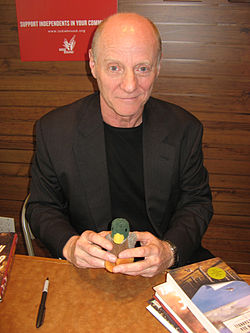
JCarroll in Poland (2012)

Key Information

Jonathan Samuel Carroll (born January 26, 1949) is an American fiction writer primarily known for novels that may be labelled magic realism, slipstream or contemporary fantasy. He has lived in Austria since 1974.[1]

Life and work

[edit]

Carroll was born in New York City to Sidney Carroll, a film writer whose credits included The Hustler, and June Carroll (née Sillman),[1] an actress and lyricist who appeared in numerous Broadway shows and two films. He is the half brother of composer Steve Reich and nephew of Broadway producer Leonard Sillman. His parents were Jewish, but Carroll was raised in the Christian Science religion.[2] A self-described "troubled teenager", he finished primary education at the Loomis School in Connecticut and graduated with honors from Rutgers University in 1971, marrying artist Beverly Schreiner in the same year.[1] He relocated to Vienna, Austria a few years later and began teaching literature at the American International School, and has made his home in Austria ever since.

His first novel, The Land of Laughs (1980), is indicative of his general style and subject matter. Told through realistic first person narration, the novel concerns a young schoolteacher, Thomas Abbey, researching the life of a favorite children's book author of his youth, which involves meeting the author's daughter in her and her late father's seemingly idyllic (fictitious) home town of Galen, Missouri. Everything seems fine until a dog in Galen begins talking to Abbey. The line gradually blurs between the fantasy world created by Abbey's research subject and the life of the people in Galen, while the reader begins to wonder just how much trust can be placed in this narrator. Subsequent novels would expand on these themes, but often contain unreliable narrators in a world where magic is viewed as natural. (One commentator claimed in The Times that "if he were a Latin American writer with a three-part name, his books would be described as magical-realist".)[3]

His son, Ryder Carroll, is the inventor of the Bullet Journal.[1]

Awards

[edit]

Carroll's short story "Friend's Best Man" won the World Fantasy Award.[4] His novel Outside the Dog Museum won the British Fantasy Award[5] and his collection of short stories won the Bram Stoker Award. The short story "Uh-Oh City" won the French Grand Prix de l'Imaginaire.[6] His short story "Home on the Rain" was chosen as one of the best stories of the year by the Pushcart Prize committee.[7][8] Carroll has been a runner-up for other World Fantasy Awards, the Hugo, and British Fantasy Awards.

Bibliography

[edit]

Further reading

[edit]

References

[edit]
[edit]
Revisions and contributorsEdit on WikipediaRead on Wikipedia
from Grokipedia
Jonathan Carroll (born January 26, 1949) is an American novelist renowned for his works of magic realism and , often blending elements of the surreal with everyday life to explore themes of love, loss, and the human condition. Born in to screenwriter Sidney Carroll, whose credits include the film , and actress and lyricist June Carroll (née Sillman), he grew up in an artistic family environment that influenced his creative pursuits. After graduating cum laude from in 1971 with a degree in English, Carroll earned a master's degree in from the while working as an . He later taught at the American International School in , , where he has resided as an since the mid-1970s. Carroll's debut novel, The Land of Laughs (1980), established his reputation for innovative storytelling, drawing on influences from authors like and to create narratives that blur the boundaries between reality and imagination. Over the course of his career, he has authored more than twenty novels and short story collections, including standout works such as Bones of the Moon (1987), Outside the Dog Museum (1991), The Wooden Sea (2001), and Mr. Breakfast (2022). His books have been translated into over thirty languages and enjoy particular popularity in , especially and , where they have garnered a dedicated . Among his numerous accolades, Carroll has received the , for Outside the Dog Museum, two French Fantasy Awards, the for his short story collection The Panic Hand (1995), and a for his contributions to . In recent years, his backlist has seen renewed attention through re-releases by publishers like Literary Agency, affirming his enduring influence in the realms of and fabulist fiction.

Early life

Family background

Jonathan Carroll was born on January 26, 1949, in . His father, Sidney Carroll, was a prominent known for co-writing the for the film The Hustler (1961). His mother, June Carroll (née Sillman), was an actress and lyricist who appeared on Broadway and contributed to musical theater. Carroll was raised in Dobbs Ferry, New York, a suburb in the approximately 25 miles north of . Growing up in this environment, he was immersed in the worlds of and theater due to his parents' professions, which provided early exposure to creative and performance arts. This familial atmosphere fostered his nascent interest in narrative forms, as the household often revolved around discussions of scripts, rehearsals, and artistic endeavors. Carroll's upbringing included a religious foundation in , although his parents were Jewish. This blend of influences, combined with the creative legacy of his parents, contributed to his early fascination with storytelling, where he drew inspiration from the imaginative and dramatic elements present in his family's daily life.

Education

Carroll completed his secondary education at the in , graduating in 1967. Motivated by his family's artistic heritage, he enrolled at , where he majored in English literature and graduated cum laude in 1971. In 1972, Carroll was awarded the Emily Clark Balch Fellowship in at the , through which he pursued and completed a degree in 1973.

Career

Teaching and relocation to Austria

Three years after earning his , in 1974, Carroll relocated to , , following his wife's suggestion to teach abroad for a year—an opportunity that became permanent. He secured a position as an English teacher at the American International School in , where he instructed high school students in English and starting that same year. This teaching role offered Carroll professional stability in a new cultural environment, immersing him in discussions of narrative techniques and literary analysis that informed his evolving approach to . He remained at the school until the mid-1990s. Throughout the late 1970s, Carroll balanced his classroom responsibilities with initial writing efforts, often composing in private. This period of dual commitments led to the 1980 publication of his , The Land of Laughs, which established him as an emerging voice in .

Writing debut and development

Jonathan Carroll's writing career began with the publication of his debut novel, The Land of Laughs, in 1980 by Viking Press. The book, a fantasy exploring the blurred lines between reality and fiction through the lens of a reclusive author's works, marked Carroll's entry into literary fiction with supernatural elements and received critical attention for its imaginative narrative. Carroll continued teaching into the mid-1990s, when he transitioned to writing full-time, allowing him to focus on producing subsequent works. His second novel, Voice of Our Shadow, published in 1983 by Viking Press, delved into psychological horror and themes of identity, building on the momentum from his debut and solidifying his reputation as an innovative storyteller. This shift enabled a steady output, with Carroll establishing himself as a professional author during this period. Carroll's career evolved significantly through the 1990s and 2000s, during which he developed interconnected narratives across multiple novels, including the Answered Prayers series—a sequence of six books published between 1987 and 1999—beginning with Bones of the Moon (1987), Sleeping in Flame (1988), and A Child Across the Sky (1989), all published by Arbor House and its imprints. These works expanded his exploration of dream worlds and metaphysical journeys, earning acclaim and contributing to his status as a cult favorite in fantasy literature; for instance, the fourth volume, Outside the Dog Museum (1991), won the British Fantasy Award for best novel. In the 2000s, Carroll continued with titles like White Apples (2002) and The Wooden Sea (2001), published by Tor Books, further refining his signature blend of the mundane and the miraculous. Carroll's recent publications include Mr. Breakfast, released in 2023 by Melville House, a examining and personal reinvention that exemplifies his ongoing experimentation with narrative structure. In 2024, JABberwocky Literary Agency re-released several of his backlist titles in e-book formats, including The Land of Laughs and others, making his early works more accessible to new readers and revitalizing interest in his catalog. In January 2025, JABberwocky released six additional e-book reissues, such as The Ghost in Love and Bathing the Lion, with Brilliance Audio producing editions including Glass Soup.

Literary style and themes

Magical realism elements

Jonathan Carroll's fiction is characterized by magical realism, a literary style that seamlessly integrates supernatural elements into an otherwise realistic narrative, treating the extraordinary as an unremarkable aspect of . This approach, evident in his early works such as The Land of Laughs (1980), Bones of the Moon (1987), and Sleeping in Flame (1988), draws from the tradition established by Latin American authors, particularly Gabriel García Márquez's , where magical occurrences unfold within detailed, mundane settings akin to the fictional town of . In Carroll's application, this blending serves to explore human and existential questions rather than to construct elaborate alternate worlds, creating a postmodern evolution of the genre that avoids the of traditional fantasy or horror. A key technique in achieving this integration is Carroll's frequent use of first-person narration, which grounds fantastical events in the narrator's subjective, relatable perspective, enhancing psychological realism. For instance, protagonists like Thomas Abbey in The Land of Laughs or Cullen James in Bones of the Moon recount encounters with ghosts, talking animals, or dream-induced alternate realities—such as the dream world of Rondua—without pausing for explanation, allowing these elements to emerge naturally from ordinary routines like conversations over or walks in urban neighborhoods. This narrative choice, as Carroll has noted in interviews, leaves the mechanics of the magic to the reader's imagination, fostering a sense of mystery while tying the directly to personal emotional experiences. Unlike pure fantasy, which often prioritizes expansive world-building and escapist adventures, Carroll's magical realism emphasizes emotional and philosophical depth, using the as a lens for examining themes like guilt, identity, and human choice. In works like Bathing the Lion (2014), surreal phenomena—such as cosmic repairmen with erased memories or uncontrollable time flips—are woven into the lives of unassuming characters in everyday settings like , prompting reflections on chaos versus order without resolving into heroic quests. This focus on internal resonance, as Carroll describes, distinguishes his style by mixing the fantastic with the mundane to mirror real-life dilemmas, such as alternate life paths or the multiplicity of the self. Recurring motifs, like dogs that serve as otherworldly guides or urban environments as portals to the , further vehicle this magic within familiar contexts.

Recurring motifs

One of the most prominent recurring motifs in Jonathan Carroll's fiction is the central role of dogs, often portrayed as loyal companions or metaphysical guides that bridge the ordinary and the extraordinary. In Outside the Dog Museum, the protagonist's commission to a dedicated to dogs intertwines with themes of personal transformation and otherworldly encounters, where canines serve as catalysts for the narrative's surreal turns. Similarly, in The Wooden Sea, the death of a stray dog initiates a cascade of bizarre events, positioning the animal as a harbinger of alternate realities and spiritual insight. Carroll has described dogs as "minor angels" due to their capacity for unconditional love and forgiveness, qualities that infuse his characters' journeys with a sense of divine companionship amid chaos. Carroll frequently explores loss, , and the by animating everyday objects or animals, transforming mundane elements into portals for existential reflection. In The Ghost in Love, a ghost's bungled attempt to retrieve a man's after his leads to explorations of mortality as a profound learning , with animals like perceiving and interacting with the spectral realm. These motifs underscore the fluidity between life and what lies beyond, where is not an endpoint but a disruptive force prompting reevaluation of one's existence, as seen in characters confronting their regrets through revived or enchanted familiars. The urban landscapes of often serve as backdrops for these surreal events, mirroring the author's own life in the city since 1974 and infusing his stories with a tangible . Works like Sleeping in Flame utilize 's streets and cafes as stages for intrusions into daily routines, blending the city's historic charm with uncanny disruptions that heighten emotional stakes. This setting reflects Carroll's experience, grounding fantastical elements in a familiar European milieu. Themes of , , and redemption permeate Carroll's narratives, frequently mediated through interactions that characters to reckon with past choices. In several novels, romantic entanglements evolve into metaphysical quests for , where over "roads taken or not taken" drives redemption arcs, as articulated in Carroll's discussions of narrative consequences. emerges as a redemptive , complicated by loss yet ultimately affirming, within the framework of magical realism that enables these explorations. The influence of film and pop culture is evident throughout Carroll's oeuvre, stemming from his family's Hollywood background—his father, Sidney Carroll, was a known for films like , and his mother was an actress and lyricist. This heritage manifests in cinematic storytelling techniques and references, such as the filmmaker protagonist in A Child Across the Sky, where pop culture icons and movie-like plot twists underscore themes of and the blurred line between fiction and reality.

Personal life

Marriage and family

Jonathan Carroll married artist Beverly Schreiner on June 19, 1971. The couple relocated to , , with their family in 1974. They have one son, Ryder Carroll, born c. 1980. Ryder has pursued an independent career as a digital product designer and the inventor of the system, a popular analog organization method. Carroll's experiences with family have notably shaped the recurring themes of relationships and loss in his writing, as seen in novels like Mr. Breakfast, where personal reflections on life choices, solitude, and familial bonds inform emotional narratives about human connections. Carroll and Schreiner remain married and reside together in Vienna.

Life in Vienna

Jonathan Carroll has maintained a permanent residence in Vienna, Austria, since 1974, with the exception of a two-year period in Hollywood during the mid-1990s working on film projects. This long-term settlement has allowed him to deeply integrate into the local culture while preserving strong ties to his American roots, viewing Vienna as his true home rather than a temporary expatriate outpost. His daily routines in revolve around writing, often beginning with a compelling title or opening sentence, interspersed with walks with his dogs through the city's streets, where he draws inspiration from everyday observations of urban life. These walks and moments of on fuel his creative process, as he describes living "a lot in my head" amid the European landscape. Carroll has cultivated friendships with prominent European writers and artists, including the Polish author during his time in Vienna, which have enriched his perspective and facilitated the translation of his works into over 30 languages. Carroll has adapted to Austrian life through bilingualism, achieving fluency in German while continuing to write exclusively in English, and he frequently incorporates cultural observations into his , such as in the collection The Crow's Dinner (2017), where he contrasts European reserve with American directness. In recent years, he has reflected on health and aging in interviews, notably discussing a surgery that inspired emotional elements in his Mr. Breakfast (2023), evoking memories and a sense of life's fragility. His son, Ryder Carroll, leads a separate life in the United States as the inventor of the system.

Awards and honors

Major literary awards

Jonathan Carroll has received several prestigious awards in the fantasy and horror genres, recognizing his innovative blend of magical realism and speculative elements in his fiction. These accolades highlight his contributions to short fiction and novels that explore profound themes through surreal narratives. In 1988, Carroll won the for Best Short Fiction for his story "Friend's Best Man," published in The Magazine of Fantasy & Science Fiction, which examines friendship and loss in a dreamlike scenario. His novel Outside the Dog Museum (1991) earned the (August Derleth Award) for Best Novel in 1992, praised for its architectural motifs intertwined with metaphysical journeys and emotional depth. The 1995 for Superior Achievement in a Collection was awarded to The Panic Hand (1995), a compilation of 20 stories featuring failing gods, cosmic disruptions, and human fragility, underscoring Carroll's dark speculative voice. In 2000, Carroll received the Grand Prix de l'Imaginaire in the category of best foreign for "Uh-Oh City," the opening tale from The Panic Hand, noted for its urban apocalypse infused with whimsy and dread in its French translation. Additionally, his "Home on the Rain," first published in Conjunctions: 45, was selected for inclusion in The XXXI: Best of the Small Presses (2007), affirming its literary merit among exceptional contemporary American short fiction.

Other recognitions

Carroll's second novel, Voice of Our Shadow (1983), received recognition as one of the notable books of the year from , praised for its convincing supernatural thriller elements. He earned multiple nominations for prestigious genre awards, including ten for the across novels, novellas, and short fiction. These nominations highlight his consistent impact within circles, complementing major wins such as the . In , he received two fantasy awards in the late : the Prix Apollo for the French edition of his debut novel The Land of Laughs and the Grand Prix de l'Imaginaire for the translated "Uh-Oh City" (2000). In 2024, JABberwocky Literary Agency reissued six of Carroll's titles as e-books—including The Land of Laughs, Outside the Dog Museum, and The Wooden Sea—celebrating his lasting influence and introducing his work to new digital audiences.

Bibliography

Novels

Jonathan Carroll's full-length novels span a career of over four decades, blending elements of fantasy and reality in distinctive narratives. His debut marked the beginning of a prolific output, with many works forming interconnected series such as the Answered Prayers sextet (often referred to in its initial trilogy form comprising Bones of the Moon, Sleeping in Flame, and A Child Across the Sky). The following provides a chronological overview of his novels, including key publication details and a brief premise summary for each. The Land of Laughs (1980), published by Viking Press, follows a schoolteacher and his girlfriend as they travel to a quirky Midwestern town to research a reclusive children's author, uncovering an enigmatic community. Voice of Our Shadow (1983), issued by Viking Press, explores the psychological tensions among a group of expatriates in Vienna when one member's obsessive behavior begins to blur the lines between reality and imagination. Bones of the Moon (1987), Carroll's first entry in the Answered Prayers series and published by Arbor House in the (with a revised edition in 1988), centers on a woman whose vivid dreams of an imaginary world start intersecting with her in uncanny ways. Sleeping in Flame (1988), the second Answered Prayers novel released by Legend Books in the UK and Doubleday in the (1989), depicts an American screenwriter in whose romance with a mysterious woman draws him into surreal metaphysical encounters. A Child Across the Sky (1989), completing the initial trilogy and published by Century/ in the UK (with a edition by Doubleday in 1990), tracks a horror filmmaker whose ordinary life unravels after receiving an eerie from an unknown child. Outside the Dog Museum (1991), the fourth installment released by Macdonald in the UK and Doubleday in the (), nominated for the , follows an architect commissioned to build a bizarre for a dictatorial client, leading to profound personal revelations. After Silence (1993), the fifth novel published by Doubleday in the US (Macdonald in the UK, 1992), follows a successful cartoonist who falls in love with a single mother hiding a horrific secret from her past. From the Teeth of Angels (1994), concluding the sextet and published by Doubleday, intertwines the lives of four strangers whose dreams of apocalyptic angels force them to confront existential choices. The Marriage of Sticks (1999), the first book in the Crane's View trilogy published by , examines a woman's emotional crisis following a high school reunion, as ordinary objects in her life begin to exhibit inexplicable behaviors. The Wooden Sea (2001), the second Crane's View novel from , portrays a small-town police chief whose routine existence is upended by the arrival of a one-eyed teenager who seems to know intimate details of his future. White Apples (2002), launching the Vincent Ettrich series and released by (imprint Forge), tracks a recently deceased man resurrected without memory, struggling to reunite with his pregnant lover amid otherworldly interventions. Glass Soup (2004), the second Vincent Ettrich novel published by , continues the protagonists' journey through a where souls can be traded and alternate lives explored, deepening their bond against cosmic threats. The Ghost in Love (2008), issued by , revolves around a tasked with guiding a man who defies death, sparking chaos in the spiritual realm and forcing both to adapt to new roles. Queen of Swords (2011), published by , follows a bookseller in whose chance encounter with a tarot-reading stranger unveils hidden connections to his past and potential futures. Bathing the Lion (2013), released by , depicts five residents of a quiet who awaken from a shared prophetic dream, compelling them to unravel a collective mystery before it alters their realities. Mr. Breakfast (2023), Carroll's most recent novel published by Melville House, centers on a struggling whose encounter with a young girl who predicts his future prompts a profound reevaluation of , redemption, and alternate life paths.

Novellas and short fiction

Jonathan Carroll's shorter fiction, encompassing novellas and short stories, often delves into the intersections of the mundane and the fantastical, featuring characters grappling with grief, identity, and inexplicable phenomena in concise, evocative narratives. These works, frequently blending psychological realism with subtle magic, have appeared in literary magazines like The Magazine of Fantasy & Science Fiction and , as well as anthologies such as The Year's Best Fantasy and Horror. Unlike his expansive novels, Carroll's novellas and stories emphasize tight, introspective plots that highlight emotional turning points, with many earning critical acclaim for their innovative storytelling. His output in this form spans from the to the present, with over 50 short pieces documented, though he has prioritized collections to showcase them thematically. Carroll's novellas, typically ranging from 50 to 150 pages, capture surreal vignettes that echo his novelistic motifs but in more focused forms. Black Cocktail (1990), published by Century in a trade edition with illustrations by , centers on a radio host, his lover, and an eternally youthful teenager drawn into a web of strange occurrences involving strength and otherworldly bonds; a limited signed edition of 300 copies followed. Uh-Oh City (1992), originally serialized in The Magazine of Fantasy & Science Fiction (June 1992), explores a children's author whose imaginary world begins bleeding into reality, earning a nomination for Best in 1993 and the Grand Prix de l'Imaginaire for foreign short fiction in 2000. The Heidelberg Cylinder (2000), issued as a limited edition of 1,000 copies by Moebius New Media with McKean's artwork, imagines Hell's overpopulation forcing demonic relocations to Earth, blending dark humor with existential dread; it later appeared in The Year's Best Fantasy and Horror: Fourteenth Annual Collection. Carroll continued this form into the 2010s and beyond, with Teaching the Dog to Read (2014, a standalone ), The Loud Table (2016), Played Your Eyes (2018), Mama Bruise (2019), and Porgee's Boar (2022), each probing personal transformations through fantastical lenses and published via small presses or online platforms. His short story collections provide comprehensive access to his briefer works, grouping them to reveal recurring obsessions with mortality and connection. The Panic Hand (1996, St. Martin's Press; expanded from a 1989 German edition titled Die Panische Hand), Carroll's debut collection, features 20 pieces including the novella Black Cocktail, "Friend's Best Man" (1987, about a groom's surreal wedding-day revelations), "A Flash in the Pants" (1995), and "The Dead Love You" (1989, reprinted from Best New Horror 2), blending whimsy and unease; it won the Bram Stoker Award for Superior Achievement in a Fiction Collection. The Woman Who Married a Cloud: The Collected Short Stories (2012, Subterranean Press; limited edition of 750 signed copies), his most extensive anthology, assembles nearly all prior stories—over 40 in total—such as "Home on the Rain" (1990, Playboy, selected for The Pushcart Prize: Best of the Small Presses), "The Sadness of Detail" (1989), "The Jane Fonda Room" (1982), and "The Reunion" (from Drabble II: Double Century, 1990), emphasizing emotional intimacy amid the absurd. These volumes highlight Carroll's evolution, from early experimental pieces like "The Party at Brenda's House" (1975) to later ones, with standalone stories continuing post-2012 in outlets like Tor.com, including "Ceffo" (2023), a tale of linguistic wonder and loss.

Nonfiction

Jonathan Carroll's nonfiction primarily consists of essays, vignettes, and reflections drawn from his long-running , as well as occasional contributions such as introductions to other authors' works and screenplays. Since the early , Carroll has maintained an active featuring near-daily posts on topics ranging from the craft of writing and personal anecdotes to observations on , travel, and current events, often blending philosophical insights with everyday experiences. These entries, characterized by their concise, introspective style, explore themes like resilience, , and fleeting connections, providing a window into the author's thought processes that occasionally inform his fiction. In 2017, Subterranean Press published The Crow's Dinner, Carroll's debut collection of essays, compiling hundreds of short pieces originally posted on his . The book assembles vignettes that capture "striking, poignant moments of raw human emotion," including reflections on loss, joy, and unexpected encounters, such as stories of amid conflict or the nuances of . Reviewers noted its tapestry-like structure, praising how the entries evoke a sense of shared humanity without delving into . An ebook edition followed in 2024, aligning with reissues of his novels by JABberwocky Literary Agency, which prompted Carroll to contribute updated essays and interviews discussing his evolving perspectives on . Beyond the blog and collection, Carroll has penned standalone essays on literary topics, such as "What the Hero Fears: Some Thoughts on in " (1997), which examines psychological elements in narrative construction. He has also written introductions for works by other authors, including the 2006 preface to Jeffrey Ford's The Empire of Ice Cream, where he highlights the interplay of fantasy and reality in . Earlier pieces, like "The Hustler, " (1995), reflect on cultural icons and personal influences from his formative years. Carroll's screenplay work includes Lethal Obsession (1987, also known as Der Joker), a thriller adapted for that marked his venture into scriptwriting, drawing on his family's Hollywood background—his father, Sidney Carroll, was a noted . While not a prolific author, these contributions underscore his versatility, with essays and scripts often serving as reflective counterpoints to his more fantastical novels.

References

Add your contribution
Related Hubs
User Avatar
No comments yet.