Recent from talks
Nothing was collected or created yet.
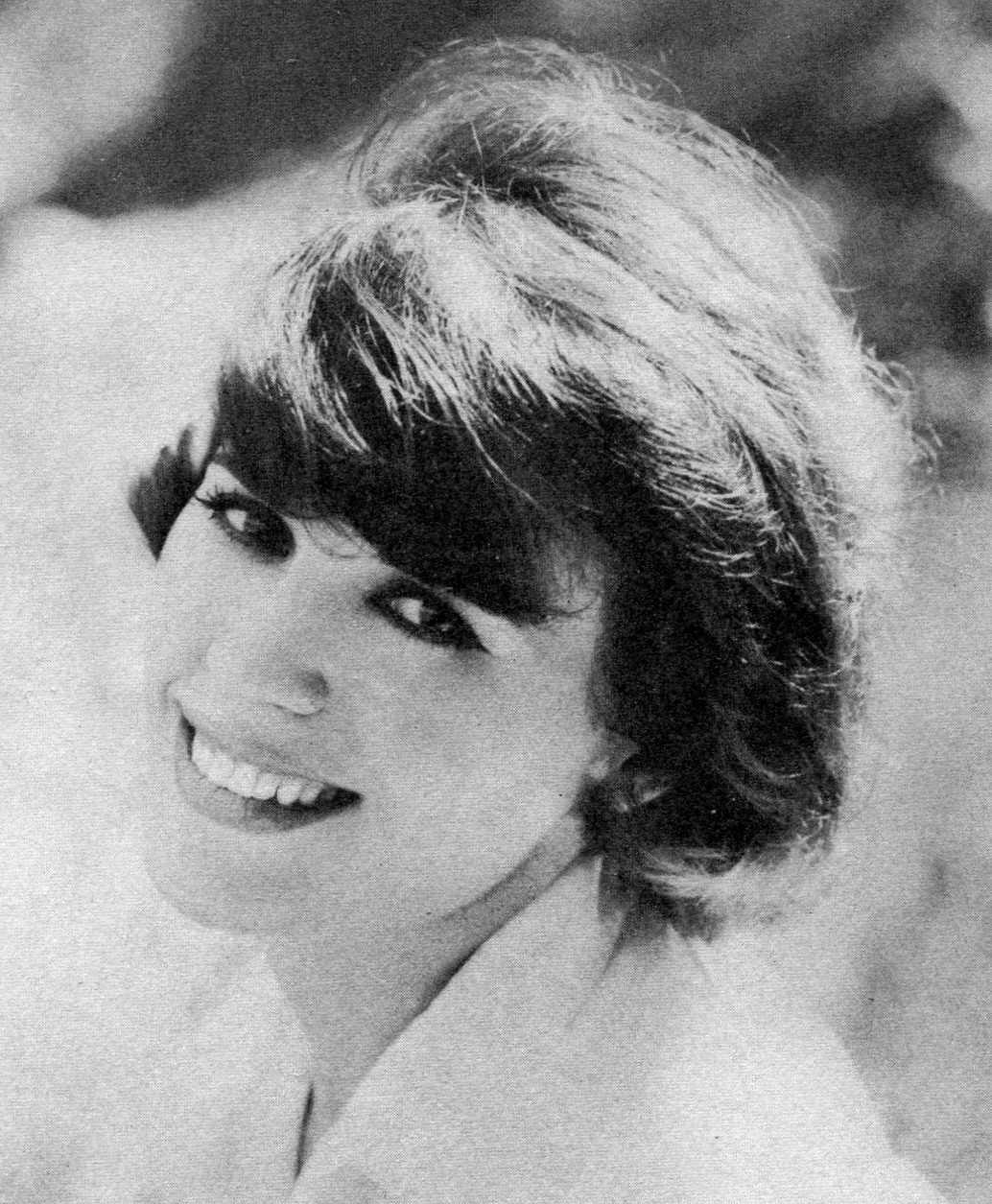
Joni James
View on WikipediaKey Information
Giovanna Carmella Babbo (September 22, 1930 – February 20, 2022), known professionally as Joni James, was an American singer of traditional pop.
Biography
[edit]Giovanna Carmella Babbo was born to an Italian-American family in Chicago, Illinois, on September 22, 1930,[1][2] as one of six children supported by her widowed mother.[3] As an adolescent, she studied drama and ballet, and on graduating from Bowen High School, located in the South Chicago neighborhood, went with a local dance group on a tour of Canada.[2] She then took a job as a chorus girl in the Edgewater Beach Hotel in Chicago.[4]
After doing a fill-in in Indiana, she decided to pursue a singing career, and picked the stage name Joni James at the urging of her managers.[1] Some executives at Metro-Goldwyn-Mayer (MGM) spotted her in a television commercial, and she was signed by MGM in 1952.[2] Her first hit, "Why Don't You Believe Me?",[2] sold over two million copies.[5] She had a number of hits following that one, including "Your Cheatin' Heart" (a cover of Hank Williams' hit) and "Have You Heard?".[2] She was the first American to record at London's Abbey Road Studios, and recorded five albums there. She was also very popular across parts of the Asia-Pacific region, particularly in the Philippines where she performed at Manila's now defunct EM Club in 1957. She also scored a big hit in Manila with Filipino composer Salvador Asuncion's work titled "In Despair".[citation needed]
Joni James had seven Top 10 hits on the various Billboard charts that existed before the Hot 100:[2] "Why Don't You Believe Me?" (No. 1 in 1952) "Have You Heard?" (No. 4 in 1953) "Your Cheatin' Heart" (No. 2 in 1953) "Almost Always" (No. 9 in 1953) "My Love, My Love" (No. 8 in 1953) "How Important Can It Be?" (No. 2 in 1955) and "You Are My Love" (No. 6 in 1955) as well as sixteen other Top 40 hits from 1952 to 1960. She has sold more than 100 million records and recorded more than 25 albums.[citation needed]
Personal life
[edit]James married composer-conductor Anthony "Tony" Acquaviva at St. Patrick's Cathedral, New York in 1956.[6] In 1964, she retired from the music industry in part because Acquaviva was in bad health and needed her attention.[6] She cared for him until his death in 1986.
Shortly after her first husband's death, James met retired Air Force General Bernard Schriever. He had led the crash program that developed U.S. ballistic missiles — both ICBMs and IRBMs in 1953–62. The couple wed on October 5, 1997, in Arlington, Virginia.[7] They honeymooned in France and the Greek Isles, then took up residence in Schriever's home in Washington, D.C. Bernard Schriever died on June 20, 2005, aged 94.
James is mentioned by Snoopy in the last panel of the May 1, 1976 comic strip of Charles M. Schulz's Peanuts.[8] Schulz was a fan and friend of James who had Snoopy featured on the cover of her Jukebox Joni 1999 compilation album.[9][10]
Later years
[edit]For many years she was out of the public eye, but began touring again in the mid-1990s some years after she was widowed,[11] performing memorable concerts at New York's Town Hall, Carnegie Hall and Avery Fisher Hall.
In October 2001, just a few weeks after 9/11, she appeared at the Academy of Music in Philadelphia, accompanied by the Count Basie orchestra. The streets of the city were still lined with armed soldiers, and she was a guest of honor at the American Film Institute's Life Achievement Tribute to Barbra Streisand.[12] With her renewed popularity, nearly her entire body of work was released on the Capitol-EMI, DRG and Taragon labels under her personal supervision[12] and, in 2000, she released a new recording, Latest and Greatest.[13]
James died at a hospital in West Palm Beach, Florida, on February 20, 2022, at the age of 91.[14] She was interred at Arlington National Cemetery.[15][16]
For her contributions to the entertainment industry, James has a star on the Hollywood Walk of Fame.
Singles
[edit]| Year | Single (A-side, B-side) Both sides from same album except where indicated |
Chart positions | Album | |||
|---|---|---|---|---|---|---|
| U.S. [17][18][19] |
CB [20] |
CAN |
UK [21] | |||
| 1952 | "Let There Be Love" b/w "My Baby Just Cares for Me" (Non-album track) |
— | — | — | — | Let There Be Love |
| "You Belong to Me" b/w "Yes, Yes, Yes" |
— | — | — | — | Non-album tracks | |
| "Why Don't You Believe Me?" / | 1 | 1 | — | 11 | Joni James' Award Winning Album | |
| "Purple Shades" | 26 | — | — | — | ||
| 1953 | "You're My Everything" b/w "You're Nearer" |
— | 24 | — | — | Let There Be Love |
| "Have You Heard?" / | 4 | 3 | — | — | Joni James' Award Winning Album | |
| "Wishing Ring" | 17 | 21 | — | — | ||
| "Your Cheatin' Heart" b/w "I'll Be Waiting for You" (Non-album track) |
2 | 4 | — | — | ||
| "Almost Always" / | 9 | 16 | — | — | ||
| "Is It Any Wonder?" | 16 | 27 | — | — | ||
| "My Love, My Love" / | 8 | 13 | — | — | ||
| "You're Fooling Someone" | 11 | 21 | — | — | Award Winning Album Vol. 2 | |
| "I'll Never Stand in Your Way" / | 23 | 22 | — | — | Non-album tracks | |
| "Why Can't I" | — | 30 | — | — | ||
| "Nina-Non" b/w "Christmas and You" |
27 | 27 | — | — | Merry Christmas from Joni | |
| 1954 | "Maybe Next Time" / | 22 | 33 | — | — | Non-album track |
| "Am I in Love" | 22 | 23 | — | — | Let There Be Love | |
| "In a Garden of Roses" / | 22 | 23 | — | — | Award Winning Album Vol. 2 | |
| "Every Day" | 23 | 48 | — | — | Non-album tracks | |
| "Mama Don't Cry at My Wedding" / | 23 | 19 | — | — | ||
| "Pa Pa Pa" | — | 42 | — | — | ||
| "When We Come of Age" b/w "Every Time You Tell Me You Love Me" (Non-album track) |
28 | 19 | — | — | Joni James' Award Winning Album | |
| 1955 | "The Moment I Saw You" b/w "Where Is That Someone for Me" |
— | 48 | — | — | Non-album tracks |
| "Have Yourself a Merry Little Christmas" b/w "The Christmas Song (Merry Christmas to You)" |
— | — | — | — | Merry Christmas from Joni | |
| "How Important Can It Be?" b/w "This Is My Confession" (from Let There Be Love) |
2 | 6 | — | — | Joni James' Award Winning Album | |
| "When You Wish upon a Star" / | — | 48 | — | — | Award Winning Album Vol. 2 | |
| "Is This the End of the Line" | — | 23 | — | — | Non-album tracks | |
| "You Are My Love" b/w "I Lay Me Down to Sleep" (from Little Girl Blue) |
6 | 11 | — | — | ||
| "My Believing Heart" b/w "You Never Fall In Love Again" (Non-album track) |
49 | 31 | — | — | Joni James' Award Winning Album | |
| 1956 | "Danny Boy" b/w "To You I Give My Heart" (Non-album track) |
— | — | — | — | Joni James Sings Irish Favorites |
| "Don't Tell Me Not to Love You" b/w "Somewhere Someone Is Lonely" |
83 | — | — | — | Non-album tracks | |
| "I Woke Up Crying" b/w "The Maverick Queen" |
72 | 37 | — | — | ||
| "Give Us This Day" / | 30 | 30 | — | — | Give Us This Day | |
| "How Lucky You Are" b/w "Give Us This Day" |
70 | — | — | — | Award Winning Album Vol. 2 | |
| "Love Letters" b/w "Don't Take Your Love from Me" (from In the Still of the Night) |
— | — | — | — | Non-album tracks | |
| 1957 | "Only Trust Your Heart" b/w "I Need You So" |
— | — | — | — | |
| "Summer Love" b/w "I'm Sorry for You, My Friend" (from Joni James Sings Songs of Hank Williams) |
97 | — | — | — | ||
| 1958 | "Nothing Will Ever Change" b/w "Does It Show" |
— | — | — | — | |
| "Love Works Miracles" b/w "Dansero" (from Award Winning Album Vol. 2) |
— | — | — | — | ||
| "Junior Prom" b/w "Coming from You" |
— | — | — | — | ||
| "There Goes My Heart" b/w "Funny" (Non-album track) |
19 | 21 | 27 | — | More Joni Hits | |
| 1959 | "There Must Be a Way" b/w "Sorry for Myself?" (Non-album track) |
33 | 28 | 30 | 24 | |
| "I Still Get a Thrill" b/w "Perhaps" |
51 | 45 | 38 | — | ||
| "I Still Get Jealous" b/w "Prayer of Love" |
63 | 66 | — | — | ||
| "Are You Sorry?" b/w "What I Don't Know Won't Hurt Me" (Non-album track) |
102 | 106 | — | — | ||
| "Little Things Mean a Lot" / | 35 | 54 | 40 | — | ||
| "I Laughed at Love" | 108 | 123 | ||||
| 1960 | "I Need You Now" / | 98 | tag | — | — | Non-album tracks |
| "You Belong to Me" | 101 | 114 | — | — | Award Winning Album Vol. 2 | |
| "We Know" b/w "They Really Don't Know You" |
— | 124 | — | — | More Joni Hits | |
| "My Last Date (With You)" b/w "I Can't Give You Anything But Love" (from I'm in the Mood for Love) |
38 | 54 | — | — | Non-album tracks | |
| "Be My Love" b/w "Tall a Tree" (from One Hundred Voices...One Hundred Strings and Joni) |
— | 112 | — | — | ||
| 1961 | "Theme from 'Carnival'" b/w "Can You Imagine That" |
— | — | — | — | |
| "I Gave My Love" b/w "Go Away (Bother Me No More)" |
— | — | — | — | Folk Songs By Joni James | |
| "Somebody Else Is Taking My Place" b/w "You Were Wrong" |
— | 123 | — | — | Non-album tracks | |
| 1962 | "I Almost Lost My Mind" b/w "I'll Be Around" |
— | — | — | — | After Hours |
| "Tender and True" b/w "It's Magic" (from I'm Your Girl) |
— | — | — | — | Non-album track | |
| "You Are My Sunshine" b/w "Lend Me Your Handkerchief" |
— | — | — | — | Country Style | |
| "Anyone But Her" b/w "Forgive a Fool" |
— | 126 | — | — | Non-album tracks | |
| 1963 | "He Says the Same Things to Me" b/w "Hey, Good Lookin'" (from Joni James Sings Songs of Hank Williams) |
— | — | — | — | |
| "Red Sails in the Sunset" b/w "Every Time I Meet You" |
— | — | — | — | Like 3 O'Clock in the Morning | |
| 1964 | "Teach Me to Forget You" b/w "Un Caffe" (from Italianissime!) |
— | — | — | — | Non-album tracks |
| "Break My Heart" b/w "Don't Let the Neighbors Know" |
— | — | — | — | ||
| "Pearly Shells" b/w "Hawaiian War Chant" |
— | — | — | — | Beyond The Reef | |
| "Sentimental Me" b/w "You're Nearer" (from Bossa Nova Style; new version of song from Let There Be Love) |
— | — | — | — | Non-album track | |
| "Once I Loved" b/w "Dindi" |
— | — | — | — | Bossa Nova Style | |
| 1965 | "There Goes My Heart" b/w "I Still Get Jealous" |
— | — | — | — | More Joni Hits |
Albums
[edit]- Let There Be Love MGM (1954)
- Joni James' "Award Winning Album" MGM 3346 (1954)
- Little Girl Blue MGM (1955)
- When I Fall in Love MGM (1955)
- In the Still of the Night MGM (1956)
- Songs by Victor Young and Songs by Frank Loesser MGM (1956) – later reissued as My Foolish Heart
- Merry Christmas from Joni MGM (1956)
- Give Us This Day (Songs of Inspiration) MGM (1957)
- Sings Songs by Jerome Kern and Songs by Harry Warren MGM (1957)
- Among My Souvenirs MGM (1958)
- Je T'aime... I Love You MGM (1958)
- Songs of Hank Williams MGM (1959)
- Joni Swings Sweet MGM (1959)
- Joni Sings Irish Favo(u)rites MGM (1959)
- 100 Strings and Joni MGM 3755 (1959)
- Joni at Carnegie Hall MGM (1960)
- I'm In the Mood for Love MGM (1960)
- 100 Strings & Joni In Hollywood MGM (1960) – also known as Joni Sings Hollywood
- One Hundred Voices... One Hundred Strings & Joni MGM (1960) – also stylized as 100 Voices, 100 Strings & Joni
- 100 Strings & Joni On Broadway MGM (1960)
- The Mood is Blue MGM (1961)
- The Mood is Romance MGM (1961)
- The Mood is Swinging MGM (1961)
- Folk Songs by Joni James MGM (1961) – also known as Joni Sings Folksongs
- Ti Voglio Bene... I Love You MGM (1961)
- Joni After Hours MGM (1962)
- I'm Your Girl MGM (1962)
- Country Style MGM (1962)
- I Feel a Song Coming On MGM (1962)
- Like 3 O'Clock in the Morning MGM (1962)
- Something for the Boys MGM (1963)
- Beyond The Reef MGM (1964)
- Joni Sings the Gershwins MGM (1964)
- My Favorite Things MGM (1964)
- Put On A Happy Face MGM (1964)
- Italianissima! MGM (1964)
- Bossa Nova Style MGM 4286 (1965)
- Why Don't You Believe Me? Bygone Days BYD77053 (2010) – compilation
References
[edit]- ^ a b c Seelye, Katharine Q. (March 4, 2022). "Joni James, Heartfelt Chanteuse of the 1950s, Dies at 91". The New York Times. Retrieved March 4, 2022.
- ^ a b c d e f Colin Larkin, ed. (1992). The Guinness Encyclopedia of Popular Music (First ed.). Guinness Publishing. pp. 1261/2. ISBN 0-85112-939-0.
- ^ Wilson, Chris (June 1953). "What's Spinning?" (PDF). Radio-TV Mirror. 40 (1): 14. Retrieved July 1, 2015.
- ^ Seelye, Katharine Q. (2022-03-04). "Joni James, Heartfelt Chanteuse of the 1950s, Dies at 91". The New York Times. ISSN 0362-4331. Retrieved 2022-03-04.
- ^ Murrells, Joseph (1978). The Book of Golden Discs (2nd ed.). London: Barrie and Jenkins Ltd. p. 60. ISBN 0-214-20512-6.
- ^ a b Roura, Phil (September 22, 1996). "One From Her Heart Joni James Returns To The Spotlight". New York Daily News. Archived from the original on October 19, 2011. Retrieved July 14, 2009.
- ^ Sheehan, Neil (2009). A Fiery Peace in a Cold War: Bernard Schriever and the Ultimate Weapon. New York: Random House. pp. 472–75.
- ^ Peanuts by Charles M. Schulz, Saturday, May 1, 1976 – GoComics. Retrieved April 29, 2023.
- ^ Newhouse, Dave. "Have you heard? Joni James still singing," East Bay Times (Walnut Creek, CA), Friday, February 19, 2010. Retrieved April 29, 2023.
- ^ Archerd, Army. "Coppola to pass on award to Spielberg," Variety, Monday, February 14, 2000. Retrieved April 29, 2023.
- ^ Bell, Bill (October 28, 2000). "Joni James: A Melancholy Baby Returns". New York Daily News. Archived from the original on January 31, 2011. Retrieved July 1, 2015.
- ^ a b Album notes, "Why Don't You Believe Me?", Joni James (BYD77053)
- ^ "Joni James CDs: Music". Amazon. 2009-09-09. Retrieved 2011-11-10.
- ^ Barnes, Mike (25 February 2022). "Joni James, Popular songstress of the 1950s, dies at 91". The Hollywood Reporter. Retrieved 26 February 2022.
- ^ "Joni James". Northwoodfh.com. Retrieved 2024-03-03.
- ^ "Burial detail: Schriever, Joan Carmella". ANC Explorer. Retrieved January 28, 2023.
- ^ Whitburn, Joel (1973). Joel Whitburn's Top pop singles, 1940-1955. The Archive of Contemporary Music. Menomonee Falls, Wis. : Record Research. p. 28.
- ^ Whitburn, Joel (2002). Joel Whitburn's top pop singles 1955-2002. Menomonee Falls, Wisc.: Record Research. p. 348. ISBN 0898201551.
- ^ Whitburn, Joel (1982). Joel Whitburn's Bubbling under the hot 100, 1959-1981. Menomonee Falls, Wis: Record Research. p. 84. ISBN 978-0-8982-0047-8.
- ^ Downey, Pat (1994). Cash box pop singles charts, 1950-1993. Englewood, Colo.: Libraries Unlimited. p. 172. ISBN 1-56308-316-7.
- ^ Roberts, David (2006). British Hit Singles & Albums (19th ed.). London: Guinness World Records Limited. p. 278. ISBN 1-904994-10-5.
External links
[edit]- Sangley Naval Station Message Board
- "Bernard Adolph Schriever". at ArlingtonCemetery.net. 24 December 2022. (Unofficial website).
- Gary James Interview with Joni James
- Joni James at IMDb
- Joni James discography at Discogs
Joni James
View on GrokipediaEarly life
Family background
Joni James was born Giovanna Carmella Babbo on September 22, 1930, in Chicago, Illinois, into an Italian-American family.[2] Her father, Angelo Babbo, was an Italian immigrant who had arrived in the United States at age 18 after growing up as a shepherd in Italy, where he enjoyed singing operatic arias.[2] Her mother, Mary Chereso Babbo, was of Italian descent.[2][1] Angelo Babbo died of cancer in 1935 at the age of 36, when his daughter was just five years old and his wife was five months pregnant with their sixth child.[2][6] This left Mary to raise the family alone during the Great Depression in a modest, working-class household on Chicago's South Side.[2] As the eldest of six children, James helped care for her younger brothers and sisters—Angelo, Jimmy, Joseph, and others, including sisters Clara and Rosalie—in a close-knit environment marked by resilience and familial support.[2][6][1] Growing up in a vibrant Italian-American neighborhood, James gained early exposure to music through family traditions rooted in her father's passion for Italian opera and folk songs, which were often shared in the home.[2] The surrounding Chicago cultural scene, rich with Italian community gatherings, church events, and local performances of traditional melodies, further nurtured her innate interest in the arts during her formative years.[2]Initial performing experiences
Born into an Italian-American family in Chicago, Joni James, originally named Giovanna Carmella Babbo, developed an early interest in the performing arts through free dance lessons at a local public park, which ignited her passion for dance. As an adolescent, she pursued formal studies in drama and ballet, funding half of her ballet lessons with earnings from a part-time job at a bakery starting at age 14. These experiences honed her skills in movement and stage presence during her teenage years in the city's South Side neighborhood.[7][8] James entered high school at age 14 and became actively involved in extracurricular activities that supported her artistic interests, including serving as feature editor of the school newspaper. She graduated as an honor student from Bowen High School in Chicago in 1948, where she had also participated in the choir, further building her comfort on stage. Although offered a journalism scholarship, she declined it to focus on her performing ambitions.[9][7] Following her graduation, James joined a local dance troupe and toured several Canadian cities in the late 1940s, marking her first significant exposure to live performances beyond local venues. This tour provided practical experience in group choreography and travel logistics for shows. Upon returning to Chicago, she secured her initial paid role in entertainment as a chorus girl at the Edgewater Beach Hotel, performing in its revue shows and gaining invaluable insight into professional theater operations.[2][7][8]Professional career
Discovery and early recordings
In 1952, while performing as a singer in Chicago nightclubs such as the Vines Garden Club, Joni James caught the attention of MGM Records executive Lew Douglas, who recognized her vocal talent and stage presence honed from her earlier dance background.[7] This discovery marked a pivotal transition for James, who had initially pursued ballet and drama before an emergency appendectomy derailed those plans and led her to fill in as a vocalist at local venues.[10] Following her nightclub performances, James signed a recording contract with MGM Records in 1952, adopting the stage name Joni James—derived from her given name, Giovanna Carmella Babbo—to launch her professional music career.[7] Under this deal, she began initial recording sessions in New York, focusing on pop standards and ballads that showcased her smooth, emotive delivery, a deliberate shift from her dance-oriented roots to emphasize vocal performance.[10] Her debut single for MGM, "Why Don't You Believe Me?" released in 1952, quickly became a breakout success, reaching number one on the Billboard charts and selling over two million copies, establishing James as a rising star in the pop vocal genre.[7] These early sessions, produced with orchestral arrangements by Lew Douglas and his ensemble, highlighted her ability to interpret romantic lyrics with warmth and sincerity, setting the foundation for her subsequent recordings.[10]Major hits and commercial success
Joni James experienced her peak commercial success in the 1950s, particularly from 1953 to 1960, with a string of hit singles that dominated the Billboard charts in the traditional pop genre. She amassed seven Top 10 hits during this period, including "Have You Heard?" (#4, 1953), "Your Cheatin' Heart" (#2, 1953), "Almost Always" (#9, 1953), "My Love, My Love" (#8, 1953), "How Important Can It Be?" (#2, 1955), and "You Are My Love" (#6, 1955).[11] These tracks showcased her emotive vocal style and contributed to her status as a leading pop artist of the era. Overall, James charted sixteen Top 40 singles on Billboard between 1952 and 1960, reflecting her consistent appeal to audiences seeking heartfelt ballads amid the shifting musical landscape.[12] Her recordings, such as the million-selling "Have You Heard?" from 1953, helped solidify her position in the traditional pop category, where she maintained strong sales and radio play.[2] James's commercial achievements extended beyond individual hits, with total record sales surpassing 100 million copies worldwide during her active years.[6] This remarkable figure underscored her enduring popularity in the pre-rock era, where her singles often lingered on charts for weeks, emphasizing themes of love and heartbreak that resonated broadly.[11]Recording style and collaborations
Joni James was renowned for her signature recording style characterized by soft, emotive vocals that conveyed deep melancholy and intimacy, often interpreting traditional pop and jazz standards with a crystal-clear tone and perfect pitch.[13][7] This approach, influenced by her Italian-American heritage, infused her phrasing with a passionate, operatic emotional delivery reminiscent of the expressive singing traditions in her family's cultural background, where music was an integral part of daily life.[14] Her performances typically featured lush orchestral arrangements that enhanced the romantic and heartfelt quality of her interpretations, as heard in hits like "Why Don't You Believe Me," which exemplified her soul-bearing style.[6] A notable aspect of James's recording career during the MGM era was her use of Abbey Road Studios in London, where she recorded five albums between 1959 and 1962.[6][12] These sessions, including works like 100 Strings and Joni, utilized expansive symphony orchestras to create a grand, cinematic sound that was rare for U.S. performers at the time, allowing her to blend American pop sensibilities with British studio precision. This achievement highlighted her versatility and commitment to high-fidelity production, setting her apart in an era dominated by domestic recording facilities. James's collaborations were deeply shaped by her partnership with composer and conductor Anthony Acquaviva, whom she married in 1956 and who served as her primary arranger and musical director.[5] Acquaviva's arrangements featured on many of her MGM tracks, directing orchestras on tour and in the studio to complement her intimate vocal style with sophisticated, swelling instrumentation that amplified the emotional depth of standards and ballads.[15][16] Their joint efforts produced a series of recordings that emphasized thematic unity, such as romantic dedications and international influences, reflecting Acquaviva's role in guiding her artistic evolution throughout the late 1950s and early 1960s.[17]Personal life
Marriages and family
Joni James married composer, conductor, and arranger Anthony "Tony" Acquaviva on June 16, 1956, at St. Patrick's Cathedral in New York City. Acquaviva, who collaborated closely with James on her recordings, provided essential artistic guidance that shaped her distinctive vocal style during her peak years.[2][6] The marriage endured for three decades until Acquaviva's death on September 27, 1986, at age 61, from complications of diabetes.[18] Throughout their partnership, Acquaviva supported James's career decisions, including her early retirement from performing in 1964 to focus on family life. James's second marriage was to retired U.S. Air Force General Bernard A. Schriever on October 5, 1997.[19] Schriever, a key figure in the development of the U.S. intercontinental ballistic missile program, offered companionship during her later years. The union lasted until Schriever's death on June 20, 2005, at age 94, from complications of pneumonia.[20][21] James had no biological children from either marriage; she and Acquaviva adopted son Michael and daughter Angela from Italy. Both relationships emphasized mutual support in her professional pursuits and personal retirement.[6]Later personal challenges
In 1964, at the height of her recording career, Joni James chose to retire primarily to care for her husband, composer-conductor Anthony "Tony" Acquaviva, who had developed severe diabetes requiring extensive daily medical attention.[2] She described becoming "the nurse and the cook and the maid and everything," managing household duties alongside his care and raising their two adopted children, a decision that effectively halted her professional trajectory for over two decades.[22] Acquaviva's death in 1986 left James in deep mourning, which she later characterized as a period of profound emotional withdrawal, likening herself to a "bent-wing sparrow" unable to fly.[23] This personal hardship extended her time away from public life for approximately eight more years, during which she grappled with uncertainty about resuming her career and focused on healing privately.[24] Her emphasis on family and privacy during this era underscored a lifelong prioritization of personal relationships over sustained fame, as she avoided media spotlight to process her grief.[25] Following her 1997 marriage to retired Air Force General Bernard Schriever, James faced further challenges after his death from pneumonia complications in 2005 at age 94.[21] She again described herself as a "bent-wing sparrow for about a year," withdrawing from activities and struggling with the adjustment to widowhood for the second time, a period marked by reluctance to engage publicly or professionally.[26] This reinforced her commitment to shielding her private life, choosing introspection and family ties amid repeated personal losses rather than seeking ongoing celebrity.[6]Later career and retirement
Return to performing
After the death of her husband and longtime manager Tony Acquaviva in 1986, Joni James experienced a renewed passion for music that prompted her to end a decades-long retirement from live performing.[23] Encouraged by her second husband, Bernard Schriever, she resumed touring in the mid-1990s, driven by her enduring love for singing and an inability to imagine life without it.[23] James's comeback began with a highly anticipated concert at New York's Town Hall on March 2, 1996, her first major public performance in over two decades, which attracted hundreds of longtime fans eager to hear her classic hits.[27] She followed this with a return engagement at Carnegie Hall in 1998, revisiting the prestigious venue where she had performed in 1959.[6] These appearances highlighted her remarkably preserved vocal range, described as warm and plaintive with added maturity and elegance.[23] In 2000, James released Latest and Greatest, a new recording that featured updated arrangements of her signature hits from the 1950s, marking her return to the studio after years away.[23] Throughout the early 2000s, she continued select performances at notable venues, captivating audiences with renditions of earlier successes like "Why Don't You Believe Me" and "My Love, My Love."[6]Final years and death
In her final years, Joni James resided in West Palm Beach, Florida, where she maintained a low profile following her retirement from performing around 2007.[23][1] James died on February 20, 2022, at a hospital in West Palm Beach at the age of 91 from natural causes.[5][2] She was interred at Arlington National Cemetery alongside her second husband, General Bernard A. Schriever, a United States Air Force officer, in a ceremony that honored his military service.[1][22] Upon her passing, James was remembered in the Recording Academy's annual in memoriam tribute, acknowledging her contributions to American popular music, while industry commentators highlighted her enduring elegance and influence on subsequent generations of singers.[28][23]Discography
Notable singles
Joni James's singles from the early to mid-1950s established her as a prominent pop vocalist, with a series of chart-topping and high-ranking releases that highlighted her interpretive skills in ballads and adaptations of other genres. Her recordings, primarily on MGM Records, emphasized heartfelt vocals backed by orchestral arrangements, contributing to her commercial breakthrough during the pre-rock era. The following table lists her Top 10 singles on the Billboard pop charts, all achieved between 1952 and 1955:| Year | Title | Peak Position |
|---|---|---|
| 1952 | Why Don't You Believe Me? | 1 |
| 1953 | Your Cheatin' Heart | 2 |
| 1953 | Have You Heard | 4 |
| 1953 | My Love, My Love | 8 |
| 1953 | Almost Always | 9 |
| 1955 | How Important Can It Be? | 2 |
| 1955 | You Are My Love | 6 |