Hubbry Logo
KachaksKachaksMain
Open search
Kachaks
Community hub
Kachaks
logo
8 pages, 0 posts
0 subscribers
Be the first to start a discussion here.
Kachaks
Kachaks
from Wikipedia
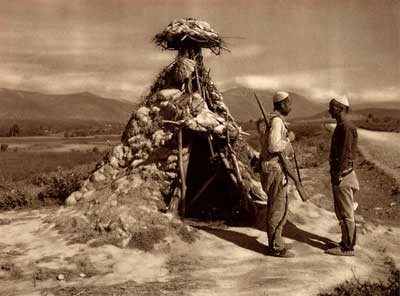
Kosovo Albanian rebels controlling a road in Kosovo, 1920s

Kachaks (Albanian: kaçak, Serbian: качаци / kačaci) is a term used for the Albanian rebels active in the late 19th and early 20th century in northern Albania, Montenegro, Kosovo and Macedonia, and later as a term for the militias of Albanian revolutionary organizations against the Kingdom of Serbia (1910–18) Kingdom of Yugoslavia (1918–24), called the "Kachak Movement".

Etymology

[edit]

The word is derived from Ottoman Turkish kaçak for "outlaw", which is derived from kaçmak meaning “run away” or “hide”.[1][2]

Background

[edit]

History

[edit]

1920–24 Kachak movement

[edit]

The Committee for the National Defense of Kosovo (Albanian: Komiteti për Mbrojten Kombëtare të Kosovës) was created in Shkodër, under Hasan Prishtina, in 1918. The committee organizationally and financially supported the kachaks in Albanian-populated areas of Yugoslavia, in Kosovo and Skopje (the former Kosovo vilayet). Kachaks were also active around Ohrid and Bitola.[3] On 6 May 1919 the Committee called for a general uprising in Kosovo and other Albanian-inhabited regions in Yugoslavia. The Kachaks were popular among Albanians, and local support to them increased in the 1920s when Hasan Prishtina became a member of the Albanian parliament, Kadri Prishtina ("Hoxhe Kadriu") became Minister of Justice, and Bajram Curri became Minister of war (1921). All three were Kosovar Albanians.

During this time, Kosovar Albanians under Azem Galica began an armed struggle, also known as the "Kachak movement",[4] a large-scale revolt in Drenica involving around 10,000 people under Galica. The uprising was quelled by the Royal Yugoslav Army.[5] Armed conflicts between the Royal Yugoslav Army and the Kachaks took place in the years 1920 and 1921,[6] 1923,[7][8] with a revival in 1924. One of the achievements was the creation of the "neutral zone" around Junik, which would serve to jeopardize the frontier and provide ammunition and other logistical support for the Kachaks.

Legacy

[edit]

They are widely depicted in Albanian folklore.[9][10][11] Albanian collaborationists in Yugoslavia during World War II were also sometimes known as Kachaks.[12]

Notable people

[edit]

References

[edit]

Further reading

[edit]
Revisions and contributorsEdit on WikipediaRead on Wikipedia
from Grokipedia
Kachaks (Albanian: kaçakë; Serbian: kačaci), meaning "fugitives" or "outlaws" in Turkish-derived Albanian parlance, were irregular Albanian combatants who conducted guerrilla operations against Ottoman authorities in the late and, more prominently, against Yugoslav forces in the . Active chiefly in , Vardar Macedonia, and , they initially functioned as tax-evading bandits in rugged terrain but increasingly framed their actions as national resistance following the and . The Kachak Movement, peaking from 1919 to 1927, mobilized up to 10,000 fighters under leaders such as and , aiming to expel Serbian administrators and achieve unification with through ambushes, sabotage, and control of "free zones" in areas like . Supported logistically by the Committee for the National Defence of Kosovo and sporadically by 's government, the insurgents exploited mountainous geography for but faced brutal Yugoslav counteroffensives involving massacres and village razings. By 1928, the movement collapsed amid internal divisions, diplomatic isolation—exacerbated by Ahmed Zogu's 1924 cooperation with —and relentless military pressure, though it symbolized enduring Albanian in contested borderlands.

Etymology and Terminology

Origins of the Term

The term kaçak (rendered in English as "kachak") entered the Albanian as a from kaçak, denoting an , renegade, or who evades legal authority by fleeing to remote areas. This derives from the Turkish verb kaçmak, rooted in Proto-Turkic *kač- ("to run away" or "to flee"), reflecting a semantic core of evasion and nonconformity to centralized control. The borrowing exemplifies broader Ottoman linguistic influence on Albanian, particularly in domains of social deviance and resistance, where Turkish terms for irregular actors proliferated during centuries of imperial administration. Early Albanian attestations of kaçak appear in 19th-century linguistic documentation, such as Gustav Meyer's 1891 etymological work, which defines it explicitly as "renegade" or "," often implying mountain-based figures outside state jurisdiction. Related derivatives like kaçkin reinforced this connotation of or flight from obligation. In Ottoman contexts predating Albanian nationalist applications, kaçak commonly described tax evaders, deserters, or smugglers operating beyond urban or administrative reach, a usage paralleling similar Turkic terms for peripheral across Balkan and Anatolian societies. By the late , amid rising Albanian autonomy movements under Ottoman decline, kaçak began shifting toward denoting armed irregulars resisting imperial or successor-state impositions, though its core etymological sense of fugitive agency persisted. This evolution aligned with tribal patterns of kanun () enforcement in and , where fleeing to highlands symbolized defiance rather than mere criminality. Unlike contemporaneous terms like haydut (bandit, from Hungarian via Turkish) or harami (robber, from via Turkish), kaçak emphasized mobility and evasion over predation, distinguishing it in historical narratives of Balkan .

Usage in Historical Contexts

In the , the term kaçıak denoted fugitives, , and outlaws who evaded imperial authority, particularly in the Balkan provinces where mountainous terrain facilitated evasion of taxes, conscription, and legal prosecution. These individuals often operated as bandits or illicit traders, sustaining themselves through robbery of officials or smuggling goods like and across porous borders, a practice documented in administrative records from the 18th and 19th centuries. In Albanian-inhabited regions such as and , kaçıks were frequently highland clansmen resisting centralizing reforms like the , blending economic survival with localized defiance against Ottoman garrisons. By the late 19th century, amid the (Rilindja) and weakening Ottoman grip, the term's usage shifted toward connoting armed irregulars engaged in anti-imperial skirmishes, as seen in uprisings against tax collectors and during the prelude to the (1912–1913). Albanian chroniclers and oral traditions reframed kaçıks as folk heroes defending communal lands and customs, though Ottoman and later Balkan state records typically classified them as common criminals disrupting order. This dual perception—patriotic resisters versus predatory bandits—reflected broader tensions in imperial periphery governance, where kaçıks exploited administrative vacuums for both personal gain and ethnic solidarity. The term's historical application thus bridged mundane outlawry and proto-insurgent activity, setting the semantic groundwork for its 20th-century politicization; Yugoslav authorities post-1918 inherited this Ottoman framing, dismissing kaçıks as mere brigands to delegitimize Albanian , while nationalist narratives elevated them as precursors to organized resistance.

Historical Background

Ottoman Era Resistance

The term kaçak, derived from for "fugitive" or "outlaw," initially described Albanian irregular fighters and bandits in the rugged highlands of and Kosovo vilayets who evaded Ottoman central authority from the mid-19th century onward. These groups formed in response to the reforms (1839–1876), which imposed standardized taxation, land surveys, and compulsory military service on tribal populations previously granted autonomy under the kanun customary law and local pashas. Resistance often manifested as ambushes on tax collectors, raids on Ottoman garrisons, and refuge in mountain strongholds, preserving Albanian communal structures against imperial homogenization. Prominent kaçak figures exemplified this defiance; for instance, Çelo Mezani (d. circa 1880s), a notorious highlander from the Mirdita region, led bands that clashed with Ottoman forces during anti-reform revolts, including the 1847 uprising against drives. Such actions disrupted supply lines and protected villages from corvée labor exactions, blending with proto-nationalist defense of Albanian besa (code of honor). By the late 19th century, kaçaks numbered in the hundreds across and , operating as decentralized cells rather than unified armies, which limited Ottoman pacification efforts despite periodic expeditions. This Ottoman-era kaçak tradition laid groundwork for later organized resistance, as evasive tactics and anti-centralist ethos persisted into the (Rilindja) period post-1878 Berlin Congress, when intensified Ottoman repression fueled broader revolts like the 1910–1912 uprisings. Albanian chieftains, drawing on kaçak networks, coordinated with urban nationalists to challenge garrisons in hotspots such as and Dibra, contributing to the empire's Balkan losses by 1912. However, kaçak activities remained fragmented, prioritizing survival over ideology, and were often romanticized in oral epics as guardians against "Turk" exploitation rather than systematic .

Post-World War I Geopolitical Shifts

Following the Armistice of November 11, 1918, the collapse of the Ottoman Empire and Austria-Hungary facilitated the reconfiguration of Balkan territories, with Kosovo—predominantly inhabited by Albanians—formally incorporated into the newly proclaimed Kingdom of Serbs, Croats, and Slovenes (later Yugoslavia) on December 1, 1918, building on Serbia's pre-war conquests from the 1912-1913 Balkan Wars. This assignment disregarded Albanian claims for self-determination, as Kosovo's Albanian majority (estimated at over 60% in contemporary censuses manipulated by Serbian authorities) sought unification with independent Albania or autonomy, viewing the incorporation as a continuation of colonial subjugation rather than ethnic alignment with South Slavs. At the Paris Peace Conference (January 1919 to January 1920), Albanian delegates, led by figures like , advocated for border revisions to include and western Macedonia, citing ethnographic data and Wilson's on ; however, Allied powers prioritized stabilizing as a barrier against and Italian expansion, rejecting Albanian and proposing Albania's partition among , , and before U.S. intervention under President Wilson preserved Albanian sovereignty in core areas excluding . 's delegation, under , successfully lobbied for 's retention by emphasizing historical Serbian ties to medieval and strategic depth against Albania, despite internal Yugoslav debates on that sidelined . Albania's admission to the League of Nations on December 17, 1920, secured its independence but left unresolved the question, exacerbating tensions as Yugoslav forces imposed centralist policies, including land expropriations and demographic engineering, which Albanian sources documented as displacing up to 20,000 Albanians by 1921 and prompting cross-border raids. These shifts crystallized Albanian perceptions of geopolitical betrayal, transforming localized banditry (kachakism) into organized resistance against perceived Serb dominance, with early skirmishes in and Llap regions signaling the nascent Kachak Movement's alignment with nationalist aspirations amid unaddressed ethnic majorities.

The Kachak Movement

Formation and Early Uprisings (1918–1920)

Following the armistice of November 11, 1918, Serbian forces advanced into , previously occupied by Bulgarian and Austro-Hungarian troops, to incorporate the region into the newly proclaimed Kingdom of Serbs, Croats, and Slovenes, prompting immediate local Albanian resistance against perceived annexation and displacement policies. In November 1918, additional Serbian reinforcements arrived to suppress the rebellious Albanian population, which sought unification with rather than subjugation under Serbian rule. This sparked the formation of irregular armed groups, termed kaçaks (meaning fugitives or outlaws in Albanian), comprising tribal fighters and locals who retreated to mountainous border areas in for sanctuary and cross-border raids against Yugoslav gendarmes and officials. The organized phase of the Kaçak movement emerged in late 1918 through the Committee for the National Defence of Kosovo (KMKK), founded in Shkodra by Albanian exiles including and Hoxhë Kadri Prishtina, who coordinated arms procurement from Italian sources to arm insurgents aiming for national unification. The initial resistance period, from October 1918 to March 1919, consisted of decentralized local actions in regions such as , the Dukagjini Plain, and Llapë, focused on against Serbian incursions rather than structured military operations. By 1919, the KMKK issued a program calling for targeted attacks on Yugoslav military and police while avoiding civilian Serbs, with early leaders like Elez Aga joining to mobilize fighters; Albanian press accounts, inherently nationalist, framed these as defensive liberation efforts amid reported Serbian atrocities, though Yugoslav records depicted participants primarily as bandits disrupting order. Early uprisings intensified in 1920, including responses to a June 15 visit by Yugoslav ministers to , where locals rose to counter anticipated violence, and August actions in following weapon deliveries via steamer to for Kosovar groups. Figures such as and his wife Shotë Galica began leading guerrilla bands during this period, conducting hit-and-run operations from Albanian bases to harass Yugoslav patrols, though the movement remained fragmented without a unified command structure. These actions, supported logistically by Albania's , marked the transition from sporadic defense to proto-nationalist , setting the stage for broader escalation, while Yugoslav countermeasures involved punitive expeditions that often targeted villages indiscriminately.

Expansion and Peak Resistance (1920–1924)

In 1920, the Kaçak movement expanded amid intensified guerrilla actions against Yugoslav authorities in Kosovo, exemplified by Azem Galica's band, alongside his wife , killing numerous Serbs in a gunfight that July, prompting widespread Yugoslav retaliation including village burnings and forced migrations. This escalation drew organizational support from , where the Kosovo Committee (KMKK), based in Shkodra, facilitated arms shipments, such as a steamer arriving in in August carrying weapons intended for insurgents, though Albanian government intervention limited distribution. Coordination improved under leaders like , who linked with and secured Italian-supplied arms, enabling bands to target Yugoslav garrisons in areas like . By late 1921, the resistance had grown to encompass up to 10,000 fighters operating across , the Dukagjini Plain, , and Llapë, forming a network of groups resisting and agrarian reforms that displaced Albanian landowners. Elez Aga reinforced Galica's forces that year, enhancing tactical capabilities through hit-and-run attacks on administrative centers and supply lines. These operations disrupted Yugoslav control, fostering temporary Albanian-held enclaves and prompting negotiations, though reports from Albanian press, which emphasized national unification over Serbian "atrocities," likely amplified claims of insurgent strength and enemy losses. The peak occurred in 1923–1924, with Kaçaks establishing de facto free zones in Drenica under Azem Galica's command and in Dumnica led by Mehmet Konjuhi, where fighters evaded large-scale sweeps through mountainous terrain and local support networks. A pivotal confrontation unfolded on July 15, 1924, when approximately 5,000 Yugoslav troops besieged Galica's family towers in Prekaz, initiating a multi-day siege involving artillery; Galica and key fighters escaped, but the engagement highlighted the movement's resilience amid escalating military pressure. This period marked maximal territorial influence and operational intensity, though it incurred heavy civilian tolls from reprisals, setting the stage for decline as resources waned and internal Albanian politics shifted.

Suppression and Decline (1924–1927)

In 1924, Yugoslav authorities escalated military operations against Kachak bands in , deploying regular army units alongside border guards to encircle and dismantle guerrilla strongholds. A pivotal event occurred on , 1924, when forces under Colonel Milivoje Trbić engaged Azem Galica's group near Janjevo, resulting in Galica sustaining mortal wounds; he succumbed three days later on July 25, marking a critical loss for the movement as Galica had been its most effective since reviving operations in 1921. His wife, , assumed leadership of remnants but faced mounting pressure, with her band reduced through subsequent ambushes and desertions. Yugoslav tactics emphasized fortified checkpoints, informant networks, and punitive raids on villages suspected of harboring insurgents, which by late 1924 had confined Kachak activity to remote mountainous areas and cross-border incursions. While Albanian press accounts reported over 1,000 fighters remaining active into 1925, operational capacity waned due to supply shortages and internal fractures, including rivalries among commanders like those aligned with the Kosovo Committee (KMKK). Sporadic clashes persisted, such as a 1927 incident where four Kachak fighters from Oštrožac reportedly killed 180 Yugoslav soldiers before being overrun, but these isolated actions underscored the movement's fragmentation rather than resurgence. The decline accelerated diplomatically after Ahmet Zogu consolidated power in in early 1925, prompting bilateral agreements in November 1925—including trade, consular, and extradition pacts—that curbed Tirana's covert aid to insurgents in exchange for border stability and economic ties. This isolation, combined with amnesties for surrendering fighters and intensified to alter demographics, rendered sustained resistance untenable; by 1927, the Kachak networks had dissolved into or , ending organized opposition. Yugoslav records framed this as the rightful pacification of "banditry," while Albanian narratives emphasized brutal repression involving village burnings and executions, though verifiable casualty figures remain contested due to biased reporting on both sides.

Ideology and Motivations

Albanian Nationalist Aspirations

The Kaçak movement in Kosovo during the 1918–1928 period was propelled by Albanian desires for national and unification of ethnically Albanian territories under a single state, rejecting the post-World War I partition that assigned to the Kingdom of Serbs, Croats, and Slovenes. , facing Serbian and policies perceived as aimed at demographic alteration through colonization and displacement, organized resistance to reclaim sovereignty and integrate with , viewing the movement as a continuation of earlier nationalist struggles like the League of . Central to these aspirations was the Komiteti Mbrojtja Kombëtare e Kosovës (KMKK), established in late 1918 in Shkodra, , which coordinated political and armed efforts for liberation and national unity. The KMKK's 1919 program emphasized protecting Albanian lands, identity, and rights while advocating restraint toward non-combatant Serbs, but its core aim was to facilitate Kosovo's detachment from Yugoslav control and eventual unification with , as articulated in Albanian press outlets like Shqipëri e Re on May 1, 1921. Leaders such as , who lobbied for Italian financial and military aid, and field commanders like framed the insurgency as a defense of ethnic homogeneity against reported Serbian atrocities, including massacres and forced deportations documented in petitions to the League of Nations. By 1920–1921, the movement expanded into widespread uprisings, establishing "free zones" in regions like and Llapë, where insurgents—peaking at around 10,000 fighters—enforced local Albanian governance and resisted administrative integration into . These actions reflected irredentist ideology seeking to realize a "" encompassing , though initial demands included practical autonomist measures such as reopening Albanian-language schools and recognizing Albanian as a co-official language to preserve cultural distinctiveness amid assimilation pressures. Support from Albania's government and , including weapons and funds secured by Prishtina, underscored the transnational nationalist character, with the press portraying Kaçaks as heroic guardians of against foreign domination. The aspirations aligned with broader Wilsonian principles of ethnic invoked post-1918, yet clashed with the ' territorial settlements, fueling a guerrilla campaign that prioritized national liberation over mere banditry. Albanian sources emphasized moral and existential stakes, decrying Yugoslav policies as existential threats to Albanian survival in , where pre-1912 Ottoman demographics showed as a majority. Despite tactical setbacks after 1924, the movement's endured, influencing later Albanian irredentist sentiments and folk narratives of resistance.

Responses to Yugoslav Policies

The Kingdom of Serbs, Croats, and Slovenes (later ) implemented policies of , land redistribution, and ethnic colonization in following its in late 1918, which Albanian Kachaks perceived as existential threats to their communal ownership, cultural identity, and demographic majority. Military rule enforced curfews, forced of Albanian males, and deportations of suspected insurgents, while Albanian-language schools and newspapers were shuttered to curb nationalist sentiments. These measures, enacted amid the of Ottoman-era militias, galvanized Kachak groups to frame their resistance as a defense against systematic denationalization and expulsion, with early petitions from the Committee for the National Defense of Kosovo to the Paris Peace Conference in 1919 decrying the policies as violations of principles. Agrarian reforms in the early targeted large Albanian-held estates—often labeled "Kachak land" by authorities—and redistributed them to Serb and Montenegrin settlers, aiming to alter the ethnic balance and secure loyalty in border regions; by the mid-, nearly 10,000 hectares in areas like Peć were allocated for . Kachaks responded by ideologically positioning their guerrilla actions as protective of ancestral holdings against what they described in contemporaneous Albanian press as predatory confiscations designed to force Albanian emigration, drawing on narratives of historical under Ottoman timars to justify raids on settler convoys and administrative outposts. This resistance intensified after 1920, with leaders like invoking Skanderbeg-era tactics to rally fighters against perceived land grabs that displaced thousands of Albanian families. Repressive "clearing expeditions" by Yugoslav forces, involving village burnings and civilian reprisals—such as the reported killing of 522 near Priština in 1922—further entrenched Kachak motivations rooted in retaliation and survival, as documented in Albanian émigré publications that portrayed the policies as genocidal in intent. In response, Kachaks adopted an ideology of irredentist solidarity, seeking unification with to counter the of rebel families in 1921 and broader efforts to Slavicize the region through settlement incentives for non-. While Albanian sources emphasized these as heroic defenses of honor and , Yugoslav records framed the policies as necessary stabilization against , highlighting the mutual escalation where resistance raids prompted harsher countermeasures.

Tactics and Operations

Guerrilla Warfare Methods

The Kaçaks organized into small, mobile detachments typically numbering 10 to 50 fighters, which enabled rapid maneuvers through the and other rugged terrains of , where superior knowledge of local geography provided tactical advantages over Yugoslav regular forces. These units avoided pitched battles, instead favoring hit-and-run attacks to minimize exposure to superior firepower and numbers. Primary operations involved ambushes on patrols and isolated outposts, often launched at dawn or dusk to exploit visibility limitations; for instance, detachments would strike police stations in remote villages, seize arms and ammunition, inflict casualties, and disperse before reinforcements arrived. Such raids targeted symbols of Yugoslav administration, including tax collectors and local officials, disrupting collection and governance in Albanian-majority areas from 1919 onward. Sabotage complemented direct assaults, with Kaçaks destroying bridges, telegraph lines, and supply depots to hinder Yugoslav and mobility; these actions peaked between 1920 and 1923, when bands coordinated loosely across regions like the Junik Mountains to maintain pressure without centralized command. Fighters relied on lightweight weaponry, such as rifles smuggled or captured, and blended into sympathetic rural populations for and resupply, sustaining operations despite lacking formal structure. This asymmetric approach inflicted disproportionate losses—estimated at hundreds of Yugoslav personnel killed in skirmishes—while preserving Kaçak manpower through evasion rather than attrition.

Alliances, Logistics, and Support from

The Kaçak movement maintained close alliances with Albanian nationalist entities, foremost among them the Committee for the National Defence of Kosovo, founded in on May 1, 1918, by exiled Kosovar leaders including . This committee, operating from Albanian territory, offered organizational coordination and financial aid to Kaçak bands operating in Yugoslav-controlled , Vardar Macedonia, and , framing their activities as defense against Serbian colonization policies. The alliance extended to prominent nationalists like and , who integrated Kaçak operations with broader Albanian irredentist goals, including demands for Albanian-language schools and autonomy in contested regions. Logistically, the Kaçaks exploited the rugged Albania-Yugoslavia , particularly in northern 's mountainous districts, for smuggling arms, , and provisions across porous frontiers that Yugoslav forces struggled to seal. Albanian political actors, via the , channeled arms supplies to sustain the resistance, as evidenced by reports in Albanian periodicals detailing expeditions and resupplies from 1918 onward. villages provided essential sustainment—shelter in remote highlands, food from sympathetic peasants, and intelligence networks to evade Yugoslav patrols—allowing bands numbering up to several thousand to conduct hit-and-run raids while retreating into for recovery. Support from peaked during the early under transient governments aligned with nationalists but eroded as Ahmet Zogu consolidated power; by March 1921, as Minister of Internal Affairs, he halted weapon flows to Kaçaks and negotiated pacts with Yugoslav Premier , prioritizing Albanian state stability over cross-border . This shift, criticized in Albanian exile circles as betrayal, compelled many Kaçak leaders to flee deeper into or face isolation, underscoring how domestic constrained external aid despite enduring nationalist sympathies.

Controversies and Opposing Perspectives

Albanian Narrative: Defenders of Self-Determination

In Albanian historiography and nationalist discourse, the Kaçaks are portrayed as principled defenders of ethnic Albanian self-determination in Kosovo, resisting the post-World War I imposition of Yugoslav sovereignty over a region with an Albanian majority that sought independence or unification with Albania under Woodrow Wilson's principle of national self-determination. Following the 1918 incorporation of Kosovo into the Kingdom of Serbs, Croats, and Slovenes—despite Albanian delegations' appeals at the Paris Peace Conference for recognition of local autonomy or merger with Albania based on demographic realities—the Kaçaks initiated armed uprisings to challenge Serbian military garrisons, administrative edicts, and land reforms perceived as tools for colonizing Albanian territories with Slavic settlers and displacing native populations. This narrative emphasizes the Kaçaks' guerrilla tactics as a legitimate response to Yugoslav policies of cultural suppression, including bans on Albanian-language education and forced conscription into the Yugoslav army, which Albanian sources document as sparking widespread revolts from 1919 onward, such as the June 1921 Drenica uprising led by figures like Azem Galica, who mobilized hundreds of fighters to evict gendarmes from villages and assert local governance. Leaders such as Bajram Curri and the Galica couple are celebrated as folk heroes embodying Albanian resilience, with Curri's 1920s bands in the Rugova region symbolizing defiance against encirclement campaigns that Albanian press accounts claim resulted in disproportionate reprisals, including village burnings and civilian executions, thereby validating the resistance as a defense of communal survival rather than mere banditry. Albanian perspectives frame the Kaçaks' operations, sustained through cross-border logistics from until the 1924 suppression following Ahmet Zogu's consolidation of power and a Yugoslav-Albanian , as a pivotal assertion of ' refusal to accept foreign rule, fostering a legacy of national awakening that influenced subsequent irredentist movements and . This view posits the movement's peak in 1922–1923, when Kaçak forces controlled swaths of western and disrupted Yugoslav supply lines, as evidence of broad endogenous support for self-rule, countering claims of external instigation by portraying it as an organic expression of ethnolinguistic solidarity amid empirical data on Albanian demographic preponderance (estimated at 70–80% in by 1921 censuses contested for undercounting).

Yugoslav/Serbian Narrative: Bandits and Destabilizers

In the Yugoslav and Serbian historiographical perspective, the Kaçaks were primarily characterized as common outlaws and bandits (kačaci) whose activities centered on criminal enterprises such as livestock and goods across the , robbery, and targeted killings to subvert state authority in the Kosovo-Metohija region following the formation of the Kingdom of Serbs, Croats, and in 1918. These groups, often numbering in the hundreds under local chieftains, exploited the post-World War I chaos to raid Serbian and Montenegrin settlements, assassinate gendarmes, tax officials, and collaborators, and foster in a strategically vital zone. Serbian historian Dušan T. Bataković describes Kosovo-Metohija during this period as an "unquiet " plagued by these outlaws, who were backed by the irredentist Kosovo Committee—an émigré organization in dedicated to territorial through violence rather than . This view posits that Kaçak actions were driven less by coherent and more by opportunistic banditry, with social divisions among Albanians amplifying a pre-existing layer of rural criminals who preyed on all ethnic groups, though disproportionately targeting non-Albanians to consolidate control. Specific incidents underscored their destabilizing role; for instance, in January and February 1919 alone, Kaçak bands reportedly killed 640 individuals and destroyed 3,873 homes in targeted attacks on state infrastructure and loyalist villages. By , official records cited 58 murders and 18 attempted murders attributed to these outlaws, who were romanticized by some local as folk heroes but viewed by Yugoslav authorities as threats to public order and . Yugoslav military operations, such as the 1920 suppression of the Lapsko uprising in villages like Prapaštica and Kabaš, were framed as essential pacification efforts against armed gangs that controlled mountain passes and evaded cordons to sustain cross-border networks, including industrial goods and sheep herds into . Serbian narratives emphasize that these bandits' reliance on Albanian state tolerance and external powers opposed to Yugoslav unification exacerbated regional insecurity, justifying forceful responses to restore governance without framing them as ethnic warfare. This portrayal contrasts with Albanian accounts by attributing Kaçak persistence not to systemic oppression but to the groups' inherent criminality and foreign instigation, which hindered land reforms, of state-owned properties, and the of . Yugoslav losses in clashes from 1918 to 1934 highlight the intensity of engagements, with dozens of security personnel killed in ambushes, reinforcing the official stance that the movement represented lawlessness rather than a viable struggle. Historians like Bataković argue that unchecked Kaçak violence from 1918 to 1924 threatened the fledgling state's , necessitating decisive suppression to prevent broader Balkan destabilization.

Atrocities, Civilian Casualties, and Mutual Violence

The Kachak insurgents, operating as decentralized guerrilla bands, frequently conducted raids against Yugoslav gendarmes, administrative targets, and Serb or Montenegrin settlers in , , and adjacent regions during the 1920s, resulting in civilian deaths among non-Albanians. Yugoslav official reports and contemporary accounts describe these actions as involving the of colonists intended to deter settlement and assert control over territory, with specific incidents including ambushes that killed dozens of Serb civilians in rural areas between 1921 and 1924. Such violence targeted perceived symbols of Yugoslav authority, exacerbating ethnic tensions and prompting accusations from that Kachaks terrorized local populations indiscriminately to extort support or punish non-cooperation. Yugoslav efforts, particularly the large-scale military offensives from 1924 to 1927, inflicted heavy casualties on Albanian civilians through actions such as village burnings, summary executions, and collective punishments against communities suspected of harboring rebels. Albanian press and exile reports from the period detail massacres in areas like the valley and Plavë-Gusinje, where hundreds of non-combatants were killed in operations aimed at eradicating Kachak bases, leading to the destruction of over 100 villages and the displacement of 20,000 to 30,000 Albanians toward . These campaigns, justified by Yugoslav authorities as necessary to restore order, drew criticism from observers for their disproportionate impact on civilians, though independent tallies are scarce and figures vary widely, with Albanian narratives estimating up to 10,000 deaths in the suppression phase alone. Mutual recriminations fueled a cycle of retaliation, where Kachak reprisals against Serb loyalists or gendarmes often blurred into attacks on uninvolved civilians, while Yugoslav forces applied scorched-earth tactics that Albanian accounts portray as precursors. Serb sources emphasize Kachak-initiated terror as the root cause, citing over 200 non-Albanian deaths from raids by 1925, whereas Albanian perspectives highlight the asymmetry of state power enabling systematic Yugoslav excesses. The absence of neutral contemporaneous investigations leaves casualty estimates reliant on partisan records, underscoring the challenges in quantifying the violence amid politicized narratives.

Legacy and Assessments

Cultural and Folkloric Impact in Albania

In Albanian folk tradition, Kaçaks are depicted as heroic outlaws embodying resistance against Ottoman and later Yugoslav oppression, with serving as a primary vehicle for immortalizing their exploits. These epic and lyrical songs, performed to the accompaniment of instruments like the lahutë or çifteli, narrate specific battles, ambushes, and acts of defiance, portraying figures such as and his wife Shota as symbols of unyielding and martial prowess. Such compositions emphasize themes of communal solidarity, vengeance against perceived tyrants, and the preservation of Albanian (Kanun), framing the Kaçaks' guerrilla campaigns as extensions of longstanding tribal honor codes rather than mere banditry. A seminal compilation of this genre appears in Fazli Syla's 1982 monograph Poezia popullore shqiptare e kaçakëve, published by the Instituti Albanologjik in , which documents over a century of verses collected from northern Albanian and Albanian bards. The work details how these poems chronicle key events like the clashes in the valley, attributing to Kaçak leaders superhuman endurance and strategic cunning while lamenting defeats as temporary setbacks in an eternal struggle for self-rule. Syla's analysis underscores the poetry's role in forging a of defiance, with motifs of blood feuds and mountain sanctuaries reinforcing the Kaçaks' image as guardians of ethnic amid partition by post-World War I borders. This folkloric legacy permeates Albanian cultural identity in proper, where Kaçak narratives influenced nationalist and during the and communist era, positioning them as precursors to unified Albanian statehood aspirations. Post-1991, echoes persist in popular media and commemorations, though scholarly reappraisals in occasionally critique the romanticization for overlooking intra-Albanian rivalries or economic motivations behind some actions. Nonetheless, the enduring portrayal in songs and tales sustains their status as archetypes of and anti-imperial valor, distinct from state-sanctioned heroes of earlier epochs like .

Modern Historical Debates and Reappraisals

In contemporary historiography, the Kaçak movement is debated along lines of nationalist legitimacy versus criminal opportunism, with Albanian scholars emphasizing its role as a proto-independence struggle against Yugoslav assimilation policies, including land colonization and cultural suppression that displaced thousands of Albanian families between 1918 and 1928. This view, prominent in post-1999 Kosovo and Albanian academia, reappraises Kaçaks as precursors to the Kosovo Liberation Army (KLA), framing their guerrilla tactics—such as ambushes on military convoys and border raids—as defensive responses to systematic ethnic engineering that aimed to reduce the Albanian population share from over 70% in 1919 to below 50% through settler influxes of some 65,000 Serbs and Montenegrins by 1928. However, Serbian historians maintain that the Kaçaks were primarily bandits exploiting smuggling networks across the Albanian border for profit, engaging in extortion and attacks on civilians that destabilized the region, with estimates of over 20,000 Yugoslav troops deployed to suppress an estimated 10,000 irregulars by the mid-1920s. This perspective attributes their activities to economic motives rather than pure ideology, noting documented cases of intra-Albanian feuds and livestock theft that blurred lines between resistance and predation. Western scholarship, such as Miranda Vickers' analysis, offers a nuanced reassessment, acknowledging genuine grievances like the 1921 Constitution's centralist policies that curtailed Albanian education and , yet highlighting how Kaçak funding from Zog's fueled a hybrid blending self-determination rhetoric with banditry, resulting in mutual atrocities including village burnings and killings that claimed hundreds of civilian lives on both sides. similarly reevaluates the movement as politically driven against Serbian rule, but cautions against romanticization, pointing to its suppression by 1927 via Yugoslav-Albanian pacts that traded border security for reduced incursions, underscoring causal factors like geographic isolation in and Plav-Gusinje that enabled hit-and-run operations but limited strategic gains. These accounts critique Albanian nationalist historiography for downplaying internal corruption and overemphasizing victimhood, while noting Serbian sources' tendency to conflate resistance with amid broader Balkan post-1912 wars. Recent reappraisals in Balkan studies, informed by declassified Yugoslav archives and oral histories, debate the movement's long-term efficacy, arguing it inadvertently accelerated Albanian by provoking harsher repressions—like seizures from 30,000 Kaçak families redistributed to —yet failed to alter borders, paving the way for communist-era quiescence until the revocations. In Kosovo's independent context, textbooks portray Kaçaks as folk heroes symbolizing resilience, fostering identity but risking mythologization that ignores tactical limitations, such as reliance on Italian arms without broader alliances. Serbian narratives, conversely, persist in labeling them destabilizers, linking their legacy to ongoing ethnic tensions without reassessing Yugoslav overreach, reflecting entrenched positional biases in regional academia where empirical casualty data (e.g., 1,500-2,000 Yugoslav soldiers killed) is selectively invoked to support irreconcilable claims. Balanced analyses urge causal realism: the Kaçaks embodied reactive violence to pressures, but their romanticized reappraisal today serves political continuity more than historical fidelity.

Notable Figures

Key Leaders and Commanders

Azem Galica (1889–1924) served as a prominent field commander in the Kaçak resistance, leading guerrilla squads against Yugoslav forces in from 1919 onward. Born on December 10, 1889, in Galica near Mitrovica, he organized armed bands that employed , drawing on local support to challenge Serbian administration in the region. Galica's forces clashed repeatedly with Yugoslav troops, notably in defensive actions around his mountain strongholds, until he sustained fatal wounds during fighting in July 1924, succumbing on July 26. Hasan Prishtina (1873–1933) provided political direction to the Kaçak Movement, establishing the Committee for the National Defence of Kosovo in 1918 to coordinate uprisings against Yugoslav control. Exiled after , he advocated for 's unification with , issuing calls for rebellion on May 6, 1919, that mobilized Kaçak bands across , Macedonia, and . Prishtina secured arms from Italian contacts and petitioned the League of Nations alongside allies, framing the resistance as a defense of Albanian amid documented Yugoslav repression. Bajram Curri (1862–1925) acted as a key political and military organizer, basing operations in and leading efforts to integrate Kaçak fighters into broader Albanian nationalist goals. A veteran of the 1912 revolt, he collaborated with Prishtina in directing the movement's expansion into and , providing logistical aid and rallying highland clans against Yugoslav incursions. Curri's resistance culminated in a failed 1922 coup against Ahmed Zogu, after which he continued guerrilla activities until his death in a 1925 ambush by Zogu's forces. (1847–1927), an earlier guerrilla veteran, contributed to Kaçak operations in the Karadak region through his command of chetas that disrupted Yugoslav supply lines into the . Known for leading the 1910 Battle of against Ottoman and Serbian forces, Seferi's experience informed later Kaçak strategies, sustaining low-level resistance until his death.

References

Add your contribution
Related Hubs
User Avatar
No comments yet.