Hubbry Logo
KniphofiaKniphofiaMain
Open search
Kniphofia
Community hub
Kniphofia
logo
8 pages, 0 posts
0 subscribers
Be the first to start a discussion here.
Kniphofia
Kniphofia
from Wikipedia

Kniphofia
Kniphofia uvaria
Scientific classification Edit this classification
Kingdom: Plantae
Clade: Tracheophytes
Clade: Angiosperms
Clade: Monocots
Order: Asparagales
Family: Asphodelaceae
Subfamily: Asphodeloideae
Genus: Kniphofia
Moench
Synonyms[1]
  • Notosceptrum Benth.
  • Rudolpho-roemeria Steud. ex Hochst.
  • Triclissa Salisb.
  • Triocles Salisb.
  • Tritoma Ker Gawl.
  • Tritomanthe Link
  • Tritomium Link

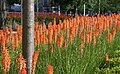
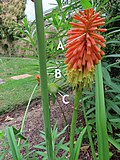
Kniphofia (/nɪpˈhfiə/,[2] /nɪˈffiə/,[3][4] /nɪfˈfiə/[5]) is a genus of perennial flowering plants in the family Asphodelaceae, first described as a genus in 1794.[6] All species of Kniphofia are native to Africa. Common names include tritoma, red hot poker, torch lily and poker plant.

Description

[edit]

The genus has herbaceous and evergreen species. The herbaceous species and hybrids have narrow, grass-like leaves 10–100 cm (4–39 in) long, while evergreen species have broader, strap-shaped foliage up to 1.5 m (5 ft) long. All plants produce spikes of upright, brightly coloured flowers well above the foliage, in shades of red, orange and yellow, often bicoloured.[7] The flowers produce copious nectar while blooming and are attractive to bees and nectar-feeding birds such as sugarbirds and sunbirds.[8] The Ethiopian wolf (Canis simensis) has been observed to feed on the nectar produced by Kniphofia foliosa;[9] they are thought to be the only macropredator known to potentially act as a pollinator.[10] In the New World, they may attract nectarivores such as hummingbirds and New World orioles.[citation needed]

Taxonomy

[edit]

The genus Kniphofia was first erected by Conrad Moench in 1794.[11] Moench considered the species he was describing (now Kniphofia uvaria) sufficiently different from Carl Linnaeus's genus Aletris and from Veltheimia to warrant a new genus.[12] The name honours Johann Hieronymus Kniphof, an 18th-century German physician and botanist.[13]

Species

[edit]

As of February 2025, Plants of the World Online accepted 73 species, including two hybrids.[1]

Cultivation

[edit]

Several species of Kniphofia are cultivated as garden plants, valued for their architectural properties. These include K. galpini, K. northiae, K. rooperi and K. thomsonii.

In addition to the species, many named cultivars of mixed or uncertain parentage have been selected for garden use. The following have gained the Royal Horticultural Society's Award of Garden Merit:-[15]

  • 'Barton Fever' [16] (orange-white, 100 cm)
  • 'Bees' Sunset' [17] (yellow, 90 cm)
  • 'Brimstone' [18] (sulphur yellow, 90 cm)
  • 'Buttercup' [19] (clear yellow, 75 cm)
  • 'Coral Flame' [20] (coral red, 90 cm)
  • 'Fiery Fred' [21] (orange, 130 cm)
  • 'Incandesce' [22] (orange, 140 cm)
  • 'Innocence' [23] (red-yellow, 110 cm)
  • 'Jonathan' [24] (red-orange, 130 cm)
  • 'Moonstone' [25] (yellow, 120 cm)
  • 'Nobilis' [26] (evergreen, orange and yellow, 150 cm+)
  • 'Penny Rockets' [27] (orange, 100 cm)
  • 'Primrose Upward' [28] (yellow, 115 cm)
  • 'Rich Echoes' [29] (orange-yellow, 120 cm)
  • 'Royal Standard' [30] (red and yellow, 90 cm)
  • 'Safranvogel' [31] (peach pink, 80 cm)
  • 'Samuel's Sensation' [32] (red-yellow, 150 cm)
  • 'Sunningdale Yellow' [33] (orange and yellow, 60 cm)
  • 'Tawny King' [34] (cream/brown, 120 cm)
  • 'Timothy' [35] (orange, 100 cm)
  • 'Toffee Nosed' [36] (cream/brown, 100 cm)
  • 'Wrexham Buttercup' [37] (yellow, 120 cm)
[edit]

See also

[edit]

References

[edit]
[edit]
Revisions and contributorsEdit on WikipediaRead on Wikipedia
from Grokipedia
Kniphofia is a of approximately 71 of , acaulescent herbaceous in the family , characterized by thick rhizomes, basal rosettes of linear to strap-shaped leaves, and tall, upright inflorescences bearing tubular to funnel-shaped flowers in vibrant shades of red, orange, yellow, or white. Commonly known as red-hot pokers, torch lilies, or poker plants, these clump-forming perennials produce striking, bottlebrush-like racemes that emerge from the foliage and often display a from scarlet buds to yellow mature blooms, attracting pollinators such as bees and sunbirds with copious . Native to diverse habitats across , including montane grasslands, savannas, alpine regions, and coastal areas, Kniphofia typically grow in well-drained soils and range in height from dwarf forms around 1-2 feet to towering specimens up to 6 feet, with most being though some are . The genus, first described in 1794 and named after the 18th-century German botanist and physician Johann Hieronymus Kniphof, belongs to the subfamily and exhibits a primarily distribution, with the highest diversity in —45 species endemic to alone—followed by 23 in tropical , two in , and one in on the . Taxonomically, Kniphofia is distinguished by its keeled leaves with smooth to serrulate margins, scarlet or brown bracts subtending the flowers, and fruits that are globose to ovoid capsules containing flattened or winged seeds. Ecologically, these plants play roles in fire-prone ecosystems and are adapted to varying water availability, from moist montane slopes to drier coastal dunes, contributing to in and alpine vegetation. Widely cultivated as ornamentals in temperate and subtropical gardens worldwide, Kniphofia species and hybrids are prized for their bold architectural form, extended bloom period from summer to fall, and drought tolerance once established, though they require full sun and protection from winter wet in cooler climates. Beyond horticulture, several species hold ethnomedicinal value in African traditional practices for treating ailments like wounds, infections, and gastrointestinal issues, owing to their rich phytochemical profile including anthraquinones, phenolics, and flavonoids, which also underpin emerging pharmacological research into anti-inflammatory and antimicrobial properties. Conservation concerns affect some taxa due to habitat loss from agriculture and urbanization, particularly in South Africa's biodiversity hotspots, highlighting the need for sustainable propagation and protection of wild populations.

Etymology and History

Naming Origin

The genus Kniphofia was established in 1794 by German Conrad Moench to honor Johann Hieronymus Kniphof (1704–1763), a prominent German physician, , and of at the , whose innovative use of nature printing in advanced the field significantly. Kniphof's seminal work, Botanica in originali seu herbarium vivum (first published in 1737 and expanded posthumously), featured over 1,000 high-fidelity plant impressions created by pressing specimens onto paper and inking them, creating a "living " that preserved accurate details of German flora for scientific study. This technique influenced later and earned Kniphof recognition as a pioneer in visual . Plants in the genus Kniphofia are commonly known as "red hot poker," "torch lily," or "poker plant" in English-speaking regions, names inspired by the vivid, upright inflorescences that transition from red or orange at the base to yellow or cream at the tips, evoking the image of a glowing poker or flaming used to stir embers. These descriptors highlight the dramatic, torch-like spikes that can reach up to 1.5 meters in height, making the a striking feature in gardens worldwide. Regional variations in common names reflect local cultural interpretations of the plants' fiery appearance and form; for instance, in , where most species are native, they are often called "vuurpyl" (Afrikaans for "fire arrow") or simply "poker," emphasizing the arrow-shaped, flame-colored flower heads. Such names underscore the genus's ornamental appeal and its adaptation to diverse linguistic contexts across and beyond.

Botanical Exploration

The earliest European accounts of Kniphofia species date to the 18th century, with Carl Linnaeus describing what is now known as Kniphofia uvaria as Aloe uvaria in his Species Plantarum in 1753, based on a specimen from the Cape of Good Hope. Linnaeus later reclassified it under Aletris in 1771, reflecting the limited understanding of its distinct characteristics at the time. These initial descriptions arose from colonial trade routes that brought dried plants and illustrations from South Africa to European herbaria, though pre-Linnaean references, such as a 1644 mention of "Iris uvaria" by Johannes Bodaeus a Stapel, had already noted similar torch-like inflorescences. Botanical exploration intensified in the late through expeditions sponsored by institutions like , with Francis Masson, Kew's first official plant collector, playing a pivotal role during his voyages to in the 1770s and 1780s. Masson introduced several Kniphofia species to cultivation, including K. ensifolia around 1780 and likely K. sarmentosa by 1789, collecting specimens from coastal and inland regions during extended stays at the . His efforts, supported by figures like , facilitated the first living plants reaching European greenhouses, enabling detailed studies of their morphology beyond pressed sheets. In the early , William John Burchell extended exploration into more remote South African interiors during his 1810–1815 expedition, gathering numerous Kniphofia specimens that clarified species distributions and variations. Burchell's collections, such as specimen 2554 of K. ensifolia from the and material later synonymized as Tritoma burchellii (a form of K. uvaria) in 1836, provided critical data on preferences like montane grasslands and riverbanks. These expeditions, often tied to colonial surveys, amassed thousands of plants, with Kniphofia exemplifying the genus's to diverse African ecosystems. The genus Kniphofia was formally established by Conrad Moench in 1794, who separated Aloe uvaria L. as Kniphofia alooides to recognize its unique poker-like flower spikes and grass-like foliage, distinct from aloes. Joseph Henry Schultes contributed to its early consolidation in 1826, describing Kniphofia sarmentosa (introduced earlier by Masson) in the context of Thunberg's Flora Capensis, emphasizing its stoloniferous habit and evergreen leaves. This work built on pre-1800 specimens in European collections, such as those at the British Museum and Geneva, which supported the genus's separation from related taxa. Taxonomic understanding evolved significantly from the 19th to 20th centuries, with Kniphofia initially placed in due to its bulbous allies and lily-like flowers, as outlined in early floras like those of Andrews (1799) and Kunth (1843). John Gilbert Baker's 1896 revision recognized 32 South African species within , focusing on structure and morphology, while Ernst Berger's 1908 expanded to 67 species worldwide, incorporating African . By the mid-20th century, molecular and anatomical studies prompted reclassification into , as detailed in L.E. Codd's 1968 treatment, which grouped 45 South African species into 10 sections based on geography and floral traits, reflecting the family's succulent and xerophytic affinities.

Description

Morphological Characteristics

Kniphofia species are herbaceous that grow from or short caudex-like bases, forming dense clumps typically reaching 1 to 2 meters in height. They exhibit an acaulescent habit, lacking prominent aboveground stems, and develop strong, fibrous roots from the , which may branch to produce offsets in some species. The leaves are arranged in basal rosettes, linear to lanceolate in shape, and grass-like in appearance, measuring 30 to 100 cm in length and 1 to 3 cm in width. They are often keeled along the midline with margins that range from smooth to finely serrulate, and in milder climates, the foliage remains , while in others. Inflorescences arise from tall, erect scapes that extend 0.5 to 2 meters above the foliage, bearing dense, cylindrical to sub-capitate racemes of tubular flowers. The flowers, 2 to 5 cm long, are typically bicolored, featuring vibrant upper segments in shades of or orange transitioning to at the base, though variations include pure , cream, or deeper hues across the . Individual flowers consist of six tepals fused into a cylindrical to campanulate tube, with sub-equal lobes at the apex. They possess six stamens, arranged in two whorls—the outer shorter than the inner—with introrse, two-celled anthers, and an inferior, trilocular ovary that becomes unilocular toward the apex, featuring parietal and numerous ovules. After , the ovary develops into a globose to ovoid capsule, approximately 3-angled, which undergoes loculicidal dehiscence to release flattened, often winged seeds. Morphological variations among Kniphofia species include differences in overall stature and coloration; for instance, dwarf forms like Kniphofia pumila remain under 0.5 meters tall with compact inflorescences, while taller species such as Kniphofia rooperi can exceed 1.5 meters with elongated, fiery red spikes. These traits aid in identification and reflect adaptations to diverse environmental conditions.

Life Cycle and Reproduction

Kniphofia are rhizomatous perennials characterized by a distinct life cycle involving periods of active growth, flowering, and . In their native African habitats, these exhibit robust vegetative growth during the warmer months, producing strap-like leaves from basal rosettes, followed by a resting phase during drier or cooler seasons. When cultivated in temperate regions, they typically enter in winter, with new shoots emerging in spring as temperatures rise, allowing for renewed growth through summer. Flowering occurs seasonally, primarily from summer to autumn in their native range, with individual inflorescences displaying a sequential blooming pattern that begins at the base of the and progresses toward the tip over a period of one to two months. This gradual opening of tubular flowers ensures a prolonged display and resource availability within each spike. Mature can produce multiple flower stalks per season, contributing to their ornamental value. Reproduction in Kniphofia is predominantly sexual through production, though many exhibit , preventing successful fertilization by their own and necessitating cross-pollination for viable set. For instance, such as K. caulescens and K. laxiflora demonstrate genetic , relying entirely on external pollinators to achieve . Vegetative occurs naturally via division or the formation of offsets, enabling clonal spread and colony formation in suitable habitats. Following , fertilized ovaries develop into dehiscent capsules containing numerous small, dark brown , which are primarily dispersed by , with potential wind assistance in open environments. of these requires exposure to and consistent , typically occurring within 2 to 4 weeks under warm conditions around 15–24°C, though fresh yields higher success rates than aged material. In cultivation, Kniphofia's propensity for hybridization has resulted in numerous cultivars, many of which are fertile and produce viable offspring, while others, such as certain patented hybrids like 'Redhot Popsicle', are sterile and propagated solely vegetatively. These hybrids often combine traits from multiple , enhancing color variation and adaptability but sometimes leading to reduced due to chromosomal incompatibilities.

Taxonomy

Classification and Phylogeny

Kniphofia is classified in the subfamily within the family , as defined by the IV (APG IV) classification system published in 2016. This placement reflects a broader circumscription of sensu lato, incorporating former families such as Xanthorrhoeaceae and sensu stricto. Historically, the genus was included in the before led to its reassignment. Phylogenetic analyses, particularly those conducted in the 2000s using chloroplast DNA markers such as the trnT-L spacer and trnT-F region, along with nuclear (ITS) sequences, have confirmed the of Kniphofia. These studies highlight shared synapomorphies including an loss in the 3’ rps12 locus and specific floral and seed traits, such as the unique torch-like inflorescences and winged seeds. Within the , Kniphofia occupies a basal position, emerging as sister to the genus Bulbinella, with both forming a alongside genera like Eremurus and Trachyandra. This positioning underscores the genus's evolutionary ties to other elements in the subfamily. Subgeneric divisions within Kniphofia remain informal, primarily based on morphological and genetic data from regional revisions. Early taxonomists like (1908) proposed 14 sections, while Codd (1968) recognized 10 informal groups for southern African species, distinguishing tall-stemmed forms akin to the "uvaria" complex from more compact or dwarf varieties such as those resembling K. northiae, though these groupings show limited congruence with molecular phylogenies. Contemporary analyses identify five major clades, four restricted to southern and one spanning eastern and tropical to , reflecting geographic rather than strictly morphological patterns. Taxonomic challenges persist due to high intraspecific variation, frequent hybridization, and incomplete lineage sorting, which often result in non-monophyletic species assemblages and extensive synonymy. Recent revisions, building on Codd's southern African flora, accept approximately 70–71 species across the genus, with ongoing adjustments for under-collected regions and complicating delimitation. These issues highlight the need for integrated morphological, anatomical, and genomic approaches to refine the .

Species Diversity

The genus Kniphofia encompasses approximately 71 accepted , nearly all native to , where the majority occur and is particularly pronounced in with around 47 . This diversity reflects the genus's concentration in regions of high botanical richness, with only a few extending to tropical , , and one to . Prominent examples include , the type species characterized by tall inflorescences featuring red upper flowers fading to yellow below. K. northiae stands out for its compact form and distinctive blue-green foliage, while K. rooperi serves as a key parent in many horticultural hybrids due to its robust growth. Additionally, K. caulescens is recognized for its winter-flowering habit, producing pale yellow spikes in cooler months. Diversity patterns in Kniphofia show a notable within the Cape Floristic Region, contributing significantly to the area's endemic flora, alongside broader distributions. Species occupy a wide altitudinal range, from coastal lowlands to montane grasslands reaching elevations of up to 3,000 m, adapting to varied climatic conditions across these habitats. Taxonomic revisions, informed by genetic studies, have refined species boundaries, with the Kew World Checklist of Vascular Plants updating the total to 71 accepted species as of 2023; for instance, earlier synonymies have been reassessed to highlight cryptic diversity in southern African populations.

Distribution and Habitat

Native Geographic Range

Kniphofia species are native to continental , with their distribution spanning from the southern tip in northward to and , encompassing a range of tropical to temperate zones across eastern and southern regions. The genus includes approximately 70–73 species, nearly all confined to , though disjunct populations occur with two species endemic to and one in . This African-Malagasy pattern reflects the genus's evolutionary ties to the continent's diverse montane landscapes. The core geographic range centers in , where the highest species diversity is concentrated in the Mountains, , and provinces, extending into adjacent areas of , (formerly Swaziland), and . hosts around 45–47 species across all , with supporting the greatest number, and species richness notably decreasing northward toward . This southern African focus underscores biogeographic patterns tied to grasslands, where the majority of species thrive in subtropical to temperate climates at elevations from coastal lowlands to high montane habitats. High characterizes the in southern African hotspots, with the South African center representing the largest and most species-rich area, where over 60% of all Kniphofia species are found exclusively or predominantly. Beyond their native ranges, Kniphofia has been widely introduced and naturalized as ornamentals in , , , and various parts of the , occasionally becoming invasive in regions like and southeastern .

Habitat Preferences

Kniphofia species predominantly occupy diverse ecosystems across , favoring well-drained grasslands, montane , rocky slopes, and stream banks, where they often form clumps in moist to semi-moist conditions. In , many thrive in mountain grasslands and seepage areas, while in tropical and eastern regions, they exhibit a strong affinity for and Afroalpine grasslands, including transitional forests and swamp vegetation. For instance, species like K. uvaria are commonly found in and post-fire landscapes, and K. linearifolia occurs along stream banks and in marshy places. These plants are adapted to climates ranging from Mediterranean winter-rainfall patterns in the southwestern to summer-rainfall regimes in eastern and tropical , with annual typically between 500 and 1,500 mm supporting their growth in wetter montane zones. Highland species demonstrate frost tolerance, enabling persistence at elevations up to 3,000 m, as seen in habitats where cooler temperatures prevail. In contrast, coastal and lowland forms endure milder conditions near sea level. Kniphofia prefers neutral to slightly acidic soils with a of 5.5 to 7.0, often well-drained sandy, loamy, peaty, or rocky substrates such as or black clay, which prevent waterlogging while retaining moisture in seepage zones. Elevations span from 0 to 3,000 m, with many species concentrated in mid- to high-altitude montane areas; in ecosystems, they associate with shrubs like and Erica, contributing to the sclerophyllous on nutrient-poor, oligotrophic soils. Key adaptations include thick rhizomes that facilitate and vegetative regeneration, allowing survival in seasonal dry periods and fire-prone grasslands where species like K. uvaria flower post-burn. Fire tolerance is evident in serotinous flowering responses, while some taxa exhibit wetland affinity; for example, K. linearifolia and K. fluviatilis grow in marshy areas or partly submerged in running water, leveraging rhizomes for stability in saturated soils.

Ecology

Pollination Mechanisms

Kniphofia species exhibit adaptations for , primarily pollinated by nectar-feeding birds such as sunbirds (Cinnyris spp. and Chalcomitra spp.) and sugarbirds (Promerops spp.), which are attracted to the vivid red to orange tubular flowers. These birds probe the flowers for , effecting cross- through contact with anthers and stigma, as Kniphofia is predominantly self-incompatible and depends on external vectors for . Recent research has also documented nectar foraging by Ethiopian wolves (Canis simensis) on K. foliosa in the , suggesting they may contribute to as the first known canid pollinators, with transfer occurring via their muzzles. Floral traits supporting bird pollination include long corolla tubes measuring 3–4 cm, which match the bill lengths of these specialist nectarivores, and copious nectar production of up to 16 microliters per flower with concentrations around 12–18%. Anthesis is diurnal, with nectar secretion peaking in the morning and late afternoon to coincide with bird foraging activity, enhancing visitation rates. The hexose-dominant nectar (primarily glucose and fructose) further suits the dietary preferences of these avian pollinators. Secondary pollinators include insects such as butterflies (Aeropetes tulbaghia) and bees in species with shorter corolla tubes, though their contribution is limited compared to birds due to lower contact efficiency with reproductive structures. In isolated populations, rare self-pollination may occur via geitonogamy, but overall seed set remains low without animal vectors, underscoring the reliance on biotic pollination. Studies from South African populations demonstrate high efficiency by birds; for instance, in K. caulescens, inclusion of bird visitors increased set by over 80% and number per by approximately 50% relative to insect-only . Similarly, in K. laxiflora, open-pollinated inflorescences showed significantly higher and production than those excluding birds, confirming their primary role in .

Ecological Interactions

Kniphofia species play a role in food webs by providing substantial rewards that support various and consumers, contributing to energy transfer within ecosystems. These plants form endomycorrhizal associations with arbuscular mycorrhizal fungi, which enhance uptake, particularly in nutrient-poor soils typical of their native habitats. In fire-prone fynbos ecosystems, Kniphofia exhibits fire-stimulated flowering, with species like K. uvaria producing prolific blooms in the first post-fire season due to increased availability and release from , facilitating seed-based and supporting post-disturbance recovery. Carbohydrate reserves in rhizomes and bulbs accumulate rapidly post-fire, up to three times pre-fire levels, aiding plant persistence and seedling establishment. In non-native ranges such as , has become an , forming dense clumps that outcompete native vegetation, increase nutrient levels to favor further invasions, and alter structures in coastal areas, thereby reducing native diversity.

Cultivation

Propagation Techniques

species and hybrids are commonly propagated by , which should be sown fresh in spring on the surface of a moist, well-drained , as the seeds require light for and do not need covering with . Optimal temperatures range from 15–20°C, with fresh seeds typically achieving good rates within 21–42 days, though older seeds may germinate erratically or fail altogether. No cold stratification is required for most . Vegetative propagation through division is the preferred method for maintaining desirable traits in cultivars and hybrids, as it produces genetically identical plants. Established clumps should be divided in early spring or autumn, carefully separating sections of the to ensure each piece includes viable roots and shoots. This approach is reliable for mature plants, typically rejuvenating clumps every 3–4 years to promote vigorous growth. Tissue culture techniques, particularly , are employed for rapid multiplication of hybrids and conservation of rare or such as Kniphofia leucocephala and K. pauciflora. Shoot tips or meristems are cultured on Murashige and Skoog (MS) medium supplemented with cytokinins like benzyladenine (BA) to induce multiple shoot formation, followed by rooting on auxin-enriched medium. This method can yield up to 200 shoots from a single explant after five 4-week cycles, enabling large-scale production for reintroduction into habitats. Propagation challenges include a slow juvenile phase, with seedlings or divisions often requiring 1–2 years to reach flowering maturity. Additionally, seeds from hybrid cultivars exhibit high variability and rarely produce plants true to the parent, necessitating vegetative methods for uniformity.

Cultivation Requirements

Kniphofia species thrive in full sun, requiring at least six hours of direct sunlight daily to promote robust growth and prolific flowering, though they can tolerate light afternoon shade with reduced blooms. Many Kniphofia species and hybrids are hardy in USDA zones 5 through 9, though hardiness varies by species, with some requiring warmer conditions or additional winter protection; they perform best in temperate climates but benefit from winter mulching in cooler regions to protect crowns from frost. Well-drained soil is essential to prevent root rot, particularly in areas prone to winter wetness; heavy clay soils should be amended with grit, sand, or organic matter to improve drainage and aeration. The ideal soil pH ranges from 6.0 to 7.5, supporting optimal nutrient uptake in fertile, loamy conditions. Watering should be moderate during the active to establish strong , with becoming drought-tolerant once mature and needing only occasional deep watering during prolonged dry spells. Overwatering, especially in poorly drained sites, can lead to crown rot, a common issue that causes basal decay and plant loss. For fertilization, apply a low-nitrogen, balanced slow-release formula in early spring to encourage flowering without excessive foliage growth; over-fertilizing with high-nitrogen products may reduce bloom production. Maintenance involves deadheading spent flower spikes to prolong blooming and tidy the plant, while leaving basal foliage intact through winter for natural protection. In colder zones, a 2- to 3-inch layer of around the base in late fall helps insulate roots against freezing temperatures. Slugs and snails often target the succulent foliage, particularly in damp conditions, and can be managed through cultural controls like barriers or organic baits. Reliable cultivars such as 'Royal Standard', known for its tall, bicolor spikes and vigorous habit, offer consistent performance across suitable sites.

Uses and Conservation

Ornamental and Traditional Uses

Kniphofia species, commonly known as red hot pokers or torch lilies, are widely valued in ornamental for their striking, upright flower spikes that provide vertical accents and vibrant summer color in borders, xeriscapes, and plantings. These perennials thrive in sunny, well-drained locations, offering architectural interest through their grass-like foliage and torch-like blooms in shades of red, orange, yellow, and cream. Numerous cultivars have been developed since the , enhancing color variety and bloom timing; for example, 'Bee's Lemon' features bright yellow flowers ideal for softer-toned landscapes. In landscape design, Kniphofia plants attract pollinators such as bees and hummingbirds to garden settings, boosting biodiversity while requiring minimal maintenance once established. Their flowers also serve as excellent cut material, lasting 7-10 days in vases when harvested in the morning and treated with floral preservatives. Traditional uses of Kniphofia among South African indigenous communities include medicinal applications, particularly by Xhosa people who employ root infusions to treat infertility and chest complaints. Various species are used for wound treatment and as emetics in folk medicine, with roots and rhizomes prepared as decoctions for abdominal issues and inflammation. Additionally, leaves of some species, such as Kniphofia uvaria from the Cape Province, provide fiber for weaving baskets and mats in local communities. Kniphofia sap acts as a mild irritant, potentially causing dermatitis or eye irritation upon contact, so gloves are recommended during handling. The plants are non-toxic to pets if not ingested, though consumption may lead to mild gastrointestinal upset.

Conservation Status

Kniphofia species face varying levels of threat, with assessments primarily conducted through the South African National Biodiversity Institute (SANBI) Red List of South African Plants, as most species are endemic to the region. Approximately 20% of the approximately 51 South African Kniphofia taxa are classified as threatened, including categories of Critically Endangered (CR), Endangered (EN), and Vulnerable (VU), while the majority are Least Concern (LC) or Rare. For instance, Kniphofia latifolia is assessed as Endangered due to ongoing habitat loss from at its few fragmented sites. Similarly, Kniphofia leucocephala is Critically Endangered, restricted to a single location threatened by urban development. These evaluations align with IUCN criteria adapted for national use, highlighting the genus's vulnerability within the hotspot. Major threats to Kniphofia include from and infrastructure development, such as construction, which has already submerged subpopulations of species like Kniphofia flammula. and by livestock degrade and habitats preferred by many species, as seen in Kniphofia drepanophylla, while altered regimes—too frequent or infrequent—disrupt seedling recruitment and population dynamics. exacerbates these issues by shifting cycles, potentially leading to increased intensity and reduced post-fire recovery for fire-dependent species; studies indicate that warmer, drier conditions are heightening danger periods across , posing risks to montane and populations. Invasive alien plants compete in some areas, though this is less documented than other pressures. Conservation efforts focus on protection within South African reserves, where species like Kniphofia tabularis are safeguarded in , part of the Cape Floral Region . Ex situ initiatives include seed banking and living collections at , which maintains threatened taxa such as the Critically Endangered Kniphofia pauciflora, known from a single small wild population, and supports propagation for potential reintroduction. The SANBI Threatened Species Programme monitors populations and promotes habitat restoration, emphasizing integrated fire management to mimic natural cycles. Despite these measures, no Kniphofia are currently listed under Appendices. Ongoing research highlights gaps in understanding , which is crucial for developing climate-resilient cultivars through , given the genus's recent radiation and vulnerability to environmental shifts.

References

Add your contribution
Related Hubs
User Avatar
No comments yet.