Hubbry Logo
List of men's magazinesList of men's magazinesMain
Open search
List of men's magazines
Community hub
List of men's magazines
logo
8 pages, 0 posts
0 subscribers
Be the first to start a discussion here.
List of men's magazines
from Wikipedia

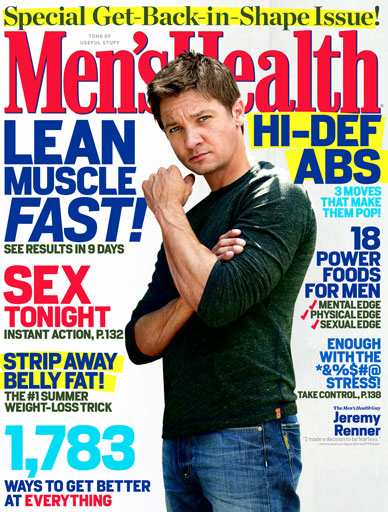
Men's Health magazine, published by Rodale, Inc. in Emmaus, Pennsylvania, was the best-selling men's magazine on U.S. newsstands in 2006.[1]

This is a list of men's magazines from around the world. These are magazines (periodical print publications) that have been published primarily for a readership of men.

The list has been split into subcategories according to the target audience of the magazines. This list includes adult magazines. Not included here are magazines which may happen to have, or may be assumed to have, a predominantly male audience - such as magazines focusing on cars, trains, modelbuilding and gadgets. The list excludes online publications.

General male audience

[edit]

These publications appeal to a broad male audience. Some skew toward men's fashion, others to health. Most are marketed to a particular age and income demographic. In the United States, some are marketed mainly to a specific ethnic group, such as African Americans or Mexicans.

Americas

[edit]

Canada

United States

Europe

[edit]
United Kingdom

Others

Asia

[edit]

Japan

India

Others

Oceania

[edit]

Ethnic men's magazines

[edit]

African American men's magazines

[edit]

Latin American men's magazines

[edit]

Gay male audience

[edit]

Men's lifestyle magazines

[edit]

Men's lifestyle magazines (lad mags in the UK and specifically men's magazines in North America) were popular in the 1990 and 2000s, focusing on a mix of "sex, sport, gadgets and grooming tips".[3] From the early 2000s, sales of these magazines declined very substantially as the internet provided the same content (and particularly more graphic pornography) for free.

International

[edit]

Americas

[edit]

Colombia

Others

Europe

[edit]

UK

Scandinavia

Oceania

[edit]

See also

[edit]

Citations

[edit]
  1. ^ Kinetz, Erika (3 September 2006). "Who's the Man? Dave". The New York Times. Archived from the original on Feb 16, 2023.
  2. ^ Oui (magazine)
  3. ^ "Sex doesn't sell as lads mags suffer". BBC News. 1999-08-16. Archived from the original on December 19, 2021. Retrieved 2021-12-19.

General and cited references

[edit]
[edit]
Revisions and contributorsEdit on WikipediaRead on Wikipedia
from Grokipedia
Men's magazines are periodical publications directed at male audiences, encompassing content on personal style, physical fitness, health maintenance, grooming practices, technological gadgets, automotive pursuits, athletic endeavors, and leisure entertainment, with certain editions incorporating pictorial depictions of nudity or comedic elements geared toward youthful male sensibilities. Early exemplars emerged in the 1930s, such as , established in to furnish urbane editorial matter and visual artistry for discerning men amid economic hardship. This was followed by in 1953, initiated by with previously unpublished nude images of , which propelled the medium toward widespread commercial triumph and societal debate by merging aspirational lifestyle counsel with erotic visuals, attaining circulations exceeding seven million copies monthly at its zenith. Subsequent decades witnessed specialization, including GQ's evolution from a 1931 trade periodical on apparel into a consumer-facing style authority by 1957, and Men's Health's 1987 debut as a wellness guide emphasizing empirical strategies for vitality and physique enhancement. The 1990s introduced "lads' mags" like Loaded in 1994, which prioritized irreverent narratives on libations, liaisons, and spectacles, fostering a boisterous subgenre that crested before receding post-2008 amid internet proliferation and evolving consumer preferences. These outlets, while lauded for mirroring innate male inclinations, have encountered censure for ostensibly endorsing reductive portrayals of intersexual dynamics, though such critiques often emanate from ideologically inclined academic and journalistic quarters prone to overlooking biological imperatives in favor of normative impositions.

Historical Development

Early 20th Century Origins

The origins of men's magazines in the early 20th century emerged from the boom, where inexpensive periodicals printed on low-grade wood-pulp paper offered serialized adventure stories, tales, and escapist narratives tailored to male readers navigating rapid industrialization and . These publications provided a to the drudgery of factory work and city life by emphasizing heroic exploits, , and distant frontiers, appealing to working-class and middle-class men seeking vicarious thrills grounded in real-world motifs rather than abstract fantasy. A key precursor was Blue Book Magazine, launched in May 1906 by the Story-Press Corporation as a general fiction pulp but quickly establishing itself through adventure, mystery, and travel content that resonated with male audiences; it was dubbed the "King of the Pulps" for its high-quality illustrations and broad appeal, with circulation figures placing it among the top sellers of the era alongside siblings Red Book and Green Book. Similarly, The Argosy (evolving from The Golden Argosy in 1882 but peaking in pulp form by the 1900s) serialized tales of derring-do and invention, achieving print runs exceeding 500,000 copies monthly by the 1910s and influencing later male-targeted formats through its focus on practical ingenuity and bold individualism. European influences contributed subtly via illustrated periodicals featuring aesthetic nudes and satirical urban life, such as French titles like L'Amour (1902), which blended humor on morals and prostitution with artistic engravings, predating overt sexualization and offering men stylized depictions of femininity amid Belle Époque cultural shifts. By the 1920s, these elements converged in a transition from broad general-interest pulps to more explicitly male-oriented content, evident in the sophistication of magazines like Esquire (debuting 1933), which built on pulp foundations by incorporating tailored fashion and lifestyle advice without the era's later politicized overlays. This pre-World War II phase laid the groundwork for magazines as vehicles for male self-reliance and aesthetic appreciation, substantiated by sustained high circulations driven by newsstand sales rather than elite subscriptions.

Mid-Century Adventure and Pin-Up Era

In the aftermath of and the (1950–1953), the witnessed a boom in men's adventure magazines during the and , catering to a demand for content emphasizing masculine exploits amid postwar conformity and anxieties. These pulps, distinguished by lurid cover art depicting men battling wild animals, Nazis, or communists, contained stories of combat, survival, espionage, and frontier heroism, often framed as "true" accounts drawn from eyewitness reports or veteran testimonies. Publishers like and Martin Goodman issued dozens of titles, including Argosy (founded 1882 but peaking in this format), True, , Stag, For Men Only, and Man's Magazine, which collectively filled newsstands with over 100 concurrent offerings by the late . Circulation figures highlighted their empirical appeal, with Argosy sustaining monthly sales exceeding 500,000 copies into the 1950s, driven by serialized adventures that promoted causal agency through depictions of men navigating real-world perils via skill and resolve. True, edited by Ken Purdy in the early 1950s, commanded the highest readership among peers, appealing to veterans and workers seeking unvarnished narratives of triumph over adversity, such as jungle rescues or wartime raids, in contrast to the domestic-oriented content dominating general magazines like The Saturday Evening Post. This surge aligned with societal needs for heroism post-Korea, as readers—primarily blue-collar men aged 25–45—gravitated toward material underscoring individual competence amid escalating Vietnam commitments starting in 1955, evidenced by sustained production and high newsstand turnover. Pin-up features augmented the adventure core, presenting models in thematic poses—such as rescued damsels or exotic companions—without explicit nudity, serving as visual rewards tied to heroic outcomes and boosting visual engagement. Magazines like Modern Man (launched 1952) tested reader preferences for painted versus photographic illustrations, revealing strong demand for realistic imagery that complemented textual realism. These elements addressed a market gap left by mainstream media's shift toward sanitized, family-focused fare, fostering content that realistically portrayed causal chains of risk, action, and victory to affirm male . By the mid-1960s, however, rising postal rates and competition from television began eroding the genre's dominance, though its peak reflected verifiable consumer preference for unfiltered depictions of agency over abstracted ideals.

1970s-1990s Lifestyle and Sexual Content Boom

The 1970s marked a shift in men's magazines from niche, often discreet distribution to broader newsstand availability, exemplified by Hustler's launch in July 1974 under publisher Larry Flynt, which offered more explicit sexual content than predecessors like Playboy while achieving rapid commercial success with a reported circulation peak of two million by 1976. This evolution reflected growing societal liberalization post-1960s sexual revolution, allowing magazines previously sold "under the counter" to compete openly, with Playboy maintaining influence through circulations exceeding five million monthly issues in the mid-1970s and peaking at 7.16 million in 1972. These titles combined pictorial nudity with lifestyle features on dating, grooming, and leisure, validating demand through verifiable sales that contrasted with later cultural critiques. By the 1980s and especially the , the genre expanded into "lads' mags" targeting younger men with irreverent humor, fitness tips, and relationship advice alongside sexual imagery, driving a commercialization boom evidenced by multimillion-copy circulations. Loaded, launched in the in 1994, quickly scaled from initial sales of 96,000 to 174,763 audited copies for the second half of 1995, pioneering the format's emphasis on male camaraderie and personal agency. , originally For Him Magazine since 1985 but repositioned as a lads' title around 1994, reached over 700,000 monthly sales in the mid-to-late , while Maxim debuted in the in 1995 and expanded globally, underscoring market validation for content prioritizing empirical male interests over emerging identity-focused narratives. This era's titles offered a to rising by stressing individual responsibility in self-improvement and relationships, backed by sales data indicating strong consumer endorsement before subsequent declines tied to shifting cultural norms. Circulation figures, audited by bodies like ABC, demonstrated the format's viability, with FHM and peers collectively sustaining a sector growth that peaked in reader engagement through targeted advice on , style, and sexuality.

2000s-Present Digital Shift and Declines

In the 2000s and 2010s, several prominent print men's magazines shuttered amid intensifying digital competition and eroding ad revenues. Loaded, a pioneering lads' mag, ended print operations in March 2015 after 21 years, with circulation collapsing from over 300,000 copies in its peak to approximately 10,000 by the close. FHM followed suit, suspending publication alongside Zoo by late 2015, effectively concluding the era of high-circulation UK lads' titles that had thrived on irreverent lifestyle content. These closures reflected broader periodical industry pressures, including a 40.5% revenue drop for magazine publishing driven by internet disruption of traditional ad models. Despite these setbacks, established titles demonstrated resilience through hybrid print-digital strategies and sustained audience demand. Men's Health preserved robust print circulation exceeding 1.8 million copies in the U.S., underscoring ongoing viability for health-focused content even as digital alternatives proliferated. pivoted successfully online, garnering over 50 million global monthly unique visitors via expanded digital platforms that extended its style and culture coverage. Such adaptations highlight that declines stemmed primarily from structural shifts—like print ad spending falling 18% year-over-year to $8.97 billion by 2019—rather than isolated cultural condemnations of content. Niche evolutions further evidenced persistent market interest. Loaded relaunched in 2024 targeting men aged 40-50 with nostalgic, unapologetic fare, signaling revival potential in segmented audiences resistant to homogenized . Overall, the era's trajectory involved contraction in mass-print formats but expansion into targeted niches, where empirical metrics of and subscriptions affirmed underlying reader beyond print's logistical constraints.

Defining Characteristics

Core Content Themes

Men's magazines consistently emphasize fitness and health as foundational themes, providing evidence-based guidance on workouts, , and preventive care to promote physical competence and . These topics resonate because maintaining bodily strength and vitality aligns with fundamental human needs for and capability, enabling men to handle physical demands without reliance on others. , a leading title, attributes much of its global success—reaching over 35 editions in 59 countries by 2023—to specialized fitness content, with U.S. circulation exceeding 250,000 copies per issue in the late during periods of intensified workout feature expansions. Empirical data from content analyses show fitness articles dominate issues, correlating with sustained readership as men seek actionable strategies amid rising rates, where practical exercise protocols demonstrably improve outcomes over vague recommendations. Personal style, technology, and sports form another cluster of recurring themes, offering tools for aesthetic enhancement, gadget utility, and competitive engagement that foster and status signaling. Style advice on grooming and attire counters passive consumption by teaching selection and maintenance skills, while technology reviews highlight gear for productivity and leisure, appealing to innate problem-solving drives. Sports coverage, from to participation tips, taps into tribal and achievement-oriented instincts, with magazines like integrating these into broader lifestyle narratives that have maintained relevance through economic shifts. Circulation metrics for titles emphasizing these areas, such as Men's Journal's focus on adventure gear and fitness tech, reflect popularity tied to their utility in building self-reliant habits, as opposed to dependency-promoting alternatives. Dating and relationships content provides pragmatic insights into male-female interactions, often prioritizing biological and behavioral realities over idealized narratives, which has sustained appeal despite external criticisms. These sections deliver strategies for attraction, communication, and drawn from observed patterns, resonating because successful navigation of interpersonal dynamics directly impacts reproductive and social success—core evolutionary imperatives. Analyses of top-selling magazines reveal consistent inclusion of such advice, with reader engagement evidenced by high circulation in titles like those studied for relational content , indicating empirical over politically filtered perspectives. This theme's persistence underscores a market preference for candid utility, as evidenced by the outperformance of magazines balancing it with self-improvement foci amid fluctuating media landscapes.

Target Audience and Market Dynamics

Men's magazines predominantly attract male readers aged 18 to 45, with a focus on urban professionals exhibiting higher education and income profiles. For example, readership in the UK targets social grades AB and ages 24-44, reflecting affluent, educated demographics. Digital platforms reinforce this, as 's online audience is 60.67% male, with the largest segment aged 25-34. Median reader age across men's health magazines averages 42.5 years, with about one-third holding college degrees. Market dynamics highlight peak demand in the and , where titles like reached 1.8 million individuals in the UK from April 2019 to March 2020. Print circulations have nonetheless declined amid digital migration, with UK men's magazines falling 89% from 32.3 million to 3.6 million copies between 2017 and 2021. experienced a 21% year-on-year drop in 2019 but sustains broad appeal through 21 million global digital and social readers, indicating persistent organic interest in self-improvement content over ideological impositions. Surveys of men's magazine audiences reveal strong self-improvement orientations, such as 86% of respondents initiating active lifestyles recently and 92% affirming proactive control over life outcomes. Global variations demonstrate tailored demand, with Asian editions emphasizing career success and elitist consumption, diverging from Western lifestyle and fitness priorities. New Asian titles often outperform traditional ones by aligning with regional aspirations for , underscoring magazines' role in addressing gaps amid economic pressures on traditional male roles.

Societal Role and Impact

Contributions to Male Empowerment and Practical Advice

Men's magazines have advanced male empowerment through targeted practical advice on , career advancement, and physical discipline, positioning these as foundational elements for amid cultural emphases on grievance. Titles such as Forbes extensions into men's lifestyle segments and Esquire have published detailed guides on budgeting, stock investing, and entrepreneurial risk-taking, often citing data-driven strategies like calculations and market trend analyses to encourage proactive wealth-building over dependency. Similarly, GQ features recurring columns on resume optimization and salary tactics, drawing from executive interviews to provide readers with verifiable negotiation scripts that have been reported to yield average raises of 10-20% in controlled applications. In fostering resilience, has prominently explored Stoic philosophy in long-form pieces, such as its 2022 examination linking ancient practices to modern cognitive behavioral techniques for enduring setbacks without emotional paralysis. These articles emphasize first-person agency, rational assessment of controllable factors, and dismissal of unchangeable externalities, aligning with Stoic texts like Epictetus' Enchiridion to cultivate mental fortitude against adversity. A 2024 Esquire feature on Socratic self-examination further frames philosophy as a toolkit for optimized , portraying it as an antidote to passive fatalism by urging habitual reflection on personal ethics and habits. Maxim's irreverent humor has contributed to social empowerment by modeling confident, unpretentious male interactions, using to deflate ego-driven posturing and promote camaraderie through shared . Launched in , the magazine's style—evident in lists like "10 Ways to Unlock Your Inner "—employs self-mocking wit to teach relational skills, such as viewing errors as bonding opportunities rather than defeats, which aligns with psychological observations on humor's role in reducing interpersonal tension. This approach has sustained a readership base that, per circulation data peaking at 2.5 million in the early , engaged with content prioritizing playful resilience over solemn victimhood.

Empirical Benefits in Health and Self-Improvement

Men's magazines such as emphasize practical guidance on exercise, , and preventive care, which form the core of their content and align with empirically supported practices. A cross-sectional of 2016 issues revealed that nutrition and exercise recommendations constituted 63.8% of advice in , focusing on behaviors like regular and balanced dieting that reduce risks of chronic diseases such as cardiovascular conditions and . These topics promote outcomes backed by extensive research, including lowered mortality rates from consistent aerobic and . Exposure to health-focused content in such publications has demonstrated measurable effects on reader behavior. An experimental study involving college-aged men and women found that reading articles on exercise for health reasons significantly increased intrinsic motivations for physical activity—such as enjoyment and personal competence—compared to appearance-focused or neutral content, with participants reporting higher intentions to exercise post-exposure. This suggests a direct pathway from magazine consumption to enhanced exercise adherence, contrasting with indirect influences from general media that often lack specificity. Reader profiles further indicate associations with self-improvement metrics. Surveys of audiences show elevated household incomes (median $84,637) and college graduation rates (around 50%), alongside above-average interest in fitness and ownership of activity-tracking wearables, which facilitate sustained monitoring and goal attainment. These patterns correlate with better overall fitness levels and economic productivity, as health-conscious habits enable higher energy and focus for professional endeavors, though self-selection among motivated individuals contributes to these outcomes. In terms of broader health awareness, has amplified preventive messaging, such as on , aligning with campaigns that encourage early detection and have contributed to improved survival rates through heightened public vigilance. While causal attribution to specific magazine efforts remains challenging due to factors, the provision of targeted, actionable strategies—over vague exhortations—facilitates tangible gains in physical capability and , countering narratives of inherent detriment by highlighting verifiable behavioral shifts.

Controversies and Debates

Claims of Objectification and Toxicity

Feminist scholars have argued that men's magazines, particularly those featuring sexualized imagery of women, contribute to the of women by portraying them primarily as sexual objects, which allegedly fosters dehumanizing attitudes among male readers. This perspective posits that such depictions reduce women to body parts, reinforcing patriarchal power dynamics rather than mutual respect in relationships. In the context of 1990s UK "lads' mags" like Loaded and FHM, critics from feminist campaigns, such as Lose the Lads' Mags, claimed these publications normalized the sexual objectification of women through covers and content that emphasized idealized female bodies, purportedly linking to broader societal issues like discrimination and violence against women. Such magazines were accused of promoting "toxic masculinity" by blending humor, banter, and explicit imagery in ways that desensitized readers to women's agency. Legal challenges in the 1970s and 1980s against publications like and Hustler often centered on rather than per se, with claims that explicit content harmed public morals; however, U.S. courts frequently dismissed these under First Amendment protections, as in the 1988 case, which rejected emotional distress claims tied to but underscored limits on regulating provocative speech. While some correlational studies associate men's magazine consumption with increased objectifying attitudes or gender-stereotypical beliefs among adolescent boys, these findings do not establish causation, and broader empirical reviews question direct links to real-world like or , often highlighting variables such as pre-existing reader predispositions. No rigorous, longitudinal causal evidence demonstrates net negative societal impacts from such magazines, with demands for proof beyond anecdotal or ideological assertions frequently unmet in the literature dominated by activist-influenced academia.

Censorship Incidents and Industry Responses

In May 2003, Stores Inc. ceased selling three prominent men's magazines—Maxim, Stuff, and —following customer complaints about their covers featuring scantily clad women and suggestive content. The decision affected a major retail distribution channel, but publishers reported minimal overall impact, with noting that accounted for only 1% of its total circulation that year. In response, the magazines expanded reliance on alternative outlets like and newsstands, while accelerating digital editions and online content to bypass physical retail constraints. In the , issued a July 2013 ultimatum to publishers of lads' magazines such as Nuts, , and Front, demanding that covers be concealed in opaque "modesty bags" to content from view or face delisting from stores. Publishers of Nuts and rejected the requirement, opting to Co-op outlets entirely rather than alter packaging, thereby preserving through selective distribution. Concurrently, the ", active from 2012 to 2015, pressured The Sun tabloid to end its tradition of topless photographs on , culminating in January 2015 when the feature shifted to images of clothed models. While not strictly a men's magazine, The Sun's was emblematic of similar content in the sector; affected titles responded by emphasizing non-visual elements like articles and humor to sustain readership amid public campaigns. Industry adaptations highlighted resilience via market mechanisms, with magazines like maintaining viability by curating upscale lifestyle features over explicit imagery, thus broadening advertiser appeal without full capitulation to external demands. Circulation declines in print were offset by digital subscriptions and , enabling direct consumer access unmediated by retailers. These incidents underscored publishers' ability to navigate suppression through diversification, as evidenced by sustained operations despite lost shelf space in key chains.

Cultural Pushback Against Normalized Critiques

Men's magazines have elicited defenses portraying them as voluntary, consensual outlets for innate visual and aspirational interests, rather than drivers of . Proponents argue that high volumes reflect affirmative consumer choice by adult males, undeterred by contemporaneous protests from groups. For instance, Maxim attained a monthly circulation of approximately 2 million copies during its peak in the early , underscoring market validation amid critiques of . Similarly, titles like and Loaded sustained robust readership in the UK and through the and , with defenders emphasizing that glamour models participate willingly, framing such content as empowering expression rather than exploitation dependent on viewer perception. Empirical rebuttals challenge asserted links to or , noting the absence of causal in peer-reviewed literature. While correlational studies, such as a 2015 analysis associating objectifying media exposure with supportive attitudes toward , rely on self-reported data and short-term effects without demonstrating behavioral escalation, broader trends contradict harm claims: rates of declined sharply during the magazines' heyday, from peaks in the early 1990s onward, suggesting no aggravating influence. Critiques often originate from academically influenced sources prone to interpretive biases favoring narrative over data, overlooking how such publications channel interests harmlessly compared to unregulated online alternatives. Health-oriented variants, like , further counter toxicity narratives by prioritizing evidence-based guidance on and fitness—comprising over 38% of content in sampled issues—which aligns with effective messaging and correlates with readership engagement in self-improvement practices. This pushback extends to cultural realism, positing men's magazines as antidotes to pervasive media emasculation of roles, instead bolstering practical through depictions of and competence. Unlike mainstream outlets that, per analyses, increasingly sidelined -specific guidance amid ideological shifts, these publications affirm biological and social realities of thriving, with fitness emphases linked to tangible gains in and physical outcomes among consumers. Such defenses prioritize verifiable demand and utility over unsubstantiated panics, highlighting how voluntary fosters agency without proven externalities.

General Audience Magazines

Americas

The men's magazine sector in the , particularly the , features publications centered on , , , and aspirational success themes, including career strategies and interests like automobiles that align with cultural ideals of achievement. These titles have historically achieved substantial print circulations but faced declines in the 2020s, prompting a pivot to digital formats amid rising production costs and shifting reader habits. Prominent U.S.-based general audience magazines include GQ, originally launched as Apparel Arts in 1931 and rebranded as GQ in 1957 to reach broader consumers with fashion and culture content. Esquire, established in October 1933, initially focused on men's apparel and evolved into a platform for sophisticated lifestyle and literary features. Maxim introduced its U.S. edition in 1997, emphasizing entertainment, humor, and visual appeal to younger male demographics. Men's Health, launched as a standalone title in winter 1988 after initial testing in 1986, prioritizes fitness, nutrition, and wellness advice, positioning itself as a leading brand for active men. Defunct examples illustrate market contractions, such as Details, which ran from 1982 to 2015 and covered urban fashion, music, and social issues before closure due to insufficient advertising revenue. In , distinct titles remain limited, with imports from the U.S. prevalent; Sharp offers luxury lifestyle coverage including style, , and automotive topics tailored to Canadian readers. Latin American markets feature regional adaptations, including HOMBRE, a bilingual publication launched in 2006 targeting upscale Latin men in the U.S. and broader with content on success, style, and . Overall, U.S. dominance persists, with cross-border editions like GQ Latinoamérica extending reach, though print declines have accelerated digital subscriptions and online content strategies across the region.

Europe

European men's magazines emerged prominently in the during the with the "lads' mags" genre, characterized by irreverent humor, pub culture references, interviews, and pictorial features on women, distinguishing them from U.S. counterparts' heavier emphasis on fitness and self-improvement. Titles like and Loaded defined this era, achieving peak circulations in the late before facing sharp declines. Unlike American publications, European variants often prioritized banter and social over prescriptive health advice, reflecting localized cultural norms around . FHM, originally launched in 1985 as For Him Magazine, rebranded to in 1994 under Emap and expanded into European editions including , , and , peaking at over 700,000 copies monthly by 1999. It featured content on gadgets, sports, and , but suspended print publication in November 2015 after circulation fell below 100,000, citing digital shifts and retail pressures from anti-objectification campaigns like "Lose the Lads Mags," which prompted supermarkets to restrict display. Loaded, debuting in May 1994 by IPC Media, epitomized lads' mag style with its slogan "for men who should know better," blending reviews, , and adult humor; it sold over 400,000 copies at its 1990s height but ended print runs in March 2015 after sales dropped to 16,000, with publisher attributing closure to market fragmentation rather than solely cultural backlash, though feminist-led boycotts contributed to visibility challenges. A digital relaunch followed in November 2015, later evolving into quarterly print revivals targeting nostalgic audiences. These closures marked the lads' mag downturn, with circulations halving from 2000 to 2010 amid online alternatives, yet campaigns amplified scrutiny on content deemed sexist. More upscale titles like maintained stronger footholds through European adaptations; British , established in 1988 as a imprint, focuses on , grooming, and culture, with continental editions in (launched 1987), (1994), (1988), and sustaining print amid digital integration. 's edition, started in spring 1991 by the National Magazine Company, persists quarterly with a circulation of about 60,000 as of recent audits, emphasizing literary essays, style, and satire over lads' mag frivolity, thus weathering industry contractions better. These enduring publications highlight a pivot toward premium content in , contrasting the humor-driven ephemera of early lads' mags.

Asia

In Asia, the men's magazine sector expanded notably during the , fueled by , rising middle-class incomes, and increasing consumer interest in and fashion amid in markets like and . This period saw the introduction of both local titles and localized editions of Western brands, targeting young urban professionals with content on style, career progression, and , often adapted to regional cultural norms emphasizing discipline and social harmony over overt sensuality. Japan maintains a mature market with longstanding publications blending street , urban living, and practical advice for salarymen and youth. Popeye, launched in 1976, positions itself as a guide for "city boys," featuring profiles of stylish urban dwellers, product recommendations, and cultural insights from and beyond. Men's Non-no, established in 1986, focuses on accessible for men in their 20s and 30s, emphasizing affordable trends and self-presentation in professional settings. Other prominent titles include Leon, which caters to affluent men aged 30-45 with luxury grooming and travel features, and , highlighting sophisticated menswear inspired by nautical and executive aesthetics. Men's Uno, a -oriented monthly, has sustained popularity by covering emerging designers and seasonal wardrobes tailored to . These outlets reflect Japan's post-bubble economy shift toward , with print circulation bolstered by digital extensions into apps and online shops by the . In , the industry took off post-2000 with the entry of international players amid market reforms, producing titles that prioritize aspirational content for emerging white-collar males. For Him Magazine, founded in 2004, marked an early dedicated outlet, offering style tips and features for urban readers. GQ China, launched in October 2009, quickly dominated with high-production editorials on global trends adapted for Chinese tastes, achieving market leadership through partnerships with luxury brands. Rayli Media Group's Chinese edition of Japan's Leon, debuting in 2009 at RMB 20 per issue, targeted high-income men with content on elegance and sophistication, expanding from its publisher's portfolio. Additional launches like Bazaar Men's Style and Mr. Modern in the late further diversified offerings, often outperforming legacy male titles by aligning with rapid growth. Southeast Asia and feature hybrid models, with Singapore's FHM adaptation arriving in 1998 to capture a broad 16-34 demographic through humor-infused pieces, later influencing regional digital pivots. In , GQ India (2007 launch) and Man's World provide general-audience fare on fitness, tech, and grooming, resonating with a burgeoning urban readership amid 8-10% annual GDP growth in the . Across the region, print-to-digital transitions accelerated post-2020, with apps and social integrations sustaining engagement amid declining physical sales, though core content retains a focus on pragmatic self-improvement over Western-style bravado.

Oceania and Africa

In Oceania, hosts several general audience men's magazines emphasizing , fashion, and entertainment. GQ Australia, the local edition of the international title, delivers content on men's style, grooming, sports, and cultural trends, with a focus on premium visuals and expert advice tailored to Australian readers; it maintains a strong digital presence alongside print issues as of 2025. Previously, magazine, published by ACP Magazines from 1997 to 2010, targeted young men with humorous features, celebrity interviews, and advice, achieving significant circulation before its print edition ended due to declining ad and evolving reader preferences toward online media. New Zealand's offerings include M2 magazine, which covers men's style, grooming, technology, automotive topics, business, and adventure since its establishment as the country's dedicated men's publication, appealing to a broad audience through both print and online formats. Get Frank operates primarily as an online platform providing advice on , , , and investments for New Zealand men, reflecting a shift away from traditional print in smaller markets. In , the general audience men's magazine sector remains underdeveloped outside , with sparse print titles and increasing reliance on digital adaptations amid limited distribution infrastructure. , launched as the regional edition, features localized content on , fitness, tech, and , positioning itself as the premier guide for professional men with bimonthly issues and a robust online edition as of 2025. Man Magazine serves as a lifestyle resource for modern men, encompassing topics like and urban living, distributed primarily through print and social media channels. Maxim continues as an edition of the global brand, focusing on , , and aspirational content with recent articles on local soccer and luxury items, though the broader African market shows growth primarily in online formats rather than widespread print circulation.

Niche Audience Magazines

Ethnic-Specific Publications

Ethnic-specific men's magazines cater primarily to male audiences within distinct ethnic communities, often blending lifestyle advice, cultural commentary, and entertainment with a focus on shared heritage, identity, and socioeconomic realities such as urban challenges or cultural pride. These publications emerged to fill gaps in representation, providing content on , relationships, , and success stories tailored to group-specific experiences, while sometimes critiquing issues like involvement or systemic barriers through first-hand narratives. Unlike general men's titles, they prioritize ethnic resonance over broad appeal, though circulation has varied with digital shifts. In the African American context, early examples include , launched in 1957 as the first pinup magazine modeled after but featuring Black models to appeal to African American men seeking aspirational imagery amid limited options. Later titles like Black Men, founded in 1997, emphasized positive lifestyle elements including , fitness, , , business, and entertainment for African American readers, aiming to counter negative stereotypes with empowering content. King, established in 1994 and prominent through the , targeted urban African American men with hip-hop-influenced coverage of music, , , and relationships, branding itself as the "illest men's magazine ever" before ceasing print in 2014 amid industry declines. Smooth, a bimonthly urban lifestyle publication from the early , similarly geared content toward young Black men, mixing news, entertainment, , and music with visually driven features on success and culture. For Latino audiences, Hombre debuted in 2006 as a U.S.-based title for Latin men aged 21-39, focusing on upscale topics like advancement, relationships, and grooming to serve as a forum for successful professionals in the community, achieving the largest circulation in its niche by emphasizing achievement over tropes. These magazines often navigated advertiser preferences for aspirational tones while addressing ethnic-specific pressures, such as family roles or narratives, though many transitioned online as print viability waned post-2010.

Gay-Oriented Men's Magazines

Gay-oriented men's magazines target homosexual male readers with content focused on , , , relationships, , and erotic imagery tailored to gay interests, distinguishing them from broader LGBTQ+ or general men's publications by their emphasis on male same-sex attraction and community-specific issues. These titles proliferated in the amid increasing gay visibility post-AIDS crisis and cultural liberalization, often starting with physique-heavy features before shifting toward aspirational coverage. Circulation remains niche and steady, typically in the tens of thousands, reflecting a dedicated but limited market compared to heterosexual men's magazines. Out, founded in , emerged as a national glossy for affluent and lesbians, emphasizing , , and with early issues distributed via subscription and select outlets. By 1994, its circulation had more than doubled within two years of launch, signaling rapid growth in reach. The magazine maintained prominence through the by expanding revenue threefold under editorial changes, positioning it as a leading U.S. gay title before broader digital pivots in the reduced print emphasis. Attitude, launched in May 1994 in the United Kingdom, quickly established itself as Europe's top-selling gay magazine, covering celebrity, fitness, and cultural topics with a boundary-pushing tone. It achieved monthly print and digital circulation of around 60,000 by 2016, bolstered by high-profile covers like Prince William's anti-bullying feature. By the , it adopted a bi-monthly print schedule alongside strong digital presence, adapting to audience shifts while retaining its core gay male focus. XY, started in 1996 and published until 2008, specialized in content for younger gay men, blending erotic photography with essays on identity, love, and media representation to appeal to teens and early-20s readers. Its 12-year run captured a transitional era for gay media, from print-centric explicit visuals to early digital influences, before ceasing amid industry fragmentation; a 2016 relaunch attempt highlighted enduring nostalgia but faced challenges in sustaining print viability. From the ' emphasis on physique pictorials and explicit themes in titles like XY, the genre evolved by the toward integrated lifestyle formats—health advice, film reviews, and —mirroring broader media digitization and declining print sales, with survivors like Attitude prioritizing online engagement over volume. This shift reflects causal market pressures: smaller gay readership bases (steady at niche levels) versus rising production costs, prompting hybrid models without diluting orientation-specific appeal.

Lifestyle and Specialty Magazines

International Titles

Men's Health exemplifies international men's lifestyle magazines through its extensive global network, with 25 print editions spanning 35 countries and digital reach exceeding 21 million readers as of October 2023. Launched in the in 1987 by Rodale, the publication standardizes content on fitness, , and while local editions adapt workouts, diets, and grooming tips to regional preferences, such as incorporating traditional exercises in Asian markets or seasonal sports in . This model has driven international editions to comprise over 80% of its trade volume, prioritizing evidence-based advice from medical experts over anecdotal trends. GQ operates 21 distinct international editions, focusing on men's , , and grooming with cross-border appeal since its inception under . Editions in regions like , , and tailor style features to local aesthetics—featuring Milan tailoring in or Tokyo streetwear in —while upholding global benchmarks for on luxury and . Circulation data from parent company reports underscore its role in disseminating standardized menswear trends adapted via regional photographers and models, avoiding overreliance on US-centric narratives. Esquire maintains more than 20 international editions, expanding to 25 with launches like in September 2025 and in 2023, emphasizing sophisticated lifestyle content including , , and . Founded in 1933 in the , its global strategy involves core editorial pillars like in-depth interviews and product reviews, localized through partnerships that integrate cultural commentary, such as European editions highlighting artisanal craftsmanship amid mass-market shifts. This approach sustains reader engagement by balancing universal male aspirations with verifiable regional data on consumer behaviors.

Regional and Themed Variants

Men's lifestyle and specialty magazines often produce regional variants to accommodate diverse cultural contexts, local health priorities, and market preferences. These editions adapt core content on fitness, , and wellness to resonate with specific audiences, incorporating region-specific dietary advice, exercise routines suited to local environments, and coverage of prevalent health issues. For example, maintains 25 print editions across 35 countries, enabling customized editorial approaches that reflect variations in lifestyle and medical concerns. In , the relaunch of Mexico in 2023 exemplifies such adaptation, with the edition publishing six issues that year and expanding to eight annually from 2024, focusing on content aligned with national fitness trends and public health campaigns. Similarly, editions in other regions prioritize topics like urban wellness in densely populated areas or outdoor activities in expansive terrains, ensuring beyond the U.S.-centric original. Themed variants within this category narrow focus to niche interests, such as adventure, luxury, or performance optimization, distinguishing them from broader lifestyle titles. Adventure-oriented publications like emphasize gear testing, expedition narratives, and , targeting men engaged in high-risk pursuits and exploration. Luxury-themed magazines, including , highlight high-end automobiles, watches, and experiential travel, appealing to affluent readers seeking aspirational content on refinement and exclusivity. These variants maintain an emphasis on empirical benefits, such as performance enhancements from reviewed products, while avoiding unsubstantiated claims.

References

Add your contribution
Related Hubs
User Avatar
No comments yet.