Hubbry Logo
Lao SheLao SheMain
Open search
Lao She
Community hub
Lao She
logo
8 pages, 0 posts
0 subscribers
Be the first to start a discussion here.
Lao She
Lao She
from Wikipedia

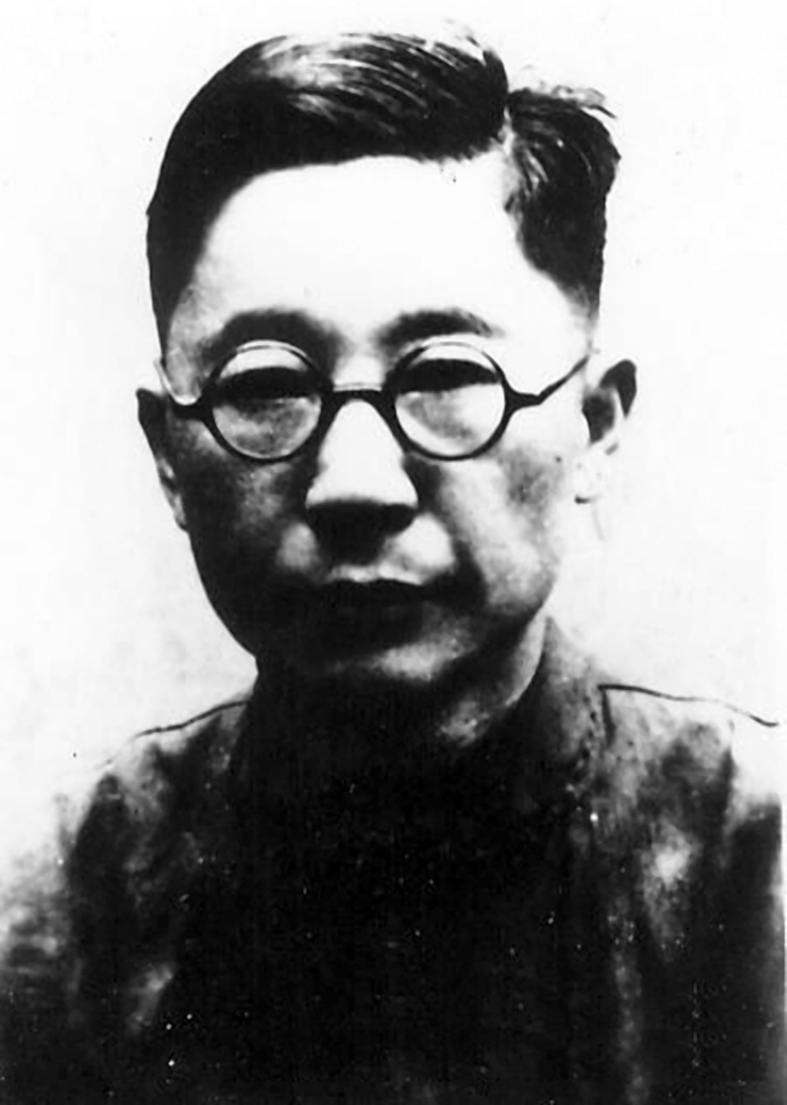
Shu Qingchun (Chinese: 舒慶春; 3 February 1899 – 24 August 1966), known by his pen name Lao She, was a Chinese writer of Manchu ethnicity, known for his vivid portrayal of urban life and his colorful use of the Beijing dialect, such as in the novel Rickshaw Boy and the play Teahouse. During the Cultural Revolution, he was persecuted and either drowned himself or was murdered.[1][2]

Key Information

Biography

[edit]

Early life

[edit]

Lao She was born Shu Qingchun on 3 February 1899 in Beijing, to a poor Manchu family of the Šumuru clan belonging to the Plain Red Banner. His father, who was a guard soldier, died in a street battle with the Eight-Nation Alliance Forces in the course of the Boxer Rebellion events in 1901. "During my childhood," Lao She later recalled, "I didn't need to hear stories about evil ogres eating children and so forth; the foreign devils my mother told me about were more barbaric and cruel than any fairy tale ogre with a huge mouth and great fangs. And fairy tales are only fairy tales, whereas my mother's stories were 100 percent factual, and they directly affected our whole family."[3] In 1913, he was admitted to the Beijing Normal Third High School (now Beijing Third High School), but had to leave after several months because of financial difficulties. In the same year, he was accepted to Beijing Normal University, from which he graduated in 1918.[4]

Career

[edit]

Between 1918 and 1924, Lao She was involved as administrator and faculty member at a number of primary and secondary schools in Beijing and Tianjin. He was highly influenced by the May Fourth Movement (1919). He stated, "The May Fourth Movement gave me a new spirit and a new literary language. I am grateful to the May Fourth Movement, as it allowed me to become a writer."[citation needed]

He went on to serve as lecturer in the Chinese section of the School of Oriental Studies (now the School of Oriental and African Studies) at the University of London from 1924 to 1929, living in Notting Hill for most of that period.[5] During his time in London, he absorbed a great deal of English literature (especially Dickens, whom he adored) and began his own writing. His later novel Mr Ma and Son, about a Chinese father and his son in London, drew on these experiences.[6] Up until that time, he had signed his works with his courtesy name She Yu (舍予). In his first novel "Old Zhang's Philosophy" (老张的哲学 Lao Zhang de Zhexue),[7] first published on Fiction Monthly, he first adopted the pen name Lao She.

In the summer of 1929, he left Britain for Singapore, teaching at the Chinese High School. Between his return to China in the spring of 1930 until 1937, he taught at several universities, including Cheeloo University until 1934,[8] and Shandong University (Qingdao).

Lao She was a major popularizer of humor in China, especially through his novels, his short stories and essays for journals like Lin Yutang's "The Analects Fortnightly" (論語半月刊, Lunyu Banyuekan, est. 1932), and his stage plays and other performing arts, notably xiangsheng.[9]

On 27 March 1938, The All-China Resistance Association of Writers and Artists was established with Lao She as its leader. The purpose of this organization was to unite cultural workers against the Japanese, and Lao She was a respected novelist who had remained neutral during the ideological discussions between various literary groups in the preceding years.[citation needed]

In March 1946, Lao She travelled to the United States on a two-year cultural grant sponsored by the State Department, lecturing and overseeing the translation of several of his novels, including The Yellow Storm (1951) and his last novel, The Drum Singers (1952; its Chinese version was not published until 1980). He stayed in the US from 1946 until December 1949. During Lao She's traveling, his friend, Pearl S. Buck, and her husband, had served as sponsors and they helped Lao She live in the U.S. After the People's Republic of China was established, Lao She rejected Buck's advice to stay in America and came back to China. Rickshaw Boy was translated by Buck in the early 1940s. This action helped Rickshaw Boy become a best seller book in America.[10]

Marriage and family

[edit]

In 1930, Hu Jieqing was studying at Beijing Normal University. Hu's mother was afraid that she would delay marriage and having children because of her studies. Linguist Luo Changpei was acquainted with Hu Jieqing's brothers. Once, Lao She went to Hu's house to play, and Hu Mu asked him to play hide and seek. At this time, Lao She happened to be returning from London, and he had written works, so Luo Changpei introduced Lao She to Hu Mu. After learning about Lao She's talent and character, Hu Mu was extremely happy and privately appointed Lao She the son-in-law of Chenglong. Luo discussed together a detailed plan for Lao She and Hu Jieqing to meet. In the winter of 1930, Lao She returned to Peiping. Under Luo's arrangement, Lao She was dragged by friends everywhere to eat, and there was always Hu Jieqing at the dinner table. After frequent meetings, Hu and Lao developed affection.

In the summer of 1931 Hu Jieqing graduated. The two held a wedding in the same year.[5] Two weeks after the marriage, Lao She brought his wife to Jinan and continued to teach at the university, while Hu Jieqing taught in a middle school.

The couple had four children, Shu Ji, Shu Yi, Shu Yu and Shu Li.[11] The first child of the two was born in 1933 in Jinan, a girl named Shu Ji; son Shu Yi was born two years later, and after another two years, she gave birth to his third child in Chongqing, named Shu Yu, with the youngest girl Shu Li born in 1945.[12]

Death

[edit]

Like numerous other intellectuals in China, Lao She experienced mistreatment when the Cultural Revolution began in 1966. Condemned as a counterrevolutionary, he was paraded and struggled by the Red Guards through the streets and beaten publicly at the door steps of the Temple of Confucius in Beijing. According to the official record, this abuse left Lao She greatly humiliated both mentally and physically, and he committed suicide by drowning himself in Beijing's Taiping Lake on 24 August 1966. Leo Ou-fan Lee mentioned the possibility that Lao She was murdered.[1] However, no reliable information has emerged to verify definitively the actual circumstances of Lao's death.[2] His relatives were accused of implication in his "crimes", but rescued his manuscripts after his death, hiding them in coal piles and a chimney and moving them from house to house.[citation needed]

Works

[edit]

Lao She's first novel, The Philosophy of Lao Zhang was written in London (1926) and modeled on Dickens' Nicholas Nickleby, but is set among students in Beijing.[13] His second novel, Zhao Ziyue (1927) is set in the same Beijing milieu, but tells the story of a 26-year-old college student's quest for the trappings of fame in a corrupt bureaucracy.[14] Both "The Philosophy of Lao Zhang" and "Zhao Ziyue" were Lao She's novels which expressed the native Peking lives and memories. He also wrote Crescent Moon (Chinese: 月牙儿; pinyin: Yuè Yár), written in the early stage of his creative life. It depicts the miserable life of a mother and daughter and their deterioration into prostitution.[citation needed]

In 1938, Lao She rewrote Classics for Girls to change its pre-modern characterisation of women's moral duties with messages urging women's contributions in the Second Sino-Japanese War.[15]: 133 

Mr Ma and Son

[edit]

Mr. Ma and Son showed another writing style for Lao She. He described Mr. Ma and his son's life in London Chinatown, showing the poor situation of Chinese people in London. These were praised as reflecting Chinese students' experiences. Lao She used funny words to show cruel social truths.[16] From "Mr. Ma and Son", Lao She pointed the stereotype included appearances and spirits and he hoped to get rid of these dirty impressions.[17]

Cat Country

[edit]

Cat Country is a satirical fable, sometimes seen as a Chinese science fiction novel, published in 1932 as a thinly veiled observation on China. Lao She wrote it from the perspective of a visitor to the planet Mars. The visitor encountered an ancient civilisation populated by cat-people. The civilisation had long passed its glorious peak and had undergone prolonged stagnation. The visitor observed the various responses of its citizens to the innovations by other cultures. Lao She wrote Cat Country in direct response to Japan's invasion of China (Manchuria in 1931 and Shanghai in 1932). Paradoxically, Cat Country has been considered as an artistic failure by the author himself.[18]

Rickshaw Boy

[edit]

His novel Rickshaw Boy (also known in the West as Camel Xiangzi or Rickshaw) was published in 1936. It describes the tragic life of a rickshaw-puller in Beijing of the 1920s, and revealed the tragedy of lower classes at that time through the narration of the rickshaw boy's story. Xiangzi is a stereotype of a social phenomenon: a peasant coming to the city and then turning to an urban tramp, experiencing spiritual crises of all kinds. Not only a problem of particular historical period, it is an all-pervasive one that persists throughout Chinese history. Reading the novel today reveals more about the contemporary Chinese society than the text itself.[19] It is considered to be a classic of modern Chinese literature and a contribution to the genre of world literature about laborers.[20] Moreover, it was translated into English and sold in the USA.[21] In 1945, an unauthorized translation that added a bowdlerized happy ending to the story was published and sold. In 1982, the original version was made into a film of the same title.[citation needed]

Teahouse

[edit]

Teahouse is a play in three acts, set in a teahouse called "Yu Tai" in Beijing from 1898 until the eve of the 1949 revolution. First published in 1957, the play is a social and cultural commentary on the problems, culture, and changes within China during the early twentieth century. It has been translated into many different languages.

Promotion of Baihua (National Language)

[edit]

Lao She advocated the use of Baihua or plain language in written Chinese. Baihua evolved a new language from classic Chinese during the May Fourth Movement. As the All-China League of Resistance Writers leader, he found he needed to abandon the use of classical Chinese for a more accessible modern style. Lao She was an early user of Baihua, and other writers and artists also adopted Baihua. Modern written Chinese is largely in the plain Baihua style.[22]

Treasure Boat

[edit]

"Treasure Boat" was written by Lao She in 1961. It was the only children's opera he wrote.[citation needed]

Article style

[edit]

Lao She's writing was known for its humor and irony, being simple but deep. He wrote humorous, satiric novels and short stories and, after the onset of the Sino-Japanese War (1937–45), patriotic and propagandistic plays and novels.[23]

Legacy

[edit]

After the end of the Cultural Revolution, Lao She was posthumously "rehabilitated" in 1978 and his works were republished. Several of his stories have been made into films, including This Life of Mine (1950, dir. by Shi Hui), Dragon Beard Ditch (1952, dir. by Xian Qun), Rickshaw Boy (1982, dir. by Ling Zifeng), The Teahouse (1982, dir. by Xie Tian), The Crescent Moon (1986, dir. by Huo Zhuang), The Drum Singers (1987, dir. by Tian Zhuangzhuang), and The Divorce (1992, dir. by Wang Hao-wei). Tian Zhuangzhuang's adaptation of The Drum Singers, also known as Street Players, was mostly shot on location in Sichuan. Some of Lao She's plays have also been staged in the recent past, including Beneath the Red Banner in 2000 in Shanghai, and Dragon's Beard Ditch in 2009 in Beijing as part of the celebration of the writer's 110th birthday.[citation needed]

Lao She's former home in Beijing is preserved as the Lao She Memorial Hall, opened to the public as a museum of the writer's work and life in 1999. Originally purchased in 1950, when it was 10 Fengsheng Lane, Naicifu, the address of the traditional courtyard house is now 19 Fengfu Lane. It is close to Wangfujing, in Dongcheng District. Lao She lived there until his death 16 years later. The courtyard contains persimmon trees planted by the writer. His wife called the house 'Red Persimmon Courtyard'.[24]

The Lao She Literary Award has been given every two to three years starting in the year 2000. It is sponsored by the Lao She Literature Fund and can only be bestowed on Beijing writers.[25]

The Laoshe Tea House, a tourist attraction in Beijing that opened in 1988 and features regular performances of traditional music, is named after Lao She, but features primarily tourist-oriented attractions.[citation needed]

Three-self principles

[edit]

As a philosophy, the three-self principles survived in China. The People's Republic of China expelled all foreign missionaries in 1950, and in 1954 forced the Protestant churches to merge into a single body, the Three-Self Patriotic Movement of Protestant Churches in China, and break ties with foreign money, influence, and leadership. Critics charged that the movement was actually designed to train leaders in patriotism and to facilitate communication between the government and the Christian community. In 1966, as the Cultural Revolution began, public Christian worship was banned, and the Three-self Movement was disbanded. It was reorganized in 1980. Its main role is to articulate new government policies regarding religion. On a more positive note, it has helped foster the sense that the contemporary Chinese Protestant church is an indigenous body and no longer a branch of a foreign institution.[26]

Lao She's work revealed the language, the joys, and the pains of the common people of China. He believed his country and its Christianity needed to be sinicized and not dependent upon the foreigner for funds and direction.[27]

Notes

[edit]

Selected works in translation

[edit]

Fiction

[edit]
  • The Two Mas. Translated by Kenny K. Huang & David Finkelstein. Hong Kong: Joint Publ. Co., 1984.
  • Mr Ma and Son: Two Chinese in London. Translated by William Dolby. Edinburgh: W. Dolby, 1987. Republished – Melbourne: Penguin Group, 2013.
  • Cat Country, a Satirical Novel of China in the 1930s.(貓城記 / Mao cheng ji) Translated by William A. Lyell. Columbus: Ohio State University Press, 1970. Reprinted - Melbourne: Penguin Group, 2013.
  • The Quest for Love of Lao Lee. Translated by Helena Kuo. New York: Reynal & Hitchcock, 1948.
  • Heavensent. Translated by Xiong Deni. London: 1951. Reprinted - Hong Kong: Joint Publ. Co., 1986.
  • Rickshaw Boy. (駱駝祥子 /Luo tuo Xiangzi) Translated by Evan King and Illustrated by Cyrus Leroy Baldridge. New York: Reynal & Hitchcock, 1945. Unauthorized.
  • Rickshaw. (駱駝祥子 /Luo tuo Xiangzi) Translated by Jean James. Honolulu: University Press of Hawaii, 1979. ISBN 0824806166
  • Camel Xiangzi (駱駝祥子 /Luo tuo Xiangzi) Translated by Xiaoqing Shi. Bloomington; Beijing: Indiana University Press; Foreign Languages Press, 1981. ISBN 0253312965
  • Rickshaw Boy: A Novel. Translated by Howard Goldblatt New York: Harper Perennial Modern Chinese Classics, 2010. ISBN 9780061436925.
  • 駱駝祥子 [Camel Xiangzi] (in English and Chinese). Trans. Shi Xiaojing (中英對照版 [Chinese-English Bilingual] ed.). Hong Kong: Chinese University Press. 2005. ISBN 962-996-197-0. Retrieved 8 March 2011.{{cite book}}: CS1 maint: others (link)
  • The Yellow Storm (also known as Four Generations Under One Roof). New York: Harcourt, Brace, 1951. Translated by Ida Pruitt.
  • The Drum Singers. Translated by Helena Kuo. New York: Harcourt, Brace, 1952. Reprinted - Hong Kong: Joint Publ. Co., 1987.
  • Blades of Grass the Stories of Lao She. Translated by William A. Lyell, Sarah Wei-ming Chen and Howard Goldblatt. Honolulu: University of Hawai'i Press, 1999. ISBN 058525009X
  • Crescent Moon and Other Stories. (月牙兒 Yue ya er) Beijing, China: Chinese Literature, 1985. ISBN 0835113345
  • Beneath the Red Banner. Translated by Don J. Cohn. Beijing: Chinese Literature, 1982.

Plays

[edit]
  • Dragon Beard Ditch: A Play in Three Acts. Peking: Foreign Languages Press, 1956.
  • Teahouse: A Play in Three Acts. Translated by John Howard-Gibbon. Beijing: Foreign Languages Press, 1980; rpr Hong Kong, Chinese University Press. ISBN 0835113493

Further reading

[edit]

Portrait

[edit]
[edit]
Revisions and contributorsEdit on WikipediaRead on Wikipedia
from Grokipedia

Lao She (born Shu Qingchun (舒慶春); February 3, 1899 – August 24, 1966) was a Chinese novelist and dramatist of Manchu descent, recognized as one of the most influential figures in 20th-century for his vivid, satirical depictions of 's lower classes and urban life.
Born into a family of modest means in , whose father died fighting foreign forces during the Boxer Rebellion, Lao She initially worked as a teacher before spending 1924–1929 in , where he taught Chinese at the School of and began writing novels influenced by English literature. His major works include the novel (Rickshaw Boy, 1937), which chronicles the futile struggles of a puller against systemic hardships, and the play (1957), a critique of societal decline across decades through interconnected vignettes. Other notable writings encompass Cat Country (1932), a dystopian of Chinese society, and Four Generations Under One Roof (1944–1950), an unfinished epic on wartime .
Lao She's oeuvre, comprising over 20 novels, numerous short stories, and 26 plays, earned him acclaim as a "Master of Language" and founder of modern Chinese narrative traditions, with several adaptations into films and dramas; he received the "People’s Artist" title from authorities. During the Sino-Japanese War, he produced patriotic literature and founded the Street Theater movement to mobilize public resistance. However, at the outset of the in 1966, he faced public humiliation and physical abuse by , leading to his death by drowning in Taiping Lake, widely regarded as amid the campaign's anti-intellectual purges—though some accounts suggest possible , official narratives post-Mao confirmed persecution as the cause.

Early Life

Family Background and Childhood

Shu Qingchun, who later adopted the pen name Lao She, was born on 3 February 1899 in to a poor family of affiliated with the Sumuru of the Plain Red Banner in the Qing dynasty's banner system. His father served as a low-ranking guard soldier in the imperial forces, a position typical for bannermen families that provided nominal stipends but often left households in straitened circumstances. The father's death occurred on 15 August 1900 during street fighting against troops invading as part of the Boxer Rebellion suppression, leaving Shu an infant fatherless and the family destitute. His mother, widowed young, bore the burden of supporting the household through menial labor amid 's economic turmoil following the Qing court's defeat and indemnities, fostering an environment of hardship that shaped Shu's early awareness of urban poverty. As a child in Beijing's traditional neighborhoods, Shu experienced the decline of Manchu privileges post-1911 revolution, with his family's reliance on charitable aid from surviving noble bannermen clans enabling basic sustenance and initial schooling, though broader opportunities remained limited by their impoverished status. This backdrop of loss and resilience in the capital's lower strata profoundly influenced his later depictions of ordinary Beijingers' lives.

Education and Early Influences

Shu Qingchun, who later adopted the pen name Lao She, commenced his education in 1905 at the age of six through private tutoring arranged and funded by a distant relative, amid the family's impoverishment following his father's death in combat during the Boxer Rebellion of 1900. His mother, who supported the household as a washerwoman, shaped his early worldview by recounting personal experiences of foreign invasions and the hardships inflicted on Beijing's residents, fostering a deep-seated awareness of social vulnerability and resentment toward external aggressors. This domestic environment, rooted in the realities of a declining Manchu family in Beijing's hutongs, instilled in him an intimate familiarity with vernacular , folk storytelling traditions, and the precarity of urban lower-class life. In 1913, Shu passed the entrance examination for the state-subsidized (now affiliated with ), which offered free tuition, uniforms, and books—critical supports for a student from his economic background. The curriculum emphasized a blend of texts, Confucian , and emerging modern , preparing graduates for teaching roles in the post-imperial system. He excelled academically and graduated in 1918, immediately assuming the position of principal at Beijing's No. 17 Public (also referenced as Fangjia Primary School), one of the youngest such appointments at age 19. This early administrative experience honed his observational skills regarding educational inequities and societal hierarchies, themes that would permeate his later works. Shu's formative years were marked by the tension between traditional Manchu heritage—diminished by poverty and the —and the republican era's push for vernacular literacy and national renewal, influences amplified by his school's progressive yet constrained environment. Exposure to Beijing's multicultural underbelly, including interactions with diverse ethnic groups and laborers, cultivated his empathy for the marginalized, while the absence of paternal guidance reinforced forged through maternal narratives of resilience amid chaos. These elements, unadulterated by later ideological overlays, grounded his perspective in empirical observations of causal chains linking personal hardship to broader historical disruptions.

Literary Career

Initial Publications and May Fourth Movement

Lao She, though not an active participant in the street protests or organizational activities of the of 1919, was profoundly shaped by its intellectual currents, particularly the New Culture Movement's advocacy for baihua (vernacular Chinese) over classical literary forms and its emphasis on social critique, , and scientific . As a young educator in during the movement's peak, he absorbed these ideas through contemporary journals and intellectual discourse, which later informed his commitment to accessible, spoken-language prose that depicted everyday urban life and human folly. This alignment with May Fourth ideals distinguished his emerging style from traditional , prioritizing realism and reformist themes over ornate classical expression. His literary debut occurred in 1926, while teaching Chinese at the School of Oriental Studies in (now ), where exposure to Western authors like further honed his narrative techniques. Under the newly adopted "Lao She" (meaning "Old She," a self-deprecating nod to his modest origins), he published his first , Lao Zhang di zhexue ( of Lao Zhang), serialized in the prominent journal Xiaoshuo yuebao (Short-Story Magazine). The work, comprising 22 chapters, satirically explores the philosophical musings and misadventures of the eponymous Lao Zhang, a petty navigating student life and societal absurdities in early republican ; its 1926 installments generated immediate attention in literary circles for blending humor with subtle critiques of corruption and stagnation. Written entirely in baihua, the novel exemplified the May Fourth legacy by democratizing literature for a broader readership, eschewing elitist classical idioms in favor of vivid, colloquial depictions that echoed the movement's call for cultural modernization. Subsequent early works, such as the 1929 novel Zhaozi'er (Mr. Ma and Son), continued this trajectory, employing vernacular dialogue infused with to portray cultural clashes between and the West, often through expatriate characters in . These publications marked Lao She's entry into the post-May Fourth literary scene, where he built on the movement's foundations to craft socially observant fiction that highlighted individual resilience amid systemic failures, without overt ideological preaching. His focus on ordinary protagonists and ironic humor positioned him as a successor to May Fourth reformers like , though with a gentler, more nostalgic tone toward Beijing's underclass.

Period in England and Abroad

In 1924, Lao She departed for , where he accepted a position teaching at the School of Oriental Studies (now the School of Oriental and African Studies) at the . His tenure there lasted until 1929, during which he resided primarily in , including a period from 1925 to 1928 lodging with the British scholar and translator Clement Egerton at St James's Gardens (then known as ). While in England, Lao She assisted Egerton with the of a Chinese novel into English and immersed himself in , particularly the works of , which influenced his narrative style. The isolation of expatriate life in , combined with observations of the Chinese immigrant community in areas like , profoundly shaped Lao She's writing during this phase. He produced three novels in quick succession: The Philosophy of Lao Zhang (1926), a comic tale modeled on Dickensian storytelling but centered on Chinese students; a second work continuing his exploration of everyday struggles; and Mr. Ma and Son (serialized in 1929), a satirical depiction of a father and son from navigating , cultural dislocation, and in 1920s . These works marked a shift toward , drawing directly from his personal experiences of financial hardship and cultural alienation abroad. Following , Lao She traveled to the in early 1946 at the invitation of the U.S. State Department for a cultural exchange program initially planned for two years, though his stay extended to three. Based primarily in New York, he delivered lectures on and oversaw English translations of his novels, including . During this period, he completed significant portions of his epic novel Four Generations Under One Roof, a multi-volume chronicle of life amid Japanese occupation, while grappling with the political upheavals back in . Lao She returned to in 1949 amid the Communist victory, rejecting suggestions from associates like to remain in the U.S.

Major Novels and Social Critiques

Lao She's major novels often employed vernacular Chinese to depict the struggles of ordinary people, embedding sharp critiques of social inertia, , and systemic failures in early 20th-century . His works drew from observations of urban poverty and national decline, portraying characters whose personal ambitions are crushed by broader societal pathologies rather than individual moral failings. Cat Country (Maocheng ji), published in , is a dystopian set on a fictional Martian inhabited by cat-people, serving as an allegory for China's weaknesses during the Republican era. The follows a Chinese traveler who encounters a society addicted to , plagued by factionalism, and incapable of modernization, mirroring critiques of Chinese passivity, intellectual escapism, and failure to resist foreign encroachment. Lao She used exaggerated absurdities, such as a national obsession with eating trousers symbolizing misplaced priorities, to lampoon the self-destructive tendencies that prevented against internal decay and external threats. Rickshaw Boy (Luotuo Xiangzi), serialized in 1936 and published as a in 1937, centers on Xiangzi, a resilient puller in whose dream of owning his own vehicle is repeatedly thwarted by theft, illness, exploitation, and societal indifference. Through Xiangzi's descent into cynicism and moral compromise, Lao She critiqued the urban underclass's in a exacerbated by corrupt officials, opportunistic employers, and a lack of , emphasizing how individual diligence yields to systemic predation rather than rewarding virtue. The novel's unflinching portrayal of Beijing's teeming streets highlighted the dehumanizing effects of economic disparity and the futility of in an unjust structure. Four Generations Under One Roof (Sishi tong tang), begun in and left unfinished due to wartime disruptions and later political pressures, chronicles a courtyard household spanning elderly patriarchs to young idealists amid the Japanese occupation from 1937 to 1945. Lao She dissected intergenerational conflicts, with traditional endurance clashing against calls for resistance, critiquing passive accommodation to , bureaucratic , and the erosion of familial and communal bonds under duress. The work exposed how occupation amplified pre-existing fractures like and moral ambiguity, portraying ordinary citizens' in national humiliation without romanticizing heroism.

Dramatic Works and Later Writings

Lao She began writing plays in the early 1950s, shifting from novels to drama amid the establishment of the , with works often emphasizing themes of social reform and collective progress. His debut play, Dragon Beard Ditch (Longxugou, 1951), commissioned by the municipal government, portrays the residents of a impoverished alleyway uniting under communist leadership to dredge a polluted canal, secure employment, and improve living conditions, symbolizing the transformative power of the new regime. The three-act production premiered in in 1951 and achieved widespread popularity for its affirmative depiction of grassroots mobilization and infrastructural renewal, aligning with early post-1949 efforts. Lao She's most enduring dramatic contribution, (Chaguan, 1957), unfolds across three acts in a traditional teahouse, chronicling over 50 years of historical upheaval from 1898 (late ) through the Republican era to , via interactions among more than 60 characters representing diverse social strata. First serialized in the (Shouhuo) in July 1957 and staged by the Beijing People's Art Theatre in 1958, the play employs episodic vignettes to critique corruption, exploitation, and societal decay without overt resolution, culminating in the teahouse's closure amid wartime chaos. Though lauded for its naturalistic dialogue in and panoramic historical scope, Teahouse drew internal criticism for its perceived lack of explicit revolutionary optimism, foreshadowing Lao She's vulnerabilities in politically charged environments. In parallel with his playwriting, Lao She's later prose included the novel The Drum Singers (1952), initially published in English translation, which examines rural folk opera troupes adapting to modern socialist themes while preserving , as well as essay collections such as Tóutái jiàn xǐ (抬头见喜), compiling散文 that depict everyday Beijing life and traditions. These post-1949 outputs generally supported state narratives on unity and progress, though Lao She's independent stylistic voice—rooted in vernacular realism—occasionally invited scrutiny from ideological enforcers, contributing to his marginalization before his in 1966.

Linguistic and Cultural Advocacy

Promotion of Baihua and Vernacular Chinese

Lao She played a significant role in implementing baihua, the form of Chinese, in educational settings during the early adoption phase following the . In 1921, he was appointed to oversee the teaching of baihua—based on the —in Beijing's primary schools, facilitating the shift from (wenyan) to a more accessible spoken-written form. This position aligned with broader reforms emphasizing vernacular usage for mass and modernization. The following year, in 1922, he continued promoting baihua by teaching it at a in , further embedding the in . Through his literary output, Lao She exemplified and advanced baihua as a medium for contemporary . While in from 1924 to 1929, he composed his debut novel, The Philosophy of Lao Zhang (published serially around 1926), marking one of his initial efforts to employ vernacular prose over classical styles. Upon returning to , he consistently wrote in baihua, as seen in major works like (1937), which utilized plain language to depict urban life and social issues, thereby demonstrating baihua's suitability for realistic narrative and broad readership. This approach contrasted with lingering classical traditions and supported the vernacular's evolution into a standard for modern . Lao She also advocated baihua in academic contexts, integrating it with Western-influenced . During 1930–1934, in lectures such as A Survey Course on Literature at Qilu University, he promoted baihua alongside scientific methods for studying , echoing May Fourth ideals of accessibility and reform without direct participation in the events. He translated portions of Elizabeth Nitchie's The Criticism of Literature into baihua for publication in the Qilu University Quarterly (1932–1934), adapting foreign concepts to expression and critiquing overly formal literary practices in essays like "Filling a Prescription" (1934). These efforts underscored his view of baihua as essential for vital, people-oriented rather than elite classical forms.

Depiction of Beijing Dialect and Urban Life

Lao She's literary works prominently feature the , or , to capture the authentic speech patterns of the city's residents, particularly the working-class and petty . In novels such as (1937), dialogues incorporate colloquialisms, slang, and rhythmic cadences unique to Beijingers, reflecting the dialect's earthy humor and directness that distinguish it from standard Mandarin. This linguistic choice grounds characters in their socio-cultural milieu, avoiding the formal baihua promoted during the while infusing narratives with regional vitality. Scholarly analysis notes that Lao She's adaptation of dialect balances vernacular accessibility with literary precision, as seen in the quantitative linguistic features of , where everyday expressions convey the protagonist's inner turmoil and societal alienation. His depictions of urban life center on Beijing's hutongs, teahouses, and street scenes, portraying the mundane rhythms and hardships of ordinary citizens amid historical upheaval. In , the eponymous Xiangzi navigates overcrowded alleys, rickshaw stands, and seasonal floods, illustrating the precarity of labor in early 20th-century , where pullers faced exploitation by cartels and unpredictable weather. Similarly, (1957) uses the Yuhetang teahouse as a vantage point to chronicle 50 years of societal decay from the late Qing to the Republican era, featuring vignettes of merchants haggling, storytellers performing, and patrons gossiping—elements drawn from Lao She's observations of real locales. These scenes emphasize causal links between imperial decline, warlordism, and foreign influence, with dialect-laden banter underscoring the resilience and of the urban underclass. Through such portrayals, Lao She preserves a cultural archive of pre-communist , highlighting the interplay of tradition and modernity in everyday spaces like courtyard homes (siheyuan) and markets. His works evoke the sensory details of summer evenings in hutongs—cicadas buzzing, vendors calling—and the social hierarchies within teahouses, where of national events filters through local idioms. Comparative studies affirm this focus on lower-class routines, akin to Dickensian realism, but rooted in Beijing's specific of density and transience. Lao She's dialect usage not only authenticates voices but also critiques systemic failures, as characters' speech reveals unvarnished truths about corruption and unfiltered by perspectives.

Political Involvement

Wartime Resistance Against Japan

In the wake of the on July 7, 1937, which marked the onset of full-scale Japanese , Lao She relocated from Japanese-occupied to the Nationalist-controlled interior, initially passing through before reaching by early 1938. There, he immersed himself in organized cultural resistance, co-founding and assuming the presidency of the All-China Resistance Association of Writers and Artists (ACRAWA) in July 1938. This organization mobilized over a thousand writers and artists to produce accessible , emphasizing the slogan "Literature must go to the masses" to counter Japanese cultural infiltration and foster national unity. Under Lao She's leadership, ACRAWA promoted and popular literary forms, such as folk ballads (quyi), , and street performances, to disseminate anti-Japanese messages among illiterate and rural audiences, diverging from elite literary traditions to prioritize . He contributed directly through wartime writings, including the 1938 novella (Bian), which portrays displaced students organizing underground anti-Japanese activities amid and hardship, and the epic ballad Jian Bei Pian ("Resist the North"), a lengthy poem exhorting northern Chinese to repel the invaders through guerrilla resolve and communal defiance. These works reflected his shift toward , blending satire with calls for total resistance, though he critiqued overly simplistic propaganda in private correspondence. As Japanese forces advanced, ACRAWA relocated to Chongqing in 1939, where Lao She continued advocating for writers' involvement in the United Front against Japan, editing journals like Kangdao ("Resist to the End") to amplify mass propaganda. His most ambitious wartime project, the novel trilogy Four Generations Under One Roof (initiated in 1941 and partially serialized by 1944), chronicled over 100 characters in a Beijing siheyuan courtyard from July 1937 onward, exposing collaboration, moral erosion, and covert resistance under occupation without direct combat glorification. Drawing on reports from occupied zones, the narrative highlighted causal chains of invasion-induced societal decay—economic desperation fostering informants, intellectual paralysis enabling puppet regimes—while underscoring individual agency in small acts of defiance, such as smuggling intelligence or preserving cultural memory. By war's end in 1945, Lao She's efforts had positioned him as a key figure in wartime literary mobilization, though the association's output faced postwar scrutiny for its Nationalist affiliations.

Post-1949 Alignment with the Communist Party

Upon returning to China from the in January 1949, shortly before the founding of the (PRC) on October 1, 1949, Lao She aligned himself with the (CCP) by accepting prominent roles in state-sanctioned literary institutions. He was elected vice-chairman of the Chinese Writers Association and vice-chairman of the All-China Federation of Literary and Art Circles (ACFLAC), organizations established to guide cultural production in accordance with socialist principles. In , he became chairman of the newly formed Federation of Literary and Art Circles, where he promoted the integration of into the socialist movement, emphasizing works that depicted class struggle and communal transformation. Lao She's alignment manifested in his creative output, notably the 1950 play Dragon Beard Ditch (Longxugou), commissioned by Beijing municipal authorities to celebrate and infrastructure improvements under CCP rule. The play contrasts pre-1949 squalor in a Beijing with post-liberation renewal through collective labor, serving as a propagandistic endorsement of Maoist policies on urban hygiene and class mobilization; it was staged widely in the 1950s and featured in CCP campaigns to illustrate socialist progress. Critics noted its affirmation of revolutionary renewal, aligning Lao She's satirical style with official narratives of eradicating feudal remnants he had long critiqued in earlier works. Through these positions and writings, Lao She contributed to the CCP's effort to unify intellectuals under guidance, participating in campaigns to reform literary practices toward while maintaining his focus on urban lower classes. His involvement reflected a pragmatic endorsement of the regime's anti-imperialist and egalitarian , consistent with his prior critiques of Republican-era , though it later exposed him to ideological during intensified purges.

Role in the Three-Self Patriotic Movement

Lao She converted to Christianity in 1922 at the London Mission's Gangwashi Church in Beijing, where he was influenced by pastor Bao Guanglin and emphasized a spiritual rather than ceremonial faith. His beliefs aligned with the Three-Self principles—self-governance (zizhi), self-support (ziyang), and self-propagation (zichuan)—advocating for a Chinese-led Protestant church free from foreign missionary dominance to ensure cultural relevance and national independence. Through his writings and public stance, Lao She contributed indirectly to these principles by depicting the struggles of ordinary , fostering a vision of adapted to local contexts rather than imposed externally. This perspective predated the formal (TSPM), established in 1951 under the to reorganize Protestant churches as patriotic entities severed from imperialist ties, but resonated with its emphasis on as a bulwark against foreign influence. No records indicate Lao She held any official position or direct leadership role in the TSPM after its founding; his post-1949 public activities focused primarily on literary and cultural organizations loyal to the , where his Christian identity was downplayed amid . His support for patriotic reforms, including church indigenization, stemmed from broader nationalist sentiments rather than active ecclesiastical involvement, reflecting the era's pressure on intellectuals to align personal faith with state directives.

Personal Life

Marriage, Family, and Relationships

Lao She married Hu Jieqing, an artist, in 1931 following her graduation that summer. Two weeks after the wedding, the couple moved to , Province, where Lao She taught at Qilu University and Hu took up a position at a local middle school. Their marriage appears to have been stable, with Hu supporting Lao She's literary career while pursuing her own artistic endeavors, though specific accounts of their interpersonal dynamics remain limited in available records. The couple had four children: daughter Shu Ji, born in 1933 in Jinan; son Shu Yi, born in 1935 in Qingdao, Province; daughter Shu Yu, born in 1937 in Qingdao; and daughter Shu Li, born in 1945 in Chongqing. Shu Yi later played a role in preserving his father's legacy, including retrieving Lao She's body after his 1966 death and safeguarding personal belongings. In 1950, after Lao She's return from a five-year stay in the United States, the family reunited in and settled in a 400-square-meter traditional in Fengfu near the , where they resided until his death. Hu Jieqing nicknamed the residence "Red Persimmon Courtyard" due to two persimmon trees the couple planted in the yard in 1953, reflecting a shared domestic life amid Lao She's writing and public activities. No documented evidence exists of extramarital relationships or significant family conflicts, with the household serving as a base for Lao She's later works until the upheavals of the .

Philosophical Outlook and Individualism

Lao She's philosophical outlook centered on humanism, emphasizing the spiritual dimension of human existence and the intrinsic dignity of individuals amid societal turmoil. He advocated for a "Literature of the Soul" (灵的文学), which prioritized introspection and personal experience to foster liberty and self-salvation, drawing inspiration from Dante's Divine Comedy as a model for touching the soul rather than encyclopedic knowledge. This approach rejected ideological impositions, viewing literature as an independent art form focused on truth and beauty through the writer's subjective interaction with the world, independent of scientific or ethical dogma. His humanism manifested in a tolerant portrayal of human flaws and resilience, maintaining warmth toward ordinary people even during the Sino-Japanese War. Regarding , Lao She valued personal agency and self-reflexivity but critiqued unchecked self-reliance as insufficient against overwhelming social and environmental forces. In works like Camel Xiangzi (, 1937), the protagonist's relentless individual striving for ownership and autonomy exemplifies an idiosyncratic pursuit of , yet ultimately succumbs to systemic exploitation, poverty, and chaos, highlighting the limits of in pre-revolutionary . This nuanced stance evolved from earlier emphases on personal effort to a recognition of alienation and , as explored in analyses of his maturation during periods of upheaval, where individual inner selves clashed with revolutionary collectivism. Lao She's ultimate act of suicide in 1966 during the underscored his commitment to individual liberty over coerced conformity, preserving personal in the face of .

Persecution and Death

Onset of Cultural Revolution Attacks

On August 23, 1966, during the intensifying violence of Beijing's ""—a period of mass struggle sessions and assaults by targeting intellectuals—Lao She was seized along with about thirty other writers and cultural figures by student activists from several middle schools. The group was forcibly marched to the for a public denunciation meeting, where participants were paraded, compelled to confess ideological errors, and physically assaulted as part of the campaign to eradicate "old culture" and class enemies. Lao She, labeled an "ox demon and snake spirit" despite his prior support for the , faced direct humiliation and violence: he was flogged with belt buckles and bamboo sticks, primarily by teenage female , beaten, and kicked during the session. These attacks exemplified the Cultural Revolution's early tactic of mobilizing youth against established elites, overriding previous alignments with the regime in favor of radical purges. The assault initiated a rapid decline for Lao She, underscoring the unpredictable targeting of even loyal figures in the movement's fervor, which had escalated three months after Mao Zedong's May 1966 proclamation. No official intervention protected him, as the chaos prioritized destruction over prior contributions to socialist literature.

Events Leading to Suicide and Official Cover-Ups

On August 23, 1966, during the early phase of the known as "Bloody August," Lao She was among approximately 20 writers summoned to the in for a public organized by . A group of around 150 teenage girls subjected the writers to prolonged humiliation, including forced kneeling for three hours, partial head-shaving, and beatings with bamboo sticks, theater props, and a belt studded with copper tacks. Lao She was specifically accused of being an "American agent" and beaten severely until he lost consciousness, after which the session continued into the night. Released around midnight, he returned home to find it ransacked, with his belongings destroyed and flower beds trampled. The following day, August 24, 1966, Lao She was ordered to report to the Writers' Association wearing a denouncing himself as a "counterrevolutionary," but he did not comply. Instead, he left his home early that morning, walked to nearby Taiping Lake, placed stones in his pockets, and himself, scattering copies of Mao Zedong's poems nearby. His body was discovered later that day or possibly the next, on August 25, by a worker; his wife identified it under a mat covering, noting signs consistent with deliberate rather than accident. While his son Shu Yi maintained the act was intentional, linked to familial property near the lake, some accounts, including from his wife, raised suspicions of foul play amid the chaos, though no forensic investigation occurred and the body was promptly cremated at Babaoshan Cemetery without releasing ashes to the family due to his condemned status. Official handling suppressed details of the events and Lao She's role as a victim. The Beijing Writers' Association, whose leaders reportedly initiated the summons, avoided accountability, with no individuals admitting to authorizing the beatings despite suspicions directed at figures like Hao Ran. Contemporary records, including those at the Temple of Confucius, omitted references to the struggle session, citing its tragic nature. The Chinese Communist Party's narrative during the Cultural Revolution framed such deaths as self-inflicted by "counterrevolutionaries," precluding public acknowledgment or investigation, and Lao She's demise received no official notice until his posthumous rehabilitation in 1978, when he was recast as a "people's artist" and the suicide date formalized as August 24, 1966. This rehabilitation campaign in spring 1978 restored his works but glossed over the persecution's specifics, reflecting broader state efforts to minimize Cultural Revolution atrocities while preserving party legitimacy. Discrepancies in witness testimonies and the absence of preserved evidence have perpetuated ambiguity, with no declassified documents confirming the exact chain of command behind the attacks.

Literary Style and Themes

Humor, Satire, and Social Realism

Lao She's literary oeuvre is distinguished by its integration of humor and satire within a framework of , enabling incisive critiques of Chinese societal structures, particularly the plight of the urban underclass in early 20th-century . His narratives often employed vernacular to lend authenticity and immediacy, portraying characters with a mix of compassion and ironic detachment that highlighted systemic failures without descending into sentimentality. This approach drew from influences like Lu Xun's realist tradition but infused it with Lao She's signature wit, transforming potential melodrama into farce-tinged commentary on human folly and institutional decay. In (originally serialized in 1936–1937 as Camel Xiangzi), Lao She exemplified through the deterministic arc of protagonist Xiangzi, a rural migrant whose aspirations for rickshaw ownership are crushed by urban , exploitation, and moral compromises. The novel's unflinching depiction of labor conditions—Xiangzi pulling loads exceeding 200 jin (about 120 kg) daily amid and debt—underscores causal links between individual agency and broader socioeconomic forces, evoking empirical sympathy for the without ideological prescription. Humorous vignettes, such as Xiangzi's naive optimism clashing with opportunistic employers, inject irony that tempers the , revealing societal absurdities like the of human endurance. Satire permeates works like Cat Country (1932), a dystopian where a Martian society mirrors Republican China's corruption, with cat-people addicted to "hwala" ( analogue) and ruled by pseudo-intellectuals spouting empty . Lao She used exaggerated absurdities—such as elections decided by trouser-wearing rituals—to lampoon educational reforms, bureaucratic inertia, and cultural stagnation, employing humor to expose causal roots in moral laziness and foreign mimicry. This satirical strain, often tinctured with , provided a humane lens for critiquing total societal dysfunction, though its pessimism reflected Lao She's view of entrenched human vices over transient politics. His dramatic works, including (1957), fused these elements to chronicle Beijing's decline across 1898–1945 via a teahouse microcosm, where generational vignettes satirize imperial decay, warlordism, and early Communist hypocrisies through witty, dialect-driven banter. Patrons' escalating misfortunes—from thefts to suicides—blend realist detail with ironic humor, illustrating how petty corruptions erode communal fabric. Lao She's method avoided overt moralizing, privileging observational acuity to reveal causal realities of and cultural erosion.

Critiques of Totalitarianism and Human Nature

Lao She's novel Cat Country (Maocheng ji, serialized 1932–1933) presents a dystopian allegory of a Martian society inhabited by cat-people, whose indolence, opium addiction (symbolized by poppy seed consumption), bureaucratic paralysis, and mob-driven factionalism precipitate national collapse under foreign invasion. This satire targets the self-sabotaging traits of Republican-era Chinese society, including leadership failures, cultural exploitation, and a populace's prioritization of immediate gratification over collective resilience, which expose inherent human vulnerabilities to exploitation and disintegration. Analysts have noted the work's prescient depiction of societal decay enabling authoritarian overreach, as the cats' internal chaos—marked by ritualistic violence, intellectual sterility, and refusal to innovate—renders them defenseless against external threats, foreshadowing the totalitarian controls that later emerged in Maoist China. The novel's portrayal of human nature emphasizes pessimism regarding innate flaws: the cat-people's addiction erodes agency, while their "democratic" assemblies devolve into brawls, critiquing how egalitarian impulses can amplify base instincts like greed and conformity rather than fostering progress. Lao She illustrates causal chains where individual moral laxity scales to systemic failure, as leaders hoard resources amid famine, and citizens consume seed grain for hallucinogenic highs, underscoring a realist view of human propensity for short-sighted hedonism over rational self-preservation. This extends to broader themes in his oeuvre, where characters' complicity in corruption reveals no inherent nobility redeemable without disciplined intervention, a perspective that drew official censure during the Cultural Revolution, when Cat Country was branded counter-revolutionary for its "pessimistic outlook." In The Teahouse (1957), Lao She extends these critiques through a panoramic depiction of teahouse patrons across three eras (1898, 1916–1917, 1945–1948), illustrating cyclical totalitarian impulses rooted in unchanging human frailties like , , and ideological . , republicans, and communists alike exploit , with characters' personal ambitions—greed among merchants, illusions of among intellectuals—perpetuating , as ordinary individuals conform or collaborate to survive. The play's structure highlights causal realism in : societal "progress" masks persistent human weaknesses, such as the teahouse owner's futile idealism yielding to pragmatic surrender, suggesting thrives on collective denial of these defects rather than eradicating them. Lao She's refusal to idealize any regime underscores a meta-awareness of power's , informed by his observations of pre-1949 chaos, though post-alignment works tempered overt antagonism toward emerging structures.

Legacy and Reception

Domestic Recognition and Suppression

Lao She enjoyed significant official recognition in the following its establishment in 1949, when he returned from overseas and aligned his work with state-sanctioned . He was appointed vice-chairman of the All-China Federation of Writers and Artists and honored as a "People's Artist" by the municipal government, reflecting his status as a leading literary figure supportive of the new regime. His plays, such as (1957), were staged to acclaim, portraying historical critiques deemed compatible with revolutionary narratives until later reevaluations. This period of esteem ended abruptly with the onset of the in 1966, when Lao She was publicly denounced as a "" by , subjected to and physical mistreatment at struggle sessions. His works, including and novels like Cat Country (1932), were banned as bourgeois or reactionary, exemplifying the broader suppression of pre-revolutionary and intellectuals perceived as insufficiently radical. The culminated in his death by suicide on August 27, 1966, after being beaten and paraded, with his reputation officially erased during the decade-long campaign. Following Mao Zedong's death in 1976, Lao She was officially rehabilitated in 1978 as part of the reversal of excesses, restoring his works to publication and performance. This led to a surge in scholarly studies, annual reprints of his novels and plays, and revivals like Teahouse in 1979, cementing his canonical status in mainland Chinese literature. Today, he is revered domestically as a master of vernacular and , with the Lao She Literary Prize established in 2000 to honor Beijing-based authors in his tradition, though state narratives emphasize his patriotic alignment over potentially critical elements in his oeuvre.

International Impact and Near-Nobel Status

Lao She's works gained significant international attention through English translations in the mid-20th century, particularly Camel Xiangzi (commonly known as in English), which introduced Western audiences to depictions of Beijing's urban underclass. The 1945 English version by Evan King, published as , achieved commercial success in the United States despite substantial alterations, including the addition of an optimistic ending absent in the original, which portrayed the protagonist's tragic downfall amid social inequities. More faithful translations followed, such as Jean James's (1979) and Howard Goldblatt's 1988 edition, cementing its status as a cornerstone of modern in global readership. From 1946 to 1949, Lao She resided in the United States under a Department cultural grant, where he lectured on at institutions like the and oversaw English translations of his novel Four Generations Under One Roof, facilitating direct engagement with American scholars and readers. His short stories appeared in anthologies such as Chinese Wit and Humour (1946), edited by George Kao, broadening exposure to his satirical style beyond . These efforts positioned Lao She as a bridge between Chinese vernacular realism and Western literary circles, influencing perceptions of pre-communist Chinese society. Speculation persists that Lao She was a leading contender for the , potentially for the 1968 award, owing to his international acclaim and stature within global literary communities prior to his 1966 death. French Nobel laureate expressed high regard for Lao She's oeuvre in the preface to the 1996 French edition of one of his works, underscoring enduring cross-cultural appreciation. However, no archival evidence confirms a formal , and posthumous awards are ineligible under Nobel rules, rendering such status prospective rather than realized; his persecution during China's likely eclipsed any such trajectory.

Modern Reassessments and Criticisms

Following the , Lao She received official rehabilitation from the Chinese government in 1978, which restored his reputation and initiated widespread republication of his works, academic studies, and stage revivals, including a notable 1979 production of his play . This process aligned with broader post-Mao efforts to rectify past excesses, positioning Lao She as a foundational voice in 20th-century Chinese despite his earlier as a . Contemporary reassessments emphasize the enduring relevance of his , particularly in Cat Country (1932), a dystopian of a feline-ruled society marked by indolence, , and mob rule, now viewed as prescient commentary on authoritarian decay and published in only after his rehabilitation. Scholars highlight how his and humor dissected urban , human frailty, and institutional failures in works like (1936), elevating marginalized figures such as laborers and outcasts while challenging sentimental narratives of progress. Criticisms of Lao She's oeuvre focus on its unresolved conclusions, where protagonists endure cycles of struggle without triumph—such as the rickshaw puller Camel Xiangzi's perpetual defeat or the prostitute in Crescent Moon (1938) trapped in exploitation—reflecting a deterministic realism that some interpret as overly fatalistic toward individual resistance against societal entropy. Pre-rehabilitation, his reluctance to infuse revolutionary optimism drew rebukes from literary authorities for insufficient partisanship, as in Teahouse (1957), which chronicles China's decline through episodic vignettes lacking ideological uplift. Further scrutiny targets his pre-1966 political maneuvers, including a 1954 retracting Rickshaw Boy as "bourgeois" to conform to , an accommodation that critics argue diluted his independence yet proved futile against [Cultural Revolution](/page/Cultural_ Revolution) purges. In recent Chinese productions, such as a 2010 adaptation of , state-influenced edits impose artificial resolutions, underscoring persistent interpretive controls that clash with his original ambiguity and signaling how his critiques of power remain selectively reframed. Internationally, while praised for modernist innovation, some assessments lament his exclusion from Nobel contention due to perceived cultural insularity and non-alignment with global leftist paradigms.

References

Add your contribution
Related Hubs
User Avatar
No comments yet.