Hubbry Logo
Les MignonsLes MignonsMain
Open search
Les Mignons
Community hub
Les Mignons
logo
8 pages, 0 posts
0 subscribers
Be the first to start a discussion here.
Les Mignons
Les Mignons
from Wikipedia

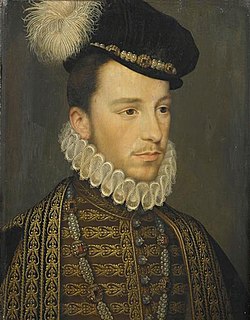
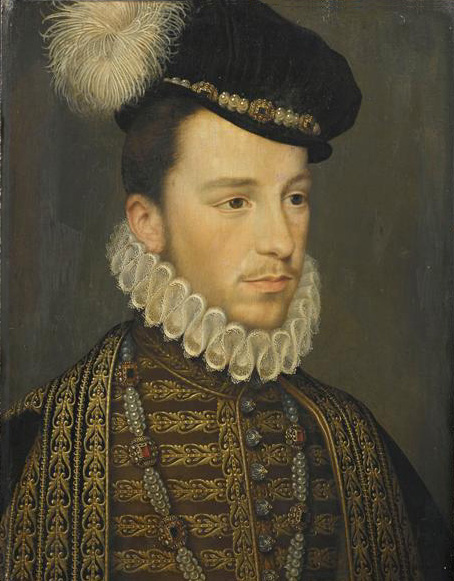
Henry III, then Duke of Anjou, dressed in elegant attire of 1570, including a "little bonnet of velvet". Painting by Jean de Court.

Les Mignons (from mignon, French for "the darlings" or "the dainty ones") was a term used by polemicists in the contentious atmosphere of the French Wars of Religion and taken up by the people of Paris, to designate the favourites of Henry III of France, from his return from Poland to reign in France in 1574, to his assassination in 1589, a disastrous end to which the perception of effeminate weakness contributed.[1] The mignons were frivolous and fashionable young men, to whom public malignity attributed heterodox sexuality, rumors that some historians have found to be a factor in the disintegration of the late Valois monarchy.

History

[edit]

According to the contemporary diarist Pierre de l'Estoile,[2] they made themselves "exceedingly odious, as much by their foolish and haughty demeanour, as by their effeminate and immodest dress, but above all by the immense gifts the king made to them."[3] The Joyeuse wedding in 1581 occasioned one of the most extravagant displays of the reign.

The faction of the Malcontents, headed by François, duc d'Alençon, created duc d'Anjou in 1576 — the presumed heir as long as Henry remained childless — appear to have stirred up the ill will of the Parisians against them. From 1576, the mignons were attacked by popular opinion, and some historians have credited without proof the scandalous stories of the time.[3] Some fourteen favourites were singled out, including François d'Espinay, seigneur de Saint-Luc, who had accompanied Henry to his "exile" in Poland and was rewarded now with the château de Rozoy-en-Brie and the governorship of Brouage; but the best known of the mignons, the archimignons in L'Estoile's Registre-Journal, who monopolised access to the king after the death of Henry's brother and heir the duc d'Alençon were Anne de Joyeuse, baron d'Arques, created duc de Joyeuse (died 1587) and Jean Louis de Nogaret de La Valette, created duc d'Épernon.

Contemporary portrait drawing of Louis de Maugiron

The appearance of the mignons on Henry's visits in July 1576 to the parishes of Paris to raise money to pay for the provisions of the Edict of Beaulieu (1576), occasioned a report by L'Éstoile:

"The name Mignons began, at this time, to travel by word of mouth through the people, to whom they were very odious, as much for their ways which were jesting and haughty as for their paint [make-up] and effeminate and unchaste apparel...Their occupations are gambling, blaspheming... fornicating and following the King everywhere...seeking to please him in everything they do and say, caring little for God or virtue, contenting themselves to be in the good graces of their master, whom they fear and honor more than God."[4]

L'Éstoile added "they wear their hair long, curled and recurled by artifice, with little bonnets of velvet on top of it like whores in the brothels, and the ruffles on their linen shirts are of starched finery and one half foot long so that their heads look like St. John's on a platter."[4]

The figure of Ganymede was employed in scurrilous sonnetry,[5] but the subtext of criticism within the court was most often that the mignons were not drawn from the cream of noble families, as had been the court favourites of his late brother Francis II or their father Henry II, but from the secondary nobility, raised up to such a degree that the social fabric appeared to be unnaturally strained.[6]

Some modern historians such as Robert Knecht have argued that the mignons "were not homosexuals, as is often assumed",[7] nor were they "effeminate".[7]

The Duel of the Mignons

[edit]

On 26 April 1578, Jacques de Lévis, comte de Caylus, one of Henry's favorites, insulted Charles de Balsac, baron de Dunes, who responded by challenging de Caylus to a duel. The following morning Caylus, with seconds Maugiron and Livarot (of the party of the King), met with Balsac, bringing seconds Ribérac and Schomberg (of the party of the Henry, Duke of Guise) at the horse market near the Bastille, in Paris. The resultant fight was compared by Brantôme[8] to a reenactment of the battle of the Horatii and the Curiatii. In the melee, seconds Maugiron and Schomberg were killed, Ribérac died of wounds the following noon, and Livarot was wounded in the face and convalesced in a hospital for six weeks. Caylus sustained as many as 19 wounds and conceded the duel to de Balsac, but died of his injuries a month later. Only Balsac got off with a mere scratch on his arm.[8]

Triple Profile Portrait , 1570s, Milwaukee Art Museum. The Mignons of Henry III likely favored such fashion.

This meaningless loss of life impressed itself on the public imagination. Henry III was so angered that he banned dueling in France on penalty of death. Jean Passerat wrote an elegy, Plaintes de Cléophon, on the occasion. In the political treatise Le Theatre de France (1580) the duel was invoked as "the day of the pigs" who "killed each other in the precinct of Saint Paul, serving him in the Muscovite manner".[9] Michel de Montaigne decried the event as une image de lâcheté, "an image of cowardice",[9] and Pierre Brantôme connected it with the deplorable spread of the Italian and Gascon manners at Henry's court. The incident accelerated the estrangement between the two Henrys.

See also

[edit]

References

[edit]
Revisions and contributorsEdit on WikipediaRead on Wikipedia
from Grokipedia
Les Mignons (French for "the darlings" or "the dainty ones") were the intimate circle of young male noblemen favored by Henry III of France (r. 1574–1589), who enjoyed significant influence at the royal court amid the French Wars of Religion. These courtiers, including figures such as Louis de Maugiron, Jacques de Lévis (comte de Caylus), and Anne de Joyeuse, were renowned for their extravagant attire, poetic pursuits, and fierce loyalty to the king, often participating in duels and military campaigns on his behalf. Their prominence sparked intense controversies, as Catholic League propagandists and rival nobles accused them of sodomy, effeminacy, and corrupting the king through undue favoritism, portraying them as emblematic of moral and political decay. Despite such smears—frequently amplified in pamphlets and satires to undermine Henry III's authority—the Mignons' role underscored the personalization of power in Valois monarchy, where personal bonds drove patronage and factional strife. Notable events, including deadly duels like that between Maugiron and Henri de Joyeuse's rival in 1578, highlighted their volatility and the king's interventions to protect them, further fueling perceptions of scandal.

Historical Context

The Reign of Henry III

Henry, Duke of Anjou, was elected of the Polish-Lithuanian Commonwealth on May 16, 1573, following an intensive campaign by his mother, , to secure the elective throne amid competition from Habsburg candidates. He departed in secrecy on June 22, 1573, arriving in in January 1574, where he signed the pacta conventa—constitutional articles limiting monarchical power—and was crowned on February 18, 1574. This brief foreign reign, however, ended abruptly when news reached him of his brother Charles IX's death from on May 30, 1574; Henry fled disguised as a servant on June 18, evading interception by Polish forces loyal to the pacta conventa, and returned to via and the . Upon his arrival in on September 6, 1574, Henry was proclaimed king, entering on September 8 amid celebrations that underscored the monarchy's weakened prestige after years of religious strife. He was formally crowned Henry III at on February 13, 1575, inheriting a realm fractured by the , which had already consumed five of the prior decade in intermittent conflict between Catholics and . The treasury was depleted from war expenditures exceeding 20 million livres annually in some years, compounded by noble exemptions from taxation and widespread in offices, leaving the crown reliant on short-term expedients like tailles and alienations of domain lands. Henry's governing approach emphasized politique moderation, seeking religious tolerance and royal absolutism to stabilize the kingdom against extremist factions, but his efforts faltered amid entrenched noble rivalries between houses like the Guises (ultra-Catholic), Bourbons (Huguenot-leaning), and Montmorencys. He issued reform ordinances, such as those in 1577 targeting judicial corruption and fiscal abuses, aiming to centralize authority by curbing seigneurial privileges and noble clienteles that undermined royal edicts. Yet, fiscal insolvency— with debts surpassing 40 million livres by 1576—forced concessions like the Edict of Beaulieu in 1576, granting Huguenots territorial strongholds, which alienated Catholic hardliners and perpetuated factional instability. This environment of aristocratic overreach and monarchical vulnerability prompted Henry to cultivate loyalty through personal favorites drawn from lesser , elevating them as administrators and commanders to bypass the influence of grandees whose private armies and provincial governorships (gouvernements) defied central control. Such favoritism, rooted in bonds from his Anjou ducal court, represented an early strategy to forge a dependent cadre unencumbered by feudal ties, though it exacerbated tensions with high who viewed these upstarts as threats to their hereditary dominance.

French Wars of Religion

The persisted intensely during the reign of Henry III (1574–1589), exacerbating divisions between Catholics and (French Protestants) and undermining royal authority. The fifth war erupted in 1574 shortly after Henry III's accession, with armies under leaders like Henry of Navarre capturing key territories and forcing the crown into negotiations amid financial exhaustion and military stalemates. This culminated in the Edict of Beaulieu, signed on 6 May 1576, which conceded freedom of worship to Protestants across most of —excepting , the royal court, and cathedral cities—along with eight strongholds for security. The edict, intended as a pragmatic truce, instead intensified Catholic backlash, as ultramontane factions viewed it as capitulation to and evidence of monarchical frailty. In direct response, the (also called the ) formed in May 1576, spearheaded by , to rally nobles, clergy, and municipalities against Protestant gains and royal concessions; it demanded stricter enforcement of Catholicism and exclusion of heretics from power. Henry III, pressured by League agitation and urban unrest, rescinded much of the edict via the Edict of January 1577, limiting Protestant worship and briefly aligning with the League to restore order, though this only fueled cycles of renewed conflict. These religious fractures polarized the high , splitting ancient houses into Catholic extremists (e.g., Guises) and Protestant sympathizers or moderates (e.g., certain Bourbon and Montmorency branches), which eroded faction-neutral loyalty to and paralyzed traditional advisory structures. With noble networks riven by confessional allegiances and opportunistic alliances, the persistent civil strife generated voids in court influence, where the king required dependable, unaligned retainers drawn from lesser or non-familial circles to bypass entrenched divisions and sustain personal .

Origins and Composition

Formation at Court

The mignons first emerged in the 1570s as a select group of young nobles forming part of Henry III's personal entourage during his tenure as Duke of Anjou and his brief reign as King of from 1573 to 1574. Upon Henry's abrupt return to France following the death of his brother Charles IX, he ascended the throne in 1574 and integrated these loyal retainers into the royal household at . By 1576, this entourage had evolved into a more defined , consisting of privileged chamberlains who enjoyed close access to the king and participated in daily deliberations, often on minor administrative or intellectual matters. Court records indicate that the number of such chamberlains expanded to ten by 1578, reflecting their growing formalization within the royal structure. Henry III intentionally fostered this group as a means to cultivate unwavering personal allegiance, thereby countering the dominance of entrenched noble factions like the Guises during the escalating . This approach is evidenced by the rapid conferral of offices and responsibilities, including diplomatic appointments such as an ambassadorship to Nancy in 1575, which secured their dependence on royal favor over familial or factional ties.

Recruitment and Social Background

The mignons were predominantly young men from the lesser or provincial nobility, typically in their late teens to mid-twenties, who possessed military experience from the French Wars of Religion but maintained minimal connections to entrenched court factions. This social profile enabled King Henry III to assemble a cadre unbound by traditional noble clienteles, prioritizing loyalty to the monarch over familial or regional allegiances. Recruitment emphasized personal attributes such as physical attractiveness, athletic skill, and fervent devotion, as noted in contemporary accounts like those of Pierre de Bourdeille, seigneur de Brantôme, who highlighted their valor and charm over aristocratic lineage. Exemplary figures included Anne de Joyeuse (1560–1587), eldest son of Guillaume II de Joyeuse, vicomte from the region in , who entered court service around 1576 after upbringing in chivalric traditions. François d'Épernon (1558–1642), originating from a modest Gascon noble family in southwestern France, exemplified the preference for provincial recruits lacking highborn pedigrees yet demonstrating prowess in arms. Louis de Maugiron (c. 1560–1578), from the area and initially in the service of the Duke of Alençon, sustained a battlefield injury in 1577, underscoring the military background common among these youths selected for their direct allegiance to Henry.

Characteristics and Lifestyle

Fashion and Effeminacy

The mignons cultivated a distinctive style characterized by ornate and effeminate attire that contrasted sharply with the functional, martial clothing of traditional French nobility, such as reinforced doublets and boots suited for warfare. Eyewitness accounts from the period, including those of diarist Pierre de l'Estoile, describe the mignons wearing their hair long, meticulously curled and pomaded, often piled high under small velvet bonnets adorned with gold lace or white aigrettes. They complemented this with open-throated ruffs, lace-trimmed collars, and garments featuring slashing, embroidery, and tinsel for visual extravagance. A hallmark of their appearance was the use of , including powder, rouge, and other facial enhancements, alongside liberal application of perfumes, which contributed to an aura of refinement and sensuality. Earrings, typically pearl drops or precious stones—deviating from the single earring norm for men—further accentuated their look, as noted in contemporary critiques of courtly excess. This extended to padded doublets and voluminous sleeves that exaggerated the , often crafted from costly velvets and silks, reflecting Henry's personal endorsement of opulent dress over the simplicity promoted under his brother Charles IX. The mignons' style drew from Italianate influences prevalent at the Valois court, amplified by Catherine de' Medici's entourage of Italian artisans who popularized refined perfumery and luxurious textiles. Henry's 1574 journey through , culminating in , exposed him to sumptuous aesthetics, evidenced by diplomatic gifts of jewels and fine fabrics that informed subsequent court trends. By prioritizing such innovations, the mignons helped pivot French court fashion toward conspicuous luxury, even as the kingdom grappled with fiscal strains from ongoing religious conflicts in the 1570s and 1580s.

Behaviors and Personal Relationships

The mignons demonstrated intense personal loyalty to Henry III, often accompanying him in daily activities and receiving lavish gifts and titles as tokens of favor, with their positions deriving exclusively from devotion to the king rather than ties to other nobles. Contemporary diarist Pierre de l'Estoile recorded their constant presence at , noting how the king selected them for their and elegance, fostering a circle of close companionship that included shared courtly pursuits like dancing. Venetian diplomatic dispatches similarly highlighted this proximity, describing the mignons as ever-present attendants who followed the king on travels and participated in intimate entertainments. Rumors of same-sex intimacies between Henry III and the mignons emerged in the 1570s, propagated through court gossip, satirical pamphlets, and writings by observers like l'Estoile, who alluded to "masculine love" and practices likened to those of Ganymede. These accusations intensified during political conflicts, particularly from Catholic League propagandists after 1585, who merged claims of with charges of and tyranny to undermine the king's legitimacy. However, such allegations lack direct empirical corroboration beyond polemical , with historians attributing them primarily to the rhetorical strategies of Protestant and League opponents seeking to portray the court as morally disordered. Among the mignons, competitive favoritism bred internal rivalries, as individuals vied for the king's singular attention, leading to personal animosities and violent clashes. For instance, in July 1578, mignon Paul de Stuer de Caussade was assassinated with 34 wounds inflicted by assailants reportedly hired by the Duc de Guise out of jealousy over court influence, illustrating how such tensions extended beyond the group to external threats but originated in the of royal affection. These dynamics underscored a lack of unified brotherhood, with loyalties fragmented by the pursuit of preeminence rather than .

Political Role

Influence on Royal Policy

Henry III leveraged the mignons as instruments of centralized authority during the , appointing them to pivotal administrative and military roles to circumvent the influence of powerful noble families aligned with Protestant or ultra-Catholic factions. These favorites, drawn largely from lesser nobility, received governorships and commands that extended the king's direct oversight over provinces and armies, reducing dependence on potentially disloyal grandees. For instance, Anne de Joyeuse, a prominent mignon, was appointed of , granting him control over naval operations critical for royal enforcement of edicts and suppression of rebellions. Similarly, Jean Louis de Nogaret de La Valette (later Duke of Épernon) was positioned in high military offices, such as efforts to equalize his status with Joyeuse's admiralty through equivalent commands, facilitating the king's strategic maneuvering against factional threats. Such appointments enabled Henry III to pursue policies prioritizing monarchical survival over rigid ideological commitments, as mignon-led initiatives focused on pragmatic containment rather than total victory. In the sixth war (1576–1577), the king's reliance on favorites helped orchestrate a swift resolution via the Peace of Bergerac on September 17, 1577, which restored limited Huguenot concessions while preserving Catholic dominance under royal terms, avoiding prolonged entanglement with either side's extremists. In subsequent conflicts, including the eighth war (1585–1598), mignons like commanded royal expeditions, such as operations in the South-West against Protestant strongholds, emphasizing enforcement of crown edicts over broader religious purification. Fiscal further solidified mignon loyalty, with Henry III granting them revenues from properties and other assets, though this exacerbated the monarchy's chronic indebtedness amid wartime expenditures. These rewards, often in the form of abbeys and benefices redirected from traditional recipients, underscored the king's strategy of binding favorites through personal enrichment, yet strained royal finances already burdened by conflict costs exceeding millions of livres annually by the late 1570s.

Conflicts with Traditional Nobility

The traditional nobility, particularly influential houses like the Guise family, harbored deep resentment toward the mignons for supplanting their longstanding advisory roles and access to royal favor, as Henry III delegated key state matters to his young favorites starting in the mid-1570s. This shift marginalized established elites who had historically dominated court influence amid the Wars of Religion, fostering perceptions that the mignons represented an illegitimate redistribution of power away from proven aristocratic lineages toward untested newcomers. Mignons frequently intercepted petitions and communications intended , effectively blocking direct noble access and prompting accusations of favoritism-driven that prioritized personal over merit or . Such gatekeeping intensified antagonisms, as nobles petitioned against the perceived cabal in the late 1570s, viewing it as a barrier to addressing fiscal and military reforms needed during ongoing religious strife. The mignons' personal enrichment exacerbated these conflicts, with Henry III granting them lucrative offices, governorships, and rights to collect certain taxes or monopolies on goods like salt and , which generated substantial revenues—estimated in some cases to exceed 100,000 livres annually for figures like Anne de —while traditional nobles saw their own fiscal privileges erode. These allocations, often bypassing customary noble hierarchies, alienated reformers who argued they drained royal coffers and burdened provincial taxpayers without corresponding public benefit, further entrenching divides between the king's inner circle and the high .

Major Events

The Duel of the Mignons

The Duel of the Mignons occurred on 27 April 1578 near the Porte Saint-Honoré in Paris, stemming from a romantic rivalry between Jacques de Caylus and his rival Quélus over a courtesan, which escalated from an initial insult into a challenge. What was intended as a duel between Caylus and Quélus drew in their respective seconds, transforming the encounter into a chaotic melee involving six participants: on Caylus's side, Louis de Maugiron and Guy d'Arces, seigneur de Livarot; opposing them, Quélus, Georges de Ribérac, and Henri de Schomberg. The combat proved exceptionally brutal, with Maugiron and Schomberg slain on the spot, Ribérac succumbing to his injuries the next day, and Caylus enduring 19 wounds before dying 33 days later. Livarot recovered from severe head trauma after six weeks of convalescence, while Quélus survived with comparatively minor injuries. A royal inquest documented these fatalities and the melee's intensity, underscoring the unchecked violence among the king's inner circle despite edicts banning private duels. King Henri III responded with profound grief, particularly over Maugiron, one of his closest favorites, leading him to withdraw from festivities, don mourning garb, and visit the wounded in seclusion. In a display of personal attachment overriding legal prohibitions, he granted pardons to the surviving combatants, thereby mitigating immediate repercussions and highlighting the mignons' privileged status amid the ensuing scandal.

Involvement in Broader Conflicts

Anne de , one of Henry III's principal mignons, commanded royal Catholic forces during the later phases of the , particularly targeting Huguenot positions in the 1580s. From 1585 onward, amid the eighth war, led expeditions into regions like and , securing tactical victories such as the capture of several Protestant-held settlements in during the summer of 1586. These operations aimed to disrupt Huguenot supply lines and consolidate royal control in the south, but they contributed to strategic overextension by dispersing forces across multiple fronts without decisive gains. Joyeuse's campaigns culminated in the Battle of Coutras on October 20, 1587, where his 35,000-strong royal army clashed with a smaller Huguenot force under , resulting in a catastrophic defeat for the Catholics with over 2,000 killed, including Joyeuse himself. This loss highlighted the vulnerabilities of mignon-led offensives, as aggressive pursuits often outpaced logistical support and exposed flanks to Navarre's more mobile tactics. Other mignons served as officers in these engagements, suffering casualties that underscored the personal risks of their loyalty to the king amid escalating civil strife. Jean Louis de Nogaret de La Valette, duc d'Épernon, extended mignon influence into provincial governance with military dimensions, notably in efforts to suppress unrest in during the late 1580s. Appointed to key administrative roles, Épernon oversaw operations in areas like , where he quelled local revolts tied to Huguenot resistance and noble factionalism, employing harsh measures that temporarily restored order but intensified regional animosities and accusations of favoritism. His tenure fueled grievances among traditional elites, who viewed such interventions as extensions of corruption rather than effective pacification, limiting long-term stability. Instances of wavering allegiance among lesser mignons, such as defections amid battlefield pressures, further revealed the fragility of their cohesion under duress.

Perceptions and Controversies

Contemporary Accusations of Immorality

Contemporary critics, including diarist Pierre de l'Estoile, leveled charges of against the mignons, portraying their close relationships with Henry III as indicative of unnatural vice akin to biblical Sodom or classical myths of Ganymede. was another recurrent accusation, with pamphlets decrying the mignons' adoption of women's fashions, perfumes, and makeup as that undermined virtues. Protestant polemicists, such as those in Huguenot satires, mocked these traits as signs of moral decay at , contrasting them with perceived Protestant austerity. Catholic League writers echoed and intensified such invectives, framing the mignons' behaviors as heretical perversions warranting divine judgment, often linking to broader Catholic critiques of royal favoritism. Neutral chroniclers like de l'Estoile noted public scandals, including arrests for among courtiers and rumors of mignon involvement in illicit acts, without explicit endorsement. Accusations extended to fiscal immorality through extravagance; the 1581 wedding of mignon Anne de Joyeuse to Marguerite de Lorraine-Vaudémont featured lavish tournaments, ballets, and feasts that strained royal finances amid ongoing wars. Critics from various factions decried these displays as contributing to treasury depletion, with de l'Estoile recording public outrage over the opulence while faced .

Propaganda and Political Exploitation

The Catholic League, a militant Catholic faction opposing Henry III's perceived leniency toward Protestants during the , systematically weaponized allegations of sodomy involving the king and his mignons in polemical campaigns from the mid-1580s onward to undermine royal legitimacy. Pamphlets, verses, and woodcuts circulated widely, depicting Henry III and figures like Louis de Maugiron and Jacques de Lavardin as engaged in unnatural vices, portraying the mignons as effeminate corrupters who distracted the king from godly rule and fueled divine wrath against . These materials, often produced anonymously or under pseudonyms by League sympathizers, invoked biblical condemnations of Sodom to frame the scandals as evidence of the throne's unworthiness, aiming to rally public outrage and justify rebellion by associating royal favoritism with moral decay and heresy. Royalist responses sought to counter this narrative by emphasizing the mignons' military valor and piety, aligning them with Henry's self-image as a devout Catholic warrior-king. Edicts issued in the late 1570s and 1580s, such as those suppressing satirical prints and verses, implicitly defended the favorites by prohibiting attacks on the court's honor while highlighting their roles in campaigns against , where mignons like Maugiron demonstrated loyalty in battles such as in 1569 and Moncontour in 1569. Pro-royal recast the group not as sodomites but as chaste, battle-tested aides, with Henry himself issuing declarations portraying his inner circle as instruments of pious amid civil strife, though these efforts struggled against the League's distribution networks. This propaganda offensive had tangible effects, eroding Henry III's popular standing in Catholic strongholds like by amplifying perceptions of royal weakness and impiety, which League preachers exploited in sermons to mobilize urban mobs. The sustained vilification contributed to the volatile atmosphere culminating in the Day of on May 12, 1588, when Parisians erected barricades against royal troops, forcing Henry to flee the city and temporarily cede power to the Duke of Guise, as public distrust—fueled by years of sodomy slurs—tipped sentiment toward the League's call for a more zealous Catholic .

Decline and Legacy

Fall from Power

The defeat and death of Anne de Joyeuse, duc de Joyeuse, at the Battle of Coutras on October 20, 1587, severely weakened the mignons' military and political core. Leading a royal Catholic army of approximately 12,000 men against Henry of Navarre's Protestant forces numbering around 5,000, Joyeuse's troops were outmaneuvered in marshy terrain near the Dordogne River, suffering heavy casualties including over 2,000 killed while Navarre's losses were minimal at about 100. Joyeuse himself was slain during the rout, reportedly while attempting to surrender, in reprisal for prior Catholic massacres of Protestants. This loss, compounded by earlier deaths such as those in the 1578 duels among mignons, progressively eroded the group's numbers and Henry III's reliance on their exclusive influence. Facing escalating crises from the Catholic League, Henry III sought to placate opposition by sidelining surviving mignons like Jean Louis de Nogaret de La Valette, duc d'Épernon. In the Edict of Union issued on July 16, 1588, following the League's uprising during the Day of the Barricades on May 12-13, 1588, the king dismissed Épernon from key governorships and admiralty roles to address demands for removing perceived favorites who alienated traditional nobility. Épernon, who had risen to prominence as a through rapid promotions including in 1581, retreated from court amid this purge, which also revoked prior concessions to and affirmed Catholic succession priorities. This maneuver reflected Henry's pragmatic pivot toward wider alliances, including temporary reconciliation with League leaders, rendering the mignons' insular model untenable against broader factional pressures. Henry III's assassination on August 1, 1589, by Dominican friar —a League sympathizer motivated by the king's December 1588 murders of the Guises—precipitated the final dissolution of mignon influence. Stabbed during a meeting at to discuss war strategy, Henry succumbed to his wounds hours later, leaving no direct heir and elevating Henry of to the throne as Henry IV. The ensuing Wars of Religion and Bourbon ascension prioritized pragmatic coalitions over the personalized favoritism that defined the mignons' era, with survivors like Épernon initially resisting the new regime before submitting.

Long-Term Historical Assessment

The reliance on mignons afforded Henry III a loyal inner circle that facilitated short-term assertions of royal authority against entrenched noble factions during the (1562–1598), enabling maneuvers such as the deployment of favorites like against rivals and thereby staving off immediate monarchical dissolution amid escalating civil strife. This cadre's fidelity contrasted with the unreliability of traditional aristocracy, whose shifting alliances—exemplified by the Condé and Montmorency revolts—threatened centralized control, allowing Henry to navigate the seventh war's outbreak in 1580 without total capitulation to Protestant or ultra-Catholic forces. Yet this strategy hastened long-term monarchical erosion, as the mignons' elevation disrupted court hierarchies, alienating conservative elites and amplifying Catholic League recruitment; League adhesions ballooned from localized pacts in 1576 to provincial networks commanding urban strongholds like by 1588, correlating with decrying royal favoritism as tyrannical. Extravagant further strained finances, with crown indebtedness escalating from 20 million livres in 1574 to over 100 million by 1588, undermining military capacity and credibility in a kingdom already fractured by eight declared wars. Contemporary , informed by archival reevaluations, largely dismisses amplified allegations as partisan fabrications by League polemicists to delegitimize Valois rule, prioritizing the mignons' instrumental role in factional balancing over purported personal excesses. Nonetheless, the perceived and ostentation of courtly display objectively distanced Henry from martial noble ideals, eroding elite cohesion essential for dynastic survival; select conservative analyses posit moral laxity—manifest in unchecked favoritism—as a pivotal causal factor in Valois extinction, arguing it sapped institutional vigor beyond mere political expediency.

References

Add your contribution
Related Hubs
User Avatar
No comments yet.