


Community hub
Recent from talks
Contribute something
Nothing was collected or created yet.
Brothel
View on Wikipedia


A brothel, strumpet house, bordello, bawdy house, ranch,[2] house of ill repute, house of ill fame, or whorehouse is a place where people engage in sexual activity with prostitutes.[3] For legal or cultural reasons, establishments often describe themselves as massage parlors, bars, strip clubs, body rub parlours, studios, or by some other description. Sex work in a brothel is considered safer than street prostitution.[4]
Legal status
[edit]On 2 December 1949, the United Nations General Assembly approved the Convention for the Suppression of the Traffic in Persons and of the Exploitation of the Prostitution of Others.[5] The convention came into effect on 25 July 1951 and by December 2013, had been ratified by 82 states.[6] The convention seeks to combat prostitution, which it regards as "incompatible with the dignity and worth of the human person." Parties to the convention agreed to abolish regulation of individual prostitutes, and to ban brothels and procuring. Some countries not parties to the convention also ban prostitution or the operation of brothels. Various United Nations commissions, however, have differing positions on the issue. For example, in 2012, a Joint United Nations Programme on HIV/AIDS (UNAIDS) convened by Ban Ki-moon and backed by United Nations Development Programme and UNAIDS, recommended decriminalization of brothels and procuring.[7][8][9]

In the European Union, there is no uniform policy and no consensus on the issue; and laws vary widely from country to country. Germany and the Netherlands have the most liberal policies; in Sweden (and in Norway and Iceland outside the EU) the buying, but not selling, of sex, is illegal; in most former Communist countries the laws target the prostitutes; while in countries such as the UK (except Northern Ireland), Italy, and Spain the act of prostitution is not itself illegal, but soliciting, pimping and brothels are, making it difficult to engage in prostitution without breaking any law. The European Women's Lobby condemns prostitution as "an intolerable form of male violence" and supports the "Swedish model".[10]
In February 2014, the members of the European Parliament voted in a non-binding resolution, (adopted by 343 votes to 139; with 105 abstentions), in favor of the "Swedish Model" of criminalizing the buying, but not the selling, of sex.[11]


Prostitution and the operation of brothels is illegal in many countries, though known illegal brothels may be tolerated or laws not strictly enforced. Such situations exist in many parts of the world, but the region most often associated with these policies is Asia. When brothels are illegal they may nevertheless operate in the guise of a legitimate business, such as massage parlors, saunas or spas.
In a few countries, prostitution and operating a brothel is legal and regulated. The degree of regulation varies widely by country. Most of these countries allow brothels, at least in theory, as they are considered to be less problematic than street prostitution. In parts of Australia, brothels are legal and regulated. Regulation includes planning controls and licensing and registration requirements, and there may be other restrictions. However, the existence of licensed brothels does not stop illegal brothels from operating. According to a report in the Australian Daily Telegraph, illegal brothels in Sydney in 2009 outnumbered licensed operations by four to one;[12][13] while in Queensland only 10% of prostitution happens in licensed brothels, with the rest being either independent sex workers (which is legal) or illegal operations.[14]
The introduction of legal brothels in Queensland was to help improve the safety of sex workers, punters (customers of prostitution), and the community at large and reduce crime. This may have been successful in many ways in Queensland, with The Viper Room being one of the most well known, clean, safe and most highly regarded brothels in Brisbane and Queensland.[15] The Netherlands has one of the most liberal prostitution policies in the world, and attracts sex tourists from many other countries.[16] Amsterdam is well known for its red-light district and is a destination for sex tourism. Germany also has very liberal prostitution laws.[17] The largest brothel in Europe is the Pascha in Cologne. Although the Dumas Hotel in Butte, Montana operated legally from 1890 until 1982, brothels are currently illegal throughout the United States, except in 10 rural counties in Nevada. Prostitution outside of the 19 licensed brothels operating in 6 of those 10 counties is illegal throughout the state.[18] All forms of prostitution are illegal in Clark County, which contains the Las Vegas–Paradise metropolitan area.[19]
History
[edit]_Au_Salon_de_la_rue_des_Moulins_-_Henri_de_Toulouse-Lautrec_1894_MTL.inv181.jpg)
The earliest recorded mention of prostitution as an occupation appears in Sumerian records from c. 2400 BCE and describes a temple-bordello operated by Sumerian priests in the city of Uruk. The 'kakum' or temple was dedicated to the goddess Ishtar and housed three classes of women. The first group performed only in the temple sex-rites; the second group had the run of the grounds and catered to its visitors as well, and the third and lowest class lived on the temple grounds but were free to seek out customers in the streets. In later years, sacred prostitution and similar classifications of women existed in Greece, Rome, India, China, and Japan.[20]
Europe
[edit]State brothels/bordellos with regulated prices existed in ancient Athens, created by the legendary lawmaker Solon. These brothels catered to a predominantly male clientele, with women of all ages and young men providing sexual services (see Prostitution in ancient Greece). In ancient Rome female slaves were forced to provide sexual services for soldiers, with brothels being located close to barracks and city walls. Brothels existed everywhere. The custom was to display lit candles to signal that they were open.
Before the appearance of effective contraception, infanticide was common in brothels. Unlike usual infanticide—where girls were more likely to be killed at birth— a brothel site at Ashkelon in Israel revealed that nearly all of the babies were boys.[21]

Cities first began setting up municipal brothels between 1350 and 1450 CE.[22] Municipalities often owned, operated, and regulated the legal brothels. Governments would designate certain streets where a keeper could open a brothel.[23] These sections of town were the precursors to so-called "red light districts". Not only did the towns restrict where a keeper could open a brothel, but they also put constraints on when the brothel could be open. For example, most brothels were forbidden to be open on Sundays and religious holidays. Some scholars believe these restrictions were enforced to make the prostitutes go to church but others argue that it was to keep parishioners in church and out of the brothels. Either way, it was a day providing no revenue for the keeper.
Although brothels were set up as a sexual outlet for men, not all men were allowed to enter them. Clerics, married men, and Jews were prohibited.[24] Often, foreigners such as sailors and traders were the main source of revenue. Local men who frequented the brothels were mainly single; laws restricting the patrons were not always enforced. Government officials or police would periodically search the brothels to reduce the number of prohibited customers. However, since the government was so closely related to the church, common punishments were minor. These restrictions were put in place to protect the wives of married men from infections.

Multiple restrictions were placed on the residents of brothels. One limitation prohibited prostitutes from borrowing money from their brothel keeper. Prostitutes paid high prices to the brothel keeper for the basic necessities of room and board, clothes, and toiletries. Room and board pricing was often set by the local government but the price for everything else could add up to a common woman's entire earnings. Prostitutes were sometimes prohibited from having a special lover. Some regulations put on prostitutes were made to protect their clients. A woman was kicked out if she was found to have a sexually transmitted disease. The prostitutes were not allowed to pull men into the brothel by their clothing, harass them in the street, or detain them over unpaid debts.[25] Clothing worn by prostitutes was regulated and had to be distinguishable from that of respectable women. In some places, a prostitute had to have a yellow stripe on her clothing while in others red was the differentiating color. Other towns required harlots to don special headdresses or restricted the wardrobe of proper women. The restrictions placed on prostitutes were put in place not only to protect them but also nearby citizens.
Because of a syphilis epidemic throughout Europe, many brothels were shut down during the end of the Middle Ages.[26] This epidemic had been brought on by Spanish and French military pillages after the return of Christopher Columbus from the newly discovered Americas. The church and citizens alike feared that men who frequented brothels would bring the disease home and infect morally upright people.
From the 12th century, brothels in London were located in a district known as the Liberty of the Clink. This area was traditionally under the authority of the Bishop of Winchester, not the civil authorities. From 1161, the bishop was granted the power to license prostitutes and brothels in the district. This gave rise to the slang term Winchester Goose for a prostitute. Women who worked in these brothels were denied Christian burial and buried in the unconsecrated graveyard known as Cross Bones.
_Sala_d%27aspetto_per_la_casa_di_M.me_B.,1939.jpg)

By the 16th century, the area was also home to many theatres, (including the Globe Theatre, associated with William Shakespeare), but brothels continued to thrive. A famous London brothel of the time was Holland's Leaguer. Patrons supposedly included James I of England and his favourite, George Villiers, 1st Duke of Buckingham. It was located in a street that still bears its name[27] and also inspired the 1631 play, Holland's Leaguer. Charles I of England licensed a number of brothels including the Silver Cross Tavern in London, which retains its license to the modern day because it was never revoked.
The authorities of Medieval Paris followed the same path as those in London and attempted to confine prostitution to a particular district. Louis IX (1226–1270) designated nine streets in the Beaubourg Quartier where it would be permitted. In the early part of the 19th century, state-controlled legal brothels (then known as "maisons de tolérance" or "maisons closes") started to appear in several French cities. By law, they had to be run by a woman (typically a former prostitute) and their external appearance had to be discreet. The maisons were required to light a red lantern when they were open (from which is derived the term red-light district) and the prostitutes were only permitted to leave the maisons on certain days and only if accompanied by its head. By 1810, Paris alone had 180 officially approved brothels.
During the first half of the 20th century, some Paris brothels, such as le Chabanais and le Sphinx, were internationally known for the luxury they provided. The French government sometimes included a visit to the Chabanais as part of the program for foreign guests of state, disguising it as a visit with the President of the Senate in the official program.[28] The Hotel Marigny, established in 1917 in the 2nd arrondissement of Paris, was one of several that were well known for catering to gay male clients.[29] Premises suspected of being gay brothels, including the Hotel Marigny were, however, subject to frequent police raids,[30] perhaps indicating less tolerance for them from the authorities.

In most European countries, brothels were made illegal after World War II. France outlawed brothels in 1946, after a campaign by Marthe Richard. The backlash against them was in part due to their wartime collaboration with the Germans during the occupation of France. Twenty-two Paris brothels had been commandeered by the Germans for their exclusive use; some had made a great deal of money by catering for German officers and soldiers.[32] One brothel in the Montmartre District of the French capital was part of an escape network for POWs and downed airmen.[33]
Italy made brothels illegal in 1959. The 2010s decade has seen the introduction of sex dolls and sexbots on the premises of some brothels.[34]
East Asia
[edit]Prostitution has existed in ancient China, but it was the politician Guan Zhong (管仲) who planned the brothel system. During the Spring and Autumn period in 645 BC, Qi politician Guan Zhong proposed to set up brothels in the city, and the operation of brothels was officially approved. As many as 700 women were entered into the brothels to work as prostitutes. Guan Zhong named this kind of brothel "Nvlv (女闾)".[35] Most prostitutes in ancient China came from very poor families and were sold to brothels by their families to work as prostitution. Prostitutes may also be asked by their families to prostitution secretly outside brothels.[36] Some girls are brought to brothels as children begging. There are also women who are resold to brothels by their husbands or lured to brothels by traffickers.[37] The living conditions of prostitutes are not good,[38] but the living conditions of prostitutes in high-end brothels are better than those in low-end brothels.[39][40] Prostitutes in high-end brothels sell sex to wealthy and educated clients, so some prostitutes will learn some art-related content. However, high-end brothels are still places of prostitution, and prostitutes also take prostitution as their main job. Their performances have a lot of pornographic content, and performances are not a professional field.[41][42] In ancient China, brothels had different names, and each dynasty may have different names. There were also singing and dancing places in ancient China. These singing and dancing places also had different names, and the names also changed in different dynasties. Song and dance venues in ancient China were not brothels. Gējì were professional female song and dance performers, they were not prostitutes, most Geji did not engage in prostitution. Geji in ancient China catered to famous poets and nobles. In addition to performing songs and dances, they would also have these men talk about poetry and have pleasant conversations. Prostitution was rarely found, but they would also develop romantic relationships with these men.[43] This Geji culture in ancient China died out systematically during the late Qing dynasty and the Republic of China.[44] Male prostitution also existed in ancient China; open male brothels generally appeared in the Ming and Qing dynasties, and such male brothels were officially similar to semi-open in ancient times. Male prostitutes in male brothels will also learn some arts, but like prostitutes, they are not professional performers. Male prostitutes learn arts to increase the price of prostitution, and their job content is to engage in prostitution. Male performers who are not involved in prostitution are often reluctant to associate with such male prostitutes and openly distance themselves from them. The number of male brothels and male prostitutes is far less than that of female ones, but male brothels only sell sex to wealthy male clients.[45][46] During the Republic of China, due to social unrest and other problems, there were a large number of brothels and prostitutes in China. After the founding of New China, brothels were closed and prostitution and whoring were made illegal. New China treated prostitutes for sexually transmitted diseases, provided psychological counseling, taught them work skills, and arranged legitimate jobs for them to change careers.[47]
Yūkaku (遊廓) were legal red-light districts in Japanese history, where both brothels and prostitutes, known collectively as yūjo(遊女), the higher ranks of which were known as oiran recognised by the Japanese government operated.[48] Though prostitution was, officially, legal to engage in and pay for only in these areas, there were a number of places where prostitutes and brothels operated illegally.[49] Yoshiwara was home to some 1,750 women in the 18th century, with records of some 3,000 women from all over Japan at one time. Many were typically indentured to their brothel; if indentured by their parents, a larger advance payment would often be received. Though contracts of indenture often did not last more than five to ten years, the debt sometimes accrued by these women could keep them working there for much longer.[50] Many women also died of sexually transmitted diseases, or following failed abortions, before completing their contracts.[51]

The Yinjian teahouse (阴间茶室) refers to a male brothel that provided same-sex sexual services to men during the Edo period in Japan. Male prostitutes in brothels mainly serve male customers, but occasionally there are a few female customers. Male prostitutes in male brothels are generally between 13 and 20 years old.[52] In Japanese history, many geishas were not prostitutes, and geisha houses were different from brothels. The geisha of Japan emphasized good table manners, artistic skills, elegant styling, and sophisticated, tactical conversational skills.
In Korean history, there were brothels where prostitutes worked as prostitution. There are also kisaeng performing arts venues that provide performances.
India
[edit]The governments of many Indian princely states had regulated prostitution in India prior to the 1860s. The British Raj enacted the Cantonment Act of 1864 to regulate prostitution in colonial India as a matter of accepting a necessary evil so that the British soldiers could seek sexual gratification when away from their homes.[53] The Cantonment Acts regulated and structured prostitution in the British military bases which provided for about twelve to fifteen Indian women kept in brothels called chaklas for each regiment of thousand British soldiers.[54] They were licensed by military officials and were allowed to consort with soldiers only.[55]
Brothels in India came into life in the early 1920s,[56] when dance styles in states like Maharashtra, such as Lavani, and dance-drama performance artists, called Tamasha artists, starting working as prostitutes.[57][58] Such professions were strongly connected to caste and income levels.[57][58]
United States
[edit].jpg)
From 1911 to 1913, the United States Department of Justice counted the numbers of prostitutes in brothels to use the data against the much-feared "White Slave Traffic".[59] This effort collected information from 318 cities of 26 Eastern states. It estimated about 100,000 women to be working in brothels, yet some estimated the total number of prostitutes to be as high as 500,000.[60]
During the late nineteenth century, brothels in the United States were no secret. George Kneeland articulated his growing concern about the organized sex business in America well, saying that prostitution had grown into a "highly commercialized and profitable business that penetrated the deepest recesses of the political, cultural and economic life of the city."[61] Brothels were commonly referred to as "disorderly houses", and their residents were called by many names, some euphemistic—e.g., abandoned woman, bawd good-time daisy, fallen angel, fille de joie, jeweled bird, lady of the evening, shady lady, soiled dove, wanton woman, and woman of the town—and some less kind—e.g., hooker, slut, and whore.[62] As the 19th century went on, prostitution as a profession became more common, rather than just occasionally necessitated soliciting. As a result of these changes, the way prostitution was practiced changed.[63] Many prostitutes still practiced their trade independently, but the new class of professional prostitutes created a demand for a location to do their regular business, and the brothel served this purpose.[64]
Visitors could easily find disorderly houses by opening up the local or statewide directories, such as the 1895 Travelers' Guide of Colorado.[65] This 66-page manual helped the interested client decide which brothel was right for him. These manuals did not attract by using euphemistic language, and though bold by standards of the time, were not crude. Some examples read: "Twenty young ladies engaged nightly to entertain guest", and "Strangers cordially welcome". In some areas, brothels simply could not be ignored. A nineteenth-century authority describes the city of New Orleans as such: "The extent of licentiousness and prostitution here is truly appalling and doubtless without a parallel in the whole civilized world. The indulgence and practice are so general and common that men seldom seek to cover up their acts or go in disguise."[66]
The average house held five to twenty working girls; some higher-end brothels also employed staff servants, musicians, and a bouncer. The typical brothel contained several bedrooms, all furnished. Some upscale brothels were much larger; such is the case with that owned by Mary Ann Hall of Arlington, Virginia.[67] It is described as "a rather grand house with twenty-five rooms and was enclosed by a brick wall. The interior was elegantly furnished. The principal rooms on the first floor contained large oil paintings, Brussels carpets, red plush 'parlor furniture', étagères (a shelf for small ornaments), and numerous items of silver plate."[68] An archeological dig of the area outside of Mary Ann Hall's estate revealed refuse of a quality superior to that in surrounding working-class areas. This included many champagne bottles and corks, wire cages from such bottles, perfume bottles, high-quality porcelain with gilt edging, along with remnants of exotic foods—coconut shells and berry seeds, bones from beef, fish, and pork indicating that elegant meals were being eaten at this high-class brothel.[69] These "five and ten-dollar parlor houses" attracted wealthy men, who used the facilities much as a gentlemen's social club,[70] where they made business and political connections, met with associates and had exquisite dinners with wine, champagne, and women. Brothels were not only for the wealthy. "One-dollar houses" were visited by those of the working class. A 1910 Kansas vice report compares the two: "A few brothels were equipped with expensive furniture and furnishings including the finest of upholstered chairs, well-done paintings, and costly rugs, while others were hovels of repulsive squalor."[71]
Women joined brothels from all walks of life. The average prostitute was approximately 21,[72] but many were as young as 13 or as old as 50. Typically thought of as an escape for young, poor, troubled women, brothels sometimes attracted those less expected. Trained musicians and singers sometimes were lured into it by their interest in easy money and fun times.[73] Some others turned to brothels to get out of boring, abusive, or otherwise unfulfilling marriages. Although they might be from varied classes, ethnicities, and ages, most women who began or joined brothels had a shared goal: quick money.[72] Many found themselves always indebted to their mistresses. Lack of credit made a prostitute unable to buy items necessary for her trade (powder, cosmetics, perfumes, and evening wear), and she was forced to buy them through her madam.[74]
Some madams, often former prostitutes themselves, rose to become independently wealthy. One was Mary Ann Hall of Arlington, Virginia. Clearly attractive and a good businesswoman, Mary Ann purchased a lot and built a brick house. That would be the location of an upscale brothel for another 40 years, sitting right at the foot of Capitol Hill. Her brothel was very lucrative, and Mary Ann was able to buy multiple enslaved people and a summer home. She was responsible for the behavior of her prostitutes, which could prove challenging since drug abuse was common. A large focus for madams was keeping their business transactions discreet and staying on the good side of the law, which they did by contributing money to charitable organizations, schools, and churches.
Despite those efforts, much of the profit still went to legal fines and fees, since prostitution was largely illegal. Timely payment of these fines could guarantee a madam that her business could continue without fear of being shut down, usually. Brothels were expected to pay significantly higher rent than other tenants.[75] Another upscale bordello was the Big Brick in Charleston, South Carolina, built and operated by Grace Peixotto, the daughter of the Rev. Solomon Cohen Peixotto, and the madam of the most infamous brothel in the history of the city.[76]
A madam stayed involved in her business. Running a house with so many in it required skill. A brothel required the purchase of regular food and food preparation. A madam had to monitor the cleanliness of the brothel, including the sheets, which had to be changed several times in an evening, and a stock of wines and liquors for clientele. She was the boss of the brothel and so a madam fired and hired servants, maids, and prostitutes. New faces in the brothel were desired by patrons and so madams had to find new women to recruit. Sometimes, that meant taking in a less-than-desired woman but one with youth and good looks. The "new" prostitute received training, cosmetics, and clothes from the madam. A prostitute from Kansas City is recorded as saying that she is no match for the "proper" behavior and dress required for the famous Ice Palace in Chicago.[77]
Disorderly houses or any other dwelling used for purposes of selling sex or other lewd acts in the early 20th century were illegal with a few exceptions: the states of Arkansas, Kentucky, Louisiana, New Mexico, and South Carolina. Penalties could range from $1,000 and time in jail to much smaller fines.[64]
Military brothels
[edit]Until recently, in several armies around the world, mobile brothels were attached to the army as auxiliary units, especially attached to combat units on long-term deployments abroad. Because it is a controversial subject, military brothels and the women who provided sex services in them were often designated with creative euphemisms. Examples of such jargon are la boîte à bonbons ("the sweet box"), replacing the term "bordel militaire de campagne". France used mobile brothels during the First World War, the Second World War and the First Indochina War to supply sex services to French soldiers who were facing combat in areas where brothels were unusual, such as at the front line or in isolated garrisons.[78][79] Brothels were outlawed in France in 1946; but the French Foreign Legion continued to use mobile brothels until the late 1990s.
During the Second World War, women drawn from throughout the Far East were forced into sexual slavery by the occupation armies of Imperial Japan in brothels known as Ianjo.[80] These women were referred to as "comfort women" (kanji=慰安婦; hiragana=いあんふ; Korean=위안부). During the Second World War in Europe, Nazi Germany created military brothels where an estimated 34,140 enslaved women from Nazi-occupied Europe, particularly Poland, were forced to work as prostitutes in brothels.[81]
After the Japanese surrender following the Second World War, the Japanese government formed the Recreation and Amusement Association and recruited 55,000 of its "patriotic women" to "sacrifice themselves" to the G.I. occupation, to protect the chastity of pure Japanese womenfolk.[82]
In South Korea, women who worked as prostitutes for UN forces were called Western princesses. Between the 1950s and 1960s, 60% of South Korean prostitutes worked near the US military bases.[83] Since the mid-1990s, Filipina women have worked as prostitutes for U.S. servicemen in South Korea.[84][85][86] In 2010, the Philippine government stopped approving contracts that promoters use to bring Filipinas to South Korea to work near U.S. military bases.[87]
-
 A bordel militaire de campagne in Morocco in the 1920s
 -
 German soldiers entering a Soldatenbordell in Brest, France (1940). The building is a former synagogue.
 -
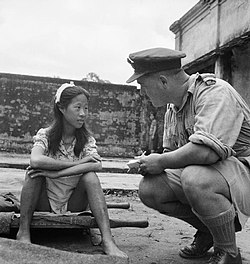 A young Burmese woman from one of the Imperial Japanese Army's "comfort battalions" is interviewed by a British Royal Air Force officer in Rangoon after being liberated in August 1945.
 -
 U.S. servicemen entering Recreation and Amusement Association during the occupation of Japan
 -
 The registration of Western princesses in South Korea on September 13, 1961


Sex doll brothel
[edit]A number of brothels offering only sex dolls exist in Japan. There is also one in Barcelona. There was one named Bordoll in Germany too, but it closed in 2023.[88] Another was set to open on 8 September 2018 in Toronto, Canada though it was deemed to be contrary to a by-law in the city, forcing its shutdown.[89] Australia has recently seen its first sex doll available for use in a brothel as well.[90] In February 2018, another opened in Aarhus, Denmark.[91] In 2018, xDolls in Paris raised controversy in that the French government deemed it did not violate the prohibition of brothels.[92]
See also
[edit]
References
[edit]- ^ Frasch, Timo (8 June 2006). "Die Welt zu Gast bei Freundinnen". Frankfurter Allgemeine Zeitung (in German). Archived from the original on 1 November 2007. Retrieved 18 August 2021.
- ^ "Reading Times from Reading, Pennsylvania on October 8, 1883 · Page 1". Newspapers.com. 8 October 1883. Archived from the original on 16 October 2021. Retrieved 31 January 2020.
- ^ "Definition of BROTHEL". www.merriam-webster.com. Archived from the original on 26 August 2022. Retrieved 2 March 2017.
- ^ Carroll 2015, p. 492.
- ^ General Assembly resolution 317(IV)
- ^ "United Nations Treaty Collection". Archived from the original on 7 September 2015. Retrieved 29 September 2016.
- ^ Decriminalisation integral to the fight against HIV Archived 2014-04-09 at the Wayback Machine, Michael Kirby & Michael Wong, Australian Broadcasting Corporation, 13 July 2012
- ^ Rights&Health-EN.pdf Risks, Rights & Health Archived 2015-09-24 at the Wayback Machine, GLOBAL COMMISSION ON HIV AND THE LAW, UNDP, HIV/AIDS Group, July 2012, page 43 ("Recommendation"): "Repeal laws that prohibit consenting adults to buy or sell sex, as well as laws that otherwise prohibit commercial sex, such as laws against "immoral" earnings, "living off the earnings" of prostitution and brothel-keeping."
- ^ "AIDS used as reason to legalize prostitutes". The Washington Times. Archived from the original on 2 February 2017. Retrieved 2 March 2017.
- ^ "European Women's Lobby Européen des femmes: Prostitution in Europe: 60 Years of Reluctance". Womenslobby.eu. Archived from the original on 6 January 2013. Retrieved 3 September 2013.
- ^ "Punish the client, not the prostitute | News | European Parliament". News | European Parliament. 26 February 2014. Archived from the original on 13 October 2015. Retrieved 2 March 2017.
- ^ "NSW papers urged to cut brothel ads, ABC news". ABC News (in Bulgarian). Abc.net.au. 18 May 2009. Archived from the original on 1 May 2011. Retrieved 10 December 2011.
- ^ "Entertainment Agency by RideWorks". rideworks.com. Archived from the original on 13 February 2017. Retrieved 2 March 2017.
- ^ "Queensland sex industry still largely illegitimate, Brisbane Times". Brisbanetimes.com.au. 16 August 2009. Archived from the original on 30 December 2010. Retrieved 10 December 2011.
- ^ "Prostitution Act 1999". Queensland Legislation—Queensland Government. Brisbane, Queensland, Australia: Office of the Queensland Parliamentary Counsel. 30 June 2017. Archived from the original on 7 November 2018. Retrieved 6 November 2018.
- ^ "Uruguay and marijuana: a guide to the world's most libertarian countries". Telegraph.co.uk. Archived from the original on 2 March 2017. Retrieved 2 March 2017.
- ^ Koster, Katherine (26 August 2015). "Legal in Theory: Germany's Sex Trade Laws and Why They Have Nothing to Do With Amnesty Sex Work Proposal". The Huffington Post. Archived from the original on 4 January 2017. Retrieved 2 March 2017.
- ^ "Nevada Prostitution Laws: Where is prostitution legal in Nevada?". Decriminalize Sex Work. 20 April 2020. Retrieved 5 September 2023.
- ^ "Prostitution Laws by State: Where is prostitution legal?". Decriminalize Sex Work. Retrieved 5 September 2023.
- ^ Murphy 1983.
- ^ Roman dead baby 'brothel' mystery deepens Archived 2018-08-24 at the Wayback Machine, BBC
- ^ "Historical Timeline--Prostitution". Should prostitution be legal?. ProCon.org. Archived from the original on 8 November 2011. Retrieved 23 November 2011.
- ^ Heckel, N.M. "Sex, Society, and Medieval Women". River Campus Libraries. Archived from the original on 2 November 2011. Retrieved 23 November 2011.
- ^ Bennett 1989, pp. 100–134.
- ^ Karras 1996, pp. 32–47.
- ^ "A Brief History of Brothels". The Independent Newspaper. 21 January 2006. Retrieved 23 July 2017.
- ^ Walford 1878, pp. 29–44.
- ^ Die Sphinx im Freudenhaus, Süddeutsche Zeitung, 17 August 1996. (in German)
- ^ Roberts, Genevieve (6 November 2009). "Sin city: show celebrates the Paris brothel that was loved by Cary Grant". The Independent. Archived from the original on 21 June 2017. Retrieved 30 January 2011.
- ^ Jackson 2009, p. 29.
- ^ Krautsuk, Satu (11 March 2017). "Punaisen talon tarina – näin opettajista, sairaanhoitajista ja kotiäideistä valmennettiin Suomen kuuluisimpia seksityöläisiä". Yle (in Finnish). Retrieved 12 October 2023.
- ^ Moore, Matthew (1 May 2009). "French brothels 'flourished during the Nazi occupation'". Daily Telegraph. Archived from the original on 4 August 2020. Retrieved 27 May 2020.
- ^ Regan 1992, p. 37.
- ^ Levy 2007, pp. 833–858.
- ^ "Revealing the secrets of anti-pornography in ancient China".
- ^ 《清稗类钞》:“潮州嘉应曲部中,半皆蜑户女郎……生女,则视貌之妍媸,或自留抚蓄,或卖之邻舟,父母兄弟,仍时相过问。稍长,辄句眉敷纷,押管调丝,盖习俗相沿,有不能不为娼之势”。
- ^ 孙棨·《北里志》:“诸女自幼丐,有或佣其下里贫家。常有不调之徒,潜为渔猎,亦有良家子为其家聘之,以转求厚赂。误陷其中,则无以自脱。”
- ^ 谢肇淛《五杂俎》:“今时娼妓满布天下,其大都会之地,动以千百计。其他偏州僻邑,往往有之。终日倚门卖笑,卖淫为活,生计至此,亦可怜矣!”
- ^ 《梅圃余谈》:“近世风俗淫靡,男女无耻。皇城外娼肆林立,笙歌杂遝,外城小民度日艰难者,往往勾引丐女数人,私设娼窝,谓之窑子。室中天窗洞开,择向路边屋壁作小洞二三,丐女修容貌,裸体居其中,口吟小词,并作种种淫秽之态。屋外浮梁子弟,过其处,就小洞窥视,情不自禁,则叩门而入,丐女队裸而前,择其可者投钱七文,便携手登床,历一时而出。”
- ^ 孙棨·《北里志》:“平康里入北门,东回三曲,即诸妓所居之聚也。妓中有铮铮者,多在南曲、中曲。其循墙一曲,卑屑妓所居,颇为二曲轻斥之。其南曲中曲,门前通十字街,初登馆阁者,多于此窃游焉。二曲中居者,皆堂宇宽静,各有三数事。前后植花卉,或有怪石盆池,左右对设,小堂垂帘,茵榻帷幌之类称是。”
- ^ "Cross talk is sick, needs treatment".
- ^ "Did Da Lian in "Exploring Qingshui River" commit suicide or was murdered?".
- ^ The Identity and Destiny of Ancient Female Musicians
- ^ "Famous Chinese Daughters of the Past Dynasties Hua Yanfang".
- ^ "The "Feng Yue" scene in Bada Hutong began with "Xiangong Culture"".
- ^ "Li Youxian, a famous male prostitute in the Ming Dynasty".
- ^ "Documentary of New China's Prostitution War: One Pot in One Day in Beijing".
- ^ [遊郭]『大百科事典. 第25巻』 (平凡社, 1939)
- ^ 平田(1997)109頁。
- ^ Embree, John F. Suye Mura: a Japanese Village, Ann Arbor: Center for Japanese Studies University of Michigan, 1995.
- ^ Sone Hiromi. "Prostitution and Public Authority in Early Modern Japan," in Women and Class in Japanese History, edited by Hitomi Tonomura, Anne Walthall, and Haruko Wakita. 169-85. Ann Arbor: Center for Japanese Studies the University of Michigan, 1999.
- ^ “江戸文化の裏面を照らし出した労作――渡辺信一郎『江戸の色道: 古川柳から覗く男色の世界』[レビュアー] 氏家幹人(歴史学者)
- ^ Tambe, Ashwini (19 February 2005). "The Elusive Ingenue:A transnational Feminist Analysis of European Prostitution in Colonial Bombay". Gender and Society. 19 (2): 160–79. doi:10.1177/0891243204272781. S2CID 144250345.
- ^ "Horrors of India's brothels documented". BBC News. 23 November 2013. Archived from the original on 15 December 2019. Retrieved 2 April 2020.
- ^ Bhandari, Sudhanshu (19 June 2010). "Prostitution in Colonial India". Mainstream Weekly. XLVIII (26). Archived from the original on 30 October 2020. Retrieved 13 October 2012.
- ^ "5 Interesting Effects of Poor Market Conditions on Indian Escort Industry—LifeSide". www.escortgirlgurgaon.com. 22 July 2017. Archived from the original on 12 December 2017. Retrieved 27 July 2017.
- ^ a b Rege, Sharmila (2002). "Conceptualising Popular Culture: 'Lavani' and 'Powada' in Maharashtra". Economic and Political Weekly. 37 (11): 1038–1047. ISSN 0012-9976. JSTOR 4411876.
- ^ a b "The linked caste slavery of the Kolhatis and the Bedias | Savari". 28 April 2014. Archived from the original on 27 July 2020. Retrieved 2 April 2020.
- ^ Woolston 1969, p. 38.
- ^ Woolston 1969, p. 39.
- ^ Kneeland & Davis 1913.
- ^ McKell 2009, p. 5.
- ^ Walkoitz 1982.
- ^ a b Rosen 1983.
- ^ McKell 2009, p. 4.
- ^ Fernando 1963, p. 254.
- ^ Webb 2004, p. 26.
- ^ Milner Associates, Appendix II.
- ^ Milner Associates, pp. 111–197.
- ^ Rosen 1983, p. 86.
- ^ Johnson 1911, p. 98.
- ^ a b McKell 2009, p. 6.
- ^ McKell 2009, p. 19.
- ^ McKell 2009, p. 8.
- ^ Webb 2004, pp. 24–33.
- ^ Jones 2006, pp. 19–23.
- ^ Rosen 1983, p. 87.
- ^ World Association of International Studies article retrieved on March 10, 2007 Archived June 12, 2007, at the Wayback Machine
- ^ Windrow 2004.
- ^ Japan's 'Comfort Women': It's time for the truth, The Asia-Pacific Journal: Japan Focus, 8 March 2007, archived from the original on 9 January 2009, retrieved 15 December 2008
- ^ Herbermann 2000, p. 33–34.
- ^ Kristof, Nicholas (27 October 1995). "Fearing G.I. Occupiers, Japan Urged Women into Brothels". The New York Times. Archived from the original on 3 July 2013. Retrieved 18 May 2013.
- ^ Clough & Halley 2007, p. 163; Cho 2008, p. 104.
- ^ "[EDITORIALS]Deliver them from 'hell'". Joongang Daily. 19 October 2002. Archived from the original on 13 June 2013. Retrieved 8 April 2013.
- ^ "Filipinas forced into prostitution on the rise in S.Korea". Hankyoreh. 1 December 2009. Archived from the original on 8 May 2013. Retrieved 18 May 2013.
- ^ Rabiroff, Jon (26 September 2009). "Philippine Embassy has 'watch list' of suspect bars in South Korea". Stars and Stripes. Archived from the original on 30 April 2013. Retrieved 18 May 2013.
- ^ Rabiroff, Jon (18 June 2010). "Report on human trafficking cites South Korean juicy bars". Stars and Stripes. Archived from the original on 29 April 2013. Retrieved 18 May 2013.
- ^ "Inside Germany's first sex doll brothel". 13 January 2018. Archived from the original on 19 April 2018. Retrieved 18 April 2018.
- ^ "Toronto councillor says new sex doll brothel breaks city bylaws". CBC News. 28 August 2018. Archived from the original on 31 August 2018. Retrieved 31 August 2018.
- ^ "Sex Toy Carmen". Pryana Rose Brisbane Brothel. Archived from the original on 5 December 2018. Retrieved 5 December 2018.
- ^ "Dukkebordel er åbnet i Aarhus: - Kunderne er helt almindelige mænd". stiften.dk (in Danish). 28 February 2018. Archived from the original on 7 April 2019. Retrieved 7 April 2019.
- ^ "Paris sex doll 'brothel' to stay open despite protests". CNET.
Bibliography
[edit]- Bennett, Judith M. (1989). Sisters and Workers in the Middle Ages. University of Chicago Press. ISBN 9780226042473.
- Carroll, Janell L (2 January 2015). Sexuality Now: Embracing Diversity. Cengage Learning. ISBN 978-1-305-44603-8.
- Cho, Grace M. (2008). Haunting the Korean Diaspora: Shame, Secrecy, and the Forgotten War. U of Minnesota Press. ISBN 9780816652747.
- Clough, Patricia Ticineto; Halley, Jean (2007). The Affective Turn: Theorizing the Social. Duke University Press. ISBN 978-0822389606.
- Fernando, Henrique (1963). Prostitution in Europe and the New World. London, MacGibbon & Kee.
- Herbermann, Nanda (2000). The Blessed Abyss: Inmate #6582 in Ravensbrück Concentration Camp for Women. Wayne State University Press. ISBN 978-0814329207.
- Jackson, Julian (2009). Living in Arcadia: Homosexuality, Politics, and Morality in France from the Liberation to AIDS. University of Chicago Press. ISBN 9780226389288.
- Johnson, Fred (1911). The Social Evil in Kansas. Annual Report of the Board of Public Welfare of Kansas City. Kansas City, Missouri: Cline printing.
- Jones, Mark R. (2006). Wicked Charleston: Prostitutes, Politics and Prohibition. Arcadia Publishing. ISBN 9781614230335.
- Karras, Ruth Mazo (1996). Common Women : Prostitution and Sexuality in Medieval England: Prostitution and Sexuality in Medieval England. Oxford University Press. ISBN 9780198022794.
- Kneeland, George Jackson; Davis, Katharine Bement (1913). Commercialized Prostitution in New York City. Century Company.
- Levy, David (2007). "Love and Sex with Robots". Handbook of Digital Games and Entertainment Technologies. Springer, Singapore. ISBN 978-981-4560-49-8.
- McKell, Jan (2009). Red Light Women of the Rocky Mountains. Albuquerque: University of New Mexico Press.
- Milner Associates. Inventory of Mary Ann Hall's estate, 'Archeological Data Recovery'.
- Murphy, Emmett (1983). Great Bordellos of the World: An Illustrated History. Quartet Books. ISBN 9780704323957.
- Regan, Geoffrey (1992). The Guinness Book of Military Anecdotes. Canopy Books. ISBN 9781558594418.
0851125190.
- Rosen, Ruth (1983). The Lost Sisterhood: Prostitution in America, 1900–1918. Johns Hopkins University Press. ISBN 978-0801826658.
- Walford, Edward (1878). "Southwark: Winchester House and Barclay's Brewery". Old and New London: Volume 6. London: Cassell, Petter & Galpin.
- Walkoitz, Judith K. (29 October 1982). Prostitution and Victorian Society. Cambridge University Press. ISBN 978-0521270649.
{{cite book}}: CS1 maint: location missing publisher (link) - Webb, Willard J. (October 2004). "Mary Ann Hall: Arlington's illustrious madam". The Arlington Historical Magazine. Vol. 12, no. 4. Arlington, VA.
- Windrow, Martin (2004). The Last Valley: Dien Bien Phu and the French Defeat in Vietnam. Perseus Books Group. ISBN 9780306813863.
- Woolston, Howard B. (1969). Prostitution in the United States: Prior to the Entrance of the United States into the World War. Montclair, New Jersey: Patterson Smith.
Further reading
[edit]- Burford, E. J. The Bishop's Brothels. London: Robert Hale, 1993. ISBN 978-0-7090-5113-8.
- Ka-tzetnik 135633 (Karol Cetinsky). House of Dolls. Moshe M. Kohn (trans.). New York: Simon and Schuster, 1955. A novel about the Holocaust, including a description of a brothel staffed by concentration camp inmates.
External links
[edit]

- "Inside a brothel"—interview by Richard Fidler with three brothel owners, June 2006 on ABC Local Radio (audio download available)
- France's military brothels: Hidden history of the First World War


| International | |
|---|---|
| National | |
| Other | |

Brothel
View on GrokipediaDefinition and Characteristics
Core Definition and Functions
A brothel is a commercial establishment where sex workers provide sexual services to clients in exchange for payment.[7] This typically involves a physical premises, such as a house, apartment, or dedicated building, equipped with private rooms for encounters.[8] Legally, a brothel is often characterized as any structure or location habitually or principally used for prostitution, offering seclusion for such activities.[9][10] The primary function of a brothel is to facilitate organized prostitution by centralizing sexual transactions in a managed environment, which distinguishes it from informal or street-based arrangements.[11] This setup allows for the coordination of multiple workers serving successive clients, often under a proprietor's oversight to handle payments, scheduling, and basic security.[12] Brothels thereby serve as a business model for the commodification of sex, enabling economies of scale through shared facilities like reception areas and sleeping quarters for workers.[7] Beyond transactional logistics, brothels function to provide discretion and reduced exposure to public risks compared to unregulated venues, though this does not inherently ensure worker safety or health standards absent external regulation.[9] In operational terms, they enforce entry protocols, such as client screening or fees, to maintain order and profitability, reflecting a structured approach to meeting demand for paid sexual access.[8]Types and Variations
Brothels vary in structure, scale, and client interaction methods, reflecting adaptations to legal frameworks and economic incentives. Common variations include room-based establishments where clients select workers from lineups or doorways, bar-integrated models combining alcohol service with negotiation, and amenity-focused clubs offering wellness facilities alongside sexual services.[13][14] Laufhaus or walkthrough brothels feature corridors lined with individual rooms where workers stand in doorways or windows to attract clients, who then negotiate prices privately before entering. This model, prevalent in Germany, allows for direct visual selection and is often found in red-light districts, with workers renting rooms independently.[15] In contrast, bar brothels integrate a lounge area where clients consume drinks while workers approach for negotiation, followed by relocation to private rooms; this setup fosters social interaction but can extend service times due to bar distractions.[16] Window brothels, iconic in Amsterdam's De Wallen district, consist of small, illuminated rental spaces where workers display themselves behind glass to solicit passersby, typically charging €100–€200 for 10–20 minute sessions. Approximately 1,270 such windows operate across the Netherlands, though numbers have declined due to urban regulations, with operations limited to exclude 6–8 a.m. hours since 2023.[17][18] In Germany, FKK (Freikörperkultur) clubs emphasize nudity and communal facilities like saunas and pools, with over 500 such venues nationwide; clients pay an entry fee of €50–€100 for access, after which services are negotiated separately or included in flat-rate "pauschal" packages, promoting a spa-like atmosphere amid legalized operations.[19][13] Mega-brothels represent large-scale variants, such as Pascha in Cologne, established in 1972 as Europe's largest with 12 stories, over 120 rooms, and capacity for 1,000 daily clients; workers rent rooms for €180 per day and set their own rates, supported by 80+ staff, generating revenues through volume in a legalized environment.[20][21] In the United States, Nevada's licensed brothels, numbering 18 across six counties as of 2023, operate as ranch-style compounds where workers undergo mandatory health checks and negotiate via lineups, exemplified by facilities like the Bunny Ranch near Carson City, which emphasize safety protocols including condom mandates.[22][23] Other variations include disguised operations like massage parlors, which function as brothels under non-sexual facades to evade prohibitions, though these carry higher risks of exploitation due to underground status.[14]Historical Development
Ancient and Classical Origins
In ancient Mesopotamia, textual evidence from Sumerian and Babylonian sources indicates the existence of prostitution as an economic activity, with some taverns operated by women functioning as venues for sexual services, akin to early brothels.[24][25] These establishments contributed to urban economies, where prostitutes, often entering the trade due to poverty or captivity, were sometimes regulated through dowry provisions in legal codes like the Code of Hammurabi (c. 1750 BCE), which addressed their property rights but subordinated them socially.[26] Archaeological and cuneiform records do not confirm widespread dedicated brothels, but tavern-based operations suggest organized sexual commerce predating classical periods, though claims of temple-linked sacred prostitution lack direct empirical support and stem from potentially exaggerated Greek accounts like those of Herodotus.[27] In ancient Egypt, direct evidence for formalized brothels is scarce, with administrative papyri and tomb inscriptions yielding few references to prostitution as an institution; women held relatively higher legal status, including property ownership, which may have reduced reliance on such venues.[28] Isolated textual allusions exist, but no excavated structures confirm brothel operations, contrasting with later Mediterranean societies.[29] During the Greek Archaic Period (c. 800–479 BCE), brothels emerged as state-regulated institutions in city-states like Athens, taxed to generate revenue and located in port areas such as Piraeus or districts like Kerameikos.[30] Workers known as pornai—typically slave women hired out by owners—operated in these multi-room facilities, providing standardized services to clients including sailors and laborers, while higher-status hetairai offered companionship outside brothels.[31] Entertainers called auletrides, skilled in music and dance, sometimes blurred lines with prostitution at symposia but were distinct from brothel-based pornai.[32] Solon's reforms (c. 594 BCE) reportedly established public brothels (porneia) to curb private exploitation, reflecting a pragmatic approach to managing male sexual demand amid citizen endogamy norms.[30] In the Roman Republic and Empire (c. 509 BCE–476 CE), brothels termed lupanaria proliferated in urban centers, with archaeological evidence from Pompeii revealing a well-preserved example in Regio VII: a two-story structure with ten small cells (c. 3x3 meters), stone beds, and frescoes depicting intercourse positions for client selection.[33][34] These facilities, often in insulae near forums or ports, housed mostly enslaved women (some free, per graffiti names) managed by lenones, charging low fees (2–8 asses per act) and operating alongside taverns.[35] Lupanaria were licensed under emperors like Caligula (37–41 CE), who taxed them, indicating institutional acceptance despite moral critiques from elites like Seneca.[36] Excavations confirm over a dozen such sites in Pompeii alone, underscoring brothels' role in catering to diverse classes, from soldiers to merchants, with minimal privacy but efficient throughput.[37]Medieval to Early Modern Periods
In medieval Europe, municipal authorities often regulated rather than prohibited prostitution, establishing official brothels to contain it within designated urban zones and mitigate risks of broader social disorder. This approach reflected a pragmatic tolerance, rooted in ecclesiastical views that prostitution served as a necessary outlet to avert greater sins such as sodomy or clerical fornication, as articulated in patristic writings echoed in medieval policy. Cities across Italy, Germany, and France operated civic brothels, known variably as Frauenhaeuser or lupanaria, typically located on city peripheries or near execution sites to symbolize marginality. For instance, in Venice, authorities designated the Rialto area as a prostitution hub by the late 14th century, with formal brothels established to oversee operations.[38][39][40] England diverged somewhat, lacking widespread municipal brothels but permitting licensed "stews" in Southwark under the Bishop of Winchester's jurisdiction from 1161, where up to 18 such houses operated by the 15th century, generating significant ecclesiastical revenue through fines and licenses. These establishments enforced rules like prohibiting prostitutes from loitering outside or engaging with married men, though enforcement was inconsistent. Regulations in continental cities, such as Nuremberg's 1470 ordinances, mandated brothel keepers provide clean bedding, limit client stays to one hour, and bar weapons or violence, while prostitutes faced restrictions on dress and movement to maintain order. Financial exploitation remained rife, with women often indebted to keepers, underscoring the coercive economics of the trade.[41][42][43] The early modern period saw disruptions from the Reformation, which prompted closures of official brothels in Protestant strongholds as moral reformers rejected medieval toleration; Augsburg shuttered its municipal brothel in 1532, followed by Ulm in 1537 and Nuremberg in 1562, driving the trade clandestine. In England, Henry VIII formally suppressed the Southwark stews in 1546 amid broader monastic dissolutions, though underground operations persisted. Conversely, in Catholic and tolerant regions like the Dutch Republic, brothels expanded during the 17th-century Golden Age; Amsterdam hosted hundreds of such venues alongside at least 1,000 prostitutes, often operating semi-openly in areas like De Wallen, fueled by trade prosperity and urban influx. These shifts highlighted causal tensions between religious ideology, economic incentives, and practical governance, with prostitution adapting to evade outright suppression.[44][45][46]19th and 20th Century Expansions
The 19th century witnessed significant expansions in brothel operations across Europe and North America, propelled by industrialization, urbanization, and demographic shifts that concentrated large numbers of unmarried male laborers in growing cities, thereby elevating demand for commercial sexual services.[47] In France, the Napoleonic era formalized regulation through the 1804 ordinance on prostitution, which licensed brothels as maisons closes under police oversight to control venereal diseases and public order, with Paris hosting over 200 such establishments in the early 1800s.[47] This system influenced similar regulatory frameworks in Belgium and parts of Germany, where tolerated brothels proliferated in urban centers amid economic migration and poverty driving women into sex work.[47] In Britain, brothels remained illegal under the 1752 Vagrancy Act, yet their numbers surged in industrial hubs like London and Manchester due to lax enforcement and the influx of rural migrants; the Contagious Diseases Acts of 1864, 1866, and 1869 introduced compulsory registration and medical examinations for suspected prostitutes in military districts, inadvertently concentrating sex work in de facto red-light areas without directly legalizing brothels.[48] These acts, repealed in 1886 following feminist and social purity campaigns, highlighted tensions between public health imperatives and moral reform, but failed to curb the underlying expansion tied to capitalist labor disruptions and family separations.[48] Across the Atlantic, American cities saw brothels integrate into the commercial landscape of vice districts, reflecting broader societal commercialization; in New York City, the number of brothels exceeded 600 by the Civil War era, fueled by immigration and port activity, with operations shifting northward from early sex districts in the 1850s to areas like the Tenderloin by the 1870s.[49] In the western frontier, mining and railroad boomtowns hosted line-up parlors and cribs as economic hubs for transient workers, where madams like those in Virginia City, Nevada, managed establishments that doubled as social venues for deal-making among investors.[50] The Netherlands explicitly legalized brothels via the 1851 Law-on-the-Cities, enabling districts like Amsterdam's to formalize and expand operations.[51] Into the 20th century, brothel expansions persisted amid wartime disruptions and uneven legalization efforts, though regulatory crackdowns began to reshape landscapes; in the United States, red-light districts like New Orleans' Storyville operated under municipal ordinance from 1897 to 1917, concentrating over 700 prostitutes in a segregated zone before federal intervention via the 1910 Mann Act curtailed interstate trafficking and prompted closures.[52] European trends varied: France maintained its regulated system until the 1946 Marthe Richard Law shuttered licensed brothels, driving operations underground, while Germany's Weimar Republic saw cabaret-integrated brothels flourish in cities like Berlin before Nazi-era suppression.[47] In Asia, Japan's licensed pleasure quarters, such as Yokohama's Ahiduoka, expanded with modernization and foreign trade in the late 19th and early 20th centuries, accommodating both local and international clients under government oversight.[52] These developments underscored brothels' adaptability to economic pressures and state policies, often prioritizing revenue and order over abolitionist ideals.Military and Wartime Brothels
Militaries have operated brothels during conflicts to regulate soldier access to prostitution, mitigate venereal disease transmission, and sustain troop morale and discipline. These establishments often featured medical inspections for workers and soldiers, with operations varying by army and era. In World War I, the French Army formalized the bordel militaire de campagne (BMC), mobile field brothels introduced in 1918 to address syphilis rates exceeding 20% among troops.[53] These units used tents or converted wagons, employing screened prostitutes who serviced up to 100 men daily under military oversight, a system extended into the interwar period and World War II.[53] British forces in France frequented unregulated brothels, such as those in Le Havre accommodating thousands weekly, despite official discouragement, contributing to widespread gonorrhea and syphilis infections.[54] In World War II, the German Wehrmacht established hundreds of Soldatenbordell across occupied Europe, including in former synagogues and camps, to curb unauthorized sexual contacts and prevent racial defilement under Nazi ideology.[55] These brothels relied on coerced women from occupied territories and concentration camps, with inmates selected for "Aryan" features; operations included mandatory health checks but often devolved into forced labor, as documented in survivor accounts and military records.[55] The Imperial Japanese Army's "comfort stations," operational from 1932 to 1945, enslaved an estimated 50,000 to 200,000 women, primarily from Korea, China, and Southeast Asia, in frontline brothels to reduce rapes and boost soldier efficiency.[56] [57] Facilities were government-directed, with women subjected to daily quotas of 20-30 servicemen, verified through military documents and testimonies.[56] Allied forces also engaged such practices; the U.S. Army historically tolerated or facilitated brothels in war zones to control disease, as in prior conflicts.[58] Following Japan's 1945 surrender, the Japanese government created the Recreation and Amusement Association (RAA), recruiting over 55,000 women for brothels serving occupation troops, ostensibly to avert mass rapes amid initial assaults on civilians.[59] U.S. authorities supplied condoms and monitored health but shut down the system by early 1946 due to ethical concerns and disease spikes, though unofficial prostitution persisted.[59] These wartime brothels highlight causal links between unregulated sexual access and health epidemics, prompting institutionalized responses that frequently exploited vulnerable populations.[58]Operational Mechanics
Management and Organization
In legal brothels, such as those operating under licensing in Nevada's designated counties, management typically involves an owner or operator who oversees licensing compliance, facility upkeep, and financial operations, with workers functioning as independent contractors who pay a nightly room rental fee—often ranging from $200 to $500—and retain all earnings from client negotiations.[60][61] This model contrasts with percentage-based systems in some jurisdictions, where brothels claim 40-60% of service fees to cover overhead, security, and profit, as reported in analyses of Nevada operations.[62] Daily management includes shift coordination starting early in the morning, client screening via video calls or lineups, and enforcement of house rules like condom mandates, with managers handling disputes and ensuring worker safety through on-site security.[63] Health protocols form a core organizational element in regulated brothels; in Nevada, workers submit to weekly sexually transmitted infection testing at licensed clinics, with results verified before client interactions, a requirement enforced since the expansion of licensed operations in the 1970s to mitigate disease risks empirically linked to unregulated sex work.[64][65] Brothel operators in Germany, post-2002 legalization, similarly manage mandatory health registrations and facility hygiene standards under the Prostitutes Protection Act, though enforcement varies, with operators setting service prices and schedules unilaterally, limiting worker autonomy despite formal employment contracts.[66][67] In decriminalized frameworks like New Zealand's since 2003, brothel management emphasizes contractual employment, with operators responsible for fair labor practices under the Prostitution Reform Act, including income declarations and dispute resolution; however, empirical studies indicate persistent third-party control in walk-in establishments, where managers dictate entry fees and client access, potentially undermining worker independence.[68][66] Illicit brothels, by contrast, often feature coercive hierarchies dominated by pimps or criminal networks that extract full earnings control, enforce quotas through violence, and evade health oversight, as documented in underground economy analyses showing higher exploitation rates absent regulatory structures.[69] Security roles universally prioritize client vetting—via ID checks or payments—to reduce assaults, with legal venues reporting lower violence incidence due to these formalized measures compared to street-based alternatives.[70][63]Worker Roles and Client Dynamics
In brothels, the primary role of workers is to provide sexual services to clients, including intercourse and other acts specified through negotiation, in exchange for payment divided between the worker and the establishment.[71] Sex workers, predominantly female, operate within structured shifts, often seeing between 1 and 10 clients per day depending on location, demand, and legal framework, with higher estimates from enforcement data in unregulated settings. Managerial roles, frequently held by women known as madams, involve recruiting personnel, scheduling availability, handling finances, and enforcing house rules to maintain order.[72] Support staff in operational brothels include security personnel to monitor client behavior and prevent disputes, receptionists or door attendants for initial client screening and payments, and maintenance workers for hygiene upkeep.[71] In licensed Nevada brothels, where prostitution is regulated, these roles ensure compliance with health testing mandates, such as weekly STD screenings for sex workers under state regulations.[73] Client dynamics typically commence with a selection process, such as a lineup where available sex workers present themselves for clients to choose based on physical attributes and rapport.[74] Following selection, private negotiations determine service details, duration (often 15-60 minutes), specific acts, and pricing, with brothels retaining approximately 50% of fees to cover overhead.[71] [74] Clients, overwhelmingly male, pursue these transactions for sexual gratification, variety, and discretion, with empirical research on Australian brothel patrons revealing higher sensation-seeking traits correlated with frequency of visits.[75] Interactions maintain a transactional core, where sex workers employ emotional management techniques to fulfill client expectations of intimacy while upholding personal boundaries and safety protocols, such as condom use enforcement.[76] Regular or pre-screened clients may experience smoother dynamics, associating with reduced risks of violence per observational studies in sex work environments.[77] Motivations for patronage include bypassing relational commitments, with surveys indicating 10-16% of men in various regions reporting lifetime paid sex experiences.[78]Legal Status Worldwide
Prohibition and Criminalization Models
Prohibition and criminalization models treat the operation of brothels and the act of prostitution itself as illegal offenses, punishable for sellers, buyers, and third parties such as pimps or brothel owners. These approaches are implemented in approximately 102 countries and territories worldwide, encompassing much of Africa, the Middle East, parts of Asia, and the majority of U.S. states outside specific Nevada counties.[79] In such jurisdictions, laws typically ban solicitation, keeping a bawdy house, and profiting from others' prostitution, aiming to deter the activity through penalties including fines, imprisonment, and asset forfeiture. Enforcement varies, often focusing on visible street-level activities while underground or indoor operations persist due to resource constraints and corruption.[1] Empirical studies indicate that full criminalization drives sex work underground, reducing workers' ability to screen clients or seek legal recourse, which correlates with elevated rates of violence and health risks. For instance, in settings with strict prohibitions like Indonesia, criminal enforcement has been associated with decreased earnings for female sex workers and higher prevalence of sexually transmitted infections (STIs), as fear of arrest discourages condom use and medical access.[80] Similarly, criminalization heightens vulnerability to police misconduct, including extortion and abuse, without proportionally reducing overall sex work volume, as demand shifts to clandestine venues.[81] Data from global reviews link these models to increased STI incidence and HIV risks, attributed to disrupted harm reduction efforts and strained law enforcement relations.[6] Regarding human trafficking, evidence on prohibition's impact is contested; while some analyses suggest legalized systems attract more inflows, criminalization does not eliminate exploitation but may obscure it by deterring victim reporting.[82] Proponents argue that bans suppress demand and organized vice, yet longitudinal data from abolitionist regimes show persistent trafficking networks adapting to enforcement gaps, often exacerbating coercion in hidden markets without formal oversight.[83] Critics of these models, drawing from health-focused research, contend that blanket criminalization prioritizes moral deterrence over empirical risk mitigation, leading to unintended harms like heightened stigma and barriers to social services for marginalized workers.[84]Legalization with Regulation
Legalization with regulation involves governments permitting prostitution through licensed brothels and sex work establishments, subject to oversight such as mandatory health screenings, age verification, zoning restrictions, and taxation, with the intent to enhance worker safety, reduce crime, and generate revenue while maintaining public order.[3][1] In this model, brothel operators must obtain permits, ensure condom use, and comply with labor standards, though enforcement varies by jurisdiction.[85] Proponents argue it shifts activity from clandestine operations to monitored venues, potentially lowering disease transmission and violence through regular inspections.[81] Germany implemented this approach via the Prostitution Act of January 1, 2002, which recognized sex work as a legitimate occupation, allowing brothels to register workers for social benefits and contracts while prohibiting exploitation.[85] The law aimed to destigmatize the trade and integrate it into the economy, leading to an expansion of the industry valued at approximately 15 billion euros annually by the mid-2010s.[86] However, empirical data indicate unintended consequences: human trafficking inflows surged, with foreign nationals comprising 50-80% of sex workers in some regions by 2015, often under coercive conditions, as the formalized market increased demand without proportionally reducing underground activities or organized crime involvement.[87][88] A 2024 assessment described the policy as a failure, with persistent pimping, debt bondage, and inadequate exit services for workers, prompting calls for stricter client registration via the 2017 Prostituiertenschutzgesetz, which mandates brothel permits and counseling but has not reversed trafficking trends.[85][89] ![Pascha, a large regulated brothel in Cologne, Germany][float-right] The Netherlands legalized brothels on October 1, 2000, confining legal operations to designated zones like Amsterdam's De Wallen district, where window workers and establishments undergo municipal licensing, health checks, and bans on minors.[90] This framework sought to empower workers by treating prostitution as a business, yet post-legalization, human trafficking cases escalated, with over 1,000 victims identified annually by 2010, many in licensed venues masquerading as voluntary operations.[91][92] Studies attribute this to a "scale effect," where market expansion attracts traffickers, as evidenced by econometric analyses showing legalized systems correlate with higher inflows compared to prohibitionist neighbors.[82] Crime persisted, including money laundering and underage exploitation, leading to partial closures of Amsterdam's red-light areas in 2007-2008 and proposals in 2022 to exit the full legalization model amid unmitigated organized crime.[93][94] In Nevada, United States, prostitution is legal only in licensed brothels within 10 rural counties as of 2023, enforced through the Licensing Board with requirements for weekly STI testing, security protocols, and no street solicitation, resulting in reported STI rates below 1% in regulated facilities versus higher incidences in illegal markets elsewhere.[95][81] Violence against workers in these brothels is low due to on-site protections, with operators facing revocation for violations, though critics note persistent trafficking allegations, including lawsuits claiming brothels harbor coerced workers under debt or threats.[96][97] Overall, the model confines legal activity to controlled environments, reducing associated street crime in those counties, but statewide arrests for illegal prostitution remain high at over 1,000 annually, indicating displacement rather than elimination.[98] Australia's states exhibit varied regulation: Victoria legalized brothels in 1994 under the Prostitution Control Act, mandating licensing and health standards, which correlated with improved peer education access but also proliferation of unlicensed operations exploiting migrant workers.[99][100] In Queensland, similar 1999 reforms regulated brothels with zoning and inspections, yet reports highlight ongoing violence and trafficking, suggesting regulation formalizes some abuses without curbing demand-driven expansion.[3][101] Cross-jurisdictional comparisons indicate regulated models yield better health metrics in compliant venues but fail to suppress illegal sectors or trafficking when enforcement is lax, as market legalization amplifies client demand without proportionally enhancing worker agency.[6][82]Decriminalization and Nordic Approaches
Decriminalization of prostitution, including brothel operations, removes criminal penalties for consensual adult sex work while imposing regulatory frameworks for health, safety, and labor standards. New Zealand's Prostitution Reform Act of 2003 exemplifies this approach, legalizing brothels as businesses subject to local bylaws on location, operator certification, and worker protections, such as the right to refuse clients and mandatory condom use.[102] A 2008 government-commissioned review found that post-decriminalization, sex workers in brothels reported improved ability to negotiate conditions and report violence to police without fear of arrest, with 90% of surveyed indoor workers deeming the law effective for safety.[103] Empirical data indicated a decline in gonorrhea rates among sex workers by approximately 40%, attributed to better access to health services and reduced stigma in regulated brothels.[104] Critics, including some analyses from abolitionist perspectives, argue that the model has not eliminated underground operations or trafficking, with anecdotal reports of increased migrant sex workers in brothels, though official evaluations found no significant rise in trafficking compared to pre-2003 levels.[105] The Nordic model, first enacted in Sweden via the 1999 Prohibition of the Purchase of Sexual Services Act, decriminalizes sellers but criminalizes buyers, with penalties escalating for repeat offenses up to fines or imprisonment. Brothels remain illegal under broader prohibitions on pandering and third-party profiteering, aiming to suppress demand without punishing victims.[106] Swedish authorities reported a roughly 50% drop in street prostitution visibility by 2014, crediting the law with reducing overall demand and limiting brothel proliferation, though indoor and online activities persist covertly.[107] Adopted in Norway (2009), Iceland (2009), and France (2016), the model has shown spillover effects, with econometric studies estimating a 20-30% reduction in prostitution advertisements in neighboring non-Nordic countries like Finland and Denmark, suggesting cross-border demand suppression.[108] However, sex worker advocacy groups report heightened risks, including client evasion of screening due to criminalization fears, leading to more isolated encounters outside regulated settings; a 2019 Norwegian evaluation noted no clear improvements in health outcomes and potential increases in worker stigma.[109] Comparative analyses highlight that while the Nordic approach curtails formal brothels, it may drive operations underground, contrasting with decriminalization's emphasis on licensed venues for oversight.[110] Empirical debates persist, with pro-Nordic sources emphasizing reduced exploitation via demand reduction and decriminalization advocates citing NZ data on enhanced worker agency in brothels.[111]Economic and Social Dimensions
Economic Impacts and Market Dynamics
The global prostitution industry, encompassing brothels and other venues, generates substantial economic activity, with estimates placing annual illegal proceeds at approximately $236 billion worldwide, of which a significant portion derives from forced sexual exploitation.[112] In legalized contexts, this shifts toward taxable revenue; for instance, Germany's post-2002 liberalization of prostitution yielded an estimated €14 billion in annual industry revenues by 2009, contributing to tax collections and supporting over 100,000 jobs in core and auxiliary sectors.[113][114] Similarly, Nevada's regulated brothels produced over $7 million in annual revenue as of recent estimates, alongside tourism-driven economic boosts and local job creation in rural counties.[115][70] Legalization influences market dynamics by expanding overall supply and demand, often outweighing substitution effects where legal options displace underground activity.[4] In decriminalized indoor markets, advertising surges, enlarging the prostitution sector and generating fiscal benefits like reduced enforcement costs and higher revenues, though underground segments persist due to pricing differentials and regulatory gaps.[116][117] Pricing in brothel markets responds to macroeconomic factors, such as unemployment rates correlating with demand fluctuations, while supply-side factors like worker mobility in licensed systems (e.g., Nevada's brothel licensing) stabilize operations but can lead to competition-driven rate adjustments.[118][119] In tourism-heavy areas like Amsterdam's De Wallen red-light district, brothels and related establishments contribute over €2.5 billion annually to the Dutch economy through visitor spending, underscoring demand elasticity tied to legal accessibility.[120] However, such expansions can inflate local costs, including public health expenditures indirectly linked to higher transaction volumes, though direct tax gains—such as Germany's potential €1.4 billion from prostitute levies—often offset these in regulated models.[121] Brothel organization, via intermediaries like owners or online platforms, reduces information asymmetries in matching supply to demand, fostering market efficiency but also enabling scale effects that amplify total economic footprint beyond pre-legalization levels.[122][123]Cultural Perceptions and Stigma
Brothels have long been viewed in many cultures as symbols of moral decay and vice, with perceptions heavily influenced by religious doctrines that condemn prostitution as sinful. In Abrahamic religions, including Christianity and Islam, such establishments are frequently associated with immorality and spiritual corruption, leading to societal ostracism of both operators and workers.[124][125] For instance, during the Protestant Reformation in 16th-century Europe, reformers amplified stigma by portraying brothels as threats to social order and family structures, expediting closures and punitive measures against sex work.[126] This religious framing persists, with studies showing that higher religiosity correlates with more negative and demonizing attitudes toward sex workers and brothels.[127] Cross-culturally, perceptions vary but stigma remains prevalent; ancient Mesopotamian and Greek societies regulated brothels yet relegated participants to low social status, often linking them to impurity or economic desperation.[128] In non-Western contexts, such as Thailand, Buddhist principles do not explicitly condone prostitution but contribute to ambiguous tolerance overshadowed by stigma, where brothels are critiqued yet economically embedded.[129] Religious prostitution traditions, like devadasis in India, faced increasing stigma under colonial and modern influences, transforming sacred roles into markers of exploitation and shame.[130] Empirical cross-cultural surveys indicate that perceptions of brothels as trafficking hubs intensify stigma, with English speakers and males more likely to link legalization to reduced harms, contrasting views in collectivist societies emphasizing moral pollution.[131][132] In contemporary settings, stigma manifests empirically as barriers to healthcare, employment, and social integration, even in legalized brothels like those in Nevada, where moral beliefs underpin ongoing restrictions despite regulatory frameworks.[133] Studies of sex workers reveal "felt stigma" — internalized shame and fear of judgment — persisting post-decriminalization, as seen in New Zealand after 2003 reforms, where workers reported altered but enduring discrimination.[134] This leads to coping strategies like concealment or compartmentalization, exacerbating isolation and mental health risks, with qualitative data from 20 female sex workers highlighting navigation of "whorephobia" through empowerment narratives amid societal disgust.[135][136] Brothels themselves are stereotyped as contagion sites, reinforcing physical and symbolic exclusion, though evidence from regulated environments shows stigma's independent effects on worker well-being beyond legal status.[137][138]