Hubbry Logo
Leslie StuartLeslie StuartMain
Open search
Leslie Stuart
Community hub
Leslie Stuart
logo
8 pages, 0 posts
0 subscribers
Be the first to start a discussion here.
Leslie Stuart
Leslie Stuart
from Wikipedia

Leslie Stuart

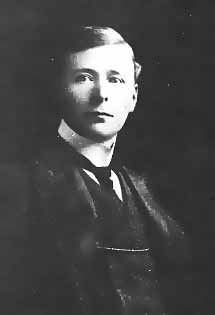
Leslie Stuart (15 March 1863 – 27 March 1928) born Thomas Augustine Barrett[1] was an English composer of Edwardian musical comedy, best known for the hit show Florodora (1899) and many popular songs.

He began in Manchester as a church organist, for 14 years, and taught music while beginning to compose church music and secular songs in the late 1870s. In the 1880s, he began to promote and conduct orchestral and vocal concerts of popular and theatre music as "Mr. T. A. Barrett's Concerts". He began to focus his composition on music hall, including songs for blackface performers, such as "Lily of Laguna"; songs for musical theatre, such as pantomimes and London shows touring through Manchester; and ballads such as "Soldiers of the King". Stuart later campaigned against the interpolation of new songs into musical theatre scores and for better enforcement of musical copyrights.

In 1895, Stuart began to write songs for George Edwardes's London shows at the Gaiety Theatre and Daly's Theatre. His first full musical comedy score was Florodora in 1899. The show became an international hit, and its song "Tell me, pretty maiden", became a vaudeville standard. Other musical comedy successes followed, including The School Girl (1903), The Belle of Mayfair (1906) and Havana (1908). Of his later shows, only Peggy made much of an impact. By 1911, Stuart's gambling debts sent him into bankruptcy. Unable to adapt to changing musical tastes, he was no longer in demand as a composer, although he had some success as a piano sketch artist in variety theatre.

Life and career

[edit]
Sheet music for "Lily of Laguna", 1898

Early years

[edit]

According to his entry in the Oxford Dictionary of National Biography, Stuart was born in Southport, on the Lancashire coast on 15 March 1863. He was the younger son of Thomas Barrett, a cabinet-maker, and his wife, Mary Ann Burke, née Lester, who were both from western Ireland.[2] He grew up in Liverpool, where he attended St Francis Xavier's College. His family moved to Manchester in 1873.[2][3]

He began his career aged 15 as organist at Salford Cathedral. He held the post for seven years, and then moved to be organist at the Church of the Holy Name, Manchester, where he remained for another seven years.[4] To augment his salary he composed church music and taught.[4]

Stuart also promoted and conducted orchestral and vocal concerts. In the 1880s and 1890s he presented "Mr T. A. Barrett's Concerts" at the Free Trade Hall, Manchester, and later at the larger St James's Hall.[5] These concerts featured popular orchestral music and selections from comic operas by such composers as Sullivan and Cellier, and excerpts from English grand operas by Balfe and Wallace.[6] Singers included Zélie de Lussan, Marie Roze, Ben Davies, David Ffrangcon-Davies, Durward Lely and Charles Manners. Instrumental soloists included Ignacy Jan Paderewski and Eugène Ysaÿe.[7]

Thomas Barrett had been property master at the Amphitheatre, Liverpool, and both his sons had quickly gained a taste for the theatre. Stuart's elder brother, Stephen (1855–1924), became a music-hall performer, appearing under the stage name Lester Barrett.[2] Gradually the music Stuart composed for local shows, and his popular ballads and music-hall songs began to supersede the composition of serious and religious music.[2] He composed music hall songs as "T. A. Barrett" and under the pseudonyms "Leslie Thomas", "Lester Barrett" and, most notably, "Leslie Stuart".[2] He wrote many popular songs for the blackface performer Eugene Stratton, including perhaps his best-remembered music hall song, "Lily of Laguna" (1898), and "Little Dolly Daydream."[4] He also wrote the patriotic ballad "Soldiers of the King" (1894, now sung as "Soldiers of the Queen").[4] In 1886, Stuart married Mary Catherine Fox, a schoolteacher (died 1941).[8]

Sheet music for Florodora, 1899

Stuart's earliest theatrical composing and writing was also for the Manchester theatre. Here he provided songs and incidental music for, in particular, the local pantomimes, which boasted famous names in their casts.[9] Stuart made a name in the 1890s by writing popular individual numbers that were interpolated into several West End and touring musicals by other composers. Later in his career, he would actively oppose this practice. The first of these songs was "Lousiana Lou". [sic] This had already been published and performed in music hall before being picked up by Ellaline Terriss and inserted, along with "The Little Mademoiselle", into the original production of The Shop Girl (1894), at the Gaiety Theatre.[10]

During the run of George Edwardes's An Artist's Model (1895), Stuart wrote several numbers that were interpolated (including "The Soldiers of the Queen", which was later famous as "Soldiers of the King"), and both wrote the lyric and composed "Trilby Will Be True" for Maurice Farkoa to perform at Daly's Theatre.[11] Subsequently he had songs used in Baron Golosh, The Circus Girl (1896), the London production of the American musical A Day in Paris (1897), Carl Kiefert's The Ballet Girl (1897) and The Yashmak (1897).[12]

Stuart composed some 65 songs including, in addition to those mentioned above, "The Bandolero", and "Little Dolly Daydream." His instrumental pieces included at least one Cakewalk.[13] As a songwriter, Stuart suffered so much from the effects of copyright infringement that it can be speculated that his move to the musical theatre was an attempt to avoid the loss of royalty income from the publication of sheet music and performances.[6]

Peak years

[edit]

Stuart's greatest acclaim came in 1899 with Florodora, his first full musical comedy score, with a book by Owen Hall. With traditional slow love ballads as well as waltzes and more rhythmic and playful concerted numbers, the score and show became a worldwide hit. The double sextet from that show, "Tell me, pretty maiden", became a vaudeville standard.[14] The music critic Neville Cardus wrote about the "beautiful and unexpected phrasing and transitions" in the number, continuing, "it begins with a long phrase, rather like the opening bars of a Brahms symphony. It is extraordinary to find music such as this in a musical comedy". He ended by writing that in its own way it was "just as perfect a composition … as is the quintet in Meistersinger".[15]

Florodora was followed by The Silver Slipper (1901), The School Girl (1903), The Belle of Mayfair (1906), and Havana (1908). All these shows were successful and were produced internationally.[16]

Stuart was an active campaigner for intellectual property rights and called for tighter laws on both national and international copyright. Publishers and wealthy second-rate songwriters would pay producers, for the exposure, to insert their songs into a hit musical. With the strength of the fame of Florodora behind him, Stuart succeeded in stopping this practice in his next few pieces. Similarly, he had succeeded from time to time in parts of his fight in Britain and in America against unauthorized music distribution and on behalf of firmer national and international copyright laws.[17]

Music cover showing Olive May, Phyllis Dare and Gabrielle Ray in Peggy, 1911

The success of Stuart's shows led George Edwardes to hope that he would be able to replace the Caryll and Monckton writing partnership on their departure from the Gaiety Theatre. Stuart's next show, Captain Kidd (1909), however, was not for the Gaiety, and it was a flop. The Observer praised the performances of Terriss, Seymour Hicks and Ivy St Helier, but said that Stuart's music "had one striking and ingenious melody ... and two or three pretty tunes, and was adequate throughout without being remarkable."[18] His next production, The Slim Princess (1910), made only a modest impact, though it was produced in New York as well as in London.[19] Peggy was produced at the Gaiety in 1911 and had a reasonable but not outstanding run, from March to November in London,[20] as well as a Broadway run.[21] In the words of Stuart's biographer Andrew Lamb, these pieces "failed to add to his reputation".[2]

Later years

[edit]

By 1911, the lack of any new stage successes, coupled with gambling debts and the interest due on them, resulted in Stuart's appearance before the bankruptcy courts.[17] He was declared bankrupt in 1913 and not discharged until 1920.[2] At the age of 48 he found that changing tastes in musical styles and the influence of modern dance rhythms meant his career as a composer was effectively over,[22] although he did write a number of songs that were inserted, against his principles, in the shows of other composers and a musical, Bubbles (1914), that was produced only in the provinces on a small scale.[17]

Stuart retained an income, provided by continued revivals and performances of the popular Florodora, and supplemented this by appearing with success in variety theatre, where he performed his most famous songs accompanying himself on the piano. However, after the bankruptcy, he began to drink and have marital problems. Stuart's last years were spent partly in trying to achieve production of his musical play Nina, also known as The Girl from Nyusa. The Shubert brothers took out an option to produce the work, but nothing materialised. In 1927, shortly before his death, Stuart wrote a series of fourteen short pieces for the Empire News, consisting of recollections and reminiscences.[23] They were collected and republished in 2003 under the title My Bohemian Life.[24] Stuart and his wife, Kitty, had five children who survived to adulthood, Mary "May" (1886–1956), Thomas "Leslie" (1888–1970), Marie "Dollie" (1891–1949), Stephen "Chap" (b. 1894) and Constance "Lola" (b. 1896).[25]

Stuart died at his daughter May's home in Richmond Hill, London in 1928,[2] at the age of 65,[26] and was buried in Richmond Cemetery[27] following a requiem mass at St Elizabeth of Portugal Church.[28]

Reputation and legacy

[edit]

The mid-20th century critic James Agate said that he had proved the quality of Stuart's music: he took a Stuart song, halved the tempo, supplied German words – and serious musicians accepted without demur his assertion that it was a recently discovered cradle song by Brahms.[29] In 2003 the critic Rodney Milnes called Stuart "the most gifted composer of musical comedy in Britain between Sullivan and Vivian Ellis".[15]

A 1941 biographical film entitled You Will Remember about Stuart starred Robert Morley as Stuart. It features several of Stuart's songs.[30] Stuart's songs have been used in over a dozen other films. A bronzed plaster plaque of Stuart, made by John Cassidy, was placed in the Manchester Central Library in April 1939, inscribed "A son of Manchester who moved the nation to song".[31]

Notes

[edit]

Further reading

[edit]
[edit]
Revisions and contributorsEdit on WikipediaRead on Wikipedia
from Grokipedia
Leslie Stuart (1863–1928) was a British , , and conductor renowned for his contributions to , most notably as the of the international hit Florodora (1899). Born Thomas Augustine Barrett on 15 March 1863 in , , , to Irish parents, Stuart began his musical career as a , serving at Salford's Roman Catholic Cathedral around 1880 and later at the Church of the Holy Name in from 1887. He taught music and composed both and secular songs starting in the late 1870s, while also promoting and conducting orchestral and vocal concerts throughout the 1880s. By 1895, after marrying and relocating to , he began writing songs for producer George Edwardes's shows at the Gaiety and Daly's Theatres, marking his entry into the world of musical theater under the Leslie Stuart. Stuart's breakthrough came with Florodora, a musical comedy with by Owen Hall, which premiered in and achieved massive success on both sides of the Atlantic, featuring popular songs such as "Tell Me, Pretty Maiden," following his earlier hit "Lily of Laguna" (1898). The production's and performances were plagued by widespread in the late and early 1900s, exacerbated by cheap printing technology, leading Stuart to lobby music societies, pursue legal actions, and advocate for better protections—efforts that ultimately earned him minimal royalties despite the show's global popularity. His other notable works included songs like "Soldiers of the Queen" and later musicals such as Bubbles (1914), though his career declined by 1911 amid shifting musical tastes; financial difficulties culminated in bankruptcy in 1913, from which he was discharged in 1920. Stuart died of pneumonia on 27 March 1928 in Richmond, Surrey, leaving a legacy that influenced early 20th-century British and American musical theater.

Early life

Family background

Leslie Stuart was born Thomas Augustine Barrett on 15 March 1863 in , , , to Irish parents who had immigrated to the region. His birth in an English coastal town to Irish-born parents immediately shaped his dual Anglo-Irish identity, blending English upbringing with strong cultural ties to through family heritage and community affiliations. The Barrett family relocated around 1873 to in , a district favored by Irish immigrants and known for its vibrant working-class Irish community, where Stuart's parents engaged in the Irish Nationalist movement. This move exposed young Thomas to a rich Irish cultural environment, reinforcing his familial roots despite his English birthplace. He had at least one , a brother named Lester Barrett, who later pursued a career in , performing humorous songs and patter in summer seasons on the Isle of Man. From an early age, Stuart demonstrated musical aptitude within the supportive family setting, receiving initial lessons encouraged by his parents, which laid the foundation for his lifelong engagement with music. By the mid-1890s, he adopted the stage name "Leslie Stuart," reportedly inspired by the names of actresses Fanny Leslie and Cora Stuart on theater stage door cards, a choice that honored familial artistic connections while signaling his professional ambitions in the entertainment world. This pseudonym helped distinguish his emerging identity as a performer and composer from his birth name.

Education and initial influences

Leslie Stuart, born Thomas Augustine Barrett, received his early at St. Francis Xavier’s Jesuit Roman Catholic boys’ school in , where he first learned the basics of reading and writing. Following his family's move to around 1873, he attended St. Patrick’s School, run by the Christian Brothers, which included music as part of its curriculum and provided foundational instruction in instruments such as the organ and . These Catholic institutions emphasized disciplined learning, aligning with his family's devout Irish heritage from , though formal musical remained limited to basic school offerings. Much of Stuart's musical development was self-taught, driven by keen observation and experimentation rather than structured lessons. As a child, he demonstrated prodigious talent, including a voice compared to that of the renowned Sims Reeves, which drew attention during family and school gatherings. He participated in church choirs, honing his skills through choral singing, and engaged in amateur theater productions, such as staging his own adaptation of The Miller and his Men at age six or seven using a makeshift stage from a wash boiler. These experiences, combined with his father's position as property manager at ’s Royal Amphitheatre, exposed him to professional performers like Samuel Phelps and Tommaso Salvini, fostering an early passion for stage music. By age 16, around 1880, this informal training culminated in his appointment as at ’s Roman Catholic , marking the transition from boyhood pursuits to more serious musical roles. Key influences shaped Stuart's emerging style during the 1880s, blending familial Irish folk traditions with transatlantic syncopated rhythms. His Irish roots introduced him to lively folk melodies and the sounds of the Irish Brigade band in , providing a rhythmic foundation rooted in Celtic heritage. Simultaneously, exposure to American arrived via imported and performances by local and artists, sparking his interest in syncopated styles that would later define his compositions. This self-directed absorption of elements, often through studying scores and mimicking performers, allowed Stuart to experiment with hybrid rhythms before entering professional circles.

Career

Church music and early compositions

Stuart began his professional career in music at the age of 15 in 1879, when he was appointed at near . In this role, he not only performed on the organ but also directed the and provided music instruction to parishioners and students in the area. He held the position for seven years, during which time the cathedral served as a key venue for his initial development as a musician within a Catholic liturgical context. In 1886, Stuart moved to proper to become and choirmaster at the Church of the Holy Name, a post he maintained until 1893. Throughout these 14 years in church service, he composed sacred works tailored to Catholic worship, including anthems and liturgical services published under his , Thomas Augustine Barrett. These compositions drew on his formal training and the demands of choral direction, emphasizing melodic lines suitable for congregational and ensemble performance in religious settings. By the late 1880s, Stuart's interests expanded beyond sacred music, leading him to experiment with secular forms amid his church duties. He started creating piano solos and songs aimed at audiences, reflecting a shift toward more accessible, entertaining genres influenced by his exposure to elements during his education. Notable among his early secular efforts was "Louisiana Lou," a composed around 1894 that achieved popularity when incorporated into the 1895 musical The Shop Girl. This transition intensified around 1890, as the modest earnings from church positions prompted him to prioritize , culminating in his departure from roles in 1893 to focus on composition for the stage and halls.

Breakthrough with Florodora

Leslie Stuart composed the music for Florodora in 1899, collaborating with librettist Owen Hall (the pseudonym of James T. Tanner) on the book and with lyricists Paul Rubens and Ernest Boyd-Jones on the songs. The composition process involved Stuart creating the score to fit Hall's , which was set on the fictional island of Florodora and centered on a perfume magnate's schemes involving and . Stuart's contributions included a mix of melodic ballads and more rhythmic numbers, drawing from his earlier experience in church and popular songwriting to craft a score that appealed to Edwardian audiences. Florodora premiered at the Lyric Theatre in on 11 1899, where it received enthusiastic reviews and ran for 455 performances. The production quickly gained international attention, leading to its transfer to New York, where it opened at the Casino Theatre on 10 1900 and enjoyed a successful run of 552 performances before touring extensively across the . Among the score's highlights was the sextet "Tell Me, Pretty Maiden," performed by pairs of characters in a charming, synchronized manner that became iconic, along with other numbers like "The Queen of the Philippine Islands." Stuart's style in Florodora blended traditional British balladry and waltzes with rhythmic, elements inspired by emerging American , creating a fresh hybrid that contributed to the show's appeal and helped introduce to British musical . Upon its American arrival, Florodora faced significant challenges, as unauthorized productions and copies proliferated, severely undercutting Stuart's royalties despite the show's popularity. In 1906, for instance, Stuart earned less than £33 from U.S. sales of the hit, a fraction of potential earnings due to cheap pirated editions sold by street vendors and small publishers. Stuart actively pursued legal action against these infringers, suing multiple parties and even physically confronting vendors, though many were too impoverished to provide meaningful compensation; he also lobbied musical societies and supported parliamentary efforts in the UK to strengthen protections for composers.

Peak successes and other musicals

Following the triumph of Florodora, Leslie Stuart entered his most productive decade, composing full scores for several Edwardian musical comedies that solidified his reputation as a leading West End creator. In 1901, he collaborated with librettist Owen Hall on The Silver Slipper, a fantastical extravaganza set in a mythical kingdom, which premiered at the Lyric Theatre in London and enjoyed a solid run before transferring to Broadway for 168 performances. This was followed by The School Girl (1903), with book by Henry Hamilton and Paul M. Potter, which opened at the Prince of Wales Theatre and ran for 333 performances, featuring lively numbers like "My Little Canoe" that showcased Stuart's knack for catchy, character-driven tunes. Later successes included The Belle of Mayfair (1906), a romantic comedy inspired by Romeo and Juliet with book by Basil Hood and others, which achieved 431 performances at the Vaudeville Theatre, and Havana (1908), a Cuban-themed romp with book by George Grossmith Jr. and Graham Hill, staged at the Gaiety Theatre. These works, often produced by George Edwardes, highlighted Stuart's versatility in blending humor, romance, and spectacle for Gaiety-style audiences. Florodora itself sustained Stuart's fame through extensive international tours and adaptations, including successful productions in and revivals across and . The original London run at the Lyric Theatre lasted 455 performances from November 1899, while the New York production at the Casino Theatre opened in 1900 and ran for 552 performances, introducing American audiences to hits like "Tell Me, Pretty Maiden." These long engagements, coupled with touring companies, amplified Stuart's global reach and kept his music in circulation well into the decade. During this period, Stuart's style evolved toward lighter, more syncopated scores that incorporated influences from , appealing to the playful tastes of Edwardian theatergoers. Drawing from his earlier music-hall successes like "Lily of Laguna" ()—a syncopated "" that Stratton frequently interpolated into revues and musicals—Stuart infused his theater works with rhythmic vitality and exotic flair, as seen in the quirky waltzes and interpolated rag-inspired numbers in The School Girl and The Belle of Mayfair. This shift marked a departure from stricter Victorian forms, emphasizing ensemble dances and tuneful interpolations to maintain audience engagement. Stuart's peak financial success came between 1900 and 1905, driven by performance royalties and sales from Florodora and his standalone hits. He reportedly earned approximately $100,000 from Florodora alone through its runs and revivals, though limited sheet music proceeds to under £33 by 1906. Individual songs like "Louisiana Lou" exceeded 100,000 copies sold, generating £1,000 in royalties, underscoring the lucrative synergy between stage works and music publishing during this era.

Later works and professional decline

Following the success of his earlier musicals, Stuart's output diminished in innovation and commercial appeal during the 1910s, as evidenced by works such as The Slim Princess (1911), a three-act adapted from George Ade's with book and by Henry Blossom, which premiered on Broadway for a modest run of 88 performances before closing. Similarly, Bubbles (1914) received provincial productions but failed to secure a mounting and quickly faded from view, reflecting waning audience interest amid shifting preferences for and emerging influences. Another effort, Captain Kidd Jr. (1916), also underperformed, underscoring Stuart's struggle to recapture the vitality of his pre-1910 triumphs like Florodora. Stuart's financial stability unraveled further when he declared in 1913, attributing his debts—estimated at over £10,000—to extravagant , poor investments, widespread piracy of his , and the declining demand for Edwardian-style operettas as American rhythms gained popularity in British theaters. He was not discharged from until 1920, a period during which legal proceedings revealed he had earned substantial royalties from earlier hits, including $100,000 from Florodora alone, but had squandered them through high living and unrecoverable losses from unauthorized reproductions of his compositions. In attempts to revive his career amid these setbacks, Stuart ventured into , touring in 1915 with his daughter May and contributing to a 1917 production of Midnight Frolic in New York, though these efforts yielded limited success and no major comebacks. Personal struggles compounded his professional woes, including heavy drinking and continued , which further eroded his resources and opportunities in an industry increasingly favoring younger composers attuned to syncopated styles. Stuart spent his final years in relative obscurity, subsisting on private music lessons and occasional charity from former colleagues and admirers, often living in straitened circumstances that left him penniless despite his past fame. He died on 27 March 1928 at the age of 64 in Richmond, , at the home of his daughter May, succumbing to and following a bout of liver illness; he was buried in Richmond Cemetery.

Musical output

Stage musical comedies

Leslie Stuart's contributions to stage musical comedies were pivotal in the , where he composed full scores for several successful productions that blended light operatic elements with popular song forms, often featuring ensemble numbers and character-driven humor. His works typically emphasized romance, social climbing, and whimsical escapism, reflecting the Gaiety Theatre tradition of glamorous spectacle under producer George Edwardes. Stuart's scores integrated influences from his background, adding rhythmic vitality to the era's . Among his major musicals, Florodora (1899) stands as his breakthrough, with a book by Owen Hall and lyrics by Paul Rubens and Ernest Boyd-Jones. Set in an exotic Philippine island paradise owned by a , the plot satirizes class distinctions through the antics of American businessmen and British aristocracy, underscored by imperial themes via a military officer character. Premiering at London's Lyric Theatre on November 11, 1899, it ran for 455 performances before transferring to New York in 1900 for 505 performances, spawning international tours and revivals, including a 1902 New York adaptation and a 1915 revival with added songs. Stuart followed with The Silver Slipper (1901), again collaborating with Hall on the book and W. H. Risque on lyrics, which echoed Florodora's formula of fantasy and flirtation in a mythical setting blending Venetian and otherworldly elements. Produced at the Lyric Theatre, it achieved 197 performances in London and 168 on Broadway from October 27, 1902, to March 14, 1903, with productions in and highlighting its European appeal. The School Girl (1903), with book by Henry Hamilton and Paul M. Potter and lyrics by Charles H. Taylor (additional music by Paul Rubens), explored themes of youthful romance and gender roles in a and studio setting, satirizing educational and artistic pretensions among schoolgirls and suitors. It premiered at the Prince of Wales Theatre on May 9, 1903, running 333 performances in , followed by a 104-performance Broadway run from September 1 to December 10, 1904, under Charles Frohman's production. Later successes included The Belle of (1906), featuring a book by Basil Hood and Charles H. E. Brookfield (later Cosmo Hamilton) and lyrics by George Arthurs, which lampooned through a barmaid's rise in London's fashionable circles, incorporating exotic references like a Montezuma-inspired number. It opened at the on April 11, 1906, for 431 performances, touring extensively. Havana (1908), with book by George Grossmith Jr. and Graham Hill and lyrics by Adrian Ross (additional by George Arthurs), shifted to a tropical Cuban harbor setting for tales of cigar merchants and romance, evoking imperial trade motifs amid class-based comedy. Produced by Edwardes at the Gaiety Theatre from April 25, 1908, it ran 221 performances. Subsequent works like Peggy (1911), book by Grossmith Jr. and lyrics by C. H. Bovill, adapted a French farce into a story of mistaken identities and social satire in a fashionable resort, premiering at the Gaiety Theatre on March 4, 1911, for 270 performances. Earlier efforts such as Captain Kidd (1910) flopped after a one-month run at Wyndham's Theatre, while The Slim Princess (1911) saw 104 Broadway performances with book and lyrics by Henry Blossom, focusing on comedic cultural clashes in a fictional Eastern locale. These productions, often developed through Edwardes' collaborative workshops at the Gaiety, underscored Stuart's role in sustaining the musical comedy's emphasis on escapist themes with underlying critiques of class and empire.

Songs and instrumental pieces

Leslie Stuart's non-theatrical songs and instrumental pieces, primarily composed in the late and early , gained widespread popularity through performances and sales, blending syncopated rhythms inspired by American and with the sentimental and dialect-driven lyrics typical of British traditions. These works often featured African-American stylistic influences, such as off-beat accents and lively tempos, adapted without direct elements, reflecting Stuart's exposure to transatlantic musical trends during his time in and . Published mainly by firms like Francis, Day & Hunter and Chappell & Co., his editions contributed to a boom in dissemination, with hits selling tens of thousands of copies and enabling portable performances outside theatrical contexts. Among his most enduring songs is "Lily of Laguna" (1898), a written in faux with ragtime-infused and lyrics evoking a tropical romance, which became a staple for performer Eugene Stratton and propelled sales. Early gramophone recordings emerged as early as 1899, including Stratton's version on and later renditions by artists like G.H. Elliott on Columbia Phonograph Co. labels, capturing the song's upbeat rhythm on wax cylinders for home playback. Similarly, "The Bandolero" (1899), a heroic with martial undertones and syncopated , was composed for Signor Foli and published by G. Schirmer, achieving commercial success through Chappell & Co. editions that highlighted its dramatic flair for audiences. Recordings followed in the 1900s, such as the Indestructible Military Band's 1909 instrumental take on Indestructible Record 1077 and Arthur Middleton's vocal version on Edison Blue Amberol 83063 in 1916, underscoring its versatility in both vocal and orchestral formats. Stuart's instrumental output included ragtime-flavored solos and orchestral pieces drawing on African-American dances, exemplified by "The Cake Walk" (1899), a lively syncopated march published as and recorded on The Gramophone Company's disc 5514, which emphasized rhythmic propulsion over melodic complexity to suit and parlor settings. These works, often notated for or small ensembles, disseminated via folios and early cylinders, allowing amateur musicians to replicate the exotic, syncopated styles that bridged British variety traditions with emerging American vernacular forms. While some pieces like "Hottentot Love Song" are misattributed to Stuart—actually composed by Silvio Hein for the 1906 musical Marrying Mary—his authentic ragtimes maintained a focus on accessible, rhythmically engaging structures that influenced subsequent British without overt racial caricature in contexts.

Legacy

Reputation during lifetime

During his lifetime, Leslie Stuart garnered significant critical acclaim for Florodora (1899), which introduced ragtime rhythms to British musical theater and was hailed as a revolutionary success. The production ran for 455 performances at London's Lyric Theatre, earning praise for its witty and sparklingly tuneful score that blended melodic innovation with syncopated styles. Contemporary reviews, including those in The Times following its premiere, highlighted the show's fresh harmonic and rhythmic elements as a breakthrough in Edwardian light opera. The musical's transfer to Broadway in 1900 further solidified its reputation, achieving 505 performances despite initial mixed critical reception, and its hits like "Tell Me, Pretty Maiden" became emblematic of turn-of-the-century popular music. Stuart cultivated a public persona as an elegant Edwardian , renowned as a delightful raconteur and charming companion who excelled as a and accompanist. His composition of "coon songs," such as "Lily of Laguna" (1898) written for performer Eugene Stratton, contributed to this image but elicited mixed contemporary views due to the racial stereotypes embedded in the lyrics and performance style. Critics observed that these songs often lacked genuine " character or sentiment," presenting caricatured portrayals that reflected broader Edwardian fascination with American minstrelsy influences rather than authentic cultural representation. Stuart received notable honors, including invitations to contribute to royal command performances; his march "Soldiers of the Queen" (1895) was prominently featured at celebrations in 1897. He was also affiliated with prestigious musical societies, reflecting his standing among London's theatrical elite. However, his reputation suffered a severe blow from personal scandals, particularly the 1913 bankruptcy proceedings triggered by mounting debts, which publicly transformed his image from celebrated to a cautionary figure of financial imprudence amid the era's changing musical tastes.

Posthumous recognition and influence

Following Stuart's death in 1928, efforts to honor his contributions began in the 1930s, including the creation of a bronzed plaster plaque by sculptor John Cassidy, which was installed in in April 1939 and inscribed as a tribute to "A son of who moved the nation to song". His songs also received renewed attention through radio broadcasts during this period, such as a selection performed by the Band aired on New Zealand radio in December 1930. In the late , Stuart's works experienced modern revivals that highlighted their enduring appeal. A notable production of Florodora took place at the in August 1999, marking the show's centennial and reintroducing its syncopated melodies to contemporary audiences. His compositions have since been featured in ragtime anthologies and discographies, recognizing their pioneering as a bridge between British musical comedy and early American styles. Stuart's innovative use of elements influenced subsequent composers in the development of musical theater. Scholarly interest in Stuart has grown since the late , with Andrew Lamb's 2002 Leslie Stuart: Composer of Florodora providing a detailed examination of his career, emphasizing how rampant —particularly unauthorized performances and publications of Florodora in the United States—deprived him of royalties and contributed to his posthumous obscurity. Lamb's work calls for a reevaluation of Stuart's syncopated legacy, positioning him as a key figure in the transition from Victorian to modern musical comedy and underscoring the need to restore his place in theater history.

References

Add your contribution
Related Hubs
User Avatar
No comments yet.