Hubbry Logo
LinphoneLinphoneMain
Open search
Linphone
Community hub
Linphone
logo
8 pages, 0 posts
0 subscribers
Be the first to start a discussion here.
Contribute something
Linphone
Linphone
from Wikipedia
Linphone
Original authorBelledonne Communications
DeveloperLinphone
Stable release(s)
Android4.5.6[1] Edit this on Wikidata / 8 November 2021
iOS4.5.1[2] Edit this on Wikidata / 8 October 2021
Linux5.2.4[3] Edit this on Wikidata / 11 April 2024
macOS5.2.4[3] Edit this on Wikidata / 11 April 2024
Windows5.2.4[3] Edit this on Wikidata / 11 April 2024
Preview release(s)
Android6.1.0-alpha[4] Edit this on Wikidata / 11 March 2025
iOS6.0.0-beta[5] Edit this on Wikidata / 4 April 2025
Repository
Written inC, Java, C#, Python[6]
Operating systemLinux, FreeBSD,[7] Windows, Mac OS, iPhone, Android, Windows Phone
Size8–17 MB
Available inMultilingual, including English, Arabic, Dutch, French, German, Japanese, Russian and Traditional Chinese
TypeVoice over IP, instant messaging, videoconferencing
LicenseGPL-3.0-or-later[8] or proprietary[9]
Websitelinphone.org

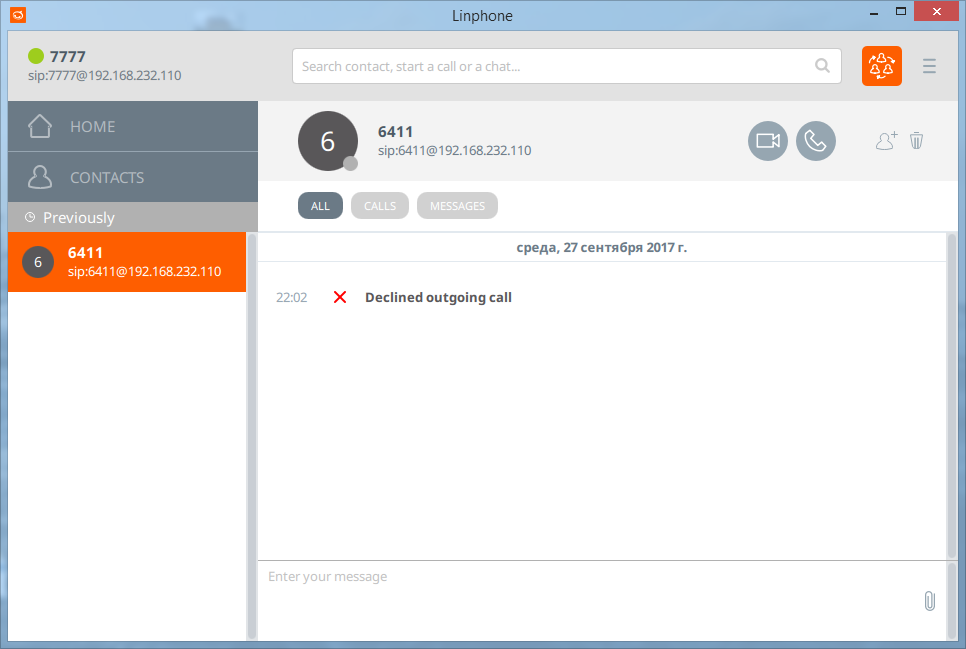
Linphone (contraction of Linux phone) is a free voice over IP softphone, SIP client and service. It may be used for audio and video direct calls and calls through any VoIP softswitch or IP-PBX. Linphone also provides the possibility to exchange instant messages. It has a simple multilanguage interface based on Qt for GUI and can also be run as a console-mode application on Linux.

Both SIP service and software could be used together, but also independently: it is possible to connect Linphone service with any SIP client (software or hardware), and to use Linphone software with any SIP service.

The softphone is currently developed by Belledonne Communications in France. Linphone was initially developed for Linux[10][11] but now supports many additional platforms including Microsoft Windows, macOS, and mobile phones running Windows Phone,[12] iOS[13] or Android.[14] It supports ZRTP for end-to-end encrypted voice and video communication.

Linphone is licensed under the GNU GPL-3.0-or-later and supports IPv6. Linphone can also be used behind network address translator (NAT), meaning it can run behind home routers. It is compatible with telephony by using an Internet telephony service provider (ITSP).

Features

[edit]

Linphone hosts a free SIP service on its website.[15]

The Linphone client provides access to following functionalities:[16]

  • Multi-account work
  • Registration on any SIP-service and line status management
  • Contact list with status of other users
  • Conference call initiation
  • Combination of message history and call details
  • DTMF signals sending (SIP INFO / RFC 2833)
  • File sharing
  • Additional plugins

Open standards support

[edit]

Protocols

[edit]

Audio codecs

[edit]

Audio codec support: Speex (narrow band and wideband), G.711 (μ-law, A-law), GSM, Opus, and iLBC (through an optional plugin)

Video codecs

[edit]

Video codec support: MPEG-4, Theora, VP8 and H.264 (with a plugin based on x264), with resolutions from QCIF (176×144) to SVGA (800×600) provided that network bandwidth and CPU power are sufficient.[17]

[edit]

See also

[edit]

References

[edit]
[edit]
Revisions and contributorsEdit on WikipediaRead on Wikipedia
from Grokipedia
Linphone is an open-source application that enables (VoIP) calling, video calling, instant messaging, and videoconferencing using the (SIP). It supports cross-platform compatibility across desktop operating systems such as Windows, macOS, and , as well as mobile devices on and Android, allowing users to maintain seamless real-time communications. Developed initially as a personal project in 2001 by Simon Morlat, Linphone has evolved into a comprehensive tool, licensed under the GNU General Public License (GPL). Since 2010, Linphone has been primarily maintained and advanced by Belledonne Communications, a French company co-founded by Morlat and Jehan Monnier, both former engineers specializing in telecommunications software. The project emphasizes interoperability with third-party SIP platforms and offers features like , group calls, and to enhance secure and efficient collaboration. Users can create free SIP accounts through Linphone's service or integrate it with existing VoIP providers, making it suitable for both individual and enterprise use. As of 2025, the latest version, Linphone 6.0 "Desktop Call Edition," introduces a redesigned interface focused on simplified calling experiences while retaining advanced functionalities for professional environments. Linphone's open-source nature has fostered community contributions and integrations, positioning it as a reliable alternative in the real-time communications ecosystem.

History and Development

Origins and Early Development

Linphone was founded in 2001 by Simon Morlat as a personal open-source project aimed at providing (VoIP) telephony capabilities for users. Motivated by the need for an accessible alternative to proprietary communication tools, Morlat developed the software to enable SIP-based calling on platforms, marking it as one of the earliest open-source VoIP applications. The project quickly gained traction within the open-source community for its focus on standard protocols and interoperability. In 2004, Linphone joined the OW2 consortium, which provided additional hosting and fostered community contributions. At its inception, Linphone's core technical foundation centered on implementing the (SIP) for call setup and management, built atop the oSIP library to handle SIP functionality. This integration allowed Linphone to support essential VoIP features such as RTP transport for media streams and compatibility with codecs like and , ensuring it could interoperate with other SIP-compliant devices from the outset. The software initially featured a GNOME-based graphical interface and support for ALSA/OSS audio drivers, positioning it as a lightweight, Linux-native solution for audio communication. The first public releases emerged in the early 2000s, with version 0.4.1 documented on August 27, 2001, introducing features like an and ring-back tones while incorporating libosip-0.6.1. These updates facilitated early testing and interoperability with proprietary SIP phones, contributing to Linphone's adoption as a pioneering open-source in the VoIP landscape of the 2000s. Community interest grew through platforms like Savannah, where the project was hosted starting November 12, 2001, fostering contributions and usage among developers seeking free SIP tools. Over time, Linphone evolved from Morlat's hobby project into professionally maintained software, with the founding of Belledonne Communications in to support its ongoing development.

Company Formation and Major Releases

Belledonne Communications was founded in by Simon Morlat, the original creator of Linphone, and Jehan Monnier, both former engineers at , with the primary goal of maintaining and expanding the Linphone project on a professional basis. This formation marked the transition from a purely community-driven open-source initiative—originally launched in 2001—to a company-backed effort that ensured sustained development and commercial viability. Under Belledonne Communications, Linphone adopted a dual licensing model, offering the software under the GNU GPLv3 for open-source use while providing proprietary licenses for closed-source integrations and commercial applications. This approach allowed developers and enterprises to incorporate Linphone's core libraries, such as Liblinphone, into proprietary products without violating open-source requirements, thereby broadening its adoption in both community and business contexts. The 3.x series, spanning much of the , focused on enhancements in multi-platform support, including improved compatibility across Windows, macOS, , and early mobile versions, with key releases like 3.3.0 in 2010 and 3.8.5 in 2015. Building on this foundation, the 4.x series from 2017 to 2021 emphasized advancements in mobile applications, such as better integration with Android and ecosystems and refinements in for touch-based devices. The 5.x series provided stable iterations, with versions up to 5.2.6 released in July 2024, which solidified cross-platform reliability and bug fixes. In 2025, Linphone introduced version 6.0, dubbed "Call Edition," featuring a comprehensive UI overhaul for simplified calling experiences; the desktop edition launched in July 2025, followed by iOS in September 2025 and Android in October 2025. Development contributions occur primarily through the project's repositories, where community members submit patches, report issues, and collaborate on features under the guidance of Belledonne's team. This open collaboration model fosters ongoing improvements while aligning with the dual-licensing framework.

Core Features

Voice and Video Communication

Linphone provides robust support for real-time voice and video communication, enabling high-definition audio and video calls over IP networks. It facilitates seamless one-to-one audio calls using advanced audio processing, while video calls achieve up to resolution for clear, high-quality interactions. These capabilities are built on open-source libraries that ensure compatibility across devices, allowing users to initiate calls directly from the interface with minimal setup. To enhance call quality, Linphone incorporates several key features, including acoustic echo cancellation, which mitigates feedback during calls using either software or hardware-based algorithms. (FEC) is employed to recover from , particularly in unstable network conditions, ensuring reliable audio and video transmission. Additionally, dynamic selection automatically adapts to the available bandwidth and device capabilities, optimizing performance without user intervention. For , Linphone uses an automatic call relay mechanism that reroutes traffic when switching between networks, such as from to cellular, to maintain connection continuity. Conference calling in Linphone supports group meetings with up to 50 participants, leveraging Selective Forwarding Unit (SFU) architecture through integration with Flexisip servers for efficient video distribution and reduced bandwidth usage. This setup allows for high-quality multiparty audio and video sessions, suitable for professional meetings or collaborative environments. Call management tools in Linphone include functions for holding calls with on-hold music, performing blind or attended transfers to route calls to other parties, and recording both audio and video sessions for later playback. Users can handle multiple concurrent calls, access call history, send DTMF tones during active sessions, and integrate with headsets for hands-free operation. These features streamline call handling in both personal and enterprise scenarios.

Messaging and Conferencing

Linphone provides robust capabilities, supporting both one-to-one and multi-participant group chats that enable seamless text-based communication among users. These features include for photos, videos, documents, and voice messages, as well as options for replying to or forwarding messages, adding emoji reactions, and sending ephemeral messages that after a set period. Delivery and read receipts are facilitated through Instant Message Delivery Notifications (IMDN), ensuring users can track message status effectively. For group interactions, Linphone integrates messaging with audio and video conferencing, allowing participants to transition fluidly between text chats and real-time sessions using Selective Forwarding Unit (SFU) architecture. This supports SIP SIMPLE standards for chat sessions, including presence information via SUBSCRIBE/NOTIFY mechanisms, and offers advanced options like screen sharing, multiple display modes (such as audio-only, active speaker, or mosaic views), and participant management tools to control who joins or speaks during conferences. To enhance accessibility, Linphone incorporates push notifications for , enabling offline users to receive alerts through compatible SIP servers like the linphone.org service, and supports multi-device synchronization across platforms. Remote configuration is streamlined via scanning or links, allowing quick setup of accounts and preferences without manual entry. Additionally, messages benefit from using Linphone's Instant Messaging Encryption (LIME) protocol, while calls support via protocols such as SRTP and zRTP. Linphone extends its messaging functionality to in-vehicle environments, offering compatibility with Android Auto for handling messages and Apple CarPlay for both calls and messages, permitting users to view and respond directly from compatible vehicle interfaces while driving.

Technical Standards

Protocols and Codecs

Linphone primarily utilizes the Session Initiation Protocol (SIP), as defined in RFC 3261, for signaling in voice, video, and instant messaging sessions, enabling the establishment, modification, and termination of multimedia communications. This core protocol ensures interoperability with other SIP-based VoIP systems by adhering to standard procedures for call setup and management. Additionally, Linphone employs the Session Description Protocol (SDP) for media negotiation, allowing endpoints to exchange capabilities such as codec preferences and transport parameters during session initiation. For enhanced browser compatibility and real-time communication, Linphone incorporates standards, facilitating seamless integration with web-based applications through support for (ICE) as per RFC 5245, along with and TURN mechanisms outlined in RFC 5766. SIP extensions, including SUBSCRIBE/NOTIFY for presence information and SIMPLE for , further extend functionality, promoting compatibility with diverse SIP infrastructures while maintaining open standards. These protocols collectively support Linphone's role in secure, end-to-end media handling, including brief application with SRTP for encrypted streams. On the audio front, Linphone supports a range of codecs optimized for various bandwidth conditions and quality levels, with Opus serving as the preferred high-definition (HD) audio codec for its efficiency in low-latency, wideband transmission. Other audio codecs include for standard telephony compatibility, for compressed bandwidth usage in legacy networks, for variable bitrate encoding, for basic mobile integration, and iLBC for robust performance in packet-loss scenarios. Additional options like AMR, AMR-WB, , , iSAC, BV16, and Codec2 provide flexibility for specialized applications, ensuring broad interoperability across SIP ecosystems. For video, Linphone leverages modern codecs to balance quality and efficiency, prominently featuring H.264 for widespread compatibility, H.265 (HEVC) for superior compression in high-resolution streams, for open-source web video, and as the emerging standard for next-generation bandwidth savings. This selection of open video codecs, including historical support for formats like and MPEG-4 in earlier implementations, underscores Linphone's commitment to standards that enable cross-platform, high-quality video communication without proprietary dependencies. Overall, these protocols and codecs facilitate Linphone's adherence to open standards, promoting seamless connectivity with global SIP-based systems.

Security Mechanisms

Linphone implements robust media encryption protocols to protect voice, video, and messaging streams during transmission. It supports (SRTP) for encrypting RTP streams using AES algorithms, with key exchange facilitated through methods such as Security Descriptions for (SDES), ZRTP, and SRTP (DTLS-SRTP). ZRTP enables by deriving session keys via Diffie-Hellman key agreement, providing and resistance to man-in-the-middle attacks through short authentication strings. DTLS-SRTP leverages TLS for secure key negotiation over UDP, ensuring and compatibility with firewall-traversing scenarios. For in messaging and group communications, Linphone employs Linphone Instant Messaging Encryption (LIME), which uses ephemeral keys for asymmetric and integrates with X3DH for initial key establishment. LIME supports secure group key management by transparently handling multi-party sessions without exposing keys to intermediaries. Additionally, the Encrypted Key Transport (EKT) server plugin facilitates centralized key distribution for calls, allowing dynamic updates to group keys while maintaining . Key exchange in Linphone incorporates Elliptic Curve Diffie-Hellman (ECDH) for efficient, secure shared secret generation, often hybridized with post-quantum algorithms to mitigate future quantum threats. Specifically, modifications to ZRTP enable simultaneous negotiation of ECDH and CRYSTALS-Kyber (Kyber), a lattice-based key encapsulation mechanism standardized by NIST, ensuring quantum-resistant key derivation. This hybrid approach combines classical and post-quantum cryptography to provide both current performance and long-term security. Authentication mechanisms in Linphone enhance secure session establishment, particularly within SIP-based signaling. Digest uses SHA-256 hashing for challenge-response verification, replacing weaker to prevent replay attacks. TLS client certificates enable by verifying peer identities against trusted certificate authorities during transport-layer security handshakes. For single sign-on capabilities, Linphone integrates OAuth 2.0 and OpenID Connect, allowing token-based bearer that delegates identity validation to external providers. Linphone further supports ephemeral messaging, where messages are automatically deleted after a configurable duration, combined with LIME encryption to ensure in transient communications. This feature, applicable to individual and group chats, relies on secure to prevent unauthorized access even during the message's lifespan.

Platforms and Deployment

Supported Operating Systems

Linphone is primarily developed for desktop environments, with native support across multiple operating systems. On , it serves as the core platform, optimized for distributions such as , , , and embedded systems like Yocto, supporting architectures including x86, x86_64, and ARM64. Windows compatibility extends to version 10 and later, including the Universal Windows Platform (UWP) for broader device integration on x86 and x86_64 architectures. For macOS, Linphone targets version 10.13 and above, accommodating both (x86_64) and (ARM64) processors. Additionally, it is available on through the ports collection, enabling VoIP functionality on this system, though it requires manual compilation or package installation. For mobile devices, Linphone provides dedicated applications tailored to each platform's ecosystem. The Android version, the latest being 6.0.19 released in October 2025, supports API level 21 and higher (Android 5.0+), with compatibility for ARM, ARM64, x86, and x86_64 architectures, available via the Google Play Store. On iOS, version 6.0 was released in September 2025, requiring iOS 15.0 or later and iPadOS 15.0 or later, optimized for ARM64 devices and distributed through the Apple App Store. These mobile implementations leverage native UI frameworks—Swift for iOS and Kotlin/Java for Android—to ensure efficient performance and integration with device features like push notifications. A web-based version of Linphone is currently under development, aiming to enable browser-based access without native installation, supporting modern web standards for voice, video, and messaging across desktops and mobiles. This upcoming release, anticipated by late 2025, builds on technologies to broaden accessibility. Support for legacy platforms has been phased out over time; notably, the version, initially released in 2014 with features like H.264 video, is no longer maintained or available for download following the platform's decline.

Integration and Customization Options

Linphone provides robust integration and customization capabilities, enabling developers and enterprises to adapt the software for specific VoIP infrastructures and user requirements. These options leverage its open-source foundation and modular architecture, allowing seamless embedding into custom applications or enterprise systems while maintaining compatibility with standard protocols. For directory synchronization, Linphone supports LDAP and CardDAV protocols, facilitating the integration of corporate directories and contact servers directly into the application. Users can configure LDAP servers through the app settings to enable remote contact searches and automatic caller identification, while CardDAV ensures bidirectional syncing of contacts across devices. This allows enterprises to maintain centralized address books without manual imports, enhancing usability in professional environments. Interoperability is a core strength, with Linphone designed to connect seamlessly with existing SIP PBX systems, proxies, and session border controllers (SBCs). It adheres to IETF-standardized SIP protocols (RFC 3261 and extensions), ensuring compatibility with legacy and modern VoIP setups for voice, video, and messaging. Additionally, through the Flexisip server, Linphone delivers RCS-like advanced messaging features, including group chats and rich media sharing, bridging traditional SIP with enhanced communication standards. Developer tools further extend Linphone's flexibility, starting with the Liblinphone SDK, a high-level for embedding SIP-based voice and video calling into custom applications or devices. This SDK, compliant with SIP standards and regularly updated, includes APIs for call management, media streaming via Mediastreamer2, and instant messaging, with tutorials for platforms like , Android, and embedded via Yocto recipes. White-label solutions build on this by allowing full rebranding, such as custom logos, colors, login interfaces (e.g., or SSO), and feature toggles, delivered as a tailored within eight weeks. Remote provisioning complements these tools by enabling server-side configuration overrides, where administrators can disable specific features like video calls or group messaging per user, apply graphical themes, and distribute settings via or using the Flexisip . Licensing options support both community and commercial use: the core software, including Liblinphone, is released under the GNU GPLv3 (or AGPLv3 for server components), permitting free modification and redistribution in open-source projects while requiring derivative works to remain open. For applications, dual-licensing allows closed-source modifications and embedding without GPL obligations, ideal for enterprise customizations where confidentiality is essential. Businesses can contact Belledonne Communications for tailored agreements.

References

Add your contribution
Related Hubs
Contribute something
User Avatar
No comments yet.