Hubbry Logo
List of gospelsList of gospelsMain
Open search
List of gospels
Community hub
List of gospels
logo
8 pages, 0 posts
0 subscribers
Be the first to start a discussion here.
List of gospels
from Wikipedia
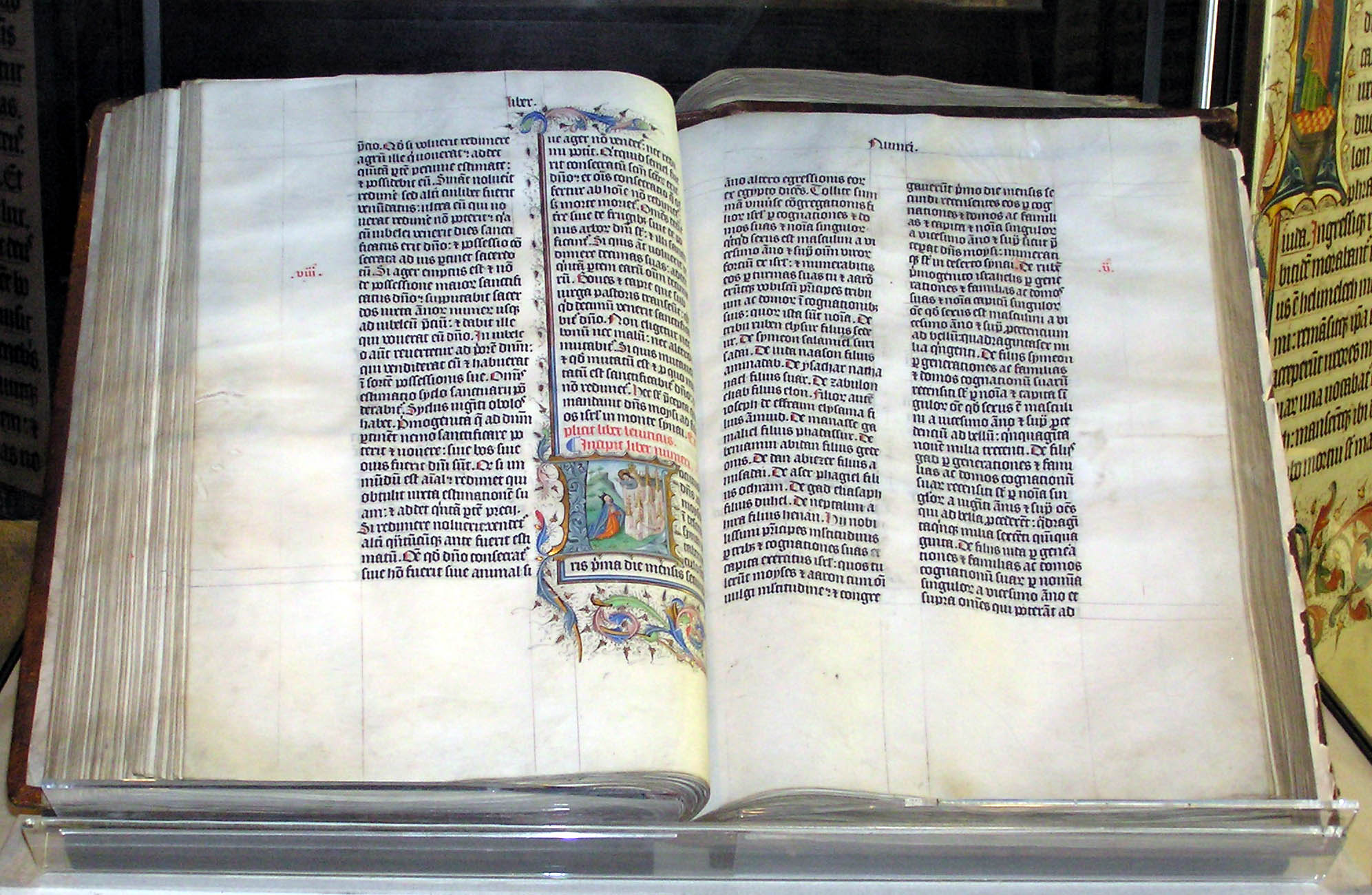
A large old Bible, open and displaying two pages of densely-written calligraphy, with some decoration surrounding one section on the left-hand page.
The canonical Gospels of Matthew, Mark, Luke, and John can be found in most Christian Bibles

Gospels (Greek: εὐαγγέλιον; Latin: evangelium) are written records of the life and teachings of Jesus Christ. The term originally referred to the Christian message that was preached and later evolved to refer to the books in which the message was written.[1]

Gospels are a genre of ancient biography in early Christian literature. The New Testament includes four canonical gospels (Matthew, Mark, Luke, and John), but there are many gospels not included in the biblical canon.[2] These additional gospels are referred to as either New Testament apocrypha or pseudepigrapha.[3][4] Some of these texts have had an impact on Christian traditions, including various forms of iconography.

Canonical gospels

[edit]

Hypothesized sources of the synoptic gospels

[edit]
  • Q sourceQ is a material common to Matthew and Luke, but not found in Mark
  • M sourceM is a material unique to Matthew
  • L sourceL is a material unique to Luke

Hypothesized sources of the Gospel of John

[edit]
  • Signs Gospel – narrative of the Seven Signs
  • Discourses Gospel – source of the discourse material

Apocrypha and Pseudepigrapha

[edit]
[edit]

Gnostic gospels

[edit]

Jewish-Christian gospels

[edit]

Infancy gospels

[edit]

Other gospels

[edit]

Partially preserved gospels

[edit]

Fragmentary preserved gospels

[edit]

Fragmentary gospels are those preserved from primary sources.

Reconstructed gospels

[edit]

Reconstructed gospels are those preserved from secondary sources and commentaries.

  • Secret Gospel of Mark – the legitimacy of this gospel is a subject of debate, as the single source mentioning it is considered by many to be a modern forgery and was lost before it could be independently authenticated
  • Gospel of Matthias – a lost text from the New Testament apocrypha; the content has been surmised from descriptions in works by church fathers[5]

Lost gospels

[edit]
  • Gospel of Cerinthus – around 90–120 AD according to Epiphanius,[14] this is a Jewish gospel identical to the Gospel of the Ebionites; according to the Hebrews, it was apparently a truncated version of the Gospel of Matthew
  • Gospel of Apelles – mid to late 2nd century, a further edited version of Marcion's edited version of Luke
  • Gospel of Valentinus[a]
  • Gospel of the Encratites[b]
  • Gospel of Andrew – mentioned by two 5th century sources (Augustine and Pope Innocent I) who list it as apocryphal[c]
  • Gospel of Bartholomew – mentioned by two 5th century sources, Jerome[5] and Gelasian Decree, that both list it as apocryphal[d]
  • Gospel of Hesychius – mentioned only by Jerome and the Gelasian Decree, both of which list it as apocryphal[e]
  • Gospel of Lucius – mentioned only by Jerome and the Gelasian Decree, which list it as apocryphal
  • Gospel of Merinthus[f] – mentioned only by Epiphanius; thought by most to be the Gospel of Cerinthus, with the confusion due to a scribal error
  • An unknown number of other Gnostic gospels not cited by name[g]
  • Gospel of the Adversary of the Law and the Prophets[16]
  • Memoirs of the Apostles – a lost narrative of the life of Jesus, mentioned by Justin Martyr; the passages quoted by Justin may have originated from a gospel harmony of the Synoptic Gospels composed by Justin or his school

Fragments of possibly unknown or lost (or existing) gospels

[edit]

Fragmentary gospels are those preserved from primary sources.

  • Papyrus Egerton 2 – late 2nd century manuscript of a possibly earlier original; contents parallel John 5:39–47, 10:31–39; Matthew 1:40–45, 8:1–4, 22:15–22; Mark 1:40–45, 12:13–17; and Luke 5:12–16, 17:11–14, 20:20–26, but differ textually. This manuscript also contains an incomplete miracle account which has no equivalent in the canonical Gospels[17]
  • Fayyum Fragment – a fragment of about 100 Greek letters in 3rd century script; the text seems to parallel Mark 14:26–31
  • Oxyrhynchus Papyri – fragments #1, 654, and 655 appear to be fragments of Thomas; #210 is related to Matthew 7:17–19 and Luke 6:43–44 but not identical to them; #840 contains a short vignette about Jesus and a Pharisee not found in any known gospel, the source text is probably mid-2nd century; #1224 consists of paraphrases of Mark 2:17 and Luke 9:50
  • Gospel of Jesus' Wife – a fragment based on the Gospel of Thomas, suspected as a modern forgery[18][19]
  • Papyrus Berolinensis 1171 – Book of Enoch, 0–6th century Greek fragment, possibly from an apocryphal gospel or amulet based on John
  • Papyrus Cairensis 10735 – 6th or 7th century Greek fragment, possibly from a lost gospel, may be a homily or commentary
  • Papyrus Merton 51 – fragment from an apocryphal gospel or a homily on Luke 6:7
  • Strasbourg Fragment – fragment of a lost gospel, likely related to Acts of John

Medieval gospels

[edit]

Modern gospels

[edit]

See also

[edit]

Notes

[edit]

Footnotes

[edit]

References

[edit]
[edit]
Revisions and contributorsEdit on WikipediaRead on Wikipedia
Add your contribution
Related Hubs
User Avatar
No comments yet.