Hubbry Logo
Front kickFront kickMain
Open search
Front kick
Community hub
Front kick
logo
8 pages, 0 posts
0 subscribers
Be the first to start a discussion here.
Front kick
Front kick
from Wikipedia
Front kick
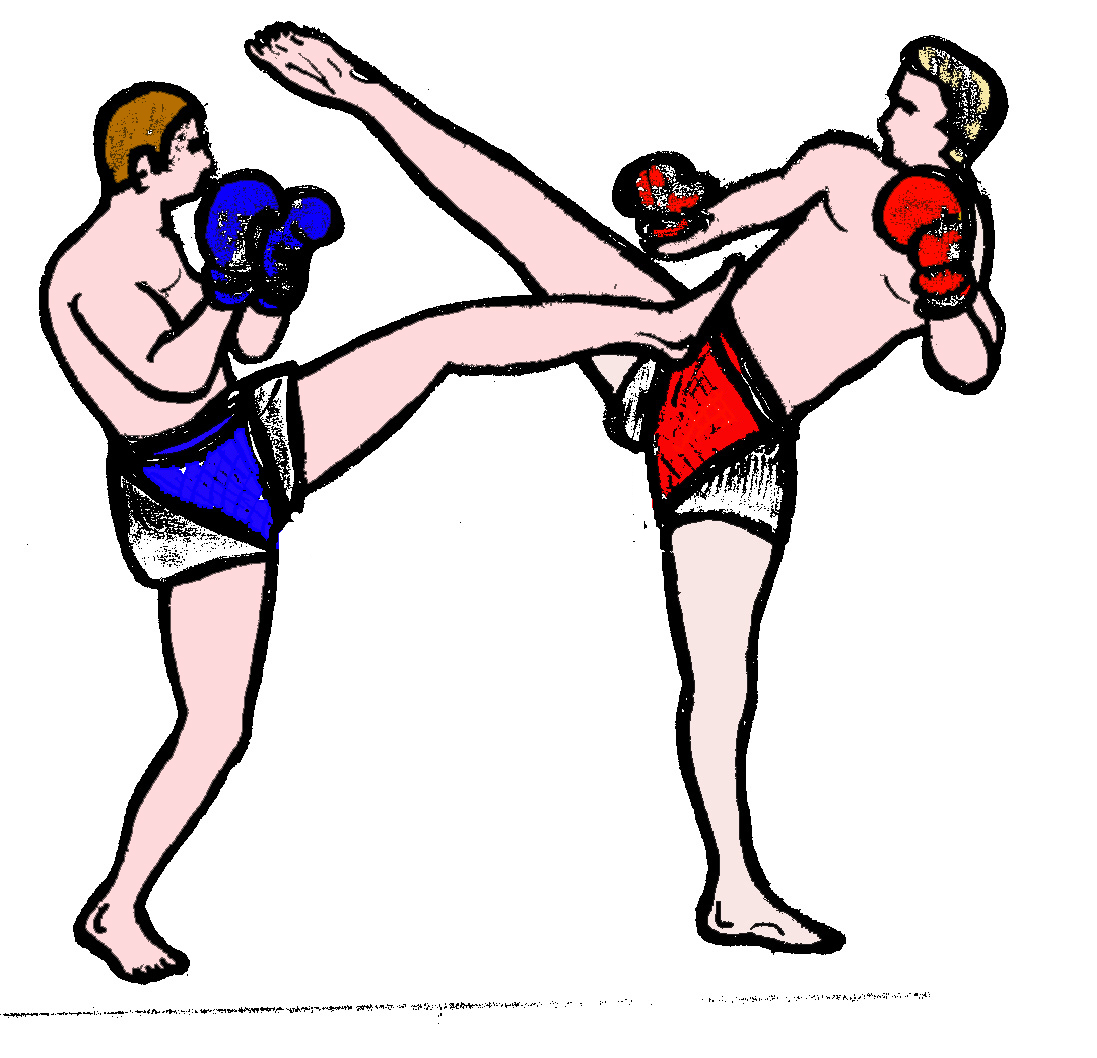
A counter-attack with a front kick in burmese boxing
Korean name
Hangul앞차기
Hanjanone
Transcriptions
Revised Romanizationap chagi
McCune–Reischauerap' ch'aki
Japanese name
Kanji前蹴り
Hiraganaまえげり
Transcriptions
Revised Hepburnmae geri

The front kick in martial arts is a kick executed by lifting the knee straight forward, while keeping the foot and shin either hanging freely or pulled to the hip, and then straightening the leg in front of the practitioner and striking the target area. It is desirable to retract the leg immediately after delivering the kick, to avoid the opponent trying to grapple the leg and (unless a combination is in process) to return to stable fighting stance.

The front kick described is the typical basic front kick of karate or taekwondo. But the front kick can also be defined more broadly as a straight forward kick directly to the front, and then include several variations from many different styles. A front kick can be delivered forward in a penetrating way (hip thrust), or upwards to attack the head.

Details of the technique

[edit]
Taekwondo front kick

In martial arts implying either barefooted combat or very light footwear, the strike is usually delivered by using the ball of the foot (while pointing the foot toward the target area and keeping toes up to prevent injury) or by heel. When heavier footwear is used, there is an option to use the whole sole as a striking surface. It is also possible to kick with the top of the foot (the instep) in cases of striking at the groin or under the arm which can be very damaging.

Using the ball of a foot is preferred in karate. This method demands more control of one's movement, but allows for a narrow, penetrating strike. Taekwondo practitioners utilise both heel and ball of the foot for striking. It is common to perform tempering exercises to strengthen the ball of the foot, as many new practitioners are unable to exercise full-power front kicks on training gear, such as a body bag.

With specific techniques and in certain styles, the impact point of the front kick can be more exotic. Certain Japanese styles have a front kick generally used as a stop-kick where the blade of the foot is used to connect, like for a side kick (the foot blade front kick). The heel is often used straight (mae kakato geri) or with the foot tilted (tilted heel front kick), especially in stop-kicks, close kicks or high front kicks. Japanese ninjutsu has variations using the straightened and hardened toes. Front kicks to the groin (kin geri) like the lift kick or the upward front kick (mae geri keage), use the top of the foot. The phantom groin kick uses the whole of the inside of the foot to connect very effectively. Stop kicks often use the whole plant of the foot to push away the opponent.[1]

Various combat systems teach "general" front kicks using the heel or whole foot when footwear is on. For example, martial art systems employed by militaries assume that a fighter wears heavy footwear, is generally less mobile than typically assumed in competition martial arts, and may have their leg muscles severely fatigued. Properly executing a fast "snap" front kick while controlling one's foot direction may be difficult in said conditions. Less technically demanding kicks utilizing the soles of heavy footwear as a striking surface are easier to execute.

The front kick is typically performed with a straight and balanced upper body, but it allows for variety in motion of hips and body overall. Martial arts systems exploit this ability in different fashions. For example, a karateka may perform mae geri while standing upright, or lean somewhat back during the attack, intending to increase the reach of the kick. If a simple "kick-punch" combination is executed, this slight lean allows for more momentum placed into the movement of upper body, thus the karateka will end with a more powerful body movement behind the punch. The opposite situation is exploited in some variations of Wing Chun, where stiff forward motion of both hands blocking/striking in upper area could be accompanied with a slight leaning forward and simultaneous front kick into groin/thigh, etc. Hip movement may be used to increase the reach and to thrust one's leg into the target, resulting in a more powerful strike (a common practice in taekwondo and some styles of karate).

Applications and counters

[edit]

Front kicks are typically aimed at targets below the chest: stomach, thighs, groin, knees or lower. Highly skilled martial artists are often capable of striking head-level targets with front kick (albeit rarely use it this way). The front kick is fast and involves little body motion betraying the technique's nature prior to execution. This makes a well-developed front kick an excellent asset in both offence and defense.

Front-Kick

When defending, front kick could be used to severely damage the lower area of the opponent who has started an attack, but has overconcentrated on guarding head/upper body, and as a good tool to keep enemy from punch range. In offense, front kick could serve as an excellent opener for combination attacks, as it is fast, dangerous enough for opponent to switch attention to block/deflecting/evading the kick, but requires little deviation from the upright fighting stance, which is good to start punch attack from. Overall, there is a wide variety of situations where this kick could be exploited by a creative martial arts practitioner.

Common ways to counter a front kick are deflecting it with hand, shin, etc., stepping away/sideways, or, given the kick is visibly pointed into abdomen/thighs area, shifting a body so it passes along. The last method is somewhat risky, as it relies heavily on defender's agility, with a front kick being the fastest kick possible. More exotic techniques of countering front kicks exist, like one incorporated in Wado ryu kihon kumite (referred to as yakusoku, or prearranged, kumite, in some schools). Said technique involves simultaneously pushing opponents leg away from one's centerline and attacking the leg with a downward elbow strike into the hip. However, this method is not recommended to beginners and as a general purpose one.

Also, although well-executed front kick is very fast, a careless execution presents an opponent with excellent opportunity for grappling, which could be disastrous for an attacker. Once the leg is grappled, a variety of attacks is available to a defender, such as wrestling techniques resulting in pain compliance hold, immediate counterattack with punches, throws, kicks into lower area and combinations of all above. For this reason, 'recocking' the leg after the kick is truly important, especially in real-life situations, where rules common to many competition martial arts do not apply. However, executing front kicks to the waist and below is relatively safe and effective, given the leg is immediately retracted.

Cambodian style

[edit]
Cambodian front kick depicted on a bas-relief at the Bayon (12th/13th century) in Siem Reap, Cambodia.

In the Cambodian martial arts of pradal serey and bokator the front kick is also used. The front kick is called sniet theak trang (push kick) or chrot eysei (sage push). The push kick is considered easy and simple to use in fights. The push kick can be used on areas that are not carefully guarded by the opponent. The push kick can be delivered by the ball of the foot or the heel of the foot. The push kick can be used to attack below the waist, the chest and the middle of the face.[2]

Karate

[edit]
Karate front kick

The front kick, called mae geri in Japanese, is certainly the main kick in traditional karate of all styles. It is the most used kick in traditional kata forms and the most practiced kick in traditional kihon practice. The kick is a very strong and fast strike, and easier to master than less “natural” kicks. The kick generally connects with the ball of the foot, under the toes, but other points of impact are sometimes used in the many variants existing in Japanese karate and other styles. It can be thrusting (kekomi) or snapping (keage), or somewhere in between. In its thrusting or kekomi form the kicker pushes the foot into the target powerfully leveraging the momentum of his own body weight in order to propel the opponent or target backwards. In its snapping or keage form the kicker emphasizes the extremely quick retraction or recoil or re-chamber of the foot and the lower leg immediately after impact (thereby making it difficult to catch or grab the leg by the opponent); The keage kick exhibits less pushing force but more breaking impact than the kekomi form of the kick. It can be delivered with hopping (surikonde) or jumping (tobikonde), and sometimes with a straight leg all-the-way (mae keage). It can be executed with the front leg, defensively or hopping forward, or the rear leg. It can be executed with nearly square hips, or with hips lined sideways like the yoko geri of Wado-ryu Karate. There are many other variations, as the kick can also be feinted, angled or delivered from the ground.[3]

Tae Kwon Do

[edit]

In taekwondo, the front kick bears the name ap chagi. It is distinct from the push kick (mireo chagi) in that the power should be delivered instantaneously. Since the leg moves forward while the shin and foot naturally swing upwards, the easiest application of this kick is that of directing one's energy upwards, perhaps considering it a "kick to the groin". However, one can deliver massive force forward with this kick as well, which is considered its main application by most instructors. Directed forward, this is actually one of the most powerful kicks in Taekwondo, and it is quite often used in exhibitions and board-breaking competitions where power is demonstrated.

In order to not injure ones toes while executing this kick, it is usually delivered through the front base of the foot (ap chook), if not with the flat upper side of the foot (bal deung). If performed with the bare foot then the ball of the foot is used on impact with the toes drawn up to prevent injury. To strike with ap chook one has to raise one's toes so that their tips will not be the first contact point. Even when directed forward, this is not a kick where the first contact point should be the base of the heel, as is considered beneficial in some other martial arts having a similar kick. In Taekwondo, one would strike forward with the ankle extended, so that the upper side of the foot forms a straight line with the shin, and with the toes bent back (pointing up). In other words, an "ap chook ap chagi". Having the foot in any other position when directing this kick strictly forward would be considered highly unorthodox, and is a common error among beginners.

In addition to being a kick in itself, the front kick is an exercise used by many instructors to teach the principle of lifting ones knee before the rest of the kick commences, something which is considered important in taekwondo, where it is somewhat literally translated from the Korean ap chagi (앞차기), (and many kicking arts with the notable exception of capoeira). In competition fights (known as "sparring" or "kyorugi") this kick sees little actual use, except possibly as a component in an improvised kick which is perhaps intended as an "an chagi" or "naeryo chagi".

It is common to slightly bend the knee of the leg one is standing on when executing this kick, and pointing the foot one is standing on somewhat outwards. As in all taekwondo kicks, one will also try to get ones "hip into the kick", resulting perhaps in a slight shift of weight forward. In any case, this is a linear kick, and as such one that one can get ones weight behind.

There exist countless variations of this kick, and it can be used along with other kicks without one having to put ones kicking foot down in between kicks. A very common variation is "ttwimyeo ap chagi", a flying front kick which can reach an impressive height.

Some instructors refer to this kick as the "flash kick". This is in tune with the line of thought which seems prevalent in the various taekwondo forms, where the ap chagi is used very extensively in combination with relatively short range hand strikes and blocks, mimicking situations in which it would have to be performed quite quickly.

See also

[edit]

Notes

[edit]

References

[edit]
Revisions and contributorsEdit on WikipediaRead on Wikipedia
from Grokipedia
The front kick is a basic and versatile striking technique employed in numerous , including (mae geri in ), (ap chagi), and (teep). It involves lifting the and extending the forward to deliver a linear strike to the opponent's midsection, head, or using the ball of the foot, instep, or heel, emphasizing speed, balance, and precise retraction to maximize impact while minimizing vulnerability to counters. This kick leverages the 's greater strength and range compared to hand strikes, making it a foundational move for beginners and a strategic tool for advanced practitioners in , , and . Biomechanically, the movement involves pelvic tilt, hip flexion, and knee extension, achieving foot velocities of 5.2 to 16.7 m/s and impact forces up to 7790 N depending on the athlete's proficiency, flexibility, and lower-body strength. Beyond offensive attacks, the front kick serves defensive purposes, such as disrupting an aggressor's balance or creating distance in close-quarters combat, and is integral to forms (poomsae or kata), board breaking, and competitive scoring in events governed by organizations like World Taekwondo and the World Karate Federation. Its simplicity allows for adaptations, including jumping or aerial versions for height and surprise, though improper form risks knee strain, underscoring the need for progressive training focused on flexibility and core stability. As one of the earliest kicks taught, it builds foundational coordination and power, contributing to the overall efficacy of martial arts systems in both sport and practical applications.

Fundamentals

Definition and Purpose

The front kick is a fundamental linear striking technique in , executed by lifting the forward and extending the straight ahead to deliver impact with the ball of the foot, instep, or , typically targeting the opponent's midsection, head, or legs. This direct forward motion distinguishes it from more angular kicks, emphasizing precision and immediacy in delivery. Its primary purposes encompass generating substantial power to control distance between combatants, disrupting an opponent's balance through targeted strikes to the or lower body, creating openings for subsequent attacks by forcing defensive reactions, and functioning as an essential introductory tool in striking-oriented disciplines like and . The technique's versatility allows it to serve both offensive and defensive roles, such as halting advances or maintaining spatial advantage in combat scenarios. Biomechanically, it leverages hip flexion followed by rapid extension and knee thrust to produce efficient force, with peak angular velocities reaching up to 917°/s at the knee and 536°/s at the hip in elite performers, rendering it particularly accessible for beginners due to its reliance on natural lower-body movements rather than complex twists. This efficiency contributes to its high impact potential, often exceeding that of roundhouse kicks by up to 120% in advanced practitioners.

Basic Mechanics

The front kick commences from a neutral fighting stance, characterized by feet positioned shoulder-width apart or slightly staggered, with the majority of weight distributed on the rear leg for stability and quick initiation, while the hands are held in a high guard to shield the head and . This balanced posture allows for efficient weight transfer during execution and minimizes vulnerability to counters. In the chambering phase, the kicking leg's knee is rapidly lifted toward the chest, achieving hip flexion to approximately 90 degrees with the toes pointed downward or inward to align the shin vertically and prepare for extension. This motion creates a compact, coiled position that facilitates explosive power while keeping the center of gravity low over the supporting leg. The extension and strike phase involves thrusting the hips forward to drive the leg outward, fully extending the to propel the foot—typically the of the foot or —into the target with a snapping action. Peak velocity during this phase often reaches around 5-6 m/s for the in trained athletes, emphasizing linear over . Retraction follows immediately after impact, withdrawing the leg swiftly back to the chambered position to restore balance and evade potential grabs or follow-up attacks from the opponent. This quick recovery, often completing the full cycle in under 1.2 seconds for proficient performers, is crucial for maintaining defensive readiness. Key biomechanical elements include core rotation to amplify torque during hip thrust, sequential weight transfer from the rear to the lead side via the grounded support leg, and proximo-distal coordination where the thigh accelerates initially before decelerating to accelerate the lower leg through knee extensor activation. Balance is preserved by stabilizing the support leg's hip rotators and engaging the core to counteract lateral sway, ensuring the body's center of mass remains aligned vertically. Common errors include overextending the leg beyond the target, which shifts the center of mass forward and compromises balance, often leading to falls or slowed retraction. Another frequent mistake is telegraphing the kick through premature hip rotation or weight shift, signaling intent and allowing the opponent ample time to react or evade.

Historical Development

Origins in Asian Martial Arts

The front kick traces its ancient origins to Chinese kung fu styles, particularly those associated with the Shaolin Temple. Legendary accounts attribute early physical exercises to the Indian monk Bodhidharma (known as Ta Mo), who arrived at the temple around 520–527 AD. According to 17th-century folklore, he introduced dynamic conditioning methods, later mythologized in texts like the Yi Jin Jing (Muscle/Tendon Changing Classic), which purportedly laid the groundwork for Shaolin martial arts including basic kicking techniques for monks' physical training and self-defense. These stories, while influential, reflect later traditions rather than contemporary records. Shaolin kung fu, incorporating linear thrusting kicks, developed more historically from the Tang dynasty (618–907 AD) onward, adapted for warrior training to protect against bandits and support military efforts, emphasizing balance and power in combat. In , the front kick was integrated into early precursors in Okinawa during the 17th to 19th centuries, heavily influenced by imported Chinese kung fu styles such as White Crane from province. Okinawan indigenous fighting systems, known as "te," evolved through cultural exchanges with Chinese envoys and traders starting in the , incorporating kicking techniques that blended local grappling with Chinese linear strikes. By the 18th and 19th centuries, this fusion produced regional styles like Shuri-te, where the front kick—originally executed as a penetrating toe strike called tsumasaki geri targeting vital points—became a core element for close-range offense. The technique also featured prominently in , particularly , the precursor to , during the Dynasty (1392–1910). emphasized fluid, natural leg movements with bent knees and rhythmic footwork, including straight forward kicks using the ball of the foot or heel to unbalance opponents, as documented in 18th-century texts like Jaemulbo under King Jeongjo (1776–1800). Widely practiced across social classes from ancient times—with precursors like noted in 15th-century compilations such as Koryusa and its kicks were integral to folk festivals and physical training, promoting whole-body coordination over rigid strikes. Southeast Asian roots of the front kick are evident in ancient Khmer martial arts like Bokator and its descendant Pradal Serey, dating to the Angkor period (9th–15th centuries) of the Khmer Empire. Bas-reliefs at depict warriors employing kicking techniques in battlefield combat to defend against invasions, with linear front kicks integrated into stand-up striking systems for mobility and power. These arts trained soldiers in close-quarters warfare, using kicks alongside elbows and knees to exploit openings in armored foes. Key historical texts further document the front kick's significance in early 20th-century Asian codification. In his 1922 book Ryukyu Kenpo Karate-jutsu, described the mae geri (front kick) as a direct thrust with the toes or ball of the foot, drawing from Okinawan traditions to emphasize precision and speed in . Similarly, during taekwondo's standardization in the 1950s by the , the ap chagi (front kick) was formalized as a foundational snap kick, blending influences with modern training for national unification efforts.

Evolution in Modern Combat Sports

The front kick's adaptation into Western combat systems began in the 19th century through , the French kickboxing style that blended street fighting techniques with boxing influences, incorporating the chassé frontal as a straight thrusting kick for distance control and targeting the midsection. This evolution paralleled the no-holds-barred format of in Brazil, where early precursors to from the 1920s onward allowed unrestricted kicks, including front snaps, to test striking against grappling in full-contact bouts. By the 1970s, the front kick was standardized in American , emerging from full-contact karate events that fused punches with kicks above the waist, emphasizing the front snap for quick counters and range management in professional competitions. The founding of the in 1974 marked a pivotal event, formalizing rules that permitted front kicks as essential strikes while prohibiting low leg attacks, thus shaping the sport's emphasis on speed and precision over power. In the , K-1 rules further integrated the front kick as a key technique for maintaining distance and disrupting opponents, with limited clinch usage distinguishing the promotion's stand-up focus from Muay Thai's prolonged grappling. In during the 2000s, the front kick gained prominence through fighters like Mirko Filipović (Cro Cop), who adapted it into a low push variant targeting the legs to disrupt entries and maintain distance in UFC and FC bouts. This tactical shift highlighted the kick's versatility beyond traditional high strikes, influencing hybrid fighting styles where it served as both offensive and defensive tool against grapplers. The front kick's reach extended into global fitness trends in the 1980s, when cardio programs adapted it for classes, transforming the combat technique into a non-contact exercise for cardiovascular health and coordination without the emphasis on sparring impacts. By the 2010s, systems like incorporated adapted front kicks, such as short-range stomps to the groin or knees, into curricula for real-world threat neutralization, prioritizing instinctive, power-generated strikes over sport precision.

Variations by Style

Karate Front Kick

In Shotokan karate, the front kick is termed mae-geri, characterized by a sharp snapping motion that delivers explosive power through precise coordination of the lower body. The technique begins from a deep forward stance known as zenkutsu-dachi, where the practitioner shifts weight to the rear before driving the hips linearly forward in a thrusting motion. As the lifts high with toes pointed upward, the extends rapidly using the of the foot (koshi) as the striking surface, culminating in kime—a momentary tension throughout the body at the point of impact to maximize penetration and stability. This execution emphasizes balance and retraction, with the kicking returning swiftly to the starting position in a 3:7 ratio of extension to withdrawal, ensuring readiness for subsequent movements. Philosophically, mae-geri embodies the concept of —one-point focus—where the practitioner channels total concentration into a single, unified action, fostering harmony between mind and body. This alignment reflects core principles of self-control and effortless execution, as articulated by , who integrated the kick into foundational kihon (basic) drills in the 1930s to build disciplined technique and spiritual discipline. Funakoshi's teachings in Karate-Do Kyohan stress that such basics train not just physical prowess but the unity of intent and movement, preventing isolated mental or bodily efforts. Common targets for mae-geri include the solar plexus for disrupting breath or the face (jodan level) for disorientation, with strikes delivered at midsection or higher to maintain the style's traditional upright posture and avoid compromising balance through low-line attacks. Low kicks are generally eschewed in favor of these elevated options, preserving the linear, grounded form that distinguishes from more acrobatic styles. The technique features two primary variations: mae-geri keage, a thrusting snap executed with rapid retraction for speed and distance control, and mae-geri kekomi, a pushing thrust that holds briefly at impact for deeper penetration and power. The former prioritizes quick entry and withdrawal, ideal for probing defenses, while the latter emphasizes forceful drive from the hips, often from the rear leg in stances like zenkutsu-dachi.

Taekwondo Front Kick

In , the front kick is known as ap chagi, a fundamental striking technique that emphasizes speed and precision. This kick has been integral to (WT) competitions since the organization's founding in 1973 and the inaugural held that year in , . Developed as part of the martial art's evolution in the mid-20th century, ap chagi draws from ancient Korean kicking traditions while being refined for modern sport applications. The execution of the front kick begins from a lighter, more mobile fighting stance, allowing for quick transitions and agility in . The practitioner explosively lifts the of the kicking leg toward chest , fully extends the leg with a snapping motion using the ball of the foot or instep to strike the target, and often incorporates a slight jump to generate additional and power for targeting the opponent's head or . This dynamic approach contrasts with more stationary forms in other styles, prioritizing explosive hip drive and rapid retraction to maintain balance and readiness for follow-up techniques. In WT , the front kick scores 2 points when landing on the trunk protector and 3 points on the head, incentivizing practitioners to develop aerial variations for higher impact and tactical advantage in matches. These scoring rules, established under WT guidelines, encourage the kick's use as a versatile tool for distance control and setup attacks, with electronic scoring systems detecting valid contacts since their introduction in the early 2010s. The technique's training history traces back to the 1950s, when emerged by synthesizing elements of —an ancient Korean art focused on fluid kicking—with influences from , as Korean artists sought to unify disparate schools under a . General played a pivotal role in standardizing ap chagi through the (ITF), which he founded in 1966; he incorporated the kick into the organization's patterns (tul), such as Chon-Ji and Dan-Gun, to teach progressive power generation and form. Unique to ITF Taekwondo, the front kick often employs a motion—an up-down-up rhythmic pattern of the body's —to enhance relaxation, timing, and explosive force during execution. This principle, outlined in Choi's teachings, involves an initial downward dip followed by an upward surge and final drop at impact, promoting natural energy transfer. Additionally, counter-rotation of the hips provides added , amplifying the kick's velocity and penetration without compromising the practitioner's stability.

Muay Thai and Cambodian Front Kick

In , the front kick is commonly referred to as the teep, a push kick executed with a thrusting motion using the ball of the foot to control distance and disrupt an opponent's advance. This technique emphasizes a squared stance, where the practitioner shifts body weight forward through the hips while extending the leg fully, delivering a controlled push rather than a sharp snap to off-balance foes or create space for follow-up strikes. A variant involves the for a downward stomping action, often targeting the opponent's or to immobilize movement, though the standard teep prioritizes the ball of the foot for precision and safety in ring competition. The Cambodian counterpart in Pradal Serey, a striking art with deep historical ties to Muay Thai, employs a similar push kick known as sniet theak trang (straight push technique), reflecting shared Southeast Asian roots in close-quarters combat. Execution mirrors Muay Thai's emphasis on a stable, squared posture and hip-driven thrust, using the ball of the foot to push or unbalance from mid-range, though Pradal Serey fighters often integrate it more aggressively with sweeping motions due to fewer glove restrictions in traditional bouts. In Bokator, Cambodia's ancient martial system, the front push kick serves ritualistic and defensive roles, preserved through revival efforts starting in the 1990s led by master San Kim Sean (1945–2025), who began teaching Bokator upon his return to Cambodia in 1993 and passed away on June 3, 2025, after the regime nearly eradicated traditional arts. Culturally, the teep traces to the 16th-century , where —the precursor to modern —incorporated it as a battlefield tool for soldiers engaging in hand-to-hand warfare when disarmed. This push kick allowed warriors to maintain distance against armed opponents or break formations, evolving from Khmer influences during regional conflicts. In , Bokator's variant endured in clandestine rituals during the era (1975–1979), symbolizing resilience, and was formally revived in the to reclaim national heritage amid post-genocide reconstruction. Power in the teep arises from a full body weight shift, engaging the core and hips for explosive extension, complemented by rigorous shin and leg conditioning to withstand counters and enhance overall striking resilience. Practitioners target the thighs or to halt advances and disrupt breathing rhythm, leveraging the technique's linear path for quick recovery into defensive postures. In Cambodian styles, similar mechanics apply, with emphasis on grounded stability to generate force without overcommitting, as seen in Pradal Serey's fluid transitions to . In contemporary applications, the teep remains vital for clinch control in promotions like since the 2010s, where fighters use it to repel aggressors and set up strikes, distinguishing Muay Thai's integrated eight-limb from more isolated Asian kicking arts. Events showcase teeps launching opponents backward, facilitating knee- combinations in the clinch, as demonstrated in high-profile bouts emphasizing tactical range management.

Applications and Defenses

Offensive Uses

The front kick serves as a primary tool for distance management in (MMA) and , allowing fighters to keep opponents at bay and thwart attempts or close-range rushes. In MMA bouts, the front kick to the body helps maintain optimal range, enabling the kicker to circle away from aggressive advances while preserving striking opportunities. Similarly, fighters such as integrate front kicks to dictate the pace, using them to reset positioning after exchanges and prevent takedowns. This application is particularly vital in stand-up phases, where the kick's linear trajectory creates space without compromising the kicker's balance. As a setup strike, the front kick often precedes multifaceted combinations in kickboxing, such as punch-kick-punch sequences that exploit momentary openings. In high-level matches, including those from the 1990s K-1 era, fighters incorporated front kicks to disrupt rhythm before chaining into hooks or crosses, enhancing the unpredictability of offensive flurries. For instance, the push variant, or teep, briefly gauges distance in Muay Thai-influenced bouts before transitioning to heavier blows. This tactical layering allows the kick to draw defensive reactions, setting up subsequent strikes for greater impact. In self-defense contexts, the front kick targets vulnerable areas like the s or to disrupt an attacker's balance and facilitate escape. A precise strike to the inflicts intense pain, momentarily incapacitating the aggressor and providing a window to retreat. Alternatively, aiming at the damages the , compromising mobility and creating disorientation for the defender to disengage safely. High-impact variants of the front kick, delivered to the head, can result in by snapping the opponent's backward or stunning the . In competitions during the 2000s, such as Olympic-style bouts, elevated front kicks to the face demonstrated knockout potential when timed against advancing foes, often ending matches decisively. Strategic timing further amplifies this, with feints mimicking a front kick to provoke blocks or flinches, thereby exposing targets for follow-up attacks in sessions.

Defensive Counters and Evasions

In , defending against the front kick often begins with blocking techniques that absorb or deflect the incoming force. In , practitioners commonly use a shin block, raising the and turning the shin outward to meet the kick's impact on the outer leg, which helps distribute the energy and prevent penetration to the body. Alternatively, a forearm check involves positioning the arm vertically to shield the or head, absorbing the push while maintaining balance. These methods emphasize conditioned limbs to handle repeated strikes without injury. Evasion tactics prioritize avoiding direct contact by shifting the body out of the kick's path. A sidestep involves quick lateral footwork to move the entire body aside, creating an opening to close distance for follow-up actions like a clinch in (MMA). Ducking under the kick, by leaning the torso backward or to the side, allows the defender to evade mid- or high-level front kicks and transition into a , exploiting the attacker's temporary imbalance. Counterattacks frequently capitalize on the front kick's extension by targeting the extended leg. Catching the kicking leg—securing it below the with both hands—enables a sweep of the opponent's supporting leg, a technique adapted from into MMA hybrids to unbalance and ground the attacker. In , an immediate response might involve evading the kick and delivering a hook kick to the opponent's side or head, using the momentum from the dodge to generate power. Style-specific defenses adapt to the front kick's variations across disciplines. In , the gedan-barai (low block) sweeps downward across the body with the to deflect low or groin-targeted front kicks, redirecting the force while the opposite hand chambers for a counterstrike. employs a hands-up guard, raising both arms in a high protective frame to cover the face and upper torso against higher front kicks, facilitating quick deflections or counters in scenarios. Risk factors in these defenses include the vulnerability of leg grabs against skilled opponents, who can counter with sweeps or spins to reverse the position. In UFC fights from the , experienced kickers have exploited leg catches by pulling back or sweeping the catcher off-balance, highlighting the need for caution to avoid exposure.

Training and Variations

Drills and Conditioning

Solo drills form the foundation of front kick development, emphasizing form, power, and consistency without a partner. Shadow kicking, performed in front of a mirror, allows practitioners to refine technique by observing posture, hip alignment, and recoil, typically starting with slow-motion repetitions to build muscle memory before accelerating. Target bag work follows to cultivate power, where learners execute controlled strikes against a heavy bag, such as 10 slow kicks per leg for precision, progressing to faster sets like 10 rapid repetitions to enhance speed and impact. A representative routine involves three sets of 10-20 reps per leg, alternating between slow and explosive executions to balance control and force. Partner exercises introduce dynamic elements, simulating real-time application while maintaining safety. Light with focus mitts helps develop timing and accuracy, where one partner holds at varying heights and speeds, and the kicker responds with front kicks, beginning at half-speed to focus on entry angles. This progresses to full-speed feeds, incorporating movement like stepping forward after the kick to mimic combat flow, often in rounds combining kicks with basic punches for fluidity. Such drills, limited to controlled contact, build reaction time without excessive risk. Conditioning routines target the physical attributes essential for effective front kicks, including flexibility, strength, and explosiveness. Leg raises, performed lying on the back with legs extended to 90 degrees and held briefly, strengthen and flexors over multiple sets of 10-30 reps, directly supporting kick height and stability. flexor stretches, such as lunges held for 20-30 seconds per side, improve , while plyometric jumps—like squat jumps followed immediately by a front —enhance explosive power through circuits. These exercises, integrated into warm-ups, prevent injury and boost performance metrics like kick velocity. Progression levels ensure systematic improvement, starting with beginners holding static leg positions (e.g., knee raised for 10 seconds, 10 reps per leg) to master balance before advancing to dynamic kicks in combinations, such as front kick followed by a punch. Intermediate practitioners incorporate movement drills, like forward-stepping kicks across the floor, while advanced levels integrate combos into shadow sparring for seamless execution. Balance maintenance during these drills reinforces overall stability, as emphasized in basic . Essential equipment includes heavy bags for solo , focus mitts and for partner work, and shin guards to protect during contact drills, enabling safer progression from technique to application. Historically, 19th-century Okinawan training relied on bare methods like striking posts and body conditioning without , reflecting secretive, resource-limited practices; the shift to modern padded drills occurred in the as evolved into a with formalized dojos and gear.

Adaptations in Fitness and Self-Defense

In fitness programs, the front kick has been adapted into cardio workouts to enhance aerobic capacity and promote expenditure, often through modified versions that reduce joint stress. Developed in the 1990s, integrates kicks, including front kicks, with elements in high-intensity sessions, claimed to enable participants to burn up to 1,200 s per hour at intermediate levels, though typical estimates range from 400 to 800 s depending on body weight and intensity. Similarly, kickboxing-based training incorporating front kicks has been shown to improve maximal aerobic power by 11.2% and VO₂max by 13.2% over five weeks, supporting cardiovascular health without significant body fat changes when performed at 71-78% of maximum . Low-impact variations, such as the reverse-lunge front kick, involve stepping into a lunge before a controlled lift and extension, minimizing strain while elevating for sustained aerobic benefits. For , the front kick is modified to prioritize practicality in unpredictable street scenarios, emphasizing quick execution over full form to create distance or disable threats without risking balance loss. Practitioners drive the forward with a simplified chamber—avoiding high lifts—and use the ball of the foot or shin to target the or , recoiling immediately after impact to maintain a stance and prevent falls on uneven surfaces. This adaptation focuses on penetrating the target with minimal extension, such as unfolding the leg just above the level before retracting, allowing even those with limited flexibility to deliver effective strikes like shin contact to the if distance is misjudged. Therapeutic applications of the front kick draw from principles to aid rehabilitation, particularly for improving hip mobility in protocols since the early 2000s. Exercises like controlled hip circles and low pivot lunges, adapted from front kick mechanics, stretch the hip flexors, glutes, and groin to enhance , reduce lower back and , and support recovery from injuries that limit kicking height or stance stability. Physical therapists incorporate these movements to address tight hips, which can impair performance, by progressively building flexibility and strength for safer return to activity. Gender-inclusive adaptations in and empowerment programs tailor the for women by shortening the range and emphasizing speed and precision over raw power, making it accessible regardless of physical strength differences. In -inspired women's training, the —often called a teep—is taught as a rapid push to the midsection or face to disrupt balance and create escape opportunities, focusing on explosive hip drive and quick retraction to build confidence without requiring maximal force. Modern trends since the 2010s have incorporated app-based tutorials and (VR) for home-based front kick practice in , enabling personalized, rule-free training distinct from competitive sports. Mobile apps provide step-by-step video lessons on techniques, including simplified kicks, for real-world scenarios, allowing users to learn targeting and chambering at their pace through interactive MMA and modules. VR platforms simulate realistic attacks, letting practitioners rehearse techniques in immersive environments to develop timing and awareness, accessible via headsets for frequent home sessions regardless of location or physical limitations.

References

Add your contribution
Related Hubs
User Avatar
No comments yet.