


Community hub
Recent from talks
Contribute something
Nothing was collected or created yet.
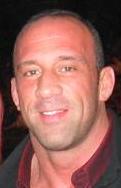
Mark Coleman
View on Wikipedia
Mark Coleman (born December 20, 1964) is an American retired mixed martial artist, professional wrestler and amateur wrestler. Coleman was the UFC 10 and UFC 11 tournament champion, the first UFC Heavyweight Champion, and the Pride Fighting Championships 2000 Open Weight Grand Prix champion. At UFC 82 Coleman was inducted into the UFC Hall of Fame.
Key Information


Coleman is credited with proving the ability of wrestlers to dominate in the developing sport of mixed martial arts, and with being one of the first in American MMA to use the strategy that he coined ground-and-pound successfully,[2][3][4] earning him the moniker, "The Godfather of Ground & Pound".[5] In the sport of wrestling, Coleman was a World Championship runner-up and Pan American Games Gold medalist in 1991, won three Pan American Championships, competed at the 1992 Summer Olympics and was an NCAA Division I National Champion for the Ohio State Buckeyes.[6]
Background
[edit]Coleman was born in Fremont, Ohio in 1964. He began freestyle wrestling as a teenager and in 1981 was the first state champion wrestler for Saint Joseph Central Catholic High School (Fremont, Ohio). He then finished second in his sophomore year before claiming his second state championship in 1983.[6]
He continued to wrestle for Miami University, in Ohio, where he was a two-time Mid-American Conference wrestling champion and earned his first All-American honors in 1986. In his senior year, he transferred to The Ohio State University and won an NCAA championship in 1988. Out of college, he started as an assistant coach at his alma mater. Additionally, he was awarded a spot on the US Wrestling team, placing second (100 kg) at the 1991 FILA Wrestling World Championships in Varna, Bulgaria, and placing seventh overall in the 1992 Summer Olympics in Barcelona, Spain. He participated 1996 Olympic Trials, but self-claimed lack of focus on wrestling hindered his performance, resulting in a loss in the semifinals.[6]
Coleman's collegiate wrestling record totaled 101 wins and 12 losses. He had 50 wins and 2 losses in his final season, in which he won the NCAA D1 national title at 189 pounds.[7]
Mixed martial arts career
[edit]Facing the twilight of his amateur wrestling career, Coleman transitioned to the then-new sport of mixed martial arts after accidentally turning on a TV channel where the UFC 1 was ongoing.[8]
Ultimate Fighting Championship
[edit]Coleman won his first two tournaments in dominating fashion, including a win over UFC 8 champion Don Frye at UFC 10 in 1996, and becoming the first UFC Heavyweight Champion after submitting UFC Superfight Champion Dan Severn via neck crank submission at UFC 12.
Coleman made his first UFC Heavyweight Championship title defense at UFC 14, facing kickboxer (and heavy underdog) Maurice Smith. In the pre-fight interview with Joe Rogan, Coleman stated "I'm going to ground him and pound the goddamn shit out of him" thus coining the name ground-and-pound.[9] In what turned out to be a long battle, Coleman lost a decision after 21:00 (regulation plus two overtimes). This was considered to be one of the largest upsets in UFC history at that time, largely because of the way Coleman had dominated his opponents in his previous fights.
Coleman took nearly a year off after having to get ACL surgery and returned at UFC 17. Coleman was originally scheduled to face Randy Couture in a title match for the UFC Heavyweight Championship, but Couture was injured during training and was forced to pull out of the fight. Coleman instead faced a relatively unknown (at that time) last-minute replacement fighter, up and coming Lion's Den product Pete Williams. In what turned out to be another long and strenuous battle, Coleman appeared to be completely exhausted after 10 minutes; he was fatigued to the point of resting his hands on his knees during the fight. Williams took advantage of Coleman's fatigue and landed a heavy kick to the face, knocking 'The Hammer' out for the first time in his career.
After his loss to Pete Williams, Coleman went to train with former UFC champion Ken Shamrock and his Lion's Den training camp for his upcoming bout with feared Brazilian striker Pedro Rizzo at UFC 18. The fight with Rizzo was part of the "Road to the Heavyweight Title", which was a four-man tournament between Coleman, Rizzo, Bas Rutten and Tsuyoshi Kosaka that would crown the next UFC Heavyweight Champion. After 15:00 the fight went to the judges, and they awarded a split decision win to Rizzo. The decision was controversial, with many and Coleman himself believing he did enough to win.[10][11][12] In a 2010 interview, Coleman said he still feels the effects of the controversial decision loss to Rizzo.[12]
Pride Fighting Championships
[edit]From 1999 through 2006, The Hammer continued his career with Japanese promotion, Pride Fighting Championships while also making appearances with the professional wrestling promotion HUSTLE.
At Pride 5, Coleman fought Nobuhiko Takada, who would become HUSTLE's owner and booker. Though thought to be the much better fighter, Coleman was caught by a heel hook from Takada and submitted. The validity of this fight has been questioned, with many believing the fight was fixed.[13][14][15][16][17] In response to questions about the fight's legitimacy, Coleman said, "It was what it was. I needed to support my family. They guaranteed me another fight after that and I needed that security. It was what it was. I'm going to leave it at that."[18]
Coleman won the Pride 2000 Open Weight Grand Prix tournament defeating Masaaki Satake, Akira Shoji, Kazuyuki Fujita, and Igor Vovchanchyn. The final was scheduled to be fought with a 20-minute time limit but according to Coleman, the day before the fight the rules were changed to no time limit.[8] The change forced him to modify his game plan to attempt a quick finish as he did not believe he could put Vovchanchyn away with his ground and pound in a long match.[8] The Hammer's training and 2000 tournament victory are depicted in the documentary The Smashing Machine: The Life and Times of Extreme Fighter Mark Kerr.
After a quick TKO victory over Allan Goes at Pride 13 - Collision Course, Coleman faced possibly his toughest challenge ever in Antônio Rodrigo Nogueira at Pride 16. "Minotauro" was able to catch the Hammer in a triangle/armbar at 6:10 of the first round, breaking Coleman's six-fight winning streak.
Coleman would take nearly two years off following the fight with Nogueira, spending time with his wife and children, and focusing on developing his martial arts training facility and stable of fighters at Team Hammer House. Training such notable fighters as Kevin Randleman, Wes Sims and Phil Baroni, Team Hammer House quickly gained a reputation of turning out world-class fighters.
Mark Coleman returned to MMA competition at Pride 26 to face Don Frye in a rematch of their meeting at UFC 10; this proved to be a much tougher battle. Coming back from a career-threatening neck injury, Coleman ultimately won a unanimous decision victory after 20 minutes. Following the fight, Coleman apologized to the fans for the lack of action during the fight, in which he had spent the majority of the time taking down and maintaining positional dominance of Frye with his superior wrestling ability.
Between training fighters and spending time with his family, the Hammer was now fighting roughly once a year. He returned to competition to take place in the Pride 2004 Heavyweight Grand Prix, as the returning Grand Prix champion in the Open Weight Division. His first-round match at Pride Total Elimination 2004 was against Pride heavyweight champion Fedor Emelianenko. In what turned out to be a short bout, Coleman was submitted by armbar at 2:11 of the first round, eliminating him from the tournament.
Coleman returned to the Pride ring in February 2005, this time facing Mirko Cro Cop at Pride 29: Fists of Fire. Suffering the second knockout of his career, the Hammer fell to strikes by Cro Cop in the first round. In November 2005, Mark Coleman appeared in Bushido Europe-Rotterdam Rumble, Europe's first Bushido event, and choked out Milco Voorn at 0:56 of the first round.
The Hammer returned to action at Pride 31 with a victory over Chute Boxe team member Maurício "Shogun" Rua after the fight was stopped when Shogun suffered a dislocated elbow during a Coleman takedown. With Team Hammer House member Phil Baroni in his corner, Coleman began the match by taking Shogun to the ground. At 0:49 of the first round, Rua got up and as he took the first step Coleman grabbed his feet. Rua fell and broke his arm. Coleman then started peppering Rua with strikes before the referee stopped the fight.
Backstage in his post-fight interview, Coleman stated that the whole melee happened in the heat of the moment and that he did not blame the Chute Boxe team for coming in and backing their fighter. He then added that similar to Chute Boxe, Hammer House is also like a family, and thanked Baroni for coming in and watching his back.[19] An outraged Chute Boxe refused to accept Coleman's backstage apology. The Chute Boxe team was assigned a yellow card for instigating this infraction. Coleman's contract was fought out at this point, and he subsequently re-signed with the organization.[8]
On October 21, 2006, Mark Coleman again faced Pride heavyweight champion Fedor Emelianenko at Pride's first American show, Pride 32: The Real Deal,[20] and lost via submission (armbar) at 1:17 of round two.
Mark Coleman appeared with teammate, Kevin Randleman, on the US pay-per-view broadcast of the final Pride event, Pride 34: Kamikaze, stating that he intended to keep fighting.
Return to UFC (2008–2010)
[edit]At UFC 82, Mark Coleman was inducted into the UFC Hall of Fame, making him the 5th inductee. Coleman announced that he was not retiring and would return to the octagon to fight Brock Lesnar on August 9 in Minneapolis at UFC 87. However, Coleman injured his knee while training, and was forced to pull out of the event. Heath Herring replaced Coleman for the fight.
Coleman faced Maurício Rua in a rematch in their first bout in the UFC at UFC 93 and lost by technical knockout as a result of punches late in the third round.[21] This fight earned him a $40,000 Fight of the Night award.[21]
At UFC 109, Coleman faced fellow UFC Hall of Famer Randy Couture, after originally being scheduled to meet at UFC 17 in 1998 twelve years prior, in which an injury forced Couture to drop out of the fight. Coleman went on record, multiple times during the build-up for the fight, in which he claimed this was his dream bout. After being outboxed on the feet, Coleman was taken down and defeated shortly after by (Rear Naked Choke) at 1:09 in round 2. The bout marked the first time two UFC Hall of Fame inductees had fought.
Following Coleman's loss to Couture in the main event of UFC 109, his sixth loss in his last 10 fights, he was released by the promotion.[22][23]
Retirement from MMA
[edit]After going over three years without competing Coleman announced via Facebook that he has officially retired from MMA competition at 48 years of age.[24]
UFC 300
[edit]After Coleman saved his parents from a burning house in March 2024, fighter Max Holloway suggested that Coleman be the one to present the symbolic "BMF" ("baddest motherfucker") belt to the winner of the title fight at UFC 300 on April 13, 2024.[25] This request was granted and Coleman ended up wrapping the belt around Holloway, who was victorious in his bout against Justin Gaethje.[26]
Fight Circus
[edit]On January 12, 2025, Coleman returned to the ring and competed at Fight Circus 12 in Phuket, Thailand in a "wheelchair boxing match" against the CEO of the promotion Jon Nutt.[27] Both fighters were strapped into a wheelchair and were pushed around the ring by their cornermen with Coleman's cornerman being former UFC fighter Matt Brown.[28] At the end of the fight, both men stood up from their wheelchairs and Coleman knocked out Nutt at the last second.[29]
Professional wrestling career
[edit]New Japan Pro-Wrestling and All Japan Pro Wrestling (2000–2002)
[edit]In December 2000, Coleman had his first professional wrestling match when he was invited to the event Inoki Bom-Ba-Ye 2000, teaming up with Mark Kerr to defeat Takashi Iizuka and Yuji Nagata. He would also appear for New Japan Pro-Wrestling, defeating Nagata in a singles match. In 2002, Coleman would appear in All Japan Pro Wrestling's Wrestle-1 project, teaming up with Kevin Randleman to face Hiroshi Hase and Satoshi Kojima in a losing effort, and later Jan the Giant Convict and Singh the Giant Convict in a victory, with Coleman himself pinning Singh with a hurricanrana.[30][31]
Hustle (2004–2007)
[edit]In 2004, Coleman started wrestling for Hustle and its partner promotion Pro Wrestling Zero-One. He debuted in the first as part of Generalissimo Takada's villainous faction Monster Army, going against babyface Toshiaki Kawada in a singles match which Mark lost by TKO. Coleman continued teaming up with other Monster Army wrestlers, including Dan Bobish, Commander An Jo and Giant Silva, but he was kicked out of the stable after failing to defeat top face Naoya Ogawa, thus becoming a babyface himself. Coleman then went free and ended up joining Wataru Sakata's team after losing a bout to him. Coleman and Sakata were successful as a tag team, but it was dissolved after Coleman left the promotion in 2005.
Two years later, Coleman returned to Hustle under the masked persona "Coleman", teaming up with the superhero-like team of Randleman, Kintaman and Kurodaman. Their biggest victory was when Coleman and Randleman faced the trio of Giant Vabo, Kohei Sato and Tajiri and won the match despite the numeric disadvantage. Mark's last match in Hustle was in July 2007, leaving the promotion again afterwards.
Inoki Genome Federation (2007-2010)
[edit]From 2007 to 2010, Coleman was a usual member of Inoki Genome Federation, wrestling names like Naoya Ogawa, Tadao Yasuda, Shinichi Suzukawa and Hideki Suzuki.
Personal life
[edit]Coleman has two daughters, Mackenzie and Morgan, from his previous marriage.[32] Coleman has a third daughter, Skylar, with his current partner Tina.[33]
He appeared in the documentary The Smashing Machine: The Life and Times of Extreme Fighter Mark Kerr alongside fellow fighter and former friend Mark Kerr.
In June 2006, it was announced that Coleman was one of the new coaches in the International Fight League.[34] However his team, the Columbus Razorclaws, were unable to get off the ground, and he was replaced as a coach by Frank Shamrock the following month.[35][36]
In 2018, Coleman revealed that he was one of the victims of Richard Strauss regarding the Ohio State University abuse scandal.[37]
In late 2020, Coleman reported that he suffered a heart attack due to a complete artery blockage, and underwent a surgery to have a stent installed.[38]
In an interview with Ariel Helwani in September 2021, Coleman revealed that Wes Sims persuaded him to participate in rehab due to a drinking problem. In the interview Coleman stated that multiple personal life issues contributed to the situation and also that he's been sober since the rehab.[39]
In March 2024, a house fire began at Coleman's parents' home in Toledo, Ohio. Coleman retrieved his parents, but his dog did not survive the fire. Coleman was hospitalized and put in critical condition due to smoke inhalation.[40]
Championships and accomplishments
[edit]Mixed martial arts
[edit]- Ultimate Fighting Championship
- UFC Hall of Fame (Pioneer Wing, Class of 2008) and (Fight Wing, Class of 2016) vs. Pete Williams at UFC 17
- UFC Heavyweight Championship (1 Time, first)
- UFC 10 Tournament Champion
- UFC 11 Tournament Champion
- UFC Viewer's Choice Award[41]
- Fight of the Night (One time) vs. Maurício Rua[21]
- UFC Encyclopedia Awards
- Fight of the Night (Three times) vs. Don Frye, Dan Severn and Maurice Smith[42][43][44]
- Knockout of the Night (One time) vs. Moti Horenstein[42]
- Submission of the Night (Two times) vs. Julian Sanchez and Dan Severn[45][43]
- UFC.com Awards
- PRIDE Fighting Championships
- Pride 2000 Grand Prix Openweight Tournament Winner
- Fastest win in PRIDE Fighting Championships History (0:02)
- One of only two fighters to win Tournaments in both Pride FC and UFC
- Wrestling Observer Newsletter
- Fight of the Year (1997) vs. Maurice Smith on July 27
- World MMA Awards
Amateur wrestling
[edit]- 1986 NCAA Division I Championships: (190 lbs 4th Place)
- 1988 NCAA Big Ten Championships: (190 lbs 1st Place)
- 1988 NCAA Division I Championships: (190 lbs 1st Place)
- 1990 Pan American Championships Freestyle Wrestling: (90 kg 1st Place)
- 1991 Pan American Championships Freestyle Wrestling: (100 kg 1st Place)
- 1991 Pan American Games Freestyle Wrestling: (100 kg 1st Place)
- 1991 U.S.A. National Freestyle Wrestling Championships: (100 kg 1st Place)
- 1991 FILA World Freestyle Wrestling Championships: (100 kg 2nd Place)
- 1992 Pan American Championships Freestyle Wrestling: (100 kg 1st place)
- 1992 Summer Olympics Freestyle Wrestling: (100 kg 7th Place)
Mixed martial arts record
[edit]| 26 matches | 16 wins | 10 losses |
| By knockout | 7 | 3 |
| By submission | 5 | 5 |
| By decision | 4 | 2 |
| Res. | Record | Opponent | Method | Event | Date | Round | Time | Location | Notes |
|---|---|---|---|---|---|---|---|---|---|
| Loss | 16–10 | Randy Couture | Submission (rear-naked choke) | UFC 109 | February 6, 2010 | 2 | 1:09 | Las Vegas, Nevada, United States | First UFC Hall of Famer vs. UFC Hall of Famer bout in UFC history. |
| Win | 16–9 | Stephan Bonnar | Decision (unanimous) | UFC 100 | July 11, 2009 | 3 | 5:00 | Las Vegas, Nevada, United States | |
| Loss | 15–9 | Maurício Rua | TKO (punches) | UFC 93 | January 17, 2009 | 3 | 4:36 | Dublin, Ireland | Light Heavyweight debut. Fight of the Night. |
| Loss | 15–8 | Fedor Emelianenko | Submission (armbar) | PRIDE 32: The Real Deal | October 21, 2006 | 2 | 1:15 | Las Vegas, Nevada, United States | |
| Win | 15–7 | Maurício Rua | TKO (broken arm) | Pride 31 - Dreamers | February 26, 2006 | 1 | 0:49 | Saitama, Saitama, Japan | |
| Win | 14–7 | Milco Voorn | Submission (arm-triangle choke) | Bushido Europe: Rotterdam Rumble | October 9, 2005 | 1 | 0:56 | Rotterdam, South Holland, Netherlands | |
| Loss | 13–7 | Mirko Cro Cop | KO (punches and soccer kick) | PRIDE 29 | February 20, 2005 | 1 | 3:40 | Saitama, Saitama, Japan | |
| Loss | 13–6 | Fedor Emelianenko | Submission (armbar) | PRIDE Total Elimination 2004 | April 25, 2004 | 1 | 2:11 | Saitama, Saitama, Japan | Pride FC 2004 Heavyweight Grand Prix Opening Round. |
| Win | 13–5 | Don Frye | Decision (unanimous) | PRIDE 26 | June 8, 2003 | 3 | 5:00 | Yokohama, Kanagawa, Japan | |
| Loss | 12–5 | Antônio Rodrigo Nogueira | Submission (triangle armbar) | PRIDE 16 | September 24, 2001 | 1 | 6:10 | Osaka, Osaka, Japan | |
| Win | 12–4 | Allan Goes | KO (knees) | PRIDE 13: Collision Course | March 25, 2001 | 1 | 1:19 | Saitama, Saitama, Japan | |
| Win | 11–4 | Igor Vovchanchyn | TKO (submission to knees) | PRIDE Grand Prix 2000 Finals | May 1, 2000 | 2 | 3:09 | Tokyo, Japan | Won the Pride FC 2000 Openweight Grand Prix Tournament. |
| Win | 10–4 | Kazuyuki Fujita | TKO (corner stoppage) | 1 | 0:02 | PRIDE FC 2000 Openweight Grand Prix Semifinal. | |||
| Win | 9–4 | Akira Shoji | Decision (unanimous) | 1 | 15:00 | PRIDE FC 2000 Openweight Grand Prix Quarterfinal. | |||
| Win | 8–4 | Masaaki Satake | Submission (can opener) | PRIDE Grand Prix 2000 Opening Round | January 30, 2000 | 1 | 1:14 | Tokyo, Japan | PRIDE FC 2000 Openweight Grand Prix Opening Round. |
| Win | 7–4 | Ricardo Morais | Decision (unanimous) | PRIDE 8 | November 21, 1999 | 2 | 10:00 | Tokyo, Japan | |
| Loss | 6–4 | Nobuhiko Takada | Submission (heel hook) | PRIDE 5 | April 29, 1999 | 2 | 1:44 | Nagoya, Aichi, Japan | |
| Loss | 6–3 | Pedro Rizzo | Decision (split) | UFC 18 | January 8, 1999 | 1 | 15:00 | New Orleans, Louisiana, United States | |
| Loss | 6–2 | Pete Williams | KO (head kick) | UFC 17 | May 15, 1998 | 1 | 12:38 | Mobile, Alabama, United States | |
| Loss | 6–1 | Maurice Smith | Decision (unanimous) | UFC 14 | July 27, 1997 | 1 | 21:00 | Birmingham, Alabama, United States | Lost the UFC Heavyweight Championship. Fight of the Year (1997). |
| Win | 6–0 | Dan Severn | Submission (scarf-hold) | UFC 12 | February 7, 1997 | 1 | 2:57 | Dothan, Alabama, United States | Won the inaugural UFC Heavyweight Championship and unified it with the UFC Superfight Championship. |
| Win | 5–0 | Brian Johnston | TKO (submission to punches) | UFC 11 | September 20, 1996 | 1 | 2:20 | Augusta, Georgia, United States | Won the UFC 11 Tournament. |
| Win | 4–0 | Julian Sanchez | Submission (scarf hold) | 1 | 0:45 | UFC 11 Tournament Quarterfinals. | |||
| Win | 3–0 | Don Frye | TKO (headbutts) | UFC 10 | July 12, 1996 | 1 | 11:34 | Birmingham, Alabama, United States | Won the UFC 10 Tournament. |
| Win | 2–0 | Gary Goodridge | Submission (exhaustion) | 1 | 7:00 | UFC 10 Tournament Semifinals. | |||
| Win | 1–0 | Moti Horenstein | TKO (submission to punches) | 1 | 2:43 | UFC 10 Tournament Quarterfinals. |
Fight Circus record
[edit]| 1 win (1 TKO), 0 losses | |||||||||
| Result | Record | Opponent | Method | Event | Date | Round | Time | Location | Notes |
|---|---|---|---|---|---|---|---|---|---|
| Win | 1–0 | Jon Nutt | Knockout | Fight Circus 12 | January 12, 2025 | 2 | 0:59 | Phuket, Thailand | Wheelchair boxing |
| |||||||||
References
[edit]- ^ "Fight Finder: Mark Coleman". Sherdog. 2007. Retrieved August 15, 2007.
- ^ Olavarria, Pedro (February 11, 2015). "Dan Severn: When Wrestling Became a Martial Art | FIGHTLAND". Fightland.vice.com. Archived from the original on February 14, 2015. Retrieved June 18, 2015.
- ^ Aita, Bret; Krauss, Erich (November 10, 2010). Brawl. ECW Press. ISBN 9781554902385. Retrieved June 18, 2015.
- ^ "In fact, he's known as the "Godfather of Ground & Pound". Mark Coleman has got such a long list of wrestling titles, but it's when he stepped into mixed martial arts that he really proved the dominance of wrestlers who can go into the guard and strike or take you down and strike. He is the man responsible for coining the term 'ground and pound'" referring to his ability to takedown and then punch, elbow, and knee his way to victory (Stephen Quadros, Pride 16, 2001)
- ^ "UFC 10: Birth of ground 'n' pound". Yahoo. April 12, 2009. Retrieved January 19, 2010.
- ^ a b c "Alpha Buckeye: The Story of Mark "The Hammer" Coleman". Eleven Warriors. July 18, 2016.
- ^ "Mark Coleman - NCAA Season Records." Accessed September 8, 2024.
- ^ a b c d Whitelaw, Andrew (November 9, 2020). Mark Coleman reminisces about winning the Pride openweight Grand Prix. Archived from the original on December 12, 2021.
- ^ "Prelude to UFC 100: Greatest Quotes In UFC History". Bleacher Report. Retrieved June 30, 2017.
- ^ Sherdog.com Mark "The Hammer" Coleman Interview-Part 3 of 4 December 18, 2000
- ^ Sherdog.com Mark "The Hammer" Coleman Interview-Part 2 of 4 December 18, 2000
- ^ a b "Mark Coleman discusses his UFC 109 fight with Randy Couture". Heavy.com. February 1, 2010. Archived from the original on April 24, 2012. Retrieved June 24, 2010.
- ^ Castillo, David (July 12, 2013). "Not For the Ages: Mark Coleman vs. Nobuhiko Takada and a brief history of fight fixing". bloodyelbow.com.
- ^ Diaz, Atilano (January 23, 2017). "Four MMA Fights That Were Probably Fixed". scrapdigest.com.
- ^ Realejo, Jon (April 29, 2020). "Today In MMA History: Mark Coleman and Nobuhiko Takada Are Suspected Of A Fixed Fight". bloodycanvas.net.
- ^ Cillanki, Akash (February 3, 2018). "5 MMA fights that might have been fixed". sportskeeda.com.
- ^ Bas Rutten On The Alleged Fixed Fight Between Mark Coleman And Nobuhiko Takada. September 10, 2019. Archived from the original on December 12, 2021.
- ^ Snowden, Jonathan (March 14, 2024). "Mark Coleman discusses his UFC 109 fight with Randy Couture - Heavy.com". Heavy.com.
- ^ "Chute Boxe-Hammer House Rivalry Reaches Boiling Point". Sherdog.
- ^ "Pride: The Real Deal Results & Photos". MMAweekly.com. October 22, 2006.
- ^ a b c Cofield, Steve (January 18, 2009). "Snoozefest gets UFC 93 "Fight of the Night" bonus". sports.yahoo.com. Retrieved January 18, 2025.
- ^ "Mark Coleman Released By UFC After UFC 109 Loss; Phillipe Nover and Tim Hague Also Cut". mmafrenzy.com. Retrieved February 10, 2010.
- ^ [1] Archived February 13, 2010, at the Wayback Machine
- ^ MMAjunkie.com Staff (March 6, 2013). "Former UFC champ Mark Coleman officially retires from MMA". Mmajunkie.com. Archived from the original on November 10, 2013. Retrieved June 18, 2015.
- ^ "Coleman to present BMF title belt at UFC 300". ESPN.com. April 12, 2024. Retrieved April 15, 2024.
- ^ Myers, Thomas (April 14, 2024). "UFC 300 results: Max Holloway sleeps Justin Gaethje at buzzer in wild finish, wins 'BMF' belt in spectacular fashion". MMAmania.com. Retrieved April 15, 2024.
- ^ Whitelaw, Andrew (November 27, 2024). "Boxers fight each other while keeping one foot in a car tyre and teams of two men stuck in one shirt fight it out in 'Siamese Twins Kickboxing' at truly bizarre Thai martial arts competition". Essentially Sports.
- ^ Wheaton, Timothy (January 7, 2025). "Mark Coleman vs. Fight Circus CEO: The Wild Wheelchair Boxing Match You Have to See to Believe". LowKick MMA.
- ^ "Fight Circus 12 - Featuring Mark Coleman and Matt Brownn". Fight Circus. January 12, 2025 – via YouTube.
- ^ "All Japan Wrestle-1". Puroresu Central. Retrieved December 18, 2013.
- ^ "WRESTLE-1 Sky PerfecTV! PPV". Puroresu Central. Retrieved December 18, 2013.
- ^ "Mark Coleman Could Enter UFC's Hall of Fame". Cagepotato.com. Archived from the original on December 6, 2008. Retrieved June 18, 2015.
- ^ UFC (March 30, 2020). Where Are They Now? – Mark Coleman. Archived from the original on December 12, 2021. Retrieved April 14, 2020.
- ^ Quadros, Stephen (June 14, 2006). "Four NewCoaches added for Fall Tournament". International Fight League. Archived from the original on August 19, 2006. Retrieved March 5, 2023.
- ^ "New IFL Logos, Frank Shamrock New Coach". International Fight League. July 31, 2006. Archived from the original on August 11, 2006. Retrieved March 5, 2023.
- ^ "Frank Shamrock Named Newest Coach In IFL". MMA Weekly. July 31, 2006. Archived from the original on March 5, 2023. Retrieved March 5, 2023.
- ^ "Ohio State Wrestlers Share Emotional Descriptions Of Alleged Abuse". NBC News. July 13, 2018. Retrieved October 21, 2023 – via YouTube.
- ^ Harkness, Ryan (November 8, 2020). "Mark Coleman gives update from hospital following heart attack". mmamania.com.
- ^ Helwani, Ariel (September 23, 2021). Mark Coleman: Kevin Randleman Was A 'Very Special Man'. Archived from the original on December 12, 2021 – via YouTube.
- ^ "UFC Hall of Famer Coleman in hospital after fire". ESPN.com. March 12, 2024. Retrieved March 13, 2024.
- ^ "UFC 45: Revolution". Fight Times Magazine. March 8, 2008.
- ^ a b Gerbasi, Thomas (October 17, 2011). UFC Encyclopedia - The Definitive Guide to the Ultimate Fighting Championship. New York: DK. p. 158. ISBN 978-0756683610.
- ^ a b Gerbasi, Thomas (October 17, 2011). UFC Encyclopedia - The Definitive Guide to the Ultimate Fighting Championship. New York: DK. p. 161. ISBN 978-0756683610.
- ^ Gerbasi, Thomas (October 17, 2011). UFC Encyclopedia - The Definitive Guide to the Ultimate Fighting Championship. New York: DK. p. 163. ISBN 978-0756683610.
- ^ Gerbasi, Thomas (October 17, 2011). UFC Encyclopedia - The Definitive Guide to the Ultimate Fighting Championship. New York: DK. p. 159. ISBN 978-0756683610.
- ^ Gerbasi, Thomas (December 18, 2009). "Ten Best – The Losses of 2009". Ultimate Fighting Championship.
- ^ Gerbasi, Thomas (December 18, 2009). "Ten Best – The Upsets of 2009". Ultimate Fighting Championship.
- ^ a b Tucker, Bryan (December 5, 2024). "World MMA Awards 2024 results". MMA Fighting. Retrieved December 6, 2024.
- ^ "Mark". Sherdog. Retrieved December 20, 2018.
External links
[edit]- UFC.com Hall of Fame Profile
- Professional MMA record for Mark Coleman from Sherdog
- Evans, Hilary; Gjerde, Arild; Heijmans, Jeroen; Mallon, Bill; et al. "Mark Coleman". Olympics at Sports-Reference.com. Sports Reference LLC. Archived from the original on April 18, 2020.
- Mark Coleman at wrestlinghalloffame.org
- IMDb entry for Smashing Machine

| Pioneer Wing | |
|---|---|
| Modern-Era Wing | |
| Contributors | |
| Fights | |
| Community Award | |


| Openweight |
|
|---|---|
| Heavyweight | |
| Middleweight | |
| Lightweight | |
| Flyweight | |

| International | |
|---|---|
| National | |
Mark Coleman
View on GrokipediaEarly Life and Background
Childhood and Entry into Wrestling
Mark Coleman was born on December 20, 1964, in Fremont, Ohio.[7] He grew up in the same working-class community, attending St. Joseph Central Catholic High School, a small parochial institution with fewer than 200 students.[8] As a youth, Coleman participated in multiple sports, including football and baseball, but gravitated toward wrestling, taking up the sport around age five.[9] His early involvement laid the foundation for a competitive foundation, though he honed his skills primarily through high school folkstyle wrestling before transitioning to freestyle formats as a teenager.[10] At St. Joseph Central Catholic, Coleman emerged as a standout wrestler, securing the Ohio state championship in 1981 and repeating as champion in 1983—he was the first athlete from the school to achieve this milestone.[11] These victories, earned in the 180-pound weight class, demonstrated his dominance and propelled him toward collegiate opportunities, marking his formal entry into organized competitive wrestling.[9]Collegiate and Olympic Wrestling Career
Mark Coleman began his collegiate wrestling career at Miami University in Ohio, where he competed as a two-time NCAA qualifier and earned All-American honors in 1986 by finishing fourth at 190 pounds.[12] In his senior year, Coleman transferred to Ohio State University, where he dominated the 190-pound weight class, winning the Big Ten Conference championship and the 1988 NCAA Division I national title.[4] During that season, he achieved a record of 50 wins in 52 bouts, setting a then-school single-season mark for victories.[13] Following college, Coleman transitioned to international freestyle wrestling competition at the heavyweight level, initially competing at 90 kilograms before moving to 100 kilograms. He secured gold medals at the Pan American Championships in 1990, 1991, and 1992, demonstrating consistent regional dominance.[8] In 1991, he won the Pan American Games gold medal in the 100 kg division and earned a silver medal at the World Championships, finishing as runner-up after a strong performance in Varna, Bulgaria.[14] Coleman's international career culminated in his selection for the United States Olympic team for the 1992 Summer Games in Barcelona, Spain, where he competed in the men's freestyle 100 kg event and placed seventh overall.[15] His Olympic participation highlighted his status as one of America's top heavyweight wrestlers, though he fell short of medaling amid a competitive field that included eventual gold medalist David Khadjiev of Bulgaria.[16] These achievements underscored Coleman's technical prowess in freestyle wrestling, characterized by aggressive takedowns and ground control, before he pivoted to mixed martial arts.[17]Mixed Martial Arts Career
UFC Tournament Wins and Heavyweight Championship
Mark Coleman debuted in the Ultimate Fighting Championship (UFC) at UFC 10: The Tournament on July 12, 1996, in Birmingham, Alabama, entering the eight-man heavyweight division tournament as an undefeated wrestler transitioning to mixed martial arts. In the semifinals, he defeated Gary Goodridge via TKO (punches) at 8:17 of the first round, advancing to the final where he overcame Don Frye—UFC 8 tournament winner—with a TKO (strikes) at 11:34 of the first round, securing the UFC 10 Heavyweight Tournament Championship.[18] Coleman's wrestling-based grappling and ground-and-pound strategy proved dominant, marking his professional MMA record at 2-0 following two tournament victories in a single night. Less than three months later, at UFC 11: The Proving Ground on September 20, 1996, in Augusta, Georgia, Coleman again competed in the heavyweight tournament, defeating Julian Sanchez via TKO (punches) in the quarterfinals and Brian Johnston via TKO (punches) at 2:20 of the first round in the semifinals.[18] With the intended finalist Scott Ferrozzo sidelined by injury and no suitable alternates available, Coleman was awarded the UFC 11 Heavyweight Tournament Championship by default, extending his unbeaten streak to 4-0 and establishing him as the only fighter to win consecutive UFC tournaments.[1] His rapid tournament successes highlighted his superior takedown ability and finishing power against diverse opponents, including strikers and grapplers.[3] These victories positioned Coleman for the inaugural UFC Heavyweight Championship bout at UFC 12: Judgment Day on February 7, 1997, in Dothan, Alabama, against Dan Severn, a fellow wrestler and two-time UFC Superfight Champion. Coleman submitted Severn via scarf-hold choke (also described as a neck crank) at 2:57 of the first round, becoming the first UFC Heavyweight Champion in a match emphasizing grappling exchanges where Coleman's aggression and control prevailed.[18] This title win, following his tournament dominance, solidified Coleman's status as a pioneer in the heavyweight division, with a professional record of 5-0 at the time.[20]Pride Fighting Championships and Key International Bouts
Following his successes in the Ultimate Fighting Championship, Mark Coleman debuted in Pride Fighting Championships on April 29, 1999, at Pride 5 against Nobuhiko Takada, losing by heel hook submission at 1:44 of the second round in a bout marked by Takada's judo expertise against Coleman's wrestling base.[1] He rebounded on November 21, 1999, at Pride 8, defeating Ricardo Morais by unanimous decision after two rounds, showcasing improved adaptation to Pride's ruleset including soccer kicks and stomps.[1] Coleman's tenure peaked in the Pride Grand Prix 2000, beginning with a first-round opening bout victory over Masaaki Satake on January 30, 2000, submitting him via can opener choke at 1:14.[1] Advancing to the Finals on May 1, 2000, he navigated a grueling one-night tournament: defeating Akira Shoji by unanimous decision over 15 minutes in the quarterfinals, then Kazuyuki Fujita by TKO (corner stoppage) at just 0:02 of the first round in the semifinals due to Fujita's pre-existing injuries, before clinching the title with a second-round TKO (knees prompting submission) over Igor Vovchanchyn at 3:09.[1] This made Coleman one of only two fighters to win major open-weight tournaments in both UFC and Pride, highlighting his endurance and ground-and-pound dominance.[1] Subsequent Pride appearances included a first-round knockout of Allan Goes via knees at 1:19 on March 25, 2001, at Pride 13.[1] However, he suffered a setback against Antonio Rodrigo Nogueira on September 24, 2001, at Pride 16, tapping to a triangle armbar at 6:10 of the first round, exposing vulnerabilities to Brazilian jiu-jitsu specialists.[1] Coleman returned on June 8, 2003, at Pride 26, outpointing Don Frye by unanimous decision over three rounds in a high-profile matchup of veteran wrestlers.[1] In the Pride 2004 Heavyweight Grand Prix, Coleman was eliminated early on April 25, 2004, at Total Elimination, submitting to Fedor Emelianenko's armbar at 2:11 of the first round.[1] Losses mounted with a first-round knockout via punches and a soccer kick from Mirko Filipović at 3:42 on February 20, 2005, at Pride 29, followed by a rematch defeat to Emelianenko by armbar submission at 1:15 of the second round on October 21, 2006, at Pride 32.[1] His final Pride win came against Mauricio Rua on February 26, 2006, at Pride 31, earning a TKO at 0:49 of the first round when Rua's arm broke under Coleman's pressure.[1] These bouts underscored Coleman's resilience amid an aging roster and evolving competition emphasizing striking and submissions over pure wrestling.[1]UFC Return, Losses, and Retirement
Following the cessation of Pride Fighting Championships in 2007, Coleman returned to the UFC at UFC 72 on June 16, 2007, facing Mauricio Rua in the main event. Coleman, competing at light heavyweight, struggled against Rua's striking and grappling, succumbing to punches in the second round via technical knockout at 3:21. This marked his first UFC appearance since 1999 and highlighted the physical toll of his career, as he absorbed significant damage early.[3] Coleman was scheduled to face Brock Lesnar at UFC 87 on August 9, 2008, but withdrew due to a knee injury sustained in training, postponing his comeback.[21] He rebounded with a rematch against Rua at UFC 93 on January 17, 2009, again at light heavyweight, but lost a unanimous decision (30-27 x3) after three rounds dominated by Rua's superior conditioning and output. Despite the setback, Coleman earned a prelim bout at UFC 100 on July 11, 2009, defeating Stephan Bonnar via unanimous decision (29-28 x3) in a grueling wrestling-heavy affair that showcased his veteran grappling control.[22] This victory, his first in the UFC octagon in a decade, improved his record to 16-9 but came against a non-elite opponent.[1] Coleman's final UFC bout occurred at UFC 109 on February 6, 2010, against Randy Couture in a light heavyweight matchup.[2] Couture capitalized on Coleman's age-related decline, securing a second-round submission via rear-naked choke at 1:49 after reversing an early takedown attempt. With a professional MMA record of 16-10, Coleman stepped away from competition for over three years, citing cumulative injuries including hip deterioration.[1] On March 6, 2013, Coleman announced his retirement from MMA at age 48 via Facebook, stating "The hammer is done fighting" ahead of scheduled hip replacement surgery necessitated by years of wear from wrestling and fighting.[23] This followed unsuccessful attempts to return and reflected the physical limits of his pioneering ground-and-pound style against a new generation of versatile fighters.[24]Post-Retirement MMA Appearances
Following his loss to Randy Couture via unanimous decision at UFC 72 on June 23, 2007, Coleman initially stepped away from mixed martial arts competition. He returned to the UFC after an 18-month layoff for a rematch against Maurício "Shogun" Rua at UFC 93 on January 17, 2009, in Dublin, Ireland.[25] The bout, contested at light heavyweight, saw Rua avenge a prior win by Coleman at Pride 31 in 2006 (which ended due to Rua's elbow injury) by landing a series of punches that forced a referee stoppage at 4:36 of the third round.[25] [26] Coleman absorbed significant strikes early but mounted takedowns and ground control, though he could not withstand Rua's late surge.[25] Coleman rebounded four months later at UFC 100 on July 11, 2009, in Las Vegas, facing Stephan Bonnar in a light heavyweight preliminary bout.[27] Drawing on his wrestling pedigree, Coleman secured multiple takedowns and controlled Bonnar on the ground for much of the 15-minute fight, outstriking him 48-22 in significant strikes while defending submission attempts.[22] The judges scored it unanimously 29-28 for Coleman, marking his first UFC victory since 1997 and his only win in these post-2007 appearances.[27] [22] Coleman's final professional MMA bout occurred at UFC 109 on February 6, 2010, against Couture in a heavyweight main event rematch at age 45.[18] After surviving an active first round with takedown defense and clinch work, Coleman was taken down early in the second and submitted via rear-naked choke at 1:49, extending his career losses to Couture to 0-2. [28] He announced his official retirement from MMA in March 2013 at age 48, citing health issues including a pending hip replacement.[29] No further competitive MMA appearances followed, though Coleman has occasionally coached and commented on the sport.[1]Professional Wrestling Career
Initial Forays in New Japan Pro-Wrestling and All Japan Pro Wrestling
Mark Coleman entered professional wrestling through New Japan Pro-Wrestling (NJPW), making his debut on December 31, 2000, at the Inoki Bom-Ba-Ye event held at the Osaka Dome in Osaka, Japan.[30] Teaming with fellow MMA fighter Mark Kerr, Coleman defeated NJPW wrestlers Takashi Iizuka and Yuji Nagata by submission in a tag team match that drew 42,753 attendees.[30] [31] This appearance capitalized on Coleman's recent Pride Fighting Championships 2000 Grand Prix victory, bridging his MMA success into Japan's pro wrestling scene under NJPW founder Antonio Inoki's promotion of hybrid strong-style bouts.[32] Coleman's next NJPW outing occurred on July 20, 2001, at the Dome Quake event, where he faced Yuji Nagata in a singles match.[33] Coleman secured a submission victory over Nagata, showcasing his wrestling pedigree in a contest emphasizing grappling and strikes typical of NJPW's strong style.[33] This win, part of NJPW's efforts to integrate international MMA talent, highlighted Coleman's transition but marked his final solo appearance in the promotion during this period.[34] Transitioning to All Japan Pro Wrestling (AJPW) in late 2002, Coleman competed on November 17, 2002, in a tag team match alongside Steve Corino against Hiroshi Hase and Satoshi Kojima, though details on the outcome remain consistent with AJPW's tag division focus.[34] His AJPW tenure peaked at the 2nd Wrestle-1 event on January 19, 2003, at Tokyo Dome, where he and Kevin Randleman defeated opponents via pinfall in a high-profile tag bout attended by 45,371 fans.[30] [35] These matches represented Coleman's brief but physically demanding initial explorations in AJPW's hardcore, king-of-strong-style environment, leveraging his amateur and MMA background before shifting to other promotions.[34]Later Japanese Promotions Including Hustle and Inoki Genome Federation
In 2004, Coleman began competing in the Hustle promotion, a Japanese sports entertainment-style federation known for blending professional wrestling with MMA elements and theatrical storylines. His debut occurred on January 4, 2004, at HUSTLE 1, where he lost to Toshiaki Kawada via submission in 6:07.[36] Over the next several years, Coleman appeared in over 20 matches for Hustle, often in tag team bouts partnering with fellow MMA veteran Kevin Randleman or wrestlers like Wataru Sakata and Dan Bobish. Notable victories included teaming with Randleman to defeat a three-man team of Giant Vabo, Kohei Sato, and Tajiri in a handicap match on June 10, 2007, at HUSTLE 23, despite the numerical disadvantage.[30] These appearances highlighted Coleman's role as a crossover attraction, leveraging his MMA credentials in scripted environments, though results varied with multiple losses to established puroresu stars such as Shinjiro Otani and Naoya Ogawa.[30] Hustle also featured Coleman in multi-man and battle royal-style contests, such as a three-way loss to Dan Bobish on October 23, 2004, at HUSTLE 6, and tag team wins alongside Sakata against Riki Choshu and partners in late 2005 events like HUSTLE 13 and HustleMania.[30] His involvement extended to house shows and PPVs through 2007, contributing to storylines involving monster heel factions and comedic elements, though the promotion's emphasis on entertainment over athletic purity sometimes clashed with Coleman's grounded fighting style. By mid-2007, as Hustle wound down amid financial issues, Coleman had established himself as a reliable draw for international audiences in Japan.[37] Transitioning to the Inoki Genome Federation (IGF), founded by Antonio Inoki to promote hybrid shoot-style wrestling and MMA rulesets, Coleman debuted on June 29, 2007, at IGF Toukon Bom-Ba-Ye, losing to Naoya Ogawa via TKO in 6:44.[38] He rebounded with a quick submission victory over Tadao Yasuda in 3:10 on September 8, 2007, at an IGF Genome event.[30] IGF matches often adopted no-holds-barred formats closer to Coleman's MMA roots, allowing him to showcase grappling prowess. His final documented bouts came in 2010: a TKO loss to Shinichi Suzukawa after 11:58 at IGF Genome 13 on September 25, followed by a win over Hideki Suzuki on December 3 at Inoki Bob-Ba-Ye 2010.[30] These appearances, spanning roughly three years, totaled at least four contests and underscored Coleman's enduring appeal in Japan's mixed-rules scene into his mid-40s.[39]Achievements and Records
Mixed Martial Arts Championships and Accolades
Mark Coleman won the UFC 10 Heavyweight Tournament on July 12, 1996, defeating John Matz by rear-naked choke submission in the semifinals and Gary Goodridge by TKO (punches) in the final.[18] He followed this by claiming the UFC 11 Heavyweight Tournament title on September 20, 1996, with victories over Steve Blackman via TKO (punches) and David "Tank" Abbott via rear-naked choke.[18] These tournament successes led to Coleman being crowned the inaugural UFC Heavyweight Champion, a title he defended once against Dan Severn via unanimous decision on February 7, 1997, at UFC 12.[3] [2] His reign ended with a loss to Maurice Smith by TKO (guillotine choke) on July 26, 1997, at UFC 14.[3] In Pride Fighting Championships, Coleman secured the 2000 Openweight Grand Prix tournament victory on April 1, 2000, culminating in a second-round TKO (knees and punches) over Igor Vovchanchyn in the final after earlier wins against Kazuyuki Fujita and Antônio Rodrigo Nogueira.[3] [40] This made him one of only two fighters to win major heavyweight tournaments in both UFC and Pride FC.[41] Coleman's accomplishments earned him induction into the UFC Hall of Fame on March 1, 2008, during UFC 82, recognizing his role as the first UFC heavyweight titleholder and pioneer of wrestling-dominant MMA strategies.[42] [2] His professional MMA record stands at 16 wins and 10 losses, with 7-5 in UFC competition, including finishes in 10 of his victories primarily via strikes or grappling control.[18] [40]Amateur Wrestling Accomplishments
Mark Coleman began his wrestling career in high school, securing Ohio state championships in 1981 and 1983 representing Fremont St. Joseph Central Catholic High School.[43] At the collegiate level, Coleman competed for Miami University (Ohio), where he achieved All-American status in 1986 by finishing fourth at 190 pounds in the NCAA Division I Championships.[12] Transferring to Ohio State University for his senior season, he captured the NCAA Division I heavyweight title in 1988.[4][44][17] Following college, Coleman transitioned to international freestyle wrestling competition, winning the gold medal in the 100 kg division at the 1991 Pan American Games.[14] That same year, he earned the silver medal at the FILA World Freestyle Wrestling Championships in the 100 kg class after claiming the U.S. National Freestyle title.[14][4] Coleman represented the United States at the 1992 Summer Olympics in Barcelona, competing in the 100 kg freestyle event.[14]Professional MMA and Wrestling Records
Mark Coleman's professional mixed martial arts (MMA) career spanned from 1996 to 2010, culminating in an overall record of 16 wins and 10 losses, with no draws.[1] Of his victories, seven came by knockout or technical knockout, five by submission, and four by decision; his defeats consisted of three knockouts/technical knockouts, five submissions, and two decisions.[1] His early success included tournament championships at UFC 10 and UFC 11 in 1996, where he defeated multiple opponents in single nights, establishing him as a pioneer of ground-and-pound tactics.[1] Later bouts in Pride Fighting Championships featured high-profile wins, such as the 2000 Openweight Grand Prix, but also losses to elite grapplers like Fedor Emelianenko and Antonio Rodrigo Nogueira.[1]| Win Method | Wins | Loss Method | Losses |
|---|---|---|---|
| KO/TKO | 7 | KO/TKO | 3 |
| Submission | 5 | Submission | 5 |
| Decision | 4 | Decision | 2 |
| Total | 16 | Total | 10 |
Personal Life and Challenges
Family Dynamics and the 2024 House Fire Heroism
Mark Coleman, a retired mixed martial artist, has three daughters from prior relationships: McKenzie (Kenzie), Morgan, and Skylar.[5] As of 2024, McKenzie was approximately 26 years old, Morgan 25, and Skylar 9; the two eldest attended Ohio University during their father's active career years.[5] Coleman, who is divorced, has emphasized the centrality of family in his life, stating that his daughters "have been by my side through everything" and that "family is everything—don't take it for granted," acknowledging that relationships "doesn't have to be smooth" or "easy."[45] Post-fire, McKenzie moved in with him to assist in daily recovery, fostering a closer bond and allowing Coleman to express gratitude for "having them back in my life" after periods of estrangement tied to his personal struggles.[5] Coleman's parents, Dan and Connie Coleman, both in their 80s, reside in Fremont, Ohio, and provided foundational support for his early wrestling pursuits.[5] This familial tie manifested dramatically on March 12, 2024, when a fire erupted around 4 a.m. at their home, likely ignited by an oven left on after heating food the previous evening.[46] Coleman, visiting at the time, was alerted by his dog Hammer's movements amid thickening black smoke that rapidly engulfed the structure, which ultimately burned to the ground.[46] [5] Demonstrating physical resilience honed from decades in combat sports, Coleman first roused his parents and attempted to lead them out, but his asthmatic mother faltered in a smoke-filled hallway.[46] He carried her to safety, then re-entered the inferno to rescue Hammer, but visibility and heat prevented retrieval; the dog perished, though Coleman later credited it with saving the family by prompting his awareness.[46] [5] His parents escaped uninjured, but Coleman collapsed from severe smoke inhalation, sustaining soot-filled lungs requiring ventilator support, pneumonia, scorched eyes, ears, nose, and burned hands; he was placed in a medically induced coma for up to three days.[47] [46] Hospitalized initially for a week, he was briefly readmitted for pneumonia treatment before full discharge.[46] The incident underscored Coleman's paternal instincts extending to his extended family, with his daughters McKenzie and Morgan visiting him amid emotional reunions during hospitalization.[46] They initiated a GoFundMe campaign that raised over $121,000 for medical expenses, reflecting reciprocal support in family dynamics strained by his past alcoholism but reinforced through shared adversity.[46] Coleman later described himself as the "happiest man in the world" for saving his parents, attributing survival to divine guidance and his 14 months of sobriety, which preserved the strength needed for the rescue.[48] [49]Struggles with Alcoholism and Health Issues
Coleman developed a severe alcohol addiction that began during his college years and intensified following chronic hip injuries sustained from his wrestling and MMA career. By the late 2010s, his daily consumption reached 3-4 six-packs of India pale ale, culminating in a personal rock bottom in 2019 while isolated in a rundown motel room.[6] [50] This addiction strained relationships with his parents and teenage daughters, contributing to emotional rifts amid his self-destructive patterns.[6] In 2021, Coleman entered rehabilitation at Seacrest Recovery Center for approximately five months, where he was also diagnosed with depression and anxiety, marking the start of his sobriety journey.[6] [51] He has since described quitting alcohol and drugs—after a prolonged period of abstinence challenges—as "very very difficult," having avoided exercise for 12 years prior due to the grip of addiction.[50] By August 2025, Coleman remained sober, publicly advocating for others by stating it represented "the toughest fight of my life" and affirming, "I can do anything if I just stay sober."[52] [53] Coleman's health struggles include recurrent hip complications stemming from decades of high-impact athletic wear, necessitating multiple surgeries, including a total hip replacement in 2013 that prompted his formal MMA retirement and subsequent procedures, with the first of six additional replacements occurring around November 2023.[54] [55] These issues led to a septic infection in his hip replacement in July 2024, requiring hospitalization and consideration of emergency surgery.[56] In November 2020, he suffered a heart attack due to an arterial blockage, from which he recovered after hospitalization.[57] [51] These physical ailments, compounded by his past substance use, have been linked to broader recovery efforts emphasizing fitness and mental resilience.[6][50]Victim of Ohio State University Abuse Scandal
Mark Coleman, a wrestler for Ohio State University from 1986 to 1988, was among the victims of sexual abuse perpetrated by Richard Strauss, the university's athletic team physician.[58] Strauss, employed by Ohio State from 1978 until his retirement in 1998, conducted unnecessary and abusive medical examinations on student-athletes, including genital fondling and masturbation under the guise of routine checkups, affecting primarily wrestlers and other sports participants between 1979 and 1996.[59] An independent investigation commissioned by Ohio State in 2018 identified 177 student victims, with abuse occurring in settings such as the athletic training facilities and Strauss's off-campus clinic.[60] Coleman publicly disclosed his experiences as a victim in August 2018, stating that Strauss subjected him to improper examinations during his time on the wrestling team.[58] In a 2020 account, he described undergoing what appeared to be an excessively prolonged and invasive genital exam by Strauss, which he later recognized as abusive, emphasizing the power imbalance that prevented athletes from reporting due to dependence on medical clearance for competition.[59] [60] Coleman contributed to the growing awareness of the scandal, which prompted Ohio State to settle lawsuits with victims for $46.7 million in 2022 after the investigation confirmed Strauss's actions were known to some university officials as early as the 1980s but not adequately addressed.[60] In June 2025, Coleman detailed the lasting psychological trauma in interviews tied to the documentary Surviving Ohio State, recounting feelings of powerlessness and the normalization of the abuse within the athletic program, where Strauss's behavior was dismissed as eccentric rather than predatory.[61] He has positioned himself as a whistleblower, advocating for accountability and criticizing institutional cover-ups that allowed the abuse to persist for nearly two decades.[62] Coleman's disclosures align with accounts from other former Buckeye wrestlers, underscoring a pattern where athletic success overshadowed reports of misconduct.[61]Legacy, Impact, and Controversies
Pioneering Role in MMA Tactics and Ground-and-Pound
Mark Coleman revolutionized mixed martial arts (MMA) tactics by pioneering the ground-and-pound strategy, which integrated elite wrestling takedowns with dominant top-position striking to control and finish opponents. As a two-time NCAA Division I wrestling champion and 1991 world freestyle silver medalist, Coleman entered the UFC in 1996 with superior grappling skills but minimal striking experience, adapting his wrestling to the no-holds-barred environment by securing mount or side control and raining down punches, elbows, and headbutts.[5][63] This approach, which he termed "ground and pound," emphasized relentless pressure from the top to overwhelm defenses, marking a departure from prevailing styles reliant on submissions or stand-up exchanges.[5] Coleman's debut at UFC 10 on July 12, 1996, exemplified this innovation during the heavyweight tournament, where he secured victories by repeatedly executing takedowns followed by ground strikes. In the semifinals against Gary Goodridge, Coleman used wrestling to ground the striker and finished with punches; he then defeated Don Frye in the final via TKO after dominating with ground-and-pound, showcasing the tactic's efficacy against varied opponents.[63] This performance earned him the inaugural UFC Heavyweight Championship in 1997, solidifying ground-and-pound as a foundational MMA element that bridged wrestling's control with striking's damage potential.[17][64] The tactic's pioneering impact lay in its simplicity and effectiveness, forcing MMA evolution toward hybrid skill sets and influencing subsequent champions who refined it with better guard passing and strike variety. Coleman's repeated successes, including defenses against Dan Severn at UFC 12 on February 7, 1997, via unanimous decision amid ground control and strikes, demonstrated ground-and-pound's viability in title fights, though it drew criticism for perceived brutality before regulatory refinements.[5][63] By prioritizing positional dominance over complex submissions, Coleman established a blueprint that wrestlers like Cain Velasquez and Khabib Nurmagomedov later advanced, crediting his early demonstrations for popularizing the strategy in professional MMA.[64]Critical Assessments of Career Limitations and Fixed Fight Allegations
Critics of Mark Coleman's MMA career have pointed to his rudimentary striking skills as a primary limitation, stemming from his wrestling background, which left him vulnerable to opponents with developed stand-up games. For instance, in his UFC Heavyweight Championship loss to Maurice Smith on July 11, 1997, Coleman was outstruck and finished via TKO (leg kicks) in the second round, highlighting his inadequate defense against kicks and punches despite superior grappling. Similarly, losses to fighters like Randy Couture in 1999 and 2009 underscored how his wrestling-heavy style became less effective against evolving MMA tactics, including better clinch work and ground control from opponents.[65] Injuries further curtailed Coleman's potential, with chronic hip issues requiring multiple surgeries, including a full hip replacement in 2013 that ended his comeback attempts. Coleman reflected on these setbacks in a 2013 interview, noting the physical toll and regrets over not adapting his training to mitigate wear from his aggressive ground-and-pound approach, which exacerbated joint damage over time.[66] His professional record of 16-10 reflects a prime peak in the late 1990s but a decline marked by inconsistent performances, partly attributed to outdated techniques as MMA rules and athlete conditioning advanced.[23] Allegations of fixed fights center on Coleman's bout against Nobuhiko Takada at Pride 5 on April 12, 1999, where the wrestler-turned-pro-wrestler Takada submitted him via armbar in the first round despite Coleman's overwhelming grappling advantage. The fight drew immediate suspicion due to its mismatch—Takada, a promotional figurehead with limited MMA credentials, had previously lost convincingly to skilled fighters—fueling claims of a predetermined outcome to boost Pride's Japanese star and secure Coleman's future bookings. In a 2010 interview, Coleman addressed the controversy, stating, "It was what it was. I needed to support my family. They guaranteed me another fight after that and I needed that security," a remark widely interpreted as an indirect admission of cooperating for financial incentives amid Pride's early ties to pro-wrestling entertainment.[67][68] Corroboration comes from fellow Pride veterans; Gary Goodridge, in 2021, described early Pride events as rife with fixes to draw crowds, explicitly citing the Coleman-Takada matchup as "almost certainly" staged given the organization's shady practices and pressure on foreign fighters. While Coleman never explicitly confirmed a fix, the consensus among analysts attributes the anomaly to Pride's hybrid shoot-style origins, where worked bouts occasionally blurred lines with legitimate MMA to appease sponsors and audiences, though no evidence suggests broader corruption in Coleman's other fights.[68][69]Recent Honors, Media Portrayals, and Cultural Recognition
In December 2024, Coleman received both the Fighting Spirit Award and the Lifetime Achievement Award at the World MMA Awards, recognizing his pioneering contributions to the sport and resilience amid personal challenges.[70] These honors highlighted his status as the inaugural UFC Heavyweight Champion and innovator of ground-and-pound techniques, with organizers noting his non-active fighter status made the dual wins particularly notable.[71] In June 2025, the National Wrestling Hall of Fame awarded Coleman its Medal of Courage for his actions during a March 12, 2024, house fire in Fremont, Ohio, where he rescued his parents from the blaze despite sustaining severe smoke inhalation that required hospitalization.[17] Coleman, who carried his father out first and then returned for his mother, lost his dog Hammer in the incident but was praised by medical staff for rapid recovery, breathing independently within days.[72][73] This event garnered widespread media acclaim, positioning him as a real-life hero beyond the cage, with UFC figures and outlets emphasizing his selflessness.[74] Coleman has been portrayed positively in media as a steadfast mentor and friend, notably in the 2025 biographical film The Smashing Machine, directed by Benny Safdie, where UFC veteran Ryan Bader depicts him as the unwavering supporter of fellow wrestler-turned-fighter Mark Kerr (played by Dwayne Johnson).[75] The movie, which premiered in 2025 and draws from Kerr's struggles with addiction and MMA's early days, underscores Coleman's role in the sport's formative Japanese circuits, aligning with his historical Pride Fighting Championships successes.[76] Earlier documentaries, such as the 2002 The Smashing Machine: The Life and Times of Extreme Fighter Mark Kerr, featured Coleman in backstage footage from events like Pride Grand Prix, reinforcing his image as a foundational figure in MMA's evolution from wrestling roots.[77] Culturally, Coleman's legacy as an MMA trailblazer and Ohio State wrestling alum has been amplified through these portrayals, evoking recognition of early UFC pioneers amid the sport's mainstream growth; his post-fire appearance at UFC 300 in April 2024, where he received fan ovations, further cemented this, with commentators framing his life as emblematic of MMA's blend of athletic grit and human vulnerability.[78]References
- https://www.[sherdog](/page/Sherdog).com/fighter/Mark-Coleman-136