



Community hub
Recent from talks
Knowledge base stats:
Talk channels stats:
Members stats:
Cellular extensions
Cellular extensions also known as cytoplasmic protrusions and cytoplasmic processes are those structures that project from different cells, in the body, or in other organisms. Many of the extensions are cytoplasmic protrusions such as the axon and dendrite of a neuron, known also as cytoplasmic processes.
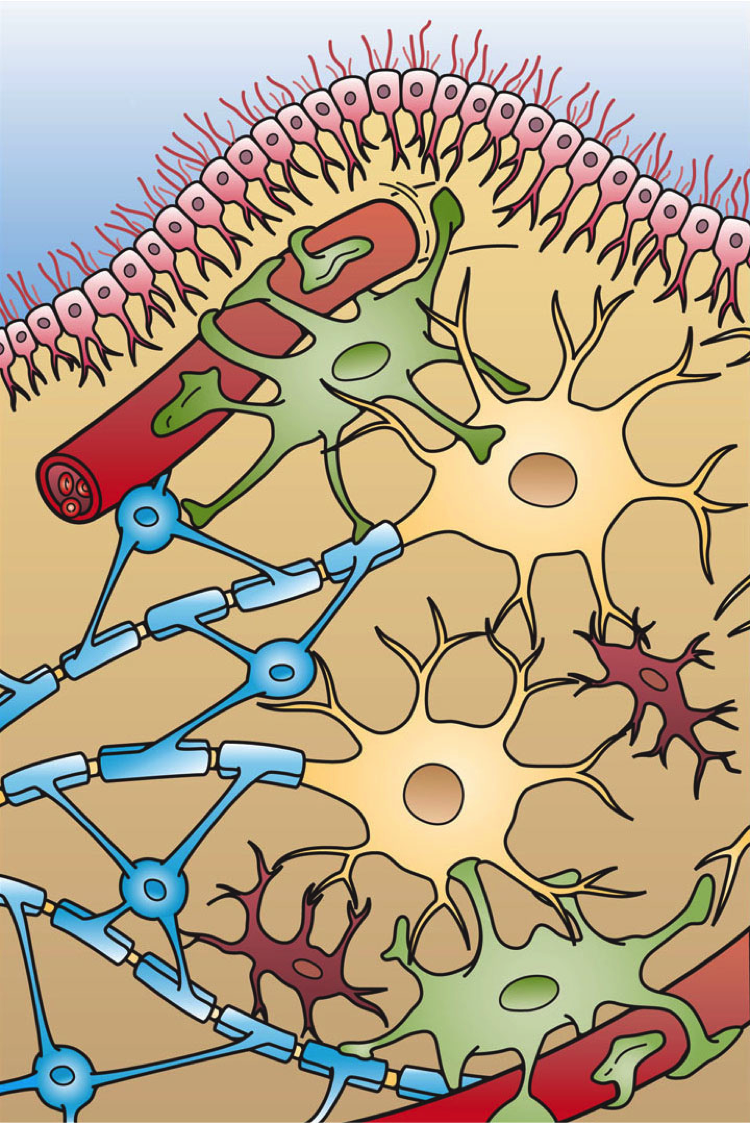
Different glial cells project cytoplasmic processes. In the brain, the processes of astrocytes form terminal endfeet, foot processes that help to form protective barriers in the brain. In the kidneys specialised cells called podocytes extend processes that terminate in podocyte foot processes that cover capillaries in the nephron. End-processes may also be known as vascular footplates, and in general may exhibit a pyramidal or finger-like morphology. Mural cells such as pericytes extend processes to wrap around capillaries.
Foot-like processes are also present in Müller glia (modified astrocytes of the retina), pancreatic stellate cells, dendritic cells, oligodendrocytes, and others. Microglia, which are notably smaller than macroglia, can also extend their end-processes to contact areas of capillaries that are devoid of astrocyte endfeet, and thereby contribute to the formation of the glia limitans.
Other cellular extensions that protrude from the cell membrane are known as membrane protrusions or cell protrusions, also cell appendages, such as flagella, and microvilli. Microtentacles are cell protrusions attached to free-floating cells, associated with the spread of some cancer cells.
In prokaryotes such protrusions are known as surface or cell-surface appendages and include flagella, pili, fimbriae, and nanowires. Some archaea possess very complex appendages known as hami.
The cytoplasmic processes of a neuron are the axons and dendrites differentiated from the precursor neuronal processes known as neurites. A dendritic spine is a membrane protrusion from a dendrite.
The processes of glial cells include contractile processes, and processes in astrocytes that terminate in foot processes known as endfeet.
The podocyte is a highly specialised epithelial cell in Bowman's capsule in the kidney. Primary processes of the podocytes form terminal foot processes. The podocyte foot processes wrap around the glomerular capillaries in the kidney to function in the filtration barrier.
Hub AI
Cellular extensions AI simulator
(@Cellular extensions_simulator)
Cellular extensions
Cellular extensions also known as cytoplasmic protrusions and cytoplasmic processes are those structures that project from different cells, in the body, or in other organisms. Many of the extensions are cytoplasmic protrusions such as the axon and dendrite of a neuron, known also as cytoplasmic processes.
Different glial cells project cytoplasmic processes. In the brain, the processes of astrocytes form terminal endfeet, foot processes that help to form protective barriers in the brain. In the kidneys specialised cells called podocytes extend processes that terminate in podocyte foot processes that cover capillaries in the nephron. End-processes may also be known as vascular footplates, and in general may exhibit a pyramidal or finger-like morphology. Mural cells such as pericytes extend processes to wrap around capillaries.
Foot-like processes are also present in Müller glia (modified astrocytes of the retina), pancreatic stellate cells, dendritic cells, oligodendrocytes, and others. Microglia, which are notably smaller than macroglia, can also extend their end-processes to contact areas of capillaries that are devoid of astrocyte endfeet, and thereby contribute to the formation of the glia limitans.
Other cellular extensions that protrude from the cell membrane are known as membrane protrusions or cell protrusions, also cell appendages, such as flagella, and microvilli. Microtentacles are cell protrusions attached to free-floating cells, associated with the spread of some cancer cells.
In prokaryotes such protrusions are known as surface or cell-surface appendages and include flagella, pili, fimbriae, and nanowires. Some archaea possess very complex appendages known as hami.
The cytoplasmic processes of a neuron are the axons and dendrites differentiated from the precursor neuronal processes known as neurites. A dendritic spine is a membrane protrusion from a dendrite.
The processes of glial cells include contractile processes, and processes in astrocytes that terminate in foot processes known as endfeet.
The podocyte is a highly specialised epithelial cell in Bowman's capsule in the kidney. Primary processes of the podocytes form terminal foot processes. The podocyte foot processes wrap around the glomerular capillaries in the kidney to function in the filtration barrier.