Hubbry Logo
MetLifeMetLifeMain
Open search
MetLife
Community hub
MetLife
logo
8 pages, 0 posts
0 subscribers
Be the first to start a discussion here.
MetLife
MetLife
from Wikipedia

MetLife, Inc. is the holding corporation for the Metropolitan Life Insurance Company (MLIC),[3] better known as MetLife, and its affiliates. MetLife is among the largest global providers of insurance, annuities, and employee benefit programs, with around 90 million customers in over 60 countries.[4][5] The firm was founded on March 24, 1868.[6] MetLife ranked No. 43 in the 2018 Fortune 500 list of the largest United States corporations by total revenue.[7]

Key Information

On January 6, 1915, MetLife completed the mutualization process, changing from a stock life insurance company owned by individuals to a mutual company operating without external shareholders and for the benefit of policyholders.[8] After 85 years as a mutual company, MetLife demutualized into a publicly traded company with an initial public offering in 2000.[9] Through its subsidiaries and affiliates, MetLife holds leading market positions in the United States, Japan, Latin America, Asia's Pacific region, Europe, and the Middle East.[10] MetLife serves 90 of the largest Fortune 500 companies.[11]

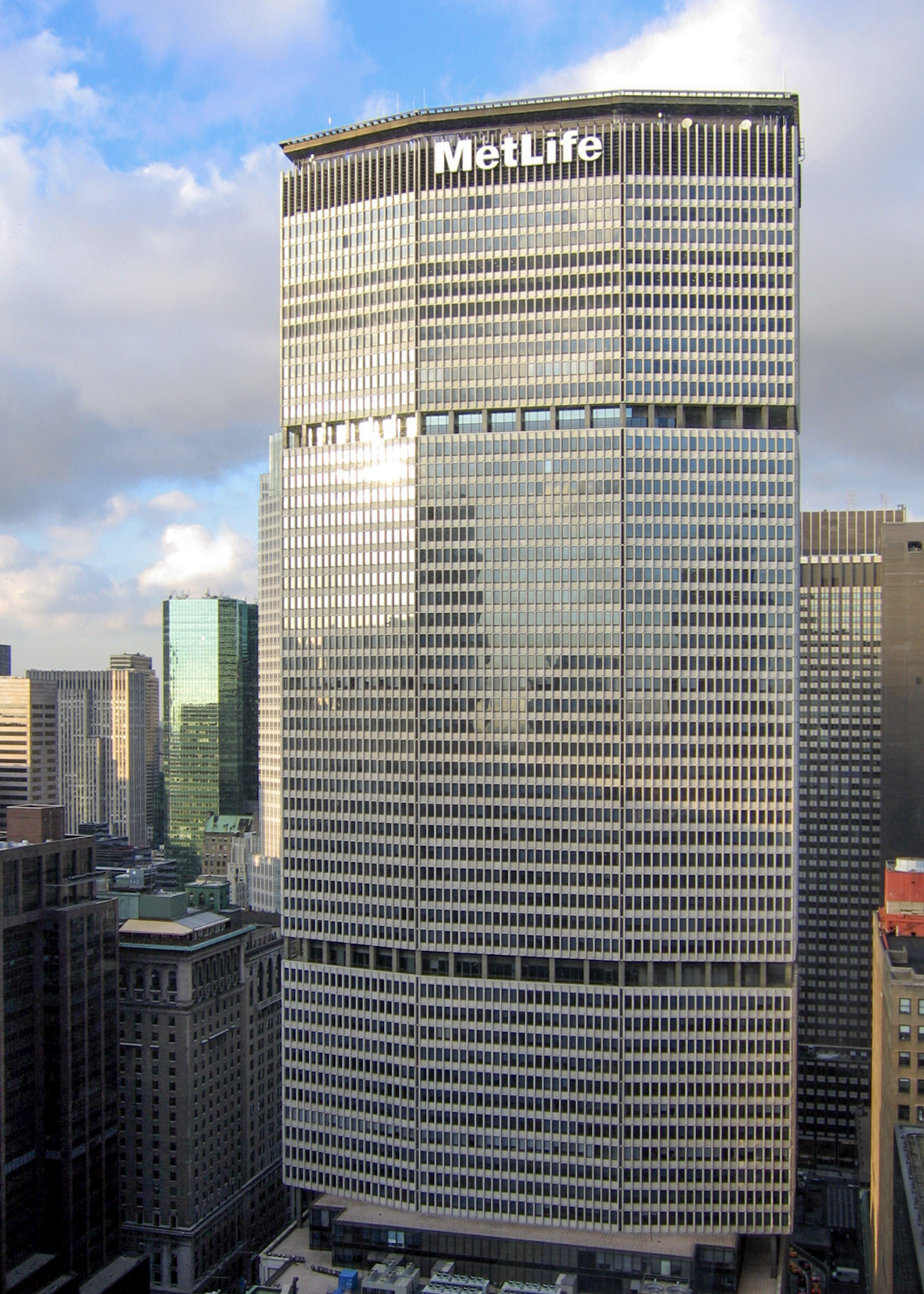
MetLife's head offices and boardroom are located at the MetLife Building at 200 Park Avenue in Midtown Manhattan and New York City which MetLife owned from 1981 to 2005; despite the sale, MetLife increased its leased footprint in the building beginning in 2015.[12][13]

In January 2016, MetLife announced that it would spin off its U.S. retail business, including individual life insurance and annuities for the retail market, in a separate company called Brighthouse Financial, which launched in March 2017.[14] The continuing MetLife company kept naming rights to MetLife Stadium in East Rutherford, New Jersey.[15]

History

[edit]

Early years

[edit]
Home office of the New England Mutual Life Insurance Co., in Copley Square, Boston, one of the predecessor companies of MetLife[16]

The predecessor company to MetLife began in 1863 when a group of New York City business leaders raised $100,000 (equivalent to $2,553,800 in 2024) to found the National Union Life and Limb Insurance Company headquartered on lower Broadway.[17] The company insured Civil War sailors and soldiers against disabilities due to wartime wounds, accidents, and sickness. Millions of "industrial" or workingman's policies were sold, costing five to ten cents a week, which were collected at the policyholder's home.[17] On March 24, 1868, it became known as Metropolitan Life Insurance Company and shifted its focus to the life insurance business.[18][19]

The Metropolitan Life Insurance Company Tower in Manhattan, which previously served as company headquarters, was featured in its advertising for many years.

The Chicago fire of 1871 that destroyed 2,000 acres and $200 million (equivalent to $5.25 billion in 2024) worth of property, severely affected the insurance companies, which were legally obligated but financially unable to cover losses.[20] Then, severe business depression that began with the Panic of 1873 forced the company to contract, until it reached its lowest point in the late 1870s.[17] After observing the insurance industry in Great Britain in 1879, MetLife President Joseph F. Knapp brought "industrial" or "workingmen's" insurance programs to the United States – insurance issued in small amounts on which premiums were collected weekly or monthly at the policyholder's home. By 1880, sales had exceeded a quarter million of such policies, resulting in nearly $1 million in revenue from premiums. In 1909, MetLife had become the nation's largest life insurer in the United States, as measured by life insurance in force (the total value of life insurance policies issued).[18][21]

In 1890, the Metropolitan Life Insurance Company Building was commissioned to serve as MetLife's home office on 23rd Street in Manhattan. The building was completed in stages through 1905. A clock tower was commissioned adjacent to the home office in 1907, and when completed two years later, the building was the world's tallest until 1913.[22] The home office complex, which came to include the later art deco Metropolitan Life North Building, remained the company's headquarters until 2005. For many years, an illustration of the Metropolitan Life Tower (with light emanating from the tip of its spire and the slogan, "The Light That Never Fails") featured prominently in MetLife's advertising.[23]

In 1905, a predecessor company, New England Life, lost a legal case, Pavesich v. New England Life Insurance Company, where they attempted to use an image of another person for promotion but this was ruled a breach of privacy and libelous: this case became a standardly cited case on privacy in US law.

By 1930, MetLife insured one of five men, women, and children in the United States and Canada.[24] During the 1930s, it also began to diversify its portfolio by reducing the percentage of individual mortgages in favor of public utility bonds, investments in government securities, and loans for commercial real estate.[24] The company financed the Empire State Building's construction in 1929 as well as provided capital for Rockefeller Center's construction in 1931. During World War II, MetLife placed more than 51 percent of its total assets in war bonds and was the largest single private contributor to the Allied cause.[24]

Postwar

[edit]
Company president Leroy Lincoln in 1947
Metropolitan Life logo, from 1970 to 1998
MetLife logo, from 1998 to 2016

During the post-war era, the company expanded its suburban presence, decentralized operations, and refocused its career agency system to serve all market segments. It also began to market group insurance products to employers and institutions. By 1979, operations were segmented into four primary businesses: group insurance, personal insurance, pensions, and investments.[24] In 1981 MetLife purchased the Pan Am Building from a group that included Pan American World Airways for the price of $400 million.[25][26] The building was subsequently renamed and the prominently displayed Pan Am logo was replaced with the MetLife logo.

De-mutualization and IPO

[edit]

In 2000, MetLife converted from a mutual insurance company operated for the benefit of its policyholders to a for-profit public company.[27] The de-mutualization process allowed MetLife to enter unrelated insurance businesses and increase executive compensation.

Policyholders received some stock in the new company in this process.[28] MetLife was accused of breaching federal securities laws by misrepresenting and omitting information in materials given to policyholders during this process, resulting in years of litigation ending with a $50 million settlement in 2009.[29]

Acquisitions, sales, and major deals

[edit]
  • 1992 – merged with United Mutual Life Insurance Company, the only African-American life insurer in New York, in 1992.[30]
  • 1992 – [31] acquired Executive Life's single premium deferred annuity business, which was worth approximately $1.2 billion. MetLife also acquired the firm's life insurance business, valued at about $260 million.[32]
  • 1995 – sold Century 21 to Cendant (known as Hospitality Franchise Systems at the time) while purchasing New England Mutual Life Insurance Company.[33]
  • 1997 – acquired Security First Group in 1997 for $377 million.[34][35]
  • 1999 – acquired Lincoln National Corporation's individual disability income unit.[36]
  • 1999 – bought out reinsurance provider GenAmerica Corporation for $1.2 billion, as well as its subsidiaries, Reinsurance Group of America and Conning Corporation.[37][38] That year, the company had grown to serve 7 million policyholders.[39]
  • 2000 – de-mutualization and IPO.[40][41] The initial public offering was valued at $6.5 billion, which was the largest IPO to that date in United States financial history.[40][41] MetLife policyholders were asked to choose a cash or stock stake. This IPO made MetLife the most widely owned stock in the United States, and it raised MetLife's value to over $4 billion.[42][43] By 2000, MetLife's reported number of policyholders had risen to 11 million,[43] and that year it had become the United States' number one life insurer, surpassing Prudential, according to The New York Times.[44]
  • 2000 – $470 million voice and data network management deal with AT&T Solutions.[45]
  • 2001 – acquired Grand Bank of Kingston, New Jersey, which was renamed MetLife Bank.[46][47]
  • 2001 – invested $1 billion in the United States stock market during 2001, immediately after the September 11 terrorist attacks.[48]
  • 2005 – acquired Citigroup’s Travelers Life & Annuity and all of Citigroup's international insurance businesses for $11.8 billion.[49][50] At the time of the deal, which was completed on July 1, 2005, the Travelers acquisition made MetLife the largest individual life insurer in North America based on sales.[51]
  • 2006 – opened joint-venture insurance company in Shanghai, in May 2006.[52][53]
  • 2006 – sold Peter Cooper Village, or Stuyvesant Town, the largest apartment complexes in New York City at the time, for $5.4 billion.[54][55] MetLife had developed the apartment complexes between 1945 and 1947, to house veterans returning home from serving in World War II.[56]
  • 2010 – bought American Life Insurance Company from AIG for US$15,500,000,000.[49]
  • 2011 – sold MetLife bank to GE Capital, exiting banking business.[57]
  • 2021 – Farmers Insurance Group acquired the MetLife Auto & Home business from MetLife, Inc.[citation needed]

Current era

[edit]

From 2004 to 2011, MetLife continued to hold its position as the largest life insurer in the United States.[58][59] The company had $2.5 trillion in policies written, $350 billion in assets under management, over 12 million customers in the United States, 8 million customers outside the United States, and a net income in 2003 of $2.2 billion.[59] That year, Barron's reported that 13 million American households owned at least one product from MetLife.[60]

MetLife named Robert H. Benmosche as chairman and CEO in July 1999. Benmosche occupied the position until 2006, when he was replaced by C. Robert Henrikson.[58][61][62]

The company's sales grew 11.5% between 2008 and 2009, despite the national recession.[63] In 2011, CEO Robert Henrikson was replaced by Steven A. Kandarian, who had overseen the company's "US$450,000,000,000 investment portfolio" as chief investment officer.[58] Henrikson remained the company's chairman to the end of 2011, at which point he reached the company's mandatory retirement age.[58]

In 2015, MetLife was ranked as number one on Fortune magazine's list of World's Most Admired Companies in the Insurance: Life and Health category.[64]

In the summer of 2017, MetLife plans to add a third office building of 255,000 square feet at its Cary, North Carolina Global Technology Campus, giving the company a total of 655,000 square feet at a location which has over 1,000 employees in such areas as engineering, software and technology. This plan was the result of North Carolina awarding the company $94 million in incentives in 2013 for creating over 2,600 jobs, half in Cary and half in Charlotte.[65]

"Too big to fail"

[edit]

In 2012, MetLife failed the Federal Reserve's (the Fed's) Comprehensive Capital Analysis and Review stress test, intended to predict the potential failure of the company in a recession. The Fed stated that the minimum total risk-based capital ratio should be 8% and it estimated MetLife's ratio at 6%. The company had requested approval for a US$2,000,000,000 share repurchase to prop up the stock price, along with an increased dividend.[66] Because MetLife owned MetLife Bank, it was subject to stricter financial regulation. To escape that level of regulation, MetLife announced the sale of its banking unit to GE Capital.[67][68] On November 2, 2012, MetLife said it was selling its US$70,000,000,000 mortgage servicing business to JPMorgan Chase for an undisclosed amount.[69] Both sales were part of its strategy to focus on the insurance side of its business.

The attempt to escape "too big to fail" regulation was not successful. In September 2014, the United States government observed the 2010 Dodd-Frank financial reform law by proposing the application of an official label to MetLife as "systemically important" to the American economy.[70] If implemented, MetLife would be subject to different sets of rules and regulations, with increased oversight from the Federal Reserve.[70][71] The company appealed this proposal in November 2014.[72] In December 2014, federal regulators decided that MetLife required the special regulations reserved for financial companies and organizations deemed "systemically important," or "too big to fail".[73] MetLife announced in January 2015 that it would file a lawsuit with the U.S. District Court for the District of Columbia to overturn the federal regulators' decision,[70] thus becoming the first nonbank to challenge such a decision.[74] Three other nonbank companies have been designated as "systemically important": AIG, General Electric and Prudential.[73][74] MetLife continued to litigate this issue as of 2015, with the US Department of Justice asking that their challenge be dismissed.[74]

Fines

[edit]

On August 7, 2012, it was announced that MetLife will pay $3.2 million in fines after the Federal Reserve charged it used unsafe and unsound practices in handling its mortgage servicing and foreclosure operations.[75]

In 2014, MetLife paid $23 million to settle multiple lawsuits over junk fax operations used to generate leads for life insurance sales.[76]

MetLife Bank took advantage of the FHA insurance program by knowingly turning a blind eye to mortgage loans that did not meet basic underwriting requirements, and stuck the FHA and taxpayers with the bill when those mortgages defaulted.

U.S. Attorney John Walsh

In 2015, MetLife Home Loans LLC paid $123.5 million to the United States Department of Justice to resolve allegations it knowingly made mortgages insured by the United States government that didn't meet federal underwriting requirements.[77]

Products and services

[edit]
MetLife Hall of Records, Yonkers, New York

As of 2010, MetLife had a "diverse product mix" which included insurance (home, car and life), variable life annuities and structured settlements, commercial mortgages and securities backed by commercial mortgages, and sovereign debt.[78]

Life insurance

[edit]

MetLife's individual life insurance products and services comprise term life insurance and several types of permanent life insurance, including whole life, universal life, and final expense whole life insurance.[79][80] These services vary in regards to the duration and amount of coverage available and whether a medical exam is required for coverage. The company also offers group life insurance, provided through employers, which consists of term life, permanent life, and accidental death and dismemberment coverage.[81][82] MetLife is the largest life insurer in the United States, based on life insurance in-force.[11][78]

Dental

[edit]

MetLife offers group dental benefit plans for individuals, employees, retirees and their families and provides dental plan administration for over 20 million people.[83][84] Plans include MetLife's Preferred Dentist Program (PPO) and the SafeGuard DHMO (available for both individuals and employees in CA, FL, TX, NJ and NY.). As of May 2010, MetLife's dental PPO network included over 135,000 participating dentist locations nationwide while the dental HMO network included more than 13,000 participating dentist locations in California, Florida and Texas.[85] MetLife also administers dental continuing education program for dentists and allied health care professionals, which are recognized by the American Dental Association (ADA) and the Academy of General Dentistry (AGD).[86]

Disability

[edit]

MetLife provides disability products for individuals as well as employee and association groups who receive them through their employer.[87][88] For individuals, the company's individual disability income insurance can replace a portion of lost income if an individual is unable to work due to sickness or injury.[89] MetLife offers several individual disability income policies, including MetLife Income Guard, OMNI Advantage, OMNI Essential, Business Overhead Expense, and Buy-Sell.[90] The policy options provided by the company vary in terms of eligibility and the provided coverage. For groups, MetLife offers short term disability insurance and long term disability insurance.[91] Short term disability insurance is structured to replace a portion of an individual's income during the initial weeks of a disabling illness or accident.[92] Long term disability Insurance serves to replace a portion of an individual's income during an extended period of a disabling illness or accident.[93][94] The company also maintains an absence management product which allows employers to track and manage both planned and unplanned employee absences. The product, which MetLife calls MetLife Total Absence Management, is structured for businesses with 1,000 or more employees.[95]

Annuities

[edit]

MetLife is among the largest providers of annuities in the world, recording $22.4 billion in sales during 2009.[96] MetLife offers annuities which consist of fixed annuities, variable annuities, deferred annuities and immediate annuities.[97] In 1921, MetLife was the first company to issue a group annuity contract.[98] More recently in 2004, it was the first insurer to introduce a longevity insurance product.[99] As of December 31, 2009, MetLife globally managed group annuity assets of $60 billion with $34 billion of transferred pension liabilities and provided benefit payments to over 600,000 annuitants per month.[100]

Pet insurance

[edit]

In 2019, MetLife acquired PetFirst Healthcare, renaming it to MetLife Pet Insurance Solutions.[101][102] The Pet Innovation Award named it "Pet Insurance of the Year" in 2023.[103]

Auto & Home

[edit]

MetLife Auto & Home is the brand name for MetLife's nine affiliate personal lines insurance companies.[104] Collectively these companies offer personal lines property and casualty insurance policies in all 50 states and the District of Columbia.[105] The flagship company in the MetLife Auto & Home group, Metropolitan Property and Casualty Insurance Company, was founded in 1972.[104]

It was the first national insurer in the United States to offer identity-theft resolution services at no extra premium and as of 2012 continues to do so today in most United States states.[106][107]

Other products

[edit]

MetLife's products also include critical illness insurance.[108] Financial services include fee-based financial planning, retirement planning, wealth management, 529 Plans, banking, and commercial and residential mortgages.[109] The company also provides retirement plans and other financial services to healthcare, education, and not-for-profit organizations.[110] The MetLife Center for Special Needs Planning is a group of planners which serve families and individuals with special needs.[111] In 2014, MetLife launched MetLife Defender, a digital identity theft protection product.[112]

Corporate structure

[edit]

As of 2010, MetLife was "organized into five segments: Insurance Products, Retirement Products," the US Business (including Auto & Home and Corporate Benefit Funding), and International.[87] The Insurance Products division was the largest unit, accounting for 53% of 2009 revenue.[78] By 2015, a division referred to as "Americas" had emerged.[113]

Corporate governance

[edit]

As of May 2019, MetLife's chief executive officer was Michel A. Khalaf and its non-executive chairman of the board was Glenn Hubbard.[114]

MetLife has a compensation committee which establishes remuneration for the company's senior executives, and emphasizes variable performance-based compensation over fixed pay rates.[113]

As of December 2023, the board of directors of MetLife included:[115][116]

  • Glenn Hubbard – Non-executive chairman
  • Michel A. Khalaf – CEO, president and director
  • John D. McCallion – CFO and EVP
  • Mark Alan Weinberger – Independent director
  • Bill Pappas – EVP, Global technology & operations

Subsidiary and affiliate companies

[edit]

MetLife subsidiaries and affiliates have included MetLife Investors, MetLife Bank, MetLife Securities, Metropolitan Property and Casualty Insurance Company and its subsidiaries, General American, MetLife Legal Plans, MetLife Resources, New England Financial, Walnut Street Securities, Inc., Safeguard Health Enterprises, Inc., and Tower Square Securities, Inc., Cigna.[117][118][119][120][121][122][123][124][125]

The subsidiary MetLife Insurance Company USA, as of 2015, headquartered in Charlotte, North Carolina, was formerly known as MetLife Insurance Company of Connecticut, and prior to this as Travelers Insurance Company.[126][127]

MetLife Bank was sold to GE Capital in 2013, and MetLife exited the banking business.[128]

Metlife in partnership with Tishman Realty & Construction co-owns the Walt Disney World Swan and Dolphin resort in Lake Buena Vista, Florida. The land on which the hotels are located on is owned by The Walt Disney Company and is leased to Metlife and Tishman (which owns the buildings) and operated by Marriott International as a Westin hotel.[129]

International presence

[edit]

Outside of the United States, MetLife operates in Latin America, Europe, Asia's Pacific region, and the Middle East, with leading market positions in Mexico, Japan, South Korea, Bangladesh and Chile.[10][130]

On March 8, 2010, MetLife announced its intent to purchase the international leader life-insurance business, American Life Insurance Company (Alico), from American International Group (AIG). MetLife, which completed the deal on November 1, 2010, paid approximately $7.2 billion in cash and $9.0 billion in MetLife equity and other securities.[131][132] The securities portion of the deal consisted of 78.2 million shares of MetLife common stock, 6.9 million shares of contingent convertible preferred stock and 40 million equity units.[133] The values of the common and preferred stock were based on the closing price of MetLife's common stock on October 29.[133] Upon completion of the purchase, MetLife became a leading competitor in Japan, the world's second-largest life insurance market, and moved into a top 5 market position in many high growth emerging markets in Central and Eastern Europe, such as Romania, the Middle East and Latin America.[133] The deal added 20 million customers to MetLife's 70 million and according to Barron's more than doubled the percentage of operating profits that MetLife gets abroad to 40%.[78]

In India MetLife has an affiliate company India Insurance Company Limited (MetLife) which has operated in India since 2001. This company has its headquarters in Bangalore and Gurgaon and was jointly owned by MetLife and a few local Indian financial companies. In 2012 an agreement was made with local Indian bank, the Punjab National Bank to establish a strategic alliance and for it to take a 30% share in MetLife India.[134] The state owned bank would in return sell MetLife insurance products in its branches

As of 2015, Julio Garcia-Villalon leads the Middle East & Africa regional business, which is headquartered in the Dubai International Financial Centre and has operated in the region since the 1950s.[135]

MetLife has been operating in Bangladesh since 1952.[136] It is currently the leading life insurer and has been since 1997.[137][130] MetLife Bangladesh is headquartered at the Motijheel Commercial Area, the main CBD of Dhaka.[138]

MetLife Foundation

[edit]

MetLife Foundation is MetLife's independent charitable and grant-awarding foundation. It was founded in 1976[139] and had provided over $650 million in grants by January 2015.[139] The foundation has partnered with and donated to a variety of organizations, including Habitat for Humanity since 2010[140] and the Martin Luther King, Jr. National Memorial Project Foundation since 2008.[141][142] In 2013, the MetLife Foundation announced a new focus on financial inclusion,[143] including educational programs on basic financial planning for disadvantaged children[144][145] and financial services aimed at low-income communities.[145][146][147] According to the OECD, MetLife Foundation's financing for 2019 development increased by 20% to US$14 million.[148]

Relationship with Peanuts

[edit]

MetLife's use of comic strip characters since the mid 1980s, according to chief marketing officer Esther Lee, was intended "to make our company more friendly and approachable during a time when insurance companies were seen as cold and distant."[149]

MetLife licensed Snoopy and other Peanuts characters for promotional purposes from the Iconix Brand Group, which owns the promotional rights to the works of Charles M. Schulz. In 2010, Iconix formed a joint venture with Schulz's heirs (as Charles Schulz himself died in 2000), buying out E. W. Scripps Co. and United Features Syndicate for $175 million. MetLife was reported to pay $12 million per year to Iconix for licensing rights.[150] Prior to the Iconix deal, MetLife had licensed the characters from other rights-holders.

The Peanuts-based campaign was developed by the advertising agency Young & Rubicam. MetLife also has used Foote Cone & Belding to develop Peanuts-related promotions.[151][152]

MetLife announced the end of its 31-year relationship with Peanuts on October 20, 2016. This decision resulted from the company's sale of its life insurance business to concentrate on corporate clients.[149] MetLife's new blue and green logo was criticized for being a knock-off of comparison website Diffen.[153][154]

MetLife brought Snoopy back in 2023, as mascot for the new MetLife Pet Insurance division.[155]

Blimp and sports sponsorship

[edit]
The Metlife 'Snoopy Two' blimp

The MetLife blimp program began in 1987 with the "Snoopy 1" airship and, in 1994, expanded to include the "Snoopy 2" airship.[156] The program provided aerial coverage to over 80 major sporting events every year and became the official aerial coverage provider of the PGA Tour.[157] "Snoopy 1" and "Snoopy 2" also provided overhead television coverage for the NFL, CBS College Football, the LPGA, the NBA Finals, Copa Chile, the Preakness Stakes, and the Kentucky Derby.[157][158] When MetLife ended their ‘’Peanuts’’ branding, they also brought the blimp program to a close.[159]

[160][161] On August 23, 2011, MetLife agreed to a 25-year sponsorship deal to rename New Meadowlands Stadium in East Rutherford, New Jersey, home of the NFL's New York Giants and New York Jets to MetLife Stadium.[162] On January 16, 2017, MetLife agreed to a five-year sponsorship to rename Seibu Dome in Tokorozawa, Saitama Prefecture in Japan as the MetLife Dome.

From 2014 to 2017, MetLife was the title sponsor of the BWF Super Series badminton tournament.[163]

Weight and longevity data

[edit]

In 1959, The Metropolitan Life Insurance Company (as it was known at the time) released tables of the best weight for each height for longevity, based on their collected insurance data. These tables showed what were characterized as “desirable weights”. In 1983, the company released tables showing the “ideal” weights for greatest longevity; this information was based on data collected in the Build Study of 1979 collected by the Society of Actuaries. This data followed patients for 18 years (1954–1972) and was collected from 25 life insurance companies in Canada and the United States, representing 4.2 million people. These “ideal” weights were higher than the prior “desirable” weights, this was attributed to an increase in muscle mass due to improved fitness levels among the population.

This study is still the largest available pool of data for this purpose. It was noticed that the average weights in the population are higher than the ideal weights for survival. The ‘’’Metropolitan Tables’’’ included ‘’small’’, ‘’medium’’ and ‘’large’’ frames, based on elbow-girth measured using calipers, as the elbows do not develop adipose tissue. They presented weight ranges for height, sex and body frame (again associated with the lowest mortality) The midpoint of the ideal weight for the medium frames for each height was selected as the “ideal” weight used for calculations of “excess weight” (initial weight minus ideal weight). This led to a formula to calculate the ideal weight used by bariatric surgeons, but it had lost considerable accuracy by 2007, again due to improvements in medical care and in public health.[164]

See also

[edit]

References

[edit]

Archives and records

[edit]
  • Business data for MetLife:
Revisions and contributorsEdit on WikipediaRead on Wikipedia
from Grokipedia
MetLife, Inc. is a multinational financial services company that provides insurance, annuities, employee benefits, and asset management services to individual, group, and institutional clients worldwide. Founded in 1868 as the Metropolitan Life Insurance Company in New York City to offer affordable life insurance policies to industrial workers, it originated from efforts to insure Civil War veterans and evolved into a major provider targeting the working class with weekly premium plans. Headquartered in the MetLife Building in Manhattan, the company demutualized in 2000, enabling public trading on the New York Stock Exchange under the ticker MET, and has since expanded through acquisitions and organic growth to operate in more than 40 markets across the Americas, Asia, Europe, and the Middle East. As of the first quarter of 2025, MetLife managed total of $617 billion, employed approximately 45,000 people, and reported serving millions of customers globally, maintaining leading market positions in key regions such as the and . The firm has been recognized for innovations like its pioneering use of industrial and its iconic advertising campaigns, including the mascot, while navigating significant events such as the through strategic asset sales and regulatory changes.

Overview

Founding and Core Mission

The Metropolitan Life Insurance Company was founded on March 24, 1868, in as a stock provider targeting working-class Americans previously excluded from traditional coverage. Its immediate predecessor, the National Union Life and Limb Insurance Company, originated in 1863 amid the Civil War to supply accident and disability policies to soldiers and civilians, but reorganized under new leadership to emphasize by 1868. This pivot addressed the era's industrial boom, where rapid urbanization and factory work heightened families' need for affordable death benefits to cover burial costs and support dependents. At inception, MetLife's core mission centered on delivering financial protection through accessible, low-premium ordinary policies, contrasting with elite-focused insurers by prioritizing mass-market affordability for laborers and immigrants. Policies were structured for weekly payments—often as little as five cents—collected directly from homes by agents, a innovative distribution method borrowed from emerging British industrial practices and adapted to U.S. wage-earner realities. This approach enabled rapid policy issuance, with the company writing hundreds of policies daily by the 1870s, underscoring a commitment to practical risk mitigation over speculative investment. The founding ethos emphasized policyholder security as a bulwark against economic , evolving to integrate welfare elements like and visiting nurses by the early , though rooted in the 1868 mandate for straightforward protection against life's uncertainties. Unlike mutual societies limited to members, MetLife's structure initially allowed broader capital access for expansion, aligning with its goal of scaling coverage to millions without compromising .

Current Operations and Market Leadership

MetLife, Inc. functions as a multinational financial services corporation specializing in life insurance, annuities, retirement products, and group benefits, with operations structured across five primary segments: U.S., Asia, Latin America, Europe, the Middle East and Africa (EMEA), and MetLife Holdings. The U.S. segment encompasses individual and group life insurance, dental, disability, accident and health coverage, as well as annuities and retirement services offered through employer-sponsored plans. International segments, including Asia and Latin America, emphasize life insurance, savings products, and credit life coverage, while EMEA focuses on similar offerings adapted to local regulations and consumer needs; MetLife Holdings manages legacy run-off operations from prior acquisitions, such as variable annuities and structured settlements. The company maintains a global footprint, serving customers in over 40 markets as of mid-2025, with a strategic emphasis on high-growth regions like and to offset mature U.S. market dynamics. In the second quarter of 2025, MetLife generated premiums, fees, and other revenues of $12.7 billion, reflecting a 6% decline year-over-year amid unfavorable in certain lines, though adjusted earnings reached $1.4 billion, supported by strong sales momentum in international operations. For the full year 2024, total assets exceeded $700 billion, positioning MetLife as one of the largest U.S. insurers by asset base, with premiums, fees, and other revenues totaling approximately $56 billion. In terms of market leadership, MetLife holds the top position as the largest life insurer in Latin America by gross written premiums, commanding leading shares in Mexico and Chile based on 2023 data extended into recent periods. In the U.S. life insurance sector, it captured a 6.35% market share in 2024, ranking second overall behind Northwestern Mutual. Globally, the firm sustains competitive edges in group benefits and retirement solutions, leveraging its scale for cost efficiencies and product innovation, though it faces pressures from rising interest rates and competitive pricing in individual life markets.

Historical Development

Inception and Early Growth (1863–World War II)

The origins of MetLife trace to 1863, when the National Union Life and Limb Insurance Company was founded by a group of businessmen with $100,000 in capital to insure Union soldiers and sailors against wartime death and dismemberment. This entity initially focused on accident and disability coverage amid the Civil War, but faced challenges including high claims and operational difficulties. In 1865, it was renamed the National Life Insurance Company before undergoing reorganization. On March 24, 1868, the company relaunched as the Metropolitan Life Insurance Company, pivoting to for working-class Americans with an emphasis on affordability. It adopted the industrial model pioneered in Britain by companies like Prudential, offering low-face-value policies—typically $100 to $500—with weekly premiums as low as 5 cents, collected directly from policyholders' homes by a network of agents. This approach targeted urban immigrants, factory workers, and families previously underserved by traditional insurers requiring larger sums and annual payments, enabling rapid penetration into ethnic enclaves in New York and beyond. By emphasizing home-service collections, Metropolitan minimized lapses and built trust through personal interaction, distinguishing it from competitors. Under presidents like Frederick A. Fitzpatrick and later John R. Hegeman, the company expanded aggressively in the and , growing its agent force and policy issuance. By 1891, Metropolitan held over $250 million in industrial in force, surpassing rivals and establishing dominance in the sector. This era saw diversification into ordinary life policies for middle-class customers, alongside investments in conservative assets like bonds and mortgages to ensure stability. The completion of the 50-story Metropolitan Life Tower in 1909 at One Madison Avenue symbolized its ascent, replacing an outgrown and serving as a landmark of financial prowess with its illuminated clock faces visible across . In , Metropolitan mutualized, transitioning ownership to policyholders and aligning incentives with long-term security over shareholder profits. Under Haley Fiske's from , the firm innovated in actuarial practices and initiatives, such as tuberculosis education campaigns that reduced mortality claims among policyholders. Through and the , it sustained expansion, reaching millions of policyholders by leveraging in administration. The tested resilience, but conservative reserving and diversified investments limited losses, positioning Metropolitan as the world's largest life insurer by assets entering the . During early preparations, the company committed significant assets to war bonds, reflecting its role in national .

Postwar Expansion and Product Innovation

In the immediate , Metropolitan Life Insurance Company (MetLife) demonstrated its operational scale by processing substantial claims for policyholders lost in the conflict, disbursing $42.1 million across 51,956 death claims by March 1946. This payout underscored the company's extensive reach among working-class and military families, built on its earlier emphasis on affordable . To capitalize on postwar economic recovery and address acute shortages for returning veterans, MetLife embarked on major real estate developments in , including the complex, where construction began in the mid-1940s and the first tenants—two veterans and their families—moved in on August 1, 1947. This project, spanning over 80 acres and comprising thousands of middle-income apartments, exemplified insurers' shift toward large-scale urban as an investment strategy to deploy surplus capital while supporting national reconstruction efforts. Throughout the and , MetLife sustained its dominance as the ' largest life insurer by insurance in force, retaining leadership until when Prudential overtook it in total assets, though MetLife held the top spot in policies until 1974. Expansion involved diversified investments, including additional housing like the Riverton complex in and, following urban unrest, a $322 million commitment to inner-city projects aimed at stabilizing communities through affordable units. These initiatives reflected a strategic pivot from conservative bond-heavy portfolios to and equities, including initial purchases of common stocks in 1968, amid rising inflation and policyholder demands for higher yields. On the product front, MetLife advanced by becoming the first major U.S. life insurer to deploy a large-scale computer system in 1954, automating policy administration and claims processing to handle surging postwar enrollments. This technological adoption supported growth in group benefits and ordinary life policies, adapting to demographic shifts like and rising white-collar . By , the company introduced individual variable annuities, linking returns to market performance and offering policyholders flexibility amid evolving needs—a departure from fixed-return guarantees dominant in earlier decades. These innovations positioned MetLife to navigate competitive pressures from mutual rivals while expanding beyond traditional industrial insurance toward diversified financial protection.

Demutualization, IPO, and Corporate Transformation (2000)

In 1999, Metropolitan Life Insurance Company, operating as a mutual insurer owned by its policyholders, announced plans to demutualize in order to convert into a stock life insurance company, enabling access to public capital markets for expansion and acquisitions while distributing ownership interests to eligible policyholders. The demutualization plan, filed with the New York State Insurance Department, proposed allocating 100% of the new holding company's stock to eligible policyholders based on factors including policy value and duration, with no cash option for most participants. This restructuring addressed competitive pressures in the insurance industry, where mutual structures limited equity financing compared to stock companies. The process culminated on April 7, 2000, when Metropolitan Life completed , establishing MetLife, Inc. as the new public and making Metropolitan Life Insurance Company its wholly owned . Prior to full distribution, MetLife, Inc. conducted an (IPO) on April 5, 2000, selling 202 million shares at $14.25 per share, raising $2.88 billion—below the initial $6.1 billion target due to market conditions—making it one of the largest IPOs at the time. Eligible policyholders, numbering around 9 million including 150,000 in , received approximately 494 million shares in exchange for extinguishing their mutual membership interests, positioning MetLife as having one of the widest shareholder bases globally. The transformation shifted MetLife from a policyholder-owned entity focused on surplus distribution to a shareholder-driven corporation accountable to public markets, facilitating strategies like share repurchases and mergers. Post-IPO, MetLife's stock price rose significantly, tripling between April 2000 and 2001, with the company repurchasing shares at prices ranging from $20 to $35. However, the process faced legal challenges from policyholders alleging inadequate disclosure of voting rights' value and unfair allocation formulas in demutualization materials, leading to class-action litigation resolved in subsequent years. This conversion aligned MetLife with industry trends, as peers like Prudential had similarly restructured, enhancing operational flexibility amid consolidating markets.

Major Acquisitions, Divestitures, and Strategic Evolutions

In 2005, MetLife acquired Travelers Life & from for approximately $11.5 billion in cash and stock, along with substantially all of 's international insurance operations, significantly expanding its U.S. and portfolios. The deal, completed on July 1, 2005, following regulatory approvals, integrated Travelers' operations into MetLife's structure, boosting its market share in variable annuities and enhancing distribution capabilities. MetLife's largest acquisition occurred in 2010 with the purchase of American Life Insurance Company (ALICO) from AIG for $16.2 billion, comprising $7.2 billion in cash and the remainder in stock and equity units. This transaction, announced in March 2010 and closed in November, established MetLife's presence in 47 countries, doubling the proportion of its operating earnings from outside the U.S. to about 40 percent and providing access to high-growth Asian markets. Key divestitures include the 2008 tax-free split-off of MetLife's stake in (RGA), allowing shareholders to exchange MetLife shares for RGA stock and streamlining its reinsurance exposure. In 2017, MetLife spun off its U.S. retail and businesses into , Inc., via an and subsequent distribution, enabling a sharper focus on group benefits, corporate solutions, and international operations amid rising capital requirements under regulatory changes like . Further portfolio optimization involved selling the MetLife Auto & Home business to Farmers Insurance Group (a Zurich subsidiary) in 2021 for an enterprise value of about $3.9 billion, exiting property-casualty lines to concentrate on core life and group insurance amid competitive pressures in personal lines. That year, MetLife also divested a portion of its European direct life insurance and pension business to NN Group for $740 million, reducing exposure to lower-margin retail segments in mature markets. Recent reinsurance transactions reflect strategic risk management: In 2023, MetLife completed a $19.2 billion transfer deal and participated in a $29.2 billion life and agreement with partners including KKR, freeing up capital estimated at over $3.2 billion from one transaction alone. In 2025, it $10 billion in U.S. retail variable annuities and riders to a Talcott Financial Group subsidiary, alongside annuities via Chariot , aligning with efforts to de-risk balance sheets and return capital to shareholders. Post-acquisition integrations prompted organizational shifts, such as the 2011 restructuring into U.S., , and EMEA/ regions following ALICO, to better manage global scale and localize strategies. In December 2024, MetLife launched its "" five-year strategy, succeeding the "Next Horizon" plan, targeting double-digit adjusted growth, 15-17% , and $25 billion in through emphasis on group benefits, retirement solutions, and high-growth regions like and , while committing to progressive dividends and $10 billion in share repurchases. This prioritizes and resilient across economic cycles, informed by prior divestitures that reduced volatility in legacy products.

Contemporary Era and Recent Milestones (2010–2025)

In 2010, MetLife expanded its global footprint through the acquisition of American Life Insurance Company (Alico) from for $15.5 billion, bolstering its operations in , , and the with approximately 26 million policyholders. This deal, completed amid AIG's post-financial restructuring, positioned MetLife as one of the largest life insurers outside the U.S. by assets. To concentrate on core lines, MetLife sold its U.S. retail deposit business—encompassing $7.5 billion in deposits from online savings, certificates of deposit, and accounts—to in December 2011, with the transaction finalizing in January 2013. The divestiture shed banking activities acquired during earlier expansions, avoiding heightened regulatory scrutiny under post-crisis rules like the . Regulatory challenges intensified in 2013 when the designated MetLife a non-bank (SIFI), subjecting it to stricter oversight akin to banks. MetLife contested this in federal court in January 2015, arguing the designation lacked sufficient evidence of . In March 2016, the U.S. District Court ruled the process arbitrary and capricious, rescinding the status; the government appealed but ultimately withdrew the challenge in 2018, affirming MetLife's position. Streamlining followed, with MetLife spinning off its U.S. retail and annuities segment—managing $300 billion in assets—as , Inc., on August 7, 2017, via a tax-free distribution to shareholders. This separation, approved by the board in 2016, enabled MetLife to prioritize group benefits, corporate pensions, and international growth while reducing capital strain from volatile individual products. In December 2020, it further divested its U.S. property and casualty unit to for $3.9 billion in cash, exiting auto and homeowners coverage to sharpen focus on life, , and . Into the 2020s, MetLife accelerated expansion in amid rising demand for institutional alternatives. In July 2024, MetLife closed its $1.2 billion Partners II fund, acquiring a $860 million portfolio to diversify general account investments. On December 23, 2024, it agreed to purchase —a firm overseeing $100 billion in assets—from for up to $1.2 billion ($800 million cash at closing, plus contingent payments tied to 2025 performance), excluding and joint ventures, with closure anticipated in 2025. In January 2025, MetLife further acquired Mesirow's high-yield, bank loan, strategic , and small-cap equity teams, managing $6 billion, to enhance active strategies. On December 12, 2024, at its Investor Day, MetLife launched the "" strategy, succeeding a prior five-year plan and emphasizing all-weather performance through growth in (especially ), , U.S. group benefits, and retirement solutions, with targets including 15-17% and compounded earnings growth. This framework leverages MetLife's scale—serving over 90 million customers across 40+ countries—to deliver via dividends, buybacks, and operational efficiencies amid economic volatility.

Business Operations

Life and Health Insurance Products

MetLife provides a variety of life insurance products tailored for both individual and group markets, emphasizing protection against premature death and financial security for beneficiaries. Individual offerings include term life insurance, which covers a specified period such as 10, 20, or 30 years with level premiums and no cash value accumulation, designed for temporary needs like mortgage protection or family support during working years. Whole life insurance, a permanent option, builds cash value over time through fixed premiums and guarantees lifelong coverage, allowing policyholders to borrow against or withdraw from the accumulated value. Universal life and variable universal life policies offer flexibility in premium payments and death benefits, with the latter tying cash value growth to investment performance in sub-accounts, introducing market risk but potential for higher returns. In the group sector, MetLife's solutions integrate with employer-sponsored benefits, including basic and supplemental coverage, often at competitive group rates without medical for initial amounts. Permanent group life options, such as group universal life and group variable universal life, enable employees to purchase portable coverage that accrues , facilitating or wealth transfer. and dismemberment (AD&D) riders complement core life policies by providing additional payouts for deaths or severe injuries resulting from accidents, excluding common exclusions like illness or . MetLife's health insurance products focus on supplemental coverage to bridge gaps in primary medical plans, rather than comprehensive , targeting out-of-pocket expenses from specific events. Accident insurance reimburses fixed benefits for injuries from covered accidents, such as fractures or emergency room visits, independent of other . Critical illness insurance delivers a lump-sum payment upon diagnosis of conditions like heart attack, , or cancer, enabling policyholders to cover non-medical costs during recovery. Hospital indemnity plans pay daily cash benefits for hospital confinements, surgeries, or intensive care, regardless of medical plan reimbursements, to offset deductibles or lost income. Cancer insurance, a specialized variant, offers benefits for treatment, diagnostics, and transportation related to cancer diagnoses, with options for both individual and group enrollment. These products are commonly offered as voluntary benefits in group settings, allowing customization based on employee demographics and employer priorities.

Retirement and Annuity Solutions

MetLife's Retirement and Income Solutions division specializes in products designed to deliver secure, predictable income during retirement, primarily through annuities and pension risk transfer (PRT) services. These offerings target both individual retirees and employers managing defined benefit (DB) or defined contribution (DC) plans, emphasizing guarantees against longevity risk and market volatility. Annuities form the core, providing fixed or variable income streams, while PRT enables plan sponsors to transfer pension obligations to the insurer, ensuring benefit payments without ongoing sponsor liability. Immediate annuities convert a from savings into guaranteed lifetime payments, functioning as a fixed "paycheck" that begins shortly after purchase and persists regardless of lifespan or performance. Deferred annuities, by contrast, allow purchase today with deferred to a future date, often age 80–85, offering higher potential payouts due to delayed commencement while locking in current rates. Both types prioritize essential expense coverage, with MetLife's institutional annuities backed by over of and designed for integration into DC plans to supplement withdrawals. Retirees with such annuities report feeling financially better off at a 96% rate, compared to risks of depleting assets where one in three exhaust within five years. Variable annuities, including flexible premium deferred options like the MetLife Retirement Account Annuity, introduce components where returns tie to underlying funds, subject to market risks but with potential for growth alongside death benefits or riders. Fixed annuities guarantee principal and at declared rates, appealing for capital preservation. Complementary value products optimize risk-return in portfolios, such as target-date funds, focusing on principal with competitive yields over equivalents. In PRT, MetLife assumes DB pension liabilities via group annuities, a practice dating to with cumulative expertise in large-scale transactions, including a $16 billion deal with . The firm completed $2.2 billion in PRT volume through August 2025, amid industry totals nearing $52 billion for 2024 and projections exceeding $100 billion by 2030. This de-risking supports retiree security by insulating benefits from sponsor or investment shortfalls, with 94% of surveyed sponsors planning full divestiture within five years.

Group Benefits and Employee Programs

MetLife provides employers with a suite of group benefits designed to offer financial protection and support to employees, including , , dental, and vision insurance. These core offerings help mitigate risks associated with illness, , or , enabling businesses to attract and retain talent through comprehensive coverage. Group from MetLife includes basic for employees, supplemental options for increased coverage, and dependent life benefits, often integrated with an (EAP) that delivers confidential counseling for behavioral, health, and life challenges. This EAP provides professional guidance to address personal or work-related issues, enhancing employee resilience without additional cost in many plans. Disability insurance encompasses short-term and long-term policies that replace a portion of income during recovery from acute or chronic conditions, such as musculoskeletal disorders, back problems, or issues like depression, alongside absence management services to coordinate leaves and returns to work. Dental benefits cover routine preventive care, restorative procedures, and , promoting oral health to reduce broader medical costs. Vision plans reimburse for eye exams, prescription lenses, frames, and contact fittings, with discounts on elective procedures like . Voluntary benefits allow employees to elect supplemental coverage—such as additional accident, critical illness, or legal services—at group rates, fully funded by participants to customize protection without employer expense. These programs, including group legal plans for or family matters, extend beyond core benefits to address diverse needs like auto/ discounts or wellness support.

Property, Casualty, and Specialized Offerings

MetLife's property and casualty operations historically centered on personal lines insurance, including auto, homeowners, , renters, and policies, underwritten by its Metropolitan Property and Casualty Insurance Company and affiliates such as Economy Fire & Casualty Company. These products emphasized customizable coverage for vehicles, residences, and liability protection, often bundled for multi-policy discounts. In April 2021, MetLife divested this unit to Farmers Group, Inc., a subsidiary, for approximately $3.9 billion, shifting focus to core life, , and group benefits segments amid regulatory pressures and strategic reprioritization. Post-sale, MetLife ceased direct of and casualty risks but maintains an program partnering with Farmers to deliver discounted auto and to employer-sponsored groups, featuring automated claims processing, multi-vehicle savings, and replacement cost options for homes. This arrangement provides eligible participants with access to coverage without MetLife assuming liability. Complementing these facilitated P&C options, MetLife's specialized offerings include supplemental accident and health products designed to address gaps in primary coverage. reimburses eligible medical expenses, therapy, and lost income from covered injuries, with benefits payable directly to policyholders. Critical illness insurance delivers lump-sum payments upon diagnosis of conditions like heart attack or stroke, while hospital indemnity covers daily inpatient benefits, and specified cancer insurance funds treatments excluding routine care. These voluntary products, often integrated into group benefits, emphasize cash indemnification over coordination with other insurances. MetLife further extends specialized protection via pet insurance, administered through MetLife Pet Insurance Services LLC, which covers up to 90% of veterinary bills for accidents, illnesses, hereditary conditions, and optional wellness exams for dogs, cats, and select exotics, with no upper age limits and pre-existing condition waivers after 12 months symptom-free. Recognized as "Pet Insurance of the Year" for 2025 by independent evaluators, these plans feature flexible deductibles starting at $100 and reimbursement levels from 70-90%, averaging $51 monthly for dogs and $23 for cats based on breed and location factors. Additional niche products encompass group legal plans offering attorney access for , , and consumer issues, and protection with monitoring, resolution services, and up to $5 million in coverage against financial losses. These offerings target non-traditional risks, prioritizing portability and integration with employer programs over broad-market scale.

Corporate Organization

Governance and Executive Leadership

MetLife, Inc. maintains a corporate governance framework emphasizing board independence, risk oversight, and ethical conduct, as outlined in its Guidelines, which require a of the board to consist of . The board comprises 12 members as of the 2025 , including non-executive Chairman R. Glenn Hubbard, with committees such as , Compensation, and Corporate Responsibility, Investment, and Risk responsible for key oversight functions including financial reporting, , and . In February 2025, the board elected Christian Mumenthaler, former Group CEO of , as an effective May 1, 2025, to enhance strategic expertise in and global markets. Executive leadership is headed by President and Michel A. Khalaf, who has served in the role since May 2019 and oversees the company's global operations, strategy, and performance. Key executives include Executive Vice President and John D. McCallion, responsible for financial planning, , and MetLife since April 2020; Executive Vice President and Head of International since July 2024; and regional presidents such as Eric Clurfain for and Nuria Garcia for Europe, Middle East, and Africa. In July 2025, Adrienne O'Neill was appointed Executive Vice President and Chief Accounting Officer, bringing expertise in financial controls and reporting from prior roles at global financial institutions. The board's structure supports a "three lines of defense" model, integrating business unit accountability, independent risk functions, and oversight to align with regulatory requirements and interests. Compensation practices, approved by the Compensation Committee, tie executive pay to metrics like adjusted earnings and total return, with 2024 disclosures showing alignment through performance-based equity awards. and diversity considerations are embedded in , though board composition reflects a mix of financial, legal, and industry backgrounds without mandated quotas.

Key Subsidiaries and Affiliates

MetLife, Inc. functions as the parent , with its and delivered primarily through wholly owned organized by region and product line. The principal U.S. operating is Metropolitan Life Insurance Company, a New York-based entity established in 1868 that underwrites individual and group , annuities, and income policies, managing over $600 billion in statutory reserves as of December 31, 2024. Complementary U.S. include MetLife Insurance Company USA, focused on group benefits and voluntary employee programs, and General American Life Insurance Company, which specializes in retirement and income annuities following its acquisition in 2004. Internationally, MetLife operates via dedicated subsidiaries tailored to local regulations and markets. In , MetLife Nippon Life Insurance Co., Inc., a formed in 2010 with Insurance Company, holds a leading position in Japan's individual life insurance sector, serving over 6 million policyholders as of 2024. In , subsidiaries such as MetLife México, S.A. de C.V. and MetLife provide life, health, and savings products, contributing to the region's growth with premiums exceeding $2 billion in 2024. European and Middle Eastern operations are supported by affiliates like MetLife Europe d.a.c. for and MetLife Limited in the UK for and products. Affiliates extend to specialized functions, including MetLife Investment Management, LLC (MLIM), which oversees approximately $593 billion in as of December 31, 2024, primarily for MetLife subsidiaries but also external clients through separate accounts and funds. MetLife Reinsurance Company Ltd., based , handles global for life and health risks, enhancing capital efficiency across the group. Distribution affiliates such as MetLife Securities Inc. and MetLife Insurance Brokerage, Inc. facilitate sales of variable annuities, mutual funds, and advisory services in the U.S. These entities collectively underpin MetLife's diversified streams, with subsidiaries generating the bulk of premiums, fees, and income reported in 2024 financials.

Investment Management Arm

MetLife Investment Management (MIM), the institutional asset management division of MetLife, Inc., oversees investments primarily for the company's general account while also serving third-party institutional clients, including pension funds, endowments, and sovereign wealth funds. Established as an extension of MetLife's longstanding investment operations dating back over 150 years, MIM specializes in fixed income, private credit, real estate, and equity strategies, leveraging the parent company's scale to originate and manage assets across public and private markets. As of June 30, 2025, MIM reported total assets under management of $624.3 billion, encompassing both MetLife's internal portfolios and external mandates. MIM's capabilities form a core pillar, with a focus on multi-sector strategies that blend investment-grade corporates, high-yield bonds, and structured credit to optimize risk-adjusted returns, benchmarked against indices like the Bloomberg U.S. Aggregate Bond Index. In private markets, the division has expanded aggressively, originating $21.6 billion in private transactions in 2024 alone, including and debt, which supports MetLife's liability matching needs while offering tailored solutions to clients seeking illiquidity premiums. investments, managed through dedicated financing solutions, include a commercial portfolio with a gross of $102.0 billion as of recent reporting, covering , industrial, and agricultural properties via loans and equity stakes. Recent strategic moves underscore MIM's growth ambitions, including the December 2024 agreement to acquire , which would add approximately $100 billion in , primarily in equities and multi-asset strategies, pending regulatory approval. Additionally, MIM closed a $1.2 billion partners fund in July 2024 through a managed transaction, acquiring a diversified portfolio of nearly 50 global co-investments to enhance private capital offerings. These initiatives reflect MIM's emphasis on private assets amid rising demand from insurers and institutions, though performance remains tied to broader market cycles and credit conditions. Leadership, headed by President Brian Funk, prioritizes sustainability integration and global origination, with offices supporting operations in the U.S., , and Asia.

Global Footprint

Presence in Core Markets

MetLife maintains its strongest operational footprint , its location and largest revenue generator, where it reported premiums written of $30.46 billion in 2024. The U.S. segment encompasses Group Benefits, accounting for 25% of overall operations through employer-sponsored life, dental, , and serving millions of participants, and and Solutions, representing 23% via annuities and risk transfers. These divisions leverage MetLife's scale as one of the largest life insurers by assets, focusing on individual and institutional clients amid a competitive domestic market dominated by traditional and variable annuities. In Japan, MetLife's second-largest market, operations span life insurance, savings products, and group benefits, bolstered by historical expansions including key acquisitions that positioned it among the top multinational insurers in the region. The Asia segment, heavily weighted toward Japan, contributed $10.93 billion in revenue, reflecting adaptations to local preferences for whole life policies and medical riders in a market valued at over $275 billion in gross written premiums for 2024. MetLife Japan emphasizes digital distribution and partnerships to navigate regulatory changes and demographic shifts like aging populations driving demand for longevity-linked protections. Latin America constitutes another core market, with MetLife holding leading positions across six countries including , , and , where it generated $7.37 billion in regional revenue. Initiatives like the launch of have scaled digital operations, reaching 4.5 million active customers and surpassing $200 million in premiums through agile, tech-driven models for and health products tailored to underserved segments. Regional strategies prioritize economic volatility mitigation via affordable group benefits and individual policies, overseen by dedicated leadership to expand [market penetration](/page/market penetration) amid varying regulatory environments.

Expansion Strategies in Emerging Regions

MetLife's New Frontier corporate strategy, announced on December 12, 2024, emphasizes expansion in high-growth international markets as one of four priority areas, building on established operations in Latin America and Asia to achieve above-market growth rates. This approach leverages the company's scale, distribution networks, and product expertise to capture rising demand for life, health, and retirement insurance amid demographic shifts and increasing middle-class populations in these regions. The strategy targets sustained premium sales growth exceeding regional averages, supported by digital innovation and strategic partnerships rather than broad organic buildouts. In , MetLife focuses on digital platforms and targeted acceleration in mature submarkets like and Korea, where operations contribute approximately $10.93 billion in annual revenue. Premium rose 9% on a constant currency basis in the second quarter of 2025, driven by demand for protection and savings products amid economic recovery and aging populations. Expansion tactics include September 2025 announcements for digital initiatives aimed at enhancing and acquisition through tech-enabled distribution, positioning the region for resilient performance despite volatile margins. These efforts align with broader goals of gains in underpenetrated segments, though adjusted earnings dipped 22% to $350 million in recent periods due to pressures. Latin America represents a core growth driver, generating about $7.37 billion in and serving as a testing ground for scalable models. Adjusted earnings increased 3% as reported and 15% on a constant currency basis in Q2 2025, reflecting robust demand for group benefits and individual policies amid economic stabilization. A key tactic was the September 24, 2025, acquisition of a 20% equity stake in insurtech firm Klimber, enabling embedded distribution via digital channels to reach underserved customers and expand beyond traditional agents. This partnership has supported over 4.5 million active customers in the region's dedicated unit, with executives highlighting sustainable premium growth through localized products and regulatory adaptation. Operations in other emerging areas, such as parts of , , and (collectively EMEA, contributing $2.54 billion in revenue), play a supportive role but receive less strategic emphasis compared to Asia and Latin America, focusing instead on niche opportunities in and corporate bonds rather than broad penetration. Overall, these initiatives prioritize risk-adjusted returns over aggressive market entry, informed by MetLife's actuarial data on and economic volatility in developing economies.

Philanthropy and Brand Initiatives

MetLife Foundation Activities

The MetLife Foundation serves as the philanthropic extension of MetLife, Inc., with a mission to promote by targeting the requirements of underserved and underrepresented populations across more than 37 countries. Since Tia Hodges assumed the role of president and CEO in July 2021, the foundation has refined its strategy around four core pillars: economic inclusion, financial health, resilient communities, and . Its activities integrate with the , emphasizing workforce readiness for young people and adults amid evolving economic demands. Economic inclusion efforts concentrate on skill-building programs for underrepresented groups to foster 21st-century . In financial health, the foundation backs accelerator initiatives for nascent innovations addressing low-income financial challenges, alongside broader support for and access. Resilient communities receive multimillion-dollar allocations for quality-of-life improvements, environmental , and . The flagship Community Impact Grant Program (CIGP) delivers two-year grants of $20,000 to $200,000 to U.S.-based nonprofits tackling , mental , and related low-income priorities. In April 2025, MetLife Foundation pledged $5 million over two years to broaden CIGP's reach for communities strained by income disparities. By September 2025, the program had disbursed $2.6 million, benefiting 650,000 individuals through partnered organizations. Employee engagement fosters corporate volunteerism worldwide, integrating staff participation into grant selection and . The foundation's grant portfolio, filterable by region and theme, consistently prioritizes and health interventions for low-income households, with historical support extending to global . These endeavors underscore a commitment to scalable, evidence-based over direct service provision.

Marketing Icons and Sponsorships

MetLife prominently featured Snoopy and other Peanuts characters as corporate mascots starting in 1985 to humanize the insurance industry and enhance brand approachability. These characters appeared in advertisements, sales materials, promotional items, and even on the company's blimps, fostering a friendly image amid perceptions of insurance firms as impersonal. The partnership lasted over three decades, with Snoopy embodying reliability and whimsy in campaigns that connected with consumers. In 2016, MetLife phased out Snoopy and the Peanuts gang as part of a rebranding effort to align with evolving customer needs, digital transformation, and a shift toward group benefits and international markets, where cartoon mascots were seen as less resonant with younger demographics. The company introduced a new visual identity featuring a stylized blue-and-green "M" logo and the tagline "Navigating life together," emphasizing human-centered support over whimsical imagery. This change also ended the use of Snoopy-branded blimps, which had been aerial advertising staples at major sporting events since the 1980s, providing high-visibility exposure equivalent to traditional media campaigns. The blimps, including "Snoopy One" and "Snoopy Two," logged millions of miles and appeared in broadcasts, enhancing brand recall through their distinctive presence. MetLife's sponsorships focus on high-profile sports venues and events to build visibility and community ties. In 2010, the company secured for in , a multi-purpose facility home to the NFL's and , with the deal extending through at least 2025 and valued in the hundreds of millions. This partnership includes activations like career fairs and branded events, such as the annual HBCU New York Classic at the stadium, where MetLife engages students from . Additionally, MetLife supports initiatives like programs in , expanding youth athletics participation through a multi-year international agreement. These efforts underscore a strategy prioritizing tangible community impact over broad cartoon branding.

Controversies and Regulatory Interactions

In 1999, Metropolitan Life Insurance Company (MetLife) agreed to pay up to $1.7 billion to settle thousands of lawsuits alleging that its agents engaged in deceptive sales practices, including misleading customers about "vanishing premium" whole life policies where premiums were purportedly to cease after a certain period due to dividends but did not, affecting approximately 7 million current and former policyholders with policies issued primarily from the 1960s to the 1990s. MetLife denied the allegations of systematic misconduct but consented to the settlement, which included provisions for policy audits, enhanced disclosures, and potential premium reductions or refunds without admitting liability; the U.S. District Court in approved the accord later that year. In March 2014, MetLife subsidiaries American Life Insurance Company (ALICO) and Dell Life & Annuity Company (DelAm), acquired from AIG, agreed to pay a $60 million penalty to New York regulators for conducting unlicensed insurance solicitation and sales in the state from 2007 to 2012, in violation of ; the penalty comprised $50 million to the New York Department of Financial Services (NY DFS) and $10 million to the Manhattan District Attorney's office. MetLife cooperated with the investigation into AIG's prior practices but disputed the extent of violations, agreeing to the settlement to resolve the matter without admitting wrongdoing. In May 2016, the imposed a record $25 million sanction on MetLife Securities Inc., consisting of a $20 million fine and $5 million in customer restitution, for negligent misrepresentations and omissions in recommending switches from variable annuities to new indexed or fixed products between 2009 and 2014, where brokers failed to disclose higher fees or surrender charges adequately. The violations stemmed from inadequate supervision and training, leading to unsuitable recommendations for thousands of clients; MetLife neither admitted nor denied the findings but enhanced its compliance procedures as part of the resolution. In January 2019, NY DFS fined MetLife $19.75 million for violations related to its administration of group annuity contracts dating back decades, where the company failed to timely pay or locate benefits for approximately 13,500 participants, resulting in lost or delayed payments totaling over $123 million already disbursed plus an additional $66 million in retroactive benefits ordered; the effective total remediation exceeded $208 million including the penalty. MetLife had self-reported some issues but was found deficient in record-keeping and claims processing; it agreed to the order without admitting fault, committing to improved systems for legacy products. In December 2019, the U.S. Securities and Exchange Commission (SEC) charged MetLife with violations of books-and-records and internal accounting control provisions under the Securities Exchange Act, stemming from longstanding errors in reserving for policies disclosed in 2018, which understated liabilities by hundreds of millions; MetLife paid a $10 million to settle without admitting or denying the charges. The issues involved inadequate and controls over actuarial assumptions, though MetLife remediated the errors and restated financials prior to the enforcement action.

Allegations of Misconduct and Industry Criticisms

In 2016, the fined MetLife Securities Inc. a record $25 million for supervisory failures that enabled unsuitable recommendations of variable exchanges, where brokers misrepresented the costs and benefits of replacing existing annuities with new ones to generate commissions, affecting thousands of customers between 2009 and 2011. The allegations centered on brokers falsely claiming older annuities were more expensive or less flexible, leading to higher fees and potential losses for policyholders without adequate disclosure of surrender charges or tax implications. MetLife settled with the U.S. Securities and Exchange Commission (SEC) in 2019 for $10 million over longstanding internal control deficiencies, including the improper release of $611 million in reserves for variable annuity death benefits from 2006 to 2018, which violated antifraud provisions by misleading investors about financial risks. The SEC order highlighted MetLife's failure to maintain effective controls, resulting in restated and delayed disclosures that understated liabilities. Multiple state insurance departments reached a $40 million multistate settlement with MetLife in 2023, resolving allegations that the company failed to systematically cross-reference its policies against the Social Security Death Master File, thereby retaining unclaimed benefits belonging to deceased policyholders' beneficiaries for decades instead of escheating them or paying out promptly. Critics, including state regulators, argued this practice prioritized profits over duties, echoing broader industry scrutiny of insurers hoarding death benefits amid an estimated $1 billion in unclaimed U.S. annually. MetLife has faced recurrent lawsuits alleging improper denial or termination of long-term disability (LTD) claims, with courts finding in some cases that the company overly relied on footage, selective physician reviews, and in-house medical opinions to justify benefit cuts, potentially breaching ERISA fiduciary standards. For instance, a 2025 federal district court ruling criticized MetLife's process in a specific LTD case for ignoring substantial contrary medical evidence in favor of biased interpretations. Industry analysts have attributed such patterns to insurers' incentives to minimize payouts, with MetLife's rates drawing plaintiff-side legal challenges estimating systemic underpayment. In the mortgage sector, MetLife Home Loans LLC, a former subsidiary, paid $123.5 million in 2015 to settle U.S. Department of Justice claims under the False Claims Act for originating and underwriting FHA-insured loans with deficient documentation and unverified borrower incomes between 2006 and 2012, contributing to defaults and losses for the federal housing program. This reflected wider post-financial crisis criticisms of insurers' banking arms engaging in lax lending practices to expand revenue streams beyond traditional .

Company Responses and Compliance Reforms

In response to a multi-state market conduct examination concluding in , MetLife entered into a Regulatory Settlement Agreement with 46 state insurance departments, agreeing to pay $40 million to cover examination costs and related expenses. The agreement addressed findings on unclaimed property handling, benefit payouts, and policy practices, including inadequate searches for and delays in annuitization. As part of compliance reforms, MetLife committed to monthly comparisons of in-force policies against the Social Security Master File starting in the first quarter of 2013, using it as evidence of to trigger claims processes and thorough beneficiary searches within specified timelines. Additional measures included enhanced outreach protocols for maturity dates, monitoring of retained asset accounts for inactivity with follow-up searches, quarterly compliance reports to lead states for 36 months, and an independent compliance examination after 39 months. Following a 2016 FINRA enforcement action, MetLife Securities Inc. paid $25 million—comprising a $20 million fine and $5 million in customer restitution—for supervisory failures in variable replacements from 2009 to 2014, where brokers misled customers on costs, benefits, and tax implications in over 67,000 transactions. The firm accepted the findings without admitting or denying wrongdoing, leading to internal enhancements in supervisory controls, replacement transaction reviews, and broker training to prevent future misrepresentations. In a 2019 SEC administrative proceeding, MetLife settled charges of longstanding internal accounting control deficiencies under Sections 13(b)(2)(A) and 13(b)(2)(B) of the Exchange Act, paying a $10 million civil penalty for improper reserve releases on annuity benefits from 2006 to 2016 via a flawed "Status 92" system code that presumed annuitant death without adequate verification. Remediation efforts included disabling the Status 92 code in administrative systems, conducting a global review across other product lines for similar issues, and voluntarily paying interest on retroactive benefits to located annuitants. Compliance reforms encompassed upgraded annuitant outreach procedures—such as multiple mailings, certified mail, and phone protocols derived from a pilot program—along with strengthened data validation, monitoring, and internal controls over reserve calculations to address material weaknesses in financial reporting. The order imposed a cease-and-desist requirement, with no further admissions required. More recently, in November 2024, a MetLife subsidiary (American Life Insurance Company) settled with the U.S. Treasury's for $178,421 over 2,331 apparent violations of sanctions regulations, which were voluntarily self-disclosed and deemed non-egregious. MetLife affirmed its commitment to robust sanctions compliance programs in response. Across these and other settlements, such as ERISA-related class actions on retained asset accounts, MetLife has consistently pursued restitution, system overhauls, and monitoring enhancements to align with regulatory expectations, though critics from firms have questioned the sufficiency of proactive oversight in preventing recurrences.

Contributions to Actuarial Science

Longevity and Health Data Studies

Metropolitan Life Insurance Company, MetLife's predecessor, pioneered systematic collection and analysis of mortality data through its Industrial Department, which insured millions of working-class policyholders. Beginning in , the company published annual mortality statistics for wage earners and their families, drawing from experience covering over 15 million policy years by 1916. These studies detailed death rates by age, sex, occupation, and cause, revealing trends such as declining and rising amid public health improvements like and . For instance, the 1911–1916 report highlighted occupational hazards in industries like , where mortality rates exceeded 20 per 1,000 for certain groups, informing early actuarial adjustments for risk classification. Extending this work, MetLife's 25-year review from to analyzed mortality among industrial policyholders, documenting a 30% overall decline in death rates, attributed to medical advances and socioeconomic factors. The study segmented data by cause—e.g., mortality fell 70%—and occupation, showing lower rates among white-collar workers (8.5 per 1,000) versus manual laborers (12.4 per 1,000). Such granular, population-based data from a diverse insured cohort advanced first-principles understanding of causal factors in , including environmental exposures and health interventions, and contributed to the evolution of U.S. mortality tables used in pricing. Additional early studies focused on external causes of death, such as , , and accidents among policyholders from onward, quantifying rates like accidental deaths at 40 per 100,000 for males aged 15–24. These efforts, grounded in proprietary claims data, provided empirical baselines for actuarial models, emphasizing verifiable health determinants over speculative narratives. In the , MetLife's Mature Market Institute (active until ) shifted toward health data for aging populations, sponsoring studies on implications like extended participation. The "Changing Landscape of the Aging " study surveyed older adults, finding 49% of those aged 66–70 reported excellent or very good health, correlating with delayed retirement and longer lifespans, based on self-reported metrics validated against surveys. This work highlighted causal links between chronic and prolonged , aiding insurers in modeling for annuities and pensions. Other MMI efforts included the National Study of Adult Day Services (2010), which tracked outcomes for 4,800 participants in 2,300 centers, showing 35% growth in services amid rising elderly populations and average daily improvements in mobility and . The "Study of Caregiving Costs to Working Caregivers" (2006) quantified economic burdens from parental decline, estimating $221 billion in lost wages annually, tied to longevity-driven care needs. These data-driven analyses, derived from surveys and administrative records, informed actuarial projections on health span versus life span, though limited by self-selection in samples. MetLife continues referencing updated mortality tables, such as the 2012 Individual Reserving (IAR) table with G2 projections, for life expectancy estimates in products—e.g., projecting 20.5 years remaining for a 62-year-old as of 2025—integrating historical data with contemporary trends like improved chronic disease .

Implications for Insurance Modeling

MetLife's historical mortality studies, particularly those conducted by statistician Louis I. Dublin using data from the company's industrial department, provided foundational empirical datasets for constructing early 20th-century mortality tables. Covering over 15 million policyholders from 1911 to 1916, these analyses detailed death rates by age, occupation, and cause among wage-earners and families, enabling actuaries to derive more granular q_x values (probability of death) that improved the accuracy of premium and reserve calculations compared to prior reliance on limited data. Subsequent extensions, such as the 25-year health progress review spanning 1911–1935, quantified declines in mortality from infectious diseases and occupational hazards, informing causal adjustments in actuarial models for morbidity and projections that reduced underestimation of probabilities. In modern insurance modeling, MetLife's and studies yield implications for refining simulations and pricing frameworks, particularly in annuities and pensions where extended lifespans amplify payout liabilities. The company's 2025 Enduring Retirement Model Study reveals persistent employer commitments to retiree benefits amid evolving demographics, such as 56% of global respondents anticipating lifespans exceeding 100 years, which necessitates upward revisions to projection scales (e.g., beyond MP-2020) in liability to avert reserve shortfalls. This data-driven evidence supports integrating behavioral factors, like delayed , into models for group benefits, enhancing predictive power for claims incidence and duration in . For longevity reinsurance and de-risking transactions, MetLife's aggregated policyholder outcomes inform tail-risk calibrations, allowing sponsors to price risk transfers with empirical baselines that account for post-retirement health variances, thereby mitigating in portfolio hedging. Such contributions highlight the superiority of insurer-proprietary datasets over generalized tables for causal realism in modeling, as validated by industry adoption of similar experience studies in updating SOA mortality improvements, ultimately bolstering solvency margins amid demographic shifts.

References

Add your contribution
Related Hubs
User Avatar
No comments yet.