Hubbry Logo
Michael MaybrickMichael MaybrickMain
Open search
Michael Maybrick
Community hub
Michael Maybrick
logo
8 pages, 0 posts
0 subscribers
Be the first to start a discussion here.
Michael Maybrick
Michael Maybrick
from Wikipedia

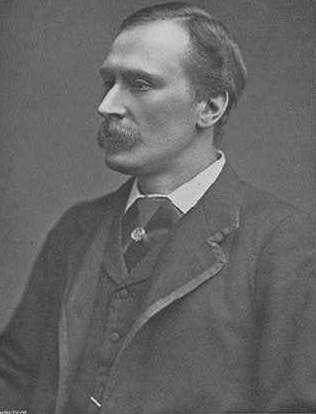
Michael Maybrick (31 January 1841 – 26 August 1913)[1] was an English composer and singer, best known under his pseudonym Stephen Adams as the composer of "The Holy City", one of the most popular religious songs in English.

Key Information

Songs

[edit]

Early life

[edit]

Maybrick was born at 8 Church Alley, Liverpool, the fourth of the eight children of William Maybrick, an engraver[2] and his wife, Susannah. Both his grandfather and father served as parish clerk at St Peter's, Liverpool, and were minor composers. His uncle Michael Maybrick was organist at St Peter's, wrote sacred music, and conducted the Liverpool Choral Society. Having become proficient on the piano by the age of eight, the young Maybrick studied the organ with W. T. Best and at the age of fifteen became organist of St Peter's; he also wrote anthems and had a work performed in London.[3]

Musical career

[edit]

On the advice of his godfather, Alfred Mellon, in 1865 Maybrick went to Leipzig to study keyboard and harmony with Carl Reinecke, Ignaz Moscheles, and Louis Plaidy, but later decided to train as a baritone with Gaetano Nava in Milan. After gaining experience in Italian theatres, he appeared with great success in London on 25 February 1869 in Mendelssohn's Elijah. Further success came as Telramund in Wagner's Lohengrin led to appearances with Charlotte Sainton-Dolby, including her farewell concert on 6 June 1870, and to regular engagements at the English festivals and with the Carl Rosa Opera Company. He appeared as a baritone at all the leading concert venues in London and the provinces, as well as in English opera.[3][4]

By the early 1870s, Maybrick was singing his own songs, beginning with "A Warrior Bold". Published under the pseudonym Stephen Adams and mostly with lyrics by Fred Weatherly, his songs achieved extraordinary popularity. His early sea song "Nancy Lee" sold more than 100,000 copies in two years. Maybrick penned other sea songs including "The Tar's Farewell", "They All Love Jack" and "The Midshipmite", sentimental songs such as "Your Dear Brown Eyes", romantic numbers like "The Children of the City", and sacred songs like "The Blue Alsatian Mountains", "The Star of Bethlehem", and the well-loved "The Holy City". In 1884 he toured New Zealand performing his own songs. His friends spoke of his charming personality, but others thought him arrogant and vain.[3] He composed one of the earliest musical settings of A. E. Housman, 'When I was one-and-twenty' in 1904, the same year Arthur Somervell published his A Shropshire Lad song cycle.[5]

Retirement

[edit]

Maybrick was a keen amateur sportsman, being a cricketer, a yachtsman and a cyclist, and a captain in the Artists Rifles. On 9 March 1893 he married his forty-year-old housekeeper, Laura Withers, and settled with her at Ryde on the Isle of Wight.

They were joined there by the two children of his brother, James Maybrick, later a suspect in the Jack the Ripper case, and whose wife Florence was convicted of his murder in 1889. (A re-examination of her case resulted in her release in 1904). Michael Maybrick himself is named as Jack the Ripper by the film director Bruce Robinson in his book on the subject.[6]

He became chairman of the Isle of Wight Hospital, was a magistrate and was five times mayor of Ryde. He was also a Freemason.[3] He had been at Buxton for three weeks being treated for periodic gout when he died in his sleep of heart failure on 26 August 1913.[4] He was buried four days later at Ryde.

Notes

[edit]

References

[edit]
[edit]
Revisions and contributorsEdit on WikipediaRead on Wikipedia
from Grokipedia
Michael Maybrick (31 January 1841 – 26 August 1913) was an English composer and singer best known under the pseudonym Stephen Adams for creating "The Holy City", one of the most enduringly popular religious ballads in English musical history. Born in to a musically inclined family, Maybrick displayed prodigious talent from childhood, serving as at St. Peter's Church before pursuing advanced studies in under composers such as and , and later in with voice teacher Gaetano Nava. As a performer, he appeared in Italian theaters, concert halls, provincial venues, English opera houses, and undertook a tour of the in 1884, establishing himself as a prominent figure in Victorian musical circles. Maybrick's compositional output exceeded 47 songs, frequently set to lyrics by Frederic E. Weatherly, including hits like "" (1876) and "Thora" (1905), which achieved widespread commercial success and frequent recordings from the late 19th to mid-20th century by artists such as and Edward Lloyd. His works, characterized by sentimental and patriotic themes suited to the era's drawing-room and choral traditions, contributed significantly to the popularity of English art songs during the period, with "The Holy City" (1892) remaining a staple in sacred music repertoires. Maybrick retired to on the Isle of Wight, where he died at age 72.

Early Life and Education

Birth and Family Origins

Michael Maybrick was born on 31 January 1841 in , , the fourth child in a family of eight siblings. His father, William Maybrick, worked as an engraver and served as parish clerk at St. Peter's Church, while his mother was Susannah Maybrick, née Wainwright. The Maybrick family had resided in for multiple generations prior to Michael's birth, with roots traceable through local records and genealogical accounts. William's profession as an engraver provided a modest but stable livelihood in the bustling port city, where the family lived at 8 Church Alley. Among Michael's siblings was his elder brother , born in 1838, who later became a . Early family influences included proximity to ecclesiastical and artisanal circles, given William's role at St. Peter's Church, though specific details on Susannah's background remain limited in primary accounts. The household environment, centered in Liverpool's working-class districts, laid foundational exposure to community and trade networks that characterized mid-19th-century urban Britain.

Childhood and Initial Influences

Michael Maybrick was born on 31 January 1841 at 8 Church Alley in , , as the fourth of eight children to William Maybrick, an and clerk, and his wife (née Wainwright). The Maybrick family had been established in for several generations, with roots in modest mercantile and artisanal pursuits, though specific details on their remain limited beyond William's role in engraving and church administration. From an early age, Maybrick displayed a natural aptitude for music, becoming proficient on by approximately eight years old. He received initial on the organ under William T. Best, a prominent Liverpool , and by age fifteen—around 1856—he had secured the position of at St. Peter's Church, where his father served as parish clerk. This early involvement provided foundational exposure to choral and , shaping his technical skills amid Liverpool's vibrant musical scene, which included local orchestras and choirs. Familial musical leanings may have contributed, as Maybrick's father and grandfather engaged in minor composition, though no direct mentorship from them is documented. These formative experiences in laid the groundwork for Maybrick's later pursuits, emphasizing self-directed practice and institutional roles over formal academic study during childhood. Subsequent training abroad, including singing studies in and after 1860, built upon this base but postdated his initial influences.

Musical Career

Emergence as Performer and Composer

Following vocal training in and at the , Michael Maybrick returned to in 1869 to establish himself professionally as a singer. His London debut occurred that year, highlighted by a successful performance in Mendelssohn's , which showcased his capabilities in and ballad singing. Maybrick's early engagements primarily involved concert halls and societies, with occasional appearances, such as a role with the Carl Rosa Opera Company in November 1873. By October 1871, he had joined the National Opera Company at Theatre, broadening his exposure in English . Concurrently, Maybrick initiated his compositional output under the pseudonym Stephen Adams to distinguish his creative work from his performing identity. After concluding studies with a production of Wagner's in June 1870, he composed his initial ballads, beginning with "A Warrior Bold" in the early . This song, set to lyrics by an external poet, represented his entry into , though it did not achieve immediate widespread acclaim. Maybrick's dual pursuits—singing his own compositions in concerts—solidified his reputation as a versatile Victorian-era musician, emphasizing accessible, emotive ballads over complex classical forms.

Pseudonym Stephen Adams and Key Songs

Michael Maybrick adopted the pseudonym Stephen Adams for his song compositions beginning in the early 1870s, using it to publish works distinct from his performing career. Under this name, he produced ballads, sea songs, and sacred pieces, often collaborating with lyricist Frederick E. Weatherly, a barrister, on melodies paired with Weatherly's verses. This partnership yielded numerous sentimental and narrative-driven songs, with Maybrick focusing on accessible, melodic structures suited for Victorian concert halls and drawing rooms. One of his earliest compositions under the pseudonym was "A Warrior Bold", which he performed himself and marked his entry into songwriting prominence. Maybrick's output included maritime-themed works such as "The Tar's Farewell", "They All Love Jack", and "The Midshipmite", alongside tender ballads like "Your Dear Brown Eyes" and "Idle Words". These pieces emphasized dramatic storytelling and emotional resonance, contributing to his commercial success in sales during the era. The pinnacle of his pseudonymous work was "The Holy City", a sacred composed in 1892 with by Weatherly, depicting a visionary journey through . Originally scored for voice and piano, with later orchestral arrangements, it achieved enduring popularity as one of the most performed religious songs in English-speaking countries, selling millions of copies in form by the early . This final major collaboration with Weatherly ended their professional relationship amid reported tensions, after which Maybrick composed sporadically under the pseudonym until around 1896.

Concert Tours and Professional Engagements

Maybrick established himself as a prominent through regular engagements at major British venues following his debut at the London Oratorio Concerts on 25 February 1869, where he performed in Mendelssohn's Elijah. He subsequently appeared at the New Philharmonic Concerts in 1870 and the Brighton Festival, building a reputation for and ballad performances. These early engagements included collaborations with leading artists such as Sims Reeves and Madame Lemmens-Sherrington on 27 February 1872. In 1871, Maybrick participated in an operatic tour alongside Sims Reeves, which enhanced his visibility despite a severe chill contracted during the travels; this success prompted a transition from stage opera to the platform. He became a fixture at the Promenade Concerts, performing alongside vocalists like Anna Williams and Antoinette Sterling in 1878, often interpreting ballads and his own compositions. Provincial concerts, such as one in Hull on 19 October 1885 with Antoinette Sterling, further solidified his professional standing. Maybrick extended his reach internationally with a tour of the and in 1884, where he showcased songs composed under his pseudonym Adams, including popular works that contributed to his commercial success. Later engagements included recitals at St. James's Hall, such as on 13 June and 21 November 1888, emphasizing his enduring demand in London's ballad concert scene. Throughout the and , his professional activities focused on solo recitals and ensemble concerts promoting his hits, amassing significant popularity before health issues curtailed touring in the early 1900s.

Critical Reception During Career

Michael Maybrick, performing and composing under the Stephen Adams, garnered widespread acclaim during his career for crafting accessible Victorian ballads that resonated with audiences across Britain and beyond. His breakthrough came with "Nancy Lee" in 1876, a seafaring-themed song whose sales exceeded 100,000 copies within two years, prompting publisher Boosey & Co. to prioritize his subsequent works. This commercial triumph reflected the song's enthusiastic reception in concert halls and drawing rooms, where Maybrick's renditions amplified its appeal as a staple of popular . Subsequent compositions solidified his reputation as a prolific hitmaker, with "The Holy City" (1892) emerging as his signature work and one of the era's top-selling ballads, achieving annual sheet music sales of approximately 50,000 copies at its peak. Critics and contemporaries noted the emotive power of its religious narrative, lyrics by Frederic E. Weatherly, which aligned with Victorian tastes for sentimental and spiritually evocative music, leading to frequent performances in concerts and operas. Other successes, including "The Star of Bethlehem," "Thora," and "The Warrior Bold," further evidenced sustained positive reception, as evidenced by their enduring presence in repertoires and Maybrick's status as a sought-after vocalist in London and provincial venues. While elite musical journals occasionally viewed such parlor songs as formulaic compared to classical forms, Maybrick's output was broadly praised for its melodic craftsmanship and market dominance, with obituaries upon his 1913 death lamenting the loss of "one of its most popular song s." His ability to blend Irish influences and dramatic storytelling contributed to sales in the millions across his catalog, underscoring a reception driven by public demand rather than avant-garde innovation.

James Maybrick's Death and the Arsenic Poisoning Case

, a , fell ill on April 27, 1889, exhibiting symptoms including , , and , which intensified over the following weeks. He died at his home, Battlecrease House in , on May 11, 1889, at the age of 50. Initial medical certification attributed his death to acute inflammation of the stomach and , but suspicions arose after his brother, Michael Maybrick, and others noted inconsistencies with prior illnesses and the rapid decline. A post-mortem examination conducted by Drs. James Macalister, Charles B. Barron, and Samuel Davidson revealed traces of arsenic in Maybrick's body, including approximately 0.012 grains in the liver and smaller amounts in the kidneys and intestines, levels insufficient to conclusively prove acute fatal poisoning but suggestive of recent ingestion. Toxicology tests confirmed arsenic presence, though Maybrick had a documented history of self-administering the substance as a virility tonic, alongside other poisons like strychnine and nux vomica, a practice common among some Victorian men despite medical warnings. No definitive source of lethal dosage was identified in his system, and symptoms overlapped with dyspepsia or gastroenteritis, conditions he had experienced before. The inquest, opened on May 14, 1889, by coroner Samuel Brighouse, uncovered household sources of : flypapers purchased by Maybrick's wife, , which had been soaked in water to extract , yielding a solution containing up to 2% ; a sealed packet labeled " for cats" in 's handwriting; and white powder in a drawer testing positive for . admitted boiling the flypapers but claimed it was for cosmetic use to whiten her skin, a purported folk remedy, while denying knowledge of the powder's origin. Michael Maybrick, arriving post-death, endorsed suspicions of foul play, noting James's prior recovery patterns and urging analysis of the remains. The , after hearing testimony from medical experts and household staff—including Alice Yapp, who discovered the packet—concluded on June 6, 1889, that died from irritant poisoning by feloniously administered by with intent to . This prompted her , though subsequent analyses have highlighted evidential weaknesses, such as the sub-lethal quantities and James's tonic habits, suggesting possible accidental or self-induced accumulation rather than deliberate .

Role in Florence Maybrick's Trial and Aftermath

Following James Maybrick's death on 11 May 1889, Michael Maybrick, as his brother's closest male relative and head of the family, took immediate control of the household at Battlecrease House in , , deposing as its mistress and confining her to her room under . He oversaw searches of the premises, including Florence's trunk, where nurse Alice Yapp discovered a chocolate box containing two bottles, a , and a sealed packet labeled "Arsenic—Poison for Cats," which Michael examined and promptly sealed before handing to Inspector William Baxendale of the City Police. Additionally, on 10 May, prior to James's death, Michael had removed portions of suspicious liquids from a half-empty brandy bottle and a Valentine's meat juice bottle, delivering samples to Dr. Charles B. Carter for analysis amid concerns over possible tampering by Florence, whom he confronted directly about transferring medicines between containers. At Florence Maybrick's for wilful murder by , held at St. George's Hall in from 27 July to 1 August 1889 before Mr. Justice Stephen, Michael testified as a key prosecution witness on 31 July. He described arriving at Battlecrease on 8 May to find James semi-conscious and gravely ill, with symptoms worsening hourly into by the following evening, contrasting this with James's relatively improved state earlier that week after treatment with and . Michael expressed early dissatisfaction with Florence's nursing care, advocating for professional nurses, and recounted finding incriminating letters during a 12 May bedroom search, which he also turned over to Baxendale. His account emphasized anomalies in James's final days, including the medicine bottle incident, bolstering the prosecution's case of deliberate poisoning despite defense highlighting inconsistencies, such as Michael's initial statement on a table's position being altered at trial to align with other witnesses. After Florence's on 1 August 1889 and her death sentence's commutation to later that month, Michael retained authority over the Maybrick family affairs, including guardianship of the couple's children—James Chandler (aged 7) and Gladys (aged 3)—and management of the estate under James's will, which Florence later contested as dubious in authenticity. He supervised the children's upbringing and family finances through the period of Florence's incarceration at Convict Prison and subsequent transfers, with no recorded direct involvement in her campaigns, though his prior actions had solidified family opposition to her claims of innocence. Florence remained imprisoned until her conditional release on on 28 1904, after which disputes over the children and estate persisted, but Michael maintained control until his own health declined in later years.

Later Years and Retirement

Declining Health and Professional Withdrawal

In the early 1900s, Michael Maybrick increasingly focused on civic duties in , , following his 1893 to Laura Withers and relocation there, serving as a , chairman of the Isle of Wight Hospital, and mayor of on five occasions. This transition marked a de facto withdrawal from his earlier prominence as a touring singer and under the Stephen Adams, with no recorded major concerts or new publications in his final two decades, though his songs like "The Holy City" (1892) remained popular. Maybrick suffered from periodic gout in his later years, prompting a stay at the spa town of Buxton, Derbyshire, for treatment beginning in early August 1913. On the evening of August 25, he appeared in good spirits, conversing and joking with friends before retiring. He was found dead in bed the next morning, August 26, 1913, at age 72, with the cause determined as heart failure. No autopsy details beyond heart failure were publicly reported, and his death was described as sudden despite the preceding health concerns.

Personal Relationships and Residences

In March 1893, Maybrick married Laura Mary Ann Withers, his forty-year-old housekeeper, marking his only recorded marriage after decades as a . The union reflected a late-life domestic arrangement, with no children born to the couple. Following the marriage, Maybrick relocated with his wife to on the , establishing their primary residence at Lynthorpe, a substantial house on Corbett Road. This move aligned with his gradual withdrawal from professional musical engagements, as he immersed himself in local civic duties, including serving five terms as mayor of and as chairman of the . Lynthorpe served as the family base during these years, though Maybrick occasionally traveled for health treatments, such as to , , where he died of on 26 August 1913 while undergoing care for . He was buried in Cemetery four days later. Maybrick's personal ties in later life centered on his and obligations stemming from his brother James's 1889 death; the couple hosted James's orphaned children, nephew James and niece Gladys Evelyn, providing them stability in amid the lingering fallout from their mother's conviction. These arrangements underscored Maybrick's role as a familial guardian, though strained relations with persisted from earlier opposition to her . No further romantic or close personal associations beyond this household are documented in reliable accounts.

Legacy and Posthumous Controversies

Musical Influence and Modern Assessments

Michael Maybrick's compositions under the pseudonym Stephen Adams exerted significant influence on the Victorian ballad genre, characterized by melodic simplicity and lyrical sentimentality that appealed to middle-class drawing-room audiences. His songs, often setting verses by Frederic E. Weatherly, emphasized straightforward harmonies and emotional directness, contributing to the commercialization of through sales and concert performances. s such as "The Holy City" (1892) exemplified this style, achieving commercial success with over one million copies sold in the alone during the late 19th and early 20th centuries. Profits from these works enabled Maybrick to establish a Ballad Singing Prize at the Royal Academy of Music, fostering training in the genre among aspiring vocalists. In modern assessments, Maybrick's oeuvre is viewed as emblematic of Victorian popular song traditions rather than enduring classical innovation, with critics noting the genre's formulaic nature geared toward confirmed audience tastes over artistic evolution. "The Holy City" remains his most recognized work, frequently performed in choral, , and sacred music contexts, including recordings by ensembles like the Robert Shaw Chorale and contemporary church services as late as 2024. Other compositions, such as "Thora" and "A Warrior Bold," are cited as strong exemplars of English craftsmanship but receive limited revival outside historical or niche Victorian revivals. Assessments highlight the songs' devotional appeal and dramatic melodies, which sustained popularity in religious settings, though they are critiqued for lacking the depth found in contemporaneous composers.

Fringe Theories Linking to Jack the Ripper Hoax

In 2015, British author and filmmaker proposed in his book They All Love Jack: Busting the Ripper that Michael Maybrick was the unidentified serial killer known as , responsible for the canonical five murders in London's district between August and November 1888. 's argument hinges on Michael's documented Freemasonic affiliations, which he claims aligned with a supposed Masonic cover-up of the crimes, as well as Michael's residency patterns and professional travels that placed him in proximity to the murder sites during the relevant period. He further alleges that Michael orchestrated his brother James Maybrick's death by on May 11, 1889, to eliminate a witness or accomplice, interpreting James's symptoms—documented in medical reports as consistent with chronic arsenical poisoning—as evidence of rather than suicide or natural causes. Robinson ties this to the infamous "Maybrick diary," a leather-bound journal purporting to be James's as the Ripper, which surfaced in 1992 via dealer Michael Barrett, who later admitted to forging it with his wife Anne's assistance using period-appropriate materials like Victorian-era ink and a watch engraved with Ripper-related inscriptions. While the diary explicitly names James as the killer and has been debunked by forensic analyses (including of the paper to the 19th century but ink inconsistencies pointing to 20th-century application), Robinson repurposes elements of the narrative to argue Michael was the true culprit, suggesting the diary's fabricated details inadvertently preserved echoes of Michael's guilt through familial lore. Proponents of this fringe view, including some online Ripperology communities, extend it to claim Michael authored hoax letters mimicking the Ripper's taunting correspondence to police, such as the "Dear Boss" missive dated September 25, 1888, based on stylistic parallels to his song lyrics under the pseudonym Adams—though no matches have been verified. These theories lack corroboration from primary police records, eyewitness accounts, or linking Michael—who was performing as a in theaters during 1888—to the crimes, and they contradict established timelines, such as his documented Isle of Wight residence post-1889 without returns to . Mainstream historians and criminologists, including those affiliated with the Whitechapel Society, regard Robinson's hypothesis as speculative conjecture driven by , noting the absence of peer-reviewed validation and reliance on circumstantial Masonic conspiracies that echo discredited theories like Stephen Knight's Jack the Ripper: The Final Solution. Michael's death on August 26, 1913, from heart disease at age 69, without confession or incriminating artifacts, further undermines claims of his involvement in either the murders or subsequent hoaxes. Despite occasional revival in podcasts and amateur forums, the propositions remain marginal, overshadowed by the diary's proven forgery and the enduring evidentiary void in Ripper identifications.

References

Add your contribution
Related Hubs
User Avatar
No comments yet.