


Community hub
Recent from talks
Contribute something
Nothing was collected or created yet.
Microchip Technology
View on Wikipedia
Microchip Technology Incorporated is an American publicly traded semiconductor corporation that manufactures microcontroller, mixed-signal, analog, and Flash-IP integrated circuits.
Key Information


Its corporate headquarters is located in Chandler, Arizona. Its wafer fabs are located in Gresham, Oregon, and Colorado Springs, Colorado. The company's assembly/test facilities are in Chachoengsao, Thailand, and Calamba and Cabuyao, Philippines.
Microchip Technology offers support and resources to educators, researchers and students in an effort to increase awareness and knowledge of embedded applications.[2][3][4]
History
[edit]Origins
[edit]Microchip Technology was founded in 1987 when General Instrument spun off its microelectronics division as a wholly owned subsidiary.[5][6] The newly formed company was a supplier of programmable non-volatile memory, microcontrollers, digital signal processors, card chip on board, and consumer integrated circuits. An initial public offering (IPO) later in the year was canceled because of the October 1987 stock market crash.[5]
Microchip Technology became an independent company in 1989 when it was acquired by a group of venture capitalists led by Sequoia Capital.[7] In the same year, Microchip Technology announced the release of small, inexpensive 8-bit reduced instruction set computing (RISC) microcontrollers for $2.40 apiece, whereas most RISC microcontrollers were 32-bit devices selling for hundreds of dollars.[8]
1990-2024
[edit]
In 1990, 60% of Microchip Technology's sales were from the disc drive industry and the product portfolio relied heavily on commodity EEPROM products.[9] The company was losing US$2.5 million per quarter, had less than 6 months of cash in reserve, had exhausted lines of credit, and was failing to control expenses. Early in the year, the venture capital investors accepted an offer to sell Microchip Technology to Winbond Electronics Corporation of Taiwan for $15M. Winbond Electronics backed out of the deal after the Taiwanese stock market decreased in May 1990. Vice President of Operations, Steve Sanghi, was named president and chief operating officer of Microchip Technology in 1990.[5] After several quarters of losses, Sanghi oversaw Microchip Technology's transition from selling commodity-based products to specialized chips, such as the RISC technology.
Microchip Technology conducted an IPO in 1993, which Fortune magazine cited as the best performing IPO of the year with a stock appreciation of 500% and over $1bn in market capitalization.[10] At the end of 2015, Microchip Technology posted its 100th consecutive quarter of profitability.[11]
In March 2021, Sanghi was replaced as CEO by Ganesh Moorthy.
2024-present
[edit]In March 2024, Microchip furloughed production staff and non-manufacturing employees were forced to take a pay-cut for two weeks.[12] This was done again in June.[13] In late November, Moorthy retired as CEO and Steve Sanghi was appointed interim CEO.[14] In early December of that year, Sanghi announced the closure of Fab 2 in Tempe, Arizona and also announced that Microchip would suspend its application for CHIPS and Science Act funding.[15][16] On February 10, 2025, Microchip announced that they would again furlough employees intermittently throughout the rest of the year.[17]
Acquisitions
[edit]- In 1995, Microchip acquired KeeLoq technology from Nanoteq of South Africa for $10M in cash. Microchip Technology used the purchase to create the Secure Data Products Group.
- On May 24, 2000, Microchip acquired a wafer fab in Puyallup, Washington that was formerly owned by Matsushita Electric Industrial Company.[18][19][20] On October 19, 2007, due to the great recession, the facility, known as Fab 3, was sold for $30M from an unsolicited offer.[21][22]
- On October 27, 2000, Microchip purchased TelCom Semiconductor of Mountain View, California for $300M.[23]
- In 2002, Microchip acquired a wafer fab in Gresham, Oregon from Fujitsu for $183.5M. This fab became, and still is, Microchip's largest and is known as Fab 4.[24]
- On October 15, 2008, Microchip acquired Hampshire Company, a company that sold large-format universal touch screen controller electronics and related software.[25][26]
- On February 20, 2009, Microchip acquired Australia-based HI-TECH Software.[27]
- On January 11, 2010, Microchip acquired Thomas H. Lee's Sunnyvale, California-based ZeroG Wireless for an undisclosed amount after a year-long partnership. The deal allowed Microchip to provide a Wi-Fi product for their PIC microcontrollers.[28][29][30]
- In April 2010, Microchip completed the acquisition of Silicon Storage Technology (SST) from for about $292M. Microchip and Cerberus Capital Management both made offers for the company. Microchip sold several SST flash memory assets back to Bing Yeh, co-founder of SST, to another one his companies the next month.[31][32]
- In 2012, Microchip acquired German-based Ident Technology AG, California based Roving Networks, and Standard Microsystems Corporation.[33][34][35][36]
- On June 3, 2013, Microchip acquired Novocell Semiconductor, Inc. through its Silicon Storage Technology (SST) subsidiary.[37][38]
- In 2014, Microchip acquired Supertex, Inc and Belgian-based EqcoLogic on February 10,[39][40][41][42] and Taiwan-based ISSC Technologies on May 22.[43][44]
- On August 3, 2015, Microchip acquired IC manufacturer Micrel for about $839M.[45][46]
- In January 2016, Microchip purchased San Jose, California-based Atmel for $3.56bn. JPMorgan Chase advised Microchip while Qatalyst Partners advised Atmel.[47][48][49][50]
- In May 2018, Microchip acquired Microsemi Corporation.[51]
- In October 2020, Microchip acquired New Zealand-based Tekron International Limited for an undisclosed amount.[52]
- In April 2024, Microchip acquired both South Korea-based VSI Co. Ltd.[53] and Neuronix AI Labs.[54]
Products
[edit]


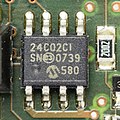
Microchip offers 8, 16, and 32-bit microcontrollers including PIC and AVR microcontrollers, microprocessors, analog power management and conversion, CAN and LIN serial communication interface devices, high-voltage MEMS and piezoelectric drivers, ultrasound multiplexers, digital signal controllers, embedded controllers, memory products (including serial EEPROM, serial SRAM, serial flash, serial NvSRAM, serial EERAM, parallel EEPROM, parallel one-time programmable flash, parallel flash and CryptoMemory devices.)[55][56][57][58][59][60][61][62][63][64]
Microchip also offers custom programming, AI coding assistant,[65] hardware and software development tools and reference designs.[66][67] Available reference designs include complete systems, subsystems or functions which are purpose-built and include design files, software and support.
Microchip crypto element devices that provide authentication, data integrity, and confidentiality in a variety of applications, such as disposables, accessories and nodes;[56] Timing, communication and real-time clock and calendar products;[68][69] USB products;[70] Power Management Integrated Circuits (PMICs);[71] and networking products including Ethernet interface and wireless products.[72][73][74]
Product milestones
[edit]In April 2009, Microchip Technology announced the nanoWatt XLP microcontrollers, claiming the world's lowest sleep current.[75] Microchip Technology had sold more than 6 billion microcontrollers as of 2009.[76] As of 2011, Microchip Technology ships over a billion processors every year. In September 2011, Microchip Technology shipped the 10 billionth PIC microcontroller.[77][78]
- Examples of Microchip Products
-

-

-
-

.png)


Wafer Fabs
[edit]| Plant Name | Location | Status |
|---|---|---|
| Fab 1 | Chandler, Arizona, United States | Defunct.[79]
Closed April 2003. |
| Fab 2 | Tempe, Arizona, United States | Defunct.[80]
Closed November 2024. |
| Fab 3 | Puyallup, Washington, United States | Defunct. Sold October 2007[81] |
| Fab 4 | Gresham, Oregon, United States | Open |
| Fab 5 | Colorado Springs, Colorado, United States | Open |
See also
[edit]
References
[edit]- ^ "Microchip Technology Inc. FY 2025 Annual Report (Form 10-K)". U.S. Securities and Exchange Commission. 2025-05-23.
- ^ "Microchip Technology Creates New Academic Partner Program". Businesswire (Press release). Retrieved 20 April 2020.
- ^ "Academic Program" (PDF). microchip.com. Retrieved 14 April 2020.
- ^ "Microchip Technology's Academic Program". Retrieved 14 April 2020.
- ^ a b c Fisher, Lawrence M. (27 August 1990). "Microchip Technology Names New President". The New York Times.
- ^ "General Instrument Microelectronics Renamed Microchip Technology Incorporated as Wholly Owned Subsidiary" (PDF) (Press release).
- ^ "Microchip Technology becomes Independent Company" (PDF) (Press release).
- ^ "Muscular Chips With a Lighter Price". The New York Times. 29 November 1989.
- ^ Jones, Michael; Sanghi, Steve (2006). Driving Excellence: How The Aggregate System Turned Microchip Technology from a Failing Company to a Market Leader. Hoboken, New Jersey: John Wiley & Sons. p. 3-5. ISBN 9780471784845.
- ^ Jones, Michael; Sanghi, Steve (2006). Driving Excellence: How The Aggregate System Turned Microchip Technology from a Failing Company to a Market Leader. Hoboken, New Jersey: John Wiley & Sons. p. 8-11. ISBN 9780471784845.
- ^ "Microchip Technology marks profit milestone: 100 straight quarters". azcentral.com.
- ^ Oregonian/OregonLive, Mike Rogoway | The (2024-01-11). "Computer chip maker announces furloughs at Oregon factory days after landing $72 million from feds". oregonlive. Retrieved 2025-01-04.
- ^ Oregonian/OregonLive, Mike Rogoway | The (2024-05-07). "Microchip will furlough Oregon factory workers again as sales plunge 40%". oregonlive. Retrieved 2025-01-04.
- ^ "Microchip Technology (MCHP) Announces Leadership Transition with". www.gurufocus.com. Retrieved 2025-01-04.
- ^ Wiles, Russ. "Microchip's closing of Tempe fab: What to know about impact on 500 workers". The Arizona Republic. Retrieved 2025-01-04.
- ^ Oregonian/OregonLive, Mike Rogoway | The (2024-12-06). "Microchip, closing factory and cutting jobs, steps back from deal for federal expansion subsidies". oregonlive. Retrieved 2025-01-04.
- ^ Oregonian/OregonLive, Mike Rogoway | The (2025-02-10). "Microchip expects intermittent furloughs for Gresham factory workers throughout 2025". oregonlive. Retrieved 2025-02-11.
- ^ News, Bloomberg (25 May 2000). "Company news; Microchip to buy chip plant from Matsushita". The New York Times (Press release). Retrieved 29 April 2020.
{{cite press release}}:|last1=has generic name (help) - ^ "Microchip Technology to acquire Puyallup, Washington, wafer facility" (PDF) (Press release). Retrieved 29 April 2020.
- ^ "Arizona chip maker buys Puyallup plant". Seattle Daily Journal of Commerce. Retrieved 29 April 2020.
- ^ "Microchip Technology Announces the Sale of Fab 3 in Puyallup, Washington". Microchip (Press release). Retrieved 12 March 2025.
- ^ "Microchip Unloads Idle Puyallup Plant for $30M". Northwest Innovation. Retrieved 29 April 2020.
- ^ "Microchip to acquire TelCom for $300 million in stock". EE Times. 27 October 2000. Retrieved 30 April 2020.
- ^ "Microchip to buy Fujitsu fab for $183.5 million | Semiconductor Digest". Retrieved 2025-01-04.
- ^ "Microchip Technology Acquires Hampshire Company". Thomas Publishing Company. Retrieved 29 April 2020.
- ^ "Microchip Technology acquires Hampshire Company" (PDF) (Press release). Retrieved 29 April 2020.
- ^ "Microchip Technology Acquires HI-TECH Software". 26 May 2009.
- ^ "Microchip buys ZeroG Wireless". EDN. 11 January 2010. Retrieved 1 May 2020.
- ^ "Microchip buys ZeroG Wireless". CIOL. Retrieved 1 May 2020.
- ^ "Microchip Technology Acquires ZeroG Wireless" (PDF) (Press release). Retrieved 1 May 2020.
- ^ Mark LaPedus (April 8, 2010). "Microchip completes SST acquisition". EE Times. Retrieved October 1, 2013.
- ^ "Microchip Tech Sews Up Silicon Storage Deal". New York Times Deal Book. April 9, 2010. Retrieved October 1, 2013.
- ^ Clarke, Peter (2 May 2012). "Microchip tips gesture firm buy in profitable quarter". EETimes. Retrieved 13 April 2020.
- ^ Comerford, Richard (21 August 2014). "The Story behind the Story: Microchip Technology's MGC3130 e-field 3D gesture controller". Electronic Products. Retrieved 13 April 2020.
- ^ "Microchip Technology Acquires Roving Networks". Businesswire. 19 April 2012. Retrieved 13 April 2020.
- ^ "Microchip Technology and SMSC announce the completion of the acquisition of SMSC by Microchip Technology" (Press release). Retrieved 2025-03-12.
- ^ "Microchip Acquires Novocell Semiconductor". AZ Big Media. 3 June 2013. Retrieved 13 April 2020.
- ^ "Microchip Technology Subsidiary SST and Novocell Semiconductor Announce Acquisition of Novocell by SST". Businesswire (Press release). Retrieved 13 April 2020.
- ^ "Microchip Technology Acquires EqcoLogic". Business Wire (Press release). Retrieved 9 April 2020.
- ^ "Microchip Acquires EqcoLogic". Yahoo! Finance. Retrieved 9 April 2020.
- ^ "Microchip Technology Acquires EqcoLogic" (PDF) (Press release). Retrieved 9 April 2020.
- ^ "Microchip Technology and Supertex announce the completion of the acquisition of Supertex by Microchip Technology" (Press release). Retrieved 12 March 2025.
- ^ "Microchip Technology announces acquisition of ISSC Technologies" (Press release). Retrieved 12 March 2025.
- ^ "Microchip Technology Completes ISSC Technologies Tender Offer" (Press release). Retrieved 12 March 2025.
- ^ "Microchip Technology Completes Micrel Acquisition". Power Electronics. 12 August 2015. Retrieved 8 April 2020.
- ^ "Microchip Technology and Micrel announce the completion of the acquisition of Micrel by Microchip Technology" (Press release). Retrieved 12 March 2025.
- ^ "Microchip To Buy Atmel in Latest Semiconductor Deal". Fortune. January 20, 2016.
- ^ Assis, Claudia (19 January 2016). "Microchip Technology buys chip maker Atmel in $3.56 billion deal". MarketWatch. Retrieved 2016-01-21.
- ^ By (20 January 2016). "Microchip To Acquire Atmel for $3.56 Billion". Hackaday. Retrieved 2016-01-21.
- ^ Picker, Leslie (2016-01-19). "Microchip Technology to Buy Atmel for Nearly $3.6 Billion". The New York Times. ISSN 0362-4331. Retrieved 2016-01-21.
- ^ "Microchip Technology to acquire Microsemi" (PDF) (Press release). Retrieved 2025-03-12.
- ^ "Electronics Supply Chain Solutions | Sourceability".
- ^ "Microchip Acquires ADAS and Digital Cockpit Connectivity Pioneer VSI Co. Ltd. to Extend Automotive Networking Market Leadership". Engineering Update. 2024-04-15. Retrieved 2 June 2024.
- ^ O'Shea, Dan (23 April 2024). "Microchip buys Neuronix AI Labs, matching FPGAs, computer vision". Fierce Electronics.
- ^ "Focus Product Selector Guide" (PDF). Microchip Technology. Retrieved 14 April 2020.
- ^ a b "Embedded Security Solutions". Retrieved 14 April 2020.
- ^ "16-bit PIC® Microcontrollers Family Overview". Retrieved 7 April 2020.
- ^ "Product of the Year Story Behind the Story: Microchip Technology PIC24F/H 16-bit microcontrollers". Electronic Products. December 2006. Retrieved 20 April 2020.
- ^ "Industry's Broadest and Most Innovative 32-bit Microcontroller (MCU) Portfolio". Retrieved 8 April 2020.
- ^ "Microchip Technology Extends PIC Microcontroller Line to 32 Bits With New PIC32 Family". Embedded Computing Design. Retrieved 14 March 2025.
- ^ "Mixed-Signal, Linear, Interface and Power Products to Complete Any System". Retrieved 14 April 2020.
- ^ "PIC24F 16-bit Microcontroller". Retrieved 20 April 2020.
- ^ "Focus Product Selector Guide" (PDF). Retrieved 5 May 2020.
- ^ "World's Most Reliable Memory". Retrieved 16 April 2020.
- ^ Liptai, Amber (February 19, 2025). "Artificial Intelligence Meets Embedded Development with Microchip's MPLAB® AI Coding Assistant".
- ^ "Development Tools". Retrieved 7 April 2020.
- ^ In-Circuit Serial Programming™ (ICSP™) Guide (PDF), 2003 [2003]
- ^ "Clock and Timing". Retrieved 14 April 2020.
- ^ "A Feature-Rich, Low-Cost Timekeeping Solution". Retrieved 17 March 2025.
- ^ "Microchip's USB Portfolio". Retrieved 17 March 2025.
- ^ "PMIC - Power Management ICs | Microchip Technology". www.microchip.com. Retrieved 2022-11-27.
- ^ "Microchip's Ethernet Portfolio". Retrieved 16 April 2020.
- ^ "Wireless Connectivity Solutions". Retrieved 16 April 2020.
- ^ "Microchip Technology Wireless Connectivity". Retrieved 20 April 2020.
- ^ Quick, Darren (April 30, 2009). "nanoWatt XLP Microcontrollers claim world's lowest sleep current". www.gizmag.com. Retrieved February 9, 2013.
- ^ Brian Santo (May 2009). "25 Microchips That Shook the World". IEEE Spectrum. Archived from the original on June 27, 2009. Retrieved 2012-04-01.
- ^ "Microchip Technology Delivers 10 Billionth PIC® Microcontroller". Archived from the original on 2014-01-02. Retrieved 2011-11-08.
- ^ "Microchip Technology Delivers 10 Billionth PIC® Microcontroller to Samsung Electronics Co". Businesswire (Press release). Retrieved 20 April 2020.
- ^ EETimes (2003-04-07). "Microchip shuts down fab, lowers forecast-again". EE Times. Retrieved 2025-01-04.
- ^ Bradley, Ben (2024-12-05). "Semiconductor factory to close in Tempe; hundreds of employees impacted". www.azfamily.com. Retrieved 2025-01-04.
- ^ Microchip Unloads Idle Puyallup Plant for $30M
External links
[edit]
- Official website

- Business data for Microchip Technology:

| International | |
|---|---|
| National | |
Microchip Technology
View on GrokipediaMicrochip Technology Incorporated is an American publicly traded semiconductor company founded in 1989 as a spin-off from General Instrument and headquartered in Chandler, Arizona.[1][2] The firm specializes in the design, development, and manufacture of microcontrollers, mixed-signal, analog, and Flash-IP integrated circuits, providing smart, connected, and secure embedded control solutions for applications in industrial, automotive, consumer, aerospace, and defense sectors.[3][4] Microchip serves more than 100,000 customers globally, offering a broad portfolio that enables low-risk product development, reduced system costs, and reliable performance in embedded systems.[4] Its flagship products, including the PIC family of 8-bit, 16-bit, and 32-bit microcontrollers, have established the company as a key player in the microcontroller market since the early 1990s.[3] The company has achieved notable growth through innovation and acquisitions, maintaining leadership in semiconductor solutions while navigating industry cycles, such as recent demand fluctuations and a 2024 cyber incident that temporarily disrupted manufacturing and order fulfillment, incurring $21.4 million in expenses.[5][6][7]
History
Founding and Origins
Microchip Technology originated from the microelectronics division of General Instrument (GI), a diversified electronics firm that had been developing CMOS semiconductor technologies since the 1970s, including early programmable microcontrollers under the PIC (Programmable Intelligent Computer) branding, such as the PIC1650 introduced in the late 1970s as a peripheral for GI's CP1600 microprocessor.[8] In 1987, GI spun off this division as a wholly owned subsidiary named Microchip Technology Inc., reflecting strategic refocusing amid competitive pressures in the broader electronics market.[9] The company achieved full independence in April 1989 when a group of venture capital investors acquired GI's semiconductor operations, marking the formal founding of Microchip Technology as a standalone entity focused on microcontrollers and related devices.[10] This transition occurred against a backdrop of financial challenges for the nascent firm, which inherited GI's legacy assets but faced market uncertainties in the maturing microcontroller segment. Initial operations centered in Chandler, Arizona, leveraging the division's established expertise in low-power, embedded control solutions for industrial and consumer applications.[1] Early leadership navigated near-bankruptcy conditions by 1990, when Steve Sanghi, previously at Intel and Waferscale Integration, joined as senior vice president of operations in February and assumed the CEO role by October, initiating a turnaround through cost controls, product focus on PIC microcontrollers, and emphasis on programmable embedded systems.[11] This foundational phase positioned Microchip to capitalize on the growing demand for cost-effective, 8-bit microcontrollers in an era dominated by larger competitors like Intel and Motorola.[12]Early Growth and Initial Products
Microchip Technology was founded on April 14, 1989, as a spin-off from the microelectronics division of General Instrument, inheriting its established PIC (Peripheral Interface Controller) microcontroller technology originally developed in the late 1970s.[13] The initial product lineup centered on low-cost, 8-bit PIC microcontrollers, such as the PIC16C5x series, which featured erasable programmable read-only memory (EPROM) for field programmability and targeted embedded control applications in consumer electronics and industrial devices.[8] These devices emphasized simplicity, low power consumption, and affordability, distinguishing them from more complex competitors. In 1990, Steve Sanghi, previously at Intel, assumed leadership as president and CEO, initiating a strategic pivot from reliance on commodity EEPROM memory products— which comprised a significant portion of sales and were vulnerable to price volatility—toward proprietary microcontroller differentiation.[14] This shift involved investing in R&D for enhanced PIC architectures, including improved peripherals and reprogrammability, while streamlining operations to achieve profitability amid a challenging semiconductor market.[15] By focusing on high-volume, value-added embedded solutions, Microchip began capturing market share in the burgeoning 8-bit microcontroller segment. A pivotal early product was the PIC16C84, introduced in 1993, which integrated on-chip EEPROM for non-volatile program storage, enabling cost-effective reprogramming without specialized equipment and marking the industry's first such field-programmable MCU.[15] This innovation spurred adoption in applications like automotive controls and appliances, driving revenue growth from approximately $65 million in fiscal 1989 to sustained double-digit increases through the mid-1990s.[13] Early growth was bolstered by Microchip's fabless model, leveraging external foundries for production while retaining design control, which allowed scalability without heavy capital outlays.[16]Acquisitions and Expansion Phase
Microchip Technology initiated a strategic acquisition program in the late 2000s to diversify beyond its core microcontroller offerings, targeting complementary technologies in memory, connectivity, analog, and mixed-signal domains. This phase accelerated in the 2010s, with tuck-in acquisitions enabling rapid portfolio expansion and entry into high-growth markets such as automotive, industrial, and aerospace. The strategy emphasized integrating acquired expertise to enhance system-level solutions, as outlined in the company's investor relations materials.[17] A pivotal early acquisition was Silicon Storage Technology (SST) in 2009, which added nonvolatile memory products and SuperFlash licensing capabilities, bolstering Microchip's embedded storage offerings. In 2012, Microchip acquired Standard Microsystems Corporation (SMSC) for $830 million in cash, completed on August 2, 2012, incorporating Smart Mixed-Signal Connectivity solutions including USB, Ethernet, and automotive technologies like MOST. This deal expanded Microchip's presence in consumer devices, PCs, and automotive infotainment.[18][19] The acquisition of Micrel in 2015 introduced advanced analog, power management, and Ethernet switch technologies, targeting enterprise, telecom, and automotive sectors. Microchip's $3.56 billion purchase of Atmel, announced January 19, 2016 and closed after regulatory approvals, significantly scaled its microcontroller market share, adding touch solutions, RF components, and nonvolatile memory for industrial and consumer applications. This merger positioned Microchip as a broader embedded systems leader.[20][21] The phase culminated in the $10.15 billion acquisition of Microsemi in 2018, announced March 1 and completed May 29, which integrated FPGAs, SoCs, radiation-hardened ICs, and power solutions for aerospace, defense, and data centers. Subsequent tuck-ins, such as Tekron in 2020 for precision timing and Neuronix AI Labs in 2024 for edge AI, continued this expansion into specialized niches. These moves collectively transformed Microchip from a microcontroller specialist into a diversified semiconductor provider, with acquisitions driving technological integration and market penetration.[22][23][20]Modern Developments and Challenges
In the early 2020s, Microchip Technology focused on integrating prior acquisitions like Microsemi (2018) into its operations, enhancing capabilities in mixed-signal and RF technologies while expanding into high-growth areas such as data centers and aerospace. By 2023, the company emphasized modular solutions amid industry shifts toward AI and edge computing, culminating in collaborations like the September 2025 partnership with Deca Technologies to develop non-volatile memory (NVM) chiplet solutions, addressing scaling challenges in advanced packaging.[24] This built on internal R&D, including the January 2025 release of a next-generation low-noise chip-scale atomic clock with a reduced profile height of 0.5 inches, targeting precision timing for telecommunications and defense applications.[25] Technological advancements accelerated in 2025, with Microchip unveiling the industry's first 3 nm PCIe Gen 6 switches under the Switchtec family on October 13, 2025, supporting up to 160 lanes and features like dynamic reconfiguration for AI infrastructure and high-performance computing (HPC).[26] Complementing this, the company introduced SkyWire technology in October 2025, enabling nanosecond-level clock alignment across distributed systems for critical infrastructure, such as power grids and financial networks.[27] These developments positioned Microchip to capitalize on surging demand for efficient data transfer and synchronization in AI-driven workloads, though execution depended on foundry partnerships amid global fabrication constraints. The company faced significant challenges from the semiconductor industry's cyclical downturn, exacerbated by post-COVID inventory corrections and softening end-market demand in consumer electronics and automotive sectors starting in fiscal 2023. Net sales for fiscal year 2025 (ended March 31, 2025) totaled $4.24 billion on a trailing twelve-month basis, reflecting a 35.7% year-over-year decline as excess inventory buildup from prior shortages led to production cuts and pricing pressures.[28] Fourth-quarter fiscal 2025 sales fell 26.8% year-over-year to $970.5 million, prompting guidance adjustments for sequential declines amid macroeconomic headwinds.[29] Supply chain vulnerabilities, including geopolitical tensions and tariff risks, compounded these issues, as Microchip navigated dependencies on Asian foundries and raw material fluctuations, similar to broader industry disruptions that persisted into 2025.[30] Intense competition from larger integrated device manufacturers like Texas Instruments and NXP Semiconductors pressured margins, with Microchip's focus on mid-range microcontrollers exposing it to commoditization risks in a market shifting toward custom silicon for AI applications.[31] Regulatory and geopolitical factors, including U.S.-China trade restrictions, further strained expansion efforts, though first-quarter fiscal 2026 sales rebounded 10.8% sequentially to $1.075 billion, signaling potential stabilization.[32] Despite these hurdles, Microchip maintained non-GAAP profitability for 139 consecutive quarters through fiscal 2025, underscoring resilience in diversified segments like industrial and automotive.[33]Products and Technologies
Microcontrollers and Embedded Solutions
Microchip Technology provides a broad portfolio of microcontrollers (MCUs) spanning 8-bit, 16-bit, and 32-bit architectures, optimized for embedded systems in industrial, automotive, consumer, and IoT applications. The company's offerings include the PIC family of MCUs, which trace their origins to designs developed by General Instrument in the 1970s and commercialized by Microchip following its 1989 spin-off from that division.[34] The PIC16C84, released in 1993, marked a milestone as the first Microchip MCU with integrated on-chip EEPROM for data retention without external components.[35] Today, PIC MCUs encompass baseline, mid-range, and enhanced variants, supporting scalability across low- to high-end performance needs with features like peripheral integration and low power modes.[36] Complementing the PIC lineup, Microchip's dsPIC digital signal controllers (DSCs) combine MCU capabilities with DSP functionality for real-time control tasks such as motor drives, digital power supplies, and sensing. The dsPIC33C series delivers up to 100 MHz performance, incorporating dual-core options in models like the dsPIC33CH for applications requiring enhanced math processing and low latency.[37] These 16-bit DSCs feature high-speed ADCs, PWM modules, and floating-point acceleration, enabling efficient execution of digital filters and control loops.[38] In 2016, Microchip acquired Atmel Corporation for $3.56 billion, integrating the AVR family of 8-bit RISC MCUs known for code density, power efficiency, and peripherals suited to battery-operated devices.[21] AVR devices, such as the ATtiny and ATmega series, support over 1,200 variants with features like event system for low-power event-driven operation.[39] Concurrently, the SAM series of 32-bit ARM Cortex-M based MCUs provides high-performance options, including the SAM E family with Cortex-M4F/M7 cores for connectivity-rich IoT and industrial controls, offering advanced analog integration and up to 300 MHz clock speeds in select models.[40] Embedded solutions extend beyond hardware with Microchip's MPLAB X Integrated Development Environment (IDE), a free tool supporting PIC, AVR, SAM, and dsPIC devices through code editing, simulation, debugging, and programming.[41] The MPLAB Harmony framework offers modular firmware libraries for rapid application development, including TCP/IP stacks, USB, and graphics support via the Microchip Graphics Suite.[40] These tools facilitate secure boot, over-the-air updates, and functional safety compliance, addressing demands in edge computing and connected systems. Microchip's ecosystem emphasizes code compatibility across families, reducing migration costs for designers scaling designs.[36]Analog and Mixed-Signal Devices
Microchip Technology maintains an extensive portfolio of analog and mixed-signal devices, encompassing amplifiers, data converters, power management integrated circuits (ICs), interface solutions, sensors, and timing components, engineered for seamless integration with its microcontrollers, digital signal controllers, and field-programmable gate arrays (FPGAs).[42] These devices emphasize low-risk design, high performance, and compatibility with digital workflows, supported by tools such as the MPLAB Mindi Analog Simulator and evaluation boards to facilitate rapid prototyping for engineers primarily experienced in digital systems.[42] Power management forms a cornerstone of the portfolio, featuring low-dropout (LDO) regulators, switching regulators, power management ICs (PMICs), digitally enhanced power analog (DEPA) controllers, DC-DC converters, and MOSFET drivers, which enable efficient voltage regulation and power delivery in applications ranging from battery-powered devices to industrial systems.[42] Data converters include analog-to-digital converters (ADCs) and digital-to-analog converters (DACs) optimized for precision signal processing, while amplifiers cover operational amplifiers (op-amps), instrumentation amplifiers, and comparators for signal conditioning in sensor interfaces and control loops.[42] Interface products incorporate high-voltage drivers and MOSFETs suited for microelectromechanical systems (MEMS) and piezoelectric actuators, and sensors provide temperature, position, and fan control functionalities with multi-channel capabilities.[42] The acquisition of Microsemi Corporation, completed on May 29, 2018, for an enterprise value of approximately $10.15 billion, significantly broadened Microchip's analog and mixed-signal offerings, particularly in high-reliability sectors such as aerospace, defense, communications, data centers, and industrial markets, by incorporating Microsemi's expertise in radiation-hardened and mixed-signal solutions.[43] Silicon carbide (SiC) devices, enhanced through this and subsequent developments, support high-voltage, high-efficiency applications in electric vehicles and renewable energy systems.[42] In automotive contexts, these products address challenges like electromagnetic interference (EMI) filtering, thermal monitoring, and low quiescent current operation, with AEC-Q100-qualified temperature sensors achieving ±0.5°C accuracy over -40°C to +125°C and motor drivers for brushed DC, stepper, and three-phase configurations.[44] Timing devices, including configurable oscillators, clock generators, and low-jitter buffers, complement the mixed-signal lineup for synchronization in telecommunications and data processing, while connectivity options span wired and wireless interfaces for robust system-level performance.[42] This diversified range positions Microchip's analog devices as enablers for cost-effective, scalable solutions in embedded systems, prioritizing precision and reliability over specialized high-volume commoditization.[42]Key Milestones and Innovations
Microchip Technology's innovations primarily revolve around the PIC microcontroller family, tracing its roots to General Instrument's early designs. The inaugural PIC microcontroller, a 16-bit core, emerged in 1975 to manage input/output operations for larger central processing units, incorporating ROM, RAM, and a basic CPU. After Microchip's formation as a 1989 spin-off from General Instrument, the company advanced this foundation with the PIC16C5x series in the early 1990s, adopting an 8-bit architecture with Harvard memory separation and RISC-inspired instructions for optimized performance and energy efficiency in embedded systems.[45][1] A landmark advancement occurred in 1997 with the rollout of PICFlash technology, enabling reprogrammable non-volatile flash memory in mass-produced devices, which supplanted costlier one-time programmable options and accelerated prototyping and field updates. This shift facilitated broader adoption in consumer, industrial, and automotive applications by minimizing development cycles and inventory risks.[46] Subsequent milestones include the evolution of PIC cores from 12-bit baseline to 16-bit enhanced variants, integrating peripherals like ADCs, DACs, and USB interfaces; for instance, in 2013, Microchip launched the first PIC microcontroller combining a 16-bit ADC, 10 MSPS ADC, DAC, USB, and LCD drivers. In 2014, the introduction of Core Independent Peripherals (CIP) in PIC16 MCUs offloaded routine tasks such as timing and communication to hardware modules, reducing CPU load and power usage while enabling intelligent analog integration. These developments propelled 8-bit PIC MCUs to market leadership by 2014. Microchip has since delivered over 12 billion PIC units, highlighting their reliability and ubiquity in embedded control.[47][48][45][49]Operations and Manufacturing
Wafer Fabrication Facilities
Microchip Technology maintains internal wafer fabrication facilities primarily in the United States to support its integrated device manufacturing (IDM) model, focusing on processes for microcontrollers, analog, and mixed-signal devices on 150 mm and 200 mm wafers.[50] These fabs enable custom foundry services certified to IATF 16949 standards and underpin the company's control over critical production stages.[50] As of 2025, the active facilities include sites in Gresham, Oregon, and Colorado Springs, Colorado, following the planned closure of the Tempe, Arizona, plant amid manufacturing restructuring.[51] The Gresham, Oregon, facility, known as Fab 4, features a 124,000 square foot ISO Class 3/4/5 clean room and a 77,000 square foot ISO Class 6/7 clean room dedicated to 200 mm wafer production.[52] Acquired and expanded through historical investments, including relocation of equipment from prior sites, it supports advanced technology nodes for the company's embedded solutions.[53] In 2024, the U.S. Department of Commerce allocated approximately $72 million under the CHIPS Act to further expand this fab, enhancing capacity for domestic semiconductor production.[54] However, in March 2025, Microchip announced headcount reductions at Fab 4 as part of a broader restructuring to optimize manufacturing footprint, affecting operations alongside layoffs totaling around 850 employees at the site.[55][51] In Colorado Springs, Colorado, Microchip's Fab 5 campus spans 50 acres and 580,000 square feet, specializing in silicon carbide (SiC) and silicon (Si) wafer fabrication.[56] The company committed $880 million in February 2023 to expand production capacity at this site, targeting growth in power management and high-performance applications.[57] This expansion received $90 million in preliminary CHIPS Act funding announced in January 2024 to modernize and scale the facility.[58] Despite these investments, March 2025 restructuring included 238 layoffs at the Colorado Springs site, reflecting adjustments to align with demand and inventory levels.[59] The Tempe, Arizona, Fab 2 facility, operational until early 2025, focused on wafer processing but was slated for closure to reduce excess capacity and expenses amid softening market conditions.[60] Announced in December 2024, the shutdown impacted approximately 500 workers and was accelerated to complete by May 2025, with equipment and the site marketed for sale by March 2025.[61][62] This move is part of a company-wide manufacturing optimization affecting over 2,000 positions across fabs and related operations.[51]Supply Chain Management and Restructuring
Microchip Technology operates a hybrid manufacturing model, utilizing internal wafer fabrication facilities for mature process nodes alongside external foundries for advanced technologies, complemented by global probe, assembly, and test operations to maintain supply chain resilience. The company emphasizes rigorous oversight of these elements to mitigate risks from disruptions, including policies on supplier ethics, conflict minerals, and environmental compliance.[63] [64] This approach addresses vulnerabilities inherent in the semiconductor sector, such as dependence on concentrated geographic regions for raw materials and fabrication, exacerbated by geopolitical tensions and events like the 2020-2022 global chip shortage.[65] To counter lead time volatility and customer uncertainty, Microchip provides allocation programs and long-lead inventory options, enabling predictable sourcing amid fluctuating demand.[66] During periods of constraint, the firm strategically built excess inventory to buffer against foundry bottlenecks, a tactic that supported continuity but later contributed to overcapacity when end-market demand softened in automotive and industrial segments.[67] Broader industry challenges, including water scarcity in fabrication hubs and trade restrictions, further underscore the need for diversified sourcing, though Microchip's internal fabs in the U.S. provide partial hedging against overseas disruptions.[68] In March 2025, amid declining automotive demand and excess inventory from prior shortage mitigations, Microchip announced a major restructuring, eliminating approximately 2,000 positions—about 9% of its roughly 22,000-employee workforce—to streamline operations and achieve $100 million in annual savings.[67] [69] The cuts targeted manufacturing sites, including the closure of Fab 2 in Tempe, Arizona, ahead of schedule; reductions at Fab 4 in Gresham, Oregon; Fab 5 in Colorado Springs, Colorado; and backend facilities in the Philippines.[70] [71] Employees were notified in March, with implementation completed by June 2025, reflecting a capacity rationalization to align production with subdued market conditions following the post-pandemic demand cycle.[55] This initiative builds on prior acquisition integrations, prioritizing cost efficiency without compromising core supply chain controls.[72]Financial Performance
Revenue Trends and Profitability
Microchip Technology's revenue grew substantially from fiscal year 2019 through 2023, driven by strategic acquisitions including Microsemi Corporation in May 2018 and Atmel Corporation in 2016, alongside robust demand for microcontrollers and analog products amid global supply constraints. Revenue rose from $3.241 billion in FY2019 (ended March 31, 2019) to $5.520 billion in FY2022, $8.439 billion in FY2023, reflecting a compound annual growth rate exceeding 20% over this period. This expansion was supported by the company's focus on embedded systems markets less exposed to consumer electronics volatility.[73] Post-FY2023, revenue contracted amid a semiconductor industry downturn characterized by customer inventory digestion following overstocking during the prior pandemic-era boom. FY2024 revenue fell 9.5% to $7.634 billion, with FY2025 declining further by 42.3% to $4.402 billion, as end-market demand weakened in industrial, automotive, and data center segments. Sequential quarterly improvements emerged in early FY2026, with Q1 net sales at $1.076 billion, up 10.8% from the prior quarter but down 13.4% year-over-year, signaling potential stabilization as inventory corrections progressed.[73][29][74] Profitability historically benefited from high gross margins, averaging 55-60% in growth years, enabled by the fab-lite manufacturing strategy that outsourced wafer production while retaining design and assembly control, thus leveraging scale without full capital intensity. Operating margins exceeded 30% in FY2022 and FY2023, yielding net income of over $2 billion in the latter year. However, the FY2025 volume contraction compressed GAAP gross margins to 51.6%, resulting in an operating loss of $100.3 million (10.3% of sales) and net loss attributable to common stockholders, exacerbated by fixed costs, amortization from acquisitions, and restructuring expenses. Non-GAAP metrics showed resilience, with adjusted operating income remaining positive but trending lower, as management implemented cost controls including workforce reductions.[29][75]Market Position and Shareholder Returns
Microchip Technology maintains a prominent position in the microcontroller (MCU) and mixed-signal semiconductor sectors, with a particular stronghold in 8-bit MCUs where it ranks as the global revenue leader.[76] The company's fiscal 2025 revenue totaled $4.402 billion, reflecting a 42.3% decline from the prior year's $7.634 billion amid industry-wide inventory corrections following a post-pandemic demand surge, though sequential quarterly growth resumed at 10.8% in Q1 fiscal 2026 to $1.076 billion.[29][74] In the broader MCU market, valued at approximately $32.37 billion in 2023 and projected to reach $69.87 billion by 2030 at an 11.7% CAGR, Microchip competes with larger peers like Texas Instruments ($17.5 billion+ annual revenue) and STMicroelectronics ($13.3 billion), holding a niche leadership in embedded control applications for automotive, industrial, and consumer electronics.[77][78] Relative to competitors, Microchip's market share in peer-group semiconductors stood at 2.22% as of Q2 2025, trailing giants like Broadcom (31.35%) but benefiting from diversified offerings in analog devices and FPGA acquisitions such as Microsemi.[79] Its PIC MCU lineup, emphasizing low-power 8- to 32-bit solutions, captured significant demand in cost-sensitive segments, with the global PIC market expanding from $5.2 billion in 2024 toward $13 billion by 2034 at a 9.6% CAGR.[80] This positioning underscores resilience in mature markets despite cyclical pressures, as evidenced by its critical role in supply chains for IoT and edge computing.[81] Shareholder returns have been mixed amid sector volatility, with a five-year total shareholder return (TSR) of approximately 42.85% through early 2025, equating to roughly 7-8% annualized gains including dividends.[82] The company sustains a quarterly dividend of $0.455 per share (annualized $1.82), yielding 2.88% at a share price around $63 as of October 2025, supported by a payout ratio exceeding 300% in recent quarters due to earnings troughs but backed by strong free cash flow historically.[83][84] Year-to-date through October 23, 2025, MCHP stock delivered a 16.03% total return with dividends reinvested, outperforming broader indices in a rebound phase, though longer-term 10-year TSR reflects moderated growth at around 3.2% annualized amid competition and economic cycles.[85][86] Overall, returns have prioritized dividend consistency over aggressive capital appreciation, aligning with Microchip's mature market focus.[87]Leadership and Governance
Founders and Key Executives
Microchip Technology was established on February 14, 1989, as an independent entity spun off from the microelectronics division of General Instrument Corporation, with initial backing from a venture capital consortium that included Sequoia Capital providing $12 million in funding.[1][88] The spin-off involved the division's existing management and engineering team, though specific founding individuals are not prominently documented in corporate records; the focus shifted early to operational leadership under incoming executives who drove its commercialization of microcontroller technologies.[89] Steve Sanghi joined Microchip in October 1990 as vice president of operations, shortly after the company's initial public offering, and was appointed president and chief operating officer later that year.[12] He assumed the role of chief executive officer in October 1991 and chairman of the board in 1993, positions he held continuously until handing over CEO duties to Ganesh Moorthy in 2021 while remaining executive chairman.[12] Under Sanghi's tenure, Microchip expanded from a microcontroller-focused startup to a diversified semiconductor firm through over 60 acquisitions and organic growth, achieving annual revenues exceeding $7 billion by fiscal 2023.[90] Following Moorthy's departure amid strategic challenges, Sanghi returned as interim president and CEO in November 2024 and was confirmed in the permanent roles on July 2, 2025, to lead turnaround efforts including cost reductions and supply chain optimizations.[90][91] Ganesh Moorthy, who joined Microchip in 1990 as a design engineer and rose through engineering and business development roles, served as president from 2016 and succeeded Sanghi as CEO in 2021, emphasizing integration of acquisitions like Microsemi.[16] His leadership focused on analog and mixed-signal expansions but faced headwinds from market cycles, leading to his exit in late 2024.[16] Other longstanding key executives include J. Eric Bjornholt, appointed senior vice president and chief financial officer in 2008, overseeing financial strategy and investor relations during periods of revenue volatility and debt management post-acquisitions.[92] Mitchell R. Little, executive vice president and chief operating officer since 1994, has managed global manufacturing and supply chain operations, contributing to the company's resilience in wafer fabrication.[89] Stephen V. Sanghi's extended influence, spanning over three decades in top roles, underscores a leadership continuity that prioritized disciplined execution over speculative ventures, aligning with the firm's emphasis on embedded control solutions.[93]Strategic Direction and Corporate Culture
Microchip Technology's strategic direction emphasizes providing comprehensive embedded control solutions, including microcontrollers, analog, mixed-signal, and Flash-IP products, aimed at simplifying innovative design for customers across industrial, automotive, consumer, aerospace, and defense sectors.[3] The company's mission is to be the leading supplier of total system solutions that deliver cost-effective, high-performance embedded control and processing capabilities, with a vision of embedding its technology ubiquitously to empower innovation and enhance human experiences.[94] [95] In response to fiscal year 2025 challenges, including a 42% year-over-year revenue decline to $4.402 billion driven by inventory corrections and market softness, CEO Steve Sanghi—reinstated permanently on July 2, 2025—implemented a nine-point turnaround plan focused on restoring profitability and operational efficiency.[29] [90] Key elements include reducing manufacturing output to 50% of demand to accelerate inventory reduction, refining distribution channels, strengthening the balance sheet through debt reduction to maintain investment-grade ratings, and cost controls such as layoffs and facility closures.[96] [91] [97] This approach prioritizes financial prudence while targeting recovery in high-growth areas like AI-driven IoT, aerospace, and defense, leveraging Microchip's broad portfolio for differentiated, reliable solutions amid geopolitical and competitive pressures.[98] [99] Microchip's corporate culture is intentionally designed by its founders to be positive, progressive, and employee-empowering, with a strong emphasis on retention through professional development, work-life balance, and alignment with guiding values such as integrity, respect, and innovation.[100] [101] Official descriptions highlight a values-based environment where work supports personal life, supported by investments in training and a top-down commitment to ethical conduct and corporate responsibility.[102] However, employee feedback reveals variances, with some reporting rigid, hierarchical decision-making that impacts morale, alongside concerns over compensation structures and job security amid recent restructurings.[103] [104] Comparably data from early 2025 indicates high CEO approval ratings but identifies opportunities for improvement in workplace environment and retention practices.[105]Controversies and Legal Matters
Cybersecurity Incidents
In August 2024, Microchip Technology detected suspicious activity in its IT infrastructure beginning on August 17, leading to disruptions in certain servers and business operations across multiple manufacturing facilities.[6][106] The incident, identified as a ransomware attack, halted production and delayed order fulfillment for several days, with the company notifying customers of potential impacts on supply.[107][108] The Play ransomware group claimed responsibility for the breach on August 28, 2024, publishing a 4 GB archive purportedly containing stolen data, including employee personal information.[109] Microchip confirmed that attackers accessed and exfiltrated some employee contact details and encrypted/hashed passwords, but reported no evidence of customer data, financial information, or intellectual property being compromised.[106][110] The company engaged external cybersecurity experts and legal counsel to investigate and remediate the issue, restoring operations progressively without paying ransom.[107] Financial repercussions included $21.4 million in total expenses related to the incident during the second quarter of fiscal year 2025, encompassing investigation, remediation, and lost productivity costs.[107][7] Microchip filed notifications with relevant regulatory bodies and offered affected employees identity protection services, while emphasizing that the breach did not materially alter its overall business outlook.[111][112] No prior major cybersecurity incidents involving Microchip Technology have been publicly disclosed in detail by the company or verified through independent reporting.Litigation and Regulatory Issues
Microchip Technology has been involved in multiple securities class action lawsuits alleging misrepresentations in connection with its acquisitions. In one such case, investors claimed that the company made false statements about Microsemi Corporation's inventory levels prior to the $10.15 billion acquisition completed in May 2018, leading to an overpayment and subsequent stock drop; the matter settled for $9 million in 2023.[113] A related proposed class action in Arizona federal court accused Microchip executives of misleading investors on integration risks and financial impacts from the Microsemi deal, though portions of the suit were dismissed by a judge in 2018.[114] The company has also litigated under the Employee Retirement Income Security Act (ERISA). In Schuman v. Microchip Technology Inc., former Atmel employees sued after the 2016 acquisition, alleging ERISA violations in severance offers that included releases of claims; the U.S. District Court granted summary judgment for Microchip, but the Ninth Circuit reversed in June 2025, holding that such releases require special scrutiny to prevent fiduciary abuse and remanding for further proceedings.[115][116] Patent infringement disputes form a significant portion of Microchip's litigation history, reflecting the semiconductor industry's emphasis on intellectual property protection. Microchip has asserted patents against competitors, such as in a 2007 suit against Luminary Micro Inc. over microcontroller technologies, and defended against claims, including Aptiv Technologies AG's 2023 infringement action in Delaware federal court over automotive networking patents.[117][118] In HD Silicon Solutions LLC v. Microchip Technology Inc., the Patent Trial and Appeal Board invalidated claims of a semiconductor patent asserted against Microchip, a decision affirmed by the Federal Circuit in February 2025 despite disputes over claim construction.[119][120] On regulatory matters, Microchip's major acquisitions have undergone antitrust reviews with clearances granted by U.S., European, and other authorities. The 2016 Atmel acquisition received U.S. Department of Justice and German Bundeskartellamt approval in January 2016; the 2018 Microsemi deal cleared U.S., German, and Taiwanese regulators by May 2018; and the 2012 SMSC transaction obtained Chinese antitrust clearance in July 2012.[121][122][123] No enforcement actions or violations by bodies like the FTC or SEC have been reported in these contexts, though the company complies with U.S. export controls on semiconductors as standard for the industry.[124]Industry Impact
Contributions to Semiconductor Innovation
Microchip Technology advanced semiconductor innovation by evolving the PIC microcontroller architecture, originally developed by General Instrument as the Programmable Intelligent Computer series starting with the PIC1650 in 1976. After Microchip's formation in 1989 through the spin-off of GI's microelectronics division, the company refined this 8-bit RISC-like design for efficiency and affordability, integrating features like timers and I/O ports to simplify embedded system development. This focus on orthogonal instruction sets and Harvard architecture variants enabled reliable, low-cost control solutions that accelerated adoption in applications ranging from automotive electronics to consumer gadgets. By 2002, Microchip had become the leading microcontroller vendor, underscoring the impact of these architectural contributions.[8] A key innovation was the integration of non-volatile reprogrammable memory, as seen in the PIC16C84 released in 1993, which incorporated on-chip EEPROM to allow electrical erasure and reprogramming without specialized UV equipment. This reduced development cycles and costs, democratizing microcontroller use for prototyping and field updates. Microchip further innovated with one-time-programmable (OTP) flash variants for high-volume manufacturing, prioritizing cost-effectiveness over reprogrammability in mature products. These advancements positioned Microchip as the number-one provider in 8-bit microcontroller revenue by April 2007, driven by the field-programmable market segment.[125] Microchip extended its influence through power optimization and peripheral integration, introducing eXtreme Low Power (XLP) technology in its nanoWatt XLP microcontrollers around 2009, achieving sleep currents below 100 nanoamperes to enable long-life battery applications in IoT and sensors. The company also developed mixed-signal capabilities, embedding analog-to-digital converters (ADCs), digital-to-analog converters (DACs), and operational amplifiers directly into MCUs, minimizing external components and enhancing system efficiency. Innovations like mTouch inductive touch sensing, awarded for excellence in 2010, provided robust capacitive and inductive interfaces for user inputs, reducing reliance on discrete sensors. Through such integrations and a scalable portfolio spanning 8-bit PIC to 32-bit ARM-based SAM devices, Microchip facilitated broader semiconductor applications in secure, connected systems.[126]