Hubbry Logo
Microsoft KinMicrosoft KinMain
Open search
Microsoft Kin
Community hub
Microsoft Kin
logo
8 pages, 0 posts
0 subscribers
Be the first to start a discussion here.
Microsoft Kin
Microsoft Kin
from Wikipedia
Microsoft Kin
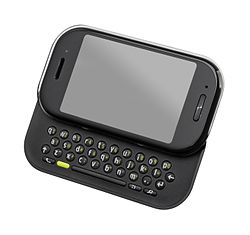
The Kin Two, shown open
DeveloperMicrosoft
ManufacturerSharp
First releasedApril 12, 2010
Availability by regionMay–June 2010, "m" since December 2010
Compatible networksCDMA
Form factorSlider/Texting phone
DimensionsONE: 3.25 in × 2.5 in × 0.75 in
(8.3 cm × 6.4 cm × 1.9 cm), TWO: 4.25 in × 2.5 in × 0.75 in
(10.8 cm × 6.4 cm × 1.9 cm)
WeightONE: 110 g (3.9 oz), TWO: 130 g (4.6 oz)
Operating systemKIN OS (based on Windows CE)
CPUFreescale i. MX31L processor ARM Core
nVidia Tegra APX 2600
Memory256 MB DDR RAM
StorageONE: 4 GB, TWO: 8 GB, KIN Studio (unlimited)
Rear cameraONE: 5 MP, TWO: 8 MP
DisplayONE: 2.6 in (6.6 cm), TWO: 3.4 in (8.6 cm)
MediaZune
ConnectivityEV-DO Rev, Wi-Fi, Bluetooth 2.1
Data inputsQWERTY keyboard, Capacitive multi-touch
Development statusDiscontinued

Kin was a line of mobile phones that was briefly marketed by Microsoft in 2010. Aimed at people between ages 15 and 30,[1] they were designed for social networking.[2] Microsoft invested two years and about US$1 billion developing the Kin platform,[3][4] beginning with its acquisition of Danger Incorporated, creators of the Hiptop or T-Mobile Sidekick.[5] The Kin ran an operating system based on Windows CE.[6] They were manufactured by Sharp Corporation[7] and sold through Verizon Wireless.[8]

The Kin ONE and TWO went on the market on May 14, 2010. Within two months, Verizon stopped selling the phones because of poor sales.[9] Microsoft scrapped its planned European release, stopped promoting the devices, ceased production, and reassigned the Kin development team to other projects.[10] Microsoft updated its unsold Kin inventory with firmware that removed social and web-based features, and in December 2010 offered these re-purposed units through Verizon stores as limited feature phones, the Kin ONEm and the TWOm. The Kin TWOm was discontinued in August 2011;[11] unsold inventory could still be found for sale on deals sites as late as June 2013.[12]

History

[edit]

Development

[edit]
The Kin Two shown closed

The Kin project was first known by the codename Project Pink, and began under direction of Microsoft executive J Allard.[13] In order to gain a head start, Microsoft acquired Danger Incorporated, which built the Danger Hiptop/T-Mobile Sidekick,[5] in 2008 for a purchase price rumored to be around US$500 million.[14][15] In September 2009, a ZDNet source reported that Project Pink would bring an entirely new software stack and services.[16] Some reports predicted that the new mobile phone platform would be based on the Zune media device.[17] The project was managed by Roz Ho, a corporate vice president at Microsoft.[18] Internally, the team used the slogan "Truly Madly Deeply Pink"; in tweets they used the hashtag "#tmdp".[19]

Kin was developed inside Microsoft's Premium Mobile Experiences (PMX) division by a group that included staff from Danger.[20] Handset manufacturers and network carriers were said to be initially enthusiastic about Kin, and vying with each other to be involved with the project.[13]

According to Engadget, there was jealousy and rivalry in Microsoft's executive ranks, and Windows Phone senior vice president Andy Lees managed to wrest control of the Kin project away from Allard, and move it under his Windows Phone division.[13] Danger's Sidekick, the predecessor to Kin, was based on the Java programming language, but Engadget says that Lees wanted Kin to run an in-house Microsoft operating system.[13] Microsoft planned to base Kin on Windows Phone. Due to delays with Windows Phone, however, the software instead had to be based directly upon Windows CE.[20]

Engadget claims that Lees lacked enthusiasm for the Kin project.[13] Nonetheless, Microsoft spent a further two years developing the Kin until its release in 2010.[21]

Unveiling

[edit]

The unveiling of Microsoft Kin began when the company sent out invitations to select reporters for a mystery event in San Francisco on April 12, 2010. The tagline on the invitation said "It's time to share". However, just hours later a source confirmed that the event was about Project Pink (the official name not having been announced yet).[22] The event was held in a night club called Mighty and featured a presentation given by Robbie Bach, president of Microsoft's Entertainment and Device division.[23]

Microsoft was criticized for an online video advertisement for the phone that depicted a male teenager putting a Kin under his shirt to photograph his naked chest. He was then shown sending the image to a female teenager. The Consumer Reports group described the advertisement as a "downright creepy sequence," suggesting that it promoted sexting. In response, Microsoft deleted the "inappropriate" portion of the video.[24]

Discontinuation

[edit]

Kin had poor sales. Microsoft executives told The New York Times that they were dismayed that Verizon Wireless staff were not promoting the phones actively enough.[25] After only 48 days on the market, Microsoft discontinued the Kin line on June 30, 2010[26] and by mid-July 2010 Verizon had returned all their unsold phones to Microsoft.[9] Kin's planned European release on UK carrier Vodafone was canceled.[27][28]

“The Kin was a mistake from Day One,” Rob Enderle, principal analyst of Enderle Group, told eWeek magazine. “The extra time they took to convert the Kin from the Sidekick platform to Windows CE made it about a year and a half late to market, and the merger likely added another year and a half. That’s 1.5 to 3 years late depending on when you start the clock.”[29]

Comeback

[edit]

On November 18, 2010, Verizon Wireless's website confirmed that the Kin ONE and Kin TWO were back on the market with a reworked feature phone operating system, re-badged as Kin ONEm and Kin TWOm. Since the new phone did not use the kin.com website it did not require a data plan. The new version of the phone arrived at Verizon stores in December of that year.[30] Along with the name change and re-classification as feature phones rather than smartphones, the prices of the devices were slashed, with the Kin ONEm reduced from $50 to free, and the Kin TWOm reduced from $100 to $50, with a new two-year contract.

The new feature phone OS removed the web-based and social networking integration features such as Kin Loop, Kin Spot, and Kin Studio.[31] The newer "m" phones (identified by "m" next to the model number and two yellow dots on the corners) could be "downgraded" to the original firmware version via holding "r", "b", and "power" upon turning on the device (a procedure that also erases all the phone's stored data and settings).

The kin.com website was discontinued in January 2011, and all user pictures and other information stored on the website were deleted. Verizon offered a free trade-in to a 3G smartphone to all affected phone owners.[32] After the Kin website shut down, the original Kin ONE and TWO lost access to the same social features that were removed from the ONEm and TWOm, making them also essentially feature phones that did not require a data plan.

Original Kin series features

[edit]

Microsoft described Kin devices as "social phones",[8] straddling the feature phone and smartphone markets, with an emphasis on social networking and sharing of content, but without downloadable apps or games.[33]

Social networking

[edit]

The home screen on Kin was called Loop, and served as an aggregator for social networking connections from Facebook, Twitter, Windows Live, and MySpace as well as web content from web feeds.

Commentators noted Loop's 15-minute delay for updates, which CNET's Ina Fried described as "odd".[34] PC World argued this delay was at odds with Microsoft's claim that the phone is "always-connected".[35] Users could not adjust this interval,[36] although updates could be manually triggered with an on-screen refresh button, or locking then unlocking the phone.[citation needed] Microsoft cited battery life and immature social networking APIs as reasons for the delay; Engadget speculated that Microsoft may have been using the delayed messaging to encourage Verizon to offer lower-priced data plans, which would be attractive to the platform's teenage target audience.[37]

Kin did not support uploading photos or videos to Twitter.[38] Retweets, direct messages, viewing single person updates, and opening Twitter links from the Loop were also not supported.[36]

Spot

[edit]

Spot was a feature that allowed users to add an e-mail address or telephone number to an SMS or MMS, or to attach content (e.g., text, URLs or photos) to emails.[36]

The Spot was represented as an omnipresent colored dot near the bottom center of the screen. To add an address field, the user dragged a recipient's photo to the Spot, then clicked on the Spot, opening a page that allowed the user to create a new email, SMS or MMS.[36]

The Spot could also be used to set up e-mail attachments, by the user dragging the content to the Spot, then dragged the recipient's photo to the Spot, after which an email could be sent containing those attachments.[36] However, Kin did not support attachments to non-e-mail media such as MMS and could not be used to send content to social media sites.[36]

Cloud storage

[edit]

Content from the Kin phone, such as photos, videos and messages, was automatically synchronized to a cloud service called Kin Studio, and would then be accessible via a browser on other devices. The Kin Studio website was written in Silverlight and its appearance was similar to the Kin UI, even including a Spot for sharing content.[39] Kin Studio was shut down in January 2011.

Camera

[edit]
The Kin Two included an 8 megapixel camera.

The Kin ONE had a five-megapixel camera with standard-definition video recording capabilities. The Kin TWO included an eight-megapixel camera with 720p video recording. Photos were automatically geocoded on the original phones, a feature disabled on the "m" phones.[40] There was no photo editing software for Kin.[41]

Media playback

[edit]

For media, Kin devices synced with Zune desktop software. In addition, the phones were compatible with Zune Pass. Much like contemporaneous Zune devices, Kin phones could also stream music over a WiFi connection in addition to 3G on the carrier's network.[42] For Mac users, Microsoft, in collaboration with Mark/Space, provided a media syncing tool that pulled audio and video files from iTunes and photos from iPhoto.[39] Kin did not support playing video from sites such as YouTube or Hulu, although the devices could watch YouTube videos from the browser through WiFi or 3G.[43][clarification needed]

Applications

[edit]

Kin had no app store and no third-party apps could be installed on the phones.[43] PC World described this as "baffling".[35] Further, the web browser did not support Flash web applications,[44] and there were no games for the phones.[44] Microsoft had stated their intention to eventually merge the Kin and Windows Phone platforms, with downloadable apps then being available for the combined platform.[45]

Missing features

[edit]

Reviewers highlighted a number of notable omissions from Kin's initial feature set:[35]

Network charges

[edit]

In the United States, cellular telephone provider Verizon Wireless sold the Kin phones with a voice plan starting at $39.99 per month. An optional Zune Pass cost $14.99 per month for music access.[47]

After the kin.com website was discontinued in January 2011, the original Kin ONE and Kin TWO did not require a data plan, although the optional Zune Pass was still available.

Relationship to Windows Phone

[edit]

The Microsoft Kin has been described as a "close cousin" to Windows Phone,[48] with shared user interface characteristics. According to Microsoft, "Both KIN and Windows Phone share common OS components, software and services. We will seek to align around a single platform for both products as well as consistent hardware specifications."[48]

Microsoft said that the underlying fundamentals of Kin and Windows Phone were held together by similar core technologies. Both operating systems ran the same Silverlight platform,[48] with Microsoft's stated intention being to eventually merge Windows Phone with Kin.[45]

Kin "m" series features

[edit]

In November 2010, Microsoft and Verizon re-launched the Kin phones, re-labeling them as feature phones with no required data plan. The prices of the phones also were slashed. Where the Kin TWO was formerly $100 on a two-year contract, the new Kin TWOm was offered at $20 on contract. Similarly, the Kin ONE, formerly $50 on a contract, was now free on contract.

The new firmware on the repurposed "m" phones removed several data-centric features of the operating system, including many of the devices' social elements such as the Loop home screen, the Spot, and access to the Kin Studio cloud storage site, which was shut down in January 2011. With the lack of a data plan requirement and lower prices up front, Microsoft and Verizon hoped to do what they originally planned: capture the teenage market.

Zune music

[edit]

One seemingly data-laden feature of the old Kin devices which remained available for the repurposed phones was Zune Pass, although it was now able to stream music only over Wi-Fi, even when customers had 3G data enabled, to conserve data. This was done to accommodate Verizon's new tiered data plans, which marked the end of unlimited data for users.

Users were also able to sync music, podcasts, TV shows, and movies to their Kin phones through the Zune software. Music could be downloaded directly to the phones as well, though only over Wi-Fi. Podcasts, TV shows, and movies could only be synced to the phone via the Zune Software on a Windows PC.

New features

[edit]

The "m" series added a calendar and a calculator application, to address complaints that these were missing functions that even the most basic feature phone typically has. Although the calendar application had basic features such as timed alerts and reminders, as well as day, month, and year views, it could not be synchronized with Microsoft Outlook, Microsoft Exchange, or even Windows Live Hotmail.

Missing features

[edit]

Along with the discontinued social networking features, the phones no longer geocoded pictures. Other features missing on the original version continued to be absent, including disallowing Bluetooth access for file transfer and wireless printing.

The Kin TWOm was unable to forward previously sent messages. Text messages were sent in a chat style format, making it unable to single out a specific text message.

Browser

[edit]

"The KIN uses a proprietary browser made specifically for the KIN. No other browsers can be used or downloaded. Silverlight was used for the creation of the KIN studio, not the browser."[49] The browser identified itself as "IEMobile 6.12." The full user agent string was:

Mozilla/4.0 (compatible; MSIE 6.0; Windows CE; IEMobile 6.12; en-US; KIN.Two 1.0)

Devices

[edit]

Kin ONE and ONEm

[edit]
  • Originally codenamed Turtle
  • QWERTY keyboard that slides up and lies on top of the phone
  • 2.6" TFT, QVGA (320 x 240) Display
  • Capacitive touch screen
  • 5-megapixel camera, with LED flash[8]
  • 4 GB of storage, 256 MB DDR RAM
  • Nvidia Tegra at 600 MHz[50][51][52]
  • Mono Speaker
  • GPS
  • Accelerometer
  • Bluetooth 2.1 with A2DP
  • Wi-Fi
  • USB (for charging, syncing with Zune Software)

Microsoft Kin TWO and TWOm made by Sharp for Verizon

[edit]
  • Originally codenamed Pure
  • Basic phone—not smartphone: no contract required
  • Side-sliding QWERTY keyboard
  • 3.4" TFT, HVGA (480x320) pixel display
  • Capacitive touch screen
  • 8-megapixel camera, with Lumi LED flash[8]
  • 720p video recording
  • 8 GB of storage, 256 MB DDR RAM
  • no SD expansion slot
  • Nvidia Tegra at 600 MHz[50][51][52]
  • Stereo speakers
  • Kin Studio, Kin Loop, and GPS software on Kin Two; removed from Kin TwoM (services are no longer available)
  • Accelerometer
  • Bluetooth 2.1 with A2DP
  • Wi-Fi
  • USB (for charging, syncing with free Zune Software)
  • Two has no calculator or calendar; TwoM has both

See also

[edit]

References

[edit]
[edit]
Revisions and contributorsEdit on WikipediaRead on Wikipedia
from Grokipedia
The Microsoft Kin was a line of two touchscreen smartphones, the Kin One and Kin Two, developed by Microsoft in partnership with Sharp Corporation following its 2008 acquisition of Danger Inc. and released exclusively through Verizon Wireless in the United States in May 2010. Designed for users aged 15 to 30 with a focus on social networking, the devices ran a custom operating system based on Windows CE featuring integrated tools like Kin Loop—a real-time aggregator of feeds from services such as Facebook, Twitter, and MySpace—and Kin Spot, which enabled drag-and-drop sharing of photos, videos, and messages across platforms. Additional highlights included Kin Studio, a cloud-based service for automatic storage and timeline organization of media and communications, as well as Zune integration for music, videos, podcasts, and FM radio, alongside Bing search and an RSS reader. The Kin One featured a compact, pebble-shaped design with a 2.6-inch , slide-out keyboard, 5-megapixel camera, and 4 GB of internal storage, while the larger Kin Two offered a 3.4-inch display, 8-megapixel camera capable of video recording, and 8 GB of storage. Priced at $49.99 for the Kin One and $99.99 for the Kin Two with a two-year , the phones were positioned as affordable social devices but lacked full capabilities like app stores, mapping, or functions, which limited their appeal amid from iPhones and Android devices. Despite initial hype and plans for a European launch through in the fall of 2010, the Kin series was discontinued on June 30, 2010—just 48 days after its debut—due to poor sales performance. cited a strategic shift to prioritize , integrating the Kin development team and incorporating select technologies from the project into future releases, while allowing remaining U.S. inventory to be sold through Verizon. The swift failure, in which invested approximately $1 billion including the $500 million acquisition of Danger Inc., development, and marketing, underscored the company's early struggles in the mobile market before the broader era.

History

Development

The Microsoft Kin project originated from the company's acquisition of Danger Inc., the developer of the T-Mobile Sidekick smartphone platform, in February 2008. Microsoft completed the purchase in April 2008, reportedly for approximately $500 million, integrating Danger's team and technology into its Premium Mobile Experiences group to bolster mobile innovation. This acquisition laid the foundation for Project Pink, the internal codename for what would become the Kin devices, aiming to create a new category of social-focused mobile phones. Microsoft targeted the Kin at users aged 15 to 30, a demographic dubbed the "upload generation" for their emphasis on constant sharing and social connectivity via platforms like and . The project sought to prioritize seamless social networking integration over traditional smartphone productivity features, drawing on Danger's expertise in messaging-oriented devices to appeal to younger consumers immersed in online expression and relationships. Key partnerships shaped the Kin's development, including for device manufacturing, for the Tegra APX 2600 chipset to handle multimedia processing, and Verizon Wireless as the exclusive U.S. carrier. Development began in 2008 following the Danger acquisition, with internal conducted in late 2009 that revealed performance issues but proceeded toward a 2010 launch. The devices ran a custom operating system built on Windows CE, distinct from the full platform, to optimize for social and media functions. Design inspirations for the Kin included compact slide-out QWERTY keyboards for quick typing, vertical slider form factors for portability, and elements from Microsoft's Zune media player, such as its interface for music and video handling, to create an entertainment-centric experience tailored to social users.

Launch and Initial Reception

Microsoft announced the Kin series on April 12, 2010, at an event in New York, positioning the devices as a new category of social phones targeted at young adults aged 15 to 30 who prioritize sharing photos, videos, and status updates across social networks. The launch featured marketing campaigns emphasizing friendship and connectivity, including advertisements with a lighthearted on the meaning of social bonds, though some drew for their tone. During the unveiling, demonstrated core experiences like the Kin Loop—a dynamic home screen aggregating feeds from services such as , , and —and the Kin Spot, a tool for quickly sharing content to the cloud and social platforms, highlighting seamless integration between the phone, PC, and online services. The devices became available for pre-order online on May 6, 2010, and in Verizon stores starting May 13, 2010, exclusively through Verizon Wireless, with the Kin One priced at $49.99 and the Kin Two at $99.99 after a $100 mail-in rebate, both requiring a new two-year service contract and a $29.99 monthly unlimited data plan. This pricing structure, which mirrored that of full smartphones, drew early for its perceived mismatch with the Kin's feature-phone capabilities, stemming from Microsoft's acquisition of Danger Inc. to build a social-focused platform. Initial critical reception was mixed, with praise for the innovative social user interface that centralized feeds and sharing in a visually engaging way, but significant criticism for the absence of a native app ecosystem and the high data costs relative to the device's limitations. Outlets like lauded the hardware design and integration for music playback, noting the Kin One's compact form and the Kin Two's larger screen as appealing for youth demographics, yet highlighted software sluggishness and restricted functionality as drawbacks. The Wall Street Journal described the Kin Loop as a "colorful " that cleverly blended social updates, while appreciated the effortless merging of and feeds, though both noted frustrations with performance lags and incomplete web access. Early sales showed modest uptake in the first few weeks, prompting Verizon to slash prices by mid-June—reducing the Kin One to $29.99 and the Kin Two to $49.99—to stimulate demand amid competition from more versatile smartphones. Reviews from PCWorld and echoed concerns over the device's inconsistency and high ongoing costs, contributing to tempered consumer interest despite the targeted marketing.

Discontinuation

Microsoft announced the discontinuation of the Kin series on June 30, 2010, merely 48 days after its launch on May 13. The move came amid disappointing sales performance, with reports estimating fewer than 10,000 units sold during that period. This rapid failure marked a significant setback for 's entry into the consumer market. Several factors contributed to the Kin's commercial underperformance. The devices required a mandatory $29.99 monthly unlimited data plan from Verizon Wireless, leading to high network charges that alienated potential buyers, especially in light of initial reception criticisms regarding data costs. Additionally, the Kin faced stiff competition from Apple's and emerging Android devices, which offered broader appeal through superior hardware and ecosystems. The lack of support for third-party applications further limited its functionality, positioning it as an incomplete alternative despite its social networking focus. The Kin project ultimately cost Microsoft approximately $1 billion, including $500 million for the 2008 acquisition of Danger Inc. and subsequent development expenses. No further investment was allocated to the platform following the shutdown. In response, Microsoft reassigned the Kin development team to its division, integrating personnel and repurposing select features, such as cloud-based social integrations, into the forthcoming operating system. The planned European launch, scheduled for later that year, was immediately canceled. Microsoft and Verizon committed to supporting existing U.S. customers through the duration of their service , while working together to liquidate remaining inventory through discounted sales. Production ceased entirely, with no additional units manufactured.

Kin m Series Revival

In November 2010, Verizon reintroduced Microsoft's Kin phones under the rebranded names Kin ONEm and Kin TWOm, positioning them as feature phones rather than smartphones to address the original model's sales challenges. This relaunch aimed to salvage unsold inventory by eliminating the mandatory data plan requirement that had burdened the initial release, allowing customers to use the devices on standard voice and messaging plans with optional data add-ons starting at $15 per month for 150MB. The Kin ONEm was priced at $19.99 with a two-year , while the Kin TWOm cost $49.99 under the same terms, with higher prices for shorter or no . Key modifications distinguished the m series from the originals, primarily by disabling cloud-based social features such as Kin Loop (for feeds), Kin Spot (for sharing), and Kin Studio (for media storage and uploads) to align with their feature-phone classification and avoid data dependency. The core Kin OS remained intact, retaining hardware capabilities like the music integration for syncing and playback, basic web browsing, and camera functions, but without the always-connected social emphasis of the first iteration. These changes reflected a pragmatic effort to repurpose the devices for basic use, though the software updates were minimal and focused on cost reduction rather than enhancement. The marketing for the Kin m series was notably subdued, lacking the aggressive youth-targeted campaigns of the original launch and instead presented as a quiet clearance through Verizon's stores and , without significant promotional events or advertising from . This low-key approach underscored the effort's salvage nature, as had already shifted resources to development following the originals' discontinuation in June 2010 due to dismal sales of fewer than 10,000 units. Priced competitively to appeal to budget-conscious buyers, the m series still struggled with the same foundational limitations, including the absence of an app ecosystem in a market increasingly dominated by app-centric platforms like and Android. The revival proved fleeting, with Kin Studio services shutting down on January 31, 2011, stripping remaining social functionalities and rendering the phones as basic devices reliant on local storage for media and contacts. Verizon offered affected customers free upgrades to alternative 3G feature phones until March 2011 to mitigate backlash. Full discontinuation followed soon after, with the Kin TWOm pulled from Verizon's lineup in August 2011 amid ongoing poor sales, as the carrier and prioritized devices that better addressed consumer demands for expandability and integration. The m series' limited success stemmed from inherited flaws like restricted functionality and the rapid industry pivot toward full smartphones, ultimately failing to revive interest in the Kin platform.

Design and Features

Core Social Features

The Microsoft Kin series was designed with a social-first aimed at the "upload generation" of young, socially active users who prioritize effortless sharing of photos, videos, and updates. The served as a dynamic feed rather than a traditional apps , emphasizing people and content through swipe gestures for navigation and a focus on aggregated social interactions. This approach integrated social networking directly into the core experience, with pre-loaded apps for major platforms to streamline connectivity without complex . Kin Loop functioned as the central messaging hub, presenting a continuous thread for individual and group chats that supported MMS, , and social sharing. Users could initiate or join conversations seamlessly from the , with the interface displaying recent messages alongside social updates to foster ongoing group interactions. This feature prioritized selected contacts, often termed "BFFs," to keep essential communications at the forefront, enhancing the phone's role as a social companion. Complementing Loop, Kin Spot provided a clipboard-like tool for drag-and-drop sharing of multimedia content, including photos, videos, text, web links, and locations. Items collected in Spot could be broadcast to one or multiple recipients via MMS, email, or direct social posts, adapting the delivery method based on the recipient's device capabilities. This simplified the process of curating and distributing content, allowing users to build a "spot" of items before sending, which was particularly useful for quick social broadcasts. Kin Studio offered cloud-based storage and synchronization, automatically backing up photos, videos, messages, calls, and contacts to a web-accessible timeline view. Accessible via a Silverlight web app, it provided users with a chronological archive geotagged and timestamped for easy organization and selective sharing with different social circles. The service ensured content from the phone's camera was auto-uploaded upon connection, eliminating manual transfers and enabling cross-device access. These features drew from integrations with , , , and , pulling updates into a unified feed on the while enabling one-tap posting across platforms. The aggregated Spot feed combined these sources, auto-uploading media to Kin Studio for persistent storage and sharing, which underscored Kin's emphasis on seamless social connectivity over standalone phone functions.

Hardware and Software Integration

The Microsoft Kin devices ran a custom operating system based on Windows CE, designed specifically to integrate hardware components with a gesture-driven optimized for social and media interactions. This OS supported swipe and flick gestures for , allowing users to fluidly move between screens, such as pulling down the "Loop" for social feeds or flicking to access apps, without traditional menus. Unlike full smartphones, the Kin lacked multitasking capabilities, with the system suspending the current app when switching to another, which streamlined the focus on core functions like media and messaging but limited productivity. The camera hardware was tightly coupled with the software for seamless content sharing, featuring automatic uploads to the Kin Studio cloud service upon capture, from where photos and videos could be directly pushed to social networks like or . The Kin One and ONEm models included a 5-megapixel camera with LED flash, capable of 480p video recording, while the Kin Two and TWOm upgraded to an 8-megapixel sensor supporting video, both emphasizing quick capture and instant cloud synchronization without manual intervention. This integration prioritized ease of use for young users, automatically organizing media in chronological timelines accessible via the desktop Kin Studio application. Media playback was handled through deep integration with Microsoft's ecosystem, using the Zune HD-inspired player app for music, podcasts, and video, which synced content via USB to the Zune desktop software or streamed over Zune Pass subscriptions. Both series offered FM radio tuning and internal storage of 4 GB on the One/ONEm models and 8 GB on the Two/TWOm, sufficient for hundreds of songs or hours of video without expandable memory slots. The m series revival retained this Zune compatibility but repositioned the devices as data-optional feature phones, allowing offline media use without mandatory plans. Pre-installed utilities were limited to essentials like a , , messaging hub, , camera app, and feed reader, with no support for third-party app installations or an . Battery performance and connectivity further underscored the hardware-software synergy, with the Kin One/ONEm's 1240 mAh battery rated for up to 5 hours 40 minutes of talk time and 210 hours standby, while the Kin Two/TWOm's 1390 mAh unit extended to around 6 hours talk and 232 hours standby under mixed use including media playback. Connectivity relied on Verizon's EV-DO Rev. A network for data and calls, supplemented by for streaming and browsing, plus for accessories, though the m series emphasized voice and basic data to avoid high charges. This setup ensured reliable integration for media syncing and uploads over available connections without advanced features like GPS .

Limitations and Criticisms

The Microsoft Kin phones suffered from several notable omissions in core functionality, positioning them as incomplete devices despite their social networking emphasis. They lacked an app marketplace, preventing users from downloading third-party applications or games, which limited expandability and entertainment options. There was no built-in application or client, forcing users to rely on external methods for scheduling and real-time chat. support was present but rudimentary, with no unified inbox and difficulties rendering messages, while integration was restricted to accounts without seamless support for or Yahoo. The was particularly constrained, offering full rendering but no Flash support, no multiple windows, and frequent crashes on complex sites, rendering it unsuitable for robust use. Verizon's mandatory data plan exacerbated user frustrations, requiring a $29.99 monthly unlimited plan alongside a voice contract, which drove up ownership costs to at least $70 per month and drew complaints for its premium pricing on a device with limited capabilities. This structure led to unexpected financial burdens, as the Kin's social features—such as automatic photo uploads and frequent syncing—relied heavily on cellular data, even though Wi-Fi was available for lighter tasks. Usability was further hampered by the absence of copy-paste functionality, sluggish performance with frequent crashes and restarts, and clunky navigation that overwhelmed users with an inconsistent interface and steep learning curve. Battery life, while adequate for standby (up to 8.75 days), proved inadequate under heavy data usage, with the lightweight batteries draining quickly during social syncing or browsing sessions. The Kin m series revival in late 2010 attempted to address some issues by reclassifying the devices as feature phones without the required data plan, reducing upfront costs to $20 for the ONEm and $40 for the TWOm on . However, it retained the original hardware and software constraints, including the unupgraded, buggy browser and lack of expanded features like an or improved email handling. Critics argued that the Kin's hyper-focused design on social networking for a narrow teen demographic alienated broader audiences seeking versatile smartphones, as the absence of standard tools like games, , and expandable apps made it feel underdeveloped and overpriced relative to competitors. This niche orientation, combined with the enforced for core experiences, contributed to widespread perceptions of the devices as frustrating and impractical for everyday use.

Comparison to Windows Phone

The Microsoft Kin series served as an early precursor to the Windows Phone 7 (WP7) platform, with elements of its user interface, such as a tile-based start screen focused on social updates, bearing similarities to WP7's live tiles design. However, Kin devices were not compatible with WP7 and could not be upgraded to the new operating system, as they were developed as distinct projects by separate teams within Microsoft. Key differences between Kin and WP7 lay in their core focuses and capabilities: Kin emphasized social networking and messaging for casual users, lacking a full app marketplace, true multitasking, and integrations like Xbox Live, whereas WP7 offered a comprehensive with third-party apps, hardware multitasking, and broader productivity tools. Both platforms shared foundational technology, including a base on the Windows Embedded CE kernel—Kin on an earlier variant and WP7 on —along with common software components and services like integration and Bing search. Additionally, members of the Kin development team were integrated into the WP7 group, contributing to social features such as the People Hub, which aggregated contacts and updates in a manner echoing Kin's Loop interface. Microsoft positioned Kin as a targeted product for younger, social-oriented users aged 15 to 30, distinct from WP7's aim at a wider audience seeking and , a separation that stemmed from internal project divisions and a desire to test social-centric hardware without disrupting the flagship WP7 rollout. The rapid discontinuation of Kin after poor sales ultimately accelerated Microsoft's emphasis on WP7, redirecting resources to its launch later in 2010. Following Kin's cancellation, several of its innovations, particularly automatic synchronization of photos, videos, and messages via services like Kin Studio, influenced subsequent Windows Phone iterations by inspiring similar seamless backup and cross-device access features.

Devices

Kin ONE and ONEm

The Kin ONE was designed as a compact messaging-focused device, featuring a slide-out keyboard that enabled one-handed operation for quick social interactions and text entry. Its rounded, pocket-friendly form factor prioritized portability for users checking messages on the go, with a 2.6-inch TFT capacitive displaying at 320 x 240 resolution to support basic navigation and content viewing. Key hardware specifications for the Kin ONE included 4 GB of internal storage, 256 MB of RAM, a 5 MP rear camera with LED flash, and a 1240 mAh rated for up to 5.7 hours of talk time and 210 hours of standby. The device measured approximately 84 x 68 x 19 mm and weighed 111 g, making it lightweight yet sturdy with a and mini-SIM support.
SpecificationDetails
Display2.6-inch TFT, 320 x 240 pixels
KeyboardSlide-out QWERTY (single-sided)
Storage4 GB internal (no expansion)
RAM256 MB
ProcessorNvidia Tegra 600 MHz
Battery1240 mAh Li-Ion (removable)
Dimensions84 x 68 x 19 mm
Weight111 g
Camera5 MP rear with LED flash
The Kin ONEm variant retained the same core hardware as the Kin ONE but received minor firmware modifications for compatibility with Verizon's network, including optimizations that eliminated the need for a mandatory data plan by stripping advanced social networking capabilities and repositioning it as a basic feature phone. It also preserved Zune software integration for music playback and sideloading via Wi-Fi or USB, allowing users to access audio content without cellular data. The ONEm's dimensions were 84.1 x 67.6 x 18.5 mm with a weight of 110.6 g, closely matching the Kin ONE. Both models shared core social features like automatic photo and status uploads to platforms such as and , emphasizing seamless integration for younger users. The Kin ONE launched in May 2010, while the ONEm followed in November 2010 exclusively through Verizon. With its smaller battery and screen, the Kin ONE was particularly suited for messaging and light media consumption rather than intensive video or browsing, offering up to 340 minutes of talk time focused on voice and text efficiency. User feedback highlighted the Kin ONE's portability as a strength, with its compact size praised for easy pocket carry and one-handed usability during casual social checks. However, the tiny screen drew significant criticism for cramped viewing of web content, photos, and messages, often leading to sluggish navigation and readability issues.

Kin TWO and TWOm

The Kin TWO featured a horizontal slider design that revealed a full two-handed keyboard beneath its 3.4-inch TFT display with a resolution of x 320 pixels, making it suitable for extended typing sessions and landscape-oriented browsing. This configuration, combined with dimensions of approximately 108 x 64 x 19 mm and a weight of 145 grams, positioned the device as a more substantial option compared to smaller form factors, emphasizing for media viewing on its larger screen. The internal storage was 8 GB, supported by 256 MB of RAM, while the battery capacity reached 1390 mAh, contributing to prolonged usage for tasks. Unique to the Kin TWO were its dual speakers and a 1390 mAh battery, which enhanced audio playback and positioned it as the premium variant in the lineup for music and video consumption. Manufactured exclusively by for Verizon Wireless, the device integrated hardware elements like an 8 MP camera for shared features across the Kin series, alongside cloud-based syncing for social content. User feedback highlighted the Kin TWO's strengths in content consumption, with reviewers noting the larger display and keyboard improved media viewing and typing experiences, though its bulkier build was criticized for reduced portability. The Kin TWOm, launched in November 2010, was identical in hardware to the Kin TWO, including the 3.4-inch display, 8 GB storage, and horizontal slider design, but with social networking and cloud features disabled to allow use as a without a required data plan. Zune integration for music was preserved. These changes maintained the same 145-gram weight and overall dimensions.
SpecificationKin TWOKin TWOm
Display3.4-inch TFT, 480 x 320 pixels3.4-inch TFT, 480 x 320 pixels
KeyboardFull (horizontal slider)Full (horizontal slider)
Storage8 GB8 GB
RAM256 MB256 MB
Processor 600 MHz 600 MHz
Weight145 g145 g
Dimensions108 x 64 x 19 mm108 x 64 x 19 mm
Battery1390 mAh1390 mAh
AudioDual speakersDual speakers

Legacy and Impact

Influence on Microsoft Products

The discontinuation of the Kin project on June 30, 2010 prompted to integrate its development team into the (WP7) group, allowing the engineers—many from the acquired Danger Research—to apply their mobile expertise to the emerging smartphone platform. This move consolidated resources amid 's broader mobile strategy, with the Kin team's focus on streamlined social experiences influencing WP7's core features. Kin’s emphasis on social aggregation, particularly through its Loop interface for real-time feeds from networks like and , directly shaped the People Hub in WP7 and its enhancements in the Windows Phone 7.5 () update, where social DNA from Kin infused group messaging and unified contact streams. Later iterations of Windows Phone apps, such as those for in , built on these principles to prioritize people-centric navigation over traditional app silos. The Kin effort, originally a bridge between feature phones and smartphones, accelerated Microsoft's strategic pivot toward full-fledged smartphone ecosystems with WP7, informing subsequent hardware-software synergies like the Nokia partnership announced in 2011, where former Kin contributors supported the platform's expansion. Lessons from Kin's cloud-based social syncing also echoed in later services, with Zune media integration evolving into Groove Music as part of Microsoft's unified entertainment ecosystem. Microsoft retained key intellectual property from the Danger acquisition underpinning Kin, including software for mobile interfaces and services, which supported ongoing innovations in cloud-social features seen in products like OneDrive for seamless media backup and Microsoft Teams for collaborative sharing. This IP, combined with hardware experiments like the Nvidia Tegra chipset in Kin devices—the first in a smartphone—contributed to gesture-based UI advancements repurposed in Xbox accessories and Windows touch interfaces.

Market Reception and Sales Data

The Microsoft Kin phones experienced dismal commercial performance following their launch on May 14, 2010, exclusively through Verizon Wireless in the United States. Despite initial marketing efforts targeting young users, sales were extraordinarily low, with reports indicating fewer than 10,000 units sold for the original Kin ONE and TWO models before their discontinuation just 48 days later on June 30, 2010. The subsequent Kin m series, rebranded as basic feature phones without the original social networking capabilities and released later in 2010, fared even worse, with very low sales through early 2011. In the broader U.S. smartphone market of 2010, the Kin captured a negligible share, overshadowed by dominant players like Research In Motion (RIM) with approximately 35% and Apple at around 25%, amid a total smartphone subscriber base exceeding 50 million. The devices appealed primarily to Verizon's younger demographic, aged 15 to 30, who were drawn to the social features but faced high churn rates due to costly and voice plans reaching up to $70 per month, which deterred sustained adoption. International exposure was minimal, as planned launches in were canceled amid the U.S. failure, limiting the Kin to a Verizon-exclusive rollout. Industry analysts viewed the Kin as a significant financial misstep for , emblematic of its pre-Windows Phone 7 struggles in , with development costs estimated at around $1 billion—including the 2008 acquisition of Danger Inc. for $500 million—resulting in a $240 million reported in 's 2010 earnings. Post-launch support for existing Kin users was limited, with software updates uncertain from the outset and full service ending in January 2011, after which the devices transitioned into niche collectibles within vintage mobile phone enthusiast communities.

Cultural and Technological Reflections

The Microsoft Kin project has been frequently depicted in media as a of corporate ambition clashing with market realities, particularly in its ill-fated attempt to capture the youth demographic through social networking features. An in-depth 2010 investigation revealed internal turmoil at , including leadership conflicts between project head and Windows Phone overseer Andy Lees, which diluted the device's original vision and contributed to its rapid discontinuation after just 48 days on sale. This narrative underscored the pitfalls of youth-oriented marketing, as Kin's emphasis on an "upload generation" of teens failed to resonate amid rising smartphone versatility, sparking broader discussions on the risks of niche positioning without robust support. Technologically, Kin highlighted critical lessons for mobile , emphasizing the necessity of expansive app ecosystems over specialized features in sustaining user engagement. The device's proprietary operating system, distinct from the forthcoming , lacked third-party app support at launch, rendering its social integrations—such as seamless and updates—insufficient for long-term appeal in a market dominated by versatile platforms. This shortfall prefigured the eventual dominance of within comprehensive environments, where integrated apps rather than hardware-centric social tools became the norm, as evidenced by Kin's inability to compete without features like Flash support or a dedicated . In 2020s retrospectives, analysts have praised Kin's bold design elements, such as its Zune-inspired and cloud-synced "Kin Studio" for media , as innovative attempts to redefine mobile social interaction, while critiquing its launch timing during the iPhone's ascendancy. Articles from 2023 and 2024 note that the devices' focus on trendiness over utility alienated potential users, with development delays of 18 months leaving Kin outdated against competitors offering broader functionality. These analyses, including podcast discussions, frame Kin as a forward-thinking experiment hampered by Microsoft's fragmented , offering enduring insights into balancing with practicality in tech. Due to its brief market presence and low production volume, Kin devices have become rare collectibles in retro technology communities, prized for their unique hardware and software quirks. Functional units, such as the Kin One and Kin Two, now fetch prices between $50 and $200 on resale platforms, appealing to enthusiasts who value the phones' historical significance as early hardware experiments. Kin stands as a symbol of Microsoft's early 2010s mobile missteps, representing a high-profile failure that contrasted sharply with the company's later triumphs in cloud computing, such as the expansion of Azure services. This episode, often cited in reflections on corporate , illustrates how internal divisions and market misjudgments can derail hardware ventures, redirecting focus toward more successful software and infrastructure domains.

References

Add your contribution
Related Hubs
User Avatar
No comments yet.