


Community hub
Recent from talks
Contribute something
Nothing was collected or created yet.
Midget Gems
View on Wikipedia
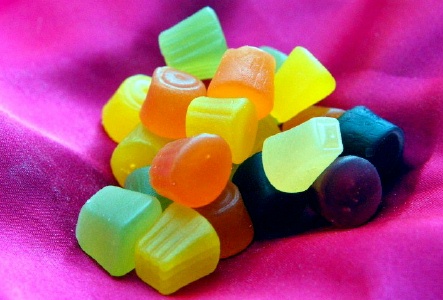
 An assortment of Midget Gems. | |
| Alternative names | Mini Gems |
|---|---|
| Type | Confectionery |
| Place of origin | United Kingdom |
| Main ingredients | Gelatine, sugar, citric acid, fruit flavouring |
Midget Gems (also known as Mini Gems) are chewy, firm sweets similar to wine gums but much harder. They are manufactured from sugar and glucose syrup, corn starch and/or various other starches, animal gelatin, and various colourings and flavouring.
Midget Gems were extremely popular in the North of England and were one of The Lion Confectionery Company's biggest selling brands. In 1995 the company joined forces with Cadbury Trebor Bassett brand Maynard's to market the sweet across the country.[1] At the time the sweet was re-branded under the Maynard's banner, the black Midget Gems were changed from liquorice flavour to blackcurrant, but only in the bagged product – those sold loose, from jars and boxes, remain liquorice. Some of the newer bagged product now have reintroduced the liquorice flavour.
A leading selling point for Midget Gems is that they were often sold loose from a jar or barrel. This made them inexpensive and helped bolster their popularity.[2]
Midget Gems are produced by a wide variety of other companies. Glisten Confectionery manufacture them under their Victoria brand, and in 2007 announced that they were removing all artificial colours and flavourings from the sweets.[3] Many supermarkets and stores such as Asda,[4] Tesco,[5] Marks and Spencer, and Sainsbury's manufacture their own versions.
The sweet is so popular that Liverpool Football Club at one point sold their own branded tubs of Midget Gems,[6] and the sweet frequently appears in lists of "Favourite sweets".[7]
Midget Gems are now sold in wide variety of colours and flavours, adding to the choices consumers have when purchasing them.
In January 2022, Marks & Spencer announced their plan to change the name of their sweet to 'Mini gems', after a campaign by Liverpool Hope University academic Dr. Erin Pritchard who complained the word 'midget', considering its origin in a Victorian freak show which exploited disabled people, was offensive to people with dwarfism.[8] The reaction on social media was mixed. Tesco and Maynards Bassetts followed suit later that year[9][10][11] with other brands starting to follow suit in the following months and years.
See also
[edit]References
[edit]- ^ "Sweet success is target for Gems". Bradford Telegraph and Argus. 11 April 2005.
- ^ "Archived copy". Archived from the original on 20 November 2014. Retrieved 11 November 2014.
{{cite web}}: CS1 maint: archived copy as title (link) - ^ "Victoria sweets remove artificial colours". Talking Retail. 7 July 2007. Archived from the original on 3 February 2013.
- ^ "Confirmed sighting: Asda Smart Price Midget Gems". snackspot.org.uk. 10 January 2008.
- ^ "Tesco Midget Gems Review". DooYoo. Retrieved 21 April 2008.
- ^ "Midget Gems Tub". Liverpool Football Club. Archived from the original on 15 September 2008. Retrieved 21 April 2008.
- ^ "Space dust!". BBC Lancashire. 21 March 2006.
- ^ "Midget Gems change name after academic's campaign". BBC News website. 13 January 2022.
- ^ "Tesco Mini Gems 200G". Tesco. Retrieved 11 October 2022.
- ^ "Midget Gems: Bassetts agree to 'Mini Gems' rebrand following Liverpool academic's campaign". Liverpool World. 13 January 2022. Retrieved 11 October 2022.
- ^ "MAYNARDS BASSETTS MINI GEMS 160G (BOX OF 12)". Cadbury Gifts. Retrieved 11 October 2022.
 | This confectionery-related article is a stub. You can help Wikipedia by expanding it. |
Midget Gems
View on GrokipediaHistory
Origins in Early 20th Century Britain
Midget Gems trace their origins to 1903, when brothers Frank and Albert Hardill founded Lion Confectionery in Cleckheaton, West Yorkshire, initially producing boiled sweets on a small scale from local cottages.[1] [3] The company secured expansion funding from local businessman John Hillard, who stipulated the adoption of the name "Lion Stores" for the enterprise, enabling a shift to larger-scale manufacturing of chewy, fruit-flavored hard candies designed to mimic miniature jewels in appearance and texture.[1] These early Midget Gems were firmer and smaller than contemporary wine gums, featuring an assortment of flavors such as lime, orange, raspberry, blackcurrant, apricot, and pear, with the black variant originally incorporating licorice.[1] The sweets quickly became a staple in northern England, sold affordably loose from jars in shops, reflecting the era's demand for inexpensive, portable confections amid Britain's growing confectionery industry.[1] Lion Confectionery's focus on durable, gem-like boiled sweets positioned Midget Gems as one of its earliest and most enduring brands, predating widespread commercialization by larger firms.[5]Key Manufacturers and Commercial Development
Lion Confectionery Company, founded in 1903 by brothers Frank and Albert Hardill in Cleckheaton, West Yorkshire, pioneered the production of Midget Gems as a core product in its lineup of boiled sweets.[3] The firm specialized in hard, jewel-shaped confections using traditional methods, with Midget Gems emerging as a standout item due to their firm texture and varied fruit flavors.[6] Initial manufacturing focused on regional markets, leveraging local demand in industrial areas where such affordable treats appealed to working-class consumers.[7] By the mid-20th century, Midget Gems had solidified as one of Lion's top-selling brands, particularly in Scotland and northern England, where sales volumes reflected strong consumer loyalty to the product's nostalgic appeal and consistent quality.[7] Commercial growth remained regionally concentrated until 1995, when Lion partnered with Cadbury Trebor Bassett to distribute under the established Maynard's label, marking a shift toward national availability and broader market penetration.[1] This collaboration replaced the original black licorice variant with blackcurrant in bagged formats, adapting to evolving preferences while preserving core production techniques.[1] Post-partnership, manufacturing diversified among UK confectioners, with firms like Glisten Confectionery producing versions under brands such as Victoria, ensuring continued supply amid fluctuating ownership.[1] Original Lion formulations persist in specialty production, emphasizing natural colors and flavors without modern additives, sustaining demand in retro sweet shops and online retailers as of 2023.[8] Annual output specifics remain proprietary, but the sweets' endurance underscores efficient scaling from artisanal origins to commoditized production lines.[6]Composition and Production
Primary Ingredients and Variations
Midget Gems are primarily composed of glucose syrup and sugar as sweeteners, modified starches such as maize or potato starch for structure, and animal gelatin—typically derived from beef or pork—for the characteristic chewy texture.[9][1] Acids including citric, lactic, and acetic contribute acidity and flavor balance, while natural or artificial flavorings and colorants like anthocyanins, curcumin, and paprika extract provide taste and appearance mimicking fruits such as raspberry, lime, and blackcurrant.[10][11] Variations in formulation occur across manufacturers and product lines. Traditional harder varieties, like those from Lion, often incorporate liquorice powder alongside beef gelatin and potato starch for a firmer bite and distinct flavor notes.[12] In contrast, softer midget gems adjust ratios of gelatin and starch to yield a more pliable consistency, sometimes using corn starch and additional glazing agents like carnauba wax.[13] Sugar-free adaptations replace glucose syrup and sugar with maltitol syrup, maintaining starch and acid components but omitting animal gelatin in some cases to align with dietary restrictions.[14] These differences reflect adaptations for texture preferences, allergen considerations, and reduced-sugar demands, though core elements of starch-gelatin binding remain consistent.[15]Manufacturing Techniques
Midget Gems are manufactured using the traditional starch mogul process, a standard technique in the confectionery industry for producing shaped gelatin-based candies such as wine gums and jellies, which share similar firm, chewy textures. This method involves creating a pourable gelatin mass from key ingredients including sugar, glucose syrup, bovine gelatin, starch, acids for tartness, and flavorings/colors, followed by deposition into molded starch trays for setting and drying.[16][17] The process begins with preparing the gelatin by soaking it in water to hydrate, while separately cooking a syrup of sugar, glucose, and water to a precise temperature—typically around 105–110°C—to achieve the desired concentration and prevent crystallization. The hydrated gelatin is then incorporated into the hot syrup, often with added starch for structure and acids like citric or lactic to balance sweetness and contribute to the characteristic tang. Flavors (e.g., fruit extracts) and colors (natural or approved synthetic) are stirred in at this stage, ensuring even distribution before the mixture cools slightly to a viscous state suitable for deposition. Cooking parameters, such as time and temperature, are critical for texture: higher bloom strength gelatin and extended cooking yield the harder consistency distinguishing Midget Gems from softer jellies.[16][18] In the mogul stage, cornstarch trays are imprinted with small, faceted shapes (often diamond-like for gems) using plaques or dies, creating depressions to hold the mixture. The warm gelatin mass is deposited into these molds via automated mogul machines, which handle precise filling to avoid air bubbles and ensure uniformity. Trays are then stacked in controlled humidity environments (around 30–40% RH) for drying, which can take 48–72 hours or up to 10 days depending on formulation, allowing moisture evaporation and gelation to form the firm exterior while retaining chewiness inside. This extended drying differentiates harder varieties like Midget Gems from quicker-setting products.[16][17][19] Post-drying, candies are demolded by sifting or vibrating to separate from starch, which is recycled after sieving. They may undergo a light coating with glazing agents like carnauba wax or oil for shine and to prevent sticking, followed by inspection, sorting by color/flavor, and packaging. While specific details for brands like Lion's Midget Gems remain proprietary, the mogul process ensures scalability and consistency in industrial production, with modern variants incorporating continuous moguls for higher throughput. Quality control focuses on bloom strength (gelatin's gelling power, often 200–250 for firm candies) and moisture content (under 15% for hardness).[18][6]Varieties and Flavors
Traditional Flavor Profiles
Traditional Midget Gems, originating in early 20th-century Britain, primarily draw from a core set of fruit-derived flavors that emphasize natural tartness and sweetness balanced by the sweets' firm, gelatin-based chewiness. Common profiles include orange, evoking a citrusy brightness; lemon, delivering sharp acidity; and lime, offering a tangy, herbaceous note reminiscent of unripe citrus. These are typically achieved through flavorings like essential oils or fruit extracts, with colors derived from natural sources such as tartrazine for yellows or patent blue for greens in traditional formulations.[20][21] Blackcurrant provides a deep, berry-forward tartness often associated with British palate preferences, while raspberry and strawberry contribute softer, jam-like sweetness with subtle floral undertones. Pear and apricot appear less consistently but add a mellow, stone-fruit subtlety when included, rounding out assortments in multi-flavor packs. The black pieces, historically the most distinctive, were liquorice-flavored for an aniseed bitterness that contrasted the fruity elements, though some manufacturers substituted blackcurrant in later iterations to broaden appeal without altering the core gum texture.[1][22][21] These flavors reflect confectionery practices prioritizing simplicity and regional familiarity, with glucose syrup and sugar dominating the base to preserve intensity without dilution. Assortments vary slightly by producer—Lions maintaining a harder gum style with liquorice intact, versus softer variants—but the palette remains anchored in these classics, avoiding exotic or synthetic notes until modern expansions.[6][23]Modern Adaptations Including Vegan Options
In response to growing demand for plant-based confectionery, manufacturers have developed vegan versions of midget gems by omitting gelatin, an animal-derived gelling agent traditionally used in these sweets.[24] Free From Fellows, a UK-based brand specializing in alternative sweets, introduced vegan midget gems around 2020 as part of its expanded range of gelatin-free products, sweetened with maltitol syrup or stevia-derived alternatives to achieve a sugar-free profile with approximately half the calories of conventional versions.[25][26] These adaptations maintain the characteristic firm, gem-shaped texture and fruity flavors—such as raspberry, blackcurrant, pomegranate, and others—while incorporating natural colors and flavors without artificial preservatives, gluten, or dairy.[27][28] Available in 70g or 100g packs, they are distributed through UK retailers including Holland & Barrett, Ocado, and Grape Tree, targeting consumers seeking low-sugar, tooth-friendly options suitable for vegans and vegetarians.[29][30] Sugar-free formulations represent another key modern tweak, addressing health concerns over high sugar content in originals, with Free From Fellows' variants verified as free from soya, lactose, egg, and nuts to broaden accessibility.[31] Traditional brands like Maynards Bassetts and Co-op continue offering non-vegan versions containing animal-derived ingredients, highlighting the niche but expanding role of these specialized adaptations in the British sweets market.[32][33]Naming and Terminology Debate
Historical Context of the Term "Midget Gems"
The term "Midget Gems" was coined in 1903 upon the launch of the eponymous chewy confectionery by Lion Confectionery, a company established that year in Cleckheaton, West Yorkshire, by brothers Frank and Albert Hardill.[3][5] The name descriptively combined "midget," denoting the sweets' diminutive size relative to larger gum varieties like wine gums, with "gems" evoking their translucent, jewel-like shapes and colorful fruit flavors.[1] At the time, "midget" was a neutral English term derived from "midge," referring to a small gnat or fly, commonly applied to miniature objects or animals without pejorative intent.[34] In the early 20th-century British confectionery context, such nomenclature aligned with product marketing emphasizing novelty and compactness, as Lion's initial production occurred in modest cottage facilities before scaling with family investment.[1] The sweets quickly became a bestseller in northern England, reflecting the era's growing demand for affordable, hard-set gelatin-based treats amid industrialization's expansion of mass-produced candies. The term's usage predated widespread sensitivity to its later associations with human stature, which originated in 19th-century American showmanship (e.g., P.T. Barnum's promotions) but were not inherently linked to the candy's branding.[4] Lion Confectionery retained the name through subsequent ownership changes, including a 1995 partnership with Cadbury Trebor Bassett, underscoring its entrenched commercial identity for over a century.[1] Historical advertisements and packaging from the period, focused on flavor assortments including licorice, reinforced the size-based etymology without reference to anthropomorphic connotations.[35] This original intent contrasts with modern reinterpretations, where the descriptor's evolution has prompted reevaluation, though primary sources confirm its inception as a straightforward size indicator in 1903.[3]Recent Renaming Efforts and Criticisms
In January 2022, Marks & Spencer rebranded its Midget Gems confectionery as Mini Gems following advocacy from Dr. Erin Pritchard, a lecturer in disability studies at Liverpool John Moores University who has achondroplasia, a form of dwarfism.[36][37] Pritchard contended that "midget" constitutes hate speech, arguing it reduces individuals with dwarfism to objects of ridicule and perpetuates dehumanization, a view echoed by organizations like Little People of America, which has long advocated against the term in reference to people.[36][38] The retailer stated the change aimed to respect customer sensitivities, implementing it after internal review prompted by Pritchard's campaign, which began gaining traction around 2020.[39][37] The renaming sparked debate, with critics arguing it exemplified corporate capitulation to linguistic prescriptivism disconnected from the term's historical, non-pejorative use for diminutive objects since the early 20th century.[40] Figures such as commentator Allison Pearson questioned the necessity, noting "midget" derives from the French for "small measure" and had been applied innocuously to sweets for decades without intent to slur, suggesting the offense stemmed more from modern reinterpretation than inherent malice.[36] Public reactions, including social media backlash, highlighted perceptions of overreach, with some consumers decrying it as an erosion of traditional naming conventions amid broader pressures on brands to align with evolving social norms.[41][42] While M&S's move influenced discussions, it did not prompt uniform industry-wide changes; competitors like Swizzels continued marketing Midget Gems without alteration as of 2023, indicating limited commercial momentum beyond isolated rebrands.[43] Proponents of the rename, including Pritchard, maintained it addressed real harms, citing surveys where a majority of people with dwarfism reported discomfort with the term, though empirical data on its direct impact on sales or consumer behavior remains anecdotal.[38][40] Critics, however, pointed to potential unintended consequences, such as diluting product recognition in a market where the original name evoked nostalgia, with no peer-reviewed studies quantifying offense levels specific to confectionery contexts.[36]Nutritional Profile and Health Implications
Macronutrient Breakdown and Caloric Content
Midget Gems, as gelatin-based confectionery, derive the majority of their caloric content from carbohydrates, primarily in the form of sugars and glucose syrup, with protein contributed by gelatin and minimal fat. For a standard formulation from Maynards Bassetts, a prominent producer, 100 grams yields approximately 350 kilocalories, comprising 79 grams of carbohydrates (including 58 grams of sugars), 8.8 grams of protein, and 0.2 grams of fat (of which 0.2 grams are saturated).[44][45] These values align with the product's composition of glucose syrup, sugar, starch, and gelatin, where the energy density reflects high simple carbohydrate content typical of boiled sweets.[46] Nutritional profiles vary slightly across brands and formulations; for instance, some generic or alternative recipes report 325-338 kilocalories per 100 grams, with protein ranging from 1.2 to 8.8 grams depending on gelatin concentration, while fat remains consistently below 0.5 grams.[46][47] A serving of 12 sweets (approximately 24 grams) typically provides 84 kilocalories, 19 grams of carbohydrates, 2 grams of protein, and 0.1 grams of fat.[48] The following table summarizes the macronutrient breakdown for Maynards Bassetts Midget Gems per 100 grams:| Nutrient | Amount per 100 g | % of typical daily reference intake* |
|---|---|---|
| Energy | 350 kcal | 18% |
| Fat | 0.2 g | <1% |
| of which saturates | 0.2 g | 1% |
| Carbohydrates | 79 g | 30% |
| of which sugars | 58 g | 64% |
| Protein | 8.8 g | 18% |