Hubbry Logo
GumsGumsMain
Open search
Gums
Community hub
Gums
logo
8 pages, 0 posts
0 subscribers
Be the first to start a discussion here.
Contribute something
Gums
Gums
from Wikipedia
Gums
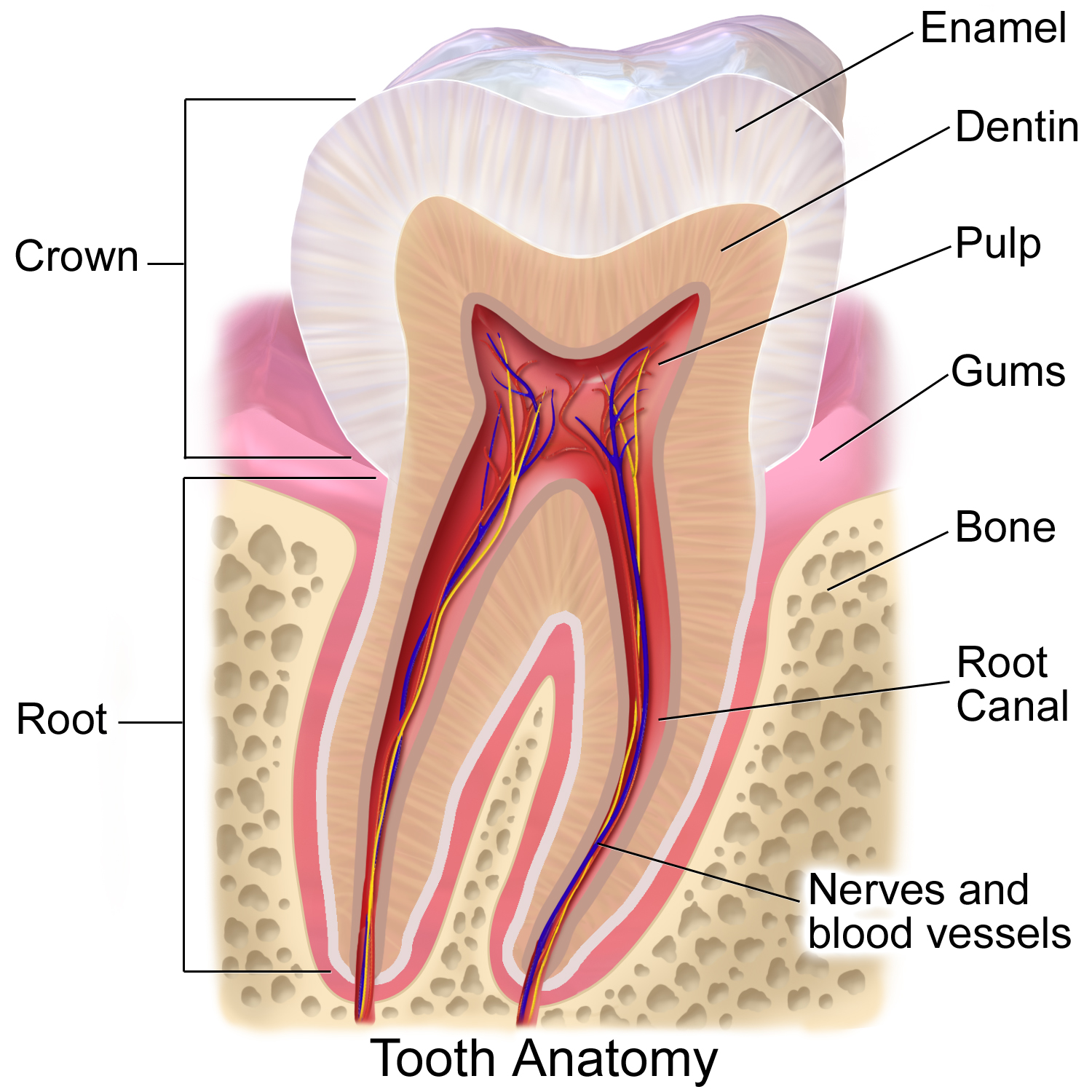
Cross-section of a tooth with gums labeled
Details
Identifiers
Latingingiva
MeSHD005881
TA98A05.1.01.108
A03.1.03.003
A03.1.03.004
TA22790
FMA59762
Anatomical terminology

The gums or gingiva (pl.: gingivae) consist of the mucosal tissue that lies over the mandible and maxilla inside the mouth. Gum health and disease can have an effect on general health.[1]

Structure

[edit]

The gums are part of the soft tissue lining of the mouth. They surround the teeth and provide a seal around them. Unlike the soft tissue linings of the lips and cheeks, most of the gums are tightly bound to the underlying bone which helps resist the friction of food passing over them. Thus when healthy, it presents an effective barrier to the barrage of periodontal insults to deeper tissue. Healthy gums are usually coral pink in light skinned people, and may be naturally darker with melanin pigmentation.

Changes in color, particularly increased redness, together with swelling and an increased tendency to bleed, suggest an inflammation that is possibly due to the accumulation of bacterial plaque. Overall, the clinical appearance of the tissue reflects the underlying histology, both in health and disease. When gum tissue is not healthy, it can provide a gateway for periodontal disease to advance into the deeper tissue of the periodontium, leading to a poorer prognosis for long-term retention of the teeth. Both the type of periodontal therapy and homecare instructions given to patients by dental professionals and restorative care are based on the clinical conditions of the tissue.[2]

A diagram of the periodontium. The crown of the tooth is covered by enamel (A). Dentin (B). The root of the tooth is covered by cementum. C, alveolar bone. D, subepithelial connective tissue. E, oral epithelium. F, free gingival margin. G, gingival sulcus. H, principal gingival fibers. I, alveolar crest fibers of the periodontal ligament (PDL). J, horizontal fibers of the PDL. K, oblique fibers of the PDL.

The gums are divided anatomically into marginal, attached and interdental areas.

Marginal gums

[edit]

The marginal gum is the edge of the gums surrounding the teeth in collar-like fashion. In about half of individuals, it is demarcated from the adjacent, attached gums by a shallow linear depression, the free gingival groove. This slight depression on the outer surface of the gum does not correspond to the depth of the gingival sulcus but instead to the apical border of the junctional epithelium. This outer groove varies in depth according to the area of the oral cavity. The groove is very prominent on mandibular anteriors and premolars.

The marginal gum varies in width from 0.5 to 2.0 mm from the free gingival crest to the attached gingiva. The marginal gingiva follows the scalloped pattern established by the contour of the cementoenamel junction (CEJ) of the teeth. The marginal gingiva has a more translucent appearance than the attached gingiva, yet has a similar clinical appearance, including pinkness, dullness, and firmness. In contrast, the marginal gingiva lacks the presence of stippling, and the tissue is mobile or free from the underlying tooth surface, as can be demonstrated with a periodontal probe. The marginal gingiva is stabilized by the gingival fibers that have no bony support. The gingival margin, or free gingival crest, at the most superficial part of the marginal gingiva, is also easily seen clinically, and its location should be recorded on a patient's chart.[2]

Attached gum

[edit]

The attached gums are continuous with the marginal gum. It is firm, resilient, and tightly bound to the underlying periosteum of alveolar bone. The facial aspect of the attached gum extends to the relatively loose and movable alveolar mucosa, from which it is demarcated by the mucogingival junction. Attached gum may present with surface stippling. The tissue when dried is dull, firm, and immobile, with varying amounts of stippling. The width of the attached gum varies according to its location. The width of the attached gum on the facial aspect differs in different areas of the mouth. It is generally greatest in the incisor region (3.5 to 4.5 mm in the maxilla and 3.3 to 3.9 mm in the mandible) and less in the posterior segments, with the least width in the first premolar area (1.9 mm in the maxilla and 1.8 mm in the mandible). However, certain levels of attached gum may be necessary for the stability of the underlying root of the tooth.[2]

Interdental gum

[edit]

The interdental gum lies between the teeth. They occupy the gingival embrasure, which is the interproximal space beneath the area of tooth contact. The interdental papilla can be pyramidal or have a "col" shape. Attached gums are resistant to the forces of chewing and covered in keratin.

The col varies in depth and width, depending on the expanse of the contacting tooth surfaces. The epithelium covering the col consists of the marginal gum of the adjacent teeth, except that it is nonkeratinized. It is mainly present in the broad interdental gingiva of the posterior teeth, and generally is not present with those interproximal tissue associated with anterior teeth because the latter tissue is narrower. In the absence of contact between adjacent teeth, the attached gum extends uninterrupted from the facial to the lingual aspect. The col may be important in the formation of periodontal disease but is visible clinically only when teeth are extracted.[2]

Characteristics of healthy gums

[edit]

Color

[edit]
Natural "coral pink" gums without any pigmentation
Hyperpigmentation of the gum in a 22 year old non smoker female patient

Healthy gums usually have a color that has been described as "coral pink". Other colours like red, white, and blue can signify inflammation (gingivitis) or pathology. Smoking or drug use can cause discoloring as well (such as "meth mouth"). Although described as the colour coral pink, variation in colour is possible. This can be the result of factors such as: thickness and degree of keratinization of the epithelium, blood flow to the gums, natural pigmentation of the skin, disease, and medications.[3]

Since the colour of the gums can vary, uniformity of colour is more important than the underlying color itself. Excess deposits of melanin can cause dark spots or patches on the gums (melanin gingival hyperpigmentation), especially at the base of the interdental papillae. Gum depigmentation (aka gum bleaching) is a procedure used in cosmetic dentistry to remove these discolorations.

Contour

[edit]

Healthy gums have a smooth curved or scalloped appearance around each tooth. Healthy gums fill and fit each space between the teeth, unlike the swollen gum papilla seen in gingivitis or the empty interdental embrasure seen in periodontal disease. Healthy gums hold tight to each tooth in that the gum surface narrows to "knife-edge" thin at the free gingival margin. On the other hand, inflamed gums have a "puffy" or "rolled" margin.

Texture

[edit]

Healthy gums have a firm texture that is resistant to movement, and the surface texture often exhibits surface stippling. Unhealthy gums, on the other hand, are often swollen and less firm. Healthy gums have an orange-peel like texture to it due to the stippling.

Reaction to disturbance

[edit]

Healthy gums usually have no reaction to normal disturbance such as brushing or periodontal probing. Unhealthy gums, conversely, will show bleeding on probing (BOP) and/or purulent exudate.

Clinical significance

[edit]

The gingival cavity microecosystem, fueled by food residues and saliva, can support the growth of many microorganisms, of which some can be injurious to health. Improper or insufficient oral hygiene can thus lead to many gum and periodontal disorders, including gingivitis or periodontitis, which are major causes for tooth failure. Recent studies have also shown that anabolic steroids are also closely associated with gingival enlargement requiring a gingivectomy for many cases. Gingival recession is when there is an apical movement of the gum margin away from the biting (occlusal) surface.[4] It may indicate an underlying inflammation such as periodontitis[5] or pyorrhea,[5] a pocket formation, dry mouth[5] or displacement of the marginal gums away from the tooth by mechanical (such as brushing),[5] chemical, or surgical means.[6] Gingival retraction, in turn, may expose the dental neck and leave it vulnerable to the action of external stimuli, and may cause root sensitivity.[5]

See also

[edit]

References

[edit]
[edit]
Revisions and contributorsEdit on WikipediaRead on Wikipedia
from Grokipedia
The gums, also known as the gingiva, are the soft, pink mucosal tissues that line the upper and lower jaws and surround the base of the , forming a protective seal around their necks. Composed primarily of keratinized and underlying , the gums anchor the to the alveolar via the periodontal and serve as a critical barrier against , food particles, and mechanical trauma in the oral cavity. Healthy gums are firm, stippled, and coral-pink in color (though pigmentation varies by ), with a marginal portion that hugs the tooth surface and an attached portion that binds firmly to the underlying . As an essential component of the —the supportive structures of the teeth—the gums play a vital in maintaining oral by preventing the ingress of pathogens into deeper tissues, facilitating mastication, and contributing to speech and . They are richly vascularized and innervated, receiving blood supply from branches of the maxillary and arteries, which ensures rapid healing but also makes them susceptible to from plaque accumulation. Common conditions affecting the gums include , characterized by reversible due to bacterial biofilms, and periodontitis, a progressive that can lead to if untreated. Maintaining gum health involves daily oral hygiene practices such as brushing, flossing, and professional cleanings, as poor care can exacerbate systemic links to conditions like and . Research highlights the gums' as a dynamic influenced by diet, , and , underscoring their broader implications for overall .

Anatomy

Gross anatomy

The gingiva, commonly known as the gums, consists of the soft mucosal tissue that covers the alveolar processes of the and and surrounds the necks of the , forming a protective collar around each . This structure is part of the and serves as a barrier between the oral environment and the underlying periodontal tissues. The gingiva is divided into three main components based on its attachment and position relative to the . The marginal gingiva, also called free gingiva, forms a collarette or collar around the cervical portion of each , typically measuring about 1 mm in width, and is separated from the tooth surface by the . The attached gingiva extends from the marginal gingiva to the mucogingival junction and is firmly bound to the underlying alveolar bone and tooth surfaces via the and fibers. Between adjacent teeth, the interdental gingiva fills the spaces apical to the contact points, forming pyramidal or scalloped papillae that occupy the interdental embrasures. Anatomically, the gingiva is delineated by the mucogingival junction, which marks the boundary between the attached gingiva and the more mobile, non-keratinized alveolar mucosa, while the attached gingiva extends laterally toward the vestibule, the space between the alveolar ridge and the lips or cheeks. It relates intimately to the teeth at the (CEJ), where the enamel meets the root , and is contiguous with the alveolar bone crest and the periodontal ligament, which anchors the teeth to the bone. These relationships ensure stability and protection of the periodontal structures. Structural variations exist between the maxillary and mandibular gingiva. In the , the gingiva is generally wider and thicker, ranging from 1 to 9 mm, particularly in the regions, compared to the , where it measures 1 to 8 mm and is narrowest on the and canines (about 1.9 mm) but broader on the molars (up to 4.7 mm).

Microscopic

The gums, or gingiva, consist of a superficial overlying a . The is a stratified squamous type, varying in keratinization based on location: it is typically keratinized or parakeratinized in the and marginal regions, providing mechanical protection, while remaining non-keratinized in the sulcular area. The underlying is composed primarily of fibers (types I and III), fibroblasts, and , with cellular elements making up about 5% of its volume. The oral of the attached gingiva exhibits orthokeratinization, featuring a well-defined without retained nuclei, along with rete ridges that interdigitate with the for enhanced attachment. In contrast, the marginal gingiva often displays parakeratinization, where the retains pyknotic nuclei, contributing to a slightly less robust barrier. predominate throughout the , forming layers from cuboidal basal cells to flattened surface cells, while melanocytes in the basal layer produce for pigmentation, with a melanocyte-to- ratio of approximately 1:10 to 1:15. The sulcular epithelium, lining the gingival sulcus, is a non-keratinized stratified squamous layer of 10 to 20 cells thick, serving as a semi-permeable barrier without direct attachment to the . Adjacent to it, the forms a specialized, non-keratinized collar around the , consisting of 15 to 30 cell layers coronally tapering to 1 to 3 apically; it adheres to the enamel via hemidesmosomes and an internal , spanning 0.25 to 1.35 in height. In the lamina propria, immune cells such as T lymphocytes, B cells, macrophages, and mast cells reside among the collagen bundles, supporting local immune surveillance. Fibroblasts maintain the , including and . A dense network permeates the papillary layer of the , facilitating nutrient exchange and crevicular fluid production, while arterioles from branches of the and facial arteries supply the tissue. Innervation arises from branches, including the inferior alveolar, lingual, and buccal nerves in the , and posterior superior alveolar nerves in the maxilla, providing sensory and functions.

Development

Embryonic origins

The gingiva, or gums, originate from distinct embryonic germ layers during early fetal development. The oral , which forms the surface layer of the gingiva, derives from the of the , the primitive oral cavity. In contrast, the underlying arises from -derived , specifically cranial neural crest cells that migrate to form ectomesenchyme in the orofacial region. These dual origins establish the foundational structure of the gingival tissues, with the ectodermal epithelium providing a protective barrier and the mesenchymal component contributing to the supportive stroma. Gingival formation occurs during weeks 6 to 7 of , coinciding with the broader development of the oral cavity. This process involves the fusion of the primary , formed by the merger of the medial nasal and maxillary processes, and the mandibular prominences, which delineate the future gingival margins. By week 5, ectodermal thickenings from the initiate the oral lining, progressing to a multilayered by week 10, with gingival regions beginning to specialize. Epithelial-mesenchymal interactions drive this differentiation, where signaling between the ectodermal oral and induces patterned growth and tissue specification essential for gingival architecture. The development of the gingiva is intimately linked to odontogenesis, arising concurrently with the formation of the dental lamina and . Around week 6, the dental lamina—a band of ectodermal thickening—emerges along the , giving rise to tooth buds that include the , which interacts with underlying to form . These events position the nascent gingival tissues adjacent to developing , establishing the dentogingival junction through reciprocal inductive signals that promote gingival epithelial attachment to the . Embryonic anomalies in gingival formation often stem from disruptions in these fusion and interactive processes. Incomplete fusion of the maxillary and mandibular processes or primary palate can result in orofacial clefts that extend to gingival clefts or defects, altering the continuity of the gingival tissue and potentially affecting sites. Such malformations, observed in conditions like cleft lip and , highlight the critical timing of weeks 6 to 7 for proper gingival .

Postnatal changes

During the primary dentition phase, the gingiva initially forms a protective collar around the erupting deciduous teeth, with the marginal gingiva adapting through coronal migration to accommodate tooth emergence. This process is often accompanied by localized gingival redness due to the mechanical irritation and inflammatory response during eruption, though significant swelling is typically absent. The width of the attached gingiva increases progressively with each successive tooth eruption, establishing a stable mucogingival junction that supports the primary teeth. As the permanent emerges during childhood and , the marginal gingiva undergoes an apical shift relative to the cemento-enamel junction, allowing for the exposure of a greater clinical length while maintaining periodontal . This migration facilitates the establishment of a broader zone of attached gingiva, which typically measures 1-3 mm in width around permanent incisors and increases further with maturation. The attached gingiva develops through epithelial differentiation and remodeling, providing firmer adherence to the underlying compared to the primary phase. With advancing age into adulthood and , the gingiva exhibits progressive thinning of the epithelial layer and increased susceptibility to , particularly in the elderly where up to 88% of individuals over 65 years show exposure of surfaces on at least one . Concurrently, keratinization of the gingival intensifies with maturity, enhancing surface durability but contributing to a smoother, less stippled texture in older age. These alterations reflect cumulative effects of reduced cellular turnover and vascular changes in the gingival . Hormonal fluctuations exert transient influences on gingival morphology, notably during where elevated and progesterone levels provoke generalized enlargement of the interdental papillae and marginal gingiva in response to plaque accumulation. This puberty-associated gingival overgrowth resolves post-adolescence with normalization of hormone levels and improved hygiene. Similarly, induces in 60-75% of cases, characterized by heightened and inflammatory due to progesterone surges, leading to edematous and erythematous gingival changes that typically subside postpartum. Environmental factors prompt adaptive gingival remodeling, as seen in orthodontic tooth movement where applied forces induce collagen reorganization and transient gingival on the pressure side, followed by tissue adaptation without permanent in most cases. Trauma, such as from injury or excessive occlusal loading, triggers a phased response involving , proliferative repair, and matrix remodeling to restore gingival , often resulting in heightened keratinized tissue formation.

Functions

Protective mechanisms

The gums, or gingiva, serve as a primary barrier against microbial through their keratinized , which forms a tough, protective layer on the outer surface exposed to the oral environment. This , particularly in the masticatory mucosa, provides mechanical resilience and prevents pathogens from penetrating into the underlying and periodontal structures. The keratinization process involves the production of proteins that strengthen the epithelial cells, creating an impermeable shield that resists abrasion and bacterial adhesion. A critical sealing role is fulfilled by the junctional epithelium and the , which together form a tight, non-keratinized cuff around the necks, effectively blocking bacterial entry into the periodontal ligament and alveolar bone. The junctional epithelium adheres directly to the tooth surface via hemidesmosomes and internal , maintaining a dynamic seal that accommodates minor movements while excluding oral biofilms. The , a shallow V-shaped crevice approximately 0.5–3 mm deep in health, further enhances this barrier by containing the initial microbial challenge without allowing deeper invasion. Mechanically, the attached gingiva contributes to protection by its firm, collagen-rich structure that anchors to the and absorbs masticatory forces, thereby preventing and exposure of surfaces. This immobile portion of the gingiva, distinguished by its stippled appearance and keratinized surface, dissipates shear and compressive stresses during , safeguarding the underlying from trauma and maintaining gingival contour integrity. Studies on biomechanics highlight the superior tensile strength of attached gingiva compared to other mucosal regions, underscoring its role in load distribution. Immune defense in the gingiva involves resident immune cells, such as Langerhans cells and neutrophils, alongside secreted into the gingival crevicular fluid (GCF). These peptides, including human beta-defensins (hBDs) and cathelicidin LL-37, exhibit broad-spectrum activity against , fungi, and viruses by disrupting microbial membranes and modulating inflammation. GCF, an rich in immunoglobulins and cytokines, flows continuously into the sulcus, delivering these effectors to neutralize threats at the tooth-gingiva interface and recruit additional immune responses when needed. The gums demonstrate robust capacity through rapid epithelial turnover and efficient synthesis, enabling quick repair after or surgical intervention. Gingival epithelial cells exhibit a turnover rate of approximately 4–6 days, far exceeding that of , which facilitates swift re-epithelialization and barrier restoration with minimal scarring. Fibroblasts in the rapidly upregulate type I production, driven by growth factors like TGF-β1, to rebuild structural integrity within weeks, supporting overall periodontal stability.

Sensory and supportive roles

The gingiva receives sensory innervation primarily from the superior and inferior alveolar nerves, which are branches of the maxillary (V2) and mandibular (V3) divisions of the (cranial nerve V), enabling detection of pain, touch, and temperature in the . These nerves form a dense within the gingival , providing fine tactile discrimination essential for oral . Mechanoreceptors located in the periodontal ligament and gingival tissues play a key role in , facilitating the regulation of bite force during occlusion and mastication by relaying mechanical stimuli to the . These receptors, including Ruffini-like endings, respond to low-threshold forces as small as 1 N, contributing to precise control of movements and preventing excessive loading on teeth. Gingival mechanoreceptors specifically enhance tactile feedback, supporting adaptive responses in dynamic oral activities. The attached gingiva serves a critical supportive function by firmly anchoring the teeth through its collagenous fibrous connections to the underlying alveolar bone and , thereby stabilizing the against mechanical stresses. This firm attachment, typically 3-12 mm in width, helps distribute occlusal loads across the , dissipating forces during biting and chewing to maintain structural integrity. During mastication, the gingiva provides a cushioning effect that absorbs and redirects forces, reducing the risk of trauma to the underlying mucosal and periodontal structures. This resilient tissue layer, in conjunction with the periodontal ligament, modulates impact to protect against injury while enabling efficient food breakdown. Gingival sensitivity contributes to sensory feedback that supports coordinated movements in swallowing and speech, integrating tactile cues from the oral cavity to refine motor patterns. This proprioceptive input aids in bolus positioning and articulation precision, ensuring smooth transitions between oral phases of these functions.

Healthy characteristics

Appearance and color

The normal color of healthy gingiva typically ranges from coral to salmon in individuals with tones, while it can vary to shades of brown or black in those with darker complexions due to the presence of produced by melanocytes in the gingival . This pigmentation arises from the deposition of granules, which contribute to the tissue's protective function against environmental factors. Gingival pigmentation is influenced by genetic factors, such as racial and ethnic differences, which determine the baseline content and distribution. Physiological factors, including hormonal variations, can also modulate production and lead to temporary increases in pigmentation intensity without indicating . In healthy gingiva, the attached portion often exhibits a stippled or speckled uniformity, resulting from microscopic projections of into the overlying that create a textured, orange-peel-like surface. This stippled appearance is smoother or absent in the marginal and sulcular regions, where the forms a more uniform barrier around the teeth. Gingival thickness can be visually assessed through translucency: thin biotypes appear delicate and translucent, allowing underlying structures like tooth roots to show through, whereas thick biotypes present an opaque, robust look. Variations in gingival color also occur with and age; males tend to have slightly darker pigmentation, often with more blue undertones in color coordinates, compared to females. Gingival pigmentation tends to increase with age as levels rise.

Texture and contour

The healthy gingiva presents a firm and resilient texture, primarily attributable to the dense collagen fiber network within its , which provides structural support and elasticity. This firmness is most evident in the attached gingiva, which adheres tightly to the underlying and resists deformation under normal oral forces. A characteristic feature of the attached gingiva is its stippled surface, resembling the texture of an orange peel, caused by small, rounded projections of the into the subjacent . This is typically more pronounced in the attached portion and interdental regions, contributing to the gingiva's overall resilience and indicating robust epithelial-connective tissue integration. In terms of contour, the marginal gingiva forms a thin, knife-edge margin that follows a scalloped outline, adapting closely to the curvature of the cemento-enamel junction without visible gaps. The interdental papillae adopt a pyramidal , filling the embrasures between adjacent to maintain tight interproximal seals. This precise contour ensures effective coverage of the alveolar bone and root surfaces. The gingiva demonstrates high adaptability by forming a close apposition to surfaces, with the maintaining a shallow depth of 0-3 mm in health. During clinical probing, healthy gingiva resists penetration beyond this depth without bleeding or signs of , reflecting its intact attachment apparatus. Regional variations in texture are notable, with the labial gingiva often exhibiting more compared to the lingual aspects, influenced by differences in epithelial keratinization and functional demands.

Response to stimuli

In healthy gums, gentle probing or brushing does not induce hemorrhage, distinguishing normal tissue from inflamed states where readily occurs. This absence of reflects the integrity of the gingival sulcular and underlying , which resist minor mechanical disruptions without vascular compromise. Healthy gums exhibit a high threshold to routine mechanical pressures, such as those encountered during , remaining painless under normal functional loads. While mild sensitivity may arise from extreme stimuli like intense or chemical exposure, the gingival tissues tolerate everyday oral activities without discomfort, owing to their dense innervation and robust somatosensory adaptation. The inflammatory resilience of healthy gums ensures rapid resolution of minor trauma, such as superficial abrasions, without persistent swelling or redness. This controlled response involves transient and recruitment to clear debris, followed by swift subsidence of any initial , preventing progression to chronic changes. Gingival crevicular (GCF) in healthy gums serves as a baseline low-volume , typically a few microliters per hour, with inherent properties that flush and deliver defensive agents like and into the sulcus. Upon mild stimulation, such as mastication or gentle irritation, GCF secretion increases slightly to enhance this protective barrier without eliciting . Healing dynamics in healthy gums feature efficient epithelial migration, where from the wound margins advance as a cohesive sheet to close small incisions within 2-3 days. This process, initiated within 12-24 hours post-injury, restores the epithelial barrier through proliferation and remodeling, supported by formation beneath the migrating layer.

Pathology

Inflammatory diseases

Inflammatory diseases of the gums encompass a range of conditions characterized by localized immune responses to microbial or autoimmune triggers, leading to tissue damage without initial involvement of deeper periodontal structures. These disorders primarily affect the soft gingival tissues and are distinguished from healthy states by excessive redness, , and disrupted epithelial integrity, deviating from the baseline mild inflammatory response to mechanical stimuli observed in normal gums. The most common forms include plaque-induced and more severe acute or chronic variants. Gingivitis represents the most prevalent inflammatory condition, manifesting as a reversible confined to the marginal gingiva due to the accumulation of bacterial plaque along the gumline. This , composed of diverse microbial communities, triggers an inflammatory cascade that results in clinical signs such as gingival redness, swelling, and spontaneous or provoked upon brushing or probing. Unlike deeper infections, does not involve attachment loss and fully resolves with effective plaque removal, highlighting its superficial and host-responsive nature. Periodontitis is a destructive inflammatory that develops as an extension of untreated , where invade the subgingival area, eliciting a chronic that affects the periodontal and alveolar . Clinical features include probing depths greater than 4 mm, clinical attachment loss, radiographic evidence of , and potential . Unlike , periodontitis is irreversible and can progress to severe stages leading to if not managed through scaling, planing, and possibly surgical interventions. Acute necrotizing ulcerative (ANUG), also known as trench mouth, is a rapidly progressive form of gingival marked by tissue , severe , and the formation of a grayish pseudomembrane covering ulcerated interdental papillae. Etiologically, ANUG arises from a polymicrobial invasion dominated by and spirochetal species, often exacerbated by predisposing factors like , poor , and . Symptoms include fetid halitosis, fever, and , with lesions presenting as punched-out craters that can lead to rapid tissue sloughing if untreated. Desquamative gingivitis constitutes a chronic inflammatory variant characterized by episodic sloughing of the gingival , resulting in painful erosive lesions, , and fragile bullae that rupture to form denuded areas. This condition is frequently autoimmune-mediated, with mucous membrane pemphigoid being a primary culprit, where autoantibodies target hemidesmosomal proteins, leading to subepithelial separation and persistent gingival fragility. Unlike bacterial forms, desquamative gingivitis often requires immunosuppressive therapy to halt the cycle of epithelial and secondary infection. The progression of these inflammatory diseases typically begins with in the subgingival , where shifts in microbial composition—favoring pathogenic species—elicit an exaggerated host . This prompts the release of pro-inflammatory cytokines, including interleukin-1 (IL-1) and (TNF), from gingival fibroblasts, macrophages, and neutrophils, amplifying local and tissue breakdown. Such cytokine-mediated pathways underscore the interplay between microbial and innate immunity in driving gingival pathology. Epidemiologically, affects over 90% of adults worldwide, reflecting its near-ubiquitous association with inadequate plaque control, while elevates the risk and severity of inflammatory progression by impairing immune surveillance and vascular responses in the gingiva.

Non-inflammatory conditions

refers to the apical displacement of the gingival margin, resulting in exposure of the root surface and potential . Non-inflammatory causes include mechanical trauma, such as aggressive toothbrushing, and anatomical factors like a thin gingival biotype, where the gingival tissue thickness is less than 1.1 mm, predisposing individuals to recession due to reduced tissue resilience. This condition leads to root sensitivity from exposure to thermal, tactile, or chemical stimuli, and may contribute to root caries or aesthetic concerns, particularly in . The severity of gingival recession is commonly assessed using the Miller classification system, proposed in 1985, which evaluates the extent of relative to the mucogingival junction and interdental or loss to predict root coverage outcomes. Grade I involves marginal tissue not extending to the mucogingival junction with no interdental or loss, offering a good for complete root coverage. Grade II features extending to or beyond the mucogingival junction but without interdental loss, with a moderate . Grade III includes beyond the mucogingival junction with partial interdental or loss less than 50% of the recession depth, resulting in a poor for full coverage. Grade IV denotes severe beyond the mucogingival junction with interdental loss exceeding 50% of the recession depth, yielding a very poor . Hyperplastic conditions of the gingiva, characterized by fibrous overgrowth without primary inflammatory drivers, often arise from drug-induced mechanisms. , an , cyclosporine, an immunosuppressant, and like are the most common culprits, with showing the highest prevalence among users. These drugs promote excessive accumulation in gingival , leading to firm, non-bleeding enlargements that primarily affect the interdental papillae and may interfere with mastication or . The overgrowth typically develops within months of initiating and is more pronounced in areas of plaque accumulation, though not directly caused by . Gingival neoplasms encompass both benign and malignant growths, with benign lesions being far more prevalent. Benign fibromas, often arising from chronic trauma, present as firm, pedunculated or sessile masses on the gingiva, commonly in adults and twice as frequent in females; they consist of fibrous and require excision if symptomatic. Malignant neoplasms, such as , are rare in the gingiva compared to other oral sites like the , accounting for a small fraction of oral cancers; however, use, including and smokeless forms, significantly elevates risk, with up to 80% of cases linked to tobacco exposure acting synergistically with alcohol. Early detection is crucial, as gingival s may mimic benign overgrowths. Genetic disorders like hereditary gingival fibromatosis represent a rare cause of non-inflammatory gingival overgrowth, with a prevalence of approximately 1 in 175,000 and autosomal dominant inheritance in most cases, though 20% are sporadic. This condition manifests as a benign, slowly progressive, fibrous enlargement of the attached gingiva, often pink with marked , beginning at birth or during the eruption of primary/, and covering teeth partially or completely without inflammation or bone involvement. It may occur in isolation or as part of syndromes like Zimmerman-Laband; treatment involves surgical , preferably after to minimize recurrence. Systemic conditions can also produce non-inflammatory gingival changes, such as in , where leukemic cell infiltration leads to gingival swelling or without primary immune-mediated . This manifestation is most common in acute monocytic (M5) and myelomonocytic (M4) leukemias, affecting up to 66.7% of M5 cases, presenting as soft, edematous enlargements prone to bleeding that regress with . Such gingival involvement may precede systemic diagnosis, highlighting the importance of in unexplained overgrowths.

Risk factors and prevention

Poor , characterized by inadequate plaque removal, is a primary modifiable risk factor for gum diseases such as and periodontitis, as bacterial accumulation leads to and tissue destruction. significantly increases susceptibility to by impairing immune responses, vascular function, and healing processes, with meta-analyses reporting odds ratios ranging from approximately 2 to 6 for smokers compared to non-smokers. Diabetes mellitus, particularly when poorly controlled, elevates risk through impaired function and hyperglycemia-induced , making individuals two to three times more prone to severe periodontitis. Genetic predispositions, such as polymorphisms in the IL-1 (e.g., IL-1A -889 and IL-1B +3954), contribute to heightened inflammatory responses and disease severity in susceptible individuals. Hormonal fluctuations during or menstrual cycles can exacerbate gum susceptibility by altering and immune modulation, often leading to in up to 60-75% of cases or menstrual-related gingival inflammation. Vitamin C deficiency impairs synthesis in gingival tissues, worsening conditions like scurvy-associated with symptoms including bleeding and swelling. Effective prevention of gum diseases emphasizes modifiable risk reduction through daily practices, including brushing twice daily with and flossing to disrupt plaque formation. Professional dental cleanings every six months remove and monitor early signs, substantially lowering disease progression rates. Short-term use of rinses like 0.12% gluconate, as an adjunct to mechanical cleaning, reduces plaque and gingival inflammation in mild cases. initiatives promoting incorporation in and water supplies help remineralize exposed root surfaces, thereby reducing gum recession risk. programs, integrated into dental care, yield significant benefits by halving periodontitis risk within years of quitting and improving treatment outcomes.

References

Add your contribution
Related Hubs
Contribute something
User Avatar
No comments yet.