Hubbry Logo
Parantaka IParantaka IMain
Open search
Parantaka I
Community hub
Parantaka I
logo
8 pages, 0 posts
0 subscribers
Be the first to start a discussion here.
Parantaka I
Parantaka I
from Wikipedia

Parantaka Chola I (Tamil: பராந்தக சோழன்; 873–955) was the Chola emperor from 907 until his death in 955. During his 48-year long reign, he annexed the Pandyas by defeating Rajasimhan II, and in the Deccan won the Battle of Vallala against Rashtrakutas in 911.[2][3] The best part of his reign was marked by increasing success and prosperity.

Key Information

Invasion of the Pandya kingdom

[edit]

Parantaka I continued the expansion started by his father, and invaded the Pandya kingdom in 915. He captured the Pandyan capital Madurai and assumed the title Madurain-konda (Capturer of Madurai). The Pandyan ruler Maravarman Rajasinha II sought the help of Kassapa V of Anuradhapura, who sent an army to his aid. Parantaka defeated the combined army at the Battle of Vellore, a decisive victory for the Cholas,[4] but this victory was narrow.[5]At the battle of Vellur, during the first attempt, Cholas defeated Pandyan army and slained the Lankan army. According to the Chronicles,[specify] Ceylon troops made the second attempt in this most of the Ceylonese troops have caught a plague and caused the death of most of the troops including the commander this causes the remaining Ceylonese troops to be recalled by King Kassapa V. This second attempt was not mentioned in Chola sources.[6] Then Pandya king fled into exile in Sri Lanka and Parantaka I completed his conquest of the entire Pandya country.[7][8]

Parantaka spent many years in the newly conquered country reducing it to subjugation, and when he felt he had at last achieved his aim, he wanted to celebrate his victory by a coronation in Madurai in which he was to invest himself with the insignia of Pandyan monarchy.[citation needed] However he was failed in this attempt by the Pandyan king, who had carried them away and left them in the safe custody of the Lankan king.[citation needed]

Lankan Expedition

[edit]

Towards the end of his reign, Parantaka tried to capture Pandya regalia back by invading Lanka, although the Colas were victorious in battle and conquered the northern provinces, but failed to take them.[9][10][11][12][13] Now at that this time the Senapati here (in Ceylon) was absent in a rebellious border province. The king had him fetched and sent him forth to begin the war. The Senapati set forth, delivered battle and fell in the fight. Thereupon the king (Udaya) took the crown and the rest and betook himself to Rohana. The chola troops marched but finding no way of entering Rohana, they turned and betook themselves from here to their own country but Chola troops made off with other booties allegedly there was a counter invasion by Ceylon and they were able to recover the loot but this is not mentioned by the Cholas.[13][14][15] Mahavamsa also records that the Lankan king Udaya IV took the Pandya crown and the jewels and hid himself in the Rohana hills. After his exploits in the Pandya country and in Lanka, he took the title of Maduraiyum Eelamum Konda Parakesarivarman – Parakesarivarman who conquered Madurai and Sri Lanka.

War against the Rashtrakutas

[edit]

Aditya I had two sons namely Parantaka I and Kannara Deva. The eldest son was Parantaka, born to a Chera wife; the youngest son was Kannara Devan, born to a Rashtrakuta wife. After the death of Aditya I, Rashtrakuta king Krishna II tried to exert his influence in the Chola country by placing his grandson Kannara Deva on the throne. But in 907 CE, Parantaka became the king. Disappointed by this, Krishna II invaded the Chola country. On Rashtrakuta side, prince Indra III lead the battle, while the Chola side was led by King Parantaka and Prince Rajaditya. In the year 911, in the Battle of Vallala,[2][16] a large number of Rashtrakuta soldiers died and their army began to weaken. Krishna II withdrew and his forces retreated. The Cholas advanced further and attacked the Rashtrakutas and chased away from their territory. Eventually the Cholas defeated the Rashtrakutas. Parantaka Chola's early series of victories would also includes this Rashtrakuta War.

Legacy

[edit]

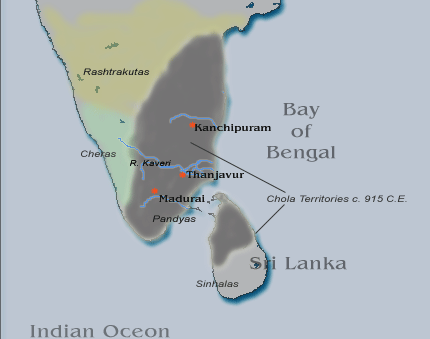
At the height of his success, Parantaka's dominions comprised almost the whole of the Tamil country right up to Nellore in Andhra Pradesh. It is clear from other Chola grants that Parantaka I was a great militarist who had made extensive conquests. He may have had it recorded, but those records are lost to us. He is known to have defeated the kings of the Deccan kingdoms by 912, and temporarily completed the conquests started by his father Aditya. Later in 949, Rashtrakuta king Krishna III waged war against Cholas, so Parantaka sent an army under his son Rajaditya. Subsequently, the Cholas were defeated, and crown prince Rajaditya was killed on the battlefield while upon an elephant.[17]

Civic and religious contributions

[edit]

Although Parantaka I was engaged for the greater part of his long reign in warlike operations, yet he was not unmindful of the victories of peace. The internal administration of his country was a matter in which he took a keen interest. He laid out the rules for the conduct of the village assemblies in an inscription. The village institutions of South India, of course, date from a much earlier period than that of Parantaka I, but he introduced many salutary reforms for the proper administration of local self-Government.[citation needed]

Chola Territories c. 905

The copper-plate inscriptions detail Parantaka I's promotion of agricultural prosperity by the digging of numerous canals all over the country.[citation needed]

He also utilised the spoils of war to donate to numerous temple charities. He is reported to have covered the Chidambaram Siva Temple with a golden roof.[citation needed] He was a devout Saiva (follower of Siva) in religion.[citation needed]

Personal life

[edit]

From his inscriptions we can gather a few details about Parantaka's personal life. He had many wives, of whom no fewer than eleven appear in the inscriptions. He was religious but secular and encouraged various faiths. We find various members of his family building temples and regularly making donations to various shrines across the kingdom. Kotanta Rama, incidental with Rajaditya, was the eldest son of Parantaka I. There is an inscription of him from Tiruvorriyur making a donation for some lamps during the 30th year of his father.[18] Besides him he had several other sons; Arikulakesari, Gandaraditya and Uttamasili.

Parankata had the Chera Perumals as his close allies and the relationship was further strengthened by two marriages. The king is assumed to have married two distinct Chera princesses (the mothers of his two sons, Rajaditya and Arinjaya).[19][20]

A member of the retinue of pillaiyar (prince) Rajadittadeva gave a gift to the Vishnu temple at Tirunavalur/Tirumanallur in the 32nd year of Parantaka I.[21] Tirunavalur was also known as "Rajadittapuram" after Rajaditya.[22] It is assumed that a large number of warriors from the aristocratic families of the Chera kingdom were part of the contingent of this Chera-Chola prince.[23] In the 39th year of Parantaka I, his daughter-in-law, Mahadevadigal, a queen of Rajaditya and the daughter of Lataraja donated a lamp to the temple of Rajadityesvara for the merit of her brother.[24] He had at least two daughters: Viramadevi and Anupama. Uttamasili does not appear to have lived long enough to succeed to the Chola throne.

He bore numerous epithets such as Viranarayana, Virakirti, Vira-Chola, Vikrama-Chola, Irumadi-Sola (Chola with two crowns alluding to the Chola and the Pandya kingdoms), Devendran (lord of the gods), Chakravartin (the emperor), Panditavatsalan (fond of learned men), Kunjaramallan (the wrestler with elephants) and Surachulamani (the crest jewel of the heroes).[citation needed]

Parantaka I died in 955. His second son Gandaraditya succeeded him.

Inscriptions

[edit]
Thyagaraja Temple
Sculpture in Tiruvottiyur.

The following is an inscription of Parantaka I from Tiruvorriyur. It is important as it shows that his dominions included regions beyond Thondaimandalam:

..record of the Chola king Maduraikonda Parakesarivarman(Parantaka) dated in his 34th year. Records gift of lamp to the temple of Tiruvorriyur Mahadeva by Maran Parameswaran alias Sembiyan Soliyavarayan of Sirukulattur in Poyyurkurram, a sub-division of Tenkarai-nadu. Refers to a military officer who destroyed Sitpuli and destroyed Nellore.[25]

Here we have his son Arinjaya making a donation. Once again it is from Tiruvorriyur:

On the eleventh slab. Records in the 30th year of Maduraikonda Parakesarivarman(Parantaka) dated in his 30th year, gift of gold for a lamp by Arindigai-perumanar, son of Chola-Perumanadigal (i.e Parantaka), to the god Siva at Adhigrama.[26]

We also have several inscriptions of his son Rajaditya from Tirunavalur. One such inscription is the following from the temple of Rajadityesvara in Tirunavalur. The temple was also called Tiruttondîsvaram:[27]

A record in the 29th year of the Chola king Maduraikonda Parakesarivarman. Records gift of 20 sheep for offerings and of two lamps to the shrines of Rajadityesvara and Agastyesvara by a servant of Rajadityadeva.[28]

Chola-Chera Perumal relations (c. 9th-10th centuries CE)

[edit]

Cola-Cera Perumal relations (c. 9th-10th centuries CE)

See also

[edit]

Notes

[edit]

References

[edit]
Revisions and contributorsEdit on WikipediaRead on Wikipedia
from Grokipedia
Parantaka I (c. 907–955 CE) was a king of the in southern who succeeded his father and ruled for nearly five decades, during which he consolidated and expanded Chola influence through conquests in the south while facing reversals in the north. His most notable military success came early in his reign with the defeat of Pandya king Rajasimha II, leading to the annexation of Pandya territories and the capture of , for which he adopted the epithet Madurakonda ("Conqueror of "). This expansion strengthened Chola dominance over Tamil regions but was offset later by the disastrous in 948–949 CE, where Rashtrakuta forces under killed Parantaka's son and heir Rajaditya, halting further northern advances and causing internal instability. Domestically, his administration is evidenced by inscriptions at Uttaramerur, which detail a structured village system featuring elected committees, eligibility criteria for members, and mechanisms for accountability, reflecting advanced local self-rule under monarchical oversight. Parantaka also patronized temple construction and endowments, contributing to cultural and religious developments that laid foundations for later Chola imperial architecture and devotion.

Early Life and Ascension

Family Background and Birth

Parantaka I, originally named Viranarayana, was the son of Chola, who ruled from approximately 871 to 907 CE and expanded Chola influence by defeating the Pallava king and installing a puppet Pandya ruler. His mother was Tribhuvanamadeviyar (also known as Vayiri Akkan), likely a princess from the , as indicated in epigraphic references to Aditya I's matrimonial alliances. Temple and copper-plate inscriptions from the early 10th century, such as those documented by the , confirm Parantaka's direct descent from Aditya I through royal grants that invoke the paternal lineage. He was born circa 873 CE in (modern-day ), a coastal settlement under Chola control during his father's reign, though no contemporary inscription records the precise date, with the estimate derived from regnal timelines in later historical analyses. himself succeeded , the dynasty's founder, who seized from the Mutharaiyar chieftains around 848 CE, thereby reestablishing Chola dominance after centuries of regional fragmentation. This paternal line, while claiming ancient (Suryavamsa) origins in later copper plates, relies primarily on Vijayalaya's military consolidation for verifiable historical continuity, as earlier Chola records remain scarce and intermixed with mythic genealogies.

Succession from Aditya I

Parantaka I, born as the son of and his queen Tribhuvanamadevi, ascended the Chola as the direct successor to his father around 907 CE. 's reign, which had expanded Chola influence through conquests against the Pallavas and Pandyas, ended with his death at Tondaimanarrur near Kalahasti, after which Parantaka honored him by constructing a temple over his ashes at the site, as recorded in contemporary . This act not only commemorated the transition but also aligned with Chola traditions of deifying royal predecessors through temple endowments, underscoring the legitimacy of Parantaka's claim rooted in patrilineal descent. The succession appears to have been uncontested, with Parantaka inheriting a consolidated kingdom bolstered by Aditya's military gains, including the subjugation of the Pandya ruler Varaguna II circa 889 CE. Inscriptions from Parantaka's early reign, such as those referencing his titles like Parakesari and Maduraiyum Ilamum Konda, affirm his immediate assumption of royal authority without mention of rival claimants, reflecting the stability of the Chola dynastic line at this juncture. Parantaka's own epigraphic records, spanning his 48-year rule until approximately 955 CE, consistently trace his lineage to Aditya, providing primary evidence of filiation through grants and temple dedications that invoke paternal precedents. External pressures, such as Rashtrakuta interests in Chola affairs, emerged later in Parantaka's reign but did not disrupt the initial transition from Aditya, allowing Parantaka to focus on further territorial consolidation from the outset. This smooth handover enabled the Cholas to maintain momentum in their imperial trajectory, with Parantaka adopting regnal years that align chronologically with Aditya's final documented activities around 907 CE.

Military Campaigns

Conquest of the Pandya Kingdom

Parantaka I initiated his expansion into Pandya territory early in his reign, launching a major invasion around 910 CE that targeted the Pandya capital of . This campaign built on the partial encroachments by his father and aimed to subdue the weakened Pandya kingdom under King Rajasimha II. Chola forces, leveraging superior organization and , overwhelmed Pandya defenses in a series of engagements, culminating in the Battle of Vellur in 915 CE, where the Pandya army was decisively defeated. Following the victory at Vellur, Parantaka's troops captured , forcing Rajasimha II to flee southward to with his crown and royal insignia around 920 CE. This conquest effectively annexed core Pandya territories, including the fertile regions around and Tinnevelly, integrating them into Chola administration under direct or viceregal control. Parantaka assumed the title Madurai-konda (Conqueror of ), as recorded in numerous Chola inscriptions from his 11th to 34th regnal years, which detail the plundering of Pandya treasures and the subjugation of local chieftains. The conquest's success is corroborated by contemporary temple inscriptions, such as those at , which attest to Chola penetration into the southernmost Pandya domains, and by the absence of independent Pandya records from this period, indicating a collapse of central authority. Parantaka installed a —possibly a relative—to govern the region, extracting tribute and preventing immediate resurgence, though intermittent Pandya resistance persisted until later Chola reinforcements. This victory marked a pivotal shift, establishing Chola dominance over the Tamil heartland and enabling further expeditions, with the seized wealth funding temple endowments and military upkeep as evidenced in grant records.

Expedition to Sri Lanka

Parantaka I's expeditions to were extensions of his campaigns against the Pandya kingdom, whose ruler Rajasimha II fled to the island after defeats in the early 910s CE. Chola forces initially engaged Sinhalese allies supporting the Pandyas, defeating combined Pandya-Sinhalese armies in battles dated to 917–918 CE, as recorded in temple inscriptions from Parantaka's reign. A more significant incursion occurred in 943 CE, during the reign of the Sinhalese king Udaya IV (r. 946–954 CE), when Parantaka's armies invaded northern , defeated royal forces, sacked the palace at , and temporarily occupied parts of the region. Udaya IV fled southward to Ruhuna with the royal , but Chola control proved short-lived, as Parantaka withdrew troops to counter a simultaneous Rashtrakuta invasion of Chola territories in the mainland. These events are primarily attested in Chola temple inscriptions, which eulogistically claim victories over "Ilamandalam" (ancient Tamil term for ) but lack detail on sustained administration or permanent garrisons, consistent with the campaigns' punitive nature rather than full annexation. Sri Lankan chronicles like the Culavamsa allude to South Indian raids during this period but attribute major Chola dominance to later rulers such as . Scholarly analyses, drawing on epigraphic , interpret the 943 CE push as opportunistic exploitation of Sinhalese internal weaknesses, yielding tribute and prestige but no enduring territorial gains.

Conflicts with the Rashtrakutas

Parantaka I initiated aggressive campaigns against the Rashtrakuta Empire shortly after consolidating control over the Pandya territories around 910 CE. In 911 CE, he decisively defeated Rashtrakuta forces under King (r. 893–927 CE) at the Battle of Vallala (also known as Tiruvallam), near modern-day , inflicting heavy losses that routed the enemy army and weakened their southern flank. This victory prompted Parantaka to adopt the title Viracholan and facilitated Chola raids northward into Rashtrakuta-held regions, including incursions toward the , though full annexation of core Rashtrakuta lands like Manyakheta remained unachieved. These early successes were corroborated by Chola inscriptions, such as those from his regnal years, which boast of subduing "northern foes" and capturing Rashtrakuta strongholds, reflecting a strategic push to secure and check Deccan incursions. However, the Rashtrakutas under (r. 939–967 CE) later reversed Chola gains through renewed southern expeditions, exploiting internal Chola succession tensions. The pivotal clash occurred in 949 CE at the (Thakkolam), northwest of modern , where Rashtrakuta forces overwhelmed a Chola army led by Parantaka's eldest son and heir, Rajaditya. Rajaditya was killed in combat—reportedly while mounted on an —resulting in a decisive Chola defeat that temporarily ceded northern territories, including key districts in , to Rashtrakuta overlordship until Parantaka's successors reclaimed them. Chola records, including later grants like those of , acknowledge the loss while emphasizing resilience, whereas Rashtrakuta accounts portray it as a triumph affirming their dominance over southern rivals. This engagement underscored the cyclical nature of Chola-Rashtrakuta rivalry, driven by control over trade routes and border principalities like the Banas and Gangas.

Relations with Chera and Other Regional Powers

Parantaka I established diplomatic relations with the Chera kingdom through marriage, wedding the daughter of a Kerala king, as attested in the Anbil copper plates issued during the reign of his grandson Sundara Chola. This union symbolized amicable ties between the Cholas and Cheras, consistent with broader patterns of cooperation noted in historical analyses of the period. Inscriptions from Parantaka I's 29th , corresponding to approximately 936 CE, at Tiruvorriyur mention a Chera named , further evidencing these interpersonal and dynastic links. Such epigraphic records highlight cultural and possibly administrative exchanges rather than overt hostility. Parantaka I's inscriptions appear in Nanchinad, a southern region traditionally linked to Chera domains, suggesting Chola influence or oversight in border territories without indications of full-scale military subjugation. Scholarly assessments portray Chola-Chera interactions under his rule as predominantly friendly, diverging from the adversarial engagements with northern powers like the Rashtrakutas. Relations with other regional entities, such as local Velir chieftains in the Kongu region, involved integration through conquest or suzerainty, as inferred from epigraphic evidence of Chola grants and administrative extensions, though specific conflicts beyond core campaigns remain sparsely documented.

Territorial Extent and Administration

Boundaries of Influence

Parantaka I's boundaries of influence expanded from the core Chola territories in the Kaveri delta region of present-day central Tamil Nadu to encompass the entire Pandya domain in southern Tamil Nadu following his conquest of Madurai around 910 CE. This annexation integrated Madurai and adjacent areas, extending Chola control southward to the Tirunelveli region and the southern coastal plains, effectively unifying the Tamil heartland under Chola suzerainty. Northern limits initially reached Tondaimandalam, including districts around Vellore and Arcot, while eastern boundaries abutted the Bay of Bengal and western edges followed the Eastern Ghats, with nominal extensions into Kongu Nadu in the southwest. Military expeditions projected influence beyond these mainland borders, particularly into northern , where Parantaka claimed victories and adopted the title "conqueror of and Ilam" after raids aimed at recovering Pandya from Sinhalese rulers around 925 CE, though sustained territorial occupation remained elusive and limited to tributary relations. Interactions with Chera rulers in present-day involved alliances or conflicts, but Chola dominance did not firmly extend into core Chera territories west of the Ghats, maintaining influence primarily through marital ties and occasional campaigns rather than direct . The in 949 CE marked a contraction, as defeat by Rashtrakuta king resulted in the loss of to northern adversaries, temporarily shrinking northern boundaries and confining effective control to Cholanadu and Pandyanadu until subsequent recoveries under later rulers. Inscriptions from Parantaka's reign, such as those detailing conquests, corroborate these extents through self-proclaimed titles like Madurai-konda, reflecting ideological claims that often exceeded practical administrative reach in peripheral areas.

Governance and Military Organization

Parantaka I maintained a centralized with significant local in village administration, as detailed in the Uttaramerur inscriptions issued during his in 919 and 921 CE. These epigraphs, inscribed on the walls of the Vaikuntha Perumal Temple, outline the functioning of the sabha, an assembly governing Brahmin-dominated villages (ur for non-Brahmin areas), emphasizing elected committees for tasks such as , temple , and . Membership in the sabha required candidates to be aged 35–70, own land and a house, possess knowledge of the , and have no prior disqualifications like or ; selection occurred via the kudavolai system, where eligible names on palm-leaf tickets were placed in pots and drawn by lot to form 30-member committees. Disqualified members faced , such as head-shaving and parading, to enforce , reflecting a system designed for efficient and corruption deterrence in agrarian communities. Higher administration involved royal officials like the perundanam (senior officers) overseeing provinces ( and kurram units), with revenue from land taxes supporting such as canals dug under Parantaka I to enhance agricultural output. His reforms strengthened these local bodies, enabling sustained control over expanded territories post-conquests, though ultimate authority rested with the king through appointees monitoring assemblies. The Chola military under Parantaka I comprised a organized into (kaikkolars), , and corps, with no evidence of units, supported by auxiliary forces including archers and troops for guerrilla tactics. Regiments were led by commanders (danapatis) under the king's direct oversight, with garrisons stationed in key forts and conquered regions like the Pandya territories to maintain order and deter rebellions. Training emphasized , , and warfare, enabling effective campaigns such as the 919 CE invasion of , where facilitated naval-supported landings and rapid territorial gains. Velaikkarar elite guards provided personal protection and , while via nadapu units ensured supply lines for prolonged expeditions against the Rashtrakutas and Pandyas. This structure, reliant on feudal levies from vassals alongside professional core troops, allowed Parantaka I to project power across despite setbacks like the 949 CE .

Religious and Civic Contributions

Patronage of Shaivism and Temple Construction

Parantaka I demonstrated strong devotion to Shaivism, the worship of Shiva as the supreme deity, through extensive patronage that included temple construction, renovations, and endowments. Inheriting and expanding his father Aditya I's Shaivite legacy, he allocated resources from conquests to support religious institutions, as evidenced by numerous inscriptions recording land grants, village revenues, and offerings to Shiva temples across the Chola domain. These acts not only sustained priestly services and festivals but also integrated Shaivism into the socio-political fabric, reinforcing royal legitimacy via divine association. A notable contribution was the gilding of the (tower over the sanctum) of the Temple in with gold plating, documented in the Thiruvalangadu copper plates and earning him the title Pon Veinthan (the Chola who covered with gold). This enhancement, undertaken during his reign (c. 907–955 CE), elevated the temple's prestige as a major Shaivite center dedicated to Shiva's cosmic dance form. Similarly, inscriptions at the Thyagaraja Temple in reference Parantaka I's donations and administrative oversight, underscoring his role in maintaining ancient Paadal Petra Sthalams (temples sung by the saints). Parantaka I also directly commissioned the Koranganatha Temple (also known as Arulmigu Kotravai Temple) at Srinivasanallur near , a temple exemplifying early Chola architectural style with its modest and pillared . Built on the banks of the Cauvery River, the structure features Dravidian elements like gopurams and inscriptions attesting to his foundational patronage around the CE. Beyond these, records from temples in Tiruvaduturai and other sites in the region detail his grants for perpetual lamps, rituals, and expansions, reflecting a systematic policy to propagate amid territorial expansion.

Infrastructure and Economic Initiatives

Parantaka I prioritized agricultural enhancement through to support the economic base of the expanding Chola domain, leveraging the fertile basin and integrating conquered territories like Pandya lands. He oversaw the and expansion of canals and tanks, which facilitated reliable for cultivation amid seasonal monsoons, thereby increasing land productivity and revenue from land taxes. These efforts built on earlier Pallava and early Chola systems but were scaled to consolidate post-conquest stability, with local assemblies (sabhas and urs) responsible for maintenance under royal oversight. Notable among these was the Veeranam tank in , initiated by his father Aditya Chola but completed and named in Parantaka's honor (as Veeranam Periya Eri), channeling water from the via the Vadavaru to irrigate thousands of acres, exemplifying state-directed for surplus production. Administrative innovations under his reign, including departments like Puravuvari-Tinaikkalam for revenue collection and frontier management, streamlined fiscal operations tied to yields and agricultural output. On the economic front, Parantaka fostered trade by promoting port development in coastal areas seized from the Pandyas, such as , which became hubs for maritime exchange with and . He supported merchant guilds (nagaram and similar bodies) that organized commerce in textiles, spices, and pearls, granting them privileges to extend Chola influence and generate customs revenue, though guild autonomy was balanced by royal taxation. Temples patronized by Parantaka, including the Adityesvara temple at dedicated to his father, functioned as multifaceted economic institutions, hosting markets, lending operations, and artisan workshops that stimulated local crafts and pilgrimage-based spending. These initiatives collectively bolstered a revenue system reliant on one-third land shares to the state, enabling military sustainment without over-reliance on plunder.

Inscriptions and Primary Sources

Major Inscriptions Detailing Conquests

The prasastis (eulogies) in numerous inscriptions issued during Parantaka I's reign (c. 907–955 CE) detail his military conquests, particularly against the Pandyas and the northern regions of , through royal titles (birudas) such as Madirakkonda Parakesarivarman (conqueror of ) and later Ilamkonda (conqueror of Ilam or ). These titles first appear in records from his early to mid-reign, reflecting campaigns that expanded Chola influence southward and overseas, with the Pandya conquest occurring around 910–920 CE, forcing Pandya king Rajasimha II into exile in . A specific example is the Uyyakondan pillar inscription at , dated to Parantaka I's 34th (c. 941 CE), which records a gift of a perpetual lamp and invokes his title Madirai-konda Ko-Parakesarivarman, directly referencing the subjugation of and the Pandya territories as a foundational achievement. Similarly, the Kudumiyamalai inscription attributes the conquest of Ceylon (northern ) to Parantaka I, with epithets linking the achievement to his rule from the 36th onward (c. 943 CE), indicating raids or tributary control over Ilamandalam rather than full . Inscriptions also allude to incursions into Rashtrakuta territories in the Deccan following the death of Rashtrakuta king Indra III in 929 CE, claiming victories that temporarily extended Chola reach to the , though these are less emphasized after the defeat at Takkolam in 949 CE by Rashtrakuta king , which Chola records omit or reframe as non-decisive. The earliest epigraphs bestowing the Ilamkonda epithet, as noted in analyses of Parantaka I's records, underscore the propagandistic role of these inscriptions in legitimizing expansion, often tying conquests to divine favor from .

Archaeological and Epigraphic Evidence

Archaeological excavations in Tamil Nadu have yielded structural temple remains and artifacts datable to Parantaka I's reign (c. 907–955 CE), marking the early phase of Chola stone architecture with features such as square sanctums (garbhagrihas), pillared halls (mandapas), and rudimentary vimanas. These sites, including foundations unearthed in rural Chola heartlands, often bear associated stone inscriptions confirming royal patronage for temple expansions or new constructions, reflecting a shift from Pallava-influenced rock-cut caves to freestanding edifices. Epigraphic records consist primarily of stone inscriptions in script, numbering at least seven confirmed contemporary examples from temple walls and bases in locations like Uttaramerur and other core Chola temples, detailing endowments, remission of taxes (such as iraiyam poruttu), and ritual provisions for deities. Copper-plate grants, such as the Leyden plates, preserve genealogical data and donations, often invoking Parantaka's titles like Viranarayana and Parakesari, while corroborating administrative hierarchies through mentions of officials like the adhikaris. The Uttaramerur temple inscriptions, dated to the 16th and 18th regnal years (c. 919–921 CE), provide the most detailed evidence of local governance, outlining eligibility criteria for assembly members, the kudavolai (pot-drawing) election system using palm-leaf lots, and rules for committee tenure to prevent . These epigraphs, verified through paleography and regnal dating, underscore empirical mechanisms of village self-rule under central oversight, with no indications of fabrication in scholarly analyses. Additional archaeological corroboration includes a 2017 excavation near a Tamil Nadu village uncovering a Chola-era temple foundation with a stone inscription referencing Parantaka's rule, alongside artifacts like a kalasam (finial) and avudai (base for lingam), aligning stylistically with 10th-century Chola bronzework and masonry. Such finds, cross-verified by epigraphy, affirm the material culture of temple-centric devotion and economic surplus during his expansionist phase, without reliance on later interpolations.

Personal Life and Succession

Marriages and Offspring

Parantaka I, like other Chola rulers, maintained multiple , a practice common among South Indian monarchs to forge alliances and ensure dynastic continuity, as evidenced by epigraphic records of their endowments to temples. Inscriptions from his reign mention at least three queens by name: Thiruvarangi, who in his 32nd (circa 939 CE) donated 90 goats for to sustain a perpetual lamp and provided a metal lamp; Sozhasigamani; and Tribhuvana , who in his 14th (circa 921 CE) contributed 30 kalanju of for another perpetual lamp. Additional queens identified in temple and copper-plate inscriptions include Kōkkilān (also known as Ko Kizhan Adikal or Kokkilanadigal), Kizhan Adikal Ravi Neeli, and a princess, reflecting marital ties with regional powers such as the Cheras. Among his offspring, the most prominent were his sons Rajaditya (also called Anaimerrunjinar or Kodandarama), born to queen Kōkkilān, who commanded Chola forces against the Rashtrakutas and died in the in 949 CE, and , who succeeded Parantaka I upon his death around 955 CE and ruled until circa 957 CE. Other recorded children include Uttamasili, Arinjaya, and daughters such as Viramadevi, Anupama, and Adittan Karralippiratti, though their precise roles in succession or alliances are less documented in surviving inscriptions. These familial ties, substantiated primarily through temple endowments and regnal-year dated epigraphs rather than unified genealogical records, underscore the role of royal progeny in military leadership and the perpetuation of Chola Shaivite patronage.

Death and Immediate Aftermath

Parantaka I died in 955 CE, concluding a reign that spanned approximately 48 years from his accession in 907 CE. No contemporary inscriptions explicitly record the cause of his death, though the advanced age implied by his long tenure and the absence of references to violence or illness in epigraphic records suggest natural causes. He was succeeded by his second son, , following the earlier death of his designated heir, Rajaditya, in 949 CE during a campaign against the Rashtrakutas. 's accession appears to have occurred without recorded internal strife, maintaining continuity in Chola administration amid ongoing external pressures from northern powers. His brief rule, lasting until 957 CE, focused on consolidation rather than further conquests, with inscriptions indicating temple endowments and administrative grants but no major territorial expansions. Upon 's death, the throne passed to his brother Arinjaya, signaling a transitional phase in the dynasty before the resurgence under later rulers.

Legacy and Historical Assessment

Achievements in Expansion and Consolidation

Parantaka I expanded the Chola domain through decisive military campaigns against neighboring powers, particularly the Pandyas. In 910 CE, he invaded the Pandya kingdom and captured its capital, , forcing King Rajasimha II to flee to ; this conquest earned him the title Madurākonda (Conqueror of Madurai). He further solidified gains by defeating a combined Pandya-Sri Lankan force at the Battle of (also known as Vellur), dated around 915 CE, which extended Chola influence over southern Tamil regions and deterred external incursions. These victories facilitated the annexation of Pandya territories, including key areas like and , transforming the Cholas from regional players into dominant forces in peninsular . Parantaka also repelled Sinhalese invaders on the mainland and pursued campaigns into to recover Pandya regalia, adopting the epithet Maduraiyum Īlamum Koṇḍa (Conqueror of and ), as evidenced in contemporary inscriptions and chronicles like the Mahavamsa. Early successes against the Rashtrakutas, such as the Battle of Vallala in 911 CE, temporarily secured northern frontiers and prevented Deccan incursions. In consolidation, Parantaka focused on integrating conquered lands through administrative oversight and subjugation of local chieftains, as indicated by copper-plate grants detailing revenue systems and land endowments in newly acquired territories. His prolonged efforts to pacify Pandya holdouts ensured stable control, laying administrative foundations that enabled later Chola emperors to project power across the subcontinent. These achievements marked a pivotal shift, elevating the Chola polity's and territorial coherence during his 48-year reign from 907 to 955 CE.

Criticisms and Military Setbacks

The most significant military setback during Parantaka I's reign occurred at the in 948–949 CE, where Chola forces under Crown Prince Rajaditya were decisively defeated by Rashtrakuta king , resulting in Rajaditya's death on the battlefield. This clash, fought near modern in northern , stemmed from Rashtrakuta incursions into Chola territory amid ongoing Deccan rivalries, with exploiting Chola preoccupation in the south to launch a punitive expedition. The loss inflicted a severe blow to Chola military prestige, as Rashtrakuta armies subsequently ravaged key Chola centers including and the fertile delta, temporarily disrupting administrative stability and economic recovery from prior conquests. The defeat at Takkolam exposed vulnerabilities in Chola defensive strategies, particularly the overreliance on a single in frontline commands, which created a upon Rajaditya's demise and precipitated succession uncertainties favoring the less martial . Epigraphic records, such as the Atakur inscription from the Rashtrakuta perspective, corroborate the battle's decisiveness, noting the capture of Chola elephants and treasures, though Chola sources downplay the extent of territorial losses to emphasize resilience. This event halted Parantaka I's northward expansion ambitions post his earlier victories over the Pandyas and checked Chola until recovery under later rulers, underscoring the limits of imperial overreach without fortified northern frontiers. Historical assessments critique Parantaka I's later years for inadequate adaptation to Rashtrakuta mobility and alliances, such as Krishna III's pact with the Western Gangas, which amplified the invaders' effectiveness despite Parantaka's prior successes in consolidating southern domains. No contemporary inscriptions levy personal blame on Parantaka, but the setback's long-term impact—evident in delayed Chola resurgence—highlights strategic miscalculations in balancing temple endowments and campaigns against persistent northern threats.

References

Add your contribution
Related Hubs
User Avatar
No comments yet.